

The extracellular matrix and perineuronal nets in memory
Open accessThe DOI matches its Crossref record; 197 of the 197 references it cites were found in a registry or an index; 127 of the 213 sources its claims cite were checked for support.
Abstract
All components of the CNS are surrounded by a diffuse extracellular matrix (ECM) containing chondroitin sulphate proteoglycans (CSPGs), heparan sulphate proteoglycans (HSPGs), hyaluronan, various glycoproteins including tenascins and thrombospondin, and many other molecules that are secreted into the ECM and bind to ECM components. In addition, some neurons, particularly inhibitory GABAergic parvalbumin-positive (PV) interneurons, are surrounded by a more condensed cartilage-like ECM called perineuronal nets (PNNs). PNNs surround the soma and proximal dendrites as net-like structures that surround the synapses. Attention has focused on the role of PNNs in the control of plasticity, but it is now clear that PNNs also play an important part in the modulation of memory. In this review we summarize the role of the ECM, particularly the PNNs, in the control of various types of memory and their participation in memory pathology. PNNs are now being considered as a target for the treatment of impaired memory. There are many potential treatment targets in PNNs, mainly through modulation of the sulphation, binding, and production of the various CSPGs that they contain or through digestion of their sulphated glycosaminoglycans.
Overview
CoChat Summary
TL;DR
This is a review of how the extracellular matrix, especially perineuronal nets (PNNs), shapes memory, learning, and memory-related disorders across multiple brain systems. It argues that PNNs can act as a brake on plasticity, but that targeted manipulation of their components can improve memory in models of ageing, Alzheimer’s disease, stress, and some learning tasks.
Key findings
- The review concludes that brain ECM and PNNs regulate “various types of memory” and are implicated in memory pathology across tasks including fear, eyeblink, object recognition, spatial, social, and auditory memory.
- In ageing, the paper reports that C6-sulphate levels on PNN CSPGs “almost disappears after 20 months” in aged rat and mouse brain, while C4-sulphate remains stable; restoring C6-sulphation with viral/transgenic C6-sulfotransferase “restor[ed] or prevent[ed] age-related object recognition memory loss.”
- In Alzheimer’s/tauopathy models, PNN manipulation is reported to restore memory: digestion of PNNs in perirhinal cortex restores object memory, ChABC digestion in Aβ pathology mice restores hippocampal function, and antibody blockade of inhibitory 4-sulphated PNN CSPGs restores object memory.
- Several memory tasks improve or worsen depending on the region and manipulation: ChABC in the mPFC improves touchscreen TUNL performance; PNN removal in the BLA permits extinction to diminish fear expression; and in CA2, PNN degradation impairs social memory while mature PNNs can permit inhibitory LTD.
Methods
- Narrative review of the literature on ECM and PNNs in memory, synthesizing findings across animal studies and disease models rather than presenting a new experimental dataset.
- Draws on rodent and some human evidence across brain regions and paradigms, including fear conditioning, eyeblink conditioning, spontaneous object recognition, spatial learning, social memory, stress, drug of abuse, ageing, and neurodegenerative disease.
- Main analysis is comparative synthesis: the paper contrasts effects of PNN attenuation, enzymatic digestion (especially ChABC), and genetic or pharmacological manipulation of ECM/PNN components on electrophysiology and behavior.
Limitations
- The paper itself states several times that “we are far from understanding the full complexity of this system” and that many findings come from ChABC-based manipulations that are “useful for proof-of-principle experiments” but “impracticable for long-term treatment of memory problems.”
- It also notes that effects of PNN manipulation are highly dependent on brain region, cell type, drug exposure/stress timing, and even time of day, which limits simple generalization.
- Evident from the text: this is a review, so it does not provide a single unified experimental sample or new quantitative analysis; conclusions depend on heterogeneous studies with sometimes conflicting results (for example, opposite effects of PNN changes across studies in eyeblink conditioning and drug exposure).
Model-written summary. Check it against the paper before relying on it.
Integrity signals
Registry
Cites
Statistics
Figures
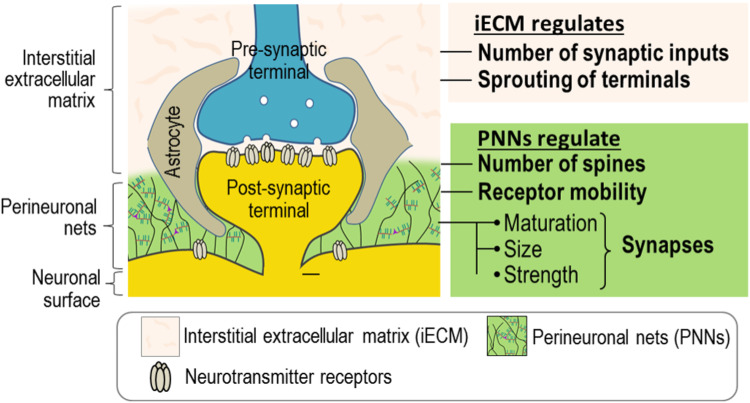
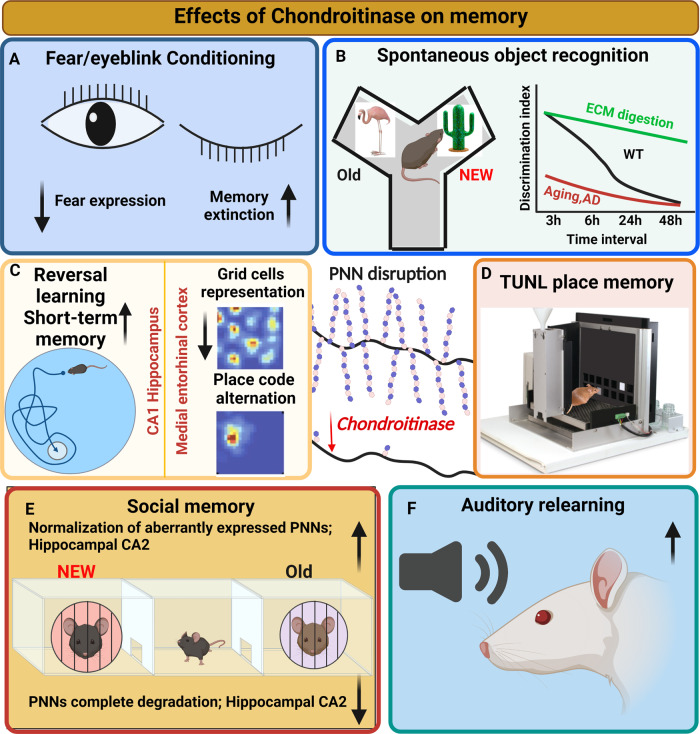
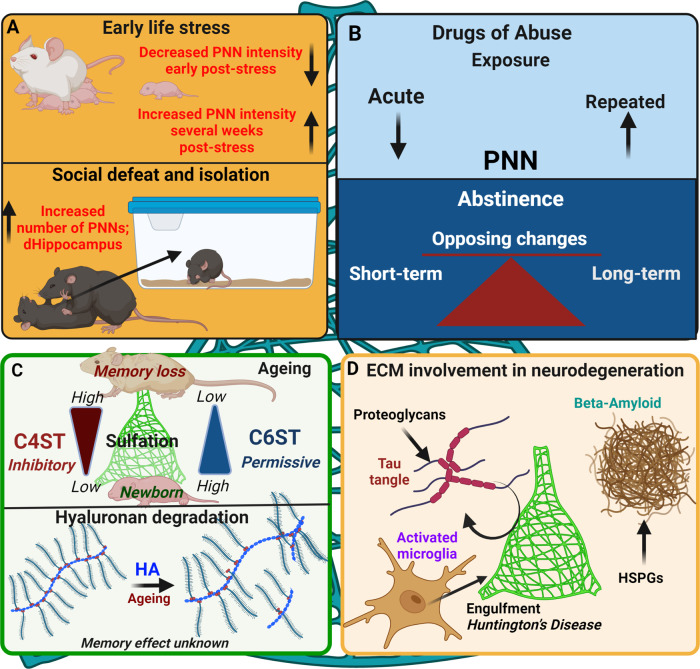
Verification
Claims the paper makes
88 Valid · 1 Not valid · 32 Not checked · 12 Own results and interpretations
The sources with a verdict support this claim; the rest weren’t checked yet, have no full text we could read, or their verdicts aren’t rated yet.
In the paper
“The long hyaluronan chains provide a scaffold for the assembly of CSPGs, hyaluronan, hyaluronin and proteoglycan link proteins (Hapln), and tenascins [15, 18].”
§ The extracellular matrix and perineuronal nets in memory > Extracellular matrix biology > Extracellular matrix
What the sources say
- Not checked — no full text of the sourcecites [15] Kwok JCF Carulli D Fawcett JW In vitro modeling of perineuronal nets: hyaluronan synthase and link protein are necessary for their formation and integrity J Neurochem 2010 114 1447 59 20584105 source
- Supportedcites [18] Giamanco KA Matthews RT Deconstructing the perineuronal net: cellular contributions and molecular composition of the neuronal extracellular matrix Neuroscience 2012 218 367 84 10.1016/j.neuroscience.2012.05.055 22659016 PMC3400135 source
The Results (§3.5; page unavailable) describe hyaluronan as the backbone of perineuronal nets, and §3.4.2 describes HAPLNs as strengthening the interaction between CSPGs and the hyaluronan scaffold. The Introduction identifies CSPGs, HAPLNs and tenascins as net components. The paper does not specify chain length, but it supports the attributed scaffold-and-components description. (LLM, conf=0.88)
plainstates a cause- Asserted: passes — The authors put it forward as true.
- Checkable: passes — It can be checked against evidence.
- Load-bearing: unclear — It is unclear whether the paper’s conclusions depend on it.
- Based: passes — The paper gives a reason why it holds.
The cited sources support only part of this claim — read each source’s verdict below.
In the paper
“In addition to being a key inhibitory molecule in the diffuse ECM, CSPGs around some classes of neurons also interact with other brain ECM molecules, self-assembling into aggregate structures called perineuronal nets (PNNs) [12–14].”
§ The extracellular matrix and perineuronal nets in memory > Extracellular matrix biology > Extracellular matrix
What the sources say
- Partly supportedcites [12] Lander C Zhang H Hockfield S Neurons produce a neuronal cell surface-associated chondroitin sulfate proteoglycan J Neurosci 1998 18 174 83 10.1523/JNEUROSCI.18-01-00174.1998 9412498 PMC6793429 sourceExperimental — accuracy not yet measured
The introductory passage (page not supplied) says perineuronal nets occur around subsets of neurons and contain CSPGs alongside glycoproteins and hyaluronan. It does not say that CSPGs interact with those molecules to self-assemble into nets, so the proposed formation mechanism is unsupported. (LLM, conf=0.85)
- Not checked — no full text of the sourcecites [13] Miyata S Kitagawa H Formation and remodeling of the brain extracellular matrix in neural plasticity: Roles of chondroitin sulfate and hyaluronan Biochim Biophys Acta Gen Subj 2017 1861 2420 34 10.1016/j.bbagen.2017.06.010 28625420 source
- Not checked — no full text of the sourcecites [14] Yamaguchi Y Lecticans: organizers of the brain extracellular matrix Cell Mol Life Sci CMLS 2000 57 276 89 10.1007/PL00000690 10766023 PMC11146776 source
plainstates a cause- Asserted: passes — The authors put it forward as true.
- Checkable: passes — It can be checked against evidence.
- Load-bearing: unclear — It is unclear whether the paper’s conclusions depend on it.
- Based: passes — The paper gives a reason why it holds.
- Partly supported
The cited sources support only part of this claim — read each source’s verdict below.
In the paper
“Nptx2 is an activity-regulated protein that interacts with the extracellular domain of AMPA receptors to facilitate receptor clustering and insertion of GluR4 on the postsynaptic membrane of neurons, strengthening synaptic communication [24].”
§ The extracellular matrix and perineuronal nets in memory > Extracellular matrix biology > Extracellular matrix
What the sources say
- Partly supportedcites [24] Chang MC Park JM Pelkey KA Grabenstatter HL Xu D Linden DJ Narp regulates homeostatic scaling of excitatory synapses on parvalbumin-expressing interneurons Nat Neurosci 2010 13 1090 7 10.1038/nn.2621 20729843 PMC2949072 sourceExperimental — accuracy not yet measured
The Introduction identifies Narp as neuronal pentraxin 2 (Nptx2) and describes neuronal pentraxins interacting with the extracellular domain of AMPA receptors. The Discussion says activity-induced Narp clusters GluR4 and strengthens excitatory synapses on parvalbumin-expressing interneurons. It does not establish GluR4 insertion into the postsynaptic membrane: the Discussion describes surface retention as a possibility and says native GluR4 trafficking was difficult to assess. (LLM, conf=0.87)
plainstates a cause- Asserted: passes — The authors put it forward as true.
- Checkable: passes — It can be checked against evidence.
- Load-bearing: unclear — It is unclear whether the paper’s conclusions depend on it.
- Based: passes — The paper gives a reason why it holds.
- Partly supported
Every source the paper cites for this claim was checked and supports it.
In the paper
“Similarly, LTP is also affected by CSPG sulphation, with loss of 6-sulphation causing loss of LTP in the perirhinal cortex and CA1 [45].”
§ The extracellular matrix and perineuronal nets in memory > Extracellular matrix biology > ECM and synapses
What the sources say
- Supportedcites [45] Yang S, Gigout S, Molinaro A, Naito-Matsui Y, Hilton S, Foscarin S et al. Chondroitin 6-sulphate is required for neuroplasticity and memory in ageing. Mol Psychiatry 2021;26:5658–68. PMC8758471 34272488 source
In “Restoration of C6S levels rescues ARMI,” chst3 knockout mice with low C6S showed a complete loss of LTP in cortical layers II/III and a similar loss in the hippocampus. The “Electrophysiology” section identifies the recordings as perirhinal cortex layers II/III and hippocampal CA1. (LLM, conf=0.93)
plainstates a cause- Asserted: passes — The authors put it forward as true.
- Checkable: passes — It can be checked against evidence.
- Load-bearing: unclear — It is unclear whether the paper’s conclusions depend on it.
- Based: passes — The paper gives a reason why it holds.
- Supported
Every source the paper cites for this claim was checked and supports it.
In the paper
“Purkinje cell terminals sprout after ChABC digestion [48]”
§ The extracellular matrix and perineuronal nets in memory > Extracellular matrix biology > ECM and synapses
What the sources say
- Supportedcites [48] Corvetti L Rossi F Degradation of chondroitin sulfate proteoglycans induces sprouting of intact purkinje axons in the cerebellum of the adult rat J Neurosci 2005 25 7150 8 10.1523/JNEUROSCI.0683-05.2005 16079397 PMC6725229 source
The discussion section reports that ChABC-induced Purkinje axon sprouting is primarily sustained by terminal branches of the infraganglionic plexus. That supports the cited sentence’s statement that Purkinje cell terminals sprout after ChABC digestion. The printed citing sentence does not specify the deep cerebellar nucleus. (LLM, conf=0.88)
plainstates a cause- Asserted: passes — The authors put it forward as true.
- Checkable: passes — It can be checked against evidence.
- Load-bearing: unclear — It is unclear whether the paper’s conclusions depend on it.
- Based: passes — The paper gives a reason why it holds.
- Supported
60 more claims · 35 with their cited sources checked
Create a free account to see all 133 claims and to verify the 32 references still open.
- Borderline: one of the tests for a substantial claim is unclear. 1
- It may state two separate claims as one. 65
- Probably not a substantial claim. 2
Citations
Cites
Diagnostic and Statistical Manual of Mental Disorders
American Psychiatric Association (2013) · doi:10.1176/appi.books.9780890425596 · Cited by 116,369
The hippocampus as a spatial map. Preliminary evidence from unit activity in the freely-moving rat
O'Keefe, J., & Dostrovsky, J. (1971) · Brain Research · doi:10.1016/0006-8993(71)90358-1 · Cited by 6,151 · cited 1×
“The rich diversity of spatially modulated neurons in these areas - including place cells of the hippocampus [103] and grid cells [104, 105] of the medial entorhinal cortex as well as neurons estimating the distance to an object [106] or speed of the animal’s movement [107] - represent Fig.”
BackgroundMicrostructure of a spatial map in the entorhinal cortex
Hafting, T., Fyhn, M., Molden, S., Moser, M.-B., & Moser, E. I. (2005) · Nature · doi:10.1038/nature03721 · Cited by 4,068 · cited 1×
“The rich diversity of spatially modulated neurons in these areas - including place cells of the hippocampus [103] and grid cells [104, 105] of the medial entorhinal cortex as well as neurons estimating the distance to an object [106] or speed of the animal’s movement [107] - represent Fig.”
BackgroundSelf-citationDynamic predictions: Oscillations and synchrony in top–down processing
Engel, A. K., Fries, P., & Singer, W. (2001) · Nature Reviews Neuroscience · doi:10.1038/35094565 · Cited by 3,454
Mechanisms of Gamma Oscillations
Buzsáki, G., & Wang, X.-J. (2012) · Annual Review of Neuroscience · doi:10.1146/annurev-neuro-062111-150444 · Cited by 2,796
Chondroitinase ABC promotes functional recovery after spinal cord injury
Bradbury, E. J., Moon, L. D. F., Popat, R. J., King, V. R., Bennett, G. S., Patel, P. N., Fawcett, J. W., & McMahon, S. B. (2002) · Nature · doi:10.1038/416636a · Cited by 2,357
Self-citationPerineuronal nets stabilize the grid cell network
Christensen, A. C., Lensjø, K. K., Lepperød, M. E., Dragly, S.-A., Sutterud, H., Blackstad, J. S., Fyhn, M., & Hafting, T. (2021) · Nature Communications · doi:10.1038/s41467-020-20241-w · Cited by 1,865
Self-citationBehavioural phenotyping assays for mouse models of autism
Silverman, J. L., Yang, M., Lord, C., & Crawley, J. N. (2010) · Nature Reviews Neuroscience · doi:10.1038/nrn2851 · Cited by 1,462 · cited 1×
“The task, usually performed in a three-chamber maze, shows high sensitivity for measuring social recognition in rodents [120, 122].”
BackgroundSpatial representation in the entorhinal cortex
Fyhn, M., Molden, S., Witter, M. P., Moser, E. I., & Moser, M.-B. (2004) · Science · doi:10.1126/science.1099901 · Cited by 1,339 · cited 1×
“The rich diversity of spatially modulated neurons in these areas - including place cells of the hippocampus [103] and grid cells [104, 105] of the medial entorhinal cortex as well as neurons estimating the distance to an object [106] or speed of the animal’s movement [107] - represent Fig.”
BackgroundSelf-citationGoedert, M., Jakes, R., Spillantini, M. G., Hasegawa, M., Smith, M. J., & Crowther, R. A. (1996) · Nature · doi:10.1038/383550a0 · Cited by 1,036 · cited 1×
“Tau aggregation is promoted by proteoglycans [186], which are present in tangles, and are involved in the prion-like spread of tau pathology [187].”
Background
Research works printed but not linked: 2
- Lensjø KK, Christensen AC, Tennøe S, Fyhn M, Hafting T. Differential Expression and Cell-Type Specificity of Perineuronal Nets in Hippocampus, Medial Entorhinal Cortex, and Visual Cortex Examined in the Rat and Mouse. eNeuro 2017;4. 10.1523/ENEURO.0379-16.2017. PMC5461557 28593193 · DOI · Paper page
- Yang S Cacquevel M Saksida LM Bussey TJ Schneider BL Aebischer P Perineuronal net digestion with chondroitinase restores memory in mice with tau pathology Exp Neurol 2014 265CP 48 58 PMC4353684 25483398
Cited by
Items 101–183 of 183
Perineuronal nets in motor circuitry regulate the performance of learned vocalizations in songbirds
Wan, X., Wang, A. S., Storch, D.-S., Li, V. Y., & Sakata, J. T. (2025) · Communications Biology · doi:10.1038/s42003-025-07520-2 · Cited by 3
Distribution of perineuronal nets in the adult rat neocortex
Budhu, K., Gomes, H., Borukhov, Y., Chu, P., & Brumberg, J. C. (2025) · Somatosensory & Motor Research · doi:10.1080/08990220.2025.2476945 · Cited by 2
Gómez, A., Tran, U. T., Grozdanov, P. N., & Cornwall, G. A. (2026) · Journal of Neuroscience Research · doi:10.1002/jnr.70113 · Cited by 2
“The brain ECM, including loose and PNN populations, plays essential roles in modeling neuronal plasticity affecting learning and memory (Fawcett et al. 2022; Sorg et al. 2016).”
Shi, Z., Qin, J., Gao, L., Fa, H., Wei, W., Zhao, T., Song, X., & Guo, X. (2025) · Brain Behavior and Immunity · doi:10.1016/j.bbi.2025.106148 · Cited by 2
New routes to the neuroendocrine hypothalamus: the extracellular space
Nicolas, J. C., Huwart, S. J. P., Ziemens, D., Freire-Agulleiro, Ó., Lee, T. H.-Y., Mattot, V., & Quarta, C. (2025) · European Journal of Endocrinology · doi:10.1093/ejendo/lvaf197 · Cited by 3
Leana-Sandoval, G., Madrid, A., Extrémet, J., Aso, E., & Díaz-Alonso, J. (2025) · Neurobiology of Disease · doi:10.1016/j.nbd.2025.107176 · Cited by 4
“Consequently, PNNs can control CA2-dependent memory processes (Fawcett et al., 2022).”
Riesgo, V. R., Zumaski, T., & Willing, J. (2024) · Neuroscience Letters · doi:10.1016/j.neulet.2024.137961 · Cited by 2
PTSD and appetite dysregulation: mTOR-dependent modulation of fear memory and satiety circuits
Krattli, S. N., Li, A. S., & McLachlan, C. S. (2025) · Neuroscience & Biobehavioral Reviews · doi:10.1016/j.neubiorev.2025.106495 · Cited by 2
Catalpol mitigates rheumatoid arthritis by targeting neutrophil extracellular trap release
Li, C., Wang, L., Li, Q., Zhao, W., Hui, Z., Zhang, Z., & Zhao, L. (2026) · Frontiers in Immunology · doi:10.3389/fimmu.2026.1763586 · Cited by 2
Mubuchi, A., Takechi, M., Nishio, S., Matsuda, T., Itoh, Y., Sato, C., Kitajima, K., Kitagawa, H., & Miyata, S. (2024) · eLife · doi:10.7554/elife.92342 · Cited by 19
Popović, D., Kontić, M. Z., Zeljković, M., Milosevic, M. M., Martić, T., Radukic, T., Stekić, A., Glavonic, E., Jakovljević, A., Mihajlović, K., et al. (2026) · Frontiers in Aging Neuroscience · doi:10.3389/fnagi.2026.1757554 · Cited by 2
Nicholson, L., Tang, S. J., Karra, T., Abouelatta, H., & Strittmatter, S. M. (2025) · bioRxiv (Cold Spring Harbor Laboratory) · doi:10.1101/2025.09.05.674487 · Cited by 1
Blanco, I., Chen, S., Yeo, E., Reasonover, S. R., & Santisteban, M. M. (2025) · Cellular and Molecular Neurobiology · doi:10.1007/s10571-025-01628-z · Cited by 1
Lucente, E., Domi, A., Ericson, M., & Adermark, L. (2026) · Neuropharmacology · doi:10.1016/j.neuropharm.2026.110879 · Cited by 2
Peeters, L. D., & Grueter, B. A. (2024) · Biological Psychiatry · doi:10.1016/j.biopsych.2024.08.013 · Cited by 1
Ueno, H., Kitano, E., Mori, S., Takahashi, Y., Murakami, S., Wani, K., Matsumoto, Y., Okamoto, M., & Ishihara, T. (2025) · Neuroscience · doi:10.1016/j.neuroscience.2025.08.017 · Cited by 2
Amphetamine produces sex- and subregion-selective neuroplasticity in the amygdala of Wistar rats
Cadeddu, D., Lucente, E., Ericson, M., & Adermark, L. (2025) · European Journal of Pharmacology · doi:10.1016/j.ejphar.2025.178302 · Cited by 1
WONOEP XVII appraisal: The role of the extracellular matrix in epilepsy
Lugarà, E., van Vliet, E. A., Romagnolo, A., Staley, K. J., Lillis, K. P., Dulla, C. G., Henshall, D. C., & Kobow, K. (2026) · Epilepsia · doi:10.1002/epi.70278 · Cited by 1
Baidoe‐Ansah, D., Mirzapourdelavar, H., Aleshin, S. E., Schott, B. H., Seidenbecher, C. I., Kaushik, R., & Dityatev, A. E. (2024) · bioRxiv (Cold Spring Harbor Laboratory) · doi:10.1101/2024.01.26.577401 · Cited by 1
Cellular mechanisms regulating the timing of organizational effects of sex steroid hormones
Sakata, J. T., & Balthazart, J. (2026) · Hormones and Behavior · doi:10.1016/j.yhbeh.2026.105923 · Cited by 1
Thought of the future of amblyopia treatment
Kahouadji, E. A. (2023) · Advances in Ophthalmology & Visual System · doi:10.15406/aovs.2023.13.00439
Editorial: Brain extracellular matrix: Involvement in adult neural functions and disease volume II
Pantazopoulos, H., & Berretta, S. (2022) · Frontiers in Integrative Neuroscience · doi:10.3389/fnint.2022.1009456 · Cited by 1
Palomino, T. V., Campbell, N., Ouyang, Y., Naik, N., Hawkridge, A. M., Segura, T., & Muddiman, D. C. (2026) · Analytical and Bioanalytical Chemistry · doi:10.1007/s00216-026-06334-3 · Cited by 3
Differential impacts of advanced age and sex in age-related trace fear memory impairment in rats
Robinson, P. K., Jarome, T. J., & Trask, S. (2025) · Learning & Memory · doi:10.1101/lm.054159.125 · Cited by 1
Zhang, H., Cicvaric, A., Bassett, T. E., Wood, E. M., Petrovic, Z., & Radulović, J. (2024) · Elsevier eBooks · doi:10.1016/b978-0-443-15754-7.00066-3
Neural networks and brain plasticity
Ghosh, S., Singh, K. K., & Sinha, J. K. (2026) · Elsevier eBooks · doi:10.1016/b978-0-443-36544-7.00012-4 · Cited by 10
Intergenerational Effects of Stress – A Focus on Learning and Memory
Vasquez, L. S., Stack, S., Taylor, W. W., & Dias, B. G. (2025) · Current topics in behavioral neurosciences · doi:10.1007/7854_2025_578
Cimpean, A., Dubišová, J., Martínez-Varea, N., Mareková, D., Urdzíková, L. M., Fawcett, J. W., Jendelová, P., & Kwok, J. C. F. (2026) · Glia · doi:10.1002/glia.70233
Self-citationZhang, H., Petrovic, Z., Wood, E. M., Cicvaric, A., Krispil-Alon, M., Jovasevic, V., Parker, K., Bassett, T. E., Carboncino, A., Guedea, A. L., et al. (2026) · PLoS Biology · doi:10.1371/journal.pbio.3003908
Winne, J., Schrader, R., Anfuson, M., & Caras, M. L. (2026) · Proceedings of the National Academy of Sciences · doi:10.1073/pnas.2601801123
Викторович, С. С. (2024) · Izvestiya of Saratov University Physics · doi:10.18500/1817-3020-2024-24-2-138-149
Gomez, A., Logsdon, A. F., Bailoo, J. D., & Cornwall, G. A. (2026) · bioRxiv (Cold Spring Harbor Laboratory) · doi:10.64898/2026.05.27.728219
Gramuntell, Y., Klimzack, P., Curto, Y., Alcaide, J., Garcia-Verellen, E., Pérez-Rando, M., Nave, K., Ehrenreich, H., & Nácher, J. (2026) · Neuropharmacology · doi:10.1016/j.neuropharm.2026.111025
Cauzzi, E., Ficchì, S., Paolis, M. L. D., Saba, L., Montanari, M., Loffredo, G., Barbera, L. L., Krashia, P., Nobili, A., & D’Amelio, M. (2026) · Neurobiology of Disease · doi:10.1016/j.nbd.2026.107527
Mubuchi, A., Takechi, M., Nishio, S., Matsuda, T., Itoh, Y., Sato, C., Kitajima, K., Kitagawa, H., & Miyata, S. (2023) · eLife · doi:10.7554/elife.92342.1 · Cited by 4
Extracellular matrix and perineuronal nets in neural plasticity, memory, and epileptogenesis
Zhu, H., Li, Q., Li, Y., & Wang, W. (2026) · Frontiers in Molecular Neuroscience · doi:10.3389/fnmol.2026.1945520
del Campo, I. S. F., Cebrián-León, A., Caño, C. H.-D., Varela-Andrés, N., Plaza, I., Deogracias, R., & Merchán, M. Á. (2026) · Hearing Research · doi:10.1016/j.heares.2026.109580
Microglia: Key Players in Perineuronal Net Dynamics
Garmendia-Berges, M., & Puerta, E. (2025) · IntechOpen eBooks · doi:10.5772/intechopen.1012413 · Cited by 1
Radulović, J., Zhang, H., Petrovic, Z., Wood, E. M., Cicvaric, A., Krispil-Alon, M., Jovasevic, V., Parker, K., Bassett, T. E., Carboncino, A., et al. (2025) · Research Square · doi:10.21203/rs.3.rs-6864379/v1
Gimenez, G.-A., Romijn, M., van den Herik, J., Meijer, W. C., Eggers, R., Hobo, B., Zeeuw, C. I. D., Canto, C. B., Verhaagen, J., & Carulli, D. (2025) · International Journal of Molecular Sciences · doi:10.3390/ijms26020819
Mubuchi, A., Takechi, M., Nishio, S., Matsuda, T., Itoh, Y., Sato, C., Kitajima, K., Kitagawa, H., & Miyata, S. (2024) · eLife · doi:10.7554/elife.92342.2
Gómez-Garrido, A., Moreno-Mellado, A., Crespo‐Facorro, B., & García-Cerro, S. (2026) · Biomedicine & Pharmacotherapy · doi:10.1016/j.biopha.2026.119917
Jeffries, C. D., Bizon, C., Ford, J. R., Addington, J., Bearden, C. E., Cadenhead, K. S., Cannon, T. D., Cornblatt, B. A., Keshavan, M. S., Mathalon, D. H., et al. (2026) · Translational Psychiatry · doi:10.1038/s41398-026-03934-6
Neuroplasticity under constraint: From sensory ecology to neuroinflammation
Diniz, D. G., Bento-Torres, N. V. O., Bento‐Torres, J., Jardim, N. Y. V., Sosthenes, M. C. K., Krejčová, L. V., dos Santos, Z. A., de Sousa, A. A., da Costa, E. R., Pereira, P. D. C., et al. (2026) · Brain Behavior and Immunity Integrative · doi:10.1016/j.bbii.2026.100199
Yao, J., Wu, X.-Y., Guo, Z.-R., Wang, X., Liu, X.-X., Li, J., Yang, J.-J., Tang, W., Cui, Y., Li, F., et al. (2026) · Neuropharmacology · doi:10.1016/j.neuropharm.2026.111145
Retrosplenial perineuronal nets support hippocampal-cortical coupling and spatial memory recall
Mayne, P., Xiao, D., Sullivan, R., Burne, T. H. J., & Balbi, M. (2026) · Cell Reports · doi:10.1016/j.celrep.2026.117440
ECM remodeling in the mPFC exacerbates cocaine-induced hyperactivity and impairs threat vigilance
Lin, X., Huo, Y., Wang, X., Yu, J., Liu, Z., Fan, X., Guo, S., Ye, X., Zhang, X., Li, Y., et al. (2026) · Translational Psychiatry · doi:10.1038/s41398-026-04014-5
Chondroitin 4-sulphate depletion enhances synaptic plasticity and memory in agingPreprint
Burianova, J. S., Svoboda, J., Růžička, J., Štěpánková, K., Klausová, T., Gmiterková, L., Spundova, T., Martínez-Varea, N., Králíková, M., Tureček, R., et al. (2026) · bioRxiv (Cold Spring Harbor Laboratory) · doi:10.64898/2026.01.28.702127
Self-citationBenacom, D., Chataing, C., Prochiantz, A., & Nardo, A. A. D. (2024) · bioRxiv (Cold Spring Harbor Laboratory) · doi:10.1101/2024.05.31.596849
Computationally guided discovery of Ly6e/LY6E-dependent AAV capsid variants
Ono, H., Fujino, S., & Sunagawa, G. A. (2026) · iScience · doi:10.1016/j.isci.2026.115554
Erbaş, O., Erdoğan, M. A., Özkul, B., & Uyanıkgil, Y. (2025) · International Journal of Radiation Biology · doi:10.1080/09553002.2025.2600048
Dzyubenko, E., Willig, K. I., Yin, D., Sardari, M., Tokmak, E., Labus, P., Schmermund, B., & Hermann, D. M. (2023) · Figshare · doi:10.6084/m9.figshare.24076904
The PANDA Theory: A PSD and Non-coding DNA Framework for Memory, Thought, and ConsciousnessPreprint
Li, B. (2026) · SSRN Electronic Journal · doi:10.2139/ssrn.6354539
EvoPRAISE: computationally guided directed evolution for rational AAV capsid engineeringPreprint
Ono, H., Fujino, S., & Sunagawa, G. A. (2025) · bioRxiv (Cold Spring Harbor Laboratory) · doi:10.1101/2025.11.02.686002
Zhang, Y., He, S., Lei, Y., Wang, P., Zhou, L., Zhou, H., Lu, G., Law, S.-W., Yung, P. S., Feng, S., et al. (2026) · Journal of Tissue Engineering · doi:10.1177/20417314261467659
Activity-dependent extracellular proteolytic cascade remodels ECM to promote structural plasticityPreprint
Singh, J. B., Perelló‐Amorós, B., Schneeberg, J., Seidenbecher, C. I., Fejtová, A., Dityatev, A. E., & Frischknecht, R. (2024) · bioRxiv (Cold Spring Harbor Laboratory) · doi:10.1101/2024.10.28.620597
Jacobs-Brichford, E., Donka, R. M., Lasek, A. W., Hsu, T. M., & Roitman, J. D. (2026) · Neuroscience · doi:10.1016/j.neuroscience.2026.03.039 · Cited by 1
Mubuchi, A., Takechi, M., Nishio, S., Matsuda, T., Itoh, Y., Sato, C., Kitajima, K., Kitagawa, H., & Miyata, S. (2022) · bioRxiv (Cold Spring Harbor Laboratory) · doi:10.1101/2022.09.03.506497
Dzyubenko, E., Willig, K. I., Yin, D., Sardari, M., Tokmak, E., Labus, P., Schmermund, B., & Hermann, D. M. (2023) · Figshare · doi:10.6084/m9.figshare.24076901
Philp, A. R., Remesal, L., Pratt, K. J. B., Maynard, J. C., Sahota, S., Aghayev, T., Bieri, G., Chu, R., Avillion, G., Sucharov, J., et al. (2026) · bioRxiv (Cold Spring Harbor Laboratory) · doi:10.64898/2026.02.03.702938
Disrupted O-GalNAc glycosylation as a mechanism and biomarker of SLC35A2 -associated epilepsyPreprint
Mealer, R. G., Anderson, J. J., Smith, S. L., Masters, B. M., Barth, S. H., Huizar, K. D. J., Sran, S., Yoon, H., Ringland, A., Muron, S., et al. (2026) · bioRxiv (Cold Spring Harbor Laboratory) · doi:10.64898/2026.03.02.708854 · Cited by 1
Ferreira-Oliveira, A., Rambow, F., Rambow-Makhzami, S., Nikolaev, Y. A., Novak, A., Shevchuk, O., Voß, H., Engel, D. R., Schult, P. A., Pillath‐Eilers, M., et al. (2025) · bioRxiv (Cold Spring Harbor Laboratory) · doi:10.1101/2025.10.21.683816
Impact of Sema3A Interference on Cerebellum-Dependent Motor Associative Learning and Memory
Gimenez, G.-A., Zwaag, S. V. D., Geelen, C. M., Hemert, M. V., Vreeken, J., de Winter, F., Canto, C. B., Carulli, D., Zeeuw, C. I. D., & Verhaagen, J. (2026) · International Journal of Molecular Sciences · doi:10.3390/ijms27125304
Extracellular matrix of the nervous system
Nazir, S., Feresten, A. H., Lin, L. D., Hutter, H., & Julian, L. M. (2024) · Elsevier eBooks · doi:10.1016/b978-0-323-95730-4.00002-0 · Cited by 1
Sewell, P. E., & Jensen, C. (2026) · Frontiers in Drug Delivery · doi:10.3389/fddev.2026.1906950
Role of extracellular space in neurodegenerative diseases
Estaún‐Panzano, J. (2024) · theses.fr (ABES) · doi:10.70675/98d1d96eza025z406ezba93z33e0820c3cf3
Dzyubenko, E., Willig, K. I., Yin, D., Sardari, M., Tokmak, E., Labus, P., Schmermund, B., & Hermann, D. M. (2023) · Figshare · doi:10.6084/m9.figshare.24076907
Abrar, K., Hameed, H., Younas, K., Ghumman, S. A., Hameed, A., & Mushtaq, T. (2026) · International Journal of Polymeric Materials · doi:10.1080/00914037.2026.2717612
Microalgae and its impact on ruminant nutrition and health
Adegbeye, M. J., Jack, A. A., Sierra-Alarcón, A. M., Inyang, U., Elghandour, M. M. M. Y., Maggiolino, A., Palo, P. D., & Salem, A. Z. M. (2025) · Elsevier eBooks · doi:10.1016/b978-0-443-22080-7.00016-8
Ventral pallidal perineuronal nets regulate opioid relapsePreprint
Nogueira, M., Giannotti, G., Miller, C. N., Guaderrama, S. D., Kregar, N. P., Wiedmeyer, B., Fayette, N., & Heinsbroek, J. A. (2026) · bioRxiv (Cold Spring Harbor Laboratory) · doi:10.64898/2026.01.21.700926
The omics techniques used in perineuronal nets research
Huang, S., Tang, J., Wu, X. M., Xu, H., Li, S., Li, H., Zhang, S., Xie, G., Wang, T., Pan, X., et al. (2025) · Experimental Neurology · doi:10.1016/j.expneurol.2025.115369 · Cited by 1
Goel, F., Gupta, P., Kartik, S., Singh, P., & Nand, S. (2026) · 3 Biotech · doi:10.1007/s13205-026-04992-9 · Cited by 2
Metadata
- Authors
- Fawcett, J. W., Fyhn, M., Jendelova, P., Kwok, J. C. F., Ruzicka, J., & Sorg, B. A.
- Affiliations
- Czech Academy of Sciences (CZ)
- University of Oslo (NO)
- University of Leeds (GB)
- Legacy Health (US)
- Corresponding author
- Fawcett, James W.
- ORCID
- Venue
- Molecular Psychiatry
- Published
- 2022-06-27
- Volume
- 27
- Issue
- 8
- Pages
- 3192-3203
- ISSN
- 1359-4184 (ISSN-L)
- 1476-5578
- PMC
- PMC9708575
- OpenAlex
- W4283577458
- Cited by
- 169
- References
- 197
- Citations by year
- 2026: 44 · 2025: 46 · 2024: 51 · 2023: 23 · 2022: 5
- FWCI
- 4.58
- Type
- journal article
- Language
- en
- Open access
- hybrid
- doi.org
- Licence
- cc-by
- creativecommons.org/licenses/by/4.0 (tdm)
- creativecommons.org/licenses/by/4.0 (vor)
- Locations
- Molecular Psychiatry (publishedVersion, cc-by)
- PubMed Central (publishedVersion, cc-by)
- PubMed (publishedVersion)
- White Rose Research Online (University of Leeds, The University of Sheffield, University of York) (acceptedVersion)
- NORA - Norwegian Open Research Archives (submittedVersion, cc-by)
- Apollo (University of Cambridge) (submittedVersion)
- Apollo (University of Cambridge) (submittedVersion, cc-by)
- Apollo
- Funders
- Alzheimer's Research UK (JFK)
- Topics
- Life Sciences › Biochemistry, Genetics and Molecular Biology › Cell Biology › Proteoglycans and glycosaminoglycans research
- Life Sciences › Neuroscience › Cellular and Molecular Neuroscience › Neuroscience and Neuropharmacology Research
- Life Sciences › Neuroscience › Cognitive Neuroscience › Memory and Neural Mechanisms
- Keywords
- extracellular matrix, perineuronal nets, memory, chondroitin sulfate proteoglycans, heparan sulfate proteoglycans, hyaluronic acid, parvalbumin interneurons, glycosaminoglycans, synaptic modulation
- MeSH terms
- Dendrites, Extracellular Matrix, Neuronal Plasticity, Neurons, Chondroitin Sulfate Proteoglycans, Synapses
About these checks
Registry, retraction, Cites and statistics results are computed, not judged, with one exception: a printed reference that no index lists is read once by a model before it counts as a citation error. Claims are extracted by a model and kept only when their quote appears verbatim in the text; each cited source is then checked, with a model’s help, for whether it says what the claim relies on. Those verdicts can be wrong — read the claim’s quote and the cited source before relying on one.
The claim verdicts this report counts are experimental: their accuracy is not yet measured.
A language model drew the claims from the paper on 2026-10-10, under version 3 of the claim definition (model deepseek-v4.1-flash, prompt extract-v3).
A second model labelled each claim on 2026-10-10 (model jev-1.13-20260917, definition revision gold-guideline-v0.2).
Cited sources are checked with a language model’s help (gpt-6-sol).
Statistics and arithmetic are recomputed, not judged.
Confidence bands are shown only for fields calibrated on our annotated test set. None is calibrated yet, so no band is shown.
What counts as a claim ›How we measure confidence ›How we check this ›
Are you an author, or do you see a problem with this page? Request a review
Data sources
Bibliographic data: Semantic Scholar, OpenAlex, Crossref.
Contains information from the Semantic Scholar Academic Graph Datasets, made available under the ODC Attribution License (ODC-BY 1.0).
Semantic Scholar’s data is described in: Kinney, R., et al. (2023). The Semantic Scholar Open Data Platform. arXiv:2301.10140.
