

Ethanol withdrawal-induced adaptations in prefrontal corticotropin releasing factor receptor 1-expressing neurons regulate anxiety and conditioned rewarding effects of ethanol
Open accessThe DOI matches its Crossref record; 79 of the 79 references it cites were found in a registry or an index.
Abstract
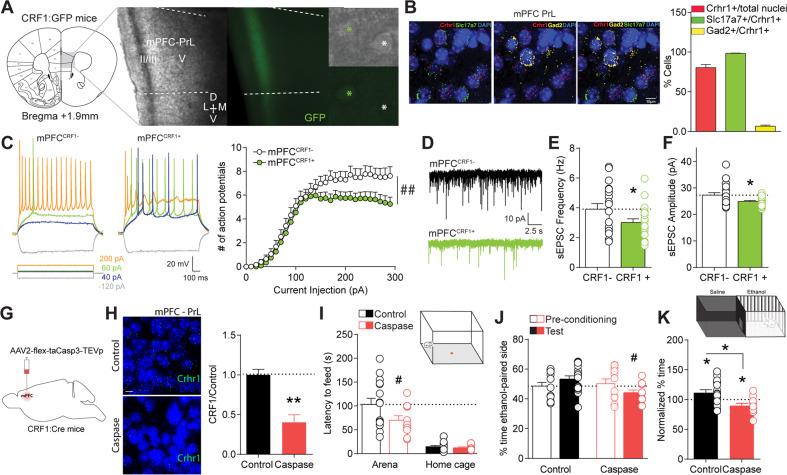
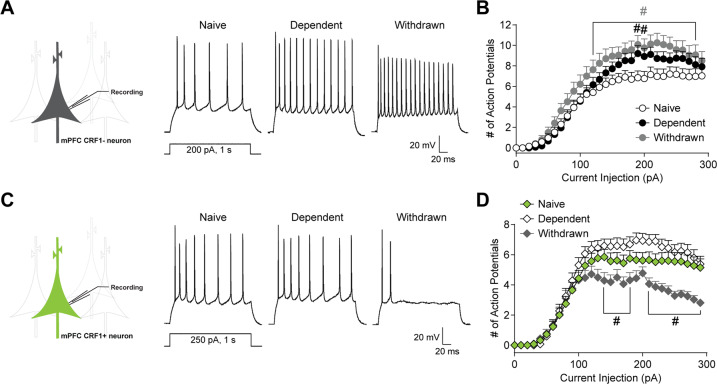
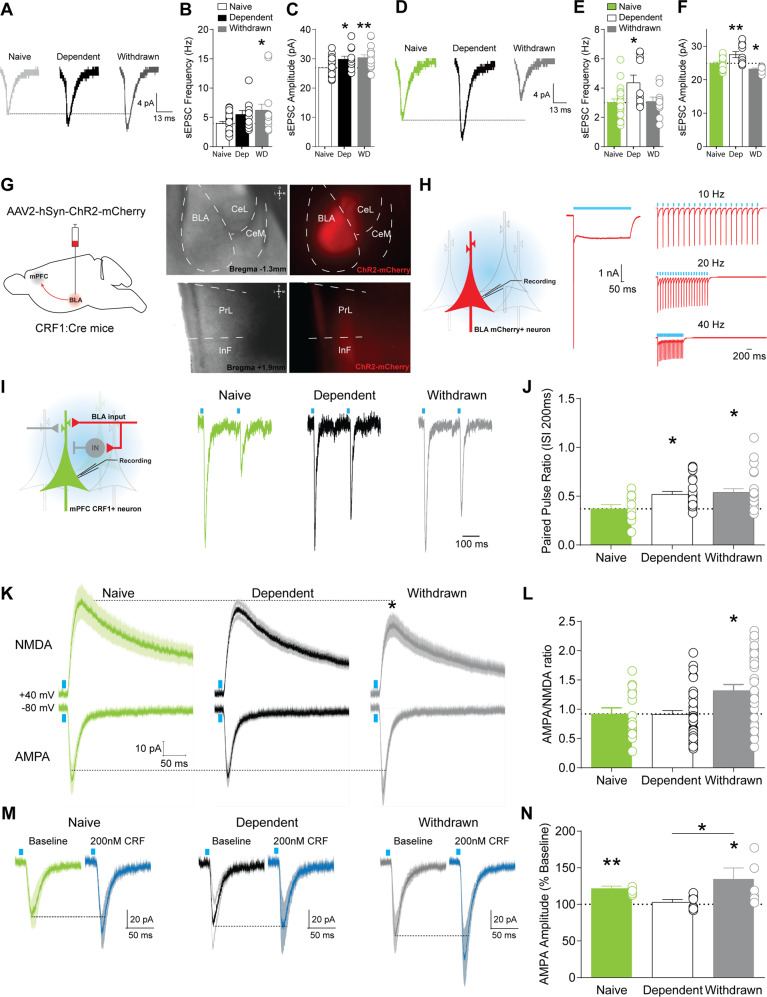
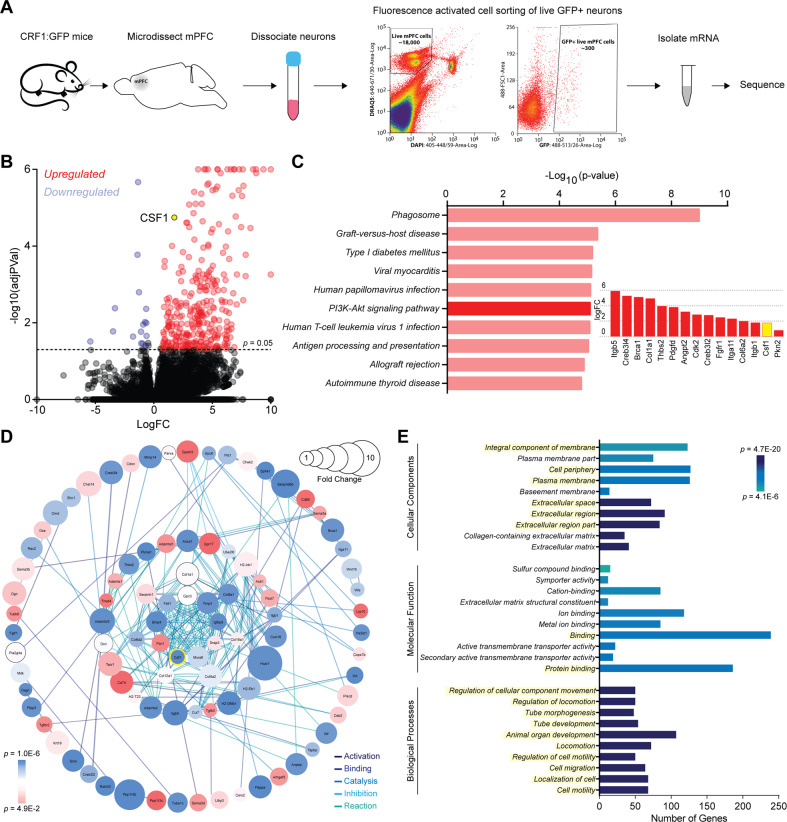
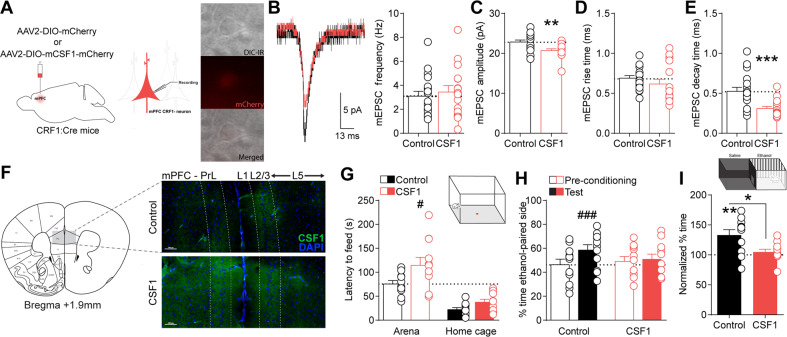
Prefrontal circuits are thought to underlie aberrant emotion contributing to relapse in abstinence; however, the discrete cell-types and mechanisms remain largely unknown. Corticotropin-releasing factor and its cognate type-1 receptor, a prominent brain stress system, is implicated in anxiety and alcohol use disorder (AUD). Here, we tested the hypothesis that medial prefrontal cortex CRF1-expressing (mPFC CRF1+ ) neurons comprise a distinct population that exhibits neuroadaptations following withdrawal from chronic ethanol underlying AUD-related behavior. We found that mPFC CRF1+ neurons comprise a glutamatergic population with distinct electrophysiological properties and regulate anxiety and conditioned rewarding effects of ethanol. Notably, mPFC CRF1+ neurons undergo unique neuroadaptations compared to neighboring neurons including a remarkable decrease in excitability and glutamatergic signaling selectively in withdrawal, which is driven in part by the basolateral amygdala. To gain mechanistic insight into these electrophysiological adaptations, we sequenced the transcriptome of mPFC CRF1+ neurons and found that withdrawal leads to an increase in colony-stimulating factor 1 (CSF1) in this population. We found that selective overexpression of CSF1 in mPFC CRF1+ neurons is sufficient to decrease glutamate transmission, heighten anxiety, and abolish ethanol reinforcement, providing mechanistic insight into the observed mPFC CRF1+ synaptic adaptations in withdrawal that drive these behavioral phenotypes. Together, these findings highlight mPFC CRF1+ neurons as a critical site of enduring adaptations that may contribute to the persistent vulnerability to ethanol misuse in abstinence, and CSF1 as a novel target for therapeutic intervention for withdrawal-related negative affect.
Overview
The claims and statistics of this paper haven’t been checked yet.
Free: it reads the open-access text and checks the first 5 claims that cite a source we can check. Create a free account to check every claim.
Integrity signals
Registry
Cites
Statistics
Figures
Verification
Claims the paper makes
The claims and statistics of this paper haven’t been checked yet.
Free: it reads the open-access text and checks the first 5 claims that cite a source we can check. Create a free account to check every claim.
Claims other papers make about this one
Each is checked against this paper’s own text: does it say what the citing paper says it does?
The source backs part of the claim, not all of it — or backs it for a different population, condition or comparison.
In the citing paper
“Additionally, glutamatergic and GABAergic signaling in the ILC contributes to inhibitory control over alcohol seeking and relapse (29, 34–37).”
From The glucagon-like peptide-1 (GLP-1) analogue semaglutide reduces alcohol drinking and modulates central GABA neurotransmission (2023) · cites this paper as [36]
Experimental — accuracy not yet measured
Self-check
Percentages, sums and reported differences re-computed from the paper’s own numbers.
The self-check needs the paper’s full text.
Citations
Cites
Moderated estimation of fold change and dispersion for RNA-seq data with DESeq2
Love, M. I., Huber, W., & Anders, S. (2014) · Genome Biology · doi:10.1186/s13059-014-0550-8 · Cited by 95,106
Koob, G. F., & Volkow, N. D. (2010) · Neuropsychopharmacology · doi:10.1038/npp.2009.110 · Cited by 5,340
Dysfunction of the prefrontal cortex in addiction: neuroimaging findings and clinical implications
Goldstein, R. Z., & Volkow, N. D. (2011) · Nature Reviews Neuroscience · doi:10.1038/nrn3119 · Cited by 2,749 · cited 1×
“Individuals with an AUD have reduced prefrontal cortex volumes [1–5], and hypofunctionality of the medial prefrontal cortex (mPFC) contributes to a loss of control over limiting intake in humans with an AUD [6].”
BackgroundSwanson, L. W., Sawchenko, P. E., Rivier, J., & Vale, W. W. (2008) · Neuroendocrinology · doi:10.1159/000123454 · Cited by 1,953 · cited 1×
“The CRF-CRF1 system is prominently expressed in the mPFC [15, 16], while CRF2 is limited [17, 18].”
BackgroundSex differences in anxiety and depression clinical perspectives
Altemus, M., Sarvaiya, N., & Neill Epperson, C. (2014) · Frontiers in Neuroendocrinology · doi:10.1016/j.yfrne.2014.05.004 · Cited by 1,413 · cited 1×
“Although, there are sex differences in mPFC circuits and anxiety-like behavior [20, 74, 75], which may contribute to the findings in this study.”
ResultColony-stimulating factor 1 receptor (CSF1R) inhibitors in cancer therapy
Cannarile, M. A., Weisser, M., Jacob, W., Jegg, A.-M., Ries, C. H., & Rüttinger, D. (2017) · Journal for ImmunoTherapy of Cancer · doi:10.1186/s40425-017-0257-y · Cited by 1,020
Chalmers, D., Lovenberg, T., & De Souza, E. (1995) · The Journal of Neuroscience · doi:10.1523/jneurosci.15-10-06340.1995 · Cited by 919
Hume, D. A., & MacDonald, K. P. A. (2012) · Blood · doi:10.1182/blood-2011-09-379214 · Cited by 763
Frontal Lobe Volume Loss Observed with Magnetic Resonance Imaging in Older Chronic Alcoholics
Pfefferbaum, A., Sullivan, E. V., Mathalon, D. H., & Lim, K. O. (1997) · Alcoholism: Clinical & Experimental Research · doi:10.1097/00000374-199705000-00020 · Cited by 493
Addiction as a stress surfeit disorder
Koob, G. F., Buck, C. L., Cohen, A., Edwards, S., Park, P. E., Schlosburg, J. E., Schmeichel, B., Vendruscolo, L. F., Wade, C. L., Whitfield, T. W., et al. (2014) · Neuropharmacology · doi:10.1016/j.neuropharm.2013.05.024 · Cited by 483 · cited 3×
“Since CRF-CRF1 signaling can potently modulate neuronal activity and synaptic plasticity [11, 50, 51], we also examined the impact of CRF on the BLA-mPFC pathway.”
BackgroundResultDe Souza, E., Insel, T., Perrin, M., Rivier, J., Vale, W., & Kuhar, M. (1985) · The Journal of Neuroscience · doi:10.1523/jneurosci.05-12-03189.1985 · Cited by 478
Dulawa, S. C., & Hen, R. (2005) · Neuroscience & Biobehavioral Reviews · doi:10.1016/j.neubiorev.2005.03.017 · Cited by 430
Felix-Ortiz, A. C., Burgos-Robles, A., Bhagat, N. D., Leppla, C. A., & Tye, K. M. (2016) · Neuroscience · doi:10.1016/j.neuroscience.2015.07.041 · Cited by 413
Hare, B. D., & Duman, R. S. (2020) · Molecular Psychiatry · doi:10.1038/s41380-020-0685-9 · Cited by 366 · cited 1×
“Preclinical studies also implicate the mPFC in anxiety-like behaviors and excessive ethanol drinking [7, 8].”
BackgroundEmerging Roles for CSF-1 Receptor and its Ligands in the Nervous System
Chitu, V., Gokhan, Ş., Nandi, S., Mehler, M. F., & Stanley, E. R. (2016) · Trends in Neurosciences · doi:10.1016/j.tins.2016.03.005 · Cited by 362
Reduced Cerebral Grey Matter Observed in Alcoholics Using Magnetic Resonance Imaging
Jernigan, T. L., Butters, N., DiTraglia, G., Schafer, K., Smith, T., Irwin, M., Grant, I., Schuckit, M., & Cermak, L. S. (1991) · Alcoholism: Clinical and Experimental Research · doi:10.1111/j.1530-0277.1991.tb00540.x · Cited by 350
Roberto, M., Cruz, M. T., Gilpin, N. W., Sabino, V., Schweitzer, P., Bajo, M., Cottone, P., Madamba, S. G., Stouffer, D. G., Zorrilla, E. P., et al. (2010) · Biological Psychiatry · doi:10.1016/j.biopsych.2009.11.007 · Cited by 336
Self-citationGlutamatergic and Dopaminergic Neurons Mediate Anxiogenic and Anxiolytic Effects of CRHR1
Refojo, D., Schweizer, M., Kuehne, C., Ehrenberg, S., Thoeringer, C., Vogl, A. M., Dedic, N., Schumacher, M., von Wolff, G., Avrabos, C., et al. (2011) · Science · doi:10.1126/science.1202107 · Cited by 313
Wohleb, E. S., Terwilliger, R., Duman, C. H., & Duman, R. S. (2018) · Biological Psychiatry · doi:10.1016/j.biopsych.2017.05.026 · Cited by 288 · cited 2×
“Indeed, stress-induced increases in mPFC CSF1 expression leads to microglia-mediated synaptic pruning, and CSF1 knockdown was sufficient to reverse stress-induced anxiety and depressive behaviors [52].”
BackgroundAlcohol, stress, and glucocorticoids: From risk to dependence and relapse in alcohol use disorders
Blaine, S. K., & Sinha, R. (2017) · Neuropharmacology · doi:10.1016/j.neuropharm.2017.01.037 · Cited by 257 · cited 1×
“Ethanol activates neuroendocrine stress systems, which become dysregulated following chronic exposure contributing to AUD [9, 10].”
BackgroundInfluentialWanat, M. J., Hopf, F. W., Stuber, G. D., Phillips, P. E. M., & Bonci, A. (2008) · The Journal of Physiology · doi:10.1113/jphysiol.2007.150078 · Cited by 256
Chen, Y., Rex, C. S., Rice, C. J., Dubé, C. M., Gall, C. M., Lynch, G., & Baram, T. Z. (2010) · Proceedings of the National Academy of Sciences · doi:10.1073/pnas.1003825107 · Cited by 256
Corticotropin Releasing Factor (CRF) Binding Protein: A Novel Regulator of CRF and Related Peptides
Behan, D. P., De Souza, E. B., Lowry, P. J., Potter, E., Sawchenko, P., & Vale, W. W. (1995) · Frontiers in Neuroendocrinology · doi:10.1006/frne.1995.1013 · Cited by 243
Chronic Alcohol Exposure Alters Behavioral and Synaptic Plasticity of the Rodent Prefrontal Cortex
Kroener, S., Mulholland, P. J., New, N. N., Gass, J. T., Becker, H. C., & Chandler, L. J. (2012) · PLoS ONE · doi:10.1371/journal.pone.0037541 · Cited by 238
George, O., Sanders, C., Freiling, J., Grigoryan, E., Vu, S., Allen, C. D., Crawford, E., Mandyam, C. D., & Koob, G. F. (2012) · Proceedings of the National Academy of Sciences · doi:10.1073/pnas.1116523109 · Cited by 238
A Cortical Circuit for Sexually Dimorphic Oxytocin-Dependent Anxiety Behaviors
Li, K., Nakajima, M., Ibañez-Tallon, I., & Heintz, N. (2016) · Cell · doi:10.1016/j.cell.2016.08.067 · Cited by 234 · cited 2×
“Although, there are sex differences in mPFC circuits and anxiety-like behavior [20, 74, 75], which may contribute to the findings in this study.”
ResultDisproportionate Atrophy of Cerebral White Matter in Chronic Alcoholics
de la Monte, S. M. (1988) · Archives of Neurology · doi:10.1001/archneur.1988.00520330076013 · Cited by 226
Zhao, Y., Wang, F., Fan, Y., Ping, G.-F., Yang, J., & Wu, C. (2012) · Behavioural Brain Research · doi:10.1016/j.bbr.2012.08.052 · Cited by 171
Justice, N. J., Yuan, Z. F., Sawchenko, P. E., & Vale, W. (2008) · Journal of Comparative Neurology · doi:10.1002/cne.21848 · Cited by 167
Pleil, K. E., Lowery-Gionta, E. G., Crowley, N. A., Li, C., Marcinkiewcz, C. A., Rose, J. H., McCall, N. M., Maldonado-Devincci, A. M., Morrow, A. L., Jones, S. R., et al. (2015) · Neuropharmacology · doi:10.1016/j.neuropharm.2015.06.017 · Cited by 162
Wang, X.-D., Chen, Y., Wolf, M., Wagner, K. V., Liebl, C., Scharf, S. H., Harbich, D., Mayer, B., Wurst, W., Holsboer, F., et al. (2011) · Neurobiology of Disease · doi:10.1016/j.nbd.2011.01.020 · Cited by 157
Frontal white matter and cingulum diffusion tensor imaging deficits in alcoholism
Harris, G. J., Jaffin, S. K., Hodge, S. M., Kennedy, D., Caviness, V. S., Marinkovic, K., Papadimitriou, G. M., Makris, N., & Oscar‐Berman, M. (2008) · Alcoholism: Clinical and Experimental Research · doi:10.1111/j.1530-0277.2008.00661.x · Cited by 152
Microglia Control Escalation of Drinking in Alcohol-Dependent Mice: Genomic and Synaptic Drivers
Warden, A. S., Wolfe, S. A., Khom, S., Varodayan, F. P., Patel, R. R., Steinman, M. Q., Bajo, M., Montgomery, S. E., Vlkolinsky, R., Nadav, T., et al. (2020) · Biological Psychiatry · doi:10.1016/j.biopsych.2020.05.011 · Cited by 127
Self-citationProtein kinase C epsilon mediation of CRF- and ethanol-induced GABA release in central amygdala
Bajo, M., Cruz, M. T., Siggins, G. R., Messing, R., & Roberto, M. (2008) · Proceedings of the National Academy of Sciences · doi:10.1073/pnas.0802302105 · Cited by 119
Self-citationDiverse reprogramming codes for neuronal identity
Tsunemoto, R., Lee, S., Szűcs, A., Chubukov, P., Sokolova, I., Blanchard, J. W., Eade, K. T., Bruggemann, J., Wu, C., Torkamani, A., et al. (2018) · Nature · doi:10.1038/s41586-018-0103-5 · Cited by 119
Giesbrecht, C. J., Mackay, J. P., Silveira, H. B., Urban, J. H., & Colmers, W. F. (2010) · The Journal of Neuroscience · doi:10.1523/jneurosci.2306-10.2010 · Cited by 107
Chen, P., Lou, S., Huang, Z., Wang, Z., Shan, Q., Wang, Y., Yang, Y., Li, X., Gong, H., Jin, Y., et al. (2020) · Neuron · doi:10.1016/j.neuron.2020.01.033 · Cited by 107
Stefani, M. R., & Moghaddam, B. (2005) · Behavioral Neuroscience · doi:10.1037/0735-7044.119.2.420 · Cited by 106
Herman, M. A., Contet, C., Justice, N. J., Vale, W., & Roberto, M. (2013) · The Journal of Neuroscience · doi:10.1523/jneurosci.2490-12.2013 · Cited by 105
Self-citationEndocannabinoid Signaling Collapse Mediates Stress-Induced Amygdalo-Cortical Strengthening
Marcus, D. J., Bedse, G., Gaulden, A. D., Ryan, J. D., Kondev, V., Winters, N. D., Rosas-Vidal, L. E., Altemus, M., Mackie, K., Lee, F. S., et al. (2020) · Neuron · doi:10.1016/j.neuron.2019.12.024 · Cited by 104 · cited 1×
“The BLA and mPFC show excitatory coupling and enhanced activity during anxiety, and activation of BLA inputs to the mPFC induces anxiety-like behaviors [48, 49], suggesting the BLA-mPFC circuit is a candidate in underlying aberrant emotional processing following withdrawal.”
BackgroundCho, S. B., Su, J., Kuo, S. I.-C., Bucholz, K. K., Chan, G., Edenberg, H. J., McCutcheon, V. V., Schuckit, M. A., Kramer, J. R., & Dick, D. M. (2019) · Psychology of Addictive Behaviors · doi:10.1037/adb0000436 · Cited by 102
Jaferi, A., & Bhatnagar, S. (2007) · Brain Research · doi:10.1016/j.brainres.2007.07.100 · Cited by 98
Uribe-Mariño, A., Gassen, N. C., Wiesbeck, M. F., Balsevich, G., Santarelli, S., Solfrank, B., Dournes, C., Fries, G. R., Masana, M., Labermeier, C., et al. (2016) · Biological Psychiatry · doi:10.1016/j.biopsych.2016.03.2106 · Cited by 98
Cortical sources of CRF, NKB, and CCK and their effects on pyramidal cells in the neocortex
Gallopin, T., Geoffroy, H., Rossier, J., & Lambolez, B. (2006) · Cerebral Cortex · doi:10.1093/cercor/bhj081 · Cited by 97
Natividad, L. A., Buczynski, M. W., Herman, M. A., Kirson, D., Oleata, C. S., Irimia, C., Polis, I., Ciccocioppo, R., Roberto, M., & Parsons, L. H. (2017) · Biological Psychiatry · doi:10.1016/j.biopsych.2017.01.005 · Cited by 84 · cited 1×
“Since CRF-CRF1 signaling can potently modulate neuronal activity and synaptic plasticity [11, 50, 51], we also examined the impact of CRF on the BLA-mPFC pathway.”
BackgroundSelf-citationHerman, M. A., Contet, C., & Roberto, M. (2016) · The Journal of Neuroscience · doi:10.1523/jneurosci.1267-16.2016 · Cited by 72 · cited 2×
“Our previous work demonstrated differential sensitivity in GABAergic signaling in CeA neurons compared to CeA neurons to acute and chronic ethanol [36, 37].”
BackgroundMethodSelf-citationThe CRF system as a therapeutic target for neuropsychiatric disorders
Sanders, J., & Nemeroff, C. (2016) · Trends in Pharmacological Sciences · doi:10.1016/j.tips.2016.09.004 · Cited by 72
Emerging role for the medial prefrontal cortex in alcohol-seeking behaviors
Klenowski, P. M. (2017) · Addictive Behaviors · doi:10.1016/j.addbeh.2017.09.024 · Cited by 72
Corticotropin releasing factor in neuroplasticity
Regev, L., & Baram, T. Z. (2014) · Frontiers in Neuroendocrinology · doi:10.1016/j.yfrne.2013.10.001 · Cited by 71
Meloni, E. G., Reedy, C. L., Cohen, B. M., & Carlezon, W. A. (2007) · Biological Psychiatry · doi:10.1016/j.biopsych.2007.10.016 · Cited by 71
Patel, R. R., Khom, S., Steinman, M. Q., Varodayan, F. P., Kiosses, W. B., Hedges, D. M., Vlkolinsky, R., Nadav, T., Polis, I., Bajo, M., et al. (2019) · Brain, Behavior, and Immunity · doi:10.1016/j.bbi.2018.10.009 · Cited by 70
Self-citationPatel, R. R., Wolfe, S. A., Bajo, M., Abeynaike, S., Pahng, A., Borgonetti, V., D’Ambrosio, S., Nikzad, R., Edwards, S., Paust, S., et al. (2021) · Progress in Neurobiology · doi:10.1016/j.pneurobio.2020.101952 · Cited by 70
Self-citationBishop, S. F., Lauzon, N. M., Bechard, M., Gholizadeh, S., & Laviolette, S. R. (2010) · Cerebral Cortex · doi:10.1093/cercor/bhq060 · Cited by 67
Varodayan, F. P., Sidhu, H., Kreifeldt, M., Roberto, M., & Contet, C. (2018) · Neuropharmacology · doi:10.1016/j.neuropharm.2018.02.014 · Cited by 65
Self-citationLiu, R.-J., Ota, K. T., Dutheil, S., Duman, R. S., & Aghajanian, G. K. (2015) · Neuropsychopharmacology · doi:10.1038/npp.2015.70 · Cited by 62
Corticotropin-Releasing Factor (CRF) and Addictive Behaviors
Roberto, M., Spierling, S. R., Kirson, D., & Zorrilla, E. P. (2017) · International Review of Neurobiology · doi:10.1016/bs.irn.2017.06.004 · Cited by 56
Self-citationHupalo, S., Martin, A. J., Green, R. K., Devilbiss, D. M., & Berridge, C. W. (2019) · Journal of Neuroscience · doi:10.1523/jneurosci.2701-18.2019 · Cited by 54
Sanchez-Alavez, M., Nguyen, W., Mori, S., Wills, D. N., Otero, D., Ehlers, C. L., & Conti, B. (2019) · Alcohol · doi:10.1016/j.alcohol.2018.07.005 · Cited by 50
Hupalo, S., & Berridge, C. W. (2016) · Neuropsychopharmacology · doi:10.1038/npp.2016.85 · Cited by 49
Lost in Translation: CRF1 Receptor Antagonists and Addiction Treatment
Shaham, Y., & de Wit, H. (2016) · Neuropsychopharmacology · doi:10.1038/npp.2016.94 · Cited by 49
Yan, X., Baram, T. Z., Gerth, A., Schultz, L., & Ribak, C. E. (1998) · Experimental Brain Research · doi:10.1007/s002210050576 · Cited by 48
Qiao, X., Gai, H., Su, R., Deji, C., Cui, J., Lai, J., & Zhu, Y. (2018) · Journal of Affective Disorders · doi:10.1016/j.jad.2018.04.039 · Cited by 48
Hwa, L. S., Nathanson, A. J., Shimamoto, A., Tayeh, J. K., Wilens, A. R., Holly, E. N., Newman, E. L., DeBold, J. F., & Miczek, K. A. (2015) · Psychopharmacology · doi:10.1007/s00213-015-3925-y · Cited by 47
Brain pathways to recovery from alcohol dependence
Cui, C., Noronha, A., Warren, K. R., Koob, G. F., Sinha, R., Thakkar, M., Matochik, J., Crews, F. T., Chandler, L. J., Pfefferbaum, A., et al. (2015) · Alcohol · doi:10.1016/j.alcohol.2015.04.006 · Cited by 45
Self-citationBijlsma, E. Y., van Leeuwen, M. L. F., Westphal, K. G. C., Olivier, B., & Groenink, L. (2010) · Neuroscience · doi:10.1016/j.neuroscience.2010.11.026 · Cited by 45
Läck, A. K., Christian, D. T., Diaz, M. R., & McCool, B. A. (2009) · Alcohol · doi:10.1016/j.alcohol.2008.11.002 · Cited by 42
Miguel, T. T., Gomes, K. S., & Nunes‐de‐Souza, R. L. (2014) · Hormones and Behavior · doi:10.1016/j.yhbeh.2014.05.003 · Cited by 40
CRF modulates glutamate transmission in the central amygdala of naïve and ethanol-dependent rats
Varodayan, F. P., Correia, D., Kirson, D., Khom, S., Oleata, C. S., Luu, G., Schweitzer, P., & Roberto, M. (2017) · Neuropharmacology · doi:10.1016/j.neuropharm.2017.08.009 · Cited by 37
Self-citationWolfe, S. A., Sidhu, H., Patel, R. R., Kreifeldt, M., D’Ambrosio, S. R., Contet, C., & Roberto, M. (2019) · eNeuro · doi:10.1523/eneuro.0087-19.2019 · Cited by 36
Self-citationDo cortical plasticity mechanisms differ between males and females?
Dachtler, J., & Fox, K. D. (2016) · Journal of Neuroscience Research · doi:10.1002/jnr.23850 · Cited by 31
Avchalumov, Y., Oliver, R. J., Trenet, W., Osorno, R. E. H., Sibley, B. D., Purohit, D. C., Contet, C., Roberto, M., Woodward, J. J., & Mandyam, C. D. (2020) · Neuropharmacology · doi:10.1016/j.neuropharm.2020.108438 · Cited by 31
Self-citationKetchesin, K. D., Stinnett, G. S., & Seasholtz, A. F. (2016) · Alcoholism: Clinical and Experimental Research · doi:10.1111/acer.13119 · Cited by 29
Graybeal, C., Kiselycznyk, C., & Holmes, A. (2012) · Neuroscience · doi:10.1016/j.neuroscience.2012.02.042 · Cited by 29
Dong, H., Keegan, J., Hong, E. S., Gallardo, C., Montalvo‐Ortiz, J. L., Wang, B., Rice, K. C., & Csernansky, J. G. (2018) · Psychoneuroendocrinology · doi:10.1016/j.psyneuen.2018.02.013 · Cited by 28
Cortical dihydrophyridine binding sites are unaltered in human alcoholic brain
Kril, J. J., Gundlach, A. L., Dodd, P. R., Johnston, G. A. R., & Harper, C. G. (1989) · Annals of Neurology · doi:10.1002/ana.410260315 · Cited by 27
Ketchesin, K. D., Huang, N. S., & Seasholtz, A. F. (2017) · Frontiers in Neuroanatomy · doi:10.3389/fnana.2017.00090 · Cited by 23
Libster, A. M., Title, B., & Yarom, Y. (2015) · Journal of Neurophysiology · doi:10.1152/jn.00745.2015 · Cited by 19
Agoglia, A. E., Zhu, M., Ying, R., Sidhu, H., Natividad, L. A., Wolfe, S. A., Buczynski, M. W., Contet, C., Parsons, L. H., Roberto, M., et al. (2020) · eNeuro · doi:10.1523/eneuro.0420-19.2020 · Cited by 15
Self-citationDistribution of mRNAs encoding CRF receptors in brain and pituitary of rat and mouse
Van Pett, K., Viau, V., Bittencourt, J. C., Chan, R. K. W., Li, H.-Y., Arias, C., Prins, G. S., Perrin, M., Vale, W., & Sawchenko, P. E. (2000) · The Journal of Comparative Neurology · doi:10.1002/1096-9861(20001211)428:2<191::aid-cne1>3.0.co;2-u
Cited by
Chuong, V., Farokhnia, M., Khom, S., Pince, C. L., Elvig, S. K., Vlkolinsky, R., Marchette, R. C. N., Koob, G. F., Roberto, M., Vendruscolo, L. F., et al. (2023) · JCI Insight · doi:10.1172/jci.insight.170671 · Cited by 214
Self-citationVarodayan, F. P., Pahng, A. R., Davis, T. D., Gandhi, P., Bajo, M., Steinman, M. Q., Kiosses, W. B., Blednov, Y. A., Burkart, M. D., Edwards, S., et al. (2023) · Brain, Behavior, and Immunity · doi:10.1016/j.bbi.2023.02.020 · Cited by 50
Self-citationSex-dependent factors of alcohol and neuroimmune mechanisms
Cruz, B., Borgonetti, V., Bajo, M., & Roberto, M. (2023) · Neurobiology of Stress · doi:10.1016/j.ynstr.2023.100562 · Cited by 41
Self-citationExcitatory Neuron-Derived Interleukin-34 Controls Cortical Developmental Microglia Function
Devlin, B. A., Nguyen, D. M., Ribeiro, D., Grullon, G., Clark, M. J., Finn, A., Ceasrine, A. M., Oxendine, S. R., Deja, M., Shah, A., et al. (2024) · Immunity · doi:10.1016/j.immuni.2025.06.002 · Cited by 40
Borgonetti, V., Roberts, A. J., Bajo, M., Galeotti, N., & Roberto, M. (2023) · British Journal of Pharmacology · doi:10.1111/bph.16091 · Cited by 39
Self-citation
Metadata
- Authors
- Patel, R. R., Wolfe, S. A., Borgonetti, V., Gandhi, P. J., Rodriguez, L., Snyder, A. E., D’Ambrosio, S., Bajo, M., Domissy, A., Head, S., Contet, C., Dayne Mayfield, R., Roberts, A. J., & Roberto, M.
- Affiliations
- Scripps Research Institute (US)
- Corresponding author
- Roberto, Marisa
- ORCID
- Venue
- Molecular Psychiatry
- Published
- 2022-06-06
- Volume
- 27
- Issue
- 8
- Pages
- 3441-3451
- ISSN
- 1359-4184 (ISSN-L)
- 1476-5578
- PMC
- PMC9708587
- OpenAlex
- W4281752745
- Cited by
- 33
- References
- 79
- Citations by year
- 2026: 8 · 2025: 8 · 2024: 7 · 2023: 10
- FWCI
- 2.76
- Type
- journal article
- Language
- en
- Open access
- hybrid
- doi.org
- Licence
- cc-by
- creativecommons.org/licenses/by/4.0 (tdm)
- creativecommons.org/licenses/by/4.0 (vor)
- Locations
- Molecular Psychiatry (publishedVersion, cc-by)
- PubMed Central (publishedVersion, cc-by)
- PubMed (publishedVersion)
- Florence Research (University of Florence) (submittedVersion, other-oa)
- Use Siena air (University of Siena) (submittedVersion, other-oa)
- Funders
- U.S. Department of Health & Human Services | NIH | National Institute on Alcohol Abuse and Alcoholism (F32 AA026765, AA007456)
- Topics
- Life Sciences › Neuroscience › Cellular and Molecular Neuroscience › Neurotransmitter Receptor Influence on Behavior
- Life Sciences › Neuroscience › Cellular and Molecular Neuroscience › Neuroscience and Neuropharmacology Research
- Life Sciences › Neuroscience › Cellular and Molecular Neuroscience › Neuropeptides and Animal Physiology
- Keywords
- ethanol withdrawal, corticotropin-releasing factor type 1 receptor, medial prefrontal cortex, alcoholism, anxiety, ethanol reward, conditioned reinforcement, glutamatergic signaling, neuronal excitability, CSF-1, basolateral amygdala, neural adaptation, transcriptome, relapse vulnerability
- MeSH terms
- Ethanol, Alcoholism, Anxiety, Corticotropin-Releasing Hormone, Humans, Neurons, Substance Withdrawal Syndrome, Receptors, Corticotropin-Releasing Hormone
About these checks
Registry, retraction, Cites and statistics results are computed, not judged, with one exception: a printed reference that no index lists is read once by a model before it counts as a citation error. Claims are extracted by a model and kept only when their quote appears verbatim in the text; each cited source is then checked, with a model’s help, for whether it says what the claim relies on. Those verdicts can be wrong — read the claim’s quote and the cited source before relying on one.
Statistics and arithmetic are recomputed, not judged.
Confidence bands are shown only for fields calibrated on our annotated test set. None is calibrated yet, so no band is shown.
What counts as a claim ›How we measure confidence ›How we check this ›
Are you an author, or do you see a problem with this page? Request a review
Data sources
Bibliographic data: Semantic Scholar, OpenAlex, Crossref.
Contains information from the Semantic Scholar Academic Graph Datasets, made available under the ODC Attribution License (ODC-BY 1.0).
Semantic Scholar’s data is described in: Kinney, R., et al. (2023). The Semantic Scholar Open Data Platform. arXiv:2301.10140.
