

Mechanisms of activation of innate-like intraepithelial T lymphocytes
Open accessThe DOI matches its Crossref record; 132 of the 133 references it cites were found in a registry or an index.
Abstract
Intraepithelial T lymphocytes (T-IEL) contain subsets of innate-like T cells that evoke innate and adaptive immune responses to provide rapid protection at epithelial barrier sites. In the intestine, T-IEL express variable T cell antigen receptors (TCR), with unknown antigen specificities. Intriguingly, they also express multiple inhibitory receptors, many of which are normally found on exhausted or antigen-experienced T cells. This pattern suggests that T-IEL are antigen-experienced, yet it is not clear where, and in what context, T-IEL encounter TCR ligands. We review recent evidence indicating TCR antigens for intestinal innate-like T-IEL are found on thymic or intestinal epithelium, driving agonist selection of T-IEL. We explore the contributions of the TCR and various co-stimulatory and co-inhibitory receptors in activating T-IEL effector functions. The balance between inhibitory and activating signals may be key to keeping these highly cytotoxic, rapidly activated cells in check, and key to harnessing their immune surveillance potential.
Overview
The claims and statistics of this paper haven’t been checked yet.
Free: it reads the open-access text and checks the first 5 claims that cite a source we can check. Create a free account to check every claim.
Integrity signals
Registry
Cites
Statistics
Figures
Verification
Claims the paper makes
The claims and statistics of this paper haven’t been checked yet.
Free: it reads the open-access text and checks the first 5 claims that cite a source we can check. Create a free account to check every claim.
Claims other papers make about this one
Each is checked against this paper’s own text: does it say what the citing paper says it does?
The source backs part of the claim, not all of it — or backs it for a different population, condition or comparison.
In the citing paper
“In the healthy human small intestine, CD8αβ+ TCRαβ+ T cells represent 80–90% of iIELs; <20% are TCRαβ+ CD4+; 5-15% TCRγδ+; while the murine counterpart TCRαβ+ CD8αα+ iIELs are absent [297, 298].”
From Guidelines for the use of flow cytometry and cell sorting in immunological studies (third edition) (2021) · cites this paper as [298]
Experimental — accuracy not yet measured
Self-check
Percentages, sums and reported differences re-computed from the paper’s own numbers.
The self-check needs the paper’s full text.
Citations
Cites
Sutton, C. E., Lalor, S. J., Sweeney, C. M., Brereton, C. F., Lavelle, E. C., & Mills, K. H. G. (2009) · Immunity · doi:10.1016/j.immuni.2009.08.001 · Cited by 1,553
Tissue-Resident Memory T Cells
Schenkel, J. M., & Masopust, D. (2014) · Immunity · doi:10.1016/j.immuni.2014.12.007 · Cited by 1,059
Regulation of Cutaneous Malignancy by γδ T Cells
Girardi, M., Oppenheim, D. E., Steele, C. R., Lewis, J. M., Glusac, E., Filler, R., Hobby, P., Sutton, B., Tigelaar, R. E., & Hayday, A. C. (2001) · Science · doi:10.1126/science.1063916 · Cited by 1,004
Fuchs, A., Vermi, W., Lee, J. S., Lonardi, S., Gilfillan, S., Newberry, R. D., Cella, M., & Colonna, M. (2013) · Immunity · doi:10.1016/j.immuni.2013.02.010 · Cited by 907
Meresse, B., Chen, Z., Ciszewski, C., Tretiakova, M., Bhagat, G., Krausz, T. N., Raulet, D. H., Lanier, L. L., Groh, V., Spies, T., et al. (2004) · Immunity · doi:10.1016/j.immuni.2004.06.020 · Cited by 855 · cited 2×
“responsible for epithelial destruction.(62,63) In the disease context, the chronic heightened expression of IL-15 by stressed IEC plays a critical role as IL-15 not only upregulates NKG2D expression on TIEL, but also primes the cells and potentiates their cytotoxicity.”
BackgroundA Direct Role for NKG2D/MICA Interaction in Villous Atrophy during Celiac Disease
Hüe, S., Mention, J.-J., Monteiro, R. C., Zhang, S., Cellier, C., Schmitz, J., Verkarre, V., Fodil, N., Bahram, S., Cerf-Bensussan, N., et al. (2004) · Immunity · doi:10.1016/j.immuni.2004.06.018 · Cited by 759 · cited 1×
“responsible for epithelial destruction.(62,63) In the disease context, the chronic heightened expression of IL-15 by stressed IEC plays a critical role as IL-15 not only upregulates NKG2D expression on TIEL, but also primes the cells and potentiates their cytotoxicity.”
BackgroundThe light and dark sides of intestinal intraepithelial lymphocytes
Cheroutre, H., Lambolez, F., & Mucida, D. (2011) · Nature Reviews Immunology · doi:10.1038/nri3007 · Cited by 693 · cited 4×
“Mucosal Immunology _#####################_ Instead, 40% of TCRαβ CD8αα T-IEL are positive for members of Ly49 family when stained with a mixture of antibodies targeting Ly49A/C E/F/G2 against 10% of TCRγδ CD8αα T-IEL and 2% of TCRαβ CD8αβ T-IEL.”
BackgroundInfluentialNKG2D Receptor and Its Ligands in Host Defense
Lanier, L. L. (2015) · Cancer Immunology Research · doi:10.1158/2326-6066.cir-15-0098 · Cited by 599 · cited 1×
“In humans, NKG2D is found at the surface of both resting and activated CD8 T cells while murine T cells only express NKG2D when activated.(56) Consistent with this, NKG2D is found at the surface of all murine DETC(57) and human intestinal T-IEL, albeit at low levels.”
BackgroundUssher, J. E., Bilton, M., Attwod, E., Shadwell, J., Richardson, R., de Lara, C., Mettke, E., Kurioka, A., Hansen, T. H., Klenerman, P., et al. (2014) · European Journal of Immunology · doi:10.1002/eji.201343509 · Cited by 543
Skin-resident memory CD8 + T cells trigger a state of tissue-wide pathogen alert
Ariotti, S., Hogenbirk, M. A., Dijkgraaf, F. E., Visser, L. L., Hoekstra, M. E., Song, J.-Y., Jacobs, H., Haanen, J. B., & Schumacher, T. N. (2014) · Science · doi:10.1126/science.1254803 · Cited by 533
Continuous requirement for the TCR in regulatory T cell function
Levine, A. G., Arvey, A., Jin, W., & Rudensky, A. Y. (2014) · Nature Immunology · doi:10.1038/ni.3004 · Cited by 521
Junctional adhesion molecules (JAMs): more molecules with dual functions?
Ebnet, K., Suzuki, A., Ohno, S., & Vestweber, D. (2004) · Journal of Cell Science · doi:10.1242/jcs.00930 · Cited by 501
SLAM Family Receptors and SAP Adaptors in Immunity
Cannons, J. L., Tangye, S. G., & Schwartzberg, P. L. (2011) · Annual Review of Immunology · doi:10.1146/annurev-immunol-030409-101302 · Cited by 497 · cited 1×
“It can function as both an activating and inhibitory receptor, depending on which splice variant is expressed, the density and glycosylation of the receptor or the availability of the signaling adapters, SLAM-associated protein (SAP) and Ewing’s sarcomaassociated transcript 2 (EAT-2).(110) Its ligand is CD48 (SLAMF2).”
BackgroundIntraepithelial lymphocytes: exploring the Third Way in immunology
Hayday, A., Theodoridis, E., Ramsburg, E., & Shires, J. (2001) · Nature Immunology · doi:10.1038/ni1101-997 · Cited by 491 · cited 2×
“To achieve this, they are kept in an “activated, yet resting” state, ready for action, but tight control of this poised activation state is essential.(2) If this control is disrupted, T-IEL might potentially exacerbate the intestinal damage found in autoimmune and inflammatory bowel diseases (IBD) such as Crohn’s and…”
BackgroundProtection of the intestinal mucosa by intraepithelial γδ T cells
Chen, Y., Chou, K., Fuchs, E., Havran, W. L., & Boismenu, R. (2002) · Proceedings of the National Academy of Sciences · doi:10.1073/pnas.212290499 · Cited by 480 · cited 1×
“This function of T-IEL has been particularly shown to be important in the recovery from colitis-inducing chemicals in mouse models.(12,13) Conversely, T-IEL are also cytotoxic cells that patrol the epithelial layer to sense and eliminate infected/ damaged epithelial cells.”
BackgroundDavidson, N. J., Leach, M. W., Fort, M. M., Thompson-Snipes, L., Kühn, R., Müller, W., Berg, D. J., & Rennick, D. M. (1996) · The Journal of experimental medicine · doi:10.1084/jem.184.1.241 · Cited by 402 · cited 1×
“CD8αα expression on lymphocytes is regulated by the intestinal environment as conventional CD4 T cells also upregulate CD8αα expression upon migration to the intestine.(82,83) CD8αα binds with high affinity to the Thymus Leukemia Antigen (TL), a nonclassical MHC-I molecule, whose expression is restricted to murine IEC.”
BackgroundIntestinal intraepithelial lymphocytes are a distinct set of γδ T cells
Bonneville, M., Janeway, C. A., Ito, K., Haser, W., Ishida, I., Nakanishit, N., & Tonegawa, S. (1988) · Nature · doi:10.1038/336479a0 · Cited by 389
Lebrero-Fernández, C., Bergström, J. H., Pelaseyed, T., & Bas-Forsberg, A. (2016) · Frontiers in Immunology · doi:10.3389/fimmu.2016.00001 · Cited by 371 · cited 1×
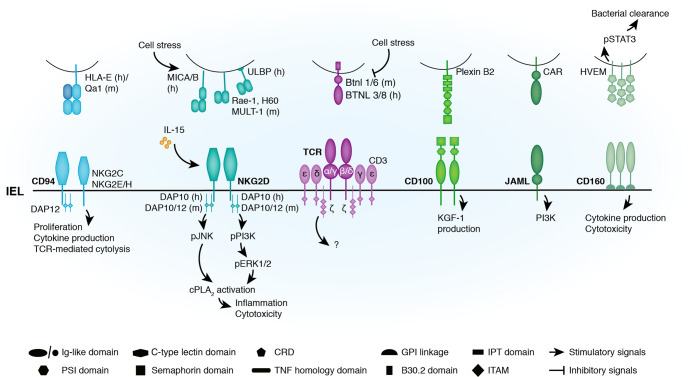
“Btnl1 is expressed as a heterodimer with Btnl6 on IEC under homeostatic conditions.(34) Hayday and colleagues recently demonstrated that in the absence of Btnl1, Vγ7 T-IEL were almost absent from the intestinal compartment(35) (Fig.”
BackgroundEpithelia Use Butyrophilin-like Molecules to Shape Organ-Specific γδ T Cell Compartments
Di Marco Barros, R., Roberts, N. A., Dart, R. J., Vantourout, P., Jandke, A., Nussbaumer, O., Deban, L., Cipolat, S., Hart, R., Iannitto, M. L., et al. (2016) · Cell · doi:10.1016/j.cell.2016.08.030 · Cited by 362 · cited 1×
“In the context of γδ T-IEL, it is significant that Btnl1 is also constitutively expressed in the gut and that Vγ7 T-IEL from Btnl1 mice are more responsive to TCR agonistic antibodies than the corresponding cells from Btnl1 mice.(35) These data imply that constant Vγ7 TCR engagement by Btnl1 may be responsible for dow…”
BackgroundHomeostatic regulation of intestinal epithelia by intraepithelial gamma delta T cells.
Komano, H., Fujiura, Y., Kawaguchi, M., Matsumoto, S., Hashimoto, Y., Obana, S., Mombaerts, P., Tonegawa, S., Yamamoto, H., & Itohara, S. (1995) · Proceedings of the National Academy of Sciences · doi:10.1073/pnas.92.13.6147 · Cited by 360
Niyonsaba, F., Someya, A., Hirata, M., Ogawa, H., & Nagaoka, I. (2001) · European Journal of Immunology · doi:10.1002/1521-4141(200104)31:4<1066::aid-immu1066>3.0.co;2-# · Cited by 347
CD160 inhibits activation of human CD4+ T cells through interaction with herpesvirus entry mediator
Cai, G., Anumanthan, A., Brown, J. A., Greenfield, E. A., Zhu, B., & Freeman, G. J. (2008) · Nature Immunology · doi:10.1038/ni1554 · Cited by 345 · cited 1×
“CD160 binds, with a low affinity, to classical and non-classical (CD1d) MHC-I molecules and with high affinity to the herpesvirus entry mediator (HVEM).(73) Expression of CD160 by immune cells is possibly tissue- and microenvironment-dependent since in the colon of mice, it is restricted to T-IEL, most particularly to…”
BackgroundRocha, B., Vassalli, P., & Guy-Grand, D. (1991) · The Journal of experimental medicine · doi:10.1084/jem.173.2.483 · Cited by 344 · cited 1×
“Initial studies showed that, while there was some bias in V gene usage, intestinal innate-like αβ T-IEL are essentially oligoclonal populations with diverse TCRs that undergo clonal expansion in the gut.(26,27) Conversely, the majority of intestinal γδ T-IEL express the Vγ7 gene, although this chain still has consider…”
BackgroundRoberts, A. I., Lee, L., Schwarz, E., Groh, V., Spies, T., Ebert, E. C., & Jabri, B. (2001) · The Journal of Immunology · doi:10.4049/jimmunol.167.10.5527 · Cited by 335 · cited 4×
“NATURAL KILLER GROUP 2D NKG2D was one of the first receptors identified as an activator of human αβ T-IEL cytotoxicity.(55) NKG2D is a type II transmembrane C-type lectin activating receptor.”
BackgroundInfluentialReprogramming of CTLs into natural killer–like cells in celiac disease
Meresse, B., Curran, S. A., Ciszewski, C., Orbelyan, G., Setty, M., Bhagat, G., Lee, L., Tretiakova, M., Semrad, C., Kistner, E., et al. (2006) · The Journal of Experimental Medicine · doi:10.1084/jem.20060028 · Cited by 322 · cited 2×
“Similar to NKp46 Vδ1 T-IEL, T-IEL cell lines derived from those patients showed increased cytotoxicity and cytokine production.(108) Both studies also found expression of NKp44 on human T-IEL (Table 2).”
BackgroundResultContinuous T Cell Receptor Signals Maintain a Functional Regulatory T Cell Pool
Vahl, J. C., Drees, C., Heger, K., Heink, S., Fischer, J. C., Nedjic, J., Ohkura, N., Morikawa, H., Poeck, H., Schallenberg, S., et al. (2014) · Immunity · doi:10.1016/j.immuni.2014.10.012 · Cited by 318
Intestinal Epithelial and Intraepithelial T Cell Crosstalk Mediates a Dynamic Response to Infection
Hoytema van Konijnenburg, D. P., Reis, B. S., Pedicord, V. A., Farache, J., Victora, G. D., & Mucida, D. (2017) · Cell · doi:10.1016/j.cell.2017.08.046 · Cited by 284
Intraepithelial lymphocytes of the small intestine.
Ferguson, A. (1977) · Gut · doi:10.1136/gut.18.11.921 · Cited by 283
Expression of class II molecules on intestinal epithelial cells in humans
Mayer, L., Eisenhardt, D., Salomon, P., Bauer, W., Plous, R., & Piccinini, L. (1991) · Gastroenterology · doi:10.1016/0016-5085(91)90575-6 · Cited by 279
Natural cytotoxicity receptors and their ligands
Kruse, P. H., Matta, J., Ugolini, S., & Vivier, E. (2014) · Immunology & Cell Biology · doi:10.1038/icb.2013.98 · Cited by 273 · cited 1×
“In humans, a population of colonic CD8αβ γδ T-IEL that express Vδ1 constitutively express high levels of NKp46,(120) a member of the natural cytotoxicity receptors family (NCR), normally found on NK cells.(121) In vitro cytotoxic assays against K562 and colon adenocarcinoma cell lines showed that NKp46 expression on V…”
BackgroundStrid, J., Roberts, S. J., Filler, R. B., Lewis, J. M., Kwong, B. Y., Schpero, W., Kaplan, D. H., Hayday, A. C., & Girardi, M. (2008) · Nature Immunology · doi:10.1038/ni1556 · Cited by 266
Jabri, B., De Serre, N. P., Cellier, C., Evans, K., Gache, C., Carvalho, C., Mougenot, J., Allez, M., Jian, R., Desreumaux, P., et al. (2000) · Gastroenterology · doi:10.1016/s0016-5085(00)70173-9 · Cited by 261 · cited 5×
“In coeliac disease, where there is chronic heightened expression of IL-15 by stressed epithelial cells, increased expression of CD94 and the activating CD94/NKG2C heterodimer, with a concomitant decrease of NKG2A on T-IEL has been observed.(104,108) CD8 TCRγδ T-IEL that express NKG2A are also decreased in active coeli…”
BackgroundMethodInfluentialThe Class IV Semaphorin CD100 Plays Nonredundant Roles in the Immune System
Shi, W., Kumanogoh, A., Watanabe, C., Uchida, J., Wang, X., Yasui, T., Yukawa, K., Ikawa, M., Okabe, M., Parnes, J. R., et al. (2000) · Immunity · doi:10.1016/s1074-7613(00)00063-7 · Cited by 258 · cited 1×
“CD100 is known to have a costimulatory role in T cells(78) and in CD100-deficient mice peripheral T cells function is impaired.(79,80) More recently, CD100 was shown to bind to plexin B2 on keratinocytes and IEC to enhance γδ T cell responses.”
BackgroundLeishman, A. J., Naidenko, O. V., Attinger, A., Koning, F., Lena, C. J., Xiong, Y., Chang, H.-C., Reinherz, E., Kronenberg, M., & Cheroutre, H. (2001) · Science · doi:10.1126/science.1063564 · Cited by 255 · cited 1×
“It has also been reported that TL/CD8αα interaction modulates T-IEL production of cytokines such as IL-2 and IFNγ and curbs T-IEL cytotoxicity.(85,91) Yet TL deficiency does not lead to spontaneous colitis/IBD nor does it affect the outcome of chemically-induced colitis in mice.”
BackgroundMingari, M. C., Ponte, M., Bertone, S., Schiavetti, F., Vitale, C., Bellomo, R., Moretta, A., & Moretta, L. (1998) · Proceedings of the National Academy of Sciences · doi:10.1073/pnas.95.3.1172 · Cited by 241
How αβ T cells deal with induced TCRα ablation
Polic, B., Kunkel, D., Scheffold, A., & Rajewsky, K. (2001) · Proceedings of the National Academy of Sciences · doi:10.1073/pnas.141218898 · Cited by 234
Melandri, D., Zlatareva, I., Chaleil, R. A. G., Dart, R. J., Chancellor, A., Nussbaumer, O., Polyakova, O., Roberts, N. A., Wesch, D., Kabelitz, D., et al. (2018) · Nature Immunology · doi:10.1038/s41590-018-0253-5 · Cited by 233
Wencker, M., Turchinovich, G., Di Marco Barros, R., Deban, L., Jandke, A., Cope, A., & Hayday, A. C. (2014) · Nature Immunology · doi:10.1038/ni.2773 · Cited by 221 · cited 2×
“Thus, although thymic DETC progenitors are able to mobilize calcium in response to agonistic antibodies to the TCR, DETC isolated from the skin are no longer able to respond to TCR stimulation.(49) Likewise, the TCR on both αβ and γδ innate-like intestinal T-IEL has been shown to be refractory to anti-CD3 mediated TCR…”
BackgroundDiversity of γδ T-cell receptors on murine intestinal intraepithelial lymphocytes
Takagaki, Y., DeCloux, A., Bonneville, M., & Tonegawa, S. (1989) · Nature · doi:10.1038/339712a0 · Cited by 217
Distinct antigen receptor repertoires of two classes of murine epithelium-associated T cells
Asarnow, D. M., Goodman, T., LeFrancois, L., & Allison, J. P. (1989) · Nature · doi:10.1038/341060a0 · Cited by 214
Witherden, D. A., Verdino, P., Rieder, S. E., Garijo, O., Mills, R. E., Teyton, L., Fischer, W. H., Wilson, I. A., & Havran, W. L. (2010) · Science · doi:10.1126/science.1192698 · Cited by 210 · cited 3×
“The JAML ligand was identified as the Coxsackie and Adenovirus Receptor (CAR), a member of the JAM family expressed on the surface of keratinocytes and IEC.(117,118) In epidermal and intestinal γδ T cells, in vitro ligation of JAML in conjunction with TCR stimulation led to enhanced proliferation and production of the…”
BackgroundIsmail, A. S., Behrendt, C. L., & Hooper, L. V. (2009) · The Journal of Immunology · doi:10.4049/jimmunol.0802705 · Cited by 201
Chronic Inflammation Permanently Reshapes Tissue-Resident Immunity in Celiac Disease
Mayassi, T., Ladell, K., Gudjonson, H., McLaren, J. E., Shaw, D. G., Tran, M. T., Rokicka, J. J., Lawrence, I., Grenier, J.-C., van Unen, V., et al. (2019) · Cell · doi:10.1016/j.cell.2018.12.039 · Cited by 193 · cited 1×
“Intriguingly, continuous expression of BTNL3/ 8 seems to be required to maintain Vγ4 T-IEL populations, as loss of BTNL3/8 expression in coeliac disease patients correlated with a loss of Vγ4 T-IEL from the human gut.(38) With regards to innate-like αβ T-IEL, much progress has been made in exploring the selection pres…”
BackgroundDoubting the TCR Coreceptor Function of CD8αα
Cheroutre, H., & Lambolez, F. (2008) · Immunity · doi:10.1016/j.immuni.2008.01.005 · Cited by 192 · cited 1×
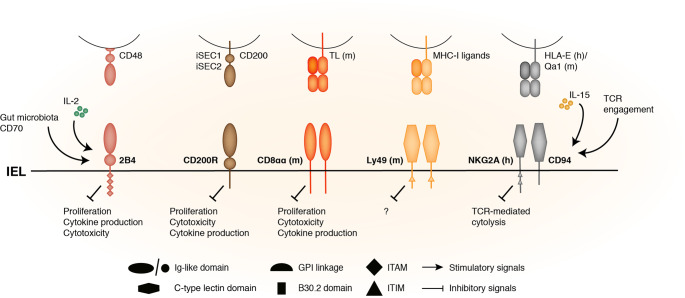
“Unlike the TCR co-receptor CD8αβ expressed on conventional lymphocytes, CD8αα engagement negatively regulates TCR activation.(89) CD8αα/TL interaction is thought to restrain T-IEL homeostatic proliferation(90) and survival,(85) preventing aberrant T-IEL proliferation without interfering with their immune functions.”
BackgroundNozaki, K., Mochizuki, W., Matsumoto, Y., Matsumoto, T., Fukuda, M., Mizutani, T., Watanabe, M., & Nakamura, T. (2016) · Journal of Gastroenterology · doi:10.1007/s00535-016-1170-8 · Cited by 190
Bhagat, G., Naiyer, A. J., Shah, J. G., Harper, J., Jabri, B., Wang, T. C., Green, P. H. R., & Manavalan, J. S. (2008) · Journal of Clinical Investigation · doi:10.1172/jci30989 · Cited by 188
Body-barrier surveillance by epidermal γδ TCRs
Chodaczek, G., Papanna, V., Zal, M. A., & Zal, T. (2012) · Nature Immunology · doi:10.1038/ni.2240 · Cited by 185
Zen, K., Liu, Y., McCall, I. C., Wu, T., Lee, W., Babbin, B. A., Nusrat, A., & Parkos, C. A. (2005) · Molecular Biology of the Cell · doi:10.1091/mbc.e05-01-0036 · Cited by 185 · cited 4×
“CD8αα expression on lymphocytes is regulated by the intestinal environment as conventional CD4+ T cells also upregulate CD8αα expression upon migration to the intestine.82,83 CD8αα binds with high affinity to the Thymus Leukemia Antigen (TL),84–88 a nonclassical MHC-I molecule, whose expression is restricted to murine…”
BackgroundInfluentialIntraepithelial lymphocytes in celiac disease immunopathology
Abadie, V., Discepolo, V., & Jabri, B. (2012) · Seminars in Immunopathology · doi:10.1007/s00281-012-0316-x · Cited by 183
Willcox, C. R., Vantourout, P., Salim, M., Zlatareva, I., Melandri, D., Zanardo, L., George, R., Kjaer, S., Jeeves, M., Mohammed, F., et al. (2019) · Immunity · doi:10.1016/j.immuni.2019.09.006 · Cited by 169 · cited 3×
“However, the recent study by Willcox et al.37 indicates that it is unlikely that the TCR engages another ligand and a Btnl molecule simultaneously.”
BackgroundResultInfluentialAttributes of γδ intraepithelial lymphocytes as suggested by their transcriptional profile
Fahrer, A. M., Konigshofer, Y., Kerr, E. M., Ghandour, G., Mack, D. H., Davis, M. M., & Chien, Y.-H. (2001) · Proceedings of the National Academy of Sciences · doi:10.1073/pnas.171320798 · Cited by 168
T Regulatory Cells Maintain Intestinal Homeostasis by Suppressing γδ T Cells
Park, S.-G., Mathur, R., Long, M., Hosh, N., Hao, L., Hayden, M. S., & Ghosh, S. (2010) · Immunity · doi:10.1016/j.immuni.2010.10.014 · Cited by 166
The CD100 Receptor Interacts with Its Plexin B2 Ligand to Regulate Epidermal γδ T Cell Function
Witherden, D. A., Watanabe, M., Garijo, O., Rieder, S. E., Sarkisyan, G., Cronin, S. J. F., Verdino, P., Wilson, I. A., Kumanogoh, A., Kikutani, H., et al. (2012) · Immunity · doi:10.1016/j.immuni.2012.05.026 · Cited by 165 · cited 3×
“More recently, CD100 was shown to bind to plexin B2 on keratinocytes and IEC to enhance γδ T cell responses.(81) In this context, CD100 deficiency, specifically on DETCs and not any other T cells, led to delayed epidermal wound repair due to an inability of DETC to make morphological changes necessary for an effective…”
BackgroundInfluentialSkint-1 is a highly specific, unique selecting component for epidermal T cells
Barbee, S. D., Woodward, M. J., Turchinovich, G., Mention, J.-J., Lewis, J. M., Boyden, L. M., Lifton, R. P., Tigelaar, R., & Hayday, A. C. (2011) · Proceedings of the National Academy of Sciences · doi:10.1073/pnas.1010890108 · Cited by 162 · cited 1×
“The DETC TCR is selected in the fetal thymus by an immunoglobulin superfamily molecule, the Selection and upkeep of intraepithelial T-cells protein 1 (Skint1).(31) Although formal proof that Skint1 can bind to the Vγ5Vδ1 TCR is still lacking, modeling studies and in vitro analyses suggest this to be the case,(32) and…”
BackgroundDenning, T. L., Granger, S., Mucida, D., Graddy, R., Leclercq, G., Zhang, W., Honey, K., Rasmussen, J. P., Cheroutre, H., Rudensky, A. Y., et al. (2007) · The Journal of Immunology · doi:10.4049/jimmunol.178.7.4230 · Cited by 160
The expression and function of costimulatory molecules B7H and B7-H1 on colonic epithelial cells
Nakazawa, A., Dotan, I., Brimnes, J., Allez, M., Shao, L., Tsushima, F., Azuma, M., & Mayer, L. (2004) · Gastroenterology · doi:10.1053/j.gastro.2004.02.004 · Cited by 160
Anumanthan, A., Bensussan, A., Boumsell, L., Christ, A. D., Blumberg, R. S., Voss, S. D., Patel, A. T., Robertson, M. J., Nadler, L. M., & Freeman, G. J. (1998) · The Journal of Immunology · doi:10.4049/jimmunol.161.6.2780 · Cited by 154
Kumanogoh, A., Suzuki, K., Ch’ng, E., Watanabe, C., Marukawa, S., Takegahara, N., Ishida, I., Sato, T., Habu, S., Yoshida, K., et al. (2002) · The Journal of Immunology · doi:10.4049/jimmunol.169.3.1175 · Cited by 153 · cited 1×
“CD100 is known to have a costimulatory role in T cells(78) and in CD100-deficient mice peripheral T cells function is impaired.(79,80) More recently, CD100 was shown to bind to plexin B2 on keratinocytes and IEC to enhance γδ T cell responses.”
BackgroundDalton, J. E., Cruickshank, S. M., Egan, C. E., Mears, R., Newton, D. J., Andrew, E. M., Lawrence, E. J., Howell, G. J., Else, K. J., Gubbels, M., et al. (2006) · Gastroenterology · doi:10.1053/j.gastro.2006.06.003 · Cited by 147 · cited 1×
“They are activated in response to oral infections with pathogens such as Salmonella,(15,16) Rotavirus,(17) and Toxoplasma gondii,(18) and at least in the context of loss of γδ T-IEL function, they appear to restrict pathogen entry.(15,16,19,20) Given their constant exposure to the gut microenvironment they must have t…”
BackgroundBouteiller, P. P. L., Barakonyi, A., Giustiniani, J., Lenfant, F., Marie‐Cardine, A., Aguerre‐Girr, M., Rabot, M., Hilgert, I., Mami‐Chouaib, F., Tabiasco, J., et al. (2002) · Proceedings of the National Academy of Sciences · doi:10.1073/pnas.012681099 · Cited by 146
Essential Roles for Dok2 and RasGAP in CD200 Receptor-Mediated Regulation of Human Myeloid Cells
Mihrshahi, R., Barclay, A. N., & Brown, M. H. (2009) · The Journal of Immunology · doi:10.4049/jimmunol.0901531 · Cited by 145 · cited 1×
“It has three tyrosine residues that transduce inhibitory signals following phosphorylation by recruiting the adapter protein downstream of tyrosine kinase 2 (Dok2) and activating Ras GTPaseactivating protein (RasGAP).(100) CD200R1 is expressed by most myeloid and lymphoid cells and has been mainly studied in myeloid-t…”
BackgroundMikulak, J., Oriolo, F., Bruni, E., Roberto, A., Colombo, F. S., Villa, A., Bosticardo, M., Bortolomai, I., Lo Presti, E., Meraviglia, S., et al. (2019) · JCI Insight · doi:10.1172/jci.insight.125884 · Cited by 143 · cited 1×
“NKp46 expression is modulated by cytokines, as IL-2 and IL-15 upregulate the receptor expression on Vδ1 thymocytes.(120) In line with this, NKp46 was also found on human CD8αβ αβ T-IEL in patients with coeliac disease.”
BackgroundHuman intraepithelial lymphocytes
Mayassi, T., & Jabri, B. (2018) · Mucosal Immunology · doi:10.1038/s41385-018-0016-5 · Cited by 138 · cited 1×
“The human adult IEL compartment is therefore mainly composed of induced TCRαβ CD8αβ (∼80%) and TCRαβ CD4 (∼10%) T-IEL.(6) It should be noted here that these socalled induced T-IEL are antigen-experienced T cells that also have the capacity to respond in an antigen-independent manner, and exhibit other innate-like char…”
BackgroundYe, G., Barrera, C., Fan, X., Gourley, W. K., Crowe, S. E., Ernst, P. B., & Reyes, V. (1997) · Journal of Clinical Investigation · doi:10.1172/jci119325 · Cited by 137
TCR Specificity Dictates CD94/NKG2A Expression by Human CTL
Jabri, B., Selby, J. M., Negulescu, H., Lee, L., Roberts, A. I., Beavis, A., Lopez-Botet, M., Ebert, E. C., & Winchester, R. J. (2002) · Immunity · doi:10.1016/s1074-7613(02)00427-2 · Cited by 136 · cited 2×
“CD94/NKG2A (inhibitory) and CD94/NKG2C, NKG2E/H (activating) receptor pairs are also prominently expressed by subsets of memory/effector CTL and T-IEL.104,105 In humans, ~30% of T-IEL express CD94 and most of these cells are TCRαβ CD8αβ+.”
BackgroundHVEM signalling at mucosal barriers provides host defence against pathogenic bacteria
Shui, J.-W., Larange, A., Kim, G., Vela, J. L., Zahner, S., Cheroutre, H., & Kronenberg, M. (2012) · Nature · doi:10.1038/nature11242 · Cited by 132 · cited 2×
“Binding of CD160 to HVEM on epithelial cells triggers Signal Transducer and Activator of Transcription 3 (STAT3) activation and subsequent expression of genes involved in response against pathogens.(74) As IEL appear to be the major expressers of CD160 in the gut, it was postulated that CD160 on IEL binds to HVEM on I…”
BackgroundThe inter-relatedness and interdependence of mouse T cell receptor γδ+ and αβ+ cells
Pennington, D. J., Silva‐Santos, B., Shires, J., Theodoridis, E., Pollitt, C., Wise, E. L., Tigelaar, R. E., Owen, M. J., & Hayday, A. (2003) · Nature Immunology · doi:10.1038/ni979 · Cited by 131 · cited 2×
“These innatelike T-IEL comprise up to 80% of murine T-IEL and share a gene expression profile that is distinct from induced IEL.(3) Based on this gene expression profile, innate-like T-IEL also exist in humans and represent 5–30% of the T-IEL compartment, although they rarely express CD8αα (Table 1).”
BackgroundDharakul, T., Rott, L., & Greenberg, H. B. (1990) · Journal of Virology · doi:10.1128/jvi.64.9.4375-4382.1990 · Cited by 131
Moog-Lutz, C., Cavé-Riant, F., Guibal, F. C., Breau, M. A., Di Gioia, Y., Couraud, P. O., Cayre, Y. E., Bourdoulous, S., & Lutz, P. G. (2003) · Blood · doi:10.1182/blood-2002-11-3462 · Cited by 123
Edelblum, K. L., Singh, G., Odenwald, M. A., Lingaraju, A., El Bissati, K., McLeod, R., Sperling, A. I., & Turner, J. R. (2015) · Gastroenterology · doi:10.1053/j.gastro.2015.02.053 · Cited by 123 · cited 1×
“They are activated in response to oral infections with pathogens such as Salmonella,(15,16) Rotavirus,(17) and Toxoplasma gondii,(18) and at least in the context of loss of γδ T-IEL function, they appear to restrict pathogen entry.(15,16,19,20) Given their constant exposure to the gut microenvironment they must have t…”
BackgroundMaiza, H., Leca, G., Mansur, I. G., Schiavon, V., Boumsell, L., & Bensussan, A. (1993) · The Journal of Experimental Medicine · doi:10.1084/jem.178.3.1121 · Cited by 121
Iwasaki, A., Welker, R., Mueller, S., Linehan, M., Nomoto, A., & Wimmer, E. (2002) · The Journal of Infectious Diseases · doi:10.1086/342682 · Cited by 121
CD8αα intraepithelial lymphocytes arise from two main thymic precursors
Ruscher, R., Kummer, R. L., Lee, Y. J., Jameson, S. C., & Hogquist, K. A. (2017) · Nature Immunology · doi:10.1038/ni.3751 · Cited by 119 · cited 1×
“This was corroborated by another detailed study of CD8αα T-IEL precursors.(42) This study also identified a distinct precursor population of CD8αα T-IEL, that more closely resembled iNKT cells, and was restricted on non-classical MHC-I and CD1d.”
ResultBarakonyi, A., Rabot, M., Marie-Cardine, A., Aguerre-Girr, M., Polgar, B., Schiavon, V., Bensussan, A., & Le Bouteiller, P. (2004) · The Journal of Immunology · doi:10.4049/jimmunol.173.9.5349 · Cited by 113
Gut-Derived Intraepithelial Lymphocytes Induce Long Term Immunity Against Toxoplasma gondii
Lepage, A. C., Buzoni-Gatel, D., Bout, D. T., & Kasper, L. H. (1998) · The Journal of Immunology · doi:10.4049/jimmunol.161.9.4902 · Cited by 111
Agrawal, S. G., Marquet, J., Freeman, G. J., Tawab, A., Bouteiller, P. P. L., Roth, P. A., Bolton, W. E., Ogg, G. S., Boumsell, L., & Bensussan, A. (1999) · The Journal of Immunology · doi:10.4049/jimmunol.162.3.1223 · Cited by 109
The CD100–CD72 interaction: a novel mechanism of immune regulation
Kumanogoh, A., & Kikutani, H. (2001) · Trends in Immunology · doi:10.1016/s1471-4906(01)02087-7 · Cited by 108 · cited 1×
“CD100 CD100, also known as Sema4D, is a type IV transmembrane semaphorin that is highly expressed on T cells, with enhanced expression following activation, and to a lesser extent on NK, B cells, and antigen presenting cells (APCs).(76) It is also found at the surface of all colonic T-IEL.”
BackgroundExpression of nonclassical class I molecules by intestinal epithelial cells
Perera, L., Shao, L., Patel, A., Evans, K., Meresse, B., Blumberg, R., Geraghty, D., Groh, V., Spies, T., Jabri, B., et al. (2007) · Inflammatory Bowel Diseases · doi:10.1002/ibd.20026 · Cited by 102
Development, Homeostasis, and Functions of Intestinal Intraepithelial Lymphocytes
Van Kaer, L., & Olivares-Villagómez, D. (2018) · The Journal of Immunology · doi:10.4049/jimmunol.1701704 · Cited by 101 · cited 1×
“Conversely, T-IEL are also cytotoxic cells that patrol the epithelial layer to sense and eliminate infected/ damaged epithelial cells.(14) They are activated in response to oral infections with pathogens such as Salmonella,(15,16) Rotavirus,(17) and Toxoplasma gondii,(18) and at least in the context of loss of γδ T-IE…”
BackgroundMcDonald, B. D., Bunker, J. J., Ishizuka, I. E., Jabri, B., & Bendelac, A. (2014) · Immunity · doi:10.1016/j.immuni.2014.07.008 · Cited by 99 · cited 2×
“McDonald et al.40 also cloned αβ TCRs from adaptive and innate-like intestinal T-IEL populations and expressed them conditionally at the CD4+CD8+ double positive stage of thymic development in a mixed BM chimera system.”
BackgroundLy49 receptors: innate and adaptive immune paradigms
Rahim, M. M. A., Tu, M. M., Mahmoud, A. B., Wight, A., Abou-Samra, E., Lima, P. D. A., & Makrigiannis, A. P. (2014) · Frontiers in Immunology · doi:10.3389/fimmu.2014.00145 · Cited by 97 · cited 1×
“Ly49 receptors are expressed on innate immune cells (NK, NKT, DC, neutrophils, and macrophages) as well as on CD8 T cells and each of these cell type express a unique complement of Ly49 receptors.(92) All IEL express Ly49 receptors but the different populations of TIEL do not share the same level of Ly49 receptor expr…”
BackgroundCytosolic PLA2 is required for CTL-mediated immunopathology of celiac disease via NKG2D and IL-15
Tang, F., Chen, Z., Ciszewski, C., Setty, M., Solus, J., Tretiakova, M., Ebert, E., Han, J., Lin, A., Guandalini, S., et al. (2009) · Journal of Experimental Medicine · doi:10.1084/jem.20071887 · Cited by 94 · cited 1×
“Interestingly, in vitro stimulation of human intestinal T-IEL by IL-15 enhanced ERK phosphorylation by PI3K as well as JNK and cPLA2 activation, and without this prestimulation, triggering of NKG2D on T-IEL could not induce degranulation.(64) All these studies highlight a significant stimulatory function of NKG2D on T…”
BackgroundThe Crystal Structure of a TL/CD8αα Complex at 2.1 Å Resolution
Liu, Y., Xiong, Y., Naidenko, O. V., Liu, J., Zhang, R., Joachimiak, A., Kronenberg, M., Cheroutre, H., Reinherz, E. L., & Wang, J. (2003) · Immunity · doi:10.1016/s1074-7613(03)00027-x · Cited by 93
Komori, H. K., Witherden, D. A., Kelly, R., Sendaydiego, K., Jameson, J. M., Teyton, L., & Havran, W. L. (2012) · The Journal of Immunology · doi:10.4049/jimmunol.1100887 · Cited by 90
Lebrero‐Fernández, C., Wenzel, U. A., Akéus, P., Wang, Y., Strid, H., Simrén, M., Gustavsson, B. G., Börjesson, L. G., Cardell, S., Öhman, L., et al. (2016) · Immunity Inflammation and Disease · doi:10.1002/iid3.105 · Cited by 89
Yamamoto, M., Fujihashi, K., Kawabata, K., McGhee, J. R., & Kiyono, H. (1998) · The Journal of Immunology · doi:10.4049/jimmunol.160.5.2188 · Cited by 85
Crossreactive αβ T Cell Receptors Are the Predominant Targets of Thymocyte Negative Selection
McDonald, B. D., Bunker, J. J., Erickson, S. A., Oh-Hora, M., & Bendelac, A. (2015) · Immunity · doi:10.1016/j.immuni.2015.09.009 · Cited by 82
Origin, trafficking, and intraepithelial fate of gut-tropic T cells
Guy-Grand, D., Vassalli, P., Eberl, G., Pereira, P., Burlen-Defranoux, O., Lemaitre, F., Di Santo, J. P., Freitas, A. A., Cumano, A., & Bandeira, A. (2013) · Journal of Experimental Medicine · doi:10.1084/jem.20122588 · Cited by 78
Mayans, S., Stepniak, D., Palida, S. F., Larange, A., Dreux, J., Arlian, B. M., Shinnakasu, R., Kronenberg, M., Cheroutre, H., & Lambolez, F. (2014) · Immunity · doi:10.1016/j.immuni.2014.07.010 · Cited by 76 · cited 2×
“Mayans et al.39 cloned the TCRs from DN (i.e. CD8αα) T-IEL and expressed these retrogenically in bone marrow (BM) to address whether the TCR is important for T-IEL selection.”
BackgroundGammadelta T Cells in Crohn’s Disease: A New Player in the Disease Pathogenesis?
Catalán‐Serra, I., Sandvik, A. K., Bruland, T., & Andreu‐Ballester, J. C. (2017) · Journal of Crohn s and Colitis · doi:10.1093/ecco-jcc/jjx039 · Cited by 76
Li, Y., Liu, M., Zuo, Z., Liu, J., Yu, X., Guan, Y., Zhan, R., Han, Q., Zhang, J., Zhou, R., et al. (2017) · The Journal of Immunology · doi:10.4049/jimmunol.1601416 · Cited by 74 · cited 2×
“Of note, in addition to upregulating NKG2D expression, these cytokines also facilitated NKG2D ligand expression on epithelial cells.(59,60) Mechanisms of activation of innate-like intraepithelial T lymphocytes M Vandereyken et al.”
BackgroundZhou, R., Wei, H., Sun, R., Zhang, J., & Tian, Z. (2007) · Proceedings of the National Academy of Sciences · doi:10.1073/pnas.0700822104 · Cited by 73
Expression of CD94–NKG2A inhibitory receptor is restricted to a subset of CD8+ T cells
Braud, V. M., Aldemir, H., Bréart, B., & Ferlin, W. G. (2003) · Trends in Immunology · doi:10.1016/s1471-4906(03)00064-4 · Cited by 71
Morrissey, P. J., Charrier, K., Horovitz, D. A., Fletcher, F. A., & Watson, J. D. (1995) · The Journal of Immunology · doi:10.4049/jimmunol.154.6.2678 · Cited by 68
CD200:CD200R-Mediated Regulation of Immunity
Gorczynski, R. M. (2012) · ISRN Immunology · doi:10.5402/2012/682168 · Cited by 68 · cited 1×
“CD200R1 is expressed by most myeloid and lymphoid cells and has been mainly studied in myeloid-type cells where it seems to play an anti-inflammatory role.(101) CD200R1 is highly expressed on intestinal T-IEL.”
BackgroundBas, A., Swamy, M., Abeler-Dörner, L., Williams, G., Pang, D. J., Barbee, S. D., & Hayday, A. C. (2011) · Proceedings of the National Academy of Sciences · doi:10.1073/pnas.1010647108 · Cited by 68 · cited 1×
“The search for a Skint1-equivalent molecule for the selection and function of intestinal γδ T-IEL lead to the discovery of Butyrophilin-like (Btnl) family of molecules.(33) Btnl1 is expressed as a heterodimer with Btnl6 on IEC under homeostatic conditions.”
BackgroundSelf-citationGiustiniani, J., Bensussan, A., & Marie‐Cardine, A. (2009) · The Journal of Immunology · doi:10.4049/jimmunol.182.1.63 · Cited by 66 · cited 2×
“CD160 is expressed by both human and murine NK, T cells, NKT, Innate lymphoid cells 1 (ILC1), and CD8 T-IEL, but the transmembrane isoform is restricted to NK cells.(66) CD160 binds, with a low affinity, to classical and non-classical (CD1d) MHC-I molecules and with high affinity to the herpesvirus entry mediator (HVE…”
BackgroundHérold, C., Bismuth, G., Bensussan, A., & Boumsell, L. (1995) · International Immunology · doi:10.1093/intimm/7.1.1 · Cited by 66
Pillars Article: Regulation of Cutaneous Malignancy by γδ T Cells. Science. 2001. 294: 605–609
Girardi, M., Oppenheim, D. E., Steele, C. R., Lewis, J. M., Glusac, E., Filler, R., Hobby, P., Sutton, B., Tigelaar, R. E., & Hayday, A. C. (2018) · The Journal of Immunology · doi:10.1093/jimmunol/200.9.3031 · Cited by 64
Thymus leukemia antigen controls intraepithelial lymphocyte function and inflammatory bowel disease
Olivares-Villagómez, D., Mendez-Fernandez, Y. V., Parekh, V. V., Lalani, S., Vincent, T. L., Cheroutre, H., & Van Kaer, L. (2008) · Proceedings of the National Academy of Sciences · doi:10.1073/pnas.0808242105 · Cited by 63 · cited 2×
“It has also been reported that TL/CD8αα interaction modulates T-IEL production of cytokines such as IL-2 and IFNγ and curbs T-IEL cytotoxicity.(85,91) Yet TL deficiency does not lead to spontaneous colitis/IBD nor does it affect the outcome of chemically-induced colitis in mice.”
BackgroundLi, Z., Zhang, C., Zhou, Z., Zhang, J., Zhang, J., & Tian, Z. (2012) · Infection and Immunity · doi:10.1128/iai.05078-11 · Cited by 63 · cited 1×
“They are activated in response to oral infections with pathogens such as Salmonella,(15,16) Rotavirus,(17) and Toxoplasma gondii,(18) and at least in the context of loss of γδ T-IEL function, they appear to restrict pathogen entry.(15,16,19,20) Given their constant exposure to the gut microenvironment they must have t…”
BackgroundWang, H.-C. H., & Klein, J. R. (2001) · The Journal of Immunology · doi:10.4049/jimmunol.167.12.6717 · Cited by 62
Parallels and differences between innate and adaptive lymphocytes
Bedoui, S., Gebhardt, T., Gasteiger, G., & Kastenmüller, W. (2016) · Nature Immunology · doi:10.1038/ni.3432 · Cited by 62
Zhang, B., Wu, J., Jiao, Y., Bock, C., Dai, M., Chen, B., Chao, N., Zhang, W., & Zhuang, Y. (2015) · The Journal of Immunology · doi:10.4049/jimmunol.1501220 · Cited by 61 · cited 1×
“However, DETCs did not require a key TCR signaling intermediate, the Linker for Activation of T cell (LAT), for their long-term survival and homeostasis.(52) Conversely, LAT was required for the DETC response to wounding of the skin,(52) and DETC TCR tetramers bound to damaged keratinocytes even in mice lacking Skint1…”
BackgroundVan Beneden, K., De Creus, A., Stevenaert, F., Debacker, V., Plum, J., & Leclercq, G. (2002) · The Journal of Immunology · doi:10.4049/jimmunol.168.7.3295 · Cited by 55
Characterization of murine CD160+ CD8+ T lymphocytes
Tsujimura, K., Obata, Y., Matsudaira, Y., Nishida, K., Akatsuka, Y., Ito, Y., Demachi‐Okamura, A., Kuzushima, K., & Takahashi, T. (2006) · Immunology Letters · doi:10.1016/j.imlet.2006.04.006 · Cited by 49
Protection against colitis by CD100-dependent modulation of intraepithelial γδ T lymphocyte function
Meehan, T. F., Witherden, D. A., Kim, C., Sendaydiego, K., Ye, I., Garijo, O., Komori, H. K., Kumanogoh, A., Kikutani, H., Eckmann, L., et al. (2013) · Mucosal Immunology · doi:10.1038/mi.2013.32 · Cited by 49 · cited 2×
“Interestingly, although only γδ T-IEL secrete KGF, both CD100 colonic γδ and αβ T-IEL were shown to have defective proliferative capacity following DSS-induced colitis.(77) However, plexin B2-CD100 interactions did not play a role in αβ T cell activation in vitro,(81) suggesting that while CD100 is highly expressed on…”
BackgroundRepertoire of the αβ T‐cell receptor in the intestine
Probert, C. S. J., Saubermann, L. J., Balk, S., & Blumberg, R. S. (2007) · Immunological Reviews · doi:10.1111/j.1600-065x.2006.00480.x · Cited by 45
Activation of murine epidermal γδ T cells through surface 2B4
Schuhmachers, G., Ariizumi, K., Mathew, P. A., Bennett, M., Kumar, Y., & Takashima, A. (1995) · European Journal of Immunology · doi:10.1002/eji.1830250440 · Cited by 44
Zhang, Q., Rahim, M. M. A., Allan, D., Tu, M. M., Belanger, S., Abou-Samra, E., Ma, J., Sekhon, H. S., Fairhead, T., Zein, H. S., et al. (2012) · PLoS ONE · doi:10.1371/journal.pone.0050561 · Cited by 42
The thymus leukemia antigen binds human and mouse CD8.
Teitell, M. A., Mescher, M. F., Olson, C. A., Littman, D. R., & Kronenberg, M. (1991) · The Journal of Experimental Medicine · doi:10.1084/jem.174.5.1131 · Cited by 40
Cabinian, A., Sinsimer, D., Tang, M., Jang, Y., Choi, B., Laouar, Y., & Laouar, A. (2017) · Gut · doi:10.1136/gutjnl-2016-313214 · Cited by 34 · cited 2×
“However, a recent study using Slamf4 mice showed that 2B4 expression drove a stronger protective immune response to oral Citrobacter and Listeria infections, and this correlated with reduced cytokine production from Slamf4 T-IEL compared with WT T-IEL in vivo.(113) These two studies are yet to be reconciled, although…”
BackgroundResultTan, C. L., Peluso, M. J., Drijvers, J. M., Mera, C. M., Grande, S. M., Brown, K. E., Godec, J., Freeman, G. J., & Sharpe, A. H. (2018) · ImmunoHorizons · doi:10.4049/immunohorizons.1800039 · Cited by 33 · cited 1×
“rodentium host defense.(75) However, CD160 was important for Listeria monocytogenes clearance, as 7 days post infection, CD160 mice had more bacteria in the colon than WT mice.”
BackgroundMalinarich, F. H., Grabski, E., Worbs, T., Chennupati, V., Haas, J. D., Schmitz, S., Candia, E., Quera, R., Malissen, B., Förster, R., et al. (2010) · European Journal of Immunology · doi:10.1002/eji.201040727 · Cited by 29 · cited 2×
“However, signaling networks in IEL need elucidation as TCR triggering does not lead to calcium release or phosphorylation of known downstream signaling effectors.(50) The fact that T-IEL constitutively express so many costimulatory receptors suggest that T-IEL probably require more than one signal to be fully activate…”
BackgroundSturgess, R. P., Hooper, L. B., Spencer, J., Hung, C. W., Nelufer, J. M., & Ciclitira, P. J. (1992) · Scandinavian Journal of Gastroenterology · doi:10.3109/00365529209000161 · Cited by 28
Weber, D. A., Attinger, A., Kemball, C. C., Wigal, J. L., Pohl, J., Xiong, Y., Reinherz, E. L., Cheroutre, H., Kronenberg, M., & Jensen, P. E. (2002) · The Journal of Immunology · doi:10.4049/jimmunol.169.10.5708 · Cited by 28
A committed postselection precursor to natural TCRαβ+ intraepithelial lymphocytes
Klose, C. S. N., Hummel, J. F., Faller, L., d’Hargues, Y., Ebert, K., & Tanriver, Y. (2017) · Mucosal Immunology · doi:10.1038/mi.2017.54 · Cited by 28 · cited 1×
“Natural T-IEL are thought to acquire their phenotype in the thymus upon self-antigen encounter, although this is still debated, and are CD4 and CD8αβ, therefore sometimes referred to as double-negative (DN) T-IEL.(4,5) These natural T-IEL are also referred to as innate-like due to their ability to be activated by cyto…”
BackgroundLaouar, A., Manocha, M., Wan, M., Yagita∥, H., van Lier, R. A. W., & Manjunath, N. (2007) · The Journal of Immunology · doi:10.4049/jimmunol.178.2.652 · Cited by 27 · cited 4×
“It is therefore not surprising that 2B4 is found on almost all murine and human CD8 T-IEL, although 2B4 is expressed more highly on CD8αα compared to CD8αβ T-IEL.(112,114) Using Slamf4 mice, and anti-SLAMF4 antibodies in combination with anti-CD3 stimulation, O’Keeffe et al.”
BackgroundInfluentialTipping the balance: inhibitory checkpoints in intestinal homeostasis
Joosse, M. E., Nederlof, I., Walker, L. S. K., & Samsom, J. N. (2018) · Mucosal Immunology · doi:10.1038/s41385-018-0113-5 · Cited by 27
Characterization of CD200-Receptor Expression in the Murine Epidermis
Rosenblum, M. D., Woodliff, J. E., Madsen, N. A., McOlash, L., Keller, M. R., & Truitt, R. L. (2005) · Journal of Investigative Dermatology · doi:10.1111/j.0022-202x.2005.23948.x · Cited by 26 · cited 6×
“Co-stimulation of IL-2 stimulated T-IEL with anti-CD3 and iSEC1 or CD200 negatively affected IFNγ and TNFα production and inhibited T-IEL cytotoxic activity against a murine colonic adenocarcinoma cell line.102 These results suggest that CD200R1 binding to its ligands negatively regulates T-IEL functions, similar to i…”
ResultInfluentialO’Keeffe, M. S., Song, J.-H., Liao, G., Calisto, J. D., Halibozek, P. J., Mora, J. R., Bhan, A. K., Wang, N., Reinecker, H., & Terhorst, C. (2015) · Gastroenterology · doi:10.1053/j.gastro.2015.02.003 · Cited by 25 · cited 4×
“It is therefore not surprising that 2B4 is found on almost all murine and human CD8 T-IEL, although 2B4 is expressed more highly on CD8αα compared to CD8αβ T-IEL.(112,114) Using Slamf4 mice, and anti-SLAMF4 antibodies in combination with anti-CD3 stimulation, O’Keeffe et al.”
BackgroundInfluentialSalim, M., Knowles, T. J., Hart, R., Mohammed, F., Woodward, M. J., Willcox, C. R., Overduin, M., Hayday, A. C., & Willcox, B. E. (2016) · Journal of Biological Chemistry · doi:10.1074/jbc.m116.722066 · Cited by 25
Attinger, A., Devine, L., Wang-Zhu, Y., Martin, D., Wang, J., Reinherz, E. L., Kronenberg, M., Cheroutre, H., & Kavathas, P. (2005) · The Journal of Immunology · doi:10.4049/jimmunol.174.6.3501 · Cited by 23
Taveirne, S., Filtjens, J., Ammel, E. V., Colvenaer, V. D., Kerre, T. C. C., Taghon, T., Vandekerckhove, B., Plum, J. R., Held, W., & Leclercq, G. (2011) · Blood · doi:10.1182/blood-2011-01-331124 · Cited by 21 · cited 2×
“Similar results have also been obtained in mice, except that in mice TCRαβ CD8αα T-IEL express higher levels of the inhibitory CD94/NK2GA receptor complex, as compared to other T-IEL subsets.(95) In addition to TCR stimulation, the expression of CD94 and its respective receptor partners on some T cells subsets, has al…”
BackgroundResultNüssler, N. C., Stange, B., Hoffman, R. A., Schraut, W. H., Bauer, A. J., & Neuhaus, P. (2000) · Langenbeck s Archives of Surgery · doi:10.1007/s004230050268 · Cited by 20
Ebert, E. C., & Groh, V. (2008) · Immunology · doi:10.1111/j.1365-2567.2007.02656.x · Cited by 19
Kojima, T., Tsuchiya, K., Ikemizu, S., Yoshikawa, S., Yamanishi, Y., Watanabe, M., & Karasuyama, H. (2016) · Scientific Reports · doi:10.1038/srep36457 · Cited by 16
Differential Ly49e Expression Pathways in Resting versus TCR-Activated Intraepithelial γδ T Cells
Broeck, T. V. D., Ammel, E. V., Delforche, M., Taveirne, S., Kerre, T. C. C., Vandekerckhove, B., Taghon, T., Plum, J. R., & Leclercq, G. (2013) · The Journal of Immunology · doi:10.4049/jimmunol.1200354 · Cited by 13 · cited 1×
“Induction of Ly49E expression might indicate a negative regulatory feedback loop as basal and de novo expression of Ly49e gene seem to be differentially initiated and regulated depending on the activation state of T-IEL.(97) Comprehensive studies led by Leclercq and colleagues ruled out a functional role for Ly49E rec…”
BackgroundAcker, A. V., Filtjens, J., Welden, S. V., Taveirne, S., Ammel, E. V., Vanhees, M., Devisscher, L., Kerre, T. C. C., Taghon, T., Vandekerckhove, B., et al. (2014) · PLoS ONE · doi:10.1371/journal.pone.0110015 · Cited by 9 · cited 1×
“The same group also showed that the severity of inflammation in DSS and TNBS-induced colitis and the TNF ileitis models was similar in Ly49E KO and littermates control mice, indicating that the development and progression of IBD is not influenced by Ly49E expression on T-IEL in the systems examined.(99)”
ResultIntestinal Inflammation-Mediated Clearance of Amebic Parasites Is Dependent on IFN-γ
Shimokawa, C., Senba, M., Kobayashi, S., Kikuchi, M., Obi, S., Olia, A., Hamano, S., & Hisaeda, H. (2018) · The Journal of Immunology · doi:10.4049/jimmunol.1700806 · Cited by 9 · cited 1×
“Of note, in addition to upregulating NKG2D expression, these cytokines also facilitated NKG2D ligand expression on epithelial cells.(59,60) Mechanisms of activation of innate-like intraepithelial T lymphocytes M Vandereyken et al.”
BackgroundAcker, A. V., Louagie, E., Filtjens, J., Taveirne, S., Ammel, E. V., Kerre, T. C. C., Elewaut, D. S., Taghon, T., Vandekerckhove, B., Plum, J. R., et al. (2016) · Cancer Immunology Immunotherapy · doi:10.1007/s00262-016-1894-6 · Cited by 5 · cited 1×
“By comparing tumor size and frequencies in a mouse model of familial intestinal cancer, Apc Ly49E WT, and Apc Ly49E KO, as well as in a model of Azoxymethane (AOM)-DSS-induced colorectal cancer, the authors showed that tumor development and progression was not affected by Ly49E deletion.(98) The same group also showed…”
BackgroundDenning, T. L., Granger, S., Mucida, D., Graddy, R., Leclercq, G., Zhang, W., Honey, K., Rasmussen, J. P., Cheroutre, H., Rudensky, A. Y., et al. (2007) · The Journal of Immunology · doi:10.4049/jimmunol.178.10.6654-a · Cited by 4
Cited by
Guidelines for the use of flow cytometry and cell sorting in immunological studies (third edition)
Cossarizza, A., Chang, H., Radbruch, A., Abrignani, S., Addo, R., Akdis, M., Andrä, I., Andreata, F., Annunziato, F., Arranz, E., et al. (2021) · European Journal of Immunology · doi:10.1002/eji.202170126 · Cited by 531
Tissue-resident immune cells in humans
Gray, J. I., & Farber, D. L. (2022) · Annual Review of Immunology · doi:10.1146/annurev-immunol-093019-112809 · Cited by 181
Kang, B., Camps, J., Fan, B., Jiang, H., Ibrahim, M. M., Hu, X., Qin, S., Kirchhoff, D., Chiang, D. Y., Wang, S., et al. (2022) · Genome biology · doi:10.1186/s13059-022-02828-2 · Cited by 155
“The interaction between EP11-CLDN7 and CD8+ T cells was dominated by the interactions of LGALS9—HAVCR2 and HVEM—CD160 both of which are well-known checkpoints that inhibit CD8 + T cell functionality (Additional file 1: Fig.”
BackgroundIntraepithelial Lymphocytes of the Intestine
Lockhart, A. A. K., Mucida, D., & Bilate, A. M. B. (2024) · Annual Review of Immunology · doi:10.1146/annurev-immunol-090222-100246 · Cited by 97
The intestinal γδ T cells: functions in the gut and in the distant organs
Li, G., Xia, J., Zeng, W., Luo, W., Liu, L., Zeng, X., & Cao, D. (2023) · Frontiers in Immunology · doi:10.3389/fimmu.2023.1206299 · Cited by 52
Metadata
- Authors
- Vandereyken, M., James, O. J., & Swamy, M.
- Affiliations
- University of Dundee (GB)
- Corresponding author
- Swamy, Mahima
- Venue
- Mucosal Immunology
- Publisher
- Elsevier BV
- Published
- 2020-09
- Volume
- 13
- Issue
- 5
- Pages
- 721-731
- ISSN
- 1933-0219 (ISSN-L)
- PMC
- PMC7434593
- OpenAlex
- W3025111305
- Cited by
- 65
- References
- 133
- Citations by year
- 2026: 11 · 2025: 14 · 2024: 11 · 2023: 11 · 2022: 8 · 2021: 8 · 2020: 2
- FWCI
- 0.71
- Type
- journal article
- Language
- en
- Open access
- hybrid
- doi.org
- Licence
- cc-by
- www.elsevier.com/tdm/userlicense/1.0/ (tdm)
- www.elsevier.com/legal/tdmrep-license (tdm)
- creativecommons.org/licenses/by/4.0/ (vor)
- Locations
- Mucosal Immunology (publishedVersion, cc-by)
- PubMed Central (publishedVersion, cc-by)
- PubMed (publishedVersion)
- Discovery Research Portal (University of Dundee) (publishedVersion, cc-by)
- Research Explorer (The University of Manchester) (publishedVersion, other-oa)
- Funders
- Wellcome Trust (Z/17/Z, 215309/Z/19/Z, 206246/Z/17/Z)
- Topics
- Life Sciences › Immunology and Microbiology › Immunology › T-cell and B-cell Immunology
- Life Sciences › Immunology and Microbiology › Immunology › IL-33, ST2, and ILC Pathways
- Life Sciences › Immunology and Microbiology › Immunology › Psoriasis: Treatment and Pathogenesis
- Keywords
- intraepithelial T lymphocytes, innate-like T cells, T cell activation, thymic selection, intestinal epithelium, costimulatory receptors, co-inhibitory receptors, T cell exhaustion, mucosal immunity
- MeSH terms
- Intraepithelial Lymphocytes, Animals, Antigens, Humans, Immunity, Innate, Lymphocyte Activation, Receptors, Antigen, T-Cell, Biomarkers, T-Lymphocyte Subsets, Epitopes, T-Lymphocyte, NK Cell Lectin-Like Receptor Subfamily K, Costimulatory and Inhibitory T-Cell Receptors
About these checks
Registry, retraction, Cites and statistics results are computed, not judged, with one exception: a printed reference that no index lists is read once by a model before it counts as a citation error. Claims are extracted by a model and kept only when their quote appears verbatim in the text; each cited source is then checked, with a model’s help, for whether it says what the claim relies on. Those verdicts can be wrong — read the claim’s quote and the cited source before relying on one.
Statistics and arithmetic are recomputed, not judged.
Confidence bands are shown only for fields calibrated on our annotated test set. None is calibrated yet, so no band is shown.
What counts as a claim ›How we measure confidence ›How we check this ›
Are you an author, or do you see a problem with this page? Request a review
Data sources
Bibliographic data: Semantic Scholar, OpenAlex, Crossref.
Contains information from the Semantic Scholar Academic Graph Datasets, made available under the ODC Attribution License (ODC-BY 1.0).
Semantic Scholar’s data is described in: Kinney, R., et al. (2023). The Semantic Scholar Open Data Platform. arXiv:2301.10140.
