

The role of prefrontal cortex in cognitive control and executive function
Open accessThe DOI matches its Crossref record; 262 of the 267 references it cites were found in a registry or an index; 145 of the 304 sources its claims cite were checked for support.
Abstract
Concepts of cognitive control (CC) and executive function (EF) are defined in terms of their relationships with goal-directed behavior versus habits and controlled versus automatic processing, and related to the functions of the prefrontal cortex (PFC) and related regions and networks. A psychometric approach shows unity and diversity in CC constructs, with 3 components in the most commonly studied constructs: general or common CC and components specific to mental set shifting and working memory updating. These constructs are considered against the cellular and systems neurobiology of PFC and what is known of its functional neuroanatomical or network organization based on lesioning, neurochemical, and neuroimaging approaches across species. CC is also considered in the context of motivation, as "cool" and "hot" forms. Its Common CC component is shown to be distinct from general intelligence (g) and closely related to response inhibition. Impairments in CC are considered as possible causes of psychiatric symptoms and consequences of disorders. The relationships of CC with the general factor of psychopathology (p) and dimensional constructs such as impulsivity in large scale developmental and adult populations are considered, as well as implications for genetic studies and RDoC approaches to psychiatric classification.
Overview
CoChat Summary
## TL;DR
This review argues that cognitive control (CC) and executive function (EF) are both unified and fractionated: common processes exist, but distinct components such as working memory updating, mental set shifting, response inhibition, and hot versus cool control also show separability. It also links these CC/EF processes to prefrontal cortex (PFC) networks, neurochemistry, and transdiagnostic psychopathology, emphasizing that CC deficits are broadly relevant to mental health but are not identical to intelligence or impulsivity.
## Key findings
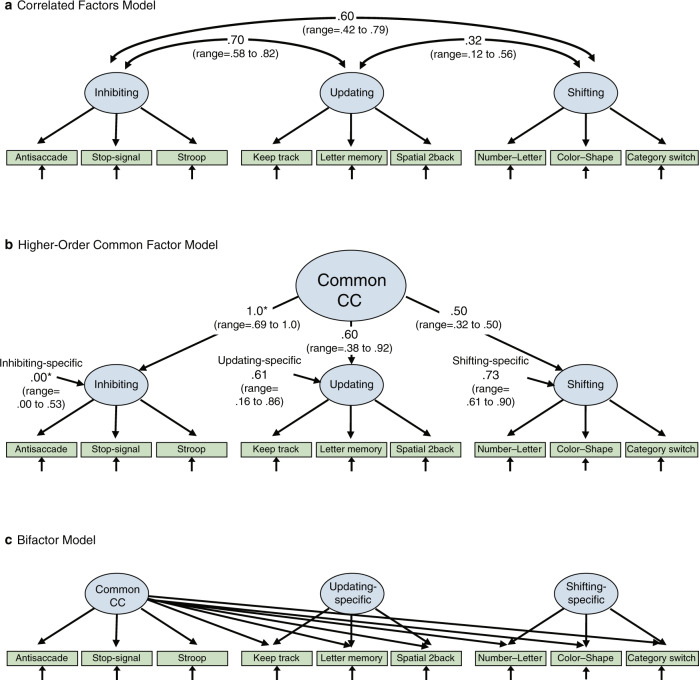
- Psychometric studies of CC/EF repeatedly find unity and diversity: in Miyake et al.’s model, correlations among the latent factors for inhibition, updating, and shifting were r = 0.42–0.63, while individual task correlations were only r = –0.05 to 0.34.
- The paper argues that the Common CC factor is closely related to response inhibition and is distinct from general intelligence (g), although intelligence still correlates substantially with common CC; reported correlations with common CC range from r = 0.53–0.91, but are only r = 0.53–0.68 in adult latent-variable samples.
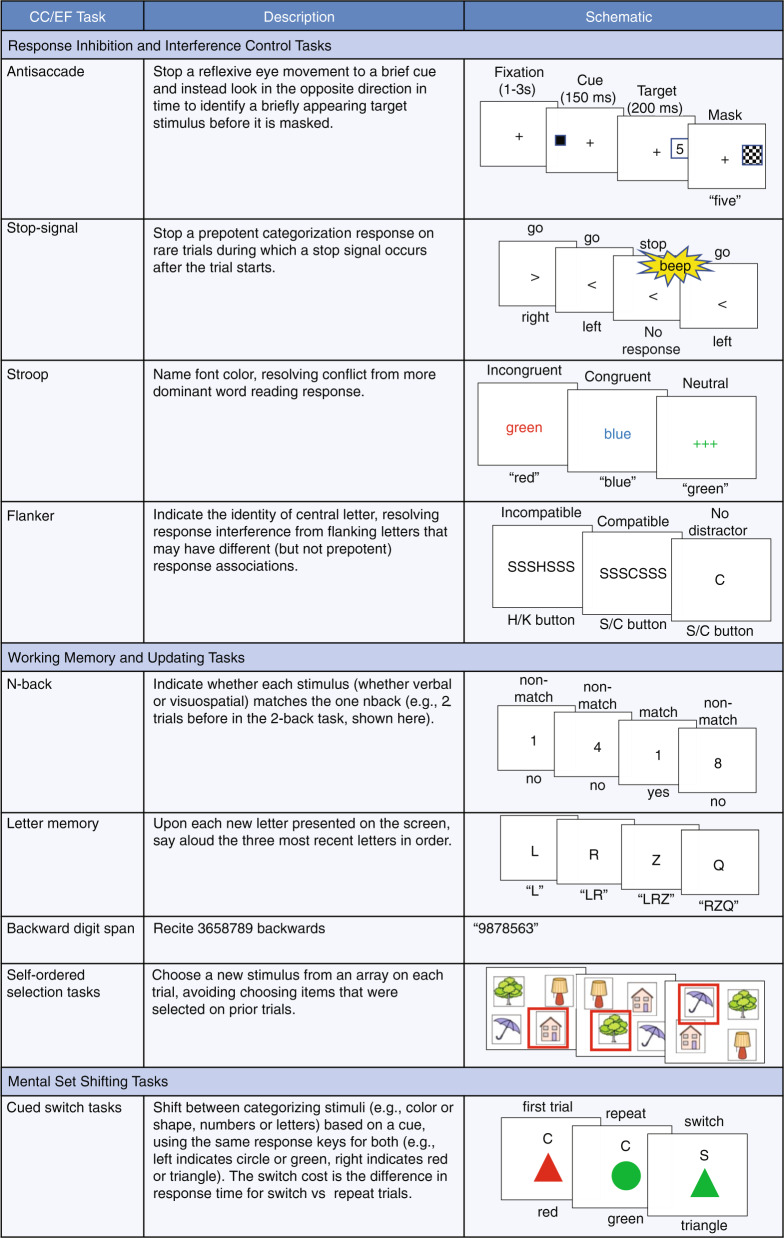
- Neurobiological evidence supports both shared and distinct PFC contributions: lesion and neuroimaging studies dissociate dlPFC (working memory and some switching) from OFC/vlPFC (reversal learning and extra-dimensional set-shifting), and identify networks including the fronto-parietal network (FPN), cingulo-opercular network (CON), and default mode network (DMN).
- Across disorders, CC deficits are transdiagnostic and related to the p factor; the paper reports that common CC is associated with p at r = –0.16 to –0.56, and cites meta-analyses linking CC deficits to MDD, PTSD, OCD, bipolar disorder, schizophrenia, ADHD, conduct disorder/antisocial personality disorder, and substance use disorders.
## Methods
- This is a narrative review that synthesizes evidence from psychometric latent-variable studies, lesion studies, fMRI/meta-analyses, resting-state/connectivity studies, neurochemical/pharmacological work, and genetic/twin/family studies.
- The review draws on samples ranging from college students in psychometric work to patients with focal lesions, healthy children and adults, and large adult datasets; one cited imaging study included N = 251 healthy adults, and one meta-analysis included 193 fMRI studies of executive function.
- Main analysis is conceptual synthesis: it compares competing models of CC/EF organization, PFC specialization, and their links to psychopathology, rather than reporting a new empirical dataset.
## Limitations
- The paper explicitly notes that the neurobiological underpinnings of the p factor are not well understood and that its psychological interpretation varies.
- It repeatedly indicates that causal direction remains unclear for CC–psychopathology and CC–substance use associations; some evidence suggests shared genetic/environmental influences, but bidirectional effects are also plausible.
- Evident from the text: this is a review, so it does not present new original data and cannot resolve inconsistencies across studies or establish causal mechanisms on its own.
Model-written summary. Check it against the paper before relying on it.
Integrity signals
Registry
Cites
Statistics
Figures
Verification
Claims the paper makes
75 Valid · 4 Not valid · 74 Not checked · 49 Own results and interpretations
At least one cited source doesn’t support this claim or points to a different paper, and none confirmed it — see the verdicts below.
In the paper
“By contrast, the Predicted Response Outcome model [117] uses as its basis unsigned prediction errors of any type, whether appetitive or aversive outcomes, and whether negative (unexpected omission of expected outcome) or positive (unexpected occurrence of outcome) “surprise,” over multiple time-scales to directly affect actions (and not stimulus representations).”
§ The role of prefrontal cortex in cognitive control and executive function > Fractionation and integration of CC within PFC > Fractionation of CC
What the sources say
- Disputedcites [117] Alexander WH Brown JW Medial prefrontal cortex as an action-outcome predictor Nat Neurosci 2011 14 1338 44 21926982 PMC3183374 sourceExperimental — accuracy not yet measured
Split into 2 atoms — 0 confirmed, 1 partially supported, 1 disputed, 0 misattributed, 0 unverifiable. Expand the claim to see per-atom verdicts.
Checked by a reasoning model — may be wrong.
plainstates a cause- Asserted: passes — The authors put it forward as true.
- Checkable: passes — It can be checked against evidence.
- Load-bearing: passes — The paper’s conclusions depend on it.
- Based: passes — The paper gives a reason why it holds.
- Disputed
The cited sources support only part of this claim — read each source’s verdict below.
In the paper
“The cellular physiology of these regions is characterized by rapid firing and properties of neural plasticity that may enable such functions as goal maintenance in working memory and the flexible functioning of an MD network [24–27].”
§ The role of prefrontal cortex in cognitive control and executive function > Psychological organization of CC
What the sources say
- Not checked — no full text of the sourcecites [24] Fuster JM Unit activity in prefrontal cortex during delayed-response performance: neuronal correlates of transient memory J Neurophysiol 1973 36 61 78 4196203 source
- Not checked — no full text of the sourcecites [25] Funahashi S Bruce CJ Goldman-Rakic PS Mnemonic coding of visual space in the monkey’s dorsolateral prefrontal cortex J Neurophysiol 1989 61 331 49 2918358 source
- Not checked — no full text of the sourcecites [26] Shinomoto S Miyazaki Y Tamura H Fujita I Regional and laminar differences in in vivo firing patterns of primate cortical neurons J Neurophysiol 2005 94 567 75 15758054 source
- Partly supportedcites [27] Rodriguez G Sarazin M Clemente A Holden S Paz JT Delord B Conditional bistability, a generic cellular mnemonic mechanism for robust and flexible working memory computations J Neurosci 2018 38 5209 19 29712783 PMC6705937 sourceExperimental — accuracy not yet measured
The Discussion (page unavailable) proposes that intrinsic plasticity and spike-mediated mechanisms contribute to flexible, persistent activity during prefrontal working memory. It does not establish rapid firing as a defining property of granular prefrontal regions or discuss a multiple-demand network, so those parts of the attributed claim are unsupported. (LLM, conf=0.84)
hedgedstates a possible cause- Asserted: passes — The authors put it forward as true.
- Checkable: passes — It can be checked against evidence.
- Load-bearing: unclear — It is unclear whether the paper’s conclusions depend on it.
- Based: passes — The paper gives a reason why it holds.
The cited sources support only part of this claim — read each source’s verdict below.
In the paper
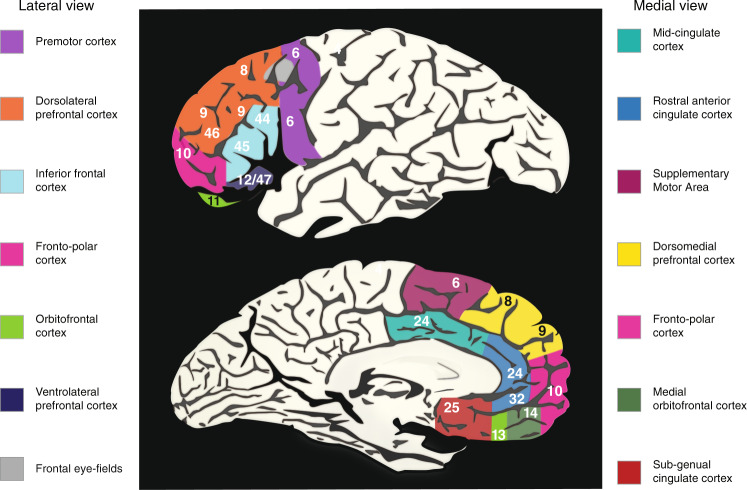
“Moreover, PFC functions probably depend on specializations of dendritic branching and spine density of pyramidal cells, especially in the cycloarchitectonically distinct regions of the granular PFC (Fig. 2) [21–23].”
§ The role of prefrontal cortex in cognitive control and executive function > Psychological organization of CC
What the sources say
- Partly supportedcites [21] Elston G Benavides-Piccione R Elston A Manger P Defelipe J Pyramidal cells in prefrontal cortex of primates: marked differences in neuronal structure among species Front Neuroanat 2011 5 2 21347276 PMC3039119 sourceExperimental — accuracy not yet measured
The Abstract links differences in pyramidal-cell branching and spine development across cortical areas to the functions those cells perform. The Discussion includes one dorsolateral granular prefrontal area (12vl) in a comparison, but the study examines inferotemporal cortex and does not establish that prefrontal functions depend especially on specializations across distinct granular prefrontal regions. Page numbers were not available in our copy. (LLM, conf=0.82)
- Not checked — no full text of the sourcecites [22] Semendeferi K Teffer K Buxhoeveden DP Park MS Bludau S Amunts K Spatial organization of neurons in the frontal pole sets humans apart from great apes Cereb Cortex 2011 21 1485 97 21098620 source
- Not checked — no full text of the sourcecites [23] Allman JM Watson KK Tetreault NA Hakeem AY Intuition and autism: a possible role for Von Economo neurons Trends Cogn Sci 2005 9 367 73 16002323 source
hedgedstates a possible cause- Asserted: passes — The authors put it forward as true.
- Checkable: passes — It can be checked against evidence.
- Load-bearing: unclear — It is unclear whether the paper’s conclusions depend on it.
- Based: passes — The paper gives a reason why it holds.
- Partly supported
The cited sources support only part of this claim — read each source’s verdict below.
In the paper
“There are also distinct functions within nodes of the FPN, where some of the “manipulation” sub-processes of working memory are mediated by parietal cortex, for example, including representations and operations relevant for mental arithmetic [76] and mental rotation [77].”
§ The role of prefrontal cortex in cognitive control and executive function > Fractionation and integration of CC within PFC > Fractionation of CC
What the sources say
- Partly supportedcites [76] Chochon F Cohen L Moortele PF van de, Dehaene S Differential contributions of the left and right inferior parietal lobules to number processing J Cogn Neurosci 1999 11 617 30 10601743 sourceExperimental — accuracy not yet measured
The Conclusion (p. 11) reports that both parietal regions contribute to mental arithmetic and describes parietal involvement in manipulating numerical quantity, supporting the part attributed to citation [76]. But the discussion of working memory (A Parieto-Fronto-Cingular Network for Number Processing, p. 7) links it especially to prefrontal and anterior cingulate activation; it does not establish that parietal cortex mediates a working-memory manipulation sub-process. Mental rotation is attached to a different citation, [77], and is not assessed here. (LLM, conf=0.83)
- Partly supportedcites [77] Georgopoulos AP Pellizzer G The mental and the neural: psychological and neural studies of mental rotation and memory scanning Neuropsychologia. 1995 33 1531 47 8584184 sourceExperimental — accuracy not yet measured
The paper reviews neural evidence for mental rotation, but it does not establish the parietal-cortex role attributed to it here. In “Neural bases for visuomotor and visual mental rotations” (p. 9), it reports motor-cortex activity during visuomotor mental rotation and says no other brain areas were explored in that task. The mental-arithmetic example has a separate citation and is not assessed here. (LLM, conf=0.86)
plainstates a cause- Asserted: passes — The authors put it forward as true.
- Checkable: passes — It can be checked against evidence.
- Load-bearing: unclear — It is unclear whether the paper’s conclusions depend on it.
- Based: passes — The paper gives a reason why it holds.
- Partly supported
The cited sources support only part of this claim — read each source’s verdict below.
In the paper
“Research with children suggests separability of hot and cool CC in terms of their relations with each other and with other measures [50, 52–57].”
§ The role of prefrontal cortex in cognitive control and executive function > Psychological organization of CC
What the sources say
- Not checked — no full text of the sourcecites [50] Zelazo PD Carlson SM Hot and cool executive function in childhood and adolescence: development and plasticity Child Dev Perspect 2012 6 354 60 source
- Partly supportedcites [52] Poon K Hot and cool executive functions in adolescence: development and contributions to important developmental outcomes Front Psychol 2018 8 2311 29367850 PMC5767838 sourceExperimental — accuracy not yet measured
The Relations among Cool and Hot Executive Function Tests section reports no significant correlation between hot and cool measures, and the Academic Performance and Psychological Adjustment sections report different associations with those outcomes. The study supports separability, but its participants were adolescents aged 12–17 (Methodology: Participants), not a sample specifically of younger children. No page numbers are available in our copy. (LLM, conf=0.83)
- Not checked — no full text of the sourcecites [53] Botdorf M Rosenbaum GM Patrianakos J Steinberg L Chein JM Adolescent risk-taking is predicted by individual differences in cognitive control over emotional, but not non-emotional, response conflict Cogn Emot 2017 31 972 9 27050317 source
- Supportedcites [54] Kim S Nordling JK Yoon JE Boldt LJ Kochanska G Effortful control in “hot” and “cool” tasks differentially predicts children’s behavior problems and academic performance J Abnorm Child Psychol 2013 41 43 56 22798038 PMC3737587 source
The Results (Confirmatory Factor Analysis Comparing Measurement Models; page not available) report that a model separating hot and cool functions fit the children's data well, while a single-factor model fit significantly worse. The Results (Structural Equation Models; page not available) also report different relations with other measures: hot effortful control predicted behavior problems, whereas a cool-task measure predicted academic performance. A second-order unidimensional model also fit, consistent with the citing sentence's cautious 'suggests' wording. (LLM, conf=0.88)
- Not checked — no full text of the sourcecites [55] Hongwanishkul D Happaney KR Lee WSC Zelazo PD Assessment of hot and cool executive function in young children: age-related changes and individual differences Dev Neuropsychol 2005 28 617 44 16144430 source
- Partly supportedcites [56] Harden KP Kretsch N Mann FD Herzhoff K Tackett JL Steinberg L Beyond dual systems: a genetically-informed, latent factor model of behavioral and self-report measures related to adolescent risk-taking Dev Cogn Neurosci 2017 25 221 34 28082127 PMC6886471 sourceExperimental — accuracy not yet measured
The Discussion section “Cognitive (Dys)control and the ability-personality distinction” reports that cognitive dyscontrol and premeditation were separable and had different relationships with IQ. That supports the general point about distinct control-related measures, but the paper does not identify these as hot and cool cognitive control or establish that distinction in children; its findings concern adolescents. (LLM, conf=0.82)
- Supportedcites [57] Willoughby M Kupersmidt J Voegler-Lee M Bryant D Contributions of hot and cool self-regulation to preschool disruptive behavior and academic achievement Dev Neuropsychol 2011 36 162 80 21347919 PMC5555639 source
The Discussion (p. null) reports that preschool children's performance on self-regulatory tasks was better represented by a two-factor (hot vs. cool) model than a single undifferentiated factor, with the two latent factors only moderately correlated (φ = .47) — separability in their relation to each other. The same section and the Conclusion state that cool regulation was uniquely associated with academic achievement while hot regulation was uniquely associated with inattentive-overactive behavior — separability in their relations with other measures. The paper frames the constructs as hot/cool self-regulation rather than 'cognitive control,' but the content attributed matches; the claim is one citation among several ([50, 52–57]) and this source supports it. (LLM, conf=0.90)
hedgedstates an association- Asserted: passes — The authors put it forward as true.
- Checkable: passes — It can be checked against evidence.
- Load-bearing: unclear — It is unclear whether the paper’s conclusions depend on it.
- Based: passes — The paper gives a reason why it holds.
101 more claims · 45 with their cited sources checked
Create a free account to see all 202 claims and to verify the 2 references still open.
- It may state two separate claims as one. 70
- Probably not a substantial claim. 29
Claims other papers make about this one
Each is checked against this paper’s own text: does it say what the citing paper says it does?
The source backs part of the claim, not all of it — or backs it for a different population, condition or comparison.
In the citing paper
“Cognitive flexibility builds on working memory and inhibitory control and includes attentional shifting, strategy updating, response to feedback, reversal learning, task switching, exploration, and creative problem-solving (8, 24, 25).”
From Neural mechanisms underlying cognitive inflexibility in obsessive-compulsive disorder: a review (2026) · cites this paper as [25]
Experimental — accuracy not yet measuredThe cited source says what the claim attributes to it.
In the citing paper
“l-dlPFC is integral to higher-order cognition (i.e., executive function) [10,11], which modulates episodic memory in MCI by way of enhancing encoding and facilitating retrieval [12–14].”
From A phase I trial of accelerated intermittent theta burst rTMS for amnestic MCI (2024) · cites this paper as [11]
The check wasn’t confident either way, so it gives no verdict — never disputed.
In the citing paper
“This is in contrast with individuals with bilateral basolateral amygdala lesions, who have no problem recalling dreams, although their dreams are shorter and simpler (they also have more positive and less negative emotions)205.”
From Consciousness and sleep (2024) · cites this paper as [205]
Experimental — accuracy not yet measuredIn the citing paper
“For example, representations and algorithms in digital technologies can model how brain systems are organized and work, suggesting sound theoretical connections between neuroscience and digital technologies used in e-learning [119-122].”
From Leveraging AI in E-Learning: Personalized Learning and Adaptive Assessment through Cognitive Neuropsychology—A Systematic Analysis (2024) · cites this paper as [122]
In the citing paper
“The PFC serves as a hub for cognitive regulation, coordinating activity across cortical and subcortical regions to support complex, goal-directed behaviour and tasks.”
From Sleep deprivation and memory: A neurobiological perspective (2026) · cites this paper as Friedman and Robbins, 2021
Citations
Cites
Miyake, A., Friedman, N. P., Emerson, M. J., Witzki, A. H., Howerter, A., & Wager, T. D. (2000) · Cognitive Psychology · doi:10.1006/cogp.1999.0734 · Cited by 15,798 · cited 5×
“, sequencing subgoals) to result in more complex postulated CC functions like planning [33].”
BackgroundMethodInfluentialSelf-citationDiamond, A. (2013) · Annual Review of Psychology · doi:10.1146/annurev-psych-113011-143750 · Cited by 13,268
An Integrative Theory of Prefrontal Cortex Function
Miller, E. K., & Cohen, J. D. (2001) · Annual Review of Neuroscience · doi:10.1146/annurev.neuro.24.1.167 · Cited by 12,803 · cited 5×
“Specifically, building on Desimone and Duncan’s [170] model of such competitive dynamics during visual attention, Miller and Cohen argued that prefrontal goal representations enable weak stimulus-response mappings to out-compete more habitual ones when appropriate: Goal representations bias competition by boosting act…”
BackgroundMethodInfluentialMetacognition and cognitive monitoring: A new area of cognitive–developmental inquiry
Flavell, J. H. (1979) · American Psychologist · doi:10.1037/0003-066x.34.10.906 · Cited by 11,282 · cited 1×
“, impulsiveness); and metacognition [249] including social aspects (e.”
BackgroundNeural Mechanisms of Selective Visual Attention
Desimone, R., & Duncan, J. (1995) · Annual Review of Neuroscience · doi:10.1146/annurev.ne.18.030195.001205 · Cited by 8,388 · cited 3×
“Specifically, building on Desimone and Duncan’s [170] model of such competitive dynamics during visual attention, Miller and Cohen argued that prefrontal goal representations enable weak stimulus-response mappings to out-compete more habitual ones when appropriate: Goal representations bias competition by boosting act…”
BackgroundDissociable intrinsic connectivity networks for salience processing and executive control
Seeley, W. W., Menon, V., Schatzberg, A. F., Keller, J., Glover, G. H., Kenna, H., Reiss, A. L., & Greicius, M. D. (2007) · The Journal of Neuroscience · doi:10.1523/jneurosci.5587-06.2007 · Cited by 7,426 · cited 1×
“However, neuroimaging studies comparing CC tasks with non-emotional and emotional stimuli find that they involve similar CC regions [58, 59] (dorsal ACC, anterior insula, and lateral and medial PFC), but tasks with emotional conflict also recruit distinct neural regions related to salience and emotional processing (am…”
BackgroundInsensitivity to future consequences following damage to human prefrontal cortex
Bechara, A., Damasio, A. R., Damasio, H., & Anderson, S. W. (1994) · Cognition · doi:10.1016/0010-0277(94)90018-3 · Cited by 6,128 · cited 2×
“Subsequent work established that such deficits were caused by extensive damage to the orbitofrontal and ventromedial (vm)PFC, extending into the frontal pole (BA-10) [109, 110].”
BackgroundControlled and automatic human information processing: I. Detection, search, and attention.
Schneider, W., & Shiffrin, R. M. (1977) · Psychological Review · doi:10.1037/0033-295x.84.1.1 · Cited by 5,902 · cited 1×
“This process has many similarities with the distinction between controlled and automatic responding [6], which approximately aligns with the learning theory distinction between goal-directed and habitual responding [7].”
ResultSaliency, switching, attention and control: a network model of insula function
Menon, V., & Uddin, L. Q. (2010) · Brain Structure and Function · doi:10.1007/s00429-010-0262-0 · Cited by 5,592 · cited 1×
“However, neuroimaging studies comparing CC tasks with non-emotional and emotional stimuli find that they involve similar CC regions [58, 59] (dorsal ACC, anterior insula, and lateral and medial PFC), but tasks with emotional conflict also recruit distinct neural regions related to salience and emotional processing (am…”
BackgroundLarge-scale brain networks and psychopathology: a unifying triple network model
Menon, V. (2011) · Trends in Cognitive Sciences · doi:10.1016/j.tics.2011.08.003 · Cited by 4,168
Cited by
Items 1,401–1,500 of 1,733
A Review of Research on Executive Function Components and Their Assessment Methods
陈, 宗. (2025) · Advances in Psychology · doi:10.12677/ap.2025.1512643
In-vehicle toluene exposure affects functional connectivity of working memory retrieval networks
Wang, J., Hao, F., Yu, P., Wu, W., Liu, J., & Song, Y. (2025) · Journal of Hazardous Materials Advances · doi:10.1016/j.hazadv.2025.100982 · Cited by 1
Behavioural, Neural and Molecular Effects Underlying Caffeine's Addictive Properties
Li, X., Fei, F., Liu, X., Cui, P., Sheng, H., He, Y., Shen, Y., & Gao, Y. (2025) · Addiction Biology · doi:10.1111/adb.70114 · Cited by 1
“This elevation in c-fos expression suggests that caffeine modulates neuronal activity within the mPFC, a brain region critically involved in executive functions [25], decision-making [26] and reward processing [27].”
Ji, K. (2025) · International Conference on Bioinformatics Research and Applications (ICBRA) · doi:10.1145/3774976.3774983
A Multi-Scale Neural Computational Model for Gamma Oscillation Generation Mechanisms
Jiang, L., Sun, Y., Zhang, X., et al. (2025) · IEEE International Conference on Unmanned Systems (ICUS) · doi:10.1109/icus66297.2025.11294786
“These findings support the notion that the prefrontal cortex serves as a key regulatory hub for cognitive functions such as working memory, attentional control, decision-making, problem-solving, and cognitive flexibility[18].”
Dumo, J., White, N. C., Jhajj, K., & Duchesne, A. (2025) · Psychological Research · doi:10.1007/s00426-025-02217-x · Cited by 2
“These questionnaires were administered to determine if participants differed in these domains as they have been associated with individual variation in executive function (Diamond, 2013; Friedman & Robbins, 2022; Keilp et al., 2005; Pietrzak et al., 2008).”
Xing, Z., Wang, X., Huang, J., Schwieter, J. W., & Liu, H. (2025) · Cognitive Neurodynamics · doi:10.1007/s11571-025-10397-w · Cited by 1
“…during the flanker task, studies have shown that conflict conditions elicit greater left SFG activation than nonconflict conditions, and it is believed that this par - ticular brain region is involved in conflict resolution (Egner and Hirsch 2005; Fan et al. 2003; Friedman and Robbins 2022 ).”
Dadam, F. M., Basmadjian, O. M., Berardo, G., et al. (2025) · bioRxiv (Cold Spring Harbor Laboratory) · doi:10.64898/2025.12.23.696253
Rasheed, L. S. A. (2025) · Applied Neuropsychology Child · doi:10.1080/21622965.2025.2608127
Kurashige, H., Kaneko, J., & Matsumoto, K. (2025) · bioRxiv (Cold Spring Harbor Laboratory) · doi:10.64898/2025.12.30.697002
“( 38 )).”
Dimri, V., Davis, J. C., Silva, N. C. B. S., Balbim, G. M., Eng, J. J., & Liu-Ambrose, T. Y. L. (2025) · Aging Clinical and Experimental Research · doi:10.1007/s40520-025-03287-y
“Executive functions are cognitive processes that regulate one’s thoughts and behaviors while optimising goal-directed behavior and countering automatic responding [12].”
Zhao, Y., Xi, Z., Zang, Z., Yang, Z., & Liu, J. (2026) · Frontiers in Psychiatry · doi:10.3389/fpsyt.2025.1705969
The role of executive function for differentiating symptoms of ADHD in preschoolers
高毅, Chen, G., Wang, J., Yang, C., Yang, R., & Jiang, K. (2026) · BMC Pediatrics · doi:10.1186/s12887-025-06465-z · Cited by 1
“Research indicates that the anterior portion of the brain, particularly the prefrontal cortex (PFC), serves as the core neural substrate for executive processes [12].”
Nyoni, G., Katemba, R. B., Kayata, C., Mumba, R., Muimui, M., Makondo, M., Nyumbu, M., & Yusuf, U. A. (2026) · European Journal of Medical and Health Research · doi:10.59324/ejmhr.2026.4(1).13
Dynamic Resting-State Network Markers of Disruptive Behavior Problems in Youth
Shappell, H. M., Liu, Z., Khodaei, M., He, G. S., Gee, D. G., Lindquist, M. A., Sukhodolsky, D. G., McCarthy, G., & Ibrahim, K. (2026) · Biological Psychiatry Global Open Science · doi:10.1016/j.bpsgos.2026.100689 · Cited by 2
Sobrecarga del cuidador y funcionamiento ejecutivo en cuidadores primarios
Asitimbay, A. E. G. (2025) · Revista Científica y Arbitrada de Psicología NUNA YACHAY · doi:10.56124/nuna-yachay.v7i14.029
Jiang, F., Yi, Y., Zhang, J., Tan, A., Qin, X., Zhong, X., Wang, P., Xiao, J., Zhou, B., & Li, J.-Y. (2026) · Journal of Affective Disorders · doi:10.1016/j.jad.2025.121067
The network structure of autistic traits, executive function, prosopagnosia and social anxiety
Xu, X., He, X., Ren, W., & Zhao, X. (2026) · Research in Autism · doi:10.1016/j.reia.2026.202815 · Cited by 2
Baten, C., Zamora, G., Klassen, A. M., Rackley, J., Nimarko, A. F., Woo, E., Keller, A. S., Hamilton, J. P., Hedges, D. W., Sacchet, M. D., et al. (2026) · Biological Psychiatry Cognitive Neuroscience and Neuroimaging · doi:10.1016/j.bpsc.2026.01.001 · Cited by 1
Adverse childhood experiences negatively impact sustained attention in adulthood
Berentz, E., Wienke, C., & Zaehle, T. (2026) · Discover Mental Health · doi:10.1007/s44192-025-00362-8
“and emotional regulation [7].”
Sun, L., Zheng, H., Huang, Y., Huang, X., Yan, K., Wang, Z., Yang, L., Yue, Y., Gou, X., Du, G., et al. (2026) · National Science Review · doi:10.1093/nsr/nwag004 · Cited by 3
Wen, Y., & Shen, Y. (2026) · Personality and Individual Differences · doi:10.1016/j.paid.2026.113656
Keshava, P., Potash, R. M., Walsh, S. W., Pizzagalli, D. A., & Sacchet, M. D. (2026) · Biological Psychiatry Cognitive Neuroscience and Neuroimaging · doi:10.1016/j.bpsc.2026.01.002
Cortical astrocytes bidirectionally control stress adaptability
Kondev, V., Holt, L. M., Kipp, B. T., Gyles, T. M., Racine, I., Abroon, J., Ripp, A., McKernan, W., Ahmed, S., Kahn, E., et al. (2026) · Biological Psychiatry · doi:10.64898/2026.01.17.700119 · Cited by 1
Structural network topology and cognitive control in very preterm born young adults
Marek, M. J., Wolke, D., Sorg, C., Wendt, J., Menegaux, A., Hedderich, D. M., Bartmann, P., Burkhardt, M., Hildebrandt, A., & Heep, A. (2026) · NeuroImage Clinical · doi:10.1016/j.nicl.2026.103952 · Cited by 1
Depressive Thought Retrieval as a Probabilistic Database Query System
Spyrou, E. D., Kappatos, V. A., & Stylios, C. D. (2025) · South-East Europe Design Automation, Computer Engineering, Computer Networks and Social Media Conference (SEEDA-CECNSM) · doi:10.1109/seeda-cecnsm68644.2025.11329674
“These components align with neurobiological evidence from lesion, neurochemical, and imaging studies across species, highlighting the PFC’s role [18].”
Aguilar-González, A., Rodríguez, M. V., Poch, C., & Sánchez-Paulete, N. C. (2026) · Information · doi:10.3390/info17010105
“Executive Functions encompass skills that support self-control, decision-making, and adaptation to changing environments [6].”
Cao, W., Hu, J., Wang, J., Lin, F., & Qiu, H. (2026) · Frontiers in Psychiatry · doi:10.3389/fpsyt.2025.1725048 · Cited by 2
“Additional signi fi cant activations were found in the PreM & SMC-R, DLPFC-L, FPA-L, FPA-R, SSC-L, SSC-R, Broca-R, and PreM & SMC-L (all p FDR 0.05).”
InfluentialKranz, G. S., Zhang, B., Wang, S. X., Lam, V. W. M., Kan, R. L. D., Shi, N. M. X. Y., Lin, T., Jin, M., Xia, A. W., Qin, P. P., et al. (2026) · Research Square · doi:10.21203/rs.3.rs-8537776/v1
Investigating the role of executive function in brain responses to infant crying among new parents
Hiraoka, D., Xie, Y., Powers, S. E., Patterson, G., Chin, J., Brady, N., YEH, T. P., & Kim, P. (2026) · Social Cognitive and Affective Neuroscience · doi:10.1093/scan/nsag002
Coherence Under Acceleration Judgment Integrity In A High-Velocity Convergence EraPreprint
Calloway, D. (2026) · SSRN Electronic Journal · doi:10.2139/ssrn.5960914 · Cited by 1
Guo, Y., Gao, X., Liu, J., Shen, Q., Jia, X., Zhang, H., Wu, Y., Li, W., Gao, H., Zhou, C., et al. (2026) · Journal of Affective Disorders · doi:10.1016/j.jad.2026.121277 · Cited by 1
Analysis of Drone-Assisted Building Inspection Training in VR vs. 2D Monitor Display: An EEG Study
Pengkun, L., Greene, J., Huang, J., Tang, P., & Hou, Y. (2026) · ASCE International Conference on Computing in Civil Engineering (i3CE) · doi:10.1061/9780784486436.107
Carcelén-Fraile, M. D. M., Carcelén‐Fraile, M. D. C., Hita‐Contreras, F., Castellote‐Caballero, Y., & Aibar‐Almazán, A. (2026) · GeroScience · doi:10.1007/s11357-026-02124-y · Cited by 2
“…indicating that participants with a slower gait have a lower ability to maintain sustained attention, reinforcing the idea that motor control and attention regulation share common neurobiological mechanisms, especially in the connections between the prefrontal cortex and subcortical circuits [75].”
Zhai, J., Huang, J., Chen, Y., Qiu, T., & Liu, H. (2026) · Maturitas · doi:10.1016/j.maturitas.2026.108857 · Cited by 1
Sex-specific neural responses to smartphone cues in young adults
Wolf, N. D., Schmitgen, M. M., Henemann, G. M., Haage, S. H., Bach, P., Koenig, J., & Wolf, R. C. (2026) · Biology of Sex Differences · doi:10.1186/s13293-026-00835-7
“Functionally, the MFG integrates top-down control with motivationally relevant inputs, modulating cognitive regulation of craving and impulsive tendencies [47, 48].”
Maladaptive Decision-Making in Older Adults: Confirmation Bias and Financial Exploitation
Wyngaarden, J. Β., Giovannetti, T., Krekelberg, B., & Smith, D. V. (2026) · Springer eBooks · doi:10.1007/978-3-032-02925-6_30 · Cited by 2
Liu, H., & Song, X. (2026) · International Journal of Psychology · doi:10.1002/ijop.70181
A diffusion model analysis of task set inertia and task set reconfiguration in ADHD
Hlutkowsky, C. O., Yan, X., Shapiro, Z. R., Feldman, J. S., & Huang‐Pollock, C. L. (2026) · Journal of the International Neuropsychological Society · doi:10.1017/s135561772510180x
“This is true of both statistical covariances in performance and in the common areas of neural activation observed when engaged in a variety of EF tasks (Fiske & Holmboe, 2019; Friedman & Robbins, 2022; McKenna et al., 2017).”
Kliś, K. M., Łasocha, B., Szydłowski, I., Gąsowski, J., Pomierny, B., Cierniak, A., Kwinta, B. M., Stachura, K., & Krzyżewski, R. M. (2026) · Neurosurgical Review · doi:10.1007/s10143-025-04117-5
“The involvement of the pars opercularis further extends these effects to domains of cognitive control and lan - guage processing [45, 46], suggesting that UIA-related cortical remodeling may have broader functional consequences than previously appreciated.”
Rodney, T. U. (2025) · Springer eBooks · doi:10.1007/978-3-031-87526-7_11
Madduri, A. V., Ellis, R. J., Lakhani, C. M., Bennett, D. A., & Patel, C. J. (2026) · Nature Communications · doi:10.64898/2026.01.31.26345282
Fan, Y., Xu, Y., Xu, Y., Liu, L., Yang, M., Guo, J., & Chen, H. (2026) · bioRxiv (Cold Spring Harbor Laboratory) · doi:10.64898/2026.02.06.704304
Liu, J., Zhao, Y., Ma, J., & Zhang, G. (2026) · Frontiers in Neurology · doi:10.3389/fneur.2026.1746101
Executive Functions Interplay: A Multidimensional Model Including Different Inhibitory Processes
López-Ramón, M. F., Richard’s, M. M., Musso, M., Aydmune, Y. S., Bario, D. A., & Introzzi, I. M. (2026) · Trends in Psychology · doi:10.1007/s43076-025-00511-6 · Cited by 3
Demirci, B., Oğul, Ö. E., & Derin, S. (2026) · OTJR Occupational Therapy Journal of Research · doi:10.1177/15394492261417221 · Cited by 1
Chan, M. S.-P., Tang, P.-Y., Chua, Z.-K., Cheong, W.-L., & Mok, S.-Y. (2026) · Psychiatry Research Neuroimaging · doi:10.1016/j.pscychresns.2026.112175 · Cited by 3
Prefrontal cortex (annotated MRI)
Oraham, N. (2026) · Radiopaedia.org · doi:10.53347/rid-228728
Gowin, J. L., Ashar, Y. K., McRae, K., Sheller, C., & Sloan, M. E. (2026) · Social Cognitive and Affective Neuroscience · doi:10.1093/scan/nsag007
Different developmental trajectories of critical dynamics in prefrontal cortex–amygdala circuitryPreprint
Kharybina, Z., Palva, J. M., Palva, S., Lauri, S. E., Hartung, H., & Taira, T. (2026) · bioRxiv (Cold Spring Harbor Laboratory) · doi:10.64898/2026.02.13.705704 · Cited by 1
Xu, N., Xing, Y., Li, A., Pan, R., Liu, S., Gao, J., Liu, X., Tao, T., Zhang, P., Xie, W., et al. (2026) · medRxiv · doi:10.64898/2026.02.13.26346250
Compound- and sex-specific medial prefrontal cortex rewiring after prenatal THC and CBD exposurePreprint
Cáceres-Rodríguez, A., Lassalle, O., Iezzi, D., Wang, S., Chavis, P., & Manzoni, O. J. (2026) · bioRxiv (Cold Spring Harbor Laboratory) · doi:10.64898/2026.02.13.705680 · Cited by 1
“…in potentiation creates a bidirectional synaptic rigidity in which circuits can neither strengthen nor weaken their connections; such rigidity is likely to impair cognitive flexibility, working memory and adaptive decision-making, functions that depend critically on mPFC plasticity 37,38 .”
Yun, J., Yoo, S. Y., Choi, J.-S., Choi, S.-H., & Jang, J. H. (2026) · Scientific Reports · doi:10.1038/s41598-026-40535-1 · Cited by 1
“…this study are consistent with previous studies that have reported the role of the thalamus as a principal connector that relays information from and integrates 116,117 salience (insula) 118,119 , cognitive control (superior frontal gyrus, pallidum) 120,121 , and reward (putamen) 122,123 networks.”
Haenjohn, J., Supwirapakorn, W., & Namyen, J. (2026) · Current Psychology · doi:10.1007/s12144-025-08921-6
“…the brain region that plays an important role in high-level cognitive processes, particularly cognitive control (CC) and executive functions (EFs), such as attention, working memory, problem-solving, cognitive flexibility, inhibitory control, and goal-directed behaviors (Friedman & Robbins, 2022).”
The impact of language context on inter-brain synchrony in bilingual families
Papoutselou, E., Saravanan, N., Mai, G., Harrison, S. C., Sezer, H. D., & Hartley, D. E. H. (2026) · Frontiers in Cognition · doi:10.3389/fcogn.2025.1695132
COGNITIVE FUNCTIONS ACROSS LEVELS OF STRESS AND ANXIETY
Кравченко, В. И., BOGATYROVA, M., & Kovalchuk, O. I. (2025) · Bulletin of Taras Shevchenko National University of Kyiv Series “Psychology” · doi:10.17721/1728.2748.2025.103.41-49 · Cited by 2
Jung, M., Hord, L., Patrick, Z., McMorris, T., Voss, M. W., Hillman, C. H., & Loprinzi, P. D. (2026) · Journal of Cognitive Enhancement · doi:10.1007/s41465-026-00348-6
Yang, H. Y., Zhang, S., & Zhong, L. (2026) · Frontiers in Nutrition · doi:10.3389/fnut.2026.1761323
“Additionally, low total cholesterol ( 160 mg/dL) has been associated with reduced gray matter volume in the medial temporal lobe, potentially impairing executive function (11).”
Wen, X., Malchin, L., Neumann, A. R., & Womelsdorf, T. (2026) · bioRxiv (Cold Spring Harbor Laboratory) · doi:10.64898/2026.02.24.707708
“…superior performance across domains raises questions about the neurophysiological and genetic origins of cognitive alterations not only in the clinical context, but also in the larger endeavor to understand the functional organization of executive functions in primate brains [1, 14, 26, 47].”
Min, H.-K. P., Osman, R., Nycklemoe, M., Boos, D. M., Murphy, C. M., Flock, C. R., Jacobson, D. N., Lim, S., Nation, J. L., Wilson, M. A., et al. (2026) · BMJ Open · doi:10.1136/bmjopen-2025-113105 · Cited by 1
Liu, L., Zhang, F., & Zhou, P. (2026) · SLEEP · doi:10.1093/sleep/zsag056
Heyn, S. A., DiMaio, S., & Herringa, R. J. (2026) · Biological Psychiatry Global Open Science · doi:10.1016/j.bpsgos.2026.100714 · Cited by 2
“Notwithstanding incredible anatomical and functional complexity (55), the dlPFC is generally involved in cognitive control, working memory, and effortful processing (56,57).”
Wang, X., Shao, J., & Lin, P. (2026) · Behavioural Brain Research · doi:10.1016/j.bbr.2026.116135
Ostos‐Valverde, A., Sánchez‐Zavaleta, R., Téllez-Vega, E. D., Aguilar-Dorado, A., Herrera-Solís, A., Ruiz‐Contreras, A. E., & García, Ó. P. (2026) · Revista Internacional de Investigación en Adicciones · doi:10.28931/riiad.2026.396
Aging Weakens Memory for Schema-Deviant Objects and Decouples Gaze Sampling from Retrieval Decisions
Xu, H.-Z., & Huan, S.-Y. (2026) · Brain Sciences · doi:10.3390/brainsci16030289
Genetic Architecture of Educational Attainment is Represented by Executive Function in ChildrenPreprint
Chia, J., Law, E. C. N., Seng, C. Y., Gluckman, P., Eriksson, J. G., Daniel, L. M., Silveira, P. P., Meaney, M. J., & Kee, M. Z. L. (2026) · Research Square · doi:10.21203/rs.3.rs-8863842/v1
Pediatric frontal lobe epilepsy surgery: long-term neuropsychological outcomes and their predictors
Latzer, I. T., Bolton, J., Stone, S. S. D., et al. (2026) · Epilepsy & Behavior · doi:10.1016/j.yebeh.2026.110984
Zhang, J., Wang, Y., Zhao, H., Duan, W., Kan, Y., Yang, T., Ball, L. J., Lin, S., & Duan, H. (2026) · Social Neuroscience · doi:10.1080/17470919.2026.2638824
“IBS on the PFC likely reflected synchronized executive con-trol, whereby partners aligned working-memory updating for idea generation and inhibitory control to avoid those common answers for idea evaluation (Friedman & Robbins, 2022; Menon, 2011).”
Erazo, K. E. M., & Ponce, S. V. M. (2026) · Revista de Investigación Educativa Niveles. · doi:10.61347/rien.v3i1.87
Romero‐Martínez, Á., Sarrate‐Costa, C., & Moya‐Albiol, L. (2026) · Brain Imaging and Behavior · doi:10.1007/s11682-026-01105-1 · Cited by 1
“Conversely, the activation of the lateral PFC appears to be important in set-shifting tasks, while the activation of the OFC is crucial for adapting responses after receiv - ing negative feedback (Friedman & Robbins, 2022).”
Xu, Z. J., Li, T., Chen, C. L. P., & Zhang, T. (2026) · IEEE Transactions on Affective Computing · doi:10.1109/taffc.2026.3671843
“These regions are involved in cognitive con-trol and motor functions [57], suggesting that disgust involves complex interactions between sensory perception and higher-order cognitive processes.”
Caudle, M. M., Simmons, A. N., Moore, R. C., Thomas, M. L., & Bomyea, J. A. (2026) · Brain Imaging and Behavior · doi:10.1007/s11682-026-01120-2 · Cited by 1
“…goal-directed attention, reorienting attention, visuospatial processing, and suppressing goal-irrelevant information, thus thought to influence WM capac - ity and function (Friedman & Robbins, 2022; Japee et al., 2015; Minamoto et al., 2010; Nee et al., 2013; Squire et al., 2013; Xu et al., 2023).”
Neurocognitive overlap across DSM-5-TR presentations in pediatric ADHD under digital assessment
Díaz-Moreno, E., & Heredia‐Jimenez, J. (2026) · Child Neuropsychology · doi:10.1080/09297049.2026.2642193
“…shared dysfunction across frontostriatal, frontoparietal, and cingulo-opercular networks that support top-down control and performance monitoring, consistent with heterogeneous yet over-lapping cognitive impairment in ADHD (Castellanos & Proal, 2012; Cortese et al., 2012; Friedman & Robbins, 2022).”
Yan, J., Iturria‐Medina, Y., Bezgin, G., Toussaint, P. J., Xie, K., He, L., Chen, J., Hilger, K., Genç, E., Evans, A. C., et al. (2026) · Communications Biology · doi:10.1038/s42003-026-09831-4 · Cited by 6
“This is compatible with previous work suggesting that the PFC functions as a central hub that mediates cognitive control, while its cytoarchitectonic heterogeneity helps coordinate and integrate different tasks 53 .”
Wu, Z., Guo, H., Tang, X., Tong, Y., Tian, Y., Li, M., Zhang, Y., Kai, Y., Zheng, H., Zhang, J., et al. (2026) · Experimental Neurology · doi:10.1016/j.expneurol.2026.115732
Convergent neural signatures of optimal creative performance: A systematic review and meta-analysis
Liu, C., Li, L., Wang, K., Qiu, J., & Li, G. (2026) · NeuroImage · doi:10.1016/j.neuroimage.2026.121850
Yang, Y., Wang, H., Kat, S., Ma, Z., Yin, T., Ya-jing, S. U. N., Tang, X., Gong, X., Wang, D., Li, L., et al. (2026) · Frontiers in Psychiatry · doi:10.3389/fpsyt.2026.1674370 · Cited by 1
Singh, S., Thusyanthan, V., Mizzi, A. L., Levy, Y., Kinley, I., Shaw, S. B., & Becker, S. (2026) · Frontiers in Human Neuroscience · doi:10.3389/fnhum.2026.1731382 · Cited by 1
“Both metacognition and mindfulness, along with the processing of bottom-up emotional cues, may require the top-down appraisal of thoughts facilitated by the dorsolateral prefrontal cortex, which is well known to be involved in executive functions (Friedman and Robbins, 2022).”
Jin, X., Feng, L., Li, X., Qu, T., Wu, Y., Wang, Z., Hui, K., Guo, H., Chen, L., Wang, L., et al. (2026) · Frontiers in Nutrition · doi:10.3389/fnut.2026.1753462 · Cited by 1
“The prefrontal cortex supports planning, organization, and information manipulation (29), whereas the hippocampus is central to episodic memory encoding and retrieval (30).”
Derby, J., Ward, T. W., Petro, N. M., Son, J. J., Ende, G. C., Rice, D. L., Coutant, A. T., Steiner, E. L., Calhoun, V. D., Wang, Y., et al. (2026) · The Journal of Physiology · doi:10.1113/jp289314
Mazzara, D., Angelo, T., Alonge, P., Gerardi, G., Renda, A., & Monastero, R. (2026) · Brain Sciences · doi:10.3390/brainsci16030325 · Cited by 1
“The L-DLPFC acts as the primary cortical hub within the fronto-striatal circuits [20], which are the most affected by the progressive degeneration of dopaminergic neurons in the substantia nigra.”
Zheng, X., Chen, H., Yang, Z., & Jiang, C. (2026) · Aging Clinical and Experimental Research · doi:10.1007/s40520-026-03370-y
Lu, Z., Zuo, X., Zhang, Q., Liu, Y., Ma, X., & Zhang, C. (2026) · Frontiers in Human Neuroscience · doi:10.3389/fnhum.2026.1780742
“Instead, they appear to rely on compensatory top-down executive control mediated by the prefrontal cortex (Friedman and Robbins, 2022).”
Zhang, F., Wu, R., Cheng, Z., Zhang, N., Che, Y., Chen, B., Huo, X., Liang, P., Chen, Y., Wang, Q., et al. (2026) · Japanese Journal of Radiology · doi:10.1007/s11604-025-01944-w · Cited by 2
Marek, M. J., Quinones, J. F., Heep, A., & Hildebrandt, A. (2026) · Royal Society Open Science · doi:10.1098/rsos.231980 · Cited by 1
Characterization of altered brain functional activity in patients with hypomania
Liu, Y., Ji, X., Xu, P., Yao, J., Zhang, H., Chen, W., & Shen, Y. (2026) · Journal of Psychiatric Research · doi:10.1016/j.jpsychires.2026.03.026
Fang, M., & Miller‐Cotto, D. (2026) · Education Sciences · doi:10.3390/educsci16040505
Wen, X., Zhao, J., Du, Z., Yu, X., Wang, D., Fu, B., Ge, M., Zhao, H., Wang, H., Li, F., et al. (2026) · BMC Medicine · doi:10.1186/s12916-026-04825-9 · Cited by 1
“The roles of OFC had been revealed in impulsivity regulation and control [31–33].”
Camacho‐Barcia, L., Torao‐Angosto, M., Baenas, I., Diego-Esteve, G., Throm, J. K., Lucas, I., Giel, K. E., Zipfel, S., Tovar, S. A., Diéguez, C., et al. (2026) · Reviews in Endocrine and Metabolic Disorders · doi:10.1007/s11154-026-10025-w · Cited by 1
Executive dysfunction and impulsivity in adolescence: a cross-lagged panel network analysis
Hu, C., Jin, L., Yu, D., Zhang, S., & Lu, Z. (2026) · BMC Psychology · doi:10.1186/s40359-026-04376-x · Cited by 2
“…the dimensions of inhibitory control and working memory [33], omitting the core dimension of cognitive flexibility as defined by Friedman et al. [60], for a more comprehensive assessment, future studies could adopt the scale developed by Huang et al. for Chinese adolescents, which includes all…”
Wang, Y., Shi, Q., Sun, Y., Shi, Y., Hong, H., & Gao, Y. (2026) · Diabetology & Metabolic Syndrome · doi:10.1186/s13098-026-02149-5
“Evidence showed that executive function mainly relies on prefrontal cortex networks and may require more targeted or intensive interventions to show measurable improvement [59].”
Prenatal cannabidiol exposure alters physical and behavioral development in rats
Fleischer, I., & Thomas, J. D. (2026) · Neurotoxicology and Teratology · doi:10.1016/j.ntt.2026.107600
The impact of video speed on situation awareness and prefrontal cortex activation in soccer players
Zhou, Q., Yang, Z., Li, Q., Zhang, Y., & Li, J. (2026) · Psychology of sport and exercise · doi:10.1016/j.psychsport.2026.103127
O'Connor, S. A., Narain, P., Mahajan, A., Bancroft, G. L., Haas, H. A., Wallen-Friedman, E., Vasisht, S., Takano, H., Kiffer, F. C., Eisch, A. J., et al. (2026) · bioRxiv (Cold Spring Harbor Laboratory) · doi:10.64898/2026.03.26.714605
Universal Principles of Navigation across Species and Spatial Scales
Wirth, S., Cheng, K., Fleischmann, P. N., Lohmann, K. J., Milford, M. J., Mouritsen, H., Pritchard, D. J., Robira, B., Ulanovsky, N., & Wan, K. Y. (2026) · Springer eBooks · doi:10.1007/978-3-032-20563-6_4 · Cited by 2
Conflict and control in error monitoring during sustained visual discrimination
Curley, T. M., Rhodes, L. J., Borghetti, L., & Morris, M. B. (2026) · Frontiers in Cognition · doi:10.3389/fcogn.2026.1565885
“In particular, researchers have focused on cortical activity localized in the fronto-central region of the brain that reliably correlates with a large range of cognitive tasks related to effort, control, and motivation (Badre and Nee, 2018; Friedman and Robbins, 2022; Shenhav et al., 2017).”
许, 曌. (2026) · Advances in Clinical Medicine · doi:10.12677/acm.2026.1641305
Constantin, D.-A., Cristina, D. B., Leaşu, F., Nacu, A., & Rogozea, L. M. (2026) · Brain Sciences · doi:10.3390/brainsci16040392 · Cited by 1
“Simultaneously, there is decreased reactiveness and connectivity of the executive control network, particularly in areas of the dorsolateral prefrontal cortex and dorsal anterior cingulate cortex, that negatively impacts cognitive control, decision-making, and inhibitory control [12,13].”
Yin, H., & Amran, M. S. (2026) · PLoS ONE · doi:10.1371/journal.pone.0341453
“For example, Response Inhibition tasks might more heavily tax the orbitofrontal cortex [23], while Working Memory would depend more on the dorsolateral prefrontal cortex [24].”
Ovando‐Tellez, M. (2021) · theses.fr (ABES) · doi:10.70675/c78e9d5ez77d2z4afczb6b7za8334d6f765c · Cited by 1
Metadata
- Authors
- Friedman, N. P., & Robbins, T. W.
- Affiliations
- University of Colorado Boulder (US)
- University of Cambridge (GB)
- Corresponding author
- Friedman, Naomi P.
- Robbins, Trevor W.
- Venue
- Neuropsychopharmacology
- Published
- 2021-08-18
- Volume
- 47
- Issue
- 1
- Pages
- 72-89
- ISSN
- 0893-133X (ISSN-L)
- 1740-634X
- PMC
- PMC8617292
- OpenAlex
- W3195973239
- Cited by
- 1,737
- References
- 267
- Citations by year
- 2026: 457 · 2025: 561 · 2024: 388 · 2023: 221 · 2022: 97 · 2021: 12
- FWCI
- 26.47
- Type
- journal article
- Language
- en
- Open access
- hybrid
- doi.org
- Licence
- cc-by
- creativecommons.org/licenses/by/4.0 (tdm)
- creativecommons.org/licenses/by/4.0 (vor)
- Locations
- Neuropsychopharmacology (publishedVersion, cc-by)
- PubMed Central (publishedVersion, cc-by)
- PubMed (publishedVersion)
- Apollo (University of Cambridge) (submittedVersion, cc-by)
- Apollo
- Funders
- U.S. Department of Health & Human Services | NIH | National Institute on Drug Abuse (DA046413, DA042742, DA051018)
- U.S. Department of Health & Human Services | NIH | National Institute of Mental Health (MH117131)
- U.S. Department of Health & Human Services | NIH | National Institute on Aging (AG046938)
- National Research Foundation (Singapore) CREATE Grant to the University of Cambridge and Nanyang Technological University for the Centre of Lifelong Learning and Individualised Cognition (CLIC).
- Topics
- Life Sciences › Neuroscience › Cognitive Neuroscience › Neural and Behavioral Psychology Studies
- Social Sciences › Psychology › Clinical Psychology › Historical and Modern Theater Studies
- Life Sciences › Neuroscience › Cellular and Molecular Neuroscience › Neurotransmitter Receptor Influence on Behavior
- Keywords
- prefrontal cortex, cognitive control, executive function, mental set shifting, working memory updating, response inhibition, motivation, general intelligence, general psychopathology factor, impulsivity, mental illness, psychiatric classification, Research Domain Criteria
- MeSH terms
- Adult, Cognition, Humans, Intelligence, Memory, Short-Term, Prefrontal Cortex, Executive Function
About these checks
Registry, retraction, Cites and statistics results are computed, not judged, with one exception: a printed reference that no index lists is read once by a model before it counts as a citation error. Claims are extracted by a model and kept only when their quote appears verbatim in the text; each cited source is then checked, with a model’s help, for whether it says what the claim relies on. Those verdicts can be wrong — read the claim’s quote and the cited source before relying on one.
The claim verdicts this report counts are experimental: their accuracy is not yet measured.
A language model drew the claims from the paper on 2026-09-28, under version 3 of the claim definition (model deepseek-v4.1-flash, prompt extract-v3).
A second model labelled each claim on 2026-09-28 (model jev-1.13-20260917, definition revision gold-guideline-v0.2).
Cited sources are checked with a language model’s help (gpt-6-sol and qwen3.8-omni-flash).
Statistics and arithmetic are recomputed, not judged.
Confidence bands are shown only for fields calibrated on our annotated test set. None is calibrated yet, so no band is shown.
What counts as a claim ›How we measure confidence ›How we check this ›
Are you an author, or do you see a problem with this page? Request a review
Data sources
Bibliographic data: Semantic Scholar, OpenAlex, Crossref.
Contains information from the Semantic Scholar Academic Graph Datasets, made available under the ODC Attribution License (ODC-BY 1.0).
Semantic Scholar’s data is described in: Kinney, R., et al. (2023). The Semantic Scholar Open Data Platform. arXiv:2301.10140.
