

The role of prefrontal cortex in cognitive control and executive function
Open accessThe DOI matches its Crossref record; 262 of the 267 references it cites were found in a registry or an index; 145 of the 304 sources its claims cite were checked for support.
Abstract
Concepts of cognitive control (CC) and executive function (EF) are defined in terms of their relationships with goal-directed behavior versus habits and controlled versus automatic processing, and related to the functions of the prefrontal cortex (PFC) and related regions and networks. A psychometric approach shows unity and diversity in CC constructs, with 3 components in the most commonly studied constructs: general or common CC and components specific to mental set shifting and working memory updating. These constructs are considered against the cellular and systems neurobiology of PFC and what is known of its functional neuroanatomical or network organization based on lesioning, neurochemical, and neuroimaging approaches across species. CC is also considered in the context of motivation, as "cool" and "hot" forms. Its Common CC component is shown to be distinct from general intelligence (g) and closely related to response inhibition. Impairments in CC are considered as possible causes of psychiatric symptoms and consequences of disorders. The relationships of CC with the general factor of psychopathology (p) and dimensional constructs such as impulsivity in large scale developmental and adult populations are considered, as well as implications for genetic studies and RDoC approaches to psychiatric classification.
Overview
CoChat Summary
## TL;DR
This review argues that cognitive control (CC) and executive function (EF) are both unified and fractionated: common processes exist, but distinct components such as working memory updating, mental set shifting, response inhibition, and hot versus cool control also show separability. It also links these CC/EF processes to prefrontal cortex (PFC) networks, neurochemistry, and transdiagnostic psychopathology, emphasizing that CC deficits are broadly relevant to mental health but are not identical to intelligence or impulsivity.
## Key findings
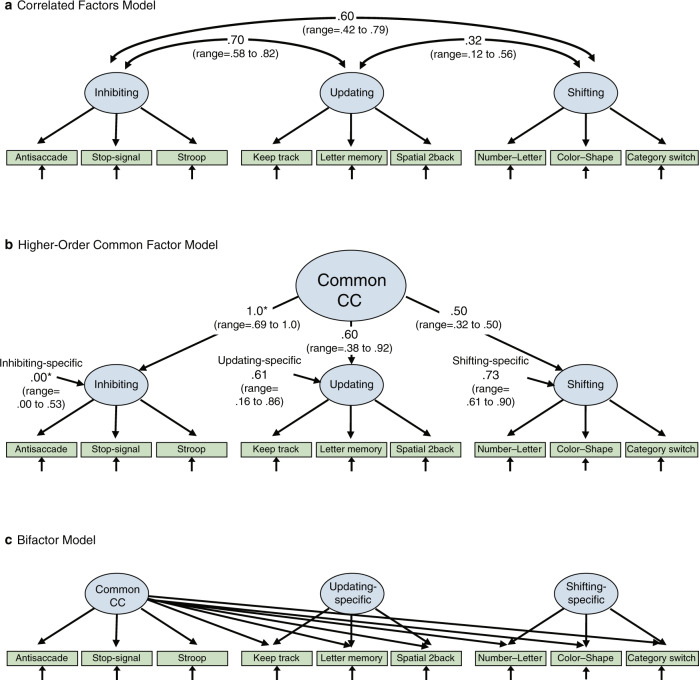
- Psychometric studies of CC/EF repeatedly find unity and diversity: in Miyake et al.’s model, correlations among the latent factors for inhibition, updating, and shifting were r = 0.42–0.63, while individual task correlations were only r = –0.05 to 0.34.
- The paper argues that the Common CC factor is closely related to response inhibition and is distinct from general intelligence (g), although intelligence still correlates substantially with common CC; reported correlations with common CC range from r = 0.53–0.91, but are only r = 0.53–0.68 in adult latent-variable samples.
- Neurobiological evidence supports both shared and distinct PFC contributions: lesion and neuroimaging studies dissociate dlPFC (working memory and some switching) from OFC/vlPFC (reversal learning and extra-dimensional set-shifting), and identify networks including the fronto-parietal network (FPN), cingulo-opercular network (CON), and default mode network (DMN).
- Across disorders, CC deficits are transdiagnostic and related to the p factor; the paper reports that common CC is associated with p at r = –0.16 to –0.56, and cites meta-analyses linking CC deficits to MDD, PTSD, OCD, bipolar disorder, schizophrenia, ADHD, conduct disorder/antisocial personality disorder, and substance use disorders.
## Methods
- This is a narrative review that synthesizes evidence from psychometric latent-variable studies, lesion studies, fMRI/meta-analyses, resting-state/connectivity studies, neurochemical/pharmacological work, and genetic/twin/family studies.
- The review draws on samples ranging from college students in psychometric work to patients with focal lesions, healthy children and adults, and large adult datasets; one cited imaging study included N = 251 healthy adults, and one meta-analysis included 193 fMRI studies of executive function.
- Main analysis is conceptual synthesis: it compares competing models of CC/EF organization, PFC specialization, and their links to psychopathology, rather than reporting a new empirical dataset.
## Limitations
- The paper explicitly notes that the neurobiological underpinnings of the p factor are not well understood and that its psychological interpretation varies.
- It repeatedly indicates that causal direction remains unclear for CC–psychopathology and CC–substance use associations; some evidence suggests shared genetic/environmental influences, but bidirectional effects are also plausible.
- Evident from the text: this is a review, so it does not present new original data and cannot resolve inconsistencies across studies or establish causal mechanisms on its own.
Model-written summary. Check it against the paper before relying on it.
Integrity signals
Registry
Cites
Statistics
Figures
Verification
Claims the paper makes
75 Valid · 4 Not valid · 74 Not checked · 49 Own results and interpretations
At least one cited source doesn’t support this claim or points to a different paper, and none confirmed it — see the verdicts below.
In the paper
“By contrast, the Predicted Response Outcome model [117] uses as its basis unsigned prediction errors of any type, whether appetitive or aversive outcomes, and whether negative (unexpected omission of expected outcome) or positive (unexpected occurrence of outcome) “surprise,” over multiple time-scales to directly affect actions (and not stimulus representations).”
§ The role of prefrontal cortex in cognitive control and executive function > Fractionation and integration of CC within PFC > Fractionation of CC
What the sources say
- Disputedcites [117] Alexander WH Brown JW Medial prefrontal cortex as an action-outcome predictor Nat Neurosci 2011 14 1338 44 21926982 PMC3183374 sourceExperimental — accuracy not yet measured
Split into 2 atoms — 0 confirmed, 1 partially supported, 1 disputed, 0 misattributed, 0 unverifiable. Expand the claim to see per-atom verdicts.
Checked by a reasoning model — may be wrong.
plainstates a cause- Asserted: passes — The authors put it forward as true.
- Checkable: passes — It can be checked against evidence.
- Load-bearing: passes — The paper’s conclusions depend on it.
- Based: passes — The paper gives a reason why it holds.
- Disputed
The cited sources support only part of this claim — read each source’s verdict below.
In the paper
“The cellular physiology of these regions is characterized by rapid firing and properties of neural plasticity that may enable such functions as goal maintenance in working memory and the flexible functioning of an MD network [24–27].”
§ The role of prefrontal cortex in cognitive control and executive function > Psychological organization of CC
What the sources say
- Not checked — no full text of the sourcecites [24] Fuster JM Unit activity in prefrontal cortex during delayed-response performance: neuronal correlates of transient memory J Neurophysiol 1973 36 61 78 4196203 source
- Not checked — no full text of the sourcecites [25] Funahashi S Bruce CJ Goldman-Rakic PS Mnemonic coding of visual space in the monkey’s dorsolateral prefrontal cortex J Neurophysiol 1989 61 331 49 2918358 source
- Not checked — no full text of the sourcecites [26] Shinomoto S Miyazaki Y Tamura H Fujita I Regional and laminar differences in in vivo firing patterns of primate cortical neurons J Neurophysiol 2005 94 567 75 15758054 source
- Partly supportedcites [27] Rodriguez G Sarazin M Clemente A Holden S Paz JT Delord B Conditional bistability, a generic cellular mnemonic mechanism for robust and flexible working memory computations J Neurosci 2018 38 5209 19 29712783 PMC6705937 sourceExperimental — accuracy not yet measured
The Discussion (page unavailable) proposes that intrinsic plasticity and spike-mediated mechanisms contribute to flexible, persistent activity during prefrontal working memory. It does not establish rapid firing as a defining property of granular prefrontal regions or discuss a multiple-demand network, so those parts of the attributed claim are unsupported. (LLM, conf=0.84)
hedgedstates a possible cause- Asserted: passes — The authors put it forward as true.
- Checkable: passes — It can be checked against evidence.
- Load-bearing: unclear — It is unclear whether the paper’s conclusions depend on it.
- Based: passes — The paper gives a reason why it holds.
The cited sources support only part of this claim — read each source’s verdict below.
In the paper
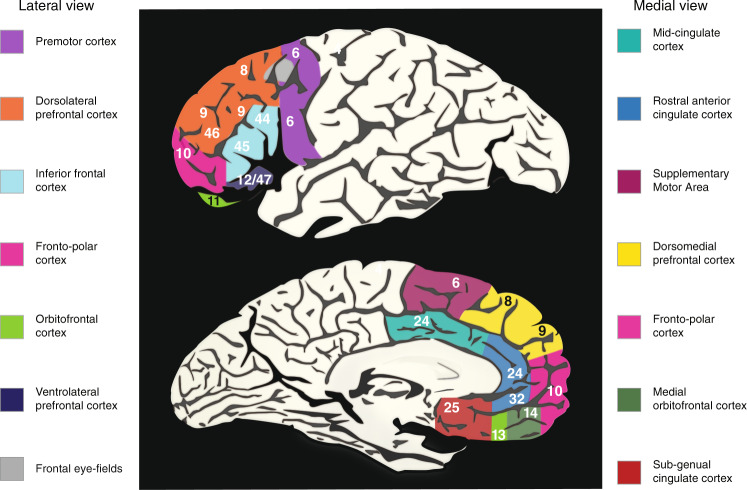
“Moreover, PFC functions probably depend on specializations of dendritic branching and spine density of pyramidal cells, especially in the cycloarchitectonically distinct regions of the granular PFC (Fig. 2) [21–23].”
§ The role of prefrontal cortex in cognitive control and executive function > Psychological organization of CC
What the sources say
- Partly supportedcites [21] Elston G Benavides-Piccione R Elston A Manger P Defelipe J Pyramidal cells in prefrontal cortex of primates: marked differences in neuronal structure among species Front Neuroanat 2011 5 2 21347276 PMC3039119 sourceExperimental — accuracy not yet measured
The Abstract links differences in pyramidal-cell branching and spine development across cortical areas to the functions those cells perform. The Discussion includes one dorsolateral granular prefrontal area (12vl) in a comparison, but the study examines inferotemporal cortex and does not establish that prefrontal functions depend especially on specializations across distinct granular prefrontal regions. Page numbers were not available in our copy. (LLM, conf=0.82)
- Not checked — no full text of the sourcecites [22] Semendeferi K Teffer K Buxhoeveden DP Park MS Bludau S Amunts K Spatial organization of neurons in the frontal pole sets humans apart from great apes Cereb Cortex 2011 21 1485 97 21098620 source
- Not checked — no full text of the sourcecites [23] Allman JM Watson KK Tetreault NA Hakeem AY Intuition and autism: a possible role for Von Economo neurons Trends Cogn Sci 2005 9 367 73 16002323 source
hedgedstates a possible cause- Asserted: passes — The authors put it forward as true.
- Checkable: passes — It can be checked against evidence.
- Load-bearing: unclear — It is unclear whether the paper’s conclusions depend on it.
- Based: passes — The paper gives a reason why it holds.
- Partly supported
The cited sources support only part of this claim — read each source’s verdict below.
In the paper
“There are also distinct functions within nodes of the FPN, where some of the “manipulation” sub-processes of working memory are mediated by parietal cortex, for example, including representations and operations relevant for mental arithmetic [76] and mental rotation [77].”
§ The role of prefrontal cortex in cognitive control and executive function > Fractionation and integration of CC within PFC > Fractionation of CC
What the sources say
- Partly supportedcites [76] Chochon F Cohen L Moortele PF van de, Dehaene S Differential contributions of the left and right inferior parietal lobules to number processing J Cogn Neurosci 1999 11 617 30 10601743 sourceExperimental — accuracy not yet measured
The Conclusion (p. 11) reports that both parietal regions contribute to mental arithmetic and describes parietal involvement in manipulating numerical quantity, supporting the part attributed to citation [76]. But the discussion of working memory (A Parieto-Fronto-Cingular Network for Number Processing, p. 7) links it especially to prefrontal and anterior cingulate activation; it does not establish that parietal cortex mediates a working-memory manipulation sub-process. Mental rotation is attached to a different citation, [77], and is not assessed here. (LLM, conf=0.83)
- Partly supportedcites [77] Georgopoulos AP Pellizzer G The mental and the neural: psychological and neural studies of mental rotation and memory scanning Neuropsychologia. 1995 33 1531 47 8584184 sourceExperimental — accuracy not yet measured
The paper reviews neural evidence for mental rotation, but it does not establish the parietal-cortex role attributed to it here. In “Neural bases for visuomotor and visual mental rotations” (p. 9), it reports motor-cortex activity during visuomotor mental rotation and says no other brain areas were explored in that task. The mental-arithmetic example has a separate citation and is not assessed here. (LLM, conf=0.86)
plainstates a cause- Asserted: passes — The authors put it forward as true.
- Checkable: passes — It can be checked against evidence.
- Load-bearing: unclear — It is unclear whether the paper’s conclusions depend on it.
- Based: passes — The paper gives a reason why it holds.
- Partly supported
The cited sources support only part of this claim — read each source’s verdict below.
In the paper
“Research with children suggests separability of hot and cool CC in terms of their relations with each other and with other measures [50, 52–57].”
§ The role of prefrontal cortex in cognitive control and executive function > Psychological organization of CC
What the sources say
- Not checked — no full text of the sourcecites [50] Zelazo PD Carlson SM Hot and cool executive function in childhood and adolescence: development and plasticity Child Dev Perspect 2012 6 354 60 source
- Partly supportedcites [52] Poon K Hot and cool executive functions in adolescence: development and contributions to important developmental outcomes Front Psychol 2018 8 2311 29367850 PMC5767838 sourceExperimental — accuracy not yet measured
The Relations among Cool and Hot Executive Function Tests section reports no significant correlation between hot and cool measures, and the Academic Performance and Psychological Adjustment sections report different associations with those outcomes. The study supports separability, but its participants were adolescents aged 12–17 (Methodology: Participants), not a sample specifically of younger children. No page numbers are available in our copy. (LLM, conf=0.83)
- Not checked — no full text of the sourcecites [53] Botdorf M Rosenbaum GM Patrianakos J Steinberg L Chein JM Adolescent risk-taking is predicted by individual differences in cognitive control over emotional, but not non-emotional, response conflict Cogn Emot 2017 31 972 9 27050317 source
- Supportedcites [54] Kim S Nordling JK Yoon JE Boldt LJ Kochanska G Effortful control in “hot” and “cool” tasks differentially predicts children’s behavior problems and academic performance J Abnorm Child Psychol 2013 41 43 56 22798038 PMC3737587 source
The Results (Confirmatory Factor Analysis Comparing Measurement Models; page not available) report that a model separating hot and cool functions fit the children's data well, while a single-factor model fit significantly worse. The Results (Structural Equation Models; page not available) also report different relations with other measures: hot effortful control predicted behavior problems, whereas a cool-task measure predicted academic performance. A second-order unidimensional model also fit, consistent with the citing sentence's cautious 'suggests' wording. (LLM, conf=0.88)
- Not checked — no full text of the sourcecites [55] Hongwanishkul D Happaney KR Lee WSC Zelazo PD Assessment of hot and cool executive function in young children: age-related changes and individual differences Dev Neuropsychol 2005 28 617 44 16144430 source
- Partly supportedcites [56] Harden KP Kretsch N Mann FD Herzhoff K Tackett JL Steinberg L Beyond dual systems: a genetically-informed, latent factor model of behavioral and self-report measures related to adolescent risk-taking Dev Cogn Neurosci 2017 25 221 34 28082127 PMC6886471 sourceExperimental — accuracy not yet measured
The Discussion section “Cognitive (Dys)control and the ability-personality distinction” reports that cognitive dyscontrol and premeditation were separable and had different relationships with IQ. That supports the general point about distinct control-related measures, but the paper does not identify these as hot and cool cognitive control or establish that distinction in children; its findings concern adolescents. (LLM, conf=0.82)
- Supportedcites [57] Willoughby M Kupersmidt J Voegler-Lee M Bryant D Contributions of hot and cool self-regulation to preschool disruptive behavior and academic achievement Dev Neuropsychol 2011 36 162 80 21347919 PMC5555639 source
The Discussion (p. null) reports that preschool children's performance on self-regulatory tasks was better represented by a two-factor (hot vs. cool) model than a single undifferentiated factor, with the two latent factors only moderately correlated (φ = .47) — separability in their relation to each other. The same section and the Conclusion state that cool regulation was uniquely associated with academic achievement while hot regulation was uniquely associated with inattentive-overactive behavior — separability in their relations with other measures. The paper frames the constructs as hot/cool self-regulation rather than 'cognitive control,' but the content attributed matches; the claim is one citation among several ([50, 52–57]) and this source supports it. (LLM, conf=0.90)
hedgedstates an association- Asserted: passes — The authors put it forward as true.
- Checkable: passes — It can be checked against evidence.
- Load-bearing: unclear — It is unclear whether the paper’s conclusions depend on it.
- Based: passes — The paper gives a reason why it holds.
101 more claims · 45 with their cited sources checked
Create a free account to see all 202 claims and to verify the 2 references still open.
- It may state two separate claims as one. 70
- Probably not a substantial claim. 29
Claims other papers make about this one
Each is checked against this paper’s own text: does it say what the citing paper says it does?
The source backs part of the claim, not all of it — or backs it for a different population, condition or comparison.
In the citing paper
“Cognitive flexibility builds on working memory and inhibitory control and includes attentional shifting, strategy updating, response to feedback, reversal learning, task switching, exploration, and creative problem-solving (8, 24, 25).”
From Neural mechanisms underlying cognitive inflexibility in obsessive-compulsive disorder: a review (2026) · cites this paper as [25]
Experimental — accuracy not yet measuredThe cited source says what the claim attributes to it.
In the citing paper
“l-dlPFC is integral to higher-order cognition (i.e., executive function) [10,11], which modulates episodic memory in MCI by way of enhancing encoding and facilitating retrieval [12–14].”
From A phase I trial of accelerated intermittent theta burst rTMS for amnestic MCI (2024) · cites this paper as [11]
The check wasn’t confident either way, so it gives no verdict — never disputed.
In the citing paper
“This is in contrast with individuals with bilateral basolateral amygdala lesions, who have no problem recalling dreams, although their dreams are shorter and simpler (they also have more positive and less negative emotions)205.”
From Consciousness and sleep (2024) · cites this paper as [205]
Experimental — accuracy not yet measuredIn the citing paper
“For example, representations and algorithms in digital technologies can model how brain systems are organized and work, suggesting sound theoretical connections between neuroscience and digital technologies used in e-learning [119-122].”
From Leveraging AI in E-Learning: Personalized Learning and Adaptive Assessment through Cognitive Neuropsychology—A Systematic Analysis (2024) · cites this paper as [122]
In the citing paper
“The PFC serves as a hub for cognitive regulation, coordinating activity across cortical and subcortical regions to support complex, goal-directed behaviour and tasks.”
From Sleep deprivation and memory: A neurobiological perspective (2026) · cites this paper as Friedman and Robbins, 2021
Citations
Cites
Miyake, A., Friedman, N. P., Emerson, M. J., Witzki, A. H., Howerter, A., & Wager, T. D. (2000) · Cognitive Psychology · doi:10.1006/cogp.1999.0734 · Cited by 15,798 · cited 5×
“, sequencing subgoals) to result in more complex postulated CC functions like planning [33].”
BackgroundMethodInfluentialSelf-citationDiamond, A. (2013) · Annual Review of Psychology · doi:10.1146/annurev-psych-113011-143750 · Cited by 13,268
An Integrative Theory of Prefrontal Cortex Function
Miller, E. K., & Cohen, J. D. (2001) · Annual Review of Neuroscience · doi:10.1146/annurev.neuro.24.1.167 · Cited by 12,803 · cited 5×
“Specifically, building on Desimone and Duncan’s [170] model of such competitive dynamics during visual attention, Miller and Cohen argued that prefrontal goal representations enable weak stimulus-response mappings to out-compete more habitual ones when appropriate: Goal representations bias competition by boosting act…”
BackgroundMethodInfluentialMetacognition and cognitive monitoring: A new area of cognitive–developmental inquiry
Flavell, J. H. (1979) · American Psychologist · doi:10.1037/0003-066x.34.10.906 · Cited by 11,282 · cited 1×
“, impulsiveness); and metacognition [249] including social aspects (e.”
BackgroundNeural Mechanisms of Selective Visual Attention
Desimone, R., & Duncan, J. (1995) · Annual Review of Neuroscience · doi:10.1146/annurev.ne.18.030195.001205 · Cited by 8,388 · cited 3×
“Specifically, building on Desimone and Duncan’s [170] model of such competitive dynamics during visual attention, Miller and Cohen argued that prefrontal goal representations enable weak stimulus-response mappings to out-compete more habitual ones when appropriate: Goal representations bias competition by boosting act…”
BackgroundDissociable intrinsic connectivity networks for salience processing and executive control
Seeley, W. W., Menon, V., Schatzberg, A. F., Keller, J., Glover, G. H., Kenna, H., Reiss, A. L., & Greicius, M. D. (2007) · The Journal of Neuroscience · doi:10.1523/jneurosci.5587-06.2007 · Cited by 7,426 · cited 1×
“However, neuroimaging studies comparing CC tasks with non-emotional and emotional stimuli find that they involve similar CC regions [58, 59] (dorsal ACC, anterior insula, and lateral and medial PFC), but tasks with emotional conflict also recruit distinct neural regions related to salience and emotional processing (am…”
BackgroundInsensitivity to future consequences following damage to human prefrontal cortex
Bechara, A., Damasio, A. R., Damasio, H., & Anderson, S. W. (1994) · Cognition · doi:10.1016/0010-0277(94)90018-3 · Cited by 6,128 · cited 2×
“Subsequent work established that such deficits were caused by extensive damage to the orbitofrontal and ventromedial (vm)PFC, extending into the frontal pole (BA-10) [109, 110].”
BackgroundControlled and automatic human information processing: I. Detection, search, and attention.
Schneider, W., & Shiffrin, R. M. (1977) · Psychological Review · doi:10.1037/0033-295x.84.1.1 · Cited by 5,902 · cited 1×
“This process has many similarities with the distinction between controlled and automatic responding [6], which approximately aligns with the learning theory distinction between goal-directed and habitual responding [7].”
ResultSaliency, switching, attention and control: a network model of insula function
Menon, V., & Uddin, L. Q. (2010) · Brain Structure and Function · doi:10.1007/s00429-010-0262-0 · Cited by 5,592 · cited 1×
“However, neuroimaging studies comparing CC tasks with non-emotional and emotional stimuli find that they involve similar CC regions [58, 59] (dorsal ACC, anterior insula, and lateral and medial PFC), but tasks with emotional conflict also recruit distinct neural regions related to salience and emotional processing (am…”
BackgroundLarge-scale brain networks and psychopathology: a unifying triple network model
Menon, V. (2011) · Trends in Cognitive Sciences · doi:10.1016/j.tics.2011.08.003 · Cited by 4,168
Cited by
Items 1,601–1,700 of 1,733
Sharma, P., Jha, R., Mandhaher, A., Alreja, S., & Chaudhury, S. (2026) · Annals of Indian Psychiatry · doi:10.4103/aip.aip_78_26
Zhao, J., Wang, J., Tang, X., 吴倩冰, Yang, Y., & Wang, Y. (2026) · Journal of Experimental Child Psychology · doi:10.1016/j.jecp.2026.106578
Venkatesh, S., Prisinzano, H., Lipari, N., Nardiello, J., Budrow, C., McManus, G., Wheelis, E., Manfredsson, F. P., Tseng, K. Y., Stokes, A. M., et al. (2026) · Research Square · doi:10.21203/rs.3.rs-9917408/v1
Organización anatomofuncional de la red de atención frontoparietal en la infancia
Martínez, S. S. (2026) · Escritos de Psicología / Psychological Writings · doi:10.24310/escpsi.19.1.2026.22181
“Este patrón puede encontrarse notablemente influenciado por la notable intensidad de los procesos neurobiológicos de madu-ración cerebral producidos hacia la mitad de la segunda infancia, entre los 8 y 10 años (Baron, 2018; Friedman y Robbins, 2022).”
InfluentialExecutive dysfunction in organic personality disorder: profile specifics and diagnostic significance
Владимировна, Г. М., Pilechev, D., & Tarasova, G. V. (2026) · Psychology and Law · doi:10.17759/psylaw.2026160201
Zhang, X. (2026) · SHS Web of Conferences · doi:10.1051/shsconf/202623503011
Yang, B., Wang, T., Zhu, F., Liu, Y., Li, Z., Luo, L., Yin, L., Mao, S., Wu, J., & Miao, R. (2026) · Neuropharmacology · doi:10.1016/j.neuropharm.2026.111088
Kraft, J. D., Locarno, L. R., Suzuki, T., Riddle, J., Chang, S., McInnis, M. G., Frӧhlich, F., Taylor, S. P., & Tso, I. F. (2026) · Bipolar Disorders · doi:10.1111/bdi.70142
“The prefrontal cortex plays a critical role in cognitive control [8, 9] and exerts top-down modulation on the perceptual, motor, and emotion systems [10–12].”
Abdolmohamadi, K. (2026) · BMJ Neurology Open · doi:10.1136/bmjno-2025-001438
“30 32 33 36 In the present study, EF difficulties should be interpreted as correlational markers rather than causal determinants, reflecting broader challenges in self-regulation during adolescence.”
Why response inhibition research presents unique challenges for unimodal BOLD-fMRI
Wessel, J. R. (2026) · Cortex · doi:10.1016/j.cortex.2026.06.023 · Cited by 3
DiNicola, L. M., & Buckner, R. L. (2026) · Journal of Neurophysiology · doi:10.1152/jn.00099.2026 · Cited by 3
The impact of musical training on reading ability in children: the mediating role of working memory
Yang, C., Hu, Q., Fu, L., Jiang, Y., Zhu, Z., Ding, H., Wang, W., Tao, Y., & Ma, X. (2026) · Frontiers in Psychology · doi:10.3389/fpsyg.2026.1829093
“These regions are also important for higher-order cognitive processes, including working memory (Friedman and Robbins, 2022).”
Li, Y. D., Feng, Y., Wu, Y., Kong, Q., Zhang, B., Liu, Y., Yu, S., Liu, J., Cao, J., Jeong, P., et al. (2026) · ALPHA PSYCHIATRY · doi:10.31083/ap45940
“The prefrontal cortex serves as a central hub for regulating cognitive and emotional processes and supporting adaptive behavior in complex environments [23].”
Static and dynamic brain region activation abnormalities in schizophrenia: Evidence from fNIRS
Wang, L., Li, T., Jin, F., Zhang, X., Liu, N., Li, S., Wang, X., Wang, L., & Li, S. (2026) · Schizophrenia Research · doi:10.1016/j.schres.2026.07.001
Silva, J. D. S., IJzerman, R. G., Klein, M., Barkhof, F., Moll, A. C., Snoek, F. J., & van Duinkerken, E. (2026) · Metabolic Brain Disease · doi:10.1007/s11011-026-01926-5
“…functions (Tonoli et al. 2014 ), and the 32-year in information processing speed, attention, and executive functions are strongly linked to subcortical white-matter disruptions, these domains also rely on cortical integrity (Burzynska et al. 2011 ; Mitko et al. 2019 ; Friedman and Robbins 2022 ).”
Fu, R., Iglesias-Fuster, J., Zweerings, J., Keller, M., Kühne, S., Valdés-Sosa, M. J., Cong, F., & Mathiak, K. (2026) · NeuroImage · doi:10.1016/j.neuroimage.2026.122119
Fan, P., Zhou, X., Qin, J., Yang, H., Mo, X., Tan, X., Zhou, X., Li, Q., & Zhao, Q. (2026) · Experimental Neurology · doi:10.1016/j.expneurol.2026.115906 · Cited by 4
THE GAI TECHNOLOGY FOR HEALTHCARE ANALYTICS IN FACTORS INFLUENCING EXERCISE ADDICTION
Xie, Q., Lipowski, M., Meng, Q., & Liu, T. (2026) · Journal of Mechanics in Medicine and Biology · doi:10.1142/s0219519426400671
Dong, R., Gui, L., Xu, D., & Li, H. (2026) · BMC Public Health · doi:10.1186/s12889-026-28457-z
Privodnova, E. Y., Volf, N. V., Sedykh, A. A., & Bozhenov, R. K. (2026) · Human Physiology · doi:10.1134/s036211972670026x
Coupling between statistical learning and interference suppression
Horváth, K., Németh, D., Janacsek, K., & Kóbor, A. (2026) · Psychological Research · doi:10.1007/s00426-026-02375-6
“If needed, these automatic behaviors can be adjusted through different top-down control-based processes (Egner, 2014), commonly denoted as executive functions (e.g., Friedman & Robbins, 2022; Miyake et al., 2000 ).”
Intranasal dopamine: Anatomical pathways, biological mechanisms and neuromodulatory potential
Chao, O. Y.-H., Nikolaus, S., Mattern, C., Chiou, L., & Huston, J. P. (2026) · Neuroscience & Biobehavioral Reviews · doi:10.1016/j.neubiorev.2026.106866 · Cited by 1
Pere, J. D. S., & Filippetti, V. A. (2026) · Revista de Investigación e Innovación en Ciencias de la Salud · doi:10.46634/riics.560
The Epidemiology of ADHD Across the Lifespan
Ayano, G., Pollard, C. M., Rooney, R. M., & Alati, R. (2026) · SpringerBriefs in modern perspectives on disability research. · doi:10.1007/978-981-95-8712-4_2
Xiong, Z., Ding, Z., & Liao, L. (2026) · Automation in Construction · doi:10.1016/j.autcon.2026.107137 · Cited by 1
Cheng, X.-Q., Zheng, J.-H., Wu, Y.-Y., Fang, Z., Tao, Y.-W., Xie, J.-W., & Wang, C. (2026) · Research Square · doi:10.21203/rs.3.rs-10206306/v1
Mechanistic insights into combined prefrontal tDCS and vagal nerve stimulation for stress regulation
Roy, S., & Vanderhasselt, M. (2026) · Frontiers in Psychology · doi:10.3389/fpsyg.2026.1872276
Smail, M. A., McDonald, M. Y., Boland, R., Breach, M. R., Dye, C. N., McCloskey, J. E., Martens, K. M., Walters, A. E., Lastra, A. Z., Roush, J., et al. (2026) · bioRxiv (Cold Spring Harbor Laboratory) · doi:10.64898/2026.07.09.737495
Dadam, F., Basmadjian, O. M., Berardo, G., Haehnel, F. A., Solorzano, D. Y., Sosa, M. E., Leonangeli, S., Godino, A., Varayoud, J., & Paglini, M. G. (2026) · Progress in Neuro-Psychopharmacology and Biological Psychiatry · doi:10.1016/j.pnpbp.2026.111845
Lozano, F. E., & Martín-Fernández, J. (2026) · Brain Structure and Function · doi:10.1007/s00429-026-03158-w · Cited by 1
“We utilize this synthesis to standardize spatial locations in this revision, that often vary across studies/reviews (Friedman and Robbins 2022; Haber et al. 2022; Jobson et al. 2021; Kolk and Rakic 2022; Levy 2024).”
Chen, Q., Teng, T., Zhou, W., Zhang, Y., Sun, J., Jing, Z., Wang, L., Li, X. H., Becker, L., Ye, H., et al. (2026) · Pulmonology · doi:10.1080/25310429.2026.2704429
Apopii, A., Spiță, M.-E., Tomescu, M. I., et al. (2026) · doi:10.3390/engproc2026148026
“The prefrontal cortex (PFC) acts as a central hub for cognitive control, mediating diverse processes from working memory to emotional regulation [3].”
Cognitive workload in extended reality (XR) interventions for older adults: an integrative review
Diño, M. J. S., Karimi, M., Villafuerte, C. M., Cuevas, A. J., Bahaynon, P. S., Sayat, J., Beniopa, J., Pimentel, J., Villaluz, M. F., Diño, G., et al. (2026) · Frontiers in Virtual Reality · doi:10.3389/frvir.2026.1874509
The evolutionary origins of dementia
Stone, J. A., Johnstone, D. M., Mason, R. S., Mitrofanis, J., & Robinson, S. R. (2026) · Journal of Alzheimer s Disease Reports · doi:10.1177/25424823261470053
“109 Earlier studies suggest that the component of brain shrinkage that is critical for loss of cognition is the thinning of the cerebral cortex, especially of the pre-frontal cortex for executive function 110 and of the temporal lobe and hippocampus for memory.”
Fang, K. K., Xu, V. E., Lee, T. M.-C., & Shao, R. (2026) · Neuroscience & Biobehavioral Reviews · doi:10.1016/j.neubiorev.2026.106885
Ramos‐Henderson, M., Aliaga-Gallardo, P., Aguilar-Riveros, C., Fuentes, L., Calderón, C., & Domic‐Siede, M. (2026) · Journal of Alzheimer s Disease · doi:10.1177/13872877261470712
Zhang, Y., Jia, M., Li, M., Chen, T., & Xu, Z. (2026) · Journal of Safety Science and Resilience · doi:10.1016/j.jnlssr.2026.100354
Fan, S., Li, M., Chen, X., Weng, J., Zheng, Q., Chen, J., Gan, S., & Hu, J. (2026) · The Cerebellum · doi:10.1007/s12311-026-02061-8
Affective States and Temporal Alterations in Women with PCOS During the Early Follicular Phase
Şen, G. C., Kurtaran, N. E., & Öztürk, L. (2026) · Genel Tıp Dergisi · doi:10.54005/geneltip.1818865
Tian, S., Feng, S., Tian, F., Li, H., & Wang, J. (2026) · Ergonomics · doi:10.1080/00140139.2026.2706055
Verma, A. K., Kumar, A. D., Chivukula, U., & Kumar, N. (2026) · Drug and Alcohol Dependence · doi:10.1016/j.drugalcdep.2026.113291 · Cited by 1
Contreras, E. N. G., Godoy-Tapia, C., Rebolledo, P., & Molina-Márquez, I. (2026) · ESPACIOS · doi:10.48082/espacios-a26v47n04i07
Du, J., Cui, X., Hong, X., Chen, C., Jin, Y., & Wang, Y. (2026) · Child Psychiatry & Human Development · doi:10.1007/s10578-026-02060-0
Wang, C., Song, J., Wang, S., Peng, S., Han, L., Liu, C., & Lin, P. (2026) · Behavioural Brain Research · doi:10.1016/j.bbr.2026.116401
Ten recommendations for improving the study of executive functions in sport and exercise
Schütz, L.-M., Brimmell, J., Furley, P., Uiga, L., & Wood, G. (2026) · International Review of Sport and Exercise Psychology · doi:10.1080/1750984x.2026.2710156
Windows into the mind: From neurophysiological to multimodal measurements in the cockpit
Hamann, A., & Carstengerdes, N. (2026) · Current Research in Behavioral Sciences · doi:10.1016/j.crbeha.2026.100223 · Cited by 1
Ren, J., Du, X., Wang, W., Fan, S., Wang, H., Fang, G., Li, Y., Wang, R., Bao, H., Zhang, C., et al. (2026) · Journal of Intelligence · doi:10.3390/jintelligence14080177
“By contrast, cognitive training components such as goal maintenance, task switching, inhibitory control, and decision-making predominantly involve prefrontal cortical networks (Friedman & Robbins, 2022).”
Yang, W., Ma, X., Li, S., Gao, J., Zhu, G., Liu, C., Song, Z., Yu, K., Zhang, N. N., Zhao, P., et al. (2026) · Therapeutic Advances in Neurological Disorders · doi:10.1177/17562864261474799
Khaleghi, A., Mohammadi, M. R., Baloochi, S. A., & Zarafshan, H. (2026) · Journal of Affective Disorders · doi:10.1016/j.jad.2026.122343 · Cited by 1
Tsuk, S., Zeevi, Y., & Mimouni-Bloch, A. (2026) · Frontiers in Sports and Active Living · doi:10.3389/fspor.2026.1869057
“Friedman and Robbins (35) describe cognitive control and executive function as processes that support goal-directed behaviour rather than habitual or automatic responses, implicating the prefrontal cortex and its networks in the controlled processing demanded by cognitively challenging tasks (35).”
A translational cross-modal control-cost framework for executive breakdown
Zhang, Y. (2026) · Frontiers in Neuroscience · doi:10.3389/fnins.2026.1837760
Bai, K., Wu, B.-J., Wang, Z.-Z., Cao, X.-J., Dou, J.-Q., Jiang, X.-Y., Zhao, S.-S., Chen, Z., Li, Y.-T., Shang, Y., et al. (2026) · JMIR Medical Informatics · doi:10.2196/86963
“The PFC, critical for cognitive control, task switching, and attention allocation [46-48], exhibited patterns similar to those observed in short video addiction [49], suggesting that acute SMU is associated with reduced emotional and attentional regulation.”
Gill, A. A., Janjua, F., Zahoor, M., & Afzal, A. (2026) · Advances in computational intelligence and robotics book series · doi:10.4018/979-8-3373-9484-8.ch008
Britel, I., Moummou, H., Aghdou, Z., Bouzidi, H. E., & El‐Mansoury, B. (2026) · Advances in computational intelligence and robotics book series · doi:10.4018/979-8-3373-9484-8.ch011
Neural competition between prefrontal and auditory cortex constrains novel sound strategy learning
Lu, K., Wong, K. T., Yang, C. J., Zhou, L. N., Shi, Y. T., Costello, M. L., & Liu, R. C. (2026) · Science Advances · doi:10.1126/sciadv.aeb3005
“Given that distinct regions of prefrontal cortex can serve different roles in cognitive control ( 42 ), we checked the localization of hM4D(Gi) in our animals.”
Gray matter volume alterations in generalized anxiety disorder and major depressive disorder
Yu, J., Cui, S., Hu, Q., Li, Y., Zhu, D., & Wang, C. (2026) · Behavioural Brain Research · doi:10.1016/j.bbr.2026.116426 · Cited by 1
Rezayee, H., Haidary, M., Hossaini, D., Akbari, E., Nazari, M. L., Ilbeigi, D., & Saadat, M. (2026) · Alcoholism Treatment Quarterly · doi:10.1080/07347324.2026.2716244
“EtOH withdrawal resulted in significant reductions in dopamine, DOPAC, and serotonin levels in the PFC, accompanied by increased MAO-A activity, indicative of enhanced monoamine degradation (Friedman & Robbins, 2022).”
Homayounfar, S. Z., Mukherjee, M., Patamia, E. D., Rastikerdar, M. M., Ganesan, D., & Andrew, T. L. (2026) · IEEE Access · doi:10.1109/access.2026.3723089 · Cited by 1
“Previous research [30], [31] has established the prefrontal cortex as a crucial region implicated in cognitive control and executive function.”
Chichinina, E., Yakushina, A. A., Dmitrieva, M., Александровна, Р. Н., Pashenko, A., Poček, S., & Drid, P. (2026) · Frontiers in Psychology · doi:10.3389/fpsyg.2026.1843739
“Following instructions, sustaining attention, and inhibiting impulsive responses—all common demands of extracurricular activities—engage the prefrontal cortex and anterior cingulate cortex, which are central neural substrates of EFs (Friedman and Robbins, 2022).”
Fontenelle, L. F. (2026) · Psychiatric Clinics of North America · doi:10.1016/j.psc.2025.12.001
Czoty, P. W., Sai, K. K. S., Miller, M. D., Moore, M. D., Myburgh, P. J., Grace, L. R., Prete, J. N., & Epperly, P. M. (2026) · Basic & Clinical Pharmacology & Toxicology · doi:10.1111/bcpt.70282
“The medial prefrontal cortex, of which the OFC is a part, plays critical roles in decision-making, impulse control and salience attribution [72, 73].”
Odrinskaya, М. S., Midzyanovskaya, I. S., Манолова, А. О., & Gulyaeva, N. V. (2026) · Journal of Evolutionary Biochemistry and Physiology · doi:10.1134/s0022093026040125
Luo, J., Zhu, L., Kong, X., Yuan, Q., & Xu, W. (2026) · SSRN Electronic Journal · doi:10.2139/ssrn.7285741
Kelly, C., Cooley, B. J., Zeng, L., Hurzeler, T. P., Manning, V., McNally, G. P., Watt, J., Haber, P., & Morley, K. C. (2026) · Neuroscience & Biobehavioral Reviews · doi:10.1016/j.neubiorev.2026.106911
Sleep and psychosis: An integrative review of conceptual and neurophysiological associations
Cui, Z., & Fan, L. (2026) · Progress in Neuro-Psychopharmacology and Biological Psychiatry · doi:10.1016/j.pnpbp.2026.111895
Jayaraj, V., Gubendiran, K., Ramalingam, V., Madeshwaran, S., Dhanusia, S., & Suganthirababu, P. (2026) · Fisioterapia em Movimento · doi:10.1590/fm.2026.39123
Kheder, A., & Jain, P. (2026) · Journal of Clinical Neurophysiology · doi:10.1097/wnp.0000000000001292
Honsa, E. S. (2026) · Frontiers in Cellular Neuroscience · doi:10.3389/fncel.2026.1899622
“Specifically, the PFC relies on tightly regulated glutamatergic neurotrans-mission to support executive functions including working memory, cognitive flexibility, attention, inhibitory control, and decision-making (Friedman and Robbins, 2022).”
Network-oriented neurorehabilitation after stroke: a paradigmatic approach
Conti, F., Gassert, R., Doganci, N., & Guggisberg, A. G. (2026) · Journal of NeuroEngineering and Rehabilitation · doi:10.1186/s12984-026-02052-0
“Executive dysfunction may result from damage to pre-frontal regions involved in working memory, action selection, and the regulation of goal-directed behaviour [142, 143].”
Liu, L., Wang, J., Chang, H., Hu, Y., Zhang, H., Wei, H., Zhou, Y., & Teng, X. (2026) · Environmental Health · doi:10.1186/s12940-026-01319-2
“This may indicate that TL shortening acts synergistically with PCB-related neurotoxic pathways, such as thyroid hormone disruption and calcium signaling interference, to exacerbate deficits in higher-order cognitive processes [57].”
Yang, Y., Wang, L., Zhang, D., Wang, D., Wang, Z., Zhao, D., & Song, R. (2026) · Applied Psychophysiology and Biofeedback · doi:10.1007/s10484-026-09807-4
Košíková, E., Turoňová, D., Konrádová, Ľ., & Mesárošová, B. (2026) · Children · doi:10.3390/children13081109
“Some findings show that CF inherently contains other EFs, mainly inhibition and working memory [21].”
He, J., Li, P., Yi, C., Hu, H., & Liu, X. (2026) · The Visual Computer · doi:10.1007/s00371-026-04676-8
Yao, Y.-Q., Guo, B., Zhi-yi, X., Wang, C., Hong, H., Chen, Z.-G., & Tang, S. (2026) · Schizophrenia Bulletin · doi:10.1093/schbul/sbag090
Fu, B., Gao, J., Hou, S., Jia, Z., Liu, Y., & Hong, K. (2026) · Information Fusion · doi:10.1016/j.inffus.2026.104729
Mateen, N., Ullah, R. M. K., Baik, J. S., Hong, K., Kang, M.-K., Kim, C.-S., & Shin, Y. (2026) · Frontiers in Aging Neuroscience · doi:10.3389/fnagi.2026.1834253
“The DLPFC is central to executive functions, including working memory maintenance, attentional control, and monitoring task performance (Friedman and Robbins, 2022).”
Zhao, K., Dai, S., Zhang, Y., Liu, G., Gu, P., Lin, C., Thompson, P. M., Leow, A., Huang, H., He, L., et al. (2026) · Frontiers in Radiology · doi:10.3389/fradi.2026.1912277 · Cited by 4
“Temporal pole thinning marks progression in semantic memory and limbic – default mode network dysfunction (85, 86), while frontal pole deterioration reflects impaired executive control networks often emerging in MCI (87, 88).”
Deliberate practice reduces developmental neuromotor mismatches
Yan, J. H. (2026) · Child Neuropsychology · doi:10.1080/09297049.2026.2720190
Perkins, S. C., Dubbaka, S., Wang, E., Wu, M., Su, W., Assaf, V., Park, J., Smith‐Darden, J. P., & Graham‐Bermann, S. A. (2026) · Journal of Child & Adolescent Trauma · doi:10.1007/s40653-026-00960-w
From adolescence to Alzheimer’s: a neurodevelopmental lifespan model of cognitive vulnerability
Pasricha, S., & Kaur, S. (2026) · Neurological Sciences · doi:10.1007/s10072-026-09304-w
Feng, J., Jia, Q., Wang, D., & Liu, F. (2026) · Developmental Cognitive Neuroscience · doi:10.1016/j.dcn.2026.101805
Planning Difficulties in Children and Adolescents with Hearing Loss across DevelopmentPreprint
Monteseirin, K., Méndez‐Couz, M., Rivas‐Fernández, M. Á., & Conejo, N. M. (2026) · medRxiv · doi:10.64898/2026.08.26.26361299
Dudley, D. A. (2026) · Frontiers in Sports and Active Living · doi:10.3389/fspor.2026.1889606
“The PFC plays a central role in executive control and the allocation of cognitive resources (16), while the ACC is critically involved in effort monitoring, error detection, and the regulation of perceived exertion (17).”
Xu, X., Fu, Z., Xu, H., Zhang, K., Cong, J., Yang, H., Li, Y., Zhao, Y., Zheng, X., Keller, A. S., et al. (2026) · Nature Biomedical Engineering · doi:10.1038/s41551-026-01779-4
Luessen, D. J., Gallinger, I. M., Wolfe, B., Meadows, M. J., Leonard, M. Z., Freitas, G. A., Lindsley, C. W., Calipari, E. S., Niswender, C. M., & Conn, P. J. (2026) · Biological Psychiatry Global Open Science · doi:10.1016/j.bpsgos.2026.100819
Veleanu, M., Schuberth, L. E., Kilias, A., Weber, J., Warneke, J., Würz, L. M., Schwär, T., Heck, R., Müller, J., Sarrazin, D. H., et al. (2026) · Nature Communications · doi:10.1038/s41467-026-77248-y · Cited by 1
“Other circuits, such as those involving the lateralhabenula (LHb), NAc, VTA or BLA, are thought to be implicated in depression pathophysiology and treatment 67,81 – 86 .”
Neurocomputational mechanisms underlying cognitive flexibility: a translational perspective
Bähner, F., Oh, S., Hummos, A., Sandbrink, K. J., Meyer‐Lindenberg, A., & Collins, A. G. E. (2026) · Trends in Cognitive Sciences · doi:10.1016/j.tics.2026.08.003 · Cited by 1
Executive Functions in Chronic Pain Models
Cunha, A. M., Esteves, M., Bernardo, S., & Leite‐Almeida, H. (2026) · Neuromethods · doi:10.1007/978-1-0716-5312-8_15
Research Methods in Neuropsychology
López‐Caneda, E., Leganes‐Fonteneau, M., & Carbia, C. (2026) · Neuromethods · doi:10.1007/978-1-0716-5340-1_2
AlAshkar, H. M. (2026) · Journal of Research in Childhood Education · doi:10.1080/02568543.2026.2715393
Neurocognitive outcomes in pediatric brain arteriovenous malformations: a systematic review
Ahmed, M., Mohamad, A. R. E., Mokdad, Z. A., et al. (2026) · Brain and Development · doi:10.1016/j.braindev.2026.104589
Li, Y., Park, J., Park, J. Y., & Kim, W. J. (2026) · Frontiers in Psychiatry · doi:10.3389/fpsyt.2026.1916856
“…examined here: the DLPFC is a core node of the frontoparietal (central-executive) network that subserves working memory and executive function (25), and in late-life depression this region shows hypoactivation and reduced cognitive-control connectivity linked to both depressive and executive…”
Neurodevelopmental reward dysregulation and addiction risk in ADHD
Custodio, R. J. P., Yi, E. C., Kim, B.-N., & Cheong, J. H. (2026) · European Archives of Psychiatry and Clinical Neuroscience · doi:10.1007/s00406-026-02370-3
Huang, Y., Li, M., Mao, J., & Dai, Q. (2026) · Building and Environment · doi:10.1016/j.buildenv.2026.115217
Jang, Y., Yoon, E. K., Hong, A., & Park, H. Y. (2026) · Psychiatry and Clinical Neurosciences · doi:10.1111/pcn.70127
Ma, M.-L., Cao, J., & Yang, J. (2026) · Frontiers in Psychology · doi:10.3389/fpsyg.2026.1934277
“Consistent with previous research, the prefrontal cortex is crucial for executive function, decision-making and emotional regulation; reduced blood flow and oxygenation in this region are closely associated with depressive symptoms (Veeraiah et al., 2014; Friedman and Robbins, 2022).”
Billot, A., Sun, W., Rodrigues, K., Wei, X., Eldaief, M. C., & Buckner, R. L. (2026) · bioRxiv (Cold Spring Harbor Laboratory) · doi:10.64898/2026.09.02.748980
Beyond Reward and Punishment: Introducing Costly Countercontrol to the Study of Altruism
Windmann, S. (2026) · Advances in Psychological Science Open · doi:10.1177/30495822261474449
Saha, T., Giri, P., Nag, R., Ganguly, D., Patel, N., Roy, A., Chaudhuri, S., Verma, K., Pal, A., Rina, K., et al. (2026) · Frontiers in Human Neuroscience · doi:10.3389/fnhum.2026.1936277
Kraft, B., MacSweeney, N., Page, C. M., Lyle, R., Tsotsi, S., Ulset, V. S., Chen, C., Tamnes, C. K., Czajkowski, N. O., Dissen, I. A. Ø., et al. (2026) · Psychological Medicine · doi:10.1017/s0033291726105431
“While EF relies on distributed brain networks (Zink, Lenartowicz, & Markett, 2021) the prefrontal cortex serves as a central hub (Friedman & Robbins, 2022).”
Metadata
- Authors
- Friedman, N. P., & Robbins, T. W.
- Affiliations
- University of Colorado Boulder (US)
- University of Cambridge (GB)
- Corresponding author
- Friedman, Naomi P.
- Robbins, Trevor W.
- Venue
- Neuropsychopharmacology
- Published
- 2021-08-18
- Volume
- 47
- Issue
- 1
- Pages
- 72-89
- ISSN
- 0893-133X (ISSN-L)
- 1740-634X
- PMC
- PMC8617292
- OpenAlex
- W3195973239
- Cited by
- 1,737
- References
- 267
- Citations by year
- 2026: 457 · 2025: 561 · 2024: 388 · 2023: 221 · 2022: 97 · 2021: 12
- FWCI
- 26.47
- Type
- journal article
- Language
- en
- Open access
- hybrid
- doi.org
- Licence
- cc-by
- creativecommons.org/licenses/by/4.0 (tdm)
- creativecommons.org/licenses/by/4.0 (vor)
- Locations
- Neuropsychopharmacology (publishedVersion, cc-by)
- PubMed Central (publishedVersion, cc-by)
- PubMed (publishedVersion)
- Apollo (University of Cambridge) (submittedVersion, cc-by)
- Apollo
- Funders
- U.S. Department of Health & Human Services | NIH | National Institute on Drug Abuse (DA046413, DA042742, DA051018)
- U.S. Department of Health & Human Services | NIH | National Institute of Mental Health (MH117131)
- U.S. Department of Health & Human Services | NIH | National Institute on Aging (AG046938)
- National Research Foundation (Singapore) CREATE Grant to the University of Cambridge and Nanyang Technological University for the Centre of Lifelong Learning and Individualised Cognition (CLIC).
- Topics
- Life Sciences › Neuroscience › Cognitive Neuroscience › Neural and Behavioral Psychology Studies
- Social Sciences › Psychology › Clinical Psychology › Historical and Modern Theater Studies
- Life Sciences › Neuroscience › Cellular and Molecular Neuroscience › Neurotransmitter Receptor Influence on Behavior
- Keywords
- prefrontal cortex, cognitive control, executive function, mental set shifting, working memory updating, response inhibition, motivation, general intelligence, general psychopathology factor, impulsivity, mental illness, psychiatric classification, Research Domain Criteria
- MeSH terms
- Adult, Cognition, Humans, Intelligence, Memory, Short-Term, Prefrontal Cortex, Executive Function
About these checks
Registry, retraction, Cites and statistics results are computed, not judged, with one exception: a printed reference that no index lists is read once by a model before it counts as a citation error. Claims are extracted by a model and kept only when their quote appears verbatim in the text; each cited source is then checked, with a model’s help, for whether it says what the claim relies on. Those verdicts can be wrong — read the claim’s quote and the cited source before relying on one.
The claim verdicts this report counts are experimental: their accuracy is not yet measured.
A language model drew the claims from the paper on 2026-09-28, under version 3 of the claim definition (model deepseek-v4.1-flash, prompt extract-v3).
A second model labelled each claim on 2026-09-28 (model jev-1.13-20260917, definition revision gold-guideline-v0.2).
Cited sources are checked with a language model’s help (gpt-6-sol and qwen3.8-omni-flash).
Statistics and arithmetic are recomputed, not judged.
Confidence bands are shown only for fields calibrated on our annotated test set. None is calibrated yet, so no band is shown.
What counts as a claim ›How we measure confidence ›How we check this ›
Are you an author, or do you see a problem with this page? Request a review
Data sources
Bibliographic data: Semantic Scholar, OpenAlex, Crossref.
Contains information from the Semantic Scholar Academic Graph Datasets, made available under the ODC Attribution License (ODC-BY 1.0).
Semantic Scholar’s data is described in: Kinney, R., et al. (2023). The Semantic Scholar Open Data Platform. arXiv:2301.10140.
