

Intravenous ketamine for benzodiazepine deprescription and withdrawal management in treatment-resistant depression: a preliminary report
Open accessThe DOI matches its Crossref record; 63 of the 65 references it cites were found in a registry or an index.
Abstract
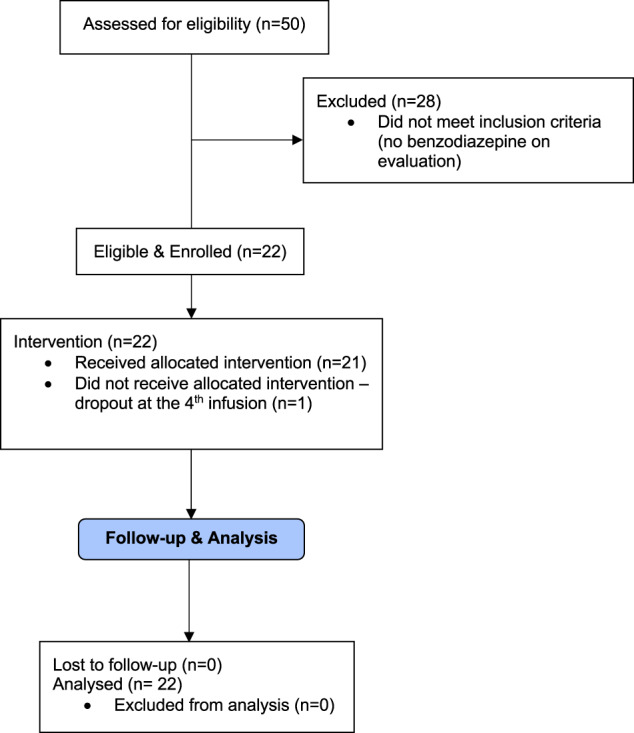
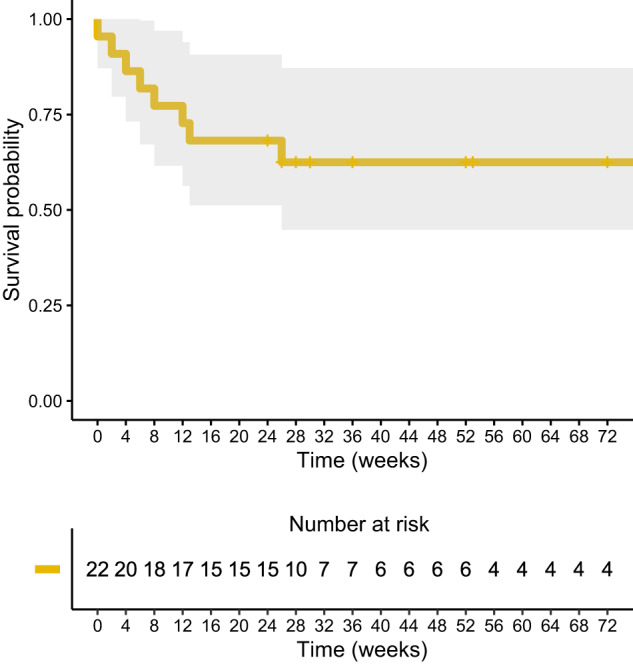
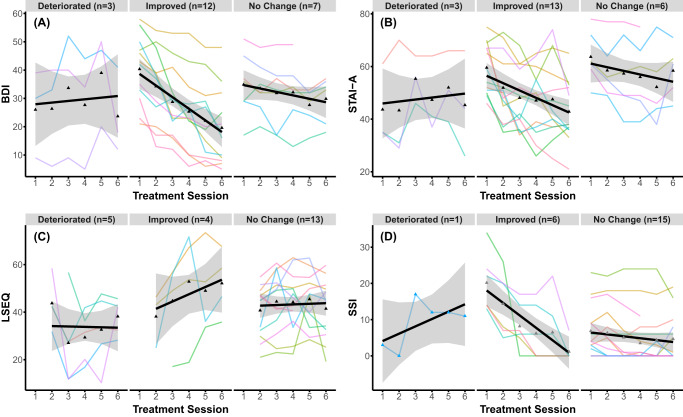
We present the first evidence that sub-anesthetic ketamine infusions for treatment resistant depression (TRD) may facilitate deprescription of long-term benzodiazepine/z-drugs (BZDRs). Long-term BZDR prescriptions are potentially harmful yet common, partly because of challenging withdrawal symptoms. Few pharmacological interventions have evidence for facilitating BZDR discontinuation, and none in patients actively suffering from TRD. In this ambi-directional cohort study, discontinuation of long-term (>6 month) BZDRs was attempted in 22 patients with severe unipolar or bipolar TRD receiving a course of six subanesthetic ketamine infusions over four weeks. We investigated the rates of successful BZDRs deprescription, trajectories of acute psychological withdrawal symptoms, and subsequent BZDRs abstinence during a mean follow-up of 1 year (primary outcome). Clinically significant deteriorations in depression, anxiety, sleep, and/or suicidality during the acute BZDR discontinuation phase were measured by repeated standardized scales and analyzed by latent growth curve models and percent correct classification analysis. Of the 22 eligible patients, all enrolled in this study and 91% (20/22) successfully discontinued all BZDRs by the end of the 4-week intervention, confirmed by urinary analyses. Less than 25% of discontinuers experienced any significant worsening of anxiety, depression, sleep difficulties, or suicidality during treatment. During follow-up (mean [range] duration, 12 [3–24] months), 64% (14/22) of patients remained abstinent from any BZDRs. These preliminary results suggest that ketamine infusions for TRD may facilitate the deprescription of BZDRs, even in patients with active depressive symptoms and significant comorbidity. Further investigation is warranted into this potential novel application of ketamine.
Overview
The claims and statistics of this paper haven’t been checked yet.
Free: it reads the open-access text and checks the first 5 claims that cite a source we can check. Create a free account to check every claim.
Integrity signals
Registry
Cites
Statistics
Figures
Verification
Claims the paper makes
The claims and statistics of this paper haven’t been checked yet.
Free: it reads the open-access text and checks the first 5 claims that cite a source we can check. Create a free account to check every claim.
Claims other papers make about this one
Each is checked against this paper’s own text: does it say what the citing paper says it does?
The source backs part of the claim, not all of it — or backs it for a different population, condition or comparison.
In the citing paper
“very limited evidence was found for use of anesthetics such as ketamine and propofol for facilitating BZD withdrawal.127”
From Joint Clinical Practice Guideline on Benzodiazepine Tapering: Considerations When Risks Outweigh Benefits (2025) · cites this paper as [127]
Experimental — accuracy not yet measuredThe source backs part of the claim, not all of it — or backs it for a different population, condition or comparison.
In the citing paper
“Recent advances, including ketamine infusions, further complicate predictions of long-term outcome, as patients previously regarded as refractory may experience meaningful improvement as novel therapies emerge.21”
From Medical Assistance in Dying for the Sole Underlying Condition of Mental Disorder (MAiD MD-SUMC): an analysis and qualitative evidence synthesis (2026) · cites this paper as [21]
Experimental — accuracy not yet measuredThe source backs part of the claim, not all of it — or backs it for a different population, condition or comparison.
In the citing paper
“Following a median observation period of 12 months, 64% of the patients achieved sustained abstinence from BZD/Z-drug use. 92”
From Z-drug abuse and dependence: Clinical guideline of the Brazilian Academy of Neurology for diagnosis and management (2025) · cites this paper as [92]
Experimental — accuracy not yet measured
Self-check
Percentages, sums and reported differences re-computed from the paper’s own numbers.
The self-check needs the paper’s full text.
Citations
Cites
Diagnostic and Statistical Manual of Mental Disorders
American Psychiatric Association (2013) · doi:10.1176/appi.books.9780890425596 · Cited by 116,369
Fitting Linear Mixed-Effects Models Using lme4
Bates, D., Mächler, M., Bolker, B., & Walker, S. (2015) · Journal of Statistical Software · doi:10.18637/jss.v067.i01 · Cited by 86,835
lmerTest Package: Tests in Linear Mixed Effects Models
Kuznetsova, A., Brockhoff, P. B., & Christensen, R. H. B. (2017) · Journal of Statistical Software · doi:10.18637/jss.v082.i13 · Cited by 24,346
Jacobson, N. S., & Truax, P. (1991) · Journal of Consulting and Clinical Psychology · doi:10.1037/0022-006x.59.1.12 · Cited by 7,770
Beck, A. T., Steer, R. A., & Brown, G. (2011) · PsycTESTS Dataset · doi:10.1037/t00742-000 · Cited by 7,535
Comparison of Beck Depression Inventories -IA and -II in psychiatric outpatients
Beck, A. T., Steer, R. A., Ball, R., & Ranieri, W. F. (1996) · Journal of Personality Assessment · doi:10.1207/s15327752jpa6703_13 · Cited by 5,965 · cited 1×
“All patients had”
State-Trait Anxiety Inventory for Adults
Spielberger, C. D. (2012) · PsycTESTS Dataset · doi:10.1037/t06496-000 · Cited by 3,479
Assessment of suicidal intention: The Scale for Suicide Ideation.
Beck, A. T., Kovacs, M., & Weissman, A. (1979) · Journal of Consulting and Clinical Psychology · doi:10.1037//0022-006x.47.2.343 · Cited by 3,419
Latent Curve Models: A Structural Equation Perspective
Bollen, K. A., & Curran, P. J. (2005) · Wiley Series in Probability and Statistics · doi:10.1002/0471746096 · Cited by 1,729
Psychometric properties of the Beck Depression Inventory-II: a comprehensive review
Wang, Y.-P., & Gorenstein, C. (2013) · Revista Brasileira de Psiquiatria · doi:10.1590/1516-4446-2012-1048 · Cited by 1,577
McIntyre, R. S., Rosenblat, J. D., Nemeroff, C. B., Sanacora, G., Murrough, J. W., Berk, M., Brietzke, E., Dodd, S., Gorwood, P., Ho, R., et al. (2021) · American Journal of Psychiatry · doi:10.1176/appi.ajp.2020.20081251 · Cited by 731 · cited 5×
“Ketamine’s benefits may generally mitigate associated clinical deteriorations by rapidly alleviating common and dangerous depressive symptoms, including suicidality [22].”
BackgroundInfluentialReliability of the Timeline Followback for cocaine, cannabis, and cigarette use
Robinson, S. M., Sobell, L. C., Sobell, M. B., & Leo, G. I. (2014) · Psychology of Addictive Behaviors · doi:10.1037/a0030992 · Cited by 699 · cited 6×
“The TLFB method has been extensively evaluated with a wide range of clinical populations and was chosen by the American Psychiatric Association as meeting criteria for inclusion in their Handbook of Psychiatric Measures [34].”
BackgroundMethodInfluentialWilkinson, S. T., Ballard, E. D., Bloch, M. H., Mathew, S. J., Murrough, J. W., Feder, A., Sos, P., Wang, G., Zarate, C. A., & Sanacora, G. (2018) · American Journal of Psychiatry · doi:10.1176/appi.ajp.2017.17040472 · Cited by 696
Cognitive Effects of Long-Term Benzodiazepine Use: A Meta-Analysis
Barker, M. J., Greenwood, K. M., Jackson, M., & Crowe, S. F. (2004) · CNS Drugs · doi:10.2165/00023210-200418010-00004 · Cited by 552
Treatment of Benzodiazepine Dependence
Soyka, M. (2017) · New England Journal of Medicine · doi:10.1056/nejmra1611832 · Cited by 465
Adaptation canadienne-française de la forme révisée du State-Trait Anxiety Inventory de Spielberger
Gauthier, J., & Bouchard, S. (1993) · Canadian Journal of Behavioural Science/Revue canadienne des sciences du comportement · doi:10.1037/h0078881 · Cited by 407 · cited 4×
“On average, participants reported signi fi cant decreases in BDI-II ( β = − 2.57, SE = 0.36, t(107) = − 7.19, p 0.001), STAI-A ( β = − 1.81, SE = 0.36, t(107) = − 5.09, p 0.001), and SSI ( β = − 1.16, SE = 0.26, t(104) = − 4.39, p 0.001) scores with each ketamine treatment, but not LSEQ scores ( β = 0.71, SE = 0.61, t(…”
MethodInfluentialBenzodiazepine harm: how can it be reduced?
Lader, M. (2014) · British Journal of Clinical Pharmacology · doi:10.1111/j.1365-2125.2012.04418.x · Cited by 359
Major Depressive Disorder Treatment Guidelines in America and Europe
Davidson, J. R. T. (2010) · The Journal of Clinical Psychiatry · doi:10.4088/jcp.9058se1c.04gry · Cited by 344 · cited 1×
“Although international depression guidelines generally recommend only short-term BZDR use [2], chronic use eventually arises in 10–15% of patients with depression – particularly those with treatment resistant depression (TRD) [3, 4].”
BackgroundBourque, P., & Beaudette, D. (1982) · Canadian Journal of Behavioural Science / Revue canadienne des sciences du comportement · doi:10.1037/h0081254 · Cited by 334
Ballard, E. D., Ionescu, D. F., Vande Voort, J. L., Niciu, M. J., Richards, E. M., Luckenbaugh, D. A., Brutsché, N. E., Ameli, R., Furey, M. L., & Zarate, C. A. (2014) · Journal of Psychiatric Research · doi:10.1016/j.jpsychires.2014.07.027 · Cited by 286 · cited 1×
“, the rapid benefits of low-dose ketamine infusions against symptoms of depression [22], anxiety [26, 27], insomnia [28, 29], and suicidality may offset acute deteriorations caused by BZDR discontinuation [27, 28].”
BackgroundThe benzodiazepine withdrawal syndrome
PÉTURSSON, H. (1994) · Addiction · doi:10.1111/j.1360-0443.1994.tb03743.x · Cited by 246 · cited 4×
“Psychological withdrawal outcomes The secondary outcomes of this study were the clinical trajectories of common withdrawal symptoms observed in BZDRs discontinuation – depression, anxiety, sleep, and suicidality [6, 11, 17] – which we hypothesized would not significantly worsen despite the ketamine treatment process o…”
BackgroundInfluentialKetamine Safety and Tolerability in Clinical Trials for Treatment-Resistant Depression
Wan, L.-B., Levitch, C. F., Perez, A. M., Brallier, J. W., Iosifescu, D. V., Chang, L. C., Foulkes, A., Mathew, S. J., Charney, D. S., & Murrough, J. W. (2015) · The Journal of Clinical Psychiatry · doi:10.4088/jcp.13m08852 · Cited by 231 · cited 1×
“We set a priori continuation rules as described in the statistical analysis section.”
MethodDifferentiating between mixed-effects and latent-curve approaches to growth modeling
McNeish, D., & Matta, T. H. (2017) · Behavior Research Methods · doi:10.3758/s13428-017-0976-5 · Cited by 196
Schifano, F., Chiappini, S., Corkery, J. M., & Guirguis, A. (2019) · International Journal of Neuropsychopharmacology · doi:10.1093/ijnp/pyz007 · Cited by 194 · cited 1×
“Deprescribing BZDRs may therefore yield benefits, in appropriate patients, but is often clinically challenging due to common and distressing withdrawal symptoms like rebound anxiety, insomnia, and depressive symptoms including increased suicidality [6, 7, 10, 11].”
BackgroundLong-term Therapeutic Use of Benzodiazepines: II. Effects of Gradual Taper
Schweizer, E. (1990) · Archives of General Psychiatry · doi:10.1001/archpsyc.1990.01810220024003 · Cited by 191
Protracted withdrawal syndromes from benzodiazepines
Ashton, H. (1991) · Journal of Substance Abuse Treatment · doi:10.1016/0740-5472(91)90023-4 · Cited by 170 · cited 1×
“Indeed, the term Post-Acute Withdrawal Syndrome has been conceptualized as such persistent symptoms occurring alongside significant psychological decline during or after benzodiazepine tapers [16, 18].”
BackgroundNeuroadaptive processes in GABAergic and glutamatergic systems in benzodiazepine dependence
Allison, C., & Pratt, J. A. (2003) · Pharmacology & Therapeutics · doi:10.1016/s0163-7258(03)00029-9 · Cited by 160
Psychosocial interventions for benzodiazepine harmful use, abuse or dependence
Darker, C. D., Sweeney, B. P., Barry, J. M., Farrell, M. F., & Donnelly-Swift, E. (2015) · Cochrane Database of Systematic Reviews · doi:10.1002/14651858.cd009652.pub2 · Cited by 142 · cited 2×
“EQUATOR reporting guidelines were followed.”
MethodHypnotic Medications and Suicide: Risk, Mechanisms, Mitigation, and the FDA
McCall, W. V., Benca, R. M., Rosenquist, P. B., Riley, M. A., McCloud, L., Newman, J. C., Case, D., Rumble, M., & Krystal, A. D. (2017) · American Journal of Psychiatry · doi:10.1176/appi.ajp.2016.16030336 · Cited by 139 · cited 1×
“The study was approved in November 2021 by the institutional review board of the Douglas Mental Health University Institute (#IUSMD-21-29) and individual written consent was obtained.”
MethodGastaldon, C., Raschi, E., Kane, J. M., Barbui, C., & Schoretsanitis, G. (2021) · Psychotherapy and Psychosomatics · doi:10.1159/000510703 · Cited by 134 · cited 1×
“Our ketamine-TRD service routinely attempts to discontinue all BZDRs given preliminary (albeit conflicting [23]) evidence that they may blunt ketamine’s antidepressant effects [22] and increase the rate of serious adverse events (according to post-marketing study of esketamine) [24], in addition to the potential long-…”
BackgroundPharmacological interventions for benzodiazepine discontinuation in chronic benzodiazepine users
Baandrup, L., Ebdrup, B. H., Rasmussen, J. Ø., Lindschou, J., Gluud, C., & Glenthøj, B. Y. (2018) · Cochrane Database of Systematic Reviews · doi:10.1002/14651858.cd011481.pub2 · Cited by 128
Antidepressants plus benzodiazepines for adults with major depression
Ogawa, Y., Takeshima, N., Hayasaka, Y., Tajika, A., Watanabe, N., Streiner, D., & Furukawa, T. A. (2019) · Cochrane Database of Systematic Reviews · doi:10.1002/14651858.cd001026.pub2 · Cited by 110
Bushnell, G. A., Stürmer, T., Gaynes, B. N., Pate, V., & Miller, M. (2017) · JAMA Psychiatry · doi:10.1001/jamapsychiatry.2017.1273 · Cited by 109
Fluyau, D., Revadigar, N., & Manobianco, B. E. (2018) · Therapeutic Advances in Psychopharmacology · doi:10.1177/2045125317753340 · Cited by 109 · cited 1×
“Few interventions have proven efficacy for facilitating BZDR discontinuation, particularly in patients with psychiatric illnesses like anxiety and depression that may increase vulnerability to withdrawal symptoms and their consequences [5, 6, 10, 19].”
BackgroundGrice, J. W., Medellin, E., Jones, I., Horvath, S., McDaniel, H., O’lansen, C., & Baker, M. (2020) · Advances in Methods and Practices in Psychological Science · doi:10.1177/2515245920922982 · Cited by 96
Cross‐cultural validation of the Leeds sleep evaluation questionnaire (LSEQ) in insomnia patients
Tarrasch, R., Laudon, M., & Zisapel, N. (2003) · Human Psychopharmacology Clinical and Experimental · doi:10.1002/hup.534 · Cited by 91
Zitman, F. G., & Couvée, J. E. (2001) · British Journal of Psychiatry · doi:10.1192/bjp.178.4.317 · Cited by 90
Longitudinal measurement invariance of the Beck Scale for Suicide Ideation
de Beurs, D. P., Fokkema, M., de Groot, M. H., de Keijser, J., & Kerkhof, A. J. F. M. (2015) · Psychiatry Research · doi:10.1016/j.psychres.2014.11.075 · Cited by 69
Zisapel, N., & Laudon, M. (2003) · Human Psychopharmacology Clinical and Experimental · doi:10.1002/hup.455 · Cited by 69
Duncan, W. C., Ballard, E. D., & Zarate, C. A. (2017) · Handbook of Experimental Pharmacology · doi:10.1007/164_2017_51 · Cited by 58
Whittaker, E., Dadabayev, A. R., Joshi, S. A., & Glue, P. (2021) · Therapeutic Advances in Psychopharmacology · doi:10.1177/20451253211056743 · Cited by 56
Brenner, P., Brandt, L., Li, G., DiBernardo, A., Bodén, R., & Reutfors, J. (2019) · Addiction · doi:10.1111/add.14596 · Cited by 47
Huang, S.-S., Chen, H.-H., Wang, J., Chen, W. J., Chen, H.-C., & Kuo, P.-H. (2020) · BMC Psychiatry · doi:10.1186/s12888-020-02935-z · Cited by 42
The Neglected Role of Psychotherapy for Treatment-Resistant Depression
Markowitz, J. C., Wright, J. H., Peeters, F., Thase, M. E., Kocsis, J. H., & Sudak, D. M. (2022) · American Journal of Psychiatry · doi:10.1176/appi.ajp.2021.21050535 · Cited by 41
A French-Canadian adaptation of the Scale for Suicide Ideation.
Man, A. F. D., Balkou, S. T., & Iglesias, R. I. (1987) · Canadian Journal of Behavioural Science/Revue canadienne des sciences du comportement · doi:10.1037/h0079870 · Cited by 40
Experiences with benzodiazepine use, tapering, and discontinuation: an Internet survey
Reid Finlayson, A. J., Macoubrie, J., Huff, C., Foster, D. E., & Martin, P. R. (2022) · Therapeutic Advances in Psychopharmacology · doi:10.1177/20451253221082386 · Cited by 40
Garel, N., McAnulty, C., Greenway, K. T., Lespérance, P., Miron, J., Rej, S., Richard‐Devantoy, S., & Jutras‐Aswad, D. (2022) · Drug and Alcohol Dependence · doi:10.1016/j.drugalcdep.2022.109606 · Cited by 39
Self-citationComplex Persistent Benzodiazepine Dependence—When Benzodiazepine Deprescribing Goes Awry
Peng, L., Meeks, T. W., & Blazes, C. K. (2022) · JAMA Psychiatry · doi:10.1001/jamapsychiatry.2022.1150 · Cited by 35
Hsu, T., Chen, H., Chen, T., Chu, C., & Pan, C. (2021) · International Journal of Environmental Research and Public Health · doi:10.3390/ijerph18189720 · Cited by 30
Borrelli, E. P., Bratberg, J. P., Hallowell, B. D., Greaney, M. L., & Kogut, S. J. (2021) · Journal of Managed Care & Specialty Pharmacy · doi:10.18553/jmcp.2022.28.1.58 · Cited by 30
Discontinuation of Chronic Benzodiazepine Use Among Adults in the United States
Gerlach, L. B., Strominger, J., Kim, H. M., & Maust, D. T. (2019) · Journal of General Internal Medicine · doi:10.1007/s11606-019-05098-0 · Cited by 29
Rao, D., Xu, G., Lu, Z., Liang, H., Lin, K., & Tang, M. (2019) · Neuropsychiatric Disease and Treatment · doi:10.2147/ndt.s226405 · Cited by 29
Tsuda, M., Suzuki, T., & Misawa, M. (1998) · Brain Research · doi:10.1016/s0006-8993(98)00052-3 · Cited by 28
Determinants of Treatment-Resistant Depression: The Salience of Benzodiazepines
Parker, G. B., & Graham, R. K. (2015) · Journal of Nervous & Mental Disease · doi:10.1097/nmd.0000000000000348 · Cited by 25
Prevalence of obstructive sleep apnea in suicidal patients with major depressive disorder
McCall, W. V., Benca, R. M., Rumble, M. E., Case, D., Rosenquist, P. B., & Krystal, A. D. (2019) · Journal of Psychiatric Research · doi:10.1016/j.jpsychires.2019.06.015 · Cited by 25
Ahuja, S., Brendle, M., Smart, L., Moore, C., Thielking, P., & Robison, R. (2022) · BMC Psychiatry · doi:10.1186/s12888-022-04268-5 · Cited by 24 · cited 2×
“Indeed, similarly elevated rates of benzodiazepine prescription have been found in other studies of ketamine [4, 58], congruent with the two to threefold increased risk of sedative use disorder in TRD [59].”
BackgroundResultThe Long-Term Outcome of a Benzodiazepine Discontinuation Programme in Depressed Outpatients
Couvée, J. E., Timmermans, M. A. Y., & Zitman, F. G. (2002) · Journal of Affective Disorders · doi:10.1016/s0165-0327(01)00330-5 · Cited by 20
Validation of the adapted Leeds sleep evaluation questionnaire in Ethiopian university students
Manzar, M. D., Mohammed, S., Maru, T. T., Alghadir, A. H., Anwer, S., BaHammam, A. S., & Pandi-Perumal, S. R. (2018) · Health and Quality of Life Outcomes · doi:10.1186/s12955-018-0876-0 · Cited by 19
Diekamp, B., Borentain, S., Fu, D., Murray, R., Heerlein, K., Zhang, Q., Schüle, C., & Mathews, M. (2021) · Neuropsychiatric Disease and Treatment · doi:10.2147/ndt.s314874 · Cited by 18
Leeds Sleep Evaluation Questionnaire (LSEQ)
Shahid, A., Wilkinson, K., Marcu, S., & Shapiro, C. M. (2011) · Springer eBooks · doi:10.1007/978-1-4419-9893-4_48 · Cited by 17
Contribution of Glutamate Receptors to Benzodiazepine Withdrawal Signs
Tsuda, M., Shimizu, N., & Suzuki, T. (1999) · The Japanese Journal of Pharmacology · doi:10.1254/jjp.81.1 · Cited by 16
Talarek, S., Listos, J., Orzelska‐Górka, J., Serefko, A., & Kotlinska, J. H. (2017) · Neurotoxicity Research · doi:10.1007/s12640-017-9810-1 · Cited by 16
Ketamine: A Potential Adjunct for Severe Benzodiazepine Withdrawal
Purcell, K., Bianchi, P. W., Glenn, D., Blakey, B., & Motov, S. M. (2021) · Cureus · doi:10.7759/cureus.20114 · Cited by 6
Research works printed but not linked: 1
- Spielberger CD, Gorsuch RL, Lushene R, Vagg PR, Jacobs GA. Manual for the state-trait anxiety inventory. Palo Alto, CA, USA: Consulting Psychologists Press; 1983.
Cited by
Brunner, E., Chen, C.-Y. A., Klein, T., Maust, D., Mazer-Amirshahi, M., Mecca, M., Najera, D., Ogbonna, C., Rajneesh, K. F., Roll, E., et al. (2025) · Journal of General Internal Medicine · doi:10.1007/s11606-025-09499-2 · Cited by 51
“127 Both ketamine and propofol are associated with a significant risk of increased respiratory depression when combined with BZDs, and no evidence supports their use for routine BZD tapering.”
Garel, N., Drury, J., Lévesque, J. T., Goyette, N., Lehmann, A., Looper, K. J., Erritzøe, D., Dames, S., Turecki, G., Rej, S., et al. (2023) · Frontiers in Psychiatry · doi:10.3389/fpsyt.2023.1268832 · Cited by 41
Self-citationIngrosso, G., Cleare, A. J., & Juruena, M. F. (2024) · Journal of Psychopharmacology · doi:10.1177/02698811241303597 · Cited by 28
Psychedelics in the Treatment of Substance Use Disorders and Addictive Behaviors: A Scoping Review
Richard, J., & Garcia‐Romeu, A. (2025) · Current Addiction Reports · doi:10.1007/s40429-025-00629-8 · Cited by 26
Greenway, K. T., Garel, N., Dinh-Williams, L.-A., Lévesque, J. T., Kaelen, M., Dagenais‐Beaulé, V., de la Salle, S., Erritzøe, D., Looper, K. J., Turecki, G., et al. (2025) · The British Journal of Psychiatry · doi:10.1192/bjp.2025.102 · Cited by 16
Self-citation
Metadata
- Authors
- Garel, N., Greenway, K. T., Dinh-Williams, L.-A. L., Thibault-Levesque, J., Jutras-Aswad, D., Turecki, G., Rej, S., & Richard-Devantoy, S.
- Affiliations
- McGill University (CA)
- Jewish General Hospital (CA)
- Douglas Mental Health University Institute (CA)
- Corresponding author
- Garel, Nicolas
- ORCID
- Venue
- Neuropsychopharmacology
- Published
- 2023-08-02
- Volume
- 48
- Issue
- 12
- Pages
- 1769-1777
- ISSN
- 0893-133X (ISSN-L)
- 1740-634X
- PMC
- PMC10579413
- OpenAlex
- W4385482916
- Cited by
- 13
- References
- 65
- Citations by year
- 2026: 7 · 2025: 4 · 2024: 1 · 2023: 1
- FWCI
- 2.02
- Type
- journal article
- Language
- en
- Open access
- hybrid
- doi.org
- Licence
- cc-by
- creativecommons.org/licenses/by/4.0 (tdm)
- creativecommons.org/licenses/by/4.0 (vor)
- Locations
- Neuropsychopharmacology (publishedVersion, cc-by)
- PubMed Central (publishedVersion, cc-by)
- PubMed (publishedVersion)
- Topics
- Health Sciences › Medicine › Pharmacology (medical) › Treatment of Major Depression
- Health Sciences › Medicine › Psychiatry and Mental health › Electroconvulsive Therapy Studies
- Health Sciences › Medicine › Epidemiology › Substance Abuse Treatment and Outcomes
- Keywords
- ketamine, treatment-resistant depression, benzodiazepine withdrawal, long-term benzodiazepine use, bipolar depression, withdrawal symptoms, suicidality, anxiety
- MeSH terms
- Deprescriptions, Benzodiazepines, Depression, Humans, Infusions, Intravenous, Ketamine, Substance Withdrawal Syndrome, Cohort Studies, Depressive Disorder, Treatment-Resistant
About these checks
Registry, retraction, Cites and statistics results are computed, not judged, with one exception: a printed reference that no index lists is read once by a model before it counts as a citation error. Claims are extracted by a model and kept only when their quote appears verbatim in the text; each cited source is then checked, with a model’s help, for whether it says what the claim relies on. Those verdicts can be wrong — read the claim’s quote and the cited source before relying on one.
Statistics and arithmetic are recomputed, not judged.
Confidence bands are shown only for fields calibrated on our annotated test set. None is calibrated yet, so no band is shown.
What counts as a claim ›How we measure confidence ›How we check this ›
Are you an author, or do you see a problem with this page? Request a review
Data sources
Bibliographic data: Semantic Scholar, OpenAlex, Crossref.
Contains information from the Semantic Scholar Academic Graph Datasets, made available under the ODC Attribution License (ODC-BY 1.0).
Semantic Scholar’s data is described in: Kinney, R., et al. (2023). The Semantic Scholar Open Data Platform. arXiv:2301.10140.
