

Effects of supplemented isoenergetic diets varying in cereal fiber and protein content on the bile acid metabolic signature and relation to insulin resistance
Open accessThe DOI matches its Crossref record; 60 of the 60 references it cites were found in a registry or an index.
Abstract
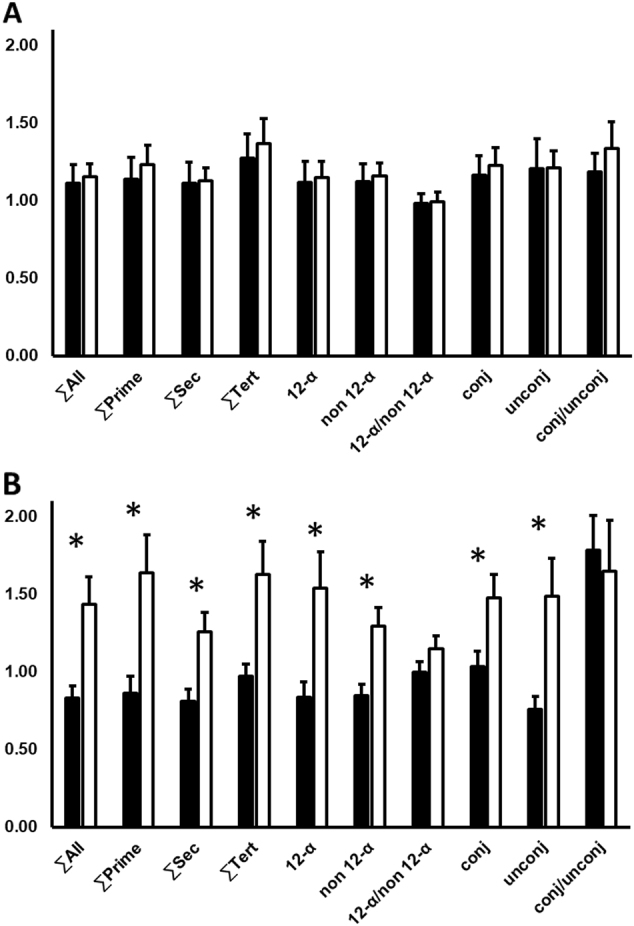
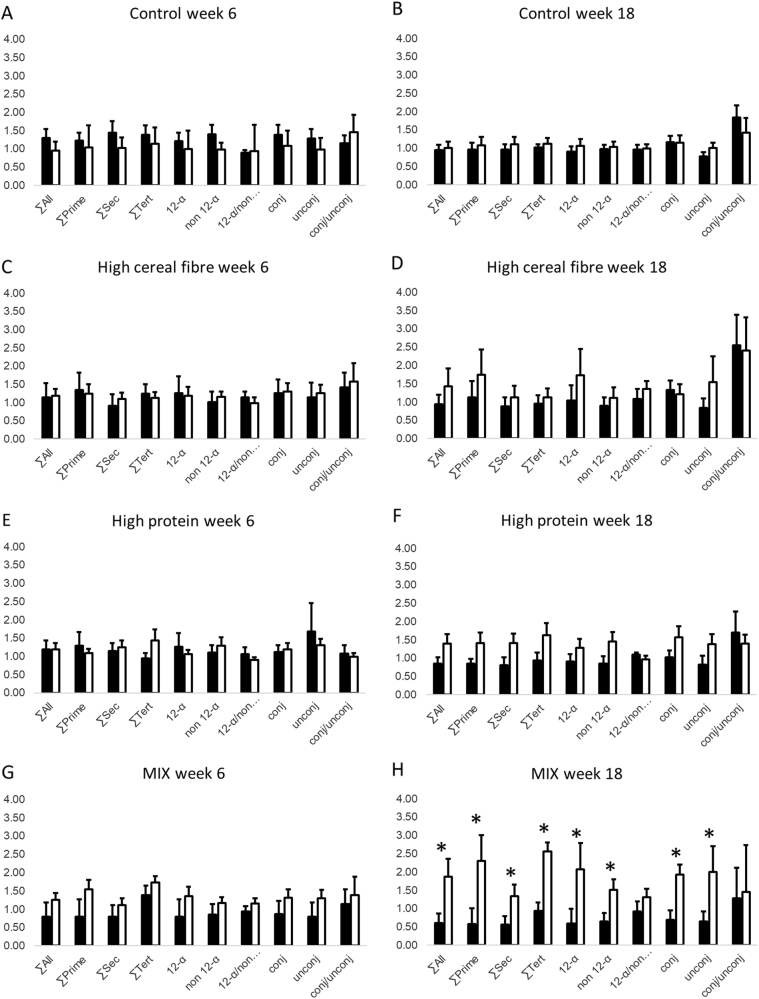
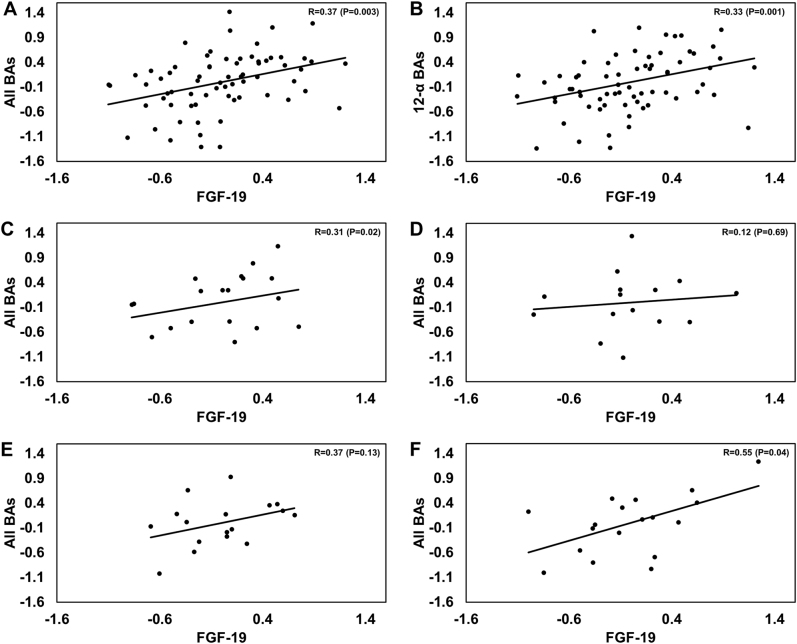
Bile acids (BA) are potent metabolic regulators influenced by diet. We studied effects of isoenergetic increases in the dietary protein and cereal-fiber contents on circulating BA and insulin resistance (IR) in overweight and obese adults. Randomized controlled nutritional intervention (18 weeks) in 72 non-diabetic participants (overweight/obese: 29/43) with at least one further metabolic risk factor. Participants were group-matched and allocated to four isoenergetic supplemented diets: control; high cereal fiber (HCF); high-protein (HP); or moderately increased cereal fiber and protein (MIX). Whole-body IR and insulin-mediated suppression of hepatic endogenous glucose production were measured using euglycaemic–hyperinsulinemic clamps with [6-6 2 H 2] glucose infusion. Circulating BA, metabolic biomarkers, and IR were measured at 0, 6, and 18 weeks. Under isoenergetic conditions, HP-intake worsened IR in obese participants after 6 weeks (M-value: 3.77 ± 0.58 vs. 3.07 ± 0.44 mg/kg/min, p = 0.038), with partial improvement back to baseline levels after 18 weeks (3.25 ± 0.45 mg/kg/min, p = 0.089). No deleterious effects of HP-intake on IR were observed in overweight participants. HCF-diet improved IR in overweight participants after 6 weeks (M-value 4.25 ± 0.35 vs. 4.81 ± 0.31 mg/kg/min, p = 0.016), but did not influence IR in obese participants. Control and MIX diets did not influence IR. HP-induced, but not HCF-induced changes in IR strongly correlated with changes of BA profiles. MIX-diet significantly increased most BA at 18 weeks in obese, but not in overweight participants. BA remained unchanged in controls. Pooled BA concentrations correlated with fasting fibroblast growth factor-19 (FGF-19) plasma levels (r = 0.37; p = 0.003). Higher milk protein intake was the only significant dietary predictor for raised total and primary BA in regression analyses (total BA, p = 0.017; primary BA, p = 0.011). Combined increased intake of dietary protein and cereal fibers markedly increased serum BA concentrations in obese, but not in overweight participants. Possible mechanisms explaining this effect may include compensatory increases of the BA pool in the insulin resistant, obese state; or defective BA transport.
Overview
The claims and statistics of this paper haven’t been checked yet.
Free: it reads the open-access text and checks the first 5 claims that cite a source we can check. Create a free account to check every claim.
Integrity signals
Registry
Cites
Statistics
Figures
Verification
Claims the paper makes
The claims and statistics of this paper haven’t been checked yet.
Free: it reads the open-access text and checks the first 5 claims that cite a source we can check. Create a free account to check every claim.
Self-check
Percentages, sums and reported differences re-computed from the paper’s own numbers.
The self-check needs the paper’s full text.
Citations
Cites
The metabolic syndrome—a new worldwide definition
Alberti, K. G. M., Zimmet, P., & Shaw, J. (2005) · The Lancet · doi:10.1016/s0140-6736(05)67402-8 · Cited by 9,352
Fibroblast growth factor 15 functions as an enterohepatic signal to regulate bile acid homeostasis
Inagaki, T., Choi, M., Moschetta, A., Peng, L., Cummins, C. L., McDonald, J. G., Luo, G., Jones, S. A., Goodwin, B., Richardson, J. A., et al. (2005) · Cell Metabolism · doi:10.1016/j.cmet.2005.09.001 · Cited by 1,865
Role of Bile Acids and Bile Acid Receptors in Metabolic Regulation
Lefebvre, P., Cariou, B., Lien, F., Kuipers, F., & Staels, B. (2009) · Physiological Reviews · doi:10.1152/physrev.00010.2008 · Cited by 1,678
de Munter, J. S. L., Hu, F. B., Spiegelman, D., Franz, M., & van Dam, R. M. (2007) · PLoS Medicine · doi:10.1371/journal.pmed.0040261 · Cited by 734
Bile acid receptors as targets for drug development
Schaap, F. G., Trauner, M., & Jansen, P. L. M. (2014) · Nature Reviews Gastroenterology & Hepatology · doi:10.1038/nrgastro.2013.151 · Cited by 696
Nutrient overload, insulin resistance, and ribosomal protein S6 kinase 1, S6K1
Um, S. H., D'Alessio, D., & Thomas, G. (2006) · Cell Metabolism · doi:10.1016/j.cmet.2006.05.003 · Cited by 690
Fiber and Magnesium Intake and Incidence of Type 2 Diabetes: A Prospective Study and Meta-analysis
Schulze, M. B. (2007) · Archives of Internal Medicine · doi:10.1001/archinte.167.9.956 · Cited by 537
Human Insulin Resistance Is Associated With Increased Plasma Levels of 12α-Hydroxylated Bile Acids
Haeusler, R. A., Astiarraga, B., Camastra, S., Accili, D., & Ferrannini, E. (2013) · Diabetes · doi:10.2337/db13-0639 · Cited by 444
Endocrine fibroblast growth factors 15/19 and 21: from feast to famine
Potthoff, M. J., Kliewer, S. A., & Mangelsdorf, D. J. (2012) · Genes & Development · doi:10.1101/gad.184788.111 · Cited by 442
Puri, P., Daita, K., Joyce, A., Mirshahi, F., Santhekadur, P. K., Cazanave, S., Luketic, V. A., Siddiqui, M. S., Boyett, S., Min, H., et al. (2018) · Hepatology · doi:10.1002/hep.29359 · Cited by 426
Cited by
The Health Benefits of Dietary Fibre
Barber, T. M., Kabisch, S., Pfeiffer, A. F. H., & Weickert, M. O. (2020) · Nutrients · doi:10.3390/nu12103209 · Cited by 892
Self-citationBarber, T. M., Kyrou, I., Randeva, H. S., & Weickert, M. O. (2021) · International Journal of Molecular Sciences · doi:10.3390/ijms22020546 · Cited by 169
Self-citationPhysiological Role of Bile Acids Modified by the Gut Microbiome
Kiriyama, Y., & Nochi, H. (2021) · Microorganisms · doi:10.3390/microorganisms10010068 · Cited by 112
“Milk protein intake increases total and primary BAs in the serum of obese, but not overweight, subjects [53].”
BackgroundMechanisms of Interactions between Bile Acids and Plant Compounds—A Review
Naumann, S., Haller, D., Eisner, P., & Schweiggert‐Weisz, U. (2020) · International Journal of Molecular Sciences · doi:10.3390/ijms21186495 · Cited by 99
Dietary Influences on the Microbiota–Gut–Brain Axis
Barber, T. M., Valsamakis, G., Mastorakos, G. P., Hanson, P., Kyrou, I., Randeva, H. S., & Weickert, M. O. (2021) · International Journal of Molecular Sciences · doi:10.3390/ijms22073502 · Cited by 86
Self-citationNutritional guidelines for the management of insulin resistance
Muscogiuri, G., Barrea, L., Caprio, M., Ceriani, F., Chavez, A. O., El Ghoch, M., Frias-Toral, E., Mehta, R. J., Mendez, V., Paschou, S. A., et al. (2022) · Critical Reviews in Food Science and Nutrition · doi:10.1080/10408398.2021.1908223 · Cited by 63
“Recent studies focus on other effects of dietary fiber on the discharge of various intestinal hormones, bile acids, adipokines, and amino acids’ metabolic signatures, affecting the body’s metabolic homeostasis positively (Land and Salkin 1987; Weickert et al. 2018; Hattersley et al. 2014).”
BackgroundImpact of Dietary Fiber on Inflammation in Humans
Kabisch, S., Hajir, J., Sukhobaevskaia, V., Weickert, M. O., & Pfeiffer, A. F. H. (2025) · International Journal of Molecular Sciences · doi:10.3390/ijms26052000 · Cited by 65
“Induction of an increase in bile acids by insoluble fiber is apparently independent of fermentation, as it occurs with fermentable pea fiber, but also poorly fermentable cereal fiber [261,262].”
Self-citationRodríguez-Morató, J., & Matthan, N. R. (2020) · Current Atherosclerosis Reports · doi:10.1007/s11883-020-00863-7 · Cited by 57
Effect of diet composition on insulin sensitivity in humans
Adeva-Andany, M. M., González-Lucán, M., Fernández-Fernández, C., Carneiro-Freire, N., Seco-Filgueira, M., & Pedre-Piñeiro, A. M. (2019) · Clinical Nutrition ESPEN · doi:10.1016/j.clnesp.2019.05.014 · Cited by 49
Abdelhameed, F., Mustafa, A., Kite, C., Lagojda, L., Dallaway, A., Than, N. N., Kassi, E. N., Kyrou, I., & Randeva, H. S. (2025) · Livers · doi:10.3390/livers5010011 · Cited by 37
“Notably, bile acids can be influenced by diet (e.g., by dietary protein and fiber content) [80]; hence, more translational and clinical research is required to elucidate the potential pathophysiologic links between bile acids and MASLD and how these may be addressed by therapeutic interventions,…”
Self-citationGerdes, V. E. A., Gueimonde, M., Pajunen, L., Nieuwdorp, M., & Laitinen, K. (2020) · Atherosclerosis · doi:10.1016/j.atherosclerosis.2020.08.028 · Cited by 40
Oduro-Donkor, D., Turner, M. C., Farnaud, S., Renshaw, D., Kyrou, I., Hanson, P., Hattersley, J., Weickert, M. O., Menon, V., Randeva, H. S., et al. (2020) · Expert Review of Endocrinology & Metabolism · doi:10.1080/17446651.2020.1801412 · Cited by 33
Self-citationMetabolic-Associated Fatty Liver Disease and the Gut Microbiota
Barber, T. M., Hanson, P., & Weickert, M. O. (2023) · Endocrinology and Metabolism Clinics of North America · doi:10.1016/j.ecl.2023.01.004 · Cited by 36
Self-citationde la Escalera, L. M., Kyrou, I., Vrbíková, J., Hainer, V., Šrámková, P., Fried, M., Piya, M. K., Kumar, S., Tripathi, G., & McTernan, P. G. (2017) · BMC Medicine · doi:10.1186/s12916-017-0797-5 · Cited by 34
Self-citationJing, J., Guo, J., Dai, R., Zhu, C., & Zhang, Z. (2023) · Frontiers in Pharmacology · doi:10.3389/fphar.2023.1252907 · Cited by 28
“Cereal fiber intake significantly increased serum bile acid concentrations in obese but not overweight individuals, which may be related to a compensatory increase in the bile acid pool (Weickert et al., 2018).”
BackgroundMetabolic-Associated Fatty Liver Disease and Insulin Resistance: A Review of Complex Interlinks
Barber, T. M., Kabisch, S., Pfeiffer, A. F. H., & Weickert, M. O. (2023) · Metabolites · doi:10.3390/metabo13060757 · Cited by 24
“Secondary BAs: BAs facilitate the intestinal absorption of dietary lipids and fat-soluble vitamins [95,96].”
BackgroundSelf-citationBarber, T. M., Bhatti, A. A., Elder, P. J. D., Ball, S., Calvez, R., Ramsden, D. B., Cuthbertson, D. J., Pfeiffer, A. F. H., Burnett, D. A., & Weickert, M. O. (2020) · The Journal of Clinical Endocrinology & Metabolism · doi:10.1210/clinem/dgaa473 · Cited by 21
Self-citationHeianza, Y., Zhou, T., He, H., Rood, J. C., Clish, C. B., Bray, G. A., Sacks, F. M., & Qi, L. (2021) · Liver International · doi:10.1111/liv.15098 · Cited by 19
High fiber intake, dietary protein, and prevention of type 2 diabetes
Weickert, M. O. (2018) · Expert Review of Endocrinology & Metabolism · doi:10.1080/17446651.2018.1513320 · Cited by 18
Self-citationHeianza, Y., Wang, X., Rood, J. C., Clish, C. B., Bray, G. A., Sacks, F. M., & Qi, L. (2022) · Metabolism · doi:10.1016/j.metabol.2022.155312 · Cited by 18
Parua, S., Hazra, A., Adhikary, K., Ganguly, K., Ahuja, D., Maiti, R., Mukhopadhyay, L. D., Dutta, S., Panda, P., Bhattacharya, K., et al. (2025) · Obesity Medicine · doi:10.1016/j.obmed.2025.100626 · Cited by 15
Kabisch, S., Honsek, C., Kemper, M., Gerbracht, C., Arafat, A. M., Birkenfeld, A. L., Dambeck, U., Osterhoff, M. A., Weickert, M. O., & Pfeiffer, A. F. H. (2021) · Acta Diabetologica · doi:10.1007/s00592-021-01772-0 · Cited by 13
Self-citationMancera‐Hurtado, Y., López-Contreras, B. E., Flores-López, R., Villamil‐Ramírez, H., Del-Rio-Navarro, B. E., Canizales‐Quinteros, S., & Morán‐Ramos, S. (2023) · Obesity · doi:10.1002/oby.23797 · Cited by 11
“In addition, the relationship between diet and circulating BAs is also influenced by gut microbial metabolism, genetic variations, and the degree of adiposity and insulin resistance, underscoring the complexity in the interpretation of these data [32].”
BackgroundEffects of Insoluble Cereal Fibre on Body Fat Distribution in the Optimal Fibre Trial
Kabisch, S., Honsek, C., Kemper, M., Gerbracht, C., Meyer, N. M. T., Arafat, A. M., Birkenfeld, A. L., Machann, J., Dambeck, U., Osterhoff, M. A., et al. (2021) · Molecular Nutrition & Food Research · doi:10.1002/mnfr.202000991 · Cited by 10
Self-citationCheng, X., Jiang, J., Li, C., Xue, C., Kong, B., Chang, Y., & Tang, Q. (2022) · Food & Function · doi:10.1039/d2fo00055e · Cited by 5
Abdolghaffari, A. H., Farzaei, M. H., Lashgari, N., Roudsari, N. M., Haddadi, N., Singh, A. K., Rana, H. K., Pandey, A. K., & Momtaz, S. (2020) · Springer eBooks · doi:10.1007/978-981-15-3552-9_6 · Cited by 5
Golubić, R., Ismail, M. H., Josipović, M., Kennet, J., Galderisi, A., & Evans, M. L. (2023) · Diabetes Obesity and Metabolism · doi:10.1111/dom.15176 · Cited by 4
Dietary Protein Source Mediates Colitis Pathogenesis Through Bacterial Modulation of Bile Acids
Gray, S. M., Wood, M. C., Mulkeen, S. C., Ahmed, S., Thaker, S. D., Chen, B., Sander, W. R., Bibeva, V., Zhang, X., Yang, J., et al. (2026) · Cellular and Molecular Gastroenterology and Hepatology · doi:10.1016/j.jcmgh.2026.101825 · Cited by 5
Shi, F., Yang, Z., Zhang, L., Zou, D., Yu, J., Guo, N., Ren, S., Tang, X., Gu, C. J., Xu, R., et al. (2025) · Microbiome · doi:10.1186/s40168-025-02233-4 · Cited by 3
“A diet rich in protein, but not one rich in fiber, was found to strongly correlate with changes in the BA profile in obese people, and protein restriction could significantly increase levels of unconjugated BAs [81].”
Zeng, J. S., Qian, Y., Yang, J., Chen, X., Fu, C., Che, Z., Feng, Y., & Yin, J. (2024) · Heliyon · doi:10.1016/j.heliyon.2024.e28229 · Cited by 4
“Overconsumption of dietary protein promotes insulin resistance in obese patients and negatively impacts glucose homeostasis [45].”
Xu, M., Zhang, X., xin, H., Daoming, L., Xiao, X., Zhang, X., & Tang, S. (2025) · International Journal of Cardiology Cardiovascular Risk and Prevention · doi:10.1016/j.ijcrp.2025.200529
“…actions: by reshaping bile acid pools, both fermentable and insoluble fibers activate FXR and TGR5 signaling to strengthen the intestinal barrier and curb endotoxemia [32 – 34], while enriching cellulose-and pectin-degrading taxa that foster anti-inflammatory microbial communities [35].”
Hossain, M. A., Agyei, D., Brennan, C., Kebede, B., & Reynolds, A. N. (2026) · Diabetes Obesity and Metabolism · doi:10.1111/dom.71523
Metadata
- Authors
- Weickert, M. O., Hattersley, J. G., Kyrou, I., Arafat, A. M., Rudovich, N., Roden, M., Nowotny, P., von Loeffelholz, C., Matysik, S., Schmitz, G., & Pfeiffer, A. F. H.
- Affiliations
- University Hospital Coventry (GB)
- Aston University (GB)
- German Institute of Human Nutrition (DE)
- Deutsches Diabetes-Zentrum e.V. (DE)
- University Hospital Regensburg (DE)
- German Center for Diabetes Research (DE)
- Corresponding author
- Weickert, Martin O.
- ORCID
- Venue
- Nutrition & Diabetes
- Published
- 2018-03-07
- Volume
- 8
- Issue
- 1
- Pages
- 11-11
- ISSN
- 2044-4052 (ISSN-L)
- PMC
- PMC5856807
- OpenAlex
- W2805148430
- Semantic Scholar
- ae35594af9cb2d348ec852a9c842e7c73ffd6236
- Cited by
- 29
- References
- 60
- Citations by year
- 2025: 4 · 2024: 1 · 2023: 5 · 2022: 2 · 2021: 7 · 2020: 7 · 2019: 1 · 2018: 1
- FWCI
- 3.31
- Type
- journal article
- Language
- en
- Open access
- gold
- doi.org
- Licence
- cc-by
- creativecommons.org/licenses/by/4.0 (tdm)
- creativecommons.org/licenses/by/4.0 (vor)
- Locations
- Nutrition and Diabetes (publishedVersion, cc-by)
- PubMed Central (publishedVersion, cc-by)
- PubMed (publishedVersion)
- Aston Publications Explorer (Aston University) (acceptedVersion)
- DOAJ (DOAJ: Directory of Open Access Journals) (submittedVersion)
- University of Regensburg Publication Server (University of Regensburg) (submittedVersion)
- Funders
- Friedrich-Schiller-Universität Jena
- University of Warwick
- Coventry University
- Bundesministerium für Bildung und Forschung
- Aston University
- Universitätsklinikum Regensburg
- University Hospitals Coventry and Warwickshire NHS Trust
- Leibniz-Gemeinschaft
- Warwick Medical School
- Center for Sepsis Control and Care
- Topics
- Health Sciences › Nursing › Nutrition and Dietetics › Food composition and properties
- Health Sciences › Medicine › Endocrinology, Diabetes and Metabolism › Diet, Metabolism, and Disease
- Life Sciences › Biochemistry, Genetics and Molecular Biology › Molecular Biology › Gut microbiota and health
- Keywords
- bile acids, insulin resistance, high-protein diet, cereal fiber, isocaloric diet, obesity, overweight, hepatic glucose production, FGF19, milk protein, dietary supplementation, metabolic signatures, primary bile acids, secondary bile acids, hepatic steatosis, liver inflammation, liver fibrosis
- MeSH terms
- Bile Acids and Salts, Energy Intake, Edible Grain, Diet, Dietary Fiber, Dietary Proteins, Fasting, Female, Fibroblast Growth Factors, Humans, Insulin, Insulin Resistance, Liver, Male, Middle Aged, Milk Proteins, Obesity, Glucose Clamp Technique, Body Mass Index, Overweight
About these checks
Registry, retraction, Cites and statistics results are computed, not judged, with one exception: a printed reference that no index lists is read once by a model before it counts as a citation error. Claims are extracted by a model and kept only when their quote appears verbatim in the text; each cited source is then checked, with a model’s help, for whether it says what the claim relies on. Those verdicts can be wrong — read the claim’s quote and the cited source before relying on one.
Statistics and arithmetic are recomputed, not judged.
Confidence bands are shown only for fields calibrated on our annotated test set. None is calibrated yet, so no band is shown.
What counts as a claim ›How we measure confidence ›How we check this ›
Are you an author, or do you see a problem with this page? Request a review
Data sources
Bibliographic data: Semantic Scholar, OpenAlex, Crossref.
Contains information from the Semantic Scholar Academic Graph Datasets, made available under the ODC Attribution License (ODC-BY 1.0).
Semantic Scholar’s data is described in: Kinney, R., et al. (2023). The Semantic Scholar Open Data Platform. arXiv:2301.10140.
