

Targeting epigenetic regulators for cancer therapy: mechanisms and advances in clinical trials
Open accessThe DOI matches its Crossref record; 675 of the 676 references it cites were found in a registry or an index.
Abstract
Epigenetic alternations concern heritable yet reversible changes in histone or DNA modifications that regulate gene activity beyond the underlying sequence. Epigenetic dysregulation is often linked to human disease, notably cancer. With the development of various drugs targeting epigenetic regulators, epigenetic-targeted therapy has been applied in the treatment of hematological malignancies and has exhibited viable therapeutic potential for solid tumors in preclinical and clinical trials. In this review, we summarize the aberrant functions of enzymes in DNA methylation, histone acetylation and histone methylation during tumor progression and highlight the development of inhibitors of or drugs targeted at epigenetic enzymes.
Overview
The claims and statistics of this paper haven’t been checked yet.
Free: it reads the open-access text and checks the first 5 claims that cite a source we can check. Create a free account to check every claim.
Integrity signals
Registry
Cites
Statistics
Figures
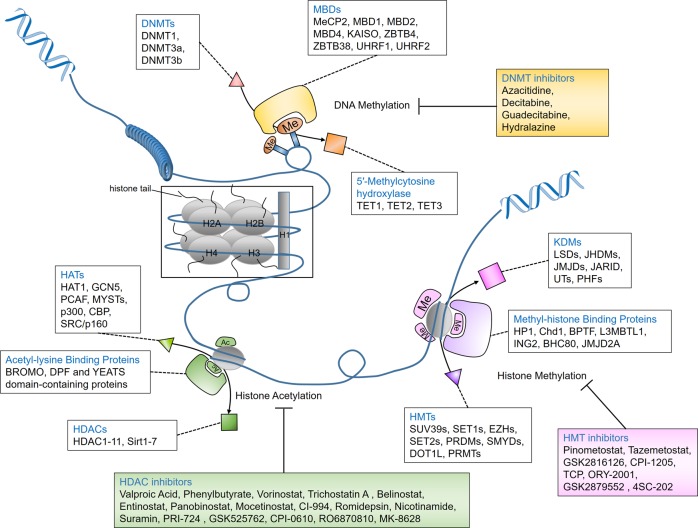
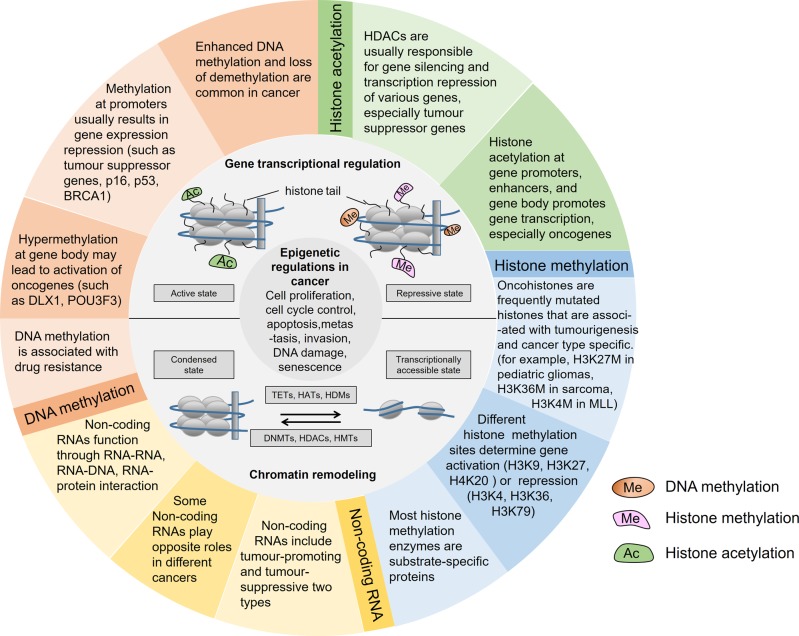
Verification
Claims the paper makes
The claims and statistics of this paper haven’t been checked yet.
Free: it reads the open-access text and checks the first 5 claims that cite a source we can check. Create a free account to check every claim.
Claims other papers make about this one
Each is checked against this paper’s own text: does it say what the citing paper says it does?
The check wasn’t confident either way, so it gives no verdict — never disputed.
In the citing paper
“Simvastatin, a cholesterol-lowering drug, displays anti-tumor effects in GBM by inducing apoptosis and inhibiting cell migration and invasion30.”
From Multi-omics analysis identifies glioblastoma dependency on H3K9me3 methyltransferase activity (2025) · cites this paper as [30]
Experimental — accuracy not yet measured
Self-check
Percentages, sums and reported differences re-computed from the paper’s own numbers.
The self-check needs the paper’s full text.
Citations
Cites
10 retracted
Items 401–600 of 675
Yu, H., Wark, L., Ji, H., Willard, L., Jaing, Y., Han, J., He, H., Ortiz, E., Zhang, Y., Medeiros, D. M., et al. (2013) · Molecular Nutrition & Food Research · doi:10.1002/mnfr.201200642 · Cited by 89
Self-citationSET7/9 regulates cancer cell proliferation by influencing β‐catenin stability
Shen, C., Wang, D., Liu, X., Gu, B., Du, Y., Wei, F., Cao, L., Song, B., Lu, X., Yang, Q., et al. (2015) · The FASEB Journal · doi:10.1096/fj.15-273540 · Cited by 89
PRDM5 Identified as a Target of Epigenetic Silencing in Colorectal and Gastric Cancer
Watanabe, Y., Toyota, M., Kondo, Y., Suzuki, H., Imai, T., Ohe-Toyota, M., Maruyama, R., Nojima, M., Sasaki, Y., Sekido, Y., et al. (2007) · Clinical Cancer Research · doi:10.1158/1078-0432.ccr-07-0305 · Cited by 89
Bantignies, F., Goodman, R. H., & Smolik, S. M. (2000) · Molecular and Cellular Biology · doi:10.1128/mcb.20.24.9317-9330.2000 · Cited by 88
Zhou, Y., Zheng, X., Lu, J., Chen, W., Li, X., & Zhao, L. (2018) · Cellular Physiology and Biochemistry · doi:10.1159/000488273 · Cited by 88
SKI and MEL1 Cooperate to Inhibit Transforming Growth Factor-β Signal in Gastric Cancer Cells
Takahata, M., Inoue, Y., Tsuda, H., Imoto, I., Koinuma, D., Hayashi, M., Ichikura, T., Yamori, T., Nagasaki, K., Yoshida, M., et al. (2009) · Journal of Biological Chemistry · doi:10.1074/jbc.m808989200 · Cited by 87
miR-124 and miR-506 inhibit colorectal cancer progression by targeting DNMT3B and DNMT1
Chen, Z., Liu, S., Li, T. X., Wu, M., Ai, F., Tang, W., Zhao, L., Ding, J., Zhang, L., & Tang, A. (2015) · Oncotarget · doi:10.18632/oncotarget.5709 · Cited by 86
Karatzas, P. S., Mantzaris, G. J., Safioleas, M. C., & Gazouli, M. (2014) · Medicine · doi:10.1097/md.0000000000000309 · Cited by 86
Liu, Y., Yu, S.-J., Qi, H., Yang, Y., & Shao, Z. (2015) · PLoS ONE · doi:10.1371/journal.pone.0133896 · Cited by 85
Kaempferol Modulates DNA Methylation and Downregulates DNMT3B in Bladder Cancer
Qiu, W., Lin, J., Zhu, Y., Zhang, J., Zeng, L., Su, M., & Tian, Y. (2017) · Cellular Physiology and Biochemistry · doi:10.1159/000464435 · Cited by 85
Coordinate Loss of MAP3K7 and CHD1 Promotes Aggressive Prostate Cancer
Rodrigues, L. U., Rider, L. C., Nieto, C., Romero, L. M., Karimpour‐Fard, A., Loda, M. F., Lucia, M. S., Wu, M., Shi, L., Cimic, A., et al. (2015) · Cancer Research · doi:10.1158/0008-5472.can-14-1596 · Cited by 84
Yin, Y.-W., Jin, H.-J., Zhao, W., Gao, B., Fang, J., Wei, J., Zhang, D. D., Zhang, J., & Fang, D. (2015) · Gene Expression · doi:10.3727/105221615x14399878166230 · Cited by 84
Fiskus, W. C., Coothankandaswamy, V., Chen, J., Ma, H., Ha, K., Saenz, D. T., Krieger, S., Mill, C. P., Sun, B., Huang, P., et al. (2016) · Cancer Research · doi:10.1158/0008-5472.can-16-0126 · Cited by 84
Increased acetylation of histones induced by diallyl disulfide and structurally related molecules.
Lea, M. A., Randolph, V. M., & Patel, M. (1999) · International Journal of Oncology · doi:10.3892/ijo.15.2.347 · Cited by 83
HDAC8 and STAT3 repress BMF gene activity in colon cancer cells
Kang, Y., Nian, H., Rajendran, P., Kim, E., Dashwood, W. M., Pinto, J. T., Boardman, L. A., Thibodeau, S. N., Limburg, P. J., Löhr, C. V., et al. (2014) · Cell Death & Disease · doi:10.1038/cddis.2014.422 · Cited by 82
Ye, Z., Li, J., Han, X., Hou, H., Chen, H., Zheng, X., Lu, J., Wang, L., Chen, W., Li, X., et al. (2016) · Journal of Experimental & Clinical Cancer Research · doi:10.1186/s13046-016-0350-y · Cited by 81
Dihydroartemisinin inhibits prostate cancer via JARID2/miR-7/miR-34a-dependent downregulation of Axl
Paccez, J. D., Duncan, K., Sekar, D., Correa, R. G., Wang, Y., Gu, X., Bashin, M., Chibale, K., Libermann, T. A., & Zerbini, L. F. (2019) · Oncogenesis · doi:10.1038/s41389-019-0122-6 · Cited by 81
Desai, S., Laskar, S. S., & Pandey, B. N. (2013) · Cellular Signalling · doi:10.1016/j.cellsig.2013.05.025 · Cited by 80
CAPG enhances breast cancer metastasis by competing with PRMT5 to modulate STC-1 transcription
Huang, S., Chi, Y., Qin, Y., Wang, Z., Xiu, B., Su, Y., Guo, R., Guo, L., Sun, H., Zeng, C., et al. (2018) · Theranostics · doi:10.7150/thno.22523 · Cited by 80
Inhibition of DNA Methylation by Antisense Oligonucleotide MG98 as Cancer Therapy
Amato, R. J. (2007) · Clinical Genitourinary Cancer · doi:10.3816/cgc.2007.n.029 · Cited by 79
Cui, J. R., Sun, W., Hao, X., Wei, M., Su, X., Zhang, Y., Su, L., & Liu, X. (2015) · Cancer Cell International · doi:10.1186/s12935-014-0149-x · Cited by 79
P300 inhibition enhances gemcitabine-induced apoptosis of pancreatic cancer
Ono, H., Basson, M. D., & Ito, H. (2016) · Oncotarget · doi:10.18632/oncotarget.10117 · Cited by 79
CDK 2 positively regulates aerobic glycolysis by suppressing SIRT 5 in gastric cancer
Tang, Z., Li, L., Tang, Y., Xie, D., Wu, K., Wei, W., & Xiao, Q. (2018) · Cancer Science · doi:10.1111/cas.13691 · Cited by 79
Basavapathruni, A., Olhava, E. J., Daigle, S. R., Therkelsen, C. A., Jin, L., Boriack‐Sjodin, P. A., Allain, C. J., Klaus, C. R., Raimondi, A., Scott, M. P., et al. (2014) · Biopharmaceutics & Drug Disposition · doi:10.1002/bdd.1889 · Cited by 78
Müller, H. M., Fiegl, H., Goebel, G., Hubalek, M., Widschwendter, A., Müller‐Holzner, E., Marth, C., & Widschwendter, M. (2003) · British Journal of Cancer · doi:10.1038/sj.bjc.6601392 · Cited by 78
Lysine-specific demethylase KDM3A regulates ovarian cancer stemness and chemoresistance
Ramadoss, S., Sen, S., Ramachandran, I., Roy, S., Chaudhuri, G., & Farias‐Eisner, R. (2016) · Oncogene · doi:10.1038/onc.2016.320 · Cited by 78
Wu, P., Lu, J., Yang, J., Lin, I., Ou, D., Lin, Y., Chou, K.-H., Huang, W., Wang, W.-P., Huang, Y., et al. (2014) · Cancer Research · doi:10.1158/0008-5472.can-13-3572 · Cited by 77
Quan, Y., Wang, N., Chen, Q., Xu, J., Cheng, W., Di, M., Xia, W., & Gao, W.-Q. (2015) · Oncotarget · doi:10.18632/oncotarget.4764 · Cited by 76
Mayor, R., Casadomé, L., Azuara, D., Moreno, V. R., Clark, S. J., Capellá, G., & Peinado, M. A. (2009) · British Journal of Cancer · doi:10.1038/sj.bjc.6605045 · Cited by 76 · cited 2×
“Of note, only ~1% of normal samples exhibited EN1 CpG island hypermethylation.(26) Therefore, the significant difference between cancer cells and normal cells makes EN1 a potential cancer marker in diagnosis.”
BackgroundIdentification of Smyd4 as a Potential Tumor Suppressor Gene Involved in Breast Cancer Development
Hu, L., Zhu, Y. T., Qi, C., & Zhu, Y.-J. (2009) · Cancer Research · doi:10.1158/0008-5472.can-08-4097 · Cited by 76
Identification of MYST3 as a novel epigenetic activator of ERα frequently amplified in breast cancer
Yu, L., Liang, Y., Cao, X., Wang, X., Gao, H., Lin, S.-Y., Schiff, R., Xs, W., & Li, K. (2016) · Oncogene · doi:10.1038/onc.2016.433 · Cited by 76
Tang, X., Tu, G., Yang, G., Wang, X., Kang, L., Yang, L., Zeng, H., Wan, X., Qiao, Y., Cui, X., et al. (2019) · Cancer Letters · doi:10.1016/j.canlet.2019.02.044 · Cited by 76
Katsanis, N., Yaspo, M., & Fisher, E. (1997) · Mammalian Genome · doi:10.1007/s003359900491 · Cited by 75
Downregulation of SIRT7 by 5-fluorouracil induces radiosensitivity in human colorectal cancer
Tang, M., Lu, X., Zhang, C., Du, C., Cao, L., Hou, T., Li, Z., Tu, B., Cao, Z., Li, Y., et al. (2017) · Theranostics · doi:10.7150/thno.18804 · Cited by 75
Xiang, R., Cui, Y., Wang, Y., Xie, T., Yang, X., Wang, Z., Li, J., & Li, Q. (2018) · Oncology Reports · doi:10.3892/or.2018.6704 · Cited by 75
Halkidou, K., Cook, S., Leung, H. Y., Neal, D. E., & Robson, C. N. (2003) · European Urology · doi:10.1016/j.eururo.2003.10.005 · Cited by 74
Watanabe, S., Ichimura, T., Fujita, N., Tsuruzoe, S., Ohki, I., Shirakawa, M., Kawasuji, M., & Nakao, M. (2003) · Proceedings of the National Academy of Sciences · doi:10.1073/pnas.2131819100 · Cited by 74 · cited 1×
“MBD proteins cooperate with other proteins to regulate gene transcription.(57,58) However, the role of MBD1 and MBD2 has not been identified in human lung or colon cancer, with only limited mutations being detected.”
BackgroundWang, Y.-M., Gu, M.-L., Meng, F.-S., Jiao, W.-R., Zhou, X.-X., Yao, H.-P., & Ji, F. (2017) · International Journal of Oncology · doi:10.3892/ijo.2017.4176 · Cited by 74
Vanaja, G. R., Ramulu, H. G., & Kalle, A. M. (2018) · Cell Communication and Signaling · doi:10.1186/s12964-018-0231-4 · Cited by 74
A Sleeping Beauty mutagenesis screen reveals a tumor suppressor role for Ncoa2/Src-2 in liver cancer
O’Donnell, K. A., Keng, V. W., York, B., Reineke, E. L., Seo, D., Fan, D., Silverstein, K. A. T., Schrum, C. T., Xie, W., Mularoni, L., et al. (2012) · Proceedings of the National Academy of Sciences · doi:10.1073/pnas.1115433109 · Cited by 73
Liu, Y., Long, Y., Wang, S., Zhang, Y.-Y., Li, Y., Mi, J.-S., Yu, C.-H., Li, D., Zhang, J., & Zhang, X. (2018) · Oncogene · doi:10.1038/s41388-018-0466-y · Cited by 72
Campbell, P. M. (2003) · Carcinogenesis · doi:10.1093/carcin/bgh045 · Cited by 71 · cited 1×
“Meanwhile, inhibition of MBD2 shows promising effects on suppression of the tumorigenesis of human lung cancer and colon cancer.(63) Although MBD3 does not directly bind to methylated DNA, it regulates the methylation process via interactions with other proteins, such as MBD2 and HDAC.”
BackgroundDhar, S. S., Alam, H., Li, N., Wagner, K. W., Chung, J., Ahn, Y. W., & Lee, M. G. (2014) · Journal of Biological Chemistry · doi:10.1074/jbc.m113.521625 · Cited by 71
Xiang, Q., Wang, C., Zhang, Y., Xue, X., Song, M., Zhang, C., Li, C., Wu, C., Li, K., Hui, X. H., et al. (2018) · European Journal of Medicinal Chemistry · doi:10.1016/j.ejmech.2018.01.087 · Cited by 71
Cao, C., Wu, H., Vasilatos, S. N., Chandran, U., Qin, Y., Wan, Y., Oesterreich, S., Davidson, N. E., & Huang, Y. (2018) · International Journal of Cancer · doi:10.1002/ijc.31419 · Cited by 71
HDAC10 promotes lung cancer proliferation via AKT phosphorylation
Yang, Y., Huang, Y., Wang, Z., Wang, H.-T., Duan, B., Ye, D., Wang, C., Jing, R., Leng, Y., Xi, J., et al. (2016) · Oncotarget · doi:10.18632/oncotarget.10673 · Cited by 70
BLIMP1 Induces Transient Metastatic Heterogeneity in Pancreatic Cancer
Chiou, S.-H., Risca, V. I., Wang, G. X., Yang, D., Grüner, B. M., Kathiria, A. S., Ma, R. K., Vaka, D., Chu, P., Kozak, M., et al. (2017) · Cancer Discovery · doi:10.1158/2159-8290.cd-17-0250 · Cited by 70
microRNA-199a-3p, DNMT3A, and aberrant DNA methylation in testicular cancer
Chen, B., Gu, S., Suen, Y. K., Li, L., & Chan, W. (2013) · Epigenetics · doi:10.4161/epi.25799 · Cited by 69
p53-Suppressed Oncogene TET1 Prevents Cellular Aging in Lung Cancer
Filipczak, P. T., Leng, S., Tellez, C. S., Kieu, C., Grimes, M. J., Thomas, C. L., Walton-Filipczak, S. R., Picchi, M. A., & Belinsky, S. A. (2019) · Cancer Research · doi:10.1158/0008-5472.can-18-1234 · Cited by 69
Xie (2009) · International Journal of Oncology · doi:10.3892/ijo_00000238 · Cited by 68
Chan, K. M., Han, J., Fang, D., Gan, H., & Zhang, Z. (2013) · Cell Cycle · doi:10.4161/cc.25625 · Cited by 68
Self-citationChen, J.-Y., Luo, C.-W., Lai, Y.-S., Wu, C., & Hung, W. (2017) · Oncogenesis · doi:10.1038/oncsis.2017.71 · Cited by 68
Targeted inhibition of STAT/TET1 axis as a therapeutic strategy for acute myeloid leukemia
Jiang, X., Hu, C., Ferchen, K., Nie, J., Cui, X., Chen, C.-H., Cheng, L., Zuo, Z., Seibel, W., He, C., et al. (2017) · Nature Communications · doi:10.1038/s41467-017-02290-w · Cited by 68
Self-citationKim, K., Chadalapaka, G., Pathi, S. S., Jin, U.-H., Lee, J., Park, Y., Cho, S., Chintharlapalli, S. R., & Safe, S. H. (2012) · Molecular Cancer Therapeutics · doi:10.1158/1535-7163.mct-12-0181 · Cited by 67
Neuroblastoma cells depend on HDAC11 for mitotic cell cycle progression and survival
Thole, T. M., Lodrini, M., Fabian, J., Wuenschel, J., Pfeil, S., Hielscher, T., Kopp-Schneider, A., Heinicke, U., Fulda, S., Witt, O., et al. (2017) · Cell Death & Disease · doi:10.1038/cddis.2017.49 · Cited by 67
Peng, K., Su, G., Ji, J., Yang, X., Miao, M., Mo, P., Li, M., Xu, J., Li, W., & Yu, C. (2018) · Journal of Biological Chemistry · doi:10.1074/jbc.ra118.001730 · Cited by 67
Seidel, C., Schnekenburger, M., Mazumder, A., Teiten, M.-H., Kirsch, G., Dicato, M. A., & Diederich, M. F. (2015) · Biochemical Pharmacology · doi:10.1016/j.bcp.2015.11.005 · Cited by 66
Chen, K.-L., Zhang, F., Ding, J., Liang, Y., Zhan, Z., Zhan, Y., Chen, L., & Ding, Y. (2017) · Journal of Cancer · doi:10.7150/jca.20482 · Cited by 66
SETDB1 regulates SMAD7 expression for breast cancer metastasis
Ryu, T. Y., Kim, K., Kim, S.-K., Oh, J.-H., Min, J.-K., Jung, C.-R., Son, M.-Y., Kim, D.-S., & Cho, H.-S. (2019) · BMB Reports · doi:10.5483/bmbrep.2019.52.2.235 · Cited by 66
Characterization of the PR domain of RIZ1 histone methyltransferase
Derunes, C., Briknarová, K., Geng, L., Li, S., Gessner, C. R., Hewitt, K. M., Wu, S., Huang, S., Woods, V. I., & Ely, K. R. (2005) · Biochemical and Biophysical Research Communications · doi:10.1016/j.bbrc.2005.05.190 · Cited by 65
Damodaran, S., Damaschke, N., Gawdzik, J. C., Yang, B., Shi, C., Allen, G. O., Huang, W., Denu, J. M., & Jarrard, D. F. (2017) · BMC Cancer · doi:10.1186/s12885-017-3853-9 · Cited by 65
Farooqi, A. S., Hong, J. Y., Cao, J., Lü, X., Price, I. R., Zhao, Q., Kosciuk, T., Yang, M., Bai, J. J., & Lin, H. (2019) · Journal of Medicinal Chemistry · doi:10.1021/acs.jmedchem.9b00191 · Cited by 65
Tange, S., Oktyabri, D., Terashima, M., Ishimura, A., & Suzuki, T. (2014) · PLoS ONE · doi:10.1371/journal.pone.0115684 · Cited by 64
Metformin inhibits SUV39H1-mediated migration of prostate cancer cells
Yu, T., Wang, C., Yang, J., Guo, Y., Wu, Y., & Li, X. (2017) · Oncogenesis · doi:10.1038/oncsis.2017.28 · Cited by 64
Rubinstein-Taybi Syndrome and Epigenetic Alterations
Korzus, E. (2017) · Advances in experimental medicine and biology · doi:10.1007/978-3-319-53889-1_3 · Cited by 64 · cited 1×
“Meanwhile, loss of another family member, p300, has also been associated with hematological malignancies.(179,180) Therefore, both CBP and p300 seem to function as tumor suppressors.”
BackgroundZhang, Y., Chen, F.-Q., Sun, Y.-H., Zhou, S.-Y., Li, T.-Y., & Chen, R. (2011) · Journal of Experimental & Clinical Cancer Research · doi:10.1186/1756-9966-30-98 · Cited by 63
Loss of nuclear localization of TET2 in colorectal cancer
Huang, Y., Wang, G., Liang, Z., Yang, Y., Cui, L., & Liu, C.-Y. (2016) · Clinical Epigenetics · doi:10.1186/s13148-016-0176-7 · Cited by 63
Dancing from bottoms up – Roles of the POZ-ZF transcription factor Kaiso in Cancer
Pierre, C. C., Hercules, S. M., Yates, C. C., & Daniel, J. M. (2018) · Biochimica et Biophysica Acta (BBA) - Reviews on Cancer · doi:10.1016/j.bbcan.2018.10.005 · Cited by 63
Stat3 inhibits Beclin 1 expression through recruitment of HDAC3 in nonsmall cell lung cancer cells
Miao, L.-J., Huang, F.-X., Sun, Z.-T., Zhang, R.-X., Huang, S.-F., & Wang, J. (2014) · Tumor Biology · doi:10.1007/s13277-014-1961-6 · Cited by 62
Hernandez, S. J., Dolivo, D., & Dominko, T. (2017) · Oncology Letters · doi:10.3892/ol.2017.5671 · Cited by 62
The methyl-CpG-binding protein MECP2 is required for prostate cancer cell growth
Bernard, D., Gil, J., Dumont, P., Rizzo, S., Monté, D., Quatannens, B., Hudson, D. L., Visakorpi, T., Fuks, F., & de Launoit, Y. (2005) · Oncogene · doi:10.1038/sj.onc.1209179 · Cited by 61
Devaney, J., Stirzaker, C., Qu, W., Song, J. Z., Statham, A. L., Patterson, K., Horvath, L. G., Tabor, B., Coolen, M. W., Hulf, T., et al. (2011) · Cancer Epidemiology Biomarkers & Prevention · doi:10.1158/1055-9965.epi-10-0719 · Cited by 61 · cited 1×
“2, methylation of EN1 and SCTR, the first well-studied example of coordinated epigenetic modification, was significantly increased in colorectal and prostate cancers.(26,27) EN1 methylation has also been observed to be elevated by up to 60% in human salivary gland adenoid cystic carcinoma.”
BackgroundMarkl, I. D. C., Cheng, J., Liang, G., Shibata, D. K., Laird, P. W., & Jones, P. A. (2001) · PubMed · Cited by 61
Li, L., Xue, A., Li, B., Shen, Y., Li, Y., Luo, C., Zhang, M., Jiang, J., Xu, Z., Xie, J., et al. (2014) · Breast Cancer Research · doi:10.1186/bcr3667 · Cited by 61
Histone methyltransferase PRMT6 plays an oncogenic role of in prostate cancer
Almeida-Rios, D., Graça, I. C. R., Vieira, F. Q., Ramalho-Carvalho, J., Pereira-Silva, E., Martins, A. T., Oliveira, J., Gonçalves, C. S., Costa, B. M., Henrique, R., et al. (2016) · Oncotarget · doi:10.18632/oncotarget.10061 · Cited by 61
FKBP3 Promotes Proliferation of Non-Small Cell Lung Cancer Cells through Regulating Sp1/HDAC2/p27
Zhu, W., Zhao, L., Xiong, L., Yu, X., Chen, X., & Lin, Q. (2017) · Theranostics · doi:10.7150/thno.18067 · Cited by 61
Shuai, W., Wu, J., Chen, S., Liu, R., Ye, Z., Kuang, C., Fu, X., Wang, G., Li, Y., Peng, Q., et al. (2018) · Cancer Letters · doi:10.1016/j.canlet.2018.02.023 · Cited by 61
Si, Y., Liu, J., Shen, H., Zhang, C., Wu, Y., Huang, Y., Gong, Z., Xue, J., & Liu, T. (2018) · Journal of Cellular and Molecular Medicine · doi:10.1111/jcmm.14010 · Cited by 61
NAA40 contributes to colorectal cancer growth by controlling PRMT5 expression
Demetriadou, C., Pavlou, D., Mpekris, F., Achilleos, C., Stylianopoulos, T., Zaravinos, A., Papageorgis, P., & Kirmizis, A. (2019) · Cell Death and Disease · doi:10.1038/s41419-019-1487-3 · Cited by 61
The Acetyltransferase p300/CBP-Associated Factor Is a p53 Target Gene in Breast Tumor Cells
Watts, G. S., Oshiro, M. M., Junk, D. J., Wozniak, R. J., Watterson, S. J., Domann, F. E., & Futscher, B. W. (2004) · Neoplasia · doi:10.1593/neo.03292 · Cited by 61
Expression of DNA (5-cytosin)-methyltransferases (DNMTs) in hepatocellular carcinomas
Nagai, M. (2003) · Hepatology Research · doi:10.1016/s1386-6346(03)00091-3 · Cited by 60
NCOA1 Directly Targets M-CSF1 Expression to Promote Breast Cancer Metastasis
Qin, L., Wu, Y.-L., Toneff, M. J., Li, D., Liao, L., Gao, X., Bane, F. T., Tien, J. C.-Y., Xu, Y., Feng, Z., et al. (2014) · Cancer Research · doi:10.1158/0008-5472.can-13-2639 · Cited by 60
Özdağ, H., Batley, S. J., Försti, A., Iyer, N. G., Daigo, Y., Boutell, J., Arends, M. J., Ponder, B. A. J., Kouzarides, T., & Caldas, C. (2002) · British Journal of Cancer · doi:10.1038/sj.bjc.6600554 · Cited by 60 · cited 1×
“Rare inactivating mutations in CBP and PCAF have only been identified in cancer cell lines but not primary tumors.(188) Based on these findings, we hypothesize that the differences between cell lines and primary tumors cannot be ignored.”
BackgroundEpigenetic control of mammalian centromere protein binding: Does DNA methylation have a role?
Mitchell, A. R., Jeppesen, P., Nicol, L. M., Morrison, H., & Kipling, D. (1996) · Journal of Cell Science · doi:10.1242/jcs.109.9.2199 · Cited by 60
Cheng, D., He, Z., Zheng, L., Xie, D., Dong, S., & Zhang, P. (2018) · OncoTargets and Therapy · doi:10.2147/ott.s166412 · Cited by 60
Down-regulation of Tip60 gene as a potential marker for the malignancy of colorectal cancer.
Sakuraba, K., Yasuda, T., 坂田, 真., Kitamura, Y.-H., Shirahata, A., Goto, T., Mizukami, H., Saito, M., Ishibashi, K., Kigawa, G., et al. (2009) · PubMed · Cited by 59
Kim, I., McCutcheon, J. N., Rao, G., Liu, S. V., Pommier, Y. G., Skrzypski, M. T., Zhang, Y.-W., & Giaccone, G. (2018) · Oncogene · doi:10.1038/s41388-018-0429-3 · Cited by 59
Altering the Course of Small Cell Lung Cancer: Targeting Cancer Stem Cells via LSD1 Inhibition
Stewart, C. A., & Byers, L. A. (2015) · Cancer Cell · doi:10.1016/j.ccell.2015.06.011 · Cited by 57
Saloura, V., Vougiouklakis, T., Zewde, M. G., Deng, X., Kiyotani, K., Park, J.-H., Matsuo, Y., Lingen, M. W., Suzuki, T., Dohmae, N., et al. (2017) · Scientific Reports · doi:10.1038/srep40664 · Cited by 57
Mo, J., Wang, L., Huang, X., Lu, B., Zou, C., Wei, L. S., Chu, J., Eggers, P. K., Chen, S., Raston, C. L., et al. (2017) · Nanoscale · doi:10.1039/c7nr04473a · Cited by 57
Zhang, Z., Yang, Y., & Zhang, X. (2017) · Life Sciences · doi:10.1016/j.lfs.2017.09.002 · Cited by 57
Histone demethylase KDM7A controls androgen receptor activity and tumor growth in prostate cancer
Lee, K., Hong, S., Kang, M., Jeong, C. W., Ku, J. H., Kim, H., & Kwak, C. H. (2018) · International Journal of Cancer · doi:10.1002/ijc.31843 · Cited by 57
Benzimidazole and imidazole inhibitors of histone deacetylases: Synthesis and biological activity
Bressi, J. C., de Jong, R., Wu, Y., Jennings, A. J., Brown, J. W., O’Connell, S. M., Tari, L. W., Skene, R. J., Vu, P. H., Navre, M., et al. (2010) · Bioorganic & Medicinal Chemistry Letters · doi:10.1016/j.bmcl.2010.03.092 · Cited by 56
Ray, B. K., Dhar, S., Henry, C. J., Rich, A., & Ray, A. (2012) · Cancer Research · doi:10.1158/0008-5472.can-12-2601 · Cited by 56
Reijm, E. A., Timmermans, A. M., Look, M. P., Gelder, M. E. M., Stobbe, C., van Deurzen, C. H. M., Martens, J. W. M., Sleijfer, S., Foekens, J. A., Berns, P. M. J. J., et al. (2014) · Annals of Oncology · doi:10.1093/annonc/mdu391 · Cited by 56
The KMT1A-GATA3-STAT3 Circuit Is a Novel Self-Renewal Signaling of Human Bladder Cancer Stem Cells
Yang, Z., He, L., Lin, K., Zhang, Y., Deng, A., Liang, Y., Li, C., & Wen, T. (2017) · Clinical Cancer Research · doi:10.1158/1078-0432.ccr-17-0882 · Cited by 56
HBO1 promotes cell proliferation in bladder cancer via activation of Wnt/β‐catenin signaling
Chen, Z., Zhou, L., Wang, L., Kazobinka, G., Zhang, X., Han, X., Li, B., & Hou, T. (2017) · Molecular Carcinogenesis · doi:10.1002/mc.22715 · Cited by 56
Wang, H., Liu, W., Black, S., Turner, O., Daniel, J. M., Dean-Colomb, W. M., He, Q. P., Davis, M. B., & Yates, C. C. (2015) · Oncotarget · doi:10.18632/oncotarget.6801 · Cited by 55
Li, Z., Huang, J., Yuan, H., Chen, Z., Luo, Q., & Lü, S. (2016) · Oncotarget · doi:10.18632/oncotarget.7816 · Cited by 55
Kong, Y., Zou, S., Yang, F., Xu, X., Bu, W., Jia, J., & Liu, Z. (2016) · Cancer Letters · doi:10.1016/j.canlet.2016.07.038 · Cited by 55
Valentini, E., Zampieri, M., Malavolta, M., Bacalini, M. G., Calabrese, R., Guastafierro, T., Reale, A., Franceschi, C., Hervonen, A., Koller, B., et al. (2016) · Aging · doi:10.18632/aging.101022 · Cited by 55 · cited 1×
“Normal dynamic changes in DNA methylation and demethylation based on altered expression of enzymes have been known to be associated with aging.(11,12) However, inappropriate methylation of DNA can result in multiple diseases, including inflammatory diseases, precancerous lesions, and cancer.”
Roussel-Gervais, A., Naciri, I., Kirsh, O., Kasprzyk, L., Velasco, G., Grillo, G., Dubus, P. R., & Defossez, P. (2016) · Cancer Research · doi:10.1158/0008-5472.can-16-1181 · Cited by 55
UHRF1 promotes renal cell carcinoma progression through epigenetic regulation of TXNIP
Jiao, D., Huan, Y., Zheng, J., Wei, M., Zheng, G., Han, D., Wu, J., Xi, W., Wei, F., Yang, A., et al. (2019) · Oncogene · doi:10.1038/s41388-019-0822-6 · Cited by 55
Inhibition of histone deacetylase 11 promotes human liver cancer cell apoptosis.
Gong, D., Zeng, Z., Yi, F., & Wu, J. (2019) · Europe PMC (PubMed Central) · Cited by 55
Pulukuri, S., & Rao, J. (2006) · Oncogene · doi:10.1038/sj.onc.1209462 · Cited by 54
Association of NCOA3 Polymorphisms with Breast Cancer Risk
Burwinkel, B., Wirtenberger, M., Klaes, R., Schmutzler, R. K., Grzybowska, E. A., Försti, A., Frank, B., Bermejo, J. L., Bugert, P., Wappenschmidt, B., et al. (2005) · Clinical Cancer Research · doi:10.1158/1078-0432.ccr-04-1621 · Cited by 54 · cited 1×
“Amplified in breast cancer 1 (AIB1), also frequently called NCOA3 (nuclear receptor coactivator 3) or SRC3 (steroid receptor coactivator 3), is overexpressed in ~60% of human breast cancers, and increased levels of AIB1 are associated with tamoxifen resistance and decreased overall survival.(189) Steroid receptor coac…”
BackgroundINAGAKI, Y., Shiraki, K., Sugimoto, K., Yada, T., Tameda, M., Ogura, S., Yamamoto, N., Takei, Y., & Ito, M. (2015) · International Journal of Oncology · doi:10.3892/ijo.2015.3288 · Cited by 54
miR-182 induces cervical cancer cell apoptosis through inhibiting the expression of DNMT3a.
Sun, J., Ji, J., Huo, G., Song, Q., & Zhang, X. (2015) · PubMed Central · Cited by 54
Sun, H., Huang, D., Liu, G., Jian, F., Zhu, J., & Zhang, L. (2018) · OncoTargets and Therapy · doi:10.2147/ott.s156143 · Cited by 54
Chen, F., Luo, N., Hu, Y., Li, X., & Zhang, K. (2018) · Cellular Physiology and Biochemistry · doi:10.1159/000491526 · Cited by 54
Zou, J. X., Zhong, Z., Shi, X.-B., Tepper, C. G., White, R. D., Kung, H.-J., & Chen, H.-W. (2006) · The Prostate · doi:10.1002/pros.20477 · Cited by 53
ING2 is upregulated in colon cancer and increases invasion by enhanced MMP13 expression
Kumamoto, K., Fujita, K., Kurotani, R., Saito, M., Unoki, M., Hagiwara, N., Shiga, H., Bowman, E. D., Yanaihara, N., Okamura, S., et al. (2009) · International Journal of Cancer · doi:10.1002/ijc.24437 · Cited by 53
Salgado, E., Bian, X., Feng, A., Shim, H., & Liang, Z. (2018) · Biochemical and Biophysical Research Communications · doi:10.1016/j.bbrc.2018.06.120 · Cited by 53
Wang, L., Wang, S., Chiou, S., Liu, K.-Y., Chai, C., Chiang, C., Huang, S.-K., Yokoyama, K. K., & Hsu, S. (2018) · Oncogene · doi:10.1038/s41388-018-0457-z · Cited by 53
Kang, M. Y., Lee, B. B., Kim, Y., Chang, D. K., Kyu Park, S., Chun, H., Song, S. Y., Park, J., & Kim, D. (2007) · International Journal of Cancer · doi:10.1002/ijc.22953 · Cited by 52
Díaz‐Beyá, M., Navarro, A., Ferrer, G., Díaz, T., Gel, B., Camós, M., Pratcorona, M., Torrebadell, M., Rozman, M., Colomer, D., et al. (2012) · Leukemia · doi:10.1038/leu.2012.278 · Cited by 52
Xing, J. C., Stewart, D. J., Gu, J. H., Lü, C., Spitz, M. R., & Wu, X. (2008) · British Journal of Cancer · doi:10.1038/sj.bjc.6604343 · Cited by 52
Wang, J., Park, J. W., Drissi, H., Wang, X., & Xu, R. (2013) · Journal of Biological Chemistry · doi:10.1074/jbc.m113.535799 · Cited by 52
An EZH2 polymorphism is associated with clinical outcome in metastatic colorectal cancer patients
Crea, F., Fornaro, L., Paolicchi, E., Masi, G., Frumento, P., Loupakis, F., Salvatore, L., Cremolini, C., Schirripa, M., Graziano, F., et al. (2011) · Annals of Oncology · doi:10.1093/annonc/mdr387 · Cited by 52
Bayat, S., Derakhshan, S. M., Derakhshan, N. M., Khaniani, M. S., & Alivand, M. R. (2019) · Journal of Cellular Biochemistry · doi:10.1002/jcb.28193 · Cited by 52
The histone demethylase PHF8 is an oncogenic protein in human non-small cell lung cancer
Shen, Y., Pan, X., & Zhao, H. (2014) · Biochemical and Biophysical Research Communications · doi:10.1016/j.bbrc.2014.07.076 · Cited by 51
Kumar, S., Das, S., Rachagani, S., Kaur, S., Joshi, S., Johansson, S. L., Ponnusamy, M. P., Jain, M., & Batra, S. K. (2014) · Oncogene · doi:10.1038/onc.2014.409 · Cited by 51
Truax, A. D., Thakkar, M., & Greer, S. F. (2012) · PLoS ONE · doi:10.1371/journal.pone.0036013 · Cited by 51
Wu, S., Luo, Z., Yu, P.-J., Xie, H., & He, Y.-W. (2016) · Biological Chemistry · doi:10.1515/hsz-2015-0215 · Cited by 51
TOP2A , HELLS , ATAD2 , and TET3 Are Novel Prognostic Markers in Renal Cell Carcinoma
Chen, D., Maruschke, M., Hakenberg, O. W., Zimmermann, W., Stief, C. G., & Büchner, A. (2017) · Urology · doi:10.1016/j.urology.2016.12.050 · Cited by 51
HDAC10 as a potential therapeutic target in ovarian cancer
Islam, M. M., Banerjee, T., Packard, C. Z., Kotian, S., Selvendiran, K., Cohn, D. E., & Parvin, J. D. (2017) · Gynecologic Oncology · doi:10.1016/j.ygyno.2017.01.009 · Cited by 51
Liu, C., Lv, D., Li, M., Zhang, X., Sun, G., Bai, Y. Z., & Chang, D. (2017) · International Journal of Oncology · doi:10.3892/ijo.2017.3967 · Cited by 51
Wang, W., Lim, K. G., Feng, M., Bao, Y., Lee, P. L., Cai, Y., Chen, Y., Zhang, H., Marzese, D. M., Hoon, D. S. �., et al. (2018) · Molecular Cancer Therapeutics · doi:10.1158/1535-7163.mct-17-0802 · Cited by 51
Ben‐Porath, I., & Cedar, H. (2001) · Molecular Cell · doi:10.1016/s1097-2765(01)00399-9 · Cited by 51
Disruption of NCOA2 by recurrent fusion with LACTB2 in colorectal cancer
Yu, J. Q., Wu, W. K. K., Liang, Q., Zhang, N., He, J., Li, X., Zhang, X., Xu, L., Chan, M. T. V., Ng, S. S. M., et al. (2015) · Oncogene · doi:10.1038/onc.2015.72 · Cited by 50
Moriya, C., Taniguchi, H., Miyata, K., Nishiyama, N., Kataoka, K., & Imai, K. (2017) · Carcinogenesis · doi:10.1093/carcin/bgx040 · Cited by 50
miR-148a-3p Suppresses the Proliferation and Invasion of Esophageal Cancer by Targeting DNMT1
Wang, Y., Hu, Y., Guo, J., & Wang, L. (2019) · Genetic Testing and Molecular Biomarkers · doi:10.1089/gtmb.2018.0285 · Cited by 50
Pharmacological targeting of lysine acetyltransferases in human disease: a progress report
Heery, D. M., & Fischer, P. M. (2006) · Drug Discovery Today · doi:10.1016/j.drudis.2006.11.012 · Cited by 49
Biochemical Profiling of Histone Binding Selectivity of the Yeast Bromodomain Family
Zhang, Q., Chakravarty, S., Ghersi, D., Zeng, L., Plotnikov, A. N., Sánchez, R., & Zhou, M. (2010) · PLoS ONE · doi:10.1371/journal.pone.0008903 · Cited by 49 · cited 1×
“Therefore, each BRD has a preference for different histones.(192,193) In addition to their recognition of acetyl-lysine, BRDs are also capable of interacting with other chromatin molecules, such as plant homeodomain (PHD) finger motifs or another BRD.”
BackgroundChen, L., Vasilatos, S. N., Ye, Q., Katz, T. A., Cao, C., Wu, H., Tasdemir, N., Levine, K. M., Oesterreich, S., Davidson, N. E., et al. (2017) · Oncotarget · doi:10.18632/oncotarget.19387 · Cited by 49
Beisler, J. A., Abbasi, M. M., Kelley, J. A., & Driscoll, J. S. (1977) · Journal of Medicinal Chemistry · doi:10.1021/jm00216a013 · Cited by 48
He, H., Lai, Y., Hao, Y., Liu, Y., Zhang, Z., Liu, X., Guo, C., Zhang, M., Zhou, H., Wang, N., et al. (2017) · European Journal of Pharmacology · doi:10.1016/j.ejphar.2017.06.005 · Cited by 48
SIRT3 aggravates metformin-induced energy stress and apoptosis in ovarian cancer cells
Yao, W., Gao, W., Xue, Y.-N., Zhang, L., Zhang, J., Lu, S.-Y., Yan, X.-Y., Yu, H., Su, J., & Sun, L. (2018) · Experimental Cell Research · doi:10.1016/j.yexcr.2018.03.030 · Cited by 48
Lu, Y., Liang, Y., Zheng, X. M., Deng, X., Huang, W., & Zhang, G. (2019) · Journal of Experimental & Clinical Cancer Research · doi:10.1186/s13046-019-1077-3 · Cited by 48
Martin, V., Jørgensen, H. F., Baur, A. S., Berger, J., Barr, H., Shaw, P. H., Bird, A. P., & Chaubert, P. (2008) · Pathobiology · doi:10.1159/000151708 · Cited by 47
Khanal, P., Kim, G., Lim, S., Yun, H., Lee, K. Y., Choi, H., & Choi, H. S. (2013) · The FASEB Journal · doi:10.1096/fj.13-236851 · Cited by 47
Function of GCN5 in the TGF‑β1‑induced epithelial‑to‑mesenchymal transition in breast cancer
Zhao, L., Pang, A., & Li, Y. (2018) · Oncology Letters · doi:10.3892/ol.2018.9134 · Cited by 47
Ding, L., Chen, D., Liu, P., Pan, Y., Zhong, J., Regan, K. M., Wang, L., Yu, C., Rizzardi, A. E., Cheng, L., et al. (2014) · Cancer Research · doi:10.1158/0008-5472.can-13-1659 · Cited by 46
Jin, X., Tian, S., & Li, P. (2017) · Oncology Research Featuring Preclinical and Clinical Cancer Therapeutics · doi:10.3727/096504016x14809827856524 · Cited by 46
SIRT3 deacetylates and promotes degradation of P53 in PTEN-defective non-small cell lung cancer
Xiong, Y., Wang, L., Wang, S., Wang, M., Zhao, J., Zhang, Z., Li, X., Jia, L., & Han, Y. (2017) · Journal of Cancer Research and Clinical Oncology · doi:10.1007/s00432-017-2537-9 · Cited by 46
Self-citationWang, B., Li, D., Filkowski, J., Rodriguez-Juarez, R., Storozynsky, Q., Malach, M., Carpenter, E., & Kovalchuk, O. (2018) · Oncogenesis · doi:10.1038/s41389-018-0063-5 · Cited by 46
Wang, W., Oguz, G., Lee, P. L., Bao, Y., Wang, P., Terp, M. G., Ditzel, H. J., & Yu, Q. (2018) · The Journal of Experimental Medicine · doi:10.1084/jem.20180439 · Cited by 45
Aberrant PRDM9 expression impacts the pan-cancer genomic landscape
Houle, A. A., Gibling, H., Lamaze, F. C., Edgington, H. A., Soave, D. M., Favé, M.-J., Agbessi, M. D. T., Bruat, V., Stein, L. D., & Awadalla, P. (2018) · Genome Research · doi:10.1101/gr.231696.117 · Cited by 45
By recruiting HDAC1, MORC2 suppresses p21Waf1/Cip1 in gastric cancer
Zhang, Q. H., Song, Y., Chen, W., Wang, X., Miao, Z., Cao, L., Feng, L., & Wang, G. (2015) · Oncotarget · doi:10.18632/oncotarget.3889 · Cited by 44
TAGging the target for damage control
Yan, K. S., & Zhou, M. (2002) · Nature Structural Biology · doi:10.1038/nsb0902-638 · Cited by 44
Yu, C.-G., Gong, A., Chen, D., Leon, D. S., Young, C. Y., & Chen, X. (2013) · Molecular Nutrition & Food Research · doi:10.1002/mnfr.201200810 · Cited by 44
Novel polymorphisms in the SUV39H2 histone methyltransferase and the risk of lung cancer
Yoon, K., Hwangbo, B., Kim, I., Park, S., Kim, H. S., Kee, H. J., Lee, J. E., Jang, Y. K., Park, J.-G., & Lee, J. S. (2006) · Carcinogenesis · doi:10.1093/carcin/bgl084 · Cited by 44
Chen, G., Gu, Y., Han, P., Li, Z., Zhao, J., & Gao, M. (2019) · Journal of Cellular Physiology · doi:10.1002/jcp.28509 · Cited by 44
Chemopreventive Effects of ROS Targeting in a Murine Model of BRCA1-Deficient Breast Cancer
Li, M., Chen, Q., & Yu, X. (2017) · Cancer Research · doi:10.1158/0008-5472.can-16-2350 · Cited by 43
Ma, Y., Wu, T., Lv, Z., Lu, G., Cong, X., Xie, R., Yang, H., Chang, Z., Sun, R., Chai, L., et al. (2017) · Oncotarget · doi:10.18632/oncotarget.14435 · Cited by 43
The Acetyltransferase p300/CBP-Associated Factor Is a p53 Target Gene in Breast Tumor Cells
Watts, G. S., Oshiro, M. M., Junk, D. J., et al. (2004) · Neoplasia · doi:10.1593/neo.3292 · Cited by 42
Lee, D., Jung, D., Yu, S. S., Lee, Y. S., Choi, B. K., & Lee, Y. C. (2017) · Oncotarget · doi:10.18632/oncotarget.18695 · Cited by 42
Bader, S. A., Walker, M., & Harrison, D. J. (2007) · British Journal of Cancer · doi:10.1038/sj.bjc.6603592 · Cited by 41 · cited 1×
“Furthermore, this mutation unexpectedly affects the stability of the whole genome, not only CpG sites.(67) Knockout of MBD4 indeed increased tumorigenesis in APC-background mice, which makes MBD4 a tumor suppressor.”
BackgroundChen, Y.-F., Luo, R.-Z., Li, Y., Cui, B.-K., Song, M., Yang, A.-K., & Chen, W.-K. (2012) · European Archives of Oto-Rhino-Laryngology · doi:10.1007/s00405-012-2275-1 · Cited by 41 · cited 3×
“The expression of translocated P300 in laryngeal squamous cell carcinoma (LSCC) tissue is much higher than that in adjacent normal tissue and is associated with advanced stage and poor prognosis.(178) Missense point mutations in p300 are found in colorectal adenocarcinoma, gastric adenocarcinoma and breast cancer with…”
BackgroundMiR-502/SET8 regulatory circuit in pathobiology of breast cancer
Liu, B., Zhang, X., Song, F., Zheng, H., Zhao, Y., Li, H., Zhang, L., Yang, M., Zhang, W., & Chen, K. (2016) · Cancer Letters · doi:10.1016/j.canlet.2016.04.008 · Cited by 41
Handoko, L., Kaczkowski, B., Hon, C.-C., Lizio, M., Wakamori, M., Matsuda, T., Ito, T., Jeyamohan, P., Sato, Y., Sakamoto, K., et al. (2018) · Epigenetics · doi:10.1080/15592294.2018.1469891 · Cited by 41
Hong, L., Sun, G., Peng, L., Tu, Y., Wan, Z., Xiong, H., Li, Y., & Xiao, W. (2018) · Oncology Reports · doi:10.3892/or.2018.6700 · Cited by 41
Shen, X., Hu, K., Cheng, G., Xu, L., Chen, Z., Du, P., & Zhuang, Z. (2019) · Journal of Cellular Biochemistry · doi:10.1002/jcb.27308 · Cited by 41
Chen, L., Huang, R., Chan, M. W., Yan, P. S., Huang, T., Wu, R., Rahmanto, Y. S., Su, P., Weng, Y., Chou, J., et al. (2019) · The Journal of Pathology · doi:10.1002/path.5266 · Cited by 41
Jaganathan, A., Chaurasia, P., Xiao, G.-Q., Philizaire, M., Lv, X., Yao, S., Burnstein, K. L., Liu, D., Levine, A. C., & Mujtaba, S. (2014) · Molecular Endocrinology · doi:10.1210/me.2014-1055 · Cited by 40
Montenegro, M. F., Sánchez‐del‐Campo, L., González-Guerrero, R., Martínez‐Barba, E., Piñero, A., Cabezas‐Herrera, J., & Rodríguez‐López, J. N. (2016) · Oncogene · doi:10.1038/onc.2016.154 · Cited by 40
Ahn, J., Kim, K. H., Park, S., Ahn, Y., Kim, H. Y., Yoon, H., Lee, J. H., Bang, D., & Lee, D. H. (2016) · Oncotarget · doi:10.18632/oncotarget.11207 · Cited by 40
Taniguchi, H., Hoshino, D., Moriya, C., Zembutsu, H., Nishiyama, N., Yamamoto, H., Kataoka, K., & Imai, K. (2017) · Oncotarget · doi:10.18632/oncotarget.16776 · Cited by 40
Xu, B., Li, Q., Chen, N., Zhu, C., Meng, Q.-R., Ayyanathan, K., Qian, W., Jia, H., Wang, J., Ni, P., et al. (2018) · Nucleic Acids Research · doi:10.1093/nar/gky1306 · Cited by 40
A novel SHARPIN-PRMT5-H3R2me1 axis is essential for lung cancer cell invasion
Fu, T.-X., Lv, X., Kong, Q., & Yuan, C. (2017) · Oncotarget · doi:10.18632/oncotarget.18957 · Cited by 39
Fu, L.-N., Yq, W., Tan, J., Xu, J., Gao, Q.-Y., Chen, Y., & Fang, J.-Y. (2017) · Oncogene · doi:10.1038/onc.2017.345 · Cited by 39
Asymmetric dimethylation at histone H3 arginine 2 by PRMT6 in gastric cancer progression
Okuno, K., Akiyama, Y., Shimada, S., Nakagawa, M., Tanioka, T., Inokuchi, M., Yamaoka, S., Kojima, K., & Tanaka, S. (2018) · Carcinogenesis · doi:10.1093/carcin/bgy147 · Cited by 39
Quintela, M., Sieglaff, D. H., Gazze, A. S., Zhang, A., González, D., Francis, L. W., Webb, P., & Conlan, R. S. (2019) · Nanomedicine Nanotechnology Biology and Medicine · doi:10.1016/j.nano.2019.01.017 · Cited by 39
MiR-143 inhibits cell proliferation and invasion by targeting DNMT3A in gastric cancer
Zhang, Q., Feng, Y., Liu, P., & Yang, J. (2017) · Tumor Biology · doi:10.1177/1010428317711312 · Cited by 38
KDM5c inhibits multidrug resistance of colon cancer cell line by down-regulating ABCC1
Lin, H., Yang, G., Yu, J. Y., Wang, J., Li, Q., Guo, S., & Cao, B. (2018) · Biomedicine & Pharmacotherapy · doi:10.1016/j.biopha.2018.08.041 · Cited by 38
Chen, C., Aihemaiti, M., Zhang, X., Qu, H., Sun, Q.-L., He, Q., & Yu, W. (2018) · Europe PMC (PubMed Central) · Cited by 38
Bader, S. A., Walker, M., McQueen, H. A., Sellar, R., Oei, E., Wopereis, S., Zhu, Y., Peter, A., Bird, A. P., & Harrison, D. J. (2003) · Oncogene · doi:10.1038/sj.onc.1206574 · Cited by 37 · cited 1×
“However, the role of MBD1 and MBD2 has not been identified in human lung or colon cancer, with only limited mutations being detected.(59) Furthermore, loss of MBD1 did not show any carcinogenic effect in MBD−/− mice.”
BackgroundAlterations in novel candidate tumor suppressor genes, ING1 and ING2 in human lung cancer
Okano, T., Gemma, A., Hosoya, Y., Hosomi, Y., 奈良, 道., Kokubo, Y., Yoshimura, A., Shibuya, M., Nagashima, M., Harris, C. C., et al. (2006) · Oncology Reports · doi:10.3892/or.15.3.545 · Cited by 37
Yang, S., Guo, H., Wei, B., Zhu, S., Cai, Y., Jiang, P., & Tang, J. (2013) · Acta Biochimica et Biophysica Sinica · doi:10.1093/abbs/gmt138 · Cited by 37
Self-citationDownregulation of PRDM1 promotes cellular invasion and lung cancer metastasis
Zhu, Z., Wang, H., Wei, Y., Meng, F., Liu, Z., & Zhang, Z. (2017) · Tumor Biology · doi:10.1177/1010428317695929 · Cited by 37
Li, J.-J., Li, T., Lu, Y., Shen, G., Guo, H., Wu, J., Lei, C., Du, F., Zhou, F., Zhao, X., et al. (2017) · The FASEB Journal · doi:10.1096/fj.201601140rr · Cited by 37
Reduced mRNA expression levels of MBD2 and MBD3 in gastric carcinogenesis
Pontes, T. B., Chen, E., Gigek, C. O., Calcagno, D. Q., Wisnieski, F., Leal, M. F., Demachki, S., de Assumpção, P. P., Artigiani, R., Lourenço, L. G., et al. (2013) · Tumor Biology · doi:10.1007/s13277-013-1455-y · Cited by 36
Zhao, Z., Sun, C., Li, F., Han, J., Li, X., & Song, Z. (2015) · PubMed Central · Cited by 36
Self-citationPiyathilake, C. J., Badiga, S., Borak, S., Weragoda, J., Bae, S., Matthews, R., Bell, W. C., & Partridge, E. E. (2017) · International Journal of Women s Health · doi:10.2147/ijwh.s133441 · Cited by 36 · cited 1×
“The higher level of DNMT1 expression was also associated with worse prognosis.(51) The expression of DNMT1, DNMT3a, and DNMT3b has been observed to be elevated in acute myeloid leukemia (AML) and various solid cancers.”
BackgroundNemo-like kinase (NLK) primes colorectal cancer progression by releasing the E2F1 complex from HDAC1
Li, S., Zeng, F., Li, J., Shu, Q.-P., Zhang, H., Xu, J., Ren, J., Zhang, X., Song, X., & Du, R. (2018) · Cancer Letters · doi:10.1016/j.canlet.2018.05.032 · Cited by 36
Expression of HDAC9 in lung cancer--potential role in lung carcinogenesis.
Okudela, K., Mitsui, H., Suzuki, T., Woo, T., Tateishi, Y., Umeda, S., Saito, Y., Tajiri, M., Masuda, M., & Ohashi, K. (2014) · Europe PMC (PubMed Central) · Cited by 35
Kaiso depletion attenuates the growth and survival of triple negative breast cancer cells
Bassey-Archibong, B. I., Rayner, L. G. A., Hercules, S. M., Aarts, C. W., Dvorkin‐Gheva, A., Bramson, J. L., Hassell, J. A., & Daniel, J. M. (2017) · Cell Death and Disease · doi:10.1038/cddis.2017.92 · Cited by 35
MicroRNA-451 regulates chemoresistance in renal cell carcinoma by targeting ATF-2 gene
Sun, X., Lou, L., Zhong, K., & Wan, L. (2017) · Experimental Biology and Medicine · doi:10.1177/1535370217701625 · Cited by 35
RNAi screening identifies HAT1 as a potential drug target in esophageal squamous cell carcinoma.
Xue, L., Hou, J., Wang, Q., Yao, L., Xu, S., & Ge, D. (2014) · PubMed Central · Cited by 34
p300 mediates cellular resistance to doxorubicin in bladder cancer
Naito, S. (2011) · Molecular Medicine Reports · doi:10.3892/mmr.2011.593 · Cited by 34
SETD6 dominant negative mutation in familial colorectal cancer type X
Martín-Morales, L., Feldman, M., Vershinin, Z., Garré, P., Caldés, T., & Levy, D. (2017) · Human Molecular Genetics · doi:10.1093/hmg/ddx336 · Cited by 34
Biswas, M., Chatterjee, S. S., Boila, L. D., Chakraborty, S., Banerjee, D., & Sengupta, A. (2019) · The FASEB Journal · doi:10.1096/fj.201801035r · Cited by 34 · cited 1×
“MBD3 and MBD2 form a complex, nucleosome remodeling and deacetylase (NuRD), which interacts with histonedemethylating enzymes to regulate gene expression in cancer.(65) Mutation of MBD4 has been found in colorectal cancer, endometrial carcinoma and pancreatic cancer.”
BackgroundQuantifying Tip60 (Kat5) stratifies breast cancer
McGuire, A., Casey, M., Shalaby, A., Kalinina, O., Curran, C. E., Webber, M., Callagy, G. M., Holian, E., Bourke, E., Kerin, M. J., et al. (2019) · Scientific Reports · doi:10.1038/s41598-019-40221-5 · Cited by 34
Prognostic impact of p300 expression in patients with colorectal cancer
Huh, J. W., Kim, H. C., Kim, S. H., Park, Y. A., Cho, Y. B., Yun, S. H., Lee, W. Y., & Chun, H.-K. (2013) · Journal of Surgical Oncology · doi:10.1002/jso.23405 · Cited by 33
A phase I and pharmacokinetic study of dihydro-5-azacytidine (NSC 264880).
Curt, G. A., Kelley, J. A., Fine, R. L., Huguenin, P. N., Roth, J. S., Batist, G., Jenkins, J., & Collins, J. M. (1985) · PubMed · Cited by 33
Gene and protein expression of O-GlcNAc-cycling enzymes in human laryngeal cancer
Starska, K., Forma, E., Brzezińska‐Błaszczyk, E., Lewy‐Trenda, I., Bryś, M., Jóźwiak, P., & Krześlak, A. (2014) · Clinical and Experimental Medicine · doi:10.1007/s10238-014-0318-1 · Cited by 33
Xu, L., Che, X., Wu, Y., Song, N., Shi, S., Wang, S., Li, C., Zhang, L., Zhang, X., Qu, X., et al. (2018) · Oncology Reports · doi:10.3892/or.2018.6319 · Cited by 33
Histone deacetylase inhibitors, anticancerous mechanism and therapy for gastrointestinal cancers
Fang, J. (2005) · Journal of Gastroenterology and Hepatology · doi:10.1111/j.1440-1746.2005.03807.x · Cited by 32
Investigating the Pathogenic Role of PADI4 in Oesophageal Cancer
Chang, X., Hou, X., Pan, J., Fang, K., Wang, L., & Han, J. (2011) · International Journal of Biological Sciences · doi:10.7150/ijbs.7.769 · Cited by 32
Self-citationIn vitro downregulated hypoxia transcriptome is associated with poor prognosis in breast cancer
Abu‐Jamous, B., Buffa, F. M., Harris, A. L., & Nandi, A. K. (2017) · Molecular Cancer · doi:10.1186/s12943-017-0673-0 · Cited by 32
Cited by
Small molecules in targeted cancer therapy: advances, challenges, and future perspectives
Zhong, L., Li, Y., Xiong, L., Wang, W., Wu, M., Yuan, T., Yang, W., Tian, C., Miao, Z., Wang, T., et al. (2021) · Signal Transduction and Targeted Therapy · doi:10.1038/s41392-021-00572-w · Cited by 1,696
Self-citationMetabolic reprogramming and epigenetic modifications on the path to cancer
Sun, L., Zhang, H., & Gao, P. (2022) · Protein & Cell · doi:10.1007/s13238-021-00846-7 · Cited by 770
“…SAM cycle inhibitors and other inhibitors or activators of epigenetic modulation in cancer, please see the excellent reviews by Falkenberg et al., Eckschlager et al., Wong et al. and Cheng et al. (Falkenberg and Johnstone, 2014; Eckschlager et al., 2017; Wong et al., 2017; Cheng et al., 2019).”
BackgroundTumor biomarkers for diagnosis, prognosis and targeted therapy
Zhou, Y., Tao, L., Qiu, J., Xu, J., Yang, X., Zhang, Y., Tian, X., Guan, X., Cen, X., & Zhao, Y. (2024) · Signal Transduction and Targeted Therapy · doi:10.1038/s41392-024-01823-2 · Cited by 720
Oxidative Stress: The Role of Antioxidant Phytochemicals in the Prevention and Treatment of Diseases
Muscolo, A., Mariateresa, O., Giulio, T., & Mariateresa, R. (2024) · International Journal of Molecular Sciences · doi:10.3390/ijms25063264 · Cited by 454
Milazzo, G., Mercatelli, D., Di Muzio, G., Triboli, L., De Rosa, P., Perini, G., & Giorgi, F. M. (2020) · Genes · doi:10.3390/genes11050556 · Cited by 423
“Sodium butyrate and phenyl butyrate compounds, often in combination with other drugs, were tested in a number of phase I–III clinical trials for different types of tumor such as: leukemia, lung cancer, lymphoma, multiple myeloma, and prostate cancer [232].”
Background
Metadata
- Authors
- Cheng, Y., He, C., Wang, M., Ma, X., Mo, F., Yang, S., Han, J., & Wei, X.
- Affiliations
- Sichuan University (CN)
- Corresponding author
- Wei, Xiawei
- Venue
- Signal Transduction and Targeted Therapy
- Published
- 2019-12-17
- Volume
- 4
- Issue
- 1
- Pages
- 62-62
- ISSN
- 2059-3635 (ISSN-L)
- PMC
- PMC6915746
- OpenAlex
- W2995898384
- Cited by
- 1,097
- References
- 676
- Citations by year
- 2026: 75 · 2025: 157 · 2024: 198 · 2023: 217 · 2022: 175 · 2021: 190 · 2020: 77
- FWCI
- 9.76
- Type
- journal article
- Language
- en
- Open access
- gold
- doi.org
- Licence
- cc-by
- creativecommons.org/licenses/by/4.0 (tdm)
- creativecommons.org/licenses/by/4.0 (vor)
- Locations
- Signal Transduction and Targeted Therapy (publishedVersion, cc-by)
- Europe PMC (PubMed Central) (publishedVersion, cc-by)
- PubMed Central (publishedVersion, cc-by)
- PubMed (publishedVersion)
- DOAJ (DOAJ: Directory of Open Access Journals) (submittedVersion)
- Funders
- National Natural Science Foundation of China (No. 81602950)
- National Key Research and Development Program of China
- Topics
- Life Sciences › Biochemistry, Genetics and Molecular Biology › Molecular Biology › Epigenetics and DNA Methylation
- Life Sciences › Biochemistry, Genetics and Molecular Biology › Molecular Biology › Histone Deacetylase Inhibitors Research
- Life Sciences › Biochemistry, Genetics and Molecular Biology › Molecular Biology › Chromatin Remodeling and Cancer
- Keywords
- epigenetic regulators, DNA methylation, histone acetylation, histone methylation, epigenetic enzymes, enzyme inhibitors, hematologic malignancies, solid tumors, tumor progression, clinical trials
About these checks
Registry, retraction, Cites and statistics results are computed, not judged, with one exception: a printed reference that no index lists is read once by a model before it counts as a citation error. Claims are extracted by a model and kept only when their quote appears verbatim in the text; each cited source is then checked, with a model’s help, for whether it says what the claim relies on. Those verdicts can be wrong — read the claim’s quote and the cited source before relying on one.
Statistics and arithmetic are recomputed, not judged.
Confidence bands are shown only for fields calibrated on our annotated test set. None is calibrated yet, so no band is shown.
What counts as a claim ›How we measure confidence ›How we check this ›
Are you an author, or do you see a problem with this page? Request a review
Data sources
Bibliographic data: Semantic Scholar, OpenAlex, Crossref.
Contains information from the Semantic Scholar Academic Graph Datasets, made available under the ODC Attribution License (ODC-BY 1.0).
Semantic Scholar’s data is described in: Kinney, R., et al. (2023). The Semantic Scholar Open Data Platform. arXiv:2301.10140.
