

The molecular biology of pancreatic adenocarcinoma: translational challenges and clinical perspectives
Open accessThe DOI matches its Crossref record; 388 of the 388 references it cites were found in a registry or an index.
Abstract
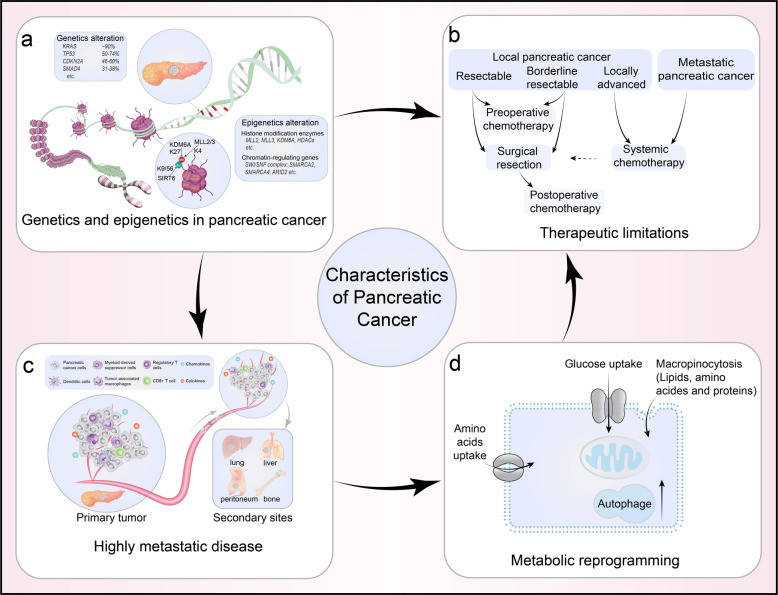
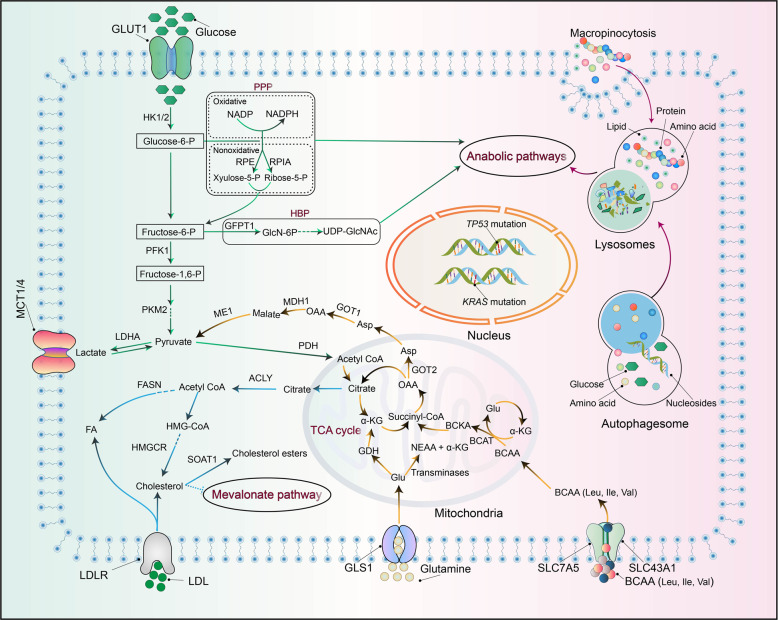
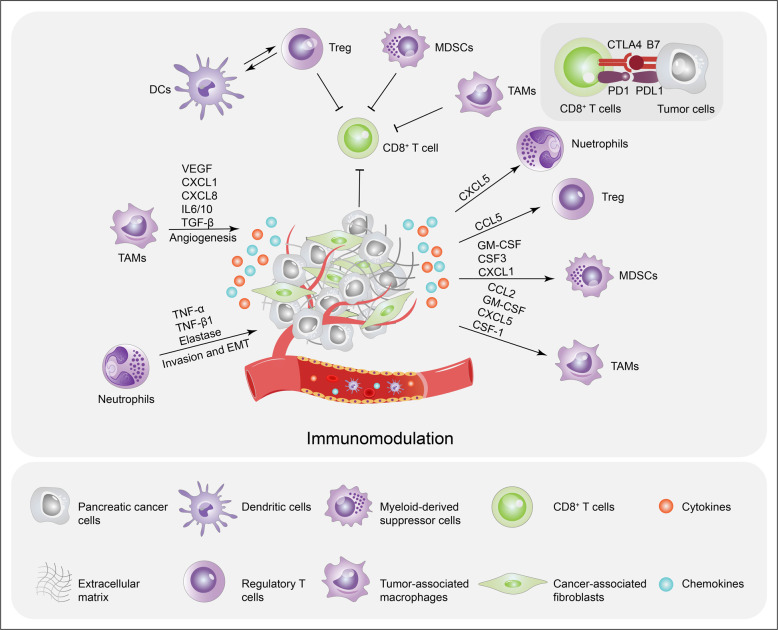
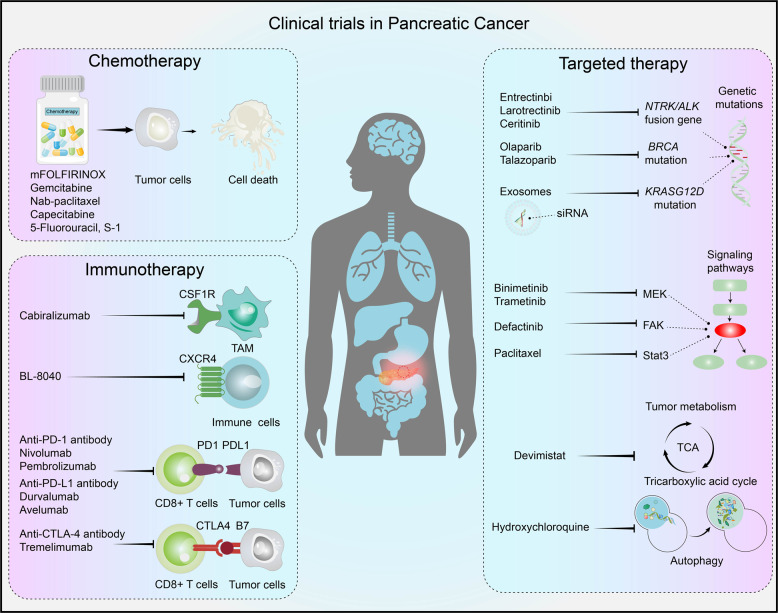
Pancreatic cancer is an increasingly common cause of cancer mortality with a tight correspondence between disease mortality and incidence. Furthermore, it is usually diagnosed at an advanced stage with a very dismal prognosis. Due to the high heterogeneity, metabolic reprogramming, and dense stromal environment associated with pancreatic cancer, patients benefit little from current conventional therapy. Recent insight into the biology and genetics of pancreatic cancer has supported its molecular classification, thus expanding clinical therapeutic options. In this review, we summarize how the biological features of pancreatic cancer and its metabolic reprogramming as well as the tumor microenvironment regulate its development and progression. We further discuss potential biomarkers for pancreatic cancer diagnosis, prediction, and surveillance based on novel liquid biopsies. We also outline recent advances in defining pancreatic cancer subtypes and subtype-specific therapeutic responses and current preclinical therapeutic models. Finally, we discuss prospects and challenges in the clinical development of pancreatic cancer therapeutics.
Overview
The claims and statistics of this paper haven’t been checked yet.
Free: it reads the open-access text and checks the first 5 claims that cite a source we can check. Create a free account to check every claim.
Integrity signals
Registry
Cites
Statistics
Figures
Verification
Claims the paper makes
The claims and statistics of this paper haven’t been checked yet.
Free: it reads the open-access text and checks the first 5 claims that cite a source we can check. Create a free account to check every claim.
Claims other papers make about this one
Each is checked against this paper’s own text: does it say what the citing paper says it does?
The source backs part of the claim, not all of it — or backs it for a different population, condition or comparison.
In the citing paper
“TP53 mutations, found in 50–90% of pancreatic ductal adenocarcinomas, significantly affect carcinogenesis, prognosis and treatment response [17,21,34,35].”
From Significance of TP53, CDKN2A, SMAD4 and KRAS in Pancreatic Cancer (2024) · cites this paper as [35]
Experimental — accuracy not yet measured
Self-check
Percentages, sums and reported differences re-computed from the paper’s own numbers.
The self-check needs the paper’s full text.
Citations
Cites
1 retracted
Chen, S., Chen, X., Shan, T., Ma, J., Lin, W., Li, W., & Kang, Y. (2018) · International Journal of Biological Sciences · doi:10.7150/ijbs.22555 · Cited by 61 · cited 1×
“CAFs can enhance aerobic glycolysis and secrete high-energy metabolites, including lactate and pyruvate.(235) Moreover, it has been demonstrated that enhanced autophagy in CAFs contributes to the release of amino acids, which tumor cells can use as anabolic substrates.”
BackgroundRetractedSung, H., Ferlay, J., Siegel, R. L., Laversanne, M., Soerjomataram, I., Jemal, A., & Bray, F. (2021) · CA: A Cancer Journal for Clinicians · doi:10.3322/caac.21660 · Cited by 108,699
Hallmarks of Cancer: The Next Generation
Hanahan, D., & Weinberg, R. A. (2011) · Cell · doi:10.1016/j.cell.2011.02.013 · Cited by 66,590
Siegel, R. L., Miller, K. D., Fuchs, H. E., & Jemal, A. (2021) · CA: A Cancer Journal for Clinicians · doi:10.3322/caac.21654 · Cited by 16,522
Safety and activity of anti-PD-L1 antibody in patients with advanced cancer
Brahmer, J. R., Tykodi, S. S., Chow, L. Q. M., Hwu, W.-J., Topalian, S. L., Hwu, P., Drake, C. G., Camacho, L. H., Kauh, J., Odunsi, K., et al. (2012) · New England Journal of Medicine · doi:10.1056/nejmoa1200694 · Cited by 7,945 · cited 1×
“However, the results of early clinical trials investigating the efficacy of the anti-CTLA-4 antibody ipilimumab or the anti-PD-L1 antibody BMS-936559 in patients with advanced pancreatic cancer were disappointing.(371,372) In the phase 2 KEYNOTE-158 study of pembrolizumab (an anti-PD-1 monoclonal antibody), an ORR of…”
BackgroundFOLFIRINOX versus Gemcitabine for Metastatic Pancreatic Cancer
Conroy, T., Desseigne, F., Ychou, M., Bouché, O., Guimbaud, R., Bécouarn, Y., Adenis, A., Raoul, J.-L., Gourgou-Bourgade, S., de la Fouchardière, C., et al. (2011) · New England Journal of Medicine · doi:10.1056/nejmoa1011923 · Cited by 7,810 · cited 2×
“The treatment method changed in 2011 when FOLFIRINOX demonstrated a better survival benefit compared with that of gemcitabine monotherapy.(11) Thereafter, gemcitabine plus nab-paclitaxel was adopted as another first-line treatment option.”
BackgroundMethodSpencer, P. M., Cameron, J. L., & Lin, L. (2000) · Cited by 7,202
Increased Survival in Pancreatic Cancer with nab-Paclitaxel plus Gemcitabine
Von Hoff, D. D., Ervin, T., Arena, F. P., Chiorean, E. G., Infante, J., Moore, M., Seay, T., Tjulandin, S. A., Ma, W. W., Saleh, M. N., et al. (2013) · New England Journal of Medicine · doi:10.1056/nejmoa1304369 · Cited by 6,712 · cited 2×
“001) compared with gemcitabine monotherapy.(12) According to a large-scale retrospective study, FOLFIRINOX and nab-paclitaxel plus gemcitabine have similar outcomes.”
BackgroundBurris, H. A., Moore, M. J., Andersen, J., Green, M. R., Rothenberg, M. L., Modiano, M. R., Cripps, M. C., Portenoy, R. K., Storniolo, A. M., Tarassoff, P., et al. (1997) · Journal of Clinical Oncology · doi:10.1200/jco.1997.15.6.2403 · Cited by 5,894
Tumour exosome integrins determine organotropic metastasis
Hoshino, A., Costa-Silva, B., Shen, T.-L., Rodrigues, G., Hashimoto, A., Tesic Mark, M., Molina, H., Kohsaka, S., Di Giannatale, A., Ceder, S., et al. (2015) · Nature · doi:10.1038/nature15756 · Cited by 5,101 · cited 1×
“Moreover, exosome-derived integrin (α6β4, α6β1, and αvβ5) uptake by resident cells (liver Kupffer cells, lung fibroblasts, or epithelial cells) contributes to organ-specific pre-metastatic niche formation via activation of SRC proto-oncogene (Src) phosphorylation and pro-inflammatory S100 gene expression.(136) The ext…”
Background
Cited by
Items 201–300 of 370
Juin, A., Spence, H. J., & Machesky, L. M. (2024) · The Journal of Pathology · doi:10.1002/path.6248 · Cited by 4
“Our data revealed that at 15 weeks, MKPC pancreata showed a higher level of phospho-ERK, a downstream effector of KRAS important for both initiation and maintenance of pancreatic lesions [3].”
BackgroundInfluentialAI-assisted tumor board decision-making in pancreatic oncology
Mergen, M., Busch, F., Schwarberg, B., Koldeweihe, P., Jungwirth, D., Sydlik, J., Maurer, H. C., Makowski, M. R., Spitzl, D., & Gassert, F. T. (2026) · BMC Medical Informatics and Decision Making · doi:10.1186/s12911-026-03444-x · Cited by 3
“Due to its often late presentation and complex anatomical and biological behavior, treatment planning for pancreatic cancer requires careful integration of multimodal diagnostic information and expert judgment [4–7].”
The utility of molecular studies on pancreatic cystic lesions: A comprehensive review
Xia, R., Liu, X., Hajdu, C. H., Cao, W., Kaz, J. N., Gonda, T. A., & Simsir, A. (2024) · Human Pathology Reports · doi:10.1016/j.hpr.2024.300741 · Cited by 5
Radiation response assessment of organoids derived from patients with pancreatic cancer
van Goor, I. W. J. M., Raymakers, L., Andel, D., Brosens, L. A. A., Kranenburg, O., Leusen, J. H. W., Meijer, G. J., Molenaar, I. Q., van Santvoort, H. C., Vries, J. H. W. D., et al. (2024) · Clinical and Translational Radiation Oncology · doi:10.1016/j.ctro.2024.100829 · Cited by 6
“[24] This emphasizes the Fig.”
Comprehensive Molecular Profiling of Metastatic Pancreatic Adenocarcinomas
Antony, V., Sun, T., Dolezal, D., & Cai, G. (2025) · Cancers · doi:10.3390/cancers17030335 · Cited by 4
A metabolic vulnerability of pancreatic cancer
Puleston, D. J. (2023) · Nature · doi:10.1038/d41586-023-00848-x · Cited by 3
Fusco, D. D., Segreto, M. T., Maggio, G. D., Iannucci, A., Maresca, C., Grazia, A. D., Colella, M., Stolfi, C., Monteleone, G., & Monteleone, I. (2023) · Cancers · doi:10.3390/cancers15204983 · Cited by 3
“Instead, epigenetic changes drive transcriptomic alterations that can regulate the malignant phenotype, suggesting that the causes of PDAC heterogeneity can be discovered at the transcription level [4].”
BackgroundSex Matters–Insights from Testing Drug Efficacy in an Animal Model of Pancreatic Cancer
Schulz, B., Leitner, E., Schreiber, T., Lindner, T., Schwarz, R., Aboutara, N., Ma, Y., Escobar, H. M., Palme, R., Hinz, B., et al. (2024) · Cancers · doi:10.3390/cancers16101901 · Cited by 4
“This occurs either by reducing GTP hydrolysis or by increasing the GTP loading rate [27,28].”
BackgroundDai, Y., Guan, X., Guo, F., Kong, X., Ji, S., Shang, D., Bai, C., Zhang, Q., & Zhao, L. (2024) · Pharmaceutical Biology · doi:10.1080/13880209.2024.2421759 · Cited by 3
“Notably, in the pancreas, luteolin can affect pancreatic β cells and the activity of lipases, thereby affecting insulin secretion and effectively combating glucose and lipid metabolism disorders (Wang et al. 2021).”
Koya, T., Niida, Y., Togi, M., Yoshida, K., Sakamoto, T., Ura, H., Togi, S., Kato, T., Yamada, S., Sugiyama, H., et al. (2022) · International Journal of Molecular Sciences · doi:10.3390/ijms232012177 · Cited by 4
“Detection of SMAD4P130L Expression on EpCAM+ Cancer Cells and CD8+ T Cells’ Response to HLA-A*11:01 Restricted Neoantigens for SMAD4P130L in MPE Samples We evaluated SMAD4P130L expressing cells in MPE samples, which were identified from a long-range, PCR-based, dual deep sequence for targeting the Big 4 Genes KRAS, CD…”
BackgroundPino, D. C., Badonyi, M., Semple, C. A. M., & Marsh, J. A. (2024) · bioRxiv (Cold Spring Harbor Laboratory) · doi:10.1101/2024.03.21.586131 · Cited by 3
“For instance, approximately 30–50% of colorectal cancer tumours have a mutated KRAS gene 71 , whereas it has been observed to be mutated in 90% of pancreatic cancers of all grades 72 , and the mutation signatures differ between them as well.”
BackgroundShi, W., Xu, J., Zhu, Y. Z., Zhang, C., Nagelschmitz, J., Doelling, M., Al-Madhi, S., Mahajan, U. M., Pech, M., Rose, G., et al. (2025) · eLife · doi:10.7554/elife.103737 · Cited by 5
Halle-Smith, J. M., Leung, P., Hall, L. A., Aksın, M., van Laarhoven, S., Skipworth, J. R. A., Chatzizacharias, N. A., Brown, R. M., & Roberts, K. J. (2024) · HPB · doi:10.1016/j.hpb.2024.09.002 · Cited by 2
Yin, J., Li, J., & Wang, H. (2025) · Discover Oncology · doi:10.1007/s12672-025-02053-w · Cited by 4
Rezagholizadeh, F., Salimi, A., Sharifi‐Zarchi, A., Azmoudeh-Ardalan, F., Mousavizadeh, K., Tajik, F., Panahi, M., Khorramdelazad, H., Wadji, M. B., Kashanizadeh, A., et al. (2025) · Cancer Cell International · doi:10.1186/s12935-025-03810-1 · Cited by 3
“The concept of "tumor purity", initially considered stroma contamination, has evolved with the recognition that epithelial cells play a crucial role in promoting pancreatic tumor growth [64].”
The oncogenic role of TRIM56 in pancreatic cancer via the TRAF6/NF-kB axis
Jiang, C., Li, H., Li, D., Li, X., Luo, S., & You, L. (2025) · Journal of Molecular Histology · doi:10.1007/s10735-025-10429-z · Cited by 2
“These sophisticated molecular networks coordinate essential cel - lular processes including proliferation, differentiation, sur - vival, migration, angiogenesis, metabolism, and immune interactions (Pylayeva-Gupta et al. 2011; Ebrahimi et al. 2017; Wang et al. 2021).”
Maneenet, J., Tawila, A. M., Nguyen, H. H., Phan, N. D., Monthakantirat, O., Daodee, S., Boonyarat, C., Khamphukdee, C., Chulikhit, Y., & Awale, S. (2025) · Plants · doi:10.3390/plants14132074 · Cited by 5
“Unlike most cancers, which rely on angiogenesis to secure nutrients, pancreatic tumors are hypovascular, resulting in restricted blood flow and nutrient availability [20,21].”
Golestanifar, A., Zakeri, M., Gohari-Lasaki, S., Khedri, H., & Saberiyan, M. (2025) · Clinical and Experimental Medicine · doi:10.1007/s10238-025-01815-8 · Cited by 3
“…the interplay between tumor cells and the immunosuppressive tumor microenvironment (TME)—including cancer-associated fibroblasts (CAFs), tumor-associated macrophages (TAMs), and myeloid-derived suppressor cells (MDSCs)—has shed light on mechanisms of immune evasion and metastasis in PDAC [3] .”
Khan, M. M. M., Joseph, E. A., Chalikonda, S., Bartlett, D. L., & Allen, C. J. (2026) · Annals of Surgical Oncology · doi:10.1245/s10434-026-19109-y · Cited by 2
microRNAs in pancreatic cancer: Key modulators of tumor progression and therapeutic resistance
Sadeghi, H., Kohkalani, M., Rezaei, S. A. S., Kargarmonhaser, S., Gharebagh, F. M., Nikdouz, A., & Hosseini, A. (2026) · Biomedicine & Pharmacotherapy · doi:10.1016/j.biopha.2026.119100 · Cited by 3
Lee, S. N., Arseneau, R. J., Arnason, T., & Boudreau, J. E. (2026) · Journal for ImmunoTherapy of Cancer · doi:10.1136/jitc-2025-013796 · Cited by 2
“As above, we co-cultured PBMCs and tumor cells for 10 hours, washed, and then re-cultured with PBMCs from the same (D1) or a different (D2) donor for an additional 5 hours.”
Kim, S.-R., Lee, H. J., & Kim, D. (2021) · Case Reports in Oncology · doi:10.1159/000521315 · Cited by 2
Management of Advanced Pancreatic Cancer through Stromal Depletion and Immune Modulation
Liu, T., Cheng, S., Xu, Q., & Wang, Z. P. (2022) · Medicina · doi:10.3390/medicina58091298 · Cited by 4
“Indeed, integrating genomic and transcriptomic information revealed that the classical and basal-like subtypes still contain substantial heterogeneity, which should be studied further [83].”
BackgroundSelf-citationDóra, D., Dóra, T. B., Szegvári, G., Gerdán, C., & Lohinai, Z. (2022) · BioData Mining · doi:10.1186/s13040-022-00307-9 · Cited by 2
“This current content includes 145 molecular that focus on the three most aggressive malignities with limited therapeutical prospect: small-cell lung cancer (SCLC) [25], triple-negative breast cancer (TNBC) [26–28] and pancreatic adenocarcinoma (PADC) [29–31].”
BackgroundZhao, P., Jin, R. F., Zhao, B., Han, L. K., Chen, W., Hao, N., Cui, Y., Madan, A., Awosika, J. A., Lloyd, S. A. J., et al. (2024) · Journal of Gastrointestinal Oncology · doi:10.21037/jgo-23-843 · Cited by 4
“Pancreatic ductal adenocarcinoma (PDAC) is the most common subtype of PC, accounting for 90% of all PC cases (108).”
Zhang, H., Winter, P., Wartmann, T., Simioni, L., Al-Madhi, S., Perrakis, A., Croner, R. S., Shi, W., Yu, Q., & Kahlert, U. D. (2024) · Cancer Biotherapy and Radiopharmaceuticals · doi:10.1089/cbr.2024.0056 · Cited by 2
“4,5 In addition, the latest pancreatic cancer treatment regimens, including new chemotherapeutic regimens, targeted therapies, and immunotherapies, have resulted in a limited increase in the rate of clinical bene fi t to patients despite improving their prognosis.”
Connaughton, M., & Dabagh, M. (2024) · BioMedical Engineering OnLine · doi:10.1186/s12938-024-01278-0 · Cited by 2
Çetinkaya, S., Ayan, İ. Ç., Dursun, H. G., Süntar, I. P., Akça, K. T., Gök, H. N., & Atak, M. (2025) · Anti-Cancer Agents in Medicinal Chemistry · doi:10.2174/0118715206370057250421061226 · Cited by 4
Sun, C., Hao, S., Wang, L., Meng, R., Wang, H., Li, W., Deng, J., Yin, Q., Chen, X., Xiang, T., et al. (2025) · Cell chemical biology · doi:10.1016/j.chembiol.2025.07.006 · Cited by 3
Multiple roles of ANO6 in tumors, molecular mechanism and its potential therapeutic value
Chen, A., Yang, C., & Wang, J. (2025) · Biochemistry and Biophysics Reports · doi:10.1016/j.bbrep.2025.102230 · Cited by 2
“Through in-depth research into the biology and genetics of pancreatic adenocarcinoma the current focus is on immunotherapy for pancreatic adenocarcinoma, with ongoing studies into new targets and drug development [41,42].”
Nsingwane, Z., Naicker, P., Omoshoro–Jones, J., Devar, J. W., Smith, M., Candy, G. P., Augustine, T. N., & Nweke, E. E. (2023) · medRxiv · doi:10.1101/2023.08.08.23293417 · Cited by 2
“The intricate molecular landscape of PDAC contributes to treatment inefficacy and a considerable rise in patient mortality rates (21).”
BackgroundYlagan, M., Xu, Q., & Kowalski, J. (2024) · bioRxiv (Cold Spring Harbor Laboratory) · doi:10.1101/2024.01.26.577415 · Cited by 2
“…cancer share common genomic features, including presence of KRAS mutations 12 , germline mutations in BRCA1 and BRCA2 13 , and genetic alterations governing cancer progression, such as gene expression changes, copy number aberrations, chromosomal re-arrangements, and epigenetic alterations 14 .”
BackgroundShi, W., Xu, J., Zhu, Y. Z., Zhang, C., Nagelschmitz, J., Doelling, M., Al-Madhi, S., Mahajan, U. M., Pech, M., Rose, G., et al. (2025) · eLife · doi:10.7554/elife.103737.1 · Cited by 2
Sagini, M. N., Klika, K. D., Owen, R. W., & Berger, M. R. (2023) · ACS Pharmacology & Translational Science · doi:10.1021/acsptsci.3c00013 · Cited by 1
Choroidal metastasis of pancreatic adenocarcinoma: case report
Shriram, J., Stoltz, R., & Borazanci, E. H. (2024) · AME Case Reports · doi:10.21037/acr-23-86 · Cited by 1
Acharjee, A., Okyere, D., Nath, D., Nagar, S., & Gkoutos, G. V. (2024) · Heliyon · doi:10.1016/j.heliyon.2024.e31437 · Cited by 1
“However, the high heterogeneity of pancreatic cancer, particularly pancreatic ductal adenocarcinoma (PDAC) as the most common type of pancreatic neoplasm [4], and poor patient outcomes emphasises the current challenges for early diagnosis and effective treatment.”
BackgroundCurrent Understanding of Therapeutic and Diagnostic Applications of Exosomes in Pancreatic Cancer
Shakerian, N., Tafazoli, A., Razavinia, A., Aghajani, Z. S., Bana, N., Mard‐Soltani, M., Khalesi, B., Hashemi, Z. S., & Khalili, S. (2024) · Pancreas · doi:10.1097/mpa.0000000000002414 · Cited by 5
Saha, A., Rahman, I., Roy, A., Azad, N., Biswas, P., Usha, A. T., Chowdhury, A. F. M. D. N., & Ferdoush, J. (2024) · Human Gene · doi:10.1016/j.humgen.2024.201371 · Cited by 2
Zheng, Y., Lu, Y., Fang, Y., Kong, Y., Mao, Y., & Wang, S. (2025) · Biochimica et Biophysica Acta (BBA) - General Subjects · doi:10.1016/j.bbagen.2025.130769 · Cited by 1
Self-citationPane, K., Zanfardino, M., Grimaldi, A., Leone, I., Nuzzo, S., Salvatore, M., & Franzese, M. (2025) · Cancer Medicine · doi:10.1002/cam4.70468 · Cited by 1
Tang, H., Sailo, B., Shang, X., Hossan, M. S., Kratz, J. D., Das, P., Chhoda, A., Aldo, P., Liu, H., Robert, M. E., et al. (2026) · Cell Reports · doi:10.1016/j.celrep.2026.117806 · Cited by 1
Yan, B., Fritsche, A., Haußner, E., Inamdar, T. V., Laumen, H., Boettcher, M., Gericke, M. T., Michl, P., & Rosendahl, J. (2025) · Cancers · doi:10.3390/cancers17101676 · Cited by 1
“Pancreatic ductal adenocarcinoma (PDAC), the most prevalent type of pancreatic cancer, is characterized by its aggressive nature, lack of early detection methods, and an immunosuppressive tumor microenvironment [2,3].”
Su, M., Qin, H., Shen, J., An, H., & Cao, Y. (2025) · Journal of Cell Communication and Signaling · doi:10.1002/ccs3.70033 · Cited by 3
Carbone, D., Terrana, F., Sciuto, L., Pecoraro, C., Xu, G., Cascioferro, S., Cirrincione, G., Peters, G. J., Giovannetti, E., Parrino, B., et al. (2025) · ChemMedChem · doi:10.1002/cmdc.202500448 · Cited by 1
Peila, R., Manson, J. E., & Rohan, T. E. (2025) · Cancer Epidemiology Biomarkers & Prevention · doi:10.1158/1055-9965.epi-25-0745 · Cited by 3
Bovine adipose mitochondrial adaptation and a potential lactate–ketone toggle in early lactation
O'Boyle, N. J., Chirivi, M., Abou-Rjeileh, U., Salcedo-Tacuma, D., Neto, J. D. S., Prom, C., Parales-Girón, J., Lock, A. L., Stöger, R. J., Chakrabarti, L., et al. (2025) · Frontiers in Veterinary Science · doi:10.3389/fvets.2025.1676955 · Cited by 1
“…portrays increased glycolytic flux, with PKLR, LDHA , ME2 , and PKM upregulated (involved in pyruvate metabolism and glycolytic throughput), while reduced substrate entry into the TCA cycle is suggested by the downregulation of PDHA1, GOT1, GOT2, ALDOA , and PC (5, 43) (Supplementary Figure 8).”
Yeo, M., Cho, I. R., Lee, S. H., Kang, H., Jang, E. S., Ahn, J., Jang, M., Choi, J. H., Paik, W. H., & Ryu, J. K. (2025) · Pancreas · doi:10.1097/mpa.0000000000002606 · Cited by 1
Research progress on early diagnostic markers for pancreatic cancer
Wang, L., Chen, Z., Xiao, H., Kong, X., & Xiong, Y. (2026) · World Journal of Surgical Oncology · doi:10.1186/s12957-026-04215-8 · Cited by 2
“Therefore, CTCs are present in the circulation of PC patients, providing useful information for diagnosis, staging, and prognosis, and can even serve as novel personalized therapeutic targets [29].”
Xie, F., Ren, Y.-Z., Jian, Z., Peng, J.-Y., Jiang, H., Lu, Y.-M., Zhang, C., Li, Z., Zhang, Q., Cui, J.-J., et al. (2026) · Molecular Therapy · doi:10.1016/j.ymthe.2026.01.039 · Cited by 3
Wang, Z., Lyu, Z., Palmen, R., Bao, Q., Popp, F., Dong, Q., Bruns, C. J., & Zhao, Y. (2026) · Cell Death Discovery · doi:10.1038/s41420-026-02948-9 · Cited by 2
“However, acquired resistance to treatment — whether chemotherapy or targeted therapy — remains the most signi fi cant challenge in the management of PDAC [4, 5].”
Self-citationGupta, S., Rathore, K., & Tejavath, K. K. (2026) · Cytotechnology · doi:10.1007/s10616-026-00912-0 · Cited by 2
“Metastasis in PDAC is so prominent that it could initiate even at levels of primary tumor and before detection of PDAC (Wang et al. 2021).”
Early cellular plasticity promotes progression and dissemination in pancreatic adenocarcinoma
Innamorati, G., Malpeli, G., Giacomello, L., Salvia, R., & Wilkie, T. M. (2026) · Cancer and Metastasis Reviews · doi:10.1007/s10555-026-10326-1 · Cited by 1
“The limitations of GEMMs have been highlighted by the repeated failure of clinical trials based on preclinical findings from these models, particularly in recapitulating the full spectrum of metastatic behaviour [82].”
Liu, J., Qin, J., Zheng, W., Wang, X., Wei, Z., Xie, Z., Yan, T., Li, X. W., Ding, Z., Liu, H., et al. (2026) · Nature Communications · doi:10.1038/s41467-026-72847-1 · Cited by 5
Peptides as integrative modulators for clinical prognosis and targeted therapy in pancreatic cancer
Yadav, B., Kollur, S. P., Ali, A., Arora, P., Gupta, A., Saranraj, P., Upadhye, V. J., & Singh, P. (2026) · Discover Oncology · doi:10.1007/s12672-026-05130-w · Cited by 2
“…a diverse array of chemokine molecules encompassing vascular endothelial growth factor (VEGF), tumour necrosis factor alpha (TNF-α), transforming growth factor beta (TGF-β) and interleukin 1β (IL-1β), IL-6, IL-10, IL-17 and IL-18, which significantly modulate the tumour microenvironment [165, 166].”
Zeng, X., Yang, P., Wang, T., Shi, R., Qin, C., Zhang, L., Jiang, T., Chen, X., Luo, H., Wei, J., et al. (2026) · Frontiers in Immunology · doi:10.3389/fimmu.2026.1799765 · Cited by 1
“…to metabolic pathway activation, shifts in immune composition, and adverse clinical outcomes — fi ndings that are broadly consistent with a model in which enhancer architectural reorganization rewires both tumor-intrinsic transcriptional programs and extrinsic ecological interactions (96 – 98).”
Research progress of OTUD7B: from structural function and disease mechanisms to clinical translation
Wang, Q., Xu, S., Wen, L., Meng, J., Wang, X., Luo, T., Luo, R., Li, Z., Lin, D., & Yin, J. (2026) · Frontiers in Immunology · doi:10.3389/fimmu.2026.1850848 · Cited by 1
“Once OTUD7B expression or enzymatic activity is inhibited, RHBDL2-mediated N1ICD accumulation and its pro-oncogenic effects (including cell proliferation, migration, and invasion) can be signi fi cantly reversed (44, 45).”
Blackledge, C. W., Gullion, S., McCabe, I. C., Van, N. N. K., Hariharan, A., Luan, C., Peng, X. L., Polacheck, W. J., Yeh, J. J., & Shelton, S. E. (2026) · Angiogenesis · doi:10.1007/s10456-026-10061-9 · Cited by 2
Daraxonrasib: A Breakthrough in Pancreatic Ductal Adenocarcinoma
Zacharia, G. S., Pandey, U., Thartori, O., Veena, F., Acharya, S., Shah, L. K., Patel, R., & Patel, H. (2026) · Cureus · doi:10.7759/cureus.113927 · Cited by 2
“Multiple KRAS-activating mutations have been reported to date; most involve codon 12 of exon 2, resulting in a conformational change at the guanosine triphosphate (GTP)-binding site (Table 1 ) [10,11].”
What would you do? A survey of HPB surgeons practice patterns
Irfan, A., Feng, W., McElroy, K., Dudeja, V., Reddy, S., & Rose, J. B. (2023) · HPB · doi:10.1016/j.hpb.2023.12.003 · Cited by 1
Molecular biomarkers in pancreatic ductal adenocarcinoma
Tsuboi, J., Yamada, R., & HIROKAWA, Y. S. (2024) · Elsevier eBooks · doi:10.1016/b978-0-323-95114-2.00016-9 · Cited by 1
Güngörmez, Ç. (2024) · Human Gene · doi:10.1016/j.humgen.2024.201267 · Cited by 2
Yun, H. (2024) · Medicine · doi:10.1097/md.0000000000037183 · Cited by 1
The Effect of Intratumor Heterogeneity in Pancreatic Ductal Adenocarcinoma Progression and Treatment
Saleh, O. M., Shihadeh, H., Yousef, A. A., Erekat, H., Abdallh, F., Al-leimon, A., Elsalhy, R., Altiti, A., Dajani, M., & AlBarakat, M. M. (2024) · Pancreas · doi:10.1097/mpa.0000000000002342 · Cited by 1
Structural variety and pharmacological potential of naphthylisoquinoline alkaloids
Feineis, D., & Bringmann, G. (2024) · The Alkaloids. Chemistry and biology/The alkaloids. Chemistry and biology · doi:10.1016/bs.alkal.2024.03.001 · Cited by 5
Malla, R. R., & Nagaraju, G. P. (2024) · Elsevier eBooks · doi:10.1016/b978-0-443-23523-8.00013-4 · Cited by 1
Roy, A., Sharma, S., Paul, I., & Ray, S. (2024) · Computers in Biology and Medicine · doi:10.1016/j.compbiomed.2024.109096 · Cited by 1
DDR1 in pancreatic adenocarcinoma: unraveling the mechanisms of immune exclusion
Cheng, L., Wei, L., Chen, Q., Li, P., & Zhang, D. (2024) · Scandinavian Journal of Gastroenterology · doi:10.1080/00365521.2024.2443505 · Cited by 2
“The tumor microenvironment in pancreatic cancer is highly immunosuppressive and is characterized by an abundant stromal response as a desmoplastic reaction [6].”
Zhang, S., Wu, N., Geng, Y., Guan, L., Niu, M., Li, J., & Zhu, L. (2025) · Frontiers in Pharmacology · doi:10.3389/fphar.2025.1560559 · Cited by 2
Self-citationFremal, M., & Chedia, M. (2025) · Case Reports in Oncology · doi:10.1159/000546328 · Cited by 1
“Pancreatic ductal adenocarcinoma (PDAC) accounts for approximately 90% of pancreatic cancer cases [1].”
Zhang, A., & Chen, J. Y. (2025) · Intelligent Oncology · doi:10.1016/j.intonc.2025.06.004 · Cited by 2
Graves, A. C., Mukherjee, A., Yang, R. Y., Mordant, A. L., Webb, T., Bryant, K. L., Herring, L. E., & Baldwin, A. S. (2025) · Journal of Biological Chemistry · doi:10.1016/j.jbc.2025.110535 · Cited by 2
“Pancreatic cancer has an extremely low 5-year survival rate because of inefficient early detection and aggressive properties leading to metastasis and therapeutic resistance (1, 2).”
Influentialde Almeida, D. R. Q. (2022) · Digital Library of Theses and Dissertations (Universidade de São Paulo) · doi:10.11606/t.46.2022.tde-09082023-175313 · Cited by 1
Activation of PP2A-B56α leads to aberrant EGFR signaling and proliferative phenotypes in PDACPreprint
Pfeffer, C. M., Clifford, S. J., Karim, S. A., Chianis, E. R. D., Heil, B. N., Gartenhaus, L. E., Kay, E. F., Baral, G., Hoffman, E. G., Utturkar, S. M., et al. (2025) · bioRxiv (Cold Spring Harbor Laboratory) · doi:10.1101/2025.07.18.665598 · Cited by 1
Huang, X., Zhou, S., Liu, Y., Tóth, J. A., & Hajdú, A. (2022) · Research Square · doi:10.21203/rs.3.rs-1746948/v1
Immunotherapy for patients with pancreatic adenocarcinoma
John, S. (2022) · Onkologie · doi:10.36290/xon.2022.025
Proteolysis Targeting Chimeras (PROTACs): Emerging Therapeutics for Pancreatic Cancer
Pan, Y., Song, K., & Xu, H. (2022) · International Conference on Biotechnology, Life Science and Medical Engineering (BLSME) · doi:10.23977/blsme.2022015
“Risk to Normal Population (folds) Peutz-Jeghers Disorder STK11 11-36 (at the age of 65-70) 132 Familial Pancreatitis PRSS1, SPINK1, CFTR 40-53 (at the age of 70-75) 26-87 Melanoma-Pancreatic Cancer Syndrome CDKN2A 14-17 (at the age of 70) 20-47 Lynch Syndrome MLH1, MSH2 (MSH6) 4 (at the age of 70) 9-11 Mammary carcino…”
BackgroundInfluentialRegulation of Cellular Metabolism by Protein Crotonylation Coordinates Pancreatic Cancer ProgressionPreprint
Zheng, Y., Le, Z., Qin, Z., Guo, Y., Wang, S., Xue, M., Hu, B., Wang, X., Wang, C., Qin, L., et al. (2022) · SSRN Electronic Journal · doi:10.2139/ssrn.4164243
Self-citationPilotti, E., Cassetti, T., Mirante, V. G., Sereni, G., Rossi, P. G., & Sassatelli, R. (2022) · Current Research in Translational Medicine · doi:10.1016/j.retram.2022.103361
Yue, Z. (2022) · Research Square · doi:10.21203/rs.3.rs-1924546/v1
Agostini, A., Guerriero, I., Piro, G., Inzani, F. S., Quero, G., Roberto, L., Esposito, A., Caggiano, A., Larghi, A., Alfieri, S., et al. (2022) · Research Square · doi:10.21203/rs.3.rs-2095432/v1
High expression of TLR2 influenced immune infiltration in pancreatic cancerPreprint
Liu, J., & He, M. (2023) · Research Square · doi:10.21203/rs.3.rs-2423528/v1
Sinnett‐Smith, J. W., Anwar, T., Reed, E. F., Teper, Y., Eibl, G., & Rozengurt, E. (2023) · doi:10.1158/1535-7163.c.6543589
The role of cellular immunity in the treatment of cancer
Στραβοκεφάλου, Β. (2023) · doi:10.12681/eadd/54076
Obesity and Pancreatic Cancer: Its Role in Oncogenesis
Vobugari, N., & Sun, K. (2023) · IntechOpen eBooks · doi:10.5772/intechopen.110216
Dabagh, M., Connaughton, M., & Alonso, A. (2023) · Research Square · doi:10.21203/rs.3.rs-3246213/v1
Sikdar, N., Maiti, A., Dey, S., Roy, P., & Chattopadhyay, B. K. (2023) · Elsevier eBooks · doi:10.1016/b978-0-323-95699-4.00003-7
A Novel Aging-Related lncRNAs Signature-Based Model for Prognosis Prediction in Pancreatic CancerPreprint
Xinxiong, 李., wang, M., Zhang, Z., Feng, T., Wu, J., Hong, W., Fang, J., Wang, L., Zhao, H., & Xiao, C. (2023) · Research Square · doi:10.21203/rs.3.rs-3318668/v1
Kishore, U., Varghese, P. M., Mangogna, A., Klein, L., Tu, M., Urbach, L., Qiu, M., Nicolle, R., Murugaiah, V., Beirag, N., et al. (2023) · bioRxiv (Cold Spring Harbor Laboratory) · doi:10.1101/2023.10.28.564512 · Cited by 2
Perspective Chapter: Evaluating New Drugs against K-Ras4B/PDE6δ Using an In Vitro Approach
Carrión-Estrada, D. A., Briseño-Díaz, P., Delfín-Azuara, S., Aguilar‐Rojas, A., & Vargas, M. A. (2023) · Biochemistry · doi:10.5772/intechopen.113019
Ascorbic acid in cancer management – time for a second look
Izuegbuna, O. (2023) · European Journal of Clinical and Experimental Medicine · doi:10.15584/ejcem.2023.4.7
Song, J., Ruze, R., Chen, Y., Xu, R., Yin, X., Wang, C., Xu, Q., & Zhao, Y. (2022) · Figshare · doi:10.6084/m9.figshare.20501857
Self-citationComparison between triphasic CT and EUS pancreatic biopsy in characterization of pancreatic lesions
Kamel, O. F., Allam, K. E., Ibrahim, S., Ragab, K., & Marzouk, A. (2024) · Ain Shams Medical Journal · doi:10.21608/asmj.2023.250960.1184
Precision medicine for PDAC immunotherapy
Ukwade, D., Osmani, K., Fernandez, L., Hussain, S., Nwachukwu, D., & Ali, S. (2024) · Elsevier eBooks · doi:10.1016/b978-0-443-23523-8.00014-6
Metabolic programming of pancreatic and colon cancer
Mardham, S., & Dakshinamurthy, S. (2025) · Elsevier eBooks · doi:10.1016/b978-0-443-24742-2.00001-0
(2025) · Elsevier eBooks · doi:10.1016/b978-0-443-26787-1.00014-x
Bermello, I. B. P., Villacreses, C., & Jalca, J. E. C. (2025) · Estudios y Perspectivas Revista Científica y Académica · doi:10.61384/r.c.a..v5i1.1100
Lykoudis, P. M., Papaconstantinou, I. G., Dafnios, N., Charalampous, C. M., Konti, C., Vlachodimitropoulos, D. G., & Contis, J. (2025) · ONCOLOGIE · doi:10.1515/oncologie-2024-0692
“The literature contains adequate data, contributing to the understanding of the genetic background [6].”
Islam, S. S., Tushar, M. M. H., Sarkar, B., Moni, R., Zohora, U. S., & Rahman, M. S. (2025) · bioRxiv (Cold Spring Harbor Laboratory) · doi:10.1101/2025.04.26.650766
Contribution of gut microbiome to pancreatic ductal adenocarcinoma development
Zaitsev, D. V., Trukhacheva, E. A., Davidovich, N. V., & Kukalevskaya, N. N. (2025) · Сибирский научный медицинский журнал · doi:10.18699/ssmj20250202
Metadata
- Authors
- Wang, S., Zheng, Y., Yang, F., Zhu, L., Zhu, X.-Q., Wang, Z.-F., Wu, X.-L., Zhou, C.-H., Yan, J.-Y., Hu, B.-Y., Kong, B., Fu, D.-L., Bruns, C., Zhao, Y., Qin, L.-X., & Dong, Q.-Z.
- Affiliations
- Fudan University (CN)
- University Hospital Cologne (DE)
- TUM Klinikum (DE)
- Corresponding author
- Zhao, Yue
- Qin, Lun-Xiu
- ORCID
- Venue
- Signal Transduction and Targeted Therapy
- Published
- 2021-07-05
- Volume
- 6
- Issue
- 1
- Pages
- 249-249
- ISSN
- 2059-3635 (ISSN-L)
- PMC
- PMC8255319
- OpenAlex
- W3179240236
- Cited by
- 369
- References
- 388
- Citations by year
- 2026: 62 · 2025: 91 · 2024: 92 · 2023: 70 · 2022: 50 · 2021: 4
- FWCI
- 6.57
- Type
- journal article
- Language
- en
- Open access
- gold
- doi.org
- Licence
- cc-by
- creativecommons.org/licenses/by/4.0 (tdm)
- creativecommons.org/licenses/by/4.0 (vor)
- Locations
- Signal Transduction and Targeted Therapy (publishedVersion, cc-by)
- PubMed Central (publishedVersion, cc-by)
- PubMed (publishedVersion)
- Kölner Universitäts PublikationsServer (Universität zu Köln) (publishedVersion)
- DOAJ (DOAJ: Directory of Open Access Journals) (submittedVersion, cc-by-sa)
- Funders
- National Natural Science Foundation of China (81672820, 20XD1400900, 81940074, 81872356, 81802903)
- Shanghai International Science and Technology
- National Key Research and Development Program of China (2017YFC1308604)
- Program of Shanghai Academic Research Leader (20XD1400900)
- Topics
- Health Sciences › Medicine › Oncology › Pancreatic and Hepatic Oncology Research
- Health Sciences › Medicine › Surgery › Pancreatitis Pathology and Treatment
- Life Sciences › Biochemistry, Genetics and Molecular Biology › Cancer Research › Cancer Genomics and Diagnostics
- Keywords
- pancreatic ductal adenocarcinoma, metabolic reprogramming, tumor microenvironment, molecular classification, biomarkers, liquid biopsy, cancer therapeutics, tumor heterogeneity
- MeSH terms
- Adenocarcinoma, Humans, Pancreatic Neoplasms, Prognosis, Tumor Microenvironment
About these checks
Registry, retraction, Cites and statistics results are computed, not judged, with one exception: a printed reference that no index lists is read once by a model before it counts as a citation error. Claims are extracted by a model and kept only when their quote appears verbatim in the text; each cited source is then checked, with a model’s help, for whether it says what the claim relies on. Those verdicts can be wrong — read the claim’s quote and the cited source before relying on one.
Statistics and arithmetic are recomputed, not judged.
Confidence bands are shown only for fields calibrated on our annotated test set. None is calibrated yet, so no band is shown.
What counts as a claim ›How we measure confidence ›How we check this ›
Are you an author, or do you see a problem with this page? Request a review
Data sources
Bibliographic data: Semantic Scholar, OpenAlex, Crossref.
Contains information from the Semantic Scholar Academic Graph Datasets, made available under the ODC Attribution License (ODC-BY 1.0).
Semantic Scholar’s data is described in: Kinney, R., et al. (2023). The Semantic Scholar Open Data Platform. arXiv:2301.10140.
