

Glucagon-like peptide-1 receptor: mechanisms and advances in therapy
Open accessThe DOI matches its Crossref record; 519 of the 519 references it cites were found in a registry or an index; 274 of the 463 sources its claims cite were checked for support.
Abstract
The glucagon-like peptide-1 (GLP-1) receptor, known as GLP-1R, is a vital component of the G protein-coupled receptor (GPCR) family and is found primarily on the surfaces of various cell types within the human body. This receptor specifically interacts with GLP-1, a key hormone that plays an integral role in regulating blood glucose levels, lipid metabolism, and several other crucial biological functions. In recent years, GLP-1 medications have become a focal point in the medical community due to their innovative treatment mechanisms, significant therapeutic efficacy, and broad development prospects. This article thoroughly traces the developmental milestones of GLP-1 drugs, from their initial discovery to their clinical application, detailing the evolution of diverse GLP-1 medications along with their distinct pharmacological properties. Additionally, this paper explores the potential applications of GLP-1 receptor agonists (GLP-1RAs) in fields such as neuroprotection, anti-infection measures, the reduction of various types of inflammation, and the enhancement of cardiovascular function. It provides an in-depth assessment of the effectiveness of GLP-1RAs across multiple body systems-including the nervous, cardiovascular, musculoskeletal, and digestive systems. This includes integrating the latest clinical trial data and delving into potential signaling pathways and pharmacological mechanisms. The primary goal of this article is to emphasize the extensive benefits of using GLP-1RAs in treating a broad spectrum of diseases, such as obesity, cardiovascular diseases, non-alcoholic fatty liver disease (NAFLD), neurodegenerative diseases, musculoskeletal inflammation, and various forms of cancer. The ongoing development of new indications for GLP-1 drugs offers promising prospects for further expanding therapeutic interventions, showcasing their significant potential in the medical field.
Overview
CoChat Summary
## TL;DR
This is a narrative review of GLP-1 receptor biology and GLP-1 receptor agonists (GLP-1RAs), summarizing their mechanisms, drug development, and expanding therapeutic uses. It argues that beyond diabetes, GLP-1RAs show promise for obesity, cardiovascular disease, NAFLD/NASH, neurodegenerative disease, musculoskeletal inflammation, and some cancers.
## Key findings
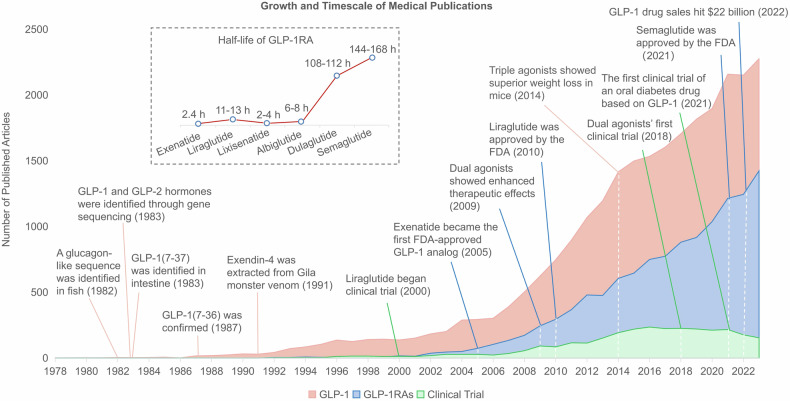
- GLP-1 is described as a short-lived incretin hormone with a circulatory half-life of only 1–2 min, rapidly degraded by DPP-4.
- The review states that GLP-1RAs lower blood glucose without increasing hypoglycemia risk and have been approved mainly as adjuncts to diet and exercise for type 2 diabetes mellitus (T2DM).
- The paper highlights clinical trial signals for newer agents:
- Orforglipron: 8.6% to 12.6% weight loss at 26 weeks vs 2.0% with placebo; 9.4% to 14.7% by week 36 vs 2.3% placebo.
- In a T2DM study, orforglipron produced an average A1C reduction of 2.1% and 10.1 kg weight loss at 26 weeks; 65% to 96% achieved A1C < 7.0%.
- Danuglipron: at the highest dose (120 mg twice daily), average HbA1c fell by 1.16 percentage points and weight fell by 4.17 kg over 16 weeks.
- GSBR-1290: placebo-adjusted HbA1c reduction of 1.01% to 1.02% and body-weight reduction of 3.26% to 3.51% after 12 weeks in T2DM; 4.74% weight reduction at week 8 in obesity.
- For obesity and cardiometabolic disease, the review cites a semaglutide HFpEF trial in 529 patients with BMI ≥30, randomized to 2.4 mg weekly semaglutide or placebo for 52 weeks, with improvement in symptoms, motor function, and weight loss.
## Methods
- This is a narrative review, not an original experimental study; it synthesizes prior literature on GLP-1/GLP-1R biology, GLP-1RAs, and related diseases.
- The article integrates mechanistic studies, animal experiments, and clinical trials across multiple systems, including metabolic, nervous, cardiovascular, musculoskeletal, and digestive disease contexts.
- The main analysis is descriptive and integrative, organizing evidence by receptor biology, signaling pathways, drug classes, and disease areas; no single primary dataset or statistical model is reported.
## Limitations
- The paper does not state explicit study limitations typical of an original research article; this is evident from the text because it is a review.
- Evident from the text: much of the evidence cited is preclinical or early-phase clinical, and several uses are described as “promising,” “potential,” or under investigation, so many conclusions remain provisional.
- Evident from the text: the review is broad and heterogeneous, combining findings from different species, disease models, and trial designs, which makes direct comparison across findings difficult.
Model-written summary of a shortened version of the paper’s full text (it is longer than we read). Check it against the paper before relying on it.
Integrity signals
Registry
Cites
Statistics
Figures
Verification
Claims the paper makes
175 Valid · 32 Not valid · 93 Not checked · 28 Own results and interpretations
At least one cited source doesn’t support this claim or points to a different paper, and none confirmed it — see the verdicts below.
In the paper
“The average half-life of lixisenatide is approximately 3–4 h.95”
§ Glucagon-like peptide-1 receptor: mechanisms and advances in therapy > GLP-1RAs > Current GLP-1RAs
What the sources say
- Disputedcites [95] Xie, P. et al. Pharmacokinetics and safety of Iglarlixi in healthy chinese participants: Results of a phase 1 randomized study. Diab Ther. 14, 1387–1397 (2023). PMC10299984 37329393 sourceExperimental — accuracy not yet measured
The Results (Pharmacokinetics, Table 2) report mean terminal half-lives of 2.16 and 2.17 h for lixisenatide in the two dose groups, not approximately 3–4 h. The paper separately reports times to peak concentration of about 2–3 h; those are not half-lives. (LLM, conf=0.90)
Checked by a reasoning model — may be wrong.
plain- Asserted: passes — The authors put it forward as true.
- Checkable: passes — It can be checked against evidence.
- Load-bearing: unclear — It is unclear whether the paper’s conclusions depend on it.
- Based: passes — The paper gives a reason why it holds.
- Disputed
At least one cited source doesn’t support this claim or points to a different paper, and none confirmed it — see the verdicts below.
In the paper
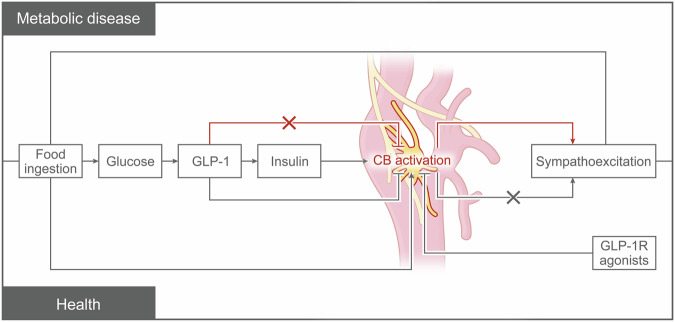
“Furthermore, GLP-1 can slow down gastric emptying by activating the vagus nerve, a part of the autonomic nervous system crucial for regulating the activities of the gastrointestinal tract.268”
§ Glucagon-like peptide-1 receptor: mechanisms and advances in therapy > Classical pathophysiological mechanisms of GLP-1 > The pathophysiological mechanism of GLP-1 in metabolic diseases
What the sources say
- Disputedcites [268] Nauck, M. A., Kemmeries, G., Holst, J. J. & Meier, J. J. Rapid tachyphylaxis of the glucagon-like peptide 1-induced deceleration of gastric emptying in humans. Diabetes 60, 1561–1565 (2011). 21430088 PMC3292331 sourceExperimental — accuracy not yet measured
The Results report that GLP-1 slowed gastric emptying, but the Discussion says it seems to do so primarily through inhibition—not activation—of the vagal nerve. The reported suppression of pancreatic polypeptide, a marker of vagal activation, is consistent with that interpretation. Page numbers are not provided in our copy. (LLM, conf=0.89)
Checked by a reasoning model — may be wrong.
plainstates a cause- Asserted: passes — The authors put it forward as true.
- Checkable: passes — It can be checked against evidence.
- Load-bearing: unclear — It is unclear whether the paper’s conclusions depend on it.
- Based: passes — The paper gives a reason why it holds.
- Disputed
At least one cited source doesn’t support this claim or points to a different paper, and none confirmed it — see the verdicts below.
In the paper
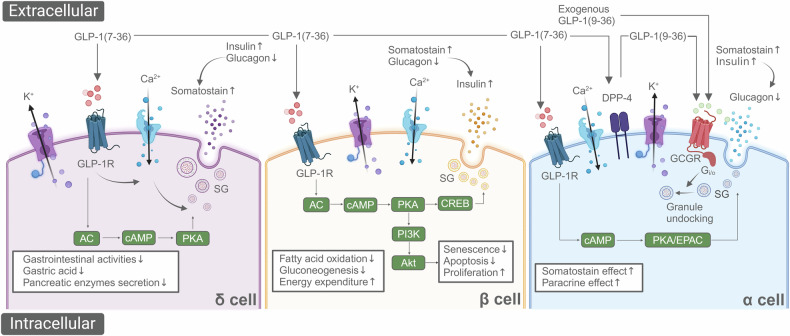
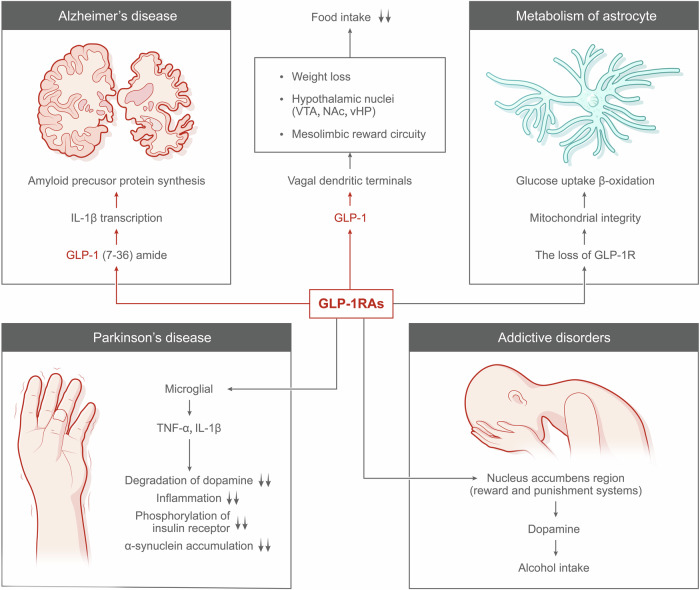
“By interacting with receptors in the hypothalamus, GLP-1 influences satiety and reduces the consumption of food in both animals and humans.262”
§ Glucagon-like peptide-1 receptor: mechanisms and advances in therapy > Classical pathophysiological mechanisms of GLP-1 > The pathophysiological mechanism of GLP-1 in metabolic diseases
What the sources say
- Disputedcites [262] Ando, H. et al. Glucagon-like peptide-1 reduces pancreatic β-cell mass through hypothalamic neural pathways in high-fat diet-induced obese rats. Sci. Rep. 7, 5578 (2017). 28717164 PMC5514038 sourceExperimental — accuracy not yet measured
The Discussion reports that chronic GLP-1 or liraglutide treatment activated hypothalamic pathways in rats but did not alter food intake or body weight. The paper therefore does not support the claimed reduction in food consumption in its animals, and it provides no human satiety or food-intake finding. (LLM, conf=0.83)
Checked by a reasoning model — may be wrong.
plainstates a cause- Asserted: passes — The authors put it forward as true.
- Checkable: passes — It can be checked against evidence.
- Load-bearing: passes — The paper’s conclusions depend on it.
- Based: passes — The paper gives a reason why it holds.
- Disputed
The cited sources support only part of this claim — read each source’s verdict below.
In the paper
“while their anti-inflammatory properties offer new hope for conditions such as osteoarthritis (OA), rheumatoid arthritis (RA) and cardiovascular diseases.13–15”
§ Glucagon-like peptide-1 receptor: mechanisms and advances in therapy > Introduction
What the sources say
- Partly supportedcites [13] Du, H., Meng, X., Yao, Y. & Xu, J. The mechanism and efficacy of GLP-1 receptor agonists in the treatment of Alzheimer’s disease. Front Endocrinol. (Lausanne) 13, 1033479 (2022). 36465634 PMC9714676 sourceExperimental — accuracy not yet measured
The “Anti-inflammatory effects” section (page not provided) reports that GLP-1 receptor agonists reduce neuroinflammation in Alzheimer’s disease models. It does not address their potential for osteoarthritis, rheumatoid arthritis, or cardiovascular diseases, so the disease-specific extension is unsupported by this source. (LLM, conf=0.87)
- Partly supportedcites [14] Reich, N. & Hölscher, C. The neuroprotective effects of glucagon-like peptide 1 in Alzheimer’s and Parkinson’s disease: An in-depth review. Front Neurosci. 16, 970925 (2022). 36117625 PMC9475012 sourceExperimental — accuracy not yet measured
The review’s “Inflammation > In vivo evidence for the anti-inflammatory effects of GLP-1 receptor agonists” section says GLP-1 analogs have potent anti-inflammatory effects, principally in brain models of Alzheimer’s and Parkinson’s disease. The passages do not extend that promise to osteoarthritis, rheumatoid arthritis, or cardiovascular disease. (LLM, conf=0.86)
- Partly supportedcites [15] Meurot, C. et al. Targeting the GLP-1/GLP-1R axis to treat osteoarthritis: A new opportunity? J. Orthop. Transl. 32, 121–129 (2022). PMC8888891 35280931 sourceExperimental — accuracy not yet measured
Our copy strongly supports the OA part: the Introduction states 'GLP-1 analogues may be good therapeutic candidates for treating OA' and the Conclusion that the anti-inflammatory/immunoregulatory properties of GLP-1 analogues 'raises the hypothesis of their potential interest to treat OA'; the Introduction > Multiple biological activities of GLP-1 also lists vascular diseases and OA among conditions where GLP-1–based therapies downregulate pro-inflammatory responses. However, the source does not extend the 'new hope'/therapeutic-opportunity framing to rheumatoid arthritis — the RA material (Introduction > GLP-1/GLP-1R functions in different knee joint tissues) is only in vitro data in fibroblast-like RA synoviocytes with lixisenatide, cited to another work [56] and used to argue GLP-1R is a whole-joint target for OA — and the cardiovascular passage is a mouse model of angiotensin II-induced hypertension [37], not a clinical prospect. So two of the three conditions in the claim are supported only as mechanistic/animal findings, not as therapeutic hope. (LLM, conf=0.72)
hedgedstates a possible cause- Asserted: passes — The authors put it forward as true.
- Checkable: passes — It can be checked against evidence.
- Load-bearing: passes — The paper’s conclusions depend on it.
- Based: passes — The paper gives a reason why it holds.
- Partly supported
The cited sources support only part of this claim — read each source’s verdict below.
In the paper
“in the treatment of Alzheimer’s diseases (AD) and Parkinson’s diseases (PD), GLP-1RAs have shown potential in slowing disease progression”
§ Glucagon-like peptide-1 receptor: mechanisms and advances in therapy > Introduction
What the sources say
- Partly supportedcites [13] Du, H., Meng, X., Yao, Y. & Xu, J. The mechanism and efficacy of GLP-1 receptor agonists in the treatment of Alzheimer’s disease. Front Endocrinol. (Lausanne) 13, 1033479 (2022). 36465634 PMC9714676 sourceExperimental — accuracy not yet measured
The ‘Application of GLP-1R agonists in AD’ section says liraglutide might reduce or delay Alzheimer’s disease progression and describes GLP-1R agonists as promising for preventing AD processes. The copy does not make the corresponding claim about slowing Parkinson’s disease progression; Parkinson’s disease appears in reference titles, not in a reported finding here. Page numbers were not available in the indexed passages. (LLM, conf=0.88)
- Supportedcites [14] Reich, N. & Hölscher, C. The neuroprotective effects of glucagon-like peptide 1 in Alzheimer’s and Parkinson’s disease: An in-depth review. Front Neurosci. 16, 970925 (2022). 36117625 PMC9475012 source
The review’s clinical-trials section reports that liraglutide reduced cognitive impairment and brain-volume loss relative to placebo in patients with mild cognitive impairment or Alzheimer’s disease. Its exenatide subsection reports that treated Parkinson’s patients did not deteriorate on motor measures while the placebo group did, with a difference persisting after treatment stopped. These findings support the cautious claim that GLP-1 receptor agonists have shown potential to slow progression in both diseases; they do not establish that the drugs are proven treatments. (LLM, conf=0.92)
- Partly supportedcites [15] Meurot, C. et al. Targeting the GLP-1/GLP-1R axis to treat osteoarthritis: A new opportunity? J. Orthop. Transl. 32, 121–129 (2022). PMC8888891 35280931 sourceExperimental — accuracy not yet measured
In the Introduction ('Multiple biological activities of GLP-1'), Meurot et al. state that the anti-neuroinflammatory activity of GLP-1 analogues has been investigated in animal models of neurodegenerative disease 'with encouraging results', and that liraglutide, lixisenatide, semaglutide and exenatide 'are being tested in clinical trials for Alzheimer's and Parkinson's diseases', with the reported patient-level effect being that they 'have improved coordination and motor activity in patients'. That supports GLP-1RAs showing potential in AD/PD, but the source nowhere attributes disease-modification or slowed progression of AD/PD to them — its human-data statement is symptomatic (coordination/motor activity), and its mechanistic statement is downregulation of pro-inflammatory responses in neurodegenerative brain disorders. The specific qualifier 'slowing disease progression' therefore goes beyond what this paper says. (LLM, conf=0.72)
hedgedstates a possible cause- Asserted: passes — The authors put it forward as true.
- Checkable: passes — It can be checked against evidence.
- Load-bearing: passes — The paper’s conclusions depend on it.
- Based: passes — The paper gives a reason why it holds.
- Partly supported
169 more claims · 103 with their cited sources checked
Create a free account to see all 328 claims and to verify the 4 references still open.
- It may state two separate claims as one. 148
- Probably not a substantial claim. 19
Claims other papers make about this one
Each is checked against this paper’s own text: does it say what the citing paper says it does?
The source backs part of the claim, not all of it — or backs it for a different population, condition or comparison.
In the citing paper
“Centrally, GLP-1 activates GLP-1 receptors located in the nucleus tractus solitarius and dorsal motor nucleus of the vagus within the brainstem, leading to inhibition of parasympathetic output and a reduction in gastric smooth muscle tone [2, 28].”
From Delayed gastric emptying induced by glucagon-like peptide-1 receptor agonists and its implications for perioperative risk during anesthesia (2026) · cites this paper as [28]
Experimental — accuracy not yet measuredThe source backs part of the claim, not all of it — or backs it for a different population, condition or comparison.
In the citing paper
“GLP-1 RAs delay gastric emptying by inhibiting gastrointestinal motility through both PNS and CNS.”
From Delayed gastric emptying induced by glucagon-like peptide-1 receptor agonists and its implications for perioperative risk during anesthesia (2026) · cites this paper as [28]
Experimental — accuracy not yet measuredThe source backs part of the claim, not all of it — or backs it for a different population, condition or comparison.
In the citing paper
“Large cardiovascular outcome trials, including LEADER (Liraglutide Effect and Action in Diabetes: Evaluation of Cardiovascular Outcome Results), and AMPLITUDE-O (Effect of Efpeglenatide on Cardiovascular Outcomes), among others, consistently show reductions in major adverse cardiovascular events, particularly myocardial infarction, stroke, and cardiovascular mortality, among patients with establis”
From Unequal Access to Evidence-Based Cardiometabolic Therapies: Racial Disparities in SGLT2 Inhibitor and GLP-1 Receptor Agonist Use Among Patients With Type 2 Diabetes and Cardiovascular Disease (2026) · cites this paper as [7]
Experimental — accuracy not yet measuredThe cited source says what the claim attributes to it.
In the citing paper
“Structural modifications of the GLP-1 molecule led to the development of GLP-1RAs with prolonged half-life, enabling sustained glycemic control and weight reduction [33,38,40]”
From Nutritional Approaches to Enhance GLP-1 Analogue Therapy in Obesity: A Narrative Review (2025) · cites this paper as [33]
The cited source says what the claim attributes to it.
In the citing paper
“Activation of GLP-1 receptors enhances glucose-dependent insulin secretion, suppresses inappropriate glucagon release, slows gastric emptying, and lowers appetite, collectively reducing glycemic load.10”
From The Triple‐Agonist Revolution: Retatrutide and the Paradigm Shift in Multi‐Hormonal Pharmacotherapy for Obesity and Cardiometabolic Comorbidities (2026) · cites this paper as [10]
2 more claims about this paper
Create a free account to see every claim other papers make about this one.
Citations
Cites
Atherosclerosis--an inflammatory disease
Ross, R. (1999) · New England Journal of Medicine · doi:10.1056/nejm199901143400207 · Cited by 21,725
Liraglutide and Cardiovascular Outcomes in Type 2 Diabetes
Marso, S. P., Daniels, G. H., Brown-Frandsen, K., Kristensen, P., Mann, J. F. E., Nauck, M. A., Nissen, S. E., Pocock, S., Poulter, N. R., Ravn, L. S., et al. (2016) · New England Journal of Medicine · doi:10.1056/nejmoa1603827 · Cited by 7,629 · cited 1×
“39,40,446 Notably, GLP-1RAs exhibit pronounced ef fi cacy in optimizing blood lipid pro fi les by effectively suppressing chylomicron secretion in the intestine, thereby mitigating the occurrence of postprandial hyperlipidemia.”
BackgroundDapagliflozin in Patients with Heart Failure and Reduced Ejection Fraction
McMurray, J. J. V., Solomon, S. D., Inzucchi, S. E., Køber, L., Kosiborod, M. N., Martinez, F. A., Ponikowski, P., Sabatine, M. S., Anand, I. S., Bělohlávek, J., et al. (2019) · New England Journal of Medicine · doi:10.1056/nejmoa1911303 · Cited by 7,140
Semaglutide and Cardiovascular Outcomes in Patients with Type 2 Diabetes
Marso, S. P., Bain, S. C., Consoli, A., Eliaschewitz, F. G., Jódar, E., Leiter, L. A., Lingvay, I., Rosenstock, J., Seufert, J., Warren, M. L., et al. (2016) · New England Journal of Medicine · doi:10.1056/nejmoa1607141 · Cited by 6,900 · cited 1×
“467 Under hyperglycemic conditions, GLP-1RAs regulate hypertension by inhibiting carotid body function.”
BackgroundInsulin signalling and the regulation of glucose and lipid metabolism
Saltiel, A. R., & Kahn, C. R. (2001) · Nature · doi:10.1038/414799a · Cited by 5,326 · cited 1×
“238 The high concentration of insulin in the local pancreatic environment creates a negative feedback effect, reducing the amount of glucagon secreted by α -cells.”
BackgroundCardiovascular and renal outcomes with empagliflozin in heart failure
Packer, M., Anker, S. D., Butler, J., Filippatos, G., Pocock, S. J., Carson, P., Januzzi, J., Verma, S., Tsutsui, H., Brueckmann, M., et al. (2020) · New England Journal of Medicine · doi:10.1056/nejmoa2022190 · Cited by 5,206
The National Center for Biotechnology Information
Benson, D., Boguski, M., Lipman, D. J., & Ostell, J. (1990) · Genomics · doi:10.1016/0888-7543(90)90583-g · Cited by 5,126
AMPK: a nutrient and energy sensor that maintains energy homeostasis
Hardie, D. G., Ross, F. A., & Hawley, S. A. (2012) · Nature Reviews Molecular Cell Biology · doi:10.1038/nrm3311 · Cited by 4,602
NF-κB regulation in the immune system
Li, Q., & Verma, I. M. (2002) · Nature Reviews Immunology · doi:10.1038/nri910 · Cited by 4,007
NF-κB: a key role in inflammatory diseases
Tak, P. P., & Firestein, G. S. (2001) · Journal of Clinical Investigation · doi:10.1172/jci11830 · Cited by 3,918
Research works printed but not linked: 1
- Elfeki, M. A. & Alkhouri, N. Triple-hormone-receptor agonist retatrutide for obesity. N. Engl. J. Med. 389, 1629 (2023). 37888926
Cited by
Items 601–700 of 1,004
Beyond glycemic control: clinical cardiovascular effects of tirzepatide—a narrative review
Alawad, A. O., Merghani, T. H., Fadelelmoula, T. E. Y., Elamin, N. A., Satti, S., Edris, A., Hakim, A., El-Hindi, R. F., Alhaj-Ali, A. A., Ibrahim, W. E., et al. (2026) · Therapeutic Advances in Endocrinology and Metabolism · doi:10.1177/20420188261469947 · Cited by 1
“132 Reduction in visceral and ectopic fat decreases pro-inflammatory cytokines that are derived from the adipose tissue, such as TNF-α and IL-6; therefore, attenuating systemic low-grade inflammation, which plays a key role in endothelial dysfunction and atherogenesis.”
Braha, A., Timar, B., Sturza, A., & Timar, R. Z. (2026) · Medicina · doi:10.3390/medicina62081509 · Cited by 2
“Activation of GLP-1Rs acts on the cAMP/PKA couple, reduces proinflammatory cytokines and chemokines (TNF-α , IL-6, MCP-1), decreases macrophage infiltration into renal and vascular tissues, and inhibits the NF-κ B pathway [69–71].”
Semaglutide Exposure During Pregnancy: Results from the FAERS Database
Zinzi, A., Gaio, M., Mascolo, A., Pieretti, G., Cipriani, M., Ragione, J. M. D., D’Amato, R., Rossi, F., Capuano, A., & Ruggiero, R. (2026) · Pharmaceuticals · doi:10.3390/ph19081249 · Cited by 2
“Glucagon-like peptide-1 receptor agonists (GLP-1 RAs) are widely used for the treat-ment of type 2 diabetes and the chronic management of obesity, providing additional cardiovascular, hepatic, and renal benefits [1–6].”
Brouer, I. C., Zani, A., Olbrich, H., Ludwig, R. J., & Thaçi, D. (2026) · Frontiers in Medicine · doi:10.3389/fmed.2026.1909537 · Cited by 1
Chen, X., Jiang, M., Liu, J., & Zhang, G. (2024) · Food Bioscience · doi:10.1016/j.fbio.2024.105367 · Cited by 1
Vagotomy suppresses food intake by increasing GLP-1 secretion via the M3 AChR-AMPKα pathway in mice
Lin, J. M., Shen, Y., Xia, Y., Li, Y., Jiang, T., Shen, X., Fu, Y., Zhang, D., Li, Y., Xu, H., et al. (2025) · Molecular and Cellular Endocrinology · doi:10.1016/j.mce.2025.112464 · Cited by 2
Tao, Q., Wu, Y., Pang, H., Lv, P., Li, W., Nie, X., & Han, F. Y. (2025) · Frontiers in Endocrinology · doi:10.3389/fendo.2025.1536655 · Cited by 4
Fu, L., Sugiyama, M., Kamal, S., Ide, T., Takeda, T., Kuno, M., Takagi, H., Koike, T., Arima, H., & Banno, R. (2025) · International Journal of Molecular Sciences · doi:10.3390/ijms26104595 · Cited by 4
“It is possible that by activating GLP-1 receptors on ARC neurons, liraglutide indirectly modulates intracellular signaling pathways, such as the cyclic AMP/protein kinase A pathway and phosphatidylinositol 3-kinase pathway [40], ultimately leading to downregulation of PTP1B transcription.”
Liraglutide in Obesity Management: Evidence of Weight and Lipid Improvements in a UAE Cohort
Ahmed, F., Merghani, T. H., Alkhatry, M. S., Hisham, H. A., Hamad, F., Qashlan, A., Kedir, L., & Alawad, A. O. (2025) · The Open Public Health Journal · doi:10.2174/0118749445420434250723055026 · Cited by 1
Alolayan, S. A., & Alhowail, A. H. (2025) · Frontiers in Pharmacology · doi:10.3389/fphar.2025.1638527 · Cited by 3
Patel, R. T., & Deeken, J. F. (2025) · Cancer Chemotherapy and Pharmacology · doi:10.1007/s00280-025-04829-x · Cited by 1
Ntelis, S., & Wojeck, B. S. (2025) · Current Hypertension Reports · doi:10.1007/s11906-025-01349-0 · Cited by 1
“Weight loss associated with incretin mimetics results in improved insulin sensitivity and decreased de novo lipogenesis [2], one of the primary mechanisms of MASLD.”
AI-Driven Efficient De Novo design of GLP-1RAs with Extended Half-Life and Enhanced EfficacyPreprint
Wei, T., Cui, X., Lin, J., Zheng, Z., Cui, T., Liu, C., Lin, X., Zhu, J., Ran, X., Hong, X., et al. (2025) · bioRxiv (Cold Spring Harbor Laboratory) · doi:10.1101/2025.03.26.645438 · Cited by 1
“GLP-1RAs have gained significant attention for their efficacy in managing type 2 diabetes mellitus (T2DM) 19,20 , obesity 19,20 , and mental health disorders.”
Self-citationBoateng, S., Ameyaw, P. A., Issaka, Y., Al‐Ajlouni, Y. A., & Njei, B. M. (2025) · Research Square · doi:10.21203/rs.3.rs-6926160/v1 · Cited by 3
Single-cell genetics identifies cell-type-specific effector genes across complex traits and diseasesPreprint
Henry, A., Senabouth, A., Tyebally, M., Bowen, B., Allen, P. C., Spenceley, E., Sagi-Zsigmond, E., McCloy, R. A., Cuomo, A. S. E., Fan, J., et al. (2025) · medRxiv · doi:10.1101/2025.08.28.25334614 · Cited by 6
SteMClass: A Novel DNA Methylation-Based Classifier for iPSC In Vitro Differentiation StatesPreprint
Pérez, E., Vallone, V. B. F., Teichmann, D., Euskirchen, P., Siewert, C., Osberg, B., Wolkenstein, P., Stachelscheid, H., & Capper, D. (2025) · bioRxiv (Cold Spring Harbor Laboratory) · doi:10.1101/2025.09.02.673063 · Cited by 1
Nalbandian, M., Lone, J., Moal, E. L., Kim, I., Li, Y., Kraft, P., Zhao, M., Kolacar, K., Zhang, Z., Svensson, K. J., et al. (2026) · bioRxiv · doi:10.64898/2026.02.26.708119 · Cited by 1
“GLP-1 receptor agonists have emerged as transformative therapies for obesity, leading to substantial and sustained weight loss across diverse populations (45).”
Will retatrutide help me lose weight or look ‘shredded’?
Ball, L., & Piatkowski, T. M. (2026) · The Conversation · doi:10.64628/aa.ax6u5kfrj · Cited by 2
Gurholt, T. P., Beck, D., Voldsbekk, I., Parker, N., Askeland-Gjerde, D. E., de Lange, A. G., van der Meer, D., Tamnes, C. K., Thompson, P. M., Sønderby, I. E., et al. (2025) · medRxiv · doi:10.1101/2025.01.24.25321078
“These observations suggest interconnected and reciprocal links between the body and the brain that may involve common body fat-related pathways, and may indicate that a whole-body approach and novel treatment strategies capturing the body-brain link (e.g., possibly GLP-1 48 or similar drugs) may be beneficial for trea…”
Cedars, M. A., Root, K. M., Akhaphong, B., Beetch, M., Miles, A. E., Regal, R. R., Alejandro, E. U., & Regal, J. F. (2025) · Physiological Reports · doi:10.14814/phy2.70222
Greener, M. (2025) · Independent Nurse · doi:10.12968/indn.2025.2.8
MicroRNA expression profiling in type 2 diabetes patients treated with liraglutide
Irshad, M., Yadav, S., Mathkor, D. M., Babegi, A. S., & Haque, S. (2025) · Journal of King Saud University - Science · doi:10.25259/jksus_103_2024 · Cited by 1
GLP-1 receptor agonists: panacea or affirmation of societal failure?
Kallis, T. J., & Payne, R. (2025) · British Journal of General Practice · doi:10.3399/bjgp25x741069
Xu, Y., Velu, P., Hu, L., & Guimarães, N. S. (2025) · Diabetology & Metabolic Syndrome · doi:10.1186/s13098-025-01633-8
“Progressive body weight loss with beinaglutide treatment results from food intake reduction consequent to GLP-1 activation [19]in the hypothalamic and gastric pathways, leading to suppressed appetite and delayed gastric emptying [20, 21].”
HbA1c reduction strategies: An overview of pharmacological interventions
Upadhye, K. S., Patidar, H., Bamnia, N., & Yadav, N. K. (2025) · National Journal of Pharmacology and Therapeutics · doi:10.4103/njpt.njpt_72_24 · Cited by 2
Physical activity promotes gut adaptation, responses to nutrients, and sensitivity to gut peptidesPreprint
Bæch‐Laursen, C., Ucin, J. V., Galsgaard, K. D., Llana, J., Kissow, H., Holst, J. J., Pedersen, B. K., & Sanchís, P. (2025) · bioRxiv (Cold Spring Harbor Laboratory) · doi:10.1101/2025.05.12.653520
“To evaluate whether the coupling of food intake is improved in other contexts of negative energy balance, we conducted an experiment administering the GLP-1RA semaglutide 38 to sedentary and active mice (Figure S2A).”
Horwitz, R. I., Otaka, S. N., Conroy, A. H., Cullen, M. R., Matory, A., Singer, B. H., & Sim, I. (2025) · The American Journal of Medicine · doi:10.1016/j.amjmed.2025.05.016 · Cited by 1
Sasset, L., Cameron, A. D., Sussman, C., Rubinelli, L., Maji, D., Miller, R. C., Thompson, A. T., Campbell, D., Walker, M. R., Drozdz, M. M., et al. (2026) · Molecular Therapy — Nucleic Acids · doi:10.1016/j.omtn.2026.102946
“8 Thus, we sought to understand whether increased access to the brain, via improved penetration of the BBB, may lead to enhanced efficacy.”
Should We Be Concerned About Glucagon-Like Peptide-1 Receptor Agonists?
VanderBeek, B. L. (2025) · JAMA Ophthalmology · doi:10.1001/jamaophthalmol.2025.1599
The complex role of brain cilia in feeding control
Asthana, A., & Jackson, P. K. (2025) · Science · doi:10.1126/science.ady6368
Glucagon-like-peptide 1 (GLP-1) Receptor Agonists in Rheumatologic Disease
Trinacty, J., & Rostom, K. (2025) · Canadian rheumatology today. · doi:10.58931/crt.2025.2158
Chigurupati, M. (2025) · Journal of medical and dental science research. · doi:10.35629/076x-12039499
Les analogues de GLP-1 dans l’arthrose : avancées et perspectives
Berenbaum, F. (2025) · Médecine des Maladies Métaboliques · doi:10.1016/j.mmm.2025.06.003
Hammer, Y., Arbel, R., Razi, T., Netzer, D., Weinstein, J. M., & Iakobishvili, Z. (2025) · Research Square · doi:10.21203/rs.3.rs-6768681/v1
Improving Diabetes Care with the Omnipod → Automated Insulin System
Koong, X., Ng, N. C., Wong, R. S.-Y., Ong, T. Y. Y., Goh, B. H., & Ming, L. C. (2025) · International journal of clinical metabolism and diabetes. · doi:10.1177/30502071251357437
Yen, F., Wang, S., Hwu, C., et al. (2025) · SSRN Electronic Journal · doi:10.2139/ssrn.5372106
Chao, Y., Wang, S., Luo, L., Jiang, X., Ren, T., Liu, W., Hai, J., Zhou, X., & Li, Y. (2025) · Research Square · doi:10.21203/rs.3.rs-7239681/v1
Incretin integration: Charting the future of cardiovascular-kidney-metabolic health
Wang, C. (2025) · Journal of the Chinese Medical Association · doi:10.1097/jcma.0000000000001277
“5 Chiang et al 6 present a comprehensive review and timely synthesis of the flourishing evidences, and point out the positions of incretin-based therapies as cornerstones of cardiovascular-kidney-metabolic (CKM) health.”
Zhang, J., Sonnenburg, D., Kabisch, S., Theis, S., Kemper, M., Pivovarova‐Ramich, O., Tricò, D., Rohn, S., & Pfeiffer, A. F. H. (2025) · Nutrients · doi:10.3390/nu17152539 · Cited by 1
Rebelos, E., & Kounatidis, D. C. (2025) · Elsevier eBooks · doi:10.1016/b978-0-443-13825-6.00273-9
N-glycosylation effects on the function of class B1 G protein-coupled receptors
Lee, S. M., Jin, J., Song, H., & Jang, J. (2025) · Carbohydrate Research · doi:10.1016/j.carres.2025.109641
Pearson, J. R., Bartley, J. M., Ferrando, A. A., & Church, D. D. (2025) · Current Opinion in Clinical Nutrition & Metabolic Care · doi:10.1097/mco.0000000000001159 · Cited by 1
Ansari, P., Islam, S. S., Ali, A., Masud, M. S. R., Reberio, A. D., Khan, J. T., Hannan, J. M. A., Flatt, P. R., & Abdel‐Wahab, Y. H. A. (2025) · Diabetology · doi:10.3390/diabetology6080083 · Cited by 2
Tang, X., Deng, G., Jiang, Z., Yu, R., Cheng, X., Lu, N., Zhou, P., & Zhou, Z. (2025) · Food Bioscience · doi:10.1016/j.fbio.2025.107409
The evolving landscape of pediatric hepatology: key updates and future directions
Lu, P. M., Ovchinsky, N., & Goldner, D. L. (2025) · Current Opinion in Pediatrics · doi:10.1097/mop.0000000000001489
A Neural Network Method for Assessing the Nutritional Requirements of a Patient With Type 2 Diabetes
Mwakalu, S. M., Omwenga, V. O., & Ogao, P. J. (2025) · Applied Computational Intelligence and Soft Computing · doi:10.1155/acis/9955073
Seika, P., Chang, J. J., Hong, S. M., Ballou, S., Rangan, V., Ramprasad, C., Iturrino, J., Denecke, C., Lembo, A. J., Nee, J. W., et al. (2025) · Clinical Gastroenterology and Hepatology · doi:10.1016/j.cgh.2025.08.015 · Cited by 1
Glucagon-like Peptide-1 Receptor Agonists and Gastrointestinal Neoplasms
Kim, Y. J., & Bae, J. (2025) · Journal of Digestive Cancer Research · doi:10.52927/jdcr.2025.13.2.99
Advances in peptide-based drug discovery
Khatri, B., Velloso, J. P. L., Shambhawi, Kan, M., & Craik, D. J. (2025) · Elsevier eBooks · doi:10.1016/b978-0-443-29808-0.00041-8
The essential role of the physiotherapy profession in incretin-based weight loss
Sampford, J., Myers-Ingram, R., Jones, G., & Cork, S. C. (2025) · Physiotherapy · doi:10.1016/j.physio.2025.101840
Therapeutic advances in type 1 myotonic dystrophy complicated with type 2 diabetes mellitus
Luo, L., Zhu, C., Yang, S., Sun, Y., Rong, M., & Li, T. (2025) · Frontiers in Neurology · doi:10.3389/fneur.2025.1640563
“As research progresses, the pleiotropic effects of GLP-1R agonists have become increasingly apparent, with growing interest in their potential benefits in cardiovascular protection, neuroprotection, anti-inflammation, and metabolic regulation (119, 140, 141).”
Bhatia, R., Al-Bana, H., Mohamed, K., et al. (2025) · Research Square · doi:10.21203/rs.3.rs-7497591/v1
Walther, L., Mittelheisser, V., Claudepierre, M., Bochler, L., Rompais, M., Deforges, J., Silvestre, N., Larnicol, A., Carapito, C., Quéméneur, É., et al. (2026) · Journal of Extracellular Vesicles · doi:10.1002/jev2.70307
Dobrowolska, J., Kozak, K., Morawa, A., Peisert, L., Wdowiak, K., & Chudek, J. T. (2025) · Annales Academiae Medicae Silesiensis · doi:10.18794/aams/207726
Development of an Advanced Drug Delivery System for Protein- and Peptide-Based Therapeutics
Lai, W. F., Kee, P. E., Ming, L. C., Chew, Y.-L., Lee, S.-K., Bostanudin, M. F., Uddin, A. B. M. H., & Liew, K. B. (2025) · Current Pharmaceutical Design · doi:10.2174/0113816128394343250910234044
Treatment Options for Polycystic Ovary Syndrome
Cai, J., Lü, N., & Ma, J. (2025) · Obstetrics and gynecology. · doi:10.5772/intechopen.1012822 · Cited by 1
Shestakova, E. A., Томилова, А. О., Samsonova, M. D., Voznesenskaya, А. А., Sineokaya, M. S., Stafeev, I., & Shestakova, M. V. (2025) · Diabetes Mellitus · doi:10.14341/dm13267
Glembotski, C. C. (2025) · Cardiovascular Research · doi:10.1093/cvr/cvaf163
Choo, Y. N., Narayanan, R., & Subramaniyan, V. (2025) · Vascular Pharmacology · doi:10.1016/j.vph.2025.107553 · Cited by 2
The Physiology of Semaglutide in Relation to Glucagon Like Peptide-1: A Comprehensive Review
Barakat, G. M., Hassan, S. E. H., Issa, H., & Ramadan, W. (2025) · Current Drug Therapy · doi:10.2174/0115748855404783250917112146
Semaglutide and weight management in the Arab countries: Focus on the United Arab Emirates
Semiz, S. (2025) · Health Sciences Review · doi:10.1016/j.hsr.2025.100244 · Cited by 2
Jin, T., Meng, Y., Ren, L., & Wang, Y. (2025) · Journal of Clinical Question · doi:10.69854/jcq.2025.0032
den Braanker, H., van der Valk, E. S., & Bisoendial, R. J. (2025) · Journal of Clinical Medicine · doi:10.3390/jcm14217641
“The anti-hyperinsulinemic effects are well-established, with substantial weight loss (24% body weight in lymphedema patients) and improved insulin sensitivity through PKA/CREB signaling activation [108].”
Ghosal, S., & Ghosal, A. (2025) · Diabetes Therapy · doi:10.1007/s13300-025-01817-5 · Cited by 1
Randi, R., Aulia, A., Muhtadin, M., Hanim, C., Kidd, M. T., & Anas, M. A. (2025) · Poultry Science · doi:10.1016/j.psj.2025.106085
GLP-1 Receptor Agonists: Advances in Mechanism, Therapeutic Applications, and Future Perspectives
Pawar, M., Patil, C. S., Fakir, J. S., Pagar, D. S., & Mahajan, S. K. (2025) · BioMed Target Journal · doi:10.59786/bmtj.322 · Cited by 1
Fragoso-Bargas, N., Lupu, A. E., Campillo-Pereda, I., Huang, Y., Sundfjord, J., Karimi, R., Lind, T., Holm, J., Holm, L., Havdahl, A., et al. (2026) · Nature Communications · doi:10.1101/2025.11.10.25339894
Cho, J., Hwang, Y., Woo, S., Kim, T. H., Lee, K., Son, Y., Park, S., Kim, H., Shin, J., Cho, Y., et al. (2025) · BMC Endocrine Disorders · doi:10.1186/s12902-025-02087-9
“In contrast, alogliptin exerts its effects by prolonging the activity of incretin hormones such as GLP-1 and GIP [29], which enhance glucose-dependent insulin secretion and suppress glucagon release [30].”
Tang, Q., Liang, Y., Liu, P., Tong, B., Shan, S., Chen, H., & Shang, S. (2025) · Interdisciplinary Nursing Research · doi:10.1097/nr9.0000000000000109
Anti-diabetic drug target perturbation modulates susceptibility to aortic aneurysm
Kong, R., Kuang, Z., Wu, X., Zhou, H., Zhou, Y., Bin, J., Chen, G., & Wang, S. (2025) · European Journal of Pharmacology · doi:10.1016/j.ejphar.2025.178386
Carlson, T. L., Fineman, M. S., Kernodle, S., Hutch, C. R., BRYANT, C., Colbert, K., Seeley, R. J., & Nimgaonkar, A. (2025) · Molecular Metabolism · doi:10.1016/j.molmet.2025.102287
“Numerous clinical trials have documented significant weight loss and improvements in HbA1c levels with various GLP-1RAs [1,2].”
Fang, H., Sun, X., Ding, Y., Gu, S., Niu, B., & Chen, Q. (2025) · International Journal of Molecular Sciences · doi:10.3390/ijms262311548
“This cascade ultimately promotes insulin synthesis and secretion while inhibiting glucagon release [25].”
Insulin signaling in confluent diabetes and AD
Abraham, A., Gangadhara, V., & Baliga, P. (2025) · Elsevier eBooks · doi:10.1016/b978-0-443-40559-4.00008-8
Gut Microbiota–Leptin crosstalk in obesity and metabolic dysregulation
Singh, L. S., & Sharma, L. A. (2025) · Obesity Medicine · doi:10.1016/j.obmed.2025.100671 · Cited by 1
Lee, G., Lee, H. Y., Lim, Y. J., Kim, J., Rah, S., Chung, M. J., Park, S. Y., Sa, S., Lee, H., Soh, Y., et al. (2025) · Antioxidants and Redox Signaling · doi:10.1177/15230864251399183 · Cited by 1
“However, recently focused GLP-1R agonists have been suggested to have some limitations due to GLP-1 resistance, especially in chronic/severe metabolic disorders (Zheng et al., 2024).”
Research Progress on Intervention for Type 2 Diabetes by Activating Endogenous GLP-1 Secretion
管, 佩. (2025) · Advances in Clinical Medicine · doi:10.12677/acm.2025.15123455
Nami, Y., Kafil, B., & Dehnad, A. (2025) · Food Science & Nutrition · doi:10.1002/fsn3.71295
Rakib, M. A., & Kim, Y. (2025) · Phytomedicine · doi:10.1016/j.phymed.2025.157666 · Cited by 1
Pharmacogenetic factors that affect drug metabolism and efficacy in type 2 diabetes mellitus
Li, X., & Liu, Z. (2025) · Elsevier eBooks · doi:10.1016/b978-0-443-29289-7.00022-9
Farley, B., Radetich, E., D’Alessandro, J. S., & Bulaj, G. W. (2025) · Healthcare · doi:10.3390/healthcare13243220 · Cited by 2
“Direct activation of GLP-1 receptors resulting in the increased insulin release, or a dual activation of GLP1/GIP receptors leading to decreased hunger and increased satiety; anti-inflammatory [63–65].”
Vutiglabridin overcomes the GLP-1 RA-associated weight-loss plateau to achieve normal body weight
Lee, H. M., Marakkalage, K. G., Kim, S. H., Lee, S., Lee, J. H., Park, H. S., & Yoo, S. (2026) · International Journal of Obesity · doi:10.1038/s41366-026-02161-9
Gustafson, D., Rothenberg, E. M., Steingrímsson, S., Carlsen, H. K., Belloni, F., Eruvuri, N., Knez, R., Olsson, E. M. G., Burk, R. D., Cena, H., et al. (2025) · Frontiers in Nutrition · doi:10.3389/fnut.2025.1703255
“In particular, GLP-1 receptor agonists such as liraglutide and semaglutide effectively support weight loss and appetite reduction, and show potential benefits for mental wellbeing (24).”
Tang, H., Lu, Y., Zhang, B., Zhang, D., Zhou, T., Chen, J., Lu, Y., Lyu, T., Zheng, K., & Chen, Y. (2025) · Diabetes Research and Clinical Practice · doi:10.1016/j.diabres.2025.113038 · Cited by 2
“Preclinical data suggest that GLP-1 receptor activation may influence central pathways involved in stress response and anxiety-like behaviors[14].”
Exploring the therapeutic potential of GLP-1 receptor agonists in pulmonary arterial hypertension
Aguado, B., Lacoste-Palasset, T., Ruffenach, G., Bauer, F., Savale, L., Humbert, M. J. C., Montani, D., & Antigny, F. (2025) · ERJ Open Research · doi:10.1183/23120541.01479-2025
“These molecules are generally less selective for GLP-1R and may exhibit off-target activity, including partial agonism at the glucagon receptor, particularly at high concentrations [25, 47].”
Receptor targets in Alzheimer's disease drug discovery
Stanley, B., Wallach, J. V., & Adejare, A. (2025) · Elsevier eBooks · doi:10.1016/b978-0-443-30008-0.00013-2 · Cited by 1
Impact of Glucagon-Like Peptide-1 Receptor Agonists on Knee Arthroplasty Outcomes
Zaffar, H., Imran, M., & Rushd, F. (2025) · Indian Journal of Orthopaedics · doi:10.1007/s43465-025-01646-5 · Cited by 1
“These agents were initially developed in the 1980s for DM management, based on research involving Gila monster venom [16].”
CauReL: Dynamic Counterfactual Learning for Precision Drug Repurposing in Alzheimer's DiseasePreprint
Wang, Y., Zhou, M., Tang, Z., Xiong, C., Asken, B. M., Yang, B., Su, J., Zhou, X., & Song, Q. (2025) · Research Square · doi:10.21203/rs.3.rs-8206648/v1
“Liraglutide, a glucagon-like peptide-1 (GLP-1) receptor agonist widely used to treat type 2 diabetes and obesity 29 , demonstrated the most robust signal across both datasets.”
Utility of fluorinated α-amino acids in development of therapeutic peptides
Richardson, P. (2025) · Expert Opinion on Drug Discovery · doi:10.1080/17460441.2025.2601105 · Cited by 1
“However, since its discovery in the early 1980s, GLP-1, owing to its unique antidiabetic functions, has received considerable attention as a therapeutic agent [104–108].”
Decreased risk of post-thyroidectomy hypocalcemia with history of GLP-1RA use
Ayo‐Ajibola, O., Jung, T., Razura, D. E., Gallagher, T. J., Lin, M. E., Angell, T. E., & Kwon, D. I. (2025) · Journal of the Endocrine Society · doi:10.1210/jendso/bvaf204
“Since their FDA approval in 2005 for T2DM and 2021 for obesity, these medications have gained popularity for weight management by suppressing appetite, slowing gastric emptying, and regulating postprandial glucose levels [3-5].”
López, G. P. (2025) · Medicina Clínica (English Edition) · doi:10.1016/j.medcle.2025.107122 · Cited by 2
Dang, D. X., Xu, S. Q., Li, D., Xia, X., & Xu, S. (2025) · Journal of Agriculture and Food Research · doi:10.1016/j.jafr.2025.102548 · Cited by 1
Hayat, I., Sattar, T., Shafiq, S., Ejaz, H. M., & Noor, M. H. (2025) · Developmental medico-life-sciences · doi:10.69750/dmls.02.010.0168
Clinical applications of GLP-1 receptor–targeted PET imaging: A disease-oriented review
Wang, Z., Hacker, M., & Li, X. (2025) · Journal of Nuclear Medicine and Molecular Imaging · doi:10.65457/jnmmi-2025-0011 · Cited by 1
Regulatable In Vivo Gene Expression via AdaptamersPreprint
Bryant, J., Herron, L., Doctor, Y., et al. (2025) · bioRxiv (Cold Spring Harbor Laboratory) · doi:10.64898/2025.12.21.695777
“Unlike GLP-1 agonists, which primarily act by modulating insulin and glucagon secretion and suppressing appetite, FGF21 promotes weight loss by increasing systemic metabolic activity ( 26 , 27 ).”
Monroy, R. H., Rivera, M. E. C., & Marielarena, R. R. F. (2025) · Acta Médica Grupo Ángeles · doi:10.35366/122158
Lixandru, N., Gaiţă, L., Popescu, S. D., Herascu, A., Timar, B., & Timar, R. Z. (2025) · Journal of Clinical Medicine · doi:10.3390/jcm15010152
Khawandanah, D. O., Alyamani, F. F., Almutairi, B. R., Almutairi, B. A., Alharbi, R. M., Alghanmi, S., Alsouri, M. T., & ALMUTAIRI, A. R. (2025) · Saudi Journal of Clinical Pharmacy · doi:10.4103/sjcp.sjcp_22_25 · Cited by 1
Harnessing the gut-brain axis in the treatment of type 2 diabetes mellitus and obesity
Kotucha, K., Kapłon, K., Moś, M., Fiegler-Rudol, J., Pietryszyn-Bilińska, A., Dynarowicz, K., Aebisher, D., Wiench, R., & Kawczyk‐Krupka, A. (2025) · European Journal of Clinical and Experimental Medicine · doi:10.15584/ejcem.2025.4.24
Prevention and Treatment Strategies in Cardiovascular–Renal–Metabolic Syndrome
Tănase, D. M., Anton, I. B., & Gosav, E. M. (2025) · Springer eBooks · doi:10.1007/978-3-032-11445-7_17
Liu, L. J., & Chu, Q. (2026) · Journal of Engineering and Science in Medical Diagnostics and Therapy · doi:10.1115/1.4070794
Metadata
- Authors
- Zheng, Z., Zong, Y., Ma, Y., Tian, Y., Pang, Y., Zhang, C., & Gao, J.
- Affiliations
- Shanghai Jiao Tong University (CN)
- Corresponding author
- Gao, Junjie
- Venue
- Signal Transduction and Targeted Therapy
- Published
- 2024-09-18
- Volume
- 9
- Issue
- 1
- Pages
- 234-234
- ISSN
- 2059-3635 (ISSN-L)
- PMC
- PMC11408715
- OpenAlex
- W4402620314
- Cited by
- 1,036
- References
- 519
- Citations by year
- 2026: 534 · 2025: 491 · 2024: 11
- FWCI
- 60.43
- Type
- journal article
- Language
- en
- Open access
- gold
- doi.org
- Licence
- cc-by
- creativecommons.org/licenses/by/4.0 (tdm)
- creativecommons.org/licenses/by/4.0 (vor)
- Locations
- Signal Transduction and Targeted Therapy (publishedVersion, cc-by)
- PubMed Central (publishedVersion, cc-by)
- UWA Profiles and Research Repository (UWA) (publishedVersion, cc-by)
- PubMed (publishedVersion)
- DOAJ (DOAJ: Directory of Open Access Journals) (submittedVersion, cc-by-sa)
- Funders
- National Natural Science Foundation of China (82002339, 81820108020)
- Shanghai Frontiers Science Center of Degeneration and Regeneration in Skeletal System
- Topics
- Health Sciences › Medicine › Endocrinology, Diabetes and Metabolism › Diabetes Treatment and Management
- Life Sciences › Biochemistry, Genetics and Molecular Biology › Molecular Biology › Receptor Mechanisms and Signaling
- Life Sciences › Neuroscience › Endocrine and Autonomic Systems › Regulation of Appetite and Obesity
- Keywords
- GLP-1 receptor, GLP-1 receptor agonists, G protein-coupled receptors, glucagon-like peptide-1, glucose homeostasis, lipid metabolism, obesity, cardiovascular disease, non-alcoholic fatty liver disease, neurodegenerative diseases, musculoskeletal inflammation, cancer, neuroprotection, anti-infection, inflammation reduction, cardiovascular function, pharmacological mechanisms, signaling pathways
- MeSH terms
- Glucagon-Like Peptide-1 Receptor, Animals, Humans, Glucagon-Like Peptide 1
About these checks
Registry, retraction, Cites and statistics results are computed, not judged, with one exception: a printed reference that no index lists is read once by a model before it counts as a citation error. Claims are extracted by a model and kept only when their quote appears verbatim in the text; each cited source is then checked, with a model’s help, for whether it says what the claim relies on. Those verdicts can be wrong — read the claim’s quote and the cited source before relying on one.
The claim verdicts this report counts are experimental: their accuracy is not yet measured.
A language model drew the claims from the paper on 2026-09-28, under version 3 of the claim definition (model deepseek-v4.1-flash, prompt extract-v3).
A second model labelled each claim on 2026-09-28 (model jev-1.13-20260917, definition revision gold-guideline-v0.2).
Cited sources are checked with a language model’s help (gpt-6-sol and qwen3.8-omni-flash).
Statistics and arithmetic are recomputed, not judged.
Confidence bands are shown only for fields calibrated on our annotated test set. None is calibrated yet, so no band is shown.
What counts as a claim ›How we measure confidence ›How we check this ›
Are you an author, or do you see a problem with this page? Request a review
Data sources
Bibliographic data: Semantic Scholar, OpenAlex, Crossref.
Contains information from the Semantic Scholar Academic Graph Datasets, made available under the ODC Attribution License (ODC-BY 1.0).
Semantic Scholar’s data is described in: Kinney, R., et al. (2023). The Semantic Scholar Open Data Platform. arXiv:2301.10140.
