

Ketamine and selective activation of parvalbumin interneurons inhibit stress-induced dendritic spine elimination
Open accessThe DOI matches its Crossref record; 91 of the 93 references it cites were found in a registry or an index.
Abstract
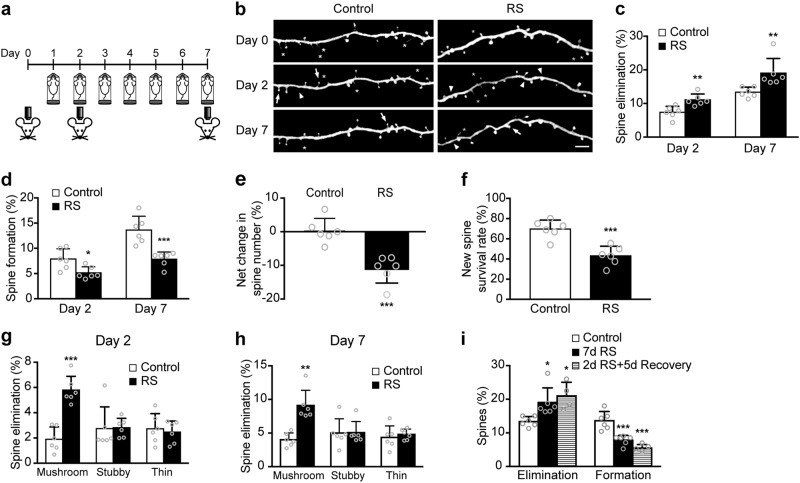
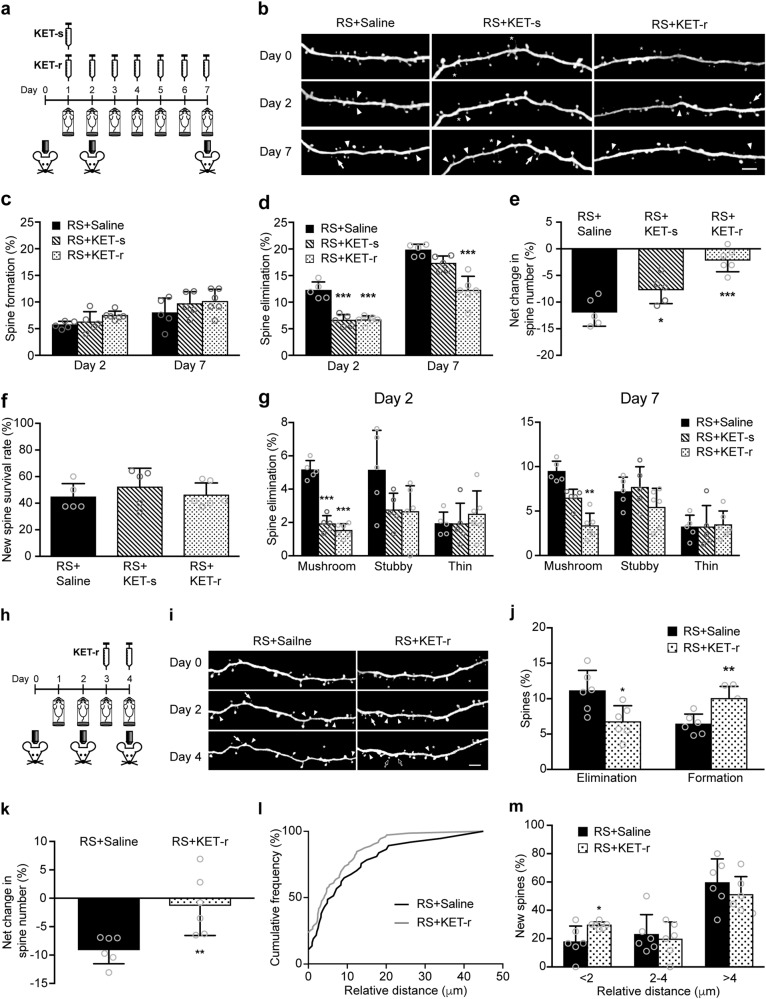
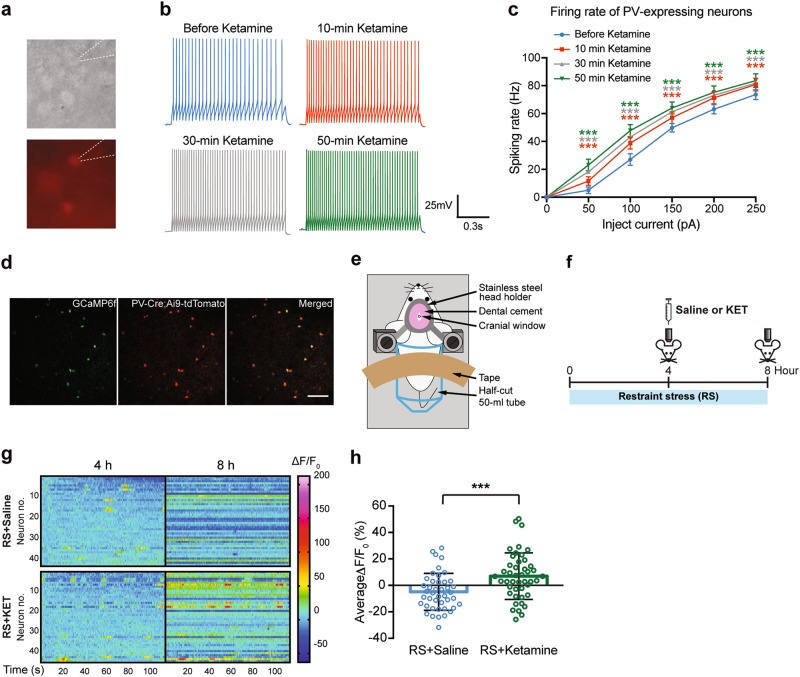
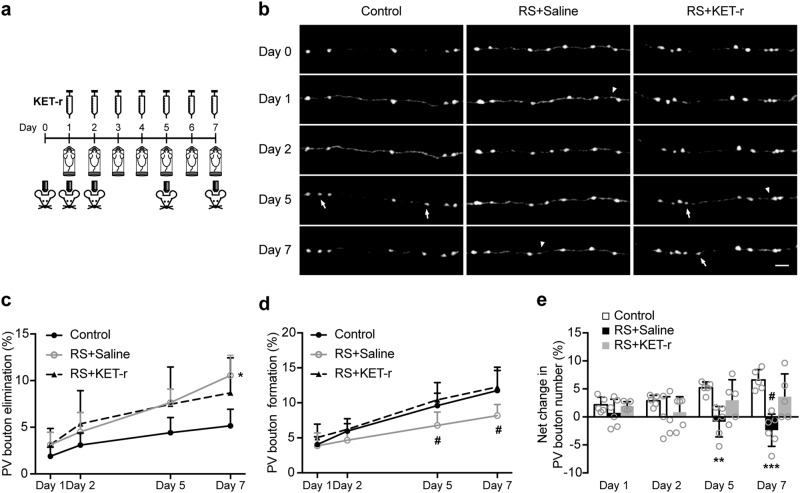
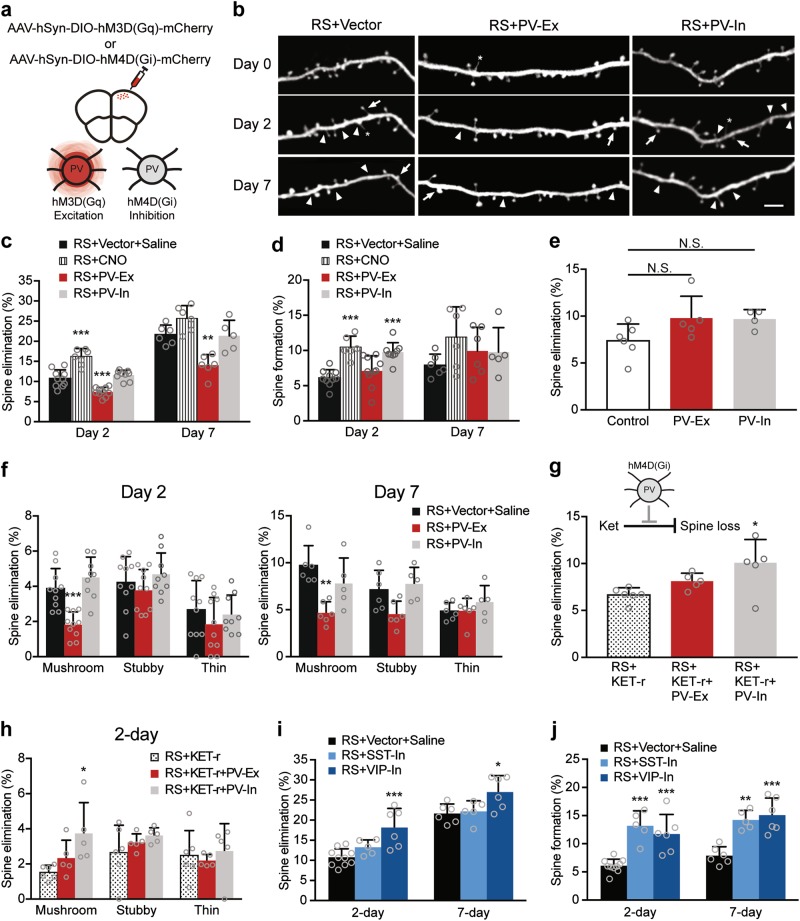
Stress is a major risk factor for the onset of many psychiatric diseases. In rodent models, chronic stress induces depression and impairs excitatory neurotransmission. However, little is known about the effect of stress on synaptic circuitry during the development of behavioral symptoms. Using two-photon transcranial imaging, we studied the effect of repeated restraint stress on dendritic spine plasticity in the frontal cortex in vivo. We found that restraint stress induced dendritic spine loss by decreasing the rate of spine formation and increasing the rate of spine elimination. The N-methyl-d-aspartate receptor antagonist ketamine inhibited stress-induced spine loss mainly by protecting mushroom spines from elimination. Ketamine also induced re-formation of spines in close proximity to previously stress-eliminated spines. Electrophysiological and in vivo imaging experiments showed that ketamine enhanced activity of parvalbumin (PV) interneurons under stress and counterbalanced the stress-induced net loss of PV axonal boutons. In addition, selective chemogenetic excitation of PV interneurons mimicked the protective effects of ketamine on dendritic spines against stress. Collectively, our data provide new insights on the effects of ketamine on synaptic circuitry under stress and a possible mechanism to counteract stress-induced synaptic impairments through PV interneuron activation.
Overview
The claims and statistics of this paper haven’t been checked yet.
Free: it reads the open-access text and checks the first 5 claims that cite a source we can check. Create a free account to check every claim.
Integrity signals
Registry
Cites
Statistics
Figures
Verification
Claims the paper makes
The claims and statistics of this paper haven’t been checked yet.
Free: it reads the open-access text and checks the first 5 claims that cite a source we can check. Create a free account to check every claim.
Claims other papers make about this one
Each is checked against this paper’s own text: does it say what the citing paper says it does?
In the citing paper
“Ng and colleagues [146] found that repeated restraint stress resulted in dendritic spine loss by decreasing spine formation and enhancing spine elimination, while ketamine prevented spine elimination and promoted reformation of stress-eliminated spines.”
From Challenges and rewards of in vivo synaptic density imaging, and its application to the study of depression (2025) · cites this paper as [146]
Self-check
Percentages, sums and reported differences re-computed from the paper’s own numbers.
The self-check needs the paper’s full text.
Citations
Cites
Molecular Mechanisms of Depression: Perspectives on New Treatment Strategies
Lang, U. E., & Borgwardt, S. (2013) · Cellular Physiology and Biochemistry · doi:10.1159/000350094 · Cited by 8,475
Antidepressant effects of ketamine in depressed patients
Berman, R. M., Cappiello, A., Anand, A., Oren, D. A., Heninger, G. R., Charney, D. S., & Krystal, J. H. (2000) · Biological Psychiatry · doi:10.1016/s0006-3223(99)00230-9 · Cited by 3,856
A randomized trial of an N-methyl-D-aspartate antagonist in treatment-resistant major depression.
Zarate, C. A., Singh, J. B., Carlson, P. J., Brutsche, N. E., Ameli, R., Luckenbaugh, D. A., Charney, D. S., & Manji, H. K. (2006) · Archives of General Psychiatry · doi:10.1001/archpsyc.63.8.856 · Cited by 3,766
mTOR-Dependent Synapse Formation Underlies the Rapid Antidepressant Effects of NMDA Antagonists
Li, N., Lee, B., Liu, R.-J., Banasr, M., Dwyer, J. M., Iwata, M., Li, X.-Y., Aghajanian, G., & Duman, R. S. (2010) · Science · doi:10.1126/science.1190287 · Cited by 2,881
THE EFFECTS OF STRESSFUL LIFE EVENTS ON DEPRESSION
Kessler, R. C. (1997) · Annual Review of Psychology · doi:10.1146/annurev.psych.48.1.191 · Cited by 2,111
GABAergic Interneurons in the Neocortex: From Cellular Properties to Circuits
Tremblay, R., Lee, S., & Rudy, B. (2016) · Neuron · doi:10.1016/j.neuron.2016.06.033 · Cited by 2,033
NMDA receptor blockade at rest triggers rapid behavioural antidepressant responses
Autry, A. E., Adachi, M., Nosyreva, E., Na, E. S., Los, M. F., Cheng, P.-F., Kavalali, E. T., & Monteggia, L. M. (2011) · Nature · doi:10.1038/nature10130 · Cited by 1,926
Moghaddam, B., Adams, B., Verma, A., & Daly, D. (1997) · The Journal of Neuroscience · doi:10.1523/jneurosci.17-08-02921.1997 · Cited by 1,793
How Inhibition Shapes Cortical Activity
Isaacson, J. S., & Scanziani, M. (2011) · Neuron · doi:10.1016/j.neuron.2011.09.027 · Cited by 1,678
Dendritic spine pathology in neuropsychiatric disorders
Penzes, P., Cahill, M. E., Jones, K. A., VanLeeuwen, J.-E., & Woolfrey, K. M. (2011) · Nature Neuroscience · doi:10.1038/nn.2741 · Cited by 1,523
Cited by
GABA interneurons are the cellular trigger for ketamine's rapid antidepressant actions
Gerhard, D. M., Pothula, S., Liu, R.-J., Wu, M., Li, X.-Y., Girgenti, M. J., Taylor, S. R., Duman, C. H., Delpire, E., Picciotto, M., et al. (2020) · Journal of Clinical Investigation · doi:10.1172/jci130808 · Cited by 345
Page, C. E., & Coutellier, L. (2019) · Neuroscience & Biobehavioral Reviews · doi:10.1016/j.neubiorev.2019.07.024 · Cited by 213
The Role of Parvalbumin Interneurons in Neurotransmitter Balance and Neurological Disease
Nahar, L., Delacroix, B. M., & Nam, H. W. (2021) · Frontiers in Psychiatry · doi:10.3389/fpsyt.2021.679960 · Cited by 147
Antidepressant actions of ketamine engage cell-specific translation via eIF4E
Aguilar-Valles, A., De Gregorio, D., Matta-Camacho, E., Eslamizade, M. J., Khlaifia, A., Skaleka, A., Lopez-Canul, M., Torres-Berrio, A., Bermudez, S., Rurak, G. M., et al. (2021) · Nature · doi:10.1038/s41586-020-03047-0 · Cited by 144
Association of Oxidative Stress with Neurological Disorders
Hassan, W., Noreen, H., Rehman, S., Kamal, M. A., & da Rocha, J. B. T. (2021) · Current Neuropharmacology · doi:10.2174/1570159x19666211111141246 · Cited by 119
Coming of age in the frontal cortex: The role of puberty in cortical maturation
Delevich, K., Klinger, M., Okada, N. J., & Wilbrecht, L. (2021) · Seminars in Cell & Developmental Biology · doi:10.1016/j.semcdb.2021.04.021 · Cited by 82
A Dendrite-Focused Framework for Understanding the Actions of Ketamine and Psychedelics
Savalia, N. K., Shao, L.-X., & Kwan, A. C. (2021) · Trends in Neurosciences · doi:10.1016/j.tins.2020.11.008 · Cited by 104
Wu, M., Minkowicz, S., Dumrongprechachan, V., Hamilton, P., & Kozorovitskiy, Y. (2021) · Biological Psychiatry · doi:10.1016/j.biopsych.2020.12.022 · Cited by 95
Ketamine triggers a switch in excitatory neuronal activity across neocortex
Cichon, J., Wasilczuk, A. Z., Looger, L. L., Contreras, D., Kelz, M. B., & Proekt, A. (2023) · Nature Neuroscience · doi:10.1038/s41593-022-01203-5 · Cited by 85
Dendritic Spines: Mediators of Cognitive Resilience in Aging and Alzheimer’s Disease
Walker, C. K., & Herskowitz, J. H. (2021) · The Neuroscientist · doi:10.1177/1073858420945964 · Cited by 86
Structural neural plasticity evoked by rapid-acting antidepressant interventions
Liao, C., Dua, A. N., Wojtasiewicz, C., Liston, C. M., & Kwan, A. C. (2024) · Nature reviews. Neuroscience · doi:10.1038/s41583-024-00876-0 · Cited by 87
An analog of psychedelics restores functional neural circuits disrupted by unpredictable stress
Lu, J., Tjia, M., Mullen, B., Cao, B., Lukasiewicz, K., Shah-Morales, S., Weiser, S., Cameron, L. P., Olson, D. E., Chen, L., et al. (2021) · Molecular Psychiatry · doi:10.1038/s41380-021-01159-1 · Cited by 84
“Previous studies have shown that intrinsic excitability of PV + INs in deep layers of the cortex are decreased in mice subjected to restraint stress [15, 69].”
BackgroundParvalbumin interneuron alterations in stress-related mood disorders: A systematic review
Perlman, G., Tanti, A., & Mechawar, N. (2021) · Neurobiology of Stress · doi:10.1016/j.ynstr.2021.100380 · Cited by 81
Zhao, J., Fok, A. H. K., Fan, R., Kwan, P., Chan, H.-L., Lo, L. H.-Y., Chan, Y., Yung, W., Huang, J., Lai, C. S. W., et al. (2020) · eLife · doi:10.7554/elife.53456 · Cited by 75
Self-citationWu, M., Minkowicz, S., Dumrongprechachan, V., Hamilton, P., Xiao, L., & Kozorovitskiy, Y. (2021) · eLife · doi:10.7554/elife.64041 · Cited by 51
Wang, Y., Zan, G., Xu, C., Li, X., Shu, X., Yao, S.-Y., Xu, X.-S., Qiu, X., Chen, Y., Jin, K., et al. (2023) · Nature Communications · doi:10.1038/s41467-023-43636-x · Cited by 54
Huang, Y., Jiang, H., Zheng, Q., Fok, A. H. K., Li, X., Lau, C. G., & Lai, C. S. W. (2021) · Molecular Psychiatry · doi:10.1038/s41380-020-01005-w · Cited by 48
Self-citationPersistence of learning-induced synapses depends on neurotrophic priming of glucocorticoid receptors
Arango-Lievano, M., Borie, A. M., Dromard, Y., Murat, M., Desarménien, M. G., Garabedian, M. J., & Jeanneteau, F. D. (2019) · Proceedings of the National Academy of Sciences · doi:10.1073/pnas.1903203116 · Cited by 47
Adolescence and “Late Blooming” Synapses of the Prefrontal Cortex
Delevich, K., Thomas, A. W., & Wilbrecht, L. (2018) · Cold Spring Harbor Symposia on Quantitative Biology · doi:10.1101/sqb.2018.83.037507 · Cited by 46
Panthi, S., & Leitch, B. (2019) · Neurobiology of Disease · doi:10.1016/j.nbd.2019.104610 · Cited by 45
Perica, M. I., & Luna, B. (2023) · Neuroscience & Biobehavioral Reviews · doi:10.1016/j.neubiorev.2023.105378 · Cited by 41
Garel, N., Drury, J., Lévesque, J. T., Goyette, N., Lehmann, A., Looper, K. J., Erritzøe, D., Dames, S., Turecki, G., Rej, S., et al. (2023) · Frontiers in Psychiatry · doi:10.3389/fpsyt.2023.1268832 · Cited by 41
Yu, Z., Han, Y., Hu, D., Chen, N., Zhang, Z., Chen, W., Xue, Y.-X., Meng, S., Lü, L., Zhang, W., et al. (2022) · Molecular Psychiatry · doi:10.1038/s41380-022-01495-w · Cited by 41
Delevich, K. M., Okada, N. J., Rahane, A., Zhang, Z., Hall, C. D., & Wilbrecht, L. (2020) · Cerebral Cortex · doi:10.1093/cercor/bhz325 · Cited by 40
Ketamine Normalizes the Structural Alterations of Inferior Frontal Gyrus in Depression
Dai, D., Lacadie, C. M., Holmes, S. E., Cool, R., Anticevic, A., Averill, C., Abdallah, C., & Esterlis, I. (2020) · Chronic Stress · doi:10.1177/2470547020980681 · Cited by 34
Ketamine induces multiple individually distinct whole-brain functional connectivity signatures
Moujaes, F., Ji, J. L., Rahmati, M., Burt, J. B., Schleifer, C. H., Adkinson, B. D., Savić, A., Santamauro, N. P., Tamayo, Z., Diehl, C., et al. (2024) · eLife · doi:10.7554/elife.84173 · Cited by 34
How do serotonergic psychedelics treat depression: The potential role of neuroplasticity
Artin, H., Zisook, S., & Ramanathan, D. (2021) · World Journal of Psychiatry · doi:10.5498/wjp.v11.i6.201 · Cited by 33
An integrative view on the cell-type-specific mechanisms of ketamine's antidepressant actions
Lewis, V., Rurak, G. M., Salmaso, N., & Aguilar‐Valles, A. (2024) · Trends in Neurosciences · doi:10.1016/j.tins.2023.12.004 · Cited by 33
The neural hierarchy of consciousness: A theoretical model and review on neurophysiology and NCCs
Almeida, V. N. (2022) · Neuropsychologia · doi:10.1016/j.neuropsychologia.2022.108202 · Cited by 27
Liu, L., Zhang, Y., Men, S., Li, X., Hou, S., & Ju, J. (2023) · Hippocampus · doi:10.1002/hipo.23503 · Cited by 31
Sex Differences in the Sustained Effects of Ketamine on Resilience to Chronic Stress
Okine, T., Shepard, R. M., Lemanski, E. A., & Coutellier, L. D. (2020) · Frontiers in Behavioral Neuroscience · doi:10.3389/fnbeh.2020.581360 · Cited by 26
Impact of stress on inhibitory neuronal circuits, our tribute to Bruce McEwen
Pérez-Rando, M., Carceller, H., Castillo-Gómez, E., Bueno-Fernández, C., García-Mompó, C., Gilabert-Juan, J., Guirado, R., Pesarico, A., & Nacher, J. (2022) · Neurobiology of Stress · doi:10.1016/j.ynstr.2022.100460 · Cited by 19
mTOR-Dependent Spine Dynamics in Autism
Chaudry, S., & Vasudevan, N. (2022) · Frontiers in Molecular Neuroscience · doi:10.3389/fnmol.2022.877609 · Cited by 24
Boucherie, D. E., Reneman, L., Ruhé, H. G., & Schrantee, A. (2023) · NeuroImage Clinical · doi:10.1016/j.nicl.2023.103517 · Cited by 24
Huzard, D., Rappeneau, V., Meijer, O. C., Touma, C., Arango-Lievano, M., Garabedian, M. J., & Jeanneteau, F. D. (2020) · Stress · doi:10.1080/10253890.2020.1806226 · Cited by 24
Wan, J., Ma, L., Jiao, X., Dong, W., Lin, J.-T., Qiu, Y., Wu, W.-F., Liu, Q., Chen, C., Huang, H., et al. (2024) · CNS Neuroscience & Therapeutics · doi:10.1111/cns.14604 · Cited by 23
New investigational agents for the treatment of major depressive disorder
Pochwat, B., Krupa, A. J., Siwek, M., & Szewczyk, B. (2022) · Expert Opinion on Investigational Drugs · doi:10.1080/13543784.2022.2113376 · Cited by 23
Stability and dynamics of dendritic spines in macaque prefrontal cortex
Chen, M., Qi, J., Poo, M., & Yang, Y. (2022) · National Science Review · doi:10.1093/nsr/nwac125 · Cited by 21
Jager, J. E. D., Boesjes, R., Roelandt, G. H. J., Koliaki, I., Sommer, I. E., Schoevers, R. A., & Nuninga, J. O. (2024) · Neuroscience & Biobehavioral Reviews · doi:10.1016/j.neubiorev.2024.105796 · Cited by 21
A review of potential neuropathological changes associated with ketamine
Nogo, D., Nazal, H., Song, Y., Teopiz, K. M., Ho, R., McIntyre, R. S., Lui, L. M. W., & Rosenblat, J. D. (2022) · Expert Opinion on Drug Safety · doi:10.1080/14740338.2022.2071867 · Cited by 20
Rodent models of stress and dendritic plasticity – Implications for psychopathology
Laine, M. A., & Shansky, R. M. (2022) · Neurobiology of Stress · doi:10.1016/j.ynstr.2022.100438 · Cited by 17
Zhornitsky, S., Oliva, H. N. P., Jayne, L. A., Allsop, A. S., Kaye, A. P., Potenza, M. N., & Angarita, G. A. (2023) · Frontiers in Psychiatry · doi:10.3389/fpsyt.2023.1197890 · Cited by 18
GABAergic CA1 neurons are more stable following context changes than glutamatergic cells
Schuette, P. J., Ikebara, J. M., Maesta‐Pereira, S., Torossian, A., Sethi, E., Kihara, A. H., Kao, J. C., Reis, F. M., & Adhikari, A. (2022) · Scientific Reports · doi:10.1038/s41598-022-13799-6 · Cited by 16
Effect of repeated semen ejaculation on sperm quality.
Nnatu, S., Giwa‐Osagie, O. F., & Essien, E. E. (1991) · PubMed · Cited by 15
Fok, A. H. K., Huang, Y., So, B. W. L., Zheng, Q., Tse, C. S. C., Li, X., Wong, K. K. Y., Huang, J., Lai, K., & Lai, C. S. W. (2024) · Cell Reports · doi:10.1016/j.celrep.2024.113906 · Cited by 14
Self-citationAsch, R. H., Abdallah, C. G., Carson, R. E., & Esterlis, I. (2025) · Neuropsychopharmacology · doi:10.1038/s41386-024-01913-3 · Cited by 13
Synaptic priming: A framework for pharmacotherapy in depression
Brown, K. A., Ajibola, M. I., Medeiros, G. C., & Gould, T. D. (2025) · Neuron · doi:10.1016/j.neuron.2025.09.010 · Cited by 13
Possible Role of Parvalbumin Interneurons in Meditation and Psychiatric Illness
Thippaiah, S. M., Pradhan, B., Voyiaziakis, E., Shetty, R., Iyengar, S., Olson, C., & Tang, Y. (2022) · Journal of Neuropsychiatry · doi:10.1176/appi.neuropsych.21050136 · Cited by 14
Pochwat, B., Misztak, P., Masternak, J., Bączyńska, E., Bijata, K., Roszkowska, M., Bijata, M., Włodarczyk, J., Szafarz, M., Wyska, E., et al. (2022) · Frontiers in Pharmacology · doi:10.3389/fphar.2022.933364 · Cited by 12
Defects of parvalbumin-positive interneurons are implicated in psychiatric disorders
Zhao, F., & Guan, W. (2024) · Biochemical Pharmacology · doi:10.1016/j.bcp.2024.116599 · Cited by 12
Suárez-Santiago, J. E., Orozco-Suárez, S. A., Vega-García, A., Bautista-Orozco, L. Á., & Picazo, O. (2020) · Behavioural Pharmacology · doi:10.1097/fbp.0000000000000571 · Cited by 12
Thomas, A. W., Delevich, K. M., Chang, I., & Wilbrecht, L. (2019) · Developmental Cognitive Neuroscience · doi:10.1016/j.dcn.2019.100737 · Cited by 11
Bączyńska, E., Zaręba-Kozioł, M., Ruszczycki, B., Krzystyniak, A., Wójtowicz, T., Bijata, K., Pochwat, B., Magnowska, M., Roszkowska, M., Figiel, I., et al. (2024) · Neurobiology of Stress · doi:10.1016/j.ynstr.2024.100683 · Cited by 10
Cortical Mechanisms Contributing to Ketamine-Induced Dissociation
Bera, K., Looger, L. L., Proekt, A., & Cichon, J. (2025) · The Neuroscientist · doi:10.1177/10738584251403946 · Cited by 10
Involvement of brain cell phenotypes in stress-vulnerability and resilience
Favoretto, C. A., Pagliusi, M., & Morais‐Silva, G. (2023) · Frontiers in Neuroscience · doi:10.3389/fnins.2023.1175514 · Cited by 10
Zhao, M., Gu, H., Pan, W., Liu, P., Zhu, T., Shang, H., Jia, M., & Yang, J. (2023) · CNS Neuroscience & Therapeutics · doi:10.1111/cns.14554 · Cited by 9
Liao, C., O'Farrell, E., Weiner, A. M., Qalieh, Y., Savalia, N. K., Girgenti, M. J., Kwan, K. Y., & Kwan, A. C. (2025) · bioRxiv (Cold Spring Harbor Laboratory) · doi:10.1101/2025.01.04.631335 · Cited by 9
Acero-Castillo, M. C., Correia, M. B. M., Caixeta, F. V., Motta, V., Barros, M., & Maior, R. S. (2024) · Neuropharmacology · doi:10.1016/j.neuropharm.2024.110088 · Cited by 8
Li, X., Saiyin, H., Zhou, J.-H., Yu, Q., & Liang, W.-M. (2020) · Acta Pharmacologica Sinica · doi:10.1038/s41401-020-00521-3 · Cited by 8
Mundorf, A., Matsui, H., Ocklenburg, S., & Freund, N. (2022) · Symmetry · doi:10.3390/sym14112352 · Cited by 7
Preclinical behavioral and pharmacological treatments for enhancing fear extinction in adolescence
Wall, E. K., Virakorn, E. A., Baker, K., Cohen, E. M., & Richardson, R. (2025) · Neuroscience & Biobehavioral Reviews · doi:10.1016/j.neubiorev.2025.106090 · Cited by 7
Barrutieta-Arberas, I., Ortuzar, N., Vaquero-Rodríguez, A., Picó-Gallardo, M., Bengoetxea, H., Guevara, M., Gargiulo, P. A., & Lafuente, J. V. (2023) · Experimental Biology and Medicine · doi:10.1177/15353702231170007 · Cited by 6
Dong, Y., Goodwin‐Groen, S., Ma, J., Kim, E., Giudice, S. D., Santos, M., & Aoki, C. J. (2025) · Physiology & Behavior · doi:10.1016/j.physbeh.2025.114956 · Cited by 6
GluN2B on Adult-Born Granule Cells Modulates (R,S)-Ketamine’s Rapid-Acting Effects in Mice
Bulthuis, N. E., McGowan, J. C., Ladner, L. R., LaGamma, C. T., Lim, S. C., Shubeck, C., Brachman, R. A., Sydnor, E., Pavlova, I. P., Seo, D.-O., et al. (2024) · The International Journal of Neuropsychopharmacology · doi:10.1093/ijnp/pyae036 · Cited by 4
Correlation between persistent changes in ciliary dynamics in the FrA and depressive-like behavior
Takahashi, R., Hamamoto, A., Saito, Y., Mizuno, A., & Kobayashi, Y. (2025) · Biochemical and Biophysical Research Communications · doi:10.1016/j.bbrc.2025.151767 · Cited by 3
Sherif, M. A., Khalil, M., Shukla, R., Brown, J. C., & Carpenter, L. L. (2023) · Frontiers in Psychiatry · doi:10.3389/fpsyt.2023.976921 · Cited by 3
Coutellier, L. D., Musazzi, L., & Pavlovic, Z. M. (2022) · Springer eBooks · doi:10.1007/978-3-030-87480-3_4 · Cited by 2
yang, R., zhang, X., li, W., & Guo, C. (2023) · Authorea · doi:10.22541/au.167508632.24198391/v1 · Cited by 2
Disruption of psychostimulant-associated memories by single, low dose ketamine in rats
Gonzalez, A. E., Ramos, J. D., Anderson, Z., Sewell, C. M., Modaberi, S., Hentges, S. T., Brown, T. E., & Sorg, B. A. (2026) · Neuropharmacology · doi:10.1016/j.neuropharm.2026.110912 · Cited by 1
Parvalbumin interneurons under stress: converging mechanisms of vulnerability
Santos‐Silva, T., Godoy, L. D., Guimarães, F. S., & Gomes, F. V. (2026) · The International Journal of Neuropsychopharmacology · doi:10.1093/ijnp/pyag043 · Cited by 1
Kang, M. J. Y. (2020) · Elsevier eBooks · doi:10.1016/b978-0-12-821033-8.00002-2 · Cited by 1
Yang, R., Zhang, X., Guo, C., Li, W., Yue, L., & Liu, Z. (2024) · SSRN Electronic Journal · doi:10.2139/ssrn.4674188 · Cited by 1
Atasoy-Rodriguez, I. L., Johnson, K. W., Patel, K., Arain, H., Zaidi, S., Herold, K. F., Milner, T. A., Hemmings, H. C., & Platholi, J. (2026) · bioRxiv (Cold Spring Harbor Laboratory) · doi:10.64898/2026.01.02.697407 · Cited by 1
Yang, R., Zhang, X., Li, W., & Guo, C. (2023) · Research Square · doi:10.21203/rs.3.rs-3092984/v1
Do Molecular Interventions (Ketamine) Re-establish Synapses in Affected Brain Structures?
Bennett, M. R. (2024) · Springer eBooks · doi:10.1007/978-981-97-2803-9_10
Erbaş, O., Erdoğan, M. A., Özkul, B., & Uyanıkgil, Y. (2025) · International Journal of Radiation Biology · doi:10.1080/09553002.2025.2600048
Estudi de la plasticitat estructural en malalties psiquiàtriques amb models animals
Bueno Fernández, C. (2021) · Repository of Digital Objects for Teaching Research and Culture (University of Valencia)
Ketamine and Evolving Neuroplasticity
Prabakar, A. (2026) · Clinical Drug Investigation · doi:10.1007/s40261-026-01565-9
Li, Z., Si, T., Wu, Q.-R., Zhao, J.-H., Hua, W.-Z., Zhang, Y., Yang, S., Mao, Y.-Y., Zang, W., & Cao, J. (2026) · iScience · doi:10.1016/j.isci.2026.116454
Who are you, ketamine? Good, evil, or dose‐ and context‐dependent?
de Oliveira, E. G. (2026) · The Journal of Physiology · doi:10.1113/jp291795
Neurotrophic Glucocorticoid Signalling
Jeanneteau, F. D. (2026) · Receptors · doi:10.3390/receptors5030024
Daneluz, D. M., dos Santos, A. S., de Melo, S. R., de Oliveira, R. M. W., & Stern, C. A. J. (2026) · Molecular Neurobiology · doi:10.1007/s12035-026-06264-2
前頭連合野における一次繊毛動態の持続的変化とうつ様行動との関連解明
Hamamoto, A., & 小林, 勇. (2025) · Comparative Endocrinology · doi:10.5983/nl2008jsce.51.180_1_125
Metadata
- Authors
- Ng, L. H. L., Huang, Y., Han, L., Chang, R. C.-C., Chan, Y. S., & Lai, C. S. W.
- Affiliations
- University of Hong Kong (HK)
- Corresponding author
- Lai, Cora Sau Wan
- Venue
- Translational Psychiatry
- Published
- 2018-12-10
- Volume
- 8
- Issue
- 1
- Pages
- 272-272
- ISSN
- 2158-3188 (ISSN-L)
- PMC
- PMC6288154
- OpenAlex
- W2903823537
- Cited by
- 82
- References
- 93
- Citations by year
- 2026: 8 · 2025: 6 · 2024: 12 · 2023: 13 · 2022: 15 · 2021: 8 · 2020: 13 · 2019: 5 · 2018: 1
- FWCI
- 3.07
- Type
- journal article
- Language
- en
- Open access
- gold
- doi.org
- Licence
- cc-by
- creativecommons.org/licenses/by/4.0 (tdm)
- creativecommons.org/licenses/by/4.0 (vor)
- Locations
- Translational Psychiatry (publishedVersion, cc-by)
- Europe PMC (PubMed Central) (publishedVersion, other-oa)
- PubMed Central (publishedVersion, cc-by)
- PubMed (publishedVersion)
- DOAJ (DOAJ: Directory of Open Access Journals) (submittedVersion)
- Funders
- Research Grants Council, University Grants Committee (27103715, 17128816)
- National Natural Science Foundation of China (31571031)
- Food and Health Bureau of the Government of the Hong Kong Special Administrative Region | Health and Medical Research Fund (03143096)
- Topics
- Life Sciences › Neuroscience › Cellular and Molecular Neuroscience › Neuroscience and Neuropharmacology Research
- Health Sciences › Medicine › Pharmacology (medical) › Treatment of Major Depression
- Life Sciences › Neuroscience › Cellular and Molecular Neuroscience › Neurotransmitter Receptor Influence on Behavior
- Keywords
- ketamine, parvalbumin interneurons, restraint stress, chronic stress, depression, NMDA receptor antagonists, mushroom spines, synaptic plasticity, frontal cortex, axonal boutons
- MeSH terms
- Animals, Female, Frontal Lobe, Interneurons, Ketamine, Male, Mice, Inbred C57BL, Neuronal Plasticity, Parvalbumins, Restraint, Physical, Stress, Psychological, Excitatory Amino Acid Antagonists, Dendritic Spines
About these checks
Registry, retraction, Cites and statistics results are computed, not judged, with one exception: a printed reference that no index lists is read once by a model before it counts as a citation error. Claims are extracted by a model and kept only when their quote appears verbatim in the text; each cited source is then checked, with a model’s help, for whether it says what the claim relies on. Those verdicts can be wrong — read the claim’s quote and the cited source before relying on one.
Statistics and arithmetic are recomputed, not judged.
Confidence bands are shown only for fields calibrated on our annotated test set. None is calibrated yet, so no band is shown.
What counts as a claim ›How we measure confidence ›How we check this ›
Are you an author, or do you see a problem with this page? Request a review
Data sources
Bibliographic data: Semantic Scholar, OpenAlex, Crossref.
Contains information from the Semantic Scholar Academic Graph Datasets, made available under the ODC Attribution License (ODC-BY 1.0).
Semantic Scholar’s data is described in: Kinney, R., et al. (2023). The Semantic Scholar Open Data Platform. arXiv:2301.10140.
