

Ketamine and selective activation of parvalbumin interneurons inhibit stress-induced dendritic spine elimination
Open accessThe DOI matches its Crossref record; 91 of the 93 references it cites were found in a registry or an index.
Abstract
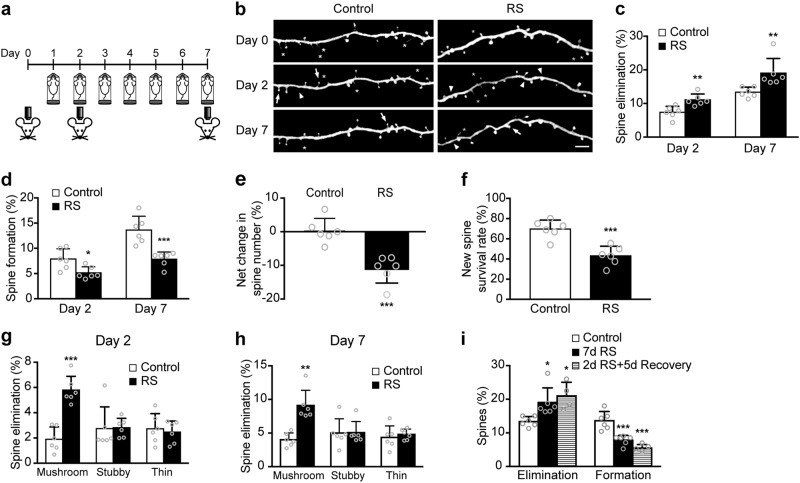
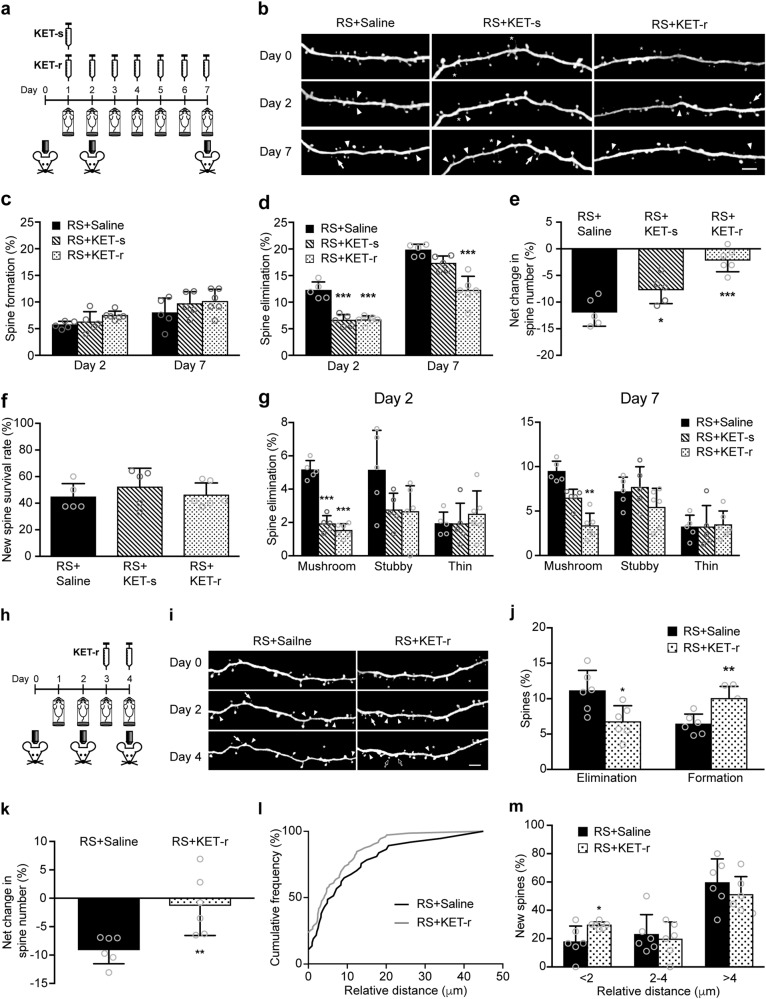
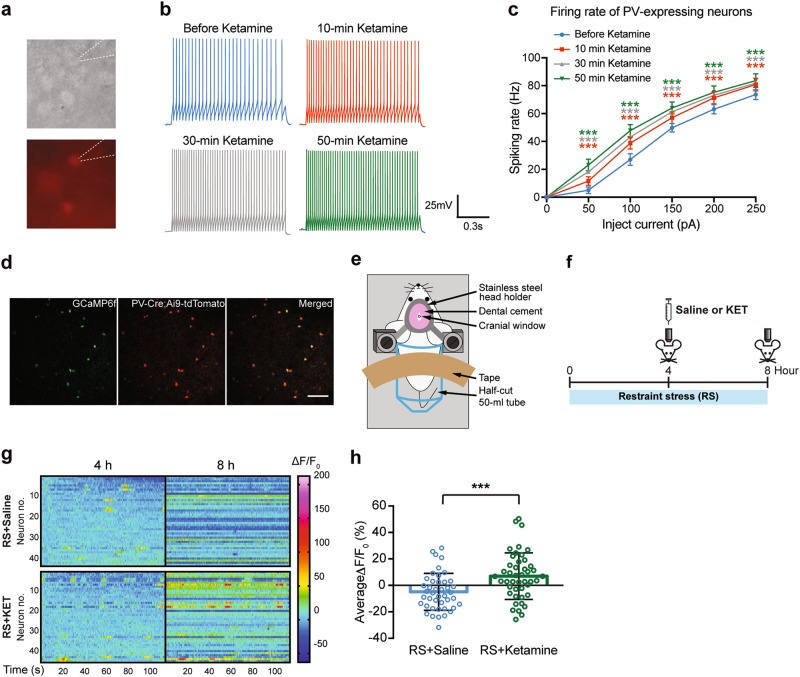
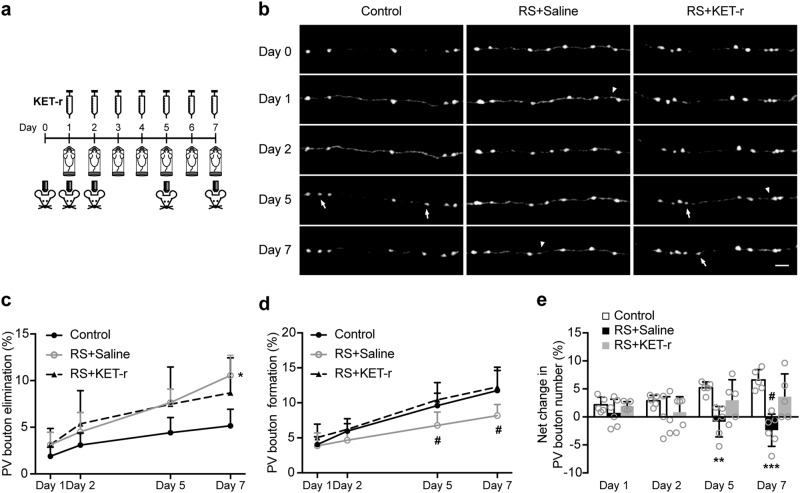
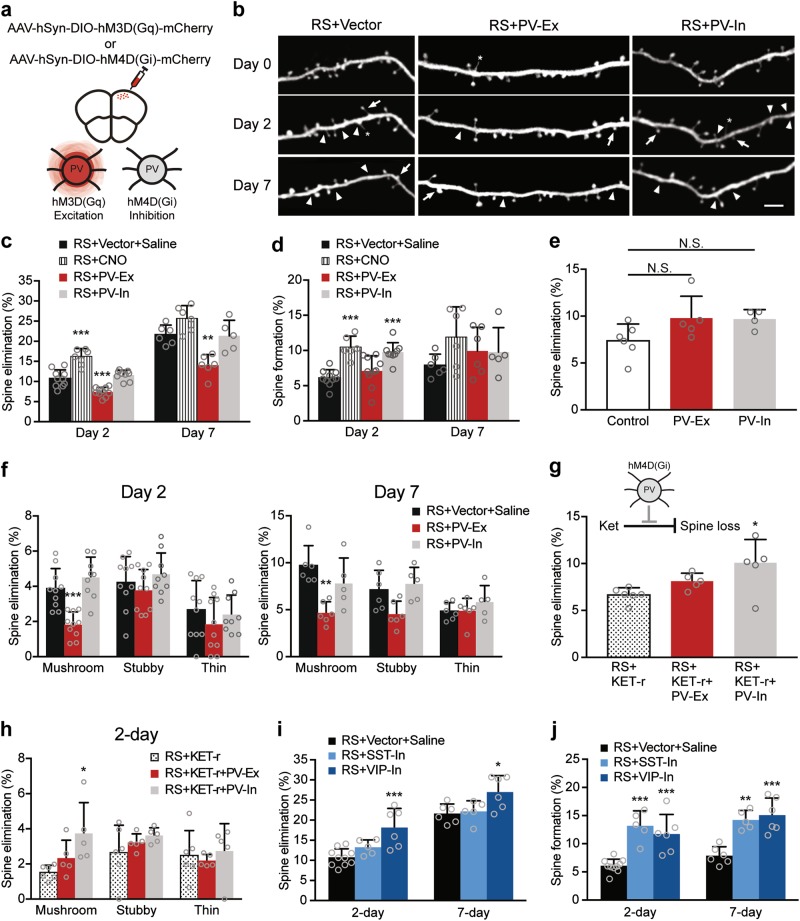
Stress is a major risk factor for the onset of many psychiatric diseases. In rodent models, chronic stress induces depression and impairs excitatory neurotransmission. However, little is known about the effect of stress on synaptic circuitry during the development of behavioral symptoms. Using two-photon transcranial imaging, we studied the effect of repeated restraint stress on dendritic spine plasticity in the frontal cortex in vivo. We found that restraint stress induced dendritic spine loss by decreasing the rate of spine formation and increasing the rate of spine elimination. The N-methyl-d-aspartate receptor antagonist ketamine inhibited stress-induced spine loss mainly by protecting mushroom spines from elimination. Ketamine also induced re-formation of spines in close proximity to previously stress-eliminated spines. Electrophysiological and in vivo imaging experiments showed that ketamine enhanced activity of parvalbumin (PV) interneurons under stress and counterbalanced the stress-induced net loss of PV axonal boutons. In addition, selective chemogenetic excitation of PV interneurons mimicked the protective effects of ketamine on dendritic spines against stress. Collectively, our data provide new insights on the effects of ketamine on synaptic circuitry under stress and a possible mechanism to counteract stress-induced synaptic impairments through PV interneuron activation.
Overview
The claims and statistics of this paper haven’t been checked yet.
Free: it reads the open-access text and checks the first 5 claims that cite a source we can check. Create a free account to check every claim.
Integrity signals
Registry
Cites
Statistics
Figures
Verification
Claims the paper makes
The claims and statistics of this paper haven’t been checked yet.
Free: it reads the open-access text and checks the first 5 claims that cite a source we can check. Create a free account to check every claim.
Claims other papers make about this one
Each is checked against this paper’s own text: does it say what the citing paper says it does?
In the citing paper
“Ng and colleagues [146] found that repeated restraint stress resulted in dendritic spine loss by decreasing spine formation and enhancing spine elimination, while ketamine prevented spine elimination and promoted reformation of stress-eliminated spines.”
From Challenges and rewards of in vivo synaptic density imaging, and its application to the study of depression (2025) · cites this paper as [146]
Self-check
Percentages, sums and reported differences re-computed from the paper’s own numbers.
The self-check needs the paper’s full text.
Citations
Cites
Molecular Mechanisms of Depression: Perspectives on New Treatment Strategies
Lang, U. E., & Borgwardt, S. (2013) · Cellular Physiology and Biochemistry · doi:10.1159/000350094 · Cited by 8,475
Antidepressant effects of ketamine in depressed patients
Berman, R. M., Cappiello, A., Anand, A., Oren, D. A., Heninger, G. R., Charney, D. S., & Krystal, J. H. (2000) · Biological Psychiatry · doi:10.1016/s0006-3223(99)00230-9 · Cited by 3,856
A randomized trial of an N-methyl-D-aspartate antagonist in treatment-resistant major depression.
Zarate, C. A., Singh, J. B., Carlson, P. J., Brutsche, N. E., Ameli, R., Luckenbaugh, D. A., Charney, D. S., & Manji, H. K. (2006) · Archives of General Psychiatry · doi:10.1001/archpsyc.63.8.856 · Cited by 3,766
mTOR-Dependent Synapse Formation Underlies the Rapid Antidepressant Effects of NMDA Antagonists
Li, N., Lee, B., Liu, R.-J., Banasr, M., Dwyer, J. M., Iwata, M., Li, X.-Y., Aghajanian, G., & Duman, R. S. (2010) · Science · doi:10.1126/science.1190287 · Cited by 2,881
THE EFFECTS OF STRESSFUL LIFE EVENTS ON DEPRESSION
Kessler, R. C. (1997) · Annual Review of Psychology · doi:10.1146/annurev.psych.48.1.191 · Cited by 2,111
GABAergic Interneurons in the Neocortex: From Cellular Properties to Circuits
Tremblay, R., Lee, S., & Rudy, B. (2016) · Neuron · doi:10.1016/j.neuron.2016.06.033 · Cited by 2,033
NMDA receptor blockade at rest triggers rapid behavioural antidepressant responses
Autry, A. E., Adachi, M., Nosyreva, E., Na, E. S., Los, M. F., Cheng, P.-F., Kavalali, E. T., & Monteggia, L. M. (2011) · Nature · doi:10.1038/nature10130 · Cited by 1,926
Moghaddam, B., Adams, B., Verma, A., & Daly, D. (1997) · The Journal of Neuroscience · doi:10.1523/jneurosci.17-08-02921.1997 · Cited by 1,793
How Inhibition Shapes Cortical Activity
Isaacson, J. S., & Scanziani, M. (2011) · Neuron · doi:10.1016/j.neuron.2011.09.027 · Cited by 1,678
Dendritic spine pathology in neuropsychiatric disorders
Penzes, P., Cahill, M. E., Jones, K. A., VanLeeuwen, J.-E., & Woolfrey, K. M. (2011) · Nature Neuroscience · doi:10.1038/nn.2741 · Cited by 1,523
Three groups of interneurons account for nearly 100% of neocortical GABAergic neurons
Rudy, B., Fishell, G., Lee, S., & Hjerling‐Leffler, J. (2011) · Developmental Neurobiology · doi:10.1002/dneu.20853 · Cited by 1,420
Anatomical analysis of afferent projections to the medial prefrontal cortex in the rat
Hoover, W. B., & Vertes, R. P. (2007) · Brain Structure and Function · doi:10.1007/s00429-007-0150-4 · Cited by 1,365
Homeostatic Synaptic Plasticity: Local and Global Mechanisms for Stabilizing Neuronal Function
Turrigiano, G. (2012) · Cold Spring Harbor Perspectives in Biology · doi:10.1101/cshperspect.a005736 · Cited by 1,288
Homayoun, H., & Moghaddam, B. (2007) · The Journal of Neuroscience · doi:10.1523/jneurosci.2213-07.2007 · Cited by 1,231
Structure and function of dendritic spines
Nimchinsky, E. A., Sabatini, B. L., & Svoboda, K. (2002) · Annual Review of Physiology · doi:10.1146/annurev.physiol.64.081501.160008 · Cited by 1,208
Long-term dendritic spine stability in the adult cortex
Grutzendler, J., Kasthuri, N., & Gan, W.-B. (2002) · Nature · doi:10.1038/nature01276 · Cited by 1,198
Fast-spiking, parvalbumin + GABAergic interneurons: From cellular design to microcircuit function
Hu, H., Gan, J., & Jonas, P. (2014) · Science · doi:10.1126/science.1255263 · Cited by 1,197
Interneuron dysfunction in psychiatric disorders
Marín, O. (2012) · Nature Reviews Neuroscience · doi:10.1038/nrn3155 · Cited by 1,190
Stably maintained dendritic spines are associated with lifelong memories
Yang, G., Pan, F., & Gan, W.-B. (2009) · Nature · doi:10.1038/nature08577 · Cited by 1,182
Mood disorders and allostatic load
McEwen, B. S. (2003) · Biological Psychiatry · doi:10.1016/s0006-3223(03)00177-x · Cited by 1,135
Mechanisms of ketamine action as an antidepressant
Zanos, P., & Gould, T. D. (2018) · Molecular Psychiatry · doi:10.1038/mp.2017.255 · Cited by 1,127
Interneuron cell types are fit to function
Kepecs, A., & Fishell, G. (2014) · Nature · doi:10.1038/nature12983 · Cited by 1,110
Li, N., Liu, R.-J., Dwyer, J. M., Banasr, M., Lee, B., Son, H., Li, X.-Y., Aghajanian, G., & Duman, R. S. (2011) · Biological Psychiatry · doi:10.1016/j.biopsych.2010.12.015 · Cited by 1,082
Harris, K., Jensen, F., & Tsao, B. (1992) · The Journal of Neuroscience · doi:10.1523/jneurosci.12-07-02685.1992 · Cited by 1,079
Chemogenetics revealed: DREADD occupancy and activation via converted clozapine
Gomez, J. L., Bonaventura, J., Lesniak, W., Mathews, W. B., Sysa-Shah, P., Rodriguez, L. A., Ellis, R. J., Richie, C. T., Harvey, B. K., Dannals, R. F., et al. (2017) · Science · doi:10.1126/science.aan2475 · Cited by 980
Dentritic spines : structure, dynamics and regulation
Hering, H., & Sheng, M. (2001) · Nature Reviews Neuroscience · doi:10.1038/35104061 · Cited by 961
Dendritic spines as basic functional units of neuronal integration
Yuste, R., & Denk, W. (1995) · Nature · doi:10.1038/375682a0 · Cited by 950
Principles of connectivity among morphologically defined cell types in adult neocortex
Jiang, X., Shen, S., Cadwell, C. R., Berens, P., Sinz, F., Ecker, A. S., Patel, S., & Tolias, A. S. (2015) · Science · doi:10.1126/science.aac9462 · Cited by 908
Do thin spines learn to be mushroom spines that remember?
Bourne, J., & Harris, K. M. (2007) · Current Opinion in Neurobiology · doi:10.1016/j.conb.2007.04.009 · Cited by 843
Repeated Stress Induces Dendritic Spine Loss in the Rat Medial Prefrontal Cortex
Radley, J. J., Rocher, A. B., Miller, M., Janssen, W. G. M., Liston, C., Hof, P. R., McEwen, B. S., & Morrison, J. H. (2006) · Cerebral Cortex · doi:10.1093/cercor/bhi104 · Cited by 820
Murrough, J. W., Perez, A. M., Pillemer, S., Stern, J., Parides, M. K., aan het Rot, M., Collins, K. A., Mathew, S. J., Charney, D. S., & Iosifescu, D. V. (2013) · Biological Psychiatry · doi:10.1016/j.biopsych.2012.06.022 · Cited by 786
Radley, J. J., Sisti, H. M., Hao, J., Rocher, A. B., McCall, T., Hof, P. R., McEwen, B. S., & Morrison, J. H. (2004) · Neuroscience · doi:10.1016/j.neuroscience.2004.01.006 · Cited by 769
Development of long-term dendritic spine stability in diverse regions of cerebral cortex
Zuo, Y., Lin, A., Chang, P., & Gan, W.-B. (2005) · Neuron · doi:10.1016/j.neuron.2005.04.001 · Cited by 684
Urban, D. J., & Roth, B. L. (2015) · Annual Review of Pharmacology and Toxicology · doi:10.1146/annurev-pharmtox-010814-124803 · Cited by 668
R-ketamine: a rapid-onset and sustained antidepressant without psychotomimetic side effects
Yang, C., Shirayama, Y., Zhang, J.-C., Ren, Q., Yao, W., Ma, M., Dong, C., & Hashimoto, K. (2015) · Translational Psychiatry · doi:10.1038/tp.2015.136 · Cited by 605
Two dynamically distinct inhibitory networks in layer 4 of the neocortex
Beierlein, M., Gibson, J. R., & Connors, B. W. (2003) · Journal of Neurophysiology · doi:10.1152/jn.00283.2003 · Cited by 591
Ketamine-Induced Loss of Phenotype of Fast-Spiking Interneurons Is Mediated by NADPH-Oxidase
Behrens, M. M., Ali, S. S., Dao, D. N., Lucero, J., Shekhtman, G., Quick, K. L., & Dugan, L. L. (2007) · Science · doi:10.1126/science.1148045 · Cited by 585
Synaptic basis for intense thalamocortical activation of feedforward inhibitory cells in neocortex
Cruikshank, S. J., Lewis, T. J., & Connors, B. W. (2007) · Nature Neuroscience · doi:10.1038/nn1861 · Cited by 558
Branch-specific dendritic Ca2+ spikes cause persistent synaptic plasticity
Cichon, J., & Gan, W.-B. (2015) · Nature · doi:10.1038/nature14251 · Cited by 500
GABAergic interneuron origin of schizophrenia pathophysiology
Nakazawa, K., Zsiros, V., Jiang, Z., Nakao, K., Kolata, S., Zhang, S., & Belforte, J. E. (2012) · Neuropharmacology · doi:10.1016/j.neuropharm.2011.01.022 · Cited by 498
GABA system dysfunction in autism and related disorders: From synapse to symptoms
Coghlan, S., Horder, J., Inkster, B., Mendez, M. A., Murphy, D. G., & Nutt, D. J. (2012) · Neuroscience & Biobehavioral Reviews · doi:10.1016/j.neubiorev.2012.07.005 · Cited by 446
Thomson, A. M. (2002) · Cerebral Cortex · doi:10.1093/cercor/12.9.936 · Cited by 420
Ketamine for Depression: Where Do We Go from Here?
aan het Rot, M., Zarate, C. A., Charney, D. S., & Mathew, S. J. (2012) · Biological Psychiatry · doi:10.1016/j.biopsych.2012.05.003 · Cited by 418
Liu, R.-J., Lee, F. S., Li, X.-Y., Bambico, F., Duman, R. S., & Aghajanian, G. K. (2012) · Biological Psychiatry · doi:10.1016/j.biopsych.2011.09.030 · Cited by 403
Opposite effects of fear conditioning and extinction on dendritic spine remodelling.
Lai, C. S. W., Franke, T. F., & Gan, W.-B. (2012) · Nature · doi:10.1038/nature10792 · Cited by 392
Self-citationKetamine: 50 Years of Modulating the Mind
Li, L., & Vlisides, P. E. (2016) · Frontiers in Human Neuroscience · doi:10.3389/fnhum.2016.00612 · Cited by 385
Bhatt, D. H., Zhang, S., & Gan, W.-B. (2009) · Annual Review of Physiology · doi:10.1146/annurev.physiol.010908.163140 · Cited by 380
From form to function: calcium compartmentalization in dendritic spines
Yuste, R., Majewska, A., & Holthoff, K. (2000) · Nature Neuroscience · doi:10.1038/76609 · Cited by 377
Glucocorticoids are critical regulators of dendritic spine development and plasticity in vivo
Liston, C., & Gan, W.-B. (2011) · Proceedings of the National Academy of Sciences · doi:10.1073/pnas.1110444108 · Cited by 352
Liu, R.-J., & Aghajanian, G. K. (2008) · Proceedings of the National Academy of Sciences · doi:10.1073/pnas.0706679105 · Cited by 346
Synapse Pathology in Psychiatric and Neurologic Disease
van Spronsen, M., & Hoogenraad, C. C. (2010) · Current Neurology and Neuroscience Reports · doi:10.1007/s11910-010-0104-8 · Cited by 345
Structural and synaptic plasticity in stress-related disorders
Christoffel, D. J., Golden, S. A., & Russo, S. J. (2011) · Reviews in the Neurosciences · doi:10.1515/rns.2011.044 · Cited by 334
Goldwater, D. S., Pavlides, C., Hunter, R. G., Bloss, E. B., Hof, P. R., McEwen, B. S., & Morrison, J. H. (2009) · Neuroscience · doi:10.1016/j.neuroscience.2009.08.053 · Cited by 333
Dendritic spines and distributed circuits
Yuste, R. (2011) · Neuron · doi:10.1016/j.neuron.2011.07.024 · Cited by 298
Integration of biochemical signalling in spines
Kennedy, M. B., Beale, H. C., Carlisle, H. J., & Washburn, L. R. (2005) · Nature Reviews Neuroscience · doi:10.1038/nrn1685 · Cited by 286
Stress, anxiety, and dendritic spines: What are the connections?
Leuner, B., & Shors, T. J. (2013) · Neuroscience · doi:10.1016/j.neuroscience.2012.04.021 · Cited by 284
Orientation selectivity and the functional clustering of synaptic inputs in primary visual cortex
Wilson, D. E., Whitney, D. E., Scholl, B., & Fitzpatrick, D. (2016) · Nature Neuroscience · doi:10.1038/nn.4323 · Cited by 268
Ketamine as a Prophylactic Against Stress-Induced Depressive-like Behavior
Brachman, R. A., McGowan, J. C., Perusini, J. N., Lim, S. C., Pham, T. H., Faye, C., Gardier, A. M., Mendez-David, I., David, D. J., Hen, R., et al. (2016) · Biological Psychiatry · doi:10.1016/j.biopsych.2015.04.022 · Cited by 257
Spine synapse remodeling in the pathophysiology and treatment of depression
Duman, C. H., & Duman, R. S. (2015) · Neuroscience Letters · doi:10.1016/j.neulet.2015.01.022 · Cited by 257
Liu, R.-J., Fuchikami, M., Dwyer, J. M., Lepack, A. E., Duman, R. S., & Aghajanian, G. K. (2013) · Neuropsychopharmacology · doi:10.1038/npp.2013.128 · Cited by 256
Antidepressant Potential of (R)-Ketamine in Rodent Models: Comparison with (S)-Ketamine
Fukumoto, K., Toki, H., Iijima, M., Hashihayata, T., Yamaguchi, J.-I., Hashimoto, K., & Chaki, S. (2017) · The Journal of Pharmacology and Experimental Therapeutics · doi:10.1124/jpet.116.239228 · Cited by 252
Ketamine has distinct electrophysiological and behavioral effects in depressed and healthy subjects
Nugent, A. C., Ballard, E. D., Gould, T. D., Park, L. T., Moaddel, R., Brutsche, N. E., & Zarate, C. A. (2019) · Molecular Psychiatry · doi:10.1038/s41380-018-0028-2 · Cited by 250
Garcia, L. S. B., Comim, C. M., Valvassori, S. S., Réus, G. Z., Stertz, L., Kapczinski, F., Gavioli, E. C., & Quevedo, J. (2009) · Progress in Neuro-Psychopharmacology and Biological Psychiatry · doi:10.1016/j.pnpbp.2009.01.004 · Cited by 237
A REVIEW OF KETAMINE ABUSE AND DIVERSION: Review: Ketamine
Sassano-Higgins, S., Baron, D., Juarez, G., Esmaili, N., & Gold, M. (2016) · Depression and Anxiety · doi:10.1002/da.22536 · Cited by 204
Widman, A. J., & McMahon, L. L. (2018) · Proceedings of the National Academy of Sciences · doi:10.1073/pnas.1718883115 · Cited by 204
Miller, O. H., Moran, J. T., & Hall, B. J. (2016) · Neuropharmacology · doi:10.1016/j.neuropharm.2015.07.028 · Cited by 200
Ghosal, S., Hare, B. D., & Duman, R. S. (2017) · Current Opinion in Behavioral Sciences · doi:10.1016/j.cobeha.2016.09.012 · Cited by 199
Chowdhury, G. M. I., Zhang, J., Thomas, M., Banasr, M., Ma, X., Pittman, B., Bristow, L., Schaeffer, E., Duman, R. S., Rothman, D. L., et al. (2017) · Molecular Psychiatry · doi:10.1038/mp.2016.34 · Cited by 197
Untangling GABAergic wiring in the cortical microcircuit
Kubota, Y. (2014) · Current Opinion in Neurobiology · doi:10.1016/j.conb.2013.10.003 · Cited by 172
Irwin, S. A., Iglewicz, A., Nelesen, R. A., Lo, J. Y., Carr, C. H., Romero, S. D., & Lloyd, L. S. (2013) · Journal of Palliative Medicine · doi:10.1089/jpm.2012.0617 · Cited by 167
Remodeling of axo-spinous synapses in the pathophysiology and treatment of depression
Licznerski, P., & Duman, R. S. (2013) · Neuroscience · doi:10.1016/j.neuroscience.2012.09.057 · Cited by 157
Phoumthipphavong, V., Barthas, F., Hassett, S., & Kwan, A. C. (2016) · eneuro · doi:10.1523/eneuro.0133-15.2016 · Cited by 132
Increased axonal bouton dynamics in the aging mouse cortex
Grillo, F. W., Song, S., Teles-Grilo Ruivo, L. M., Huang, L., Gao, G., Knott, G. W., Maco, B., Ferretti, V., Thompson, D., Little, G. E., et al. (2013) · Proceedings of the National Academy of Sciences · doi:10.1073/pnas.1218731110 · Cited by 131
Rigucci, S., Serafini, G., Pompili, M., Kotzalidis, G., & Tatarelli, R. (2009) · World Journal of Biological Psychiatry · doi:10.1080/15622970903131571 · Cited by 128
Plasticity of dendritic spines: subcompartmentalization of signaling
Colgan, L. A., & Yasuda, R. (2014) · Annual Review of Physiology · doi:10.1146/annurev-physiol-021113-170400 · Cited by 124
Perova, Z., Delevich, K., & Li, B. (2015) · The Journal of Neuroscience · doi:10.1523/jneurosci.2670-14.2015 · Cited by 118
Dong, C., Zhang, J.-C., Yao, W., Ren, Q., Ma, M., Yang, C., Chaki, S., & Hashimoto, K. (2016) · International Journal of Neuropsychopharmacology · doi:10.1093/ijnp/pyw089 · Cited by 116
Chen, C.-C., Lu, J., Yang, R., Ding, J. B., & Zuo, Y. (2018) · Molecular Psychiatry · doi:10.1038/mp.2017.159 · Cited by 109
Thomson, A. M., & Bannister, A. P. (1998) · Neuroscience · doi:10.1016/s0306-4522(97)00557-5 · Cited by 102
Opposing Effects of Neuronal Activity on Structural Plasticity
Fauth, M., & Tetzlaff, C. (2016) · Frontiers in Neuroanatomy · doi:10.3389/fnana.2016.00075 · Cited by 102
Jeevakumar, V., Driskill, C., Paine, A., Sobhanian, M., Vakil, H., Morris, B., Ramos, J., & Kroener, S. (2015) · Behavioural Brain Research · doi:10.1016/j.bbr.2015.01.010 · Cited by 84
Eilers, J., & Konnerth, A. (1997) · Current Opinion in Neurobiology · doi:10.1016/s0959-4388(97)80067-0 · Cited by 81
Quirk, M. C. (2009) · Frontiers in Systems Neuroscience · doi:10.3389/neuro.06.013.2009 · Cited by 75
Koike, H., Iijima, M., & Chaki, S. (2013) · Pharmacology Biochemistry and Behavior · doi:10.1016/j.pbb.2013.03.017 · Cited by 75
Pozzi, L., Dorocic, I. P., Wang, X., Carlén, M., & Meletis, K. (2014) · PLoS ONE · doi:10.1371/journal.pone.0083879 · Cited by 74
Chiu, C.-T., Scheuing, L., Liu, G., Liao, H.-M., Linares, G. R., Lin, D., & Chuang, D.-M. (2015) · International Journal of Neuropsychopharmacology · doi:10.1093/ijnp/pyu102 · Cited by 66
Frontal Association Cortex Is Engaged in Stimulus Integration during Associative Learning
Nakayama, D., Baraki, Z., Onoue, K., Ikegaya, Y., Matsuki, N., & Nomura, H. (2014) · Current Biology · doi:10.1016/j.cub.2014.10.078 · Cited by 53
Structural Neuroimaging Studies in Late-Life Depression: A Review
Schweitzer, I., Tuckwell, V., Ames, D., & O'brien, J. (2001) · The World Journal of Biological Psychiatry · doi:10.3109/15622970109027497 · Cited by 52
Hierarchical organization of functional connectivity in the mouse brain: a complex network approach
Bardella, G., Bifone, A., Gabrielli, A., Gozzi, A., & Squartini, T. (2016) · Scientific Reports · doi:10.1038/srep32060 · Cited by 42
Pytka, K., Głuch‐Lutwin, M., Kotańska, M., Waszkielewicz, A. M., Kij, A., & Walczak, M. (2017) · Molecular Neurobiology · doi:10.1007/s12035-017-0605-4 · Cited by 37
Li, Y., Han, L., Wu, K. L., & Chan, Y. (2017) · Neuropharmacology · doi:10.1016/j.neuropharm.2017.05.005 · Cited by 10
Self-citation
Cited by
GABA interneurons are the cellular trigger for ketamine's rapid antidepressant actions
Gerhard, D. M., Pothula, S., Liu, R.-J., Wu, M., Li, X.-Y., Girgenti, M. J., Taylor, S. R., Duman, C. H., Delpire, E., Picciotto, M., et al. (2020) · Journal of Clinical Investigation · doi:10.1172/jci130808 · Cited by 345
Page, C. E., & Coutellier, L. (2019) · Neuroscience & Biobehavioral Reviews · doi:10.1016/j.neubiorev.2019.07.024 · Cited by 213
The Role of Parvalbumin Interneurons in Neurotransmitter Balance and Neurological Disease
Nahar, L., Delacroix, B. M., & Nam, H. W. (2021) · Frontiers in Psychiatry · doi:10.3389/fpsyt.2021.679960 · Cited by 147
Antidepressant actions of ketamine engage cell-specific translation via eIF4E
Aguilar-Valles, A., De Gregorio, D., Matta-Camacho, E., Eslamizade, M. J., Khlaifia, A., Skaleka, A., Lopez-Canul, M., Torres-Berrio, A., Bermudez, S., Rurak, G. M., et al. (2021) · Nature · doi:10.1038/s41586-020-03047-0 · Cited by 144
Association of Oxidative Stress with Neurological Disorders
Hassan, W., Noreen, H., Rehman, S., Kamal, M. A., & da Rocha, J. B. T. (2021) · Current Neuropharmacology · doi:10.2174/1570159x19666211111141246 · Cited by 119
Metadata
- Authors
- Ng, L. H. L., Huang, Y., Han, L., Chang, R. C.-C., Chan, Y. S., & Lai, C. S. W.
- Affiliations
- University of Hong Kong (HK)
- Corresponding author
- Lai, Cora Sau Wan
- Venue
- Translational Psychiatry
- Published
- 2018-12-10
- Volume
- 8
- Issue
- 1
- Pages
- 272-272
- ISSN
- 2158-3188 (ISSN-L)
- PMC
- PMC6288154
- OpenAlex
- W2903823537
- Cited by
- 82
- References
- 93
- Citations by year
- 2026: 8 · 2025: 6 · 2024: 12 · 2023: 13 · 2022: 15 · 2021: 8 · 2020: 13 · 2019: 5 · 2018: 1
- FWCI
- 3.07
- Type
- journal article
- Language
- en
- Open access
- gold
- doi.org
- Licence
- cc-by
- creativecommons.org/licenses/by/4.0 (tdm)
- creativecommons.org/licenses/by/4.0 (vor)
- Locations
- Translational Psychiatry (publishedVersion, cc-by)
- Europe PMC (PubMed Central) (publishedVersion, other-oa)
- PubMed Central (publishedVersion, cc-by)
- PubMed (publishedVersion)
- DOAJ (DOAJ: Directory of Open Access Journals) (submittedVersion)
- Funders
- Research Grants Council, University Grants Committee (27103715, 17128816)
- National Natural Science Foundation of China (31571031)
- Food and Health Bureau of the Government of the Hong Kong Special Administrative Region | Health and Medical Research Fund (03143096)
- Topics
- Life Sciences › Neuroscience › Cellular and Molecular Neuroscience › Neuroscience and Neuropharmacology Research
- Health Sciences › Medicine › Pharmacology (medical) › Treatment of Major Depression
- Life Sciences › Neuroscience › Cellular and Molecular Neuroscience › Neurotransmitter Receptor Influence on Behavior
- Keywords
- ketamine, parvalbumin interneurons, restraint stress, chronic stress, depression, NMDA receptor antagonists, mushroom spines, synaptic plasticity, frontal cortex, axonal boutons
- MeSH terms
- Animals, Female, Frontal Lobe, Interneurons, Ketamine, Male, Mice, Inbred C57BL, Neuronal Plasticity, Parvalbumins, Restraint, Physical, Stress, Psychological, Excitatory Amino Acid Antagonists, Dendritic Spines
About these checks
Registry, retraction, Cites and statistics results are computed, not judged, with one exception: a printed reference that no index lists is read once by a model before it counts as a citation error. Claims are extracted by a model and kept only when their quote appears verbatim in the text; each cited source is then checked, with a model’s help, for whether it says what the claim relies on. Those verdicts can be wrong — read the claim’s quote and the cited source before relying on one.
Statistics and arithmetic are recomputed, not judged.
Confidence bands are shown only for fields calibrated on our annotated test set. None is calibrated yet, so no band is shown.
What counts as a claim ›How we measure confidence ›How we check this ›
Are you an author, or do you see a problem with this page? Request a review
Data sources
Bibliographic data: Semantic Scholar, OpenAlex, Crossref.
Contains information from the Semantic Scholar Academic Graph Datasets, made available under the ODC Attribution License (ODC-BY 1.0).
Semantic Scholar’s data is described in: Kinney, R., et al. (2023). The Semantic Scholar Open Data Platform. arXiv:2301.10140.
