

Increased cortical reactivity to repeated tones at 8 months in infants with later ASD
Open accessThe DOI matches its Crossref record; 110 of the 111 references it cites were found in a registry or an index.
Abstract
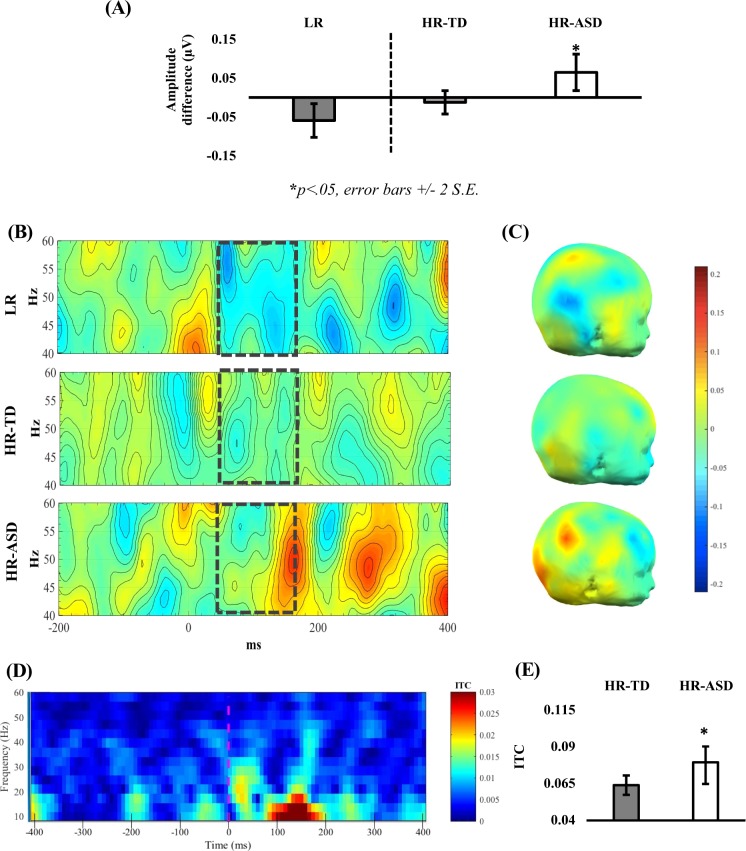
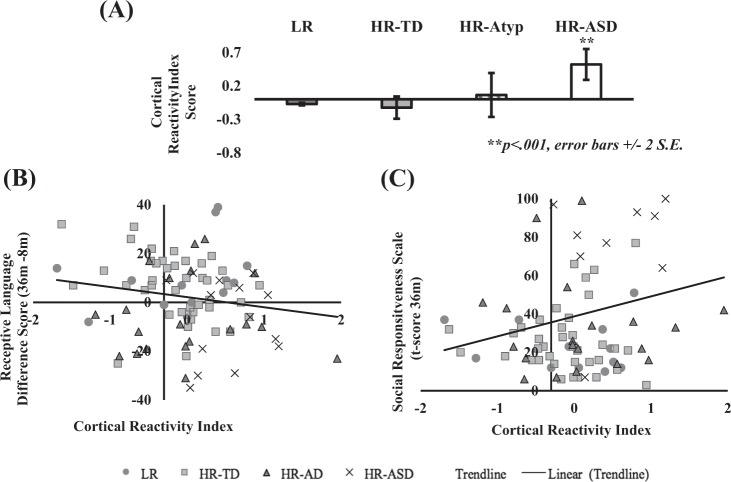
Dysregulation of cortical excitation/inhibition (E/I) has been proposed as a neuropathological mechanism underlying core symptoms of autism spectrum disorder (ASD). Determining whether dysregulated E/I could contribute to the emergence of behavioural symptoms of ASD requires evidence from human infants prior to diagnosis. In this prospective longitudinal study, we examine differences in neural responses to auditory repetition in infants later diagnosed with ASD. Eight-month-old infants with (high-risk: n = 116) and without (low-risk: n = 27) an older sibling with ASD were tested in a non-linguistic auditory oddball paradigm. Relative to high-risk infants with typical development (n = 44), infants with later ASD (n = 14) showed reduced repetition suppression of 40–60 Hz evoked gamma and significantly greater 10–20 Hz inter-trial coherence (ITC) for repeated tones. Reduced repetition suppression of cortical gamma and increased phase-locking to repeated tones are consistent with cortical hyper-reactivity, which could in turn reflect disturbed E/I balance. Across the whole high-risk sample, a combined index of cortical reactivity (cortical gamma amplitude and ITC) was dimensionally associated with reduced growth in language skills between 8 months and 3 years, as well as elevated levels of parent-rated social communication symptoms at 3 years. Our data show that cortical ‘hyper-reactivity’ may precede the onset of behavioural traits of ASD in development, potentially affecting experience-dependent specialisation of the developing brain.
Overview
The claims and statistics of this paper haven’t been checked yet.
Free: it reads the open-access text and checks the first 5 claims that cite a source we can check. Create a free account to check every claim.
Integrity signals
Registry
Cites
Statistics
Figures
Verification
Claims the paper makes
The claims and statistics of this paper haven’t been checked yet.
Free: it reads the open-access text and checks the first 5 claims that cite a source we can check. Create a free account to check every claim.
Claims other papers make about this one
Each is checked against this paper’s own text: does it say what the citing paper says it does?
The cited source doesn’t support the claim as written.
In the citing paper
“In parallel, decreased long-range functional connectivity has also crystalized as a consistent mechanism 113”
From Autism spectrum disorder (2020) · cites this paper as [113]
Checked by a reasoning model — may be wrong.
Experimental — accuracy not yet measuredThe cited source says what the claim attributes to it.
In the citing paper
“Multiple studies report reduced repetition suppression in ASD for other types of stimuli, including human and non-human sound (Font-Alaminos et al., 2020; Kolesnik et al., 2019; Millin et al., 2018; Ruiz-Martínez et al., 2020), tactile stimuli (Piccardi et al., 2021), and dot patterns during an implicit prototype learning task (Schipul & Just, 2016).”
From Are prediction error modifications domain specific in autism but domain general in ADHD? (2025) · cites this paper as Kolesnik et al., 2019
Self-check
Percentages, sums and reported differences re-computed from the paper’s own numbers.
The self-check needs the paper’s full text.
Citations
Cites
Statistical power analyses using G∗Power 3.1: tests for correlation and regression analyses
Faul, F., Erdfelder, E., Buchner, A., & Lang, A.-G. (2009) · Behavior Research Methods · doi:10.3758/brm.41.4.1149 · Cited by 37,615
Delorme, A., & Makeig, S. (2004) · Journal of Neuroscience Methods · doi:10.1016/j.jneumeth.2003.10.009 · Cited by 24,371
Shrestha, S., & Offer, S. M. (2016) · Medical Epigenetics · doi:10.1159/000444713 · Cited by 8,914
The brainweb: phase synchronization and large-scale integration
Varela, F., Lachaux, J.-P., Rodriguez, E., & Martinerie, J. (2001) · Nature Reviews Neuroscience · doi:10.1038/35067550 · Cited by 4,761
Model of autism: increased ratio of excitation/inhibition in key neural systems
Rubenstein, J. L. R., & Merzenich, M. M. (2003) · Genes, Brain and Behavior · doi:10.1034/j.1601-183x.2003.00037.x · Cited by 2,768
Neocortical excitation/inhibition balance in information processing and social dysfunction
Yizhar, O., Fenno, L. E., Prigge, M., Schneider, F., Davidson, T. J., O’Shea, D. J., Sohal, V. S., Goshen, I., Finkelstein, J., Paz, J. T., et al. (2011) · Nature · doi:10.1038/nature10360 · Cited by 2,454
Critical period plasticity in local cortical circuits
Hensch, T. K. (2005) · Nature Reviews Neuroscience · doi:10.1038/nrn1787 · Cited by 2,323
Oscillatory gamma activity in humans and its role in object representation
Tallon-Baudry, C. (1999) · Trends in Cognitive Sciences · doi:10.1016/s1364-6613(99)01299-1 · Cited by 2,129
Analyzing Neural Time Series Data: Theory and Practice
Cohen, M. X. (2014) · doi:10.7551/mitpress/9609.001.0001 · Cited by 2,105
De novo mutations revealed by whole-exome sequencing are strongly associated with autism
Sanders, S. J., Murtha, M. T., Gupta, A. R., Murdoch, J. D., Raubeson, M. J., Willsey, A. J., Ercan-Sencicek, A. G., DiLullo, N. M., Parikshak, N. N., Stein, J. L., et al. (2012) · Nature · doi:10.1038/nature10945 · Cited by 2,084
Research works printed but not linked: 1
- Constantino, J. N. (SRSTM-2) Social Responsiveness ScaleTM, Second Edition | WPS. Retrieved from https://www.wpspublish.com/store/p/2994/srs-2-social-responsiveness-scale-second-edition. (2012).
Cited by
Lord, C., Brugha, T. S., Charman, T., Cusack, J., Dumas, G., Frazier, T., Jones, E. J. H., Jones, R. M., Pickles, A., State, M. W., et al. (2020) · Nature Reviews Disease Primers · doi:10.1038/s41572-019-0138-4 · Cited by 1,859
Self-citationPrediction in autism spectrum disorder: A systematic review of empirical evidence
Cannon, J., O'Brien, A. M., Bungert, L., & Sinha, P. (2021) · Autism Research · doi:10.1002/aur.2482 · Cited by 168
Prediction of autism in infants: progress and challenges
Dawson, G., Rieder, A. D., & Johnson, M. H. (2022) · The Lancet Neurology · doi:10.1016/s1474-4422(22)00407-0 · Cited by 152
Self-citationJohnson, M. H., Charman, T., Pickles, A. R., & Jones, E. J. H. (2021) · Journal of Child Psychology and Psychiatry · doi:10.1111/jcpp.13372 · Cited by 88
“Experimental paradigms provide converging evidence of reduced sensory habituation and gating (Green et al., 2019; A. Kolesnik et al., 2019), enhanced visual discrimination (Gliga et al., 2015; Mottron, Dawson, Sou-li (cid”
Self-citationPiccardi, E. S., Ali, J. B., Jones, E. J. H., Mason, L., Charman, T., Johnson, M. H., Gliga, T., BASIS/STAARS Team, Agyapong, M., Bazelmans, T., et al. (2021) · Journal of Neurodevelopmental Disorders · doi:10.1186/s11689-020-09334-1 · Cited by 87
Self-citationFrança, L. G. S., Ciarrusta, J., Gale‐Grant, O., Fenn‐Moltu, S., Fitzgibbon, S. P., Chew, A. T. M., Falconer, S., Dimitrova, R., Cordero‐Grande, L., Price, A. N., et al. (2024) · Nature Communications · doi:10.1038/s41467-023-44050-z · Cited by 97
“Although higher Q-CHAT scores may indicate more threshold or subthreshold autistic traits, we emphasise our use of this instrument was to capture behaviours not tapped by the BSID-III, rather than to screen for ASD.”
InfluentialReduced Sensory Habituation in Autism and Its Correlation with Behavioral Measures
Jamal, W., Cardinaux, A., Haskins, A. J., Kjelgaard, M., & Sinha, P. (2021) · Journal of Autism and Developmental Disorders · doi:10.1007/s10803-020-04780-1 · Cited by 69
Díaz-Caneja, C., State, M., Hagerman, R., Jacquemont, S., Marín, O., Bagni, C., Umbricht, D., Simonoff, E., de Andrés-Trelles, F., Kaale, A., et al. (2021) · European Neuropsychopharmacology · doi:10.1016/j.euroneuro.2021.02.020 · Cited by 55
“…8 months has reported an EEG pattern uggesting cortical hyperreactivity in infants with increased ikelihood with a later diagnosis of ASD, also associated ith dimensional measures of social communication and anguage development across the whole sample with high ikelihood ( Kolesnik et al., 2019 ).”
BackgroundSelf-citationClinical and Translational Implications of an Emerging Developmental Substructure for Autism
Constantino, J. N., Charman, T., & Jones, E. J. H. (2021) · Annual Review of Clinical Psychology · doi:10.1146/annurev-clinpsy-081219-110503 · Cited by 60
“…with later autism [e.g., larger constriction of the pupil in response to bright light (Nyström et al. 2018), more accurate identification of a distinct visual object among homogenous distractors (Cheung et al. 2018), and exaggerated neural responses to repeated sounds (Kolesnik et al. 2019)].”
BackgroundSelf-citationLinke, A. C., Chen, B., Olson, L., Ibarra, C., Fong, C., Reynolds, S., Apostol, M., Kinnear, M., Müller, R., & Fishman, I. (2021) · Biological Psychiatry Cognitive Neuroscience and Neuroimaging · doi:10.1016/j.bpsc.2021.07.008 · Cited by 62
Peck, F. C., Gabard-Durnam, L. J., Wilkinson, C. L., Bosl, W. J., Tager-Flusberg, H. B., & Nelson, C. A. (2021) · Journal of Neurodevelopmental Disorders · doi:10.1186/s11689-021-09405-x · Cited by 55
Romeo, R. R., Choi, B., Gabard-Durnam, L. J., Wilkinson, C. L., Levin, A. R., Rowe, M. L., Tager-Flusberg, H. B., & Nelson, C. A. (2021) · Journal of Autism and Developmental Disorders · doi:10.1007/s10803-021-05024-6 · Cited by 49
Aperiodic electrophysiological activity in preterm infants is linked to subsequent autism risk
Shuffrey, L. C., Pini, N., Potter, M., Springer, P. E., Lucchini, M., Rayport, Y. K., Sania, A., Firestein, M. R., Brink, L. T., Isler, J. R., et al. (2022) · Developmental Psychobiology · doi:10.1002/dev.22271 · Cited by 47
Wolff, A., & Northoff, G. (2024) · Molecular Psychiatry · doi:10.1038/s41380-023-02337-z · Cited by 49
“In addition, ITPC de fi cits in various frequency bands have also been reported in autism ([59 – 66] see though [67] and [68]).”
Dwyer, P. S. R., Saron, C. D., & Rivera, S. M. (2020) · Research in Autism · doi:10.1016/j.rasd.2020.101645 · Cited by 46
Merchie, A., & Gomot, M. (2023) · Brain Sciences · doi:10.3390/brainsci13071110 · Cited by 42
“, 2019 [162] Cortical Auditory (standard: pure tones Deviants: 1 white noise and 1 pure tone) 116 children with high risk of autism (9.”
BackgroundAutism Spectrum Disorder in Children: Early Signs and Therapeutic Interventions
Abualait, T., Alabbad, M., Kaleem, I., Imran, H., Khan, H. R., Kiyani, M. M., & Bashir, S. (2024) · Children · doi:10.3390/children11111311 · Cited by 47
Ayoub, M. J., Keegan, L., Tager-Flusberg, H. B., & Gill, S. V. (2022) · Brain Sciences · doi:10.3390/brainsci12050602 · Cited by 38
“Limited activation and lack of habituation are also associated with reduced receptive language skills and social skills in autistic children, making these early neural responses a potential biomarker for developmental trajectories across language and social domains [64].”
BackgroundResultLeno, V. C., Ali, J. B., Goodwin, A., Mason, L., Pasco, G., Pickles, A. R., Garg, S., Green, J., Charman, T., Johnson, M. H., et al. (2022) · Molecular Autism · doi:10.1186/s13229-022-00526-1 · Cited by 35
Self-citationClairmont, C. D., Wang, J., Tariq, S., Sherman, H. T., Zhao, M., & Kong, X. (2022) · Frontiers in Neuroscience · doi:10.3389/fnins.2021.812946 · Cited by 47
Neuroimaging Markers of Risk and Pathways to Resilience in Autism Spectrum Disorder
Molnar-Szakacs, I., Kupis, L. B., & Uddin, L. Q. (2020) · Biological Psychiatry Cognitive Neuroscience and Neuroimaging · doi:10.1016/j.bpsc.2020.06.017 · Cited by 31
“, 2019 (40) 143(116, 27) [EEG analyzed: 94(80, 14)] 8–36 EEG Cortical ‘hyperreactivity’ in response to a non- linguistic auditory oddball paradigm ASD diagnosis; language outcomes; social outcomes UK/not reported Longitudinal**”
BackgroundSocial Knowledge & Performance in Autism: A Critical Review & Recommendations
Gates, J. A., McNair, M. L., Richards, J. K., & Lerner, M. D. (2023) · Clinical Child and Family Psychology Review · doi:10.1007/s10567-023-00449-0 · Cited by 34
“, neural activation in response to repeatedly presented stimuli) to faces (Ewbank et al., 2017; Kolesnik et al., 2019).”
BackgroundTeams, T. S. A. E., Ali, J. B., Kolesnik, A., Quiroz, I., Mason, L., Garg, S., Green, J., Johnson, M. H., & Jones, E. J. H. (2021) · Journal of Neurodevelopmental Disorders · doi:10.1186/s11689-021-09364-3 · Cited by 26
“Interestingly, previous work with 8-month-old infants with later ASD demonstrated differentiation of auditory stimuli over posterior areas only [60].”
BackgroundSelf-citationHuang, Q., Velthuis, H., Pereira, A. C., Ahmad, J., Cooke, S. F., Ellis, C. L., Ponteduro, F. M., Puts, N. A. J., Dimitrov, M., Batallé, D., et al. (2023) · Translational Psychiatry · doi:10.1038/s41398-023-02619-8 · Cited by 32
“If con fi rmed, they may provide a means to identify GABA-dependent sensory differences at the level of the individual and indicate that these are upstream of perceptual and more complex autistic features.”
BackgroundResultInfluentialMorrel, J., Singapuri, K., Landa, R. J., & Reetzke, R. (2023) · Frontiers in Human Neuroscience · doi:10.3389/fnhum.2023.1211676 · Cited by 27
Larger pupil dilation to nonsocial sounds in infants with subsequent autism diagnosis
Rudling, M., Nyström, P., Bölte, S., & Falck‐Ytter, T. (2021) · Journal of Child Psychology and Psychiatry · doi:10.1111/jcpp.13520 · Cited by 25
Dwyer, P. S. R., Takarae, Y., Zadeh, I., Rivera, S. M., & Saron, C. D. (2022) · Frontiers in Human Neuroscience · doi:10.3389/fnhum.2022.811547 · Cited by 22
“…and predict later social features of Autism Spectrum Development (ASD; Baranek, 1999; Baranek et al., 2018; Damiano-Goodwin et al., 2018; Kolesnik et al., 2019), but sensory processing is a correlate (Lin and Huang, 2019) or aspect (McConachie et al., 2020) of autistic people’s quality…”
BackgroundClements, C. C., Ascunce, K., & Nelson, C. A. (2022) · Journal of the American Academy of Child & Adolescent Psychiatry · doi:10.1016/j.jaac.2022.07.861 · Cited by 24
Autonomic and Electrophysiological Evidence for Reduced Auditory Habituation in Autism
Gandhi, T. K., Tsourides, K., Singhal, N., Cardinaux, A. L., Jamal, W., Pantazis, D., Kjelgaard, M., & Sinha, P. (2020) · Journal of Autism and Developmental Disorders · doi:10.1007/s10803-020-04636-8 · Cited by 24
Halliday, A. R., Vucic, S. N., Georges, B., LaRoche, M., Mendoza Pardo, M. A., Swiggard, L. O., McDonald, K., Olofsson, M., Menon, S. N., Francis, S. M., et al. (2024) · Frontiers in Psychiatry · doi:10.3389/fpsyt.2024.1474003 · Cited by 20
Muès, M., Schaubroeck, S., Demurie, E., & Roeyers, H. (2024) · Autism & Developmental Language Impairments · doi:10.1177/23969415241253554 · Cited by 23
“No signi fi cant effects were observed for expressive language (Kolesnik et al., 2019).”
BackgroundMethod“Neural Noise” in Auditory Responses in Young Autistic and Neurotypical Children
Dwyer, P. S. R., Vukušić, S., Williams, Z. J., Saron, C. D., & Rivera, S. M. (2022) · Journal of Autism and Developmental Disorders · doi:10.1007/s10803-022-05797-4 · Cited by 16
Retinal GABAergic Alterations in Adults with Autism Spectrum Disorder
Huang, Q., Ellis, C. L., Leo, S. M., Velthuis, H., Pereira, A. C., Dimitrov, M., Ponteduro, F. M., Wong, N. M. L., Daly, E., Murphy, D., et al. (2024) · Journal of Neuroscience · doi:10.1523/jneurosci.1218-23.2024 · Cited by 19
“We and others have reported that individuals with ASD tend not to suppress cortical responses to repeated auditory tones (Kolesnik et al., 2019).”
BackgroundGeng, X., Kang, X., & Wong, P. C. M. (2020) · Progress in molecular biology and translational science · doi:10.1016/bs.pmbts.2020.04.015 · Cited by 18
Habituation of auditory responses in young autistic and neurotypical children
Dwyer, P. S. R., Williams, Z. J., Vukušić, S., Saron, C. D., & Rivera, S. M. (2023) · Autism Research · doi:10.1002/aur.3022 · Cited by 14
“Within this framework, repeated and/or irrelevant sensory inputs might not be inhibited in autism as they would be in TD, resulting in a more robust neural response to these repeated stimuli (Ethridge et al., 2016; Kolesnik et al., 2019).”
BackgroundInfluentialThe development of the social brain in baby siblings of children with autism
Dean, D., Freeman, A., & Lainhart, J. E. (2019) · Current Opinion in Psychiatry · doi:10.1097/yco.0000000000000572 · Cited by 15
Dwyer, P. S. R., Sillas, A., Prieto, M., Camp, E., Nordahl, C. W., & Rivera, S. M. (2024) · Autism Research · doi:10.1002/aur.3174 · Cited by 17
“Atypical sensory processing is apparent in infancy (Baranek, 1999; Kolesnik et al., 2019), and longitudinal studies of infants at heightened autism likelihood suggest sensory differences can predict later social/ communication differences (Baranek et al., 2018; Damiano-Goodwin et al., 2018; Feldman…”
Explaining individual differences in infant visual sensory seeking
Piccardi, E. S., Johnson, M. H., & Gliga, T. (2020) · Infancy · doi:10.1111/infa.12356 · Cited by 15
Self-citationA Developmental Social Neuroscience Perspective on Infant Autism Interventions
Dawson, G., Rieder, A. D., & Johnson, M. H. (2023) · Annual Review of Developmental Psychology · doi:10.1146/annurev-devpsych-120621-042753 · Cited by 15
Self-citationLaet, A. D., Piccardi, E. S., Ali, J. B., Charman, T., Johnson, M. H., Jones, E. J. H., Bedford, R., Gliga, T., The STAARS Team, Agyapong, M., et al. (2022) · Scientific Reports · doi:10.1038/s41598-022-18018-w · Cited by 17
Self-citationIncreased context adjustment is associated with auditory sensitivities but not with autistic traits
Randeniya, R., Mattingley, J. B., & Garrido, M. I. (2022) · Autism Research · doi:10.1002/aur.2759 · Cited by 14
“We note, however, that our findings are not consistent with previous studies, using different tasks to the one employed here, that reported differences in auditory prediction-error signaling in autistic children (Kolesnik et al., 2019), adolescents (Lawson et al.”
ResultWhelan, T. P., Daly, E., Puts, N. A. J., Smith, P. L., Allison, C. L., Baron‐Cohen, S., Malievskaia, E., Murphy, D., & McAlonan, G. M. (2024) · BMC Psychiatry · doi:10.1186/s12888-024-05768-2 · Cited by 13
“We and others have observed less repetition suppression in both eight-month-old infants who go on to receive a diagnosis or autism, and adults with a diagnosis of autism [19, 46].”
BackgroundPsychological and Neural Differences of Music Processing in Autistic Individuals: A Scoping Review
Ruiz, E. H., Qi, R., Welsh, E., Wampler, M., & Bradshaw, L. (2022) · Journal of Music Therapy · doi:10.1093/jmt/thab020 · Cited by 13
Whelan, T. P., Daly, E., Puts, N. A. J., Malievskaia, E., Murphy, D., & McAlonan, G. M. (2023) · Journal of Child Psychology and Psychiatry · doi:10.1111/jcpp.13940 · Cited by 9
Infant sensory gating and a developmental cascade to autistic traits and anxiety
Schwarzlose, R. F. (2025) · Neuropsychopharmacology · doi:10.1038/s41386-025-02253-6 · Cited by 6
“In a sample of children at high familial likelihood for developing autism, reduced sensory gating to repeated sounds was found in 8-month-old infants who went on to receive an autism diagnosis, relative to those identi fi ed as typically developing toddlers, at 3 years of age [64].”
Impact of brain overgrowth on sensorial learning processing during the first year of life
López‐Arango, G., Deguire, F., Agbogba, K., Boucher, M.-A., Knoth, I. S., El-Jalbout, R., Côté, V., Damphousse, A., Kadoury, S., & Lippé, S. (2022) · Frontiers in Human Neuroscience · doi:10.3389/fnhum.2022.928543 · Cited by 6
“…repetition and change detection have shown to be influenced by age and by risk factors such as familial risk for autism or language learning impairment (Dehaene-Lambertz and Dehaene, 1994; Cheour et al., 2000; Guiraud et al., 2011; Cantiani et al., 2016; Chen et al., 2016; Kolesnik et al., 2019).”
BackgroundWTools: A MATLAB-based toolbox for time-frequency analysis of infant data
Ferrari, A., Filippin, L., Buiatti, M., & Parise, E. (2025) · PLoS ONE · doi:10.1371/journal.pone.0323179 · Cited by 7
Psychedelic Modulation of Excitation/Inhibition Balance: A Dual-Phase Neurodevelopmental Model
Kandilakis, C. L., & Papatheodoropoulos, C. (2026) · ACS Chemical Neuroscience · doi:10.1021/acschemneuro.5c00892 · Cited by 5
Cooke, J., Molloy, C. J., Cáceres, A. S. J., Dinneen, T. J., Bourgeron, T., Murphy, D., Gallagher, L., & Loth, E. (2022) · Frontiers in Neuroscience · doi:10.3389/fnins.2022.806990 · Cited by 5
Sex-Differential Neuroanatomy in Autism: A Shift Toward Male-Characteristic Brain Structure
Hernandez, L. M. (2023) · American Journal of Psychiatry · doi:10.1176/appi.ajp.20220939 · Cited by 5
Cohenour, T., Dickinson, A. H., Jeste, S., Gulsrud, A. C., & Kasari, C. L. (2024) · European Journal of Neuroscience · doi:10.1111/ejn.16358 · Cited by 4
“…suggests that the integrity of more domain-general regulatory processes reflecting excitatory/ inhibitory coordination (e.g., neural processing of stimulus repetition) may shape early receptive language development and contribute to language heterogeneity within autism (Kolesnik et al., 2019).”
BackgroundMeasuring habituation to stimuli: The Italian version of the Sensory Habituation Questionnaire
Tarantino, V., Passerello, N., Ben‐Sasson, A., Podoly, T. Y., Santostefano, A., Oliveri, M., Mandolesi, L., & Turriziani, P. (2024) · PLoS ONE · doi:10.1371/journal.pone.0309030 · Cited by 5
Dwyer, P. S. R., Sillas, A., Enzler, F., Noreña, A. J., Saron, C. D., & Rivera, S. M. (2025) · Journal of Autism and Developmental Disorders · doi:10.1007/s10803-025-06924-7 · Cited by 5
Are prediction error modifications domain specific in autism but domain general in ADHD?
Plank, I. S., Yurova, A., Pior, A., Nowak, J., Bierlich, A. M., Papazov, B., Shi, Z., & Falter-Wagner, C. M. (2025) · Imaging neuroscience · doi:10.1162/imag.a.942 · Cited by 3
“…studies report reduced repetition suppression in ASD for other types of stimuli, including human and non-human sound ( Font-Alaminos et al., 2020; Kolesnik et al., 2019; Millin et al., 2018; Ruiz-Mart í nez et al., 2020), tactile stimuli ( Piccardi et al., 2021), and dot patterns during an…”
Polver, S., Cantiani, C., Bulf, H., Piazza, C., Turati, C., Molteni, M., & Riva, V. (2024) · Journal of Experimental Child Psychology · doi:10.1016/j.jecp.2024.106132 · Cited by 4
Whelan, T. P., Daly, E., Puts, N. A. J., Malievskaia, E., Murphy, D., & McAlonan, G. M. (2023) · medRxiv · doi:10.1101/2023.05.25.23290521 · Cited by 3
Altered spectral patterns of aperiodic electroencephalography in autism
Chien, Y., Hsieh, M. H., Hsieh, Y., & Tseng, Y. (2026) · Psychiatry and Clinical Neurosciences · doi:10.1111/pcn.70044 · Cited by 2
“2 2 – 6 Research has shown that infants with an older autistic sibling, who were later diagnosed with ASD themselves, exhibited heightened pupillary reactivity 7 and increased cortical reactivity 8,9 during the fi rst year of life.”
Tavassoli, T., Marco, E. J., & Puts, N. (2026) · Current Psychiatry Reports · doi:10.1007/s11920-026-01682-4 · Cited by 2
“EEG findings support differences in sensory processes in autistic children and adults, with differences found in sensory gating, adaptation, and in response to GABAergic intervention across developmental stages [71, 74–76].”
Alikadic, L., & Röer, J. P. (2024) · Research in Autism · doi:10.1016/j.rasd.2024.102493 · Cited by 3
Ali, J. B., Kolesnik, A., Quiroz, I., Mason, L., Garg, S., Green, J., Johnson, M. H., & Jones, E. J. H. (2020) · Research Square · doi:10.21203/rs.3.rs-36156/v1 · Cited by 3
Self-citationMoppert, S., & Mercado, E. (2024) · Developmental Psychobiology · doi:10.1002/dev.22504 · Cited by 1
Unraveling neural adaptation to vocal and non-vocal sounds in autism
Merchie, A., Bonnet‐Brilhault, F., Escera, C., Houy‐Durand, E., & Gomot, M. (2024) · Clinical Neurophysiology · doi:10.1016/j.clinph.2024.12.003 · Cited by 1
“…designed for this purpose (i.e. oddball paradigm) (Cary et al., 2023; Gonzalez-Gadea et al., 2015; Guiraud et al., 2011; Jamal et al., 2020; Kolesnik et al., 2019; Martineau et al., 1992; Ruiz-Martínez et al., 2020) or compared only a limited number of repetitions (Cary et al., 2023;…”
Receptive–Expressive Language Phenotypes in Infants and Toddlers With Autism Features
Cohenour, T., Gulsrud, A. C., & Kasari, C. L. (2026) · Autism Research · doi:10.1002/aur.70214 · Cited by 1
AUTISMO: REFLEXÕES TEÓRICAS E PRÁTICAS
Parlato-Oliveira, É., Diniz, N. L. F., & Valadares, E. R. (2020) · Apae Ciência · doi:10.29327/216984.14.2-3 · Cited by 1
Autism Spectrum Disorder and Co-morbidities: A Closer Look at Pathogenesis and Clinical Implications
Kong, X. (2020) · American Journal of Biomedical Science & Research · doi:10.34297/ajbsr.2020.07.001168
“The specific pattern of deficits observed in each group may help guide the development of treatments designed to down-regulate versus up-regulate visual processing within the respective clinical groups [36,37] used the latest advances in deep learning to formulate a personalized machine learning framework for characte…”
BackgroundInvestigating profiles of attention and arousal in Autism Spectrum Condition (ASC)
Fedyushkin, I. A. (2020) · Nottingham ePrints (University of Nottingham)
Пептидная регуляция репаративных процессов в органах иммунной системы при ускоренном старении
Хавинсон, В. Х., Линькова, Н. С., Кветной, И. М., Полякова, В. О., Трофимов, А. В., Sevostyanova, N. N., & Абдулрагимов, Р. И. (2010) · Open Access Repository (Belgorod State National Research University)
Sphere-of-Influence Graphs on a Sphere.
Kubicka, E., & Kubicki, G. (2004) · Ars Combinatoria
3º CONGRESSO INTERDISCIPLINAR DA ÁREA MÉDICA
Recima, R. (2022) · RECIMA21 - Revista Científica Multidisciplinar · doi:10.47820/recima21.v3i1.2558
Predictive coding deficits in autism: Abnormalities in feedback or feedforward connectivities?
Wei, J. I. N. G., Qi, C. H. E. N., Yun Qing, X. U. E., Miao, Y. A. N. G., & ZHANG, J. (2024) · Advances in Psychological Science · doi:10.3724/sp.j.1042.2024.00813
Mengke, J. I. N., Yan, L., Shaoying, L. I. U., & Xiao, N. G. (2025) · Advances in Psychological Science · doi:10.3724/sp.j.1042.2025.1794
Dimitrov, M., Wong, N. M. L., Leaman, S., França, L. G. S., Valasakis, I., He, J. L., Lythgoe, D. J., Findon, J. L., Wichers, R., Stoencheva, V., et al. (2025) · Biological Psychiatry Global Open Science · doi:10.1016/j.bpsgos.2025.100663 · Cited by 1
Experience-based specialisation: underpinnings of communication in typical and atypical development
Kolesnik, A. (2020) · BIROn (Birkbeck, University of London) · doi:10.18743/pub.00045818 · Cited by 1
Self-citationAli, J. B., Kolesnik, A., Quiroz, I., Mason, L., Garg, S., Green, J., Johnson, M. H., & Jones, E. J. H. (2021) · Figshare · doi:10.6084/m9.figshare.14700437
Self-citationCarter Leno, V., Ali, J. B., Goodwin, A., Mason, L., Pasco, G., Pickles, A. R., Garg, S., Green, J., Charman, T., Johnson, M. H., et al. (2023) · Figshare · doi:10.6084/m9.figshare.22599107
Self-citationPiccardi, E. S., Ali, J. B., Jones, E. J. H., Mason, L., Charman, T., Johnson, M. H., & Gliga, T. (2021) · Figshare · doi:10.6084/m9.figshare.13515637
Self-citationSleep and Sensory Processing in Infants at Elevated and Typical Likelihood for Autism
Laet, A. D. (2024) · UEA Digital Repository (University of East Anglia)
López‐Arango, G. (2021) · Papyrus : Institutional Repository (Université de Montréal) · doi:10.71781/30007
Dwyer, P. (2023) · eScholarship (California Digital Library) · Cited by 1
Language Development in Emerging Autism: Neural and Behavioral Mechanisms of Risk and Resilience
Cohenour, T. (2024) · eScholarship (California Digital Library)
Rudling, M. (2023) · Uppsala University Publications (Uppsala University)
Processus prédictifs lors du traitements de stimuli socio-émotionnels chez les adultes autistes
Lacroix, A. (2022) · theses.fr (ABES) · doi:10.70675/f1cca367zf868z4321z9c65zf006c18dd124
Metadata
- Authors
- Kolesnik, A., Begum Ali, J., Gliga, T., Guiraud, J., Charman, T., Johnson, M. H., Jones, E. J. H., & The BASIS Team
- Affiliations
- University of London (GB)
- King's College London (GB)
- University of Cambridge (GB)
- Corresponding author
- Kolesnik, Anna
- Jones, Emily J. H.
- Venue
- Translational Psychiatry
- Published
- 2019-01-30
- Volume
- 9
- Issue
- 1
- Pages
- 46-46
- ISSN
- 2158-3188 (ISSN-L)
- PMC
- PMC6353960
- OpenAlex
- W2912136564
- Cited by
- 75
- References
- 111
- Citations by year
- 2026: 3 · 2025: 6 · 2024: 15 · 2023: 11 · 2022: 14 · 2021: 12 · 2020: 11 · 2019: 1
- FWCI
- 5.52
- Type
- journal article
- Language
- en
- Open access
- gold
- doi.org
- Licence
- cc-by
- creativecommons.org/licenses/by/4.0 (tdm)
- creativecommons.org/licenses/by/4.0 (vor)
- Locations
- Translational Psychiatry (publishedVersion, cc-by)
- Europe PMC (PubMed Central) (publishedVersion, other-oa)
- PubMed Central (publishedVersion, cc-by)
- PubMed (publishedVersion)
- BIROn (Birkbeck, University of London) (acceptedVersion)
- UEA Digital Repository (University of East Anglia) (acceptedVersion)
- Apollo (University of Cambridge) (submittedVersion, cc-by)
- BOA (University of Milano-Bicocca) (submittedVersion, other-oa)
- DOAJ (DOAJ: Directory of Open Access Journals) (submittedVersion)
- Research Portal (King's College London) (submittedVersion, other-oa)
- Apollo (cc-by)
- Funders
- Wellcome Trust
- European Federation of Pharmaceutical Industries and Associations (FP7/20072013)
- International Seafood Sustainability Foundation
- European Commission (2007–2013, FP7 2007-2013, 115300, FP7/2007)
- Innovative Medicines Initiative (FP7/2007‐2013, 115300)
- Medical Research Council (FP7/20072013, 115300, MR/K021389/1, G0701484)
- Economic and Social Research Council (ES/J500021/1, 1649263, FP7/2007-2013)
- European Social Fund (2007–2013, FP7/2007-2013)
- Topics
- Life Sciences › Neuroscience › Cognitive Neuroscience › Autism Spectrum Disorder Research
- Life Sciences › Biochemistry, Genetics and Molecular Biology › Genetics › Genetics and Neurodevelopmental Disorders
- Health Sciences › Medicine › Psychiatry and Mental health › Child Nutrition and Feeding Issues
- Keywords
- autism spectrum disorder, auditory oddball paradigm, repetition suppression, gamma oscillations, inter-trial phase coherence, phase locking, infants, high-risk siblings, language development, social communication, early biomarkers, experience-dependent brain development
- MeSH terms
- Autism Spectrum Disorder, Acoustic Stimulation, Cerebral Cortex, Female, Humans, Infant, Longitudinal Studies, Magnetic Resonance Imaging, Male, Prospective Studies, Social Behavior
About these checks
Registry, retraction, Cites and statistics results are computed, not judged, with one exception: a printed reference that no index lists is read once by a model before it counts as a citation error. Claims are extracted by a model and kept only when their quote appears verbatim in the text; each cited source is then checked, with a model’s help, for whether it says what the claim relies on. Those verdicts can be wrong — read the claim’s quote and the cited source before relying on one.
Statistics and arithmetic are recomputed, not judged.
Confidence bands are shown only for fields calibrated on our annotated test set. None is calibrated yet, so no band is shown.
What counts as a claim ›How we measure confidence ›How we check this ›
Are you an author, or do you see a problem with this page? Request a review
Data sources
Bibliographic data: Semantic Scholar, OpenAlex, Crossref.
Contains information from the Semantic Scholar Academic Graph Datasets, made available under the ODC Attribution License (ODC-BY 1.0).
Semantic Scholar’s data is described in: Kinney, R., et al. (2023). The Semantic Scholar Open Data Platform. arXiv:2301.10140.
