

Increased cortical reactivity to repeated tones at 8 months in infants with later ASD
Open accessThe DOI matches its Crossref record; 110 of the 111 references it cites were found in a registry or an index.
Abstract
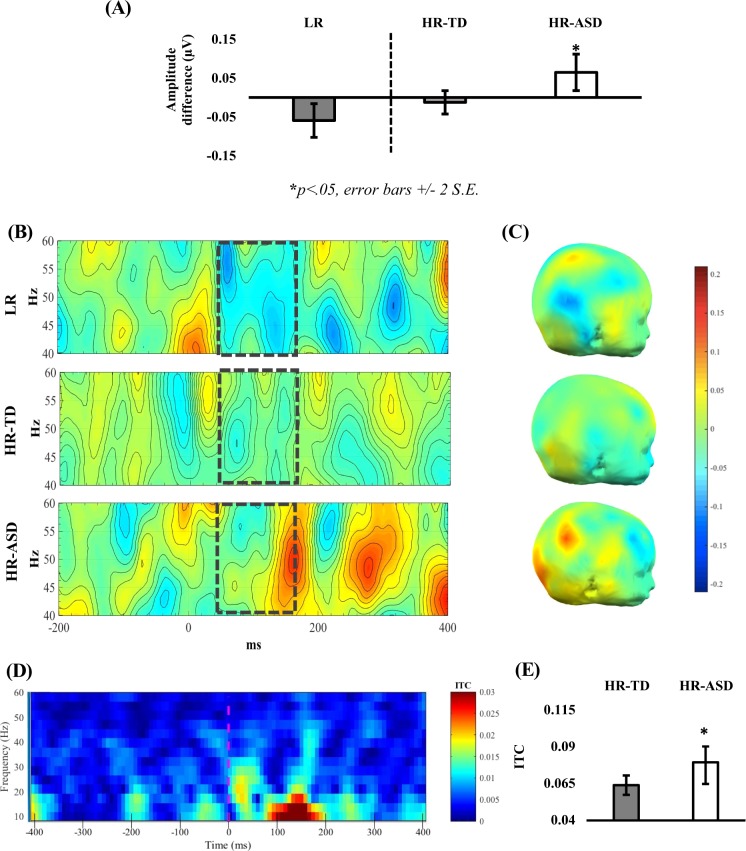
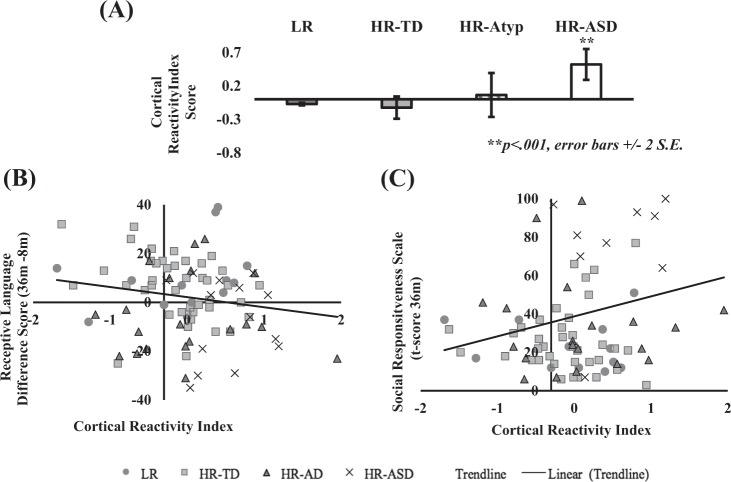
Dysregulation of cortical excitation/inhibition (E/I) has been proposed as a neuropathological mechanism underlying core symptoms of autism spectrum disorder (ASD). Determining whether dysregulated E/I could contribute to the emergence of behavioural symptoms of ASD requires evidence from human infants prior to diagnosis. In this prospective longitudinal study, we examine differences in neural responses to auditory repetition in infants later diagnosed with ASD. Eight-month-old infants with (high-risk: n = 116) and without (low-risk: n = 27) an older sibling with ASD were tested in a non-linguistic auditory oddball paradigm. Relative to high-risk infants with typical development (n = 44), infants with later ASD (n = 14) showed reduced repetition suppression of 40–60 Hz evoked gamma and significantly greater 10–20 Hz inter-trial coherence (ITC) for repeated tones. Reduced repetition suppression of cortical gamma and increased phase-locking to repeated tones are consistent with cortical hyper-reactivity, which could in turn reflect disturbed E/I balance. Across the whole high-risk sample, a combined index of cortical reactivity (cortical gamma amplitude and ITC) was dimensionally associated with reduced growth in language skills between 8 months and 3 years, as well as elevated levels of parent-rated social communication symptoms at 3 years. Our data show that cortical ‘hyper-reactivity’ may precede the onset of behavioural traits of ASD in development, potentially affecting experience-dependent specialisation of the developing brain.
Overview
The claims and statistics of this paper haven’t been checked yet.
Free: it reads the open-access text and checks the first 5 claims that cite a source we can check. Create a free account to check every claim.
Integrity signals
Registry
Cites
Statistics
Figures
Verification
Claims the paper makes
The claims and statistics of this paper haven’t been checked yet.
Free: it reads the open-access text and checks the first 5 claims that cite a source we can check. Create a free account to check every claim.
Claims other papers make about this one
Each is checked against this paper’s own text: does it say what the citing paper says it does?
The cited source doesn’t support the claim as written.
In the citing paper
“In parallel, decreased long-range functional connectivity has also crystalized as a consistent mechanism 113”
From Autism spectrum disorder (2020) · cites this paper as [113]
Checked by a reasoning model — may be wrong.
Experimental — accuracy not yet measuredThe cited source says what the claim attributes to it.
In the citing paper
“Multiple studies report reduced repetition suppression in ASD for other types of stimuli, including human and non-human sound (Font-Alaminos et al., 2020; Kolesnik et al., 2019; Millin et al., 2018; Ruiz-Martínez et al., 2020), tactile stimuli (Piccardi et al., 2021), and dot patterns during an implicit prototype learning task (Schipul & Just, 2016).”
From Are prediction error modifications domain specific in autism but domain general in ADHD? (2025) · cites this paper as Kolesnik et al., 2019
Self-check
Percentages, sums and reported differences re-computed from the paper’s own numbers.
The self-check needs the paper’s full text.
Citations
Cites
Statistical power analyses using G∗Power 3.1: tests for correlation and regression analyses
Faul, F., Erdfelder, E., Buchner, A., & Lang, A.-G. (2009) · Behavior Research Methods · doi:10.3758/brm.41.4.1149 · Cited by 37,615
Delorme, A., & Makeig, S. (2004) · Journal of Neuroscience Methods · doi:10.1016/j.jneumeth.2003.10.009 · Cited by 24,371
Shrestha, S., & Offer, S. M. (2016) · Medical Epigenetics · doi:10.1159/000444713 · Cited by 8,914
The brainweb: phase synchronization and large-scale integration
Varela, F., Lachaux, J.-P., Rodriguez, E., & Martinerie, J. (2001) · Nature Reviews Neuroscience · doi:10.1038/35067550 · Cited by 4,761
Model of autism: increased ratio of excitation/inhibition in key neural systems
Rubenstein, J. L. R., & Merzenich, M. M. (2003) · Genes, Brain and Behavior · doi:10.1034/j.1601-183x.2003.00037.x · Cited by 2,768
Neocortical excitation/inhibition balance in information processing and social dysfunction
Yizhar, O., Fenno, L. E., Prigge, M., Schneider, F., Davidson, T. J., O’Shea, D. J., Sohal, V. S., Goshen, I., Finkelstein, J., Paz, J. T., et al. (2011) · Nature · doi:10.1038/nature10360 · Cited by 2,454
Critical period plasticity in local cortical circuits
Hensch, T. K. (2005) · Nature Reviews Neuroscience · doi:10.1038/nrn1787 · Cited by 2,323
Oscillatory gamma activity in humans and its role in object representation
Tallon-Baudry, C. (1999) · Trends in Cognitive Sciences · doi:10.1016/s1364-6613(99)01299-1 · Cited by 2,129
Analyzing Neural Time Series Data: Theory and Practice
Cohen, M. X. (2014) · doi:10.7551/mitpress/9609.001.0001 · Cited by 2,105
De novo mutations revealed by whole-exome sequencing are strongly associated with autism
Sanders, S. J., Murtha, M. T., Gupta, A. R., Murdoch, J. D., Raubeson, M. J., Willsey, A. J., Ercan-Sencicek, A. G., DiLullo, N. M., Parikshak, N. N., Stein, J. L., et al. (2012) · Nature · doi:10.1038/nature10945 · Cited by 2,084
Standardizing ADOS Scores for a Measure of Severity in Autism Spectrum Disorders
Gotham, K., Pickles, A., & Lord, C. (2009) · Journal of Autism and Developmental Disorders · doi:10.1007/s10803-008-0674-3 · Cited by 1,605
Stimulus Specificity of Phase-Locked and Non-Phase-Locked 40 Hz Visual Responses in Human
Tallon-Baudry, C., Bertrand, O., Delpuech, C., & Pernier, J. (1996) · The Journal of Neuroscience · doi:10.1523/jneurosci.16-13-04240.1996 · Cited by 1,534
Mining event-related brain dynamics
Makeig, S., Debener, S., Onton, J., & Delorme, A. (2004) · Trends in Cognitive Sciences · doi:10.1016/j.tics.2004.03.008 · Cited by 1,493
Recurrence Risk for Autism Spectrum Disorders: A Baby Siblings Research Consortium Study
Ozonoff, S., Young, G. S., Carter, A., Messinger, D., Yirmiya, N., Zwaigenbaum, L., Bryson, S., Carver, L. J., Constantino, J. N., Dobkins, K., et al. (2011) · Pediatrics · doi:10.1542/peds.2010-2825 · Cited by 1,429
Attention to eyes is present but in decline in 2–6-month-old infants later diagnosed with autism
Jones, W., & Klin, A. (2013) · Nature · doi:10.1038/nature12715 · Cited by 1,293
Fast-spiking, parvalbumin + GABAergic interneurons: From cellular design to microcircuit function
Hu, H., Gan, J., & Jonas, P. (2014) · Science · doi:10.1126/science.1255263 · Cited by 1,197
Interneuron dysfunction in psychiatric disorders
Marín, O. (2012) · Nature Reviews Neuroscience · doi:10.1038/nrn3155 · Cited by 1,190
FOXG1-Dependent Dysregulation of GABA/Glutamate Neuron Differentiation in Autism Spectrum Disorders
Mariani, J., Coppola, G., Zhang, P., Abyzov, A., Provini, L., Tomasini, L., Amenduni, M., Szekely, A., Palejev, D., Wilson, M., et al. (2015) · Cell · doi:10.1016/j.cell.2015.06.034 · Cited by 1,149
A Prospective Study of the Emergence of Early Behavioral Signs of Autism
Ozonoff, S., Iosif, A.-M., Baguio, F., Cook, I. C., Hill, M. M., Hutman, T., Rogers, S. J., Rozga, A., Sangha, S., Sigman, M., et al. (2010) · Journal of the American Academy of Child & Adolescent Psychiatry · doi:10.1016/j.jaac.2009.11.009 · Cited by 1,011 · cited 3×
“20]; controlling for trial number [r(85)=−0.”
BackgroundInfluentialExcitatory/Inhibitory Balance and Circuit Homeostasis in Autism Spectrum Disorders
Nelson, S. B., & Valakh, V. (2015) · Neuron · doi:10.1016/j.neuron.2015.07.033 · Cited by 1,001
Zhou, Z., Hong, E. J., Cohen, S., Zhao, W.-N., Ho, H.-Y. H., Schmidt, L., Chen, W. G., Lin, Y., Savner, E., Griffith, E. C., et al. (2006) · Neuron · doi:10.1016/j.neuron.2006.09.037 · Cited by 877
Infants show a facilitation effect for native language phonetic perception between 6 and 12 months
Kuhl, P. K., Stevens, E., Hayashi, A., Deguchi, T., Kiritani, S., & Iverson, P. (2006) · Developmental Science · doi:10.1111/j.1467-7687.2006.00468.x · Cited by 867
Minicolumnar pathology in autism
Casanova, M. F., Buxhoeveden, D. P., Switala, A. E., & Roy, E. (2002) · Neurology · doi:10.1212/wnl.58.3.428 · Cited by 846
When Is the Brain Enlarged in Autism? A Meta-Analysis of All Brain Size Reports
Redcay, E., & Courchesne, E. (2005) · Biological Psychiatry · doi:10.1016/j.biopsych.2005.03.026 · Cited by 604
Altered neuregulin 1–erbB4 signaling contributes to NMDA> receptor hypofunction in schizophrenia
Hahn, C.-G., Wang, H.-Y., Cho, D.-S., Talbot, K., Gur, R. E., Berrettini, W. H., Bakshi, K., Kamins, J., Borgmann-Winter, K. E., Siegel, S. J., et al. (2006) · Nature Medicine · doi:10.1038/nm1418 · Cited by 563
Autism as a disorder of prediction
Sinha, P., Kjelgaard, M. M., Gandhi, T. K., Tsourides, K., Cardinaux, A. L., Pantazis, D., Diamond, S. P., & Held, R. M. (2014) · Proceedings of the National Academy of Sciences · doi:10.1073/pnas.1416797111 · Cited by 563
MITCHELL, S., BRIAN, J., ZWAIGENBAUM, L., ROBERTS, W., SZATMARI, P., SMITH, I., & BRYSON, S. (2006) · Journal of Developmental & Behavioral Pediatrics · doi:10.1097/00004703-200604002-00004 · Cited by 535
Gibson, J. R., Bartley, A. F., Hays, S. A., & Huber, K. M. (2008) · Journal of Neurophysiology · doi:10.1152/jn.90752.2008 · Cited by 529
Control of cortical GABA circuitry development by Nrg1 and ErbB4 signalling
Fazzari, P., Paternain, A. V., Valiente, M., Pla, R., Luján, R., Lloyd, K., Lerma, J., Marín, O., & Rico, B. (2010) · Nature · doi:10.1038/nature08928 · Cited by 501
Gulyás, A. I., Megı́as, M., Emri, Z., & Freund, T. F. (1999) · The Journal of Neuroscience · doi:10.1523/jneurosci.19-22-10082.1999 · Cited by 476
Excitation/Inhibition Imbalance in Animal Models of Autism Spectrum Disorders
Lee, E., Lee, J., & Kim, E. (2017) · Biological Psychiatry · doi:10.1016/j.biopsych.2016.05.011 · Cited by 468
GABA system dysfunction in autism and related disorders: From synapse to symptoms
Coghlan, S., Horder, J., Inkster, B., Mendez, M. A., Murphy, D. G., & Nutt, D. J. (2012) · Neuroscience & Biobehavioral Reviews · doi:10.1016/j.neubiorev.2012.07.005 · Cited by 446
Disengagement of Visual Attention in Infancy is Associated with Emerging Autism in Toddlerhood
Elsabbagh, M., Fernandes, J., Jane Webb, S., Dawson, G., Charman, T., & Johnson, M. H. (2013) · Biological Psychiatry · doi:10.1016/j.biopsych.2012.11.030 · Cited by 431
Self-citationInfant neural sensitivity to dynamic eye gaze is associated with later emerging autism
Elsabbagh, M., Mercure, E., Hudry, K., Chandler, S., Pasco, G., Charman, T., Pickles, A., Baron-Cohen, S., Bolton, P., & Johnson, M. H. (2012) · Current Biology · doi:10.1016/j.cub.2011.12.056 · Cited by 429
Self-citationGABAergic Interneurons Shape the Functional Maturation of the Cortex
Le Magueresse, C., & Monyer, H. (2013) · Neuron · doi:10.1016/j.neuron.2013.01.011 · Cited by 425
Courchesne, E., & Pierce, K. (2005) · International Journal of Developmental Neuroscience · doi:10.1016/j.ijdevneu.2005.01.003 · Cited by 415
Steullet, P., Cabungcal, J.-H., Coyle, J., Didriksen, M., Gill, K., Grace, A. A., Hensch, T. K., LaMantia, A.-S., Lindemann, L., Maynard, T. M., et al. (2017) · Molecular Psychiatry · doi:10.1038/mp.2017.47 · Cited by 360
Infant EEG and Event-Related Potentials
(2013) · Psychology Press eBooks · doi:10.4324/9780203759660 · Cited by 344
Single-Trial Regression Elucidates the Role of Prefrontal Theta Oscillations in Response Conflict
Cohen, M. X., & Cavanagh, J. F. (2011) · Frontiers in Psychology · doi:10.3389/fpsyg.2011.00030 · Cited by 343
Liu, G. (2004) · Nature Neuroscience · doi:10.1038/nn1206 · Cited by 339
Perceptual narrowing during infancy: A comparison of language and faces
Maurer, D., & Werker, J. F. (2014) · Developmental Psychobiology · doi:10.1002/dev.21177 · Cited by 336
Levitt, P., Eagleson, K. L., & Powell, E. M. (2004) · Trends in Neurosciences · doi:10.1016/j.tins.2004.05.008 · Cited by 335
Decreased expression of the GABAA receptor in fragile X syndrome
D'Hulst, C., De Geest, N., Reeve, S. P., Van Dam, D., De Deyn, P. P., Hassan, B. A., & Kooy, R. F. (2006) · Brain Research · doi:10.1016/j.brainres.2006.08.115 · Cited by 318
Pickles, A., Anderson, D. K., & Lord, C. (2014) · Journal of Child Psychology and Psychiatry · doi:10.1111/jcpp.12269 · Cited by 318
Validating γ oscillations and delayed auditory responses as translational biomarkers of autism
Gandal, M. J., Edgar, J. C., Ehrlichman, R. S., Mehta, M., Roberts, T. P. L., & Siegel, S. J. (2010) · Biological Psychiatry · doi:10.1016/j.biopsych.2010.09.031 · Cited by 314
Gamma Oscillations and Object Processing in the Infant Brain
Csibra, G., Davis, G., Spratling, M. W., & Johnson, M. H. (2000) · Science · doi:10.1126/science.290.5496.1582 · Cited by 313
Self-citationSensory Integration in Mouse Insular Cortex Reflects GABA Circuit Maturation
Gogolla, N., Takesian, A. E., Feng, G., Fagiolini, M., & Hensch, T. K. (2014) · Neuron · doi:10.1016/j.neuron.2014.06.033 · Cited by 310
Predictors of outcome among high functioning children with autism and Asperger syndrome
Szatmari, P., Bryson, S. E., Boyle, M. H., Streiner, D. L., & Duku, E. (2003) · Journal of Child Psychology and Psychiatry · doi:10.1111/1469-7610.00141 · Cited by 310
Repetition suppression and its contextual determinants in predictive coding
Auksztulewicz, R., & Friston, K. (2016) · Cortex · doi:10.1016/j.cortex.2015.11.024 · Cited by 307
Developmental sensory experience balances cortical excitation and inhibition
Dorrn, A. L., Yuan, K., Barker, A. J., Schreiner, C. E., & Froemke, R. C. (2010) · Nature · doi:10.1038/nature09119 · Cited by 296
Sodium channels SCN1A, SCN2A and SCN3A in familial autism
Weiss, L. A., Escayg, A., Kearney, J. A., Trudeau, M., MacDonald, B. T., Mori, M., Reichert, J., Buxbaum, J. D., & Meisler, M. H. (2003) · Molecular Psychiatry · doi:10.1038/sj.mp.4001241 · Cited by 293
Ben-Shalom, R., Keeshen, C. M., Berrios, K. N., An, J. Y., Sanders, S. J., & Bender, K. J. (2017) · Biological Psychiatry · doi:10.1016/j.biopsych.2017.01.009 · Cited by 288
Epilepsy in autism: features and correlates
Bolton, P. F., Carcani-Rathwell, I., Hutton, J., Goode, S., Howlin, P., & Rutter, M. (2011) · British Journal of Psychiatry · doi:10.1192/bjp.bp.109.076877 · Cited by 281
Circuit level defects in the developing neocortex of fragile X mice
Gonçalves, J. T., Anstey, J. E., Golshani, P., & Portera-Cailliau, C. (2013) · Nature Neuroscience · doi:10.1038/nn.3415 · Cited by 279
Gaetz, W., Bloy, L., Wang, D. J., Port, R. G., Blaskey, L., Levy, S. E., & Roberts, T. P. L. (2014) · NeuroImage · doi:10.1016/j.neuroimage.2013.05.068 · Cited by 267
Mullen Scales of Early Learning
Lee, E. B. (2021) · Encyclopedia of Autism Spectrum Disorders · doi:10.1007/978-3-319-91280-6_596 · Cited by 248
Maturation of the auditory event-related potentials during the first year of life
Kushnerenko, E., Čeponiene, R., Balan, P., Fellman, V., Huotilainen, M., & Näätänen, R. (2002) · Neuroreport · doi:10.1097/00001756-200201210-00014 · Cited by 238
Three hypotheses for developmental defects that may underlie some forms of autism spectrum disorder
Rubenstein, J. L. (2010) · Current Opinion in Neurology · doi:10.1097/wco.0b013e328336eb13 · Cited by 230
Developmental Trajectories of Resting EEG Power: An Endophenotype of Autism Spectrum Disorder
Tierney, A. L., Gabard-Durnam, L., Vogel-Farley, V., Tager-Flusberg, H., & Nelson, C. A. (2012) · PLoS ONE · doi:10.1371/journal.pone.0039127 · Cited by 226
Milne, E. (2011) · Frontiers in Psychology · doi:10.3389/fpsyg.2011.00051 · Cited by 217
Inhibitory control of the excitatory/inhibitory balance in psychiatric disorders
Selten, M., van Bokhoven, H., & Nadif Kasri, N. (2018) · F1000Research · doi:10.12688/f1000research.12155.1 · Cited by 216
Brain adaptation and alternative developmental trajectories
Johnson, M. H., Jones, E. J. H., & Gliga, T. (2015) · Development and Psychopathology · doi:10.1017/s0954579415000073 · Cited by 213
Self-citationEEG hyper-connectivity in high-risk infants is associated with later autism
The BASIS Team, Orekhova, E. V., Elsabbagh, M., Jones, E. J., Dawson, G., Charman, T., & Johnson, M. H. (2014) · Journal of Neurodevelopmental Disorders · doi:10.1186/1866-1955-6-40 · Cited by 210
Self-citationCerebral Specialization for Speech and Non-Speech Stimuli in Infants
Dehaene-Lambertz, G. (2000) · Journal of Cognitive Neuroscience · doi:10.1162/089892900562264 · Cited by 193
Decreased left perisylvian GABA concentration in children with autism and unaffected siblings
Rojas, D. C., Singel, D., Steinmetz, S., Hepburn, S., & Brown, M. S. (2014) · NeuroImage · doi:10.1016/j.neuroimage.2013.01.045 · Cited by 189
Ethridge, L. E., White, S. P., Mosconi, M. W., Wang, J., Byerly, M. J., & Sweeney, J. A. (2016) · Translational Psychiatry · doi:10.1038/tp.2016.48 · Cited by 188
Sensory gating in young children with autism: Relation to age, IQ, and EEG gamma oscillations
Orekhova, E. V., Stroganova, T. A., Prokofyev, A. O., Nygren, G., Gillberg, C., & Elam, M. (2008) · Neuroscience Letters · doi:10.1016/j.neulet.2008.01.066 · Cited by 182
Reduced neural sensitivity to social stimuli in infants at risk for autism
Lloyd-Fox, S., Blasi, A., Elwell, C. E., Charman, T., Murphy, D., & Johnson, M. H. (2013) · Proceedings of the Royal Society B: Biological Sciences · doi:10.1098/rspb.2012.3026 · Cited by 181
Self-citationFine-tuning of pre-balanced excitation and inhibition during auditory cortical development
Sun, Y. J., Wu, G. K., Liu, B.-H., Li, P., Zhou, M., Xiao, Z., Tao, H. W., & Zhang, L. I. (2010) · Nature · doi:10.1038/nature09079 · Cited by 180
Unifying Views of Autism Spectrum Disorders: A Consideration of Autoregulatory Feedback Loops
Mullins, C., Fishell, G., & Tsien, R. W. (2016) · Neuron · doi:10.1016/j.neuron.2016.02.017 · Cited by 167
Lionel, A. C., Vaags, A. K., Sato, D., Gazzellone, M. J., Mitchell, E. B., Chen, H. Y., Costain, G., Walker, S., Egger, G., Thiruvahindrapuram, B., et al. (2013) · Human Molecular Genetics · doi:10.1093/hmg/ddt056 · Cited by 162
Rojas, D. C., Maharajh, K., Teale, P., & Rogers, S. J. (2008) · BMC Psychiatry · doi:10.1186/1471-244x-8-66 · Cited by 157
Edgar, J. C., Khan, S. Y., Blaskey, L., Chow, V. Y., Rey, M., Gaetz, W., Cannon, K. M., Monroe, J. F., Cornew, L., Qasmieh, S., et al. (2015) · Journal of Autism and Developmental Disorders · doi:10.1007/s10803-013-1904-x · Cited by 153
Enhanced synapse remodelling as a common phenotype in mouse models of autism
Isshiki, M., Tanaka, S., Kuriu, T., Tabuchi, K., Takumi, T., & Okabe, S. (2014) · Nature Communications · doi:10.1038/ncomms5742 · Cited by 152
Richetto, J., Calabrese, F., Riva, M. A., & Meyer, U. (2014) · Schizophrenia Bulletin · doi:10.1093/schbul/sbs195 · Cited by 137
Differential habituation to repeated sounds in infants at high risk for autism
Guiraud, J. A., Kushnerenko, E., Tomalski, P., Davies, K., Ribeiro, H., & Johnson, M. H. (2011) · NeuroReport · doi:10.1097/wnr.0b013e32834c0bec · Cited by 130
Self-citationAtypical processing of voice sounds in infants at risk for autism spectrum disorder
Blasi, A., Lloyd-Fox, S., Sethna, V., Brammer, M. J., Mercure, E., Murray, L., Williams, S. C. R., Simmons, A., Murphy, D. G. M., & Johnson, M. H. (2015) · Cortex · doi:10.1016/j.cortex.2015.06.015 · Cited by 122
Self-citationBalz, J., KEIL, J. E., Romero, Y. R., Mekle, R., Schubert, F., Aydın, S., Ittermann, B., Gallinat, J., & Senkowski, D. (2015) · NeuroImage · doi:10.1016/j.neuroimage.2015.10.087 · Cited by 119
Rojas, D. C., Teale, P. D., Maharajh, K., Kronberg, E., Youngpeter, K., Wilson, L. B., Wallace, A., & Hepburn, S. (2011) · Molecular Autism · doi:10.1186/2040-2392-2-11 · Cited by 118
Horder, J., Lavender, T., Mendez, M. A., O'Gorman, R., Daly, E., Craig, M. C., Lythgoe, D. J., Barker, G. J., & Murphy, D. G. (2014) · Translational Psychiatry · doi:10.1038/tp.2014.7 · Cited by 112 · cited 1×
“This indicated a significant decrease in high (40–60 Hz) gamma amplitude (repetition suppression) over the right tempo-parietal region [t(13)= 2.”
BackgroundReduced subcortical glutamate/glutamine in adults with autism spectrum disorders: a [1H]MRS study
Horder, J., Lavender, T., Mendez, M. A., O'Gorman, R., Daly, E., Craig, M. C., Lythgoe, D. J., Barker, G. J., & Murphy, D. G. (2013) · Translational Psychiatry · doi:10.1038/tp.2013.53 · Cited by 112
Processing acoustic change and novelty in newborn infants
Kushnerenko, E., Winkler, I., Horváth, J., Näätänen, R., Pavlov, I., Fellman, V., & Huotilainen, M. (2007) · European Journal of Neuroscience · doi:10.1111/j.1460-9568.2007.05628.x · Cited by 109
Social perception in the infant brain: gamma oscillatory activity in response to eye gaze
Grossmann, T., Johnson, M. H., Farroni, T., & Csibra, G. (2007) · Social Cognitive and Affective Neuroscience · doi:10.1093/scan/nsm025 · Cited by 108
Self-citationEEG power at 3 months in infants at high familial risk for autism
Levin, A. R., Varcin, K. J., O’Leary, H. M., Tager-Flusberg, H., & Nelson, C. A. (2017) · Journal of Neurodevelopmental Disorders · doi:10.1186/s11689-017-9214-9 · Cited by 107
Righi, G., Tierney, A. L., Tager-Flusberg, H., & Nelson, C. A. (2014) · PLoS ONE · doi:10.1371/journal.pone.0105176 · Cited by 105
GABAA-Mediated Inhibition Modulates Stimulus-Specific Adaptation in the Inferior Colliculus
Pérez‐González, D., Hernández, O., Covey, E., & Malmierca, M. S. (2012) · PLoS ONE · doi:10.1371/journal.pone.0034297 · Cited by 104
Webb, S. J., Bernier, R., Henderson, H. A., Johnson, M. H., Jones, E. J. H., Lerner, M. D., McPartland, J. C., Nelson, C. A., Rojas, D. C., Townsend, J., et al. (2015) · Journal of Autism and Developmental Disorders · doi:10.1007/s10803-013-1916-6 · Cited by 102
Self-citationAutism as an adaptive common variant pathway for human brain development
Johnson, M. H. (2017) · Developmental Cognitive Neuroscience · doi:10.1016/j.dcn.2017.02.004 · Cited by 102
Self-citationThe use of repetition suppression paradigms in developmental cognitive neuroscience
Nordt, M., Hoehl, S., & Weigelt, S. (2016) · Cortex · doi:10.1016/j.cortex.2016.04.002 · Cited by 100
Gruber, T., Malinowski, P., & Müller, M. M. (2004) · European Journal of Neuroscience · doi:10.1111/j.0953-816x.2004.03176.x · Cited by 96
Theta brain rhythms index perceptual narrowing in infant speech perception
Bosseler, A. N., Taulu, S., Pihko, E., Mäkelä, J. P., Imada, T., Ahonen, A., & Kuhl, P. K. (2013) · Frontiers in Psychology · doi:10.3389/fpsyg.2013.00690 · Cited by 96
Kampis, D., Parise, E., Csibra, G., & Kovács, Á. M. (2015) · Proceedings of the Royal Society B Biological Sciences · doi:10.1098/rspb.2015.1683 · Cited by 91
Snijders, T. M., Milivojevic, B., & Kemner, C. (2013) · NeuroImage: Clinical · doi:10.1016/j.nicl.2013.06.015 · Cited by 89
Arimitsu, T., Uchida-Ota, M., Yagihashi, T., Kojima, S., Watanabe, S., Hokuto, I., Ikeda, K., Takahashi, T., & Minagawa‐Kawai, Y. (2011) · Frontiers in Psychology · doi:10.3389/fpsyg.2011.00202 · Cited by 80
Ortiz-Mantilla, S., Hämäläinen, J. A., Realpe-Bonilla, T., & Benasich, A. A. (2016) · The Journal of Neuroscience · doi:10.1523/jneurosci.1162-16.2016 · Cited by 78
Webb, S. J., Jones, E. J. H., Merkle, K., Venema, K., Greenson, J., Murias, M., & Dawson, G. (2011) · Child Development · doi:10.1111/j.1467-8624.2011.01656.x · Cited by 76
Self-citationAtypical coordination of cortical oscillations in response to speech in autism
Jochaut, D., Lehongre, K., Saitovitch, A., Devauchelle, A.-D., Olasagasti, I., Chabane, N., Zilbovicius, M., & Giraud, A.-L. (2015) · Frontiers in Human Neuroscience · doi:10.3389/fnhum.2015.00171 · Cited by 75
Duque, D., Malmierca, M. S., & Caspary, D. M. (2014) · The Journal of Physiology · doi:10.1113/jphysiol.2013.261941 · Cited by 73
Nash-Kille, A., & Sharma, A. (2013) · Clinical Neurophysiology · doi:10.1016/j.clinph.2013.11.017 · Cited by 52
Repetition suppression comprises both attention-independent and attention-dependent processes
Hsu, Y., Hämäläinen, J. A., & Waszak, F. (2014) · NeuroImage · doi:10.1016/j.neuroimage.2014.04.084 · Cited by 51
Snyder, K. A., & Keil, A. (2008) · Journal of Cognitive Neuroscience · doi:10.1162/jocn.2008.20149 · Cited by 46
Matsuzaki, J., Kagitani-Shimono, K., Sugata, H., Hirata, M., Hanaie, R., Nagatani, F., Tachibana, M., Tominaga, K., Mohri, I., & Taniike, M. (2014) · PLoS ONE · doi:10.1371/journal.pone.0102599 · Cited by 45
Ewbank, M. P., Rhodes, G., von dem Hagen, E. A. H., Powell, T. E., Bright, N., Stoyanova, R. S., Baron-Cohen, S., & Calder, A. J. (2015) · Cerebral Cortex · doi:10.1093/cercor/bhu149 · Cited by 44
Seery, A., Tager-Flusberg, H., & Nelson, C. A. (2014) · Journal of Neurodevelopmental Disorders · doi:10.1186/1866-1955-6-43 · Cited by 41
Toward an electrocortical biomarker of cognition for newborn infants
Isler, J. R., Tarullo, A. R., Grieve, P. G., Housman, E., Kaku, M. C., Stark, R. I., & Fifer, W. P. (2011) · Developmental Science · doi:10.1111/j.1467-7687.2011.01122.x · Cited by 36
Infant Auditory Processing and Event-related Brain Oscillations
Musacchia, G., Ortiz‐Mantilla, S., Realpe-Bonilla, T., Roesler, C. P., & BENASICH, A. A. (2015) · Journal of Visualized Experiments · doi:10.3791/52420 · Cited by 36
Electrophysiological Signals of Familiarity and Recency in the Infant Brain
Snyder, K. A., Garza, J. P., Zolot, L., & Kresse, A. (2010) · Infancy · doi:10.1111/j.1532-7078.2009.00021.x · Cited by 32
Glutamatergic Dysregulation in Pediatric Psychiatric Disorders
Spencer, A. E., Uchida, M., Kenworthy, T., Keary, C. J., & Biederman, J. (2014) · The Journal of Clinical Psychiatry · doi:10.4088/jcp.13r08767 · Cited by 32
Rojas, D. C., Becker, K. M., & Wilson, L. B. (2014) · Current Developmental Disorders Reports · doi:10.1007/s40474-014-0032-4 · Cited by 30
On potential ocular artefacts in infant electroencephalogram: a reply to comments by Köster
Kampis, D., Parise, E., Csibra, G., & Kovács, Á. M. (2016) · Proceedings of the Royal Society B Biological Sciences · doi:10.1098/rspb.2016.1285 · Cited by 2 · cited 5×
“No significant association was found between scores on the index and the ADOS severity scores [r(88) = 0.”
BackgroundInfluential
Research works printed but not linked: 1
- Constantino, J. N. (SRSTM-2) Social Responsiveness ScaleTM, Second Edition | WPS. Retrieved from https://www.wpspublish.com/store/p/2994/srs-2-social-responsiveness-scale-second-edition. (2012).
Cited by
Lord, C., Brugha, T. S., Charman, T., Cusack, J., Dumas, G., Frazier, T., Jones, E. J. H., Jones, R. M., Pickles, A., State, M. W., et al. (2020) · Nature Reviews Disease Primers · doi:10.1038/s41572-019-0138-4 · Cited by 1,859
Self-citationPrediction in autism spectrum disorder: A systematic review of empirical evidence
Cannon, J., O'Brien, A. M., Bungert, L., & Sinha, P. (2021) · Autism Research · doi:10.1002/aur.2482 · Cited by 168
Prediction of autism in infants: progress and challenges
Dawson, G., Rieder, A. D., & Johnson, M. H. (2022) · The Lancet Neurology · doi:10.1016/s1474-4422(22)00407-0 · Cited by 152
Self-citationJohnson, M. H., Charman, T., Pickles, A. R., & Jones, E. J. H. (2021) · Journal of Child Psychology and Psychiatry · doi:10.1111/jcpp.13372 · Cited by 88
“Experimental paradigms provide converging evidence of reduced sensory habituation and gating (Green et al., 2019; A. Kolesnik et al., 2019), enhanced visual discrimination (Gliga et al., 2015; Mottron, Dawson, Sou-li (cid”
Self-citationPiccardi, E. S., Ali, J. B., Jones, E. J. H., Mason, L., Charman, T., Johnson, M. H., Gliga, T., BASIS/STAARS Team, Agyapong, M., Bazelmans, T., et al. (2021) · Journal of Neurodevelopmental Disorders · doi:10.1186/s11689-020-09334-1 · Cited by 87
Self-citation
Metadata
- Authors
- Kolesnik, A., Begum Ali, J., Gliga, T., Guiraud, J., Charman, T., Johnson, M. H., Jones, E. J. H., & The BASIS Team
- Affiliations
- University of London (GB)
- King's College London (GB)
- University of Cambridge (GB)
- Corresponding author
- Kolesnik, Anna
- Jones, Emily J. H.
- Venue
- Translational Psychiatry
- Published
- 2019-01-30
- Volume
- 9
- Issue
- 1
- Pages
- 46-46
- ISSN
- 2158-3188 (ISSN-L)
- PMC
- PMC6353960
- OpenAlex
- W2912136564
- Cited by
- 75
- References
- 111
- Citations by year
- 2026: 3 · 2025: 6 · 2024: 15 · 2023: 11 · 2022: 14 · 2021: 12 · 2020: 11 · 2019: 1
- FWCI
- 5.52
- Type
- journal article
- Language
- en
- Open access
- gold
- doi.org
- Licence
- cc-by
- creativecommons.org/licenses/by/4.0 (tdm)
- creativecommons.org/licenses/by/4.0 (vor)
- Locations
- Translational Psychiatry (publishedVersion, cc-by)
- Europe PMC (PubMed Central) (publishedVersion, other-oa)
- PubMed Central (publishedVersion, cc-by)
- PubMed (publishedVersion)
- BIROn (Birkbeck, University of London) (acceptedVersion)
- UEA Digital Repository (University of East Anglia) (acceptedVersion)
- Apollo (University of Cambridge) (submittedVersion, cc-by)
- BOA (University of Milano-Bicocca) (submittedVersion, other-oa)
- DOAJ (DOAJ: Directory of Open Access Journals) (submittedVersion)
- Research Portal (King's College London) (submittedVersion, other-oa)
- Apollo (cc-by)
- Funders
- Wellcome Trust
- European Federation of Pharmaceutical Industries and Associations (FP7/20072013)
- International Seafood Sustainability Foundation
- European Commission (2007–2013, FP7 2007-2013, 115300, FP7/2007)
- Innovative Medicines Initiative (FP7/2007‐2013, 115300)
- Medical Research Council (FP7/20072013, 115300, MR/K021389/1, G0701484)
- Economic and Social Research Council (ES/J500021/1, 1649263, FP7/2007-2013)
- European Social Fund (2007–2013, FP7/2007-2013)
- Topics
- Life Sciences › Neuroscience › Cognitive Neuroscience › Autism Spectrum Disorder Research
- Life Sciences › Biochemistry, Genetics and Molecular Biology › Genetics › Genetics and Neurodevelopmental Disorders
- Health Sciences › Medicine › Psychiatry and Mental health › Child Nutrition and Feeding Issues
- Keywords
- autism spectrum disorder, auditory oddball paradigm, repetition suppression, gamma oscillations, inter-trial phase coherence, phase locking, infants, high-risk siblings, language development, social communication, early biomarkers, experience-dependent brain development
- MeSH terms
- Autism Spectrum Disorder, Acoustic Stimulation, Cerebral Cortex, Female, Humans, Infant, Longitudinal Studies, Magnetic Resonance Imaging, Male, Prospective Studies, Social Behavior
About these checks
Registry, retraction, Cites and statistics results are computed, not judged, with one exception: a printed reference that no index lists is read once by a model before it counts as a citation error. Claims are extracted by a model and kept only when their quote appears verbatim in the text; each cited source is then checked, with a model’s help, for whether it says what the claim relies on. Those verdicts can be wrong — read the claim’s quote and the cited source before relying on one.
Statistics and arithmetic are recomputed, not judged.
Confidence bands are shown only for fields calibrated on our annotated test set. None is calibrated yet, so no band is shown.
What counts as a claim ›How we measure confidence ›How we check this ›
Are you an author, or do you see a problem with this page? Request a review
Data sources
Bibliographic data: Semantic Scholar, OpenAlex, Crossref.
Contains information from the Semantic Scholar Academic Graph Datasets, made available under the ODC Attribution License (ODC-BY 1.0).
Semantic Scholar’s data is described in: Kinney, R., et al. (2023). The Semantic Scholar Open Data Platform. arXiv:2301.10140.
