

Delineating and validating higher-order dimensions of psychopathology in the Adolescent Brain Cognitive Development (ABCD) study
Open accessPublished version of a preprint
The DOI matches its Crossref record; 80 of the 80 references it cites were found in a registry or an index.
Abstract
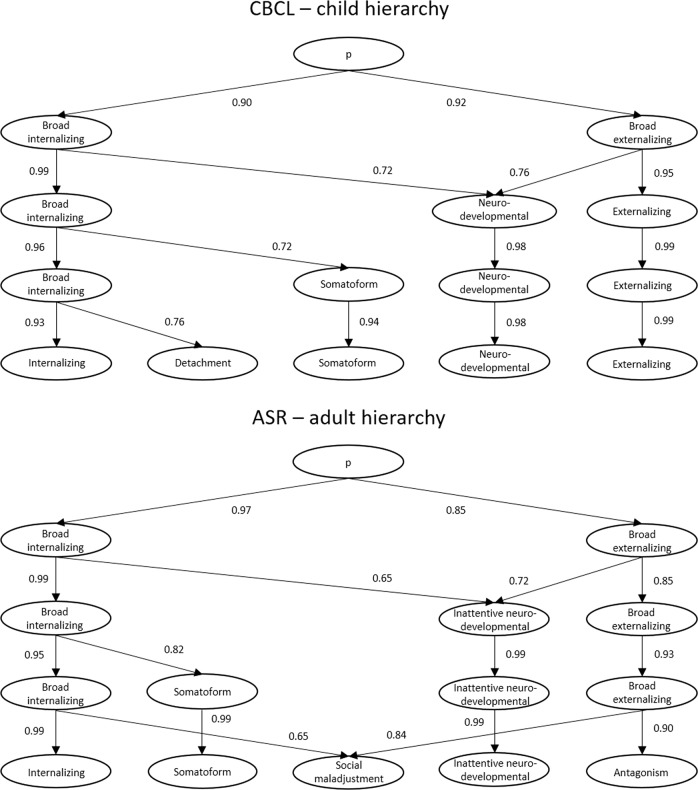
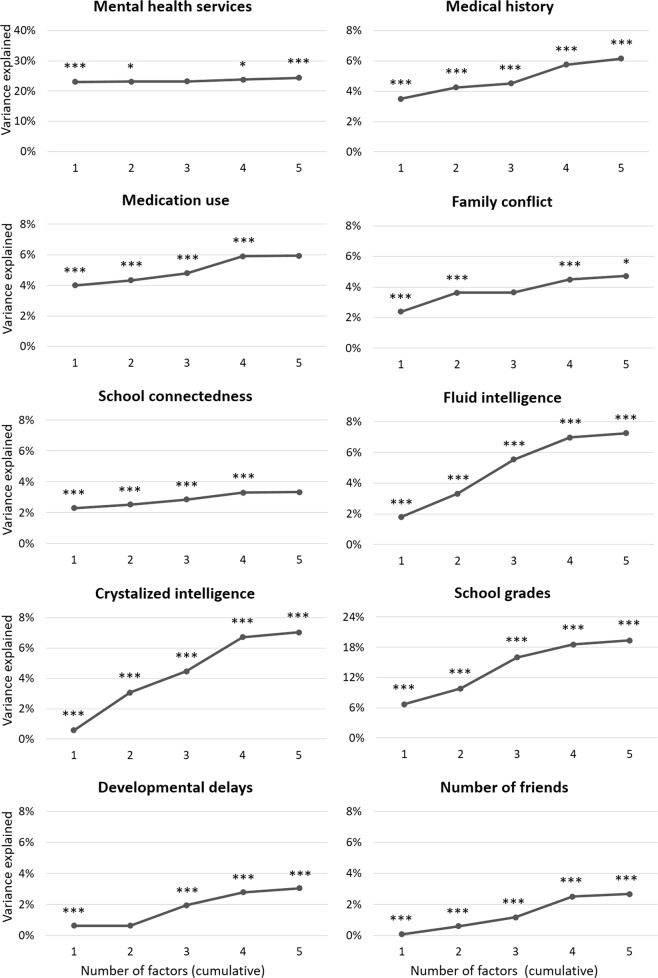
Hierarchical dimensional systems of psychopathology promise more informative descriptions for understanding risk and predicting outcome than traditional diagnostic systems, but it is unclear how many major dimensions they should include. We delineated the hierarchy of childhood and adult psychopathology and validated it against clinically relevant measures. Participants were 9987 9- and 10-year-old children and their parents from the Adolescent Brain Cognitive Development (ABCD) study. Factor analyses of items from the Child Behavior Checklist and Adult Self-Report were run to delineate hierarchies of dimensions. We examined the familial aggregation of the psychopathology dimensions, and the ability of different factor solutions to account for risk factors, real-world functioning, cognitive functioning, and physical and mental health service utilization. A hierarchical structure with a general psychopathology (‘p’) factor at the apex and five specific factors (internalizing, somatoform, detachment, neurodevelopmental, and externalizing) emerged in children. Five similar dimensions emerged also in the parents. Child and parent p-factors correlated highly ( r = 0.61, p < 0.001), and smaller but significant correlations emerged for convergent dimensions between parents and children after controlling for p-factors ( r = 0.09−0.21, p < 0.001). A model with child p-factor alone explained mental health service utilization ( R 2 = 0.23, p < 0.001), but up to five dimensions provided incremental validity to account for developmental risk and current functioning in children ( R 2 = 0.03−0.19, p < 0.001). In this first investigation comprehensively mapping the psychopathology hierarchy in children and adults, we delineated a hierarchy of higher-order dimensions associated with a range of clinically relevant validators. These findings hold important implications for psychiatric nosology and future research in this sample.
Overview
The claims and statistics of this paper haven’t been checked yet.
Free: it reads the open-access text and checks the first 5 claims that cite a source we can check. Create a free account to check every claim.
Integrity signals
Registry
Cites
Statistics
Figures
Verification
Claims the paper makes
The claims and statistics of this paper haven’t been checked yet.
Free: it reads the open-access text and checks the first 5 claims that cite a source we can check. Create a free account to check every claim.
Self-check
Percentages, sums and reported differences re-computed from the paper’s own numbers.
The self-check needs the paper’s full text.
Citations
Cites
Diagnostic and Statistical Manual of Mental Disorders
American Psychiatric Association (2013) · doi:10.1176/appi.books.9780890425596 · Cited by 116,369
Evaluating the use of exploratory factor analysis in psychological research.
Fabrigar, L. R., Wegener, D. T., MacCallum, R. C., & Strahan, E. J. (1999) · Psychological Methods · doi:10.1037/1082-989x.4.3.272 · Cited by 9,587
Insel, T., Cuthbert, B., Garvey, M., Heinssen, R., Pine, D. S., Quinn, K., Sanislow, C., & Wang, P. (2010) · American Journal of Psychiatry · doi:10.1176/appi.ajp.2010.09091379 · Cited by 7,067
Factor analysis in the development and refinement of clinical assessment instruments.
Floyd, F. J., & Widaman, K. F. (1995) · Psychological Assessment · doi:10.1037/1040-3590.7.3.286 · Cited by 3,970
Kotov, R., Krueger, R. F., Watson, D., Achenbach, T. M., Althoff, R. R., Bagby, R. M., Brown, T. A., Carpenter, W. T., Caspi, A., Clark, L. A., et al. (2017) · Journal of Abnormal Psychology · doi:10.1037/abn0000258 · Cited by 3,335
Self-citationThe p Factor: One General Psychopathology Factor in the Structure of Psychiatric Disorders?
Caspi, A., Houts, R. M., Belsky, D. W., Goldman-Mellor, S. J., Harrington, H., Israel, S., Meier, M. H., Ramrakha, S., Shalev, I., Poulton, R., et al. (2014) · Clinical Psychological Science · doi:10.1177/2167702613497473 · Cited by 2,449
The Structure of Common Mental Disorders
Krueger, R. F. (1999) · Archives of General Psychiatry · doi:10.1001/archpsyc.56.10.921 · Cited by 1,881
Recruiting the ABCD sample: Design considerations and procedures
Garavan, H., Bartsch, H., Conway, K., Decastro, A., Goldstein, R. Z., Heeringa, S., Jernigan, T., Potter, A., Thompson, W., & Zahs, D. (2018) · Developmental Cognitive Neuroscience · doi:10.1016/j.dcn.2018.04.004 · Cited by 1,393 · cited 1×
“Full details on recruitment can be found 106 elsewhere.(37) Briefly, the primary method for recruiting children aged 9 or 10 at the time of the baseline 107 assessments (between 2016 and 2018) and their parents was probability sampling of public and private 108 elementary schools within the catchment areas of the 21 r…”
MethodDelineating the Structure of Normal and Abnormal Personality: An Integrative Hierarchical Approach.
Markon, K. E., Krueger, R. F., & Watson, D. (2005) · Journal of Personality and Social Psychology · doi:10.1037/0022-3514.88.1.139 · Cited by 1,187
Self-citationNock, M. K., Hwang, I., Sampson, N. A., & Kessler, R. C. (2010) · Molecular Psychiatry · doi:10.1038/mp.2009.29 · Cited by 1,125
Cited by
Items 101–189 of 189
Retzler, C., Hallam, G., Johnson, S. J., & Retzler, J. (2023) · Research on Child and Adolescent Psychopathology · doi:10.1007/s10802-023-01065-w · Cited by 9
“, 2020) or somatic problems (Michelini et al., 2019), did not form distinct classes in our LCA, suggesting that the risk for being above threshold on these dimensions does not commonly occur in isolation.”
BackgroundMethodResultInfluentialRivera, P. J. R., Liang, H., Isaiah, A., Cloak, C. C., Menken, M. S., Ryan, M. C., Ernst, T., & Chang, L. (2023) · NeuroImmune Pharmacology and Therapeutics · doi:10.1515/nipt-2023-0013 · Cited by 8
“All youth were fluent in English, and those born 28 weeks of gestation, or who had a history of severe traumatic brain injury or neurological, developmental, or current alcohol/substance use disorders were excluded [19].”
BackgroundMcCurry, K. L., Toda-Thorne, K., Taxali, A., Angstadt, M., Hardi, F. A., Heitzeg, M. M., & Sripada, C. (2024) · SLEEP · doi:10.1093/sleep/zsae048 · Cited by 8
“This finding supports prior research identifying a general factor of psychopathology (“p factor”), reflecting a latent dimension that encompasses variance shared across psychiatric disorders [88–90].”
ResultFunkhouser, C. J., Correa, K. A., Letkiewicz, A. M., Cozza, E. M., Estabrook, R., & Shankman, S. A. (2021) · Journal of Abnormal Psychology · doi:10.1037/abn0000687 · Cited by 7
Nwotchouang, B. S. T., Ibrahimy, A., Loth, D. M., Labuda, E., Labuda, N., Eppleheimer, M., Labuda, R., Bapuraj, J. R., Allen, P. A., Klinge, P. M., et al. (2021) · Neuroradiology · doi:10.1007/s00234-021-02759-y · Cited by 7
Rodriguez-Thompson, A., Miller, A. B., Wade, M., Meyer, K. N., Machlin, L., Bonar, A. S., Patel, K. K., Giletta, M., Hastings, P. D., Nock, M. K., et al. (2023) · Biological Psychiatry Cognitive Neuroscience and Neuroimaging · doi:10.1016/j.bpsc.2023.03.012 · Cited by 8
Conceptualizing adult ADHD with the DSM alternative model of personality disorder
Jacobsson, P., Hopwood, C. J., Krueger, R. F., Söderpalm, B., & Nilsson, T. (2024) · Personality and Mental Health · doi:10.1002/pmh.1632 · Cited by 8
Evidence of a traumatic stress dimension of psychopathology among at-risk children living in Denmark
Haahr-Pedersen, I., Vallières, F., Hansen, M., Aldamman, K., Schmidt-Rasmussen, V., Bramsen, R. H., Spitz, P., & Hyland, P. (2023) · Current Psychology · doi:10.1007/s12144-023-04381-y · Cited by 8
“that the structure of psychopathology in children and adolescents is consistent with the HiTOP model (Afzali et al., 2018; Carragher et al., 2016; Michelini et al., 2019), with particularly robust evidence for the Internalizing and Exter-nalizing dimensions (Brandes et al., 2019; Carragher et al.,…”
Wise, T., Sookud, S., Michelini, G., & Mobbs, D. (2026) · Translational Psychiatry · doi:10.1038/s41398-026-03922-w · Cited by 7
Self-citationAssociation Between Parental Educational Attainment and Children’s Negative Urgency: Sex Differences
Assari, S. (2021) · International journal of epidemiologic research · doi:10.34172/ijer.2021.04 · Cited by 6
Sex Differences in the Association between Household Income and Children’s Executive Function
Assari, S., Boyce, S., Bazargan, M., & Caldwell, C. H. (2020) · Sexes · doi:10.3390/sexes1010002 · Cited by 6
Voldsbekk, I., Kjelkenes, R., Wolfers, T., Dahl, A., Lund, M. J., Kaufmann, T., Fernández‐Cabello, S., de Lange, A. G., Tamnes, C. K., Andreassen, O. A., et al. (2023) · Developmental Cognitive Neuroscience · doi:10.1016/j.dcn.2023.101219 · Cited by 6
Lou, J., Tian, X., Sun, Y., Xian, J., Lei, W., Wang, M., & Liu, B. (2025) · Translational Psychiatry · doi:10.1038/s41398-025-03687-8 · Cited by 5
“…English pro fi ciency, major medical or neurological issues, MRI contraindications, extreme prematurity (under 28 weeks gestation), past traumatic brain injury, and current diagnoses of schizophrenia, moderate to severe autism, intellectual disability, or alcohol/ substance use disorder [31].”
Exploring the Link between ADHD and Obesity: A Focus on Temperament
Porfirio, M. C., Campanile, R., Masi, G., Purper‐Ouakil, D., Giovinazzo, S., Ascenzi, A., Troisi, A., & Mazzone, L. (2022) · Brain Sciences · doi:10.3390/brainsci12121631 · Cited by 7
“A dimensional approach to psychopathology, based on the continuity between disorders and normality, can give more informative descriptions for understanding risk and predicting outcome than traditional diagnostic categories, which are often heterogeneous and overinclusive [46].”
BackgroundSex Differences in the Association between Cortical Thickness and Children’s Behavioral Inhibition
Assari, S. (2020) · Journal of Psychology & Behavior Research · doi:10.22158/jpbr.v2n2p49 · Cited by 5
“…et al., 2019; Feldstein Ewing et al., 2018; Fine et al., 2019; J. C. Gray, Schvey, & Tanofsky-Kraff, 2019; Hoffman, Howlett, Breslin, & Dowling, 2018; Lisdahl et al., 2018; Lynch et al., 2019; Michelini et al., 2019; Werneck et al., 2018), to ensure that the sample is random and representative.”
BackgroundChild and adolescent psychiatry: challenges, solutions, opportunities, and future directions
Cortese, S., Arango, C., Aymerich, C., Catalan, A., Chetouani, M., Cohen, D., Coghill, D., Gabellone, A., Iniesta, R., Kadan, A., et al. (2026) · World Psychiatry · doi:10.1002/wps.70044 · Cited by 4
“…disorders 37 ), even though genetic protocols including single nucleotide polymorphism or comparative genomic hybridization arrays, followed by whole exome sequencing, can identify alterations in 52-53% of cases in individuals with autism spectrum disorder and intellectual disability 38 .”
Caserini, C., Rakesh, D., Lu, S., Bedford, R., Lewis, C. M., Malanchini, M., & Michelini, G. (2025) · JAACAP Open · doi:10.1016/j.jaacop.2025.11.011 · Cited by 4
“The neurodevelopmental factor included primarily inattention and hyperactivity, but 20 Including Examples of Items With Significant Primary Loadings also cognitive disengagement, motor difficulties, autistic-like traits, atypical ideation, and poor school performance.”
InfluentialSelf-citationValidation of hierarchical taxonomy in a clinical sample
Levin-Aspenson, H. F., & Zimmerman, M. A. (2022) · Psychological Medicine · doi:10.1017/s0033291722003324 · Cited by 4
Langsford, S., Gomez, R., Houghton, S. J., & Karimi, L. (2024) · Frontiers in Psychology · doi:10.3389/fpsyg.2024.1267711 · Cited by 5
“Although the initially proposed HiTOP model (Kotov et al., 2017) did not include a spectrum for neurodevelopmental problems, a recent study supported its inclusion (Michelini et al., 2019).”
BackgroundResultAssessing the Psychometric Properties of the Child Behaviour Checklist in the ABCD Study
Pavlovich, K., Constable, T., Fornito, A., & Tiego, J. (2026) · Developmental Science · doi:10.1111/desc.70216 · Cited by 4
“Michelini et al. ( 2019 ) applied bass-ackwards modelling (Forbes 2024 ), an exploratory data-driven dimension reduction technique akin to EFA, and proposed a six-factor structure (Internalising, Externalising, Detachment, Somatoform, Neurodevelopmental and a general P - factor), although…”
Langwerden, R. J., van der Heijden, P. T., Soons, P. H. G. M., Derksen, J. J. L., Vuijk, R., & Egger, J. I. M. (2022) · PubMed · doi:10.36131/cnfioritieditore20220509 · Cited by 4
“To this end, recent studies have explored a neurodevelopmental spectrum as a fifth HiTOP spectrum (in addition to internalizing, externalizing, thought disorder, and somatiszation spectra) that encompasses ASD symptoms and ADHD symptoms (Michelini et al., 2019; Stanton et al., 2021a; Stanton et al., 2021b).”
BackgroundAli, F., & Ang, R. P.-H. (2023) · Education Sciences · doi:10.3390/educsci13111103 · Cited by 6
“Further, psychopathology can be dimensionalized at different hierarchical levels [47].”
BackgroundAdams, R. A., Zor, C., Mihalik, Á., Tsirlis, K., Brudfors, M., Chapman, J., Ashburner, J., Paulus, M. P., & Mourão-Miranda, J. (2024) · Biological Psychiatry Cognitive Neuroscience and Neuroimaging · doi:10.1016/j.bpsc.2024.03.006 · Cited by 8
Relationships between wellbeing polygenic scores, brain structure, and psychopathology in children
Tamnes, C. K., Dahl, A., van der Meer, D., Agartz, I., Alnæs, D., Andreassen, O. A., Mills, K. L., Norbom, L. B., Richard, G., Dahl, R. E., et al. (2025) · Personality and Individual Differences · doi:10.1016/j.paid.2025.113313 · Cited by 6
Zimmermann, J., Witthöft, M., Cicero, D. C., Forbes, M. K., Hopwood, C. J., Kotov, R., Krueger, R. F., Sellbom, M., Simms, L. J., Wright, A. G. C., et al. (2024) · PsyArXiv (OSF Preprints) · doi:10.31234/osf.io/kp8yx · Cited by 5
Self-citationJacobs, G. R., Ameis, S. H., Szatmári, P., Haltigan, J. D., & Voineskos, A. N. (2024) · JCPP Advances · doi:10.1002/jcv2.12228 · Cited by 5
“Consistent with prior work (Michelini et al., 2019; Moore et al., 2020), psychopathology symptom items were removed from analyses if they had a low endorsement ( > 99.5% of children didn't endorse them).”
BackgroundMethodResultInfluentialAn Assessment of the Evolution of Executive Functions
Sayar, F. (2024) · Psikiyatride Guncel Yaklasimlar - Current Approaches in Psychiatry · doi:10.18863/pgy.1350386 · Cited by 3
Hankin, B. L., Brandes, C. M., & Young, J. F. (2026) · Journal of the American Academy of Child & Adolescent Psychiatry · doi:10.1016/j.jaac.2026.01.017 · Cited by 3
“11,12,15 Overall, results suggest greater variability in the hierarchical structure obtained from youth self-report and greater consistency of parent-reported structure.”
Nagata, J. M., Bao, K. H., Murray, S. B., Nedelec, P., Richardson, R. A., Nayak, S., Li, E. J., Wong, J. H., Müller‐Oehring, E. M., Scheffler, A. W., et al. (2026) · NeuroImage · doi:10.1016/j.neuroimage.2026.121860 · Cited by 4
Martínez, M., Mittal, V. A., Schaefer, J. D., Haase, C. M., & Damme, K. S. F. (2026) · JCPP Advances · doi:10.1002/jcv2.70122 · Cited by 4
“…17.60%; 3 Time - points: 17.43%), Depressive symptoms of the caregiver were measured at baseline using Achenbach adult self - report, which is one component of the Achenbach System of Empirically Based Assessment (Achenbach & Rescorla, 2003; Guerrero et al., 2020; Michelini et al., 2019).”
InfluentialJung, B., & hyunsik, K. (2023) · Frontiers in Psychiatry · doi:10.3389/fpsyt.2023.1096572 · Cited by 3
“, risk factors and clinical outcomes) by addressing psychopathology dimensionally (21), and (b) investigate psychopathology at multiple levels with varying specificity (22, 23).”
BackgroundStanton, K. J., & McDonnell, C. G. (2021) · OSF Preprints (OSF Preprints) · doi:10.31219/osf.io/bcavr · Cited by 3
Wang, Y., Anney, R., & Pornpattananangkul, N. (2025) · eLife · doi:10.7554/elife.105537.2 · Cited by 3
Bennett, M., O’Dwyer, C., Murthy, V. E., Dalgleish, T., & Nearchou, F. (2025) · Journal of Research on Adolescence · doi:10.1111/jora.70061 · Cited by 5
“Here, mental health is arranged such that one super-spectra dimension (like internalizing) sits above sub-spectra difficulties (like fear/distress, somatoform problems, social maladjustment) (Holmes et al., 2021; Michelini et al., 2019).”
Howard, A. K., Gustavson, D. E., & Friedman, N. P. (2026) · Biological Psychiatry Global Open Science · doi:10.1016/j.bpsgos.2026.100690 · Cited by 2
Positive developmental cascades: Strength development reduces support needs in children
Altschuler, M. R., Tong, X., Shah, P., Verona, E., Bowling, J. M., Krueger, R. F., Kotov, R., McAllister, J. H., Voit, M., Paudel, S., et al. (2026) · JCPP Advances · doi:10.1002/jcv2.70097 · Cited by 2
“…complex clinical profiles characterized by dimensional differences in various needs for which external support (e.g., psychotherapy, medication, skills training) may be helpful for achieving individual goals for well - being (Cicero et al., 2024; Michelini et al., 2019, 2021; Morris et al., 2025).”
Self-citationDevine, J. J., Hosterman, G., Sloss, J. A., & Romer, A. L. (2026) · JCPP Advances · doi:10.1002/jcv2.70135 · Cited by 2
“The higher - order model identified five lower - order factors (externalizing, internalizing, neuro-developmental, somatization, and detachment) and a higher - order p - factor, consistent with the HiTOP framework (Kotov et al., 2017; Michelini et al., 2019).”
Common cause versus dynamic mutualism: Insights into ADHD's common comorbidities
Peng, Z., & Watts, A. L. (2026) · JCPP Advances · doi:10.1002/jcv2.70142 · Cited by 2
“Substantial evidence supports both placements in competing classification systems (Du Rietz et al., 2021; Michelini et al., 2019; Noordhof et al., 2015; Peng et al., 2025; Pettersson et al., 2023).”
Hwang, J., Kang, J.-E., Jeon, S., Lee, K. H., Kim, J.-W., & Lee, J. (2025) · Biological Psychiatry Cognitive Neuroscience and Neuroimaging · doi:10.1016/j.bpsc.2025.04.005 · Cited by 3
Wang, C. J., Raucher‐Chéné, D., & Lavigne, K. M. (2025) · Journal of Psychiatric Research · doi:10.1016/j.jpsychires.2025.12.017 · Cited by 2
“Our data were obtained from the ABCD Study ® (Michelini et al., 2019) 5.0 data release (June 2023, https://nda.nih.gov/study.html?id=2147), the largest long-term study of brain development and child health in the United States, including approximately 11,800 children recruited at age nine to ten.”
InfluentialAssari, S. (2020) · Research in Health Science · doi:10.22158/rhs.v5n3p129 · Cited by 2
“The sampling and recruitment to the ABCD study are described elsewhere (ABCD; Alcohol Research: Current Reviews Editorial, 2018; Asaad & Bjarkam, 2019; Auchter et al., 2018; Beauchaine, 2020; Buscemi et al., 2018; Casey et al., 2018; Dick et al., 2019a, 2019b, 2019c; Exuperio et al., 2019; Feldstein Ewing et al., 2018…”
MethodAssari, S. (2020) · Research in Health Science · doi:10.22158/rhs.v5n2p121 · Cited by 2
“…Casey et al., 2018; Dick et al., 2019a, 2019b, 2019c; Exuperio et al., 2019; Feldstein Ewing et al., 2018; Fine et al., 2019; Gray, Schvey, & Tanofsky-Kraff, 2019; Hoffman, Howlett, Breslin, & Dowling, 2018; Lisdahl et al., 2018; Lynch et al., 2019; Michelini et al., 2019; Werneck et al., 2018).”
Damme, K. S. F., Vargas, T., Walther, S., Shankman, S. A., & Mittal, V. A. (2023) · Research Square · doi:10.21203/rs.3.rs-3270112/v1 · Cited by 2
“39,40 Child Behavioral Checklist (CBCL).”
Backgroundla Rosa-Cáceres, A. D., Wendt, L. P., Zimmermann, J., & Díaz, C. (2025) · Journal of Anxiety Disorders · doi:10.1016/j.janxdis.2025.103006 · Cited by 1
Evaluating Joint Models Of Psychopathology And Personality In Children
All, K., & Huang‐Pollock, C. L. (2025) · Personality and Individual Differences · doi:10.1016/j.paid.2025.113385 · Cited by 1
Li, J. J., He, Q., Waldman, I. D., & Rodriguez-Seijas, C. A. (2025) · Assessment · doi:10.1177/10731911251391567 · Cited by 3
Bayard, S., Madiouni, C., Radiguer, F., Roulin, M., & Henrard, S. (2026) · The European Journal of Psychiatry · doi:10.1016/j.ejpsy.2025.100337 · Cited by 1
Otmar, C. D., Ricklefs, C., & Nagata, J. M. (2026) · Annals of Behavioral Medicine · doi:10.1093/abm/kaag029 · Cited by 1
Chen, Y. D., Agrawal, S., Anokhin, A. P., Luciana, M. M., Gee, D. G., & Cho, Y. (2026) · Developmental Cognitive Neuroscience · doi:10.1016/j.dcn.2026.101772 · Cited by 1
“This general p -factor accounted for a small amount of variance in fluid and crystallized intelligence in the baseline ABCD data (Michelini et al., 2019).”
Associations between video gaming behaviors and cortical morphology in adolescents
Nagata, J. M., Bao, K., Handoko, K., Murray, S. B., Kim, K. E., Nedelec, P., Müller‐Oehring, E. M., Scheffler, A., King, L. E., Rauschecker, A. M., et al. (2026) · NeuroImage · doi:10.1016/j.neuroimage.2026.122196 · Cited by 1
Integration of the DIAMONDS and CAPTION situation taxonomies based on the South Korean culture
Moon, H., & Ahn, H.-N. (2024) · Frontiers in Psychology · doi:10.3389/fpsyg.2024.1342133 · Cited by 1
Sudirjo, E., Lengkana, A. S., Dinangsit, D., Alif, M. N., Nurodin, D., Juhanis, J., & Kozin, S. (2024) · Health sport rehabilitation · doi:10.58962/hsr.2024.10.3.6-16 · Cited by 1
Social Connectedness and Neurodevelopmental Functioning in Youth: Insights from the ABCD Study®
Cosgrove, K. T., Rhudy, J. L., Morris, A. S., Thompson, W. K., Mosconi, M. W., Paulus, M. P., & Aupperle, R. L. (2025) · Advances in Neurodevelopmental Disorders · doi:10.1007/s41252-025-00448-y · Cited by 1
Santangelo, A. M., Ohlei, O., Mareva, S., Brkić, D., CALM Team, Bertram, L., Holmes, J., Astle, D. E., & Baker, K. (2026) · European Child & Adolescent Psychiatry · doi:10.1007/s00787-026-03086-4 · Cited by 1
Michelini, G., Liao, W., Lu, S. D., Caserini, C., Eley, T. C., Ronald, A., Wilson, S., Malanchini, M., & Rimfeld, K. (2026) · Molecular Psychiatry · doi:10.1038/s41380-026-03714-0 · Cited by 2
“This warns against considering ADHD as a purely externalizing or neurodevelopmental condition, extending previous cross-sectional evidence [27, 40, 83].”
InfluentialSelf-citationA Hierarchical Taxonomy of Psychopathology (HiTOP) Primer for Mental Health ResearchersPreprint
Conway, C., Forbes, M. K., & South, S. C. (2021) · PsyArXiv (OSF Preprints) · doi:10.31234/osf.io/v3kx8 · Cited by 1
Funkhouser, C. J. (2020) · PsyArXiv (OSF Preprints) · doi:10.31234/osf.io/xp6h4 · Cited by 1
Wang, Y., Anney, R., & Pornpattananangkul, N. (2025) · eLife · doi:10.7554/elife.105537.1 · Cited by 4
Liu, X., Liu, L., Yan, J., He, J., Wan, B., Ge, R., Xiao, J., & Yang, G. (2025) · bioRxiv (Cold Spring Harbor Laboratory) · doi:10.1101/2025.06.07.658415 · Cited by 1
“In the ABCD study dataset (Michelini et al., 2019), we used scales from the Kiddie Schedule for Affective Disorders and Schizophrenia (K-SADS, mh_y_ksads_bip ) to measure the severity of adolescence BD.”
Argyriou, E. (2024) · IUScholarWorks (Indiana University) · doi:10.25394/pgs.26253998 · Cited by 1
Wang, L.-L., Wang, Y., & Chan, R. C. K. (2026) · JCPP Advances · doi:10.1002/jcv2.70163 · Cited by 1
A Hierarchical Taxonomy of Psychopathology (HiTOP) Primer for Mental Health ResearchersPreprint
Conway, C., Forbes, M. K., & South, S. C. (2021) · PsyArXiv (OSF Preprints) · doi:10.31234/osf.io/ujbrd
Pines, A. R., Tozzi, L., Bertrand, C., Keller, A. S., Zhang, X., Whitfield, S., Hastie, T. J., Larsen, B., Leikauf, J. E., & Williams, L. M. (2023) · medRxiv · doi:10.1101/2023.08.28.23294743
Hierarchical Models of Behaviour Differences
Stevenson, J. (2023) · Springer eBooks · doi:10.1007/978-3-031-45787-6_6
Brain imaging and the difficulties of understanding cognitive development
Hasan, H. A., Adile, M., Hussian, A., Kadeem, S. R. A., Alubady, R., & Matti, I. (2023) · International Conference on Emerging Research in Computational Science (ICERCS) · doi:10.1109/icercs57948.2023.10434098
“The suggested study by Michelini, G. et al. in the ABCD cohort used factor analyses of Child Behavior Checklist and Adult Self-Report data to outline a hierarchical dimensional system (CDHDS) [14] of developmental and adult psychopathology.”
MethodWilliams, A. L., Conway, C., Olino, T. M., Revelle, W., Zinbarg, R. E., & Workgroup, H. U. (2024) · Clinical Psychological Science · doi:10.1177/21677026231225414 · Cited by 2
“…are contested topics (e.g., Fried et al., 2021; Watts et al., 2019, 2021), the general factor has strong empirical associations with many anteced-ents, correlates, and consequences of psychological disorders (Caspi & Moffitt, 2018; Lahey et al., 2017; Martel et al., 2017; Michelini et al., 2019).”
The Hierarchical Taxonomy of Psychology (HiTOP): origin, development, and future directionsPreprint
Pham, T., & Forbes, M. K. (2025) · PsyArXiv (OSF Preprints) · doi:10.31234/osf.io/a59bs_v1
The sex-specific role of adrenal androgens in youth psychopathology
Weisner, F. E., Serio, B., Valk, S. L., Bläschke, L., Degenhardt, F., Hinney, A., Hirtz, R., & Dinkelbach, L. (2026) · Translational Psychiatry · doi:10.1038/s41398-026-04121-3
Chau, T., Carmichael, J. J., Tiego, J., Forbes, M. K., Kerestes, R., Ure, A. M., Brignell, A., Dadds, M. R., Eapen, V., Hawes, D. J., et al. (2025) · Research Square · doi:10.21203/rs.3.rs-8197536/v1
Langwerden, R. J. (2023) · Radboud Repository (Radboud University)
Sosa Rodríguez, F. G. (2020) · LA Referencia (Red Federada de Repositorios Institucionales de Publicaciones Científicas)
Rebello, V. (2023) · eScholarship (California Digital Library)
The Impact of Adverse Childhood Experiences (ACEs) on Cognitive Control during Adolescence
Rahapsari, S. (2025) · White Rose eTheses Online (University of Leeds, The University of Sheffield, University of York)
Neurostructural Substrates of Hierarchical Dimensions of Internalizing Symptoms in Youth
Durham, E. L., Moore, T. M., Ellis, K. E., Wang, S., Jeong, H. J., Reimann, G. E., Archer, C., & Kaczkurkin, A. N. (2026) · Human Brain Mapping · doi:10.1002/hbm.70461
“…transdiagnostic work using the ABCD Study sample has consistently identified a broad internalizing dimension along-side other major spectra, such as neurodevelopmental/ADHD, externalizing/conduct problems, somatoform, and detachment (Durham et al. 2021; Michelini et al. 2019; Moore et al. 2020).”
Chen, X. H., Bailey, R. P., Xie, H., Fang, Q., Ashok, A. I., & Samsudin, N. (2026) · Current Psychology · doi:10.1007/s12144-026-09294-0
“Across many samples, bottom-up hierarchical analyses converge on broad spectra such as internalizing, externalizing, and thought disorder, and sometimes a higher-order p factor representing general psychopathology (Forbes et al., 2021 ; Michelini et al., 2019, 2021 ; Ringwald et al., 2023 ).”
Williams, C. M. (2022) · theses.fr (ABES) · doi:10.70675/4418ee9dz5bd3z43f7za4efz5ddac1baed0f
The Hierarchical Taxonomy of Psychology (HiTOP): Origin, Development, and Future Directions
Pham, T., & Forbes, M. K. (2026) · Oxford University Press eBooks · doi:10.1093/9780197769676.003.0006
Lu, S., Wise, T., Barch, D. M., Hosang, G. M., & Michelini, G. (2026) · medRxiv · doi:10.64898/2026.04.30.26351304
Self-citationGomez, R., Houghton, S. J., Langsford, S., Watson, S., & Karimi, L. (2026) · Adolescents · doi:10.3390/adolescents6040048
“In contrast, in the current study and unlike Michelini et al.’s [15] study, the neurodevelopmental spectrum comprised SLD, ASD, LD, and SSD. Additionally, ADHD together with ODD/CD was in a separate factor, reflecting externalizing disorders.”
InfluentialSmolker, H. R. (2026) · Developmental Cognitive Neuroscience · doi:10.1016/j.dcn.2026.101778
“…strongly characterized by CBCL symptoms related to attention problems, thought problems, social problems, and disruptive behaviors, suggesting that broad psychopathology during late childhood may be driven largely by neurodevelopmental and externalizing symptom domains (Michelini et al., 2019).”
The topology of adolescent mental healthPreprint
Jelen, M. B., Mousley, A., Fakhar, K., Trachtenberg, E., He, Y., Köhler, R., Aggarwal, S., Warrier, V., Bzdok, D., Yip, S. W., et al. (2026) · medRxiv · doi:10.64898/2026.07.13.26357465
Global and Voxel‐Wise Brain Age Prediction Analyses Following Perinatal Stroke
Bullock, R. A. S., Carlson, H. L., Bardhi, M., Kirton, A., Forkert, N. D., & Wilms, M. (2026) · Human Brain Mapping · doi:10.1002/hbm.70585
“…MRI data from healthy participants in the HBN, HCP, ACH, and ABCD datasets, and controls in the ABIDE I/II datasets according to their respective inclusion/exclusion criteria (Casey et al. 2018; Alexander et al. 2017; Michelini et al. 2019; Di Martino et al. 2013, 2017; Somerville et al. 2018).”
Specific Associations Between Psychopathology and Cognition in Youth: A Network Analysis
Kramer, E. L. (2025) · Digital Commons - DU (University of Denver) · doi:10.56902/etdcrp.2025.195
Mapping Multilevel Correlates of Adolescent Mental Health: Evidence from an Ecological Network Study
Li, Y., Gong, S., & Li, H. (2026) · Child Psychiatry & Human Development · doi:10.1007/s10578-026-02085-5
Saxon, A. J., Alfaro, E. C., Seo, E., & Shen, Y. (2026) · Adolescents · doi:10.3390/adolescents6050065
“Prior studies have indicated that the test-retest reliability of this measure is 0.88; Cronbach’s alpha is 0.80; and inter-rater reliability is 0.73 between parents [58,59].”
InfluentialPrenatal exposure to hypertensive disorders and adolescent brain white matter development
Rebello, V., Xia, Y., Talge, N. M., Ahmadi, H., Odegaard, A., Vieira, V. M., Gonzalez, M. R., Kan, E., Boden-Albala, B. M., & Uban, K. A. (2026) · Pediatric Research · doi:10.1038/s41390-026-05511-5
He, Q., & Li, J. J. (2026) · Psychological Assessment · doi:10.1037/pas0001514
Asadi, S., Stewart, L. C., Wilson, S., Michelini, G., Kotov, R., Cicero, D. C., Haltigan, J. D., Olino, T. M., & Rodriguez-Seijas, C. A. (2026) · Assessment · doi:10.1177/10731911261494808
Self-citationJeong, H., Cheong, Y., Ro, J., 한정범, Lee, S., & Jung, M. (2026) · Developmental Cognitive Neuroscience · doi:10.1016/j.dcn.2026.101846
Metadata
- Authors
- Michelini, G., Barch, D. M., Tian, Y., Watson, D., Klein, D. N., & Kotov, R.
- Affiliations
- Stony Brook University (US)
- Washington University in St. Louis (US)
- University of Notre Dame (US)
- Corresponding author
- Michelini, Giorgia
- Venue
- Translational Psychiatry
- Published
- 2019-10-17
- Volume
- 9
- Issue
- 1
- Pages
- 261-261
- ISSN
- 2158-3188 (ISSN-L)
- PMC
- PMC6797772
- OpenAlex
- W2980501619
- Cited by
- 171
- References
- 80
- Citations by year
- 2026: 19 · 2025: 19 · 2024: 30 · 2023: 26 · 2022: 18 · 2021: 38 · 2020: 20
- FWCI
- 22.20
- Type
- journal article
- Language
- en
- Open access
- gold
- doi.org
- Licence
- cc-by
- creativecommons.org/licenses/by/4.0 (tdm)
- creativecommons.org/licenses/by/4.0 (vor)
- Locations
- Translational Psychiatry (publishedVersion, cc-by)
- bioRxiv (Cold Spring Harbor Laboratory) (acceptedVersion, cc-by-nc-nd)
- PubMed Central (publishedVersion, cc-by)
- PubMed (publishedVersion)
- Digital Commons@Becker (Washington University School of Medicine) (submittedVersion, cc-by)
- DOAJ (DOAJ: Directory of Open Access Journals) (submittedVersion)
- Queen Mary Research Online (Queen Mary University of London) (submittedVersion, cc-by)
- Funders
- U.S. Department of Health & Human Services | NIH | National Institute of Mental Health
- U.S. Department of Health & Human Services | NIH | National Institute on Drug Abuse
- Topics
- Social Sciences › Psychology › Clinical Psychology › Child and Adolescent Psychosocial and Emotional Development
- Social Sciences › Psychology › Experimental and Cognitive Psychology › Mental Health Research Topics
- Social Sciences › Psychology › Clinical Psychology › Personality Disorders and Psychopathology
- Keywords
- general psychopathology factor, internalizing problems, externalizing problems, detachment, childhood psychopathology, adolescent psychopathology, familial aggregation, Child Behavior Checklist, Adult Self-Report, mental health service utilization, psychiatric classification, developmental risk
- MeSH terms
- Adolescent, Psychology, Adolescent, Mental Disorders, Child, Psychology, Child, Factor Analysis, Statistical, Female, Humans, Male, Psychopathology, United States
About these checks
Registry, retraction, Cites and statistics results are computed, not judged, with one exception: a printed reference that no index lists is read once by a model before it counts as a citation error. Claims are extracted by a model and kept only when their quote appears verbatim in the text; each cited source is then checked, with a model’s help, for whether it says what the claim relies on. Those verdicts can be wrong — read the claim’s quote and the cited source before relying on one.
Statistics and arithmetic are recomputed, not judged.
Confidence bands are shown only for fields calibrated on our annotated test set. None is calibrated yet, so no band is shown.
What counts as a claim ›How we measure confidence ›How we check this ›
Are you an author, or do you see a problem with this page? Request a review
Data sources
Bibliographic data: Semantic Scholar, OpenAlex, Crossref.
Contains information from the Semantic Scholar Academic Graph Datasets, made available under the ODC Attribution License (ODC-BY 1.0).
Semantic Scholar’s data is described in: Kinney, R., et al. (2023). The Semantic Scholar Open Data Platform. arXiv:2301.10140.
