

Delineating and validating higher-order dimensions of psychopathology in the Adolescent Brain Cognitive Development (ABCD) study
Open accessPublished version of a preprint
The DOI matches its Crossref record; 80 of the 80 references it cites were found in a registry or an index.
Abstract
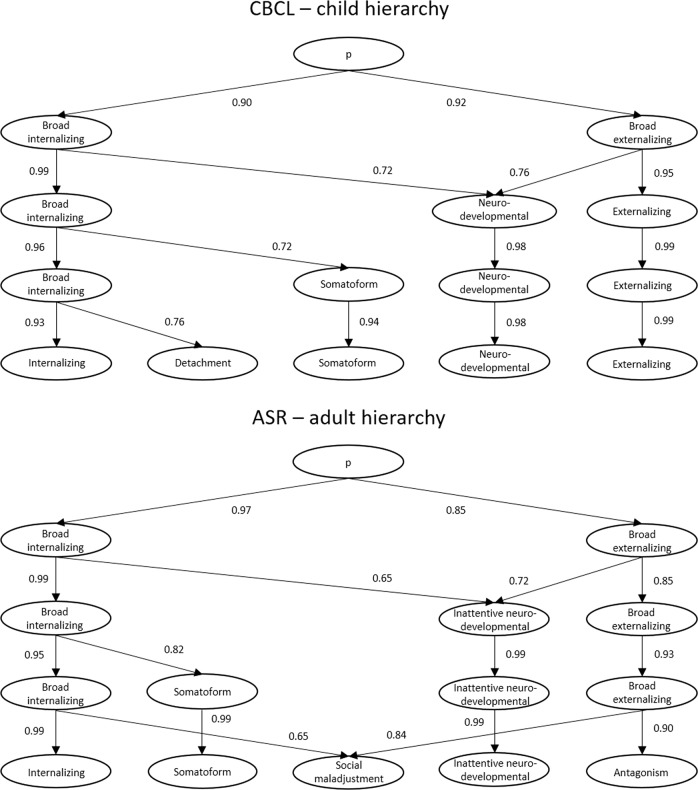
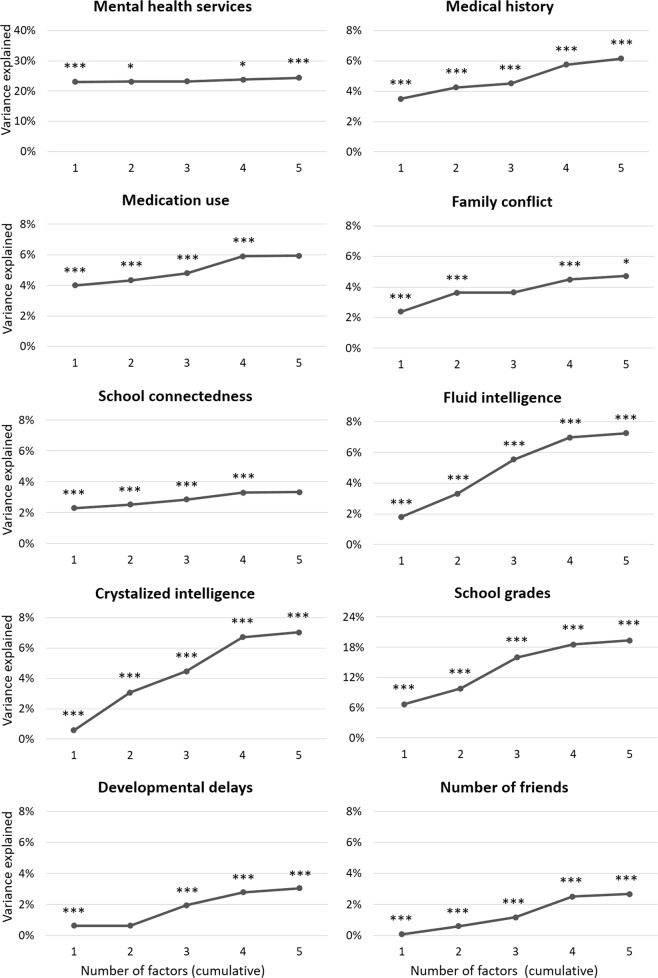
Hierarchical dimensional systems of psychopathology promise more informative descriptions for understanding risk and predicting outcome than traditional diagnostic systems, but it is unclear how many major dimensions they should include. We delineated the hierarchy of childhood and adult psychopathology and validated it against clinically relevant measures. Participants were 9987 9- and 10-year-old children and their parents from the Adolescent Brain Cognitive Development (ABCD) study. Factor analyses of items from the Child Behavior Checklist and Adult Self-Report were run to delineate hierarchies of dimensions. We examined the familial aggregation of the psychopathology dimensions, and the ability of different factor solutions to account for risk factors, real-world functioning, cognitive functioning, and physical and mental health service utilization. A hierarchical structure with a general psychopathology (‘p’) factor at the apex and five specific factors (internalizing, somatoform, detachment, neurodevelopmental, and externalizing) emerged in children. Five similar dimensions emerged also in the parents. Child and parent p-factors correlated highly ( r = 0.61, p < 0.001), and smaller but significant correlations emerged for convergent dimensions between parents and children after controlling for p-factors ( r = 0.09−0.21, p < 0.001). A model with child p-factor alone explained mental health service utilization ( R 2 = 0.23, p < 0.001), but up to five dimensions provided incremental validity to account for developmental risk and current functioning in children ( R 2 = 0.03−0.19, p < 0.001). In this first investigation comprehensively mapping the psychopathology hierarchy in children and adults, we delineated a hierarchy of higher-order dimensions associated with a range of clinically relevant validators. These findings hold important implications for psychiatric nosology and future research in this sample.
Overview
The claims and statistics of this paper haven’t been checked yet.
Free: it reads the open-access text and checks the first 5 claims that cite a source we can check. Create a free account to check every claim.
Integrity signals
Registry
Cites
Statistics
Figures
Verification
Claims the paper makes
The claims and statistics of this paper haven’t been checked yet.
Free: it reads the open-access text and checks the first 5 claims that cite a source we can check. Create a free account to check every claim.
Self-check
Percentages, sums and reported differences re-computed from the paper’s own numbers.
The self-check needs the paper’s full text.
Citations
Cites
Diagnostic and Statistical Manual of Mental Disorders
American Psychiatric Association (2013) · doi:10.1176/appi.books.9780890425596 · Cited by 116,369
Evaluating the use of exploratory factor analysis in psychological research.
Fabrigar, L. R., Wegener, D. T., MacCallum, R. C., & Strahan, E. J. (1999) · Psychological Methods · doi:10.1037/1082-989x.4.3.272 · Cited by 9,587
Insel, T., Cuthbert, B., Garvey, M., Heinssen, R., Pine, D. S., Quinn, K., Sanislow, C., & Wang, P. (2010) · American Journal of Psychiatry · doi:10.1176/appi.ajp.2010.09091379 · Cited by 7,067
Factor analysis in the development and refinement of clinical assessment instruments.
Floyd, F. J., & Widaman, K. F. (1995) · Psychological Assessment · doi:10.1037/1040-3590.7.3.286 · Cited by 3,970
Kotov, R., Krueger, R. F., Watson, D., Achenbach, T. M., Althoff, R. R., Bagby, R. M., Brown, T. A., Carpenter, W. T., Caspi, A., Clark, L. A., et al. (2017) · Journal of Abnormal Psychology · doi:10.1037/abn0000258 · Cited by 3,335
Self-citationThe p Factor: One General Psychopathology Factor in the Structure of Psychiatric Disorders?
Caspi, A., Houts, R. M., Belsky, D. W., Goldman-Mellor, S. J., Harrington, H., Israel, S., Meier, M. H., Ramrakha, S., Shalev, I., Poulton, R., et al. (2014) · Clinical Psychological Science · doi:10.1177/2167702613497473 · Cited by 2,449
The Structure of Common Mental Disorders
Krueger, R. F. (1999) · Archives of General Psychiatry · doi:10.1001/archpsyc.56.10.921 · Cited by 1,881
Recruiting the ABCD sample: Design considerations and procedures
Garavan, H., Bartsch, H., Conway, K., Decastro, A., Goldstein, R. Z., Heeringa, S., Jernigan, T., Potter, A., Thompson, W., & Zahs, D. (2018) · Developmental Cognitive Neuroscience · doi:10.1016/j.dcn.2018.04.004 · Cited by 1,393 · cited 1×
“Full details on recruitment can be found 106 elsewhere.(37) Briefly, the primary method for recruiting children aged 9 or 10 at the time of the baseline 107 assessments (between 2016 and 2018) and their parents was probability sampling of public and private 108 elementary schools within the catchment areas of the 21 r…”
MethodDelineating the Structure of Normal and Abnormal Personality: An Integrative Hierarchical Approach.
Markon, K. E., Krueger, R. F., & Watson, D. (2005) · Journal of Personality and Social Psychology · doi:10.1037/0022-3514.88.1.139 · Cited by 1,187
Self-citationNock, M. K., Hwang, I., Sampson, N. A., & Kessler, R. C. (2010) · Molecular Psychiatry · doi:10.1038/mp.2009.29 · Cited by 1,125
Cited by
Sydnor, V. J., Larsen, B., Bassett, D. S., Alexander-Bloch, A., Fair, D. A., Liston, C., Mackey, A. P., Milham, M. P., Pines, A., Roalf, D. R., et al. (2021) · Neuron · doi:10.1016/j.neuron.2021.06.016 · Cited by 724
“Given the comorbid and transdiagnostic nature of psychiatric symptomatology, it has been proposed that there is a latent factor that predicts a generalized vulnerability to diverse psychopathology (the ‘‘p-factor’’) (Caspi et al., 2014, 2020; Michelini et al., 2019).”
Kotov, R., Krueger, R. F., Watson, D., Cicero, D. C., Conway, C. C., DeYoung, C. G., Eaton, N. R., Forbes, M. K., Hallquist, M. N., Latzman, R. D., et al. (2021) · Annual Review of Clinical Psychology · doi:10.1146/annurev-clinpsy-081219-093304 · Cited by 596
“…anticipating health care utilization), spectra such as detachment and antagonism are important in selection of treatment format (group versus individual), and symptom components such as anhedonia can provide specific targets for treatment development (Kotov et al. 2016, Michelini et al. 2019).”
BackgroundSelf-citationValidity and utility of Hierarchical Taxonomy of Psychopathology (HiTOP): I. Psychosis superspectrum
Kotov, R., Jonas, K. G., Carpenter, W. T., Dretsch, M. N., Eaton, N. R., Forbes, M. K., Forbush, K. T., Hobbs, K., Reininghaus, U., Slade, T., et al. (2020) · World Psychiatry · doi:10.1002/wps.20730 · Cited by 309
Self-citationWatson, D., Levin‐Aspenson, H. F., Waszczuk, M. A., Conway, C. C., Dalgleish, T., Dretsch, M. N., Eaton, N. R., Forbes, M. K., Forbush, K. T., Hobbs, K. A., et al. (2022) · World Psychiatry · doi:10.1002/wps.20943 · Cited by 265
Self-citationLinking RDoC and HiTOP: A new interface for advancing psychiatric nosology and neuroscience
Michelini, G., Palumbo, I. M., DeYoung, C. G., Latzman, R. D., & Kotov, R. (2021) · Clinical Psychology Review · doi:10.1016/j.cpr.2021.102025 · Cited by 273
Self-citationLynch, S. J., Sunderland, M., Newton, N. C., & Chapman, C. (2021) · Clinical Psychology Review · doi:10.1016/j.cpr.2021.102036 · Cited by 194
Hierarchical models of psychopathology: empirical support, implications, and remaining issues
Lahey, B. B., Moore, T. M., Kaczkurkin, A. N., & Zald, D. H. (2021) · World Psychiatry · doi:10.1002/wps.20824 · Cited by 188
Romer, A. L., & Pizzagalli, D. A. (2021) · Developmental Cognitive Neuroscience · doi:10.1016/j.dcn.2021.100994 · Cited by 142
Annual Research Review: Perspectives on progress in ADHD science – from characterization to cause
Sonuga‐Barke, E. J. S., Becker, S. P., Bölte, S., Castellanos, F. X., Franke, B., Newcorn, J. H., Nigg, J. T., Rohde, L. A., & Simonoff, E. (2023) · Journal of Child Psychology and Psychiatry · doi:10.1111/jcpp.13696 · Cited by 157
Cortese, S., Solmi, M., Michelini, G., Bellato, A., Blanner, C., Canozzi, A., Eudave, L., Farhat, L. C., Højlund, M., Köhler‐Forsberg, O., et al. (2023) · World Psychiatry · doi:10.1002/wps.21037 · Cited by 147
Self-citationTiego, J., Martin, E. A., DeYoung, C. G., Hagan, K. E., Cooper, S. E., Pasion, R., Satchell, L. P., Shackman, A. J., Bellgrove, M. A., Fornito, A., et al. (2023) · Nature Mental Health · doi:10.1038/s44220-023-00057-5 · Cited by 137
Wise, T., & Dolan, R. J. (2020) · Nature Communications · doi:10.1038/s41467-020-17977-w · Cited by 119
A Hierarchical Taxonomy of Psychopathology (HiTOP) Primer for Mental Health Researchers
Conway, C., Forbes, M. K., & South, S. C. (2021) · Clinical Psychological Science · doi:10.1177/21677026211017834 · Cited by 118
“First, investigators have used latent variable modeling techniques to establish the number and nature of latent dimensions relevant to a psychopathology domain (e.g., Forbes et al., 2020; Michelini et al., 2019).”
MethodMichelini, G., Carlisi, C. O., Eaton, N. R., Elison, J. T., Haltigan, J. D., Kotov, R., Krueger, R. F., Latzman, R. D., Li, J. J., Levin-Aspenson, H. F., et al. (2024) · World Psychiatry · doi:10.1002/wps.21225 · Cited by 119
“…and outcomes – including global executive functioning, brain functioning, developmental delays, learning problems, psycho-social functioning, medication use, and service utilization – than general factors comprising other psychiatric conditions and clinical features 25,42,190,233,262,373,379 .”
InfluentialSelf-citationOlino, T. M., Michelini, G., Mennies, R. J., Kotov, R., & Klein, D. N. (2021) · Journal of Child Psychology and Psychiatry · doi:10.1111/jcpp.13394 · Cited by 109
Self-citationForbes, M. K., Greene, A. L., Levin-Aspenson, H. F., Watts, A. L., Hallquist, M., Lahey, B. B., Markon, K. E., Patrick, C. J., Tackett, J. L., Waldman, I. D., et al. (2021) · Journal of Abnormal Psychology · doi:10.1037/abn0000533 · Cited by 89
Self-citationA genetically informed Registered Report on adverse childhood experiences and mental health
Baldwin, J. R., Sallis, H., Schoeler, T., Taylor, M. J., Kwong, A. S. F., Tielbeek, J. J., Barkhuizen, W., Warrier, V., Howe, L. D., Danese, A., et al. (2022) · Nature Human Behaviour · doi:10.1038/s41562-022-01482-9 · Cited by 92
Testing structural models of psychopathology at the genomic level
Waldman, I. D., Poore, H. E., Luningham, J. M., & Yang, J. (2020) · World Psychiatry · doi:10.1002/wps.20772 · Cited by 75
Clark, D. A., Hicks, B. M., Angstadt, M., Rutherford, S. E., Taxali, A., Hyde, L. W., Weigard, A. S., Heitzeg, M. M., & Sripada, C. (2021) · Clinical Psychological Science · doi:10.1177/2167702620959317 · Cited by 91
“, 2018) that provides a seminal opportunity to investigate the development of the GFP (Michelini et al., 2019).”
BackgroundMethodKim, W.-P., Kim, H.-J., Pack, S. P., Lim, J., Cho, C., & Lee, H. (2023) · JAMA Network Open · doi:10.1001/jamanetworkopen.2023.3502 · Cited by 84
Koirala, S., Grimsrud, G. J., Mooney, M. A., Larsen, B., Feczko, E., Elison, J. T., Nelson, S. M., Nigg, J. T., Tervo‐Clemmens, B., & Fair, D. A. (2024) · Nature reviews. Neuroscience · doi:10.1038/s41583-024-00869-z · Cited by 87
“Second, while RDoC has just recently adopted a developmental dimension 225,226 , HiTOP is still missing the developmental framework that is probably critical for characterizing all aspects of a neurodevelopmental disorder such as ADHD 227 .”
Brislin, S. J., Martz, M. E., Joshi, S. A., Duval, E. R., Gard, A. M., Clark, D. A., Hyde, L. W., Hicks, B. M., Taxali, A., Angstadt, M., et al. (2021) · Psychological Medicine · doi:10.1017/s0033291720005103 · Cited by 85
“, 2019; Snyder, Friedman, & Hankin, 2019a), worse mental health outcomes (Michelini et al., 2019; Pettersson, Lahey, Larsson, & Lichtenstein, 2018), common genetic loading across psychiatric disorders (Neumann et al.”
BackgroundMethodResultInfluentialMoore, T. M., Kaczkurkin, A. N., Durham, E. L., Jeong, H. J., McDowell, M. G., Dupont, R. M., Applegate, B., Tackett, J. L., Cardenas-Iniguez, C., Kardan, O., et al. (2020) · Journal of Abnormal Psychology · doi:10.1037/abn0000601 · Cited by 72
The P-factor and its genomic and neural equivalents: an integrated perspective
Sprooten, E., Franke, B., & Greven, C. U. (2021) · Molecular Psychiatry · doi:10.1038/s41380-021-01031-2 · Cited by 77
Cosgrove, K. T., McDermott, T. J., White, E. J., Mosconi, M. W., Thompson, W. K., Paulus, M. P., Cardenas‐Iniguez, C., & Aupperle, R. L. (2022) · Brain Imaging and Behavior · doi:10.1007/s11682-022-00665-2 · Cited by 72
“A uthor M anuscript A uthor M anuscript A uthor M anuscript A uthor M anuscript externalizing symptoms; Michelini et al., 2019).”
Rates of Incidental Findings in Brain Magnetic Resonance Imaging in Children
Li, Y., Thompson, W. K., Reuter, C., Nillo, R. M., Jernigan, T. L., Dale, A. M., Sugrue, L. P., Brown, J., Dougherty, R. F., Rauschecker, A. M., et al. (2021) · JAMA Neurology · doi:10.1001/jamaneurol.2021.0306 · Cited by 66
Self-citationNetwork Controllability in Transmodal Cortex Predicts Positive Psychosis Spectrum Symptoms
Parkes, L., Moore, T. M., Calkins, M. E., Cieslak, M., Roalf, D. R., Wolf, D. H., Gur, R. C., Gur, R. E., Satterthwaite, T. D., & Bassett, D. S. (2021) · Biological Psychiatry · doi:10.1016/j.biopsych.2021.03.016 · Cited by 67
Triple Interactions Between the Environment, Brain, and Behavior in Children: An ABCD Study
Zhi, D., Jiang, R., Pearlson, G. D., Fu, Z., Qi, S., Yan, W., Feng, A., Xu, M., Calhoun, V. D., & Sui, J. (2023) · Biological Psychiatry · doi:10.1016/j.biopsych.2023.12.019 · Cited by 63
Karcher, N. R., Paul, S. E., Johnson, E. C., Hatoum, A. S., Baranger, D. A. A., Agrawal, A., Thompson, W. K., Barch, D. M., & Bogdan, R. (2020) · Biological Psychiatry Cognitive Neuroscience and Neuroimaging · doi:10.1016/j.bpsc.2021.06.012 · Cited by 77
“Total cognition composite scores assessed using the National Institutes of Health Toolbox Cognitive Battery (29), caregiver-reported child birth weight (see the Supplement for birth complications and gestational age), and a general psychopathology factor (30) created using the Child Behavior Checklist (31) served as p…”
MethodSelf-citationKarcher, N. R., Michelini, G., Kotov, R., & Barch, D. M. (2021) · Biological Psychiatry: Cognitive Neuroscience and Neuroimaging · doi:10.1016/j.bpsc.2020.09.008 · Cited by 55
Self-citationBrieant, A., Vannucci, A., Nakua, H., Harris, J., Lovell, J., Brundavanam, D., Tottenham, N., & Gee, D. G. (2023) · Developmental Cognitive Neuroscience · doi:10.1016/j.dcn.2023.101256 · Cited by 40
What Does It Mean to Be Transdiagnostic and How Would We Know?
Barch, D. M. (2020) · American Journal of Psychiatry · doi:10.1176/appi.ajp.2020.20030243 · Cited by 57
Self-citationHigher-order dimensions of psychopathology in a neurodevelopmental transdiagnostic sample.
Holmes, J., Mareva, S., Bennett, M., Black, M., & Guy, J. (2021) · Journal of Abnormal Psychology · doi:10.1037/abn0000710 · Cited by 55
“Using data from the Adolescent Brain Cognitive Development study, Michelini et al. (2019) identified a hierarchical structure with a general psychopathology factor at the first level, and five specific factors (internalizing, externalizing, somatoform, detachment, and neurodevelopmental) in a…”
BackgroundMethodResultInfluentialForbes, M. K., Baillie, A., Batterham, P. J., Calear, A. L., Kotov, R., Krueger, R. F., Markon, K. E., Mewton, L. R., Pellicano, E., Roberts, M., et al. (2024) · Clinical Psychological Science · doi:10.1177/21677026241268345 · Cited by 69
“Kushki et al., 2019; Rommelse et al., 2011) and other findings that inattention and social/ communication difficulties combine in structural models of psychopathology (e.g., Michelini et al., 2019; Stanton, DeLucia, et al., 2021; Stanton, Khoo, et al., 2021).”
Self-citationThe relationship between brain structure and general psychopathology in preadolescents
Mewton, L. R., Lees, B., Squeglia, L. M., Forbes, M. K., Sunderland, M., Krueger, R. F., Koch, F. C., Baillie, A., Slade, T. N., Hoy, N., et al. (2021) · Journal of Child Psychology and Psychiatry · doi:10.1111/jcpp.13513 · Cited by 56
Longitudinal study of peer victimization, social support, and mental health during early adolescence
Martínez, M., Damme, K. S. F., Vargas, T., Yang, B., Rompilla, D. B., Stephens, J. E., Qu, Y., Mittal, V. A., & Haase, C. M. (2024) · Psychological Medicine · doi:10.1017/s0033291724000035 · Cited by 55
“Peer victimization was measured using items from the child behavior checklist (CBCL), a questionnaire completed by caregivers that assess their child ’ s behavioral, social, and emotional problems (Achenbach & Rescorla, 2001; Michelini et al., 2019).”
Waszczuk, M. A., Miao, J., Docherty, A. R., Shabalin, A. A., Jonas, K. G., Michelini, G., & Kotov, R. (2021) · Psychological Medicine · doi:10.1017/s0033291721003639 · Cited by 50
“Data used in the preparation of this article were obtained from the Adolescent Brain Cognitive Development (ABCD) Study (https://abcdstudy.org), held in the NIMH Data Archive (NDA).”
MethodInfluentialSelf-citationBrain Structure Relations With Psychopathology Trajectories in the ABCD Study
Romer, A. L., Ren, B., & Pizzagalli, D. A. (2023) · Journal of the American Academy of Child & Adolescent Psychiatry · doi:10.1016/j.jaac.2023.02.002 · Cited by 47
A developmental perspective on personality and psychopathology across the life span
Wilson, S., & Olino, T. M. (2021) · Journal of Personality · doi:10.1111/jopy.12623 · Cited by 43
The ‘L-factor’: Language as a transdiagnostic dimension in psychopathology
Hinzen, W., & Palaniyappan, L. K. (2024) · Progress in Neuro-Psychopharmacology and Biological Psychiatry · doi:10.1016/j.pnpbp.2024.110952 · Cited by 40
“Both c and p factors capture shared variance across a wide range of mental disorders and a possibly common etiology (Caspi et al., 2014; Lahey et al., 2012), questioning the presence of discrete boundaries between them (Abra-movitch et al., 2021; Michelini et al., 2019).”
BackgroundIsaiah, A., Ernst, T., Cloak, C. C., Clark, D. B., & Chang, L. (2021) · JAMA Otolaryngology–Head & Neck Surgery · doi:10.1001/jamaoto.2020.5712 · Cited by 38
Lopez, D. A., Christensen, Z. P., Foxe, J. J., Ziemer, L. R., Nicklas, P. R., & Freedman, E. G. (2022) · NeuroImage · doi:10.1016/j.neuroimage.2022.119626 · Cited by 30
He, Q., & Li, J. J. (2020) · Journal of Child Psychology and Psychiatry · doi:10.1111/jcpp.13243 · Cited by 32
DeYoung, C. G., Kotov, R., Krueger, R. F., Cicero, D. C., Conway, C., Eaton, N. R., Forbes, M. K., Hallquist, M. N., Jonas, K. G., Latzman, R. D., et al. (2021) · Clinical Psychological Science · doi:10.1177/21677026211049390 · Cited by 33
Self-citationSripada, C., Angstadt, M., Taxali, A., Kessler, D. A., Greathouse, T., Rutherford, S. E., Clark, D. A., Hyde, L. W., Weigard, A., Brislin, S. J., et al. (2021) · Translational Psychiatry · doi:10.1038/s41398-021-01708-w · Cited by 30
“Recently, our group constructed and validated a P factor model [32] in ABCD from the Child Behavior Checklist (CBCL) parent report [33] using bifactor modeling, and performed additional analyses that support a P factor structural model of psychopathology in this sample [32, 34], see also similar work by [16, 35].”
MethodPersonality traits associate with behavioral problems in pet dogs
Salonen, M. K., Mikkola, S., Hakanen, E., Sulkama, S., Puurunen, J., & Lohi, H. (2022) · Translational Psychiatry · doi:10.1038/s41398-022-01841-0 · Cited by 32
“S1a–f) [21, 25], but we also defined a structure based on previous canine behavior studies (Supplementary Fig.”
BackgroundConvergence and Divergence of Rare Genetic Disorders on Brain Phenotypes: A Review
Raznahan, A., Won, H., Glahn, D. C., & Jacquemont, S. (2022) · JAMA Psychiatry · doi:10.1001/jamapsychiatry.2022.1450 · Cited by 33
Knott, R., Johnson, B. P., Tiego, J., Mellahn, O. J., Finlay, A., Kallady, K., Kouspos, M., Sindhu, V. P. M., Hawi, Z., Arnatkevičiūtė, A., et al. (2021) · Molecular Autism · doi:10.1186/s13229-021-00457-3 · Cited by 30
“…three major super-spectra (internalising, externalising, and psychosis) have been consistently replicated in children (e.g. McElroy, Belsky, Carragher, Fearon, & Patalay, 2018; Michelini et al., 2019) and adolescents (e.g. Carragher et al., 2015; Castellanos-Ryan et al., 2016; Martel et al., 2017).”
Pat, N., Riglin, L., Anney, R., Wang, Y., Barch, D. M., Thapar, A., & Stringaris, A. K. (2021) · Journal of the American Academy of Child & Adolescent Psychiatry · doi:10.1016/j.jaac.2021.08.019 · Cited by 33
Self-citationMaternal Depressive Symptoms Predict General Liability in Child Psychopathology
Swales, D. A., Snyder, H. R., Hankin, B. L., Sandman, C. A., Glynn, L. M., & Davis, E. P. (2020) · Journal of Clinical Child & Adolescent Psychology · doi:10.1080/15374416.2020.1723598 · Cited by 26
“As new approaches continue to emerge, future work should continue to evaluate the relation between maternal depression and child psychopathology from these differing perspectives (e.g. Michelini et al., 2019).”
BackgroundPsychometric Properties of the Adult Self-Report: Data from over 11,000 American Adults
Guerrero, M., Hoffmann, M. D., & Pulkki-Råbäck, L. (2020) · Stats · doi:10.3390/stats3040029 · Cited by 25
“One gap within the ASR literature is that few studies have examined its factor structure [3,4].”
BackgroundKrogsrud, S. K., Mowinckel, A. M., Sederevičius, D., Dídac Vidal-piñeiro, A., Amlien, I. K., Wang, Y., Sørensen, Ø., Walhovd, K. B., & Fjell, A. M. (2021) · Developmental Cognitive Neuroscience · doi:10.1016/j.dcn.2021.100997 · Cited by 27
“Full scale IQ (ABCD data-nihtbx_totalcomp_uncorrected) was entered as a Total Cognition Composite score (a combination of both Crystallized and Fluid Intelligence scores) (Heaton et al., 2014; Michelini et al., 2019) from the NIH Toolbox.”
MethodMultimodal neural correlates of childhood psychopathology
Royer, J., Kebets, V., Piguet, C., Chen, J., Ooi, L. Q. R., Kirschner, M., Siffredi, V., Mišić, B., Yeo, B. T. T., & Bernhardt, B. C. (2024) · eLife · doi:10.7554/elife.87992 · Cited by 26
“For the remainder of this article, we focus on LC1–LC3, as they were strongly correlated to previously identified factors (see Supplementary file 1a for details), and have been more thoroughly documented previously ( Holmes et al., 2021 ; Michelini et al., 2019 ; Modabbernia et al., 2022 ).”
InfluentialHyland, P., Karatzias, T., Ford, J. D., Fox, R. J., & Spinazzola, J. (2022) · Research on Child and Adolescent Psychopathology · doi:10.1007/s10802-022-00925-1 · Cited by 26
A Hierarchical Model of the Symptom-Level Structure of Psychopathology in Youth
Forbes, M. K., Watts, A. L., Twose, M., Barrett, A., Hudson, J. L., Lyneham, H. J., McLellan, L. F., Newton, N. C., Sicouri, G., Chapman, C., et al. (2024) · Clinical Psychological Science · doi:10.1177/21677026241257852 · Cited by 29
“For example, in their exploratory factor analyses of items on the Child Behavior Checklist (CBCL) in children aged 9 to 10 years, Michelini et al. (2019) found that the single factor at the top of the hierarchy split into (a) a broad internalizing dimension that comprised narrower dimensions that…”
InfluentialAssociation between parental age, brain structure, and behavioral and cognitive problems in children
Du, J., Rolls, E. T., Gong, W., Cao, M., Vatansever, D., Zhang, J., Kang, J., Cheng, W., & Feng, J. (2021) · Molecular Psychiatry · doi:10.1038/s41380-021-01325-5 · Cited by 25
Stewart, L. C., Asadi, S., Rodriguez-Seijas, C., Wilson, S., Michelini, G., Kotov, R., Cicero, D. C., & Olino, T. M. (2024) · Psychological Assessment · doi:10.1037/pas0001319 · Cited by 25
Self-citationExploring the latent structure of behavior using the Human Connectome Project’s data
Schöttner, M., Bolton, T. A. W., Patel, J. H., Nahálka, A. T., Vieira, S., & Hagmann, P. (2023) · Scientific Reports · doi:10.1038/s41598-022-27101-1 · Cited by 24
“EFA has been successfully deployed to this aim on other large-scale datasets 15,16 .”
MethodNair, R. V. (1959) · Eprints@CMFRI Open Access Institutional Repository (Central Marine Fisheries Research Institute) · Cited by 23
Stanton, K. J., DeLucia, E. A., Brown, M. F. D., & McDonnell, C. G. (2020) · Personality and Mental Health · doi:10.1002/pmh.1498 · Cited by 25
Christensen, Z. P., Freedman, E. G., & Foxe, J. J. (2021) · Neuropharmacology · doi:10.1016/j.neuropharm.2021.108479 · Cited by 23
Scaini, S., Michelini, G., Francesco, S. D., Fagnani, C., Medda, E., Stazi, M. A., & Battaglia, M. (2021) · Pain · doi:10.1097/j.pain.0000000000002400 · Cited by 23
Self-citationAssari, S. (2020) · Research in Health Science · doi:10.22158/rhs.v5n1p64 · Cited by 23
“The sampling and recruitment to the ABCD study are described elsewhere (ABCD; Alcohol Research: Current Reviews Editorial, 2018; Asaad & Bjarkam, 2019; Auchter et al., 2018; Beauchaine, 2020; Buscemi et al., 2018; Casey et al., 2018; Dick et al., 2019a, 2019b, 2019c; Exuperio et al., 2019; Feldstein Ewing et al., 2018…”
Brieant, A. E., Cai, T., Ip, K. I., Holt-Gosselin, B., & Gee, D. G. (2025) · Child Psychiatry & Human Development · doi:10.1007/s10578-024-01804-0 · Cited by 23
“The CBCL has demonstrated strong internal consistency and validity in prior research [1] as well as in the ABCD Study sample [43, 61].”
Processing Speed is Related to the General Psychopathology Factor in Youth
Kramer, E. L., Willcutt, E. G., Peterson, R. L., Pennington, B. F., & McGrath, L. M. (2023) · Research on Child and Adolescent Psychopathology · doi:10.1007/s10802-023-01049-w · Cited by 22
“…evidence for this hypothesis because there is a lack of convergence of internalizing loadings in previous p factor literature (lower loadings ranging from β = 0.13–0.46, higher loadings ranging from β = 0.72–0.90) (Castellanos-Ryan et al., 2016; Laceulle et al., 2015; Michelini et al., 2019).”
Influentialvon Stumm, S., Malanchini, M., & Fisher, H. L. (2023) · Development and Psychopathology · doi:10.1017/s095457942300069x · Cited by 20
“…"p-factor" and that can be observed at both phenotypic and genetic levels across childhood and adolescence (e.g., Allegrini et al., 2020; Caspi & Moffitt, 2018; Grotzinger et al., 2019; Lahey et al., 2011; Martel et al., 2017; Michelini et al., 2019; Schaefer et al., 2018; Selzam et al., 2018).”
Vannucci, A., Fields, A., Heleniak, C. M., Bloom, P. A., Harmon, C., Nikolaidis, A., Douglas, I. J., Gibson, L., Camacho, N. L., Choy, T., et al. (2025) · Nature Mental Health · doi:10.1038/s44220-024-00355-6 · Cited by 18
Assari, S., & Islam, S. M. S. (2020) · Journal of Economics Trade and Marketing Management · doi:10.22158/jetmm.v2n4p38 · Cited by 21
“…Exuperio et al., 2019; Feldstein Ewing et al., 2018; Fine et al., 2019; Gray, Schvey, & Tanofsky-Kraff, 2019; Hoffman, Howlett, Breslin, & Dowling, 2018; Lisdahl et al., 2018; Lynch et al., 2019; Michelini et al., 2019; Werneck et al., 2018), to ensure that the sample is random and representative.”
BackgroundHong, J., Hwang, J., & Lee, J. (2022) · Journal of Psychiatric Research · doi:10.1016/j.jpsychires.2022.12.037 · Cited by 19
Limited generalizability of multivariate brain-based dimensions of child psychiatric symptoms
Xu, B., Dall’Aglio, L., Flournoy, J. C., Bortsova, G., Tervo‐Clemmens, B., Collins, P. F., de Bruijne, M., Luciana, M. M., Marquand, A. F., Wang, H., et al. (2024) · Communications Psychology · doi:10.1038/s44271-024-00063-y · Cited by 21
Vedechkina, M., Bennett, M., & Holmes, J. (2023) · Development and Psychopathology · doi:10.1017/s0954579423000524 · Cited by 20
“…2004; Pandolfi et al., 2009) and with results from a recent study using the ABCD baseline data that identified only three factors capturing (1) broad internalizing symptoms (capturing anxiety and depression), (2) somatoform problems, and (3) detachment/social withdrawal (Michelini et al., 2019).”
MethodResultPaul, S. E., Colbert, S. M. C., Gorelik, A. J., Johnson, E. C., Hatoum, A. S., Baranger, D. A. A., Hansen, I. S., Nagella, I., Blaydon, L., Hornstein, A., et al. (2024) · Nature Mental Health · doi:10.1038/s44220-024-00313-2 · Cited by 16
“GAD PRS was uniquely negatively associated with performance on the NIH Toolbox Picture Sequence Memory Test (Supplementary Tables 15 and 16).”
Self-citationGomez, R., Liu, L., Krueger, R. F., Stavropoulos, V., Downs, J. A., Preece, D. A., Houghton, S. J., & Chen, W. (2021) · Frontiers in Psychiatry · doi:10.3389/fpsyt.2021.666326 · Cited by 18
“Our analysis did not include the hierarchical modeling approach, and it is possible that certain aspects of ADHD could be indicators of an externalizing dimension while others of a possible separate neurodevelopmental disorders spectrum (47), and future studies could further explore this aspect.”
BackgroundStanton, K. J., Khoo, S., McDonnell, C. G., Andino, M. V., Sturgeon, T., & Aasen, L. (2021) · Assessment · doi:10.1177/10731911211055670 · Cited by 16
“, 2021), and most of this research has focused on child and adolescent samples (England-Mason, 2020; Michelini et al., 2019).”
BackgroundMethodResultInfluentialStanton, K. J., Watts, A. L., Levin-Aspenson, H. F., Carpenter, R. W., Emery, N. N., & Zimmerman, M. A. (2022) · Journal of Personality Assessment · doi:10.1080/00223891.2022.2047060 · Cited by 18
“For example, the classification of dimensions traditionally defining DSM neurodevelopmental disorders within dimensional models such as the HiTOP remains unclear in some ways (Michelini et al., 2019).”
Voldsbekk, I., Kjelkenes, R., Dahl, A., Holm, M. C., Lund, M. J., Kaufmann, T., Tamnes, C. K., Andreassen, O. A., Westlye, L. T., & Alnæs, D. (2023) · Developmental Cognitive Neuroscience · doi:10.1016/j.dcn.2023.101271 · Cited by 16
Autism is associated with in vivo changes in gray matter neurite architecture
Christensen, Z. P., Freedman, E. G., & Foxe, J. J. (2024) · Autism Research · doi:10.1002/aur.3239 · Cited by 15
“This has previously proven useful in analyzing behavioral outcomes for large pediatric cohorts (Barch et al., 2018; Michelini et al., 2019; Thompson et al., 2019; Tiemeier et al., 2012).”
Morneau‐Vaillancourt, G., Palaiologou, E., Polderman, T. J. C., & Eley, T. C. (2024) · Journal of Child Psychology and Psychiatry · doi:10.1111/jcpp.14099 · Cited by 16
“…(Afzali, Sunder-land, Carragher, & Conrod, 2018; Carragher et al., 2016; Castellanos-Ryan et al., 2016; Laceulle, Vollebergh, & Ormel, 2015; Michelini et al., 2019; Noordhof, Krueger, Ormel, Oldehinkel, & Hart-man, 2015; Patalay et al., 2015; Pocuca et al., 2023), thought disorders…”
Stevanović, D., Ćirović, N., & Knez, R. (2024) · Middle East Current Psychiatry · doi:10.1186/s43045-024-00471-0 · Cited by 14
Allegrini, A. G., Hannigan, L. J., Frach, L., Barkhuizen, W., Baldwin, J. R., Andreassen, O. A., Bragantini, D., Hegemann, L. E., Havdahl, A., & Pingault, J. (2025) · Nature Communications · doi:10.1038/s41467-025-57694-w · Cited by 16
“67,68), for example, distinguishing between internalizing and externalizing domains.”
Michelini, G., Gair, K. A., Tian, Y., Miao, J., Dougherty, L. R., Goldstein, B. L., MacNeill, L. A., Barch, D. M., Luby, J. L., Wakschlag, L. S., et al. (2022) · Psychological Medicine · doi:10.1017/s003329172200246x · Cited by 14
“…us to compare our results with previous studies that used this method in older children and adults (Allegrini et al., 2020; Conway, Latzman, & Krueger, 2020; Forbes et al., 2017, 2021b; Kim & Eaton, 2015; Michelini et al., 2019; Tackett, Quilty, Sellbom, Rector, & Bagby, 2008; Wright et al., 2012).”
InfluentialSelf-citationPsychiatric Symptoms, Cognition, and Symptom Severity in Children
Pines, A. R., Tozzi, L., Bertrand, C., Keller, A. S., Zhang, X., Whitfield, S., Hastie, T. J., Larsen, B., Leikauf, J. E., & Williams, L. M. (2024) · JAMA Psychiatry · doi:10.1001/jamapsychiatry.2024.2399 · Cited by 13
Martínez, M., Cai, T., Yang, B., Zhou, Z., Shankman, S. A., Mittal, V. A., Haase, C. M., & Qu, Y. (2024) · Proceedings of the National Academy of Sciences · doi:10.1073/pnas.2321965121 · Cited by 15
“Caregiver’s depressive symptoms were measured using the Achenbach Adult Self - report (ASR), which is one component of the Achenbach System of Empirically Based Assessment (ASEBA) (129, 132, 133).”
Assari, S. (2020) · Journal of Education and Culture Studies · doi:10.22158/jecs.v4n4p39 · Cited by 12
Assari, S., Boyce, S., & Jovanović, T. (2021) · Children · doi:10.3390/children8050411 · Cited by 13
Goldstein, B. L., Mumper, E. E., Behari, K., Gooding, D. C., & Klein, D. N. (2020) · The Journal of Early Adolescence · doi:10.1177/0272431620968888 · Cited by 12
“When accounting for the overlap among symptom dimensions, a common phenomenon (Michelini et al., 2019), we found that depressive symptoms were the only symptom domains uniquely associated with social anhedonia.”
BackgroundSelf-citationMattoni, M., Wilson, S., & Olino, T. M. (2021) · Developmental Cognitive Neuroscience · doi:10.1016/j.dcn.2021.101013 · Cited by 13
“We compared profiles on mean scores on five revised clinical dimensions previously identified in the ABCD CBCL sample through factor analysis (Michelini et al., 2019).”
MethodWang, Y., Anney, R., & Pornpattananangkul, N. (2025) · eLife · doi:10.7554/elife.105537.3 · Cited by 15
Westwater, M. L., Mallard, T. T., Warrier, V., Bethlehem, R. A. I., Scheinost, D., Grillon, C., Fletcher, P. C., Seidlitz, J., & Ernst, M. (2023) · Nature Mental Health · doi:10.1038/s44220-023-00101-4 · Cited by 11
Fan, Y., Yuan, C., Gu, W., & Wang, Z. (2024) · Journal of Affective Disorders · doi:10.1016/j.jad.2024.03.048 · Cited by 11
Assari, S., Boyce, S., Saqib, M., Bazargan, M., & Caldwell, C. H. (2021) · Brain Sciences · doi:10.3390/brainsci11030401 · Cited by 11
Pettersson, E., Larsson, H., D'Onofrio, B. M., & Lichtenstein, P. (2023) · JAMA Psychiatry · doi:10.1001/jamapsychiatry.2023.1162 · Cited by 11
Zoupou, E., Moore, T. M., Kennedy, K. P., Calkins, M. E., Gorgone, A., Sandro, A. D., Rush, S., Lopez, K. C., Ruparel, K., Daryoush, T., et al. (2024) · Psychiatry Research · doi:10.1016/j.psychres.2024.115862 · Cited by 10
Validation of CBCL depression scores of adolescents in three independent datasets
Zelenina, M., Pine, D. S., Stringaris, A. K., & Nielson, D. M. (2025) · JCPP Advances · doi:10.1002/jcv2.12298 · Cited by 10
Peng, Z., Stanton, K. J., Domínguez-Álvarez, B., & Watts, A. L. (2025) · Journal of Psychopathology and Clinical Science · doi:10.1037/abn0000966 · Cited by 12
Xie, T., Jiang, W., Liu, X., & Wang, J. (2024) · Child and Adolescent Mental Health · doi:10.1111/camh.12693 · Cited by 9
Ormel, J., Vos, M., Laceulle, O. M., Vrijen, C., van der Laan, C. M., Nolte, I. M., & Hartman, C. A. (2024) · Journal of Child Psychology and Psychiatry · doi:10.1111/jcpp.13979 · Cited by 8
P -Factor(s) for Youth Psychopathology Across Informants and Models in 24 Societies
Achenbach, T. M., Ivanova, M. Y., Turner, L. V., Ritz, H., Almqvist, F., Bilenberg, N., Bird, H., Chahed, M., Döpfner, M., Erol, N., et al. (2024) · Journal of Clinical Child & Adolescent Psychology · doi:10.1080/15374416.2024.2344159 · Cited by 9
“To extend tests of adult p -factors beyond self-reports in a single society (as reported in the Michelini et al. (2019) and Fried et al. (2021) studies), we are applying multiple analytic methods to adult self-and collateral-ratings on the same standardized instruments in multiple societies.”
Domain-specific associations between psychopathology and neurocognitive functioning
Zoupou, E., Moore, T. M., Calkins, M. E., Gur, R. E., Gur, R. C., & Scott, J. C. (2024) · Psychological Medicine · doi:10.1017/s0033291724001302 · Cited by 9
“Dimensional models offer one method to model psychiatric comorbidity, and the structure of these models has been examined (Kim & Eaton, 2015; Michelini et al., 2019; Ringwald, Forbes, & Wright, 2023; Sunderland et al., 2021).”
Neural signatures of data-driven psychopathology dimensions at the transition to adolescence
Modabbernia, A., Michelini, G., Reichenberg, A., Kotov, R., Barch, D. M., & Frangou, S. (2022) · European Psychiatry · doi:10.1192/j.eurpsy.2021.2262 · Cited by 9
“for a prior study on the ABCD dataset [20].”
MethodSelf-citation
Metadata
- Authors
- Michelini, G., Barch, D. M., Tian, Y., Watson, D., Klein, D. N., & Kotov, R.
- Affiliations
- Stony Brook University (US)
- Washington University in St. Louis (US)
- University of Notre Dame (US)
- Corresponding author
- Michelini, Giorgia
- Venue
- Translational Psychiatry
- Published
- 2019-10-17
- Volume
- 9
- Issue
- 1
- Pages
- 261-261
- ISSN
- 2158-3188 (ISSN-L)
- PMC
- PMC6797772
- OpenAlex
- W2980501619
- Cited by
- 171
- References
- 80
- Citations by year
- 2026: 19 · 2025: 19 · 2024: 30 · 2023: 26 · 2022: 18 · 2021: 38 · 2020: 20
- FWCI
- 22.20
- Type
- journal article
- Language
- en
- Open access
- gold
- doi.org
- Licence
- cc-by
- creativecommons.org/licenses/by/4.0 (tdm)
- creativecommons.org/licenses/by/4.0 (vor)
- Locations
- Translational Psychiatry (publishedVersion, cc-by)
- bioRxiv (Cold Spring Harbor Laboratory) (acceptedVersion, cc-by-nc-nd)
- PubMed Central (publishedVersion, cc-by)
- PubMed (publishedVersion)
- Digital Commons@Becker (Washington University School of Medicine) (submittedVersion, cc-by)
- DOAJ (DOAJ: Directory of Open Access Journals) (submittedVersion)
- Queen Mary Research Online (Queen Mary University of London) (submittedVersion, cc-by)
- Funders
- U.S. Department of Health & Human Services | NIH | National Institute of Mental Health
- U.S. Department of Health & Human Services | NIH | National Institute on Drug Abuse
- Topics
- Social Sciences › Psychology › Clinical Psychology › Child and Adolescent Psychosocial and Emotional Development
- Social Sciences › Psychology › Experimental and Cognitive Psychology › Mental Health Research Topics
- Social Sciences › Psychology › Clinical Psychology › Personality Disorders and Psychopathology
- Keywords
- general psychopathology factor, internalizing problems, externalizing problems, detachment, childhood psychopathology, adolescent psychopathology, familial aggregation, Child Behavior Checklist, Adult Self-Report, mental health service utilization, psychiatric classification, developmental risk
- MeSH terms
- Adolescent, Psychology, Adolescent, Mental Disorders, Child, Psychology, Child, Factor Analysis, Statistical, Female, Humans, Male, Psychopathology, United States
About these checks
Registry, retraction, Cites and statistics results are computed, not judged, with one exception: a printed reference that no index lists is read once by a model before it counts as a citation error. Claims are extracted by a model and kept only when their quote appears verbatim in the text; each cited source is then checked, with a model’s help, for whether it says what the claim relies on. Those verdicts can be wrong — read the claim’s quote and the cited source before relying on one.
Statistics and arithmetic are recomputed, not judged.
Confidence bands are shown only for fields calibrated on our annotated test set. None is calibrated yet, so no band is shown.
What counts as a claim ›How we measure confidence ›How we check this ›
Are you an author, or do you see a problem with this page? Request a review
Data sources
Bibliographic data: Semantic Scholar, OpenAlex, Crossref.
Contains information from the Semantic Scholar Academic Graph Datasets, made available under the ODC Attribution License (ODC-BY 1.0).
Semantic Scholar’s data is described in: Kinney, R., et al. (2023). The Semantic Scholar Open Data Platform. arXiv:2301.10140.
