

The DOI matches its Crossref record; 153 of the 155 references it cites were found in a registry or an index, and 2 are not checked yet.
Abnormalities of confidence in psychiatry: an overview and future perspectives
Open accessAbstract
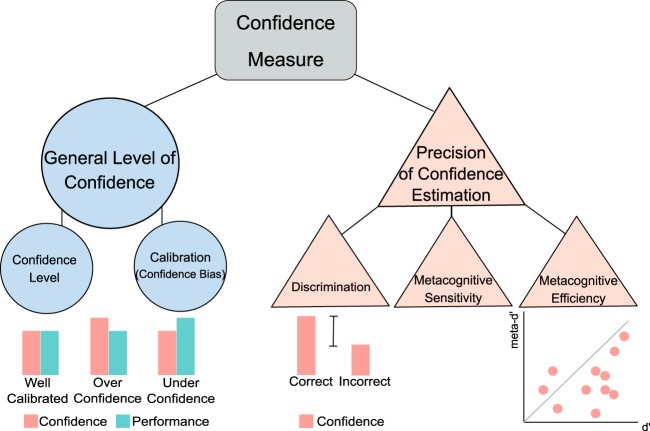
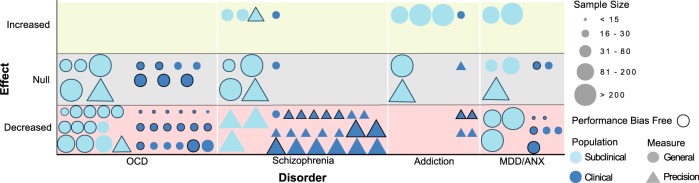
Our behavior is constantly accompanied by a sense of confidence and its’ precision is critical for adequate adaptation and survival. Importantly, abnormal confidence judgments that do not reflect reality may play a crucial role in pathological decision-making typically seen in psychiatric disorders. In this review, we propose abnormalities of confidence as a new model of interpreting psychiatric symptoms. We hypothesize a dysfunction of confidence at the root of psychiatric symptoms either expressed subclinically in the general population or clinically in the patient population. Our review reveals a robust association between confidence abnormalities and psychiatric symptomatology. Confidence abnormalities are present in subclinical/prodromal phases of psychiatric disorders, show a positive relationship with symptom severity, and appear to normalize after recovery. In the reviewed literature, the strongest evidence was found for a decline in confidence in (sub)clinical OCD, and for a decrease in confidence discrimination in (sub)clinical schizophrenia. We found suggestive evidence for increased/decreased confidence in addiction and depression/anxiety, respectively. Confidence abnormalities may help to understand underlying psychopathological substrates across disorders, and should thus be considered transdiagnostically. This review provides clear evidence for confidence abnormalities in different psychiatric disorders, identifies current knowledge gaps and supplies suggestions for future avenues. As such, it may guide future translational research into the underlying processes governing these abnormalities, as well as future interventions to restore them.
Overview
The claims and statistics of this paper haven’t been checked yet.
Run the check — free, no account needed. It reads the open-access text and checks the sources it cites.
Integrity signals
Registry
Cites
Statistics
Figures
Verification
Claims the paper makes
The claims and statistics of this paper haven’t been checked yet.
Run the check — free, no account needed. It reads the open-access text and checks the sources it cites.
Claims other papers make about this one
Each is checked against this paper’s own text: does it say what the citing paper says it does?
The source backs part of the claim, not all of it — or backs it for a different population, condition or comparison.
In the citing paper
“A number of studies have linked local and global metacognitive biases to individual differences in transdiagnostic mental health symptoms, including anxiety, depression, self-esteem, and compulsivity (Hoven et al. 2019, Seow et al. 2021).”
From Metacognition and Confidence: A Review and Synthesis (2024) · cites this paper as Hoven et al. 2019
Experimental — accuracy not yet measuredThe source backs part of the claim, not all of it — or backs it for a different population, condition or comparison.
In the citing paper
“как и уверенность этих пациентов в их бредовых убеждениях не подлежит критическому пересмотру.”
From Когнитивные механизмы дисфункционального принятия решений при психических расстройствах (2025) · cites this paper as Hoven et al., 2019
Experimental — accuracy not yet measuredThe cited source says what the claim attributes to it.
In the citing paper
“При шизофрении объективная точность выполнения задач не соответствует чрезмерной субъективной уверенности в правильности ответов (Hoven et al., 2019)”
From Когнитивные механизмы дисфункционального принятия решений при психических расстройствах (2025) · cites this paper as Hoven et al., 2019
The cited source says what the claim attributes to it.
In the citing paper
“Примером нарушения метапознания на локальном уровне может служить шизофрения.”
From Когнитивные механизмы дисфункционального принятия решений при психических расстройствах (2025) · cites this paper as Hoven et al., 2019
Self-check
Percentages, sums and reported differences re-computed from the paper’s own numbers.
The self-check needs the paper’s full text.
Citations
Cites
Kessler, R. C., Berglund, P., Demler, O., Jin, R., Merikangas, K. R., & Walters, E. E. (2005) · Archives of General Psychiatry · doi:10.1001/archpsyc.62.6.593 · Cited by 20,391
Kessler, R. C., Berglund, P., Demler, O., Jin, R., Koretz, D., Merikangas, K. R., Rush, A. J., Walters, E. E., & Wang, P. S. (2003) · JAMA · doi:10.1001/jama.289.23.3095 · Cited by 7,988
Insel, T., Cuthbert, B., Garvey, M., Heinssen, R., Pine, D. S., Quinn, K., Sanislow, C., & Wang, P. (2010) · American Journal of Psychiatry · doi:10.1176/appi.ajp.2010.09091379 · Cited by 7,067
Koob, G. F., & Volkow, N. D. (2010) · Neuropsychopharmacology · doi:10.1038/npp.2009.110 · Cited by 5,340
Dysfunction of the prefrontal cortex in addiction: neuroimaging findings and clinical implications
Goldstein, R. Z., & Volkow, N. D. (2011) · Nature Reviews Neuroscience · doi:10.1038/nrn3119 · Cited by 2,749
Cognitive impairment in depression: a systematic review and meta-analysis
Rock, P. L., Roiser, J. P., Riedel, W. J., & Blackwell, A. D. (2014) · Psychological Medicine · doi:10.1017/s0033291713002535 · Cited by 2,161
Does low self-esteem predict depression and anxiety? A meta-analysis of longitudinal studies.
Sowislo, J. F., & Orth, U. (2013) · Psychological Bulletin · doi:10.1037/a0028931 · Cited by 2,123
Fleming, S. M., & Lau, H. C. (2014) · Frontiers in Human Neuroscience · doi:10.3389/fnhum.2014.00443 · Cited by 1,408
Overconfidence as a Cause of Diagnostic Error in Medicine
Berner, E. S., & Graber, M. L. (2008) · The American Journal of Medicine · doi:10.1016/j.amjmed.2008.01.001 · Cited by 1,034
Computational psychiatry as a bridge from neuroscience to clinical applications
Huys, Q. J. M., Maia, T. V., & Frank, M. J. (2016) · Nature Neuroscience · doi:10.1038/nn.4238 · Cited by 1,002
Cited by
Sorted by citations
Items 101–171 of 171
Metacognition in anxious-depression is state-dependent: an observational treatment studyPreprint
Fox, C. A., Lee, C. T., Hanlon, A. K., Seow, T. X. F., Lynch, K., Harty, S., Richards, D., Palacios, J. E., O’Keane, V., Stephan, K. E., et al. (2023) · eLife · doi:10.7554/elife.87193.1 · Cited by 3
Self-Rated Confidence in Vocal Emotion Recognition Ability: The Role of Gender
Sinvani, R.-T., Fogel‐Grinvald, H., & Sapir, S. (2024) · Journal of Speech Language and Hearing Research · doi:10.1044/2024_jslhr-23-00373 · Cited by 2
Clinical and Cognitive Metacognition in Gaming and Gambling Disorder: A Narrative Review
van Holst, R. J., Cornelissen, K., Bockting, C., & Spada, M. M. (2024) · Current Addiction Reports · doi:10.1007/s40429-024-00597-5 · Cited by 4
Lv, Y., Rao, J., Li, Y., Li, C., Li, C., Li, C., & Yang, X. (2026) · Scientific Reports · doi:10.1038/s41598-026-36625-9 · Cited by 2
Fiore, V. G., & Gu, X. (2021) · NeuroImage · doi:10.1016/j.neuroimage.2021.118821 · Cited by 2
Romaniuk, L., MacSweeney, N., Atkinson, K., Chan, S. W. Y., Barbu, M. C., Lawrie, S. M., & Whalley, H. C. (2023) · Cerebral Cortex Communications · doi:10.1093/texcom/tgad020 · Cited by 2
Do people know how suicidal they will be? Understanding suicidal prospection
Coppersmith, D. D. L., Jaroszewski, A. C., Gershman, S. J., Cha, C. B., Millner, A. J., Fortgang, R. G., Kleiman, E. M., & Nock, M. K. (2024) · Suicide and Life-Threatening Behavior · doi:10.1111/sltb.13087 · Cited by 2
Bits of confidence: Metacognition as uncertainty reduction
Fitousi, D. (2025) · Psychonomic Bulletin & Review · doi:10.3758/s13423-025-02752-z · Cited by 2
Compulsiveness Drives Evidence Accumulation During AmbiguityPreprint
Mandali, A., Gillan, C. M., & Voon, V. (2021) · Research Square · doi:10.21203/rs.3.rs-140450/v1 · Cited by 2
An observational treatment study of metacognition in anxious-depression
Fox, C. A., Lee, C. T., Hanlon, A., Seow, T. X. F., Lynch, K., Harty, S., Richards, D., Palacios, J., O'Keane, V., Stephan, K. E., et al. (2023) · doi:10.31234/osf.io/uk7hr · Cited by 2
Depression impairs metacognitive biases, but not learningPreprint
Sax, A.-L., Baddeley, R., & Costa, R. P. (2023) · PsyArXiv (OSF Preprints) · doi:10.31234/osf.io/9a7y8 · Cited by 2
Perceptual and attentional uncertainty impact global performance monitoring
Chancel, M., Filevich, E., & Faivre, N. (2025) · Neuroscience of Consciousness · doi:10.1093/nc/niaf041 · Cited by 1
Multifaceted confidence in exploratory choice
Solopchuk, O., & Dayan, P. (2025) · PLoS ONE · doi:10.1371/journal.pone.0304923 · Cited by 1
The strength of confidence is involved in controlling the intensity of attentional allocation
Yoshida, K., & Saito, R. (2025) · Scientific Reports · doi:10.1038/s41598-025-86160-2 · Cited by 1
Diminished reactivity effect of confidence rating on perceptual decision-making in depression
Zhang, L., Liu, Y., Wang, Y., Gong, K., Liu, K., Lei, W. I., & Chen, J. (2025) · Frontiers in Neuroscience · doi:10.3389/fnins.2025.1638734 · Cited by 1
Pre- and post-decision signals of certainty in changing minds
Barttfeld, P., Comay, N. A., Embon, I., & Solovey, G. (2025) · Trends in Neurosciences · doi:10.1016/j.tins.2025.09.010 · Cited by 1
Metacognitive monitoring and calibration in the vocal emotion recognition task
Sinvani, R.-T., & Fogel‐Grinvald, H. (2026) · Frontiers in Psychology · doi:10.3389/fpsyg.2026.1763494 · Cited by 1
Who is allowed to be confident? Psychiatry, humility, and epistemic double standards
Cobbaert, L. (2026) · Australasian Psychiatry · doi:10.1177/10398562261470232 · Cited by 1
Embon, I., Gerbaudo, M. A., Usaj, A., Iorio, A., Barttfeld, P., & Solovey, G. (2024) · Current Psychology · doi:10.1007/s12144-024-06669-z · Cited by 1
Boldt, A., Fox, C. A., Gillan, C. M., & Gilbert, S. J. (2024) · eLife · doi:10.7554/elife.98114.4 · Cited by 8
An observational treatment study of metacognition in anxious-depression
Fox, C. A., Lee, C. T., Hanlon, A. K., Seow, T. X., Lynch, K., Harty, S., Richards, D., Palacios, J., O'Keane, V., Stephan, K. E., et al. (2023) · eLife · doi:10.7554/elife.87193.3 · Cited by 1
Episodic and semantic feeling-of-knowing in aging: a systematic review and meta-analysisPreprint
Devaluez, M., Mazancieux, A., & Souchay, C. (2022) · doi:10.31234/osf.io/x5wc7 · Cited by 1
Agnoli, S., Zuberer, A., Nanni‐Zepeda, M., Milberg, W., McGlinchey, R. E., Esterman, M. S., & Degutis, J. M. (2022) · doi:10.31234/osf.io/2agtw · Cited by 1
Estimating self-performance when making complex decisionsPreprint
Lu, X., Murawski, C., Bossaerts, P. L., & Suzuki, S. (2023) · doi:10.31234/osf.io/7xatc · Cited by 1
Metacognition in anxious-depression is state-dependent: an observational treatment study
Fox, C. A., Lee, C. T., Hanlon, A. K., Seow, T. X., Lynch, K., Harty, S., Richards, D., Palacios, J., O’Keane, V., Stephan, K. E., et al. (2023) · doi:10.7554/elife.87193.2 · Cited by 1
Pettine, W. W., Winters, D. E., Murray, J. D., Anticevic, A., & Jacob, S. (2023) · PsyArXiv (OSF Preprints) · doi:10.31234/osf.io/n32gy · Cited by 2
Ipatyuk, O. V., & Kozunova, G. L. (2025) · Психология Журнал Высшей школы экономики · doi:10.17323/1813-8918-2025-4-736-752
The neurocognitive correlates of compulsivity
Seow, X. F. T. (2020) · Arrow@dit (Dublin Institute of Technology)
Hoven, M., Denys, D. A. J. P., van Holst, R. J., & Luigjes, J. (2020) · European Neuropsychopharmacology · doi:10.1016/j.euroneuro.2020.09.019
Self-citationThe cognition/metacognition tradeoffPreprint
Rosenbaum, D. M., Glickman, M., Fleming, S. M., & Usher, M. (2020) · doi:10.31234/osf.io/k7gav
Lau, H. C. (2022) · doi:10.1093/oso/9780198856771.003.0009
Emotional states and self-confidence independently fluctuate at different time scalesPreprint
da Fonseca, M., Maffei, G., Moreno‐Bote, R., & Hyafil, A. (2021) · doi:10.31234/osf.io/swpcf
Theoretische Annahmen: Kognitive Verzerrungen bei Wahn
Moritz, S., Krieger, E. C., Bohn, F., Elmers, J., & Veckenstedt, R. (2022) · Psychotherapie: Manuale · doi:10.1007/978-3-662-64467-6_3
Rouy, M., Pereira, M., Saliou, P., Sanchez, R., Mardi, W. E., Sebban, H., Baqué, E., Dezier, C., Porte, P., Micaux, J., et al. (2023) · medRxiv · doi:10.1101/2023.03.28.23287851
Confidence and metacognitionPreprint
Miyoshi, K., Webb, T. W., Rahnev, D., & Lau, H. C. (2024) · PsyArXiv (OSF Preprints) · doi:10.31234/osf.io/y3drq
Exogenous and Endogenous Sources of Uncertainty Inform Global Performance MonitoringPreprint
Chancel, M., Filevich, E., & Faivre, N. (2024) · SSRN Electronic Journal · doi:10.2139/ssrn.4784806
Metacognitive biases in anxious-depression and compulsivity extend across perception and memoryPreprint
Seow, T. X. F., Fleming, S. M., & Hauser, T. U. (2024) · doi:10.31234/osf.io/avyph
Champion, S. M., & Grisham, J. R. (2024) · International Journal of Cognitive Therapy · doi:10.1007/s41811-024-00220-5 · Cited by 1
Boldt, A., Fox, C. A., Gillan, C. M., et al. (2024) · eLife · doi:10.7554/elife.98114.1.sa1
Boldt, A., Fox, C. A., Gillan, C. M., et al. (2024) · eLife · doi:10.7554/elife.98114.1.sa0
Tiberi, L., Delvaux, V., Saloppé, X., Vicenzutto, A., & Pham, T. H. (2024) · Journal of Forensic Psychiatry and Psychology · doi:10.1080/14789949.2024.2415911
Kist, A., Pereira, M., Msheik, R., Goueytes, D., Pouchon, A., Chabardès, S., Bastin, J., Polosan, M., & Faivre, N. (2024) · medRxiv · doi:10.1101/2024.11.03.24316467
Boldt, A., Fox, C. A., Gillan, C. M., & Gilbert, S. J. (2025) · eLife · doi:10.7554/elife.98114.2
Boldt, A., Fox, C. A., Gillan, C. M., & Gilbert, S. J. (2025) · eLife · doi:10.7554/elife.98114.3
Torras, M. G., Pousa, E., Ochoa, S., & Santos, J. M. (2025) · The European Journal of Psychiatry · doi:10.1016/j.ejpsy.2025.100304
Systematic Self-Enquiry in Higher Education
Göken, J., & Weger, U. (2025) · European Psychologist · doi:10.1027/1016-9040/a000554
Perceptual Decision Making and Metacognition in Relation with Obsessive-Compulsive TraitsPreprint
Kaçar, A. Ş., & Balcı, F. (2025) · SSRN Electronic Journal · doi:10.2139/ssrn.5397921
Common psychiatric treatments alter affective dynamicsPreprint
Dercon, Q., Huys, Q. J. M., Rutledge, R. B., & Nord, C. L. (2025) · eLife · doi:10.7554/elife.107269
Common psychiatric treatments alter affective dynamicsPreprint
Dercon, Q., Huys, Q. J. M., Rutledge, R. B., & Nord, C. L. (2025) · eLife · doi:10.7554/elife.107269.1 · Cited by 1
Kuroda, K., Hori, T., & Hayashi, A. (2026) · Community Mental Health Journal · doi:10.1007/s10597-026-01621-w
Perceptual decision making and metacognition in relation to obsessive-compulsive traits
Kaçar, A. Ş., & Balcı, F. (2025) · Consciousness and Cognition · doi:10.1016/j.concog.2025.103944
Jondani, J. A., & Yazdkhasti, F. (2025) · British Journal of Clinical Psychology · doi:10.1111/bjc.70018
Biggs, A. L., Puccetti, N. A., Jones, N. P., Silva, P. D., Chase, H. W., Phillips, M. L., & Fournier, J. C. J. (2025) · Social Cognitive and Affective Neuroscience · doi:10.1093/scan/nsaf120
Large-scale experimental investigation of the reliability of confidence measures
Bouleau, C., Lebreton, M. P., & Jacquemet, N. (2025) · Communications Psychology · doi:10.1038/s44271-025-00330-6
Self-citationMetacognition and Metacognitive Therapy in Gambling Disorder
Erdem, E., Şafak, Y., & Mutlu, E. A. (2025) · Psikiyatride Guncel Yaklasimlar - Current Approaches in Psychiatry · doi:10.18863/pgy.1754996
Towards a unified view of metacognition : Insights from metamemory
Mazancieux, A. (2020) · theses.fr (ABES) · doi:10.70675/f37dcebbz4e30z4da4za014z74039ef3666f
DeGutis, J., Ng, E., Megwa, O. F., Agnoli, S., Fortier, C., Milberg, W., & Esterman, M. (2026) · Journal of the International Neuropsychological Society · doi:10.1017/s1355617726101945
Ming, Y., Cheng, X., Wu, J., Gong, K., Liu, K., Lei, W., & Chen, J. (2026) · Current Psychology · doi:10.1007/s12144-026-09432-8
Comay, N. A., Solovey, G., & Barttfeld, P. (2026) · eLife · doi:10.7554/elife.111820
Comay, N. A., Solovey, G., & Barttfeld, P. (2026) · eLife · doi:10.7554/elife.111820.1
Metacognition and post-decisional processing in clinical decision-making
Katyal, S., & Fleming, S. M. (2026) · La Presse Médicale · doi:10.1016/j.lpm.2026.104369
Socioeconomic status impacts metacognition of working memory and emotion recognition
Migeot, J., Wen, O., Olivares, D., Morales, J.-P., Franco-O´Byrne, D., Rodríguez‐Villagra, O. A., Ibáñez, A. M., & Huepe, D. (2026) · Neuroscience · doi:10.1016/j.neuroscience.2026.07.006
Phon-Amnuaisuk, P., Teckentrup, V., Fittipaldi, S., Crossen, R. J., Fox, C. A., Hanlon, A. K., Katyal, S., Fleming, S. M., & Gillan, C. M. (2026) · eLife · doi:10.7554/elife.112173
Phon-Amnuaisuk, P., Teckentrup, V., Fittipaldi, S., Crossen, R. J., Fox, C. A., Hanlon, A. K., Katyal, S., Fleming, S. M., & Gillan, C. M. (2026) · eLife · doi:10.7554/elife.112173.1
Drops in confidence precede symptoms of obsessive-compulsive disorder
Marzuki, A. A., Kosina, L., Dome, L., Hewitt, S., & Hauser, T. U. (2026) · Nature Communications · doi:10.1038/s41467-026-76671-5
Cheng, J., Cheng, X., Zhou, J., Deng, J., Feng, S., Sun, Y., Gong, K., Liu, K.-Z., Liu, C., Lei, W., et al. (2026) · Cognitive development · doi:10.1016/j.cogdev.2026.101763
Halaj, A., Seow, T. X. F., & David, A. S. (2026) · Schizophrenia Research · doi:10.1016/j.schres.2026.09.028
Optimisation UncertaintyPreprint
Bao, T., & Pei, J. (2026) · SSRN Electronic Journal · doi:10.2139/ssrn.7619399
Impaired causal reasoning in methamphetamine use disorder under dynamic uncertainty
Cheng, Z.-J., Gao, Y.-Y., Xia, Y.-F., Li, W., Guo, L., Kishimoto, T., & Zhang, R. (2026) · Biological Psychiatry Cognitive Neuroscience and Neuroimaging · doi:10.1016/j.bpsc.2026.10.002
Effort-based decision-making: A value-guided dissection and arousal-focused synthesis
Clairis, N., & Tobler, P. N. (2026) · Neuroscience & Biobehavioral Reviews · doi:10.1016/j.neubiorev.2026.107062
Metadata
- Authors
- Hoven, M., Lebreton, M., Engelmann, J. B., Denys, D., Luigjes, J., & van Holst, R. J.
- Affiliations
- Amsterdam University Medical Centers (NL)
- University of Geneva (CH)
- Tinbergen Institute (NL)
- Netherlands Institute for Neuroscience (NL)
- Corresponding author
- Hoven, Monja
- Venue
- Translational Psychiatry
- Published
- 2019-10-21
- Volume
- 9
- Issue
- 1
- Pages
- 268-268
- ISSN
- 2158-3188 (ISSN-L)
- PMC
- PMC6803712
- OpenAlex
- W2980772488
- Cited by
- 171
- References
- 153
- Citations by year
- 2026: 19 · 2025: 29 · 2024: 30 · 2023: 36 · 2022: 25 · 2021: 17 · 2020: 14
- FWCI
- 2.35
- Type
- journal article
- Language
- en
- Open access
- gold
- doi.org
- Locations
- Translational Psychiatry (publishedVersion, cc-by)
- Europe PMC (PubMed Central) (publishedVersion, cc-by)
- PubMed Central (publishedVersion, cc-by)
- PubMed (publishedVersion)
- Pure Amsterdam UMC (publishedVersion, other-oa)
- KNAW research portal (Royal Academy of Art and Sciences (KNAW)) (publishedVersion, other-oa)
- Archive ouverte UNIGE (University of Geneva) (publishedVersion, other-oa)
- UvA-DARE (University of Amsterdam) (acceptedVersion, cc-by)
- Data Archiving and Networked Services (DANS) (submittedVersion)
- Data Archiving and Networked Services (DANS) (submittedVersion, other-oa)
- HAL (submittedVersion)
- DOAJ (DOAJ: Directory of Open Access Journals) (submittedVersion)
- PsyArXiv (OSF Preprints) (submittedVersion, cc-by)
- PsyArXiv (OSF Preprints) (submittedVersion)
- Archive ouverte UNIGE (University of Geneva) (submittedVersion, cc-by)
- Funders
- Universiteit van Amsterdam
- Nederlandse Organisatie voor Wetenschappelijk Onderzoek (916-18-119, 451-15-015)
- Amsterdam Brain and Cognition
- Topics
- Health Sciences › Medicine › Psychiatry and Mental health › Schizophrenia research and treatment
- Social Sciences › Arts and Humanities › Philosophy › Mental Health and Psychiatry
- Life Sciences › Neuroscience › Cognitive Neuroscience › Neural and Behavioral Psychology Studies
- Keywords
- confidence judgments, metacognition, psychiatric symptoms, obsessive-compulsive disorder, schizophrenia, addiction, depression, anxiety, prodromal symptoms, symptom severity, transdiagnostic mechanisms, decision-making
- MeSH terms
- Mental Disorders, Brain, Humans, Judgment, Health Knowledge, Attitudes, Practice, Psychiatry, Self-Assessment, Translational Research, Biomedical
About these checks
Registry, retraction, Cites and statistics results are computed, not judged, with one exception: a printed reference that no index lists is read once by a model before it counts as a citation error. Claims are extracted by a model and kept only when their quote appears verbatim in the text; each cited source is then checked, with a model’s help, for whether it says what the claim relies on. Those verdicts can be wrong — read the claim’s quote and the cited source before relying on one.
Statistics and arithmetic are recomputed, not judged.
Confidence bands are shown only for fields calibrated on our annotated test set. None is calibrated yet, so no band is shown.
What counts as a claim ›How we measure confidence ›How we check this ›
Are you an author, or do you see a problem with this page? Request a review
