

The DOI matches its Crossref record; 153 of the 155 references it cites were found in a registry or an index, and 2 are not checked yet.
Abnormalities of confidence in psychiatry: an overview and future perspectives
Open accessAbstract
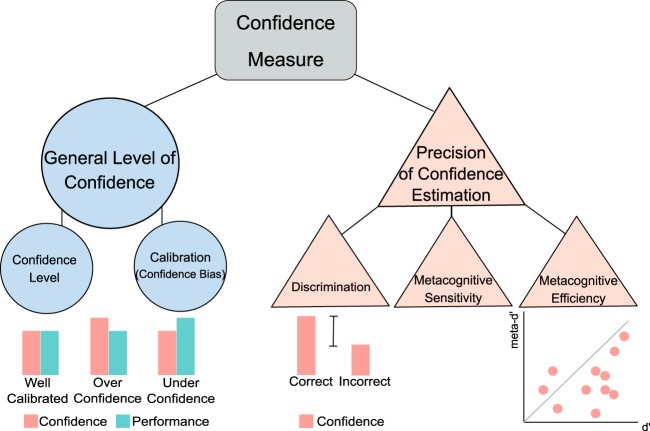
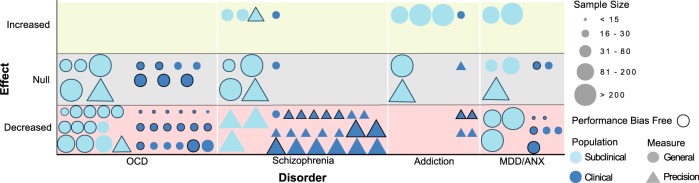
Our behavior is constantly accompanied by a sense of confidence and its’ precision is critical for adequate adaptation and survival. Importantly, abnormal confidence judgments that do not reflect reality may play a crucial role in pathological decision-making typically seen in psychiatric disorders. In this review, we propose abnormalities of confidence as a new model of interpreting psychiatric symptoms. We hypothesize a dysfunction of confidence at the root of psychiatric symptoms either expressed subclinically in the general population or clinically in the patient population. Our review reveals a robust association between confidence abnormalities and psychiatric symptomatology. Confidence abnormalities are present in subclinical/prodromal phases of psychiatric disorders, show a positive relationship with symptom severity, and appear to normalize after recovery. In the reviewed literature, the strongest evidence was found for a decline in confidence in (sub)clinical OCD, and for a decrease in confidence discrimination in (sub)clinical schizophrenia. We found suggestive evidence for increased/decreased confidence in addiction and depression/anxiety, respectively. Confidence abnormalities may help to understand underlying psychopathological substrates across disorders, and should thus be considered transdiagnostically. This review provides clear evidence for confidence abnormalities in different psychiatric disorders, identifies current knowledge gaps and supplies suggestions for future avenues. As such, it may guide future translational research into the underlying processes governing these abnormalities, as well as future interventions to restore them.
Overview
The claims and statistics of this paper haven’t been checked yet.
Run the check — free, no account needed. It reads the open-access text and checks the sources it cites.
Integrity signals
Registry
Cites
Statistics
Figures
Verification
Claims the paper makes
The claims and statistics of this paper haven’t been checked yet.
Run the check — free, no account needed. It reads the open-access text and checks the sources it cites.
Claims other papers make about this one
Each is checked against this paper’s own text: does it say what the citing paper says it does?
The source backs part of the claim, not all of it — or backs it for a different population, condition or comparison.
In the citing paper
“A number of studies have linked local and global metacognitive biases to individual differences in transdiagnostic mental health symptoms, including anxiety, depression, self-esteem, and compulsivity (Hoven et al. 2019, Seow et al. 2021).”
From Metacognition and Confidence: A Review and Synthesis (2024) · cites this paper as Hoven et al. 2019
Experimental — accuracy not yet measuredThe source backs part of the claim, not all of it — or backs it for a different population, condition or comparison.
In the citing paper
“как и уверенность этих пациентов в их бредовых убеждениях не подлежит критическому пересмотру.”
From Когнитивные механизмы дисфункционального принятия решений при психических расстройствах (2025) · cites this paper as Hoven et al., 2019
Experimental — accuracy not yet measuredThe cited source says what the claim attributes to it.
In the citing paper
“При шизофрении объективная точность выполнения задач не соответствует чрезмерной субъективной уверенности в правильности ответов (Hoven et al., 2019)”
From Когнитивные механизмы дисфункционального принятия решений при психических расстройствах (2025) · cites this paper as Hoven et al., 2019
The cited source says what the claim attributes to it.
In the citing paper
“Примером нарушения метапознания на локальном уровне может служить шизофрения.”
From Когнитивные механизмы дисфункционального принятия решений при психических расстройствах (2025) · cites this paper as Hoven et al., 2019
Self-check
Percentages, sums and reported differences re-computed from the paper’s own numbers.
The self-check needs the paper’s full text.
Citations
Cites
Kessler, R. C., Berglund, P., Demler, O., Jin, R., Merikangas, K. R., & Walters, E. E. (2005) · Archives of General Psychiatry · doi:10.1001/archpsyc.62.6.593 · Cited by 20,391
Kessler, R. C., Berglund, P., Demler, O., Jin, R., Koretz, D., Merikangas, K. R., Rush, A. J., Walters, E. E., & Wang, P. S. (2003) · JAMA · doi:10.1001/jama.289.23.3095 · Cited by 7,988
Insel, T., Cuthbert, B., Garvey, M., Heinssen, R., Pine, D. S., Quinn, K., Sanislow, C., & Wang, P. (2010) · American Journal of Psychiatry · doi:10.1176/appi.ajp.2010.09091379 · Cited by 7,067
Koob, G. F., & Volkow, N. D. (2010) · Neuropsychopharmacology · doi:10.1038/npp.2009.110 · Cited by 5,340
Dysfunction of the prefrontal cortex in addiction: neuroimaging findings and clinical implications
Goldstein, R. Z., & Volkow, N. D. (2011) · Nature Reviews Neuroscience · doi:10.1038/nrn3119 · Cited by 2,749
Cognitive impairment in depression: a systematic review and meta-analysis
Rock, P. L., Roiser, J. P., Riedel, W. J., & Blackwell, A. D. (2014) · Psychological Medicine · doi:10.1017/s0033291713002535 · Cited by 2,161
Does low self-esteem predict depression and anxiety? A meta-analysis of longitudinal studies.
Sowislo, J. F., & Orth, U. (2013) · Psychological Bulletin · doi:10.1037/a0028931 · Cited by 2,123
Fleming, S. M., & Lau, H. C. (2014) · Frontiers in Human Neuroscience · doi:10.3389/fnhum.2014.00443 · Cited by 1,408
Overconfidence as a Cause of Diagnostic Error in Medicine
Berner, E. S., & Graber, M. L. (2008) · The American Journal of Medicine · doi:10.1016/j.amjmed.2008.01.001 · Cited by 1,034
Computational psychiatry as a bridge from neuroscience to clinical applications
Huys, Q. J. M., Maia, T. V., & Frank, M. J. (2016) · Nature Neuroscience · doi:10.1038/nn.4238 · Cited by 1,002
Cited by
Sorted by citations
Metacognition and Confidence: A Review and Synthesis
Fleming, S. M. (2024) · Annual Review of Psychology · doi:10.1146/annurev-psych-022423-032425 · Cited by 256
“A number of studies have linked local and global metacognitive biases to individual differences in transdiagnostic mental health symptoms, including anxiety, depression, self-esteem and compulsivity (Hoven et al., 2019, Seow et al., 2021).”
How Local and Global Metacognition Shape Mental Health
Seow, T. X. F., Rouault, M., Gillan, C. M., & Fleming, S. M. (2021) · Biological Psychiatry · doi:10.1016/j.biopsych.2021.05.013 · Cited by 159
Transdiagnostic Phenotyping Reveals a Host of Metacognitive Deficits Implicated in Compulsivity
Seow, T. X. F., & Gillan, C. M. (2020) · Scientific Reports · doi:10.1038/s41598-020-59646-4 · Cited by 117
Liu, Y., Tang, C., Hung, T., Tsai, P., & Lin, M. (2018) · Worldviews on Evidence-Based Nursing · doi:10.1111/wvn.12282 · Cited by 109
Identifying Transdiagnostic Mechanisms in Mental Health Using Computational Factor Modeling
Wise, T., Robinson, O. J., & Gillan, C. M. (2023) · Biological Psychiatry · doi:10.1016/j.biopsych.2022.09.034 · Cited by 108
“As for model-based planning, patterns of association blur across diagnostic lines, showing fairly consistent reductions in metacognitive bias (aka confidence) (35).”
Formation of global self-beliefs in the human brain
Rouault, M., & Fleming, S. M. (2020) · Proceedings of the National Academy of Sciences · doi:10.1073/pnas.2003094117 · Cited by 76
How do confidence and self-beliefs relate in psychopathology: a transdiagnostic approach
Hoven, M., Luigjes, J., Denys, D. A. J. P., Rouault, M., & van Holst, R. J. (2023) · Nature Mental Health · doi:10.1038/s44220-023-00062-8 · Cited by 82
Self-citationThe future of metacognition research: Balancing construct breadth with measurement rigor
Katyal, S., & Fleming, S. M. (2024) · Cortex · doi:10.1016/j.cortex.2023.11.002 · Cited by 63
Rouy, M., Saliou, P., Nalborczyk, L., Pereira, M., Roux, P., & Faivre, N. (2021) · Neuroscience & Biobehavioral Reviews · doi:10.1016/j.neubiorev.2021.03.017 · Cited by 59
Computational validity: using computation to translate behaviours across species
Redish, A. D., Kepecs, Á., Anderson, L. M., Calvin, O. L., Grissom, N. M., Haynos, A. F., Heilbronner, S. R., Herman, A. B., Jacob, S., Ma, S., et al. (2021) · Philosophical Transactions of the Royal Society B Biological Sciences · doi:10.1098/rstb.2020.0525 · Cited by 63
Benwell, C., Mohr, G., Wallberg, J., Kouadio, A., & Ince, R. A. A. (2022) · npj Mental Health Research · doi:10.1038/s44184-022-00009-4 · Cited by 65
McWilliams, A., Bibby, H., Steinbeis, N., David, A. S., & Fleming, S. M. (2023) · Cognition · doi:10.1016/j.cognition.2023.105389 · Cited by 64
Reverse engineering of metacognition
Guggenmos, M. (2022) · eLife · doi:10.7554/elife.75420 · Cited by 52
Dar, R., Sarna, N., Yardeni, G., & Lazarov, A. (2022) · Psychological Medicine · doi:10.1017/s0033291722001908 · Cited by 42
Towards a common conceptual space for metacognition in perception and memory
Mazancieux, A., Pereira, M., Faivre, N., Mamassian, P., Moulin, C. J. A., & Souchay, C. (2023) · Nature Reviews Psychology · doi:10.1038/s44159-023-00245-1 · Cited by 44
Manipulating Prior Beliefs Causally Induces Under- and Overconfidence
Marcke, H. V., Denmat, P. L., Verguts, T., & Desender, K. (2024) · Psychological Science · doi:10.1177/09567976241231572 · Cited by 44
Moritz, S., Scheunemann, J., Lüdtke, T., Westermann, S., Pfuhl, G., Balzan, R. P., & Andreou, C. (2020) · Schizophrenia Research · doi:10.1016/j.schres.2020.05.056 · Cited by 38
Bulley, A., Lempert, K. M., Conwell, C., Irish, M., & Schacter, D. L. (2022) · Philosophical Transactions of the Royal Society B · doi:10.1098/rstb.2021.0338 · Cited by 33
Metacognitive improvement: Disentangling adaptive training from experimental confounds.
Rouy, M., de Gardelle, V., Gabriel Reyes, M., Sackur, J., Vergnaud, J., Filevich, E., & Faivre, N. (2022) · Journal of Experimental Psychology General · doi:10.1037/xge0001185 · Cited by 33
Low self-esteem and the formation of global self-performance estimates in emerging adulthood
Rouault, M., Will, G., Fleming, S. M., & Dolan, R. J. (2022) · Translational Psychiatry · doi:10.1038/s41398-022-02031-8 · Cited by 35
Social expectations in depression
Kirchner, L., Κube, T., Berg, M., Eckert, A.-L., Straube, B., Endres, D., & Rief, W. (2024) · Nature Reviews Psychology · doi:10.1038/s44159-024-00386-x · Cited by 32
Recent developments in the habit hypothesis of OCD and compulsive disorders
Gillan, C. M. (2021) · Current Topics in Behavioral Neurosciences · doi:10.1007/7854_2020_199 · Cited by 27
Metacognitive Information Theory
Dayan, P. (2023) · Open Mind · doi:10.1162/opmi_a_00091 · Cited by 34
Hoven, M., Rouault, M., van Holst, R., & Luigjes, J. (2023) · Psychological Medicine · doi:10.1017/s003329172300209x · Cited by 28
Self-citationRats use memory confidence to guide decisions
Joo, H. R., Liang, H., Chung, J. E., Geaghan-Breiner, C., Fan, J. L., Nachman, B. P., Kepecs, Á., & Frank, L. M. (2021) · Current Biology · doi:10.1016/j.cub.2021.08.013 · Cited by 27
Metacognition and confidence: A review and synthesisPreprint
Fleming, S. M. (2023) · doi:10.31234/osf.io/ge7tz · Cited by 27
Reliable, rapid, and remote measurement of metacognitive bias
Fox, C. A., McDonogh, A., Donegan, K. R., Teckentrup, V., Crossen, R. J., Hanlon, A. K., Gallagher, E., Rouault, M., & Gillan, C. M. (2024) · Scientific Reports · doi:10.1038/s41598-024-64900-0 · Cited by 30
Distorted learning from local metacognition supports transdiagnostic underconfidence
Katyal, S., Huys, Q. J. M., Dolan, R. J., & Fleming, S. M. (2025) · Nature Communications · doi:10.1038/s41467-025-57040-0 · Cited by 42
Wang, J., Liu, D., Li, G., Zhu, J. L., Yue, S., Li, X., Li, Y., Wu, Y., Wang, B., & Liu, Y. (2021) · Psychological Medicine · doi:10.1017/s0033291721003238 · Cited by 25
Antidote or poison: The relationship between “lying flat” tendency and mental health
Lu, H., Hou, J., Wang, J., & Kong, F. (2024) · Applied Psychology Health and Well-Being · doi:10.1111/aphw.12556 · Cited by 21
Neural and computational underpinnings of biased confidence in human reinforcement learning
Ting, C.-C., Salem-Garcia, N., Palminteri, S., Engelmann, J. B., & Lebreton, M. P. (2023) · Nature Communications · doi:10.1038/s41467-023-42589-5 · Cited by 24
Self-citationDietrichkeit, M., Grzella, K., Nagel, M., & Moritz, S. (2020) · Psychiatry Research · doi:10.1016/j.psychres.2020.112787 · Cited by 24
Confidence control for efficient behaviour in dynamic environments
Balsdon, T., & Philiastides, M. G. (2024) · Nature Communications · doi:10.1038/s41467-024-53312-3 · Cited by 25
García‐Mieres, H., Usall, J., Feixas, G., & Ochoa, S. (2020) · Frontiers in Psychiatry · doi:10.3389/fpsyt.2020.594840 · Cited by 19
Explaining distortions in metacognition with an attractor network model of decision uncertainty
Atiya, N. A. A., Huys, Q. J. M., Dolan, R. J., & Fleming, S. M. (2021) · PLoS Computational Biology · doi:10.1371/journal.pcbi.1009201 · Cited by 17
The influence of sad mood induction on task performance and metacognition
Culot, C., Fantini‐Hauwel, C., & Gevers, W. (2021) · Quarterly Journal of Experimental Psychology · doi:10.1177/17470218211004205 · Cited by 21
Metacognitive Computations for Information Search: Confidence in ControlPreprint
Schulz, L., Fleming, S. M., & Dayan, P. (2021) · bioRxiv (Cold Spring Harbor Laboratory) · doi:10.1101/2021.03.01.433342 · Cited by 18
Mikus, N., Lamm, C., & Mathys, C. (2025) · Biological Psychiatry · doi:10.1016/j.biopsych.2024.08.021 · Cited by 16
Is OCD Epistemically Irrational?
Haerle, P. H. (2023) · Philosophy, psychiatry & psychology · doi:10.1353/ppp.2023.a899942 · Cited by 16
The Promise of the World: Towards a Transcendental History of Trust
Fazakas, I., & Gozé, T. (2020) · Husserl Studies · doi:10.1007/s10743-020-09264-9 · Cited by 16
Dissociable source-monitoring impairments in obsessive–compulsive disorder and schizophrenia
Lavallé, L., Bation, R., Dondé, C., Mondino, M., & Brunelin, J. (2020) · European Psychiatry · doi:10.1192/j.eurpsy.2020.48 · Cited by 18
Contributions of age and clinical depression to metacognitive performance
Culot, C., Lauwers, T., Fantini‐Hauwel, C., Madani, Y., Schrijvers, D. L., Morrens, M., & Gevers, W. (2022) · Consciousness and Cognition · doi:10.1016/j.concog.2022.103458 · Cited by 15
Motivational signals disrupt metacognitive signals in the human ventromedial prefrontal cortex
Hoven, M., Brunner, G., de Boer, N. S., Goudriaan, A. E., Denys, D. A. J. P., van Holst, R. J., Luigjes, J., & Lebreton, M. P. (2022) · Communications Biology · doi:10.1038/s42003-022-03197-z · Cited by 15
Self-citationHoven, M., de Boer, N. S., Goudriaan, A. E., Denys, D. A. J. P., Lebreton, M. P., van Holst, R. J., & Luigjes, J. (2022) · Psychiatry and Clinical Neurosciences · doi:10.1111/pcn.13434 · Cited by 16
Self-citationComputational Mechanisms of Addiction and Anxiety: A Developmental Perspective
Goldway, N., Eldar, E., Shoval, G., & Hartley, C. A. (2023) · Biological Psychiatry · doi:10.1016/j.biopsych.2023.02.004 · Cited by 16
Two decades of metacognitive training for psychosis: successes, setbacks, and innovations
Moritz, S., Balzan, R. P., Menon, M., Rojahn, K. M., Schlechte, M., Veckenstedt, R., Schöttle, D., & Meinhart, A. (2025) · Expert Review of Neurotherapeutics · doi:10.1080/14737175.2025.2483204 · Cited by 12
Metacognitive judgements and abilities in patients with affective disorders
Drueke, B., Gauggel, S., Weise, L., Forkmann, T., & Mainz, V. (2022) · Current Psychology · doi:10.1007/s12144-022-02838-0 · Cited by 13
Value certainty and choice confidence are multidimensional constructs that guide decision-making
Lee, D. G., & Hare, T. A. (2023) · Cognitive Affective & Behavioral Neuroscience · doi:10.3758/s13415-022-01054-4 · Cited by 14
Erb, J., Kreitewolf, J., Pinheiro, A. P., & Obleser, J. (2020) · Schizophrenia Bulletin Open · doi:10.1093/schizbullopen/sgaa059 · Cited by 15
Badal, V. D., Depp, C. A., Hitchcock, P., Penn, D. L., Harvey, P. D., & Pinkham, A. E. (2021) · Schizophrenia Research Cognition · doi:10.1016/j.scog.2021.100196 · Cited by 14
Manipulating prior beliefs causally induces under- and overconfidence
Van Marcke, H., Le Denmat, P., Verguts, T., & Desender, K. (2022) · doi:10.1101/2022.03.01.482511 · Cited by 13
Agnoli, S., Zuberer, A., Nanni‐Zepeda, M., McGlinchey, R. E., Milberg, W., Esterman, M. S., & Degutis, J. M. (2023) · Depression and Anxiety · doi:10.1155/2023/2925551 · Cited by 12
The Cognition/Metacognition Trade-Off
Rosenbaum, D., Glickman, M., Fleming, S. M., & Usher, M. (2022) · Psychological Science · doi:10.1177/09567976211043428 · Cited by 15
Brain activity patterns underlying memory confidence
Wynn, S. C., & Nyhus, E. (2022) · European Journal of Neuroscience · doi:10.1111/ejn.15649 · Cited by 14
History biases reveal novel dissociations between perceptual and metacognitive decision-making
Benwell, C., Beyer, R., Wallington, F., & Ince, R. A. A. (2023) · Journal of Vision · doi:10.1167/jov.23.5.14 · Cited by 13
Metacognitive monitoring in schizotypy: Systematic literature review and new empirical data
Lehmann, M., & Ettinger, U. (2023) · Journal of Behavior Therapy and Experimental Psychiatry · doi:10.1016/j.jbtep.2023.101891 · Cited by 13
Hoven, M., Mulder, T., Denys, D. A. J. P., van Holst, R. J., & Luigjes, J. (2023) · doi:10.31234/osf.io/37nad · Cited by 11
Self-citationMetacognitive biases in anxiety-depression and compulsivity extend across perception and memory
Seow, T. X. F., Fleming, S. M., & Hauser, T. U. (2025) · PLOS mental health. · doi:10.1371/journal.pmen.0000259 · Cited by 17
Embon, I., Cukier, S., Iorio, A., Barttfeld, P., & Solovey, G. (2023) · Consciousness and Cognition · doi:10.1016/j.concog.2023.103502 · Cited by 13
Metacognitive sensitivity and symptoms of mental disorder: A systematic review and meta-analysis
Hohendorf, M., & Bauer, M. (2023) · Frontiers in Psychology · doi:10.3389/fpsyg.2023.991339 · Cited by 15
Episodic and semantic feeling-of-knowing in aging: a systematic review and meta-analysis
Devaluez, M., Mazancieux, A., & Souchay, C. (2023) · Scientific Reports · doi:10.1038/s41598-023-36251-9 · Cited by 9
Information search under uncertainty across transdiagnostic psychopathology and healthy ageing
Mohr, G., Ince, R. A. A., & Benwell, C. (2024) · Translational Psychiatry · doi:10.1038/s41398-024-03065-w · Cited by 11
Mood and implicit confidence independently fluctuate at different time scales
da Fonseca, M., Maffei, G., Moreno‐Bote, R., & Hyafil, A. (2022) · Cognitive Affective & Behavioral Neuroscience · doi:10.3758/s13415-022-01038-4 · Cited by 11
Hot metacognition: poorer metacognitive efficiency following acute but not traumatic stress
Smith, A., Bisby, J. A., Dercon, Q., Bevan, A., Kigar, S. L., Lynall, M.-E., Dalgleish, T., Hitchcock, C., & Nord, C. L. (2024) · Translational Psychiatry · doi:10.1038/s41398-024-02840-z · Cited by 10
Scheunemann, J., Fischer, R., & Moritz, S. (2021) · Frontiers in Psychiatry · doi:10.3389/fpsyt.2021.612810 · Cited by 8
Lower confidence and increased error sensitivity in OCD patients while learning under volatility
Hoven, M., Mulder, T., Denys, D. A. J. P., van Holst, R. J., & Luigjes, J. (2024) · Translational Psychiatry · doi:10.1038/s41398-024-03042-3 · Cited by 7
Self-citationCognitive arbitration between candidate dimensions of psychopathology
Fox, C. A., Teckentrup, V., Donegan, K. R., Seow, T. X. F., Benwell, C., Tervo‐Clemmens, B., & Gillan, C. M. (2025) · Molecular Psychiatry · doi:10.1038/s41380-025-03297-2 · Cited by 6
Seow, T. X. F., Jelinek, L., Moritz, S., & Hauser, T. U. (2025) · Nature Reviews Psychology · doi:10.1038/s44159-025-00503-4 · Cited by 11
Atypical meta-memory evaluation strategy in schizophrenia patients
Zheng, Y., Wang, L., Gerlofs, D. J., Duan, W., Wang, X., Jia, Y., Yan, C., Allé, M. C., Berna, F. S., Wang, J., et al. (2021) · Schizophrenia Research Cognition · doi:10.1016/j.scog.2021.100220 · Cited by 7
Jondani, J. A., Yazdkhasti, F., & Abedi, A. (2023) · Journal of Behavior Therapy and Experimental Psychiatry · doi:10.1016/j.jbtep.2023.101855 · Cited by 7
Dubey, S., Dubey, M. J., Ghosh, R., Mitchell, A. J., Chatterjee, S., Das, S., Pandit, A., Ray, B. K., Das, G. C., & León, J. (2022) · Medical Research Archives · doi:10.18103/mra.v10i3.2707 · Cited by 8
Distorted learning from local metacognition supports transdiagnostic underconfidencePreprint
Katyal, S., Huys, Q. J. M., Dolan, R. J., & Fleming, S. M. (2023) · doi:10.31234/osf.io/qcg92 · Cited by 7
You better listen to yourself: studying metacognitive efficiency in emotion recognition by voice
Sinvani, R.-T., & Fogel‐Grinvald, H. (2024) · Frontiers in Communication · doi:10.3389/fcomm.2024.1366597 · Cited by 6
The Communication of Metacognition for Social Strategy in Psychosis: An Exploratory Study
Hertz, U., Bell, V., Barnby, J. M., McQuillin, A., & Bahrami, B. (2020) · Schizophrenia Bulletin Open · doi:10.1093/schizbullopen/sgaa058 · Cited by 5
Moritz, S., Göritz, A. S., Franz, C., Sibilis, A., Voßberger, H., Balzan, R. P., & Scheunemann, J. (2022) · Psychiatry Research · doi:10.1016/j.psychres.2022.114862 · Cited by 6
Lee, J. K., Rouault, M., & Wyart, V. (2023) · bioRxiv (Cold Spring Harbor Laboratory) · doi:10.1101/2023.01.05.522867 · Cited by 6
Boldt, A., Fox, C., Gillan, C., & Gilbert, S. J. (2025) · eLife · doi:10.7554/elife.98114 · Cited by 5
Biased and inattentive responding contribute to apparent metacognitive biases in mental health
Sarna, N., Dar, R., & Mazor, M. (2026) · Proceedings of the National Academy of Sciences · doi:10.1073/pnas.2520832123 · Cited by 8
Metacognitive confidence and affect – two sides of the same coin?
Voodla, A., Uusberg, A., & Desender, K. (2025) · Cognition & Emotion · doi:10.1080/02699931.2025.2451795 · Cited by 5
Cognitive biases and psychosis: From bench to bedside
Balzan, R. P., & Moritz, S. (2020) · Schizophrenia Research · doi:10.1016/j.schres.2020.07.014 · Cited by 5
Kopčanová, M., Ince, R. A. A., & Benwell, C. (2023) · bioRxiv (Cold Spring Harbor Laboratory) · doi:10.1101/2023.04.21.537831 · Cited by 6
Miyoshi, K., Webb, T. W., Rahnev, D., & Lau, H. C. (2023) · Elsevier eBooks · doi:10.1016/b978-0-12-820480-1.00049-8 · Cited by 10
Hahn, S., Moritz, S., Elmers, J., & Scheunemann, J. (2021) · Schizophrenia Research · doi:10.1016/j.schres.2021.09.013 · Cited by 5
Rouy, M., Pereira, M., Saliou, P., Sanchez, R., Mardi, W. E., Sebban, H., Baqué, E., Dezier, C., Porte, P., Micaux, J., et al. (2023) · Schizophrenia · doi:10.1038/s41537-023-00387-4 · Cited by 6
Hoven, M., Luigjes, J., & van Holst, R. J. (2024) · Journal of Behavioral Addictions · doi:10.1556/2006.2023.00082 · Cited by 4
Self-citationFitousi, D. (2025) · Entropy · doi:10.3390/e27040353 · Cited by 5
Metakognitives Training für Psychose
Schlechte, M., Moritz, S., Veckenstedt, R., König, C., Berna, F. S., Gawęda, Ł., Vanessa Acuña, P., Lamarca, M., Ochoa, S., & Fischer, R. (2025) · Die Psychotherapie · doi:10.1007/s00278-025-00774-5 · Cited by 4
No evidence of impaired visual and tactile metacognition in adults with Tourette disorder
Arbuzova, P., Guo, S., Koß, C., Kurvits, L., Faivre, N., Kühn, A. A., Filevich, E., & Ganos, C. (2022) · Parkinsonism & Related Disorders · doi:10.1016/j.parkreldis.2022.02.019 · Cited by 5
Reply to: Metacognition, Adaptation, and Mental Health
Seow, T. X. F., Rouault, M., Gillan, C. M., & Fleming, S. M. (2021) · Biological Psychiatry · doi:10.1016/j.biopsych.2021.11.005 · Cited by 4
Boldt, A., Fox, C. A., Gillan, C. M., & Gilbert, S. J. (2024) · eLife · doi:10.7554/elife.98114.1 · Cited by 4
Pichlmeier, S., Streb, J., Rösel, F. A., Dobler, H., Dudeck, M., & Fritz, M. (2024) · Comprehensive Psychiatry · doi:10.1016/j.comppsych.2024.152475 · Cited by 4
Estimating self-performance when making complex decisions
Lu, X., Murawski, C., Bossaerts, P. L., & Suzuki, S. (2025) · Scientific Reports · doi:10.1038/s41598-025-87601-8 · Cited by 4
Preserved electrophysiological markers of confidence in schizophrenia spectrum disorder
Rouy, M., Roger, M., Goueytes, D., Pereira, M., Roux, P., & Faivre, N. (2023) · Schizophrenia · doi:10.1038/s41537-023-00333-4 · Cited by 3
Lin, S., Chen, X., Tan, L., Liao, Z., Li, Y., Tang, Y., Huang, Q., & Shen, H. (2024) · JMIR Serious Games · doi:10.2196/45985 · Cited by 3
Grave, J., Cordeiro, S., Teixeira, N. A. D. S., Korb, S., & Soares, S. C. (2024) · Quarterly Journal of Experimental Psychology · doi:10.1177/17470218241253703 · Cited by 2
Jondani, J. A., & Yazdkhasti, F. (2024) · British Journal of Clinical Psychology · doi:10.1111/bjc.12501 · Cited by 3
Lee, J. K., Rouault, M., & Wyart, V. (2025) · Nature Mental Health · doi:10.1038/s44220-024-00364-5 · Cited by 13
Value-directed remembering in first-episode schizophrenia.
Patterson, T. K., Nuechterlein, K. H., Subotnik, K. L., Castel, A. D., & Knowlton, B. J. (2022) · Neuropsychology · doi:10.1037/neu0000840 · Cited by 3
GGSDT: A unified signal detection framework for confidence data analysisPreprint
Miyoshi, K., & Nishida, S. (2022) · bioRxiv (Cold Spring Harbor Laboratory) · doi:10.1101/2022.10.28.514329 · Cited by 3
Value certainty and choice confidence are multidimensional constructs that guide decision-makingPreprint
Lee, D. G., & Hare, T. A. (2022) · doi:10.31234/osf.io/5htkp · Cited by 3
Metadata
- Authors
- Hoven, M., Lebreton, M., Engelmann, J. B., Denys, D., Luigjes, J., & van Holst, R. J.
- Affiliations
- Amsterdam University Medical Centers (NL)
- University of Geneva (CH)
- Tinbergen Institute (NL)
- Netherlands Institute for Neuroscience (NL)
- Corresponding author
- Hoven, Monja
- Venue
- Translational Psychiatry
- Published
- 2019-10-21
- Volume
- 9
- Issue
- 1
- Pages
- 268-268
- ISSN
- 2158-3188 (ISSN-L)
- PMC
- PMC6803712
- OpenAlex
- W2980772488
- Cited by
- 171
- References
- 153
- Citations by year
- 2026: 19 · 2025: 29 · 2024: 30 · 2023: 36 · 2022: 25 · 2021: 17 · 2020: 14
- FWCI
- 2.35
- Type
- journal article
- Language
- en
- Open access
- gold
- doi.org
- Locations
- Translational Psychiatry (publishedVersion, cc-by)
- Europe PMC (PubMed Central) (publishedVersion, cc-by)
- PubMed Central (publishedVersion, cc-by)
- PubMed (publishedVersion)
- Pure Amsterdam UMC (publishedVersion, other-oa)
- KNAW research portal (Royal Academy of Art and Sciences (KNAW)) (publishedVersion, other-oa)
- Archive ouverte UNIGE (University of Geneva) (publishedVersion, other-oa)
- UvA-DARE (University of Amsterdam) (acceptedVersion, cc-by)
- Data Archiving and Networked Services (DANS) (submittedVersion)
- Data Archiving and Networked Services (DANS) (submittedVersion, other-oa)
- HAL (submittedVersion)
- DOAJ (DOAJ: Directory of Open Access Journals) (submittedVersion)
- PsyArXiv (OSF Preprints) (submittedVersion, cc-by)
- PsyArXiv (OSF Preprints) (submittedVersion)
- Archive ouverte UNIGE (University of Geneva) (submittedVersion, cc-by)
- Funders
- Universiteit van Amsterdam
- Nederlandse Organisatie voor Wetenschappelijk Onderzoek (916-18-119, 451-15-015)
- Amsterdam Brain and Cognition
- Topics
- Health Sciences › Medicine › Psychiatry and Mental health › Schizophrenia research and treatment
- Social Sciences › Arts and Humanities › Philosophy › Mental Health and Psychiatry
- Life Sciences › Neuroscience › Cognitive Neuroscience › Neural and Behavioral Psychology Studies
- Keywords
- confidence judgments, metacognition, psychiatric symptoms, obsessive-compulsive disorder, schizophrenia, addiction, depression, anxiety, prodromal symptoms, symptom severity, transdiagnostic mechanisms, decision-making
- MeSH terms
- Mental Disorders, Brain, Humans, Judgment, Health Knowledge, Attitudes, Practice, Psychiatry, Self-Assessment, Translational Research, Biomedical
About these checks
Registry, retraction, Cites and statistics results are computed, not judged, with one exception: a printed reference that no index lists is read once by a model before it counts as a citation error. Claims are extracted by a model and kept only when their quote appears verbatim in the text; each cited source is then checked, with a model’s help, for whether it says what the claim relies on. Those verdicts can be wrong — read the claim’s quote and the cited source before relying on one.
Statistics and arithmetic are recomputed, not judged.
Confidence bands are shown only for fields calibrated on our annotated test set. None is calibrated yet, so no band is shown.
What counts as a claim ›How we measure confidence ›How we check this ›
Are you an author, or do you see a problem with this page? Request a review
