

Personalized machine learning of depressed mood using wearables
Open accessThe DOI matches its Crossref record; 97 of the 97 references it cites were found in a registry or an index.
Abstract
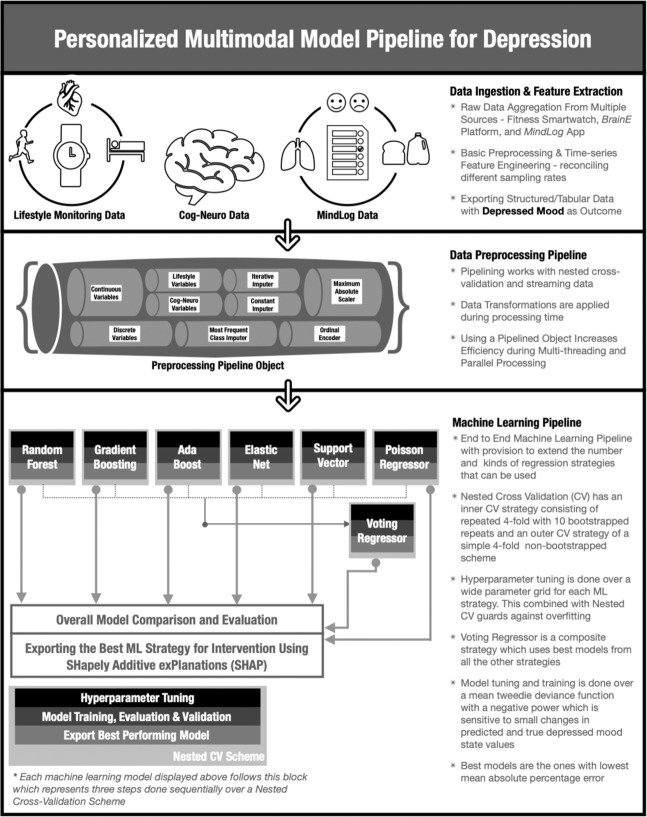
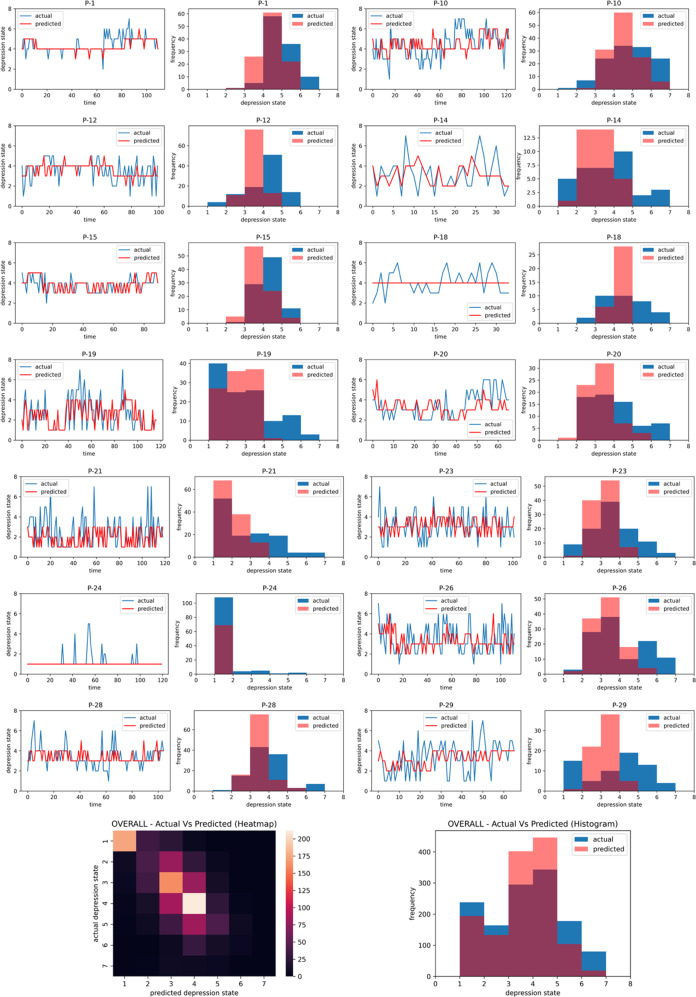
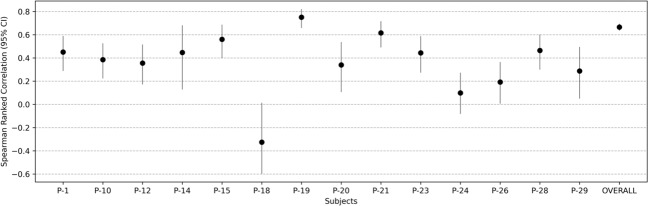
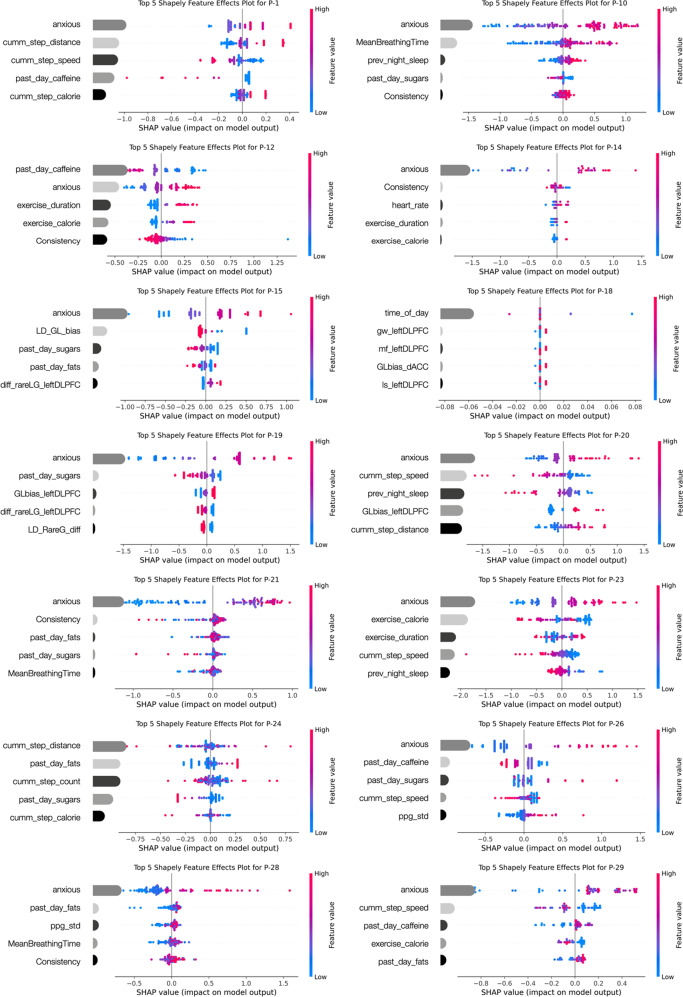
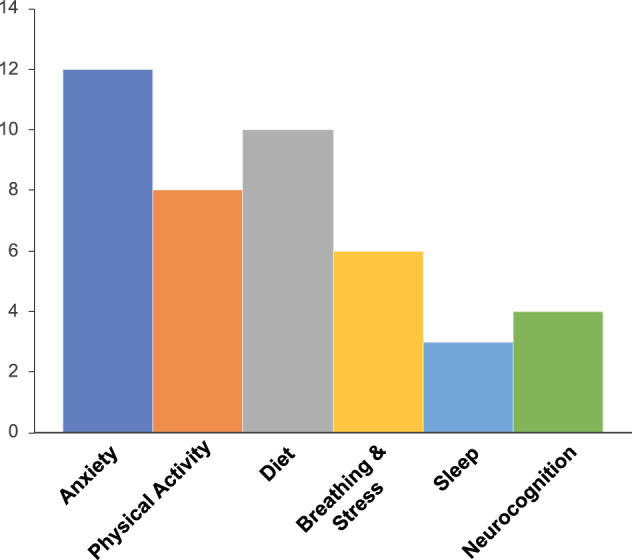
Depression is a multifaceted illness with large interindividual variability in clinical response to treatment. In the era of digital medicine and precision therapeutics, new personalized treatment approaches are warranted for depression. Here, we use a combination of longitudinal ecological momentary assessments of depression, neurocognitive sampling synchronized with electroencephalography, and lifestyle data from wearables to generate individualized predictions of depressed mood over a 1-month time period. This study, thus, develops a systematic pipeline for N-of-1 personalized modeling of depression using multiple modalities of data. In the models, we integrate seven types of supervised machine learning (ML) approaches for each individual, including ensemble learning and regression-based methods. All models were verified using fourfold nested cross-validation. The best-fit as benchmarked by the lowest mean absolute percentage error, was obtained by a different type of ML model for each individual, demonstrating that there is no one-size-fits-all strategy. The voting regressor, which is a composite strategy across ML models, was best performing on-average across subjects. However, the individually selected best-fit models still showed significantly less error than the voting regressor performance across subjects. For each individual’s best-fit personalized model, we further extracted top-feature predictors using Shapley statistics. Shapley values revealed distinct feature determinants of depression over time for each person ranging from co-morbid anxiety, to physical exercise, diet, momentary stress and breathing performance, sleep times, and neurocognition. In future, these personalized features can serve as targets for a personalized ML-guided, multimodal treatment strategy for depression.
Overview
The claims and statistics of this paper haven’t been checked yet.
Free: it reads the open-access text and checks the first 5 claims that cite a source we can check. Create a free account to check every claim.
Integrity signals
Registry
Cites
Statistics
Figures
Verification
Claims the paper makes
The claims and statistics of this paper haven’t been checked yet.
Free: it reads the open-access text and checks the first 5 claims that cite a source we can check. Create a free account to check every claim.
Claims other papers make about this one
Each is checked against this paper’s own text: does it say what the citing paper says it does?
The source backs part of the claim, not all of it — or backs it for a different population, condition or comparison.
In the citing paper
“Shapley values indicate the relative importance and directionality of each feature as it predicts the depressed mood DV, notably reflecting associations but not causal relationships or inherent modifiability of the underlying variables [17, 18].”
From Personalized machine learning guided intervention for optimizing lifestyle behaviors in depression: a pilot study (2026) · cites this paper as [17]
Experimental — accuracy not yet measuredThe cited source says what the claim attributes to it.
In the citing paper
“Consequently, a single lifestyle treatment domain is unlikely to be universally beneficial, and these studies fail to account for individual differences that may favor one behavioral health solution over another [17–19].”
From Personalized machine learning guided intervention for optimizing lifestyle behaviors in depression: a pilot study (2026) · cites this paper as [17]
The cited source says what the claim attributes to it.
In the citing paper
“Yet, a major limitation of these homogenously assigned (non-personalized) behavioral intervention studies is the heterogeneity across individuals of the specific lifestyle factors most closely linked to their depression.”
From Personalized machine learning guided intervention for optimizing lifestyle behaviors in depression: a pilot study (2026) · cites this paper as [17]
The cited source says what the claim attributes to it.
In the citing paper
“Furthermore, leveraging model explainers such as Shapley plots, we have identified the top predictive intervention targets for each individual [17, 18].”
From Personalized machine learning guided intervention for optimizing lifestyle behaviors in depression: a pilot study (2026) · cites this paper as [17]
2 more claims about this paper
Create a free account to see every claim other papers make about this one.
Self-check
Percentages, sums and reported differences re-computed from the paper’s own numbers.
The self-check needs the paper’s full text.
Citations
Cites
The PHQ-9: Validity of a brief depression severity measure
Kroenke, K., Spitzer, R. L., & Williams, J. B. W. (2001) · Journal of General Internal Medicine · doi:10.1046/j.1525-1497.2001.016009606.x · Cited by 44,910
Delorme, A., & Makeig, S. (2004) · Journal of Neuroscience Methods · doi:10.1016/j.jneumeth.2003.10.009 · Cited by 24,371
mice: Multivariate Imputation by Chained Equations in R
Buuren, S. V., & Groothuis-Oudshoorn, K. (2011) · Journal of Statistical Software · doi:10.18637/jss.v045.i03 · Cited by 13,870
Desikan, R. S., Ségonne, F., Fischl, B., Quinn, B. T., Dickerson, B. C., Blacker, D., Buckner, R. L., Dale, A. M., Maguire, R. P., Hyman, B. T., et al. (2006) · NeuroImage · doi:10.1016/j.neuroimage.2006.01.021 · Cited by 13,324
Wang, C., Pan, R., Wan, X., Tan, Y., Xu, L., Ho, C. S., & Ho, R. C. (2020) · International Journal of Environmental Research and Public Health · doi:10.3390/ijerph17051729 · Cited by 9,923 · cited 2×
“For this study, the following preprocessing pipeline strategy was devised: (1) continuous and discrete variables were processed independently, (2) discrete variables were imputed using a “most frequent class imputer”, which is basically filling missing values with the class with highest frequency, (3) the continuous v…”
MethodScoville, W. B. (1949) · Journal of neurosurgery · doi:10.3171/jns.1949.6.1.0065 · Cited by 7,381
Effects of noise letters upon the identification of a target letter in a nonsearch task
Eriksen, B. A., & Eriksen, C. W. (1974) · Perception & Psychophysics · doi:10.3758/bf03203267 · Cited by 7,230
Trivedi, M. H., Rush, A. J., Wisniewski, S. R., Nierenberg, A. A., Warden, D., Ritz, L., Norquist, G., Howland, R. H., Lebowitz, B., McGrath, P. J., et al. (2006) · American Journal of Psychiatry · doi:10.1176/appi.ajp.163.1.28 · Cited by 3,879
High-speed scanning in human memory
Sternberg, S. (1966) · Science · doi:10.1126/science.153.3736.652 · Cited by 3,576
The NimStim set of facial expressions: Judgments from untrained research participants.
Tottenham, N., Tanaka, J. W., Leon, A. C., McCarry, T., Nurse, M., Hare, T. A., Marcus, D. J., Westerlund, A., Casey, B., & Nelson, C. (2009) · Psychiatry Research · doi:10.1016/j.psychres.2008.05.006 · Cited by 3,454
Research works printed but not linked: 3
- Institute of Medicine (US) Forum on Drug Discovery, Development and T. Clinical Trials in Depression. in Transforming Clinical Research in the United States: Challenges and Opportunities: Workshop Summary. (National Academies Press (US), 2010). https://www.ncbi.nlm.nih.gov/books/NBK50890/. 21210556
- Kothe C., Medine D., Boulay C., Grivich M., Stenner T. ‘Lab Streaming Layer’ Copyright. https://labstreaminglayer.readthedocs.io/ (2019). PMC12434378 40959706
- Heeger, D. & Landy, M. Signal detection theory. in Encyclopedia of perception (ed Goldstein, B.) 887–892 (SAGE Publications, 2009).
Cited by
Artificial intelligence-powered electronic skin
Xu, C., Solomon, S. A., & Gao, W. (2023) · Nature Machine Intelligence · doi:10.1038/s42256-023-00760-z · Cited by 259
“Next-generation e-skins will combine physiological data with molecular signatures and perform multimodal data analysis 141 .”
The genetic basis of major depressive disorder
Flint, J. (2023) · Molecular Psychiatry · doi:10.1038/s41380-023-01957-9 · Cited by 143
Wearable Artificial Intelligence for Anxiety and Depression: Scoping Review
Abd-alrazaq, A., AlSaad, R., Aziz, S., Ahmed, A., Denecke, K., Househ, M., Farooq, F., & Sheikh, J. (2023) · Journal of Medical Internet Research · doi:10.2196/42672 · Cited by 107
Abd-Alrazaq, A., AlSaad, R., Shuweihdi, F., Ahmed, A., Aziz, S., & Sheikh, J. (2023) · npj Digital Medicine · doi:10.1038/s41746-023-00828-5 · Cited by 138
Forbes, A., Keleher, M. R., Venditto, M., & DiBiasi, F. (2023) · Journal of Medical Internet Research · doi:10.2196/43727 · Cited by 94
Lim, D., Jeong, J., Song, Y. M., Cho, C., Yeom, J. W., Lee, T., Lee, J.-B., Lee, H., & Kim, J. K. (2024) · npj Digital Medicine · doi:10.1038/s41746-024-01333-z · Cited by 107
Kargarandehkordi, A., Li, S., Lin, K., Phillips, K. T., Benzo, R. M., & Washington, P. Y. (2025) · Biosensors · doi:10.3390/bios15040202 · Cited by 96
Reproductive Hormones and Female Mental Wellbeing
Wieczorek, K., Targonskaya, A., & Maslowski, K. (2023) · Women · doi:10.3390/women3030033 · Cited by 94
Smart Consumer Wearables as Digital Diagnostic Tools: A Review
Chakrabarti, S., Biswas, N., Jones, L., Kesari, S., & Ashili, S. (2022) · Diagnostics · doi:10.3390/diagnostics12092110 · Cited by 81
A Comprehensive Survey on Wearable Computing for Mental and Physical Health Monitoring
Elfouly, T., & Alouani, A. T. (2025) · Electronics · doi:10.3390/electronics14173443 · Cited by 72
Landscape and future directions of machine learning applications in closed-loop brain stimulation
Chandrabhatla, A. S., Pomeraniec, I. J., Horgan, T. M., Wat, E. K., & Ksendzovsky, A. (2023) · npj Digital Medicine · doi:10.1038/s41746-023-00779-x · Cited by 67
Personalized mood prediction from patterns of behavior collected with smartphones
Balliu, B., Douglas, C., Seok, D., Shenhav, L., Wu, Y., Chatzopoulou, D., Kaiser, W., Chen, V., Kim, J. S., Deverasetty, S., et al. (2024) · npj Digital Medicine · doi:10.1038/s41746-024-01035-6 · Cited by 55
Insights from Personalized Models of Brain and Behavior for Identifying Biomarkers in PsychiatryPreprint
Kraus, B. T., Zinbarg, R. E., Braga, R. M., Nusslock, R., Mittal, V. A., & Gratton, C. (2023) · PsyArXiv (OSF Preprints) · doi:10.1016/j.neubiorev.2023.105259 · Cited by 55
Ren, B., Balkind, E. G., Pastro, B., Israel, E. S., Pizzagalli, D. A., Rahimi-Eichi, H., Baker, J. T., & Webb, C. A. (2022) · Psychological Medicine · doi:10.1017/s0033291722002161 · Cited by 52
Site, A., Lohan, E. S., Jolanki, O. H., Valkama, O., Hernández, R. R., Latikka, R., Alekseeva, D., Vasudevan, S., Afolaranmi, S. O., Ometov, A., et al. (2022) · Sensors · doi:10.3390/s22031108 · Cited by 53
Wearable devices for anxiety & depression: A scoping review
Ahmed, A., Aziz, S., Alzubaidi, M., Schneider, J., Irshaidat, S., Abu Serhan, H., Abd-alrazaq, A. A., Solaiman, B., & Househ, M. (2023) · Computer Methods and Programs in Biomedicine Update · doi:10.1016/j.cmpbup.2023.100095 · Cited by 50
Muse, E. D., & Topol, E. J. (2024) · Cell Metabolism · doi:10.1016/j.cmet.2024.02.002 · Cited by 50
Hurwitz, E. G., Butzin-Dozier, Z., Master, H., O’Neil, S. T., Walden, A., Holko, M., Patel, R. C., & Haendel, M. A. (2024) · JMIR mhealth and uhealth · doi:10.2196/54622 · Cited by 45
Revisiting the role of computational neuroimaging in the era of integrative neuroscience
Loosen, A. M., Kato, A., & Gu, X. (2024) · Neuropsychopharmacology · doi:10.1038/s41386-024-01946-8 · Cited by 42
Embedded Intelligence: State-of-the-Art and Research Challenges
Seng, K. P., & Ang, L.-M. (2022) · IEEE Access · doi:10.1109/access.2022.3175574 · Cited by 36
Mouchabac, S., Maatoug, R., Conejero, I., Adrien, V., Bonnot, O., Millet, B., Ferreri, F., & Bourla, A. (2021) · Brain Sciences · doi:10.3390/brainsci11111454 · Cited by 35
Hartson, K. R., Huntington‐Moskos, L., Sears, C. G., Genova, G., Mathis, C., Ford, W., & Rhodes, R. E. (2023) · Journal of Medical Internet Research · doi:10.2196/46783 · Cited by 36
Jaiswal, S., Purpura, S. R., Manchanda, J. K., Nan, J., Azeez, N., Ramanathan, D., & Mishra, J. (2024) · JMIR Mental Health · doi:10.2196/49467 · Cited by 34
Self-citationPatel, J., Hung, C., & Katapally, T. R. (2024) · Psychiatry Research · doi:10.1016/j.psychres.2024.116277 · Cited by 35
Ćosić, K., Popović, S., & Wiederhold, B. K. (2024) · Cyberpsychology Behavior and Social Networking · doi:10.1089/cyber.2023.0737 · Cited by 33
Ometov, A., Mezina, A., Lin, H.-C., Arponen, O., Bürget, R., & Nurmi, J. (2025) · Journal of Healthcare Informatics Research · doi:10.1007/s41666-025-00200-0 · Cited by 29
Kim, K. A., Kim, H., Ha, E. J., Yoon, B. C., & Kim, D. (2024) · Journal of Korean Neurosurgical Society · doi:10.3340/jkns.2023.0195 · Cited by 29
Real-time monitoring of military health and readiness: a perspective on future research
de Vries, H., van der Wal, S. J., Delahaij, R., Venrooij, W., & Kamphuis, W. (2025) · Frontiers in Digital Health · doi:10.3389/fdgth.2025.1542140 · Cited by 28
Beyond One-Size-Fits-All: A Survey of Personalized Affective Computing in Human-Agent InteractionPreprint
Li, J., Elgarf, M., Waleed, A., & Salam, H. (2023) · arXiv (Cornell University) · doi:10.48550/arxiv.2304.00377 · Cited by 26
Webb, C. A., Ren, B., Rahimi-Eichi, H., Gillis, B. W., Chung, Y., & Baker, J. T. (2025) · Translational Psychiatry · doi:10.1038/s41398-025-03394-4 · Cited by 24
An Ensemble Classification Model for Depression Based on Wearable Device Sleep Data
Hu, Y., Chen, J., Chen, J., Wang, W. W., Zhao, S., & Hu, X. (2023) · IEEE Journal of Biomedical and Health Informatics · doi:10.1109/jbhi.2023.3258601 · Cited by 24
Campbell, E. L., Dineley, J., Conde, P., Matcham, F., White, K. M., Oetzmann, C., Simblett, S. K., Bruce, S., Folarin, A., Wykes, T., et al. (2023) · Interspeech (USB) · doi:10.21437/interspeech.2023-1721 · Cited by 24
Conley, C. S., Gonzales, C. H., Huguenel, B. M., Rauch, A. A., Kahrilas, I. J., Duffecy, J. L., & Silton, R. L. (2024) · Mindfulness · doi:10.1007/s12671-024-02398-3 · Cited by 24
Woll, S., Birkenmaier, D., Biri, G. I., Nissen, R., Lutz, L., Schroth, M., Ebner‐Priemer, U., & Giurgiu, M. (2025) · JMIR mhealth and uhealth · doi:10.2196/59660 · Cited by 25
Dissociable neural mechanisms of cognition and well-being in youth versus healthy aging.
Grennan, G., Balasubramani, P. P., Vahidi, N. W., Ramanathan, D., Jeste, D. V., & Mishra, J. (2022) · Psychology and Aging · doi:10.1037/pag0000710 · Cited by 23
Self-citationSkorburg, J. A., O’Doherty, K. C., & Friesen, P. (2024) · American Psychologist · doi:10.1037/amp0001168 · Cited by 24
Personalized Machine Learning-Based Prediction of Wellbeing and Empathy in Healthcare Professionals
Nan, J., Herbert, M. S., Purpura, S., Henneken, A. N., Ramanathan, D., & Mishra, J. (2024) · Sensors · doi:10.3390/s24082640 · Cited by 22
“We used MAPE as the performance metric to choose the best model (with the lowest error) for each ML strategy [32,54].”
BackgroundMethodInfluentialSelf-citationZhao, X., Lou, Z., Shah, P. T., Wu, C., Liu, R., Xie, W. B., & Zhang, S. (2025) · Sensors · doi:10.3390/s25154858 · Cited by 23
Tiwari, A., Cassani, R., Kshirsagar, S., Tobón, D. P., Zhu, Y. M., & Falk, T. H. (2022) · Sensors · doi:10.3390/s22124579 · Cited by 22
Brain–computer interfaces as an architectural design tool: Feasibility and usability study
Yang, Q., Cruz-Garza, J. G., & Kalantari, S. (2023) · Automation in Construction · doi:10.1016/j.autcon.2023.105011 · Cited by 21
Langener, A. M., Bringmann, L. F., Kas, M. J., & Stulp, G. (2024) · Administration and Policy in Mental Health and Mental Health Services Research · doi:10.1007/s10488-023-01328-0 · Cited by 21
Corponi, F., Li, B. M., Anmella, G., Mas, A., Pacchiarotti, I., Valentí, M., Grande, I., Benabarre, A., Garriga, M., Vieta, E., et al. (2024) · Translational Psychiatry · doi:10.1038/s41398-024-02876-1 · Cited by 20
Luján, M. Á., Mateo, J., Torres, A. M., Santos, J. L., Quevedo, Ó. E. D., & Borja, A. L. (2022) · Journal of Medical and Biological Engineering · doi:10.1007/s40846-022-00758-9 · Cited by 19
PIE: A Personalized Information Embedded model for text-based depression detection
Wu, Y., Liu, Z., Yuan, J., Chen, B., Cai, H., Liu, L., Zhao, Y., Mei, H., Deng, J., Bao, Y., et al. (2024) · Information Processing & Management · doi:10.1016/j.ipm.2024.103830 · Cited by 19
Gutmann, D. H., Anastasaki, C., Gupta, A., Hou, Y., Morris, S. M., Payne, J. M., Raber, J., Tomchik, S. M., Aelst, L. V., Walker, J. A., et al. (2025) · Genes & Development · doi:10.1101/gad.352629.125 · Cited by 18
Distinct neural activations correlate with maximization of reward magnitude versus frequency
Balasubramani, P. P., Diaz-Delgado, J., Grennan, G., Alim, F., Zafar-Khan, M., Maric, V., Ramanathan, D., & Mishra, J. (2022) · Cerebral Cortex · doi:10.1093/cercor/bhac482 · Cited by 17
Self-citationYan, A. Y., Speed, T. J., & Taylor, C. O. (2025) · Scientific Reports · doi:10.1038/s41598-025-03856-1 · Cited by 16
Polysomnographic identification of anxiety and depression using deep learning
Thakre, T. P., Kulkarni, H. R., Adams, K. S., Mischel, R., Hayes, R., & Pandurangi, A. (2022) · Journal of Psychiatric Research · doi:10.1016/j.jpsychires.2022.03.027 · Cited by 16
Parietal alpha underlies slower cognitive responses during interference processing in adolescents
Mo, Z., Grennan, G., Kulkarni, A., Ramanathan, D., Balasubramani, P. P., & Mishra, J. (2023) · Behavioural Brain Research · doi:10.1016/j.bbr.2023.114356 · Cited by 16
Self-citationTowards Personalised Mood Prediction and Explanation for Depression from Biophysical Data
Chatterjee, S., Mishra, J., Sundram, F., & Roop, P. (2023) · Sensors · doi:10.3390/s24010164 · Cited by 15
Self-citationPersonalization of Affective Models Using Classical Machine Learning: A Feasibility Study
Kargarandehkordi, A., Kaisti, M., & Washington, P. Y. (2024) · Applied Sciences · doi:10.3390/app14041337 · Cited by 15
Ramanathan, D., Nan, J., Grennan, G., Jaiswal, S., Purpura, S. R., Manchanda, J. K., Maric, V., Balasubramani, P. P., & Mishra, J. (2024) · Biological Psychiatry Global Open Science · doi:10.1016/j.bpsgos.2024.100384 · Cited by 15
Self-citationPersonalized relapse prediction in patients with major depressive disorder using digital biomarkers
Vairavan, S., Rashidisabet, H., Li, Q. S., Ness, S., Morrison, R. L., Soares, C. N., Uher, R., Frey, B. N., Lam, R. W., Kennedy, S. H., et al. (2023) · Scientific Reports · doi:10.1038/s41598-023-44592-8 · Cited by 14
Computational Audio Modelling for Robot-Assisted Assessment of Children’s Mental Wellbeing
Abbasi, N. I., Spitale, M., Anderson, J., Ford, T. J., Jones, P. B., & Güneş, H. (2022) · Lecture notes in computer science · doi:10.1007/978-3-031-24670-8_3 · Cited by 14
From Biomarkers to Behavior: Mapping the Neuroimmune Web of Pain, Mood, and Memory
Tanaka, M., & Battaglia, S. (2025) · Biomedicines · doi:10.3390/biomedicines13092226 · Cited by 13
Nelson, E. C., Verhagen, T., Vollenbroek-Hutten, M. M. R., & Noordzij, M. L. (2024) · Computers in Human Behavior · doi:10.1016/j.chb.2024.108314 · Cited by 12
Wearable-Based Intelligent Emotion Monitoring in Older Adults during Daily Life Activities
Maestro, E. G., Almeida, T., Schaffernicht, E., & Mozos, Ó. M. (2023) · Applied Sciences · doi:10.3390/app13095637 · Cited by 11
Continuous remote monitoring of neurophysiologic Immersion accurately predicts mood
Merritt, S. H., & Zak, P. J. (2024) · Frontiers in Digital Health · doi:10.3389/fdgth.2024.1397557 · Cited by 11
Anmella, G., Corponi, F., Li, B. M., Mas, A., Garriga, M., Sanabra, M., Pacchiarotti, I., Valentí, M., Grande, I., Benabarre, A., et al. (2024) · BJPsych Open · doi:10.1192/bjo.2024.716 · Cited by 10
Byun, S., Kim, A. Y., Shin, M., Jeon, H. J., & Cho, C. (2025) · Frontiers in Psychiatry · doi:10.3389/fpsyt.2024.1500310 · Cited by 10
Lateralization Effects in Electrodermal Activity Data Collected Using Wearable Devices
Alchieri, L., Abdalazim, N., Alecci, L., Gashi, S., Gjoreski, M., & Santini, S. (2024) · Proceedings of the ACM on Interactive Mobile Wearable and Ubiquitous Technologies · doi:10.1145/3643541 · Cited by 11
Climate trauma from wildfire exposure impacts cognitive decision-making
Nan, J., Jaiswal, S., Ramanathan, D., Withers, M. C., & Mishra, J. (2025) · Scientific Reports · doi:10.1038/s41598-025-94672-0 · Cited by 11
Self-citationHilgers, R., Wortmann, D., & Blügel, S. (2025) · Physical Review Materials · doi:10.1103/physrevmaterials.9.044412 · Cited by 10
Kargarandehkordi, A., & Washington, P. Y. (2023) · medRxiv · doi:10.1101/2023.04.28.23289168 · Cited by 10
D’Angiulli, A., Lockman-Dufour, G., & Buchanan, D. M. (2022) · Applied Sciences · doi:10.3390/app12136430 · Cited by 9
Neural activity during inhibitory control predicts suicidal ideation with machine learning
Nan, J., Grennan, G., Ravichandran, S., Ramanathan, D., & Mishra, J. (2024) · NPP—Digital Psychiatry and Neuroscience · doi:10.1038/s44277-024-00012-x · Cited by 9
Self-citationMPDRM: A Multi-Scale Personalized Depression Recognition Model via facial movements
Liu, Z., Chen, B., Zhang, S., Yuan, J., Wu, Y., Cai, H., Chen, X., Liu, L., Zhao, Y., Mei, H., et al. (2025) · Neurocomputing · doi:10.1016/j.neucom.2025.129669 · Cited by 6
Okesanya, O. J., Adebayo, U. O., Ngwoke, I., Agboola, A. O., Atewologun, F. A., Ajayi, S. B., Olaleke, N. O., Oso, T. A., & Lucero‐Prisno, D. E. (2025) · Exploration of Digital Health Technologies · doi:10.37349/edht.2025.101174 · Cited by 6
Mapping HRV in sports science: from monitoring to machine learning
Wang, Z., Hu, J., & Yu, W. (2026) · Frontiers in Sports and Active Living · doi:10.3389/fspor.2025.1714962 · Cited by 7
Li, C., Ren, H., Kong, C., Han, K., Liu, H., Liu, Y., Zang, S., Zhao, G., & Wang, X. (2025) · Journal of Affective Disorders · doi:10.1016/j.jad.2025.120563 · Cited by 5
Zhang, T., Zhao, X., Yeo, B. T. T., Huo, X., Eickhoff, S. B., & Ji, C. (2026) · Schizophrenia Bulletin · doi:10.1093/schbul/sbaf218 · Cited by 5
Lucasius, C., Battaglia, M., Strauss, J., Szatmári, P., & Kundur, D. (2023) · IEEE International Conference on Cybernetics, Cognition and Machine Learning Applications (ICCCMLA) · doi:10.1109/icccmla58983.2023.10346863 · Cited by 5
Gupta, A., Jaiswal, S., Purpura, S. R., Dizon, S., Buan, M., Dong, F., Forman, F., & Mishra, J. (2025) · Sustainability · doi:10.3390/su17177831 · Cited by 4
Self-citationMobile technology for just-in-time prediction of depression: a scoping review
Zwalmen, Y. V., Maerevoet, M., Coenen, T., Hoorelbeke, K., Chen, S., Brouwer, M. D., Vanderhasselt, M., Hoecke, S. V., Bombeke, K., Raedt, R. D., et al. (2026) · Nature Mental Health · doi:10.1038/s44220-026-00624-6 · Cited by 4
Jaiswal, S., Nan, J., Purpura, S. R., Manchanda, J. K., Yogaratnam, N., Ramanathan, D., & Mishra, J. (2024) · International Journal of Psychophysiology · doi:10.1016/j.ijpsycho.2024.112486 · Cited by 4
Self-citationVuuregge, A. H., Zhang, Y., Meulmeester, W. M., Bockting, C., Lucassen, P. J., Heininga, V. E., Schrantee, A., & Mul, J. D. (2025) · Applied Psychology Health and Well-Being · doi:10.1111/aphw.70086 · Cited by 3
Brief mindfulness coaching enhances selective attention in medical scientists: A pilot study
Jaiswal, S., Nan, J., Purpura, S. R., Manchanda, J. K., Garcia-Pak, I. H., Ramanathan, D., Chuss, D., Rana, D. T., Beck, E., Insel, P. A., et al. (2025) · PLoS ONE · doi:10.1371/journal.pone.0330290 · Cited by 3
Self-citationComparison of Machine Learning for Mental Health Identification (The DASS-21 Questionnaire)
Wardhani, R., & Nafi’iyah, N. (2025) · Jurnal Teknologi Informasi dan Pendidikan · doi:10.24036/jtip.v18i1.860 · Cited by 3
Cloos, L., Eisele, G. V., Dejonckheere, E., Erbaş, Y., Houben, M., Kirtley, O. J., Weermeijer, J. D. M., Kiekens, G., Wampers, M., Rintala, A., et al. (2026) · Leuven University Press eBooks · doi:10.2307/jj.29048691 · Cited by 2
Wyant, K., Sant'Ana, S. J. K., Punturieri, C., Yu, J., Fronk, G. E., Maggard, C. M., Janssen, C., Wanta, S. E., Kornfield, R., Swol, L. M. V., et al. (2025) · JMIR Research Protocols · doi:10.2196/81697 · Cited by 2
Reza, A., Yanagisawa, T., Tani, N., Fukuma, R., Emura, T., Oshino, S., Seymour, B., & Kishima, H. (2025) · Neurobiology of Disease · doi:10.1016/j.nbd.2025.107235 · Cited by 2
Lee, H., Kang, S., & Lee, S. H. (2026) · Journal of Medical Internet Research · doi:10.2196/76432 · Cited by 3
Sounding Depressed? Personalized Deep Learning Model for Depression Detection From Speech and Text
Zhang, H., Liu, Z., Yuan, J., Li, G., Ding, Z., & Hu, B. (2026) · IEEE Transactions on Multimedia · doi:10.1109/tmm.2026.3668527 · Cited by 2
Personalized modeling of stress and blood pressure reactivity using mobile health data
Kargarandehkordi, A., Jaiswal, A., Banerjee, A., Qian, Y., Slade, C. R., Sun, Y., Islam, T., Tadesse, H. B., Kostrinsky-Thomas, A., Park, C., et al. (2026) · npj Mental Health Research · doi:10.1038/s44184-026-00210-9 · Cited by 2
Krumsvik, R. J., Høydal, K. L., & Høydal, Ø. A. (2026) · Frontiers in Medicine · doi:10.3389/fmed.2026.1848732 · Cited by 2
Chahar, R., Dubey, A. K., & Narang, S. K. (2024) · International Journal of Electronics and Communication Engineering · doi:10.14445/23488549/ijece-v11i6p103 · Cited by 2
Exploring Compositional Neural Networks for Real-Time Systems
Chatterjee, S., Allen, N. T., Patel, N. D., & Roop, P. S. (2024) · ACM/IEEE International Conference on Formal Methods and Models for Co-Design (MEMOCODE) · doi:10.1109/memocode63347.2024.00010 · Cited by 2
Improving Personalisation in Valence and Arousal Prediction using Data Augmentation
Li, J., Nwadike, M., & Salam, H. (2025) · International Conference on Affective Computing and Intelligent Interaction and workshops · doi:10.48550/arxiv.2404.09042 · Cited by 2
Main Existing Datasets for Open Brain Research on Humans
Couvy‐Duchesne, B., Bottani, S., Camenen, E., Fang, F., Fikere, M., Gonzalez-Astudillo, J., Harvey, J., Hassanaly, R., Kassam, I., Lind, P. A., et al. (2023) · Neuromethods · doi:10.1007/978-1-0716-3195-9_24 · Cited by 2
Implementing MLOps on Edge-Cloud Systems: A New Paradigm for Training at the Edge
Dave, R. (2023) · UWSpace (University of Waterloo) · Cited by 2
Nan, J., Purpura, S., Jaiswal, S., Afshar, H., Maric, V., Manchanda, J. K., Taylor, C. T., Ramanathan, D., & Mishra, J. (2026) · NPP—Digital Psychiatry and Neuroscience · doi:10.1038/s44277-026-00062-3 · Cited by 1
“We have previously demonstrated high accuracy ML modeling of individual depressed mood based on ecological momentary assessments (EMA) and passive smart watch data [17, 18, 27].”
InfluentialSelf-citationXu, T., Zhou, Y., & Wang, Y. (2025) · Mindfulness · doi:10.1007/s12671-025-02552-5 · Cited by 1
Salma, S. U., Renduchintala, C. R., Siddique, I., Sterling, E. W., Sneha, S., & Sakib, N. (2026) · JMIR Mental Health · doi:10.2196/79973 · Cited by 1
Cheng, S., Chen, W., Chang, C., Chang, J. P., Chang, C., Hsu, J.-M., Lin, S., Mischoulon, D., Kishimoto, T., & Su, K.-P. (2026) · Psychiatry and Clinical Neurosciences · doi:10.1111/pcn.70034 · Cited by 1
Detecting momentary reward and affect with real-time passive digital sensor data
Akre, S., Cohen, Z. D., Welborn, A., Zbozinek, T. D., Craske, M. G., & Bui, A. (2026) · JAMIA Open · doi:10.1093/jamiaopen/ooag005 · Cited by 1
Lin, H.-C., Ometov, A., Arponen, O., Nikunen, K., & Nurmi, J. (2026) · Social Sciences & Humanities Open · doi:10.1016/j.ssaho.2026.102948 · Cited by 1
Schreynemackers, S., Leimhofer, J., Petrovic, M., Reich, H., Ludwig, S., Dominik, A., Heider, D., & Hegerl, U. (2026) · JMIR Formative Research · doi:10.2196/99204 · Cited by 1
Sunarya, P. A., Hilmi, M. F., Santoso, N. A., Sihotang, S. V., & Ikhsan, R. S. (2025) · Journal of Orange Technology · doi:10.68012/jot.v2i1.43 · Cited by 1
Yang, Q., Cruz-Garza, J. G., & Kalantari, S. (2021) · ACADIA quarterly · doi:10.52842/conf.acadia.2021.182 · Cited by 1
Preparing Wearable Data for AI-Powered Mood and Compliance Prediction in HCT Patients and Caregivers
Ziegenbein, C., Ortiz, B. L., Gupta, V., & Choi, S. W. (2024) · IEEE International Conference on Big Data (BigData) · doi:10.1109/bigdata62323.2024.10825132 · Cited by 1
Metadata
- Authors
- Shah, R. V., Grennan, G., Zafar-Khan, M., Alim, F., Dey, S., Ramanathan, D., & Mishra, J.
- Affiliations
- University of California San Diego (US)
- Corresponding author
- Mishra, Jyoti
- ORCID
- Venue
- Translational Psychiatry
- Published
- 2021-06-09
- Volume
- 11
- Issue
- 1
- Pages
- 338-338
- ISSN
- 2158-3188 (ISSN-L)
- PMC
- PMC8187630
- OpenAlex
- W3170475262
- Cited by
- 123
- References
- 94
- Citations by year
- 2026: 29 · 2025: 28 · 2024: 28 · 2023: 23 · 2022: 12 · 2021: 3
- FWCI
- 15.93
- Type
- journal article
- Language
- en
- Open access
- gold
- doi.org
- Licence
- cc-by
- creativecommons.org/licenses/by/4.0 (tdm)
- creativecommons.org/licenses/by/4.0 (vor)
- Locations
- Translational Psychiatry (publishedVersion, cc-by)
- PubMed Central (publishedVersion, cc-by)
- PubMed (publishedVersion)
- DOAJ (DOAJ: Directory of Open Access Journals) (submittedVersion, cc-by-sa)
- eScholarship (California Digital Library) (submittedVersion, cc-by)
- Funders
- University of California, San Diego
- Topics
- Social Sciences › Psychology › Experimental and Cognitive Psychology › Mental Health Research Topics
- Social Sciences › Psychology › Applied Psychology › Digital Mental Health Interventions
- Physical Sciences › Computer Science › Artificial Intelligence › Emotion and Mood Recognition
- Keywords
- depression, personalized machine learning, wearable devices, ecological momentary assessment, EEG, neurocognitive function, multimodal data integration, voting regressor, Shapley value, feature importance, physical activity, sleep, anxiety comorbidity, precision therapy
- MeSH terms
- Machine Learning, Ecological Momentary Assessment, Wearable Electronic Devices, Anxiety Disorders, Humans, Exercise
About these checks
Registry, retraction, Cites and statistics results are computed, not judged, with one exception: a printed reference that no index lists is read once by a model before it counts as a citation error. Claims are extracted by a model and kept only when their quote appears verbatim in the text; each cited source is then checked, with a model’s help, for whether it says what the claim relies on. Those verdicts can be wrong — read the claim’s quote and the cited source before relying on one.
Statistics and arithmetic are recomputed, not judged.
Confidence bands are shown only for fields calibrated on our annotated test set. None is calibrated yet, so no band is shown.
What counts as a claim ›How we measure confidence ›How we check this ›
Are you an author, or do you see a problem with this page? Request a review
Data sources
Bibliographic data: Semantic Scholar, OpenAlex, Crossref.
Contains information from the Semantic Scholar Academic Graph Datasets, made available under the ODC Attribution License (ODC-BY 1.0).
Semantic Scholar’s data is described in: Kinney, R., et al. (2023). The Semantic Scholar Open Data Platform. arXiv:2301.10140.
