

Neural contributors to trauma resilience: a review of longitudinal neuroimaging studies
Open accessThe DOI matches its Crossref record; 123 of the 123 references it cites were found in a registry or an index.
Abstract
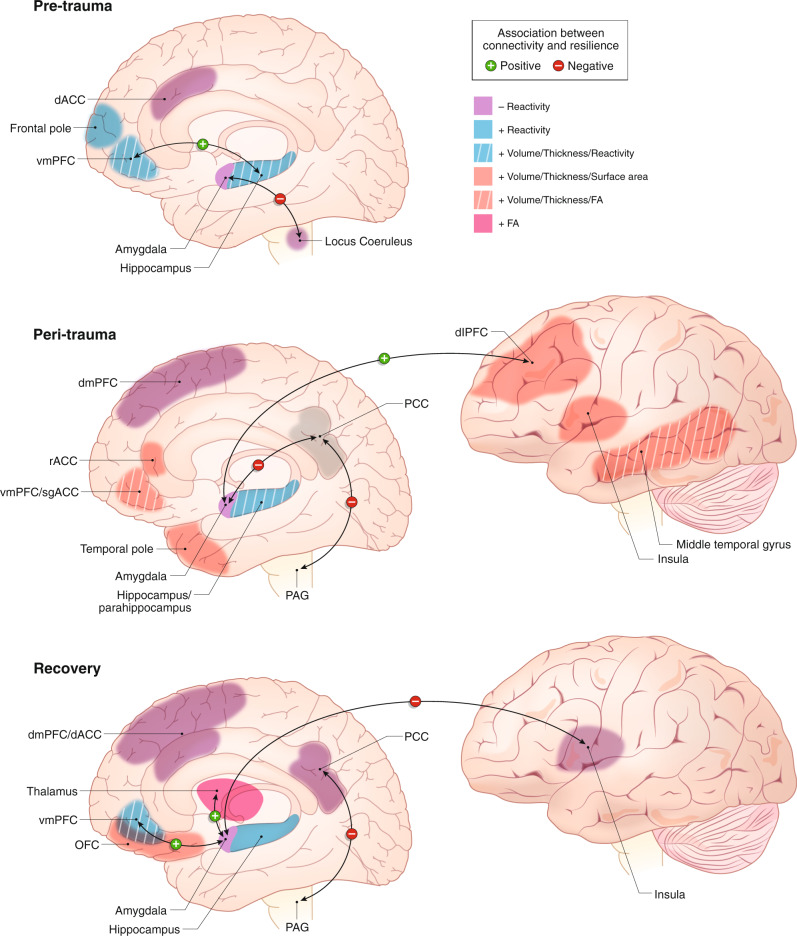
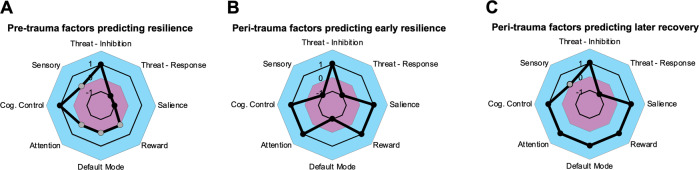
Resilience in the face of major life stressors is changeable over time and with experience. Accordingly, differing sets of neurobiological factors may contribute to an adaptive stress response before, during, and after the stressor. Longitudinal studies are therefore particularly effective in answering questions about the determinants of resilience. Here we provide an overview of the rapidly-growing body of longitudinal neuroimaging research on stress resilience. Despite lingering gaps and limitations, these studies are beginning to reveal individual differences in neural circuit structure and function that appear protective against the emergence of future psychopathology following a major life stressor. Here we outline a neural circuit model of resilience to trauma. Specifically, pre-trauma biomarkers of resilience show that an ability to modulate activity within threat and salience networks predicts fewer stress-related symptoms. In contrast, early post-trauma biomarkers of subsequent resilience or recovery show a more complex pattern, spanning a number of major circuits including attention and cognitive control networks as well as primary sensory cortices. This novel synthesis suggests stress resilience may be scaffolded by stable individual differences in the processing of threat cues, and further buttressed by post-trauma adaptations to the stressor that encompass multiple mechanisms and circuits. More attention and resources supporting this work will inform the targets and timing of mechanistic resilience-boosting interventions.
Overview
The claims and statistics of this paper haven’t been checked yet.
Free: it reads the open-access text and checks the first 5 claims that cite a source we can check. Create a free account to check every claim.
Integrity signals
Registry
Cites
Statistics
Figures
Verification
Claims the paper makes
The claims and statistics of this paper haven’t been checked yet.
Free: it reads the open-access text and checks the first 5 claims that cite a source we can check. Create a free account to check every claim.
Claims other papers make about this one
Each is checked against this paper’s own text: does it say what the citing paper says it does?
The check wasn’t confident either way, so it gives no verdict — never disputed.
In the citing paper
“Comorbid depression and post-traumatic stress disorder are significant risk factors for suicide following TBI [9-12].”
From An individualized approach to the treatment of affective disorders in the comorbidity of post-traumatic stress disorder and traumatic brain injury (2024) · cites this paper as [12]
Experimental — accuracy not yet measured
Self-check
Percentages, sums and reported differences re-computed from the paper’s own numbers.
The self-check needs the paper’s full text.
Citations
Cites
Diagnostic and Statistical Manual of Mental Disorders
American Psychiatric Association (2013) · doi:10.1176/appi.books.9780890425596 · Cited by 116,369
The organization of the human cerebral cortex estimated by intrinsic functional connectivity
Thomas Yeo, B. T., Krienen, F. M., Sepulcre, J., Sabuncu, M. R., Lashkari, D., Hollinshead, M., Roffman, J. L., Smoller, J. W., Zöllei, L., Polimeni, J. R., et al. (2011) · Journal of Neurophysiology · doi:10.1152/jn.00338.2011 · Cited by 9,182
The organization of the human cerebellum estimated by intrinsic functional connectivity
Buckner, R. L., Krienen, F. M., Castellanos, A., Diaz, J. C., & Yeo, B. T. T. (2011) · Journal of Neurophysiology · doi:10.1152/jn.00339.2011 · Cited by 7,304
Functional connectivity in the resting brain: a network analysis of the default mode hypothesis
Greicius, M. D., Krasnow, B., Reiss, A. L., & Menon, V. (2003) · Proceedings of the National Academy of Sciences · doi:10.1073/pnas.0135058100 · Cited by 6,358
The cognitive control of emotion
OCHSNER, K., & GROSS, J. (2005) · Trends in Cognitive Sciences · doi:10.1016/j.tics.2005.03.010 · Cited by 4,495
Resting-State Functional Connectivity Reflects Structural Connectivity in the Default Mode Network
Greicius, M. D., Supekar, K., Menon, V., & Dougherty, R. F. (2009) · Cerebral Cortex · doi:10.1093/cercor/bhn059 · Cited by 2,175
Abstract reward and punishment representations in the human orbitofrontal cortex
O'Doherty, J., Kringelbach, M. L., Rolls, E. T., Hornak, J., & Andrews, C. (2001) · Nature Neuroscience · doi:10.1038/82959 · Cited by 2,003
Niendam, T. A., Laird, A. R., Ray, K. L., Dean, Y. M., Glahn, D. C., & Carter, C. S. (2012) · Cognitive, Affective, & Behavioral Neuroscience · doi:10.3758/s13415-011-0083-5 · Cited by 1,700
Emotion Modulation in PTSD: Clinical and Neurobiological Evidence for a Dissociative Subtype
Lanius, R. A., Vermetten, E., Loewenstein, R. J., Brand, B., Schmahl, C., Bremner, J. D., & Spiegel, D. (2010) · American Journal of Psychiatry · doi:10.1176/appi.ajp.2009.09081168 · Cited by 1,123
The role of the anterior prefrontal cortex in human cognition
Koechlin, E., Basso, G., Pietrini, P., Panzer, S., & Grafman, J. (1999) · Nature · doi:10.1038/20178 · Cited by 1,054
Cited by
Modern views of machine learning for precision psychiatry
Chen, Z. S., Kulkarni, P. (., Galatzer-Levy, I. R., Bigio, B., Nasca, C., & Zhang, Y. (2022) · Patterns · doi:10.1016/j.patter.2022.100602 · Cited by 210
“Importantly, leveraging “big data” from a longitudinal perspective o ff ers a promising way to track the neurobiological and phenotypic trajectories that have been rarely examined in previous cross-sectional studies of psychiatric disorders [57, 58, 59].”
BackgroundResilience to potential trauma and adversity through regulatory flexibility
Bonanno, G. A., Chen, S., & Galatzer‐Levy, I. R. (2023) · Nature Reviews Psychology · doi:10.1038/s44159-023-00233-5 · Cited by 196
Neurobiological basis of stress resilience
Nestler, E. J., & Russo, S. J. (2024) · Neuron · doi:10.1016/j.neuron.2024.05.001 · Cited by 166
The future of human behaviour research
Box‐Steffensmeier, J. M., Burgess, J., Corbetta, M., Crawford, K., Duflo, E., Fogarty, L., Gopnik, A., Ḥanafī, S., Herrero, M., Hong, Y., et al. (2022) · Nature Human Behaviour · doi:10.1038/s41562-021-01275-6 · Cited by 110
Persistent Dissociation and Its Neural Correlates in Predicting Outcomes After Trauma Exposure
Lebois, L. A. M., Harnett, N. G., van Rooij, S. J. H., Ely, T. D., Jovanovic, T., Bruce, S. E., House, S. L., Ravichandran, C., Dumornay, N. M., Finegold, K. E., et al. (2022) · American Journal of Psychiatry · doi:10.1176/appi.ajp.21090911 · Cited by 60
“A “Goldilocks” level of vmPFC activity during emotionally charged contexts may exist (43).”
BackgroundSelf-citationEnvironmental and neurodevelopmental contributors to youth mental illness
Whittle, S., Zhang, L., & Rakesh, D. (2024) · Neuropsychopharmacology · doi:10.1038/s41386-024-01926-y · Cited by 59
Sensory alterations in post-traumatic stress disorder
Fleming, L. L., Harnett, N. G., & Ressler, K. J. (2023) · Current Opinion in Neurobiology · doi:10.1016/j.conb.2023.102821 · Cited by 59
Stress-resilience impacts psychological wellbeing as evidenced by brain–gut microbiome interactions
An, E., Delgadillo, D. R., Yang, J., Agarwal, R., Labus, J. S., Pawar, S., Leitman, M., Kilpatrick, L. A., Bhatt, R. R., Vora, P. P., et al. (2024) · Nature Mental Health · doi:10.1038/s44220-024-00266-6 · Cited by 56
Zhang, W., Kaldewaij, R., Hashemi, M. M., Koch, S. B. J., Smit, A. S., van Ast, V. A., Beckmann, C. F., Klumpers, F., & Roelofs, K. (2022) · Translational Psychiatry · doi:10.1038/s41398-022-01798-0 · Cited by 53
Siddiqi, S., Philip, N. S., Palm, S. T., Carreon, D. M., Arulpragasam, A. R., Barredo, J., Bouchard, H. C., Ferguson, M. A., Grafman, J. H., Morey, R. A., et al. (2024) · Nature Neuroscience · doi:10.1038/s41593-024-01772-7 · Cited by 53
Smith, K., Lacadie, C., Milivojevic, V., Fogelman, N., & Sinha, R. (2023) · Drug and Alcohol Dependence · doi:10.1016/j.drugalcdep.2023.109794 · Cited by 49
A Review of ADHD and Childhood Trauma: Treatment Challenges and Clinical Guidance
Boodoo, R., Lagman, J. G., Jairath, B., & Baweja, R. K. (2022) · Current Developmental Disorders Reports · doi:10.1007/s40474-022-00256-2 · Cited by 48
The three axioms of resilience
Bonanno, G. A., & Westphal, M. (2024) · Journal of Traumatic Stress · doi:10.1002/jts.23071 · Cited by 40
Neurobiological correlates of resilience during childhood and adolescence – A systematic review
Zhang, L., Rakesh, D., Cropley, V., & Whittle, S. (2023) · Clinical Psychology Review · doi:10.1016/j.cpr.2023.102333 · Cited by 33
Vulnerability of the Neonatal Connectome following Postnatal Stress
Lammertink, F., Benders, M. J. N. L., Hermans, E. J., Tataranno, M. L., Dudink, J., Vinkers, C. H., & van den Heuvel, M. P. (2022) · Journal of Neuroscience · doi:10.1523/jneurosci.0176-22.2022 · Cited by 31
de Voogd, L. D., Hashemi, M. M., Zhang, W., Kaldewaij, R., Koch, S. B. J., van Ast, V. A., Klumpers, F., & Roelofs, K. (2025) · Biological Psychiatry · doi:10.1016/j.biopsych.2025.02.894 · Cited by 21
Broadening the Scope of Resilience in Chronic Pain: Methods, Social Context, and Development
Sturgeon, J. A., Zubieta, C. S., Kaplan, C. M., Pierce, J. M., Arewasikporn, A., Slepian, P. M., Hassett, A. L., & Trost, Z. (2024) · Current Rheumatology Reports · doi:10.1007/s11926-024-01133-0 · Cited by 20
Child maltreatment and resilience in adulthood: a protocol for a systematic review and meta-analysis
Fares‐Otero, N. E., Jiaqing, O., Spies, G., Womersley, J. S., González, C., Ayas, G., Mossie, T. B., Carranza-Neira, J., Lorenzo, J. M. E., Vieta, E., et al. (2023) · European Journal of Psychotraumatology · doi:10.1080/20008066.2023.2282826 · Cited by 19
Plasticity of human resilience mechanisms
Leone, G., Casanave, H., Postel, C., Fraisse, F., Vallée, T., Sayette, V. D. L., Dayan, J., Peschanski, D., Eustache, F., & Gagnepain, P. (2025) · Science Advances · doi:10.1126/sciadv.adq8336 · Cited by 19
Glazebrook, A. J., Shakespeare‐Finch, J., Andrew, B., & van der Meer, J. N. (2023) · European Journal of Psychotraumatology · doi:10.1080/20008066.2023.2272477 · Cited by 18
First-onset major depression during the COVID-19 pandemic: A predictive machine learning model
Caldirola, D., Daccò, S., Cuniberti, F., Grassi, M., Alciati, A., Torti, T., & Perna, G. (2022) · Journal of Affective Disorders · doi:10.1016/j.jad.2022.04.145 · Cited by 18
Trauma and the default mode network: review and exploratory study
Chan, A., Harvey, P. D., Hernandez-Cardenache, R., Alperin, N. J., Lee, S. H., Hunt, C., Petersen, N., Northoff, G., Robertson, N., Ouyang, J., et al. (2024) · Frontiers in Behavioral Neuroscience · doi:10.3389/fnbeh.2024.1499408 · Cited by 18
Climate risk perception as a catalyst for pro-environmental behavior
Shershunovich, Y. (2025) · Discover Sustainability · doi:10.1007/s43621-025-01896-1 · Cited by 18
Musical experience prior to traumatic exposure as a resilience factor: a conceptual analysis
Fraile, E., Gagnepain, P., Eustache, F., Groussard, M., & Platel, H. (2023) · Frontiers in Psychology · doi:10.3389/fpsyg.2023.1220489 · Cited by 17
Webb, E. K., Ely, T. D., Rowland, G. E., Lebois, L. A. M., van Rooij, S. J. H., Bruce, S. E., Jovanović, T., House, S. L., Beaudoin, F. L., An, X., et al. (2023) · JAMA Network Open · doi:10.1001/jamanetworkopen.2023.34483 · Cited by 17
Self-citationPowers, A. D., Hinojosa, C. A., Stevens, J. S., Harvey, B., Pas, P., ROTHBAUM, B. O., Ressler, K. J., Jovanović, T., & van Rooij, S. J. H. (2022) · European Journal of Psychotraumatology · doi:10.1080/20008198.2022.2059993 · Cited by 17
Self-citationWebb, E. K., Stevens, J. S., Ely, T. D., Lebois, L. A. M., van Rooij, S. J. H., Bruce, S. E., House, S. L., Beaudoin, F. L., An, X., Neylan, T. C., et al. (2024) · JAMA Psychiatry · doi:10.1001/jamapsychiatry.2024.2148 · Cited by 17
Self-citationPanuccio, A., Biondo, D., Picerni, E., Genovesi, B., & Laricchiuta, D. (2022) · Adolescents · doi:10.3390/adolescents2040032 · Cited by 16
Defining the r factor for post-trauma resilience and its neural predictors
van Rooij, S. J. H., Santos, J. L., Hinojosa, C. A., Ely, T. D., Harnett, N. G., Murty, V. P., Lebois, L. A. M., Jovanović, T., House, S. L., Bruce, S. E., et al. (2024) · Nature Mental Health · doi:10.1038/s44220-024-00242-0 · Cited by 16
Self-citationTomas, C. W., Webb, E. K., Bennett, K. P., Huggins, A. A., Fitzgerald, J. M., Miskovich, T. A., Krukowki, J., deRoon‐Cassini, T. A., & Larson, C. L. (2022) · Biological Psychiatry Global Open Science · doi:10.1016/j.bpsgos.2022.02.006 · Cited by 16
Making frugal innovations inclusive: A gendered approach
Girija, S., Banerji, B., Batra, N., Paruchuru, M., & Yeediballi, T. (2023) · Journal of Cleaner Production · doi:10.1016/j.jclepro.2023.140182 · Cited by 15
Discrimination Exposure, Neural Reactivity to Stress, and Psychological Distress
Grey, D. K., Purcell, J. B., Buford, K. N., Schuster, M. A., Elliott, M. N., Emery, S. T., Mrug, S., & Knight, D. C. (2024) · American Journal of Psychiatry · doi:10.1176/appi.ajp.20220884 · Cited by 14
Konrad, K., & Puetz, V. B. (2024) · Translational Psychiatry · doi:10.1038/s41398-024-03092-7 · Cited by 13
Lee, H., Oh, S., Ha, E., Joo, Y., Suh, C., Kim, Y., Jeong, H. S., Lyoo, I. K., Yoon, S. J., & Hong, H. (2023) · Psychiatry Research · doi:10.1016/j.psychres.2023.115345 · Cited by 11
Sendi, M. S. E., Fu, Z., Harnett, N. G., van Rooij, S. J. H., Vergara, V. M., Pizzagalli, D. A., Daskalakis, N. P., House, S. L., Beaudoin, F. L., An, X., et al. (2025) · Nature Mental Health · doi:10.1038/s44220-024-00377-0 · Cited by 10
Self-citationCross-frequency cortex–muscle interactions are abnormal in young people with dystonia
Guo, Z., Lin, J., Simeone, O., Mills, K. R., Cvetković, Z., & McClelland, V. M. (2024) · Brain Communications · doi:10.1093/braincomms/fcae061 · Cited by 10
The neuropsychology of trauma-exposed children: implications for inclusive teaching and learning
Bekker, T. L.-A., & Bekker, S. (2025) · International Journal of Inclusive Education · doi:10.1080/13603116.2025.2555394 · Cited by 9
Chang, J., Song, D., & Yu, R. (2023) · Neurobiology of Stress · doi:10.1016/j.ynstr.2023.100584 · Cited by 9
The Effect of Subjective Social Disconnectedness on Climate Change AnxietyPreprint
Card, K. G., Marshall, C., Aran, N., Bratu, A., Closson, K., Martin, G., Logi, C., Gislason, M., Kennedy, A. M., Takaro, T. K., et al. (2022) · SSRN Electronic Journal · doi:10.2139/ssrn.4097132 · Cited by 8
Stress‐Related Brain Alterations in Chronic Pain
Quidé, Y., Hesam‐Shariati, N., Norman‐Nott, N., McAuley, J. H., & Gustin, S. M. (2025) · European Journal of Pain · doi:10.1002/ejp.70034 · Cited by 8
The nature of grief: implications for the neurobiology of emotion
Ratcliffe, M., & Velasco, P. F. (2024) · Neuroscience of Consciousness · doi:10.1093/nc/niae041 · Cited by 8
Traumatic stress alters neural reactivity to visual stimulation
Harnett, N. G., Rowland, G. E., Webb, E. K., Li, T., Joshi, S., Ressler, K. J., & Rosso, I. M. (2025) · NPP—Digital Psychiatry and Neuroscience · doi:10.1038/s44277-025-00030-3 · Cited by 8
NEUROPSYCHOLOGICAL FOUNDATIONS OF RESILIENCE AND ADAPTIVE BEHAVIOR UNDER PROLONGED SOCIAL STRESS
Pavliuk, S., & Kondratieva, V. (2025) · PSYCHOLOGICAL JOURNAL · doi:10.31108/1.2025.11.4.2 · Cited by 8
Simon, G., Gal-Birman, M., Tadmor, N., Halperin, D., & Ben‐Zion, Z. (2025) · European Journal of Psychotraumatology · doi:10.1080/20008066.2025.2582303 · Cited by 7
Kilpatrick, L. A., Gupta, A., Tillisch, K., Labus, J. S., Naliboff, B. D., Mayer, E. A., & Chang, L. (2023) · Neurogastroenterology & Motility · doi:10.1111/nmo.14710 · Cited by 6
Vuorio, A. F., Bor, R. J., Budowle, B., Gray, A., & Suhonen-Malm, A.-S. (2025) · Frontiers in Public Health · doi:10.3389/fpubh.2025.1505004 · Cited by 6
Silva, A. P., Porto, M. V., Silva, L. P. D. S., & Silva, W. D. S. (2024) · Caderno Pedagógico · doi:10.54033/cadpedv21n8-209 · Cited by 6
Multimodal neural correlates of dispositional resilience among healthy individuals
Kim, H.-J., Bang, M., Pae, C., & Lee, S. (2024) · Scientific Reports · doi:10.1038/s41598-024-60619-0 · Cited by 6
(2025) · Journal of Psychology and Neuroscience · doi:10.47485/2693-2490.1128 · Cited by 6
Sequential decreases in basolateral amygdala response to threat predict failure to recover from PTSD
Roeckner, A. R., Lin, E. R.-H., Hinrichs, R. C., Harnett, N. G., Lebois, L. A. M., van Rooij, S. J. H., Ely, T. D., Jovanović, T., Murty, V. P., Bruce, S. E., et al. (2025) · Neuropsychopharmacology · doi:10.1038/s41386-025-02115-1 · Cited by 5
Self-citationResilience-related neural similarity during naturalistic movie watching
Ye, S., Bätz, L. R., Jain, A., Salami, A., & Ziaei, M. (2026) · Imaging Neuroscience · doi:10.1162/imag.a.1165 · Cited by 5
Cancela, J. G., Vázquez, O. C., Ledesma, S. N., & Pruimboom, L. (2026) · Neuroscience & Biobehavioral Reviews · doi:10.1016/j.neubiorev.2026.106791 · Cited by 5
Khudeish, N., Ramkiran, S., Nießen, D., Altinok, D. C. A., Rajkumar, R., Dammers, J., Shah, N. J., Veselinović, T., & Neuner, I. (2024) · Frontiers in Psychiatry · doi:10.3389/fpsyt.2024.1293514 · Cited by 5
Chang, Y., Yang, M., Yang, C.-T., Goh, J. O. S., Lin, S., & Hsieh, S. (2024) · NeuroImage · doi:10.1016/j.neuroimage.2024.120810 · Cited by 5
Costello, L., Dauvermann, M. R., Tronchin, G., Holleran, L., Mothersill, D., Rokita, K., Kane, R., Hallahan, B. P., Corvin, A. P., Morris, D. W., et al. (2023) · Psychiatry Research Neuroimaging · doi:10.1016/j.pscychresns.2023.111616 · Cited by 5
Biography is the dark matter of disease pathogenesis
Horwitz, R. I., Conroy, A. H., Cullen, M. R., & Sim, I. (2026) · The American Journal of Medicine · doi:10.1016/j.amjmed.2026.01.045 · Cited by 4
Neural Rewiring of Resilience: The Effects of Combat Deployment on Functional Network Architecture
Yair, N., Zalmenson, T., Azriel, O., Shamai‐Leshem, D., Alon, Y., Tik, N., Tatsa-Laur, L., Ben-Yehuda, A., Pine, D. S., Winker, A. M., et al. (2025) · Biological Psychiatry Cognitive Neuroscience and Neuroimaging · doi:10.1016/j.bpsc.2024.12.017 · Cited by 4
Prudence, Ethics and Anticipation in Visionary Leaders
Farmer, Y. (2021) · Journal of Values-Based Leadership · doi:10.22543/0733.151.1367 · Cited by 4
Glazebrook, A. J., Shakespeare‐Finch, J., Andrew, B., & van der Meer, J. N. (2024) · Neuroscience & Biobehavioral Reviews · doi:10.1016/j.neubiorev.2024.105926 · Cited by 4
Trauma and Crisis Counseling: An Overview for Emerging Professionals
Hoppe, K. B., & Taylor, M. K. (2025) · Routledge eBooks · doi:10.4324/9781003463009 · Cited by 4
The heart on duty: Training police officers in action using a biofeedback virtual-reality game
Michela, A. (2024) · Radboud Repository (Radboud University) · Cited by 4
Orovou, E., Tzitiridou‐Chatzopoulou, M., Rigas, N., & Sarantaki, A. (2026) · Clinical Psychology & Psychotherapy · doi:10.1002/cpp.70249 · Cited by 3
The person–population paradox in clinical medicine
Horwitz, R. I., Conroy, A. H., Cullen, M. R., & Sim, I. (2026) · The American Journal of Medicine · doi:10.1016/j.amjmed.2026.01.047 · Cited by 3
Jeong, H. S., Joo, Y., Shim, Y., Kim, Y., Lee, H., Jin, Y., Kim, S. J., Yoon, S. J., & Lyoo, I. K. (2025) · Neurobiology of Stress · doi:10.1016/j.ynstr.2025.100763 · Cited by 3
Lee, J., Lee, E., Kim, B., Kim, G., Joo, Y. Y., & Cha, J. (2024) · medRxiv · doi:10.1101/2024.03.04.24303643 · Cited by 3
Childhood Adversity Is Associated With Longitudinal White Matter Changes After Adulthood Trauma
Li, T., Huibregtse, M. E., Ely, T. D., van Rooij, S. J. H., Lebois, L. A. M., Webb, E. K., Jovanović, T., House, S. L., Bruce, S. E., Murty, V. P., et al. (2025) · Biological Psychiatry Cognitive Neuroscience and Neuroimaging · doi:10.1016/j.bpsc.2025.09.007 · Cited by 3
Self-citationAboujaoude, E. N., & Bouguettaya, A. (2025) · Child and Adolescent Mental Health · doi:10.1111/camh.70016 · Cited by 3
Stumps, A. D., Bounoua, N., & Sadeh, N. (2025) · Neurobiology of Aging · doi:10.1016/j.neurobiolaging.2025.11.004 · Cited by 2
Biological Mechanisms of Stress Resilience: Human and Animal Studies
Seeley, S. H., Boukezzi, S. C., DePierro, J. M., Charney, D. S., & Feder, A. (2025) · Oxford University Press eBooks · doi:10.1093/med/9780197640654.003.0041 · Cited by 2
Polytrauma and executive functioning: A review of cognitive protective mechanisms and resilience
Rose, M. L., & Johnson, M. L. (2025) · European Journal of Trauma & Dissociation · doi:10.1016/j.ejtd.2025.100503 · Cited by 2
Kim, E. S., Shin, Y. C., Kim, Y. T., Oh, K.-S., Jeon, S.-W., Shin, D.-W., & Kim, J. (2025) · Brain Sciences · doi:10.3390/brainsci15121308 · Cited by 2
Hohl, K., Dolcos, S. M., Mull, D. D., Reddy, Y., Ho, G., Davis, A., Faibishenko, J. S., Bogdan, P. C., Bian, Z., Buetti, S., et al. (2026) · Scientific Reports · doi:10.1038/s41598-026-63059-0 · Cited by 2
Eckstrand, K., Talbot, A., Govani, V. N., Hart, K. H., Brodnick, Z. M., Ryan, N. D., Jones, N. P., Phillips, M. L., & Forbes, E. E. (2026) · European Journal of Psychotraumatology · doi:10.1080/20008066.2025.2611512 · Cited by 2
The aftermath of trauma on resting state source-level MEG microstate dynamics
Bertoli, M., Croce, P., Zappasodi, F., Matteo, R. D., Vellante, F., Pettorruso, M., Martinotti, G., & Brunetti, M. (2025) · European Journal of Psychotraumatology · doi:10.1080/20008066.2025.2520638 · Cited by 2
Lipschutz, R. S., Dahlgren, K., Santos, J., Chambers, K., McAfee, E., Abrams, C., Merrill, N. A., Brennan, P. A., Rilling, J. K., Michopoulos, V., et al. (2026) · Biological Psychiatry Cognitive Neuroscience and Neuroimaging · doi:10.1016/j.bpsc.2026.04.009 · Cited by 2
Self-citationUnterholzner, J., Kautzky, A., Reed, M. B., Wechsler, T. F., Popper, V., Spurny‐Dworak, B., Stöhrmann, P., Klöbl, M., Varghese, N., Mühlberger, A., et al. (2024) · Translational Psychiatry · doi:10.1038/s41398-024-02733-1 · Cited by 2
Gamma and Psychological Resilience: Where to Now?
Rocks, D. L., Sharpley, C. F., Bitsika, V., Vessey, K. A., Odierna, G. L., & Watson, C. B. (2025) · Brain Sciences · doi:10.3390/brainsci15090957 · Cited by 2
Forecasting AI-induced technostress in healthcare: identifying techno-paralysis in decision-making
Jabbouri, R., Issa, H., & Jaber, J. (2026) · DECISION · doi:10.1007/s40622-025-00455-x · Cited by 2
Schreiner, M. W., Thomas, L. R., Le, H. D. H., Pazdera, M., Feldman, D. A., Farstead, B. W., Bessette, K. L., Welsh, R. C., Crowell, S. E., Kaufman, E. A., et al. (2025) · Biological Psychiatry Global Open Science · doi:10.1016/j.bpsgos.2025.100479 · Cited by 2
Unexpected circuit-level tradeoffs in human stress resilience
Stevens, J. S., & Roeckner, A. R. (2022) · Neuropsychopharmacology · doi:10.1038/s41386-022-01399-x · Cited by 2
Self-citation黃婉筠, Armfield, N. R., Xie, Y., & Sterling, M. M. (2026) · Pain · doi:10.1097/j.pain.0000000000003925 · Cited by 1
Puig, G., & Rodolfo Morrison, J. (2026) · Australian Occupational Therapy Journal · doi:10.1111/1440-1630.70105 · Cited by 1
Hunt, K. J. (2024) · ThinkIR: The University of Louisville's Institutional Repository (University of Louisville) · doi:10.18297/etd/4284 · Cited by 1
Reactividad cardíaca ante evocación de eventos estresantes en población universitaria
Sánchez, J. E. P., Salgado, E. L. M., Trejo, B. D., Ayala‐Guerrero, F., Hernández, B. M. G., & Andrade, N. A. O. (2023) · Acta de Investigación Psicológica · doi:10.22201/fpsi.20074719e.2023.2.500 · Cited by 1
Jain, F. A., & Madarasmi, S. (2024) · Elsevier eBooks · doi:10.1016/b978-0-443-11844-9.00091-6 · Cited by 1
Seeley, S. H., Fremont, R., Schreiber, Z., Morris, L. S., Cahn, L., Murrough, J. W., Schiller, D., Charney, D. S., Pietrzak, R. H., Pérez-Rodríguez, M. M., et al. (2025) · Biological Psychiatry Global Open Science · doi:10.1016/j.bpsgos.2025.100489 · Cited by 1
Serrano, C., Cáceres, C., Nvo-Fernández, M., Galdames, S., Miño-Reyes, V., & Bianchi, M. L. (2026) · Frontiers in Psychology · doi:10.3389/fpsyg.2026.1642729 · Cited by 1
Hitz, A. C., Hubbling, M., Hodges, A., Campbell, E. H., Bangerter, A. K., & Polusny, M. A. (2025) · Pilot and Feasibility Studies · doi:10.1186/s40814-024-01573-6 · Cited by 1
Chen, M., Bian, Y., Chen, N., & Qiu, A. (2024) · IEEE Transactions on Medical Imaging · doi:10.1109/tmi.2024.3435855 · Cited by 1
Vari, S. G. (2024) · The Ukrainian Biochemical Journal · doi:10.15407/ubj96.02.005 · Cited by 1
Brain-wide circuit dynamics underlying stress susceptibility and resilience in male mice
Dirven, B. C. J., Negwer, M., Botan, A., Maas, R., van Melis, L. V. J., Merjenburgh, S., van Rijn, R., Grandjean, J., Homberg, J. R., Kozicz, T., et al. (2026) · Translational Psychiatry · doi:10.1038/s41398-026-04477-6 · Cited by 1
Rodríguez, J. V. (2024) · Universidad de Córdoba Insitutional Repository (Universidad de Córdoba) · Cited by 1
Hutchinson-Wong, N. (2023) · Otago University Research Archive (University of Otago) · Cited by 1
Esperança, resiliência e enfrentamento entre estudantes de saúde na pandemia: estudo transversal
Carneiro, A. L. B., de Lima, G. G., Ramos, S. C. D. S., Moreira, T. P., & Silva, A. F. M. (2024) · OBSERVATÓRIO DE LA ECONOMÍA LATINOAMERICANA · doi:10.55905/oelv22n12-040 · Cited by 1
Michela, A., van Peer, J. M., Oostenveld, R., Dorrestijn, W., Smit, A. S., Granic, I., Roelofs, K., & Klumpers, F. (2024) · PsyArXiv (OSF Preprints) · doi:10.31234/osf.io/dxrng · Cited by 1
Smashna, O. Y. (2024) · Psychiatry, Neurology and Medical Psychology · doi:10.26565/2312-5675-2024-25-02
Exploring resilience to trauma through unsupervised clustering approach and network analysisPreprint
Sirui, W., ZhangXinyi, & Liu, W. (2023) · PsyArXiv (OSF Preprints) · doi:10.31234/osf.io/emnk3
Petrican, R., & Fornito, A. (2022) · medRxiv · doi:10.1101/2022.07.19.22277815
Weiss, A., & Weiss, F. (2023) · IntechOpen eBooks · doi:10.5772/intechopen.1002619
Idlemee, A. B. S., Nafea, S. Y. N., & Al-Salihi, A. A. W. J. (2022) · Zenodo (CERN European Organization for Nuclear Research) · doi:10.5281/zenodo.7086522
Metadata
- Authors
- Roeckner, A. R., Oliver, K. I., Lebois, L. A. M., van Rooij, S. J. H., & Stevens, J. S.
- Affiliations
- Emory University (US)
- Harvard University (US)
- Corresponding author
- Stevens, Jennifer S.
- ORCID
- Venue
- Translational Psychiatry
- Published
- 2021-10-05
- Volume
- 11
- Issue
- 1
- Pages
- 508-508
- ISSN
- 2158-3188 (ISSN-L)
- PMC
- PMC8492865
- OpenAlex
- W3202169464
- Cited by
- 103
- References
- 123
- Citations by year
- 2026: 21 · 2025: 25 · 2024: 26 · 2023: 18 · 2022: 13
- FWCI
- 1.90
- Type
- journal article
- Language
- en
- Open access
- gold
- doi.org
- Licence
- cc-by
- creativecommons.org/licenses/by/4.0 (tdm)
- creativecommons.org/licenses/by/4.0 (vor)
- Locations
- Translational Psychiatry (publishedVersion, cc-by)
- Europe PMC (PubMed Central) (publishedVersion, other-oa)
- PubMed Central (publishedVersion, cc-by)
- PubMed (publishedVersion)
- DOAJ (DOAJ: Directory of Open Access Journals) (submittedVersion, cc-by-sa)
- Funders
- U.S. Department of Health & Human Services | NIH | National Institute of Mental Health (U01MH110925, K01MH118467, K01MH121653)
- Brain and Behavior Research Foundation
- Topics
- Social Sciences › Psychology › Clinical Psychology › Resilience and Mental Health
- Social Sciences › Psychology › Clinical Psychology › Posttraumatic Stress Disorder Research
- Life Sciences › Neuroscience › Behavioral Neuroscience › Stress Responses and Cortisol
- Keywords
- trauma resilience, stress resilience, neural circuit model, threat processing, salience network, individual differences, stress-related symptoms, psychopathology prevention, resilience interventions, longitudinal neuroimaging
- MeSH terms
- Longitudinal Studies, Neurobiology, Psychopathology, Resilience, Psychological, Neuroimaging
About these checks
Registry, retraction, Cites and statistics results are computed, not judged, with one exception: a printed reference that no index lists is read once by a model before it counts as a citation error. Claims are extracted by a model and kept only when their quote appears verbatim in the text; each cited source is then checked, with a model’s help, for whether it says what the claim relies on. Those verdicts can be wrong — read the claim’s quote and the cited source before relying on one.
Statistics and arithmetic are recomputed, not judged.
Confidence bands are shown only for fields calibrated on our annotated test set. None is calibrated yet, so no band is shown.
What counts as a claim ›How we measure confidence ›How we check this ›
Are you an author, or do you see a problem with this page? Request a review
Data sources
Bibliographic data: Semantic Scholar, OpenAlex, Crossref.
Contains information from the Semantic Scholar Academic Graph Datasets, made available under the ODC Attribution License (ODC-BY 1.0).
Semantic Scholar’s data is described in: Kinney, R., et al. (2023). The Semantic Scholar Open Data Platform. arXiv:2301.10140.
