

Neural contributors to trauma resilience: a review of longitudinal neuroimaging studies
Open accessThe DOI matches its Crossref record; 123 of the 123 references it cites were found in a registry or an index.
Abstract
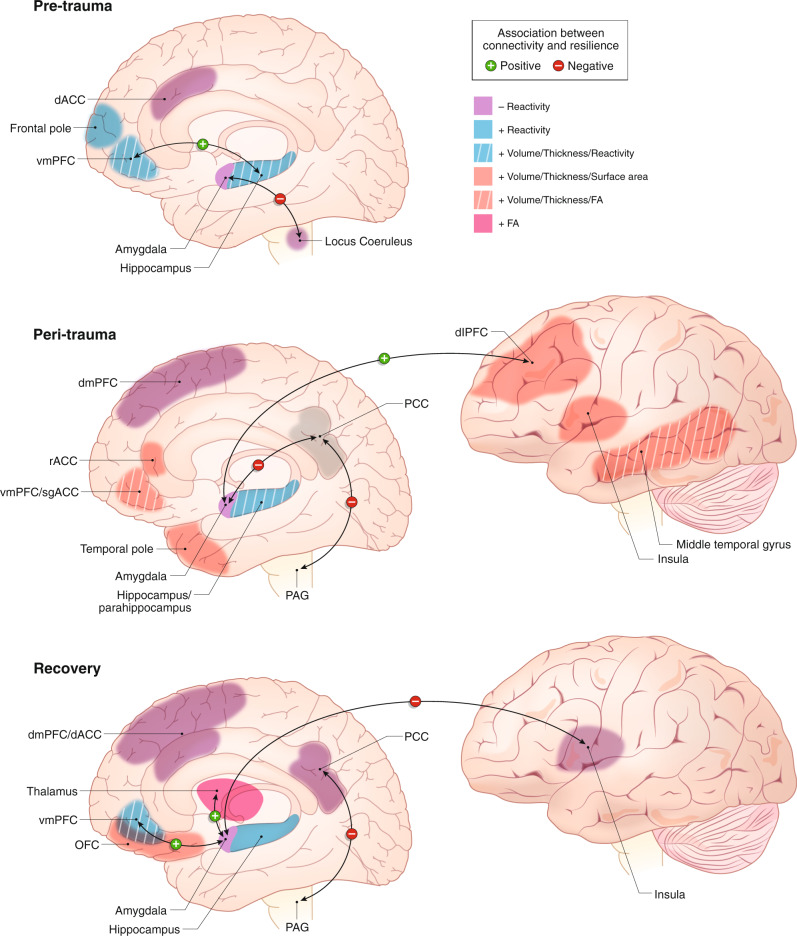
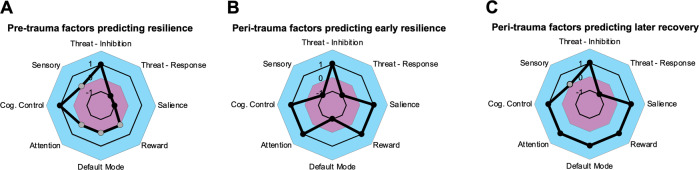
Resilience in the face of major life stressors is changeable over time and with experience. Accordingly, differing sets of neurobiological factors may contribute to an adaptive stress response before, during, and after the stressor. Longitudinal studies are therefore particularly effective in answering questions about the determinants of resilience. Here we provide an overview of the rapidly-growing body of longitudinal neuroimaging research on stress resilience. Despite lingering gaps and limitations, these studies are beginning to reveal individual differences in neural circuit structure and function that appear protective against the emergence of future psychopathology following a major life stressor. Here we outline a neural circuit model of resilience to trauma. Specifically, pre-trauma biomarkers of resilience show that an ability to modulate activity within threat and salience networks predicts fewer stress-related symptoms. In contrast, early post-trauma biomarkers of subsequent resilience or recovery show a more complex pattern, spanning a number of major circuits including attention and cognitive control networks as well as primary sensory cortices. This novel synthesis suggests stress resilience may be scaffolded by stable individual differences in the processing of threat cues, and further buttressed by post-trauma adaptations to the stressor that encompass multiple mechanisms and circuits. More attention and resources supporting this work will inform the targets and timing of mechanistic resilience-boosting interventions.
Overview
The claims and statistics of this paper haven’t been checked yet.
Free: it reads the open-access text and checks the first 5 claims that cite a source we can check. Create a free account to check every claim.
Integrity signals
Registry
Cites
Statistics
Figures
Verification
Claims the paper makes
The claims and statistics of this paper haven’t been checked yet.
Free: it reads the open-access text and checks the first 5 claims that cite a source we can check. Create a free account to check every claim.
Claims other papers make about this one
Each is checked against this paper’s own text: does it say what the citing paper says it does?
The check wasn’t confident either way, so it gives no verdict — never disputed.
In the citing paper
“Comorbid depression and post-traumatic stress disorder are significant risk factors for suicide following TBI [9-12].”
From An individualized approach to the treatment of affective disorders in the comorbidity of post-traumatic stress disorder and traumatic brain injury (2024) · cites this paper as [12]
Experimental — accuracy not yet measured
Self-check
Percentages, sums and reported differences re-computed from the paper’s own numbers.
The self-check needs the paper’s full text.
Citations
Cites
Diagnostic and Statistical Manual of Mental Disorders
American Psychiatric Association (2013) · doi:10.1176/appi.books.9780890425596 · Cited by 116,369
The organization of the human cerebral cortex estimated by intrinsic functional connectivity
Thomas Yeo, B. T., Krienen, F. M., Sepulcre, J., Sabuncu, M. R., Lashkari, D., Hollinshead, M., Roffman, J. L., Smoller, J. W., Zöllei, L., Polimeni, J. R., et al. (2011) · Journal of Neurophysiology · doi:10.1152/jn.00338.2011 · Cited by 9,182
The organization of the human cerebellum estimated by intrinsic functional connectivity
Buckner, R. L., Krienen, F. M., Castellanos, A., Diaz, J. C., & Yeo, B. T. T. (2011) · Journal of Neurophysiology · doi:10.1152/jn.00339.2011 · Cited by 7,304
Functional connectivity in the resting brain: a network analysis of the default mode hypothesis
Greicius, M. D., Krasnow, B., Reiss, A. L., & Menon, V. (2003) · Proceedings of the National Academy of Sciences · doi:10.1073/pnas.0135058100 · Cited by 6,358
The cognitive control of emotion
OCHSNER, K., & GROSS, J. (2005) · Trends in Cognitive Sciences · doi:10.1016/j.tics.2005.03.010 · Cited by 4,495
Resting-State Functional Connectivity Reflects Structural Connectivity in the Default Mode Network
Greicius, M. D., Supekar, K., Menon, V., & Dougherty, R. F. (2009) · Cerebral Cortex · doi:10.1093/cercor/bhn059 · Cited by 2,175
Abstract reward and punishment representations in the human orbitofrontal cortex
O'Doherty, J., Kringelbach, M. L., Rolls, E. T., Hornak, J., & Andrews, C. (2001) · Nature Neuroscience · doi:10.1038/82959 · Cited by 2,003
Niendam, T. A., Laird, A. R., Ray, K. L., Dean, Y. M., Glahn, D. C., & Carter, C. S. (2012) · Cognitive, Affective, & Behavioral Neuroscience · doi:10.3758/s13415-011-0083-5 · Cited by 1,700
Emotion Modulation in PTSD: Clinical and Neurobiological Evidence for a Dissociative Subtype
Lanius, R. A., Vermetten, E., Loewenstein, R. J., Brand, B., Schmahl, C., Bremner, J. D., & Spiegel, D. (2010) · American Journal of Psychiatry · doi:10.1176/appi.ajp.2009.09081168 · Cited by 1,123
The role of the anterior prefrontal cortex in human cognition
Koechlin, E., Basso, G., Pietrini, P., Panzer, S., & Grafman, J. (1999) · Nature · doi:10.1038/20178 · Cited by 1,054
The Biological Effects of Childhood Trauma
De Bellis, M. D., & Zisk, A. (2014) · Child and Adolescent Psychiatric Clinics of North America · doi:10.1016/j.chc.2014.01.002 · Cited by 892
Galatzer-Levy, I. R., Huang, S. H., & Bonanno, G. A. (2018) · Clinical Psychology Review · doi:10.1016/j.cpr.2018.05.008 · Cited by 878
Kringelbach, M. L. (2003) · Cerebral Cortex · doi:10.1093/cercor/13.10.1064 · Cited by 824
Samuels, E., & Szabadi, E. (2008) · Current Neuropharmacology · doi:10.2174/157015908785777229 · Cited by 764
Precision psychiatry: a neural circuit taxonomy for depression and anxiety
Williams, L. M. (2016) · The Lancet Psychiatry · doi:10.1016/s2215-0366(15)00579-9 · Cited by 641
Hippocampus in health and disease: An overview
Dhikav, V., & Anand, K. (2012) · Annals of Indian Academy of Neurology · doi:10.4103/0972-2327.104323 · Cited by 596
Causal interactions between fronto-parietal central executive and default-mode networks in humans
Chen, A. C., Oathes, D. J., Chang, C., Bradley, T., Zhou, Z.-W., Williams, L. M., Glover, G. H., Deisseroth, K., & Etkin, A. (2013) · Proceedings of the National Academy of Sciences · doi:10.1073/pnas.1311772110 · Cited by 567
Fornito, A., Harrison, B. J., Zalesky, A., & Simons, J. S. (2012) · Proceedings of the National Academy of Sciences · doi:10.1073/pnas.1204185109 · Cited by 548
Kozlowska, K., Walker, P., McLean, L., & Carrive, P. (2015) · Harvard Review of Psychiatry · doi:10.1097/hrp.0000000000000065 · Cited by 468
Brain circuit dysfunction in post-traumatic stress disorder: from mouse to man
Fenster, R. J., Lebois, L. A. M., Ressler, K. J., & Suh, J. (2018) · Nature Reviews Neuroscience · doi:10.1038/s41583-018-0039-7 · Cited by 456
Self-citationLongitudinal MRI Study of Hippocampal Volume in Trauma Survivors With PTSD
Bonne, O., Brandes, D., Gilboa, A., Gomori, J. M., Shenton, M. E., Pitman, R. K., & Shalev, A. Y. (2001) · American Journal of Psychiatry · doi:10.1176/appi.ajp.158.8.1248 · Cited by 430
Trajectories of resilience, depression, and anxiety following spinal cord injury.
Bonanno, G. A., Kennedy, P., Galatzer-Levy, I. R., Lude, P., & Elfström, M. L. (2012) · Rehabilitation Psychology · doi:10.1037/a0029256 · Cited by 387
Cai, W., Ryali, S., Chen, T., Li, C.-S. R., & Menon, V. (2014) · The Journal of Neuroscience · doi:10.1523/jneurosci.3048-14.2014 · Cited by 362
Gottfried, J. A., & Dolan, R. J. (2004) · Nature Neuroscience · doi:10.1038/nn1314 · Cited by 353
De Bellis, M. D., Hall, J., Boring, A. M., Frustaci, K., & Moritz, G. (2001) · Biological Psychiatry · doi:10.1016/s0006-3223(01)01105-2 · Cited by 335
Dissociation in posttraumatic stress disorder: Evidence from the world mental health surveys
Stein, D. J., Koenen, K. C., Friedman, M. J., Hill, E., McLaughlin, K. A., Petukhova, M., Ruscio, A. M., Shahly, V., Spiegel, D., Borges, G., et al. (2013) · Biological Psychiatry · doi:10.1016/j.biopsych.2012.08.022 · Cited by 328
Deconstructing and Reconstructing Resilience: A Dynamic Network Approach
Kalisch, R., Cramer, A. O. J., Binder, H., Fritz, J., Leertouwer, I., Lunansky, G., Meyer, B., Timmer, J., Veer, I. M., & van Harmelen, A.-L. (2019) · Perspectives on Psychological Science · doi:10.1177/1745691619855637 · Cited by 307
Brain stimulation and brain lesions converge on common causal circuits in neuropsychiatric disease
Siddiqi, S. H., Schaper, F. L. W. V. J., Horn, A., Hsu, J., Padmanabhan, J. L., Brodtmann, A., Cash, R. F. H., Corbetta, M., Choi, K. S., Dougherty, D. D., et al. (2021) · Nature Human Behaviour · doi:10.1038/s41562-021-01161-1 · Cited by 296
Stevens, J. S., Jovanovic, T., Fani, N., Ely, T. D., Glover, E. M., Bradley, B., & Ressler, K. J. (2013) · Journal of Psychiatric Research · doi:10.1016/j.jpsychires.2013.05.031 · Cited by 293
Self-citationWilliams, L. M. (2017) · Depression and Anxiety · doi:10.1002/da.22556 · Cited by 291
Admon, R., Milad, M. R., & Hendler, T. (2013) · Trends in Cognitive Sciences · doi:10.1016/j.tics.2013.05.005 · Cited by 275
Lanius, R. A., Bluhm, R. L., Coupland, N. J., Hegadoren, K. M., Rowe, B., Théberge, J., Neufeld, R. W. J., Williamson, P. C., & Brimson, M. (2010) · Acta Psychiatrica Scandinavica · doi:10.1111/j.1600-0447.2009.01391.x · Cited by 273
Human vulnerability to stress depends on amygdala's predisposition and hippocampal plasticity
Admon, R., Lubin, G., Stern, O., Rosenberg, K., Sela, L., Ben-Ami, H., & Hendler, T. (2009) · Proceedings of the National Academy of Sciences · doi:10.1073/pnas.0903183106 · Cited by 232
King, A. P., Block, S. R., Sripada, R. K., Rauch, S., Giardino, N., Favorite, T., Angstadt, M., Kessler, D., Welsh, R., & Liberzon, I. (2016) · Depression and Anxiety · doi:10.1002/da.22481 · Cited by 225
A Neural Biomarker of Psychological Vulnerability to Future Life Stress
Swartz, J. R., Knodt, A. R., Radtke, S. R., & Hariri, A. R. (2015) · Neuron · doi:10.1016/j.neuron.2014.12.055 · Cited by 216
Wolf, E. J., Lunney, C. A., Miller, M. W., Resick, P. A., Friedman, M. J., & Schnurr, P. P. (2012) · Depression and Anxiety · doi:10.1002/da.21946 · Cited by 198
Nicholson, A. A., Densmore, M., Frewen, P. A., Théberge, J., Neufeld, R. W., McKinnon, M. C., & Lanius, R. A. (2015) · Neuropsychopharmacology · doi:10.1038/npp.2015.79 · Cited by 180
PITMAN, R. K., GILBERTSON, M. W., GURVITS, T. V., MAY, F. S., LASKO, N. B., METZGER, L. J., SHENTON, M. E., YEHUDA, R., ORR, S. P., & for the Harvard/VA PTSD Twin Study Investigators (2006) · Annals of the New York Academy of Sciences · doi:10.1196/annals.1364.019 · Cited by 178
Stevens, J. S., Kim, Y. J., Galatzer-Levy, I. R., Reddy, R., Ely, T. D., Nemeroff, C. B., Hudak, L. A., Jovanovic, T., Rothbaum, B. O., & Ressler, K. J. (2017) · Biological Psychiatry · doi:10.1016/j.biopsych.2016.11.015 · Cited by 177
Self-citationPerceived threat predicts the neural sequelae of combat stress
van Wingen, G. A., Geuze, E., Vermetten, E., & Fernández, G. (2011) · Molecular Psychiatry · doi:10.1038/mp.2010.132 · Cited by 173
Functional Neuroanatomy of Emotion and Its Regulation in PTSD
Fitzgerald, J. M., DiGangi, J. A., & Phan, K. L. (2018) · Harvard Review of Psychiatry · doi:10.1097/hrp.0000000000000185 · Cited by 171
Shin, L. M., Bush, G., Milad, M. R., Lasko, N. B., Brohawn, K. H., Hughes, K. C., Macklin, M. L., Gold, A. L., Karpf, R. D., Orr, S. P., et al. (2011) · American Journal of Psychiatry · doi:10.1176/appi.ajp.2011.09121812 · Cited by 170
Child abuse, neural structure, and adolescent psychopathology: a longitudinal study
Busso, D. S., McLaughlin, K. A., Brueck, S., Peverill, M., Gold, A. L., & Sheridan, M. A. (2017) · Journal of the American Academy of Child & Adolescent Psychiatry · doi:10.1016/j.jaac.2017.01.013 · Cited by 164
The complex neurobiology of resilient functioning after childhood maltreatment
Ioannidis, K., Askelund, A. D., Kievit, R. A., & van Harmelen, A.-L. (2020) · BMC Medicine · doi:10.1186/s12916-020-1490-7 · Cited by 162
Lyoo, I. K., Kim, J. E., Yoon, S. J., Hwang, J., Bae, S., & Kim, D. J. (2011) · Archives of General Psychiatry · doi:10.1001/archgenpsychiatry.2011.70 · Cited by 157
Shin, L. M., Lasko, N. B., Macklin, M. L., Karpf, R. D., Milad, M. R., Orr, S. P., Goetz, J. M., Fischman, A. J., Rauch, S. L., & Pitman, R. K. (2009) · Archives of General Psychiatry · doi:10.1001/archgenpsychiatry.2009.138 · Cited by 151
Emotional learning during dissociative states in borderline personality disorder
Ebner-Priemer, U. W., Mauchnik, J., Kleindienst, N., Schmahl, C., Peper, M., Rosenthal, M. Z., Flor, H., & Bohus, M. (2009) · Journal of Psychiatry and Neuroscience · doi:10.1139/jpn.0929 · Cited by 147
McLaughlin, K. A., Busso, D. S., Duys, A., Green, J. G., Alves, S., Way, M., & Sheridan, M. A. (2014) · Depression and Anxiety · doi:10.1002/da.22284 · Cited by 144
Imbalanced Neural Responsivity to Risk and Reward Indicates Stress Vulnerability in Humans
Admon, R., Lubin, G., Rosenblatt, J. D., Stern, O., Kahn, I., Assaf, M., & Hendler, T. (2013) · Cerebral Cortex · doi:10.1093/cercor/bhr369 · Cited by 143
Lanius, R. A., Boyd, J. E., McKinnon, M. C., Nicholson, A. A., Frewen, P., Vermetten, E., Jetly, R., & Spiegel, D. (2018) · Current Psychiatry Reports · doi:10.1007/s11920-018-0983-y · Cited by 138
Galatzer-Levy, I. R., Ankri, Y., Freedman, S., Israeli-Shalev, Y., Roitman, P., Gilad, M., & Shalev, A. Y. (2013) · PLoS ONE · doi:10.1371/journal.pone.0070084 · Cited by 137
Nicholson, A. A., Sapru, I., Densmore, M., Frewen, P. A., Neufeld, R. W. J., Théberge, J., McKinnon, M. C., & Lanius, R. A. (2016) · Psychiatry Research: Neuroimaging · doi:10.1016/j.pscychresns.2016.02.002 · Cited by 128
fMRI functional connectivity of the periaqueductal gray in PTSD and its dissociative subtype
Harricharan, S., Rabellino, D., Frewen, P. A., Densmore, M., Théberge, J., McKinnon, M. C., Schore, A. N., & Lanius, R. A. (2016) · Brain and Behavior · doi:10.1002/brb3.579 · Cited by 127
Papagni, S. A., Benetti, S., Arulanantham, S., McCrory, E., McGuire, P., & Mechelli, A. (2011) · Stress · doi:10.3109/10253890.2010.522279 · Cited by 126
Brain structural changes as vulnerability factors and acquired signs of post-earthquake stress
Sekiguchi, A., Sugiura, M., Taki, Y., Kotozaki, Y., Nouchi, R., Takeuchi, H., Araki, T., Hanawa, S., Nakagawa, S., Miyauchi, C. M., et al. (2012) · Molecular Psychiatry · doi:10.1038/mp.2012.51 · Cited by 118
Real-world stress resilience is associated with the responsivity of the locus coeruleus
Grueschow, M., Stenz, N., Thörn, H., Ehlert, U., Breckwoldt, J., Brodmann Maeder, M., Exadaktylos, A. K., Bingisser, R., Ruff, C. C., & Kleim, B. (2021) · Nature Communications · doi:10.1038/s41467-021-22509-1 · Cited by 116
Dickie, E. W., Brunet, A., Akerib, V., & Armony, J. L. (2011) · Neuropsychologia · doi:10.1016/j.neuropsychologia.2011.02.055 · Cited by 113
Saxbe, D., Khoddam, H., Piero, L. D., Stoycos, S. A., Gimbel, S. I., Margolin, G., & Kaplan, J. T. (2018) · Developmental Science · doi:10.1111/desc.12686 · Cited by 110
Kleindienst, N., Priebe, K., Görg, N., Dyer, A., Steil, R., Lyssenko, L., Winter, D., Schmahl, C., & Bohus, M. (2016) · European Journal of Psychotraumatology · doi:10.3402/ejpt.v7.30375 · Cited by 105
Translating Across Circuits and Genetics Toward Progress in Fear- and Anxiety-Related Disorders
Ressler, K. J. (2020) · American Journal of Psychiatry · doi:10.1176/appi.ajp.2020.20010055 · Cited by 104
Anterior Prefrontal Cortex Contributes to Action Selection through Tracking of Recent Reward Trends
Kovach, C. K., Daw, N. D., Rudrauf, D., Tranel, D., O'Doherty, J. P., & Adolphs, R. (2012) · Journal of Neuroscience · doi:10.1523/jneurosci.5468-11.2012 · Cited by 100
Kaldewaij, R., Koch, S. B. J., Hashemi, M. M., Zhang, W., Klumpers, F., & Roelofs, K. (2021) · Nature Human Behaviour · doi:10.1038/s41562-021-01055-2 · Cited by 92
van Rooij, S. J. H., Stevens, J. S., Ely, T. D., Hinrichs, R. C., Michopoulos, V., Winters, S., Ogbonmwan, Y. E., Shin, J., Nugent, N. R., Hudak, L. A., et al. (2017) · Biological Psychiatry · doi:10.1016/j.biopsych.2017.09.005 · Cited by 88
Self-citationAkeman, E., Kirlic, N., Clausen, A. N., Cosgrove, K. T., McDermott, T. J., Cromer, L. D., Paulus, M. P., Yeh, H., & Aupperle, R. L. (2020) · Depression and Anxiety · doi:10.1002/da.22969 · Cited by 85
Emotional control, reappraised
Koch, S. B. J., Mars, R. B., Toni, I., & Roelofs, K. (2018) · Neuroscience & Biobehavioral Reviews · doi:10.1016/j.neubiorev.2018.11.003 · Cited by 84
Hakamata, Y., Matsuoka, Y., Inagaki, M., Nagamine, M., Hara, E., Imoto, S., Murakami, K., Kim, Y., & Uchitomi, Y. (2007) · Neuroscience Research · doi:10.1016/j.neures.2007.08.012 · Cited by 83
A Unified Functional Network Target for Deep Brain Stimulation in Obsessive-Compulsive Disorder
Li, N., Hollunder, B., Baldermann, J. C., Kibleur, A., Treu, S., Akram, H., Al-Fatly, B., Strange, B. A., Barcia, J. A., Zrinzo, L., et al. (2021) · Biological Psychiatry · doi:10.1016/j.biopsych.2021.04.006 · Cited by 83
Sensitive periods in affective development: nonlinear maturation of fear learning
Hartley, C. A., & Lee, F. S. (2015) · Neuropsychopharmacology · doi:10.1038/npp.2014.179 · Cited by 80
Harnett, N. G., van Rooij, S. J. H., Ely, T. D., Lebois, L. A. M., Murty, V. P., Jovanović, T., Hill, S. B., Dumornay, N. M., Merker, J. B., Bruce, S. E., et al. (2021) · Neuropsychopharmacology · doi:10.1038/s41386-020-00946-8 · Cited by 75
Self-citationGong, Q., Li, L., Tognin, S., Wu, Q., Pettersson-Yeo, W., Lui, S., Huang, X., Marquand, A. F., & Mechelli, A. (2014) · Psychological Medicine · doi:10.1017/s0033291713000561 · Cited by 73
Coad, B. M., Postans, M., Hodgetts, C. J., Muhlert, N., Graham, K. S., & Lawrence, A. D. (2020) · Neuropsychologia · doi:10.1016/j.neuropsychologia.2017.11.006 · Cited by 66
Heyn, S. A., Keding, T. J., Ross, M. C., Cisler, J. M., Mumford, J. A., & Herringa, R. J. (2018) · Biological Psychiatry Cognitive Neuroscience and Neuroimaging · doi:10.1016/j.bpsc.2018.07.013 · Cited by 65
Changes in brain anatomy during the course of posttraumatic stress disorder
Cardenas, V. A., Samuelson, K., Lenoci, M., Studholme, C., Neylan, T. C., Marmar, C. R., Schuff, N., & Weiner, M. W. (2011) · Psychiatry Research: Neuroimaging · doi:10.1016/j.pscychresns.2011.01.013 · Cited by 62
Belleau, E. L., Ehret, L. E., Hanson, J. L., Brasel, K. J., Larson, C. L., & deRoon‐Cassini, T. A. (2020) · Neurobiology of Stress · doi:10.1016/j.ynstr.2020.100217 · Cited by 62
Increased activation of the fear neurocircuitry in children exposed to violence
van Rooij, S. J. H., Smith, R. D., Stenson, A. F., Ely, T. D., Xinyi, Y., Tottenham, N., Stevens, J. S., & Jovanović, T. (2020) · Depression and Anxiety · doi:10.1002/da.22994 · Cited by 61
Self-citationNeural and Behavioral Correlates of Peritraumatic Dissociation in an Acutely Traumatized Sample
Daniels, J. K., Coupland, N. J., Hegadoren, K. M., Rowe, B. H., Densmore, M., Neufeld, R. W. J., & Lanius, R. A. (2012) · The Journal of Clinical Psychiatry · doi:10.4088/jcp.10m06642 · Cited by 59
A longitudinal fMRI investigation in acute post-traumatic stress disorder (PTSD)
Ke, J., Zhang, L., Qi, R., Li, W., Hou, C., Zhong, Y., He, Z., Li, L., & Lu, G. (2016) · Acta Radiologica · doi:10.1177/0284185115585848 · Cited by 58
Whittle, S., Simmons, J. G., Hendriksma, S., Vijayakumar, N., Byrne, M. L., Dennison, M., & Allen, N. B. (2016) · Brain and Behavior · doi:10.1002/brb3.607 · Cited by 58
Daniels, J. K., Hegadoren, K. M., Coupland, N. J., Rowe, B. H., Densmore, M., Neufeld, R. W. J., & Lanius, R. A. (2012) · The Journal of Clinical Psychiatry · doi:10.4088/jcp.10m06293 · Cited by 57
Harms, M. B., Birn, R., Provencal, N., Wiechmann, T., Binder, E. B., Giakas, S. W., Roeber, B. J., & Pollak, S. D. (2017) · Development and Psychopathology · doi:10.1017/s095457941700147x · Cited by 56
Longitudinal changes in brain function associated with symptom improvement in youth with PTSD
Garrett, A., Cohen, J. A., Zack, S., Carrion, V., Jo, B., Blader, J., Rodriguez, A., Vanasse, T. J., Reiss, A. L., & Agras, W. S. (2019) · Journal of Psychiatric Research · doi:10.1016/j.jpsychires.2019.04.021 · Cited by 55
Dickie, E. W., Brunet, A., Akerib, V., & Armony, J. L. (2013) · Psychological Medicine · doi:10.1017/s0033291712001328 · Cited by 53
The neural consequences of combat stress: long-term follow-up
van Wingen, G. A., Geuze, E., Vermetten, E. H. G. J. M., & Fernández, G. (2011) · Molecular Psychiatry · doi:10.1038/mp.2011.110 · Cited by 51
Banks, S., Coronado, R. A., Clemons, L. R., Abraham, C. M., Pruthi, S., Conrad, B. N., Morgan, V. L., Guillamondegui, O. D., & Archer, K. R. (2016) · Archives of Physical Medicine and Rehabilitation · doi:10.1016/j.apmr.2016.03.013 · Cited by 51
Xie, H., Claycomb Erwin, M., Elhai, J. D., Wall, J. T., Tamburrino, M. B., Brickman, K. R., Kaminski, B., McLean, S. A., Liberzon, I., & Wang, X. (2018) · Biological Psychiatry: Cognitive Neuroscience and Neuroimaging · doi:10.1016/j.bpsc.2017.11.010 · Cited by 49
Kessler, R. C., Ressler, K. J., House, S. L., Beaudoin, F. L., An, X., Stevens, J. S., Zeng, D., Neylan, T. C., Linnstaedt, S. D., Germine, L. T., et al. (2020) · Molecular Psychiatry · doi:10.1038/s41380-020-00911-3 · Cited by 46
Self-citationSheynin, J., Duval, E. R., King, A. P. J., Angstadt, M., Phan, K. L., Simon, N. M., Rauch, S. A. M., & Liberzon, I. (2020) · Depression and Anxiety · doi:10.1002/da.23075 · Cited by 45
Preliminary Study of Acute Changes in Emotion Processing in Trauma Survivors with PTSD Symptoms
Wang, X., Xie, H., Cotton, A. S., Duval, E. R., Tamburrino, M., Brickman, K. R., Elhai, J. D., Ho, S.-H. S., McLean, S. A., Ferguson, E. J., et al. (2016) · PLoS ONE · doi:10.1371/journal.pone.0159065 · Cited by 43
Koch, S. B. J., van Ast, V. A., Kaldewaij, R., Hashemi, M. M., Zhang, W., Klumpers, F., & Roelofs, K. (2021) · Neuropsychopharmacology · doi:10.1038/s41386-020-00947-7 · Cited by 42
Hu, H., Zhou, Y., Wang, Q., Su, S., Qiu, Y., Ge, J., Wang, Z., & Xiao, Z. (2015) · Journal of Affective Disorders · doi:10.1016/j.jad.2015.09.044 · Cited by 41
van Rooij, S. J. H., Ravi, M., Ely, T. D., Michopoulos, V., Winters, S., Shin, J., Marin, M., Milad, M. R., ROTHBAUM, B. O., Ressler, K. J., et al. (2021) · Behavioural Brain Research · doi:10.1016/j.bbr.2021.113282 · Cited by 41
Self-citationAcute stress disorder modifies cerebral activity of amygdala and prefrontal cortex
Reynaud, E., Guedj, É., Trousselard, M., Khoury-Malhame, M. E., Zendjidjian, X. Y., Fakra, É., Souville, M., Nazarian, B., Blin, O., Canini, F., et al. (2015) · Cognitive Neuroscience · doi:10.1080/17588928.2014.996212 · Cited by 40
Clinical neuroprediction: Amygdala reactivity predicts depressive symptoms 2 years later
Mattson, W. I., Hyde, L. W., Shaw, D. S., Forbes, E. E., & Monk, C. S. (2016) · Social Cognitive and Affective Neuroscience · doi:10.1093/scan/nsw018 · Cited by 40
Du, M., Liao, W., Lui, S., Huang, X., Li, F. Y., Kuang, W., Li, J., Chen, H.-F., Kendrick, K. M., & Gong, Q. (2015) · Social Cognitive and Affective Neuroscience · doi:10.1093/scan/nsv040 · Cited by 39
Zsoldos, E., Filippini, N., Mahmood, A., Mackay, C. E., Singh-Manoux, A., Kivimäki, M., Jenkinson, M., & Ebmeier, K. P. (2018) · Scientific Reports · doi:10.1038/s41598-018-24398-9 · Cited by 39
Li, L., Sun, G., Liu, K., Li, M., Li, B., Qian, S.-W., & Yu, L.-L. (2016) · Chinese Medical Journal · doi:10.4103/0366-6999.180518 · Cited by 37
Neural indicators of interpersonal anger as cause and consequence of combat training stress symptoms
Gilam, G., Lin, T., Fruchter, E., & Hendler, T. (2017) · Psychological Medicine · doi:10.1017/s0033291716003354 · Cited by 36
Sun, Y., Wang, Z., Ding, W., Wan, J., Zhuang, Z., Zhang, Y., Liu, Y., Zhou, Y., & Xu, J. (2013) · PLoS ONE · doi:10.1371/journal.pone.0083473 · Cited by 36
Structural connectivity and risk for anhedonia after trauma: A prospective study and replication
Fani, N., Michopoulos, V., van Rooij, S. J. H., Clendinen, C., Hardy, R. A., Jovanović, T., ROTHBAUM, B. O., Ressler, K. J., & Stevens, J. S. (2019) · Journal of Psychiatric Research · doi:10.1016/j.jpsychires.2019.05.009 · Cited by 35
Self-citationTerpstra, A. R., Girard, T. A., Colella, B., & Green, R. (2017) · Neurorehabilitation and neural repair · doi:10.1177/1545968317736817 · Cited by 33
Beaudoin, F. L., Kessler, R. C., Hwang, I., Lee, S., Sampson, N. A., An, X., Ressler, K. J., Koenen, K. C., McLean, S. A., & the AURORA Study Group (2021) · European Journal of Pain · doi:10.1002/ejp.1733 · Cited by 33
Weis, C., Webb, E. K., Huggins, A. A., Kallenbach, M. D., Miskovich, T. A., Fitzgerald, J. M., Bennett, K. P., Krukowski, J. L., deRoon‐Cassini, T. A., & Larson, C. L. (2021) · NeuroImage · doi:10.1016/j.neuroimage.2021.118076 · Cited by 32
Neuroanatomical Risk Factors for Posttraumatic Stress Disorder in Recent Trauma Survivors
Ben‐Zion, Z., Artzi, M., Niry, D., Keynan, J. N., Zeevi, Y., Admon, R., Sharon, H., Halpern, P., Liberzon, I., Shalev, A. Y., et al. (2019) · Biological Psychiatry Cognitive Neuroscience and Neuroimaging · doi:10.1016/j.bpsc.2019.11.003 · Cited by 31
Harnett, N. G., Stevens, J. S., Rooij, S. J. H., Ely, T. D., Michopoulos, V., Hudak, L., Jovanovic, T., Rothbaum, B. O., Ressler, K. J., & Fani, N. (2021) · Depression and Anxiety · doi:10.1002/da.23104 · Cited by 31
Self-citationYoon, S. J., Kim, J. E., Hwang, J., Kang, I., Jeon, S.-R., Im, J. J., Kim, B. R., Lee, S., Kim, G. H., Rhim, H., et al. (2016) · Neuropsychopharmacology · doi:10.1038/npp.2016.136 · Cited by 30
Cwik, J. C., Vahle, N. M., Woud, M. L., Potthoff, D., Kessler, H., Sartory, G., & Seitz, R. J. (2019) · European Archives of Psychiatry and Clinical Neuroscience · doi:10.1007/s00406-019-01011-2 · Cited by 30
Webb, E. K., Huggins, A. A., Belleau, E. L., Taubitz, L. E., Hanson, J. L., deRoon‐Cassini, T. A., & Larson, C. L. (2020) · Biological Psychiatry Cognitive Neuroscience and Neuroimaging · doi:10.1016/j.bpsc.2020.03.004 · Cited by 30
Developmental Variation in Amygdala Volumes Among Children With Posttraumatic Stress
Weems, C. F., Scott, B. G., Russell, J. D., Reiss, A. L., & Carrión, V. G. (2013) · Developmental Neuropsychology · doi:10.1080/87565641.2013.820307 · Cited by 29
Daniels, J. K., Hegadoren, K., Coupland, N. J., Rowe, B. H., Neufeld, R. W. J., & Lanius, R. A. (2011) · Psychological Medicine · doi:10.1017/s0033291711000237 · Cited by 28
Cwik, J. C., Sartory, G., Nuyken, M., Schürholt, B., & Seitz, R. J. (2016) · European Archives of Psychiatry and Clinical Neuroscience · doi:10.1007/s00406-016-0713-6 · Cited by 27
White, S. F., Costanzo, M. E., Thornton, L. C., Mobley, A. M., Blair, J., & Roy, M. J. (2018) · Psychiatry Research Neuroimaging · doi:10.1016/j.pscychresns.2018.06.006 · Cited by 25
Quidé, Y., Andersson, F., Dufour‐Rainfray, D., Descriaud, C., Brizard, B., Gissot, V., Cléry, H., Bas, M. C. L., Osterreicher, S., Ogielska, M., et al. (2018) · Acta Psychiatrica Scandinavica · doi:10.1111/acps.12920 · Cited by 25
Nilsen, A. S., Blix, I., Leknes, S., Ekeberg, Ø., Skogstad, L., Endestad, T., Østberg, B. C., & Heir, T. (2016) · Frontiers in Psychology · doi:10.3389/fpsyg.2016.01173 · Cited by 25
Stein, M. B., Yuh, E., Jain, S., Okonkwo, D. O., Mac Donald, C. L., Levin, H., Giacino, J. T., Dikmen, S., Vassar, M. J., Diaz-Arrastia, R., et al. (2021) · Biological Psychiatry: Cognitive Neuroscience and Neuroimaging · doi:10.1016/j.bpsc.2020.10.008 · Cited by 24
Sekiguchi, A., Sugiura, M., Taki, Y., Kotozaki, Y., Nouchi, R., Takeuchi, H., Araki, T., Hanawa, S., Nakagawa, S., Miyauchi, C. M., et al. (2014) · PLoS ONE · doi:10.1371/journal.pone.0083967 · Cited by 23
Hu, H., Sun, Y., Su, S., Wang, Y., Qiu, Y., Yang, X., Zhou, Y., Xiao, Z., & Wang, Z. (2018) · Australian & New Zealand Journal of Psychiatry · doi:10.1177/0004867417750757 · Cited by 22
Longitudinal cortical markers of persistence and remission of pediatric PTSD
Heyn, S. A., & Herringa, R. (2019) · NeuroImage: Clinical · doi:10.1016/j.nicl.2019.102028 · Cited by 22
The neurobiology of brain recovery from traumatic stress: A longitudinal DTI study
Meng, L., Chen, Y., Xu, X. Y., Chen, T., Lui, S., Huang, X., Sweeney, J. A., Li, K., & Gong, Q. (2017) · Journal of Affective Disorders · doi:10.1016/j.jad.2017.08.075 · Cited by 21
Lin, T., Gilam, G., Raz, G., Or‐Borichev, A., Bar‐Haim, Y., Fruchter, E., & Hendler, T. (2017) · Frontiers in Behavioral Neuroscience · doi:10.3389/fnbeh.2017.00038 · Cited by 18
Aberrant intrinsic connectivity in women victims of sexual assault
Quidé, Y., Zine, A., Descriaud, C., Saint‐Martin, P., Andersson, F., & El‐Hage, W. (2021) · Brain Imaging and Behavior · doi:10.1007/s11682-020-00431-2 · Cited by 15
Long-Term Effects of Postearthquake Distress on Brain Microstructural Changes
Sekiguchi, A., Kotozaki, Y., Sugiura, M., Nouchi, R., Takeuchi, H., Hanawa, S., Nakagawa, S., Miyauchi, C. M., Araki, T., Sakuma, A., et al. (2014) · BioMed Research International · doi:10.1155/2014/180468 · Cited by 11
Predictors of Neurocognitive Syndromes in Combat Veterans
Roy, M. J., Costanzo, M. E., Gill, J., Leaman, S. C., Law, W. A., Ndiongue, R., Taylor, P., Kim, H., Bieler, G. S., Garge, N. R., et al. (2015) · Cureus · doi:10.7759/cureus.293 · Cited by 8
Coping with Childbirth: Brain Structural Associations of Personal Growth Initiative
Mangelsdorf, J. (2017) · Frontiers in Psychology · doi:10.3389/fpsyg.2017.01829 · Cited by 7
Cited by
Modern views of machine learning for precision psychiatry
Chen, Z. S., Kulkarni, P. (., Galatzer-Levy, I. R., Bigio, B., Nasca, C., & Zhang, Y. (2022) · Patterns · doi:10.1016/j.patter.2022.100602 · Cited by 210
Resilience to potential trauma and adversity through regulatory flexibility
Bonanno, G. A., Chen, S., & Galatzer‐Levy, I. R. (2023) · Nature Reviews Psychology · doi:10.1038/s44159-023-00233-5 · Cited by 196
Neurobiological basis of stress resilience
Nestler, E. J., & Russo, S. J. (2024) · Neuron · doi:10.1016/j.neuron.2024.05.001 · Cited by 166
The future of human behaviour research
Box‐Steffensmeier, J. M., Burgess, J., Corbetta, M., Crawford, K., Duflo, E., Fogarty, L., Gopnik, A., Ḥanafī, S., Herrero, M., Hong, Y., et al. (2022) · Nature Human Behaviour · doi:10.1038/s41562-021-01275-6 · Cited by 110
Persistent Dissociation and Its Neural Correlates in Predicting Outcomes After Trauma Exposure
Lebois, L. A. M., Harnett, N. G., van Rooij, S. J. H., Ely, T. D., Jovanovic, T., Bruce, S. E., House, S. L., Ravichandran, C., Dumornay, N. M., Finegold, K. E., et al. (2022) · American Journal of Psychiatry · doi:10.1176/appi.ajp.21090911 · Cited by 60
“A “Goldilocks” level of vmPFC activity during emotionally charged contexts may exist (43).”
BackgroundSelf-citation
Metadata
- Authors
- Roeckner, A. R., Oliver, K. I., Lebois, L. A. M., van Rooij, S. J. H., & Stevens, J. S.
- Affiliations
- Emory University (US)
- Harvard University (US)
- Corresponding author
- Stevens, Jennifer S.
- ORCID
- Venue
- Translational Psychiatry
- Published
- 2021-10-05
- Volume
- 11
- Issue
- 1
- Pages
- 508-508
- ISSN
- 2158-3188 (ISSN-L)
- PMC
- PMC8492865
- OpenAlex
- W3202169464
- Cited by
- 103
- References
- 123
- Citations by year
- 2026: 21 · 2025: 25 · 2024: 26 · 2023: 18 · 2022: 13
- FWCI
- 1.90
- Type
- journal article
- Language
- en
- Open access
- gold
- doi.org
- Licence
- cc-by
- creativecommons.org/licenses/by/4.0 (tdm)
- creativecommons.org/licenses/by/4.0 (vor)
- Locations
- Translational Psychiatry (publishedVersion, cc-by)
- Europe PMC (PubMed Central) (publishedVersion, other-oa)
- PubMed Central (publishedVersion, cc-by)
- PubMed (publishedVersion)
- DOAJ (DOAJ: Directory of Open Access Journals) (submittedVersion, cc-by-sa)
- Funders
- U.S. Department of Health & Human Services | NIH | National Institute of Mental Health (U01MH110925, K01MH118467, K01MH121653)
- Brain and Behavior Research Foundation
- Topics
- Social Sciences › Psychology › Clinical Psychology › Resilience and Mental Health
- Social Sciences › Psychology › Clinical Psychology › Posttraumatic Stress Disorder Research
- Life Sciences › Neuroscience › Behavioral Neuroscience › Stress Responses and Cortisol
- Keywords
- trauma resilience, stress resilience, neural circuit model, threat processing, salience network, individual differences, stress-related symptoms, psychopathology prevention, resilience interventions, longitudinal neuroimaging
- MeSH terms
- Longitudinal Studies, Neurobiology, Psychopathology, Resilience, Psychological, Neuroimaging
About these checks
Registry, retraction, Cites and statistics results are computed, not judged, with one exception: a printed reference that no index lists is read once by a model before it counts as a citation error. Claims are extracted by a model and kept only when their quote appears verbatim in the text; each cited source is then checked, with a model’s help, for whether it says what the claim relies on. Those verdicts can be wrong — read the claim’s quote and the cited source before relying on one.
Statistics and arithmetic are recomputed, not judged.
Confidence bands are shown only for fields calibrated on our annotated test set. None is calibrated yet, so no band is shown.
What counts as a claim ›How we measure confidence ›How we check this ›
Are you an author, or do you see a problem with this page? Request a review
Data sources
Bibliographic data: Semantic Scholar, OpenAlex, Crossref.
Contains information from the Semantic Scholar Academic Graph Datasets, made available under the ODC Attribution License (ODC-BY 1.0).
Semantic Scholar’s data is described in: Kinney, R., et al. (2023). The Semantic Scholar Open Data Platform. arXiv:2301.10140.
