

Psilocybin therapy increases cognitive and neural flexibility in patients with major depressive disorder
Open accessThe DOI matches its Crossref record; 101 of the 101 references it cites were found in a registry or an index.
Abstract
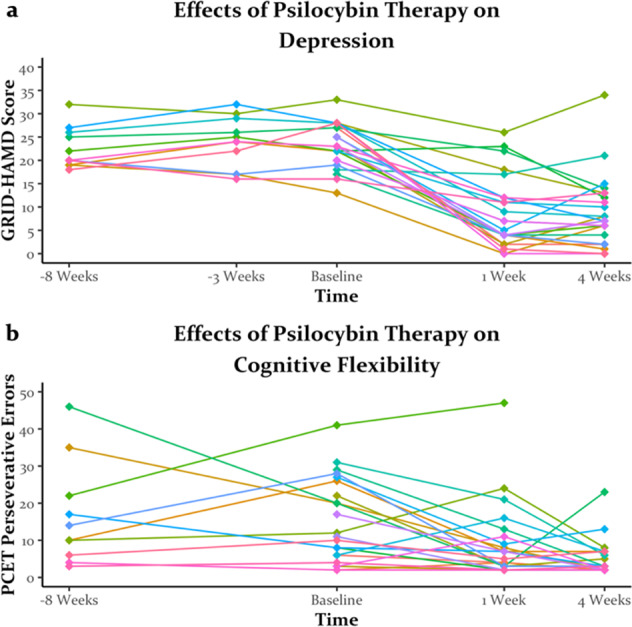
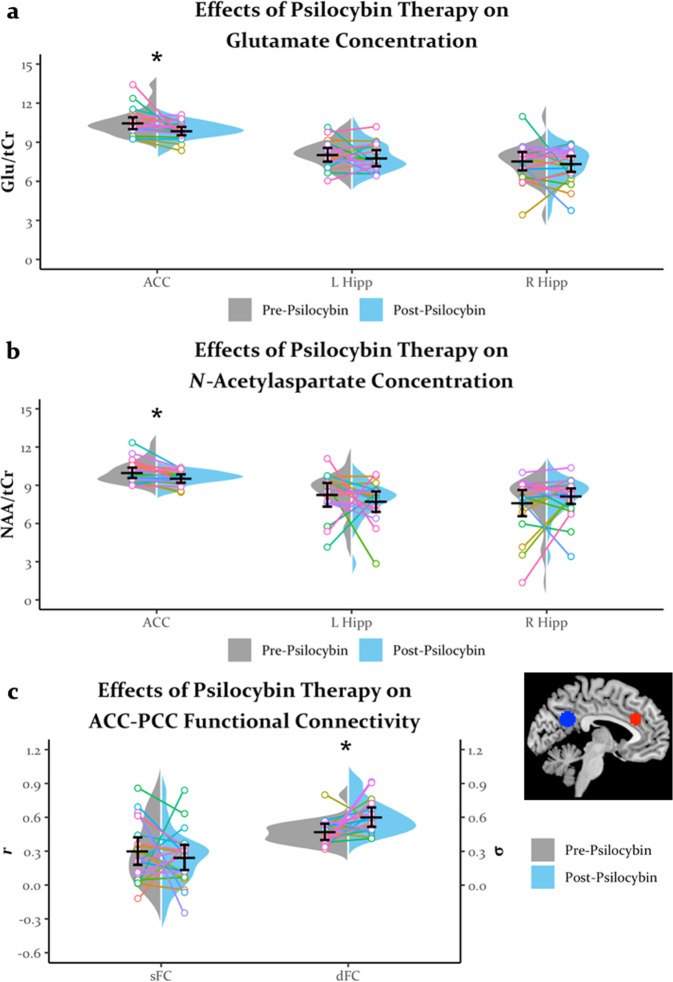
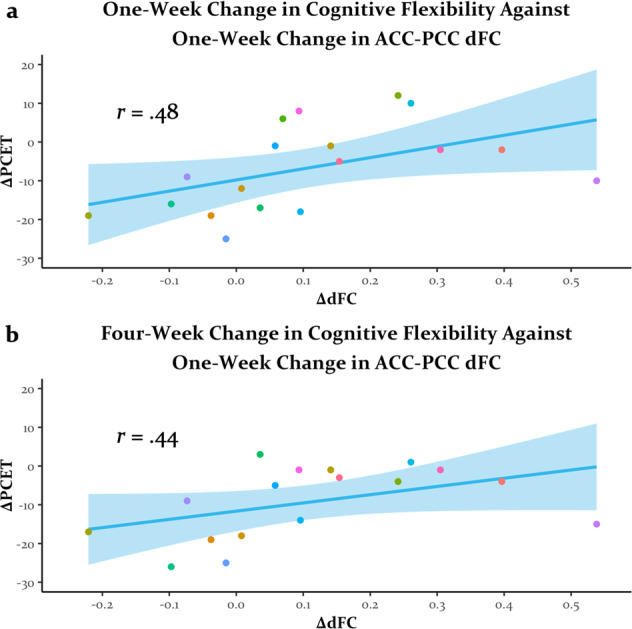
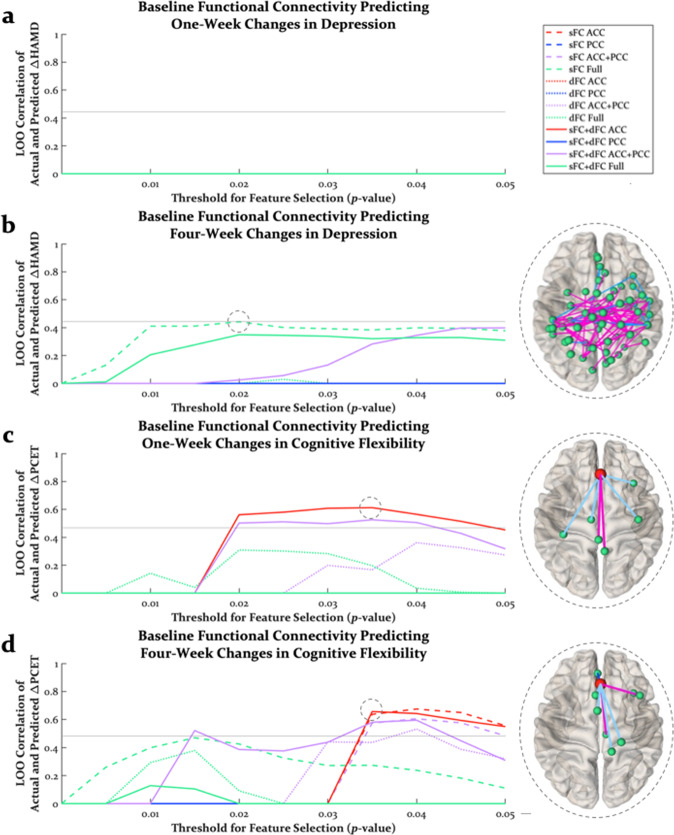
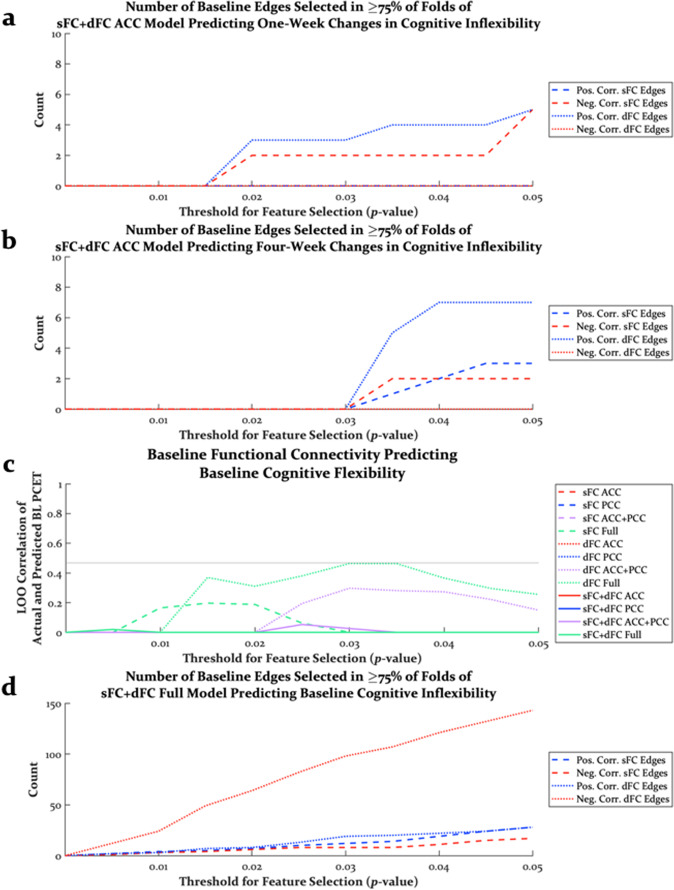
Psilocybin has shown promise for the treatment of mood disorders, which are often accompanied by cognitive dysfunction including cognitive rigidity. Recent studies have proposed neuropsychoplastogenic effects as mechanisms underlying the enduring therapeutic effects of psilocybin. In an open-label study of 24 patients with major depressive disorder, we tested the enduring effects of psilocybin therapy on cognitive flexibility (perseverative errors on a set-shifting task), neural flexibility (dynamics of functional connectivity or dFC via functional magnetic resonance imaging), and neurometabolite concentrations (via magnetic resonance spectroscopy) in brain regions supporting cognitive flexibility and implicated in acute psilocybin effects (e.g., the anterior cingulate cortex, or ACC). Psilocybin therapy increased cognitive flexibility for at least 4 weeks post-treatment, though these improvements were not correlated with the previously reported antidepressant effects. One week after psilocybin therapy, glutamate and N-acetylaspartate concentrations were decreased in the ACC, and dFC was increased between the ACC and the posterior cingulate cortex (PCC). Surprisingly, greater increases in dFC between the ACC and PCC were associated with less improvement in cognitive flexibility after psilocybin therapy. Connectome-based predictive modeling demonstrated that baseline dFC emanating from the ACC predicted improvements in cognitive flexibility. In these models, greater baseline dFC was associated with better baseline cognitive flexibility but less improvement in cognitive flexibility. These findings suggest a nuanced relationship between cognitive and neural flexibility. Whereas some enduring increases in neural dynamics may allow for shifting out of a maladaptively rigid state, larger persisting increases in neural dynamics may be of less benefit to psilocybin therapy.
Overview
The claims and statistics of this paper haven’t been checked yet.
Free: it reads the open-access text and checks the first 5 claims that cite a source we can check. Create a free account to check every claim.
Integrity signals
Registry
Cites
Statistics
Figures
Verification
Claims the paper makes
The claims and statistics of this paper haven’t been checked yet.
Free: it reads the open-access text and checks the first 5 claims that cite a source we can check. Create a free account to check every claim.
Claims other papers make about this one
Each is checked against this paper’s own text: does it say what the citing paper says it does?
In the citing paper
“Indeed, in an open-label clinical trial, psilocybin improved cognitive flexibility in patients with MDD [132].”
From Beyond the serotonin deficit hypothesis: Communicating a neuroplasticity framework of major depressive disorder (2024) · cites this paper as [132]
Self-check
Percentages, sums and reported differences re-computed from the paper’s own numbers.
The self-check needs the paper’s full text.
Citations
Cites
Power, J. D., Barnes, K. A., Snyder, A. Z., Schlaggar, B. L., & Petersen, S. E. (2012) · NeuroImage · doi:10.1016/j.neuroimage.2011.10.018 · Cited by 7,429 · cited 1×
“Nuisance parameters consisted of linear trend, the first 5 principal components of voxels containing cerebrospinal fluid and the first 5 principal components of voxels containing white matter signal (both identified using masks derived from segmented, co-registered, and normalized T1-weighted structural images; [81]),…”
MethodA component based noise correction method (CompCor) for BOLD and perfusion based fMRI
Behzadi, Y., Restom, K., Liau, J., & Liu, T. T. (2007) · NeuroImage · doi:10.1016/j.neuroimage.2007.04.042 · Cited by 4,502 · cited 1×
“Nuisance parameters consisted of linear trend, the first 5 principal components of voxels containing cerebrospinal fluid and the first 5 principal components of voxels containing white matter signal (both identified using masks derived from segmented, co-registered, and normalized T1-weighted structural images; [81]),…”
MethodFunctional Network Organization of the Human Brain
Power, J. D., Cohen, A. L., Nelson, S. M., Wig, G. S., Barnes, K. A., Church, J. A., Vogel, A. C., Laumann, T. O., Miezin, F. M., Schlaggar, B. L., et al. (2011) · Neuron · doi:10.1016/j.neuron.2011.09.006 · Cited by 4,124 · cited 1×
“Finally, these data were parcellated by averaging the BOLD signal at each TR across voxels within a 10-mm sphere around each of the 264 vertices of the Power atlas [84], producing 264 timeseries of nodes.”
MethodA simple objective technique for measuring flexibility in thinking
Berg, E. A. (1948) · The Journal of General Psychology · doi:10.1080/00221309.1948.9918159 · Cited by 2,255
Griffiths, R. R., Johnson, M. W., Carducci, M. A., Umbricht, A., Richards, W. A., Richards, B. D., Cosimano, M. P., & Klinedinst, M. A. (2016) · Journal of Psychopharmacology · doi:10.1177/0269881116675513 · Cited by 2,201 · cited 10×
“Although a lack of correlation between improvements in cognitive flexibility and improvements in depression might suggest that cognitive flexibility is not mechanistically related to antidepressant effects of psychedelic therapy, the GRID-HAMD assesses different features of current depression (e.g., affect and appetit…”
BackgroundMethodInfluentialSelf-citationCognitive impairment in depression: a systematic review and meta-analysis
Rock, P. L., Roiser, J. P., Riedel, W. J., & Blackwell, A. D. (2014) · Psychological Medicine · doi:10.1017/s0033291713002535 · Cited by 2,161 · cited 1×
“Nevertheless, many patients remain treatment-refractory for cognitive deficits [28, 29], necessitating research on novel treatments.”
BackgroundSatterthwaite, T. D., Elliott, M. A., Gerraty, R. T., Ruparel, K., Loughead, J., Calkins, M. E., Eickhoff, S. B., Hakonarson, H., Gur, R. C., Gur, R. E., et al. (2013) · NeuroImage · doi:10.1016/j.neuroimage.2012.08.052 · Cited by 1,881
Snyder, H. R. (2013) · Psychological Bulletin · doi:10.1037/a0028727 · Cited by 1,667
Automatic quantitation of localized in vivo1H spectra with LCModel
Provencher, S. W. (2001) · NMR in Biomedicine · doi:10.1002/nbm.698 · Cited by 1,634
Carhart-Harris, R. L., Bolstridge, M., Rucker, J., Day, C. M. J., Erritzoe, D., Kaelen, M., Bloomfield, M., Rickard, J. A., Forbes, B., Feilding, A., et al. (2016) · The Lancet Psychiatry · doi:10.1016/s2215-0366(16)30065-7 · Cited by 1,540 · cited 1×
“, lasting weeks to months after the acute effects [2, 3] and at least as effective as a SSRI [7]).”
Background
Cited by
Items 101–200 of 411
Godfrey, K., Douglass, H. M., Erritzøe, D., Muthukumaraswamy, S. D., Nutt, D. J., & Sumner, R. L. (2025) · Progress in Neuro-Psychopharmacology and Biological Psychiatry · doi:10.1016/j.pnpbp.2025.111455 · Cited by 19
Acute psilocybin increased cortical activities in rats
Liu, J., Wang, Y., Xia, K., Wu, J., Zheng, D., Cai, A., Yan, H., & Su, R. (2023) · Frontiers in Neuroscience · doi:10.3389/fnins.2023.1168911 · Cited by 19
RetractedFlynn, L. T., & Gao, W. (2023) · Molecular Psychiatry · doi:10.1038/s41380-023-02235-4 · Cited by 19
Synthetic surprise as the foundation of the psychedelic experience
Filippo, R. D., & Schmitz, D. (2024) · Neuroscience & Biobehavioral Reviews · doi:10.1016/j.neubiorev.2024.105538 · Cited by 19
Nicholas, C. R. N., Banks, M. I., Lennertz, R. C., Wenthur, C. J., Krause, B. M., Riedner, B. A., Smith, R., Hutson, P. R., Sauder, C. J., Dunne, J. D., et al. (2024) · Translational Psychiatry · doi:10.1038/s41398-024-03059-8 · Cited by 19
Salvetti, G., Saccenti, D., Moro, A. S., Lamanna, J., & Ferro, M. (2024) · Brain Sciences · doi:10.3390/brainsci14080829 · Cited by 18
LSD flattens the hierarchy of directed information flow in fast whole-brain dynamics
Shinozuka, K., Tewarie, P. K. B., Luppi, A. I., Lynn, C. W., Roseman, L., Muthukumaraswamy, S. D., Nutt, D. J., Carhart-Harris, R. L., Deco, G., & Kringelbach, M. L. (2025) · Imaging Neuroscience · doi:10.1162/imag_a_00420 · Cited by 18
Kuburi, S., Passa, A.-M. D., Tassone, V. K., Mahmood, R., Lalovic, A., Ladha, K. S., Dunlop, K., Rizvi, S. J., Demchenko, I., & Bhat, V. (2022) · Chronic Stress · doi:10.1177/24705470221115342 · Cited by 18
Klöbl, M., Prillinger, K., Diehm, R., Doganay, K., Lanzenberger, R. R., Poustka, L., Plener, P. L., & Konicar, L. (2023) · Child and Adolescent Psychiatry and Mental Health · doi:10.1186/s13034-022-00549-9 · Cited by 18
Hultgren, J., Hafsteinsson, M. H., & Brulin, J. G. (2025) · General Hospital Psychiatry · doi:10.1016/j.genhosppsych.2025.07.020 · Cited by 17
Fonseca, A. M., SANTOS, R. G. D., de Medeiros, L. S., Veiga, T. A. M., Cassas, F., Bruniera, C. P., Rossi, G. N., Bouso, J. C., Hallak, J. E. C., Santos, F. P., et al. (2024) · European Archives of Psychiatry and Clinical Neuroscience · doi:10.1007/s00406-024-01817-9 · Cited by 17
Murphy, R. J., Sumner, R. L., Godfrey, K., Mabidikama, A., Roberts, R. P., Sundram, F., & Muthukumaraswamy, S. D. (2024) · Psychopharmacology · doi:10.1007/s00213-024-06680-z · Cited by 17
Tang, G., Chen, P., Chen, G., Yang, Z., Ma, W., Yan, H., Su, T., Zhang, Y., Zhang, S., Qi, Z., et al. (2025) · Journal of Affective Disorders · doi:10.1016/j.jad.2025.01.035 · Cited by 17
Berkovitch, L., Fauvel, B., Preller, K. H., & Gaillard, R. (2025) · Neuroscience & Biobehavioral Reviews · doi:10.1016/j.neubiorev.2025.106239 · Cited by 17
Hosein, M., Reid, M. J., Walser, S. A., Charney, S., Fonzo, G. A., Lewis, B. R., Yaden, D. B., Suppes, T. M., Cordner, Z. A., & Barrett, F. S. (2025) · EClinicalMedicine · doi:10.1016/j.eclinm.2025.103517 · Cited by 17
Self-citationNeuroprotective effects of psilocybin in a rat model of stroke
Yu, S., Wu, K., Wang, Y.-S., Bae, E., Chianelli, F., Bambakidis, N. C., & Wang, Y. (2024) · BMC Neuroscience · doi:10.1186/s12868-024-00903-x · Cited by 16
Utilizing Psychedelics to Enhance Well-Being: A Systematic Review
Thomson, S., & Thomacos, N. (2025) · Journal of Psychoactive Drugs · doi:10.1080/02791072.2025.2484380 · Cited by 16
Brouns, E. J., Ekins, T. G., & Ahmed, O. J. (2025) · Psychedelics. · doi:10.61373/pp025r.0002 · Cited by 16
Haan, E., Krebs, K., Võsa, U., Brikell, I., Larsson, H., & Lehto, K. (2024) · Psychological Medicine · doi:10.1017/s0033291724000606 · Cited by 17
Borgland, S. L., & Neyens, D. M. (2022) · Journal of Psychiatry and Neuroscience · doi:10.1503/jpn.220090 · Cited by 16
Psilocybin and 2C-B at Encoding Distort Episodic Familiarity
Doss, M. K., Mallaroni, P., Mason, N. L., & Ramaekers, J. G. (2024) · Biological Psychiatry Cognitive Neuroscience and Neuroimaging · doi:10.1016/j.bpsc.2024.06.008 · Cited by 15
Self-citationDeep CANALs: a deep learning approach to refining the canalization theory of psychopathology
Juliani, A., Safron, A., & Kanai, R. (2024) · Neuroscience of Consciousness · doi:10.1093/nc/niae005 · Cited by 15
Singleton, S. P., Velidi, P., Schilling, L., Luppi, A. I., Jamison, K. W., Parkes, L., & Kuceyeski, A. F. (2023) · Biological Psychiatry Cognitive Neuroscience and Neuroimaging · doi:10.1016/j.bpsc.2024.05.006 · Cited by 15
Catalyst for change: Psilocybin’s antidepressant mechanisms—A systematic review
Liebnau, J., Betzler, F., & Kerber, A. (2025) · Journal of Psychopharmacology · doi:10.1177/02698811241312866 · Cited by 14
Effect of psilocybin on decision-making and motivation in the healthy rat
Roberts, B. F., Zylko, A. L., Waters, C. E., Crowder, J. D., Gibbons, W. J., Sen, A. K., Jones, J. A., & McMurray, M. S. (2022) · Behavioural Brain Research · doi:10.1016/j.bbr.2022.114262 · Cited by 14
Meccia, J., Lopez, J., & Bagot, R. C. (2022) · Psychopharmacology · doi:10.1007/s00213-022-06297-0 · Cited by 14
Barnett (2024) · doi:10.1089/psymed.2023.0010 · Cited by 13
“36,37 However, these findings lack specificity as compared with other treatments.”
Self-citationA Critical View on New and Future Antidepressants
Serretti, A. (2024) · Clinical Psychopharmacology and Neuroscience · doi:10.9758/cpn.23.1145 · Cited by 13
Psilocybin and Hallucinogenic Mushrooms
Fradet, M., Kelly, C. M., Donnelly, A. J., & Suppes, T. M. (2024) · Cambridge University Press eBooks · doi:10.1017/9781009585330.004 · Cited by 13
Lapid, M. I., Pagali, S. R., Randall, A., Donovan, K. A., Bronars, C. A., Gauthier, T. A., Bock, J., Lim, S. D., Carey, E. C., Sokolowski, E. I., et al. (2025) · Palliative & Supportive Care · doi:10.1017/s147895152500032x · Cited by 13
Cyberdelics: Virtual reality hallucinations modulate cognitive-affective processes
Brizzi, G., Pupillo, C., Rastelli, C., Greco, A., Bernardelli, L., Natale, A. F. D., Pizzoli, S. F. M., Sajno, E., Frisone, F., Lernia, D. D., et al. (2025) · Dialogues in Clinical Neuroscience · doi:10.1080/19585969.2025.2499459 · Cited by 13
van den Berg, M., Magaraggia, I., Schreiber, R., Hillhouse, T. M., & Porter, J. H. (2022) · Psychopharmacology · doi:10.1007/s00213-022-06106-8 · Cited by 13
Evaluating the potential for psilocybin as a treatment for post-traumatic stress disorder
Miller, C., & Zoladz, P. R. (2024) · Journal of Pharmacology and Experimental Therapeutics · doi:10.1124/jpet.124.002237 · Cited by 13
Tomažič, T., & Čelofiga, A. K. (2022) · Healthcare · doi:10.3390/healthcare10060972 · Cited by 13
Examining the biological causes of eating disorders to inform treatment strategies
Foldi, C. J., & Griffiths, K. R. (2025) · Nature reviews. Neuroscience · doi:10.1038/s41583-025-00940-3 · Cited by 13
Predictors of therapeutic response to psychedelic-assisted therapy: A systematic review
Viljoen, G., Walter, H., Bendau, A., Koslowski, M., & Betzler, F. (2025) · Journal of Psychopharmacology · doi:10.1177/02698811251389581 · Cited by 12
Altered States of Consciousness During Ceremonial San Pedro Use
Bohn, A., Kiggen, M. H. H., Uthaug, M. V., van Oorsouw, K. I. M., Ramaekers, J. G., & van Schie, H. T. (2022) · International Journal for the Psychology of Religion · doi:10.1080/10508619.2022.2139502 · Cited by 12
Yao, X., Zhao, J., Yuan, Y., Wang, C., Yu, Z., Huang, Z., Chen, C., Yang, C., Ren, J., Ma, Y., et al. (2023) · American Journal Of Pathology · doi:10.1016/j.ajpath.2023.06.005 · Cited by 12
Jones, N., Wagner, L., Pellitteri-Hahn, M. C., Scarlett, C. O., & Wenthur, C. J. (2024) · Frontiers in Psychiatry · doi:10.3389/fpsyt.2023.1303365 · Cited by 12
Review of Psilocybin Use for Depression among Cancer Patients after Approval in Oregon
Bellman, V. (2024) · Cancers · doi:10.3390/cancers16091702 · Cited by 12
Brockett, A. T., & Francis, N. A. (2024) · Journal of Neurophysiology · doi:10.1152/jn.00124.2024 · Cited by 12
Ciaunica, A., & Safron, A. (2024) · Oxford University Press eBooks · doi:10.1093/oso/9780192898371.003.0004 · Cited by 13
Psilocybin as a disease-modifying drug—a salutogenic approach in psychiatry
Spangemacher, M., Mertens, L. J., Färber, L. V., Jungaberle, A., Jungaberle, H., & Gründer, G. (2024) · Deutsches Ärzteblatt international · doi:10.3238/arztebl.m2024.0224 · Cited by 12
Shiroma, P. R., Velit-Salazar, M. R., & Vorobyov, Y. (2022) · Clinical Drug Investigation · doi:10.1007/s40261-022-01169-z · Cited by 12
Chen, M., Cheng, S.-L., Kao, Y., Tseng, P., Hsu, C., Yu, C., Yang, F., Thompson, T., Hsu, T., & Liang, C. (2024) · Frontiers in Psychiatry · doi:10.3389/fpsyt.2024.1439347 · Cited by 11
Yousefi, P., Lietz, M. P., O'Higgins, F., Rippe, R. C. A., Hasler, G., van Elk, M., & Enriquez‐Geppert, S. (2025) · Psychopharmacology · doi:10.1007/s00213-024-06742-2 · Cited by 11
Magni, G., Tuena, C., & Riva, G. (2023) · Frontiers in Human Neuroscience · doi:10.3389/fnhum.2023.1219052 · Cited by 11
Emerging medications and pharmacological treatment approaches for substance use disorders
Raymond, J. S., Athanasopoulos, A. G., Badolato, C. J., Doolan, T. M., Scicluna, R. L., Everett, N. A., Bowen, M. T., & James, M. H. (2024) · Pharmacology Biochemistry and Behavior · doi:10.1016/j.pbb.2024.173952 · Cited by 10
d’Andrea, G., Chiappini, S., Ciavoni, L., Tucci, R., Martino, F., Semeraro, F. M., Battista, D. D., Mosca, A., Miuli, A., Carlo, F. D., et al. (2025) · Translational Psychiatry · doi:10.1038/s41398-025-03654-3 · Cited by 11
Psychedelic medicine: mechanisms, evidence, and translation to practice
Jacobs, E., Zahid, Z., Hinkle, J. T., Nayak, S. M., & Yaden, D. B. (2026) · BMJ · doi:10.1136/bmj-2024-081723 · Cited by 10
Nicholas, C. R. N., Horton, D. M., Malicki, J., Baltes, A., Hutson, P. R., & Brown, R. (2023) · Psychedelic Medicine · doi:10.1089/psymed.2023.0012 · Cited by 10
Nikolič, M., Viktorin, V., Zach, P., Tylš, F., Dudysová, D., Janků, K., Kopřivová, J., Kuchař, M., Brunovský, M., Horáček, J., et al. (2023) · European Neuropsychopharmacology · doi:10.1016/j.euroneuro.2023.04.019 · Cited by 10
Psilocibina e sua perspectiva no tratamento do transtorno depressivo maior: uma revisão integrativa
Costa, J. C. G. D., Borba, E. R. D. C., & Vilanova, C. M. (2023) · Conexão Ciência (Online) · doi:10.24862/cco.v18i2.1750 · Cited by 9
Transient destabilization of whole brain dynamics induced by N,N-Dimethyltryptamine (DMT)
Piccinini, J., Perl, Y. S., Pallavicini, C., Deco, G., Kringelbach, M. L., Nutt, D. J., Carhart-Harris, R. L., Timmermann, C., & Tagliazucchi, E. (2025) · Communications Biology · doi:10.1038/s42003-025-07576-0 · Cited by 9
Cortical structural differences following repeated ayahuasca use hold molecular signatures
Mallaroni, P., Mason, N. L., Kloft, L., Reckweg, J. T., van Oorsouw, K. I. M., & Ramaekers, J. G. (2023) · Frontiers in Neuroscience · doi:10.3389/fnins.2023.1217079 · Cited by 9
Butler, M., Bird, C., Maggio, C., Durden, A., Modlin, N. L., Campbell‐Coker, K., Edwards, M. J., Pick, S., Millman, L. S. M., Lowery, E., et al. (2024) · Wellcome Open Research · doi:10.12688/wellcomeopenres.22543.1 · Cited by 9
Irrmischer, M., Puxty, D. J., Yıldırım, B. O., Deijen, J. B., & Engelbregt, H. (2025) · Psychopharmacology · doi:10.1007/s00213-024-06733-3 · Cited by 9
Immersive exposure to simulated visual hallucinations modulates high-level human cognition
Greco, A., Rastelli, C., Ubaldi, A., & Riva, G. (2025) · Consciousness and Cognition · doi:10.1016/j.concog.2025.103808 · Cited by 9
Hu, S., Lin, C., Wang, H., & Wang, X. (2025) · ACS Pharmacology & Translational Science · doi:10.1021/acsptsci.5c00094 · Cited by 9
Pasquini, L., Vohryzek, J., Escrichs, A., Perl, Y. S., Ponce‐Alvarez, A., Idesis, S., Girn, M., Roseman, L., Mitchell, J., Gazzaley, A. H., et al. (2026) · Human Brain Mapping · doi:10.1002/hbm.70596 · Cited by 9
Neurobiology of the Antidepressant Effects of Serotonergic Psychedelics: A Narrative Review
Chisamore, N., Kaczmarek, E. S., Le, G. H., Wong, S., Orsini, D. K., Mansur, R. B., McIntyre, R. S., & Rosenblat, J. D. (2024) · Current Treatment Options in Psychiatry · doi:10.1007/s40501-024-00319-8 · Cited by 9
West, C. L., Imai, F., Bastos, G., Hornick, M. A., Rachmany, L., Duran, A., Nadeem, S., Ricci, D., Groves, A. M. R., Wargo, J. A., et al. (2024) · bioRxiv (Cold Spring Harbor Laboratory) · doi:10.1101/2024.07.03.601959 · Cited by 9
Cognitive inflexibility, obsessive-compulsive symptoms and traits and poor post-pandemic adjustment
Frota Lisboa Pereira de Souza, A. M., Pellegrini, L., & Fineberg, N. A. (2024) · Neuroscience Applied · doi:10.1016/j.nsa.2024.104073 · Cited by 8
Sporadic use of classic psychedelics and neuropsychological performance: A cross-sectional analysis
Reiche, S., Hirschfeld, T., Gröticke, A., Traub, M., Hafiz, N. J., Haas, R., Sedlaczek, L., Ortlieb, L., Leistenschneider, G., Basedow, L. A., et al. (2025) · Progress in Neuro-Psychopharmacology and Biological Psychiatry · doi:10.1016/j.pnpbp.2025.111353 · Cited by 8
The pharmacological treatment of anxiety in people with eating disorders: A systematic review
Morris, R. C., Keeler, J. L., Treasure, J. L., & Himmerich, H. (2025) · Pharmacological Research · doi:10.1016/j.phrs.2025.107782 · Cited by 8
Thuery, G., Sheridan, C., Iusan, P., Brar, G., Ledden, K., Freyne, A., Kelly, J. R., & Harkin, A. (2025) · Acta Neuropsychiatrica · doi:10.1017/neu.2025.10030 · Cited by 8
Biscoe, N., Bonson, A., Slavin, M., Busuttil, W., MacManus, D., Cox, A., & Murphy, D. (2023) · European Journal of Trauma & Dissociation · doi:10.1016/j.ejtd.2023.100359 · Cited by 8
Ramos, L., & Vicente, S. (2024) · Journal of Clinical and Experimental Neuropsychology · doi:10.1080/13803395.2024.2363343 · Cited by 8
Pohořalá, V., Kuchař, M., Spanagel, R., & Bernardi, R. E. (2024) · Neuroscience · doi:10.1016/j.neuroscience.2024.09.006 · Cited by 8
A dual-receptor model of serotonergic psychedelicsPreprint
Juliani, A., Chelu, V., Graesser, L., & Safron, A. (2024) · bioRxiv (Cold Spring Harbor Laboratory) · doi:10.1101/2024.04.12.589282 · Cited by 8
Effects of psychedelic microdosing on cognitive functions: A systematic review and meta-analysis
Pinhas, N., Eidlman, N., Barnea, A., & Peled‐Avron, L. (2025) · Neuroscience & Biobehavioral Reviews · doi:10.1016/j.neubiorev.2025.106493 · Cited by 7
Heles, M., Pasvolsky, L., Sathishkumar, H. N., Na’ara, S., Vu, Y., Stewart, C. L., Xie, T., Gleber‐Netto, F. O., McCarthy, W. C., Yaniv, D., et al. (2026) · Science · doi:10.1126/science.aec6116 · Cited by 8
Hervig, M. E.-S., Zühlsdorff, K., Olesen, S. F., Phillips, B. U., Božič, T., Dalley, J. W., Cardinal, R. N., Alsiö, J., & Robbins, T. W. (2024) · Psychopharmacology · doi:10.1007/s00213-024-06586-w · Cited by 7
Zhu, X., Zhang, C., Hellerstein, D. J., Feusner, J. D., Wheaton, M. G., Gomez, G. J., & Schneier, F. R. (2024) · Psychedelics. · doi:10.61373/pp024r.0028 · Cited by 7
Coleman, C. R., Shinozuka, K., Tromm, R., Dipasquale, O., Kaelen, M., Roseman, L., Muthukumaraswamy, S. D., Nutt, D. J., Barnett, L., & Carhart-Harris, R. L. (2025) · Human Brain Mapping · doi:10.1002/hbm.70209 · Cited by 7
Spatiotemporal mapping of brain organisation following the administration of 2C-B and psilocybin
Mallaroni, P., Singleton, S. P., Mason, N. L., Satterthwaite, T. D., & Ramaekers, J. G. (2026) · Molecular Psychiatry · doi:10.1038/s41380-026-03447-0 · Cited by 7
Aday, J. S., Glynos, N. G., Baker, A. K., Pouyan, N., Smith, T., Barron, J., Herberholz, M., Kruger, D. J., Woolley, J. D., & Boehnke, K. F. (2026) · Scientific Reports · doi:10.1038/s41598-026-48084-3 · Cited by 7
Weintraub, M. J., Jeffrey, J. K., Grob, C. S., Ichinose, M. C., Bergman, R. L., Cooper, Z. D., & Miklowitz, D. J. (2023) · Psychedelic Medicine · doi:10.1089/psymed.2023.0018 · Cited by 7
Introducing psychedelics to end-of-life mental healthcare
Marks, M., Kious, B. M., Shachar, C., & Cohen, I. G. (2023) · Nature Mental Health · doi:10.1038/s44220-023-00166-1 · Cited by 7
Poulin, J. M., Bigford, G. E., Lanctôt, K. L., Giacobbe, P., Schaffer, A., Sinyor, M., Rabin, J. S., Masellis, M., Singnurkar, A., Pople, C. B., et al. (2024) · Trials · doi:10.1186/s13063-024-08268-6 · Cited by 7
A narrative exploration of psilocybin’s potential in mental health
Min, H., Park, S.-Y., Park, J., Na, S., Lee, H.-S., Kim, T., Ham, J., & Park, Y.-T. (2024) · Frontiers in Psychiatry · doi:10.3389/fpsyt.2024.1429373 · Cited by 7
Factors associated with cognitive flexibility in people with opioid-use disorder: a pilot study
Regier, P. S., de Arruda, T. C. M., Šinko, L., Teitelman, A. M., & Childress, A. R. (2024) · Frontiers in Psychiatry · doi:10.3389/fpsyt.2024.1505391 · Cited by 7
Campbell, H. M., Guo, J. D., & Kuhn, C. M. (2024) · Biological Psychiatry · doi:10.1016/j.biopsych.2024.05.016 · Cited by 7
Impact of Psilocybin on Peripheral Cytokine Production
DiRenzo, D., Barrett, F. S., Perin, J., Darrah, E., Christopher‐Stine, L., & Griffiths, R. R. (2024) · Psychedelic Medicine · doi:10.1089/psymed.2023.0039 · Cited by 6
Self-citationThe Therapeutic Effects of Classic Psychedelics in Alcohol Use Disorder
Pagni, B. A., Wong, J. M., & Bogenschutz, M. P. (2024) · Current Addiction Reports · doi:10.1007/s40429-024-00581-z · Cited by 8
Kupferberg, A., & Hasler, G. (2024) · Frontiers in Psychiatry · doi:10.3389/fpsyt.2024.1372650 · Cited by 7
Levin, A. W. (2024) · Journal of Psychopharmacology · doi:10.1177/02698811241303599 · Cited by 6
Forsberg, S., Downey, A. E., Bruett, L. D., Hail, L., Fernandes‐Osterhold, G., Woolley, J. D., Lafrance, A., & Raymond‐Flesch, M. (2025) · Child and Adolescent Psychiatry and Mental Health · doi:10.1186/s13034-025-00930-4 · Cited by 6
Razidlo, J. A., Cataldo, N., & Wenthur, C. J. (2025) · ACS Pharmacology & Translational Science · doi:10.1021/acsptsci.5c00462 · Cited by 6
Pilot study of psilocybin in patients with post-treatment lyme disease
Garcia‐Romeu, A., Naudé, G. P., Rebman, A. W., So, S., Yaffe, A., Geithner, I., Kozero, E. A., Yang, T., Soloski, M. J., & Aucott, J. N. (2026) · Scientific Reports · doi:10.1038/s41598-026-38091-9 · Cited by 6
Reichelt, A. C., Vermetten, E. H. G. J. M., & Dunkley, B. T. (2023) · Journal of Military Veteran and Family Health · doi:10.3138/jmvfh-2022-0084 · Cited by 6
Mechanisms of integration in psychedelic-assisted therapy
Coverdale, N. S., & Cook, D. J. (2023) · Journal of Military Veteran and Family Health · doi:10.3138/jmvfh-2023-0014 · Cited by 6
Effects of psilocybin on uncertain punishment learning
Jacobs, D. S., Bogachuk, A. P., Moing, C. L. L., & Moghaddam, B. (2024) · Neurobiology of Learning and Memory · doi:10.1016/j.nlm.2024.107954 · Cited by 6
Barber, M., Gardner, J., Liknaitzky, P., & Carter, A. (2024) · Psychology and Psychotherapy Theory Research and Practice · doi:10.1111/papt.12545 · Cited by 6
Neurobiological Correlates of Psychedelic Experiences and Psychedelic-Associated Adverse Effects
Rieser, N. M., Schmidt, T. T., & Preller, K. H. (2024) · Current topics in behavioral neurosciences · doi:10.1007/7854_2024_507 · Cited by 6
Rominger, C., & Subow, C. (2025) · PLoS ONE · doi:10.1371/journal.pone.0320755 · Cited by 5
Richard, J., Scott, J., Nayak, S. M., Sepeda, N. D., Lowe, M. X., Jackson, H., & Garcia‐Romeu, A. (2025) · International Journal of Mental Health and Addiction · doi:10.1007/s11469-025-01489-z · Cited by 5
Self-citationSabbah, S. G., Li, S., Wong, S., Le, G. H., Badulescu, S., Hawco, C. S., Rosenblat, J. D., & McIntyre, R. S. (2025) · Journal of Affective Disorders · doi:10.1016/j.jad.2025.120335 · Cited by 5
Biological markers of treatment response to serotonergic psychedelic therapies: a systematic review
Wong, S., Jones, B. D. M., Thiyagarajah, M. T., Sabbah, S. G., Thompson, C. W., Solmi, M., Umer, M., Zrenner, C., Voineskos, D., Rosenblat, J. D., et al. (2025) · Therapeutic Advances in Psychopharmacology · doi:10.1177/20451253251384513 · Cited by 5
Martens, M., Giribaldi, B., Erritzøe, D., Nutt, D. J., Carhart-Harris, R. L., & Harmer, C. J. (2025) · Translational Psychiatry · doi:10.1038/s41398-025-03693-w · Cited by 5
Metadata
- Authors
- Doss, M. K., Považan, M., Rosenberg, M. D., Sepeda, N. D., Davis, A. K., Finan, P. H., Smith, G. S., Pekar, J. J., Barker, P. B., Griffiths, R. R., & Barrett, F. S.
- Affiliations
- Johns Hopkins University (US)
- University of Chicago (US)
- Kennedy Krieger Institute (US)
- Corresponding author
- Doss, Manoj K.
- ORCID
- Venue
- Translational Psychiatry
- Published
- 2021-11-08
- Volume
- 11
- Issue
- 1
- Pages
- 574-574
- ISSN
- 2158-3188 (ISSN-L)
- PMC
- PMC8575795
- OpenAlex
- W3213458191
- Cited by
- 356
- References
- 101
- Citations by year
- 2026: 73 · 2025: 75 · 2024: 92 · 2023: 73 · 2022: 41 · 2021: 2
- FWCI
- 35.45
- Type
- journal article
- Language
- en
- Open access
- gold
- doi.org
- Licence
- cc-by
- creativecommons.org/licenses/by/4.0 (tdm)
- creativecommons.org/licenses/by/4.0 (vor)
- Locations
- Translational Psychiatry (publishedVersion, cc-by)
- PubMed Central (publishedVersion, cc-by)
- PubMed (publishedVersion)
- DOAJ (DOAJ: Directory of Open Access Journals) (submittedVersion, cc-by-sa)
- Funders
- U.S. Department of Health & Human Services | NIH | National Institute on Drug Abuse (T32DA007209, R01DA03889)
- Heffter Research Institute, Steven and Alexandra Cohen Foundation, Tim Ferriss, Blake Mycoskie, Matt Mullenweg, Craig Nerenberg, the Riverstyx Foundation, and Dave Morin.
- Topics
- Social Sciences › Psychology › Clinical Psychology › Psychedelics and Drug Studies
- Health Sciences › Medicine › Pharmacology (medical) › Treatment of Major Depression
- Life Sciences › Neuroscience › Neurology › Transcranial Magnetic Stimulation Studies
- Keywords
- psilocybin, major depressive disorder, cognitive flexibility, neural flexibility, perseverative errors, set-shifting, dynamic functional connectivity, anterior cingulate cortex, posterior cingulate cortex, glutamate, N-acetylaspartate, neurometabolites, connectome-based predictive modeling, cognitive rigidity, antidepressant effects
- MeSH terms
- Brain Mapping, Cognition, Major Depressive Disorder, Humans, Magnetic Resonance Imaging, Psilocybin
About these checks
Registry, retraction, Cites and statistics results are computed, not judged, with one exception: a printed reference that no index lists is read once by a model before it counts as a citation error. Claims are extracted by a model and kept only when their quote appears verbatim in the text; each cited source is then checked, with a model’s help, for whether it says what the claim relies on. Those verdicts can be wrong — read the claim’s quote and the cited source before relying on one.
Statistics and arithmetic are recomputed, not judged.
Confidence bands are shown only for fields calibrated on our annotated test set. None is calibrated yet, so no band is shown.
What counts as a claim ›How we measure confidence ›How we check this ›
Are you an author, or do you see a problem with this page? Request a review
Data sources
Bibliographic data: Semantic Scholar, OpenAlex, Crossref.
Contains information from the Semantic Scholar Academic Graph Datasets, made available under the ODC Attribution License (ODC-BY 1.0).
Semantic Scholar’s data is described in: Kinney, R., et al. (2023). The Semantic Scholar Open Data Platform. arXiv:2301.10140.
