

Psilocybin therapy increases cognitive and neural flexibility in patients with major depressive disorder
Open accessThe DOI matches its Crossref record; 101 of the 101 references it cites were found in a registry or an index.
Abstract
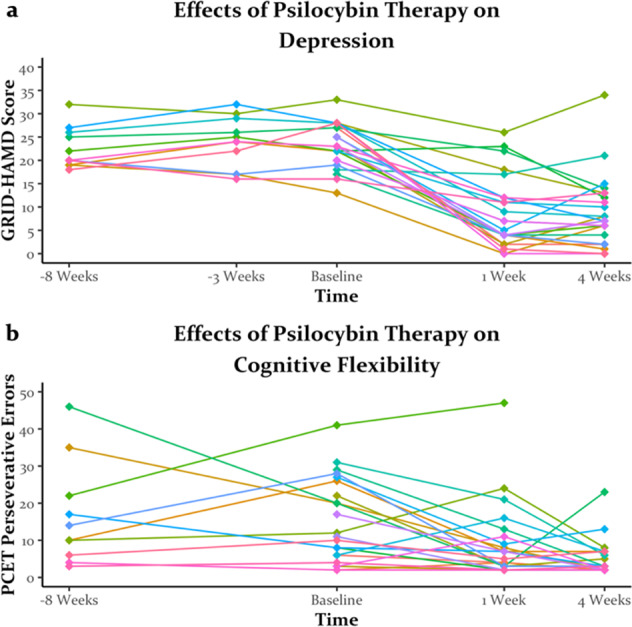
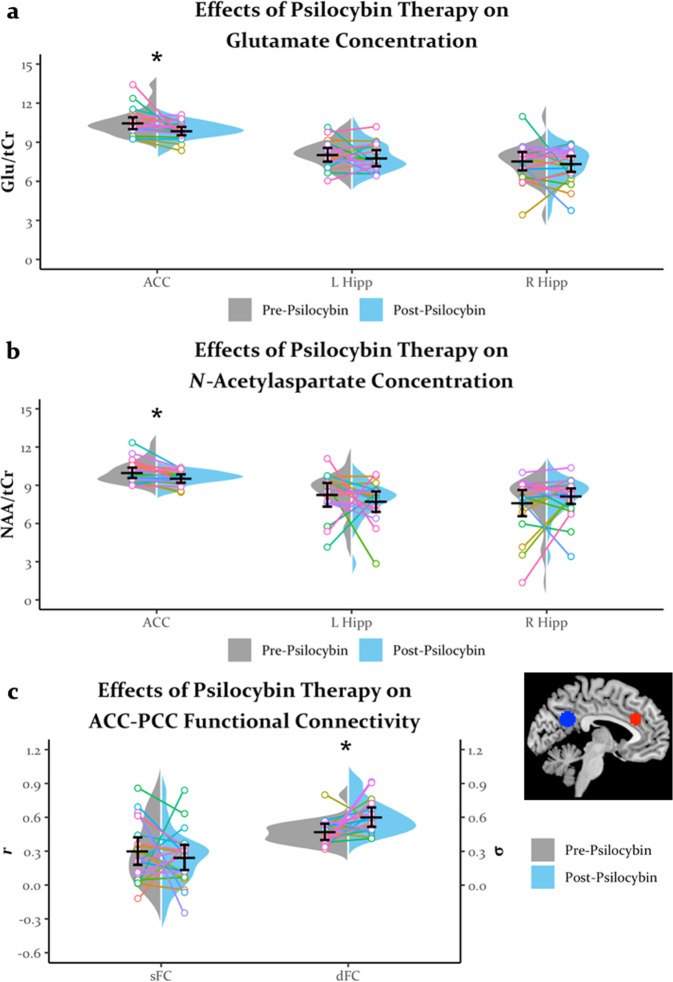
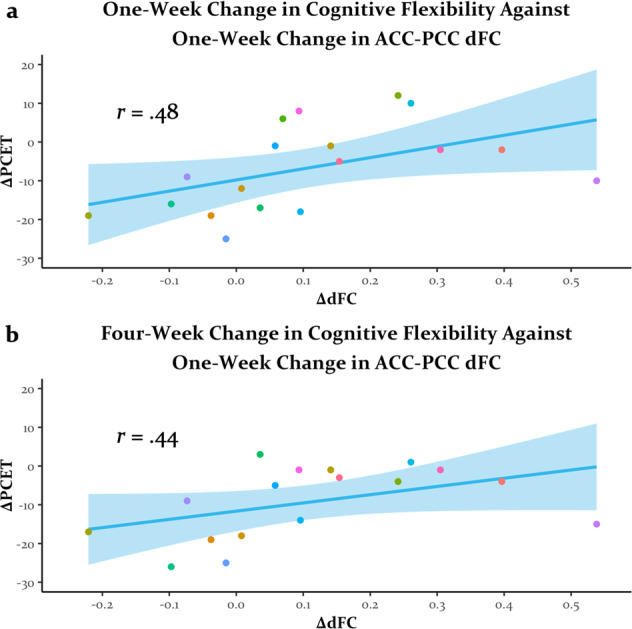
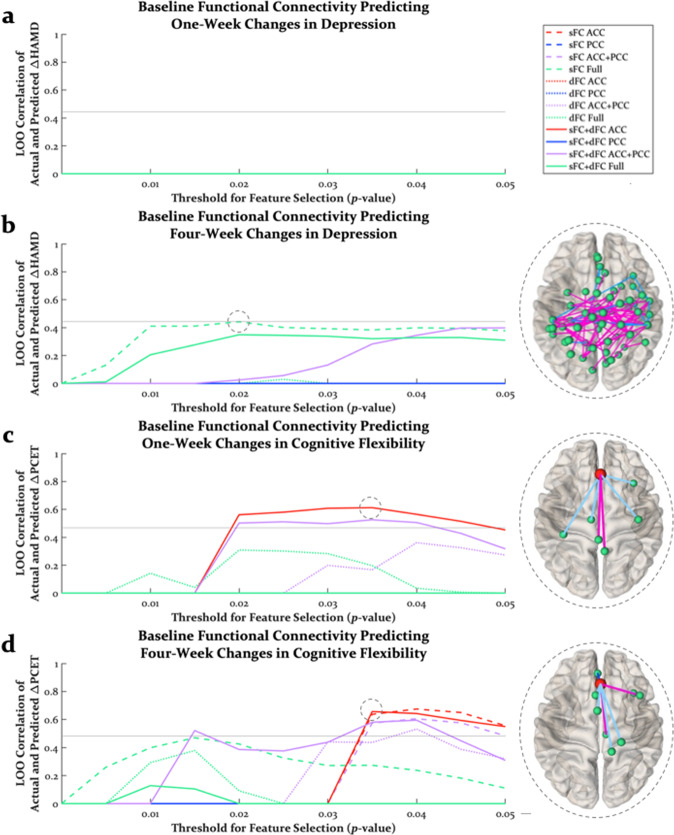
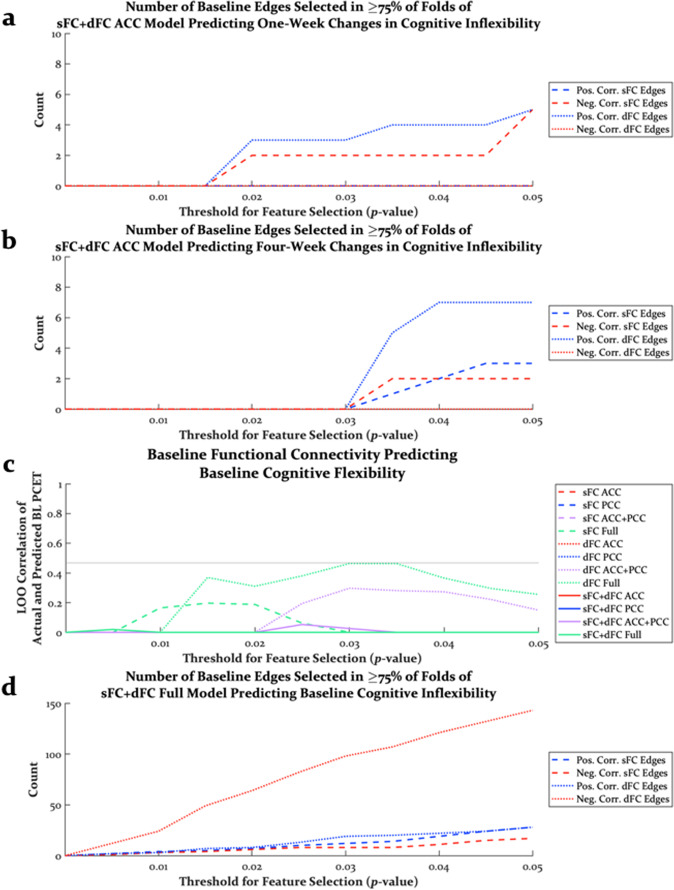
Psilocybin has shown promise for the treatment of mood disorders, which are often accompanied by cognitive dysfunction including cognitive rigidity. Recent studies have proposed neuropsychoplastogenic effects as mechanisms underlying the enduring therapeutic effects of psilocybin. In an open-label study of 24 patients with major depressive disorder, we tested the enduring effects of psilocybin therapy on cognitive flexibility (perseverative errors on a set-shifting task), neural flexibility (dynamics of functional connectivity or dFC via functional magnetic resonance imaging), and neurometabolite concentrations (via magnetic resonance spectroscopy) in brain regions supporting cognitive flexibility and implicated in acute psilocybin effects (e.g., the anterior cingulate cortex, or ACC). Psilocybin therapy increased cognitive flexibility for at least 4 weeks post-treatment, though these improvements were not correlated with the previously reported antidepressant effects. One week after psilocybin therapy, glutamate and N-acetylaspartate concentrations were decreased in the ACC, and dFC was increased between the ACC and the posterior cingulate cortex (PCC). Surprisingly, greater increases in dFC between the ACC and PCC were associated with less improvement in cognitive flexibility after psilocybin therapy. Connectome-based predictive modeling demonstrated that baseline dFC emanating from the ACC predicted improvements in cognitive flexibility. In these models, greater baseline dFC was associated with better baseline cognitive flexibility but less improvement in cognitive flexibility. These findings suggest a nuanced relationship between cognitive and neural flexibility. Whereas some enduring increases in neural dynamics may allow for shifting out of a maladaptively rigid state, larger persisting increases in neural dynamics may be of less benefit to psilocybin therapy.
Overview
The claims and statistics of this paper haven’t been checked yet.
Free: it reads the open-access text and checks the first 5 claims that cite a source we can check. Create a free account to check every claim.
Integrity signals
Registry
Cites
Statistics
Figures
Verification
Claims the paper makes
The claims and statistics of this paper haven’t been checked yet.
Free: it reads the open-access text and checks the first 5 claims that cite a source we can check. Create a free account to check every claim.
Claims other papers make about this one
Each is checked against this paper’s own text: does it say what the citing paper says it does?
In the citing paper
“Indeed, in an open-label clinical trial, psilocybin improved cognitive flexibility in patients with MDD [132].”
From Beyond the serotonin deficit hypothesis: Communicating a neuroplasticity framework of major depressive disorder (2024) · cites this paper as [132]
Self-check
Percentages, sums and reported differences re-computed from the paper’s own numbers.
The self-check needs the paper’s full text.
Citations
Cites
Power, J. D., Barnes, K. A., Snyder, A. Z., Schlaggar, B. L., & Petersen, S. E. (2012) · NeuroImage · doi:10.1016/j.neuroimage.2011.10.018 · Cited by 7,429 · cited 1×
“Nuisance parameters consisted of linear trend, the first 5 principal components of voxels containing cerebrospinal fluid and the first 5 principal components of voxels containing white matter signal (both identified using masks derived from segmented, co-registered, and normalized T1-weighted structural images; [81]),…”
MethodA component based noise correction method (CompCor) for BOLD and perfusion based fMRI
Behzadi, Y., Restom, K., Liau, J., & Liu, T. T. (2007) · NeuroImage · doi:10.1016/j.neuroimage.2007.04.042 · Cited by 4,502 · cited 1×
“Nuisance parameters consisted of linear trend, the first 5 principal components of voxels containing cerebrospinal fluid and the first 5 principal components of voxels containing white matter signal (both identified using masks derived from segmented, co-registered, and normalized T1-weighted structural images; [81]),…”
MethodFunctional Network Organization of the Human Brain
Power, J. D., Cohen, A. L., Nelson, S. M., Wig, G. S., Barnes, K. A., Church, J. A., Vogel, A. C., Laumann, T. O., Miezin, F. M., Schlaggar, B. L., et al. (2011) · Neuron · doi:10.1016/j.neuron.2011.09.006 · Cited by 4,124 · cited 1×
“Finally, these data were parcellated by averaging the BOLD signal at each TR across voxels within a 10-mm sphere around each of the 264 vertices of the Power atlas [84], producing 264 timeseries of nodes.”
MethodA simple objective technique for measuring flexibility in thinking
Berg, E. A. (1948) · The Journal of General Psychology · doi:10.1080/00221309.1948.9918159 · Cited by 2,255
Griffiths, R. R., Johnson, M. W., Carducci, M. A., Umbricht, A., Richards, W. A., Richards, B. D., Cosimano, M. P., & Klinedinst, M. A. (2016) · Journal of Psychopharmacology · doi:10.1177/0269881116675513 · Cited by 2,201 · cited 10×
“Although a lack of correlation between improvements in cognitive flexibility and improvements in depression might suggest that cognitive flexibility is not mechanistically related to antidepressant effects of psychedelic therapy, the GRID-HAMD assesses different features of current depression (e.g., affect and appetit…”
BackgroundMethodInfluentialSelf-citationCognitive impairment in depression: a systematic review and meta-analysis
Rock, P. L., Roiser, J. P., Riedel, W. J., & Blackwell, A. D. (2014) · Psychological Medicine · doi:10.1017/s0033291713002535 · Cited by 2,161 · cited 1×
“Nevertheless, many patients remain treatment-refractory for cognitive deficits [28, 29], necessitating research on novel treatments.”
BackgroundSatterthwaite, T. D., Elliott, M. A., Gerraty, R. T., Ruparel, K., Loughead, J., Calkins, M. E., Eickhoff, S. B., Hakonarson, H., Gur, R. C., Gur, R. E., et al. (2013) · NeuroImage · doi:10.1016/j.neuroimage.2012.08.052 · Cited by 1,881
Snyder, H. R. (2013) · Psychological Bulletin · doi:10.1037/a0028727 · Cited by 1,667
Automatic quantitation of localized in vivo1H spectra with LCModel
Provencher, S. W. (2001) · NMR in Biomedicine · doi:10.1002/nbm.698 · Cited by 1,634
Carhart-Harris, R. L., Bolstridge, M., Rucker, J., Day, C. M. J., Erritzoe, D., Kaelen, M., Bloomfield, M., Rickard, J. A., Forbes, B., Feilding, A., et al. (2016) · The Lancet Psychiatry · doi:10.1016/s2215-0366(16)30065-7 · Cited by 1,540 · cited 1×
“, lasting weeks to months after the acute effects [2, 3] and at least as effective as a SSRI [7]).”
BackgroundTrial of Psilocybin versus Escitalopram for Depression
Carhart-Harris, R., Giribaldi, B., Watts, R., Baker-Jones, M., Murphy-Beiner, A., Murphy, R., Martell, J., Blemings, A., Erritzoe, D., & Nutt, D. J. (2021) · New England Journal of Medicine · doi:10.1056/nejmoa2032994 · Cited by 1,391 · cited 4×
“Antidepressant treatments including ketamine [20], SSRIs [21–23], duloxetine (a serotonin and norepinephrine reuptake inhibitor) [17], and repetitive transcranial magnetic stimulation [22] have been found to improve cognitive flexibility, perhaps by driving plasticity of the hippocampus [24, 25], a structure implicate…”
BackgroundInfluentialEffects of Psilocybin-Assisted Therapy on Major Depressive Disorder: A Randomized Clinical Trial
Davis, A. K., Barrett, F. S., May, D. G., Cosimano, M. P., Sepeda, N. D., Johnson, M. W., Finan, P. H., & Griffiths, R. R. (2021) · JAMA Psychiatry · doi:10.1001/jamapsychiatry.2020.3285 · Cited by 1,301 · cited 5×
“METHODS Participants Detailed participant information was previously published [3].”
BackgroundMethodInfluentialSelf-citationCarhart-Harris, R. L., Leech, R., Hellyer, P. J., Shanahan, M., Feilding, A., Tagliazucchi, E., Chialvo, D. R., & Nutt, D. (2014) · Frontiers in Human Neuroscience · doi:10.3389/fnhum.2014.00020 · Cited by 1,252
Psychedelics promote structural and functional neural plasticity
Ly, C., Greb, A. C., Cameron, L. P., Wong, J. M., Barragan, E. V., Wilson, P. C., Burbach, K. F., Soltanzadeh Zarandi, S., Sood, A., Paddy, M. R., et al. (2018) · Cell Reports · doi:10.1016/j.celrep.2018.05.022 · Cited by 1,207
Neural correlates of the psychedelic state as determined by fMRI studies with psilocybin
Carhart-Harris, R. L., Erritzoe, D., Williams, T., Stone, J. M., Reed, L. J., Colasanti, A., Tyacke, R. J., Leech, R., Malizia, A. L., Murphy, K., et al. (2012) · Proceedings of the National Academy of Sciences · doi:10.1073/pnas.1119598109 · Cited by 1,172
Attention improves performance primarily by reducing interneuronal correlations
Cohen, M. R., & Maunsell, J. H. R. (2009) · Nature Neuroscience · doi:10.1038/nn.2439 · Cited by 1,152
Psilocybin-assisted treatment for alcohol dependence: A proof-of-concept study
Bogenschutz, M. P., Forcehimes, A. A., Pommy, J. A., Wilcox, C. E., Barbosa, P., & Strassman, R. J. (2015) · Journal of Psychopharmacology · doi:10.1177/0269881114565144 · Cited by 1,151 · cited 1×
“Impairments in cognitive flexibility have been found in depression [9, 10], as well as obsessive-compulsive disorder [11] and substance use disorders [12], which are disorders that may also be amenable to psychedelic therapy [1, 5, 6].”
BackgroundUsing connectome-based predictive modeling to predict individual behavior from brain connectivity
Shen, X., Finn, E. S., Scheinost, D., Rosenberg, M. D., Chun, M. M., Papademetris, X., & Constable, R. T. (2017) · Nature Protocols · doi:10.1038/nprot.2016.178 · Cited by 1,093
Self-citationA neuromarker of sustained attention from whole-brain functional connectivity
Rosenberg, M. D., Finn, E. S., Scheinost, D., Papademetris, X., Shen, X., Constable, R. T., & Chun, M. M. (2016) · Nature Neuroscience · doi:10.1038/nn.4179 · Cited by 1,014
Self-citationPilot study of the 5-HT 2A R agonist psilocybin in the treatment of tobacco addiction
Johnson, M. W., Garcia-Romeu, A., Cosimano, M. P., & Griffiths, R. R. (2014) · Journal of Psychopharmacology · doi:10.1177/0269881114548296 · Cited by 914 · cited 1×
“Impairments in cognitive flexibility have been found in depression [9, 10], as well as obsessive-compulsive disorder [11] and substance use disorders [12], which are disorders that may also be amenable to psychedelic therapy [1, 5, 6].”
BackgroundSelf-citationNeural correlates of the LSD experience revealed by multimodal neuroimaging
Carhart-Harris, R. L., Muthukumaraswamy, S., Roseman, L., Kaelen, M., Droog, W., Murphy, K., Tagliazucchi, E., Schenberg, E. E., Nest, T., Orban, C., et al. (2016) · Proceedings of the National Academy of Sciences · doi:10.1073/pnas.1518377113 · Cited by 859 · cited 1×
“Moreover, psychedelics and other hallucinogens have been found to acutely increase various measures of variance and entropy in brain activity, especially in regions of the salience network including the ACC ([67–71]; though decreases have also been reported [46, 71, 72]).”
BackgroundSafety, tolerability, and efficacy of psilocybin in 9 patients with obsessive-compulsive disorder
Moreno, F. A., Wiegand, C. B., Taitano, E. K., & Delgado, P. L. (2006) · The Journal of Clinical Psychiatry · doi:10.4088/jcp.v67n1110 · Cited by 789 · cited 1×
“Impairments in cognitive flexibility have been found in depression [9, 10], as well as obsessive-compulsive disorder [11] and substance use disorders [12], which are disorders that may also be amenable to psychedelic therapy [1, 5, 6].”
BackgroundCognitive and behavioural flexibility: Neural mechanisms and clinical considerations
Uddin, L. Q. (2021) · Nature Reviews Neuroscience · doi:10.1038/s41583-021-00428-w · Cited by 698
MacQueen, G., & Frodl, T. (2011) · Molecular Psychiatry · doi:10.1038/mp.2010.80 · Cited by 665
Psilocybin for treatment-resistant depression: fMRI-measured brain mechanisms
Carhart-Harris, R. L., Roseman, L., Bolstridge, M., Demetriou, L., Pannekoek, J. N., Wall, M. B., Tanner, M., Kaelen, M., McGonigle, J., Murphy, K., et al. (2017) · Scientific Reports · doi:10.1038/s41598-017-13282-7 · Cited by 587 · cited 3×
“The specific PCC node was selected based on the results of a prior study that found increased sFC between the subgenual cingulate and a region corresponding to the left PCC/precuneus [53].”
BackgroundMethodResultThe subcallosal cingulate gyrus in the context of major depression
Hamani, C., Mayberg, H., Stone, S., Laxton, A., Haber, S., & Lozano, A. M. (2011) · Biological Psychiatry · doi:10.1016/j.biopsych.2010.09.034 · Cited by 508
Distinct Global Brain Dynamics and Spatiotemporal Organization of the Salience Network
Chen, T., Cai, W., Ryali, S., Supekar, K., & Menon, V. (2016) · PLOS Biology · doi:10.1371/journal.pbio.1002469 · Cited by 480 · cited 1×
“Different measures of neural flexibility, especially those involving the salience network [63], have been associated with cognitive flexibility [8, 64], and neural flexibility of the ACC, as well as the PCC, has been found to be decreased in MDD [65, 66].”
BackgroundA non-hallucinogenic psychedelic analogue with therapeutic potential
Cameron, L. P., Tombari, R. J., Lu, J., Pell, A. J., Hurley, Z. Q., Ehinger, Y., Vargas, M. V., McCarroll, M. N., Taylor, J. C., Myers-Turnbull, D., et al. (2021) · Nature · doi:10.1038/s41586-020-3008-z · Cited by 473
Palhano-Fontes, F., Andrade, K. C., Tofoli, L. F., Santos, A. C., Crippa, J. A. S., Hallak, J. E. C., Ribeiro, S., & de Araujo, D. B. (2015) · PLOS ONE · doi:10.1371/journal.pone.0118143 · Cited by 454
Vollenweider, F. (1997) · Neuropsychopharmacology · doi:10.1016/s0893-133x(96)00246-1 · Cited by 444
Enhanced repertoire of brain dynamical states during the psychedelic experience
Tagliazucchi, E., Carhart‐Harris, R., Leech, R., Nutt, D., & Chialvo, D. R. (2014) · Human Brain Mapping · doi:10.1002/hbm.22562 · Cited by 397
Emotions and brain function are altered up to one month after a single high dose of psilocybin.
Barrett, F. S., Doss, M. K., Sepeda, N. D., Pekar, J. J., & Griffiths, R. R. (2020) · Scientific Reports · doi:10.1038/s41598-020-59282-y · Cited by 375 · cited 1×
“Although the durability of these effects is unclear in patients with MDD, one small study of 12 healthy adults did not find enduring modulation of neural flexibility or ACC function 1 week and 4 weeks after a single dose of psilocybin [73].”
BackgroundSelf-citationDavis, A. K., Barrett, F. S., & Griffiths, R. R. (2020) · Journal of Contextual Behavioral Science · doi:10.1016/j.jcbs.2019.11.004 · Cited by 375 · cited 1×
“Furthermore, the related concept of psychological flexibility has been found to mediate the relationship between acute psychedelic effects and improvements in depression and anxiety [19].”
BackgroundSelf-citationLindquist, M. A., Xu, Y., Nebel, M. B., & Caffo, B. S. (2014) · NeuroImage · doi:10.1016/j.neuroimage.2014.06.052 · Cited by 369
Simpson, R., Devenyi, G. A., Jezzard, P., Hennessy, T. J., & Near, J. (2017) · Magnetic Resonance in Medicine · doi:10.1002/mrm.26091 · Cited by 368
The heterogeneity of “major depression”
GOLDBERG, D. (2011) · World Psychiatry · doi:10.1002/j.2051-5545.2011.tb00061.x · Cited by 335 · cited 1×
“Considering the heterogeneity of depression [96], such better-predicting models may rely on a more distributed network of brain regions than we were able to sample within our data.”
Oxytocin-dependent reopening of a social reward learning critical period with MDMA
Nardou, R., Lewis, E. M., Rothhaas, R., Xu, R., Yang, A., Boyden, E., & Dölen, G. (2019) · Nature · doi:10.1038/s41586-019-1075-9 · Cited by 334
The impact of T1 versus EPI spatial normalization templates for fMRI data analyses
Calhoun, V. D., Wager, T. D., Krishnan, A., Rosch, K. S., Seymour, K. E., Nebel, M. B., Mostofsky, S. H., Nyalakanai, P., & Kiehl, K. (2017) · Human Brain Mapping · doi:10.1002/hbm.23737 · Cited by 320
Behavior needs neural variability
Waschke, L., Kloosterman, N. A., Obleser, J., & Garrett, D. D. (2021) · Neuron · doi:10.1016/j.neuron.2021.01.023 · Cited by 308
LSD‐induced entropic brain activity predicts subsequent personality change
Lebedev, A. V., Kaelen, M., Lövdén, M., Nilsson, J., Feilding, A., Nutt, D. J., & Carhart‐Harris, R. L. (2016) · Human Brain Mapping · doi:10.1002/hbm.23234 · Cited by 303
The GRID-HAMD: standardization of the Hamilton Depression Rating Scale
Williams, J. B. W., Kobak, K. A., Bech, P., Engelhardt, N., Evans, K., Lipsitz, J., Olin, J., Pearson, J., & Kalali, A. (2008) · International Clinical Psychopharmacology · doi:10.1097/yic.0b013e3282f948f5 · Cited by 295 · cited 14×
“Changes in GRIDHAMD scores were not correlated with changes in PCET perseverative errors across any set of timepoints (all |r | s < 0.2, all ps > 0.250).”
MethodInfluentialEffective connectivity changes in LSD-induced altered states of consciousness in humans
Preller, K. H., Razi, A., Zeidman, P., Stämpfli, P., Friston, K. J., & Vollenweider, F. X. (2019) · Proceedings of the National Academy of Sciences · doi:10.1073/pnas.1815129116 · Cited by 292
Effects of psilocybin on hippocampal neurogenesis and extinction of trace fear conditioning
Catlow, B. J., Song, S., Paredes, D. A., Kirstein, C. L., & Sanchez-Ramos, J. (2013) · Experimental Brain Research · doi:10.1007/s00221-013-3579-0 · Cited by 266
Cognitive inflexibility in Obsessive-Compulsive Disorder
Gruner, P., & Pittenger, C. (2017) · Neuroscience · doi:10.1016/j.neuroscience.2016.07.030 · Cited by 261 · cited 1×
“Impairments in cognitive flexibility have been found in depression [9, 10], as well as obsessive-compulsive disorder [11] and substance use disorders [12], which are disorders that may also be amenable to psychedelic therapy [1, 5, 6].”
BackgroundPsychoplastogens: A promising class of plasticity-promoting neurotherapeutics
Olson, D. E. (2018) · Journal of Experimental Neuroscience · doi:10.1177/1179069518800508 · Cited by 257
Functional Connectivity Measures After Psilocybin Inform a Novel Hypothesis of Early Psychosis
Carhart-Harris, R. L., Leech, R., Erritzoe, D., Williams, T. M., Stone, J. M., Evans, J., Sharp, D. J., Feilding, A., Wise, R. G., & Nutt, D. J. (2013) · Schizophrenia Bulletin · doi:10.1093/schbul/sbs117 · Cited by 256
Increased frontal and paralimbic activation following ayahuasca, the pan-amazonian inebriant
Riba, J., Romero, S., Grasa, E., Mena, E., Carrió, I., & Barbanoj, M. J. (2006) · Psychopharmacology · doi:10.1007/s00213-006-0358-7 · Cited by 241
Psychedelics in Psychiatry: Neuroplastic, Immunomodulatory, and Neurotransmitter Mechanisms
Inserra, A., De Gregorio, D., & Gobbi, G. (2021) · Pharmacological Reviews · doi:10.1124/pharmrev.120.000056 · Cited by 232 · cited 1×
“Recently, several studies have suggested that psychedelics induce neural plasticity [56–60] (for reviews, see [61, 62]).”
BackgroundBoulougouris, V., Glennon, J. C., & Robbins, T. W. (2008) · Neuropsychopharmacology · doi:10.1038/sj.npp.1301584 · Cited by 219 · cited 2×
“Blockade of 5-HT2A receptors has been found to both impair [30, 31] and enhance cognitive flexibility in animal models [32–34].”
BackgroundGouzoulis-Mayfrank, E. (1999) · Neuropsychopharmacology · doi:10.1016/s0893-133x(98)00089-x · Cited by 219
Boggio, P. S., Fregni, F., Bermpohl, F., Mansur, C. G., Rosa, M., Rumi, D. O., Barbosa, E. R., Odebrecht Rosa, M., Pascual‐Leone, A., Rigonatti, S. P., et al. (2005) · Movement Disorders · doi:10.1002/mds.20508 · Cited by 216 · cited 1×
“Antidepressant treatments including ketamine [20], SSRIs [21–23], duloxetine (a serotonin and norepinephrine reuptake inhibitor) [17], and repetitive transcranial magnetic stimulation [22] have been found to improve cognitive flexibility, perhaps by driving plasticity of the hippocampus [24, 25], a structure implicate…”
BackgroundSampedro, F., de la Fuente Revenga, M., Valle, M., Roberto, N., Domínguez-Clavé, E., Elices, M., Luna, L. E., Crippa, J. A. S., Hallak, J. E. C., de Araujo, D. B., et al. (2017) · International Journal of Neuropsychopharmacology · doi:10.1093/ijnp/pyx036 · Cited by 200 · cited 3×
“Like the ACC, activity and sFC of the PCC are consistently altered during acute effects of classic psychedelics [46, 50–52], and concentrations of glutamate and N-acetylaspartate (NAA) in the PCC were reduced 1 day post-DMT administration [49].”
BackgroundMethodComparing test-retest reliability of dynamic functional connectivity methods
Choe, A. S., Nebel, M. B., Barber, A. D., Cohen, J. R., Xu, Y., Pekar, J. J., Caffo, B., & Lindquist, M. A. (2017) · NeuroImage · doi:10.1016/j.neuroimage.2017.07.005 · Cited by 197
Self-citationBraun, U., Schäfer, A., Bassett, D. S., Rausch, F., Schweiger, J. I., Bilek, E., Erk, S., Romanczuk-Seiferth, N., Grimm, O., Geiger, L. S., et al. (2016) · Proceedings of the National Academy of Sciences · doi:10.1073/pnas.1608819113 · Cited by 192
Neural Components Underlying Behavioral Flexibility in Human Reversal Learning
Ghahremani, D. G., Monterosso, J., Jentsch, J. D., Bilder, R. M., & Poldrack, R. A. (2010) · Cerebral Cortex · doi:10.1093/cercor/bhp247 · Cited by 180 · cited 1×
“Activity of the anterior cingulate cortex (ACC) and its interactions with other regions [39, 40] are known to support cognitive flexibility, and single units of the ACC are involved in search for new rules to promote adaptive behavior [41].”
BackgroundInflexibility as a Vulnerability to Depression: A Systematic Qualitative Review
Stange, J. P., Alloy, L. B., & Fresco, D. M. (2017) · Clinical Psychology: Science and Practice · doi:10.1111/cpsp.12201 · Cited by 179 · cited 1×
“Impairments in cognitive flexibility have been found in depression [9, 10], as well as obsessive-compulsive disorder [11] and substance use disorders [12], which are disorders that may also be amenable to psychedelic therapy [1, 5, 6].”
BackgroundAltered network hub connectivity after acute LSD administration
Müller, F., Dolder, P. C., Schmidt, A., Liechti, M. E., & Borgwardt, S. (2018) · NeuroImage: Clinical · doi:10.1016/j.nicl.2018.03.005 · Cited by 174
Depression and Cognitive Control across the Lifespan: a Systematic Review and Meta-Analysis
Dotson, V. M., McClintock, S. M., Verhaeghen, P., Kim, J. U., Draheim, A. A., Syzmkowicz, S. M., Gradone, A. M., Bogoian, H. R., & Wit, L. D. (2020) · Neuropsychology Review · doi:10.1007/s11065-020-09436-6 · Cited by 173 · cited 1×
“Cognitive flexibility deficits may precede the onset of other symptoms in depression [13], have been identified across the lifespan in patients with depression [14, 15], and may represent an endophenotype for depression [16].”
BackgroundExecutive dysfunction in depression: The Wisconsin Card Sorting Test
Channon, S. (1996) · Journal of Affective Disorders · doi:10.1016/0165-0327(96)00027-4 · Cited by 165
Fong, A. H. C., Yoo, K., Rosenberg, M. D., Zhang, S., Li, C.-S. R., Scheinost, D., Constable, R. T., & Chun, M. M. (2019) · NeuroImage · doi:10.1016/j.neuroimage.2018.11.057 · Cited by 164
Self-citationFunctional connectivity predicts changes in attention observed across minutes, days, and months
Rosenberg, M. D., Scheinost, D., Greene, A. S., Avery, E. W., Kwon, Y. H., Finn, E. S., Ramani, R., Qiu, M., Constable, R. T., & Chun, M. M. (2020) · Proceedings of the National Academy of Sciences · doi:10.1073/pnas.1912226117 · Cited by 163
Self-citationReset of hippocampal–prefrontal circuitry facilitates learning
Park, A. J., Harris, A. Z., Martyniuk, K. M., Chang, C.-Y., Abbas, A. I., Lowes, D. C., Kellendonk, C., Gogos, J. A., & Gordon, J. A. (2021) · Nature · doi:10.1038/s41586-021-03272-1 · Cited by 158
Johnco, C., Wuthrich, V. M., & Rapee, R. M. (2014) · Behaviour Research and Therapy · doi:10.1016/j.brat.2014.04.005 · Cited by 156 · cited 1×
“Although cognitive flexibility may not always be directly related to global measures of symptomology for a given disorder [17], the capacity to readily shift between different mental states could especially be useful in the context of psychotherapy [18].”
BackgroundMorales-Garcia, J. A., Calleja-Conde, J., Lopez-Moreno, J. A., Alonso-Gil, S., Sanz-SanCristobal, M., Riba, J., & Perez-Castillo, A. (2020) · Translational Psychiatry · doi:10.1038/s41398-020-01011-0 · Cited by 138
Enhancement of Spatial Reversal Learning by 5-HT2CReceptor Antagonism Is Neuroanatomically Specific
Boulougouris, V., & Robbins, T. W. (2010) · The Journal of Neuroscience · doi:10.1523/jneurosci.4312-09.2010 · Cited by 136 · cited 1×
“In animal models, 5-HT2C blockade alone has been found to enhance [30, 38] or have no impact cognitive flexibility [34].”
BackgroundNjau, S., Joshi, S. H., Espinoza, R., Leaver, A. M., Vasavada, M., Marquina, A., Woods, R. P., & Narr, K. L. (2017) · Journal of Psychiatry and Neuroscience · doi:10.1503/jpn.150177 · Cited by 134
Neurocognitive Functioning in Depressed Young People: A Systematic Review and Meta-Analysis
Goodall, J., Fisher, C., Hetrick, S., Phillips, L., Parrish, E. M., & Allott, K. (2018) · Neuropsychology Review · doi:10.1007/s11065-018-9373-9 · Cited by 121
Subacute effects of the psychedelic ayahuasca on the salience and default mode networks
Pasquini, L., Palhano-Fontes, F., & Araujo, D. B. (2020) · Journal of Psychopharmacology · doi:10.1177/0269881120909409 · Cited by 119
NIELEN, M. M. A., & DEN BOER, J. A. (2003) · Psychological Medicine · doi:10.1017/s0033291703007682 · Cited by 118
Methylphenidate Modulates Functional Network Connectivity to Enhance Attention
Rosenberg, M. D., Zhang, S., Hsu, W.-T., Scheinost, D., Finn, E. S., Shen, X., Constable, R. T., Li, C.-S. R., & Chun, M. M. (2016) · The Journal of Neuroscience · doi:10.1523/jneurosci.1746-16.2016 · Cited by 114
Self-citationNeural substrates of cognitive flexibility in cocaine and gambling addictions
Verdejo-Garcia, A., Clark, L., Verdejo-Román, J., Albein-Urios, N., Martinez-Gonzalez, J. M., Gutierrez, B., & Soriano-Mas, C. (2015) · British Journal of Psychiatry · doi:10.1192/bjp.bp.114.152223 · Cited by 112
Pokorny, T., Duerler, P., Seifritz, E., Vollenweider, F. X., & Preller, K. H. (2020) · Psychological Medicine · doi:10.1017/s0033291719002393 · Cited by 102
Kurtz, M. (2004) · Archives of Clinical Neuropsychology · doi:10.1016/s0887-6177(03)00003-9 · Cited by 101 · cited 1×
“Notable effects of psilocybin therapy were limited to the Penn Conditional Exclusion Test (PCET; [78]), and descriptions and analyses of the other two tasks can be found in the Supplementary Information (SI; Table S1).”
MethodHippocampal seed connectome-based modeling predicts the feeling of stress
Goldfarb, E. V., Rosenberg, M. D., Seo, D., Constable, R. T., & Sinha, R. (2020) · Nature Communications · doi:10.1038/s41467-020-16492-2 · Cited by 94
Self-citationHengartner, M. P., & Plöderl, M. (2018) · Frontiers in Psychiatry · doi:10.3389/fpsyt.2018.00517 · Cited by 93
Abdallah, C. G., Hannestad, J., Mason, G. F., Holmes, S. E., DellaGioia, N., Sanacora, G., Jiang, L., Matuskey, D., Satodiya, R., Gasparini, F., et al. (2017) · Biological Psychiatry: Cognitive Neuroscience and Neuroimaging · doi:10.1016/j.bpsc.2017.03.019 · Cited by 84
Zheng, H., Li, F., Bo, Q., Li, X., Yao, L., Yao, Z., Wang, C., & Wu, X. (2017) · Journal of Affective Disorders · doi:10.1016/j.jad.2017.11.026 · Cited by 82
Amodeo, D. A., Jones, J. H., Sweeney, J. A., & Ragozzino, M. E. (2014) · Autism Research · doi:10.1002/aur.1395 · Cited by 79
Jett, J. D., Boley, A. M., Girotti, M., Shah, A., Lodge, D. J., & Morilak, D. A. (2015) · Psychopharmacology · doi:10.1007/s00213-015-3957-3 · Cited by 75
Furr, A., Lapiz-Bluhm, M. D., & Morilak, D. A. (2012) · The International Journal of Neuropsychopharmacology · doi:10.1017/s1461145711001441 · Cited by 74 · cited 1×
“Blockade of 5-HT2A receptors has been found to both impair [30, 31] and enhance cognitive flexibility in animal models [32–34].”
BackgroundLin, C., Lee, S., Huang, C., Chen, G.-Y., Ho, P.-S., Liu, H., Chen, Y.-L., Lee, T. M.-C., & Wu, S. (2019) · Journal of Affective Disorders · doi:10.1016/j.jad.2019.03.012 · Cited by 70
Maramis, M. M., Mahajudin, M. S., & Khotib, J. (2020) · Neuropsychobiology · doi:10.1159/000508682 · Cited by 64
Greer, T. L., Sunderajan, P., Grannemann, B. D., Kurian, B. T., & Trivedi, M. H. (2014) · Depression Research and Treatment · doi:10.1155/2014/627863 · Cited by 63 · cited 2×
“Antidepressant treatments including ketamine [20], SSRIs [21–23], duloxetine (a serotonin and norepinephrine reuptake inhibitor) [17], and repetitive transcranial magnetic stimulation [22] have been found to improve cognitive flexibility, perhaps by driving plasticity of the hippocampus [24, 25], a structure implicate…”
Background5HT2A receptor blockade in dorsomedial striatum reduces repetitive behaviors in BTBR mice
Amodeo, D. A., Rivera, E., Cook, E. H., Sweeney, J. A., & Ragozzino, M. E. (2016) · Genes Brain & Behavior · doi:10.1111/gbb.12343 · Cited by 60
Meta-Analysis of Placebo Rates in Major Depressive Disorder Trials
Stolk, P., Berg, M. J. T., Hemels, M. E., & Einarson, T. R. (2003) · Annals of Pharmacotherapy · doi:10.1345/aph.1d172 · Cited by 52
Doss, M. K., May, D. G., Johnson, M. W., Clifton, J. M., Hedrick, S. L., Prisinzano, T. E., Griffiths, R. R., & Barrett, F. S. (2020) · Scientific Reports · doi:10.1038/s41598-020-73216-8 · Cited by 52
Self-citationResting-state functional connectivity and inflexibility of daily emotions in major depression
Schwartz, J., Ordaz, S. J., Kircanski, K., Ho, T. C., Davis, E. G., Camacho, M. C., & Gotlib, I. H. (2019) · Journal of Affective Disorders · doi:10.1016/j.jad.2019.01.040 · Cited by 47
Differential effects of 5-HT2A and 5-HT2C receptor blockade on strategy-switching
Baker, P. M., Thompson, J. L., Sweeney, J. A., & Ragozzino, M. E. (2011) · Behavioural Brain Research · doi:10.1016/j.bbr.2010.12.031 · Cited by 46
Shiroma, P. R., Thuras, P., Wels, J., Albott, C. S., Erbes, C., Tye, S., & Lim, K. O. (2020) · Journal of Affective Disorders · doi:10.1016/j.jad.2020.08.058 · Cited by 46
Smith, G. S., Oeltzschner, G., Gould, N. F., Leoutsakos, J., Nassery, N., Joo, J. H., Kraut, M. A., Edden, R. A. E., Barker, P. B., Wijtenburg, S. A., et al. (2020) · Journal of Affective Disorders · doi:10.1016/j.jad.2020.10.011 · Cited by 38
Self-citationBaños, J. H., Novack, T. A., Brunner, R., Renfroe, S., Lin, H.-Y., & Meythaler, J. (2010) · Journal of Head Trauma Rehabilitation · doi:10.1097/htr.0b013e3181d6c715 · Cited by 34
Acute serotonin 2A receptor activation impairs behavioral flexibility in mice
Amodeo, D. A., Hassan, O., Klein, L. M., Halberstadt, A. L., & Powell, S. B. (2020) · Behavioural Brain Research · doi:10.1016/j.bbr.2020.112861 · Cited by 33
(R)-fluoxetine enhances cognitive flexibility and hippocampal cell proliferation in mice
Marwari, S., & Dawe, G. S. (2018) · Journal of Psychopharmacology · doi:10.1177/0269881118754733 · Cited by 31
Cohen, Y., Schneidman, E., & Paz, R. (2021) · Neuron · doi:10.1016/j.neuron.2020.12.027 · Cited by 29
Dajani, D. R., Odriozola, P., Winters, M., Voorhies, W., Marcano, S., Baez, A., Gates, K. M., Dick, A. S., & Uddin, L. Q. (2020) · Journal of Cognitive Neuroscience · doi:10.1162/jocn_a_01536 · Cited by 27 · cited 1×
“Activity of the anterior cingulate cortex (ACC) and its interactions with other regions [39, 40] are known to support cognitive flexibility, and single units of the ACC are involved in search for new rules to promote adaptive behavior [41].”
BackgroundSet Shifting and Inhibition Deficits as Potential Endophenotypes for Depression
Liu, H., Funkhouser, C. J., Langenecker, S. A., & Shankman, S. A. (2021) · Psychiatry Research · doi:10.1016/j.psychres.2021.113931 · Cited by 26
Improved Localization for 2-Hydroxyglutarate Detection at 3 T Using Long-TE Semi-LASER
Berrington, A., Voets, N., Plaha, P., Larkin, S. J., McCullagh, J., Stacey, R. J., Yildirim, M., Schofield, C. J., Jezzard, P., Cadoux-Hudson, T. A. D., et al. (2016) · Tomography · doi:10.18383/j.tom.2016.00139 · Cited by 25
Spies, M., Klöbl, M., Höflich, A. S., Hummer, A., Vanicek, T., Michenthaler, P., Kranz, G. S., Hahn, A., Winkler, D., Windischberger, C., et al. (2019) · Scientific Reports · doi:10.1038/s41598-019-46702-x · Cited by 23
Reproducibility of brain MRS in older healthy adults at 7T
Wijtenburg, S. A., Rowland, L. M., Oeltzschner, G., Barker, P. B., Workman, C. I., & Smith, G. S. (2018) · NMR in Biomedicine · doi:10.1002/nbm.4040 · Cited by 20
Self-citationThe selective 5-HT2A receptor agonist 25CN-NBOH does not affect reversal learning in mice
Odland, A. U., Kristensen, J. L., & Andreasen, J. T. (2021) · Behavioural Pharmacology · doi:10.1097/fbp.0000000000000626 · Cited by 18
Neurocognitive Functioning in Depressed Young People: A Systematic Review and Meta-analysis
Allott, K., Goodall, J., Fisher, C. A., Hetrick, S. E., Parrish, E. M., & Phillips, L. (2018) · Early Intervention in Psychiatry · Cited by 2
Cited by
Bogenschutz, M. P., Ross, S., Bhatt, S., Baron, T., Forcehimes, A. A., Laska, E., Mennenga, S. E., O’Donnell, K., Owens, L. T., Podrebarac, S., et al. (2022) · JAMA Psychiatry · doi:10.1001/jamapsychiatry.2022.2096 · Cited by 711
Gukasyan, N., Davis, A. K., Barrett, F. S., Cosimano, M. P., Sepeda, N. D., Johnson, M. W., & Griffiths, R. R. (2022) · Journal of Psychopharmacology · doi:10.1177/02698811211073759 · Cited by 425
Self-citationTowards an understanding of psychedelic-induced neuroplasticity
Calder, A. E., & Hasler, G. (2023) · Neuropsychopharmacology · doi:10.1038/s41386-022-01389-z · Cited by 313
The neural basis of psychedelic action
Kwan, A. C., Olson, D. E., Preller, K. H., & Roth, B. L. (2022) · Nature Neuroscience · doi:10.1038/s41593-022-01177-4 · Cited by 302
Default Mode Network Modulation by Psychedelics: A Systematic Review
Gattuso, J. J., Perkins, D., Ruffell, S., Lawrence, A. J., Hoyer, D., Jacobson, L. H., Timmermann, C., Castle, D., Rossell, S. L., Downey, L. A., et al. (2023) · International Journal of Neuropsychopharmacology · doi:10.1093/ijnp/pyac074 · Cited by 256
“It is proposed that this disruption in top-down processing may facilitate increased neural and cognitive flexibility (Doss et al., 2021), which is a viable explanation for the mechanistic underpinnings of the therapeutic effect of psychedelics (Gallimore, 2015; Mason et al.”
Background
Metadata
- Authors
- Doss, M. K., Považan, M., Rosenberg, M. D., Sepeda, N. D., Davis, A. K., Finan, P. H., Smith, G. S., Pekar, J. J., Barker, P. B., Griffiths, R. R., & Barrett, F. S.
- Affiliations
- Johns Hopkins University (US)
- University of Chicago (US)
- Kennedy Krieger Institute (US)
- Corresponding author
- Doss, Manoj K.
- ORCID
- Venue
- Translational Psychiatry
- Published
- 2021-11-08
- Volume
- 11
- Issue
- 1
- Pages
- 574-574
- ISSN
- 2158-3188 (ISSN-L)
- PMC
- PMC8575795
- OpenAlex
- W3213458191
- Cited by
- 356
- References
- 101
- Citations by year
- 2026: 73 · 2025: 75 · 2024: 92 · 2023: 73 · 2022: 41 · 2021: 2
- FWCI
- 35.45
- Type
- journal article
- Language
- en
- Open access
- gold
- doi.org
- Licence
- cc-by
- creativecommons.org/licenses/by/4.0 (tdm)
- creativecommons.org/licenses/by/4.0 (vor)
- Locations
- Translational Psychiatry (publishedVersion, cc-by)
- PubMed Central (publishedVersion, cc-by)
- PubMed (publishedVersion)
- DOAJ (DOAJ: Directory of Open Access Journals) (submittedVersion, cc-by-sa)
- Funders
- U.S. Department of Health & Human Services | NIH | National Institute on Drug Abuse (T32DA007209, R01DA03889)
- Heffter Research Institute, Steven and Alexandra Cohen Foundation, Tim Ferriss, Blake Mycoskie, Matt Mullenweg, Craig Nerenberg, the Riverstyx Foundation, and Dave Morin.
- Topics
- Social Sciences › Psychology › Clinical Psychology › Psychedelics and Drug Studies
- Health Sciences › Medicine › Pharmacology (medical) › Treatment of Major Depression
- Life Sciences › Neuroscience › Neurology › Transcranial Magnetic Stimulation Studies
- Keywords
- psilocybin, major depressive disorder, cognitive flexibility, neural flexibility, perseverative errors, set-shifting, dynamic functional connectivity, anterior cingulate cortex, posterior cingulate cortex, glutamate, N-acetylaspartate, neurometabolites, connectome-based predictive modeling, cognitive rigidity, antidepressant effects
- MeSH terms
- Brain Mapping, Cognition, Major Depressive Disorder, Humans, Magnetic Resonance Imaging, Psilocybin
About these checks
Registry, retraction, Cites and statistics results are computed, not judged, with one exception: a printed reference that no index lists is read once by a model before it counts as a citation error. Claims are extracted by a model and kept only when their quote appears verbatim in the text; each cited source is then checked, with a model’s help, for whether it says what the claim relies on. Those verdicts can be wrong — read the claim’s quote and the cited source before relying on one.
Statistics and arithmetic are recomputed, not judged.
Confidence bands are shown only for fields calibrated on our annotated test set. None is calibrated yet, so no band is shown.
What counts as a claim ›How we measure confidence ›How we check this ›
Are you an author, or do you see a problem with this page? Request a review
Data sources
Bibliographic data: Semantic Scholar, OpenAlex, Crossref.
Contains information from the Semantic Scholar Academic Graph Datasets, made available under the ODC Attribution License (ODC-BY 1.0).
Semantic Scholar’s data is described in: Kinney, R., et al. (2023). The Semantic Scholar Open Data Platform. arXiv:2301.10140.
