

HSV-1 cellular model reveals links between aggresome formation and early step of Alzheimer’s disease
Open accessThe DOI matches its Crossref record; 52 of the 52 references it cites were found in a registry or an index.
Abstract
Many studies highlight the potential link between the chronic degenerative Alzheimer’s disease and the infection by the herpes simplex virus type-1 (HSV-1). However, the molecular mechanisms making possible this HSV-1-dependent process remain to be understood. Using neuronal cells expressing the wild type form of amyloid precursor protein (APP) infected by HSV-1, we characterized a representative cellular model of the early stage of the sporadic form of the disease and unraveled a molecular mechanism sustaining this HSV-1- Alzheimer’s disease interplay. Here, we show that HSV-1 induces caspase-dependent production of the 42 amino-acid long amyloid peptide (Aβ42) oligomers followed by their accumulation in neuronal cells. Aβ42 oligomers and activated caspase 3 (casp3A) concentrate into intracytoplasmic structures observed in Alzheimer’s disease neuronal cells called aggresomes. This casp3A accumulation in aggresomes during HSV-1 infection limits the execution of apoptosis until its term, similarly to an abortosis-like event occurring in Alzheimer’s disease neuronal cells patients. Indeed, this particular HSV-1 driven cellular context, representative of early stages of the disease, sustains a failed apoptosis mechanism that could explain the chronic amplification of Aβ42 production characteristic of Alzheimer’s disease patients. Finally, we show that combination of flurbiprofen, a non-steroidal anti-inflammatory drug (NSAID), with caspase inhibitor reduced drastically HSV-1-induced Aβ42 oligomers production. This provided mechanistic insights supporting the conclusion of clinical trials showing that NSAIDs reduced Alzheimer’s disease incidence in early stage of the disease. Therefore, from our study we propose that caspase-dependent production of Aβ42 oligomers together with the abortosis-like event represents a vicious circle in early Alzheimer’s disease stages leading to a chronic amplification of Aβ42 oligomers that contributes to the establishment of degenerative disorder like Alzheimer’s disease in patients infected by HSV-1. Interestingly this process could be targeted by an association of NSAID with caspase inhibitors.
Overview
The claims and statistics of this paper haven’t been checked yet.
Free: it reads the open-access text and checks the first 5 claims that cite a source we can check. Create a free account to check every claim.
Integrity signals
Registry
Cites
Statistics
Figures
Verification
Claims the paper makes
The claims and statistics of this paper haven’t been checked yet.
Free: it reads the open-access text and checks the first 5 claims that cite a source we can check. Create a free account to check every claim.
Claims other papers make about this one
Each is checked against this paper’s own text: does it say what the citing paper says it does?
The source backs part of the claim, not all of it — or backs it for a different population, condition or comparison.
In the citing paper
“HSV1 may also impact Aβ pathology through mechanisms, such as continuous production and aggregation of Aβ within infected neurons via the activation of caspase 3,600 and altering γ-secretase activity.601”
From Recent advances in Alzheimer's disease: Mechanisms, clinical trials and new drug development strategies. (2024) · cites this paper as [600]
Experimental — accuracy not yet measured
Self-check
Percentages, sums and reported differences re-computed from the paper’s own numbers.
The self-check needs the paper’s full text.
Citations
Cites
Schägger, H. (2006) · Nature Protocols · doi:10.1038/nprot.2006.4 · Cited by 2,507
Aggresomes: A Cellular Response to Misfolded Proteins
Johnston, J. A., Ward, C. L., & Kopito, R. R. (1998) · The Journal of Cell Biology · doi:10.1083/jcb.143.7.1883 · Cited by 2,148 · cited 9×
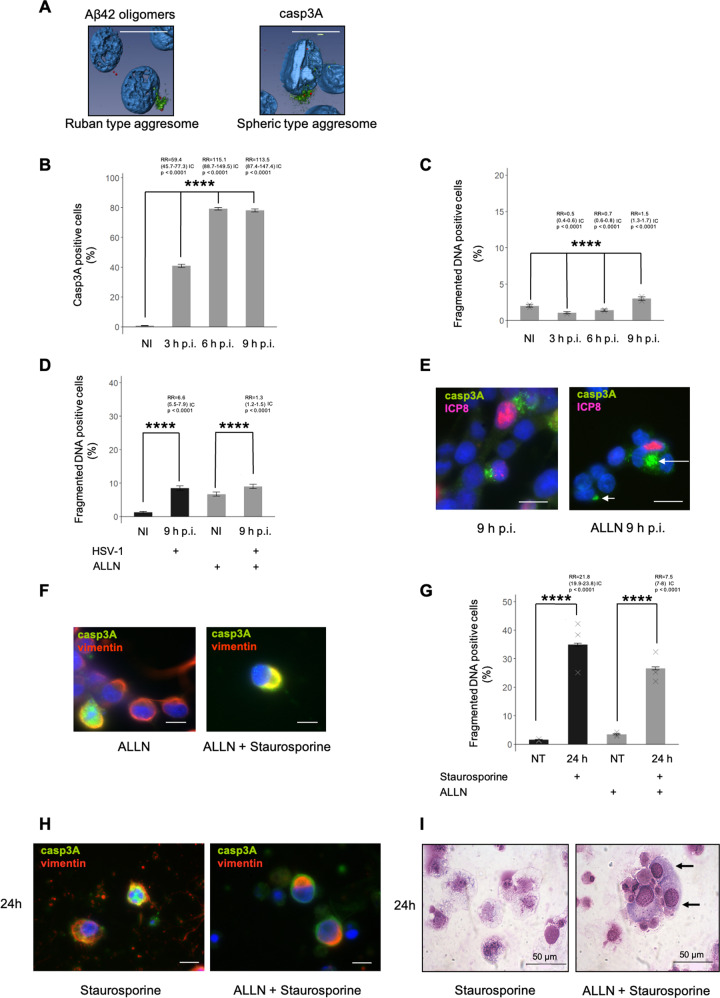
“We used an inhibitor of proteasome ALLN [32] to promote casp3A aggresome accumulation during infection.”
MethodInfluentialIntraneuronal Aβ42 Accumulation in Human Brain
Gouras, G. K., Tsai, J., Naslund, J., Vincent, B., Edgar, M., Checler, F., Greenfield, J. P., Haroutunian, V., Buxbaum, J. D., Xu, H., et al. (2000) · The American Journal of Pathology · doi:10.1016/s0002-9440(10)64700-1 · Cited by 991
Caspase cleavage of tau: Linking amyloid and neurofibrillary tangles in Alzheimer's disease
Gamblin, T. C., Chen, F., Zambrano, A., Abraha, A., Lagalwar, S., Guillozet, A. L., Lu, M., Fu, Y., Garcia-Sierra, F., LaPointe, N., et al. (2003) · Proceedings of the National Academy of Sciences · doi:10.1073/pnas.1630428100 · Cited by 831 · cited 1×
“Indeed, some neurones of Alzheimer’s disease patients exhibit markers of apoptosis such as casp3A [50, 40] without final apoptotic characteristics [49].”
BackgroundNormal and Abnormal Biology of the beta-Amyloid Precursor Protein
Selkoe, D. J. (1994) · Annual Review of Neuroscience · doi:10.1146/annurev.ne.17.030194.002421 · Cited by 818 · cited 1×
“Familial forms of Alzheimer’s disease representing 5% of the patients are associated to different type of APP gene mutations [16].”
BackgroundClonal cell lines from the rat central nervous system
Schubert, D., Heinemann, S., Carlisle, W., Tarikas, H., Kimes, B., Patrick, J., Steinbach, J. H., Culp, W., & Brandt, B. L. (1974) · Nature · doi:10.1038/249224a0 · Cited by 712 · cited 1×
“RESULTS APP processing during HSV-1 infection We selected the B103 murine neuronal cell line for its ability to exhibit several features similar to that of differentiated neurons [23] (Suppl Fig.”
BackgroundGervais, F. G., Xu, D., Robertson, G. S., Vaillancourt, J. P., Zhu, Y., Huang, J., LeBlanc, A., Smith, D., Rigby, M., Shearman, M. S., et al. (1999) · Cell · doi:10.1016/s0092-8674(00)80748-5 · Cited by 674
Characterization and Dynamics of Aggresome Formation by a Cytosolic Gfp-Chimera✪
García-Mata, R., Bebök, Z., Sorscher, E. J., & Sztul, E. S. (1999) · The Journal of Cell Biology · doi:10.1083/jcb.146.6.1239 · Cited by 595
A comparison of statistical methods for meta‐analysis
Brockwell, S. E., & Gordon, I. R. (2001) · Statistics in Medicine · doi:10.1002/sim.650 · Cited by 573 · cited 1×
“When experiments include several replicates, the percentages of positive cells for the different replicates are displayed individually, and the RR are combined using the meta analysis statistical approach under the fixed effect assumption [22].”
MethodCaspase-cleavage of tau is an early event in Alzheimer disease tangle pathology
Rissman, R. A., Poon, W. W., Blurton-Jones, M., Oddo, S., Torp, R., Vitek, M. P., LaFerla, F. M., Rohn, T. T., & Cotman, C. W. (2004) · Journal of Clinical Investigation · doi:10.1172/jci200420640 · Cited by 543 · cited 2×
“Importantly because caspase 3 activation [40] and caspase dependent production of Aβ [19, 41] are two of the molecular events taking place in the brain of Alzheimer’s disease patients it is possible that HSV-1, during the reactivation phases, by stimulating these processes participates to Alzheimer’s disease initiatio…”
BackgroundHerpes simplex virus type 1 DNA is located within Alzheimer's disease amyloid plaques
Wozniak, M., Mee, A., & Itzhaki, R. (2009) · The Journal of Pathology · doi:10.1002/path.2449 · Cited by 464
The antimicrobial protection hypothesis of Alzheimer’s disease
Moir, R. D., Lathe, R., & Tanzi, R. E. (2018) · Alzheimer's & Dementia · doi:10.1016/j.jalz.2018.06.3040 · Cited by 456
Hassles with Taking Out the Garbage: Aggravating Aggresomes
Garcia‐Mata, R., Gao, Y., & Sztul, E. (2002) · Traffic · doi:10.1034/j.1600-0854.2002.30602.x · Cited by 391 · cited 1×
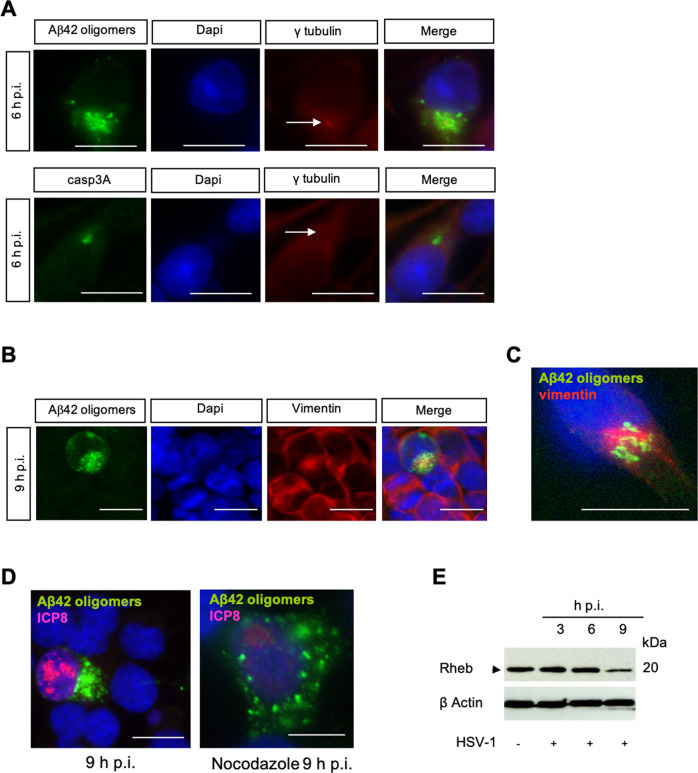
“4A) adopting two different types of aggresomes’ structures described previously [35] (Fig.”
MethodD'Andrea, M. R., Nagele, R. G., Wang, H., Peterson, P. A., & Lee, D. H. S. (2001) · Histopathology · doi:10.1046/j.1365-2559.2001.01082.x · Cited by 390 · cited 1×
“In addition, the HSV-1 induced aggresomes are very similar to the cytoplasmic regions that have been described close to the nuclear envelope of pyramidal cells of Alzheimer’s disease brain patients and that were shown to contain large amounts of Aβ42 [46].”
BackgroundAlzheimer disease models and human neuropathology: similarities and differences
Duyckaerts, C., Potier, M.-C., & Delatour, B. (2008) · Acta Neuropathologica · doi:10.1007/s00401-007-0312-8 · Cited by 375 · cited 1×
“Many experimental models, genetically-driven, have been developed to analyze gene expression regulation of the mutated forms allowing to decipher the molecular mechanism underlying the impact of these APP mutated forms and the disease [17].”
BackgroundHerpes simplex virus infection causes cellular β-amyloid accumulation and secretase upregulation
Wozniak, M. A., Itzhaki, R. F., Shipley, S. J., & Dobson, C. B. (2007) · Neuroscience Letters · doi:10.1016/j.neulet.2007.09.077 · Cited by 341
Latent herpes simplex virus type 1 in normal and Alzheimer's disease brains
Jamieson, G. A., Maitland, N. J., Wilcock, G. K., Craske, J., & Itzhaki, R. F. (1991) · Journal of Medical Virology · doi:10.1002/jmv.1890330403 · Cited by 332
Extended results of the Alzheimer's disease anti‐inflammatory prevention trial
Breitner, J. C., Baker, L. D., Montine, T. J., Meinert, C. L., Lyketsos, C. G., Ashe, K. H., Brandt, J., Craft, S., Evans, D. E., Green, R. C., et al. (2011) · Alzheimer's & Dementia · doi:10.1016/j.jalz.2010.12.014 · Cited by 328 · cited 1×
“Indeed, while treatment could have an adverse effect in the latter stage of the Alzheimer’s disease pathogenesis, its benefit was effective in early stage of the disease limiting Alzheimer’s disease incidence when asymptomatic individuals were treated during 2–3 years [47].”
BackgroundDe Chiara, G., Piacentini, R., Fabiani, M., Mastrodonato, A., Marcocci, M. E., Limongi, D., Napoletani, G., Protto, V., Coluccio, P., Celestino, I., et al. (2019) · PLOS Pathogens · doi:10.1371/journal.ppat.1007617 · Cited by 266
A Dynamic Relationship between Intracellular and Extracellular Pools of Aβ
Oddo, S., Caccamo, A., Smith, I. F., Green, K. N., & LaFerla, F. M. (2006) · The American Journal of Pathology · doi:10.2353/ajpath.2006.050593 · Cited by 261
Lord, A., Kalimo, H., Eckman, C., Zhang, X.-Q., Lannfelt, L., & Nilsson, L. N. G. (2006) · Neurobiology of Aging · doi:10.1016/j.neurobiolaging.2004.12.007 · Cited by 260
Cytoplasmic dynein/dynactin mediates the assembly of aggresomes
Johnston, J. A., Illing, M. E., & Kopito, R. R. (2002) · Cell Motility · doi:10.1002/cm.10057 · Cited by 226
Sergeant, N., Bombois, S., Ghestem, A., Drobecq, H., Kostanjevecki, V., Missiaen, C., Wattez, A., David, J., Vanmechelen, E., Sergheraert, C., et al. (2003) · Journal of Neurochemistry · doi:10.1046/j.1471-4159.2003.01818.x · Cited by 218 · cited 1×
“Importantly because caspase 3 activation [40] and caspase dependent production of Aβ [19, 41] are two of the molecular events taking place in the brain of Alzheimer’s disease patients it is possible that HSV-1, during the reactivation phases, by stimulating these processes participates to Alzheimer’s disease initiatio…”
BackgroundKaneko, M., Koike, H., Saito, R., Kitamura, Y., Okuma, Y., & Nomura, Y. (2010) · The Journal of Neuroscience · doi:10.1523/jneurosci.2422-09.2010 · Cited by 200
Roßner, S. (1998) · Progress in Neurobiology · doi:10.1016/s0301-0082(98)00044-6 · Cited by 198 · cited 5×
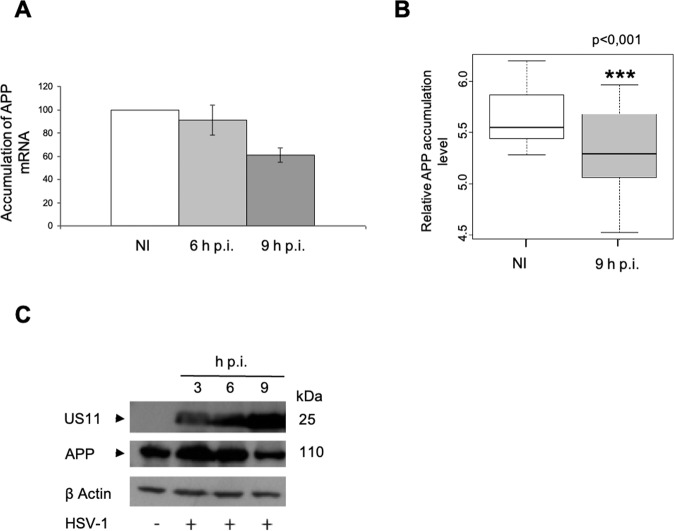
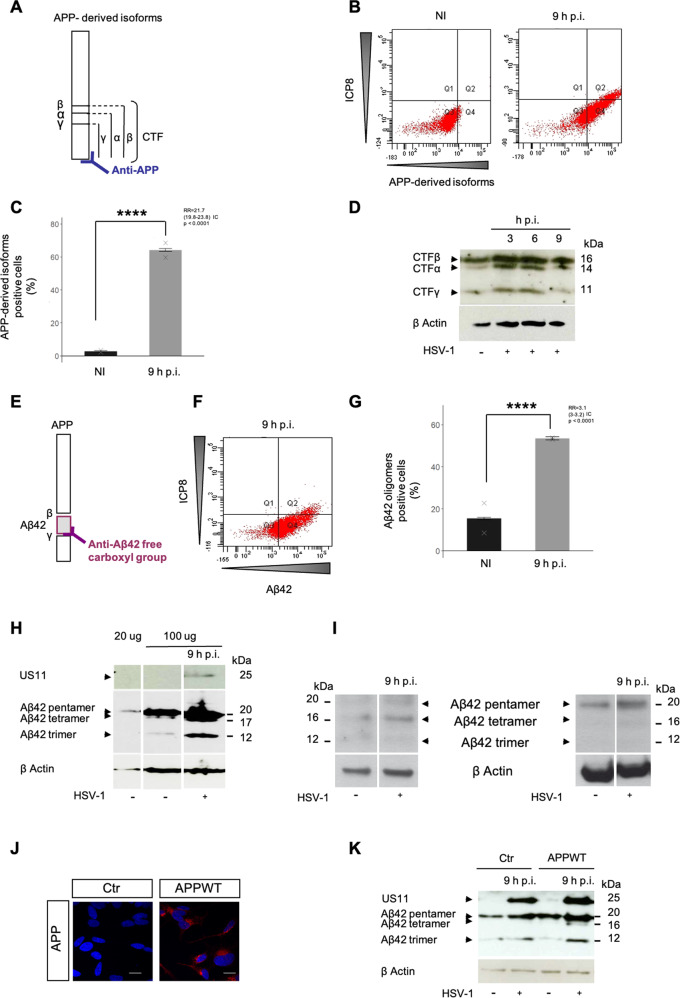
“Western-blot detection showed that the amount of all the lower molecular weight fragments CTFα, β and γ, increased until 9 h p.i. (Fig.”
BackgroundInfluentialKienlen-Campard, P., Miolet, S., Tasiaux, B., & Octave, J.-N. (2002) · Journal of Biological Chemistry · doi:10.1074/jbc.m200887200 · Cited by 187
Duarte, L. F., Farías, M. A., Álvarez, D. M., Bueno, S. M., Riedel, C. A., & González, P. A. (2019) · Frontiers in Cellular Neuroscience · doi:10.3389/fncel.2019.00046 · Cited by 183
Productive herpes simplex virus in brain of elderly normal subjects and Alzheimer's disease patients
Wozniak, M. A., Shipley, S. J., Combrinck, M., Wilcock, G. K., & Itzhaki, R. F. (2005) · Journal of Medical Virology · doi:10.1002/jmv.20271 · Cited by 177 · cited 1×
“IgG against HSV-1 antigens have been found in the cerebrospinal fluid of 52 % of Alzheimer’s disease patients and 69% of healthy aged people [8].”
BackgroundInteraction between APOE4 and herpes simplex virus type 1 in Alzheimer's disease
Linard, M., Letenneur, L., Garrigue, I., Doize, A., Dartigues, J., & Helmer, C. (2020) · Alzheimer's & Dementia · doi:10.1002/alz.12008 · Cited by 152
Self-citationDe Chiara, G., Marcocci, M. E., Civitelli, L., Argnani, R., Piacentini, R., Ripoli, C., Manservigi, R., Grassi, C., Garaci, E., & Palamara, A. T. (2010) · PLoS ONE · doi:10.1371/journal.pone.0013989 · Cited by 150
Muchowski, P. J., Ning, K., D'Souza-Schorey, C., & Fields, S. (2002) · Proceedings of the National Academy of Sciences · doi:10.1073/pnas.022628699 · Cited by 132 · cited 1×
“4B, C) and disappeared from the MTOC when destabilization of microtubules network was obtained by nocodazole [36] treatment during infection (Fig.”
BackgroundHSV-1 and Alzheimer’s disease: more than a hypothesis
Piacentini, R., De Chiara, G., Li Puma, D. D., Ripoli, C., Marcocci, M. E., Garaci, E., Palamara, A. T., & Grassi, C. (2014) · Frontiers in Pharmacology · doi:10.3389/fphar.2014.00097 · Cited by 130
Tomlinson, A. H., & Esiri, M. M. (1983) · Journal of the Neurological Sciences · doi:10.1016/0022-510x(83)90158-2 · Cited by 126 · cited 1×
“However, epidemiological and molecular studies support the notion of that the chronic infection of the CNS by HSV-1, with the occurrence of reactivation cycles similar to those observed in the peripheral nervous system, provides a biological link between HSV-1 chronic infection and Alzheimer’s disease [5, 6].”
BackgroundRheb controls misfolded protein metabolism by inhibiting aggresome formation and autophagy
Zhou, X., Ikenoue, T., Chen, X., Li, L., Inoki, K., & Guan, K.-L. (2009) · Proceedings of the National Academy of Sciences · doi:10.1073/pnas.0903621106 · Cited by 101 · cited 1×
“Indeed, it has been demonstrated that regulation of aggresome formation was a Rheb dependent mechanism involving the TSC-Rheb-mTOR pathway [37].”
BackgroundSatpute‐Krishnan, P., DeGiorgis, J. A., & Bearer, E. L. (2003) · Aging Cell · doi:10.1046/j.1474-9728.2003.00069.x · Cited by 96
Aβ42-positive non-pyramidal neurons around amyloid plaques in Alzheimer's disease
Mochizuki, A., Tamaoka, A., Shimohata, A., Komatsuzaki, Y., & Shoji, S. (2000) · The Lancet · doi:10.1016/s0140-6736(99)04937-5 · Cited by 85
Viswanathan, J., Haapasalo, A., Böttcher, C., Miettinen, R. A., Kurkinen, K. M. A., Lu, A., Thomas, A., Maynard, C. J., Romano, D., Hyman, B. T., et al. (2011) · Traffic · doi:10.1111/j.1600-0854.2010.01149.x · Cited by 78
Ghoumari, A. M., Wehrlé, R., Bernard, O., Sotelo, C., & Dusart, I. (2000) · European Journal of Neuroscience · doi:10.1046/j.1460-9568.2000.00186.x · Cited by 74 · cited 1×
“Collectively our findings suggest that formation of aggresomes containing pro-apoptotic factors such as casp3A [51] or intracellular Aβ42 [52] could be a cellular mechanism for neuronal cells to escape apoptosis induce by external stresses and hijacked by HSV1, as described for numerous viral determinants encoded [53]…”
BackgroundChallenges in Neuronal Apoptosis
Jellinger, K. (2006) · Current Alzheimer Research · doi:10.2174/156720506778249434 · Cited by 74 · cited 1×
“This result is reminiscent to a phenomenon observed in Alzheimer’s disease called abortosis [48].”
ResultGasparini, L., Ongini, E., Wilcock, D. M., & Morgan, D. (2005) · Brain Research Reviews · doi:10.1016/j.brainresrev.2004.12.029 · Cited by 74 · cited 1×
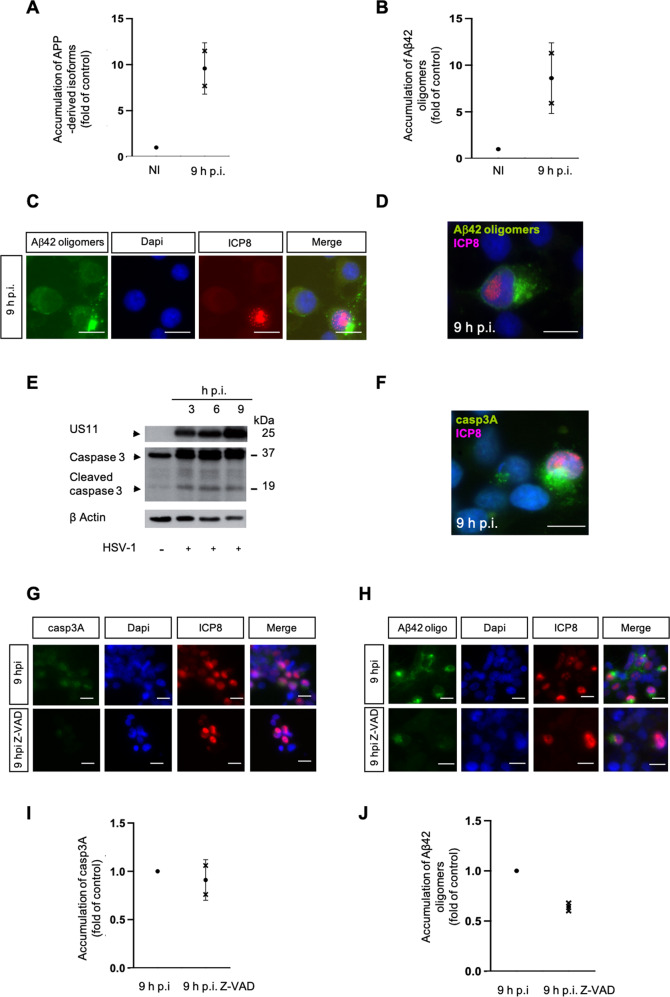
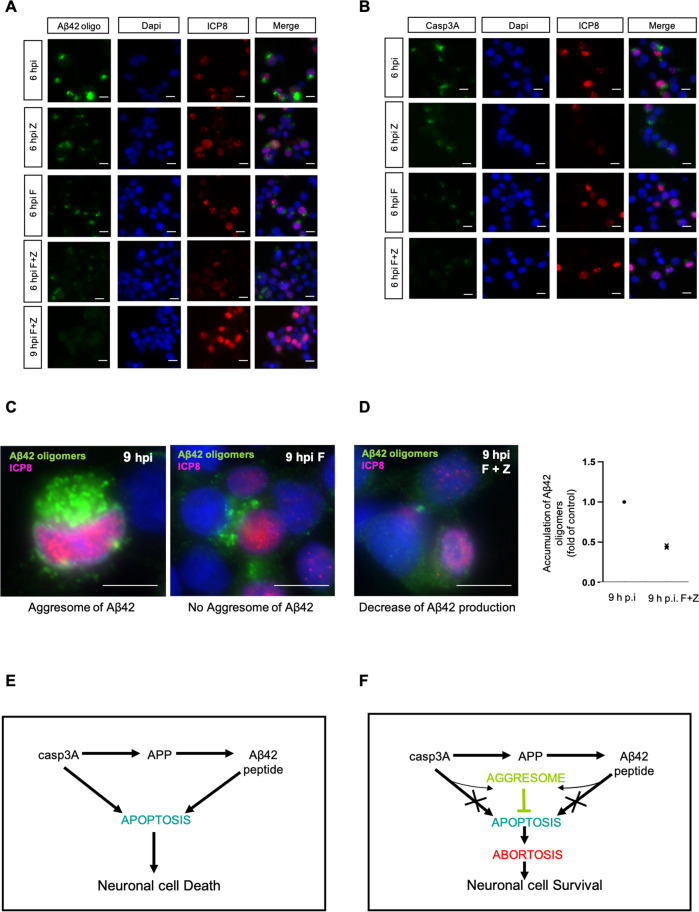
“NSAIDs like flurbiprofen and Aβ42 oligomers production Because we showed an interplay between casp3 activation and Aβ42 oligomers production, we tested the NSAID flurbiprofen described as potential anti-Alzheimer’s disease drug [39] in combination with a pan caspase inhibitor, Z-VAD-fmk.”
MethodHerpes simplex virus interferes with amyloid precursor protein processing
Shipley, S. J., Parkin, E. T., Itzhaki, R. F., & Dobson, C. B. (2005) · BMC Microbiology · doi:10.1186/1471-2180-5-48 · Cited by 68 · cited 1×
“specific HSV-1 C-terminal 55 kDa APP fragment containing Aβ [14], or of APP fragments containing a portion of Aβ [15].”
BackgroundApoptotic promoters and inhibitors in Alzheimer's disease: Who wins out?
Raina, A. K., Hochman, A., Ickes, H., Zhu, X., Ogawa, O., Cash, A., Shimohama, S., Perry, G. L., & Smith, M. A. (2003) · Progress in Neuro-Psychopharmacology and Biological Psychiatry · doi:10.1016/s0278-5846(03)00020-4 · Cited by 54
Takeda, K., Araki, W., Akiyama, H., & Tabira, T. (2004) · The FASEB Journal · doi:10.1096/fj.03-1070fje · Cited by 53
Diaz, J., Simonin, D., Massé, T., Deviller, P., Kindbeiter, K., Denoroy, L., & Madjar, J. J. (1993) · Journal of General Virology · doi:10.1099/0022-1317-74-3-397 · Cited by 52 · cited 2×
“Herpes simplex virus type 1(HSV-1) is the macroplaque strain [18].”
BackgroundSelf-citationXiong, M., Zhang, T., Zhang, L.-M., Lu, S.-D., Huang, Y.-L., & Sun, F.-Y. (2008) · Neurobiology of Disease · doi:10.1016/j.nbd.2008.08.007 · Cited by 39
Excitatory neurosteroids attenuate apoptotic and excitotoxic cell death in primary cortical neurons.
Leśkiewicz, M., Jantas, D., Budziszewska, B., & Lasoń, W. (2008) · PubMed · Cited by 38
Söderberg, L., Bogdanovic, N., Axelsson, B., Winblad, B., Näslund, J., & Tjernberg, L. O. (2006) · Biochemistry · doi:10.1021/bi060331+ · Cited by 38 · cited 1×
“One of these peptides, Aβ42 is neurotoxic and is found accumulated in the extracellular amyloid plaques characteristic of Alzheimer’s disease brain patients [12].”
BackgroundItzhaki, R. F., & Lin, W.-R. (1998) · Biochemical Society Transactions · doi:10.1042/bst0260273 · Cited by 31 · cited 4×
“Individuals homozygotes for the ε4 allele of the ApoE gene exhibit a dramatic increase of risk to develop Alzheimer’s disease when associated with detection of either HSV-1 in the CNS [9] or anti-HSV antibodies in the blood [10].”
BackgroundInfluentialRenziehausen, J., Hiebel, C., Nagel, H., Kundu, A., Kins, S., Kögel, D., Behl, C., & Hajieva, P. (2015) · Journal of Alzheimer s Disease · doi:10.3233/jad-140600 · Cited by 30
Early apoptosis-related changes triggered by hsv-1 in individual neuronlike cells
Gautier, I. (2003) · Experimental Cell Research · doi:10.1016/s0014-4827(03)00258-1 · Cited by 27 · cited 1×
“Aβ42 oligomers production and apoptosis context HSV-1 infection induces caspase dependent apoptosis [25].”
Hahne, F., Arlt, D., Sauermann, M., Majety, M., Poustka, A., Wiemann, S., & Huber, W. K. (2006) · Genome biology · doi:10.1186/gb-2006-7-8-r77 · Cited by 26 · cited 1×
“Acquisition and statistical analysis of FACS data was performed following standard procedures [21].”
MethodInfluentialMurayama, K. S., Kametani, F., Tabira, T., & Araki, W. (2007) · Journal of Neuroscience Methods · doi:10.1016/j.jneumeth.2006.11.010 · Cited by 17
Research works printed but not linked: 1
- Whitley RJ, Gnann Jr. JW, eds. The epidemiology and clinical manifestations of herpes simplex virus infections. New York: Raven press; 1993.
Cited by
Zhang, J., Zhang, Y., Wang, J., Xia, Y., Zhang, J., & Chen, L. (2024) · Signal Transduction and Targeted Therapy · doi:10.1038/s41392-024-01911-3 · Cited by 1,138
Porphyromonas gingivalis: a potential trigger of neurodegenerative disease
Huang, Z., Hao, M., Shi, N., Wang, X., Lin, Y., Yuan, H., & Wang, X. (2025) · Frontiers in Immunology · doi:10.3389/fimmu.2025.1482033 · Cited by 53
“HIV infection can lead to AIDS-associated dementia, while HSV infection may increase the risk of AD (138, 139).”
Mechanistic insights into the role of herpes simplex virus 1 in Alzheimer’s disease
Feng, S., Liu, Y., Zhou, Y., Shu, Z., Cheng, Z., Brenner, C., & Feng, P. (2023) · Frontiers in Aging Neuroscience · doi:10.3389/fnagi.2023.1245904 · Cited by 36
Carbon Quantum Dots Assisted Virus Tracking: From Skin to Brain
Feng, Y., Wang, X., Chen, C., Wang, D., Hou, C., Wang, Y., Hu, H., Chen, P., Qin, L., Wan, Q., et al. (2025) · Advanced Materials · doi:10.1002/adma.202508464 · Cited by 15
Zhou, Q., Shi, D., Tang, Y., Zhang, L., Liu, H., Ye, G., Zhang, Z., Hu, B., Huang, L., & Weng, C. (2025) · Autophagy · doi:10.1080/15548627.2025.2511584 · Cited by 15
“Protein aggregates, also called aggresomes, are formed in host cells and are linked to the etiology of several aging-related degenerative diseases [40].”
Metadata
- Authors
- Albaret, M. A., Textoris, J., Dalzon, B., Lambert, J., Linard, M., Helmer, C., Hacot, S., Ghayad, S. E., Ferréol, M., Mertani, H. C., & Diaz, J.-J.
- Affiliations
- Lyon 1 Université (FR)
- Centre National de la Recherche Scientifique (FR)
- Université de Bordeaux (FR)
- Inserm (FR)
- Institut National de Recherche pour l'Agriculture, l'Alimentation et l'Environnement (FR)
- Corresponding author
- Albaret, Marie Alexandra
- Diaz, Jean-Jacques
- ORCID
- Venue
- Translational Psychiatry
- Published
- 2023-03-10
- Volume
- 13
- Issue
- 1
- Pages
- 86-86
- ISSN
- 2158-3188 (ISSN-L)
- PMC
- PMC10006237
- OpenAlex
- W4323920955
- Semantic Scholar
- bbbdb17a40da5a54c6245e613dee700948d022bb
- Cited by
- 25
- References
- 52
- Citations by year
- 2026: 5 · 2025: 9 · 2024: 9 · 2023: 2
- FWCI
- 0.89
- Type
- journal article
- Language
- en
- Open access
- gold
- doi.org
- Licence
- cc-by
- creativecommons.org/licenses/by/4.0 (tdm)
- creativecommons.org/licenses/by/4.0 (vor)
- Locations
- Translational Psychiatry (publishedVersion, cc-by)
- PubMed Central (publishedVersion, cc-by)
- PubMed (publishedVersion)
- HAL (submittedVersion, other-oa)
- DOAJ (DOAJ: Directory of Open Access Journals) (submittedVersion, cc-by-sa)
- Oskar-Bordeaux (Universite de Bordeaux) (submittedVersion, cc-by)
- Funders
- CNRS, INSERM, Université Claude Bernard Lyon-1 and DevWeCan Labex Laboratory
- Topics
- Life Sciences › Neuroscience › Cellular and Molecular Neuroscience › Alzheimer's disease research and treatments
- Life Sciences › Neuroscience › Neurology › Neuroinflammation and Neurodegeneration Mechanisms
- Health Sciences › Medicine › Psychiatry and Mental health › Dementia and Cognitive Impairment Research
- Keywords
- Alzheimer's disease, herpes simplex virus type 1, aggresomes, caspase-3, apoptosis, viral infection, amyloid precursor protein, flurbiprofen, nonsteroidal anti-inflammatory drugs, caspase inhibitors, sporadic Alzheimer's disease
- MeSH terms
- Alzheimer Disease, Anti-Inflammatory Agents, Non-Steroidal, Humans, Neurons, Peptide Fragments, Amyloid beta-Peptides, Herpesvirus 1, Human, Caspases
About these checks
Registry, retraction, Cites and statistics results are computed, not judged, with one exception: a printed reference that no index lists is read once by a model before it counts as a citation error. Claims are extracted by a model and kept only when their quote appears verbatim in the text; each cited source is then checked, with a model’s help, for whether it says what the claim relies on. Those verdicts can be wrong — read the claim’s quote and the cited source before relying on one.
Statistics and arithmetic are recomputed, not judged.
Confidence bands are shown only for fields calibrated on our annotated test set. None is calibrated yet, so no band is shown.
What counts as a claim ›How we measure confidence ›How we check this ›
Are you an author, or do you see a problem with this page? Request a review
Data sources
Bibliographic data: Semantic Scholar, OpenAlex, Crossref.
Contains information from the Semantic Scholar Academic Graph Datasets, made available under the ODC Attribution License (ODC-BY 1.0).
Semantic Scholar’s data is described in: Kinney, R., et al. (2023). The Semantic Scholar Open Data Platform. arXiv:2301.10140.
