

The DOI matches its Crossref record; 109 of the 110 references it cites were found in a registry or an index.
CAR-T cell therapy: current limitations and potential strategies
Open accessAbstract
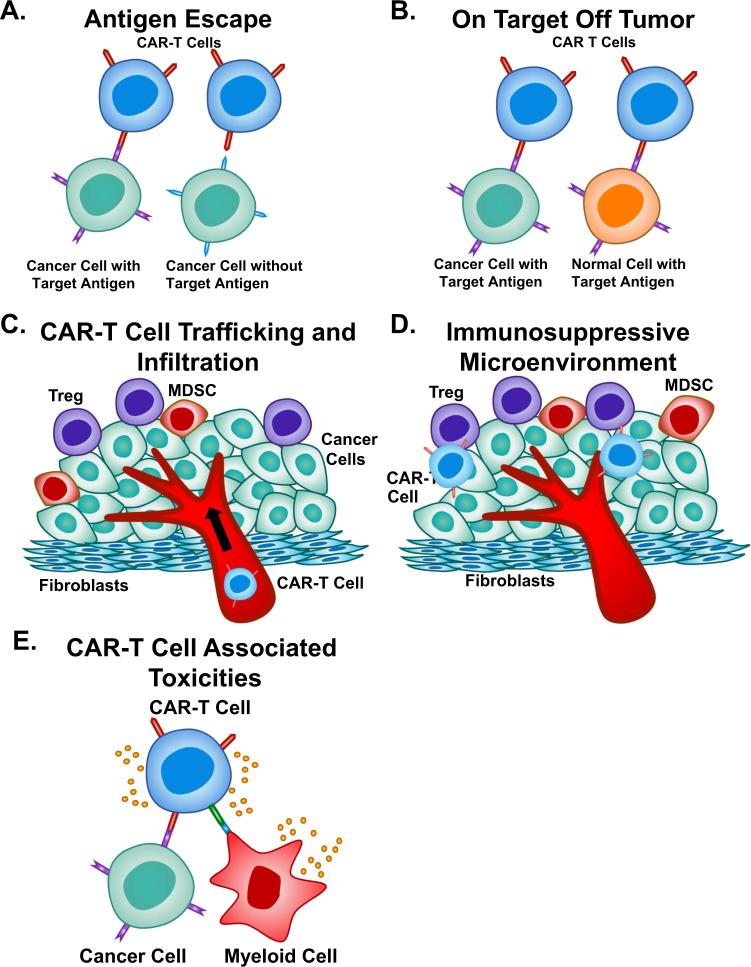
Chimeric antigen receptor (CAR)-T cell therapy is a revolutionary new pillar in cancer treatment. Although treatment with CAR-T cells has produced remarkable clinical responses with certain subsets of B cell leukemia or lymphoma, many challenges limit the therapeutic efficacy of CAR-T cells in solid tumors and hematological malignancies. Barriers to effective CAR-T cell therapy include severe life-threatening toxicities, modest anti-tumor activity, antigen escape, restricted trafficking, and limited tumor infiltration. In addition, the host and tumor microenvironment interactions with CAR-T cells critically alter CAR-T cell function. Furthermore, a complex workforce is required to develop and implement these treatments. In order to overcome these significant challenges, innovative strategies and approaches to engineer more powerful CAR-T cells with improved anti-tumor activity and decreased toxicity are necessary. In this review, we discuss recent innovations in CAR-T cell engineering to improve clinical efficacy in both hematological malignancy and solid tumors and strategies to overcome limitations of CAR-T cell therapy in both hematological malignancy and solid tumors.
Overview
The claims and statistics of this paper haven’t been checked yet.
Run the check — free, no account needed. It reads the open-access text and checks the sources it cites.
Integrity signals
Registry
Cites
Statistics
Figures
Verification
Claims the paper makes
The claims and statistics of this paper haven’t been checked yet.
Run the check — free, no account needed. It reads the open-access text and checks the sources it cites.
Claims other papers make about this one
Each is checked against this paper’s own text: does it say what the citing paper says it does?
The source backs part of the claim, not all of it — or backs it for a different population, condition or comparison.
In the citing paper
“Despite their general tolerability, immune checkpoint inhibitors (ICIs) may induce cytokine storms in patients, and T cell-engaging bispecific antibodies and TCR/CAR-T engineered T cells, contingent on the target, could result in significant off-target tissue destruction, leading to associated morbidity and mortality (Sterner and Sterner, 2021; Johnson et al., 2022).”
From Microphysiological systems as models for immunologically ‘cold’ tumors (2024) · cites this paper as Sterner and Sterner, 2021
Experimental — accuracy not yet measuredThe cited source says what the claim attributes to it.
In the citing paper
“To address this, various immunotherapeutic strategies have emerged, including adoptive cell transfer, primarily utilizing genetically modified T cells expressing chimeric antigen receptors (CAR T-cells) to recognize and eliminate cancer cells directly (Sterner and Sterner, 2021). Adjuvant therapies, such as dendritic cell, mRNA, and peptide-based vaccinations, aim to boost the patient’s anticancer”
From Microphysiological systems as models for immunologically ‘cold’ tumors (2024) · cites this paper as Sterner and Sterner, 2021
The check wasn’t confident either way, so it gives no verdict — never disputed.
In the citing paper
“Despite their general tolerability, immune checkpoint inhibitors (ICIs) may induce cytokine storms in patients, and T cell-engaging bispecific antibodies and TCR/CAR-T engineered T cells, contingent on the target, could result in significant off-target tissue destruction, leading to associated morbidity and mortality (Sterner and Sterner, 2021; Johnson et al., 2022).”
From Microphysiological systems as models for immunologically ‘cold’ tumors (2024) · cites this paper as Sterner and Sterner, 2021
Experimental — accuracy not yet measured
Self-check
Percentages, sums and reported differences re-computed from the paper’s own numbers.
The self-check needs the paper’s full text.
Citations
Cites
Microenvironmental regulation of tumor progression and metastasis
Quail, D. F., & Joyce, J. A. (2013) · Nature Medicine · doi:10.1038/nm.3394 · Cited by 7,994
Axicabtagene Ciloleucel CAR T-Cell Therapy in Refractory Large B-Cell Lymphoma
Neelapu, S. S., Locke, F. L., Bartlett, N. L., Lekakis, L. J., Miklos, D. B., Jacobson, C. A., Braunschweig, I., Oluwole, O. O., Siddiqi, T., Lin, Y., et al. (2017) · New England Journal of Medicine · doi:10.1056/nejmoa1707447 · Cited by 6,030
Tisagenlecleucel in children and young adults with B-cell lymphoblastic leukemia
Maude, S. L., Laetsch, T. W., Buechner, J., Rives, S., Boyer, M., Bittencourt, H., Bader, P., Verneris, M. R., Stefanski, H. E., Myers, G. D., et al. (2018) · New England Journal of Medicine · doi:10.1056/nejmoa1709866 · Cited by 5,735
Lee, D. W., Santomasso, B. D., Locke, F. L., Ghobadi, A., Turtle, C. J., Brudno, J. N., Maus, M. V., Park, J. H., Mead, E., Pavletic, S., et al. (2019) · Biology of Blood and Marrow Transplantation · doi:10.1016/j.bbmt.2018.12.758 · Cited by 3,675
Car t cell immunotherapy for human cancer
June, C. H., O’Connor, R. S., Kawalekar, O. U., Ghassemi, S., & Milone, M. C. (2018) · Science · doi:10.1126/science.aar6711 · Cited by 3,207
Current concepts in the diagnosis and management of cytokine release syndrome.
Lee, D. W., Gardner, R., Porter, D. L., Louis, C. U., Ahmed, N., Jensen, M., Grupp, S. A., & Mackall, C. L. (2014) · Blood · doi:10.1182/blood-2014-05-552729 · Cited by 2,806
Long-Term Follow-up of CD19 CAR Therapy in Acute Lymphoblastic Leukemia
Park, J. H., Rivière, I., Gonen, M., Wang, X., Sénéchal, B., Curran, K. J., Sauter, C., Wang, Y., Santomasso, B., Mead, E., et al. (2018) · New England Journal of Medicine · doi:10.1056/nejmoa1709919 · Cited by 2,688
Efficacy and Toxicity Management of 19-28z CAR T Cell Therapy in B Cell Acute Lymphoblastic Leukemia
Davila, M. L., Rivière, I., Wang, X., Bartido, S. M., Park, J. H., Curran, K. J., Chung, S. S., Stefanski, J., Bórquez-Ojeda, O., Olszewska, M., et al. (2014) · Science Translational Medicine · doi:10.1126/scitranslmed.3008226 · Cited by 2,514
Chimeric antigen receptor T-cell therapy—assessment and management of toxicities
Neelapu, S. S., Tummala, S., Kebriaei, P., Wierda, W., Gutierrez, C., Locke, F. L., Komanduri, K. V., Lin, Y., Jain, N., Daver, N., et al. (2018) · Nature Reviews Clinical Oncology · doi:10.1038/nrclinonc.2017.148 · Cited by 2,438
Chimeric Antigen Receptor T Cells in Refractory B-Cell Lymphomas
Schuster, S. J., Svoboda, J., Chong, E. A., Nasta, S. D., Mato, A. R., Anak, Ö., Brogdon, J. L., Pruteanu-Malinici, I., Bhoj, V. G., Landsburg, D. J., et al. (2017) · New England Journal of Medicine · doi:10.1056/nejmoa1708566 · Cited by 1,891
Regression of Glioblastoma after Chimeric Antigen Receptor T-Cell Therapy
Brown, C. E., Alizadeh, D., Starr, R., Weng, L., Wagner, J. R., Naranjo, A., Ostberg, J. R., Blanchard, M. S., Kilpatrick, J., Simpson, J., et al. (2016) · New England Journal of Medicine · doi:10.1056/nejmoa1610497 · Cited by 1,842
Gross, G., Waks, T., & Eshhar, Z. (1989) · Proceedings of the National Academy of Sciences · doi:10.1073/pnas.86.24.10024 · Cited by 1,597
The Basic Principles of Chimeric Antigen Receptor Design
Sadelain, M., Brentjens, R. J., & Rivière, I. (2013) · Cancer Discovery · doi:10.1158/2159-8290.cd-12-0548 · Cited by 1,597
Engineering strategies to overcome the current roadblocks in CAR T cell therapy
Rafiq, S., Hackett, C. S., & Brentjens, R. J. (2019) · Nature Reviews Clinical Oncology · doi:10.1038/s41571-019-0297-y · Cited by 1,525
Inducible Apoptosis as a Safety Switch for Adoptive Cell Therapy
Di Stasi, A., Tey, S.-K., Dotti, G., Fujita, Y., Kennedy-Nasser, A., Martinez, C., Straathof, K., Liu, E., Durett, A. G., Grilley, B., et al. (2011) · New England Journal of Medicine · doi:10.1056/nejmoa1106152 · Cited by 1,512
CAR T cell–induced cytokine release syndrome is mediated by macrophages and abated by IL-1 blockade
Giavridis, T., van der Stegen, S. J. C., Eyquem, J., Hamieh, M., Piersigilli, A., & Sadelain, M. (2018) · Nature Medicine · doi:10.1038/s41591-018-0041-7 · Cited by 1,272
Kawalekar, O. U., O’Connor, R. S., Fraietta, J. A., Guo, L., McGettigan, S. E., Posey, A. D., Patel, P. R., Guedan, S., Scholler, J., Keith, B., et al. (2016) · Immunity · doi:10.1016/j.immuni.2016.01.021 · Cited by 1,267
Tumor Antigen Escape from CAR T-cell Therapy
Majzner, R. G., & Mackall, C. L. (2018) · Cancer Discovery · doi:10.1158/2159-8290.cd-18-0442 · Cited by 1,233
Milone, M. C., Fish, J. D., Carpenito, C., Carroll, R. G., Binder, G. K., Teachey, D., Samanta, M., Lakhal, M., Gloss, B., Danet-Desnoyers, G., et al. (2009) · Molecular Therapy · doi:10.1038/mt.2009.83 · Cited by 1,197
Human T-lymphocyte cytotoxicity and proliferation directed by a single chimeric TCRζ /CD28 receptor
Maher, J. F., Brentjens, R. J., Gunset, G., Rivière, I., & Sadelain, M. (2002) · Nature Biotechnology · doi:10.1038/nbt0102-70 · Cited by 1,062
Gao, H., Yang, Z. H., Zhang, S., Cao, S., Shen, S.-Q., Pang, Z., & Jiang, X. (2014) · Scientific Reports · doi:10.1038/srep05138 · Cited by 1,062
Santomasso, B. D., Park, J. H., Salloum, D., Riviere, I., Flynn, J., Mead, E., Halton, E., Wang, X., Senechal, B., Purdon, T., et al. (2018) · Cancer Discovery · doi:10.1158/2159-8290.cd-17-1319 · Cited by 942
Imai, C., Mihara, K., Andreánsky, M., Nicholson, I., Pui, C., Geiger, T. L., & Campana, D. (2004) · Leukemia · doi:10.1038/sj.leu.2403302 · Cited by 844
Heparanase promotes tumor infiltration and antitumor activity of CAR-redirected T lymphocytes
Caruana, I., Savoldo, B., Hoyos, V., Weber, G., Liu, H., Kim, E. S., Ittmann, M., Marchetti, D., & Dotti, G. (2015) · Nature Medicine · doi:10.1038/nm.3833 · Cited by 844
Brudno, J. N., Marić, I., Hartman, S. D., Rose, J. J., Wang, M., Lam, N., Stetler‐Stevenson, M., Salem, D., Yuan, C. M., Pavletic, S. Z., et al. (2018) · Journal of Clinical Oncology · doi:10.1200/jco.2018.77.8084 · Cited by 792
B cell maturation antigen–specific CAR T cells are clinically active in multiple myeloma
Cohen, A. D., Garfall, A. L., Stadtmauer, E. A., Melenhorst, J. J., Lacey, S. F., Lancaster, E., Vogl, D. T., Weiss, B. M., Dengel, K., Nelson, A., et al. (2019) · Journal of Clinical Investigation · doi:10.1172/jci126397 · Cited by 778
CD19-targeted chimeric antigen receptor T-cell therapy for acute lymphoblastic leukemia
Maude, S. L., Teachey, D. T., Porter, D. L., & Grupp, S. A. (2015) · Blood · doi:10.1182/blood-2014-12-580068 · Cited by 744
Till, B. G., Jensen, M. C., Wang, J., Chen, E., Wood, B. L., Greisman, H. A., Qian, X., James, S. E., Raubitschek, A. A., Forman, S. J., et al. (2008) · Blood · doi:10.1182/blood-2007-12-128843 · Cited by 721
Tandem CAR T cells targeting HER2 and IL13Rα2 mitigate tumor antigen escape
Hegde, M. G., Mukherjee, M., Grada, Z., Pignata, A., Landi, D. B., Navai, S. A., Wakefield, A., Fousek, K., Bielamowicz, K., Chow, K. K. H., et al. (2016) · Journal of Clinical Investigation · doi:10.1172/jci83416 · Cited by 694
Majzner, R. G., Theruvath, J. L., Nellan, A., Heitzeneder, S., Cui, Y., Mount, C. W., Rietberg, S. P., Linde, M. H., Xu, P., Rota, C., et al. (2019) · Clinical Cancer Research · doi:10.1158/1078-0432.ccr-18-0432 · Cited by 681
Brentjens, R. J., Latouche, J.-B., Santos, E., Marti, F., Gong, M. C., Lyddane, C., King, P. D., Larson, S., Weiss, M., Rivière, I., et al. (2003) · Nature Medicine · doi:10.1038/nm827 · Cited by 669
Wang, L.-C. S., Lo, A., Scholler, J., Sun, J., Majumdar, R. S., Kapoor, V., Antzis, M., Cotner, C. E., Johnson, L. A., Durham, A. C., et al. (2014) · Cancer Immunology Research · doi:10.1158/2326-6066.cir-13-0027 · Cited by 653
Kloss, C. C., Lee, J., Zhang, A., Chen, F., Melenhorst, J. J., Lacey, S. F., Maus, M. V., Fraietta, J. A., Zhao, Y., & June, C. H. (2018) · Molecular Therapy · doi:10.1016/j.ymthe.2018.05.003 · Cited by 648
Sterner, R. M., Sakemura, R. L., Cox, M. J., Yang, N., Khadka, R. H., Forsman, C. L., Hansen, M. J., Jin, F., Ayasoufi, K., Hefazi, M., et al. (2018) · Blood · doi:10.1182/blood-2018-10-881722 · Cited by 639
Self-citationCombination Immunotherapy with CAR T Cells and Checkpoint Blockade for the Treatment of Solid Tumors
Grosser, R., Cherkassky, L., Chintala, N., & Adusumilli, P. S. (2019) · Cancer Cell · doi:10.1016/j.ccell.2019.09.006 · Cited by 603
Enhancing CAR T cell persistence through ICOS and 4-1BB costimulation
Guedan, S., Posey, A. D., Shaw, C. E., Wing, A., Da, T., Patel, P. R., McGettigan, S. E., Casado‐Medrano, V., Kawalekar, O. U., Uribe‐Herranz, M., et al. (2018) · JCI Insight · doi:10.1172/jci.insight.96976 · Cited by 595
Liu, X., Jiang, S., Fang, C., Yang, S., Olalere, D., Pequignot, E. C., Cogdill, A. P., Li, N., Ramones, M., Granda, B. W., et al. (2015) · Cancer Research · doi:10.1158/0008-5472.can-15-0159 · Cited by 583
Adusumilli, P. S., Cherkassky, L., Villena‐Vargas, J., Colovos, C., Servais, E. L., Plotkin, J., Jones, D. R., & Sadelain, M. (2014) · Science Translational Medicine · doi:10.1126/scitranslmed.3010162 · Cited by 582
The pharmacology of second-generation chimeric antigen receptors
van der Stegen, S. J. C., Hamieh, M., & Sadelain, M. (2015) · Nature Reviews Drug Discovery · doi:10.1038/nrd4597 · Cited by 577
Zhong, X.-S., Matsushita, M., Plotkin, J., Rivière, I., & Sadelain, M. (2009) · Molecular Therapy · doi:10.1038/mt.2009.210 · Cited by 564
Hudecek, M., Sommermeyer, D., Kosasih, P. L., Silva-Benedict, A., Liu, L., Rader, C. M., Jensen, M. C., & Riddell, S. R. (2014) · Cancer Immunology Research · doi:10.1158/2326-6066.cir-14-0127 · Cited by 550
Design and development of therapies using chimeric antigen receptor‐expressing T cells
Dotti, G., Gottschalk, S. M., Savoldo, B., & Brenner, M. K. (2013) · Immunological Reviews · doi:10.1111/imr.12131 · Cited by 541
The tyrosine kinase inhibitor dasatinib acts as a pharmacologic on/off switch for CAR T cells
Mestermann, K., Giavridis, T., Weber, J., Rydzek, J., Frenz, S., Nerreter, T., Mades, A., Sadelain, M., Einsele, H., & Hudecek, M. (2019) · Science Translational Medicine · doi:10.1126/scitranslmed.aau5907 · Cited by 531
Engineering CAR-T cells: Design concepts
Srivastava, S., & Riddell, S. R. (2015) · Trends in Immunology · doi:10.1016/j.it.2015.06.004 · Cited by 506
Salter, A. I., Ivey, R. G., Kennedy, J. J., Voillet, V., Rajan, A., Alderman, E. J., Voytovich, U. J., Lin, C., Sommermeyer, D., Liu, L., et al. (2018) · Science Signaling · doi:10.1126/scisignal.aat6753 · Cited by 503
PD-1 blockade modulates chimeric antigen receptor (CAR)–modified T cells: refueling the CAR
Chong, E. A., Melenhorst, J. J., Lacey, S. F., Ambrose, D. E., Gonzalez, V. E., Levine, B. L., June, C. H., & Schuster, S. J. (2016) · Blood · doi:10.1182/blood-2016-09-738245 · Cited by 502
Wilkie, S., van Schalkwyk, M. C., Hobbs, S., Davies, D. M., van der Stegen, S. J. C., Pereira, A. C. P., Burbridge, S. E., Box, C., Eccles, S. A., & Maher, J. F. (2012) · Journal of Clinical Immunology · doi:10.1007/s10875-012-9689-9 · Cited by 491
Pulè, M. A., Straathof, K. C. M., Dotti, G., Heslop, H. E., Rooney, C. M., & Brenner, M. K. (2005) · Molecular Therapy · doi:10.1016/j.ymthe.2005.04.016 · Cited by 486
Du, H., Hirabayashi, K., Ahn, S., Kren, N. P., Montgomery, S. A., Wang, X., Tiruthani, K., Mirlekar, B., Michaud, D. E., Greene, K. G., et al. (2019) · Cancer Cell · doi:10.1016/j.ccell.2019.01.002 · Cited by 483
A safe and potent anti-CD19 CAR T cell therapy
Ying, Z., Huang, X. F., Xiang, X., Liu, Y., Kang, X., Song, Y., Guo, X., Liu, H., Ding, N., Zhang, T., et al. (2019) · Nature Medicine · doi:10.1038/s41591-019-0421-7 · Cited by 451
IL-12 secreting tumor-targeted chimeric antigen receptor T cells eradicate ovarian tumors in vivo
Koneru, M., Purdon, T. J., Spriggs, D. R., Koneru, S., & Brentjens, R. J. (2015) · OncoImmunology · doi:10.4161/2162402x.2014.994446 · Cited by 439
Caruso, H. G., Hurton, L. V., Najjar, A. M., Rushworth, D., Ang, S., Olivares, S., Mi, T., Switzer, K. C., Singh, H., Huls, H. M., et al. (2015) · Cancer Research · doi:10.1158/0008-5472.can-15-0139 · Cited by 410
A highly compact epitope-based marker/suicide gene for easier and safer T-cell therapy
Philip, B., Kokalaki, E., Mekkaoui, L., Thomas, S., Straathof, K. C. M., Flutter, B. R., Marin, V., Marafioti, T., Chakraverty, R. K., Linch, D. C., et al. (2014) · Blood · doi:10.1182/blood-2014-01-545020 · Cited by 408
CXCR1- or CXCR2-modified CAR T cells co-opt IL-8 for maximal antitumor efficacy in solid tumors
Jin, L., Tao, H., Karachi, A., Long, Y., Hou, A. Y., Meng, N., Dyson, K. A., Grippin, A., Deleyrolle, L. P., Zhang, W., et al. (2019) · Nature Communications · doi:10.1038/s41467-019-11869-4 · Cited by 392
Chmielewski, M. M., Hombach, A. A., & Abken, H. (2013) · Immunological Reviews · doi:10.1111/imr.12125 · Cited by 365
Alabanza, L. M., Pegues, M. A., Geldres, C., Shi, V. J., Wiltzius, J. J. W., Sievers, S. A., Yang, S., & Kochenderfer, J. N. (2017) · Molecular Therapy · doi:10.1016/j.ymthe.2017.07.013 · Cited by 363
ICOS-based chimeric antigen receptors program bipolar TH17/TH1 cells
Guedan, S., Chen, X., Madar, A., Carpenito, C., McGettigan, S. E., Frigault, M. J., Lee, J., Posey, A. D., Scholler, J., Scholler, N., et al. (2014) · Blood · doi:10.1182/blood-2013-10-535245 · Cited by 359
Retargeting of Human T Cells to Tumor-Associated MUC1: The Evolution of a Chimeric Antigen Receptor
Wilkie, S., Picco, G., Foster, J., Davies, D. M., Julien, S., Cooper, L., Arif, S., Mather, S. J., Taylor‐Papadimitriou, J., Burchell, J., et al. (2008) · The Journal of Immunology · doi:10.4049/jimmunol.180.7.4901 · Cited by 345
Dai, H., Wu, Z., Jia, H., Tong, C., Guo, Y., Ti, D., Han, X., Liu, Y., Zhang, W., Wang, C., et al. (2020) · Journal of Hematology & Oncology · doi:10.1186/s13045-020-00856-8 · Cited by 338
Hege, K. M., Bergsland, E. K., Fisher, G. A., Nemunaitis, J. J., Warren, R. S., McArthur, J. G., Lin, A., Schlom, J., June, C. H., & Sherwin, S. A. (2017) · Journal for ImmunoTherapy of Cancer · doi:10.1186/s40425-017-0222-9 · Cited by 328
Krenciute, G., Prinzing, B. L., Yi, Z., Wu, M.-F., Liu, H., Dotti, G., Balyasnikova, I. V., & Gottschalk, S. M. (2017) · Cancer Immunology Research · doi:10.1158/2326-6066.cir-16-0376 · Cited by 328
Priceman, S. J., Tilakawardane, D., Jeang, B., Aguilar, B., Murad, J. P., Park, A. K., Chang, W.-C., Ostberg, J. R., Neman, J., Jandial, R., et al. (2017) · Clinical Cancer Research · doi:10.1158/1078-0432.ccr-17-2041 · Cited by 326
The Role of Extracellular Spacer Regions in the Optimal Design of Chimeric Immune Receptors
Guest, R. D., Hawkins, R. E., Kirillova, N., Cheadle, E. J., Arnold, J. P., O’Neill, A. L., Irlam, J. J., Chester, K. A., Kemshead, J. T., Shaw, D. M., et al. (2005) · Journal of Immunotherapy · doi:10.1097/01.cji.0000161397.96582.59 · Cited by 318
Koneru, M., O'Cearbhaill, R. E., Pendharkar, S., Spriggs, D. R., & Brentjens, R. J. (2015) · Journal of Translational Medicine · doi:10.1186/s12967-015-0460-x · Cited by 309
Brown, C. E., Aguilar, B., Starr, R., Yang, X., Chang, W.-C., Weng, L., Chang, B., Sarkissian, A., Brito, A., Sanchez, J. F., et al. (2017) · Molecular Therapy · doi:10.1016/j.ymthe.2017.10.002 · Cited by 304
Signals through T cell receptor-zeta chain alone are insufficient to prime resting T lymphocytes.
Brocker, T., & Karjalainen, K. (1995) · The Journal of Experimental Medicine · doi:10.1084/jem.181.5.1653 · Cited by 299
Mohammed, S., Sukumaran, S., Bajgain, P., Watanabe, N., Heslop, H. E., Rooney, C. M., Brenner, M. K., Fisher, W. E., Leen, A. M., & Vera, J. F. (2017) · Molecular Therapy · doi:10.1016/j.ymthe.2016.10.016 · Cited by 285
Disruption of a self-amplifying catecholamine loop reduces cytokine release syndrome
Staedtke, V., Bai, R.-Y., Kim, K., Darvas, M., Davila, M. L., Riggins, G. J., Rothman, P. B., Papadopoulos, N., Kinzler, K. W., Vogelstein, B., et al. (2018) · Nature · doi:10.1038/s41586-018-0774-y · Cited by 277
Bridgeman, J. S., Hawkins, R. E., Bagley, S., Blaylock, M. G., Holland, M., & Gilham, D. E. (2010) · The Journal of Immunology · doi:10.4049/jimmunol.0901766 · Cited by 267
James, S. E., Greenberg, P. D., Jensen, M. C., Lin, Y., Wang, J., Till, B. G., Raubitschek, A. A., Forman, S. J., & Press, O. W. (2008) · The Journal of Immunology · doi:10.4049/jimmunol.180.10.7028 · Cited by 247
Hombach, A. A., Hombach, A. A., & Abken, H. (2010) · Gene Therapy · doi:10.1038/gt.2010.91 · Cited by 229
Fully human CD19-specific chimeric antigen receptors for T-cell therapy
Sommermeyer, D., Hill, T. J., Shamah, S. M., Salter, A. I., Chen, Y., Mohler, K., & Riddell, S. R. (2017) · Leukemia · doi:10.1038/leu.2017.57 · Cited by 224
Cytokine release syndrome with novel therapeutics for acute lymphoblastic leukemia
Frey, N. V., & Porter, D. L. (2016) · Hematology · doi:10.1182/asheducation-2016.1.567 · Cited by 222
Vecchio, F., Buono, N. L., Stabilini, A., Nigi, L., Dufort, M. J., Geyer, S. M., Rancoita, P. M. V., Cugnata, F., Mandelli, A., Valle, A., et al. (2018) · JCI Insight · doi:10.1172/jci.insight.122146 · Cited by 220
Whilding, L. M., Halim, L., Draper, B., Parente‐Pereira, A. C., Zabinski, T., Davies, D. M., & Maher, J. F. (2019) · Cancers · doi:10.3390/cancers11050674 · Cited by 217
Hombach, A. A., Heiders, J., Foppe, M., Chmielewski, M. M., & Abken, H. (2012) · OncoImmunology · doi:10.4161/onci.19855 · Cited by 208
Designing chimeric antigen receptors to effectively and safely target tumors
Jensen, M. C., & Riddell, S. R. (2015) · Current Opinion in Immunology · doi:10.1016/j.coi.2015.01.002 · Cited by 207
Jonnalagadda, M., Mardiros, A., Urak, R. Z., Wang, X., Hoffman, L. J., Bernanke, A., Chang, W.-C., Bretzlaff, W. S., Starr, R., Priceman, S. J., et al. (2014) · Molecular Therapy · doi:10.1038/mt.2014.208 · Cited by 206
Improving the safety of cell therapy products by suicide gene transfer
Jones, B. S., Lamb, L. S., Goldman, F. D., & Stasi, A. D. (2014) · Frontiers in Pharmacology · doi:10.3389/fphar.2014.00254 · Cited by 206
Liu, G., Rui, W., Zheng, H., Huang, D., Yu, F., Zhang, Y., Dong, J., Zhao, X., & Lin, X. (2020) · European Journal of Immunology · doi:10.1002/eji.201948457 · Cited by 204
Abate‐Daga, D., Lagisetty, K. H., Tran, E., Zheng, Z., Gattinoni, L., Yu, Z., Burns, W. R., Miermont, A. M., Teper, Y., Rudloff, U., et al. (2014) · Human Gene Therapy · doi:10.1089/hum.2013.209 · Cited by 193
Safety and clinical efficacy of BCMA CAR-T-cell therapy in multiple myeloma
Roex, G., Timmers, M., Wouters, K., Campillo-Davó, D., Flumens, D., Schroyens, W., Chu, Y., Berneman, Z. N., Lion, E., Luo, F., et al. (2020) · Journal of Hematology & Oncology · doi:10.1186/s13045-020-01001-1 · Cited by 189
Yin, Y., Boesteanu, A. C., Binder, Z. A., Xu, C. B., Reid, R. A., Rodriguez, J. L., Cook, D. R., Thokala, R., Blouch, K., McGettigan-Croce, B., et al. (2018) · Molecular Therapy — Oncolytics · doi:10.1016/j.omto.2018.08.002 · Cited by 186
Locke, F. L., Neelapu, S. S., Bartlett, N. L., Lekakis, L. J., Jacobson, C. A., Braunschweig, I., Oluwole, O. O., Siddiqi, T., Lin, Y., Timmerman, J. M., et al. (2017) · Blood · doi:10.1182/blood.v130.suppl_1.1547.1547 · Cited by 184
Mata, M., Gerken, C. P., Nguyen, P., Krenciute, G., Spencer, D. M., & Gottschalk, S. M. (2017) · Cancer Discovery · doi:10.1158/2159-8290.cd-17-0263 · Cited by 181
Chekmasova, A. A., Rao, T. D., Nikhamin, Y., Park, K. J., Levine, D. A., Spriggs, D. R., & Brentjens, R. J. (2010) · Clinical Cancer Research · doi:10.1158/1078-0432.ccr-10-0192 · Cited by 172
Sachdeva, M., Duchateau, P. N., Depil, S., Poirot, L., & Valton, J. (2019) · Journal of Biological Chemistry · doi:10.1074/jbc.ac119.007558 · Cited by 165
Li, A. M., Hucks, G., DiNofia, A. M., Seif, A. E., Teachey, D. T., Baniewicz, D., Callahan, C. A., Fasano, C., McBride, B., Gonzalez, V. E., et al. (2018) · Blood · doi:10.1182/blood-2018-99-112572 · Cited by 156
Murad, J. P., Kozłowska, A. K., Lee, H. J., Ramamurthy, M., Chang, W.-C., Yazaki, P. J., Colcher, D. M., Shively, J. E., Cristea, M. C., Forman, S. J., et al. (2018) · Frontiers in Immunology · doi:10.3389/fimmu.2018.02268 · Cited by 141
Zhang, T., Wu, M.-R., & Sentman, C. L. (2012) · The Journal of Immunology · doi:10.4049/jimmunol.1103495 · Cited by 140
Modulation of chimeric antigen receptor surface expression by a small molecule switch
Juillerat, A., Tkach, D., Busser, B. W., Temburni, S., Valton, J., Duclert, A., Poirot, L., Depil, S., & Duchateau, P. N. (2019) · BMC Biotechnology · doi:10.1186/s12896-019-0537-3 · Cited by 124
Green, D. J., Pont, M. J., Sather, B. D., Cowan, A. J., Turtle, C. J., Till, B. G., Nagengast, A. M., Libby, E. N., Becker, P. S., Coffey, D. G., et al. (2018) · Blood · doi:10.1182/blood-2018-99-117729 · Cited by 122
Inclusion of an IgG1-Fc spacer abrogates efficacy of CD19 CAR T cells in a xenograft mouse model
Almåsbak, H., Walseng, E., Kristian, A., Myhre, M. R., Inderberg, E. M., Munthe, L. A., Andersen, J. T., WANG, M. Y., Kvalheim, G., Gaudernack, G., et al. (2015) · Gene Therapy · doi:10.1038/gt.2015.4 · Cited by 116
Anti-melanoma activity of T cells redirected with a TCR-like chimeric antigen receptor
Zhang, G., Wang, L., Cui, H., Wang, X., Zhang, G., Ma, J., Han, H., He, W., Wang, W., Zhao, Y., et al. (2014) · Scientific Reports · doi:10.1038/srep03571 · Cited by 114
Chailyan, A., Marcatili, P., & Tramontano, A. L. (2011) · FEBS Journal · doi:10.1111/j.1742-4658.2011.08207.x · Cited by 106
Hurdles of CAR-T cell-based cancer immunotherapy directed against solid tumors
Zhang, B., Qin, D., Mo, Z., Li, Y., Wei, W., Wang, Y., Wang, W., & Wei, Y.-Q. (2016) · Science China Life Sciences · doi:10.1007/s11427-016-5027-4 · Cited by 104
The Pharmacology of T Cell Therapies
Milone, M. C., & Bhoj, V. G. (2018) · Molecular Therapy — Methods & Clinical Development · doi:10.1016/j.omtm.2018.01.010 · Cited by 103
Steentoft, C., Migliorini, D., King-Peoples, T. R., Mandel, U., June, C. H., & Posey, A. D. (2018) · Glycobiology · doi:10.1093/glycob/cwy008 · Cited by 102
Recent updates on CAR T clinical trials for multiple myeloma
Lin, Q., Zhao, J., Song, Y., & Liu, D. (2019) · Molecular Cancer · doi:10.1186/s12943-019-1092-1 · Cited by 101
Pro-survival signaling via CD27 costimulation drives effective CAR T-cell therapy
Song, D.-G., & Powell, D. J. (2012) · OncoImmunology · doi:10.4161/onci.19458 · Cited by 71
Phase I Experience with a Bi-Specific CAR Targeting CD19 and CD22 in Adults with B-Cell Malignancies
Hossain, N. M., Sahaf, B., Abramian, M., Spiegel, J. Y., Kong, K., Kim, S. H., Mavroukakis, S. A., Oak, J. S., Natkunam, Y., Meyer, E. H., et al. (2018) · Blood · doi:10.1182/blood-2018-99-110142 · Cited by 60
A Bcma and CD19 Bispecific CAR-T for Relapsed and Refractory Multiple Myeloma
Zhang, H., Gao, L., Liu, L., Wang, J., Wang, S., Gao, L., Zhang, C., Liu, Y. Z., Kong, P., Liu, J., et al. (2019) · Blood · doi:10.1182/blood-2019-131056 · Cited by 59
Adusumilli, P. S., Zauderer, M. G., Rusch, V. W., O'Cearbhaill, R. E., Zhu, A. L., Ngai, D. A., McGee, E., Chintala, N. K., Messinger, J. C., Vincent, A., et al. (2019) · Cancer Research · doi:10.1158/1538-7445.am2019-ct036 · Cited by 55
Using CRISPR/Cas9 to Knock Out GM-CSF in CAR-T Cells
Sterner, R. M., Cox, M. J., Sakemura, R. L., & Kenderian, S. S. (2019) · Journal of Visualized Experiments · doi:10.3791/59629 · Cited by 35
Self-citationSterner, R. M., & Kenderian, S. S. (2019) · Current Opinion in Hematology · doi:10.1097/moh.0000000000000559 · Cited by 29
Self-citationFDA approves tisagenlecleucel for B-cell ALL and tocilizumab for cytokine release syndrome
Administration, U. S. F. &. D. (2017) · Case Medical Research · doi:10.31525/fda1-ucm574154.htm · Cited by 28
Guest, R., Hawkins, R., Kirillova, N., Cheadle, E. J., Arnold, J., O’Neill, A. L., Irlam, J. J., Chester, K. A., Kemshead, J., Shaw, D., et al. (2005) · UCL Discovery (University College London) · Cited by 27
FDA approves axicabtagene ciloleucel for large B-cell lymphoma
Administration, U. S. F. &. D. (2017) · Case Medical Research · doi:10.31525/fda1-ucm581296.htm · Cited by 25
A Graduate-Level Interdisciplinary Curriculum in CAR-T Cell Therapy
Sterner, R. M., Hedin, K. E., Hayden, R. E., Nowakowski, G. S., Wyles, S. P., Greenberg, A. J., Terzic, A., & Kenderian, S. S. (2020) · Mayo Clinic Proceedings Innovations Quality & Outcomes · doi:10.1016/j.mayocpiqo.2019.12.006 · Cited by 18
Self-citation
Research works printed but not linked: 1
- Peter P. Lee (eds.) Tumor Microenvironment (Springer) https://www.springer.com/gp/book/9783030388614
Cited by
Sorted by citations
Exploring treatment options in cancer: tumor treatment strategies
Liu, B., Zhou, H., Tan, L., Siu, K. T. H., & Guan, X.-Y. (2024) · Signal Transduction and Targeted Therapy · doi:10.1038/s41392-024-01856-7 · Cited by 1,201
Lung cancer immunotherapy: progress, pitfalls, and promises
Lahiri, A., Maji, A., Potdar, P. D., Singh, N., Parikh, P., Bisht, B., Mukherjee, A., & Paul, M. K. (2023) · Molecular Cancer · doi:10.1186/s12943-023-01740-y · Cited by 1,102
Natural killer cells in antitumour adoptive cell immunotherapy
Laskowski, T. J., Biederstädt, A., & Rezvani, K. (2022) · Nature reviews. Cancer · doi:10.1038/s41568-022-00491-0 · Cited by 810
Cancer treatments: Past, present, and future
Sonkin, D., Thomas, A., & Teicher, B. A. (2024) · Cancer Genetics · doi:10.1016/j.cancergen.2024.06.002 · Cited by 597
Induced pluripotent stem cells (iPSCs): molecular mechanisms of induction and applications
Cerneckis, J., Cai, H., & Shi, Y. (2024) · Signal Transduction and Targeted Therapy · doi:10.1038/s41392-024-01809-0 · Cited by 452
Metadata
- Authors
- Sterner, R. C., & Sterner, R. M.
- Affiliations
- Mayo Clinic (US)
- Corresponding author
- Sterner, Rosalie M.
- Venue
- Blood Cancer Journal
- Published
- 2021-04-06
- Volume
- 11
- Issue
- 4
- Pages
- 69-69
- ISSN
- 2044-5385 (ISSN-L)
- PMC
- PMC8024391
- OpenAlex
- W3148729173
- Cited by
- 2,926
- References
- 110
- Citations by year
- 2026: 530 · 2025: 806 · 2024: 726 · 2023: 532 · 2022: 287 · 2021: 42
- FWCI
- 48.36
- Type
- journal article
- Language
- en
- Open access
- gold
- doi.org
- Locations
- Blood Cancer Journal (publishedVersion, cc-by)
- PubMed Central (publishedVersion, cc-by)
- PubMed (publishedVersion)
- DOAJ (DOAJ: Directory of Open Access Journals) (submittedVersion, cc-by-sa)
- Funders
- University of Wisconsin-Madison (T32-GM008692)
- Regenerative Medicine Minnesota (RMM 012819 EPC 003)
- National Institute of General Medical Sciences (T32GM008692)
- Topics
- Health Sciences › Medicine › Oncology › CAR-T cell therapy research
- Life Sciences › Immunology and Microbiology › Immunology › Immunotherapy and Immune Responses
- Health Sciences › Medicine › Oncology › Cancer Immunotherapy and Biomarkers
- Keywords
- CAR T-cell therapy, chimeric antigen receptor, solid tumors, hematologic malignancies, CAR-T cell engineering, tumor microenvironment, antigen escape, CAR-T toxicity, tumor infiltration
- MeSH terms
- Receptors, Chimeric Antigen, Animals, Humans, Neoplasms, T-Lymphocytes, Immunotherapy, Adoptive, Hematologic Neoplasms, Tumor Microenvironment
About these checks
Registry, retraction, Cites and statistics results are computed, not judged, with one exception: a printed reference that no index lists is read once by a model before it counts as a citation error. Claims are extracted by a model and kept only when their quote appears verbatim in the text; each cited source is then checked, with a model’s help, for whether it says what the claim relies on. Those verdicts can be wrong — read the claim’s quote and the cited source before relying on one.
Statistics and arithmetic are recomputed, not judged.
Confidence bands are shown only for fields calibrated on our annotated test set. None is calibrated yet, so no band is shown.
What counts as a claim ›How we measure confidence ›How we check this ›
Are you an author, or do you see a problem with this page? Request a review
