

Wnt/β-catenin signaling components and mechanisms in bone formation, homeostasis, and disease
Open accessThe DOI matches its Crossref record; 502 of the 503 references it cites were found in a registry or an index.
Abstract
Wnts are secreted, lipid-modified proteins that bind to different receptors on the cell surface to activate canonical or non-canonical Wnt signaling pathways, which control various biological processes throughout embryonic development and adult life. Aberrant Wnt signaling pathway underlies a wide range of human disease pathogeneses. In this review, we provide an update of Wnt/β-catenin signaling components and mechanisms in bone formation, homeostasis, and diseases. The Wnt proteins, receptors, activators, inhibitors, and the crosstalk of Wnt signaling pathways with other signaling pathways are summarized and discussed. We mainly review Wnt signaling functions in bone formation, homeostasis, and related diseases, and summarize mouse models carrying genetic modifications of Wnt signaling components. Moreover, the therapeutic strategies for treating bone diseases by targeting Wnt signaling, including the extracellular molecules, cytosol components, and nuclear components of Wnt signaling are reviewed. In summary, this paper reviews our current understanding of the mechanisms by which Wnt signaling regulates bone formation, homeostasis, and the efforts targeting Wnt signaling for treating bone diseases. Finally, the paper evaluates the important questions in Wnt signaling to be further explored based on the progress of new biological analytical technologies.
Overview
The claims and statistics of this paper haven’t been checked yet.
Free: it reads the open-access text and checks the first 5 claims that cite a source we can check. Create a free account to check every claim.
Integrity signals
Registry
Cites
Statistics
Figures
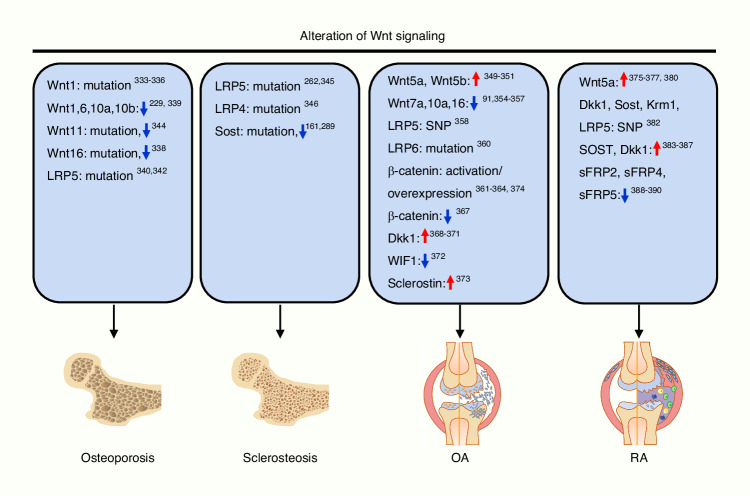
Verification
Claims the paper makes
The claims and statistics of this paper haven’t been checked yet.
Free: it reads the open-access text and checks the first 5 claims that cite a source we can check. Create a free account to check every claim.
Claims other papers make about this one
Each is checked against this paper’s own text: does it say what the citing paper says it does?
The source backs part of the claim, not all of it — or backs it for a different population, condition or comparison.
In the citing paper
“Genetic characterization of Wnt pathway components—particularly the osteocyte-derived Wnt inhibitor sclerostin—demonstrates that molecular and genotype-based stratification can predict individual therapeutic responses and guide precision selection of bone-anabolic interventions [149,150].”
From Interorgan Communications in Skeletal Pathophysiology: From Molecular Pathways to Multidisciplinary Therapies (2026) · cites this paper as [150]
Experimental — accuracy not yet measured
Self-check
Percentages, sums and reported differences re-computed from the paper’s own numbers.
The self-check needs the paper’s full text.
Citations
Cites
1 retracted
Items 401–502 of 502
Cho, H. Y., Choi, H. J., Sun, H. J., Yang, J., An, J. H., Cho, S. W., Kim, S. W., Kim, S. Y., Kim, J. E., & Shin, C. S. (2010) · Bone · doi:10.1016/j.bone.2010.05.010 · Cited by 38
Karaplis, A. C. (2002) · Elsevier eBooks · doi:10.1016/b978-012098652-1/50105-0 · Cited by 38
Jiang, Y., Gou, H., Wang, S., Zhu, J., Tian, S., & Yu, L. (2016) · Evidence-based Complementary and Alternative Medicine · doi:10.1155/2016/4927035 · Cited by 37
Kamizaki, K., Endo, M., Minami, Y., & Kobayashi, Y. (2020) · Developmental Dynamics · doi:10.1002/dvdy.151 · Cited by 37
miR-129-5p Inhibits Bone Formation Through TCF4
Yin, C., Tian, Y. E., Yu, Y., Yang, C., Su, P., Zhao, Y., Wang, X., Zhang, K., Pei, J., Li, D., et al. (2020) · Frontiers in Cell and Developmental Biology · doi:10.3389/fcell.2020.600641 · Cited by 37 · cited 2×
“448 Thus, inhibition of miR-129-5p enhances osteoblast differentiation and bone formation, showing a rescue effect on osteoporosis.”
BackgroundSelf-citationRui, S., Kubota, T., Ohata, Y., Yamamoto, K., Fujiwara, M., Takeyari, S., & Ozono, K. (2022) · Bone · doi:10.1016/j.bone.2022.116525 · Cited by 37
Zhang, K., Qiu, W., Li, H., Li, J., Wang, P., Chen, Z., Lin, X., & Qian, A. (2023) · Journal of Orthopaedic Translation · doi:10.1016/j.jot.2023.02.003 · Cited by 37
Self-citationSilencing of Wnt5a prevents interleukin-1β-induced collagen type II degradation in rat chondrocytes
Shi, S., Man, Z., Li, W., Sun, S., & Zhang, W. (2016) · Experimental and Therapeutic Medicine · doi:10.3892/etm.2016.3788 · Cited by 36
Singh, A., Gupta, M., & Mishra, S. P. (2019) · Drug Discoveries & Therapeutics · doi:10.5582/ddt.2019.01011 · Cited by 36
O'Hara, W., Azar, W. J., Behringer, R. R., Renfree, M. B., & Pask, A. J. (2011) · BMC Developmental Biology · doi:10.1186/1471-213x-11-72 · Cited by 35 · cited 1×
“Shh mainly functions in neuronal development, 191 Dhh exerts its main role in the gonads, 192 while Ihh is important for skeletal development.”
BackgroundKwon, Y., Lee, S., Park, Y.-B., Lee, S., & Park, M. (2014) · Rheumatology · doi:10.1093/rheumatology/keu167 · Cited by 35
PiRNA-63049 inhibits bone formation through Wnt/β-catenin signaling pathway
Chen, G., Wang, S., Long, C., Wang, Z., Chen, X., Tang, W., He, X., Bao, Z., Tan, B., Lu, W. W., et al. (2021) · International Journal of Biological Sciences · doi:10.7150/ijbs.64533 · Cited by 35 · cited 2×
“446 Targeting the nuclear components of Wnt signaling Like extracellular molecules and cytosolic components, the nuclear components of Wnt signaling can be targeted for treating bone diseases.”
BackgroundAssociation Analysis of BMD-associated SNPs with Knee Osteoarthritis
Yerges‐Armstrong, L. M., Yau, M. S., Liu, Y., Krishnan, S., Renner, J. B., Eaton, C. B., Kwoh, C. K., Nevitt, M. C., Duggan, D. J., Mitchell, B. D., et al. (2013) · Journal of Bone and Mineral Research · doi:10.1002/jbmr.2160 · Cited by 34
Mesenchymal MACF1 Facilitates SMAD7 Nuclear Translocation to Drive Bone Formation
Zhao, F., Ma, X., Qiu, W., Wang, P., Zhang, R., Chen, Z., Su, P., Zhang, Y., Li, D., Ma, J., et al. (2020) · Cells · doi:10.3390/cells9030616 · Cited by 34 · cited 1×
“247 Wu et al. identi fi ed a novel nuclear factor I/X (NFIX) - high-mobility group AT-Hook 1 (HMGA1) - Wnt/ β -catenin regulatory axis that governs the cell fate of mouse BM-MSCs, favoring osteoblast differentiation and blocking adipocyte formation.”
BackgroundSelf-citationZhou, B., Peng, K., Wang, G., Chen, W., Liu, P., Chen, F., & Kang, Y. (2020) · International Journal of Molecular Medicine · doi:10.3892/ijmm.2020.4694 · Cited by 34 · cited 1×
“417 Oh et al. found the upregulation of Dkk1 in both human and mouse experimental OA cartilage and showed that overexpression of Dkk1 by intraarticular injection of AdDkk1 signi fi cantly inhibits OA in mice, suggesting Dkk1 as a therapeutic target for OA treatment.”
BackgroundSelf-citationParathyroid Hormone Stimulation of Noncanonical Wnt Signaling in Bone
Bergenstock, M., & Partridge, N. C. (2007) · Annals of the New York Academy of Sciences · doi:10.1196/annals.1402.047 · Cited by 33
Loss of chemerin triggers bone remodeling in vivo and in vitro
Han, L., Zhang, Y., Wan, S., Wei, Q., Shang, W.-B., Huang, G., Fang, P., & Min, W. (2021) · Molecular Metabolism · doi:10.1016/j.molmet.2021.101322 · Cited by 33
MiR-21 relieves rheumatoid arthritis in rats via targeting Wnt signaling pathway.
Xg, L., Zhang, Y., Wf, J., Li, C., & Yc, M. (2019) · PubMed · doi:10.26355/eurrev_201908_18635 · Cited by 32
Liedert, A., Nemitz, C., Haffner‐Luntzer, M., Schick, F., Jakob, F. J., & Ignatius, A. A. (2020) · International Journal of Molecular Sciences · doi:10.3390/ijms21218301 · Cited by 32 · cited 1×
“217,218 However, Galea et al. reported that the inhibitory effect of estrogen signaling on Sost expression in osteoblasts was mediated by ER β but not ER α .”
BackgroundMACF1 promotes osteoblast differentiation by sequestering repressors in cytoplasm
Hu, L., Yin, C., Chen, D., Wu, Z., Liang, S., Zhang, Y., Huang, Z., Liu, S., Xu, X., Chen, Z., et al. (2021) · Cell Death and Differentiation · doi:10.1038/s41418-021-00744-9 · Cited by 32 · cited 1×
“431,432 Moreover, we demonstrated MACF1, the activator of Wnt/ β -catenin signaling, as a promotor for osteoblast differentiation and bone formation 125,126,276 and a novel potential therapeutic target for treating osteoporosis.”
BackgroundSelf-citationLef1ΔN Binds β-Catenin and Increases Osteoblast Activity and Trabecular Bone Mass
Hoeppner, L. H., Secreto, F. J., Razidlo, D. F., Whitney, T. J., & Westendorf, J. J. (2011) · Journal of Biological Chemistry · doi:10.1074/jbc.m110.165100 · Cited by 31
Shin, H., Islam, R., Yoon, W., Lee, T., Cho, Y., Bae, H., Kim, B., Woo, K. M., Baek, J., & Ryoo, H. (2016) · Journal of Biological Chemistry · doi:10.1074/jbc.m115.698563 · Cited by 31
The non-canonical Wnt-PCP pathway shapes the caudal neural plate
López‐Escobar, B., Caro‐Vega, J. M., Vijayraghavan, D. S., Plageman, T. F., Sánchez-Alcázar, J. A., Moreno, R. C., Savery, D., Márquez-Rivas, J., Davidson, L. A., & Ybot‐González, P. (2018) · Development · doi:10.1242/dev.157487 · Cited by 31
Patel, S., Barkell, A. M., Gupta, D. S., Strong, S. L., Bruton, S., Muskett, F. W., Addis, P., Renshaw, P. S., Slocombe, P. M., Doyle, C., et al. (2018) · Journal of Biological Chemistry · doi:10.1074/jbc.ra118.002918 · Cited by 30 · cited 1×
“Dkk1, Dkk2, and Dkk4 bind to LRP5/6 to disrupt the Fzd-LRP5/6 complex formation, thus inhibiting Wnt signaling, 129,143,144 while Dkk3 does not bind to LRP5 or LRP6 and does not affect Wnt signaling.”
BackgroundWnt5a induces ROR1 and ROR2 to activate RhoA in esophageal squamous cell carcinoma cells
Wu, X., Yan, T., Hao, L., & Zhu, Y. (2019) · Cancer Management and Research · doi:10.2147/cmar.s190999 · Cited by 30 · cited 1×
“33,50 55 – 57 Moreover, via ROR2, Wnt5a inhibits Wnt3a-induced Wnt/ β -catenin signaling.”
Xie, C., Jiang, J., Liu, J., Yuan, G., & Zhao, Z. (2020) · Annals of Translational Medicine · doi:10.21037/atm-20-6420 · Cited by 30
Suthon, S., Lin, J., Perkins, R. S., Crockarell, J. R., Miranda‐Carboni, G. A., & Krum, S. A. (2021) · The American Journal of Human Genetics · doi:10.1016/j.ajhg.2021.11.018 · Cited by 30
Cloning and expression of Xenopus Lrp5 and Lrp6 genes
Houston, D. W., & Wylie, C. (2002) · Mechanisms of Development · doi:10.1016/s0925-4773(02)00205-8 · Cited by 29 · cited 1×
“46,47 The intracellular domain of LRP5 interacts with Axin and stabilizes β -catenin, and thus induces lymphoid enhancer factor 1 (LEF-1) activation.”
BackgroundRuiz, P. S. B., Martín-Millán, M., González‐Martín, C., Almeida, M., González-Macías, J., & Ros, M. A. (2016) · Scientific Reports · doi:10.1038/srep36201 · Cited by 29
Xia, C., Wang, P., Fang, L., Ge, Q., Zou, Z., Dong, R., Zhang, P., Shi, Z., Xu, R., Zhang, L., et al. (2019) · Journal of Cellular Physiology · doi:10.1002/jcp.28491 · Cited by 29
Wnt7a promotes the osteogenic differentiation of human mesenchymal stem cells
Yang, L., Li, Q., Zhang, J., Li, P., An, P., Wang, C., Hu, P., Zou, X., Dou, X., & Zhu, L. (2021) · International Journal of Molecular Medicine · doi:10.3892/ijmm.2021.4927 · Cited by 29 · cited 1×
“238 Wnt10b enhances osteoblastogenesis and suppresses adipogenesis of mesenchymal progenitors, thus increasing bone formation and bone mass. 239 The further study demonstrates that Wnt10b shifts mesenchymal cells toward osteoblasts, rather than adipocytes, by increasing the expression of osteogenic…”
BackgroundHu, J., Lin, X., Gao, P., Zhang, Q., Zhou, B., Wang, O., Jiang, Y., Xia, W., Xing, X., & Li, M. (2023) · The Journal of Clinical Endocrinology & Metabolism · doi:10.1210/clinem/dgac752 · Cited by 29 · cited 1×
“333,335 Wnt3 expression is essential at the early stages of human limb formation.”
BackgroundR-spondin family biology and emerging linkages to cancer
He, Z., Zhang, J., Ma, J., Zhao, L., Jin, X., & Li, H. (2023) · Annals of Medicine · doi:10.1080/07853890.2023.2166981 · Cited by 29 · cited 1×
“104 All four RSpos are composed of an N-terminal signal peptide, two furin-like CRDs, one thrombospondin type I domain, and a C-terminal basic acid-rich domain.”
BackgroundDiegel, C. R., Krämer, I., Moes, C., Foxa, G. E., McDonald, M. J., Madaj, Z., Guth, S., Liu, J., Harris, J. L., Kneissel, M., et al. (2023) · Bone Research · doi:10.1038/s41413-023-00278-5 · Cited by 29
Rspo 1 promotes osteoblast differentiation via Wnt signaling pathway.
Sharma, A. R., Choi, B., Park, J., Lee, D., Lee, J. E., Kim, H., Yoon, J.-K., Song, D., Nam, J., & Lee, S. (2013) · PubMed · Cited by 28
Zhang, Y., Yin, C., Hu, L., Chen, Z., Zhao, F., Li, D., Ma, J., Ma, X., Su, P., Qiu, W., et al. (2018) · Human Gene Therapy · doi:10.1089/hum.2017.153 · Cited by 28 · cited 2×
“431,432 Moreover, we demonstrated MACF1, the activator of Wnt/ β -catenin signaling, as a promotor for osteoblast differentiation and bone formation 125,126,276 and a novel potential therapeutic target for treating osteoporosis.”
BackgroundSelf-citationQi, Y., Zhang, W., Li, G., Niu, L., Zhang, Y., Tang, R., & Feng, G. (2020) · The FASEB Journal · doi:10.1096/fj.202000280r · Cited by 28 · cited 1×
“236,237 Recently, Wnt7a shows the role to promote osteogenic differentiation of human MSCs by increasing Runx2 expression, which is mechanistically conducted by Wnt7a to promote the binding of TCF1 to the Runx2 promoter.”
BackgroundKarunarathne, W. A. H. M., Molagoda, I. M. N., Lee, K. T., Choi, Y. H., Jin, C., & Kim, G. (2021) · Phytomedicine · doi:10.1016/j.phymed.2021.153721 · Cited by 28
Joiner, D. M., Less, K. D., Wieren, E. V., Hess, D. E., & Williams, B. O. (2013) · Osteoarthritis and Cartilage · doi:10.1016/j.joca.2013.05.019 · Cited by 26
Fan, H.-L., Ji, F., Lin, Y., Zhang, M.-L., QIN, W., Zhou, Q., & WU, Q. (2016) · Molecular Medicine Reports · doi:10.3892/mmr.2016.4849 · Cited by 26
Genetic deficiency of Wnt5a diminishes disease severity in a murine model of rheumatoid arthritis
MacLauchlan, S., Zuriaga, M. A., Fuster, J. J., Cuda, C. M., Jonason, J. H., Behzadi, F., Parker, J., Haines, G. K., Aprahamian, T. R., Perlman, H., et al. (2017) · Arthritis Research & Therapy · doi:10.1186/s13075-017-1375-0 · Cited by 26
Miao, C., Chang, J., Dou, J., Xiong, Y., & Zhou, G. (2018) · Autoimmunity · doi:10.1080/08916934.2018.1516760 · Cited by 26
Gibson, A. L., Mingalone, C. K. H., Foote, A., Uchimura, T., Zhang, M., & Zeng, L. (2017) · Scientific Reports · doi:10.1038/srep41823 · Cited by 25
Zhou, M., Cai, L., Feng, X., Mu, Y.-R., Meng, B., Liu, F.-Y., & Li, R. (2021) · Journal of Inflammation Research · doi:10.2147/jir.s312783 · Cited by 25
Rodríguez-Trillo, Á., Pena, C., García, S., Pérez-Pampín, E. M., Rodríguez-López, M., Mera, A., Gonzalez, A., & Conde, C. (2022) · Frontiers in Immunology · doi:10.3389/fimmu.2022.858069 · Cited by 25
Sun, Y., Jiang, H., Pan, L., Han, Y., Chen, Y., Jiang, Y., & Wang, Y. (2023) · Autoimmunity · doi:10.1080/08916934.2023.2189136 · Cited by 25
Activity of Smurf2 Ubiquitin Ligase Is Regulated by the Wnt Pathway Protein Dishevelled
Bernatík, O., Paclíková, P., Ganji, R. S., & Bryja, V. (2020) · Cells · doi:10.3390/cells9051147 · Cited by 24 · cited 1×
“199 In the nucleus, these signaling pathways interact to regulate a variety of shared target genes synergistically.”
BackgroundFunctional interaction between Wnt and Bmp signaling in periosteal bone growth
Song, D., He, G., Shi, Y., Ni, J., & Long, F. (2021) · Scientific Reports · doi:10.1038/s41598-021-90324-1 · Cited by 24
Tambiah, J. R. S., Kennedy, S. J., Swearingen, C. J., Şimşek, İ., Yazıcı, Y., Farr, J., & Conaghan, P. G. (2021) · Rheumatology and Therapy · doi:10.1007/s40744-021-00316-w · Cited by 24
WNT11, a new gene associated with early onset osteoporosis, is required for osteoblastogenesis
da Silva, C. C., Édouard, T., Fradin, M., Aubert‐Mucca, M., Ricquebourg, M., Raman, R., Salles, J., Charon, V., Guggenbuhl, P., Müller, M., et al. (2021) · Human Molecular Genetics · doi:10.1093/hmg/ddab349 · Cited by 24
Wnt16 signaling in bone homeostasis and osteoarthristis
Ye, X., & Liu, X. (2022) · Frontiers in Endocrinology · doi:10.3389/fendo.2022.1095711 · Cited by 24
Wnt1 boosts fracture healing by enhancing bone formation in the fracture callus
Haffner-Luntzer, M., Ragipoglu, D., Ahmad, M., Schoppa, A., Steppe, L., Fischer, V., Luther, J., Yorgan, T., Bockamp, E., Amling, M., et al. (2020) · Journal of Bone and Mineral Research · doi:10.1002/jbmr.4797 · Cited by 24 · cited 1×
“224,251 The components of Wnt signaling in osteoblasts .”
BackgroundWnt5a: A promising therapeutic target for inflammation, especially rheumatoid arthritis
Huang, Y., Xue, Q., Chang, J., Wang, X., & Miao, C. (2023) · Cytokine · doi:10.1016/j.cyto.2023.156381 · Cited by 24
Bai, J., Xu, J., Hang, K., Kuang, Z., Li, Y., Zhou, C., Ni, L., Wang, Y., & Xue, D. (2021) · Frontiers in Pharmacology · doi:10.3389/fphar.2021.607635 · Cited by 23
Self-citationJiang, H., Zhong, J., Li, W., Dong, J., Xian, C. J., Shen, Y., Yao, L., Wu, Q., & Wang, L. (2021) · Journal of Cellular and Molecular Medicine · doi:10.1111/jcmm.16410 · Cited by 23
Tambiah, J. R. S., Şimşek, İ., Swearingen, C. J., Kennedy, S. J., Cole, B. J., McAlindon, T. E., & Yazıcı, Y. (2022) · The American Journal of Sports Medicine · doi:10.1177/03635465211067201 · Cited by 23
Oh, H., Ryu, J., Jeon, J., Yang, S., Chun, C. H., Park, H., Kim, H. J., Kim, W.-S., Kim, H., Kwon, Y., et al. (2012) · Journal of Bone and Mineral Research · doi:10.1002/jbmr.1583 · Cited by 22
Shi, F.-L., & Ren, L.-X. (2020) · Molecular and Cellular Probes · doi:10.1016/j.mcp.2020.101541 · Cited by 22
Zhen, H., Deng, H., Song, Q., Zheng, M., Yuan, Z., Cao, Z., Pang, Q., & Zhao, B. (2020) · The FASEB Journal · doi:10.1096/fj.201903040rr · Cited by 22
Deng, Y., Zhang, X., Li, R., Li, Z., Yang, B., Shi, P., Zhang, H., Wang, C., Wen, C., Li, G., et al. (2021) · Biomaterials · doi:10.1016/j.biomaterials.2021.121316 · Cited by 22 · cited 1×
“236,237 Recently, Wnt7a shows the role to promote osteogenic differentiation of human MSCs by increasing Runx2 expression, which is mechanistically conducted by Wnt7a to promote the binding of TCF1 to the Runx2 promoter.”
BackgroundZhu, Z., Huang, Y., Li, J., Yi, D., Liao, J., Xiao, J., Xiao, G., Tong, L., Huang, W., & Chen, D. (2022) · Journal of Orthopaedic Translation · doi:10.1016/j.jot.2022.10.005 · Cited by 22
Sangadala, S., Kim, C. H., Fernandes, L. M., Makkar, P., Boden, S. D., Beck, G. R., Drissi, H., & Presciutti, S. M. (2023) · eLife · doi:10.7554/elife.63402 · Cited by 22 · cited 1×
“427 In addition, a bispeci fi c antibody against both sclerostin and Dkk1 shows superior bone repair activity compared with monotherapies.”
BackgroundZhang, W., Zhang, K., Ma, Y., Song, Y., Qi, T., Xiong, G., Zhang, Y., Kan, C., Zhang, J., Han, F., et al. (2023) · Biomedicine & Pharmacotherapy · doi:10.1016/j.biopha.2023.115344 · Cited by 22 · cited 1×
“150 The fi rst sFRP member, Fzdb (Frizzled motif associated with bone development), was discovered as a chondrogenic factor 151 and was subsequently shown as a Wnt antagonist.”
BackgroundWnt Signaling and Potential Applications in Bone Diseases
Rawadi, G. (2008) · Current Drug Targets · doi:10.2174/138945008784911778 · Cited by 20
The Effects of Dickkopf-4 on the Proliferation, Differentiation, and Apoptosis of Osteoblasts
Hiramitsu, S., Terauchi, M., & Kubota, T. (2013) · Endocrinology · doi:10.1210/en.2013-1387 · Cited by 20 · cited 1×
“284 Unlike Dkk1 and Dkk4, Dkk2 is required for terminal osteoblast differentiation and mineralized matrix formation, with Dkk2 − / − mice showing decreased bone formation.”
BackgroundViale-Bouroncle, S., Klingelhöffer, C., Ettl, T., & Morsczeck, C. O. (2015) · Biochemical and Biophysical Research Communications · doi:10.1016/j.bbrc.2014.12.107 · Cited by 20
Role of GSK-3β in the Osteogenic Differentiation of Palatal Mesenchyme
Nelson, E. R., Lévi, B., Sorkin, M., James, A. W., Liu, K. J., Quarto, N., & Longaker, M. T. (2011) · PLoS ONE · doi:10.1371/journal.pone.0025847 · Cited by 20
Wang, R., Li, M., Wu, W., Qiu, Y., Hu, W., Li, Z., Wang, Z., Yu, Y., Liao, J., Sun, W., et al. (2021) · Clinical and Translational Medicine · doi:10.1002/ctm2.376 · Cited by 20
Lu, K., Wang, Q., Jiang, H., Li, J., Zhou, Y., Huang, Y., Chen, J., Zhang, Y., Xiao, G., Hu, X., et al. (2023) · Bone Research · doi:10.1038/s41413-023-00253-0 · Cited by 20 · cited 1×
“364 Therefore, inhibition of β -catenin signaling shows therapeutic effect on OA.”
BackgroundTheologis, T., Efstathopoulos, N. E., Nikolaou, V. S., Charikopoulos, I., Papapavlos, I., Kokkoris, P., Παπαθεοδώρου, Α., Ansari, N. N., & Kassi, E. N. (2017) · Clinical Rheumatology · doi:10.1007/s10067-017-3640-7 · Cited by 19
Miao, P., Zhou, X. W., Wang, P., Zhao, R., Chen, N.-N., Hu, C., Chen, X. H., Liu, Q., Yu, Q. W., Zhang, J. Y., et al. (2018) · Oncotarget · doi:10.18632/oncotarget.23917 · Cited by 19 · cited 1×
“379 Recently, Rodriguez-Trillo et al. found that Wnt5a speci fi cally promoted migration and invasion of RA FLS ( fi broblast-like synoviocytes) and induced the expression of in fl ammatory cytokines through non-canonical Wnt/Ca 2 + and ROCK pathways.”
BackgroundHang, K., Li, Y., Bai, J., Wang, Y., Kuang, Z., Xue, D., & Pan, Z. (2021) · Stem Cell Research & Therapy · doi:10.1186/s13287-021-02581-6 · Cited by 19
Self-citationWang, Y., Yin, Z., Zhang, N., Song, H., Zhang, Q., Hao, X., & Wang, Z. (2021) · PubMed Central · Cited by 19
Improving Bone Health by Optimizing the Anabolic Action of Wnt Inhibitor Multitargeting
Choi, R. B., Bullock, W. A., Hoggatt, A. M., Loots, G. G., Genetos, D. C., & Robling, A. G. (2021) · JBMR Plus · doi:10.1002/jbm4.10462 · Cited by 18 · cited 1×
“429 Zhu et al. showed that overexpression of WIF-1 promotes proliferation and suppresses apoptosis of OA chondrocytes by eliminating ROS and reducing the secretion of MMPs via blocking the Wnt/ β -catenin signaling pathway, providing a new therapeutic theory for OA treatment.”
BackgroundCao, X., Wang, X., Zhang, W., Xia, G., Zhang, L., Wen, Z., He, J., Wang, Z., Huang, J., & Song, W. C. (2021) · Bone · doi:10.1016/j.bone.2021.116006 · Cited by 18
MACF1 alleviates aging‐related osteoporosis via HES1
Yin, C., Tian, Y. E., Hu, L., Yu, Y., Wu, Z., Zhang, Y., Wang, X., Miao, Z., & Qian, A. (2021) · Journal of Cellular and Molecular Medicine · doi:10.1111/jcmm.16579 · Cited by 18 · cited 1×
“273,274 277 sFRPs, the largest family of Wnt inhibitors, are demonstrated as important regulators of osteoblast function and bone formation.”
BackgroundSelf-citationOsteoporosis‐pseudoglioma syndrome
Beighton, P. (1986) · Clinical Genetics · doi:10.1111/j.1399-0004.1986.tb00823.x · Cited by 17
Essential role of Wnt5a‐Ror1/Ror2 signaling in metanephric mesenchyme and ureteric bud formation
Qi, X., Okinaka, Y., Nishita, M., & Minami, Y. (2016) · Genes to Cells · doi:10.1111/gtc.12342 · Cited by 17
FDA approves first-in-class osteoporosis drug
Mullard, A. (2019) · Nature Reviews Drug Discovery · doi:10.1038/d41573-019-00083-y · Cited by 17
Zhang, Z., Chen, X., Gao, B., Sun, G., Wang, Y., Wang, J., Zhang, T., Qian, H., Zhang, Y., Huang, J., et al. (2021) · Autoimmunity · doi:10.1080/08916934.2021.1963957 · Cited by 16
Xu, Y., Zheng, L., Ling, Y., Hou, R., Tao, J., Deng, G., Xu, X., Chen, X., Ruan, J., Zhang, Y., et al. (2022) · International Immunopharmacology · doi:10.1016/j.intimp.2022.109328 · Cited by 16
Sun, N., Uda, Y., Azab, E., Kochen, A., Santos, R. N. C. E., Shi, C., Kobayashi, T., Wein, M. N., & Pajevic, P. D. (2019) · Journal of Biological Chemistry · doi:10.1074/jbc.ra118.007312 · Cited by 15 · cited 1×
“205,206 207 – 209 Furthermore, Li et al. showed that LRP6 was required for PTH suppression of Sost expression through MEF2C.”
BackgroundYang, X. Y., Shao, J., Wu, X., Pan, F., Yang, S.-A., Pan, X., & Jin, A. (2021) · Frontiers in Pharmacology · doi:10.3389/fphar.2021.723145 · Cited by 14 · cited 2×
“437 Apigenin, a natural plant fl avone, promotes osteogenesis in vitro and facilitates the healing of fractures in vivo by enhancing β -catenin expression and activating Wnt/ β -catenin signaling, indicating that Api-genin is a promising therapeutic candidate for bone fracture repair.”
BackgroundOsteoporosis related to WNT1 variants: a not infrequent cause of osteoporosis
Peris, P., Monegal, A., Mäkitie, R. E., Guañabens, N., & González‐Roca, E. (2022) · Osteoporosis International · doi:10.1007/s00198-022-06609-2 · Cited by 14 · cited 1×
“336 Studies demonstrate that Wnt1 mutation results in decreased β -catenin and thus the decreased Wnt/ β -catenin signaling, which causes osteoporosis.”
BackgroundZhang, Z., Zhou, H., Sun, F., Han, J., & Han, Y. (2021) · Journal of Bioenergetics and Biomembranes · doi:10.1007/s10863-021-09917-0 · Cited by 13 · cited 1×
“249 More recently, non-canonical Wnt signaling is shown to mediate the regulation of phosphate on human MSCs ’ osteogenic differentiation.”
BackgroundOsteocyte-specific activation of the canonical Wnt–β catenin pathway stimulates bone formation
Osório, J. (2015) · Nature Reviews Endocrinology · doi:10.1038/nrendo.2015.11 · Cited by 12
A study on the mechanism of Wnt inhibitory factor 1 in osteoarthritis
Zhu, Z., Bai, X., Wang, H., Li, X., Sun, G., & Zhang, P. (2020) · Archives of Medical Science · doi:10.5114/aoms.2020.95667 · Cited by 12 · cited 4×
“372 Overexpression of WIF-1 increases cell proliferation and suppresses apoptosis of OA chondrocytes by eliminating high reactive oxygen species (ROS) and reducing the secretion of MMPs. 372 Most studies show that sclerostin is increased in chondrocytes as a protective mechanism in OA to prevent further degeneration o…”
BackgroundInfluentialBK Channel Deficiency in Osteoblasts Reduces Bone Formation via the Wnt/β-Catenin Pathway
Jiang, L., Yang, Q., Jianjun, G., Yang, J., He, J., Xin, H., & Zhang, X. (2021) · Molecules and Cells · doi:10.14348/molcells.2021.0004 · Cited by 12
Melnik, S., Hofmann, N., Gabler, J., Hecht, N., & Richter, W. (2021) · Frontiers in Cell and Developmental Biology · doi:10.3389/fcell.2021.747057 · Cited by 12 · cited 3×
“372 Melnik et al. demonstrated that miR-181a targets RSpo2, which is the activator of Wnt signaling and repressor of BMP signaling, to promote chondrogenesis of MSC. 430 Moreover, they observed the disruption of a tight correlation between miR-181a and miR-218 expression levels in OA cartilage, highlighting the import…”
BackgroundInfluentialWnt signaling in rheumatoid synoviocyte activation
Sen, M., & Carson, D. A. (2002) · Modern Rheumatology · doi:10.3109/s101650200001 · Cited by 11
Wu, X., Wang, X., Shan, L., Zhou, J., Zhang, X., Zhu, E., Yuan, H., & Wang, B. (2021) · Stem Cells · doi:10.1002/stem.3418 · Cited by 11 · cited 2×
“248 HMGA1, as a downstream target of NFIX, functions by transcriptionally regulating LRP5 expression and thereafter activating canonical Wnt signaling.”
Background(2021) · PubMed Central · Cited by 11
Novel Homozygous LRP5 Mutations in Mexican Patients with Osteoporosis-Pseudoglioma Syndrome
Astiazarán, M. C., Cervantes-Sodi, M., Rebolledo-Enríquez, E., Chacon-Camacho, O. F., Villegas-Ruíz, V., & Zenteno, J. C. (2017) · Genetic Testing and Molecular Biomarkers · doi:10.1089/gtmb.2017.0118 · Cited by 9 · cited 1×
“342 In addition, Wnt10b expression is regulated by Cbf β /Runx2 and the Cbf β de fi cient mice in osteoblast lineage exhibit severe osteoporosis.”
BackgroundLi, H., Yin, C., Li, J., Huang, Q., Huai, Y., Chu, X., Ji, M., Tian, Y., Qian, A., & Li, D. (2023) · Endocrine Metabolic & Immune Disorders - Drug Targets · doi:10.2174/1871530323666230301150350 · Cited by 8
Self-citationHan, X., Li, X., Zhong, G., & Liu, Z. (2017) · Europe PMC (PubMed Central) · Cited by 7
Sclerostin in the development of osteoarthritis: A mini review.
Chin, K., Ekeuku, S. O., & Pang, K.-L. (2022) · PubMed · Cited by 7
Depleting the carboxy-terminus of human Wnt5a attenuates collagen-induced arthritis in DBA/1 mice
Cao, W., Niu, M., Tong, Y., Du, Y., Lou, W., Mao, Y., Dou, Y., Yuan, H., & Zhao, W. (2018) · Biochemical and Biophysical Research Communications · doi:10.1016/j.bbrc.2018.09.030 · Cited by 6
Peng, Z., Lou, Z., Li, Z., Li, S., Yang, K., Lu, S., & Li, C. (2020) · doi:10.21203/rs.3.rs-25044/v1 · Cited by 6
[Parathyroid hormone and Wnt signaling].
Tamura, Y., & Kaji, H. (2013) · PubMed · Cited by 3
Colozza, G. (2021) · PubMed · doi:10.17912/micropub.biology.000347 · Cited by 2
Expression of host defense scavenger receptors in spondylarthropathy
McBeth (2001) · Pure Amsterdam UMC · doi:10.1002/1529-0131(200104)44:4 · Cited by 1
Zhang, Y., & Shi, D. (2020) · Marine Life Science & Technology · doi:10.1007/s42995-019-00024-z · Cited by 1
Research works printed but not linked: 4
- Tu X Noncanonical Wnt signaling through G protein-linked PKCdelta activation promotes bone formation Dev. Cell 2007 12 113 127 10.1016/j.devcel.2006.11.003 17199045 PMC1861818 · DOI · Paper page
- Holmen SL Essential role of β-catenin in postnatal bone acquisition J. Biol. Chem. 2005 280 21162 21168 10.1074/jbc.M501900200 15802266 · DOI · Paper page
- Wei W Biphasic and dosage-dependent regulation of osteoclastogenesis by β-catenin Mol. Cell. Biol. 2011 31 4706 4719 10.1128/MCB.05980-11 21876000 PMC3232928 · DOI · Paper page
- Kramer I Osteocyte Wnt/β-catenin signaling is required for normal bone homeostasis Mol. Cell. Biol. 2010 30 3071 3085 10.1128/MCB.01428-09 20404086 PMC2876685 · DOI · Paper page
Cited by
Cell communication and relevant signaling pathways in osteogenesis–angiogenesis coupling
Shu-qing, L., Cai, X., Guo, J., Li, X., Li, W., Liu, Y., & Qi, M. (2025) · Bone Research · doi:10.1038/s41413-025-00417-0 · Cited by 189
The Future of Bone Repair: Emerging Technologies and Biomaterials in Bone Regeneration
Łuczak, J. W., Palusińska, M., Matak, D., Pietrzak, D., Nakielski, P., Lewicki, S., Grodzik, M., & Szymański, Ł. (2024) · International Journal of Molecular Sciences · doi:10.3390/ijms252312766 · Cited by 142
Advancing osteoarthritis research: The role of AI in clinical, imaging and omics fields
Ou, J., Zhang, J., Alswadeh, M., Zhu, Z., Tang, J., Sang, H., & Lu, K. (2025) · Bone Research · doi:10.1038/s41413-025-00423-2 · Cited by 61
“18 19 – 21 In this context, the engineering of bone/cartilage organoids has emerged as a novel platform for recapitulating the cellular and molecular environments of OA.”
Fang, X., Wang, Y., Chen, H., Yan, Z., Jin, S., Wu, Y., Shu, F., & Xiao, S. (2025) · MedComm · doi:10.1002/mco2.70381 · Cited by 99
“…translocates into the nucleus, where it forms complexes with T-cell factor/lymphoid enhancer factor (TCF/LEF) transcription factors, subsequently activating downstream genes involved in cell cycle progression (e.g., cyclin D1, c-myc), tissue remodeling (FGF20), and negative feedback (DKK1) [98].”
Signaling Pathways Driving MSC Osteogenesis: Mechanisms, Regulation, and Translational Applications
Wang, L., Ruan, M. Q., Bu, Q., & Zhao, C. (2025) · International Journal of Molecular Sciences · doi:10.3390/ijms26031311 · Cited by 71
Metadata
- Authors
- Hu, L., Chen, W., Qian, A., & Li, Y.-P.
- Affiliations
- Northwestern Polytechnical University (CN)
- Tulane University (US)
- Corresponding author
- Qian, Airong
- Venue
- Bone Research
- Published
- 2024-07-10
- Volume
- 12
- Issue
- 1
- Pages
- 39-39
- ISSN
- 2095-4700 (ISSN-L)
- 2095-6231
- PMC
- PMC11237130
- OpenAlex
- W4400496274
- Cited by
- 359
- References
- 503
- Citations by year
- 2026: 188 · 2025: 155 · 2024: 16
- FWCI
- 14.61
- Type
- journal article
- Language
- en
- Open access
- gold
- doi.org
- Licence
- cc-by
- creativecommons.org/licenses/by/4.0 (tdm)
- creativecommons.org/licenses/by/4.0 (vor)
- Locations
- Bone Research (publishedVersion, cc-by)
- PubMed Central (publishedVersion, cc-by)
- PubMed (publishedVersion)
- DOAJ (DOAJ: Directory of Open Access Journals) (submittedVersion)
- Funders
- U.S. Department of Health & Human Services | NIH | National Institute of Arthritis and Musculoskeletal and Skin Diseases (AR075735, AR074954, AR070135)
- U.S. Department of Health & Human Services | NIH | National Institute of Dental and Craniofacial Research (DE028264, DE023813)
- National Natural Science Foundation of China (81772017, 82072106)
- Natural Science Basic Research Plan in Shaanxi Province of China
- U.S. Department of Health & Human Services | NIH | National Institute on Aging (AG056438)
- Topics
- Life Sciences › Biochemistry, Genetics and Molecular Biology › Molecular Biology › Wnt/β-catenin signaling in development and cancer
- Life Sciences › Biochemistry, Genetics and Molecular Biology › Molecular Biology › Bone Metabolism and Diseases
- Health Sciences › Medicine › Orthopedics and Sports Medicine › Bone health and osteoporosis research
- Keywords
- Wnt/β-catenin signaling, bone formation, bone homeostasis, bone disease, Wnt receptors, Wnt inhibitors, signaling crosstalk, mouse model
- MeSH terms
- Animals, Bone Diseases, Homeostasis, Humans, Osteogenesis, Wnt Proteins, beta Catenin, Wnt Signaling Pathway
About these checks
Registry, retraction, Cites and statistics results are computed, not judged, with one exception: a printed reference that no index lists is read once by a model before it counts as a citation error. Claims are extracted by a model and kept only when their quote appears verbatim in the text; each cited source is then checked, with a model’s help, for whether it says what the claim relies on. Those verdicts can be wrong — read the claim’s quote and the cited source before relying on one.
Statistics and arithmetic are recomputed, not judged.
Confidence bands are shown only for fields calibrated on our annotated test set. None is calibrated yet, so no band is shown.
What counts as a claim ›How we measure confidence ›How we check this ›
Are you an author, or do you see a problem with this page? Request a review
Data sources
Bibliographic data: Semantic Scholar, OpenAlex, Crossref.
Contains information from the Semantic Scholar Academic Graph Datasets, made available under the ODC Attribution License (ODC-BY 1.0).
Semantic Scholar’s data is described in: Kinney, R., et al. (2023). The Semantic Scholar Open Data Platform. arXiv:2301.10140.
