

Wnt/β-catenin signaling components and mechanisms in bone formation, homeostasis, and disease
Open accessThe DOI matches its Crossref record; 502 of the 503 references it cites were found in a registry or an index.
Abstract
Wnts are secreted, lipid-modified proteins that bind to different receptors on the cell surface to activate canonical or non-canonical Wnt signaling pathways, which control various biological processes throughout embryonic development and adult life. Aberrant Wnt signaling pathway underlies a wide range of human disease pathogeneses. In this review, we provide an update of Wnt/β-catenin signaling components and mechanisms in bone formation, homeostasis, and diseases. The Wnt proteins, receptors, activators, inhibitors, and the crosstalk of Wnt signaling pathways with other signaling pathways are summarized and discussed. We mainly review Wnt signaling functions in bone formation, homeostasis, and related diseases, and summarize mouse models carrying genetic modifications of Wnt signaling components. Moreover, the therapeutic strategies for treating bone diseases by targeting Wnt signaling, including the extracellular molecules, cytosol components, and nuclear components of Wnt signaling are reviewed. In summary, this paper reviews our current understanding of the mechanisms by which Wnt signaling regulates bone formation, homeostasis, and the efforts targeting Wnt signaling for treating bone diseases. Finally, the paper evaluates the important questions in Wnt signaling to be further explored based on the progress of new biological analytical technologies.
Overview
The claims and statistics of this paper haven’t been checked yet.
Free: it reads the open-access text and checks the first 5 claims that cite a source we can check. Create a free account to check every claim.
Integrity signals
Registry
Cites
Statistics
Figures
Verification
Claims the paper makes
The claims and statistics of this paper haven’t been checked yet.
Free: it reads the open-access text and checks the first 5 claims that cite a source we can check. Create a free account to check every claim.
Claims other papers make about this one
Each is checked against this paper’s own text: does it say what the citing paper says it does?
The source backs part of the claim, not all of it — or backs it for a different population, condition or comparison.
In the citing paper
“Genetic characterization of Wnt pathway components—particularly the osteocyte-derived Wnt inhibitor sclerostin—demonstrates that molecular and genotype-based stratification can predict individual therapeutic responses and guide precision selection of bone-anabolic interventions [149,150].”
From Interorgan Communications in Skeletal Pathophysiology: From Molecular Pathways to Multidisciplinary Therapies (2026) · cites this paper as [150]
Experimental — accuracy not yet measured
Self-check
Percentages, sums and reported differences re-computed from the paper’s own numbers.
The self-check needs the paper’s full text.
Citations
Cites
1 retracted
Peng, Z. Y., Lu, S., Lou, Z., Li, Z., Li, S., Yang, K., & Li, C. (2021) · Bioengineered · doi:10.1080/21655979.2021.1996015 · Cited by 21
RetractedWnt/β-catenin signaling and disease
Clevers, H., & Nusse, R. (2012) · Cell · doi:10.1016/j.cell.2012.05.012 · Cited by 5,554 · cited 2×
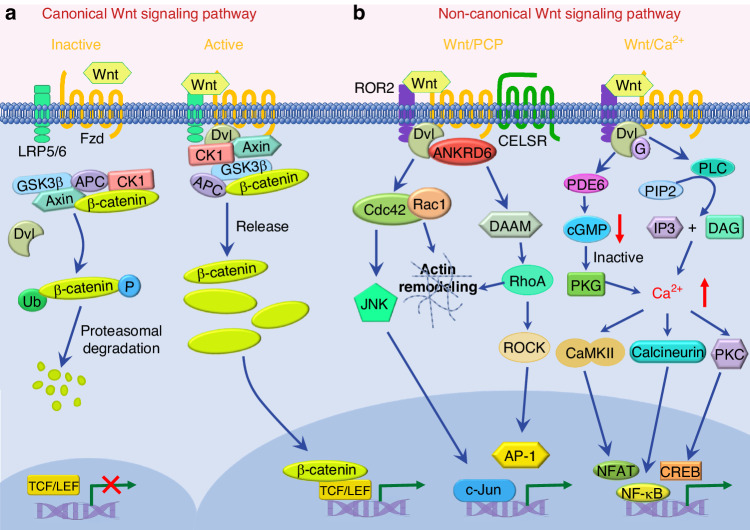
“1,2,19 In the canonical Wnt signaling pathway, β -catenin functions as a key transcriptional co-activator and transmits extracellular signals to activate the target genes (Fig.”
BackgroundStöckl, S., Göttl, C., Grifka, J., & Grässel, S. (2013) · Cellular Physiology and Biochemistry · doi:10.1159/000350089 · Cited by 4,656
Mutations affecting segment number and polarity in Drosophila
Nüsslein-Volhard, C., & Wieschaus, E. (1980) · Nature · doi:10.1038/287795a0 · Cited by 4,370
Wnt/β-Catenin Signaling, Disease, and Emerging Therapeutic Modalities
Nusse, R., & Clevers, H. (2017) · Cell · doi:10.1016/j.cell.2017.05.016 · Cited by 4,342
Osteoarthritis: A disease of the joint as an organ
Loeser, R. F., Goldring, S. R., Scanzello, C. R., & Goldring, M. B. (2012) · Arthritis & Rheumatism · doi:10.1002/art.34453 · Cited by 3,076 · cited 1×
“347 Wnts also play a key role in OA.”
BackgroundSpatially resolved, highly multiplexed RNA profiling in single cells
Chen, K. H., Boettiger, A. N., Moffitt, J. R., Wang, S., & Zhuang, X. (2015) · Science · doi:10.1126/science.aaa6090 · Cited by 2,969
Constitutive Transcriptional Activation by a β-Catenin-Tcf Complex in APC −/− Colon Carcinoma
Korinek, V., Barker, N., Morin, P. J., van Wichen, D., de Weger, R., Kinzler, K. W., Vogelstein, B., & Clevers, H. (1997) · Science · doi:10.1126/science.275.5307.1784 · Cited by 2,905
Identification of FAP Locus Genes from Chromosome 5q21
Kinzler, K. W., Nilbert, M. C., Su, L.-K., Vogelstein, B., Bryan, T. M., Levy, D. B., Smith, K. J., Preisinger, A. C., Hedge, P., McKechnie, D., et al. (1991) · Science · doi:10.1126/science.1651562 · Cited by 2,355
Wnt proteins are lipid-modified and can act as stem cell growth factors
Willert, K., Brown, J. D., Danenberg, E., Duncan, A. W., Weissman, I. L., Reya, T., Yates, J. R., & Nusse, R. (2003) · Nature · doi:10.1038/nature01611 · Cited by 2,257
LDL Receptor-Related Protein 5 (LRP5) Affects Bone Accrual and Eye Development
Gong, Y., Slee, R. B., Fukai, N., Rawadi, G., Roman-Roman, S., Reginato, A. M., Wang, H., Cundy, T., Glorieux, F. H., Lev, D., et al. (2001) · Cell · doi:10.1016/s0092-8674(01)00571-2 · Cited by 2,235
WNT signaling in bone homeostasis and disease: From human mutations to treatments
Baron, R., & Kneissel, M. (2013) · Nature Medicine · doi:10.1038/nm.3074 · Cited by 2,093
Mutations of Chromosome 5q21 Genes in FAP and Colorectal Cancer Patients
Nishisho, I., Nakamura, Y., Miyoshi, Y., Miki, Y., Ando, H., Horii, A., Koyama, K., Utsunomiya, J., Baba, S., Hedge, P., et al. (1991) · Science · doi:10.1126/science.1651563 · Cited by 1,892 · cited 1×
“14,15 Later, the APC protein was found to interact with β -catenin 16,17 and APC de fi ciency resulted in constitutively active β -catenin/TCF (T-cell factor) signaling in colon carcinoma cells.”
BackgroundSPECIFICITY AND VERSATILITY IN TGF-β SIGNALING THROUGH SMADS
Feng, X.-H., & Derynck, R. (2005) · Annual Review of Cell and Developmental Biology · doi:10.1146/annurev.cellbio.21.022404.142018 · Cited by 1,869
Nusse, R., & Varmus, H. E. (1982) · Cell · doi:10.1016/0092-8674(82)90409-3 · Cited by 1,863 · cited 2×
“In turn, the G protein activates phospholipase C (PLC), leading to the generation of inositol 1,4,5-triphosphate (IP3) and diacylglycerol (DAG) which increases intracellular Ca 2 + concentration.”
BackgroundRomosozumab Treatment in Postmenopausal Women with Osteoporosis
Cosman, F., Crittenden, D. B., Adachi, J. D., Binkley, N., Czerwinski, E., Ferrari, S., Hofbauer, L. C., Lau, E., Lewiecki, E. M., Miyauchi, A., et al. (2016) · New England Journal of Medicine · doi:10.1056/nejmoa1607948 · Cited by 1,805
Cellular Actions of the Insulin-Like Growth Factor Binding Proteins
Firth, S. M., & Baxter, R. C. (2002) · Endocrine Reviews · doi:10.1210/er.2001-0033 · Cited by 1,750 · cited 1×
“170 IGFBP-4 was identi fi ed as an inhibitor of canonical Wnt signaling required for cardiogenesis.”
BackgroundDay, T. F., Guo, X., Garrett-Beal, L., & Yang, Y. (2005) · Developmental Cell · doi:10.1016/j.devcel.2005.03.016 · Cited by 1,616 · cited 2×
“227,269,270 Deletion of β -catenin in a different stage of osteoblastic differentiation in mice causes low bone mass phenotype due to both defective osteoblast differentiation along with increased osteoclastic bone resorption that is caused by decreased OPG (osteoprotegerin)/RANKL (receptor…”
BackgroundDickkopf-1 is a member of a new family of secreted proteins and functions in head induction
Glinka, A., Wu, W., Delius, H., Monaghan, A. P., Blumenstock, C., & Niehrs, C. (1998) · Nature · doi:10.1038/34848 · Cited by 1,608
High Bone Density Due to a Mutation in LDL-Receptor–Related Protein 5
Boyden, L. M., Mao, J., Belsky, J., Mitzner, L., Farhi, A., Mitnick, M. A., Wu, D., Insogna, K., & Lifton, R. P. (2002) · New England Journal of Medicine · doi:10.1056/nejmoa013444 · Cited by 1,591
Depletion of epithelial stem-cell compartments in the small intestine of mice lacking Tcf-4
Korinek, V., Barker, N., Moerer, P., van Donselaar, E., Huls, G., Peters, P. J., & Clevers, H. (1998) · Nature Genetics · doi:10.1038/1270 · Cited by 1,581
Canonical wnt signaling in differentiated osteoblasts controls osteoclast differentiation.
Glass, D. A., Bialek, P., Ahn, J. D., Starbuck, M., Patel, M. S., Clevers, H., Taketo, M. M., Long, F., McMahon, A. P., Lang, R. A., et al. (2005) · Developmental Cell · doi:10.1016/j.devcel.2005.02.017 · Cited by 1,558 · cited 2×
“271,272 All these fi ndings together reveal the importance of Wnt signaling components in controlling osteoblast function.”
BackgroundA new member of the frizzled family from Drosophila functions as a Wingless receptor
Bhanot, P., Brink, M., Samos, C. H., Hsieh, J.-C., Wang, Y., Macke, J. P., Andrew, D., Nathans, J., & Nusse, R. (1996) · Nature · doi:10.1038/382225a0 · Cited by 1,502 · cited 1×
“From the fi rst Wnt receptor identi fi ed, 38 the Fzd family now contains 10 members in humans, Fzd1 to Fzd10.”
BackgroundRequirement for glycogen synthase kinase-3β in cell survival and NF-κB activation
Hoeflich, K. P., Luo, J., Rubie, E. A., Tsao, M.-S., Jin, O., & Woodgett, J. R. (2000) · Nature · doi:10.1038/35017574 · Cited by 1,393
Sclerostin Binds to LRP5/6 and Antagonizes Canonical Wnt Signaling
Li, X., Zhang, Y., Kang, H., Liu, W., Liu, P., Zhang, J., Harris, S. E., & Wu, D. (2005) · Journal of Biological Chemistry · doi:10.1074/jbc.m413274200 · Cited by 1,366 · cited 3×
“133,164,165 In addition, LRP4, another LRP family member, facilitates the inhibitory action of sclerostin on Wnt signaling.”
BackgroundMechanical Stimulation of Bone in Vivo Reduces Osteocyte Expression of Sost/Sclerostin
Robling, A. G., Niziolek, P. J., Baldridge, L. A., Condon, K. W., Allen, M. R., Alam, I., Mantila, S. M., Gluhak-Heinrich, J., Bellido, T. M., Harris, S. E., et al. (2008) · Journal of Biological Chemistry · doi:10.1074/jbc.m705092200 · Cited by 1,350 · cited 2×
“291,310 Interestingly, both SOST − / − mice and DMP1-SOST transgenic mice exhibit reduced sensitivity to mechanical stimulation.”
BackgroundLittle, R. D., Folz, C., Manning, S. P., Swain, P. M., Zhao, S.-C., Eustace, B., Lappe, M. M., Spitzer, L., Zweier, S., Braunschweiger, K., et al. (2002) · The American Journal of Human Genetics · doi:10.1086/338450 · Cited by 1,282
Lgr5 homologues associate with Wnt receptors and mediate R-spondin signalling
de Lau, W., Barker, N., Low, T. Y., Koo, B.-K., Li, V. S. W., Teunissen, H., Kujala, P., Haegebarth, A., Peters, P. J., van de Wetering, M., et al. (2011) · Nature · doi:10.1038/nature10337 · Cited by 1,272 · cited 2×
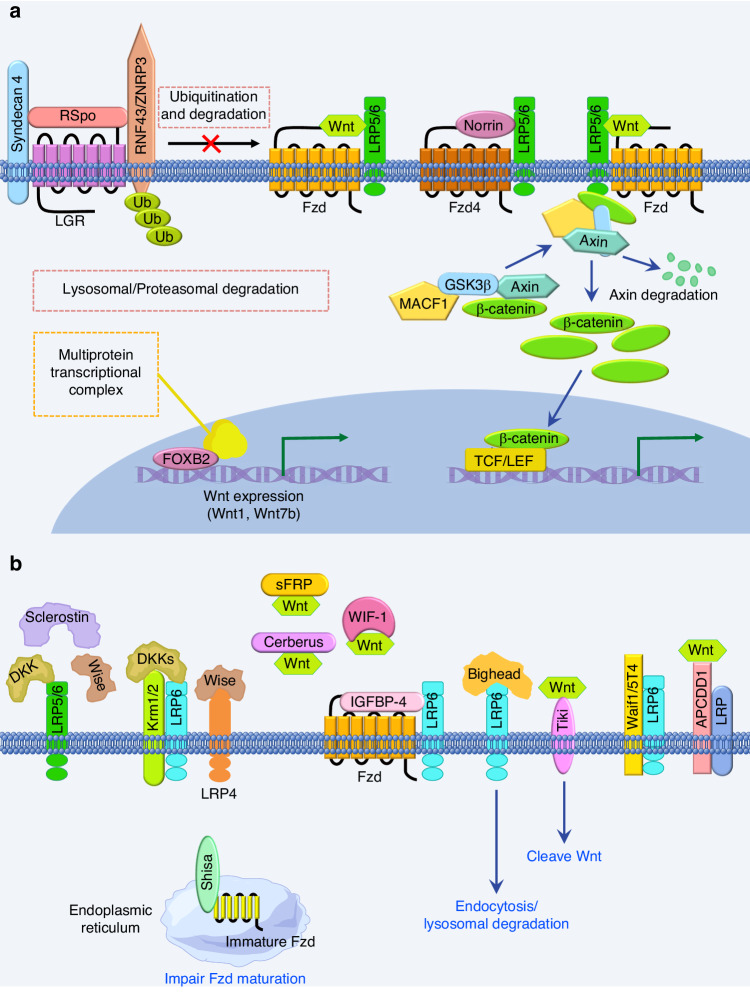
“109,110 The RSpo/LGR5 complex functions by neutralizing ring fi nger 43 (Rnf43) and zinc and ring fi nger 3 (Znrf3), two transmembrane E3 ligases that function as negative feedback regulators of Wnt signaling by removing Wnt receptors Fzd and LRP6 on the cell surface.”
BackgroundRomosozumab in Postmenopausal Women with Low Bone Mineral Density
McClung, M. R., Grauer, A., Boonen, S., Bolognese, M. A., Brown, J. P., Diez-Perez, A., Langdahl, B. L., Reginster, J.-Y., Zanchetta, J. R., Wasserman, S. M., et al. (2014) · New England Journal of Medicine · doi:10.1056/nejmoa1305224 · Cited by 1,258
Purified Wnt5a Protein Activates or Inhibits β-Catenin–TCF Signaling Depending on Receptor Context
Mikels, A. J., & Nusse, R. (2006) · PLoS Biology · doi:10.1371/journal.pbio.0040115 · Cited by 1,252
Association of the APC Gene Product with β-Catenin
Rubinfeld, B., Souza, B., Albert, I., Müller, O., Chamberlain, S. H., Masiarz, F. R., Munemitsu, S., & Polakis, P. (1993) · Science · doi:10.1126/science.8259518 · Cited by 1,223
Association of the APC Tumor Suppressor Protein with Catenins
Su, L.-K., Vogelstein, B., & Kinzler, K. W. (1993) · Science · doi:10.1126/science.8259519 · Cited by 1,188 · cited 1×
“14,15 Later, the APC protein was found to interact with β -catenin 16,17 and APC de fi ciency resulted in constitutively active β -catenin/TCF (T-cell factor) signaling in colon carcinoma cells.”
BackgroundCanonical WNT Signaling Promotes Osteogenesis by Directly Stimulating Runx2 Gene Expression
Gaur, T., Lengner, C. J., Hovhannisyan, H., Bhat, R. A., Bodine, P. V. N., Komm, B. S., Javed, A., van Wijnen, A. J., Stein, J. L., Stein, G. S., et al. (2005) · Journal of Biological Chemistry · doi:10.1074/jbc.m500608200 · Cited by 1,170 · cited 1×
“252 Besides, sFRP1 de fi ciency inhibits osteoblast lineage apoptosis and enhances osteoblast proliferation.”
BackgroundIncreased bone density in sclerosteosis is due to the deficiency of a novel secreted protein (SOST)
Balemans, W. (2001) · Human Molecular Genetics · doi:10.1093/hmg/10.5.537 · Cited by 1,147
LDL-receptor-related proteins in Wnt signal transduction
Tamai, K., Semenov, M., Kato, Y., Spokony, R., Liu, C., Katsuyama, Y., Hess, F., Saint-Jeannet, J.-P., & He, X. (2000) · Nature · doi:10.1038/35035117 · Cited by 1,128 · cited 12×
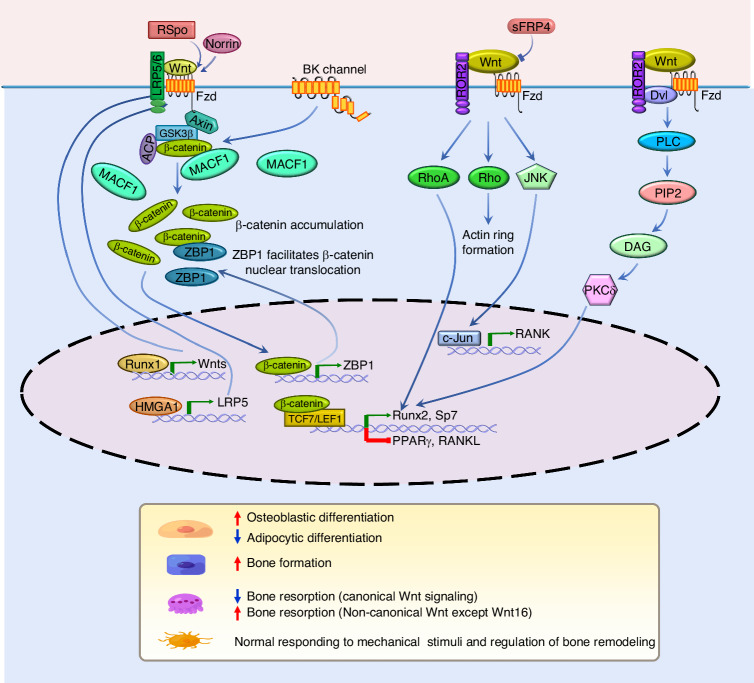
“321 Moreover, non-canonical Wnt5a secreted from osteoblast lineage cells promotes osteoclastogenesis and bone resorbing ability by increasing RANK (receptor activation of nuclear factor-κ B) in bone marrow macrophages via the ROR2/JNK non-canonical signaling.”
BackgroundInfluentialProximal events in Wnt signal transduction
Angers, S., & Moon, R. T. (2009) · Nature Reviews Molecular Cell Biology · doi:10.1038/nrm2717 · Cited by 1,112 · cited 1×
“74 The canonical Wnt signaling pathway is also called the Wnt/ β -catenin signaling pathway (Fig.”
BackgroundOsteocyte control of bone formation via sclerostin, a novel BMP antagonist
Winkler, D. G. (2003) · The EMBO Journal · doi:10.1093/emboj/cdg599 · Cited by 1,112 · cited 3×
“Osteocytes express several inhibitors of the Wnt/ β -catenin pathway, including scler-ostin, Dkk1, and sFRP1, all of which regulate bone mass. Sclerostin is well known for its speci fi c expression in osteocytes, 163,308 with osteocytes secreting sclerostin via their dendritic attachments.”
BackgroundAn LDL-receptor-related protein mediates Wnt signalling in mice
Pinson, K. I., Brennan, J., Monkley, S., Avery, B. J., & Skarnes, W. C. (2000) · Nature · doi:10.1038/35035124 · Cited by 1,086 · cited 2×
“32,44,45 The primary structures of LRP5 and LRP6 are more than 70% identical to each other and are widely co-expressed during embryogenesis and in adult tissues.”
BackgroundKato, M., Patel, M. S., Levasseur, R., Lobov, I., Chang, B. H.-J., Glass, D. A., Hartmann, C., Li, L., Hwang, T.-H., Brayton, C. F., et al. (2002) · The Journal of Cell Biology · doi:10.1083/jcb.200201089 · Cited by 1,086
Canonical Wnt/β-Catenin Signaling Prevents Osteoblasts from Differentiating into Chondrocytes
Hill, T. P., Später, D., Taketo, M. M., Birchmeier, W., & Hartmann, C. (2005) · Developmental Cell · doi:10.1016/j.devcel.2005.02.013 · Cited by 1,084 · cited 1×
“227,228 More recently, Matsushita et al. demonstrated that Wnt-mediated transformation of the bone marrow stromal cell (BMSC) identity orchestrates skeletal regeneration.”
BackgroundLDL-receptor-related protein 6 is a receptor for Dickkopf proteins
Mao, B., Wu, W., Li, Y., Hoppe, D., Stannek, P., Glinka, A., & Niehrs, C. (2001) · Nature · doi:10.1038/35077108 · Cited by 1,041 · cited 2×
“129 Besides LRP5/6, Dkks also bind to Kremen (Krm) proteins (Krm1 and Krm2), which are single-pass transmembrane receptors.”
BackgroundSelf-citationKremen proteins are Dickkopf receptors that regulate Wnt/β-catenin signalling
Mao, B., Wu, W., Davidson, G., Marhold, J., Li, M., Mechler, B. M., Delius, H., Hoppe, D., Stannek, P., Walter, C., et al. (2002) · Nature · doi:10.1038/nature756 · Cited by 1,038
Targeting the Wnt/beta-catenin pathway in cancer: Update on effectors and inhibitors
Krishnamurthy, N., & Kurzrock, R. (2018) · Cancer Treatment Reviews · doi:10.1016/j.ctrv.2017.11.002 · Cited by 1,026
Signaling cross-talk between TGF-β/BMP and other pathways
Guo, X., & Wang, X.-F. (2009) · Cell Research · doi:10.1038/cr.2008.302 · Cited by 1,015 · cited 2×
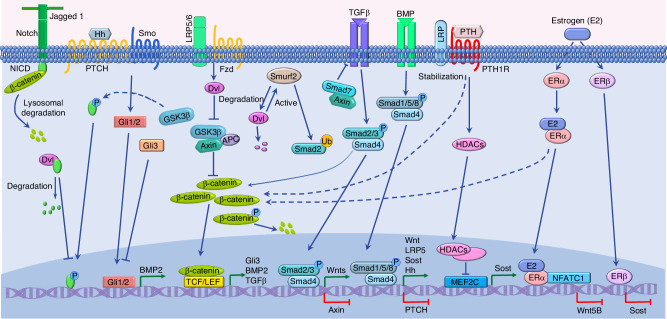
“197 Extracellularly, TGF-β /BMP and Wnt regulate the production of their respective ligands in a reciprocal manner.”
BackgroundRodda, S. J., & McMahon, A. P. (2006) · Development · doi:10.1242/dev.02480 · Cited by 1,010
TAZ, a Transcriptional Modulator of Mesenchymal Stem Cell Differentiation
Hong, J.-H., Hwang, E. S., McManus, M. T., Amsterdam, A., Tian, Y., Kalmukova, R., Mueller, E., Benjamin, T., Spiegelman, B. M., Sharp, P. A., et al. (2005) · Science · doi:10.1126/science.1110955 · Cited by 1,009
Function and biological roles of the Dickkopf family of Wnt modulators
Niehrs, C. (2006) · Oncogene · doi:10.1038/sj.onc.1210054 · Cited by 995
A Wnt5a pathway underlies outgrowth of multiple structures in the vertebrate embryo
Yamaguchi, T. P., Bradley, A., McMahon, A. P., & Jones, S. (1999) · Development · doi:10.1242/dev.126.6.1211 · Cited by 970
Sclerostin is a delayed secreted product of osteocytes that inhibits bone formation
Poole, K. E. S., Van Bezooijen, R. L., Loveridge, N., Hamersma, H., Papapoulos, S. E., Löwik, C. W., & Reeve, J. (2005) · The FASEB Journal · doi:10.1096/fj.05-4221fje · Cited by 965
van Genderen, C., Okamura, R. M., Fariñas, I., Quo, R. G., Parslow, T. G., Bruhn, L., & Grosschedl, R. (1994) · Genes & Development · doi:10.1101/gad.8.22.2691 · Cited by 965
Li, X., Ominsky, M. S., Niu, Q.-T., Sun, N., Daugherty, B., D'Agostin, D., Kurahara, C., Gao, Y., Cao, J., Gong, J., et al. (2008) · Journal of Bone and Mineral Research · doi:10.1359/jbmr.080216 · Cited by 936 · cited 1×
“133,163,288,289 SOST − / − mice exhibit increased high bone mass due to increased bone formation, while SOST transgenic mice exhibit low bone mass due to decreased bone formation 290,291 (for review, see Sebastian et al. 292 ).”
BackgroundWnt Induces LRP6 Signalosomes and Promotes Dishevelled-Dependent LRP6 Phosphorylation
Bilić, J., Huang, Y.-L., Davidson, G., Zimmermann, T., Cruciat, C.-M., Bienz, M., & Niehrs, C. (2007) · Science · doi:10.1126/science.1137065 · Cited by 934 · cited 1×
“75,76 This results in the release of β -catenin from the destruction complex and induces the accumulation of cytosolic β -catenin, which enters into the nucleus and binds to TCF/LEF to activate the target gene expression (Fig.”
BackgroundRijsewijk, F., Schuermann, M., Wagenaar, E., Parren, P., Weigel, D., & Nusse, R. (1987) · Cell · doi:10.1016/0092-8674(87)90038-9 · Cited by 931
The Receptor Tyrosine Kinase MuSK Is Required for Neuromuscular Junction Formation In Vivo
DeChiara, T. M., Bowen, D. C., Valenzuela, D. M., Simmons, M. V., Poueymirou, W. T., Thomas, S., Kinetz, E., Compton, D. L., Rojas, E., Park, J. S., et al. (1996) · Cell · doi:10.1016/s0092-8674(00)81251-9 · Cited by 913 · cited 1×
“69,70 MuSK functions as a Wnt receptor and has an extracellular region that contains the CRD, which is homologous to the CRD of Fzd.”
BackgroundRequirement for Wnt3 in vertebrate axis formation
Liu, P., Wakamiya, M., Shea, M. J., Albrecht, U., Behringer, R. R., & Bradley, A. (1999) · Nature Genetics · doi:10.1038/11932 · Cited by 901 · cited 1×
“101,123 Given the similar phenotype of MACF1 − / − embryo and Wnt3 − / − and LRP5/6 double-knockout embryos, 47,124 which lacks the primitive streak, node, and mesoderm, a relationship between MACF1 and Wnt signaling was indicated.”
BackgroundCarroll, T. J., Park, J.-S., Hayashi, S., Majumdar, A., & McMahon, A. P. (2005) · Developmental Cell · doi:10.1016/j.devcel.2005.05.016 · Cited by 900
van Bezooijen, R. L., Roelen, B. A. J., Visser, A., van der Wee-Pals, L., de Wilt, E., Karperien, M., Hamersma, H., Papapoulos, S. E., ten Dijke, P., & Löwik, C. W. G. M. (2004) · The Journal of Experimental Medicine · doi:10.1084/jem.20031454 · Cited by 892 · cited 1×
“162 Sclerostin was fi rst considered as an antagonist of bone morphogenetic protein (BMP) signaling due to its competition with type I and type II BMP receptors for binding to BMPs and decreased BMP signaling.”
BackgroundRegulation of osteoblastogenesis and bone mass by Wnt10b
Bennett, C. N., Longo, K. A., Wright, W. S., Suva, L. J., Lane, T. F., Hankenson, K. D., & MacDougald, O. A. (2005) · Proceedings of the National Academy of Sciences · doi:10.1073/pnas.0408742102 · Cited by 881
Structural Basis of Wnt Recognition by Frizzled
Janda, C. Y., Waghray, D., Levin, A. M., Thomas, C., & Garcia, K. C. (2012) · Science · doi:10.1126/science.1222879 · Cited by 875
Vascular Development in the Retina and Inner Ear
Xu, Q., Wang, Y., Dabdoub, A., Smallwood, P. M., Williams, J., Woods, C., Kelley, M. W., Jiang, L., Tasman, W., Zhang, K., et al. (2004) · Cell · doi:10.1016/s0092-8674(04)00216-8 · Cited by 875 · cited 2×
“98,118 Although showing similarity with Wnt in activating the Wnt/ β -catenin signaling pathway, the structure of Norrin is completely different from Wnt.”
Backgroundarrow encodes an LDL-receptor-related protein essential for Wingless signalling
Wehrli, M., Dougan, S. T., Caldwell, K., O'Keefe, L., Schwartz, S., Vaizel-Ohayon, D., Schejter, E., Tomlinson, A., & DiNardo, S. (2000) · Nature · doi:10.1038/35035110 · Cited by 871
Kühl, M., Sheldahl, L. C., Park, M., Miller, J. R., & Moon, R. T. (2000) · Trends in Genetics · doi:10.1016/s0168-9525(00)02028-x · Cited by 861
Carmon, K. S., Gong, X., Lin, Q., Thomas, A., & Liu, Q. (2011) · Proceedings of the National Academy of Sciences · doi:10.1073/pnas.1106083108 · Cited by 855
Mao, J., Wang, J., Liu, B., Pan, W., Farr, G. H., Flynn, C., Yuan, H., Takada, S., Kimelman, D., Li, L., et al. (2001) · Molecular Cell · doi:10.1016/s1097-2765(01)00224-6 · Cited by 839 · cited 1×
“48 LRP6 is the best-studied LRP.”
Lrp5 Controls Bone Formation by Inhibiting Serotonin Synthesis in the Duodenum
Yadav, V. K., Ryu, J.-H., Suda, N., Tanaka, K. F., Gingrich, J. A., Schütz, G., Glorieux, F. H., Chiang, C. Y., Zajac, J. D., Insogna, K. L., et al. (2008) · Cell · doi:10.1016/j.cell.2008.09.059 · Cited by 834
The head inducer Cerberus is a multifunctional antagonist of Nodal, BMP and Wnt signals
Piccolo, S., Agius, E., Leyns, L., Bhattacharyya, S., Grunz, H., Bouwmeester, T., & Robertis, E. M. D. (1999) · Nature · doi:10.1038/17820 · Cited by 832 · cited 2×
“135 Bighead .”
BackgroundWnt signaling in development and tissue homeostasis
Steinhart, Z., & Angers, S. (2018) · Development · doi:10.1242/dev.146589 · Cited by 821 · cited 1×
“1,2,19 In the canonical Wnt signaling pathway, β -catenin functions as a key transcriptional co-activator and transmits extracellular signals to activate the target genes (Fig.”
BackgroundEstrogen Signaling: A Subtle Balance Between ER and ER
Matthews, J. (2003) · Molecular Interventions · doi:10.1124/mi.3.5.281 · Cited by 806
Wnt-3a regulates somite and tailbud formation in the mouse embryo
Takada, S. (1994) · Trends in Genetics · doi:10.1016/0168-9525(94)90090-6 · Cited by 789 · cited 1×
“223 Additionally, studies of various mouse models reveal that abnormality of the components within Wnt signaling causes bone defects (reviewed by refs., 204,224 Table 2).”
BackgroundMonounsaturated Fatty Acid Modification of Wnt Protein: Its Role in Wnt Secretion
Takada, R., Satomi, Y., Kurata, T., Ueno, N., Norioka, S., Kondoh, H., Takao, T., & Takada, S. (2006) · Developmental Cell · doi:10.1016/j.devcel.2006.10.003 · Cited by 788
Zhou, S., Greenberger, J. S., Epperly, M. W., Goff, J. P., Adler, C., LeBoff, M. S., & Glowacki, J. (2008) · Aging Cell · doi:10.1111/j.1474-9726.2008.00377.x · Cited by 785 · cited 1×
“225,226 229 Wnt3a-induced canonical Wnt signaling stimulates osteogenic differentiation of MSCs by activating transcriptional co-activator with PDZ-binding motif (TAZ), which is a key transcriptional modulator of MSC differentiation.”
BackgroundThe receptor tyrosine kinase Ror2 is involved in non‐canonical Wnt5a/JNK signalling pathway
Oishi, I., Suzuki, H., Onishi, N., Takada, R., Kani, S., Ohkawara, B., Koshida, I., Suzuki, K., Yamada, G., Schwabe, G. C., et al. (2003) · Genes to Cells · doi:10.1046/j.1365-2443.2003.00662.x · Cited by 780
Novel mechanism of Wnt signalling inhibition mediated by Dickkopf-1 interaction with LRP6/Arrow
Bafico, A., Liu, G., Yaniv, A., Gazit, A., & Aaronson, S. A. (2001) · Nature Cell Biology · doi:10.1038/35083081 · Cited by 772
Bouwmeester, T., Kim, S.-H., Sasai, Y., Lu, B., & Robertis, E. M. D. (1996) · Nature · doi:10.1038/382595a0 · Cited by 759 · cited 1×
“Cerberus was discovered in Xenopus as a head-inducing secreted factor that is expressed in the anterior endoderm of Spemann ’ s organizer 173 and was identi fi ed as a multifunctional inhibitor of Nodal, BMP, and Wnt signaling.”
BackgroundDishevelled: The hub of Wnt signaling
Gao, C., & Chen, Y.-G. (2010) · Cellular Signalling · doi:10.1016/j.cellsig.2009.11.021 · Cited by 755 · cited 1×
“96 In the canonical Wnt signaling pathway, Dvl is recruited by the receptor Fzd and prevents the phosphorylation and degradation of cytosolic β -catenin.”
BackgroundInteractions between Sox9 and β-catenin control chondrocyte differentiation
Akiyama, H., Lyons, J. P., Mori-Akiyama, Y., Yang, X., Zhang, R., Zhang, Z., Deng, J. M., Taketo, M. M., Nakamura, T., Behringer, R. R., et al. (2004) · Genes & Development · doi:10.1101/gad.1171104 · Cited by 754
Frzb-1 Is a Secreted Antagonist of Wnt Signaling Expressed in the Spemann Organizer
Leyns, L., Bouwmeester, T., Kim, S.-H., Piccolo, S., & De Robertis, E. M. (1997) · Cell · doi:10.1016/s0092-8674(00)81921-2 · Cited by 736 · cited 2×
“127,152 sFRPs are demonstrated to inhibit both canonical Wnt signaling and non-canonical Wnt/PCP signaling.”
BackgroundDorsalizing signal Wnt-7a required for normal polarity of D–V and A–P axes of mouse limb
Parr, B. A., & McMahon, A. P. (1995) · Nature · doi:10.1038/374350a0 · Cited by 726
Agrin Acts via a MuSK Receptor Complex
Glass, D. J., Bowen, D. C., Stitt, T. N., Radziejewski, C., Bruno, J., Ryan, T. E., Gies, D. R., Shah, S., Mattsson, K., Burden, S. J., et al. (1996) · Cell · doi:10.1016/s0092-8674(00)81252-0 · Cited by 663 · cited 1×
“69,70 MuSK functions as a Wnt receptor and has an extracellular region that contains the CRD, which is homologous to the CRD of Fzd.”
BackgroundThe R-spondin/Lgr5/Rnf43 module: regulator of Wnt signal strength
de Lau, W., Peng, W. C., Gros, P., & Clevers, H. (2014) · Genes & Development · doi:10.1101/gad.235473.113 · Cited by 656 · cited 1×
“111 The interaction between RSpos and LGR4/5/6 is mediated by the furin-like CRD of RSpos.”
BackgroundSecreted and transmembrane wnt inhibitors and activators
Cruciat, C.-M., & Niehrs, C. (2013) · Cold Spring Harbor Perspectives in Biology · doi:10.1101/cshperspect.a015081 · Cited by 646 · cited 2×
“127,152 sFRPs are demonstrated to inhibit both canonical Wnt signaling and non-canonical Wnt/PCP signaling.”
BackgroundDickkopf1 Is Required for Embryonic Head Induction and Limb Morphogenesis in the Mouse
Mukhopadhyay, M., Shtrom, S., Rodriguez-Esteban, C., Chen, L., Tsukui, T., Gomer, L., Dorward, D. W., Glinka, A., Grinberg, A., Huang, S.-P., et al. (2001) · Developmental Cell · doi:10.1016/s1534-5807(01)00041-7 · Cited by 635
Lin, C., Jiang, X., Dai, Z., Guo, X., Weng, T., Wang, J., Li, Y., Feng, G., Gao, X., & He, L. (2009) · Journal of Bone and Mineral Research · doi:10.1359/jbmr.090411 · Cited by 628
Self-citationMiller, J. R. (2001) · Genome biology · doi:10.1186/gb-2001-3-1-reviews3001 · Cited by 620
Frizzled and LRP5/6 Receptors for Wnt/ -Catenin Signaling
MacDonald, B. T., & He, X. (2012) · Cold Spring Harbor Perspectives in Biology · doi:10.1101/cshperspect.a007880 · Cited by 612
Essential role of β-catenin in postnatal bone acquisition.
Holmen, S. L., Zylstra, C. R., Mukherjee, A., Sigler, R. E., Faugere, M.-C., Bouxsein, M. L., Deng, L., Clemens, T. L., & Williams, B. O. (2005) · Journal of Biological Chemistry · doi:10.1074/jbc.m501900200 · Cited by 584
Rattner, A., Hsieh, J.-C., Smallwood, P. M., Gilbert, D. J., Copeland, N. G., Jenkins, N. A., & Nathans, J. (1997) · Proceedings of the National Academy of Sciences · doi:10.1073/pnas.94.7.2859 · Cited by 583
Osteocyte Wnt/β-Catenin Signaling Is Required for Normal Bone Homeostasis
Kramer, I., Halleux, C., Keller, H., Pegurri, M., Gooi, J. H., Weber, P. B., Feng, J. Q., Bonewald, L. F., & Kneissel, M. (2010) · Molecular and Cellular Biology · doi:10.1128/mcb.01428-09 · Cited by 567 · cited 3×
“291,302,303 The components of Wnt signaling in osteocytes .”
BackgroundMaeda, K., Kobayashi, Y., Udagawa, N., Uehara, S., Ishihara, A., Mizoguchi, T., Kikuchi, Y., Takada, I., Kato, S., Kani, S., et al. (2012) · Nature Medicine · doi:10.1038/nm.2653 · Cited by 542 · cited 1×
“322,323 Wnt5a-ROR2 non-canonical signaling is also required for the formation of actin ring and the bone-resorbing activity of osteoclasts.”
BackgroundMcMahon, A. P., & Moon, R. T. (1989) · Cell · doi:10.1016/0092-8674(89)90506-0 · Cited by 529 · cited 1×
“10 These foundational studies reveal the importance of Wnt signaling in development.”
BackgroundMechanosensation and transduction in osteocytes
Klein-Nulend, J., Bakker, A. D., Bacabac, R. G., Vatsa, A., & Weinbaum, S. (2013) · Bone · doi:10.1016/j.bone.2012.10.013 · Cited by 528
Deletion of a Single Allele of the Dkk1 Gene Leads to an Increase in Bone Formation and Bone Mass
Morvan, F., Boulukos, K., Clément-Lacroix, P., Roman, S. R., Suc-Royer, I., Vayssière, B., Ammann, P., Martin, P., Pinho, S., Pognonec, P., et al. (2006) · Journal of Bone and Mineral Research · doi:10.1359/jbmr.060311 · Cited by 524 · cited 1×
“283 Dkk4 also functions as an inhibitor of osteoblast differentiation by suppressing Wnt/ β -catenin signaling.”
BackgroundWnt/Ca2+ signaling pathway: a brief overview
De, A. (2011) · Acta Biochimica et Biophysica Sinica · doi:10.1093/abbs/gmr079 · Cited by 523
Clément-Lacroix, P., Ai, M., Morvan, F., Roman-Roman, S., Vayssière, B., Belleville, C., Estrera, K., Warman, M. L., Baron, R., & Rawadi, G. (2005) · Proceedings of the National Academy of Sciences · doi:10.1073/pnas.0505259102 · Cited by 520 · cited 1×
“431,432 Moreover, we demonstrated MACF1, the activator of Wnt/ β -catenin signaling, as a promotor for osteoblast differentiation and bone formation 125,126,276 and a novel potential therapeutic target for treating osteoporosis.”
BackgroundTao, Q., Yokota, C., Puck, H., Kofron, M., Birsoy, B., Yan, D., Asashima, M., Wylie, C. C., Lin, X., & Heasman, J. (2005) · Cell · doi:10.1016/j.cell.2005.01.013 · Cited by 510 · cited 1×
“27 – 30 Wnt receptors and co-receptors Wnt signal transduction involves the binding of Wnts to cell-surface Wnt receptors and co-receptors, which primarily contain members of the Fzd family 31 and the low-density lipoprotein receptor-related protein (LRP) family.”
BackgroundLangdahl, B. L., Libanati, C., Crittenden, D. B., Bolognese, M. A., Brown, J. P., Daizadeh, N. S., Dokoupilova, E., Engelke, K., Finkelstein, J. S., Genant, H. K., et al. (2017) · The Lancet · doi:10.1016/s0140-6736(17)31613-6 · Cited by 497
Zhu, M., Tang, D., Wu, Q., Hao, S., Chen, M., Xie, C., Rosier, R. N., O'Keefe, R. J., Zuscik, M., & Chen, D. (2009) · Journal of Bone and Mineral Research · doi:10.1359/jbmr.080901 · Cited by 476
Insights into Wnt binding and signalling from the structures of two Frizzled cysteine-rich domains
Dann, C. E., Hsieh, J.-C., Rattner, A., Sharma, D., Nathans, J., & Leahy, D. J. (2001) · Nature · doi:10.1038/35083601 · Cited by 473
Mammalian Ryk Is a Wnt Coreceptor Required for Stimulation of Neurite Outgrowth
Lu, W., Yamamoto, V., Ortega, B., & Baltimore, D. (2004) · Cell · doi:10.1016/j.cell.2004.09.019 · Cited by 471 · cited 7×
“Similar to sFRPs, WIF-1 is a secreted inhibitor for Wnt signaling by directly binding to and sequestering Wnts. 131 WIF-1 is composed of an N-terminal secretion signal sequence, a unique and highly conserved WIF domain, fi ve epidermal growth factor (EGF)-like repeats, and a hydrophilic C-terminal domain.”
BackgroundInfluentialCanonical and noncanonical Wnts use a common mechanism to activate completely unrelated coreceptors
Grumolato, L., Liu, G., Mong, P., Mudbhary, R., Biswas, R., Arroyave, R., Vijayakumar, S., Economides, A. N., & Aaronson, S. A. (2010) · Genes & Development · doi:10.1101/gad.1957710 · Cited by 470 · cited 2×
“In the Wnt/ β -catenin signaling pathway, Wnt – Fzd form a ternary complex with low-density lipoprotein receptor-related protein 5/6 (LRP5/6), whereas, in Wnt/PCP signaling pathway, Wnt – Fzd interact with ROR 32,33,43 (see below: Wnt signaling pathways, Fig.”
BackgroundYe, X., Wang, Y., Cahill, H., Yu, M., Badea, T. C., Smallwood, P. M., Peachey, N. S., & Nathans, J. (2009) · Cell · doi:10.1016/j.cell.2009.07.047 · Cited by 469 · cited 1×
“100,117 Norrin speci fi cally binds to Fzd4 with high af fi nity and activates the Wnt/ β -catenin signaling pathway in a LRP5/6-dependent manner.”
BackgroundInteraction between Wnt and TGF-β signalling pathways during formation of Spemann's organizer
Nishita, M., Hashimoto, M. K., Ogata, S., Laurent, M. N., Ueno, N., Shibuya, H., & Cho, K. W. Y. (2000) · Nature · doi:10.1038/35001602 · Cited by 465
Wnt3a-/--like phenotype and limb deficiency in Lef1-/-Tcf1-/- mice
Galceran, J., Farinas, I., Depew, M. J., Clevers, H., & Grosschedl, R. (1999) · Genes & Development · doi:10.1101/gad.13.6.709 · Cited by 462
Tu, X., Rhee, Y., Condon, K. W., Bivi, N., Allen, M. R., Dwyer, D., Stolina, M., Turner, C. H., Robling, A. G., Plotkin, L. I., et al. (2012) · Bone · doi:10.1016/j.bone.2011.10.025 · Cited by 459 · cited 2×
“291,311 SOST − / − mice are resistant to mechanical unloading-induced bone formation reduction in association with unaltered Wnt/ β -catenin signaling.”
BackgroundLrp5 functions in bone to regulate bone mass
Cui, Y., Niziolek, P. J., MacDonald, B. T., Zylstra, C. R., Alenina, N., Robinson, D. R., Zhong, Z., Matthes, S., Jacobsen, C. M., Conlon, R. A., et al. (2011) · Nature Medicine · doi:10.1038/nm.2388 · Cited by 453 · cited 1×
“262,263 LRP6 knockout mice were perinatal fatal, with truncations of the axial skeleton and limb defects.”
BackgroundBodine, P. V. N., Zhao, W., Kharode, Y. P., Bex, F. J., Lambert, A.-J., Goad, M. B., Gaur, T., Stein, G. S., Lian, J. B., & Komm, B. S. (2004) · Molecular Endocrinology · doi:10.1210/me.2003-0498 · Cited by 449 · cited 1×
“278 sFRP1 − / − mice exhibit increased trabecular bone mineral density while sFRP1 transgenic mice display decreased bone formation and trabecular bone mass. 278,279 Moreover, sFRP2 and sFRP4 are critical for proper distal limb formation and bone formation.”
BackgroundGenomic deletion of a long-range bone enhancer misregulates sclerostin in Van Buchem disease
Loots, G. G., Kneissel, M., Keller, H., Baptist, M., Chang, J., Collette, N. M., Ovcharenko, D., Plajzer-Frick, I., & Rubin, E. M. (2005) · Genome Research · doi:10.1101/gr.3437105 · Cited by 442
Dkk1-mediated inhibition of Wnt signaling in bone results in osteopenia
Li, J., Sarosi, I., Cattley, R. C., Pretorius, J., Asuncion, F., Grisanti, M., Morony, S., Adamu, S., Geng, Z., Qiu, W., et al. (2006) · Bone · doi:10.1016/j.bone.2006.03.017 · Cited by 441 · cited 1×
“282 Osteoblast overexpression of Dkk1 in transgenic mice induces diminished osteoblastic bone formation and severe osteopenia, 282 while heterozygous Dkk1 -de fi cient ( Dkk1 + /- ) mice display increased osteoblast number, mineral apposition, bone formation, and bone mass. 283 Dkk1 overexpression…”
BackgroundPeifer, M., Sweeton, D., Casey, M., & Wieschaus, E. (1994) · Development · doi:10.1242/dev.120.2.369 · Cited by 426
Ihh signaling is directly required for the osteoblast lineage in the endochondral skeleton
Long, F., Chung, U.-I., Ohba, S., McMahon, J., Kronenberg, H. M., & McMahon, A. P. (2004) · Development · doi:10.1242/dev.01006 · Cited by 423 · cited 1×
“193 Similar to Wnt signaling, Hedgehog signaling also plays a key role throughout embryonic development.”
BackgroundSiegfried, E., Chou, T.-B., & Perrimon, N. (1992) · Cell · doi:10.1016/s0092-8674(05)80065-0 · Cited by 422
Cawthorn, W. P., Bree, A. J., Yao, Y., Du, B., Hemati, N., Martinez-Santibañez, G., & MacDougald, O. A. (2012) · Bone · doi:10.1016/j.bone.2011.08.010 · Cited by 415
Kang, S., Bennett, C. N., Gerin, I., Rapp, L. A., Hankenson, K. D., & MacDougald, O. A. (2007) · Journal of Biological Chemistry · doi:10.1074/jbc.m700030200 · Cited by 401
Yang, Y., Topol, L., Lee, H., & Wu, J. (2003) · Development · doi:10.1242/dev.00324 · Cited by 397
Chen, Y., Whetstone, H. C., Lin, A. C., Nadesan, P., Wei, Q., Poon, R., & Alman, B. A. (2007) · PLoS Medicine · doi:10.1371/journal.pmed.0040249 · Cited by 391 · cited 1×
“431,432 Moreover, we demonstrated MACF1, the activator of Wnt/ β -catenin signaling, as a promotor for osteoblast differentiation and bone formation 125,126,276 and a novel potential therapeutic target for treating osteoporosis.”
BackgroundWnt/β-catenin signaling is sufficient and necessary for synovial joint formation
Guo, X., Day, T. F., Jiang, X., Garrett-Beal, L., Topol, L., & Yang, Y. (2004) · Genes & Development · doi:10.1101/gad.1230704 · Cited by 391
dishevelled and armadillo act in the Wingless signalling pathway in Drosophila
Noordermeer, J., Klingensmith, J., Perrimon, N., & Nusse, R. (1994) · Nature · doi:10.1038/367080a0 · Cited by 377
A new nomenclature for int-1 and related genes: The Wnt gene family
Nusse, R., Brown, A., Papkoff, J., Scambler, P., Shackleford, G., McMahon, A., Moon, R., & Varmus, H. (1991) · Cell · doi:10.1016/0092-8674(91)90633-a · Cited by 368 · cited 1×
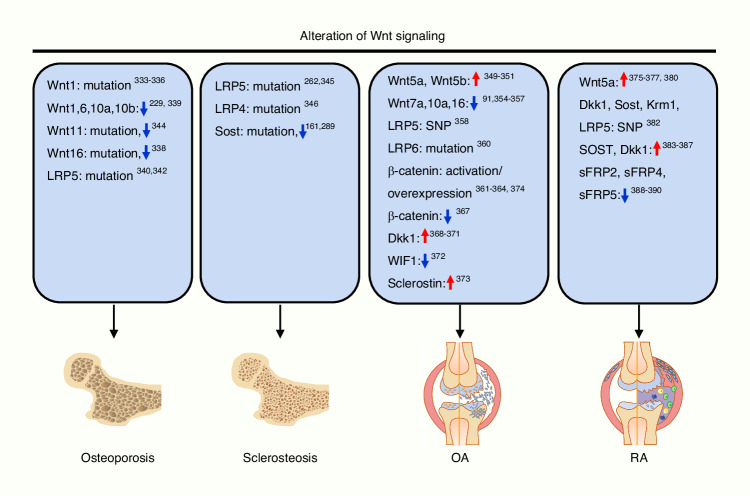
“…activity presented as reducing the expression of ACAN and Col2A1 but increasing the expression and secretion of matrix metalloproteinases (MMP1, 3, and 13) via non-canonical Wnt signaling including CaMKII and JNK, 349 while Wnt5a induces the abnormal differentiation in osteoblast via both the…”
BackgroundWNT1 Mutations in Early-Onset Osteoporosis and Osteogenesis Imperfecta
Laine, C. M., Joeng, K. S., Campeau, P. M., Kiviranta, R., Tarkkonen, K., Grover, M., Lu, J. T., Pekkinen, M., Wessman, M., Heino, T. J., et al. (2013) · New England Journal of Medicine · doi:10.1056/nejmoa1215458 · Cited by 365 · cited 1×
“333,335 Wnt3 expression is essential at the early stages of human limb formation.”
BackgroundOsteoblast-derived WNT16 represses osteoclastogenesis and prevents cortical bone fragility fractures
Movérare-Skrtic, S., Henning, P., Liu, X., Nagano, K., Saito, H., Börjesson, A. E., Sjögren, K., Windahl, S. H., Farman, H., Kindlund, B., et al. (2014) · Nature Medicine · doi:10.1038/nm.3654 · Cited by 361
The role of Axin2 in calvarial morphogenesis and craniosynostosis
Yu, H.-M. I., Jerchow, B., Sheu, T.-J., Liu, B., Costantini, F., Puzas, J. E., Birchmeier, W., & Hsu, W. (2005) · Development · doi:10.1242/dev.01786 · Cited by 357
Wnts as ligands: processing, secretion and reception
Mikels, A. J., & Nusse, R. (2006) · Oncogene · doi:10.1038/sj.onc.1210053 · Cited by 356
Devenport, D., & Fuchs, E. (2008) · Nature Cell Biology · doi:10.1038/ncb1784 · Cited by 353
SnapShot: Noncanonical Wnt Signaling Pathways
Semenov, M. V., Habas, R., MacDonald, B. T., & He, X. (2007) · Cell · doi:10.1016/j.cell.2007.12.011 · Cited by 353 · cited 1×
“…kinase II (CaMKII), calcineurin, or protein kinase C (PKC), which further activates various transcription factors (NF-κ B (nuclear factor κ B), NFAT (nuclear factor associated with T cells) and CREB (cAMP-responsive element-binding protein)) that regulate downstream gene expression 90,93 (Fig.”
BackgroundHsieh, J.-C., Rattner, A., Smallwood, P. M., & Nathans, J. (1999) · Proceedings of the National Academy of Sciences · doi:10.1073/pnas.96.7.3546 · Cited by 349 · cited 1×
“27 – 30 Wnt receptors and co-receptors Wnt signal transduction involves the binding of Wnts to cell-surface Wnt receptors and co-receptors, which primarily contain members of the Fzd family 31 and the low-density lipoprotein receptor-related protein (LRP) family.”
BackgroundDecreased BMD and Limb Deformities in Mice Carrying Mutations in Both Lrp5 and Lrp6
Holmen, S. L., Giambernardi, T. A., Zylstra, C. R., Buckner-Berghuis, B. D., Resau, J. H., Hess, J. F., Glatt, V., Bouxsein, M. L., Ai, M., Warman, M. L., et al. (2004) · Journal of Bone and Mineral Research · doi:10.1359/jbmr.040907 · Cited by 344
Dkk2 has a role in terminal osteoblast differentiation and mineralized matrix formation
Li, X., Liu, P., Liu, W., Maye, P., Zhang, J., Zhang, Y., Hurley, M., Guo, C., Boskey, A., Sun, L., et al. (2005) · Nature Genetics · doi:10.1038/ng1614 · Cited by 342 · cited 1×
“285 Krm1 and Krm2, co-receptors of Dkk1, interact with Dkk1 to attenuate Wnt/ β -catenin signaling during limb development, as shown by Krm1 − / − Krm2 − / − mice presenting with increased bone formation.”
BackgroundR-Spondin Family Members Regulate the Wnt Pathway by a Common Mechanism
Kim, K.-A., Wagle, M., Tran, K., Zhan, X., Dixon, M. A., Liu, S., Gros, D., Korver, W., Yonkovich, S., Tomasevic, N., et al. (2008) · Molecular Biology of the Cell · doi:10.1091/mbc.e08-02-0187 · Cited by 342 · cited 2×
“105,106 108 The activation effect of RSpos on Wnt/ β -catenin signaling is implemented by interfering with Dickkopf1 (Dkk1)- mediated LRP6 and Kremen association.”
BackgroundSpencer, G. J., Utting, J. C., Etheridge, S. L., Arnett, T. R., & Genever, P. G. (2006) · Journal of Cell Science · doi:10.1242/jcs.02883 · Cited by 334
Lewiecki, E. M., Blicharski, T., Goemaere, S., Lippuner, K., Meisner, P. D., Miller, P. D., Miyauchi, A., Maddox, J., Chen, L., & Horlait, S. (2018) · The Journal of Clinical Endocrinology & Metabolism · doi:10.1210/jc.2017-02163 · Cited by 328
Kremen2 modulates Dickkopf2 activity during Wnt/lRP6 signaling
Mao, B., & Niehrs, C. (2003) · Gene · doi:10.1016/s0378-1119(02)01106-x · Cited by 325 · cited 1×
“149 Secreted Frizzled-related proteins (sFRPs) .”
The Wnt/calcium pathway activates NF-AT and promotes ventral cell fate in Xenopus embryos
Saneyoshi, T., Kume, S., Amasaki, Y., & Mikoshiba, K. (2002) · Nature · doi:10.1038/417295a · Cited by 322
Wise, a context-dependent activator and inhibitor of Wnt signalling
Itasaki, N., Jones, C. M., Mercurio, S., Rowe, A., Domingos, P. M., Smith, J. C., & Krumlauf, R. (2003) · Development · doi:10.1242/dev.00674 · Cited by 321 · cited 2×
“132 By sharing 38% amino acid identity with sclerostin, Wise also inhibits Wnt signaling by binding to LRP5 or LRP6.”
BackgroundDu, S. J., Purcell, S. M., Christian, J. L., McGrew, L. L., & Moon, R. T. (1995) · Molecular and Cellular Biology · doi:10.1128/mcb.15.5.2625 · Cited by 314 · cited 5×
“Similar to sFRPs, WIF-1 is a secreted inhibitor for Wnt signaling by directly binding to and sequestering Wnts. 131 WIF-1 is composed of an N-terminal secretion signal sequence, a unique and highly conserved WIF domain, fi ve epidermal growth factor (EGF)-like repeats, and a hydrophilic C-terminal domain.”
BackgroundInfluentialHomozygous WNT3 Mutation Causes Tetra-Amelia in a Large Consanguineous Family
Niemann, S., Zhao, C., Pascu, F., Stahl, U., Aulepp, U., Niswander, L., Weber, J. L., & Müller, U. (2004) · The American Journal of Human Genetics · doi:10.1086/382196 · Cited by 312 · cited 1×
“337 Moreover, missense mutations of Wnt16 are associated with osteoporotic fractures.”
BackgroundFukuda, T., Chen, L., Endo, T., Tang, L., Lu, D., Castro, J. E., Widhopf, G. F., Rassenti, L. Z., Cantwell, M. J., Prussak, C. E., et al. (2008) · Proceedings of the National Academy of Sciences · doi:10.1073/pnas.0712148105 · Cited by 312
Mirza, F. S., Padhi, I. D., Raisz, L. G., & Lorenzo, J. A. (2010) · The Journal of Clinical Endocrinology & Metabolism · doi:10.1210/jc.2009-2283 · Cited by 311 · cited 1×
“214 Kim et al. found that estrogen 17 β -Estradiol (E2) suppressed the SOST expression induced by BMP2, but increases the expression and activation levels of β -catenin in osteoblasts.”
BackgroundExpression and function of wingless and frizzled homologs in rheumatoid arthritis
Sen, M., Lauterbach, K., El-Gabalawy, H., Firestein, G. S., Corr, M., & Carson, D. A. (2000) · Proceedings of the National Academy of Sciences · doi:10.1073/pnas.050574297 · Cited by 311 · cited 1×
“378 Meanwhile, in fl ammatory cytokine enhances Wnt5a expression in RA synoviocytes.”
BackgroundNoncanonical Wnt Signaling through G Protein-Linked PKCδ Activation Promotes Bone Formation
Tu, X., Joeng, K. S., Nakayama, K. I., Nakayama, K., Rajagopal, J., Carroll, T. J., McMahon, A. P., & Long, F. (2007) · Developmental Cell · doi:10.1016/j.devcel.2006.11.003 · Cited by 311
Bone Overgrowth-associated Mutations in the LRP4 Gene Impair Sclerostin Facilitator Function
Leupin, O., Piters, E., Halleux, C., Hu, S., Kramer, I., Morvan, F., Bouwmeester, T., Schirle, M., Bueno-Lozano, M., Ramos Fuentes, F. J., et al. (2011) · Journal of Biological Chemistry · doi:10.1074/jbc.m110.190330 · Cited by 301 · cited 2×
“166 Evidence shows that the suppressive action of sclerostin on Wnt signaling transduction occurs in both osteoblasts and osteocytes in both paracrine and autocrine manner.”
BackgroundMetformin limits osteoarthritis development and progression through activation of AMPK signalling
Li, J., Zhang, B., Liu, W.-X., Lu, K., Pan, H., Wang, T., Oh, C.-D., Yi, D., Huang, J., Zhao, L., et al. (2020) · Annals of the Rheumatic Diseases · doi:10.1136/annrheumdis-2019-216713 · Cited by 300 · cited 1×
“…protein kinase) activator metformin blocked β -catenin nucleus translocation by inhibiting β -catenin S552 phosphorylation and showed chondro-protective effect in OA progression, 365,366 suggesting that AMPK activation may inhibit OA development partially through inhibition of β -catenin signaling.”
BackgroundBarrow, J. R., Thomas, K. R., Boussadia-Zahui, O., Moore, R., Kemler, R., Capecchi, M. R., & McMahon, A. P. (2003) · Genes & Development · doi:10.1101/gad.1044903 · Cited by 299
Matsushita, Y., Nagata, M., Kozloff, K. M., Welch, J. D., Mizuhashi, K., Tokavanich, N., Hallett, S. A., Link, D. C., Nagasawa, T., Ono, W., et al. (2020) · Nature Communications · doi:10.1038/s41467-019-14029-w · Cited by 298 · cited 2×
“244 They found that quiescent Cxcl12-creER + perisi-nusoidal BMSCs differentiate into cortical bone osteoblasts solely during regeneration and quiescent Cxcl12-creER + BMSCs transform into osteoblast precursor cells in a manner mediated by canonical Wnt signaling.”
BackgroundWnt signaling and cellular metabolism in osteoblasts
Karner, C. M., & Long, F. (2017) · Cellular and Molecular Life Sciences · doi:10.1007/s00018-016-2425-5 · Cited by 295
Zheng, H.-F., Tobias, J. H., Duncan, E., Evans, D. M., Eriksson, J., Paternoster, L., Yerges-Armstrong, L. M., Lehtimäki, T., Bergström, U., Kähönen, M., et al. (2012) · PLoS Genetics · doi:10.1371/journal.pgen.1002745 · Cited by 293
Wnt/Notch signalling and information processing during development
Hayward, P., Kalmar, T., & Martinez Arias, A. (2008) · Development · doi:10.1242/dev.000505 · Cited by 291 · cited 1×
“184 Furthermore, increasing evidence demonstrates the strong interaction between Wnt and Notch signaling pathways.”
BackgroundThe Wnt co-receptors Lrp5 and Lrp6 are essential for gastrulation in mice
Kelly, O. G., Pinson, K. I., & Skarnes, W. C. (2004) · Development · doi:10.1242/dev.01137 · Cited by 290 · cited 3×
“101,123 Given the similar phenotype of MACF1 − / − embryo and Wnt3 − / − and LRP5/6 double-knockout embryos, 47,124 which lacks the primitive streak, node, and mesoderm, a relationship between MACF1 and Wnt signaling was indicated.”
BackgroundNam, J.-S., Turcotte, T. J., Smith, P. F., Choi, S., & Yoon, J. K. (2006) · Journal of Biological Chemistry · doi:10.1074/jbc.m508324200 · Cited by 288 · cited 1×
“107 Recent evidence demonstrates that the leucine-rich repeat-containing G-protein-coupled receptor 4/5/6 (LGR4/5/6) functions as a receptor of RSpos to potentiate Wnt/ β -catenin signaling.”
BackgroundNotch post-translationally regulates β-catenin protein in stem and progenitor cells
Kwon, C., Cheng, P., King, I. N., Andersen, P., Shenje, L., Nigam, V., & Srivastava, D. (2011) · Nature Cell Biology · doi:10.1038/ncb2313 · Cited by 284 · cited 1×
“189 Moreover, components of Wnt signaling including GSK3 β and Dvl play key roles in Notch signaling by modulating the Notch intracellular domain.”
BackgroundR-Spondin1 regulates Wnt signaling by inhibiting internalization of LRP6
Binnerts, M. E., Kim, K.-A., Bright, J. M., Patel, S. M., Tran, K., Zhou, M., Leung, J. M., Liu, Y., Lomas, W. E., Dixon, M., et al. (2007) · Proceedings of the National Academy of Sciences · doi:10.1073/pnas.0702305104 · Cited by 281 · cited 2×
“105,106 108 The activation effect of RSpos on Wnt/ β -catenin signaling is implemented by interfering with Dickkopf1 (Dkk1)- mediated LRP6 and Kremen association.”
BackgroundWnt10b Increases Postnatal Bone Formation by Enhancing Osteoblast Differentiation
Bennett, C. N., Ouyang, H., Ma, Y. L., Zeng, Q., Gerin, I., Sousa, K. M., Lane, T. F., Krishnan, V., Hankenson, K. D., & MacDougald, O. A. (2007) · Journal of Bone and Mineral Research · doi:10.1359/jbmr.070810 · Cited by 281
Self-citationOsteocytes mediate the anabolic actions of canonical Wnt/β-catenin signaling in bone
Tu, X., Delgado-Calle, J., Condon, K. W., Maycas, M., Zhang, H., Carlesso, N., Taketo, M. M., Burr, D. B., Plotkin, L. I., & Bellido, T. (2015) · Proceedings of the National Academy of Sciences · doi:10.1073/pnas.1409857112 · Cited by 276
Fedi, P., Bafico, A., Soria, A. N., Burgess, W. H., Miki, T., Bottaro, D. P., Kraus, M. H., & Aaronson, S. A. (1999) · Journal of Biological Chemistry · doi:10.1074/jbc.274.27.19465 · Cited by 274
Osteoclast lineage and function
Väänänen, H. K., & Laitala-Leinonen, T. (2008) · Archives of Biochemistry and Biophysics · doi:10.1016/j.abb.2008.03.037 · Cited by 274 · cited 1×
“312 Recent studies demonstrate that Wnt signaling plays a direct role in regulating osteoclast function.”
BackgroundNew insights into osteoporosis: the bone–fat connection
Kawai, M., de Paula, F. J. A., & Rosen, C. J. (2012) · Journal of Internal Medicine · doi:10.1111/j.1365-2796.2012.02564.x · Cited by 273 · cited 1×
“225,226 229 Wnt3a-induced canonical Wnt signaling stimulates osteogenic differentiation of MSCs by activating transcriptional co-activator with PDZ-binding motif (TAZ), which is a key transcriptional modulator of MSC differentiation.”
BackgroundArmstrong, V. J., Muzylak, M., Sunters, A., Zaman, G., Saxon, L. K., Price, J. S., & Lanyon, L. E. (2007) · Journal of Biological Chemistry · doi:10.1074/jbc.m703224200 · Cited by 273
Ho, H.-Y. H., Susman, M. W., Bikoff, J. B., Ryu, Y. K., Jonas, A. M., Hu, L., Kuruvilla, R., & Greenberg, M. E. (2012) · Proceedings of the National Academy of Sciences · doi:10.1073/pnas.1200421109 · Cited by 273 · cited 1×
“33,50 55 – 57 Moreover, via ROR2, Wnt5a inhibits Wnt3a-induced Wnt/ β -catenin signaling.”
Self-citationArticular cartilage and biomechanical properties of the long bones in Frzb‐knockout mice
Lories, R. J. U., Peeters, J., Bakker, A., Tylzanowski, P., Derese, I., Schrooten, J., Thomas, J. T., & Luyten, F. P. (2007) · Arthritis & Rheumatism · doi:10.1002/art.23137 · Cited by 271
The osteocyte as a signaling cell
Delgado-Calle, J., & Bellido, T. (2022) · Physiological Reviews · doi:10.1152/physrev.00043.2020 · Cited by 261 · cited 1×
“299,300 During the terminal mineralization process, the Wnt/ β -catenin pathway is downregulated.”
BackgroundSonic hedgehog in CNS development: one signal, multiple outputs
Martí, E. (2002) · Trends in Neurosciences · doi:10.1016/s0166-2236(02)02062-3 · Cited by 260 · cited 1×
“Shh mainly functions in neuronal development, 191 Dhh exerts its main role in the gonads, 192 while Ihh is important for skeletal development.”
BackgroundAPCDD1 is a novel Wnt inhibitor mutated in hereditary hypotrichosis simplex
Shimomura, Y., Agalliu, D., Vonica, A., Luria, V., Wajid, M., Baumer, A., Belli, S., Petukhova, L., Schinzel, A., Brivanlou, A. H., et al. (2010) · Nature · doi:10.1038/nature08875 · Cited by 258
A bispecific antibody targeting sclerostin and DKK-1 promotes bone mass accrual and fracture repair
Florio, M., Gunasekaran, K., Stolina, M., Li, X., Liu, L., Tipton, B., Salimi-Moosavi, H., Asuncion, F. J., Li, C., Sun, B., et al. (2016) · Nature Communications · doi:10.1038/ncomms11505 · Cited by 257
Jagged 1 is a β-catenin target gene required for ectopic hair follicle formation in adult epidermis
Estrach, S., Ambler, C. A., Lo Celso, C. L., Hozumi, K., & Watt, F. M. (2006) · Development · doi:10.1242/dev.02644 · Cited by 254
Wnt and the Wnt signaling pathway in bone development and disease
Wang, Y. (2014) · Frontiers in Bioscience · doi:10.2741/4214 · Cited by 248 · cited 3×
“203 Studies reveal that PTH induces osteoblast differentiation by regulating Wnt/ β -catenin signaling, while Wnt/ β -catenin signaling regulates chondrocyte differentiation via PTH. 204 PTH shows increased effects on the expression of Wnts and decreased effects on inhibitors of Wnt signaling, such as sclerostin, DKK1…”
BackgroundHoang, B., Moos, M., Vukicevic, S., & Luyten, F. P. (1996) · Journal of Biological Chemistry · doi:10.1074/jbc.271.42.26131 · Cited by 248 · cited 1×
“150 The fi rst sFRP member, Fzdb (Frizzled motif associated with bone development), was discovered as a chondrogenic factor 151 and was subsequently shown as a Wnt antagonist.”
BackgroundControl of the SOST Bone Enhancer by PTH Using MEF2 Transcription Factors
Leupin, O., Kramer, I., Collette, N. M., Loots, G. G., Natt, F., Kneissel, M., & Keller, H. (2007) · Journal of Bone and Mineral Research · doi:10.1359/jbmr.070804 · Cited by 246 · cited 1×
“205,206 207 – 209 Furthermore, Li et al. showed that LRP6 was required for PTH suppression of Sost expression through MEF2C.”
BackgroundIGFBP-4 is an inhibitor of canonical Wnt signalling required for cardiogenesis
Zhu, W., Shiojima, I., Ito, Y., Li, Z., Ikeda, H., Yoshida, M., Naito, A. T., Nishi, J.-I., Ueno, H., Umezawa, A., et al. (2008) · Nature · doi:10.1038/nature07027 · Cited by 241 · cited 3×
“134 It inhibits Wnt signaling by binding to both Fzd and LRP6.”
BackgroundInfluentialPost-translational palmitoylation and glycosylation of Wnt-5a are necessary for its signalling
Kurayoshi, M., Yamamoto, H., Izumi, S., & Kikuchi, A. (2007) · Biochemical Journal · doi:10.1042/bj20061476 · Cited by 241 · cited 1×
“25 Wnts were historically categorized as either canonical or noncanonical Wnts. 26 However, the distinction is questionable because some Wnts can stimulate both canonical and noncanonical Wnt signaling pathways and typically noncanonical Wnts can activate canonical Wnt signaling.”
BackgroundMinami, Y., Oishi, I., Endo, M., & Nishita, M. (2010) · Developmental Dynamics · doi:10.1002/dvdy.21991 · Cited by 240 · cited 1×
“33,50 55 – 57 Moreover, via ROR2, Wnt5a inhibits Wnt3a-induced Wnt/ β -catenin signaling.”
Sclerostin promotes the apoptosis of human osteoblastic cells: a novel regulation of bone formation
Sutherland, M. K., Geoghegan, J. C., Yu, C., Turcott, E., Skonier, J. E., Winkler, D. G., & Latham, J. A. (2004) · Bone · doi:10.1016/j.bone.2004.05.023 · Cited by 238 · cited 1×
“133,163,288,289 SOST − / − mice exhibit increased high bone mass due to increased bone formation, while SOST transgenic mice exhibit low bone mass due to decreased bone formation 290,291 (for review, see Sebastian et al. 292 ).”
BackgroundSong, L., Liu, M., Ono, N., Bringhurst, F. R., Kronenberg, H. M., & Guo, J. (2012) · Journal of Bone and Mineral Research · doi:10.1002/jbmr.1694 · Cited by 234
Regulation of Wnt/LRP Signaling by Distinct Domains of Dickkopf Proteins
Brott, B. K., & Sokol, S. Y. (2002) · Molecular and Cellular Biology · doi:10.1128/mcb.22.17.6100-6110.2002 · Cited by 234 · cited 1×
“In Xenopus embryos, Dkk2 synergizes with Fzd receptor 147 or interacts with LRP6 148 to activate rather than inhibit the Wnt/ β -catenin signaling pathway.”
BackgroundBourhis, E., Tam, C., Franke, Y., Bazan, J. F., Ernst, J., Hwang, J., Costa, M., Cochran, A. G., & Hannoush, R. N. (2010) · Journal of Biological Chemistry · doi:10.1074/jbc.m109.092130 · Cited by 230 · cited 1×
“49 Receptor tyrosine kinase-like orphan receptor -1 and -2 (ROR1 and ROR2) .”
BackgroundWnt4 signaling prevents skeletal aging and inflammation by inhibiting nuclear factor-κB
Yu, B., Chang, J., Liu, Y., Li, J., Kevork, K., Al-Hezaimi, K., Graves, D. T., Park, N.-H., & Wang, C.-Y. (2014) · Nature Medicine · doi:10.1038/nm.3586 · Cited by 230
Ohkawara, B., Glinka, A., & Niehrs, C. (2011) · Developmental Cell · doi:10.1016/j.devcel.2011.01.006 · Cited by 226 · cited 1×
“RSpo3 promotes the Wnt/PCP signaling pathway 113 while RSpo1 inhibits the non-canonical Wnt7a/Fzd7/Rac1 signaling pathway.”
BackgroundEffects of parathyroid hormone on Wnt signaling pathway in bone
Kulkarni, N. H., Halladay, D. L., Miles, R. R., Gilbert, L. M., Frolik, C. A., Galvin, R. J. S., Martin, T. J., Gillespie, M. T., & Onyia, J. E. (2005) · Journal of Cellular Biochemistry · doi:10.1002/jcb.20506 · Cited by 224
Microtubule Actin Cross-Linking Factor (Macf)
Leung, C. L., Sun, D., Zheng, M., Knowles, D. R., & Liem, R. K. H. (1999) · The Journal of Cell Biology · doi:10.1083/jcb.147.6.1275 · Cited by 224
ten Dijke, P., Krause, C., de Gorter, D. J. J., Löwik, C. W. G. M., & van Bezooijen, R. L. (2008) · Journal of Bone and Joint Surgery · doi:10.2106/jbjs.g.01183 · Cited by 224
Wnt9a signaling is required for joint integrity and regulation of Ihh during chondrogenesis
Später, D., Hill, T. P., O'Sullivan, R. J., Gruber, M., Conner, D. A., & Hartmann, C. (2006) · Development · doi:10.1242/dev.02471 · Cited by 219
Wnt signaling mediates regional specification in the vertebrate face
Brugmann, S. A., Goodnough, L. H., Gregorieff, A., Leucht, P., ten Berge, D., Fuerer, C., Clevers, H., Nusse, R., & Helms, J. A. (2007) · Development · doi:10.1242/dev.005132 · Cited by 213
Ahn, Y., Sanderson, B. W., Klein, O. D., & Krumlauf, R. (2010) · Development · doi:10.1242/dev.054668 · Cited by 213 · cited 1×
“168 Moreover, Wise binds to LRP4 to inhibit Wnt/ β -catenin signaling.”
BackgroundChoi, H. Y., Dieckmann, M., Herz, J., & Niemeier, A. (2009) · PLoS ONE · doi:10.1371/journal.pone.0007930 · Cited by 208 · cited 1×
“264,265 Lrp4 binds to sclerostin to facilitate the inhibitory effect of sclerostin on Wnt/ β -catenin signaling, thus inhibiting bone formation.”
BackgroundHikasa, H., Shibata, M., Hiratani, I., & Taira, M. (2002) · Development · doi:10.1242/dev.129.22.5227 · Cited by 202
Wnt–Notch signalling crosstalk in development and disease
Collu, G. M., Hidalgo-Sastre, A., & Brennan, K. (2014) · Cellular and Molecular Life Sciences · doi:10.1007/s00018-014-1644-x · Cited by 198 · cited 2×
“185 Wnt signaling and Hedgehog signaling .”
BackgroundMutations in WNT1 are a cause of osteogenesis imperfecta
Fahiminiya, S., Majewski, J., Mort, J., Moffatt, P., Glorieux, F. H., & Rauch, F. (2013) · Journal of Medical Genetics · doi:10.1136/jmedgenet-2013-101567 · Cited by 198
Colon carcinoma kinase-4 defines a new subclass of the receptor tyrosine kinase family.
Mossie, K. G., Jallal, B., Alves, F., Sures, I., Plowman, G. D., & Ullrich, A. (1995) · PubMed · Cited by 194
Regulation of Lrp6 phosphorylation
Niehrs, C., & Shen, J. (2010) · Cellular and Molecular Life Sciences · doi:10.1007/s00018-010-0329-3 · Cited by 193 · cited 1×
“75,76 This results in the release of β -catenin from the destruction complex and induces the accumulation of cytosolic β -catenin, which enters into the nucleus and binds to TCF/LEF to activate the target gene expression (Fig.”
BackgroundTo Wnt or not to Wnt: the bone and joint health dilemma
Lories, R. J., Corr, M., & Lane, N. E. (2013) · Nature Reviews Rheumatology · doi:10.1038/nrrheum.2013.25 · Cited by 193 · cited 1×
“375 – 377 Transfection of normal fi broblasts with a Wnt5a expression vector induces the expression of in fl ammatory cytokines.”
BackgroundThe role of microtubule actin cross-linking factor 1 (MACF1) in the Wnt signaling pathway
Chen, H.-J., Lin, C.-M., Lin, C.-S., Perez-Olle, R., Leung, C. L., & Liem, R. K. H. (2006) · Genes & Development · doi:10.1101/gad.1411206 · Cited by 191 · cited 3×
“102 They demonstrated that MACF1 positively regulated the Wnt/ β -catenin signaling by translocating the Axin complex (Axin, β -catenin, and GSK3 β ) from cytoplasm to cell membrane, where GSK3 β was inactivated by phosphorylation and β -catenin was released and entered into the nucleus to activate…”
BackgroundHopwood, B., Tsykin, A., Findlay, D. M., & Fazzalari, N. L. (2007) · Arthritis Research & Therapy · doi:10.1186/ar2301 · Cited by 188
Wnt5a induces ROR1/ROR2 heterooligomerization to enhance leukemia chemotaxis and proliferation
Yu, J., Chen, L., Cui, B., Widhopf, G. F., Shen, Z., Wu, R., Zhang, L., Zhang, S., Briggs, S. P., & Kipps, T. J. (2015) · Journal of Clinical Investigation · doi:10.1172/jci83535 · Cited by 188
Aberrant Wnt signaling in multiple myeloma: molecular mechanisms and targeting options
van Andel, H., Kocemba, K. A., Spaargaren, M., & Pals, S. T. (2019) · Leukemia · doi:10.1038/s41375-019-0404-1 · Cited by 188
Canonical Wnt signaling inhibits osteoclastogenesis independent of osteoprotegerin
Albers, J., Keller, J., Baranowsky, A., Beil, F. T., Catala-Lehnen, P., Schulze, J., Amling, M., & Schinke, T. (2013) · Journal of Cell Biology · doi:10.1083/jcb.201207142 · Cited by 186 · cited 1×
“321 Moreover, non-canonical Wnt5a secreted from osteoblast lineage cells promotes osteoclastogenesis and bone resorbing ability by increasing RANK (receptor activation of nuclear factor-κ B) in bone marrow macrophages via the ROR2/JNK non-canonical signaling.”
BackgroundMutual antagonism between dickkopf1 and dickkopf2 regulates Wnt/β-catenin signalling
Wu, W., Glinka, A., Delius, H., & Niehrs, C. (2000) · Current Biology · doi:10.1016/s0960-9822(00)00868-x · Cited by 183 · cited 2×
“147 This dual role of Dkk2 may be modulated by the Krm2, which converts Dkk2 from an agonist to an antagonist of LRP6.”
BackgroundYamamoto, A., Nagano, T., Takehara, S., Hibi, M., & Aizawa, S. (2005) · Cell · doi:10.1016/j.cell.2004.11.051 · Cited by 183 · cited 1×
“Xenopus Shisa ( Xenopus Shisa 1), the founding member of the Shisa family, was fi rst identi fi ed as a novel antagonist of Wnt signaling for head formation by Yamamoto et al. 137 Thereafter, Xenopus Shisa 2 was demonstrated to inhibit Wnt signaling.”
BackgroundWei, Q., Yokota, C., Semenov, M. V., Doble, B., Woodgett, J., & He, X. (2007) · Journal of Biological Chemistry · doi:10.1074/jbc.m701927200 · Cited by 182 · cited 1×
“105,106 108 The activation effect of RSpos on Wnt/ β -catenin signaling is implemented by interfering with Dickkopf1 (Dkk1)- mediated LRP6 and Kremen association.”
BackgroundScholz, B., Korn, C., Wojtarowicz, J., Mogler, C., Augustin, I., Boutros, M., Niehrs, C., & Augustin, H. G. (2016) · Developmental Cell · doi:10.1016/j.devcel.2015.12.015 · Cited by 182
Biphasic and Dosage-Dependent Regulation of Osteoclastogenesis by β-Catenin
Wei, W., Zeve, D., Suh, J. M., Wang, X., Du, Y., Zerwekh, J. E., Dechow, P. C., Graff, J. M., & Wan, Y. (2011) · Molecular and Cellular Biology · doi:10.1128/mcb.05980-11 · Cited by 181
Osteocyte-specific WNT1 regulates osteoblast function during bone homeostasis
Joeng, K. S., Lee, Y.-C., Lim, J., Chen, Y., Jiang, M.-M., Munivez, E., Ambrose, C., & Lee, B. H. (2017) · Journal of Clinical Investigation · doi:10.1172/jci92617 · Cited by 180 · cited 2×
“304 Presently, various studies that adopted animal models of human low bone mass diseases show the effectiveness and safety by targeting sclerostin for the treatment of osteoporosis, osteogenesis imperfecta, and osteoporosis pseudoglioma.”
BackgroundDistinct Modes of Inhibition by Sclerostin on Bone Morphogenetic Protein and Wnt Signaling Pathways
Krause, C., Korchynskyi, O., de Rooij, K., Weidauer, S. E., de Gorter, D. J. J., van Bezooijen, R. L., Hatsell, S., Economides, A. N., Mueller, T. D., Löwik, C. W. G. M., et al. (2010) · Journal of Biological Chemistry · doi:10.1074/jbc.m110.153890 · Cited by 178 · cited 1×
“167 Wise .”
Research works printed but not linked: 4
- Tu X Noncanonical Wnt signaling through G protein-linked PKCdelta activation promotes bone formation Dev. Cell 2007 12 113 127 10.1016/j.devcel.2006.11.003 17199045 PMC1861818 · DOI · Paper page
- Holmen SL Essential role of β-catenin in postnatal bone acquisition J. Biol. Chem. 2005 280 21162 21168 10.1074/jbc.M501900200 15802266 · DOI · Paper page
- Wei W Biphasic and dosage-dependent regulation of osteoclastogenesis by β-catenin Mol. Cell. Biol. 2011 31 4706 4719 10.1128/MCB.05980-11 21876000 PMC3232928 · DOI · Paper page
- Kramer I Osteocyte Wnt/β-catenin signaling is required for normal bone homeostasis Mol. Cell. Biol. 2010 30 3071 3085 10.1128/MCB.01428-09 20404086 PMC2876685 · DOI · Paper page
Cited by
Cell communication and relevant signaling pathways in osteogenesis–angiogenesis coupling
Shu-qing, L., Cai, X., Guo, J., Li, X., Li, W., Liu, Y., & Qi, M. (2025) · Bone Research · doi:10.1038/s41413-025-00417-0 · Cited by 189
The Future of Bone Repair: Emerging Technologies and Biomaterials in Bone Regeneration
Łuczak, J. W., Palusińska, M., Matak, D., Pietrzak, D., Nakielski, P., Lewicki, S., Grodzik, M., & Szymański, Ł. (2024) · International Journal of Molecular Sciences · doi:10.3390/ijms252312766 · Cited by 142
Advancing osteoarthritis research: The role of AI in clinical, imaging and omics fields
Ou, J., Zhang, J., Alswadeh, M., Zhu, Z., Tang, J., Sang, H., & Lu, K. (2025) · Bone Research · doi:10.1038/s41413-025-00423-2 · Cited by 61
“18 19 – 21 In this context, the engineering of bone/cartilage organoids has emerged as a novel platform for recapitulating the cellular and molecular environments of OA.”
Fang, X., Wang, Y., Chen, H., Yan, Z., Jin, S., Wu, Y., Shu, F., & Xiao, S. (2025) · MedComm · doi:10.1002/mco2.70381 · Cited by 99
“…translocates into the nucleus, where it forms complexes with T-cell factor/lymphoid enhancer factor (TCF/LEF) transcription factors, subsequently activating downstream genes involved in cell cycle progression (e.g., cyclin D1, c-myc), tissue remodeling (FGF20), and negative feedback (DKK1) [98].”
Signaling Pathways Driving MSC Osteogenesis: Mechanisms, Regulation, and Translational Applications
Wang, L., Ruan, M. Q., Bu, Q., & Zhao, C. (2025) · International Journal of Molecular Sciences · doi:10.3390/ijms26031311 · Cited by 71
Metadata
- Authors
- Hu, L., Chen, W., Qian, A., & Li, Y.-P.
- Affiliations
- Northwestern Polytechnical University (CN)
- Tulane University (US)
- Corresponding author
- Qian, Airong
- Venue
- Bone Research
- Published
- 2024-07-10
- Volume
- 12
- Issue
- 1
- Pages
- 39-39
- ISSN
- 2095-4700 (ISSN-L)
- 2095-6231
- PMC
- PMC11237130
- OpenAlex
- W4400496274
- Cited by
- 359
- References
- 503
- Citations by year
- 2026: 188 · 2025: 155 · 2024: 16
- FWCI
- 14.61
- Type
- journal article
- Language
- en
- Open access
- gold
- doi.org
- Licence
- cc-by
- creativecommons.org/licenses/by/4.0 (tdm)
- creativecommons.org/licenses/by/4.0 (vor)
- Locations
- Bone Research (publishedVersion, cc-by)
- PubMed Central (publishedVersion, cc-by)
- PubMed (publishedVersion)
- DOAJ (DOAJ: Directory of Open Access Journals) (submittedVersion)
- Funders
- U.S. Department of Health & Human Services | NIH | National Institute of Arthritis and Musculoskeletal and Skin Diseases (AR075735, AR074954, AR070135)
- U.S. Department of Health & Human Services | NIH | National Institute of Dental and Craniofacial Research (DE028264, DE023813)
- National Natural Science Foundation of China (81772017, 82072106)
- Natural Science Basic Research Plan in Shaanxi Province of China
- U.S. Department of Health & Human Services | NIH | National Institute on Aging (AG056438)
- Topics
- Life Sciences › Biochemistry, Genetics and Molecular Biology › Molecular Biology › Wnt/β-catenin signaling in development and cancer
- Life Sciences › Biochemistry, Genetics and Molecular Biology › Molecular Biology › Bone Metabolism and Diseases
- Health Sciences › Medicine › Orthopedics and Sports Medicine › Bone health and osteoporosis research
- Keywords
- Wnt/β-catenin signaling, bone formation, bone homeostasis, bone disease, Wnt receptors, Wnt inhibitors, signaling crosstalk, mouse model
- MeSH terms
- Animals, Bone Diseases, Homeostasis, Humans, Osteogenesis, Wnt Proteins, beta Catenin, Wnt Signaling Pathway
About these checks
Registry, retraction, Cites and statistics results are computed, not judged, with one exception: a printed reference that no index lists is read once by a model before it counts as a citation error. Claims are extracted by a model and kept only when their quote appears verbatim in the text; each cited source is then checked, with a model’s help, for whether it says what the claim relies on. Those verdicts can be wrong — read the claim’s quote and the cited source before relying on one.
Statistics and arithmetic are recomputed, not judged.
Confidence bands are shown only for fields calibrated on our annotated test set. None is calibrated yet, so no band is shown.
What counts as a claim ›How we measure confidence ›How we check this ›
Are you an author, or do you see a problem with this page? Request a review
Data sources
Bibliographic data: Semantic Scholar, OpenAlex, Crossref.
Contains information from the Semantic Scholar Academic Graph Datasets, made available under the ODC Attribution License (ODC-BY 1.0).
Semantic Scholar’s data is described in: Kinney, R., et al. (2023). The Semantic Scholar Open Data Platform. arXiv:2301.10140.
