

Detection of circulating tumour DNA is associated with inferior outcomes in Ewing sarcoma and osteosarcoma: a report from the Children’s Oncology Group
Open accessThe DOI matches its Crossref record; 38 of the 38 references it cites were found in a registry or an index.
Abstract
BACKGROUND: New prognostic markers are needed to identify patients with Ewing sarcoma (EWS) and osteosarcoma unlikely to benefit from standard therapy. We describe the incidence and association with outcome of circulating tumour DNA (ctDNA) using next-generation sequencing (NGS) assays. METHODS: A NGS hybrid capture assay and an ultra-low-pass whole-genome sequencing assay were used to detect ctDNA in banked plasma from patients with EWS and osteosarcoma, respectively. Patients were coded as positive or negative for ctDNA and tested for association with clinical features and outcome. RESULTS: The analytic cohort included 94 patients with EWS (82% from initial diagnosis) and 72 patients with primary localised osteosarcoma (100% from initial diagnosis). ctDNA was detectable in 53% and 57% of newly diagnosed patients with EWS and osteosarcoma, respectively. Among patients with newly diagnosed localised EWS, detectable ctDNA was associated with inferior 3-year event-free survival (48.6% vs. 82.1%; p = 0.006) and overall survival (79.8% vs. 92.6%; p = 0.01). In both EWS and osteosarcoma, risk of event and death increased with ctDNA levels. CONCLUSIONS: NGS assays agnostic of primary tumour sequencing results detect ctDNA in half of the plasma samples from patients with newly diagnosed EWS and osteosarcoma. Detectable ctDNA is associated with inferior outcomes.
Overview
The claims and statistics of this paper haven’t been checked yet.
Free: it reads the open-access text and checks the first 5 claims that cite a source we can check. Create a free account to check every claim.
Integrity signals
Registry
Cites
Statistics
Figures
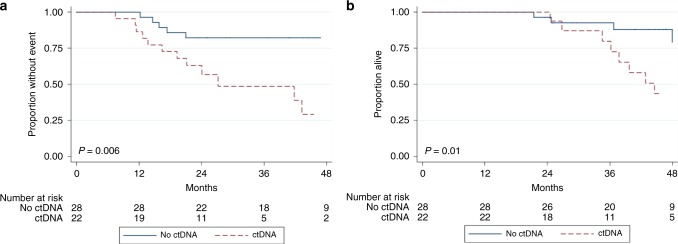
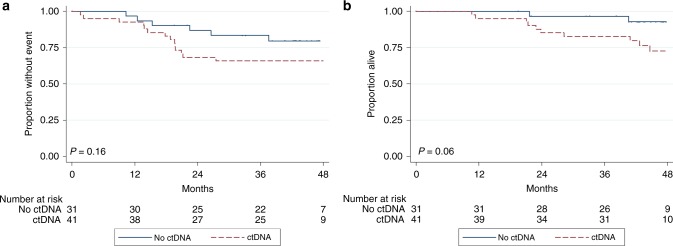
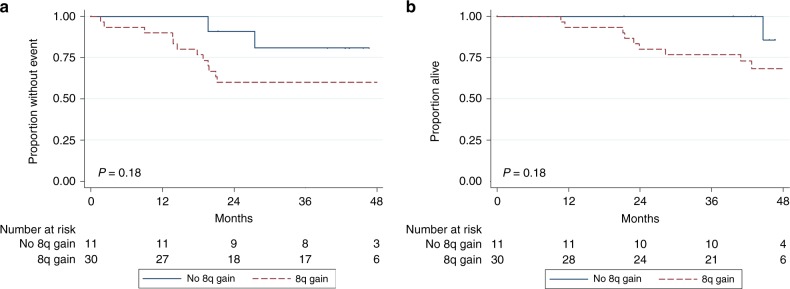
Verification
Claims the paper makes
The claims and statistics of this paper haven’t been checked yet.
Free: it reads the open-access text and checks the first 5 claims that cite a source we can check. Create a free account to check every claim.
Claims other papers make about this one
Each is checked against this paper’s own text: does it say what the citing paper says it does?
The source backs part of the claim, not all of it — or backs it for a different population, condition or comparison.
In the citing paper
“Studies to date have demonstrated the prognostic impact of ctDNA in Ewing sarcoma (EWS), rhabdomyosarcoma, Wilms tumor (WT), and osteosarcoma (OS).14–18”
From Clinical Liquid Biopsy Testing for Detection of Actionable Genomic Alterations in Children and Young Adults With Advanced Solid Tumors on the GAIN Study (2026) · cites this paper as [14]
Experimental — accuracy not yet measuredThe source backs part of the claim, not all of it — or backs it for a different population, condition or comparison.
In the citing paper
“In contrast, broad plasma panels, CNA-based WGS, methylation-based assays, cfRNA approaches, and CTC-based strategies remain more exploratory or proof-of-concept in most sarcoma subtypes, particularly when applied to low-volume MRD or routine surveillance settings [ 25 , 26 , 27 , 28 , 29 , 30 , 31 , 32 , 33 , 34 , 35 , 36 , 37 , 38 , 39 ].”
From Signals Alongside Scans: A Genomics-Guided Framework for Liquid Biopsy in Bone and Soft-Tissue Sarcomas (2026) · cites this paper as [31]
Experimental — accuracy not yet measuredIn the citing paper
“In a Children’s Oncology Group cohort, ctDNA was detectable in more than half of newly diagnosed Ewing sarcoma and osteosarcoma cases, and detectable ctDNA was associated with inferior outcomes, particularly in localized Ewing sarcoma [ 31 ].”
From Signals Alongside Scans: A Genomics-Guided Framework for Liquid Biopsy in Bone and Soft-Tissue Sarcomas (2026) · cites this paper as [31]
In the citing paper
“At baseline, detectable ctDNA has been associated with adverse disease features in several sarcoma settings.”
From Signals Alongside Scans: A Genomics-Guided Framework for Liquid Biopsy in Bone and Soft-Tissue Sarcomas (2026) · cites this paper as [31]
Self-check
Percentages, sums and reported differences re-computed from the paper’s own numbers.
The self-check needs the paper’s full text.
Citations
Cites
Fast and accurate short read alignment with Burrows-Wheeler transform
Li, H., & Durbin, R. (2009) · Bioinformatics · doi:10.1093/bioinformatics/btp324 · Cited by 58,607
The Genome Analysis Toolkit: A MapReduce framework for analyzing next-generation DNA sequencing data
McKenna, A., Hanna, M., Banks, E., Sivachenko, A., Cibulskis, K., Kernytsky, A., Garimella, K., Altshuler, D., Gabriel, S., Daly, M., et al. (2010) · Genome Research · doi:10.1101/gr.107524.110 · Cited by 27,895
A framework for variation discovery and genotyping using next-generation DNA sequencing data
DePristo, M. A., Banks, E., Poplin, R., Garimella, K. V., Maguire, J. R., Hartl, C., Philippakis, A. A., del Angel, G., Rivas, M. A., Hanna, M., et al. (2011) · Nature Genetics · doi:10.1038/ng.806 · Cited by 11,456
Detection of Circulating Tumor DNA in Early- and Late-Stage Human Malignancies
Bettegowda, C., Sausen, M., Leary, R. J., Kinde, I., Wang, Y., Agrawal, N., Bartlett, B. R., Wang, H., Luber, B., Alani, R. M., et al. (2014) · Science Translational Medicine · doi:10.1126/scitranslmed.3007094 · Cited by 5,067
Liquid biopsies come of age: Towards implementation of circulating tumour DNA
Wan, J. C. M., Massie, C., Garcia-Corbacho, J., Mouliere, F., Brenton, J. D., Caldas, C., Pacey, S., Baird, R., & Rosenfeld, N. (2017) · Nature Reviews Cancer · doi:10.1038/nrc.2017.7 · Cited by 2,809
Bielack, S. S., Kempf-Bielack, B., Delling, G., Exner, G. U., Flege, S., Helmke, K., Kotz, R., Salzer-Kuntschik, M., Werner, M., Winkelmann, W., et al. (2002) · Journal of Clinical Oncology · doi:10.1200/jco.2002.20.3.776 · Cited by 2,393
Germline Mutations in Predisposition Genes in Pediatric Cancer
Zhang, J., Walsh, M. F., Wu, G., Edmonson, M. N., Gruber, T. A., Easton, J., Hedges, D., Ma, X., Zhou, X., Yergeau, D. A., et al. (2015) · New England Journal of Medicine · doi:10.1056/nejmoa1508054 · Cited by 1,345
Grier, H. E., Krailo, M. D., Tarbell, N. J., Link, M. P., Fryer, C. J. H., Pritchard, D. J., Gebhardt, M. C., Dickman, P. S., Perlman, E. J., Meyers, P. A., et al. (2003) · New England Journal of Medicine · doi:10.1056/nejmoa020890 · Cited by 1,328
Self-citationLink, M. P., Goorin, A. M., Miser, A. W., Green, A. A., Pratt, C. B., Belasco, J. B., Pritchard, J., Malpas, J. S., Baker, A. R., Kirkpatrick, J. A., et al. (1986) · New England Journal of Medicine · doi:10.1056/nejm198606193142502 · Cited by 1,204
Scalable whole-exome sequencing of cell-free DNA reveals high concordance with metastatic tumors
Adalsteinsson, V. A., Ha, G., Freeman, S. S., Choudhury, A. D., Stover, D. G., Parsons, H. A., Gydush, G., Reed, S. C., Rotem, D., Rhoades, J., et al. (2017) · Nature Communications · doi:10.1038/s41467-017-00965-y · Cited by 1,051 · cited 2×
“ULP-WGS analysis was performed using the Broad Institute’s ichorCNA algorithm, with manual curation of results to confirm tumour percentages.(27) Previous studies demonstrate that ULPWGS can be used to identify ctDNA in patients with copy numberaltered tumours.”
MethodSelf-citationCotterill, S. J., Ahrens, S., Paulussen, M., Jürgens, H. F., Voûte, P. A., Gadner, H., & Craft, A. W. (2000) · Journal of Clinical Oncology · doi:10.1200/jco.2000.18.17.3108 · Cited by 1,040
Womer, R. B., West, D. C., Krailo, M. D., Dickman, P. S., Pawel, B. R., Grier, H. E., Marcus, K., Sailer, S., Healey, J. H., Dormans, J. P., et al. (2012) · Journal of Clinical Oncology · doi:10.1200/jco.2011.41.5703 · Cited by 757
Self-citationBacci, G., Longhi, A., Versari, M., Mercuri, M., Briccoli, A., & Picci, P. (2006) · Cancer · doi:10.1002/cncr.21724 · Cited by 569
The Genomic Landscape of Pediatric Ewing Sarcoma
Crompton, B. D., Stewart, C., Taylor-Weiner, A., Alexe, G., Kurek, K. C., Calicchio, M. L., Kiezun, A., Carter, S. L., Shukla, S. A., Mehta, S. S., et al. (2014) · Cancer Discovery · doi:10.1158/2159-8290.cd-13-1037 · Cited by 566
Self-citationTirode, F., Surdez, D., Ma, X., Parker, M., Le Deley, M. C., Bahrami, A., Zhang, Z., Lapouble, E., Grossetête-Lalami, S., Rusch, M., et al. (2014) · Cancer Discovery · doi:10.1158/2159-8290.cd-14-0622 · Cited by 565
Marina, N. M., Smeland, S., Bielack, S. S., Bernstein, M., Jovic, G., Krailo, M. D., Hook, J. M., Arndt, C., van den Berg, H., Brennan, B., et al. (2016) · The Lancet Oncology · doi:10.1016/s1470-2045(16)30214-5 · Cited by 551
Self-citationDETECTION OF CIRCULATING TUMOR DNA IN EARLY AND LATE STAGE HUMAN MALIGNANCIES
Bettegowda, C., Sausen, M., Leary, R., Kinde, I., Agrawal, N., Bartlett, B., Wang, H., Luber, B., Kinzler, K., Vogelstein, B., et al. (2014) · Neuro-Oncology · doi:10.1093/neuonc/nou206.24 · Cited by 441
The Genomic Landscape of the Ewing Sarcoma Family of Tumors Reveals Recurrent STAG2 Mutation
Brohl, A. S., Solomon, D. A., Chang, W., Wang, J., Song, Y., Sindiri, S., Patidar, R., Hurd, L., Chen, L., Shern, J. F., et al. (2014) · PLoS Genetics · doi:10.1371/journal.pgen.1004475 · Cited by 435
Origin and quantification of circulating DNA in mice with human colorectal cancer xenografts
Thierry, A. R., Mouliere, F., Gongora, C., Ollier, J., Robert, B., Ychou, M., Del Rio, M., & Molina, F. (2010) · Nucleic Acids Research · doi:10.1093/nar/gkq421 · Cited by 299
Lecomte, T., Berger, A., Zinzindohoué, F., Micard, S., Landi, B., Blons, H., Beaune, P., Cugnenc, P., & Laurent‐Puig, P. (2002) · International Journal of Cancer · doi:10.1002/ijc.10526 · Cited by 292
Schleiermacher, G., Peter, M., Oberlin, O., Philip, T., Rubie, H., Mechinaud, F., Sommelet-Olive, D., Landman-Parker, J., Bours, D., Michon, J., et al. (2003) · Journal of Clinical Oncology · doi:10.1200/jco.2003.03.006 · Cited by 210
Abo, R. P., Ducar, M., Garcia, E. P., Thorner, A. R., Rojas-Rudilla, V., Lin, L., Sholl, L. M., Hahn, W. C., Meyerson, M., Lindeman, N. I., et al. (2015) · Nucleic Acids Research · doi:10.1093/nar/gku1211 · Cited by 205
Self-citationMcBride, D. J., Orpana, A. K., Sotiriou, C., Joensuu, H., Stephens, P. J., Mudie, L. J., Hämäläinen, E., Stebbings, L. A., Andersson, L. C., Flanagan, A. M., et al. (2010) · Genes, Chromosomes and Cancer · doi:10.1002/gcc.20815 · Cited by 196
Klega, K., Imamovic-Tuco, A., Ha, G., Clapp, A. N., Meyer, S., Ward, A., Clinton, C., Nag, A., Van Allen, E., Mullen, E., et al. (2018) · JCO Precision Oncology · doi:10.1200/po.17.00285 · Cited by 136 · cited 9×
“Although germline TP53 mutations in Ewing sarcoma are rare,33 we cannot definitively confirm that these events were somatic in the absence of germline DNA.”
MethodInfluentialSelf-citationGenetic imbalances revealed by comparative genomic hybridization in osteosarcomas
Ozaki, T., Schaefer, K., Wai, D., Buerger, H., Flege, S., Lindner, N., Kevric, M., Diallo, R., Bankfalvi, A., Brinkschmidt, C., et al. (2002) · International Journal of Cancer · doi:10.1002/ijc.10709 · Cited by 101
Genomic EWSR1 Fusion Sequence as Highly Sensitive and Dynamic Plasma Tumor Marker in Ewing Sarcoma
Krumbholz, M., Hellberg, J., Steif, B., Bäuerle, T., Gillmann, C., Fritscher, T., Agaimy, A., Frey, B., Juengert, J., Wardelmann, E., et al. (2016) · Clinical Cancer Research · doi:10.1158/1078-0432.ccr-15-3028 · Cited by 96
Allen‐Rhoades, W., Kurenbekova, L., Satterfield, L., Parikh, N., Fuja, D., Shuck, R. L., Rainusso, N., Trucco, M., Barkauskas, D. A., Jo, E., et al. (2015) · Cancer Medicine · doi:10.1002/cam4.438 · Cited by 80
Self-citationKaya, M., Wada, T., Kawaguchi, S., Nagoya, S., Yamashita, T., Abe, Y., Hiraga, H., Isu, K., Shindoh, M., Higashino, F., et al. (2002) · British Journal of Cancer · doi:10.1038/sj.bjc.6600201 · Cited by 79
Ma, W., Zhang, X., Chai, J., Chen, P., Ren, P., & Gong, M. (2014) · Tumor Biology · doi:10.1007/s13277-014-2565-x · Cited by 77
Highly personalized detection of minimal Ewing sarcoma disease burden from plasma tumor DNA
Hayashi, M., Chu, D., Meyer, C. F., Llosa, N. J., McCarty, G., Morris, C. D., Levin, A. S., Wolinsky, J., Albert, C. M., Steppan, D. A., et al. (2016) · Cancer · doi:10.1002/cncr.30144 · Cited by 75
Identification of Discrete Prognostic Groups in Ewing Sarcoma
Karski, E. E., McIlvaine, E. J., Segal, M. R., Krailo, M., Grier, H. E., Granowetter, L., Womer, R. B., Meyers, P. A., Felgenhauer, J. L., Marina, N. M., et al. (2015) · Pediatric Blood & Cancer · doi:10.1002/pbc.25709 · Cited by 73
Self-citationFlow cytometric detection of Ewing sarcoma cells in peripheral blood and bone marrow
DuBois, S. G., Epling, C. L., Teague, J., Matthay, K. K., & Sinclair, E. (2010) · Pediatric Blood & Cancer · doi:10.1002/pbc.22245 · Cited by 63
Self-citationDetection of circulating tumor DNA in patients with osteosarcoma
Barris, D. M., Weiner, S. B., Dubin, R. A., Fremed, M., Zhang, X., Piperdi, S., Zhang, W., Maqbool, S., Gill, J., Roth, M., et al. (2018) · Oncotarget · doi:10.18632/oncotarget.24268 · Cited by 63
Shukla, N. N., Patel, J. A., Magnan, H., Zehir, A., You, D., Tang, J., Meng, F., Samoila, A., Slotkin, E. K., Ambati, S. R., et al. (2017) · JCO Precision Oncology · doi:10.1200/po.16.00028 · Cited by 52
Gutteridge, A., Rathbone, V. M., Gibbons, R., Bi, M., Archard, N., Davies, K. E. J., Brown, J., Plagnol, V., Pillay, N., Amary, F., et al. (2017) · Cancer Medicine · doi:10.1002/cam4.1146 · Cited by 38
Ash, S., Luria, D., Cohen, I. J., Goshen, Y., Toledano, H., Issakov, J., Yaniv, I., & Avigad, S. (2011) · Clinical Cancer Research · doi:10.1158/1078-0432.ccr-10-3069 · Cited by 31
Vo, K. T., Edwards, J. V., Epling, C. L., Sinclair, E., Hawkins, D. S., Grier, H. E., Janeway, K. A., Barnette, P., McIlvaine, E. J., Krailo, M., et al. (2016) · Clinical Cancer Research · doi:10.1158/1078-0432.ccr-15-2516 · Cited by 27
Self-citationDuBois, S. G., Stempak, D., Wu, B. H., Mokhtari, R. B., Nayar, R., Janeway, K. A., Goldsby, R. E., Grier, H. E., & Baruchel, S. (2011) · Pediatric Blood & Cancer · doi:10.1002/pbc.23046 · Cited by 23
Self-citation
Cited by
Liquid biopsy in cancer: current status, challenges and future prospects
Ma, L., Guo, H., Zhao, Y., Liu, Z., Wang, C., Bu, J., Sun, T., & Wei, J. (2024) · Signal Transduction and Targeted Therapy · doi:10.1038/s41392-024-02021-w · Cited by 712
Sarcoma treatment in the era of molecular medicine
Grünewald, T. G., Alonso, M., Avnet, S., Banito, A., Burdach, S., Cidre‐Aranaz, F., Di Pompo, G., Distel, M., Dorado‐Garcia, H., Garcia‐Castro, J., et al. (2020) · EMBO Molecular Medicine · doi:10.15252/emmm.201911131 · Cited by 319
“…the genetic aberrations of cancer cells at a given time. cfDNA was recently detected in plasma of bone sarcoma (Gutteridge et al, 2017; Shukla et al, 2017; Barris et al, 2018) and STS patients (Boonstra et al, 2018; Eastley et al, 2018; Namløs et al, 2018; Ogino et al, 2018; Shulman et al, 2018).”
BackgroundEwing Sarcoma—Diagnosis, Treatment, Clinical Challenges and Future Perspectives
Zöllner, S. K., Amatruda, J. F., Bauer, S., Collaud, S., de Álava, E., DuBois, S. G., Hardes, J., Hartmann, W., Kovar, H., Metzler, M., et al. (2021) · Journal of Clinical Medicine · doi:10.3390/jcm10081685 · Cited by 271
Self-citationThe genomic landscape of pediatric cancers: Implications for diagnosis and treatment
Sweet-Cordero, E. A., & Biegel, J. A. (2019) · Science · doi:10.1126/science.aaw3535 · Cited by 225
Peneder, P., Stütz, A. M., Surdez, D., Krumbholz, M., Semper, S., Chicard, M., Sheffield, N. C., Pierron, G., Lapouble, E., Tötzl, M., et al. (2021) · Nature Communications · doi:10.1038/s41467-021-23445-w · Cited by 200
Metadata
- Authors
- Shulman, D. S., Klega, K., Imamovic-Tuco, A., Clapp, A., Nag, A., Thorner, A. R., Van Allen, E., Ha, G., Lessnick, S. L., Gorlick, R., Janeway, K. A., Leavey, P. J., Mascarenhas, L., London, W. B., Vo, K. T., Stegmaier, K., Hall, D., Krailo, M. D., Barkauskas, D. A., DuBois, S. G., & Crompton, B. D.
- Affiliations
- Harvard University (US)
- Dana-Farber Cancer Institute (US)
- Broad Institute (US)
- Nationwide Children's Hospital (US)
- The University of Texas MD Anderson Cancer Center (US)
- The University of Texas Southwestern Medical Center (US)
- University of Southern California (US)
- University of California, San Francisco (US)
- Children's Oncology Group (US)
- Corresponding author
- Crompton, Brian D.
- ORCID
- Venue
- British Journal of Cancer
- Published
- 2018-08
- Volume
- 119
- Issue
- 5
- Pages
- 615-621
- ISSN
- 0007-0920 (ISSN-L)
- 1532-1827
- PMC
- PMC6162271
- OpenAlex
- W2888384864
- Cited by
- 149
- References
- 38
- Citations by year
- 2026: 21 · 2025: 20 · 2024: 26 · 2023: 25 · 2022: 17 · 2021: 14 · 2020: 14 · 2019: 11 · 2018: 1
- FWCI
- 7.53
- Type
- journal article
- Language
- en
- Update notices
- correction (2019-03-18)
- Open access
- hybrid
- doi.org
- Licence
- cc-by
- creativecommons.org/licenses/by/4.0 (tdm)
- Locations
- British Journal of Cancer (publishedVersion, cc-by)
- Europe PMC (PubMed Central) (publishedVersion, cc-by)
- PubMed Central (publishedVersion, cc-by)
- PubMed (publishedVersion)
- eScholarship (California Digital Library) (submittedVersion)
- eScholarship (California Digital Library) (submittedVersion, cc-by)
- Funders
- Dr. Ha has a patent pending related to genomic technologies that is not directly related to this work.
- Dr. Stephen Lessnick holds patents relevant to the diagnosis of Ewing sarcoma
- Topics
- Health Sciences › Medicine › Oncology › Sarcoma Diagnosis and Treatment
- Life Sciences › Biochemistry, Genetics and Molecular Biology › Cancer Research › Cancer Genomics and Diagnostics
- Health Sciences › Medicine › Hematology › Acute Lymphoblastic Leukemia research
- Keywords
- circulating tumor DNA, Ewing sarcoma, osteosarcoma, prognostic factors, liquid biopsy, event-free survival, overall survival, pediatric bone tumors, hybrid capture sequencing
- MeSH terms
- Circulating Tumor DNA, Adolescent, Bone Neoplasms, Child, Child, Preschool, Female, Humans, Male, Prognosis, Retrospective Studies, Sarcoma, Ewing, Osteosarcoma, Biomarkers, Tumor, Cohort Studies, Survival Analysis, Sequence Analysis, DNA, High-Throughput Nucleotide Sequencing
About these checks
Registry, retraction, Cites and statistics results are computed, not judged, with one exception: a printed reference that no index lists is read once by a model before it counts as a citation error. Claims are extracted by a model and kept only when their quote appears verbatim in the text; each cited source is then checked, with a model’s help, for whether it says what the claim relies on. Those verdicts can be wrong — read the claim’s quote and the cited source before relying on one.
Statistics and arithmetic are recomputed, not judged.
Confidence bands are shown only for fields calibrated on our annotated test set. None is calibrated yet, so no band is shown.
What counts as a claim ›How we measure confidence ›How we check this ›
Are you an author, or do you see a problem with this page? Request a review
Data sources
Bibliographic data: Semantic Scholar, OpenAlex, Crossref.
Contains information from the Semantic Scholar Academic Graph Datasets, made available under the ODC Attribution License (ODC-BY 1.0).
Semantic Scholar’s data is described in: Kinney, R., et al. (2023). The Semantic Scholar Open Data Platform. arXiv:2301.10140.
