

Early immune modulation by single-agent trastuzumab as a marker of trastuzumab benefit
Open accessThe DOI matches its Crossref record; 36 of the 36 references it cites were found in a registry or an index.
Abstract
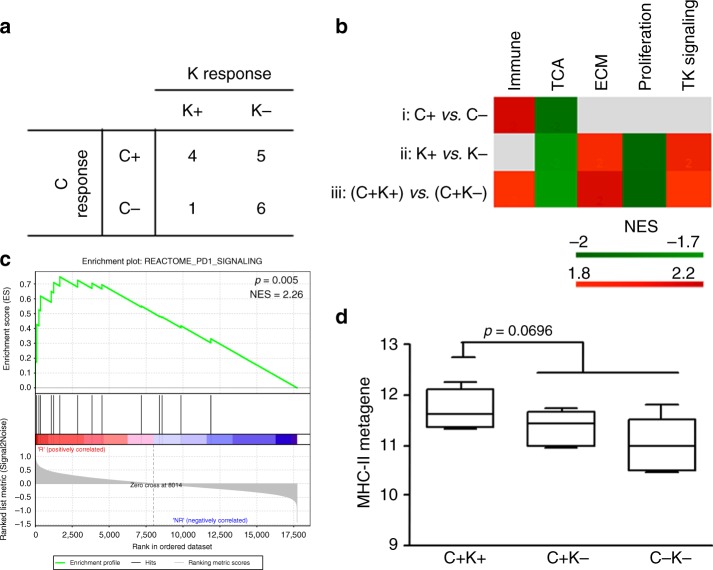
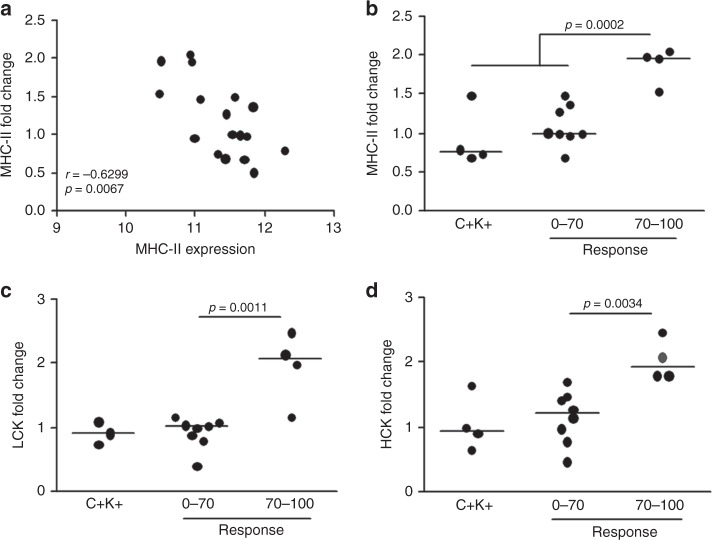
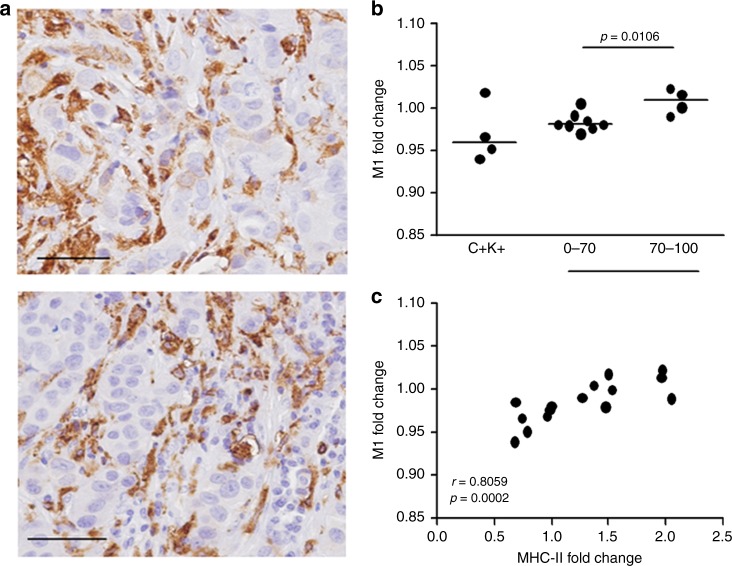
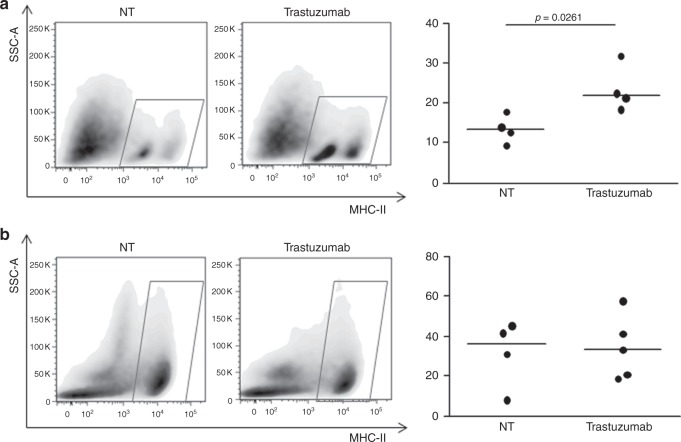
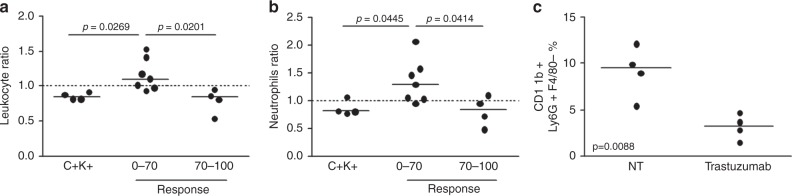
BACKGROUND: Optimising the selection of HER2-targeted regimens by identifying subsets of HER2-positive breast cancer (BC) patients who need more or less therapy remains challenging. We analysed BC samples before and after treatment with 1 cycle of trastuzumab according to the response to trastuzumab. METHODS: Gene expression profiles of pre- and post-treatment tumour samples from 17 HER2-positive BC patients were analysed on the Illumina platform. Tumour-associated immune pathways and blood counts were analysed with regard to the response to trastuzumab. HER2-positive murine models with differential responses to trastuzumab were used to reproduce and better characterise these data. RESULTS: Patients who responded to single-agent trastuzumab had basal tumour biopsies that were enriched in immune pathways, particularly the MHC-II metagene. One cycle of trastuzumab modulated the expression levels of MHC-II genes, which increased in patients who had a complete response on treatment with trastuzumab and chemotherapy. Trastuzumab increased the MHC-II-positive cell population, primarily macrophages, only in the tumour microenvironment of responsive mice. In patients who benefited from complete trastuzumab therapy and in mice that harboured responsive tumours circulating neutrophil levels declined, but this cell subset rose in nonresponsive tumours. CONCLUSIONS: Short treatment with trastuzumab induces local and systemic immunomodulation that is associated with clinical outcomes.
Overview
The claims and statistics of this paper haven’t been checked yet.
Free: it reads the open-access text and checks the first 5 claims that cite a source we can check. Create a free account to check every claim.
Integrity signals
Registry
Cites
Statistics
Figures
Verification
Claims the paper makes
The claims and statistics of this paper haven’t been checked yet.
Free: it reads the open-access text and checks the first 5 claims that cite a source we can check. Create a free account to check every claim.
Claims other papers make about this one
Each is checked against this paper’s own text: does it say what the citing paper says it does?
In the citing paper
“tation on MHC class I and II molecules (Kono et al., 2004; Triulzi et al., 2018), as well as MYD88 innate immune signal transduction adaptor (MYD88)-dependent immunostimulation (Stagg et al., 2011), culminating in increased antigen processing and presentation by DCs (Gall et al., 2017).”
From Immunomodulation by targeted anticancer agents (2021) · cites this paper as Triulzi et al., 2018
In the citing paper
“MHC class I and II upregulation in different HER2-overexpressing cancer cells and HER2 + BC biopsies”
From Immunomodulation by targeted anticancer agents (2021) · cites this paper as Triulzi et al., 2018
Self-check
Percentages, sums and reported differences re-computed from the paper’s own numbers.
The self-check needs the paper’s full text.
Citations
Cites
Subramanian, A., Tamayo, P., Mootha, V. K., Mukherjee, S., Ebert, B. L., Gillette, M. A., Paulovich, A., Pomeroy, S. L., Golub, T. R., Lander, E. S., et al. (2005) · Proceedings of the National Academy of Sciences · doi:10.1073/pnas.0506580102 · Cited by 53,625
Robust enumeration of cell subsets from tissue expression profiles
Newman, A. M., Liu, C. L., Green, M. R., Gentles, A. J., Feng, W., Xu, Y., Hoang, C. D., Diehn, M., & Alizadeh, A. A. (2015) · Nature Methods · doi:10.1038/nmeth.3337 · Cited by 13,224
Adjuvant Trastuzumab in HER2-Positive Breast Cancer
Slamon, D., Eiermann, W., Robert, N., Pienkowski, T., Martin, M., Press, M., Mackey, J., Glaspy, J., Chan, A., Pawlicki, M., et al. (2011) · New England Journal of Medicine · doi:10.1056/nejmoa0910383 · Cited by 2,775 · cited 1×
“Treatment with trastuzumab and chemotherapy has dramatically changed the prognosis of early and advanced HER2-positive (HER2+) BC patients.(1) More recently, the introduction and availability of other HER2-targeting agents offer clinicians the ability to provide prolonged inhibition of HER2 signalling across multiple…”
BackgroundGianni, L., Pienkowski, T., Im, Y.-H., Roman, L., Tseng, L.-M., Liu, M.-C., Lluch, A., Staroslawska, E., de la Haba-Rodriguez, J., Im, S.-A., et al. (2012) · The Lancet Oncology · doi:10.1016/s1470-2045(11)70336-9 · Cited by 2,374
Adjuvant Pertuzumab and Trastuzumab in Early HER2-Positive Breast Cancer
von Minckwitz, G., Procter, M., de Azambuja, E., Zardavas, D., Benyunes, M., Viale, G., Suter, T., Arahmani, A., Rouchet, N., Clark, E., et al. (2017) · New England Journal of Medicine · doi:10.1056/nejmoa1703643 · Cited by 1,411
Arginase: an emerging key player in the mammalian immune system
Munder, M. (2009) · British Journal of Pharmacology · doi:10.1111/j.1476-5381.2009.00291.x · Cited by 694
The therapeutic effect of anti-HER2/neu antibody depends on both innate and adaptive immunity
Park, S., Jiang, Z., Mortenson, E. D., Deng, L., Radkevich-Brown, O., Yang, X., Sattar, H., Wang, Y., Brown, N. K., Greene, M., et al. (2010) · Cancer Cell · doi:10.1016/j.ccr.2010.06.014 · Cited by 577
Arnould, L., Gelly, M., Penault-Llorca, F., Benoit, L., Bonnetain, F., Migeon, C., Cabaret, V, Fermeaux, V, Bertheau, P., Garnier, J., et al. (2006) · British Journal of Cancer · doi:10.1038/sj.bjc.6602930 · Cited by 545
Myeloid-Derived Suppressor Cells Hinder the Anti-Cancer Activity of Immune Checkpoint Inhibitors
Weber, R., Fleming, V., Hu, X., Nagibin, V., Groth, C., Altevogt, P., Utikal, J., & Umansky, V. (2018) · Frontiers in Immunology · doi:10.3389/fimmu.2018.01310 · Cited by 538
Gennari, R., Menard, S., Fagnoni, F., Ponchio, L., Scelsi, M., Tagliabue, E., Castiglioni, F., Villani, L., Magalotti, C., Gibelli, N., et al. (2004) · Clinical Cancer Research · doi:10.1158/1078-0432.ccr-04-0225 · Cited by 516
Self-citation
Cited by
The KEYNOTE-811 trial of dual PD-1 and HER2 blockade in HER2-positive gastric cancer
Janjigian, Y. Y., Kawazoe, A., Yañez, P., Li, N., Lonardi, S., Kolesnik, O., Barajas, O., Bai, Y., Shen, L., Tang, Y., et al. (2021) · Nature · doi:10.1038/s41586-021-04161-3 · Cited by 720
Immunomodulation by targeted anticancer agents
Petroni, G., Buqué, A., Zitvogel, L., Kroemer, G., & Galluzzi, L. (2021) · Cancer Cell · doi:10.1016/j.ccell.2020.11.009 · Cited by 212
Gut Microbiota Condition the Therapeutic Efficacy of Trastuzumab in HER2-Positive Breast Cancer
Di Modica, M., Gargari, G., Regondi, V., Bonizzi, A., Arioli, S., Belmonte, B., De Cecco, L., Fasano, E., Bianchi, F., Bertolotti, A., et al. (2021) · Cancer Research · doi:10.1158/0008-5472.can-20-1659 · Cited by 184
“These modifications of the tumor immune microenvironment induced by the alteration of the gut microbiota, rather than its impact on tumor growth (39), are likely to be the reason for a reduced response to trastuzumab treatment, as tumor proliferation has never been associated with the efficacy of anti-HER2 monotherapy…”
BackgroundSelf-citationTargeting oncogene and non-oncogene addiction to inflame the tumour microenvironment
Petroni, G., Buqué, A., Coussens, L. M., & Galluzzi, L. (2022) · Nature Reviews Drug Discovery · doi:10.1038/s41573-022-00415-5 · Cited by 160
Bugide, S., Gupta, R., Green, M. R., & Wajapeyee, N. (2021) · Proceedings of the National Academy of Sciences · doi:10.1073/pnas.2102718118 · Cited by 90
Cancer-Associated Fibroblasts: Implications for Cancer Therapy
Maia, A. R. R., & Wiemann, S. (2021) · Cancers · doi:10.3390/cancers13143526 · Cited by 64
“CAFs might also play an important role in determining the success of tumour responses to anti-HER2 therapies such as trastuzumab, since the effectiveness of this therapeutic antibody is known to depend on the induction of an immune response, similarly to chemotherapy and radiotherapy [74,98,99].”
BackgroundCosentino, G., Plantamura, I., Tagliabue, E., Iorio, M. V., & Cataldo, A. (2021) · Cancers · doi:10.3390/cancers13153691 · Cited by 56
Self-citationTiainen, S., Rilla, K. J., Hämäläinen, K. M., Oikari, S., & Auvinen, P. (2020) · Breast Cancer Research and Treatment · doi:10.1007/s10549-020-05925-7 · Cited by 50
“In another study, after one cycle of trastuzumab, the neutrophil count decreased among patients exhibiting a response to trastuzumab but increased among those who did not benefit from trastuzumab [20].”
BackgroundImmune Checkpoint Inhibitors and Novel Immunotherapy Approaches for Breast Cancer
Solís, M. C., Vethencourt, A., & Pernas, S. (2022) · Current Oncology Reports · doi:10.1007/s11912-022-01339-4 · Cited by 40
Hamilton, E. P., Kaklamani, V., Falkson, C. I., Vidal, G. A., Ward, P. J., Patre, M., Chui, S. Y., Rotmensch, J., Gupta, K., Molinero, L. L., et al. (2021) · Clinical Breast Cancer · doi:10.1016/j.clbc.2021.04.011 · Cited by 37
Exploiting Gangliosides for the Therapy of Ewing’s Sarcoma and H3K27M-Mutant Diffuse Midline Glioma
Wingerter, A., Malki, K. E., Sandhoff, R., Seidmann, L., Wagner, D., Lehmann, N., Vewinger, N., Frauenknecht, K. B. M., Sommer, C., Traub, F., et al. (2021) · Cancers · doi:10.3390/cancers13030520 · Cited by 38
“Macrophages can induce antibody-dependent cellular phagocytosis (ADCP) and engage the adaptive arm of the immune system, and M1 macrophage infiltration has been shown to support the cytotoxic activity of trastuzumab in responsive tumors [59].”
BackgroundWang, W., He, H., Marín‐Ramos, N. I., Zeng, S., Swenson, S., Cho, H., Fu, J., Beringer, P. M., Neman, J., Chen, L., et al. (2021) · Neuro-Oncology · doi:10.1093/neuonc/noab041 · Cited by 32
Fontana, F., Esser, A. K., Egbulefu, C., Karmakar, P. S., Su, X., Allen, J. S., Xu, Y., Davis, J. L., Gabay, A. J., Xiang, J., et al. (2023) · PLoS ONE · doi:10.1371/journal.pone.0293700 · Cited by 34
Tolba, M. F., Elghazaly, H. A., Bousoik, E., Elmazar, M. M., & Tolaney, S. M. (2021) · Clinical & Translational Oncology · doi:10.1007/s12094-021-02613-w · Cited by 24
“reported that short-term trastuzumab therapy produces both local and systemic immunomodulation, which correlates with therapeutic outcome [13].”
BackgroundHER2 Inhibition in Gastric Cancer—Novel Therapeutic Approaches for an Established Target
Fong, C., & Chau, I. (2022) · Cancers · doi:10.3390/cancers14153824 · Cited by 17
Impact of Immune Cell Heterogeneity on HER2+ Breast Cancer Prognosis and Response to Therapy
Perrone, M., Talarico, G., Chiodoni, C., & Sangaletti, S. (2021) · Cancers · doi:10.3390/cancers13246352 · Cited by 22
“To confirm that the change in MHC-II expression was due to the recruitment of immune cells in the TME by the effects of trastuzumab, they moved to mouse models and showed that, among the immune cells recruited upon trastuzumab treatment, half of them were macrophages [71].”
BackgroundMethodCastagnoli, L., Franceschini, A., Cancila, V., Dugo, M., Bigliardi, M., Chiodoni, C., Toneguzzo, P., Regondi, V., Corsetto, P. A., Pietrantonio, F., et al. (2025) · Journal of Experimental & Clinical Cancer Research · doi:10.1186/s13046-025-03276-z · Cited by 17
“1B) [31].”
InfluentialSelf-citationCen, S., Yuan, M., Sun, Q., Hou, G., Ying, J., Xu, Q., Yu, Z., Dong, Y., Pan, H., & Han, W. (2024) · Scientific Reports · doi:10.1038/s41598-024-76296-y · Cited by 15
“Patients who responded well to trastuzumab had PD-1 signalling-enriched tumour biopsies 39 .”
BackgroundCardiotoxicity of anti-cancer drugs: cellular mechanisms and clinical implications
Kwok, C., & Nolan, M. T. (2023) · Frontiers in Cardiovascular Medicine · doi:10.3389/fcvm.2023.1150569 · Cited by 15
“It also triggers antibody-dependent cell-mediated cytotoxicity — increased antigen presentation by cancer cells via upregulation of MHC molecules (62), as well as increased activation of dendritic cells (63), natural killer cells (64), and macrophages (65).”
Cai, R., Chen, Q., Zhao, D., Wang, Y., Zhou, L., Zhang, K., Shan, J., Li, Z., Chen, Y., Zhang, H., et al. (2024) · International Journal of Biological Sciences · doi:10.7150/ijbs.94868 · Cited by 13
“Multiple biomarkers for prognosis of HER2+ BC have been reported [8-10].”
BackgroundChen, Y., Chen, D., Wang, Q., Xu, Y., Huang, X., Haglund, F., & Su, H. (2022) · Frontiers in Immunology · doi:10.3389/fimmu.2021.719105 · Cited by 14
“reported that MHC-II was highly correlated with the LCK and HCK metagene (66), which reflects the infiltration of T cells and monocytes (67).”
MethodRha, S. Y., & Chung, H. C. (2023) · Journal of the Korean Gastric Cancer Association · doi:10.5230/jgc.2023.23.e6 · Cited by 16
“A recent report showed that trastuzumab upregulates programmed cell death protein 1 (PD-1) and PD-L1 expression, induces cancer-specific CD4 and CD8 T-cell expansion, and modulates major histocompatibility complex (MHC) class II expression [14].”
BackgroundCDS-DB, an omnibus for patient-derived gene expression signatures induced by cancer treatment
Liu, Z., Chen, R., Yang, L., Jiang, J., Ma, S., Chen, L., He, M., Mao, Y., Guo, C., Kong, X., et al. (2023) · Nucleic Acids Research · doi:10.1093/nar/gkad888 · Cited by 12
“…(especially TME-related MOAs) in patients and reveal the molecular response mechanism that results in treatment sensitivity ( 7 ) or resistance ( 8 ), and even discover predictive biomarkers of treatment response ( 9 ) and potential combinational drug B to overcome resistance to drug A ( 10 ).”
BackgroundUnderstanding the molecular bridges between the drugs and immune cell
Dash, U. C., Nayak, V., Navani, H. S., Samal, R. R., Agrawal, P., Singh, A. K., Majhi, S., Mogare, D., Duttaroy, A. K., & Jena, A. B. (2025) · Pharmacology & Therapeutics · doi:10.1016/j.pharmthera.2025.108805 · Cited by 14
Caparica, R., Ma, Y., Angelis, C. D., Richard, F., Desmedt, C., Awada, A. H., Piccart, M. J., Perez, E. A., Moreno‐Aspitia, A., Badve, S., et al. (2021) · Clinical Breast Cancer · doi:10.1016/j.clbc.2021.11.012 · Cited by 12
Lin, C.-Y., Yu, C.-J., Shen, C., Liu, C., Chao, T., Huang, C., Tseng, L., & Lai, J. (2022) · Medical Oncology · doi:10.1007/s12032-022-01812-x · Cited by 12
Deng, T., Li, D., Yang, Y., Wang, F., Bai, M., Liu, R., Li, H., & Ba, Y. (2023) · Frontiers in Oncology · doi:10.3389/fonc.2023.1166040 · Cited by 8
“Moreover, trastuzumab could enhance the efficacy of immune checkpoint inhibitors through increasing HER2 internalization and cross-presentation by dendritic cells (20), upregulating PD-1 and PD-L1 expression, inducing the expansion of tumor-specific CD4 and CD8 T cells and MHC class II expression (11, 12, 21).”
BackgroundDirect and indirect engagement of dendritic cell function by antibodies developed for cancer therapy
Corogeanu, D., & Diebold, S. S. (2022) · Clinical & Experimental Immunology · doi:10.1093/cei/uxac026 · Cited by 10
Cancer treatments as paradoxical catalysts of tumor awakening in the lung
Nicolas, É., Kośmider, B., Cukierman, E., Borghaei, H., Golemis, E. A., & Borriello, L. (2024) · Cancer and Metastasis Reviews · doi:10.1007/s10555-024-10196-5 · Cited by 11
Liu, Z., Liu, A., Li, M., Xiang, J., Yu, G., & Sun, P. B. (2025) · Frontiers in Immunology · doi:10.3389/fimmu.2025.1545304 · Cited by 7
Patterns of Cell Death Induced by Thiohydantoins in Human MCF-7 Breast Cancer Cells
Fagundes, T. R., Bortoleti, B. T. D. S., Camargo, P. G., Concato, V. M., Tomiotto‐Pellissier, F., Carloto, A. C. M., Panis, C., Bispo, M. D. L. F., Macedo, F., Costa, I. C., et al. (2021) · Anti-Cancer Agents in Medicinal Chemistry · doi:10.2174/1871520621666210811102441 · Cited by 7
Progress of PD-1/PD-L1 inhibitor combination therapy in immune treatment for HER2-positive tumors
Zhao, S., Qiu, Y., Yuan, M., & Wang, Z. (2024) · European Journal of Clinical Pharmacology · doi:10.1007/s00228-024-03644-2 · Cited by 8
“Currently, multiple clinical trials on breast and gastric cancers are underway or have explored the effectiveness of these combined treatment approaches [24–27].”
Combination Immunotherapy Strategies in Breast Cancer
Chun, B., Page, D. B., & McArthur, H. L. (2019) · Current Breast Cancer Reports · doi:10.1007/s12609-019-00333-3 · Cited by 9
Triulzi, T., Regondi, V., Venturelli, E., Gasparini, P., Ghirelli, C., Groppelli, J., Modica, M. D., Bianchi, F., Cecco, L. D., Sfondrini, L., et al. (2022) · Cancers · doi:10.3390/cancers14225650 · Cited by 6
“Immunofluorescence (IF) analyses were performed as described [25].”
MethodSelf-citationFurrer, D., Dragic, D., Chang, S.-L., Fournier, F., Droit, A., Jacob, S., & Diorio, C. (2022) · Cancer Drug Resistance · doi:10.20517/cdr.2022.63 · Cited by 8
ALK inhibitors suppress HCC and synergize with anti-PD-1 therapy and ABT-263 in preclinical models
Bugide, S., Reddy, D. S., Malvi, P., Gupta, R., & Wajapeyee, N. (2024) · iScience · doi:10.1016/j.isci.2024.109800 · Cited by 4
“17 20 Therefore, we investigated whether lorlatinib was more effective in suppressing HCC in the presence of the human immune system than in the absence of the human immune system.”
Lopez-Mendez, J. M. I., Ventura-Gallegos, J. L., Camacho‐Arroyo, I., Lizano, M., Cabrera-Quintero, A. J., Romero-Cordoba, S. L., Martínez‐Vázquez, M., Jacobo-Herrera, N. J., León‐Del‐Río, A., Paredes‐Villa, A., et al. (2023) · Oncology Letters · doi:10.3892/ol.2023.14152 · Cited by 3
Vincken, R., Pasco, S. T., Steri, V., Bozal‐Basterra, L., van IJcken, W. F. J., Carracedo, A., Huylebroeck, D., Moasser, M. M., & Ruiz-Sáenz, A. (2026) · Biomedicine & Pharmacotherapy · doi:10.1016/j.biopha.2025.118898 · Cited by 3
Gastrointestinal cancer: Current status of preclinical research
Shahid, N., Hanif, S., Syed, M. A., Syed, H. K., Zahoor, A. F., Khan, I. U., Mohsin, N. U. A., Sonia, S., & Irfan, M. (2025) · Elsevier eBooks · doi:10.1016/b978-0-443-31656-2.00015-3 · Cited by 2
LaMonica, L. C., Lang, M. E., Harms, P. W., & Wang, F. (2025) · Australasian Journal of Dermatology · doi:10.1111/ajd.14456 · Cited by 2
Mamoor, S. (2020) · doi:10.31219/osf.io/r4g9t · Cited by 2
Seguchi, K., Kawazoe, A., Nakayama, I., & Shitara, K. (2026) · Expert Review of Anticancer Therapy · doi:10.1080/14737140.2026.2628069 · Cited by 1
Riller, Q., Varthaman, A., & Sibéril, S. (2020) · Advances in experimental medicine and biology · doi:10.1007/978-3-030-50224-9_9 · Cited by 1
BMPR1B is differentially expressed in the tumors of breast cancer patients treated with trastuzumab.Preprint
Mamoor, S. (2020) · doi:10.31219/osf.io/fqbms · Cited by 1
Mamoor, S. (2020) · doi:10.31219/osf.io/bp9uq · Cited by 1
MATK is differentially expressed in the tumors of breast cancer patients treated with trastuzumab.Preprint
Mamoor, S. (2020) · doi:10.31219/osf.io/sj2fb · Cited by 1
Mamoor, S. (2021) · OSF Preprints (OSF Preprints) · doi:10.31219/osf.io/9p5qd
Mamoor, S. (2020) · OSF Preprints (OSF Preprints) · doi:10.31219/osf.io/jf328
Activation of MYCN by trastuzumab.Preprint
Mamoor, S. (2020) · doi:10.31219/osf.io/mp2kx
MAF is differentially expressed in the tumors of breast cancer patients treated with trastuzumab.Preprint
Mamoor, S. (2020) · OSF Preprints (OSF Preprints) · doi:10.31219/osf.io/7g85t
IL-6 is differentially expressed in the tumors of breast cancer patients treated with trastuzumab.Preprint
Mamoor, S. (2020) · OSF Preprints (OSF Preprints) · doi:10.31219/osf.io/pcmnt
Trastuzumab supports transcription of genes associated with proliferation in human breast cancer.Preprint
Mamoor, S. (2020) · OSF Preprints (OSF Preprints) · doi:10.31219/osf.io/gzp75
Mamoor, S. (2020) · OSF Preprints (OSF Preprints) · doi:10.31219/osf.io/7qn4x
Mamoor, S. (2020) · OSF Preprints (OSF Preprints) · doi:10.31219/osf.io/k74fj
(2023) · doi:10.1158/0008-5472.c.6513535.v1
Self-citationResearch progress of perioperative immunotherapy for locally advanced gastric cancer
Ma, S., Zhang, W. W., Guo, X. X., Chen, Y., Zhao, Z., & Jiang, H. (2024) · Asia-Pacific Journal of Oncology · doi:10.32948/ajo.2024.03.01
Bui, I., Vivarelli, S., Falzone, L., Libra, M., & Bonavida, B. (2024) · Elsevier eBooks · doi:10.1016/b978-0-12-816408-2.00002-6
Profiling Multiple CD8+ T-cell Functional Dimensions Enhances Breast Cancer Immune Assessment
Liang, Z., Li, S., Pan, Z., Duan, Y., Ouyang, Q., Zhu, L., Song, E., & Chen, K. (2024) · Cancer Immunology Research · doi:10.1158/2326-6066.cir-24-0235
Lu, S., Zhang, Y., Tong, Y., Shu, L., Huang, R., Gu, Y., Wang, C., Li, J., Shen, K., Dong, L., et al. (2025) · Cancer Drug Resistance · doi:10.20517/cdr.2025.133 · Cited by 1
Zhang, J., Wang, Y., & Zou, M. (2026) · 3 Biotech · doi:10.1007/s13205-026-04756-5
“Traditional clinicopathologi - cal indicators, such as TNM staging, histological grade, and molecular subtyping (ER, PR, HER2 status), are widely autophagy mediates acquired resistance to Tamoxifen in ER-positive breast cancer by preventing apoptosis (Samaddar et al. 2008 ), and facilitates survival in HER2-positive t…”
Metadata
- Authors
- Triulzi, T., Regondi, V., De Cecco, L., Cappelletti, M. R., Di Modica, M., Paolini, B., Lollini, P. L., Di Cosimo, S., Sfondrini, L., Generali, D., & Tagliabue, E.
- Affiliations
- Fondazione IRCCS Istituto Nazionale dei Tumori (IT)
- Azienda Socio Sanitaria Territoriale di Cremona (IT)
- University of Bologna (IT)
- University of Milan (IT)
- University of Trieste (IT)
- Corresponding author
- Tagliabue, Elda
- ORCID
- Venue
- British Journal of Cancer
- Published
- 2018-11-27
- Volume
- 119
- Issue
- 12
- Pages
- 1487-1494
- ISSN
- 0007-0920 (ISSN-L)
- 1532-1827
- PMC
- PMC6288086
- OpenAlex
- W2900717255
- Cited by
- 94
- References
- 36
- Citations by year
- 2026: 3 · 2025: 6 · 2024: 8 · 2023: 7 · 2022: 9 · 2021: 16 · 2020: 44 · 2019: 1
- FWCI
- 5.72
- Type
- journal article
- Language
- en
- Open access
- hybrid
- doi.org
- Licence
- cc-by
- creativecommons.org/licenses/by/4.0 (tdm)
- Locations
- British Journal of Cancer (publishedVersion, cc-by)
- Europe PMC (PubMed Central) (publishedVersion, cc-by)
- PubMed Central (publishedVersion, cc-by)
- PubMed (publishedVersion)
- ArTS Archivio della ricerca di Trieste (University of Trieste https://www.units.it/) (submittedVersion, cc-by)
- Archivio Istituzionale della Ricerca (Universita Degli Studi Di Milano) (submittedVersion, other-oa)
- Archivio istituzionale della ricerca (Alma Mater Studiorum Università di Bologna) (submittedVersion, other-oa)
- Funders
- Associazione Italiana per la Ricerca sul Cancro
- Topics
- Health Sciences › Medicine › Oncology › HER2/EGFR in Cancer Research
- Health Sciences › Medicine › Oncology › Cancer Immunotherapy and Biomarkers
- Life Sciences › Biochemistry, Genetics and Molecular Biology › Cancer Research › Breast Cancer Treatment Studies
- Keywords
- trastuzumab, HER2-positive breast cancer, immunomodulation, MHC class II, tumor microenvironment, macrophages, neutrophils, treatment response prediction, gene expression profiling
- MeSH terms
- Trastuzumab, Antineoplastic Agents, Immunological, Animals, Breast Neoplasms, Female, Genes, MHC Class II, Humans, Immunologic Factors, Erb-b2 Receptor Tyrosine Kinases, Ki-67 Antigen, Mice, Tumor Microenvironment, Transcriptome
About these checks
Registry, retraction, Cites and statistics results are computed, not judged, with one exception: a printed reference that no index lists is read once by a model before it counts as a citation error. Claims are extracted by a model and kept only when their quote appears verbatim in the text; each cited source is then checked, with a model’s help, for whether it says what the claim relies on. Those verdicts can be wrong — read the claim’s quote and the cited source before relying on one.
Statistics and arithmetic are recomputed, not judged.
Confidence bands are shown only for fields calibrated on our annotated test set. None is calibrated yet, so no band is shown.
What counts as a claim ›How we measure confidence ›How we check this ›
Are you an author, or do you see a problem with this page? Request a review
Data sources
Bibliographic data: Semantic Scholar, OpenAlex, Crossref.
Contains information from the Semantic Scholar Academic Graph Datasets, made available under the ODC Attribution License (ODC-BY 1.0).
Semantic Scholar’s data is described in: Kinney, R., et al. (2023). The Semantic Scholar Open Data Platform. arXiv:2301.10140.
