

The therapeutic potential of targeting tryptophan catabolism in cancer
Open accessThe DOI matches its Crossref record; 219 of the 219 references it cites were found in a registry or an index.
Abstract
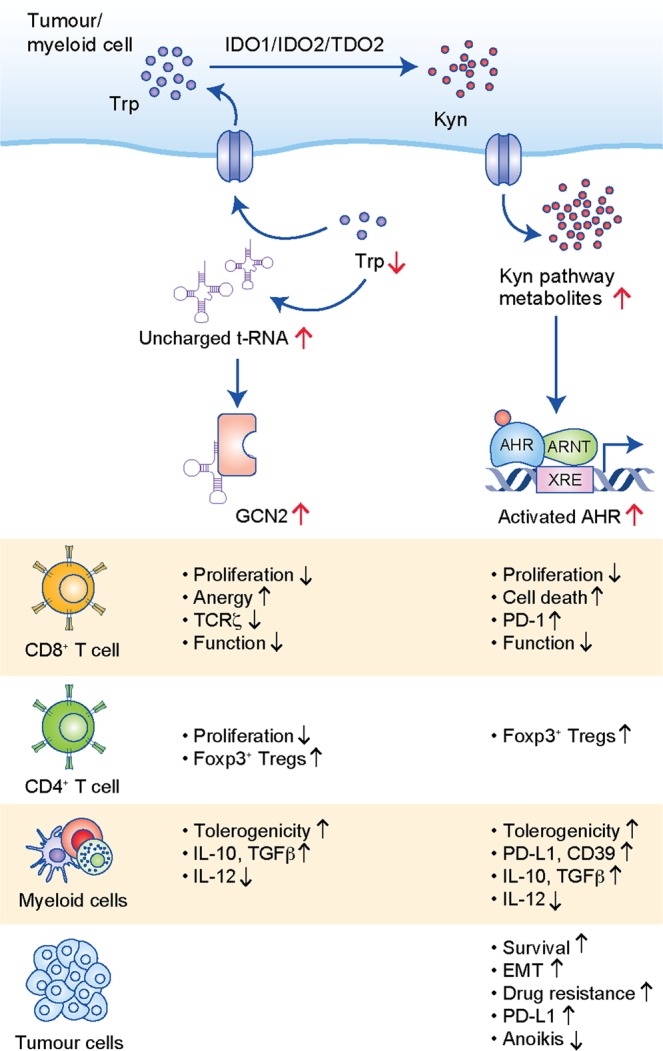
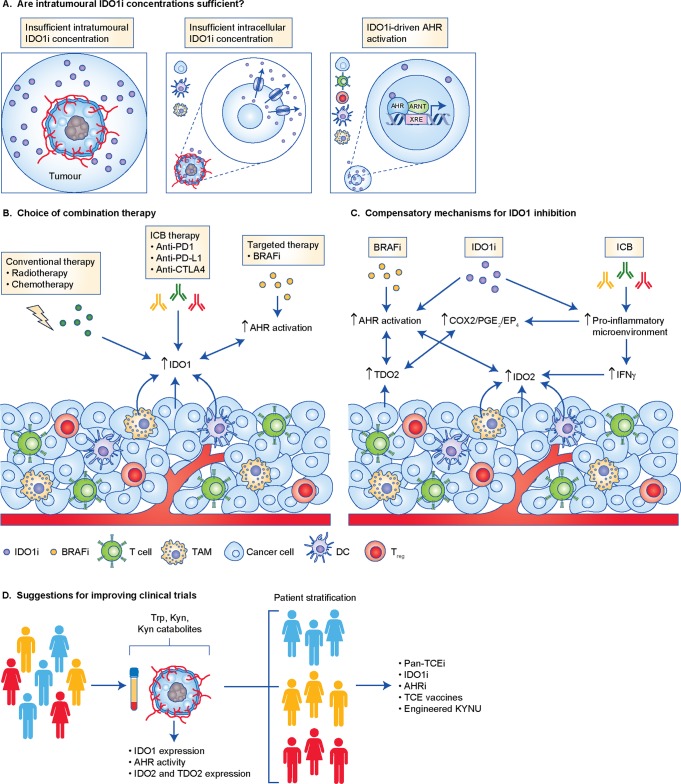
Based on its effects on both tumour cell intrinsic malignant properties as well as anti-tumour immune responses, tryptophan catabolism has emerged as an important metabolic regulator of cancer progression. Three enzymes, indoleamine-2,3-dioxygenase 1 and 2 (IDO1/2) and tryptophan-2,3-dioxygenase (TDO2), catalyse the first step of the degradation of the essential amino acid tryptophan (Trp) to kynurenine (Kyn). The notion of inhibiting IDO1 using small-molecule inhibitors elicited high hopes of a positive impact in the field of immuno-oncology, by restoring anti-tumour immune responses and synergising with other immunotherapies such as immune checkpoint inhibition. However, clinical trials with IDO1 inhibitors have yielded disappointing results, hence raising many questions. This review will discuss strategies to target Trp-degrading enzymes and possible down-stream consequences of their inhibition. We aim to provide comprehensive background information on Trp catabolic enzymes as targets in immuno-oncology and their current state of development. Details of the clinical trials with IDO1 inhibitors, including patient stratification, possible effects of the inhibitors themselves, effects of pre-treatments and the therapies the inhibitors were combined with, are discussed and mechanisms proposed that might have compensated for IDO1 inhibition. Finally, alternative approaches are suggested to circumvent these problems.
Overview
The claims and statistics of this paper haven’t been checked yet.
Free: it reads the open-access text and checks the first 5 claims that cite a source we can check. Create a free account to check every claim.
Integrity signals
Registry
Cites
Statistics
Figures
Verification
Claims the paper makes
The claims and statistics of this paper haven’t been checked yet.
Free: it reads the open-access text and checks the first 5 claims that cite a source we can check. Create a free account to check every claim.
Claims other papers make about this one
Each is checked against this paper’s own text: does it say what the citing paper says it does?
The source backs part of the claim, not all of it — or backs it for a different population, condition or comparison.
In the citing paper
“Microbiota-derived metabolites, especially tryptophan metabolites, have a crucial role in shaping innate and adaptive immunity17”
From Microbiota-derived 3-IAA influences chemotherapy efficacy in pancreatic cancer (2023) · cites this paper as [17]
Experimental — accuracy not yet measured
Self-check
Percentages, sums and reported differences re-computed from the paper’s own numbers.
The self-check needs the paper’s full text.
Citations
Cites
The cancer genome atlas pan-cancer analysis project
The Cancer Genome Atlas Research Network, Weinstein, J. N., Collisson, E. A., Mills, G. B., Shaw, K. R. M., Ozenberger, B. A., Ellrott, K., Shmulevich, I., Sander, C., & Stuart, J. M. (2013) · Nature Genetics · doi:10.1038/ng.2764 · Cited by 9,092
Mechanism-driven biomarkers to guide immune checkpoint blockade in cancer therapy
Topalian, S. L., Taube, J. M., Anders, R. A., & Pardoll, D. M. (2016) · Nature Reviews Cancer · doi:10.1038/nrc.2016.36 · Cited by 2,733
Prevention of Allogeneic Fetal Rejection by Tryptophan Catabolism
Munn, D. H., Zhou, M., Attwood, J. T., Bondarev, I., Conway, S. J., Marshall, B., Brown, C., & Mellor, A. L. (1998) · Science · doi:10.1126/science.281.5380.1191 · Cited by 2,585
Uyttenhove, C., Pilotte, L., Théate, I., Stroobant, V., Colau, D., Parmentier, N., Boon, T., & Van den Eynde, B. J. (2003) · Nature Medicine · doi:10.1038/nm934 · Cited by 2,305
An endogenous tumour-promoting ligand of the human aryl hydrocarbon receptor
Opitz, C. A., Litzenburger, U. M., Sahm, F., Ott, M., Tritschler, I., Trump, S., Schumacher, T., Jestaedt, L., Schrenk, D., Weller, M., et al. (2011) · Nature · doi:10.1038/nature10491 · Cited by 1,898
Self-citationInhibition of T Cell Proliferation by Macrophage Tryptophan Catabolism
Munn, D. H., Shafizadeh, E., Attwood, J. T., Bondarev, I., Pashine, A., & Mellor, A. L. (1999) · The Journal of Experimental Medicine · doi:10.1084/jem.189.9.1363 · Cited by 1,623
An Interaction between Kynurenine and the Aryl Hydrocarbon Receptor Can Generate Regulatory T Cells
Mezrich, J. D., Fechner, J. H., Zhang, X., Johnson, B. P., Burlingham, W. J., & Bradfield, C. A. (2010) · The Journal of Immunology · doi:10.4049/jimmunol.0903670 · Cited by 1,601
Tryptophan metabolism as a common therapeutic target in cancer, neurodegeneration and beyond
Platten, M., Nollen, E. A. A., Röhrig, U. F., Fallarino, F., & Opitz, C. A. (2019) · Nature Reviews Drug Discovery · doi:10.1038/s41573-019-0016-5 · Cited by 1,586
Self-citationNAD + in aging, metabolism, and neurodegeneration
Verdin, E. (2015) · Science · doi:10.1126/science.aac4854 · Cited by 1,319
Munn, D. H., Sharma, M. D., Baban, B., Harding, H. P., Zhang, Y., Ron, D., & Mellor, A. L. (2005) · Immunity · doi:10.1016/j.immuni.2005.03.013 · Cited by 1,272
Research works printed but not linked: 4
- Hennequart Marc Pilotte Luc Cane Stefania Hoffmann Delia Stroobant Vincent Plaen Etienne De Eynde Benoît J. Van den Constitutive IDO1 Expression in Human Tumors Is Driven by Cyclooxygenase-2 and Mediates Intrinsic Immune Resistance Cancer Immunology Research 2017 5 8 695 709 28765120 · DOI · Paper page
- Gibney, G. T., Hamid, O., Lutzky, J., Olszanski, A. J., Mitchell, T. C., Gajewski, T. F. et. al. Phase 1/2 study of epacadostat in combination with ipilimumab in patients with unresectable or metastatic melanoma. J. Immunother. Cancer7, 80 (2019). PMC6425606 30894212 · DOI · Paper page
- Spranger S Koblish HK Horton B Scherle PA Newton R Gajewski TF Mechanism of tumor rejection with doublets of CTLA-4, PD-1/PD-L1, or IDO blockade involves restored IL-2 production and proliferation of CD8+T cells directly within the tumor microenvironment J. ImmunoTher. Cancer 2014 2 1 14 24829760 PMC4019906 · DOI · Paper page
- Ochs K Ott M Rauschenbach KJ Deumelandt K Sahm F Opitz CA Tryptophan-2,3-dioxygenase is regulated by prostaglandin E2 in malignant glioma via a positive signaling loop involving prostaglandin E receptor-4 J. Neurochem. 2015 136 1142 1154 26708701 · DOI · Paper page
Cited by
Items 101–200 of 303
Chen, G., Huang, J., Lei, H., Wu, F., Chen, C., Song, Y., Cao, Z., Zhang, C., Zhang, C., Ma, Y., et al. (2022) · Biomedicine & Pharmacotherapy · doi:10.1016/j.biopha.2022.113387 · Cited by 25
Grobben, Y., den Ouden, J. E., Aguado, C., van Altena, A. M., Kraneveld, A. D., & Zaman, G. J. R. (2023) · Cancers · doi:10.3390/cancers15030893 · Cited by 25
“IDO1 exerts its immunosuppressive effects through local depletion of L-tryptophan (Trp) as well as generation of Trp metabolites that act as agonists of the aryl hydrocarbon receptor (AhR) [13].”
Shen, Q.-W., Wen, W., & Guo, Q. (2023) · Organic Letters · doi:10.1021/acs.orglett.3c01119 · Cited by 22
Metabolic partitioning in the brain and its hijacking by glioblastoma
Swain, J. D. R., Michalopoulou, E., Noch, E., Lukey, M. J., & Aelst, L. V. (2023) · Genes & Development · doi:10.1101/gad.350693.123 · Cited by 25
“IDO1 and/or TDO2 inhibitors are currently being evaluated in numerous clinical trials, which to date have shown evidence of benefit in subsets of GBM patients (Platten et al. 2019; Opitz et al. 2020; Reardon et al. 2020; Modoux et al. 2021; Fujiwara et al. 2022; Peng et al. 2022).”
BackgroundPrognostic value of the PrP C -ILK-IDO1 axis in the mesenchymal colorectal cancer subtype
Ghazi, A., Le Corre, D., Pilati, C., Taieb, J., Aparicio, T., Didelot, A., Dedhar, S., Mulot, C., Le Malicot, K., Djouadi, F., et al. (2021) · OncoImmunology · doi:10.1080/2162402x.2021.1940674 · Cited by 21
“overexpressed in cancer and favors tumor progression by suppressing anti-tumor immune responses.(23) In the context of CRC, the seminal study by Brandacher and colleagues depicted”
BackgroundResultInfluentialProteomic and Metabolomic Profiling in Soft Tissue Sarcomas
Chadha, M., & Huang, P. H. (2022) · Current Treatment Options in Oncology · doi:10.1007/s11864-022-00947-3 · Cited by 21
Chilosi, M., Doglioni, C., Ravaglia, C., Martignoni, G., Salvagno, G. L., Pizzolo, G., Bronte, V., & Poletti, V. E. (2022) · Biomedicines · doi:10.3390/biomedicines10061332 · Cited by 23
“IDOs and TDO are involved in tumor immunosurveillance and the potential use of inhibitors of these enzymes to restore antitumor immunity is a matter of intense clinical investigation [96,290,291].”
BackgroundRole of STING in the treatment of non-small cell lung cancer
Tang, W., Zhou, W., Ji, M., & Yang, X. (2024) · Cell Communication and Signaling · doi:10.1186/s12964-024-01586-x · Cited by 26
Zhong, L., Boopathi, S., Purushothaman, B., Tu, Q., & Zhang, Y. (2025) · Microbiological Research · doi:10.1016/j.micres.2025.128293 · Cited by 26
Amino Acids Regulate Cisplatin Insensitivity in Neuroblastoma
Gunda, V., Pathania, A. S., Chava, S. P., Prathipati, P., Chaturvedi, N. K., Coulter, D. W., Pandey, M. K., Durden, D. L., & Challagundla, K. B. (2020) · Cancers · doi:10.3390/cancers12092576 · Cited by 23
“Tryptophan metabolism plays a key role in tumor cell metabolism and stem cell maintenance [44].”
BackgroundTackling Immune Targets for Breast Cancer: Beyond PD-1/PD-L1 Axis
Tabana, Y., Okoye, I., Siraki, A. G., Elahi, S., & Barakat, K. (2021) · Frontiers in Oncology · doi:10.3389/fonc.2021.628138 · Cited by 21
“Similar to IDO1, TDO suppresses T cell activation by tryptophan depletion and is also overexpressed in the microenvironment of various tumors, including breast cancer (26).”
BackgroundThe aryl hydrocarbon receptor: A diagnostic and therapeutic target in glioma
Lim, T. X., Ahamed, M., & Reutens, D. C. (2021) · Drug Discovery Today · doi:10.1016/j.drudis.2021.09.021 · Cited by 20
Rational Design of Original Fused-Cycle Selective Inhibitors of Tryptophan 2,3-Dioxygenase
Kozlova, A., Thabault, L., Liberelle, M., Klaessens, S., Prévost, J. R. C., Mathieu, C., Pilotte, L., Stroobant, V., den Eynde, B. J. V., & Frédérick, R. (2021) · Journal of Medicinal Chemistry · doi:10.1021/acs.jmedchem.1c00323 · Cited by 20
Hou, Y., Lin, J., Yao, H., Wu, Z., Lin, Y., & Lin, J. (2025) · Advanced Science · doi:10.1002/advs.202413978 · Cited by 20
Metabolic Interplay between the Immune System and Melanoma Cells: Therapeutic Implications
Indini, A., Grossi, F., Mandalà, M., Taverna, D., & Audrito, V. (2021) · Biomedicines · doi:10.3390/biomedicines9060607 · Cited by 22
Zhong, C., Peng, L., Tao, B., Yin, S., Lyu, L., Ding, H., Yang, X., Peng, T., He, H., & Zhou, P. (2022) · PubMed Central · Cited by 33
Cell‐Based Identification of New IDO1 Modulator Chemotypes
Hennes, E., Lampe, P., Dötsch, L., Bruning, N., Pulvermacher, L., Sievers, S., Ziegler, S., & Waldmann, H. (2021) · Angewandte Chemie International Edition · doi:10.1002/anie.202016004 · Cited by 23
Targeting Metabolic Vulnerabilities to Combat Drug Resistance in Cancer Therapy
Khan, T., Nagarajan, M. K., Kang, I., Wu, C., & Wangpaichitr, M. (2025) · Journal of Personalized Medicine · doi:10.3390/jpm15020050 · Cited by 25
“The inhibition of rate-J limiting enzymes like IDO1 and/or TDO2 in the KYN pathway has already shown potential in preclinical models, providing a foundation for combining such inhibitors with immune checkpoint therapies [121–123].”
Grobben, Y., de Man, J., van Doornmalen, A. M., Müller, M., Willemsen‐Seegers, N., Vu‐Pham, D., Mulder, W. R., Prinsen, M. B. W., de Wit, J., Sterrenburg, J. G., et al. (2021) · Frontiers in Immunology · doi:10.3389/fimmu.2020.609490 · Cited by 21
“Depletion of Trp in the tumor microenvironment results in T cell anergy and inhibition of natural killer cell activity (1, 2).”
BackgroundImmuno-Metabolic Modulation of Liver Oncogenesis by the Tryptophan Metabolism
Trézéguet, V., Fatrouni, H., & Merched, A. J. (2021) · Cells · doi:10.3390/cells10123469 · Cited by 23
“IDO1, P38/MAPK pathway, JNK pathway 1-L-MT (1-methyl-L-tryptophan) [63,64,71] in vitro, in vivo delays tumor outgrowth when combined with chemotherapeutic agents bioavailable”
BackgroundEmerging Targets and Therapeutics in Immuno-Oncology: Insights from Landscape Analysis
Iyer, K. A., Ivanov, J. M., Tenchov, R., Ralhan, K., Rodríguez, Y., Sasso, J. M., Scott, S. A., & Zhou, Q. A. (2024) · Journal of Medicinal Chemistry · doi:10.1021/acs.jmedchem.4c00568 · Cited by 21
Olkowicz, M., Rosales-Solano, H., Kulasingam, V., & Pawliszyn, J. B. (2021) · Scientific Reports · doi:10.1038/s41598-021-00802-9 · Cited by 17
Elmer, D. P., Stockmaier, G., Grund‐Gröschke, S., Strobl, V., Dang, H.-H., Wiederstein, M., Licha, D., Strobl, A., Eglseer, A., Sternberg, C., et al. (2025) · Cell Communication and Signaling · doi:10.1186/s12964-025-02101-6 · Cited by 18
“Expression of IDO1 is controlled by inflammatory cytokine pathways such as Interferon gamma (IFNγ) and Interleukin 6 (IL6) [26, 30, 37, 39, 40].”
Tan, Z., Ge, C., Dong, F., Chen, X., Cao, B., Xie, Y., Zhou, H., Wang, G., & Aa, J. (2021) · Drug Metabolism and Disposition · doi:10.1124/dmd.121.000571 · Cited by 18
“, 2017), tryptophan (Opitz et al., 2020), and methionine (Sanderson et al.”
BackgroundStatin‐based endothelial prophylaxis and outcome after allogeneic stem cell transplantation
Pabst, C., Schreck, N., Benner, A., Hegenbart, U., Schönland, S. O., Radujkovic, A., Schmitt, M. W., Müller‐Tidow, C., Orsatti, L., Dreger, P., et al. (2022) · European Journal of Clinical Investigation · doi:10.1111/eci.13883 · Cited by 16
Wu, X., Ma, X., Zhong, Y., Chen, W., Xu, M., Zhang, H., Wang, L., Tu, X., Han, Z., Zhao, W., et al. (2023) · Journal of Medicinal Chemistry · doi:10.1021/acs.jmedchem.2c01544 · Cited by 16
Wang, X., Yan, B., Li, H., Yuan, J., Guo, J., Wang, S., Dai, P., & Liu, X. (2024) · ACS Applied Materials & Interfaces · doi:10.1021/acsami.4c02740 · Cited by 16
Gurczynski, S. J., Pereira, N. L., Hrycaj, S., Wilke, C. A., Zemans, R. L., & Moore, B. B. (2021) · JCI Insight · doi:10.1172/jci.insight.139965 · Cited by 17
“regarding their potential role during the pathogenesis of organ fibrosis (9).”
BackgroundVathiotis, I. A., Trontzas, I. P., Gavrielatou, N., Gomatou, G., Syrigos, N. K., & Kotteas, E. A. (2022) · Clinical Breast Cancer · doi:10.1016/j.clbc.2022.06.004 · Cited by 16
Injectable Hydrogels for Intratumoral Administration Against Breast Cancer
Bagheri, E., Ramezani, M., Mohammadi, M., & Alibolandi, M. (2024) · Journal of Polymers and the Environment · doi:10.1007/s10924-024-03344-z · Cited by 15
Metabolic interventions: A new insight into the cancer immunotherapy
Yu, T., Dong, T., Eyvani, H., Fang, Y., Wang, X., Zhang, X., & Lu, X. (2020) · Archives of Biochemistry and Biophysics · doi:10.1016/j.abb.2020.108659 · Cited by 16
Not Only Immune Escape—The Confusing Role of the TRP Metabolic Pathway in Carcinogenesis
Kwiatkowska, I., Hermanowicz, J. M., Przybyszewska-Podstawka, A., & Pawlak, D. (2021) · Cancers · doi:10.3390/cancers13112667 · Cited by 20
“Li et al. showed that Kyn activates AhR expressed on DCs, and this interaction results in a switch from an immunogenic to tolerogenic subtype [111].”
BackgroundInfluentialGut microbiome in gastrointestinal neoplasms: from mechanisms to precision therapeutic strategies
Song, J., Zhang, W., & Wang, D. (2025) · Gut Pathogens · doi:10.1186/s13099-025-00734-z · Cited by 18
“This activation induces the expression of indoleamine 2,3-dioxygenase (IDO1), drives the conversion of tryptophan to kynurenine, suppresses CD8 + T cell function [33].”
Öztürk, S., Kalter, V., Roessner, P. M., Sünbül, M., & Seiffert, M. (2021) · Cancers · doi:10.3390/cancers13081899 · Cited by 15
“Trp catabolic products, such as Kyn, are known to regulate immune cells through activation of the aryl hydrocarbon receptor (AHR) (reviewed in [32]).”
BackgroundHuo, C., Luo, Z., Ning, X.-L., Kang, X., Qin, Y. F., Guo, Y., Li, G., Wang, Z., Li, Y., & Qian, S. (2022) · European Journal of Medicinal Chemistry · doi:10.1016/j.ejmech.2022.114625 · Cited by 14
An updated patent review of IDO1 inhibitors for cancer (2018–2022)
Wang, P., Yang, L., Shi, Z.-H., Li, X., & Qiu, H. (2022) · Expert Opinion on Therapeutic Patents · doi:10.1080/13543776.2022.2151894 · Cited by 14
“Especially, IDO1 is frequently expressed in human tumors (~60%), and plays multifaceted roles in immunosuppression including suppressing CD8 T effector cells and natural killer (NK) cells, activating CD4 T regulatory (Treg) cells and myeloid-derived suppressor cells, and triggering multiple immune modulating pathways…”
BackgroundBuhe, H., Ma, J., Ye, F.-Z., Song, C., Chen, X., Liu, Y., Huang, L., Han, X., Ma, L., & Saiyin, H. (2022) · Acta Pharmacologica Sinica · doi:10.1038/s41401-022-01035-w · Cited by 15
“Tryptophan, an essential amino acid, is critical for protein synthesis and 5-hydroxytryptamine and kynurenine precursors [16, 17].”
BackgroundBasson, C., Serem, J. C., Hlophe, Y. N., & Bipath, P. (2023) · Cell Biochemistry and Function · doi:10.1002/cbf.3843 · Cited by 15
“In this process, the depletion of tryptophan due to its catabolism, as a mechanism to increase NAD production, has proved to promote tumor cell‐intrinsic malignant properties as well as tumor immune escape.(29) Therefore, cancer patients with malignant tumors often present with depleted tryptophan levels, which correl…”
BackgroundCalanca, N., Francisco, A. L. N., Bizinelli, D., Kuasne, H., Barros‐Filho, M. C., Flores, B. C. T., Pinto, C. A. L., Rainho, C. A., Soares, M. B. P., Marchi, F. A., et al. (2023) · Biomedicine & Pharmacotherapy · doi:10.1016/j.biopha.2023.115559 · Cited by 14
Chen, F., Zhao, D., Huang, Y., Wen, X., & Feng, S. (2023) · Life Sciences · doi:10.1016/j.lfs.2023.122239 · Cited by 15
Ladewig, E., Michelini, F., Jhaveri, K. L., Castel, P., Carmona, J., Fairchild, L., Zuniga, A. G., Arruabarrena-Aristorena, A., Cocco, E., Blawski, R., et al. (2022) · Cancer Research · doi:10.1158/0008-5472.can-22-0446 · Cited by 16
“AFMID is an arylformamidase, critical for the Tryptophan catabolism pathway and nicotinamide adenine dinucleotide (NADþ) cofactors biogenesis (36, 37).”
Mo, B., Zhao, X., Wang, Y.-F., Jiang, X., Liu, D.-M., & Cai, H. (2023) · ONCOLOGIE · doi:10.1515/oncologie-2022-1026 · Cited by 13
Discovery and binding mode of small molecule inhibitors of the apo form of human TDO2
Lotz-Jenne, C., Lange, R., Cren, S., Bourquin, G., Goglia, L., Kimmerlin, T., Wicki, M., Müller, M., Artico, N., Ackerknecht, S., et al. (2024) · Scientific Reports · doi:10.1038/s41598-024-78981-4 · Cited by 12
Wufuer, R., Liu, K., Feng, J., Wang, M., Hu, S., Chen, F., Lin, S., & Zhang, Y. (2024) · Free Radical Biology and Medicine · doi:10.1016/j.freeradbiomed.2024.01.031 · Cited by 12
Loeser, H., Kraemer, M., Gebauer, F., Bruns, C. J., Schröder, W., Zander, T., Alakus, H., Hoelscher, A. H., Buettner, R., Lohneis, P., et al. (2020) · Journal of Immunology Research · doi:10.1155/2020/2862647 · Cited by 12
“Even Opitz et al. describe the importance of tryptophan metabolism in targeted therapy concepts in a recently published study, although they conclude that IDO inhibition has failed as a su ffi cient therapy concept until today [35].”
Zhang, J., Zhou, Y., Mei, X., Yan, S., Mao, J. Y., Li, Y., Bian, Z., Li, L., Ji, D., Lu, T., et al. (2026) · Journal of Neuroinflammation · doi:10.1186/s12974-026-03763-w · Cited by 21
Therapeutic targeting of cGAS–STING pathway in lung cancer
Wang, J., & Xing, L. (2024) · Cell Biology International · doi:10.1002/cbin.12263 · Cited by 14
Cecchi, M., Paccosi, S., Silvano, A., Eid, A. H., & Parenti, A. (2021) · Pharmaceuticals · doi:10.3390/ph14030211 · Cited by 13
“More recent studies have pointed out the relevance of TDO in some cancers, namely malignant glioma, melanoma, bladder cancer, and triple-negative breast carcinoma [13,14].”
BackgroundKrkoška, M., Svobodová, J., Kabátková, M., Zapletal, O., Vaculová, A. H., Nekvindová, J., & Vondráček, J. (2021) · Toxicology · doi:10.1016/j.tox.2021.152897 · Cited by 14
Choi, S. Y. C., Ribeiro, C. F., Wang, Y. Z., Loda, M. F., Plymate, S. R., & Uo, T. (2022) · Biomolecules · doi:10.3390/biom12111590 · Cited by 14
“Likewise, tryptophan depletion inhibits proliferation and activation of effector T-cells [329].”
BackgroundInfluentialCao, W., Lu, J., Li, L., Qiu, C., Qin, X., Wang, T., Li, S., Zhang, J., & Xu, J. (2022) · Transplantation · doi:10.1097/tp.0000000000004205 · Cited by 15
“Indoleamine2,3-dioxygenase 1/2 or tryptophan-2,3-dioxygenase, as the first step in the catabolic pathway of Trp, catalyze Trp to kynurenine (Kyn).(12,13) Kyn, which is the main endogenous ligand of AhR, suppresses the T-cell response by inducing the production of Treg and programmed death-1 (PD-1) in an AhR-dependent…”
BackgroundPrecision‐Engineered Plasmonic Nanostar Arrays for High‐Performance SERS Sensing
Chícharo, A., Teixeira, A., Moreira, D., Relvas, M. S., Palomer, M. A., Douglas, T. A., Borme, J., Nieder, J. B., Diéguez, L., & Abalde‐Cela, S. (2025) · Advanced Optical Materials · doi:10.1002/adom.202501275 · Cited by 16
Huang, R.-Z., Liang, Q., Jing, X.-T., Wang, K., Zhang, H., Wang, H., Ma, X., Wei, J.-H., & Zhang, Y. (2023) · Molecules · doi:10.3390/molecules28166135 · Cited by 11
“Indoleamine 2,3-dioxygenase 1 (IDO1) is an oxidoreductase that contains heme and serves as a catalyst for the degradation of tryptophan to kynurenine through the kynurenine pathway [5,6].”
Pan, X., Chen, W., Nie, M., Liu, Y., Xiao, Z., Zhang, Y., Zhang, W., & Zou, X. (2021) · Cancer Management and Research · doi:10.2147/cmar.s300897 · Cited by 14
“Due to its antitumor immune responses and effects on tumor cell intrinsic malignant properties, it is a critical regulator of cancer progression.(20) It has been reported that depletion of tryptophan facilitates tumor immune escape(21) and that the metabolites of free tryptophan metabolized through the kynurenine path…”
BackgroundMansorunov, D., Апанович, Н. В., Апанович, П. В., Кипкеева, Ф. М., Музаффарова, Т. А., Kuzevanova, A. Y., Nikulin, M. P., Malikhova, O. A., & Karpukhin, A. V. (2021) · Diagnostics · doi:10.3390/diagnostics11122370 · Cited by 13
“Increased expression of IDO1 correlates with a decreased level of infiltrating CD3+ T-cells, CD8+ T-cells, CD57+ NK-cells, B-cells, and increased level of Foxp3+ Treg in various types of malignant tumors [107].”
BackgroundBiological Functions and Therapeutic Potential of NAD+ Metabolism in Gynecological Cancers
Myong, S., Nguyen, A. Q., & Challa, S. (2024) · Cancers · doi:10.3390/cancers16173085 · Cited by 10
“Notably, TDO2 has been reported to be expressed in different cancer cells, including breast, ovarian, glioma, and hepatic carcinoma [74,95,96].”
BackgroundRole of the TME in immune checkpoint blockade resistance of non-small cell lung cancer
Dai, Y., Tian, X., Ye, X., Gong, Y., Xu, L., & Jiao, L. (2024) · Cancer Drug Resistance · doi:10.20517/cdr.2024.166 · Cited by 24
Metabolomics of Multimorbidity: Could It Be the Quo Vadis?
Dash, P., Mohapatra, S. R., & Pati, S. (2022) · Frontiers in Molecular Biosciences · doi:10.3389/fmolb.2022.848971 · Cited by 9
“An aberrant metabolism is a well-known hallmark of malignant cancer cells, with cancer cells using altered metabolome to their advantage (Opitz et al., 2020).”
BackgroundSelf-citationKhoshkhabar, R., Yazdani, M., Alavizadeh, S. H., Saberi, Z., Arabi, L., & Jaafari, M. R. (2024) · International Immunopharmacology · doi:10.1016/j.intimp.2024.112437 · Cited by 10
Li, J., Mei, B., Feng, L., Wang, X. X., Wang, D., Huang, J., & Zhang, G. (2024) · iScience · doi:10.1016/j.isci.2024.111488 · Cited by 11
“20,22 21, 26 , 30, 44 However , the underlying underlying mechanism by which TRP checkpoint inhibitors inhibitors reshape the Therefore, the modification effects of AMI on the immuno-suppression in the TME and systemic immune might contribute to better prognosis in patients with EOC and improve the…”
Tryptophan Metabolism in Neurodevelopment and Its Implications For Neurodevelopmental Disorders
Giuliano, M. G., & Tognini, P. (2025) · Molecular Neurobiology · doi:10.1007/s12035-025-05437-9 · Cited by 14
“Trp metabolism is being investigated as a therapeutic target for cancer, neurodegenerative, and autoimmune diseases [22, 151–153].”
Gopi, P. K., Srinithi, S., Chen, S., Wu, C.-J., & Ravikumar, C. H. (2021) · Journal of The Electrochemical Society · doi:10.1149/1945-7111/ac0302 · Cited by 9
Mudhish, E. A., Siddique, A. B., Ebrahim, H. Y., Abdelwahed, K. S., King, J. A., & Sayed, K. A. E. (2022) · Nutrients · doi:10.3390/nu14071505 · Cited by 9
“The heme-containing enzymes IDO1 and TDO2 catalyze the catabolic oxidation of Ltryptophan in humans [20].”
BackgroundInfluentialTryptophan metabolism is dysregulated in individuals with Fanconi anemia
Bartlett, A. L., Romick‐Rosendale, L. E., Nelson, A., Abdullah, S., Luebbering, N., Bartlett, J. R., Brusadelli, M. G., Palumbo, J. S., Lake, K. E., Litts, B., et al. (2021) · Blood Advances · doi:10.1182/bloodadvances.2020002794 · Cited by 9
Peloso, A., Tihy, M., Moeckli, B., Rubbia‐Brandt, L., & Toso, C. (2022) · Nutrients · doi:10.3390/nu14245340 · Cited by 9
Discovery of the sEH Inhibitor Epoxykynin as a Potent Kynurenine Pathway Modulator
Dötsch, L., Davies, C., Hennes, E., Schönfeld, J., Kumar, A. M., Guita, C. D. C. L., Ehrler, J. H. M., Hiesinger, K., Thavam, S., Janning, P., et al. (2024) · Journal of Medicinal Chemistry · doi:10.1021/acs.jmedchem.3c02245 · Cited by 9
Blocking Tryptophan Catabolism Reduces Triple-Negative Breast Cancer Invasive Capacity
Kuo, L., Crump, L. S., O’Neill, K. I., Williams, M. M., Christenson, J. L., Spoelstra, N. S., Roy, M. K., Argabright, A., Reisz, J. A., D’Alessandro, A., et al. (2024) · Cancer Research Communications · doi:10.1158/2767-9764.crc-24-0272 · Cited by 9
“Current small-molecule inhibitors of TDO2 or IDO1 are tryptophan mimetics (14).”
BackgroundInfluentialWilliams, M. M., Hafeez, S. A., Christenson, J. L., O’Neill, K. I., Hammond, N. G., & Richer, J. K. (2021) · Pharmaceuticals · doi:10.3390/ph14111122 · Cited by 9
Alteration in Gene Pair Correlations in Tryptophan Metabolism as a Hallmark in Cancer Diagnosis
Sakharkar, M. K., Dhillon, S. K., Rajamanickam, K., Heng, B., Braidy, N., Guillemin, G. J., & Yang, J. P. (2020) · International Journal of Tryptophan Research · doi:10.1177/1178646920977013 · Cited by 9
The MTORC1-AHR pathway sustains translation and autophagy in tumours under tryptophan stressPreprint
Pfänder, P., Hensen, L., Prentzell, M. T., Navas, P. R., Solvay, M., Sadik, A., Sayeeram, D., Rehbein, U., Bausbacher, T., Egger, A.-S., et al. (2023) · bioRxiv (Cold Spring Harbor Laboratory) · doi:10.1101/2023.01.16.523931 · Cited by 10
Self-citationTryptophan-2,3-Dioxygenase as a Therapeutic Target in Digestive System Diseases
Wang, Z., Xie, X., Xue, Y., & Chen, Y. (2025) · Biology · doi:10.3390/biology14030295 · Cited by 11
“More than 95% of free tryptophan in the human body is metabolized through the kynurenine (Kyn) pathway, generating metabolites that play important roles in neurotransmission and immune responses regulation [32,33].”
Qi, J., Fang, C., Deng, C., Shi, F., & Yao, Q. (2025) · ACS Applied Materials & Interfaces · doi:10.1021/acsami.5c03176 · Cited by 7
Li, Y., Winburn, H., Wang, Y., & Fan, D. (2025) · ACS Medicinal Chemistry Letters · doi:10.1021/acsmedchemlett.5c00371 · Cited by 7
Ning, W., & Huang, S. (2026) · Frontiers in Immunology · doi:10.3389/fimmu.2026.1756010 · Cited by 11
“In preclinical models, agents such as epacadostat, navoximod and linrodostat demonstrated immune-stimulatory potential, in which IDO1 blockade could alleviate immunosuppressive pressure, restore T-cell proliferation and enhance responses to immune checkpoint blockade (31, 32, 55).”
Suresh, P. K., Banerjee, A., & Singh, P. (2023) · OpenNano · doi:10.1016/j.onano.2023.100134 · Cited by 8
Aboomar, N. M., Essam, O., Hassan, A., Bassiouny, A. R., & Arafa, R. K. (2024) · Scientific Reports · doi:10.1038/s41598-024-59353-4 · Cited by 7
“Previous research suggests that targeting the IDO-AHR-IL-6-STAT3 loop may reverse immune suppression caused by IDO1 42–45 .”
BackgroundHababag, E. A. C., Cauilan, A., Quintero, D. A., & Bermudes, D. G. (2023) · Microorganisms · doi:10.3390/microorganisms11051355 · Cited by 8
“The therapeutic potential of targeting tryptophan metabolism for the treatment of cancer is well-recognized [12], as well as the rational for inhibiting IDO [13], and is considered an important therapeutic target [14].”
BackgroundSu, X., Li, R., Zhang, Z., Lu, L., Wang, S., & Liu, T. (2025) · Journal of Ethnopharmacology · doi:10.1016/j.jep.2025.119477 · Cited by 8
Rukonge, P. A., Kawuribi, V., Sheng, Y., Wei, Q., Kun, Y., Niyodukunda, P., Wang, T., Lu, Z., Miao, Y., Xu, K., et al. (2025) · Critical Reviews in Oncology/Hematology · doi:10.1016/j.critrevonc.2025.105094 · Cited by 9
Xie, J., Ni, F., Shao, J., Zhang, D., Guo, T., & Wang, X. W. (2026) · Cancer Letters · doi:10.1016/j.canlet.2026.218244 · Cited by 7
Overcoming resistance to immune checkpoint inhibitor therapy in acute myeloid leukemia
Agrawal, V., & Salhotra, A. (2026) · Frontiers in Oncology · doi:10.3389/fonc.2026.1608433 · Cited by 6
“Clinical trials evaluating IDO inhibitors in combination with PD-1/PD-L1 inhibitors have been conducted in solid tumors, but their role in AML remains under investigation (131).”
Potential of Targeting TDO2 as the Lung Adenocarcinoma Treatment
Jin, E., Yin, Z., Zheng, X., Yan, C., Xu, K., Eunice, F. Y., & Gao, Y. (2024) · Journal of Proteome Research · doi:10.1021/acs.jproteome.3c00746 · Cited by 7
The aryl hydrocarbon receptor and FOS mediate cytotoxicity induced by Acinetobacter baumannii
Kew, C., Prieto‐Garcia, C., Bhattacharya, A., Tietgen, M., MacNair, C. R., Carfrae, L. A., Mello-Vieira, J., Klatt, S., Cheng, Y., Rathore, R., et al. (2024) · Nature Communications · doi:10.1038/s41467-024-52118-7 · Cited by 10
“An increase of TDO activity can lead to the depletion of tryptophan, which triggers the activation of GCN2 66 and thus the suppression of immune responses 67 – 69 , which could assist A. baumannii infections.”
BackgroundSharma, G., Abdullah, K. M., Qais, F. A., Κhan, P., Cox, J. L., Sarwar, T., Nasser, M. W., Batra, S. K., & Siddiqui, J. A. (2024) · International Journal of Biological Macromolecules · doi:10.1016/j.ijbiomac.2024.136921 · Cited by 6
Malczewski, A. B., Coward, J. I. G., Ketheesan, N., & Navarro, S. (2025) · Clinical and Translational Medicine · doi:10.1002/ctm2.70472 · Cited by 9
Dexamethasone Promotes a Stem-Like Phenotype in Human Melanoma Cells via Tryptophan 2,3 Dioxygenase
Cecchi, M., Mannini, A., Lapucci, A., Silvano, A., Lulli, M., Luceri, C., D’Ambrosio, M., Chiarugi, A., Eid, A. H., & Parenti, A. (2022) · Frontiers in Pharmacology · doi:10.3389/fphar.2022.911019 · Cited by 6
Follicular lymphoma microenvironment: insights provided by single-cell analysis
Abe, Y. (2023) · Journal of the Japan Society of the Reticuloendothelial System · doi:10.3960/jslrt.23012 · Cited by 7
“Also, TDO2 , which promotes tumorigenesis through multiple mechanisms, including attraction of regulatory T cells, antag-onization of CD8+ T-cell activity, and acceleration of myeloid cell tolerogenicity, 79 has been identified as an unfavorable prognostic factor derived from FL TRCs.”
BackgroundChen, D., Sun, L., Chen, J., Ye, Z., Zhu, X., Li, H., Wu, L., Zhao, G., Zhang, Q., Jiang, G., et al. (2025) · Advanced Science · doi:10.1002/advs.202507705 · Cited by 7
Dong, W., Qian, X., Liu, H., Huo, J. A., & Wang, W. (2026) · Biomolecules · doi:10.3390/biom16010160 · Cited by 7
“The overexpression of indoleamine 2,3-dioxygenase 1 (IDO1), a rate-limiting enzyme that degrades the essential amino acid tryptophan, by tumor cells in the TME accelerates the breakdown of tryptophan, resulting in local depletion [68].”
Structural Basis of Selective Human Indoleamine‐2,3‐dioxygenase 1 (hIDO1) Inhibition
Kassab, S. E., & Mowafy, S. (2021) · ChemMedChem · doi:10.1002/cmdc.202100253 · Cited by 5
Yu, T., Jin, X., Yu, F., Yang, X., Zeng, Y., Meng, T., Yuan, H., & Hu, F. (2022) · Nano Research · doi:10.1007/s12274-022-4597-7 · Cited by 5
Soltani-asl, M., Azimnasab-sorkhabi, P., Yoshinaga, T. T., Massoco, C. D. O., & Kfoury, J. R. (2023) · Immunologic Research · doi:10.1007/s12026-023-09450-9 · Cited by 4
Immunotherapy in gastrointestinal stromal tumors: Current landscape and future horizons
Papadakos, S. P., Argyrou, A., Karniadakis, I., Vogli, S., & Theocharis, S. E. (2025) · World Journal of Clinical Oncology · doi:10.5306/wjco.v16.i6.104314 · Cited by 10
A single urine test-based SERS–AI–BAM for on-site multiple cancer diagnosis and metabolite profiling
Seo, H. J., Kim, J. Y., Linh, V. T. N., Heo, B. Y., Yang, J.-Y., Park, R., Han, I. W., Park, S.-G., 이민영, Choi, S. S., et al. (2026) · Chemical Engineering Journal · doi:10.1016/j.cej.2026.173116 · Cited by 5
Precise diagnosis of small cell and non-small cell lung cancer based on Raman spectroscopy
Sun, W., Liao, L., Zhu, R., Wang, Y., Chen, K., Hou, G., & Chen, S. (2025) · Photodiagnosis and Photodynamic Therapy · doi:10.1016/j.pdpdt.2025.104747 · Cited by 4
Integrative Multi-Omics Analyses Reveal Mechanisms of Resistance to Hsp90β-Selective Inhibition
Mersich, I., Anik, E., Ali, A., & Blagg, B. S. J. (2025) · Cancers · doi:10.3390/cancers17213488 · Cited by 4
Xue, L.-M., Liu, Y., Liu, W.-C., & Phang, K. C. (2025) · International Immunopharmacology · doi:10.1016/j.intimp.2025.115948 · Cited by 5
Tryptophan metabolism in tumor microenvironment and therapeutic implications
Wen, J., Jiang, J., Ma, X., Wei, W., Wu, X., Yu, Y., & Xia, L. (2025) · Journal of Advanced Research · doi:10.1016/j.jare.2025.12.049 · Cited by 8
“This expression pattern endows tumor cells with a superior capacity to deplete Trp and supply Kyn to immune and stromal cells within the tumor [10].”
Chow, C. Y. C., Lie, E. F., Wu, C., & Chow, L. W. (2022) · Frontiers in Oncology · doi:10.3389/fonc.2022.964824 · Cited by 4
Fergatova, A., & Affara, N. I. (2024) · Frontiers in Immunology · doi:10.3389/fimmu.2023.1337333 · Cited by 6
“Inhibitors, such as 680C91, LM10, and a few patents by RedXpharma and IOmet Pharma, are under experimental or preclinical studies (92).”
Background
Metadata
- Authors
- Opitz, C. A., Somarribas Patterson, L. F., Mohapatra, S. R., Dewi, D. L., Sadik, A., Platten, M., & Trump, S.
- Affiliations
- German Cancer Research Center (DE)
- Universitas Gadjah Mada (ID)
- Berlin Institute of Health at Charité - Universitätsmedizin Berlin (DE)
- Corresponding author
- Opitz, Christiane A.
- Venue
- British Journal of Cancer
- Published
- 2019-12-10
- Volume
- 122
- Issue
- 1
- Pages
- 30-44
- ISSN
- 0007-0920 (ISSN-L)
- 1532-1827
- PMC
- PMC6964670
- OpenAlex
- W2993480792
- Cited by
- 300
- References
- 219
- Citations by year
- 2026: 43 · 2025: 46 · 2024: 48 · 2023: 47 · 2022: 49 · 2021: 51 · 2020: 12 · 2019: 3
- FWCI
- 2.76
- Type
- journal article
- Language
- en
- Open access
- hybrid
- doi.org
- Licence
- cc-by
- creativecommons.org/licenses/by/4.0 (tdm)
- creativecommons.org/licenses/by/4.0 (vor)
- Locations
- British Journal of Cancer (publishedVersion, cc-by)
- PubMed Central (publishedVersion, cc-by)
- PubMed (publishedVersion)
- Funders
- EC | Horizon 2020 Framework Programme (No 754688, No 643638)
- Bundesministerium für Bildung und Forschung (01ZX1402)
- University of Costa Rica | Vicerrectoría de Investigación, Universidad de Costa Rica
- Costa Rica’s Ministry of Science, Technology and Telecommunications
- Topics
- Health Sciences › Medicine › Oncology › Cancer Immunotherapy and Biomarkers
- Life Sciences › Neuroscience › Biological Psychiatry › Tryptophan and brain disorders
- Life Sciences › Immunology and Microbiology › Immunology › Immunotherapy and Immune Responses
- Keywords
- tryptophan catabolism, kynurenine pathway, IDO1, IDO2, tryptophan 2,3-dioxygenase, IDO1 inhibitors, cancer immunotherapy, antitumor immunity, immune checkpoint inhibitors, cancer metabolism, clinical trials, patient stratification
- MeSH terms
- Animals, Enzyme Inhibitors, Humans, Immunotherapy, Kynurenine, Neoplasms, Tryptophan, Tryptophan Oxygenase, Indoleamine-Pyrrole 2,3,-Dioxygenase, Mice
About these checks
Registry, retraction, Cites and statistics results are computed, not judged, with one exception: a printed reference that no index lists is read once by a model before it counts as a citation error. Claims are extracted by a model and kept only when their quote appears verbatim in the text; each cited source is then checked, with a model’s help, for whether it says what the claim relies on. Those verdicts can be wrong — read the claim’s quote and the cited source before relying on one.
Statistics and arithmetic are recomputed, not judged.
Confidence bands are shown only for fields calibrated on our annotated test set. None is calibrated yet, so no band is shown.
What counts as a claim ›How we measure confidence ›How we check this ›
Are you an author, or do you see a problem with this page? Request a review
Data sources
Bibliographic data: Semantic Scholar, OpenAlex, Crossref.
Contains information from the Semantic Scholar Academic Graph Datasets, made available under the ODC Attribution License (ODC-BY 1.0).
Semantic Scholar’s data is described in: Kinney, R., et al. (2023). The Semantic Scholar Open Data Platform. arXiv:2301.10140.
