

The therapeutic potential of targeting tryptophan catabolism in cancer
Open accessThe DOI matches its Crossref record; 219 of the 219 references it cites were found in a registry or an index.
Abstract
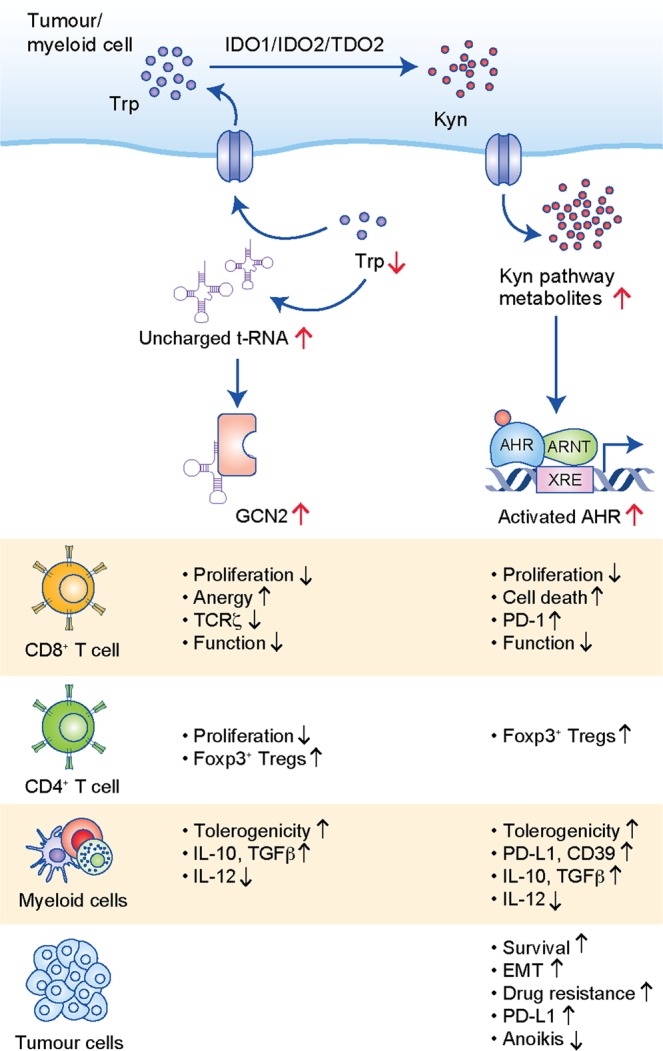
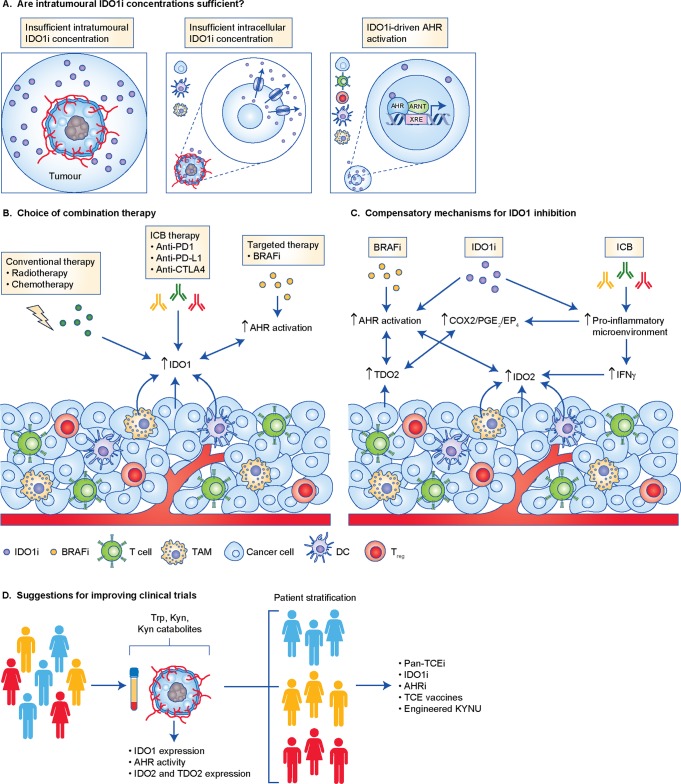
Based on its effects on both tumour cell intrinsic malignant properties as well as anti-tumour immune responses, tryptophan catabolism has emerged as an important metabolic regulator of cancer progression. Three enzymes, indoleamine-2,3-dioxygenase 1 and 2 (IDO1/2) and tryptophan-2,3-dioxygenase (TDO2), catalyse the first step of the degradation of the essential amino acid tryptophan (Trp) to kynurenine (Kyn). The notion of inhibiting IDO1 using small-molecule inhibitors elicited high hopes of a positive impact in the field of immuno-oncology, by restoring anti-tumour immune responses and synergising with other immunotherapies such as immune checkpoint inhibition. However, clinical trials with IDO1 inhibitors have yielded disappointing results, hence raising many questions. This review will discuss strategies to target Trp-degrading enzymes and possible down-stream consequences of their inhibition. We aim to provide comprehensive background information on Trp catabolic enzymes as targets in immuno-oncology and their current state of development. Details of the clinical trials with IDO1 inhibitors, including patient stratification, possible effects of the inhibitors themselves, effects of pre-treatments and the therapies the inhibitors were combined with, are discussed and mechanisms proposed that might have compensated for IDO1 inhibition. Finally, alternative approaches are suggested to circumvent these problems.
Overview
The claims and statistics of this paper haven’t been checked yet.
Free: it reads the open-access text and checks the first 5 claims that cite a source we can check. Create a free account to check every claim.
Integrity signals
Registry
Cites
Statistics
Figures
Verification
Claims the paper makes
The claims and statistics of this paper haven’t been checked yet.
Free: it reads the open-access text and checks the first 5 claims that cite a source we can check. Create a free account to check every claim.
Claims other papers make about this one
Each is checked against this paper’s own text: does it say what the citing paper says it does?
The source backs part of the claim, not all of it — or backs it for a different population, condition or comparison.
In the citing paper
“Microbiota-derived metabolites, especially tryptophan metabolites, have a crucial role in shaping innate and adaptive immunity17”
From Microbiota-derived 3-IAA influences chemotherapy efficacy in pancreatic cancer (2023) · cites this paper as [17]
Experimental — accuracy not yet measured
Self-check
Percentages, sums and reported differences re-computed from the paper’s own numbers.
The self-check needs the paper’s full text.
Citations
Cites
The cancer genome atlas pan-cancer analysis project
The Cancer Genome Atlas Research Network, Weinstein, J. N., Collisson, E. A., Mills, G. B., Shaw, K. R. M., Ozenberger, B. A., Ellrott, K., Shmulevich, I., Sander, C., & Stuart, J. M. (2013) · Nature Genetics · doi:10.1038/ng.2764 · Cited by 9,092
Mechanism-driven biomarkers to guide immune checkpoint blockade in cancer therapy
Topalian, S. L., Taube, J. M., Anders, R. A., & Pardoll, D. M. (2016) · Nature Reviews Cancer · doi:10.1038/nrc.2016.36 · Cited by 2,733
Prevention of Allogeneic Fetal Rejection by Tryptophan Catabolism
Munn, D. H., Zhou, M., Attwood, J. T., Bondarev, I., Conway, S. J., Marshall, B., Brown, C., & Mellor, A. L. (1998) · Science · doi:10.1126/science.281.5380.1191 · Cited by 2,585
Uyttenhove, C., Pilotte, L., Théate, I., Stroobant, V., Colau, D., Parmentier, N., Boon, T., & Van den Eynde, B. J. (2003) · Nature Medicine · doi:10.1038/nm934 · Cited by 2,305
An endogenous tumour-promoting ligand of the human aryl hydrocarbon receptor
Opitz, C. A., Litzenburger, U. M., Sahm, F., Ott, M., Tritschler, I., Trump, S., Schumacher, T., Jestaedt, L., Schrenk, D., Weller, M., et al. (2011) · Nature · doi:10.1038/nature10491 · Cited by 1,898
Self-citationInhibition of T Cell Proliferation by Macrophage Tryptophan Catabolism
Munn, D. H., Shafizadeh, E., Attwood, J. T., Bondarev, I., Pashine, A., & Mellor, A. L. (1999) · The Journal of Experimental Medicine · doi:10.1084/jem.189.9.1363 · Cited by 1,623
An Interaction between Kynurenine and the Aryl Hydrocarbon Receptor Can Generate Regulatory T Cells
Mezrich, J. D., Fechner, J. H., Zhang, X., Johnson, B. P., Burlingham, W. J., & Bradfield, C. A. (2010) · The Journal of Immunology · doi:10.4049/jimmunol.0903670 · Cited by 1,601
Tryptophan metabolism as a common therapeutic target in cancer, neurodegeneration and beyond
Platten, M., Nollen, E. A. A., Röhrig, U. F., Fallarino, F., & Opitz, C. A. (2019) · Nature Reviews Drug Discovery · doi:10.1038/s41573-019-0016-5 · Cited by 1,586
Self-citationNAD + in aging, metabolism, and neurodegeneration
Verdin, E. (2015) · Science · doi:10.1126/science.aac4854 · Cited by 1,319
Munn, D. H., Sharma, M. D., Baban, B., Harding, H. P., Zhang, Y., Ron, D., & Mellor, A. L. (2005) · Immunity · doi:10.1016/j.immuni.2005.03.013 · Cited by 1,272
Research works printed but not linked: 4
- Hennequart Marc Pilotte Luc Cane Stefania Hoffmann Delia Stroobant Vincent Plaen Etienne De Eynde Benoît J. Van den Constitutive IDO1 Expression in Human Tumors Is Driven by Cyclooxygenase-2 and Mediates Intrinsic Immune Resistance Cancer Immunology Research 2017 5 8 695 709 28765120 · DOI · Paper page
- Gibney, G. T., Hamid, O., Lutzky, J., Olszanski, A. J., Mitchell, T. C., Gajewski, T. F. et. al. Phase 1/2 study of epacadostat in combination with ipilimumab in patients with unresectable or metastatic melanoma. J. Immunother. Cancer7, 80 (2019). PMC6425606 30894212 · DOI · Paper page
- Spranger S Koblish HK Horton B Scherle PA Newton R Gajewski TF Mechanism of tumor rejection with doublets of CTLA-4, PD-1/PD-L1, or IDO blockade involves restored IL-2 production and proliferation of CD8+T cells directly within the tumor microenvironment J. ImmunoTher. Cancer 2014 2 1 14 24829760 PMC4019906 · DOI · Paper page
- Ochs K Ott M Rauschenbach KJ Deumelandt K Sahm F Opitz CA Tryptophan-2,3-dioxygenase is regulated by prostaglandin E2 in malignant glioma via a positive signaling loop involving prostaglandin E receptor-4 J. Neurochem. 2015 136 1142 1154 26708701 · DOI · Paper page
Cited by
IL4I1 Is a Metabolic Immune Checkpoint that Activates the AHR and Promotes Tumor Progression
Sadik, A., Somarribas Patterson, L. F., Öztürk, S., Mohapatra, S. R., Panitz, V., Secker, P. F., Pfänder, P., Loth, S., Salem, H., Prentzell, M. T., et al. (2020) · Cell · doi:10.1016/j.cell.2020.07.038 · Cited by 559
“While this failure may in part be attributable to the lack of patient stratification based on IDO1 expression, it challenged our knowledge of Trp catabolism in cancer (Muller et al., 2019; Opitz et al., 2020; Platten et al., 2019).”
BackgroundSelf-citationMicrobiota-derived 3-IAA influences chemotherapy efficacy in pancreatic cancer
Tintelnot, J., Xu, Y., Lesker, T. R., Schönlein, M., Konczalla, L., Giannou, A. D., Pelczar, P., Kylies, D., Puelles, V. G., Bielecka, A. A., et al. (2023) · Nature · doi:10.1038/s41586-023-05728-y · Cited by 478
“Microbiota-derived metabolites, especially tryptophan metabolites, have a crucial role in shaping innate and adaptive immunity 17 , which in turn have an important role in determining the efficacy of chemotherapy and prognosis in PDAC 11,20 .”
Immune regulation through tryptophan metabolism
Seo, S.-K., & Kwon, B. (2023) · Experimental & Molecular Medicine · doi:10.1038/s12276-023-01028-7 · Cited by 390
Indoleamine 2,3-dioxygenase (IDO) inhibitors and cancer immunotherapy
Fujiwara, Y., Kato, S., Nesline, M. K., Conroy, J. M., DePietro, P., Pabla, S., & Kurzrock, R. (2022) · Cancer Treatment Reviews · doi:10.1016/j.ctrv.2022.102461 · Cited by 304
Horvath, L., Thienpont, B., Zhao, L., Wolf, D., & Pircher, A. (2020) · Molecular Cancer · doi:10.1186/s12943-020-01260-z · Cited by 283
“Moreover, Indoleamine 2,3-dioxygenase (IDO) represents an important promotor of Treg and MDSC proliferation/activation [56].”
BackgroundInfluentialActivatable Polymer Nanoenzymes for Photodynamic Immunometabolic Cancer Therapy
Zeng, Z., Zhang, C., Li, J., Cui, D., Jiang, Y., & Pu, K. (2021) · Advanced Materials · doi:10.1002/adma.202007247 · Cited by 276
Emerging therapies in cancer metabolism
Xiao, Y., Yu, T.-J., Xu, Y., Ding, R., Wang, Y.-P., Jiang, Y.-Z., & Shao, Z.-M. (2023) · Cell Metabolism · doi:10.1016/j.cmet.2023.07.006 · Cited by 256
Hou, Y., Li, J., & Ying, S. (2023) · Metabolites · doi:10.3390/metabo13111166 · Cited by 213
ROBOTS AS SOCIAL ACTORS: AURORA AND THE CASE OF AUTISM
Dautenhahn, K. (1999) · Cited by 251
Advances in molecular pathology and therapy of non-small cell lung cancer
Huang, Q., Li, Y., Huang, Y., Wu, J., Bao, W., Xue, C., Li, X., Dong, S., Dong, Z., & Hu, S. (2025) · Signal Transduction and Targeted Therapy · doi:10.1038/s41392-025-02243-6 · Cited by 197
Mithaiwala, M. N., Santana-Coelho, D., Porter, G. A., & O’Connor, J. C. (2021) · Cells · doi:10.3390/cells10061548 · Cited by 190
Molecular mechanisms and therapeutic significance of Tryptophan Metabolism and signaling in cancer
Yan, J., Chen, D., Ye, Z., Zhu, X., Li, X., Jiao, H., Duan, M., Zhang, C., Cheng, J., Xu, L., et al. (2024) · Molecular Cancer · doi:10.1186/s12943-024-02164-y · Cited by 176
“Preclinical data suggest that dual IDO1/TDO inhibitors may offer a more comprehensive blockade of Trp metabolism, potentially overcoming the limitations of selective IDO1 inhibition [51, 55, 281].”
BackgroundInflammation-Induced Tryptophan Breakdown is Related With Anemia, Fatigue, and Depression in Cancer
Lanser, L., Kink, P., Egger, E. M., Willenbacher, W., Fuchs, D., Weiss, G., & Kurz, K. (2020) · Frontiers in Immunology · doi:10.3389/fimmu.2020.00249 · Cited by 169
“Tryptophan (Trp) metabolism appears to play an important role within the tumor microenvironment (4).”
BackgroundNitrogen Metabolism in Cancer and Immunity
Kurmi, K., & Haigis, M. C. (2020) · Trends in Cell Biology · doi:10.1016/j.tcb.2020.02.005 · Cited by 159
Clinical landscape of macrophage-reprogramming cancer immunotherapies
Rannikko, J. H., & Hollmén, M. (2024) · British Journal of Cancer · doi:10.1038/s41416-024-02715-6 · Cited by 184
“Cancer cells can constitutively express IDO1, but IDO1 on immune cells is IFN inducible [149, 150].”
InfluentialThe expanding role for small molecules in immuno-oncology
Offringa, R., Kötzner, L., Huck, B. R., & Urbahns, K. (2022) · Nature Reviews Drug Discovery · doi:10.1038/s41573-022-00538-9 · Cited by 150
Huang, M.-Y., Jiang, X.-M., Wang, B.-L., Sun, Y., & Lu, J.-J. (2021) · Pharmacology & Therapeutics · doi:10.1016/j.pharmthera.2020.107694 · Cited by 136
Indoleamine 2,3-dioxygenase (Ido) inhibitors and their nanomedicines for cancer immunotherapy
Guo, Y., Liu, Y., Wu, W., Ling, D., Zhang, Q., Peng, Z. M., & Hu, X. (2021) · Biomaterials · doi:10.1016/j.biomaterials.2021.121018 · Cited by 143
Gut‐liver axis‐mediated mechanism of liver cancer: A special focus on the role of gut microbiota
Ohtani, N., & Hara, E. (2021) · Cancer Science · doi:10.1111/cas.15142 · Cited by 138
The trans-omics landscape of COVID-19
Wu, P., Chen, D., Ding, W., Wu, P., Hou, H., Bai, Y., Zhou, Y., Li, K., Xiang, S., Liu, P., et al. (2021) · Nature Communications · doi:10.1038/s41467-021-24482-1 · Cited by 133
An in situ hydrogel-mediated chemo-immunometabolic cancer therapy
Wang, B., Chen, J., Caserto, J. S., Wang, X., & Ma, M. (2022) · Nature Communications · doi:10.1038/s41467-022-31579-8 · Cited by 118
The complex biology of aryl hydrocarbon receptor activation in cancer and beyond
Opitz, C. A., Holfelder, P., Prentzell, M. T., & Trump, S. (2023) · Biochemical Pharmacology · doi:10.1016/j.bcp.2023.115798 · Cited by 121
Self-citationAbe, Y., Sakata‐Yanagimoto, M., Fujisawa, M., Miyoshi, H., Suehara, Y., Hattori, K., Kusakabe, M., Sakamoto, T., Nishikii, H., Nguyen, T. B., et al. (2022) · Nature Cell Biology · doi:10.1038/s41556-022-00866-3 · Cited by 109
Metabolomics for Clinical Biomarker Discovery and Therapeutic Target Identification
Lin, C., Tian, Q., Guo, S., Xie, D., Cai, Y., Wang, Z., Chu, H., Qiu, S., Tang, S., & Zhang, A. (2024) · Molecules · doi:10.3390/molecules29102198 · Cited by 120
“Targeting tryptophan catabolism has found therapeutic potential as a key metabolic regulator of cancer progression [106].”
BackgroundKober, C., Roewe, J., Schmees, N., Roese, L., Roehn, U., Bader, B., Stoeckigt, D., Prinz, F., Gorjánácz, M., Roider, H. G., et al. (2023) · Journal for ImmunoTherapy of Cancer · doi:10.1136/jitc-2023-007495 · Cited by 107
Self-citationThe aryl hydrocarbon receptor: structure, signaling, physiology and pathology
Coumoul, X., Barouki, R., Esser, C., Haarmann‐Stemmann, T., Lawrence, B. P., Lehmann, J., Moura‐Alves, P., Murray, I. A., Opitz, C. A., Perdew, G. H., et al. (2026) · Signal Transduction and Targeted Therapy · doi:10.1038/s41392-025-02500-8 · Cited by 124
“173,174,397,398 Furthermore, cell type-or ligand-speci fi c differences in the ef fi cacy of AHR inhibition might hamper strategies that target AHR directly.”
Self-citationTryptophan: A Rheostat of Cancer Immune Escape Mediated by Immunosuppressive Enzymes IDO1 and TDO
Kim, M., & Tomek, P. (2021) · Frontiers in Immunology · doi:10.3389/fimmu.2021.636081 · Cited by 101
“Such approaches include kynurenine depletion by kynureninase (44), small molecule inhibitors to the kynurenine’s downstream target AhR (81, 94), and perhaps we will see small molecule inhibitors to a recently discovered tryptophan metabolising enzyme IL4I1 that produces AhR agonists (113).”
BackgroundInfluentialGautam, S. K., Batra, S. K., & Jain, M. (2023) · Molecular Cancer · doi:10.1186/s12943-023-01813-y · Cited by 106
“For instance, altered tryptophan (Trp) catabolism has been reported to regulate immunosuppression [250].”
BackgroundLipid-based nanosystems: the next generation of cancer immune therapy
Cheng, Z., Fobian, S., Gurrieri, E., Amin, M., D’Agostino, V., Falahati, M., Zalba, S., Debets, R., Garrido, M. J., Saeed, M., et al. (2024) · Journal of Hematology & Oncology · doi:10.1186/s13045-024-01574-1 · Cited by 106
“4B) [213].”
Ji, Y., Song, W., Xu, L., Yu, D., & Bligh, S. W. A. (2022) · Biomolecules · doi:10.3390/biom12060794 · Cited by 84
Detrimental activation of AhR pathway in cancer: an overview of therapeutic strategies
Leclerc, D., Pires, A. S., Guillemin, G. J., & Gilot, D. (2021) · Current Opinion in Immunology · doi:10.1016/j.coi.2020.12.003 · Cited by 87
The Kynurenine Pathway and Cancer: Why Keep It Simple When You Can Make It Complicated
Gouasmi, R., Ferraro‐Peyret, C., Nancey, S., Coste, I., Renno, T., Chaveroux, C., Aznar, N., & Ansieau, S. (2022) · Cancers · doi:10.3390/cancers14112793 · Cited by 90
“TD02 is overexpressed in the primary colon, breast cancer, non-small cell lung cancer, ovarian and renal cell carcinomas as well as in brain metastases of malignant melanomas [25].”
BackgroundIndoleamine 2,3-Dioxygenase 1: A Promising Therapeutic Target in Malignant Tumor
Song, X., Si, Q., Qi, R., Liu, W., Li, M., Guo, M.-Y., Wei, L., & Yao, Z. (2021) · Frontiers in Immunology · doi:10.3389/fimmu.2021.800630 · Cited by 86
Odunsi, K. O., Qian, F., Lugade, A. A., Yu, H., Geller, M. A., Fling, S. P., Kaiser, J. C., Lacroix, A. M., D’Amico, L., Ramchurren, N., et al. (2022) · Science Translational Medicine · doi:10.1126/scitranslmed.abg8402 · Cited by 84
Metabolic regulation of the cancer-immunity cycle
Patterson, L. F. S., & Vardhana, S. A. (2021) · Trends in Immunology · doi:10.1016/j.it.2021.09.002 · Cited by 87
Targeting cancer metabolic pathways for improving chemotherapy and immunotherapy
Luo, Z., Eichinger, K. M., Zhang, A., & Li, S. (2023) · Cancer Letters · doi:10.1016/j.canlet.2023.216396 · Cited by 73
The Role of Indoleamine 2, 3-Dioxygenase 1 in Regulating Tumor Microenvironment
Huang, X., Zhang, F., Wang, X., & Liu, K. (2022) · Cancers · doi:10.3390/cancers14112756 · Cited by 69
Stone, T. W., & Williams, R. O. (2023) · Cancers · doi:10.3390/cancers15112895 · Cited by 78
“Because the IDO–kynurenine–AHR axis produces immunosuppression via DCs and Tregs and thus limits autoimmunity, it also promotes tumor formation and progression [82,83,91,92].”
BackgroundTryptophan metabolism in brain tumors — IDO and beyond
Platten, M., Friedrich, M., Wainwright, D. A., Panitz, V., & Opitz, C. A. (2021) · Current Opinion in Immunology · doi:10.1016/j.coi.2021.03.005 · Cited by 68
Self-citationJennings, M. R., Munn, D. H., & Blazeck, J. (2021) · Journal for ImmunoTherapy of Cancer · doi:10.1136/jitc-2021-003013 · Cited by 69
Targeting metabolism to enhance immunotherapy within tumor microenvironment
Liang, X., Chen, X., Yan, Y., Cheng, A.-Y., Lin, J.-Y., Jiang, Y.-X., Chen, H., Jin, J., & Luan, X. (2024) · Acta Pharmacologica Sinica · doi:10.1038/s41401-024-01304-w · Cited by 76
“Numerous preclinical investigations have high-lighted the potent effect of IDO1 inhibitors in activating antitumor immunity and in synergy with anti-PD-(L)1 therapy [100].”
Roshanzamir, F., Robinson, J. L., Cook, D., Karimi‐Jafari, M. H., & Nielsen, J. (2022) · Proceedings of the National Academy of Sciences · doi:10.1073/pnas.2205456119 · Cited by 62
Overcoming therapy resistance in pancreatic cancer: New insights and future directions
Espona‐Fiedler, M., Patthey, C., Lindblad, S., Sarró, I., & Öhlund, D. (2024) · Biochemical Pharmacology · doi:10.1016/j.bcp.2024.116492 · Cited by 72
“Overexpression of indoleamine 2,3-dioxygenase-1 (IDO-1), for instance, induces an enhanced tryptophan catabolism which in turn inhibits the antitumor immunity [109,110].”
Synthetic Essentiality of Tryptophan 2,3-Dioxygenase 2 in APC -Mutated Colorectal Cancer
Lee, R., Li, J., Li, J., Wu, C., Jiang, S., Hsu, W.-H., Chakravarti, D., Chen, P., LaBella, K. A., Li, J., et al. (2022) · Cancer Discovery · doi:10.1158/2159-8290.cd-21-0680 · Cited by 67
Greene, M. K., Johnston, M. C., & Scott, C. J. (2021) · Cancers · doi:10.3390/cancers13246175 · Cited by 61
Kynurenine induces T cell fat catabolism and has limited suppressive effects in vivo
Siska, P. J., Jiao, J., Matos, C., Singer, K., Berger, R. S., Dettmer, K., Oefner, P. J., Cully, M. D., Wang, Z., QuinnIII, W. J., et al. (2021) · EBioMedicine · doi:10.1016/j.ebiom.2021.103734 · Cited by 66
“Additional patient stratification may be necessary to identify patients that are more likely to respond to IDO inhibition [47].”
BackgroundCancer immune evasion through KRAS and PD-L1 and potential therapeutic interventions
Watterson, A., & Coelho, M. A. (2023) · Cell Communication and Signaling · doi:10.1186/s12964-023-01063-x · Cited by 68
Immunometabolism: signaling pathways, homeostasis, and therapeutic targets
Xu, R., He, X., Xu, J., Yu, G., & Wu, Y. (2024) · MedComm · doi:10.1002/mco2.789 · Cited by 69
Mondal, P., & Wijeratne, G. B. (2019) · Journal of the American Chemical Society · doi:10.1021/jacs.9b10498 · Cited by 56
An integrated cytokine and kynurenine network as the basis of neuroimmune communication
Stone, T. W., Clanchy, F. I. L., Huang, Y., Chiang, N., Darlington, L. G., & Williams, R. O. (2022) · Frontiers in Neuroscience · doi:10.3389/fnins.2022.1002004 · Cited by 61
Tryptophan metabolism is inversely regulated in the tumor and blood of patients with glioblastoma
Panitz, V., Končarević, S., Sadik, A., Friedel, D., Bausbacher, T., Trump, S., Farztdinov, V. M., Schulz, S., Sievers, P., Schmidt, S., et al. (2021) · Theranostics · doi:10.7150/thno.60679 · Cited by 55
Self-citationTryptophan fuels MYC-dependent liver tumorigenesis through indole 3-pyruvate synthesis
Venkateswaran, N., Garcia, R., Lafita‐Navarro, M. C., Hao, Y.-H., Perez‐Castro, L., Nogueira, P. A. S., Solmonson, A., Mender, I., Kilgore, J. A., Fang, S., et al. (2024) · Nature Communications · doi:10.1038/s41467-024-47868-3 · Cited by 55
“WhileIDOlevelsareelevatedincertaintumors,several inhibitors that are designed to block the activity of IDO1 have failed in clinical trials 26 , suggesting that a more complex and potentially tissue-speci fi c role for Trp and its metabolites may be involved in tumor growth.”
Aryl Hydrocarbon Receptor Connects Inflammation to Breast Cancer
Guarnieri, T. (2020) · International Journal of Molecular Sciences · doi:10.3390/ijms21155264 · Cited by 52
“Interestingly, both exogenous and endogenous ligands can modulate AhR functionality, both positively and negatively [84,85].”
BackgroundLiberini, V., Laudicella, R., Capozza, M., Huellner, M. W., Burger, I. A., Baldari, S., Terreno, E., & Deandreis, D. (2021) · Molecules · doi:10.3390/molecules26082201 · Cited by 49
“IDO1, preliminary tested on melanoma mice, is responsible for the first step of the degradation of the essential amino acid tryptophan into immunosuppressive kynurenine and its inhibition restores the anti-tumour immune response [113].”
BackgroundBulun, S. E., Yin, P., Wei, J., Zuberi, A., Iizuka, T., Suzuki, T., Saini, P., Goad, J., Parker, J. B., Adli, M., et al. (2025) · Physiological Reviews · doi:10.1152/physrev.00010.2024 · Cited by 79
Reversing T-cell exhaustion in immunotherapy: a review on current approaches and limitations
Tabana, Y., Moon, T. C., Siraki, A. G., Elahi, S., & Barakat, K. (2021) · Expert Opinion on Therapeutic Targets · doi:10.1080/14728222.2021.1937123 · Cited by 50
“catabolize the tryptophan to kynurenine and its downstream metabolite [159].”
BackgroundA pan-cancer metabolic atlas of the tumor microenvironment
Rohatgi, N., Ghoshdastider, U., Baruah, P., Kulshrestha, T., & Skanderup, A. J. (2022) · Cell Reports · doi:10.1016/j.celrep.2022.110800 · Cited by 46
Sharma, A. K., Lysenko, A., Boroevich, K. A., & Tsunoda, T. (2023) · Scientific Reports · doi:10.1038/s41598-023-29644-3 · Cited by 52
Nitric Oxide Modulates Metabolic Processes in the Tumor Immune Microenvironment
McGinity, C. L., Palmieri, E. M., Somasundaram, V., Bhattacharyya, D. D., Ridnour, L. A., Cheng, R. Y. S., Ryan, A. E., Glynn, S. A., Thomas, D. D., Miranda, K. M., et al. (2021) · International Journal of Molecular Sciences · doi:10.3390/ijms22137068 · Cited by 45
Harris, A. L. (2019) · British Journal of Cancer · doi:10.1038/s41416-019-0666-4 · Cited by 41
“Opitz et al.2 describe in detail the trials, potential resistance mechanisms and the next-generation approaches to overcoming this problem.”
BackgroundInfluentialThe recent progress of myeloid‐derived suppressor cell and its targeted therapies in cancers
Ren, R., Xiong, C., Ma, R., Wang, Y., Yue, T., Yu, J., & Shao, B. (2023) · MedComm · doi:10.1002/mco2.323 · Cited by 47
A metabolic dependency of EBV can be targeted to hinder B cell transformation
Müller-Durovic, B., Jäger, J., Engelmann, C., Schuhmachers, P., Altermatt, S., Schlup, Y., Duthaler, U., Makowiec, C., Unterstab, G., Roffeis, S., et al. (2024) · Science · doi:10.1126/science.adk4898 · Cited by 46
“The literatureonIDO1-dependenttryptophan metabolism in (non-EBV-related) cancer, as well as its impact on immune regulation and immunotherapy, is extensive [reviewed in ( 54 )].”
BackgroundYang, Z., Sun, J. K., Lee, M. M., & Chan, M. K. (2022) · Journal for ImmunoTherapy of Cancer · doi:10.1136/jitc-2022-005068 · Cited by 42
Recent advances in the development of AHR antagonists in immuno-oncology
Sun, L. (2021) · RSC Medicinal Chemistry · doi:10.1039/d1md00015b · Cited by 42
Tryptophan metabolism and immune regulation in the human placenta
Silvano, A., Seravalli, V., Strambi, N., Cecchi, M., Tartarotti, E., Parenti, A., & Tommaso, M. D. (2021) · Journal of Reproductive Immunology · doi:10.1016/j.jri.2021.103361 · Cited by 43
Su, X., Li, J., Xu, X., Ye, Y., Wang, C., Pang, G., Liu, W., Liu, A., Zhao, C., & Hao, X. (2024) · Journal of Translational Medicine · doi:10.1186/s12967-024-05552-6 · Cited by 50
“IDO1 mediates its immunosuppressive function by inducing formation of Tregs and MDSCs while inhibiting proliferation of CD3 + T cells, CD8 + T cells and NK cells [322].”
BackgroundWang, H., Zhou, S., Liu, Y., Yu, Y., Xu, S., Lan, P., & Ni, C. (2021) · Toxicology Letters · doi:10.1016/j.toxlet.2021.11.011 · Cited by 36
Microglia–T cell conversations in brain cancer progression
Mirzaei, R., & Yong, V. W. (2022) · Trends in Molecular Medicine · doi:10.1016/j.molmed.2022.08.006 · Cited by 37
Chen, H., Sévin, D. C., Griffith, G. R., Vappiani, J., Booty, L. M., van Roomen, C. P. A. A., Kuiper, J., den Dunnen, J., de Jonge, W. J., Prinjha, R. K., et al. (2024) · Cell Reports · doi:10.1016/j.celrep.2024.114741 · Cited by 38
Hypoxia Routes Tryptophan Homeostasis Towards Increased Tryptamine Production
Mohapatra, S. R., Sadik, A., Sharma, S. A., Poschet, G., Gegner, H. M., Lanz, T. V., Lucarelli, P., Klingmüller, U., Platten, M., Heiland, I., et al. (2021) · Frontiers in Immunology · doi:10.3389/fimmu.2021.590532 · Cited by 35
“The immunosuppressive effects of Trp catabolism can be mediated by a two-pronged strategy, first by depletion of Trp, as Trp is essential for the proliferation and activity of liver-infiltrating T cells (72, 73) and secondly by the AHRmediated immunosuppressive action of the KP metabolites, as has frequently been desc…”
BackgroundSelf-citationASOptimizer: Optimizing antisense oligonucleotides through deep learning for IDO1 gene regulation
Hwang, G., Kwon, M., Seo, D., Kim, D. H., Lee, D., Lee, K., Kim, E., Kang, M., & Ryu, J. (2024) · Molecular Therapy — Nucleic Acids · doi:10.1016/j.omtn.2024.102186 · Cited by 37
Targeting amino acid-metabolizing enzymes for cancer immunotherapy
Grobben, Y. (2024) · Frontiers in Immunology · doi:10.3389/fimmu.2024.1440269 · Cited by 38
García‐Cañaveras, J. C., & Lahoz, A. (2021) · Cancers · doi:10.3390/cancers13133230 · Cited by 39
“High IDO1 levels are associated with poor prognosis in several cancer types [204].”
BackgroundDai, G., Chen, X., & He, Y. (2021) · Frontiers in Nutrition · doi:10.3389/fnut.2021.712327 · Cited by 36
“Tryptophan catabolism has become a critical metabolic regulation factor for tumor progression (21).”
BackgroundChisari, A. N., Golán, I., Campisano, S., Gélabert, C., Moustakas, A., Sancho, P., & Caja, L. (2021) · Frontiers in Pharmacology · doi:10.3389/fphar.2021.723798 · Cited by 37
“Tryptophan The expression level of IDO1 positively correlates with the occurrence of distant metastases in HCC (Opitz et al., 2020).”
BackgroundQuinoline Quest: Kynurenic Acid Strategies for Next-Generation Therapeutics via Rational Drug Design
Tanaka, M., Szatmári, I., & Vécsei, L. (2025) · Pharmaceuticals · doi:10.3390/ph18050607 · Cited by 29
“In recent years, therapeutic strategies targeting Trp metabolism have drawn increased attention, supported by encouraging preclinical findings and a rise in clinical trials [24,25].”
Significance of Kynurenine 3-Monooxygenase Expression in Colorectal Cancer
Liu, C., Huang, T., Chen, J.-L., Chu, P., Lee, C., Lee, H., Lee, Y., Chang, Y.-Y., Yang, S.-H., Jiang, J., et al. (2021) · Frontiers in Oncology · doi:10.3389/fonc.2021.620361 · Cited by 39
Nandre, R., Verma, V., Gaur, P., Patil, V., Yang, X., Ramlaoui, Z., Shobaki, N., Andersen, M. H., Pedersen, A. W., Zocca, M.-B., et al. (2022) · Cancer Immunology Research · doi:10.1158/2326-6066.cir-21-0457 · Cited by 34
Quinoline Quest: Kynurenic Acid Strategies for Next-Generation Therapeutics via Rational Drug Design
Tanaka, M., Szatmári, I., & Vécsei, L. (2025) · doi:10.20944/preprints202503.2399.v1 · Cited by 30
Al‐Zoubi, R. M., Elaarag, M., Al-Qudimat, A. R., Al-Hurani, E. A., Fares, Z. E., Farhan, A., Al-Zoubi, S. R., Khan, A., Agouni, A., Shkoor, M., et al. (2025) · Frontiers in Pharmacology · doi:10.3389/fphar.2025.1632446 · Cited by 36
Nawas, A. F., Solmonson, A., Gao, B., DeBerardinis, R. J., Minna, J. D., Conacci‐Sorrell, M., & Mendelson, C. R. (2023) · Cell Communication and Signaling · doi:10.1186/s12964-023-01348-1 · Cited by 30
Tryptophan‐Kynurenine Pathway in COVID‐19‐Dependent Musculoskeletal Pathology: A Minireview
Vyavahare, S. S., Kumar, S., Cantu, N., Kolhe, R. B., Bollag, W. B., McGee‐Lawrence, M. E., Hill, W., Hamrick, M. W., Isales, C. M., & Fulzele, S. (2021) · Mediators of Inflammation · doi:10.1155/2021/2911578 · Cited by 29
“There are several Trp-Kyn/Ahr inhibitors that are undergoing clinical trials for various diseased conditions [56].”
Peng, S., Wang, R., Zhou, Y., Wei, W., Zhong, G., Huang, X.-T., Yang, S., Liu, Q., & Liu, Z. (2022) · Frontiers in Immunology · doi:10.3389/fimmu.2022.872910 · Cited by 35
“L-tryptophan (Trp) (29) metabolism in the kynurenine pathway (KP) was reported to regulate immunity, the microbiota (30) and intestinal homeostasis by affecting the activity of rate-limiting enzymes, indoleamine-2,3-dioxygenase 1 (IDO1), IDO2, tryptophan-2,3-dioxygenase (TDO) and kynurenine monooxygenase (KMO).”
BackgroundNadour, Z., Simian, C., Laprévôte, O., Loriot, M., Larabi, I. A., & Pallet, N. (2022) · Clinica Chimica Acta · doi:10.1016/j.cca.2022.07.009 · Cited by 28
Glioblastoma stem cell metabolism and immunity
Hawly, J., Murcar, M. G., Schcolnik‐Cabrera, A., & Issa, M. E. (2024) · Cancer and Metastasis Reviews · doi:10.1007/s10555-024-10183-w · Cited by 35
“However, IDO1’s main role is to metabolize tryptophan into kynurenine, which is mobilized out of the CSC into the TME, where it blocks the pro-inflammatory signals of infiltrating immune cells [119].”
Kang, I. M., Theodoropoulos, G., & Wangpaichitr, M. (2025) · Frontiers in Oncology · doi:10.3389/fonc.2024.1524651 · Cited by 30
Iwasaki, T., Kohashi, K., Toda, Y., Ishihara, S., Yamada, Y., & Oda, Y. (2020) · Journal of Cancer Research and Clinical Oncology · doi:10.1007/s00432-020-03390-9 · Cited by 28
Wu, D., & Wang, Z. (2022) · DNA and Cell Biology · doi:10.1089/dna.2021.0936 · Cited by 28
“The majority of Trp catabolism-mediated immune suppression in tumors occurs through the kynurenine (Kyn) pathway (Opitz et al., 2020).”
BackgroundNasimi, H., Madsen, J. S., Zedan, A. H., Schmedes, A., Malmendal, A., Osther, P. J. S., & Alatraktchi, F. A. (2022) · Analytical Biochemistry · doi:10.1016/j.ab.2022.114698 · Cited by 26
Tryptophan metabolism in health and disease- implications for non-communicable diseases
Gabela, A. M., Mthembu, N., & Hadebe, S. (2026) · Immunology Letters · doi:10.1016/j.imlet.2025.107093 · Cited by 32
Immunometabolism: A ‘Hot’ Switch for ‘Cold’ Pediatric Solid Tumors
Xiao, L., Yeung, H., Haber, M., Norris, M. D., & Somers, K. (2021) · Trends in cancer · doi:10.1016/j.trecan.2021.05.002 · Cited by 26
Zhang, J., Guo, Z., Xie, Q., Zhong, C., Gao, X., & Yang, Q. (2022) · BMC Cancer · doi:10.1186/s12885-022-09569-2 · Cited by 31
“The rate-limiting step of the Kyn pathway is catalyzed by indoleamine-2, 3-dioxygenase (IDO), and tryptophan-2, 3-dioxygenase (TDO), which are intimately linked to the modulation of immune responses and offer promising targets for cancer therapy [9].”
BackgroundDong, S., Li, X., Huang, Q., Li, Y., Li, J., Zhu, X., Xue, C., Chen, R., Zeng, Y., Wu, J., et al. (2025) · Drug Resistance Updates · doi:10.1016/j.drup.2025.101215 · Cited by 29
Biology of NSCLC: Interplay between Cancer Cells, Radiation and Tumor Immune Microenvironment
Tubin, S., Khan, M. K., Gupta, S., & Jeremic, B. M. (2021) · Cancers · doi:10.3390/cancers13040775 · Cited by 27
“IDO1 and TDO2 are overexpressed in several cancer types, including NSCLC and are associated with poor prognosis and resistance to immunotherapy [104].”
BackgroundDietary Manipulation of Amino Acids for Cancer Therapy
Jiménez‐Alonso, J. J., & López‐Lázaro, M. (2023) · Nutrients · doi:10.3390/nu15132879 · Cited by 26
“In addition, Trp and its catabolic derivatives modulate the immune function and play key roles in autoimmune diseases and antitumor immunity [95,96].”
BackgroundInfluentialLimón-Pacheco, J. H., & Elizondo, G. (2023) · Biochemical Pharmacology · doi:10.1016/j.bcp.2023.115804 · Cited by 25
Role of AHR in the control of GBM-associated myeloid cells
Gabriely, G., & Quintana, F. J. (2019) · Seminars in Cancer Biology · doi:10.1016/j.semcancer.2019.05.014 · Cited by 27
Fucoidan exerts antitumor effects by regulating gut microbiota and tryptophan metabolism
Ren, P., Liu, M., Wei, B., Tang, Q., Wang, Y., & Xue, C. (2025) · International Journal of Biological Macromolecules · doi:10.1016/j.ijbiomac.2025.140334 · Cited by 27
Yoshioka, S., Ikeda, T., Fukuchi, S., Kawai, Y., Ohta, K., Murakami, H., Ogo, N., Muraoka, D., Takikawa, O., & Asai, A. (2022) · International Journal of Tryptophan Research · doi:10.1177/11786469221138456 · Cited by 23
A Systematic Role of Metabolomics, Metabolic Pathways, and Chemical Metabolism in Lung Cancer
Kannampuzha, S., Mukherjee, A. G., Wanjari, U. R., Gopalakrishnan, A. V., Murali, R., Namachivayam, A., Renu, K., Dey, A., Vellingiri, B., Madhyastha, H., et al. (2023) · Vaccines · doi:10.3390/vaccines11020381 · Cited by 29
“Tryptophan is a crucial AA for protein synthesis and a critical regulator in cancer progression [19].”
Metadata
- Authors
- Opitz, C. A., Somarribas Patterson, L. F., Mohapatra, S. R., Dewi, D. L., Sadik, A., Platten, M., & Trump, S.
- Affiliations
- German Cancer Research Center (DE)
- Universitas Gadjah Mada (ID)
- Berlin Institute of Health at Charité - Universitätsmedizin Berlin (DE)
- Corresponding author
- Opitz, Christiane A.
- Venue
- British Journal of Cancer
- Published
- 2019-12-10
- Volume
- 122
- Issue
- 1
- Pages
- 30-44
- ISSN
- 0007-0920 (ISSN-L)
- 1532-1827
- PMC
- PMC6964670
- OpenAlex
- W2993480792
- Cited by
- 300
- References
- 219
- Citations by year
- 2026: 43 · 2025: 46 · 2024: 48 · 2023: 47 · 2022: 49 · 2021: 51 · 2020: 12 · 2019: 3
- FWCI
- 2.76
- Type
- journal article
- Language
- en
- Open access
- hybrid
- doi.org
- Licence
- cc-by
- creativecommons.org/licenses/by/4.0 (tdm)
- creativecommons.org/licenses/by/4.0 (vor)
- Locations
- British Journal of Cancer (publishedVersion, cc-by)
- PubMed Central (publishedVersion, cc-by)
- PubMed (publishedVersion)
- Funders
- EC | Horizon 2020 Framework Programme (No 754688, No 643638)
- Bundesministerium für Bildung und Forschung (01ZX1402)
- University of Costa Rica | Vicerrectoría de Investigación, Universidad de Costa Rica
- Costa Rica’s Ministry of Science, Technology and Telecommunications
- Topics
- Health Sciences › Medicine › Oncology › Cancer Immunotherapy and Biomarkers
- Life Sciences › Neuroscience › Biological Psychiatry › Tryptophan and brain disorders
- Life Sciences › Immunology and Microbiology › Immunology › Immunotherapy and Immune Responses
- Keywords
- tryptophan catabolism, kynurenine pathway, IDO1, IDO2, tryptophan 2,3-dioxygenase, IDO1 inhibitors, cancer immunotherapy, antitumor immunity, immune checkpoint inhibitors, cancer metabolism, clinical trials, patient stratification
- MeSH terms
- Animals, Enzyme Inhibitors, Humans, Immunotherapy, Kynurenine, Neoplasms, Tryptophan, Tryptophan Oxygenase, Indoleamine-Pyrrole 2,3,-Dioxygenase, Mice
About these checks
Registry, retraction, Cites and statistics results are computed, not judged, with one exception: a printed reference that no index lists is read once by a model before it counts as a citation error. Claims are extracted by a model and kept only when their quote appears verbatim in the text; each cited source is then checked, with a model’s help, for whether it says what the claim relies on. Those verdicts can be wrong — read the claim’s quote and the cited source before relying on one.
Statistics and arithmetic are recomputed, not judged.
Confidence bands are shown only for fields calibrated on our annotated test set. None is calibrated yet, so no band is shown.
What counts as a claim ›How we measure confidence ›How we check this ›
Are you an author, or do you see a problem with this page? Request a review
Data sources
Bibliographic data: Semantic Scholar, OpenAlex, Crossref.
Contains information from the Semantic Scholar Academic Graph Datasets, made available under the ODC Attribution License (ODC-BY 1.0).
Semantic Scholar’s data is described in: Kinney, R., et al. (2023). The Semantic Scholar Open Data Platform. arXiv:2301.10140.
