

The therapeutic potential of targeting tryptophan catabolism in cancer
Open accessThe DOI matches its Crossref record; 219 of the 219 references it cites were found in a registry or an index.
Abstract
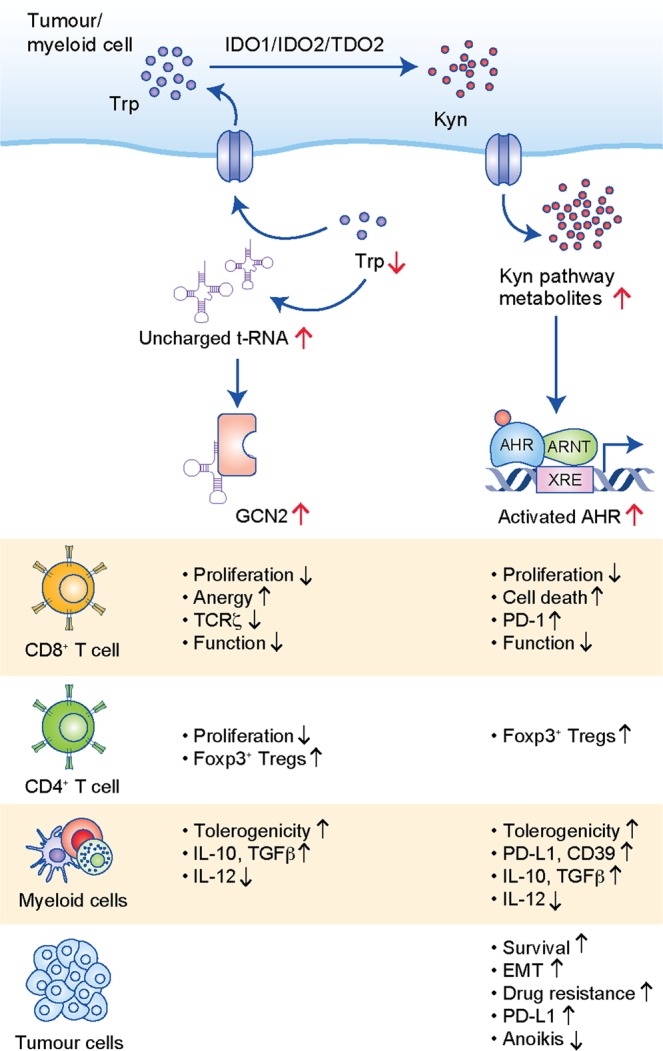
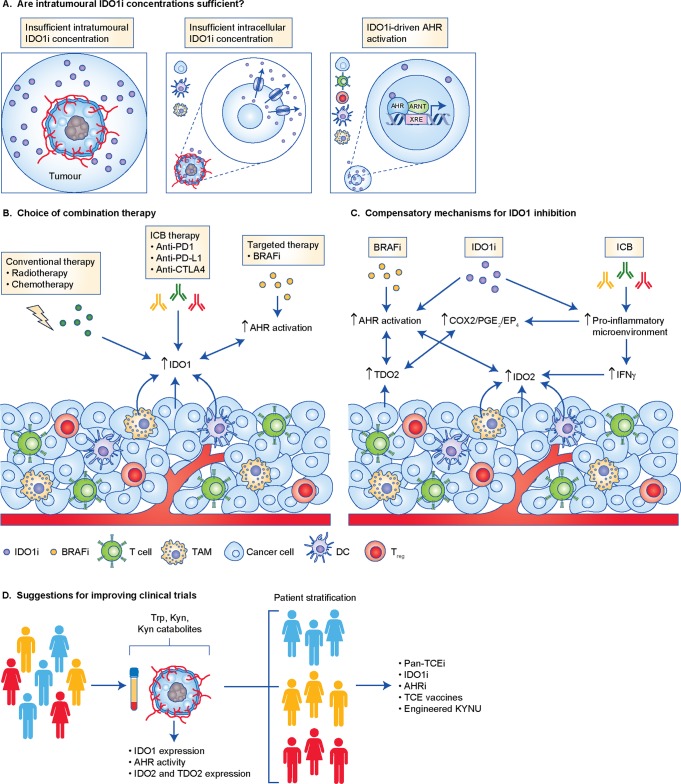
Based on its effects on both tumour cell intrinsic malignant properties as well as anti-tumour immune responses, tryptophan catabolism has emerged as an important metabolic regulator of cancer progression. Three enzymes, indoleamine-2,3-dioxygenase 1 and 2 (IDO1/2) and tryptophan-2,3-dioxygenase (TDO2), catalyse the first step of the degradation of the essential amino acid tryptophan (Trp) to kynurenine (Kyn). The notion of inhibiting IDO1 using small-molecule inhibitors elicited high hopes of a positive impact in the field of immuno-oncology, by restoring anti-tumour immune responses and synergising with other immunotherapies such as immune checkpoint inhibition. However, clinical trials with IDO1 inhibitors have yielded disappointing results, hence raising many questions. This review will discuss strategies to target Trp-degrading enzymes and possible down-stream consequences of their inhibition. We aim to provide comprehensive background information on Trp catabolic enzymes as targets in immuno-oncology and their current state of development. Details of the clinical trials with IDO1 inhibitors, including patient stratification, possible effects of the inhibitors themselves, effects of pre-treatments and the therapies the inhibitors were combined with, are discussed and mechanisms proposed that might have compensated for IDO1 inhibition. Finally, alternative approaches are suggested to circumvent these problems.
Overview
The claims and statistics of this paper haven’t been checked yet.
Free: it reads the open-access text and checks the first 5 claims that cite a source we can check. Create a free account to check every claim.
Integrity signals
Registry
Cites
Statistics
Figures
Verification
Claims the paper makes
The claims and statistics of this paper haven’t been checked yet.
Free: it reads the open-access text and checks the first 5 claims that cite a source we can check. Create a free account to check every claim.
Claims other papers make about this one
Each is checked against this paper’s own text: does it say what the citing paper says it does?
The source backs part of the claim, not all of it — or backs it for a different population, condition or comparison.
In the citing paper
“Microbiota-derived metabolites, especially tryptophan metabolites, have a crucial role in shaping innate and adaptive immunity17”
From Microbiota-derived 3-IAA influences chemotherapy efficacy in pancreatic cancer (2023) · cites this paper as [17]
Experimental — accuracy not yet measured
Self-check
Percentages, sums and reported differences re-computed from the paper’s own numbers.
The self-check needs the paper’s full text.
Citations
Cites
The cancer genome atlas pan-cancer analysis project
The Cancer Genome Atlas Research Network, Weinstein, J. N., Collisson, E. A., Mills, G. B., Shaw, K. R. M., Ozenberger, B. A., Ellrott, K., Shmulevich, I., Sander, C., & Stuart, J. M. (2013) · Nature Genetics · doi:10.1038/ng.2764 · Cited by 9,092
Mechanism-driven biomarkers to guide immune checkpoint blockade in cancer therapy
Topalian, S. L., Taube, J. M., Anders, R. A., & Pardoll, D. M. (2016) · Nature Reviews Cancer · doi:10.1038/nrc.2016.36 · Cited by 2,733
Prevention of Allogeneic Fetal Rejection by Tryptophan Catabolism
Munn, D. H., Zhou, M., Attwood, J. T., Bondarev, I., Conway, S. J., Marshall, B., Brown, C., & Mellor, A. L. (1998) · Science · doi:10.1126/science.281.5380.1191 · Cited by 2,585
Uyttenhove, C., Pilotte, L., Théate, I., Stroobant, V., Colau, D., Parmentier, N., Boon, T., & Van den Eynde, B. J. (2003) · Nature Medicine · doi:10.1038/nm934 · Cited by 2,305
An endogenous tumour-promoting ligand of the human aryl hydrocarbon receptor
Opitz, C. A., Litzenburger, U. M., Sahm, F., Ott, M., Tritschler, I., Trump, S., Schumacher, T., Jestaedt, L., Schrenk, D., Weller, M., et al. (2011) · Nature · doi:10.1038/nature10491 · Cited by 1,898
Self-citationInhibition of T Cell Proliferation by Macrophage Tryptophan Catabolism
Munn, D. H., Shafizadeh, E., Attwood, J. T., Bondarev, I., Pashine, A., & Mellor, A. L. (1999) · The Journal of Experimental Medicine · doi:10.1084/jem.189.9.1363 · Cited by 1,623
An Interaction between Kynurenine and the Aryl Hydrocarbon Receptor Can Generate Regulatory T Cells
Mezrich, J. D., Fechner, J. H., Zhang, X., Johnson, B. P., Burlingham, W. J., & Bradfield, C. A. (2010) · The Journal of Immunology · doi:10.4049/jimmunol.0903670 · Cited by 1,601
Tryptophan metabolism as a common therapeutic target in cancer, neurodegeneration and beyond
Platten, M., Nollen, E. A. A., Röhrig, U. F., Fallarino, F., & Opitz, C. A. (2019) · Nature Reviews Drug Discovery · doi:10.1038/s41573-019-0016-5 · Cited by 1,586
Self-citationNAD + in aging, metabolism, and neurodegeneration
Verdin, E. (2015) · Science · doi:10.1126/science.aac4854 · Cited by 1,319
Munn, D. H., Sharma, M. D., Baban, B., Harding, H. P., Zhang, Y., Ron, D., & Mellor, A. L. (2005) · Immunity · doi:10.1016/j.immuni.2005.03.013 · Cited by 1,272
Research works printed but not linked: 4
- Hennequart Marc Pilotte Luc Cane Stefania Hoffmann Delia Stroobant Vincent Plaen Etienne De Eynde Benoît J. Van den Constitutive IDO1 Expression in Human Tumors Is Driven by Cyclooxygenase-2 and Mediates Intrinsic Immune Resistance Cancer Immunology Research 2017 5 8 695 709 28765120 · DOI · Paper page
- Gibney, G. T., Hamid, O., Lutzky, J., Olszanski, A. J., Mitchell, T. C., Gajewski, T. F. et. al. Phase 1/2 study of epacadostat in combination with ipilimumab in patients with unresectable or metastatic melanoma. J. Immunother. Cancer7, 80 (2019). PMC6425606 30894212 · DOI · Paper page
- Spranger S Koblish HK Horton B Scherle PA Newton R Gajewski TF Mechanism of tumor rejection with doublets of CTLA-4, PD-1/PD-L1, or IDO blockade involves restored IL-2 production and proliferation of CD8+T cells directly within the tumor microenvironment J. ImmunoTher. Cancer 2014 2 1 14 24829760 PMC4019906 · DOI · Paper page
- Ochs K Ott M Rauschenbach KJ Deumelandt K Sahm F Opitz CA Tryptophan-2,3-dioxygenase is regulated by prostaglandin E2 in malignant glioma via a positive signaling loop involving prostaglandin E receptor-4 J. Neurochem. 2015 136 1142 1154 26708701 · DOI · Paper page
Cited by
Items 201–300 of 303
NAD+ as a Target for Cancer Treatment
Helman, T. J., & Braidy, N. (2023) · Springer eBooks · doi:10.1007/978-3-030-80962-1_269-1 · Cited by 4
Vinnyk, Y. O., Кryvoruchko, І. А., Boyko, V. V., Ivanova, Y. V., Gramatiuk, S. M., & Sargsyan, K. (2023) · Journal of Fluorescence · doi:10.1007/s10895-023-03237-9 · Cited by 4
“Trp degradation occurs via the kynurenine (Kyn) pathway, followed by the formation of metabolites [7].”
BackgroundYao, Q., Zhang, X., Wang, Y., Wang, C., Wei, C., Chen, J., & Chen, D. (2024) · European journal of medical research · doi:10.1186/s40001-023-01619-0 · Cited by 4
“Many human disorders, such as cancer, neurodegenerative disease, inflammatory bowel, and cardiovascular disease, are significantly related to imbalances in tryptophan metabolism [15, 16].”
BackgroundXi, C., Ma, Y., Amrofell, M. B., & Moon, T. S. (2024) · Cell Reports Physical Science · doi:10.1016/j.xcrp.2024.102211 · Cited by 6
Metabolomic Profiling of Disease Progression Following Radiotherapy for Breast Cancer
McMahon, A. N., dos Reis, I. M., Takita, C., Wright, J. L., & Hu, J. J. (2025) · Cancers · doi:10.3390/cancers17050891 · Cited by 3
Exosome, an important transmitter in the drug resistance of non-small cell lung cancer
Ji, H., Zhang, L., & Ye, L. (2025) · Frontiers in Oncology · doi:10.3389/fonc.2025.1539047 · Cited by 4
Zhan, D., She, Y., Zhang, X., Zhang, J., Wang, S., Hong, S., Zheng, Y., Wang, N., & Wang, Z. (2025) · Research · doi:10.34133/research.0980 · Cited by 4
Kayar, K., Kayar, R., Sönmez, D., Hakan, M. T., Horozoğlu, C., Yücebaş, Ö. E., Yaylım, İ., & Verim, L. (2025) · Urologic Oncology Seminars and Original Investigations · doi:10.1016/j.urolonc.2025.11.011 · Cited by 3
Tang, R., Juan, Z., Xing, F., Yi, Z., & Fu, Y. (2026) · Cellular Signalling · doi:10.1016/j.cellsig.2026.112452 · Cited by 3
An albumin-prodrug injectable formulation for synergistic cancer immunotherapy
Li, Y., Lu, Y., Zhu, X., Wu, T., Ali, K., Zhang, H., Ma, Z., Liu, H., Wang, H., Zhu, H., et al. (2025) · Journal of Colloid and Interface Science · doi:10.1016/j.jcis.2025.02.012 · Cited by 3
Yan, D., Xu, J., & Tan, X. (2021) · Metallomics · doi:10.1093/mtomcs/mfab001 · Cited by 3
Du, P., Liu, L., Hu, T., & An, Z. (2022) · Frontiers in Oncology · doi:10.3389/fonc.2022.778035 · Cited by 4
“It is an essential amino acid and regulator of antitumor immune response and cancer progression (35).”
BackgroundImmunotherapy, Immunobiomarkers and Gene Analysis Role in the Improvement of Lung Cancer Treatment
Wael, M., Wael, M., Hosam, M., Youssef, A., Ellackany, R., & Alzahabi, A. (2022) · Radiotherapy and Clinical Oncology · doi:10.31487/j.rco.2022.01.01 · Cited by 2
Sabo, M. C., Mustafa, S. S., Saha, A., Oyaro, B., Fiedler, T. L., Krueger, M. A., Fuchs, E., Mureithi, M., Mandaliya, K. N., Jaoko, W. G., et al. (2025) · The Journal of Infectious Diseases · doi:10.1093/infdis/jiaf049 · Cited by 4
Cell‐Based Identification of New IDO1 Modulator Chemotypes
Hennes, E., Lampe, P., Dötsch, L., Bruning, N., Pulvermacher, L., Sievers, S., Ziegler, S., & Waldmann, H. (2021) · Angewandte Chemie · doi:10.1002/ange.202016004 · Cited by 3
Iyer, K. A., Ivanov, J. M., Tenchov, R., Ralhan, K., Rodríguez, Y., Sasso, J. M., Scott, S. A., & Zhou, Q. A. (2023) · ChemRxiv · doi:10.26434/chemrxiv-2023-bpvfq · Cited by 3
Iizuka, T., Zuberi, A., Wei, H., Coon, J. S., Anton, M. L., Buyukcelebi, K., Adli, M., Bulun, S. E., & Yin, P. (2025) · Cancer Gene Therapy · doi:10.1038/s41417-025-00881-0 · Cited by 3
“The chemicals, pharmacological inhibitors, and recombinant human proteins used in this study are listed in Supplementary Table 1.”
Yang, B., Liu, S., Liu, B., Ye, T., Ma, X., & Song, T. (2026) · Cell Communication and Signaling · doi:10.1186/s12964-026-02883-3 · Cited by 4
“Likewise, metabolic modulators targeting the adenosine, TGF-β, lactate, or kynurenine–AhR axes may help dismantle functional suppression, but in OS they should currently be considered exploratory combination partners rather than validated sequence-defining interventions [216–219].”
Kaushik, K., Singh, H., Jha, K., Singh, R. P., & Kaur, N. (2026) · Frontiers in Molecular Biosciences · doi:10.3389/fmolb.2026.1792455 · Cited by 3
“Extracellular Trp, which stimulates the amino -acid -sensing kinase GCN2 and suppresses mTOR signalling in infiltrating T cells, triggers cell cycle arrest, anergy and apoptosis in the tumour microenvironment (TME) via depleting high IDO1 expression (Opitz et al., 2020).”
Immunogenic Cell Death in Cancer
Humeau, J., Naour, J. L., Kroemer, G., & Pol, J. G. (2023) · Interdisciplinary cancer research · doi:10.1007/16833_2022_121 · Cited by 2
Chen, Y., He, J., Jin, T., Zhang, Y., & Ou, Y. (2023) · Journal of Cancer Research and Clinical Oncology · doi:10.1007/s00432-023-05280-2 · Cited by 2
“As shown in previous studies, deficiency of crucial amino acids in TIME can influence normal immune infiltration and immune cell functions (Xia et al. 2021; Geiger et al. 2016; He et al. 2017; Cronin et al. 2018; Opitz et al. 2020).”
BackgroundResultWeidle, U. H., & Nopora, A. (2023) · Cancer Genomics & Proteomics · doi:10.21873/cgp.20401 · Cited by 4
“However, clinical studies with IDO1 inhibitors in cancer patients did not reach the projected clinical endpoints (157).”
Kim, Y.-H., Chung, J., Lee, H. H., Park, J., & Kim, M. K. (2024) · Nutrients · doi:10.3390/nu16091265 · Cited by 3
“…along with the network of 79 metabolites; Figure S2: Results of random forest model via machine learning; Figure S3: Correlation between LysoPC and PUFAs in each group and nutritional analysis flow chart; Table S1: Distribution of cancer diagnoses, sites, and stages at diagnosis of renal”
MethodMudhish, E. A., Ebrahim, H. Y., Helal, I. E., Alhowiriny, A. T., & Sayed, K. A. E. (2024) · ACS Pharmacology & Translational Science · doi:10.1021/acsptsci.4c00448 · Cited by 2
Global Trends of Treatment for NAFLD from 2012 to 2021: A Bibliometric and Mapping Analysis
Song, Y., Chen, B., Jiang, L., Zhao, F., & Feng, X. (2023) · Endocrine Metabolic & Immune Disorders - Drug Targets · doi:10.2174/0118715303230418230925060312 · Cited by 4
Tryptophan catabolism by gut microbiota : A bridge connecting food science and human nutrition
Huang, Z. (2023) · doi:10.18174/583090 · Cited by 2
Carreño-Gonzalez, M. J., Hanssen, K. M., Sadik, A., Henneberg, A., Knott, M. M. L., Ehlers, A. C., Ceranski, A. K., Kolodynska, Z., Zimmermann, M., Imle, R., et al. (2025) · bioRxiv (Cold Spring Harbor Laboratory) · doi:10.1101/2025.05.16.654502 · Cited by 2
Self-citationMetabolites and metabolic pathway reactions links to sensitization of immunotherapy in pan-cancer
Yu, S., Gao, Y., Zhao, F., Zhou, J., & Zhang, J. (2025) · Molecular Therapy Oncology · doi:10.1016/j.omton.2025.200933 · Cited by 3
“56 Regarding FAO, Lai et al. 57 demonstrated that dietary elaidic acid, not normal oleic acids, could activate the expression of major histocompatibility complex class I in tumor via NLRC5 and enhance the ef fi cacy of anti-PD-1 therapy in mice.”
Peng, S., Zhu, Y., Zhu, J., Chen, Z., & Yi, T. (2025) · Clinica Chimica Acta · doi:10.1016/j.cca.2025.120246 · Cited by 1
Zhao, X., Chen, J., Shan, M., Sun, P., Qu, X., Qin, L., & Cheng, G. (2025) · Journal of Biomolecular Structure and Dynamics · doi:10.1080/07391102.2025.2501666 · Cited by 1
“Historically, the kynurenine (Kyn) pathway, initiated by enzymes like indoleamine-2,3-dioxygenase 1/2 (IDO1/2) or tryptophan-2,3-dioxygenase (TDO2), was believed to be the primary route for generating AHR agonists, such as Kyn and kynurenic acid (KynA) (Opitz et al., 2020).”
Tryptophan metabolism in pancreatic cancer: A review
Gao, Y., Yang, L., & Wang, X. (2025) · Medicine · doi:10.1097/md.0000000000044904 · Cited by 2
“[27,28] Alleviating the immune-suppressive microenvironment of PC can be achieved by inhibiting the rate-limiting enzyme IDO1.”
Yamaguchi, M., Higuchi, D., Yoshida, H., Fujii, E., Kato, M. K., Hiranuma, K., Asami, Y., Ono, H., Koyama, T., Komatsu, M., et al. (2026) · Scientific Reports · doi:10.1038/s41598-026-38014-8 · Cited by 3
“A previous report shows that tryptophan levels are a predictor of cancer recurrence and a poor prognosis 33 .”
Schlosserová, N., Musio, B., Sgobba, M. N., Mastropirro, F., Radesco, A., Favia, M., Sanzani, S. M., Todisco, S., Volpicella, M., Grassi, A., et al. (2026) · Journal of Agriculture and Food Research · doi:10.1016/j.jafr.2026.102770 · Cited by 1
Capatina, A. L., Czechowski, T., Plunkett-Jones, C., Tonon, T., Kourtzelis, I., Lichman, B. R., Brackenbury, W. J., Graham, I. A., & Lagos, D. (2026) · Biochemical Journal · doi:10.1042/bcj20253246 · Cited by 2
Functional segregation of HIF-1α and AhR controls NK cell responsiveness under hypoxia
Giorgetta, S., Cortopassi, F., Chanis, T., Ni, J., Correia, M. P., Sticht, C., Ast, V., Platten, M., Cerwenka, A., & Stojanovic, A. (2026) · iScience · doi:10.1016/j.isci.2026.115492 · Cited by 4
“13,66,110 The depletion of tryptophan and accumulation of kynurenine were reported as detrimental for T cells, favoring the differentiation of regulatory phenotypes.”
Self-citationZhang, Y., Li, C., & Xiang, Y. (2026) · Biochimica et Biophysica Acta (BBA) - Reviews on Cancer · doi:10.1016/j.bbcan.2026.189581 · Cited by 8
Inorganic biomaterials as immunomodulators: dual strategies for activation and suppression
Si, X., Lu, Y., & Zha, Z. (2026) · Science China Materials · doi:10.1007/s40843-025-4001-x · Cited by 1
“The activation of the AhR signaling pathway is associated with T-cell exhaustion, expansion of regulatory T cells, and the weakness of antitumor immunity [102–105].”
Wang, Z., Ba, C.-K., Zhu, H.-T., Chen, Z.-Z., Chen, C., & Qian, S. (2026) · Journal of the Formosan Medical Association = Taiwan yi zhi · doi:10.1016/j.jfma.2026.05.102 · Cited by 1
Lu, L., Min, J., Gao, Y., Yang, G., Zhao, Z., Kang, Y., Zhao, Y., Zhao, L., & Li, S. (2026) · International Journal of Molecular Sciences · doi:10.3390/ijms27125477 · Cited by 1
“Increased activity of this pathway is usually associated with Trp depletion and Kyn accumulation, which may subsequently contribute to the remodeling of the immunosuppressive microenvironment [47].”
Atilla, E. (2026) · Frontiers in Immunology · doi:10.3389/fimmu.2026.1863485 · Cited by 2
“IDO inhibitors (such as epacadostat) blocked tryptophan metabolism and restore T-cell function (76).”
Mirzabeigi, Y., Youssef, J., Gonzalez, J. S., Martinez, T., Avellan, R., Wong, A. G., Perez, M., Carvajal, L. L., Abou-Kheir, W. G., & Bahmad, H. F. (2026) · Cancers · doi:10.3390/cancers18142358 · Cited by 3
“…catabolism through the Indoleamine 2,3-dioxygenase 1 (IDO1) and tryptophan 2,3-dioxygenase 2 (TDO2)-kynurenine pathways suppresses anti-tumor immunity and promotes cancer progression, representing a metabolic vulnerability that intersects with both immune evasion and therapeutic resistance [62].”
Wu, Y., Zhu, X., & Zhu, L. (2022) · Current Protein and Peptide Science · doi:10.2174/1389203723666220620161742 · Cited by 1
Traditional Chinese medicine mediated tumor suppression via regulating psychological factors
Shi, Y., Gu, L., Zhang, X., & Chen, M. (2022) · Medicine in Novel Technology and Devices · doi:10.1016/j.medntd.2022.100162 · Cited by 1
Mirgaux, M., Leherte, L., & Wouters, J. (2023) · Journal of Biomolecular Structure and Dynamics · doi:10.1080/07391102.2023.2220830 · Cited by 1
“Concerning hIDO2, the scientific literature highlights its implication in cancer (Fatokun et al., 2013; Li et al., 2021; L € ob et al., 2009; Opitz et al., 2020), autoimmune diseases (Merlo et al., 2021), and recently in severe cases of COVID-19 disease.”
Background(2023) · Turkish Journal of Biochemistry · doi:10.1515/tjb-2023-48s107 · Cited by 1
Li, H., Liu, J.-W., Wang, J., Li, Z., Yu, J., Huang, X. P., Wan, B., Meng, X., & Zhang, X. (2024) · Journal of Functional Biomaterials · doi:10.3390/jfb15120372 · Cited by 1
“However, problems such as poor water solubility [25], large dosage and high frequency of oral administration [26], low bioavailability [27], and low efficacy of IDO inhibitors hinder their application [28,29].”
Zheng, Y., Wang, Y., He, H., Zou, Z., Lu, H.-L., Li, J., Cai, J., & Wang, K. (2023) · Reports of Biochemistry and Molecular Biology · doi:10.61186/rbmb.12.1.92 · Cited by 1
Computational modeling of metabolism in oncology
Fong, L. E., Jin, M., Kharbanda, S., Creixell, M., Wu, X., Zhang, D., Dubrot, J., Yates, K. B., Manguso, R. T., Kaufmann-Malaga, B., et al. (2025) · Elsevier eBooks · doi:10.1016/b978-0-443-15447-8.00005-2 · Cited by 1
Tackling Immune Targets for Breast Cancer Beyond PD-1PD-L1 Axis
Tabana, Y., Okoye, I., Siraki, A. G., Elahi, S., & Barakat, K. (2021) · Vide Leaf, Hyderabad eBooks · doi:10.37247/pacr.1.2021.42 · Cited by 1
Recent Progress in Mass Spectrometry-based Metabolomics for Colorectal Cancer
Xiao, C., Chi, Q., & Wang, X. (2022) · Chemical Research in Chinese Universities · doi:10.1007/s40242-022-2119-5 · Cited by 1
Immunotherapies and their moderation
Anisman, H., & Kusnecov, A. W. (2022) · Elsevier eBooks · doi:10.1016/b978-0-323-91904-3.00006-9
Wang, Z., Liu, D., & Yang, R. (2022) · Journal of Oncology · doi:10.1155/2022/2158525
“Tryptophan catabolism is considered as a potential therapeutic target for cancer treatment in the recent years [22].”
CIMT 2022: Report on the 19th Annual Meeting of the Association for Cancer Immunotherapy
Berger, P. A., Freitag, J., Linkenbach, S.-C., Merz, L., Schork, M., Thevissen, S., Yildiz, I., & Beck, J. D. (2022) · Human Vaccines & Immunotherapeutics · doi:10.1080/21645515.2022.2124785
“In the first talk of the session on Immunometabolism, Martina Seiffert (German Cancer Research Center (DKFZ), Germany) outlined how IDO1 inhibits T-cell responses by catabolizing tryptophan to kynerunine.(47) However, the IDO1 inhibitor Epacadostat failed to improve the outcome of metastatic melanoma patients in a cli…”
BackgroundBacterial internalization in cancer and other medical conditions: Intracellular pathogens
Paley, E. L. (2023) · Elsevier eBooks · doi:10.1016/b978-0-443-19122-0.00006-6
RNA-seq analysis of skeletal muscle in motor neurone disease cases and controlsPreprint
Freydenzon, A., Wani, S., Bharti, V., Wallace, L. M., Henders, A. K., McCombe, P., Henderson, R. D., Steyn, F. J., Wray, N. R., Ngo, S. T., et al. (2023) · medRxiv · doi:10.1101/2023.03.13.23287229
“While the products 380 of the catabolic kynurenine pathway include metabolites used for neurotransmission and 381 immune regulation, TDO2 depletes free tryptophan used for proliferation of T-cells and 382 produces kynurenine that inhibits the proliferation of effector T lymphocytes and promoting 383 regulatory T-cell…”
BackgroundInfluentialWufuer, R., Liu, K., Jingfeng, Wang, M., Hu, S., Chen, F., Lin, S., & Zhang, Y. (2023) · bioRxiv (Cold Spring Harbor Laboratory) · doi:10.1101/2023.08.16.553539
Chen, H., Vappiani, J., Griffith, G. R., Booty, L. M., van Roomen, C. P. A. A., Kuiper, J., den Dunnen, J., de Jonge, W. J., Prinjha, R. K., Mander, P. K., et al. (2023) · SSRN Electronic Journal · doi:10.2139/ssrn.4647290
Exploring the importance of kynurenine pathway (KP) approaches in colorectal cancer (CRC)
Patel, T. D., Gunjan, & Vanteddu, V. G. (2024) · Indian Journal of Pharmacy and Pharmacology · doi:10.18231/j.ijpp.2023.044 · Cited by 1
do Nascimento, J. C. (2023) · Digital Library of Theses and Dissertations (Universidade de São Paulo) · doi:10.11606/d.9.2023.tde-08032024-165541
Tumor metabolism and anti-tumor immunity
Serganova, I. S., & Zappasodi, R. (2024) · Elsevier eBooks · doi:10.1016/b978-0-443-14064-8.00018-7
Jung, D., Ahn, S., Park, I. G., Jeon, Y., Lee, S., & Noh, M. (2025) · Biomolecules & Therapeutics · doi:10.4062/biomolther.2024.207
“Indoleamine 2,3-dioxygenase 1 (IDO1) is a key immuno-regulatory enzyme that catalyzes the conversion of tryptophan to kynurenine, exerting substantial effects on immune cell behavior (Opitz et al ., 2020).”
Qiu, X., Liu, Y., Zhou, X., Zhao, C., Meng, Q., Zhao, W., & Shan, G. (2025) · ACS Medicinal Chemistry Letters · doi:10.1021/acsmedchemlett.5c00279
Cren, S., Lotz-Jenne, C., Kimmerlin, T., Pothier, J., Risch, P., Sweeney, A. M., Joesch, C., Pouzol, L., Chavanton‐Arpel, A., & Boss, C. (2025) · Journal of Medicinal Chemistry · doi:10.1021/acs.jmedchem.5c01067
NAD+ as a Target for Cancer Treatment
Helman, T. J., & Braidy, N. (2025) · Springer eBooks · doi:10.1007/978-3-032-00771-1_269
IDO1, IL4I1: Novel Immune Checkpoints in Breast Cancer Tumor-Associated Macrophages
Shi, A., An, Y., Yun, F., Liu, X., & Jia, Y. (2025) · Breast Cancer Targets and Therapy · doi:10.2147/bctt.s563049 · Cited by 1
Nawas, A. F., Solmonson, A., Gao, B., DeBerardinis, R. J., Minna, J. D., Conacci‐Sorrell, M., & Mendelson, C. R. (2024) · Figshare · doi:10.6084/m9.figshare.24598018
Zhang, J., Guo, Z., Xie, Q., Zhong, C., Gao, X., & Yang, Q. (2022) · Figshare · doi:10.6084/m9.figshare.19663739
Nawas, A. F., Solmonson, A., Gao, B., DeBerardinis, R. J., Minna, J. D., Conacci‐Sorrell, M., & Mendelson, C. R. (2024) · Figshare · doi:10.6084/m9.figshare.26642602
Nawas, A. F., Solmonson, A., Gao, B., DeBerardinis, R. J., Minna, J. D., Conacci‐Sorrell, M., & Mendelson, C. R. (2023) · Figshare · doi:10.6084/m9.figshare.24597743
Yao, Q., Zhang, X., Wang, Y., Wang, C., Wei, C., Chen, J., & Chen, D. (2024) · Figshare · doi:10.6084/m9.figshare.26662867
Nawas, A. F., Solmonson, A., Gao, B., DeBerardinis, R. J., Minna, J. D., Conacci‐Sorrell, M., & Mendelson, C. R. (2024) · Figshare · doi:10.6084/m9.figshare.26642605
Zhang, J., Guo, Z., Xie, Q., Zhong, C., Gao, X., & Yang, Q. (2022) · Figshare · doi:10.6084/m9.figshare.19663742
Yao, Q., Zhang, X., Wang, Y., Wang, C., Wei, C., Chen, J., & Chen, D. (2024) · Figshare · doi:10.6084/m9.figshare.26662873
Yao, Q., Zhang, X., Wang, Y., Wang, C., Wei, C., Chen, J., & Chen, D. (2024) · Figshare · doi:10.6084/m9.figshare.26662870
Tsukiji, J., Koizume, S., Takahashi, T., Murakami, S., Takahashi, H., Mitsunaga, S., Nakamura, S., Narimatsu, H., & Miyagi, Y. (2026) · Brain Behavior & Immunity - Health · doi:10.1016/j.bbih.2026.101175
“As IDO1 is the most important contributor to IDO activity in the KP, the KTR is considered to have nearly equal activity as IDO1 (Wu et al., 2018; Opitz et al., 2020).”
CMTM6-Silencing Microbial Immunotherapy Reprograms PDAC Tumors and Restores T-cell FunctionPreprint
Chabu, C. Y., Kazmierczak, R. A., Hasani, M., Patterson, N., Wang, Q., Canti, L., Tesfay, M. Z., Cios, A., Dhagat-Mehta, B., Pastor, M. Q., et al. (2026) · bioRxiv (Cold Spring Harbor Laboratory) · doi:10.64898/2026.01.26.701790 · Cited by 1
Kynurenine Metabolism Mediates Tumor Progression in Renal Cell CarcinomaPreprint
Miller, K. M., Rounseville, S. P., Castro-Portuguez, R., Railey, R., Dang, H. T. L., Dundore, K., Espejo, L. S., Freitas, S., & Sutphin, G. L. (2026) · bioRxiv (Cold Spring Harbor Laboratory) · doi:10.64898/2026.02.10.705186
The KD Atlas: A Multi-Omics Network Resource for Kidney Disease ResearchPreprint
Nsangou, Y. A. N., Haug, S., Wörheide, M. A., Bellur, O., Römisch‐Margl, W., Dönitz, J., Köttgen, A., Arnold, M., & Kastenmüller, G. (2026) · medRxiv · doi:10.64898/2026.02.19.26346652
Ghosh, S., Bagchi, I., Marthong, L., Patra, S., Shunyu, N. B., Ghosh, S., & Maitra, A. (2026) · Clinical Epigenetics · doi:10.1186/s13148-026-02088-y
“Tryptophan (Trp) is an essential amino acid and its metabolism via Trp metabolism pathway, releases metabolites which are crucial in neurotransmission and regulation of immune responses [32].”
Castro, V. D. (2024) · theses.fr (ABES) · doi:10.70675/21fe1180zedcez41e6z84f6z171e779c807e
Rôles du NAD dans la plasticité cellulaire cancéreuse
Gouasmi, R. (2025) · theses.fr (ABES) · doi:10.70675/4c8cef97z8e4fz4245z8588z8d740f2b17fe
Bain, A. M., DeMaio, A. J., Velez, A., Tsay, J.-C. J., & Sterman, D. H. (2026) · Frontiers in Immunology · doi:10.3389/fimmu.2026.1781682 · Cited by 1
“Indoleamine-2,3-dioxygenase 1 (IDO1), an enzyme that regulates the fi rst step in tryptophan catabolism via the kynurenine pathway, is overexpressed in several tumors and other cells in the tumor microenvironment (64).”
Lim, J. U., Kim, S., An, T. J., Jo, Y., Kim, H. R., Park, C. K., Yoon, H. K., & Kim, T.-J. (2026) · International Journal of Molecular Sciences · doi:10.3390/ijms27093958 · Cited by 1
“The resulting kynurenine suppresses CD8 + T cell activity and promotes PD-1 expression on effector T cells, facilitating immune evasion [47].”
Zhong, Y., Li, Q., Li, H., Liu, X., Chen, X., Li, J., Zhang, Y., & Xu, R. (2026) · PeerJ · doi:10.7717/peerj.21103
“Consistently, in LUAD cells, active IL-1B binds to the IL-1 receptor, downregulates tumor-suppressive miR-101, and induces IDO1 expression and its metabolite Kyn, processes known to suppress T-cell activity and facilitates immune evasion ( Opitz et al., 2020 ).”
Shahana, M., V, Anjitha, R., & Choudhary, B. (2026) · International Journal of Molecular Sciences · doi:10.3390/ijms27125321
“Notably, TDO2 indicates activation of the kynurenine-mediated immunosuppressive pathway [15], while ZFP36L1 has been linked to imatinib resistance [16].”
Jin, M.-Z., & Di, W. (2026) · Frontiers in Immunology · doi:10.3389/fimmu.2026.1820962
Cui, X., Li, C., Liu, Y., Liu, C., & Yang, W. Y. (2026) · Cancer Science · doi:10.1111/cas.70458
“…in KYNU or its non-canonical signaling pathway, which could simultaneously block the immunosuppressive metabolites derived from its classical metabolic activity and interrupt the non-classical macrophage-prone, pro-metastatic microenvironment driven by its noncanonical function [44, 45].”
Nguyen, T. V., & Hsu, T. (2026) · International Journal of Molecular Sciences · doi:10.3390/ijms27136021 · Cited by 1
The Mechanism and Pathways of Formation and Modification of Salivary Metabolic Profile in Cancer
Dyachenko, E. I., & Bel’skaya, L. V. (2026) · Current Issues in Molecular Biology · doi:10.3390/cimb48070728
“PSA (free, total) [143,148,149], AFP [150,151], β -subunit of human chorionic gonadotropin (HCG β , beta subunit of human chorionic gonadotropin) [152,153], sex hormone-binding globulin (SHBG) [154,155] can be detected in saliva due to their entry from the systemic circulation through the…”
Hassan, A. A., Hussein, N. A., Rostom, Y., Habib, R. M., Nour, H. A., & Alkhadry, H. A. (2026) · Research Square · doi:10.21203/rs.3.rs-10101884/v1
Yang, R., He, K., Yang, Y., & Teng, L. (2026) · Biochimica et Biophysica Acta (BBA) - Molecular Basis of Disease · doi:10.1016/j.bbadis.2026.168395 · Cited by 1
Xiang, Z., Li, T., Wu, W. Z., Ge, M., & Kang, Y. (2026) · Advanced Functional Materials · doi:10.1002/adfm.77508
“Microbial tryptophan metabolism further contributes to immune escape through kynurenine–AhR signaling, promoting regulatory T cell expansion and effector T cell dysfunction [82–84].”
Kwon, J., Aganja, R. P., Bakhsh, M., & Lee, J. H. (2026) · Biomedicine & Pharmacotherapy · doi:10.1016/j.biopha.2026.119840
Yu, Y., Wang, Q., Lin, Y., Huang, K., Wang, R., Wang, J., Huang, X., Zhang, J., Chen, W., Chen, R., et al. (2026) · Journal for ImmunoTherapy of Cancer · doi:10.1136/jitc-2026-015224
“These findings suggest a cellular correlate for the reduced therapeutic response associated with the shTLS-low group.”
Calderón-Sandate, D. N., Huerta-Garza, M. J., Marquez-Reyna, B. A., Cañedo-Figueroa, D. M., Hernández-Rodríguez, X., Lira-Hernández, F. I., Osuna‐Ramos, J. F., Cardoso‐Ortiz, J., del Ángel, R. M., Santos-Mena, A. O., et al. (2026) · Frontiers in Immunology · doi:10.3389/fimmu.2026.1923351
“Early activity may limit excessive in fl ammation and tissue damage, whereas sustained activation can promote an immunoregulatory environment associated with impaired CD8+ T-cell and NK-cell function, regulatory T-cell expansion, and ineffective persistent in fl ammation (42, 43).”
Li, Y., Wen, J., Huang, D., Wang, Z., Peng, Y., Xu, Y., Jenis, J., Sun, S., Luo, M., Zeng, L., et al. (2026) · Pharmacological Research · doi:10.1016/j.phrs.2026.108474
Varsha, K. K., Santos, A., Xiao, T., Wang, Z., Bharti, R., Arora, M., Williams, A. M., Peterson, J., Lathia, J. D., Hazen, S. L., et al. (2026) · bioRxiv (Cold Spring Harbor Laboratory) · doi:10.64898/2026.09.23.753816
From metabolic starvation to precision therapy: engineering amino acid-targeted tumor therapeutics
Wang, M., Ding, H., Xu, L., & Li, Y. (2026) · International Journal of Pharmaceutics · doi:10.1016/j.ijpharm.2026.127562
Mahalinga, M., Rai, A. B., & Prasad, T. S. K. (2026) · Journal of Proteome Research · doi:10.1021/acs.jproteome.6c00675
Metadata
- Authors
- Opitz, C. A., Somarribas Patterson, L. F., Mohapatra, S. R., Dewi, D. L., Sadik, A., Platten, M., & Trump, S.
- Affiliations
- German Cancer Research Center (DE)
- Universitas Gadjah Mada (ID)
- Berlin Institute of Health at Charité - Universitätsmedizin Berlin (DE)
- Corresponding author
- Opitz, Christiane A.
- Venue
- British Journal of Cancer
- Published
- 2019-12-10
- Volume
- 122
- Issue
- 1
- Pages
- 30-44
- ISSN
- 0007-0920 (ISSN-L)
- 1532-1827
- PMC
- PMC6964670
- OpenAlex
- W2993480792
- Cited by
- 300
- References
- 219
- Citations by year
- 2026: 43 · 2025: 46 · 2024: 48 · 2023: 47 · 2022: 49 · 2021: 51 · 2020: 12 · 2019: 3
- FWCI
- 2.76
- Type
- journal article
- Language
- en
- Open access
- hybrid
- doi.org
- Licence
- cc-by
- creativecommons.org/licenses/by/4.0 (tdm)
- creativecommons.org/licenses/by/4.0 (vor)
- Locations
- British Journal of Cancer (publishedVersion, cc-by)
- PubMed Central (publishedVersion, cc-by)
- PubMed (publishedVersion)
- Funders
- EC | Horizon 2020 Framework Programme (No 754688, No 643638)
- Bundesministerium für Bildung und Forschung (01ZX1402)
- University of Costa Rica | Vicerrectoría de Investigación, Universidad de Costa Rica
- Costa Rica’s Ministry of Science, Technology and Telecommunications
- Topics
- Health Sciences › Medicine › Oncology › Cancer Immunotherapy and Biomarkers
- Life Sciences › Neuroscience › Biological Psychiatry › Tryptophan and brain disorders
- Life Sciences › Immunology and Microbiology › Immunology › Immunotherapy and Immune Responses
- Keywords
- tryptophan catabolism, kynurenine pathway, IDO1, IDO2, tryptophan 2,3-dioxygenase, IDO1 inhibitors, cancer immunotherapy, antitumor immunity, immune checkpoint inhibitors, cancer metabolism, clinical trials, patient stratification
- MeSH terms
- Animals, Enzyme Inhibitors, Humans, Immunotherapy, Kynurenine, Neoplasms, Tryptophan, Tryptophan Oxygenase, Indoleamine-Pyrrole 2,3,-Dioxygenase, Mice
About these checks
Registry, retraction, Cites and statistics results are computed, not judged, with one exception: a printed reference that no index lists is read once by a model before it counts as a citation error. Claims are extracted by a model and kept only when their quote appears verbatim in the text; each cited source is then checked, with a model’s help, for whether it says what the claim relies on. Those verdicts can be wrong — read the claim’s quote and the cited source before relying on one.
Statistics and arithmetic are recomputed, not judged.
Confidence bands are shown only for fields calibrated on our annotated test set. None is calibrated yet, so no band is shown.
What counts as a claim ›How we measure confidence ›How we check this ›
Are you an author, or do you see a problem with this page? Request a review
Data sources
Bibliographic data: Semantic Scholar, OpenAlex, Crossref.
Contains information from the Semantic Scholar Academic Graph Datasets, made available under the ODC Attribution License (ODC-BY 1.0).
Semantic Scholar’s data is described in: Kinney, R., et al. (2023). The Semantic Scholar Open Data Platform. arXiv:2301.10140.
