

The therapeutic potential of targeting tryptophan catabolism in cancer
Open accessThe DOI matches its Crossref record; 219 of the 219 references it cites were found in a registry or an index.
Abstract
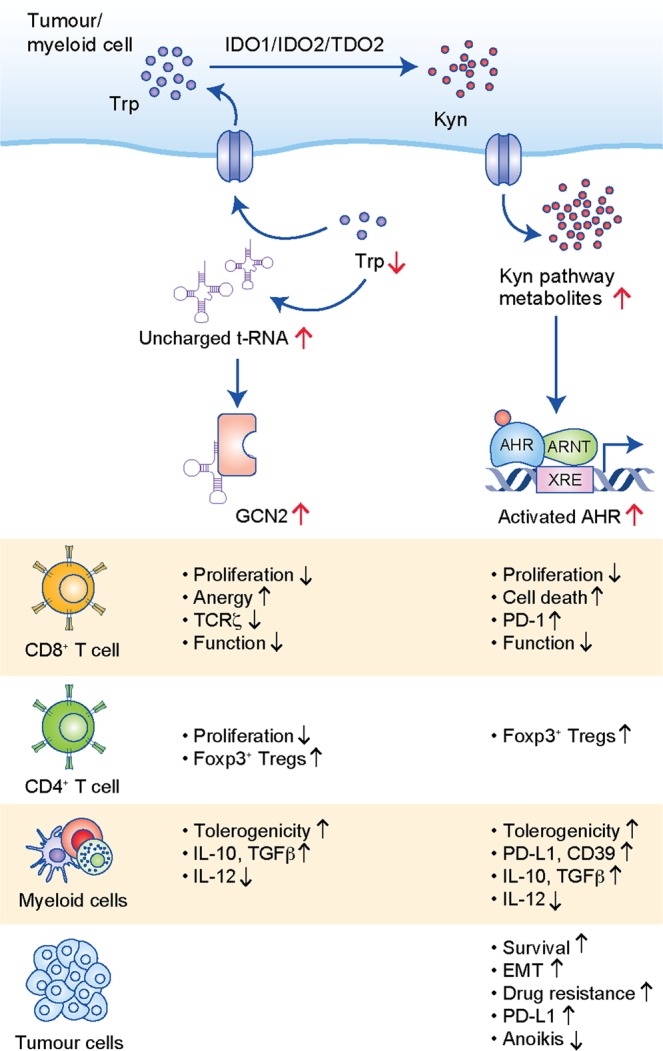
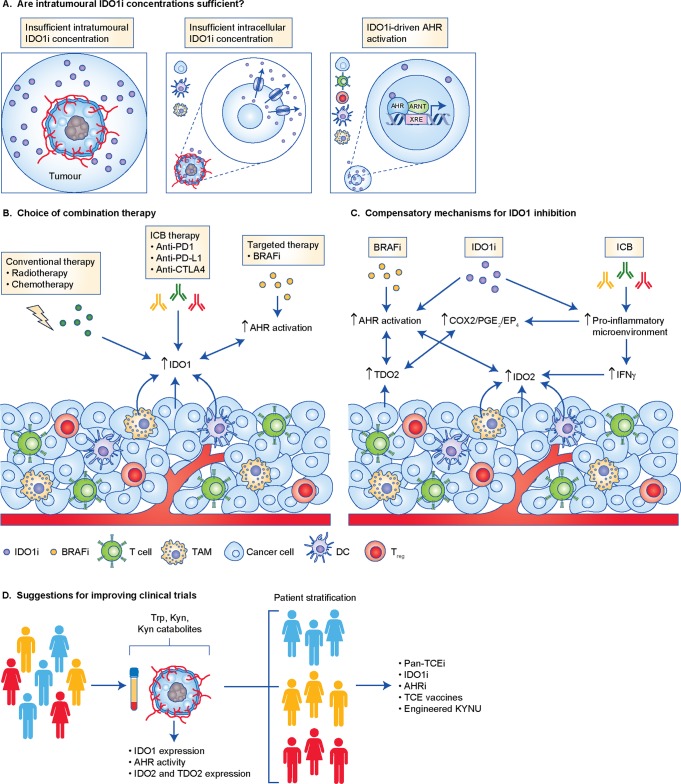
Based on its effects on both tumour cell intrinsic malignant properties as well as anti-tumour immune responses, tryptophan catabolism has emerged as an important metabolic regulator of cancer progression. Three enzymes, indoleamine-2,3-dioxygenase 1 and 2 (IDO1/2) and tryptophan-2,3-dioxygenase (TDO2), catalyse the first step of the degradation of the essential amino acid tryptophan (Trp) to kynurenine (Kyn). The notion of inhibiting IDO1 using small-molecule inhibitors elicited high hopes of a positive impact in the field of immuno-oncology, by restoring anti-tumour immune responses and synergising with other immunotherapies such as immune checkpoint inhibition. However, clinical trials with IDO1 inhibitors have yielded disappointing results, hence raising many questions. This review will discuss strategies to target Trp-degrading enzymes and possible down-stream consequences of their inhibition. We aim to provide comprehensive background information on Trp catabolic enzymes as targets in immuno-oncology and their current state of development. Details of the clinical trials with IDO1 inhibitors, including patient stratification, possible effects of the inhibitors themselves, effects of pre-treatments and the therapies the inhibitors were combined with, are discussed and mechanisms proposed that might have compensated for IDO1 inhibition. Finally, alternative approaches are suggested to circumvent these problems.
Overview
The claims and statistics of this paper haven’t been checked yet.
Free: it reads the open-access text and checks the first 5 claims that cite a source we can check. Create a free account to check every claim.
Integrity signals
Registry
Cites
Statistics
Figures
Verification
Claims the paper makes
The claims and statistics of this paper haven’t been checked yet.
Free: it reads the open-access text and checks the first 5 claims that cite a source we can check. Create a free account to check every claim.
Claims other papers make about this one
Each is checked against this paper’s own text: does it say what the citing paper says it does?
The source backs part of the claim, not all of it — or backs it for a different population, condition or comparison.
In the citing paper
“Microbiota-derived metabolites, especially tryptophan metabolites, have a crucial role in shaping innate and adaptive immunity17”
From Microbiota-derived 3-IAA influences chemotherapy efficacy in pancreatic cancer (2023) · cites this paper as [17]
Experimental — accuracy not yet measured
Self-check
Percentages, sums and reported differences re-computed from the paper’s own numbers.
The self-check needs the paper’s full text.
Citations
Cites
The cancer genome atlas pan-cancer analysis project
The Cancer Genome Atlas Research Network, Weinstein, J. N., Collisson, E. A., Mills, G. B., Shaw, K. R. M., Ozenberger, B. A., Ellrott, K., Shmulevich, I., Sander, C., & Stuart, J. M. (2013) · Nature Genetics · doi:10.1038/ng.2764 · Cited by 9,092
Mechanism-driven biomarkers to guide immune checkpoint blockade in cancer therapy
Topalian, S. L., Taube, J. M., Anders, R. A., & Pardoll, D. M. (2016) · Nature Reviews Cancer · doi:10.1038/nrc.2016.36 · Cited by 2,733
Prevention of Allogeneic Fetal Rejection by Tryptophan Catabolism
Munn, D. H., Zhou, M., Attwood, J. T., Bondarev, I., Conway, S. J., Marshall, B., Brown, C., & Mellor, A. L. (1998) · Science · doi:10.1126/science.281.5380.1191 · Cited by 2,585
Uyttenhove, C., Pilotte, L., Théate, I., Stroobant, V., Colau, D., Parmentier, N., Boon, T., & Van den Eynde, B. J. (2003) · Nature Medicine · doi:10.1038/nm934 · Cited by 2,305
An endogenous tumour-promoting ligand of the human aryl hydrocarbon receptor
Opitz, C. A., Litzenburger, U. M., Sahm, F., Ott, M., Tritschler, I., Trump, S., Schumacher, T., Jestaedt, L., Schrenk, D., Weller, M., et al. (2011) · Nature · doi:10.1038/nature10491 · Cited by 1,898
Self-citationInhibition of T Cell Proliferation by Macrophage Tryptophan Catabolism
Munn, D. H., Shafizadeh, E., Attwood, J. T., Bondarev, I., Pashine, A., & Mellor, A. L. (1999) · The Journal of Experimental Medicine · doi:10.1084/jem.189.9.1363 · Cited by 1,623
An Interaction between Kynurenine and the Aryl Hydrocarbon Receptor Can Generate Regulatory T Cells
Mezrich, J. D., Fechner, J. H., Zhang, X., Johnson, B. P., Burlingham, W. J., & Bradfield, C. A. (2010) · The Journal of Immunology · doi:10.4049/jimmunol.0903670 · Cited by 1,601
Tryptophan metabolism as a common therapeutic target in cancer, neurodegeneration and beyond
Platten, M., Nollen, E. A. A., Röhrig, U. F., Fallarino, F., & Opitz, C. A. (2019) · Nature Reviews Drug Discovery · doi:10.1038/s41573-019-0016-5 · Cited by 1,586
Self-citationNAD + in aging, metabolism, and neurodegeneration
Verdin, E. (2015) · Science · doi:10.1126/science.aac4854 · Cited by 1,319
Munn, D. H., Sharma, M. D., Baban, B., Harding, H. P., Zhang, Y., Ron, D., & Mellor, A. L. (2005) · Immunity · doi:10.1016/j.immuni.2005.03.013 · Cited by 1,272
Rothhammer, V., & Quintana, F. J. (2019) · Nature Reviews Immunology · doi:10.1038/s41577-019-0125-8 · Cited by 1,197
Aryl Hydrocarbon Receptor Antagonists Promote the Expansion of Human Hematopoietic Stem Cells
Boitano, A. E., Wang, J., Romeo, R., Bouchez, L. C., Parker, A. E., Sutton, S. E., Walker, J. R., Flaveny, C. A., Perdew, G. H., Denison, M. S., et al. (2010) · Science · doi:10.1126/science.1191536 · Cited by 1,047
Fallarino, F., Grohmann, U., You, S., McGrath, B. C., Cavener, D. R., Vacca, C., Orabona, C., Bianchi, R., Belladonna, M. L., Volpi, C., et al. (2006) · The Journal of Immunology · doi:10.4049/jimmunol.176.11.6752 · Cited by 1,047
IDO in the Tumor Microenvironment: Inflammation, Counter-Regulation, and Tolerance
Munn, D. H., & Mellor, A. L. (2016) · Trends in Immunology · doi:10.1016/j.it.2016.01.002 · Cited by 1,041
Potential Regulatory Function of Human Dendritic Cells Expressing Indoleamine 2,3-Dioxygenase
Munn, D. H., Sharma, M. D., Lee, J. R., Jhaver, K. G., Johnson, T. S., Keskin, D. B., Marshall, B., Chandler, P., Antonia, S. J., Burgess, R., et al. (2002) · Science · doi:10.1126/science.1073514 · Cited by 1,028
Denkert, C., von Minckwitz, G., Brase, J. C., Sinn, B. V., Gade, S., Kronenwett, R., Pfitzner, B. M., Salat, C., Loi, S., Schmitt, W. D., et al. (2015) · Journal of Clinical Oncology · doi:10.1200/jco.2014.58.1967 · Cited by 1,026
Regulation of the immune response by the aryl hydrocarbon receptor
Gutiérrez-Vázquez, C., & Quintana, F. J. (2018) · Immunity · doi:10.1016/j.immuni.2017.12.012 · Cited by 985
Long, G. V., Dummer, R., Hamid, O., Gajewski, T. F., Caglevic, C., Dalle, S., Arance, A., Carlino, M. S., Grob, J.-J., Kim, T. M., et al. (2019) · The Lancet Oncology · doi:10.1016/s1470-2045(19)30274-8 · Cited by 960
The aryl hydrocarbon receptor: multitasking in the immune system
Stockinger, B., Meglio, P. D., Gialitakis, M., & Duarte, J. H. (2014) · Annual Review of Immunology · doi:10.1146/annurev-immunol-032713-120245 · Cited by 909
Aryl hydrocarbon receptor ligands in cancer: friend and foe
Murray, I. A., Patterson, A. D., & Perdew, G. H. (2014) · Nature Reviews Cancer · doi:10.1038/nrc3846 · Cited by 883
Cyclooxygenase‐2 in cancer: A review
Hashemi Goradel, N., Najafi, M., Salehi, E., Farhood, B., & Mortezaee, K. (2019) · Journal of Cellular Physiology · doi:10.1002/jcp.27411 · Cited by 807
Blood–Brain Barrier Transport of Kynurenines: Implications for Brain Synthesis and Metabolism
Fukui, S., Schwarcz, R., Rapoport, S. I., Takada, Y., & Smith, Q. R. (1991) · Journal of Neurochemistry · doi:10.1111/j.1471-4159.1991.tb03460.x · Cited by 761
Transport of drugs from blood vessels to tumour tissue
Dewhirst, M. W., & Secomb, T. W. (2017) · Nature Reviews Cancer · doi:10.1038/nrc.2017.93 · Cited by 749
Hwu, P., Du, M. X., Lapointe, R., Do, M., Taylor, M. W., & Young, H. A. (2000) · The Journal of Immunology · doi:10.4049/jimmunol.164.7.3596 · Cited by 739
Nguyen, N. T., Kimura, A., Nakahama, T., Chinen, I., Masuda, K., Nohara, K., Fujii-Kuriyama, Y., & Kishimoto, T. (2010) · Proceedings of the National Academy of Sciences · doi:10.1073/pnas.1014465107 · Cited by 685
DiNatale, B. C., Murray, I. A., Schroeder, J. C., Flaveny, C. A., Lahoti, T. S., Laurenzana, E. M., Omiecinski, C. J., & Perdew, G. H. (2010) · Toxicological Sciences · doi:10.1093/toxsci/kfq024 · Cited by 634
Holmgaard, R. B., Zamarin, D., Munn, D. H., Wolchok, J. D., & Allison, J. P. (2013) · Journal of Experimental Medicine · doi:10.1084/jem.20130066 · Cited by 634
Brandacher, G., Perathoner, A., Ladurner, R., Schneeberger, S., Obrist, P., Winkler, C., Werner, E. R., Werner-Felmayer, G., Weiss, H. G., G√∂bel, G., et al. (2006) · Clinical Cancer Research · doi:10.1158/1078-0432.ccr-05-1966 · Cited by 614
Yu, J., Du, W., Yan, F., Wang, Y., Li, H., Cao, S., Yu, W., Shen, C., Liu, J., & Ren, X. (2013) · The Journal of Immunology · doi:10.4049/jimmunol.1201449 · Cited by 606
Wainwright, D. A., Chang, A. L., Dey, M., Balyasnikova, I. V., Kim, C. K., Tobias, A., Cheng, Y., Kim, J. W., Qiao, J., Zhang, L., et al. (2014) · Clinical Cancer Research · doi:10.1158/1078-0432.ccr-14-0514 · Cited by 576
Reversal of tumoral immune resistance by inhibition of tryptophan 2,3-dioxygenase
Pilotte, L., Larrieu, P., Stroobant, V., Colau, D., Dolušić, E., Frédérick, R., De Plaen, E., Uyttenhove, C., Wouters, J., Masereel, B., et al. (2012) · Proceedings of the National Academy of Sciences · doi:10.1073/pnas.1113873109 · Cited by 572
Quantitative Analysis of NAD Synthesis-Breakdown Fluxes
Liu, L., Su, X., Quinn, W. J., Hui, S., Krukenberg, K., Frederick, D. W., Redpath, P., Zhan, L., Chellappa, K., White, E., et al. (2018) · Cell Metabolism · doi:10.1016/j.cmet.2018.03.018 · Cited by 564
Spranger, S., Koblish, H. K., Horton, B., Scherle, P. A., Newton, R., & Gajewski, T. F. (2014) · Journal for ImmunoTherapy of Cancer · doi:10.1186/2051-1426-2-3 · Cited by 552
Selective inhibition of IDO1 effectively regulates mediators of antitumor immunity
Liu, X., Shin, N., Koblish, H. K., Yang, G., Wang, Q., Wang, K., Leffet, L., Hansbury, M. J., Thomas, B., Rupar, M., et al. (2010) · Blood · doi:10.1182/blood-2009-09-246124 · Cited by 548
Liu, Y., Liang, X., Dong, W., Fang, Y., Lv, J., Zhang, T., Fiskesund, R., Xie, J., Liu, J., Yin, X., et al. (2018) · Cancer Cell · doi:10.1016/j.ccell.2018.02.005 · Cited by 535
Control of tumor-associated macrophages and T cells in glioblastoma via AHR and CD39
Takenaka, M. C., Gabriely, G., Rothhammer, V., Mascanfroni, I. D., Wheeler, M. A., Chao, C.-C., Gutiérrez-Vázquez, C., Kenison, J., Tjon, E. C., Barroso, A., et al. (2019) · Nature Neuroscience · doi:10.1038/s41593-019-0370-y · Cited by 517
Targeting the IDO1/TDO2–KYN–AhR Pathway for Cancer Immunotherapy – Challenges and Opportunities
Cheong, J. E., & Sun, L. (2018) · Trends in Pharmacological Sciences · doi:10.1016/j.tips.2017.11.007 · Cited by 487
Tumor-Expressed IDO Recruits and Activates MDSCs in a Treg-Dependent Manner
Holmgaard, R. B., Zamarin, D., Li, Y., Gasmi, B., Munn, D. H., Allison, J. P., Merghoub, T., & Wolchok, J. D. (2015) · Cell Reports · doi:10.1016/j.celrep.2015.08.077 · Cited by 482
Metz, R., DuHadaway, J. B., Kamasani, U., Laury-Kleintop, L., Muller, A. J., & Prendergast, G. C. (2007) · Cancer Research · doi:10.1158/0008-5472.can-07-1872 · Cited by 467
Characterization of an indoleamine 2,3-dioxygenase-like protein found in humans and mice
Ball, H. J., Sanchez-Perez, A., Weiser, S., Austin, C. J. D., Astelbauer, F., Miu, J., McQuillan, J. A., Stocker, R., Jermiin, L. S., & Hunt, N. H. (2007) · Gene · doi:10.1016/j.gene.2007.04.010 · Cited by 434
Quintana, F. J., Murugaiyan, G., Farez, M. F., Mitsdoerffer, M., Tukpah, A.-M., Burns, E. J., & Weiner, H. L. (2010) · Proceedings of the National Academy of Sciences · doi:10.1073/pnas.1009201107 · Cited by 428
Toulmonde, M., Penel, N., Adam, J., Chevreau, C., Blay, J.-Y., Le Cesne, A., Bompas, E., Piperno-Neumann, S., Cousin, S., Grellety, T., et al. (2018) · JAMA Oncology · doi:10.1001/jamaoncol.2017.1617 · Cited by 402
Curti, A., Pandolfi, S., Valzasina, B., Aluigi, M., Isidori, A., Ferri, E., Salvestrini, V., Bonanno, G., Rutella, S., Durelli, I., et al. (2007) · Blood · doi:10.1182/blood-2006-07-036863 · Cited by 396
Mitchell, T. C., Hamid, O., Smith, D. C., Bauer, T. M., Wasser, J. S., Olszanski, A. J., Luke, J. J., Balmanoukian, A. S., Schmidt, E. V., Zhao, Y., et al. (2018) · Journal of Clinical Oncology · doi:10.1200/jco.2018.78.9602 · Cited by 388
Metz, R., Rust, S., DuHadaway, J. B., Mautino, M. R., Munn, D. H., Vahanian, N. N., Link, C. J., & Prendergast, G. C. (2012) · OncoImmunology · doi:10.4161/onci.21716 · Cited by 384
Théate, I., van Baren, N., Pilotte, L., Moulin, P., Larrieu, P., Renauld, J.-C., Hervé, C., Gutierrez-Roelens, I., Marbaix, E., Sempoux, C., et al. (2015) · Cancer Immunology Research · doi:10.1158/2326-6066.cir-14-0137 · Cited by 363
Infectious tolerance via the consumption of essential amino acids and mTOR signaling
Cobbold, S. P., Adams, E., Farquhar, C. A., Nolan, K. F., Howie, D., Lui, K. O., Fairchild, P. J., Mellor, A. L., Ron, D., & Waldmann, H. (2009) · Proceedings of the National Academy of Sciences · doi:10.1073/pnas.0903919106 · Cited by 336
Immune escape as a fundamental trait of cancer: focus on IDO
Prendergast, G. C. (2008) · Oncogene · doi:10.1038/onc.2008.35 · Cited by 325
Litzenburger, U. M., Opitz, C. A., Sahm, F., Rauschenbach, K. J., Trump, S., Winter, M., Ott, M., Ochs, K., Lutz, C., Liu, X., et al. (2014) · Oncotarget · doi:10.18632/oncotarget.1637 · Cited by 322
Self-citationIDO Is a Nodal Pathogenic Driver of Lung Cancer and Metastasis Development
Smith, C., Chang, M. Y., Parker, K. H., Beury, D. W., DuHadaway, J. B., Flick, H. E., Boulden, J., Sutanto-Ward, E., Soler, A. P., Laury-Kleintop, L. D., et al. (2012) · Cancer Discovery · doi:10.1158/2159-8290.cd-12-0014 · Cited by 322
Triplett, T. A., Garrison, K. C., Marshall, N., Donkor, M., Blazeck, J., Lamb, C., Qerqez, A., Dekker, J. D., Tanno, Y., Lu, W.-C., et al. (2018) · Nature Biotechnology · doi:10.1038/nbt.4180 · Cited by 321
Beatty, G. L., O'Dwyer, P. J., Clark, J., Shi, J. G., Bowman, K. J., Scherle, P. A., Newton, R. C., Schaub, R., Maleski, J., Leopold, L., et al. (2017) · Clinical Cancer Research · doi:10.1158/1078-0432.ccr-16-2272 · Cited by 314
CH223191 Is a Ligand-Selective Antagonist of the Ah (Dioxin) Receptor
Zhao, B., DeGroot, D. E., Hayashi, A., He, G., & Denison, M. S. (2010) · Toxicological Sciences · doi:10.1093/toxsci/kfq217 · Cited by 312
Löb, S., Königsrainer, A., Zieker, D., Brücher, B. L. D. M., Rammensee, H.-G., Opelz, G., & Terness, P. (2009) · Cancer Immunology, Immunotherapy · doi:10.1007/s00262-008-0513-6 · Cited by 304
Opitz, C. A., Litzenburger, U. M., Lutz, C., Lanz, T. V., Tritschler, I., Köppel, A., Tolosa, E., Hoberg, M., Anderl, J., Aicher, W. K., et al. (2009) · Stem Cells · doi:10.1002/stem.7 · Cited by 299
Self-citationImpact of Immune Parameters on Long-Term Survival in Metastatic Renal Cell Carcinoma
Donskov, F., & von der Maase, H. (2006) · Journal of Clinical Oncology · doi:10.1200/jco.2005.03.9594 · Cited by 299
Aryl hydrocarbon receptor signaling mediates expression of indoleamine 2,3-dioxygenase
Vogel, C. F. A., Goth, S. R., Dong, B., Pessah, I. N., & Matsumura, F. (2008) · Biochemical and Biophysical Research Communications · doi:10.1016/j.bbrc.2008.07.156 · Cited by 296
D'Amato, N. C., Rogers, T. J., Gordon, M. A., Greene, L. I., Cochrane, D. R., Spoelstra, N. S., Nemkov, T. G., D'Alessandro, A., Hansen, K. C., & Richer, J. K. (2015) · Cancer Research · doi:10.1158/0008-5472.can-15-2011 · Cited by 294
Jung, K. H., LoRusso, P., Burris, H., Gordon, M., Bang, Y.-J., Hellmann, M. D., Cervantes, A., Ochoa de Olza, M., Marabelle, A., Hodi, F. S., et al. (2019) · Clinical Cancer Research · doi:10.1158/1078-0432.ccr-18-2740 · Cited by 275
Kanai, M., Funakoshi, H., Takahashi, H., Hayakawa, T., Mizuno, S., Matsumoto, K., & Nakamura, T. (2009) · Molecular Brain · doi:10.1186/1756-6606-2-8 · Cited by 273
The rationale of indoleamine 2,3-dioxygenase inhibition for cancer therapy
Brochez, L., Chevolet, I., & Kruse, V. (2017) · European Journal of Cancer · doi:10.1016/j.ejca.2017.01.011 · Cited by 270
The Genotype-Tissue Expression (GTEx) project
Lonsdale, J., Thomas, J., Salvatore, M., Phillips, R., Lo, E., Shad, S., Hasz, R., Walters, G., Garcia, F., Young, N., et al. (2013) · Nature Genetics · doi:10.1038/ng.2653 · Cited by 263
MYC promotes tryptophan uptake and metabolism by the kynurenine pathway in colon cancer
Venkateswaran, N., Lafita-Navarro, M. C., Hao, Y.-H., Kilgore, J. A., Perez-Castro, L., Braverman, J., Borenstein-Auerbach, N., Kim, M., Lesner, N. P., Mishra, P., et al. (2019) · Genes & Development · doi:10.1101/gad.327056.119 · Cited by 252
Meisel, R., Brockers, S., Heseler, K., Degistirici, Ö., Bülle, H., Woite, C., Stuhlsatz, S., Schwippert, W., Jäger, M., Sorg, R., et al. (2011) · Leukemia · doi:10.1038/leu.2010.310 · Cited by 249
The aryl hydrocarbon receptor (AhR) in the regulation of cell-cell contact and tumor growth
Dietrich, C., & Kaina, B. (2010) · Carcinogenesis · doi:10.1093/carcin/bgq028 · Cited by 241
Ino, K., Yamamoto, E., Shibata, K., Kajiyama, H., Yoshida, N., Terauchi, M., Nawa, A., Nagasaka, T., Takikawa, O., & Kikkawa, F. (2008) · Clinical Cancer Research · doi:10.1158/1078-0432.ccr-07-4144 · Cited by 239
Miller, C. L., Llenos, I. C., Dulay, J. R., Barillo, M. M., Yolken, R. H., & Weis, S. (2004) · Neurobiology of Disease · doi:10.1016/j.nbd.2003.12.015 · Cited by 233
Inaba, T., Ino, K., Kajiyama, H., Yamamoto, E., Shibata, K., Nawa, A., Nagasaka, T., Akimoto, H., Takikawa, O., & Kikkawa, F. (2009) · Gynecologic Oncology · doi:10.1016/j.ygyno.2009.07.015 · Cited by 216
Wang, G.-Z., Zhang, L., Zhao, X.-C., Gao, S.-H., Qu, L.-W., Yu, H., Fang, W.-F., Zhou, Y.-C., Liang, F., Zhang, C., et al. (2019) · Nature Communications · doi:10.1038/s41467-019-08887-7 · Cited by 213 · cited 3×
“Interestingly, cancer cells exposed to carcinogens contained in tobacco smoke also evade immune surveillance by inducing the expression of the immune checkpoint molecule, PD-L1.(102) Notably, knockdown of AHR in cancer cells decreased the percentage of immunosuppressive CD11bPD-L1 tumour-infiltrating cells, increased…”
BackgroundInfluentialWu, W., Nicolazzo, J. A., Wen, L., Chung, R., Stankovic, R., Bao, S. S., Lim, C. K., Brew, B. J., Cullen, K. M., & Guillemin, G. J. (2013) · PLoS ONE · doi:10.1371/journal.pone.0059749 · Cited by 212
Inhibition of De Novo NAD + Synthesis by Oncogenic URI Causes Liver Tumorigenesis through DNA Damage
Tummala, K. S., Gomes, A. L., Yilmaz, M., Graña, O., Bakiri, L., Ruppen, I., Ximénez-Embún, P., Sheshappanavar, V., Rodriguez-Justo, M., Pisano, D. G., et al. (2014) · Cancer Cell · doi:10.1016/j.ccell.2014.10.002 · Cited by 206
Prendergast, G. C., Mondal, A., Dey, S., Laury-Kleintop, L. D., & Muller, A. J. (2018) · Trends in Cancer · doi:10.1016/j.trecan.2017.11.005 · Cited by 196
Yasui, H., Takai, K., Yoshida, R., & Hayaishi, O. (1986) · Proceedings of the National Academy of Sciences · doi:10.1073/pnas.83.17.6622 · Cited by 190
Metz, R., Smith, C., DuHadaway, J. B., Chandler, P., Baban, B., Merlo, L. M. F., Pigott, E., Keough, M. P., Rust, S., Mellor, A. L., et al. (2014) · International Immunology · doi:10.1093/intimm/dxt073 · Cited by 190
Hendrickx, W., Simeone, I., Anjum, S., Mokrab, Y., Bertucci, F., Finetti, P., Curigliano, G., Seliger, B., Cerulo, L., Tomei, S., et al. (2017) · OncoImmunology · doi:10.1080/2162402x.2016.1253654 · Cited by 185
Dolušić, E., Larrieu, P., Moineaux, L., Stroobant, V., Pilotte, L., Colau, D., Pochet, L., Van den Eynde, B., Masereel, B., Wouters, J., et al. (2011) · Journal of Medicinal Chemistry · doi:10.1021/jm2006782 · Cited by 181
Brenk, M., Scheler, M., Koch, S., Neumann, J., Takikawa, O., Häcker, G., Bieber, T., & von Bubnoff, D. (2009) · The Journal of Immunology · doi:10.4049/jimmunol.0803277 · Cited by 176
Soliman, H. H., Jackson, E., Neuger, T., Dees, E. C., Harvey, R. D., Han, H., Ismail-Khan, R., Minton, S., Vahanian, N. N., Link, C., et al. (2014) · Oncotarget · doi:10.18632/oncotarget.2357 · Cited by 174
Brody, J. R., Costantino, C. L., Berger, A. C., Sato, T., Lisanti, M. P., Yeo, C. J., Emmons, R. V., & Witkiewicz, A. K. (2009) · Cell Cycle · doi:10.4161/cc.8.12.8745 · Cited by 174
Hennequart, M., Pilotte, L., Cane, S., Hoffmann, D., Stroobant, V., Plaen, E. D., & Eynde, B. J. V. D. (2017) · Cancer Immunology Research · doi:10.1158/2326-6066.cir-16-0400 · Cited by 171
Riesenberg, R., Weiler, C., Spring, O., Eder, M., Buchner, A., Popp, T., Castro, M., Kammerer, R., Takikawa, O., Hatz, R. A., et al. (2007) · Clinical Cancer Research · doi:10.1158/1078-0432.ccr-07-0942 · Cited by 170
Expression and prognosis role of indoleamine 2,3-dioxygenase in hepatocellular carcinoma
Pan, K., Wang, H., Chen, M.-S., Zhang, H.-K., Weng, D.-S., Zhou, J., Huang, W., Li, J.-J., Song, H.-F., & Xia, J.-C. (2008) · Journal of Cancer Research and Clinical Oncology · doi:10.1007/s00432-008-0395-1 · Cited by 169
Novikov, O., Wang, Z., Stanford, E. A., Parks, A. J., Ramirez-Cardenas, A., Landesman, E., Laklouk, I., Sarita-Reyes, C., Gusenleitner, D., Li, A., et al. (2016) · Molecular Pharmacology · doi:10.1124/mol.116.105361 · Cited by 167
Ravishankar, B., Liu, H., Shinde, R., Chaudhary, K., Xiao, W., Bradley, J., Koritzinsky, M., Madaio, M. P., & McGaha, T. L. (2015) · Proceedings of the National Academy of Sciences · doi:10.1073/pnas.1504276112 · Cited by 162
Nayak-Kapoor, A., Hao, Z., Sadek, R., Dobbins, R., Marshall, L., Vahanian, N. N., Jay Ramsey, W., Kennedy, E., Mautino, M. R., Link, C. J., et al. (2018) · Journal for ImmunoTherapy of Cancer · doi:10.1186/s40425-018-0351-9 · Cited by 160
Hönig, A., Rieger, L., Kapp, M., Sütterlin, M., Dietl, J., & Kämmerer, U. (2004) · Journal of Reproductive Immunology · doi:10.1016/j.jri.2003.11.002 · Cited by 158
Hsu, Y.-L., Hung, J.-Y., Chiang, S.-Y., Jian, S.-F., Wu, C.-Y., Lin, Y.-S., Tsai, Y.-M., Chou, S.-H., Tsai, M.-J., & Kuo, P.-L. (2016) · Oncotarget · doi:10.18632/oncotarget.8488 · Cited by 158
Witkiewicz, A., Williams, T. K., Cozzitorto, J., Durkan, B., Showalter, S. L., Yeo, C. J., & Brody, J. R. (2008) · Journal of the American College of Surgeons · doi:10.1016/j.jamcollsurg.2007.12.014 · Cited by 151
A phase I study of indoximod in patients with advanced malignancies
Soliman, H. H., Minton, S. E., Han, H. S., Ismail-Khan, R., Neuger, A., Khambati, F., Noyes, D., Lush, R., Chiappori, A. A., Roberts, J. D., et al. (2016) · Oncotarget · doi:10.18632/oncotarget.8216 · Cited by 145
Li, Q., Harden, J. L., Anderson, C. D., & Egilmez, N. K. (2016) · The Journal of Immunology · doi:10.4049/jimmunol.1502615 · Cited by 144
Greene, L. I., Bruno, T. C., Christenson, J. L., D’Alessandro, A., Culp‐Hill, R., Torkko, K. C., Borges, V. F., Slansky, J. E., & Richer, J. K. (2019) · Molecular Cancer Research · doi:10.1158/1541-7786.mcr-18-0362 · Cited by 141
Crosignani, S., Bingham, P., Bottemanne, P., Cannelle, H., Cauwenberghs, S., Cordonnier, M., Dalvie, D., Deroose, F., Feng, J. L., Gomes, B., et al. (2017) · Journal of Medicinal Chemistry · doi:10.1021/acs.jmedchem.7b00974 · Cited by 139
Indoximod: An Immunometabolic Adjuvant That Empowers T Cell Activity in Cancer
Fox, E. E., Oliver, T., Rowe, M. M., Thomas, S., Zakharia, Y., Gilman, P. B., Muller, A. J., & Prendergast, G. C. (2018) · Frontiers in Oncology · doi:10.3389/fonc.2018.00370 · Cited by 137
Iversen, T. Z., Engell-Noerregaard, L., Ellebæk, E., Andersen, R. S., Larsen, S. K., Bjoern, J., Zeyher, C., Gouttefangeas, C., Thomsen, B. M., Holm, B., et al. (2013) · Clinical Cancer Research · doi:10.1158/1078-0432.ccr-13-1560 · Cited by 132
IDO2 in Immunomodulation and Autoimmune Disease
Prendergast, G. C., Metz, R., Muller, A. J., Merlo, L. M. F., & Mandik-Nayak, L. (2014) · Frontiers in Immunology · doi:10.3389/fimmu.2014.00585 · Cited by 132
Indoleamine 2,3-dioxygenase specific, cytotoxic T cells as immune regulators
Sørensen, R. B., Hadrup, S. R., Svane, I. M., Hjortsø, M. C., Straten, P. T., & Andersen, M. H. (2010) · Blood · doi:10.1182/blood-2010-06-288498 · Cited by 131
Lowe, M. M., Mold, J. E., Kanwar, B., Huang, Y., Louie, A., Pollastri, M. P., Wang, C., Patel, G., Franks, D. G., Schlezinger, J., et al. (2014) · PLoS ONE · doi:10.1371/journal.pone.0087877 · Cited by 129
Genotyping and Expression Analysis of IDO2 in Human Pancreatic Cancer: A Novel, Active Target
Witkiewicz, A. K., Costantino, C. L., Metz, R., Muller, A. J., Prendergast, G. C., Yeo, C. J., & Brody, J. R. (2009) · Journal of the American College of Surgeons · doi:10.1016/j.jamcollsurg.2008.12.018 · Cited by 127
Salter, M., Hazelwood, R., Pogson, C. I., Iyer, R., & Madge, D. J. (1995) · Biochemical Pharmacology · doi:10.1016/0006-2952(95)00006-l · Cited by 119
Kimura, R. H., Wang, L., Shen, B., Huo, L., Tummers, W., Filipp, F. V., Guo, H. H., Haywood, T., Abou-Elkacem, L., Baratto, L., et al. (2019) · Nature Communications · doi:10.1038/s41467-019-11863-w · Cited by 118
The Role of Placental Tryptophan Catabolism
Sedlmayr, P., Blaschitz, A., & Stocker, R. (2014) · Frontiers in Immunology · doi:10.3389/fimmu.2014.00230 · Cited by 114
The roles of the COX2/PGE2/EP axis in therapeutic resistance
Tong, D., Liu, Q., Wang, L.-A., Xie, Q., Pang, J., Huang, Y., Wang, L., Liu, G., Zhang, D., Lan, W., et al. (2018) · Cancer and Metastasis Reviews · doi:10.1007/s10555-018-9752-y · Cited by 111
A patent review of IDO1 inhibitors for cancer
Cheong, J. E., Ekkati, A. R., & Sun, L. (2018) · Expert Opinion on Therapeutic Patents · doi:10.1080/13543776.2018.1441290 · Cited by 108
Vogel, C. F. A., Wu, D., Goth, S. R., Baek, J., Lollies, A., Domhardt, R., Grindel, A., & Pessah, I. N. (2013) · Immunology & Cell Biology · doi:10.1038/icb.2013.43 · Cited by 107
Monjazeb, A. M., Kent, M. S., Grossenbacher, S. K., Mall, C., Zamora, A. E., Mirsoian, A., Chen, M., Kol, A., Shiao, S. L., Reddy, A., et al. (2016) · Clinical Cancer Research · doi:10.1158/1078-0432.ccr-15-3026 · Cited by 107
Jacquemier, J. D., Bertucci, F., Finetti, P., Esterni, B., Charafe‐Jauffret, E., Thibult, M., Houvenaeghel, G. F., den Eynde, B. J. V., Birnbaum, D., Olive, D., et al. (2011) · International Journal of Cancer · doi:10.1002/ijc.25979 · Cited by 102
Chromatographic analysis of tryptophan metabolites
Sadok, I., Gamian, A., & Staniszewska, M. M. (2017) · Journal of Separation Science · doi:10.1002/jssc.201700184 · Cited by 99
Corre, S., Tardif, N., Mouchet, N., Leclair, H. M., Boussemart, L., Gautron, A., Bachelot, L., Perrot, A., Soshilov, A., Rogiers, A., et al. (2018) · Nature Communications · doi:10.1038/s41467-018-06951-2 · Cited by 98
Tumoral Immune Resistance Mediated by Enzymes That Degrade Tryptophan
van Baren, N., & Van den Eynde, B. J. (2015) · Cancer Immunology Research · doi:10.1158/2326-6066.cir-15-0095 · Cited by 96
The end of the road for the tryptophan depletion concept in pregnancy and infection
Badawy, A. A.-B., Namboodiri, A. M. A., & Moffett, J. R. (2016) · Clinical Science · doi:10.1042/cs20160153 · Cited by 92
IDO1 is an Integral Mediator of Inflammatory Neovascularization
Mondal, A., Smith, C., DuHadaway, J. B., Sutanto‐Ward, E., Prendergast, G. C., Bravo‐Nuevo, A., & Muller, A. J. (2016) · EBioMedicine · doi:10.1016/j.ebiom.2016.11.013 · Cited by 92
Creelan, B., Antonia, S. J., Bepler, G., Garrett, T. J., Simon, G. R., & Soliman, H. H. (2013) · OncoImmunology · doi:10.4161/onci.23428 · Cited by 91
Siu, L. L., Gelmon, K. A., Chu, Q. S.-C., Pachynski, R. K., Alese, O. B., Basciano, P. A., Walker, J., Mitra, P., Zhu, L., Phillips, P., et al. (2017) · Cancer Research · doi:10.1158/1538-7445.am2017-ct116 · Cited by 88
Schafer, C. C., Wang, Y., Hough, K. P., Sawant, A., Grant, S. C., Thannickal, V. J., Zmijewski, J. W., Ponnazhagan, S., & Deshane, J. S. (2016) · Oncotarget · doi:10.18632/oncotarget.12249 · Cited by 86
Mautino, M. R., Jaipuri, F. A., Waldo, J., Kumar, S., Adams, J., Van Allen, C., Marcinowicz-Flick, A., Munn, D., Vahanian, N., & Link, C. J. (2013) · Cancer Research · doi:10.1158/1538-7445.am2013-491 · Cited by 85
Human AML activates the aryl hydrocarbon receptor pathway to impair NK cell development and function
Scoville, S. D., Nalin, A. P., Chen, L., Chen, L., Zhang, M. H., McConnell, K., Beceiro Casas, S., Ernst, G., Traboulsi, A. A.-R., Hashi, N., et al. (2018) · Blood · doi:10.1182/blood-2018-03-838474 · Cited by 85
Gomes, B., Driessens, G., Bartlett, D., Cai, D., Cauwenberghs, S., Crosignani, S., Dalvie, D., Denies, S., Dillon, C. P., Fantin, V. R., et al. (2018) · Molecular Cancer Therapeutics · doi:10.1158/1535-7163.mct-17-1104 · Cited by 83
Gibney, G. T., Hamid, O., Lutzky, J., Olszanski, A. J., Mitchell, T. C., Gajewski, T. F., Chmielowski, B., Hanks, B. A., Zhao, Y., Newton, R. C., et al. (2019) · Journal for ImmunoTherapy of Cancer · doi:10.1186/s40425-019-0562-8 · Cited by 83
Serum aminoterminal type III procollagen peptide reflects repair after acute myocardial infarction.
Jensen, L. T., Hørslev-Petersen, K., Toft, P., Bentsen, K. D., Grande, P., Simonsen, E. E., & Lorenzen, I. (1990) · Circulation · doi:10.1161/01.cir.81.1.52 · Cited by 82
Ye, M., Zhang, Y., Gao, H., Xu, Y., Jing, P., Wu, J., Zhang, X., Xiong, J., Dong, C., Yao, L., et al. (2018) · Clinical Cancer Research · doi:10.1158/1078-0432.ccr-17-0396 · Cited by 80
Larkin, P. B., Sathyasaikumar, K. V., Notarangelo, F. M., Funakoshi, H., Nakamura, T., Schwarcz, R., & Muchowski, P. J. (2016) · Biochimica et Biophysica Acta (BBA) - General Subjects · doi:10.1016/j.bbagen.2016.07.002 · Cited by 78
Van de Velde, L.-A., Guo, X.-Z. J., Barbaric, L., Smith, A. M., Oguin, T. H., Thomas, P. G., & Murray, P. J. (2016) · Cell Reports · doi:10.1016/j.celrep.2016.10.079 · Cited by 78
Trabanelli, S., Očadlíková, D., Ciciarello, M., Salvestrini, V., Lecciso, M., Jandus, C., Metz, R. A., Evangelisti, C., Laury‐Kleintop, L. D., Romero, P. J., et al. (2014) · The Journal of Immunology · doi:10.4049/jimmunol.1300720 · Cited by 77
Gangadhar, T. C., Hamid, O., Smith, D. C., Bauer, T. M., Wasser, J. S., Luke, J. J., Balmanoukian, A. S., Kaufman, D. R., Zhao, Y., Maleski, J. E., et al. (2015) · Journal for ImmunoTherapy of Cancer · doi:10.1186/2051-1426-3-s2-o7 · Cited by 77
Yu, J., Sun, J., Wang, S. E., Li, H., Cao, S., Cong, Y., Liu, J., & Ren, X. (2011) · Clinical and Developmental Immunology · doi:10.1155/2011/469135 · Cited by 74
Jayakumar, H., Ramanathan, P., Jayavelu, S., Dhandapani, H., Ganeshrajah, S., Singh, S. S., & Rajkumar, T. (2016) · Clinical Biochemistry · doi:10.1016/j.clinbiochem.2016.04.008 · Cited by 72
The Immune System Strikes Back: Cellular Immune Responses against Indoleamine 2,3-dioxygenase
Sørensen, R. B., Berge-Hansen, L., Junker, N., Hansen, C. A., Hadrup, S. R., Schumacher, T. N., Svane, I. M., Becker, J. C., Straten, P. T., & Andersen, M. H. (2009) · PLoS ONE · doi:10.1371/journal.pone.0006910 · Cited by 71
Qian, F., Liao, J., Villella, J., Edwards, R. P., Kaliński, P., Lele, S., Shrikant, P. A., & Odunsi, K. O. (2012) · Cancer Immunology Immunotherapy · doi:10.1007/s00262-012-1265-x · Cited by 70
P53 prevent tumor invasion and metastasis by down-regulating IDO in lung cancer
Tang, D., Yue, L., Yao, R., Zhou, L., Yang, Y., Lu, L., & Gao, W. (2017) · Oncotarget · doi:10.18632/oncotarget.17408 · Cited by 68
Yamamoto, T., Hatabayashi, K., Arita, M., Yajima, N., Takenaka, C., Suzuki, T., Takahashi, M., Oshima, Y., Hara, K., Kagawa, K., et al. (2019) · Science Signaling · doi:10.1126/scisignal.aaw3306 · Cited by 68
Adam, I., Dewi, D. L., Mooiweer, J., Sadik, A., Mohapatra, S. R., Berdel, B., Keil, M., Sonner, J. K., Thedieck, K., Rose, A. J., et al. (2018) · OncoImmunology · doi:10.1080/2162402x.2018.1486353 · Cited by 67
Self-citationSonner, J. K., Deumelandt, K., Ott, M., Thomé, C. M., Rauschenbach, K. J., Schulz, S., Munteanu, B., Mohapatra, S., Adam, I., Hofer, A.-C., et al. (2016) · OncoImmunology · doi:10.1080/2162402x.2016.1240858 · Cited by 64
Self-citationIndoleamine 2,3-dioxygenase 1 (IDO1) inhibitors activate the aryl hydrocarbon receptor
Moyer, B. J., Rojas, I. Y., Murray, I. A., Lee, S., Hazlett, H. F., Perdew, G. H., & Tomlinson, C. R. (2017) · Toxicology and Applied Pharmacology · doi:10.1016/j.taap.2017.03.012 · Cited by 64
Reardon, D. A., Desjardins, A., Rixe, O., Cloughesy, T. F., Alekar, S., Williams, J. H., Li, R., Taylor, C. T., & Lassman, A. B. (2020) · Investigational New Drugs · doi:10.1007/s10637-020-00950-1 · Cited by 64
Ott, M., Litzenburger, U. M., Rauschenbach, K. J., Bunse, L., Ochs, K., Sahm, F., Pusch, S., Opitz, C. A., Blaes, J., von Deimling, A., et al. (2014) · Glia · doi:10.1002/glia.22734 · Cited by 63
Self-citationKonishi, M., Ebner, N., Springer, J., Schefold, J. C., Doehner, W., Dschietzig, T. B., Anker, S. D., & von Haehling, S. (2016) · Circulation Journal · doi:10.1253/circj.cj-16-0791 · Cited by 59
Carvajal‐Hausdorf, D., Mani, N. L., Velcheti, V., Schalper, K. A., & Rimm, D. L. (2017) · Journal for ImmunoTherapy of Cancer · doi:10.1186/s40425-017-0285-7 · Cited by 58
Lanz, T. V., Williams, S. K., Stojic, A., Iwantscheff, S., Sonner, J. K., Grabitz, C., Becker, S., Böhler, L.-I., Mohapatra, S. R., Sahm, F., et al. (2017) · Scientific Reports · doi:10.1038/srep41271 · Cited by 56 · cited 1×
“TDO2 and its role in cancer Under physiological conditions, TDO2 is expressed primarily in the liver, where its activity regulates systemic Trp levels.(15,69,70) Furthermore, TDO2 expression has been detected in neurons and has been implicated in the regulation of neurogenesis and anxietyrelated behaviour.”
BackgroundSelf-citationAffolter, T., Llewellyn, H. P., Bartlett, D. W., Zong, Q., Xia, S., Torti, V., & Ji, C. (2019) · PLOS ONE · doi:10.1371/journal.pone.0217276 · Cited by 56
Bjoern, J., Iversen, T. Z., Nitschke, N. J., Andersen, M. H., & Svane, I. M. (2016) · Cytotherapy · doi:10.1016/j.jcyt.2016.05.010 · Cited by 55
Indoleamine Dioxygenase Inhibitors: Clinical Rationale and Current Development
Zhu, M. M. T., Dancsok, A. R., & Nielsen, T. O. (2019) · Current Oncology Reports · doi:10.1007/s11912-019-0750-1 · Cited by 55
Takamatsu, M., Hirata, A., Ohtaki, H., Hoshi, M., Ando, T., Ito, H., Hatano, Y., Tomita, H., Kuno, T., Saito, K., et al. (2015) · Cancer Science · doi:10.1111/cas.12705 · Cited by 54
Ochs, K., Ott, M., Rauschenbach, K. J., Deumelandt, K., Sahm, F., Opitz, C. A., von Deimling, A., Wick, W., & Platten, M. (2016) · Journal of Neurochemistry · doi:10.1111/jnc.13503 · Cited by 54
Self-citationSpontaneous Cytotoxic T-Cell Reactivity against Indoleamine 2,3-Dioxygenase-2
Sørensen, R. B., Køllgaard, T., Andersen, R. S., van den Berg, J. H., Svane, I. M., Straten, P. T., & Andersen, M. H. (2011) · Cancer Research · doi:10.1158/0008-5472.can-10-3403 · Cited by 53
Lanz, T. V., Opitz, C. A., Ho, P. P., Agrawal, A., Lutz, C., Weller, M., Mellor, A. L., Steinman, L., Wick, W., & Platten, M. (2010) · Stem Cells and Development · doi:10.1089/scd.2009.0385 · Cited by 52
Self-citationMohinta, S., Kannan, A. K., Gowda, K., Amin, S. G., Perdew, G. H., & August, A. (2015) · Toxicological Sciences · doi:10.1093/toxsci/kfv046 · Cited by 52
Winters, M., DuHadaway, J. B., Pham, K., Lewis-Ballester, A., Badir, S., Wai, J., Sheikh, E., Yeh, S., Prendergast, G. C., Muller, A. J., et al. (2018) · European Journal of Medicinal Chemistry · doi:10.1016/j.ejmech.2018.11.010 · Cited by 52
Nevler, A., Muller, A. J., Sutanto‐Ward, E., DuHadaway, J. B., Nagatomo, K., Londin, E. R., O’Hayer, K., Cozzitorto, J. A., Lavu, H., Yeo, T. P., et al. (2019) · Clinical Cancer Research · doi:10.1158/1078-0432.ccr-18-0814 · Cited by 51
Levina, V., Su, Y., & Gorelik, E. (2012) · Clinical and Developmental Immunology · doi:10.1155/2012/173029 · Cited by 49
HOXC 10 promotes proliferation and invasion and induces immunosuppressive gene expression in glioma
Li, S., Zhang, W., Wu, C., Gao, H., Yu, J., Wang, X., Li, B., Jun, Z., Zhang, W., Zhou, P., et al. (2018) · FEBS Journal · doi:10.1111/febs.14476 · Cited by 49
Kjeldsen, J. W., Iversen, T. Z., Engell-Noerregaard, L., Mellemgaard, A., Andersen, M. H., & Svane, I. M. (2018) · Frontiers in Immunology · doi:10.3389/fimmu.2018.02145 · Cited by 49
Chang, M. Y., Smith, C. B., DuHadaway, J. B., Pyle, J. R., Boulden, J., Soler, A. P., Muller, A. J., Laury‐Kleintop, L. D., & Prendergast, G. C. (2011) · Cancer Biology & Therapy · doi:10.4161/cbt.12.12.18142 · Cited by 48
Lewis, H. C., Chinnadurai, R., Bosinger, S. E., & Galipeau, J. (2017) · Oncotarget · doi:10.18632/oncotarget.20166 · Cited by 48
Hamid, O., Gajewski, T. F., Frankel, A. E., Bauer, T. M., Olszanski, A. J., Luke, J. J., Balmanoukian, A. S., Schmidt, E. V., Sharkey, B., Maleski, J. E., et al. (2017) · Annals of Oncology · doi:10.1093/annonc/mdx377.001 · Cited by 48
Liu, X.-Q., Lu, K., Feng, L.-L., Ding, M., Gao, J.-M., Ge, X.-L., & Wang, X. (2014) · Leukemia & Lymphoma · doi:10.3109/10428194.2013.804917 · Cited by 45
Phạm, Q. T., Oue, N., Sekino, Y., Yamamoto, Y., Shigematsu, Y., Sakamoto, N., Sentani, K., Uraoka, N., & Yasui, W. (2018) · Oncology · doi:10.1159/000490725 · Cited by 45
Xin, Y., & Cai, H. (2016) · Molecular Imaging and Biology · doi:10.1007/s11307-016-1024-z · Cited by 44
Orsini, H., Araújo, L. P., Maricato, J. T., Guereschi, M. G., Mariano, M., Castilho, B. A., & Basso, A. S. (2013) · Brain Behavior and Immunity · doi:10.1016/j.bbi.2013.12.012 · Cited by 43
Prognostic value of indoleamine 2,3-dioxygenase activity and expression in nasopharyngeal carcinoma
Ben‐Haj‐Ayed, A., Moussa, A., Ghedira, R., Gabbouj, S., Miled, S., Bouzid, N., Tebra-Mrad, S., Bouaouina, N., Chouchane, L., Zakhama, A., et al. (2015) · Immunology Letters · doi:10.1016/j.imlet.2015.11.012 · Cited by 42
1,2,3-Triazoles as inhibitors of indoleamine 2,3-dioxygenase 2 (IDO2)
Röhrig, U. F., Majjigapu, S. R., Caldelari, D., Dilek, N., Reichenbach, P., Ascenção, K., Irving, M. B., Coukos, G., Vogel, P., Zoete, V., et al. (2016) · Bioorganic & Medicinal Chemistry Letters · doi:10.1016/j.bmcl.2016.07.031 · Cited by 42
Kim, S., Park, S., Cho, M. S., Lim, W., Moon, B., & Sung, S. H. (2016) · Journal of Cancer · doi:10.7150/jca.17437 · Cited by 42
Salter, M., Hazelwood, R., Pogson, C. I., Iyer, R. N., Madge, D. J., Jones, H. T., Cooper, B. R., Cox, R. F., Wang, C. M., & Wiard, R. P. (1995) · Neuropharmacology · doi:10.1016/0028-3908(94)00147-k · Cited by 41
Tina, E., Prosén, S., Lennholm, S., Gasparyan, G., Lindberg, M., & Eremo, A. G. (2018) · British Journal of Dermatology · doi:10.1111/bjd.16905 · Cited by 41
Dewi, D. L., Mohapatra, S. R., Blanco, S., Adam, I., Patterson, L. F. S., Berdel, B., Kahloon, M., Thürmann, L., Loth, S., Heilmann, K., et al. (2017) · OncoImmunology · doi:10.1080/2162402x.2016.1274477 · Cited by 40
Self-citationInvestigation of the Tissue Distribution and Physiological Roles of Indoleamine 2,3-Dioxygenase-2
Jusof, F. F., Bakmiwewa, S. M., Weiser, S., Too, L. K., Metz, R. A., Prendergast, G. C., Fraser, S. T., Hunt, N. H., & Ball, H. J. (2017) · International Journal of Tryptophan Research · doi:10.1177/1178646917735098 · Cited by 39
Expression of drug pathway proteins is independent of tumour type
Zhang, W., Shannon, W. R., Duncan, J., Scheffer, G. L., Scheper, R. J., & McLeod, H. (2006) · The Journal of Pathology · doi:10.1002/path.1955 · Cited by 38
Synthesis of 5-[18F]Fluoro-α-methyl Tryptophan: New Trp Based PET Agents
Giglio, B. C., Fei, H., Wang, M., Wang, H., He, L., Feng, H., Wu, Z., Lu, H., & Li, Z. (2017) · Theranostics · doi:10.7150/thno.19371 · Cited by 38
Liu, Y., Zhang, Y., Zheng, X., Zhang, X., Wang, H., Li, Q., Yuan, K., Zhou, N., Yu, Y., Song, N., et al. (2016) · Oncotarget · doi:10.18632/oncotarget.8617 · Cited by 37
Yamashita, N., Kanno, Y., Saito, N., Terai, K., Sanada, N., Kizu, R., Hiruta, N., Park, Y., Bujo, H., & Nemoto, K. (2019) · Biochemical and Biophysical Research Communications · doi:10.1016/j.bbrc.2019.06.119 · Cited by 37
Tryptophan PET Imaging of the Kynurenine Pathway in Patient-Derived Xenograft Models of Glioblastoma
Guastella, A. R., Michelhaugh, S. K., Klinger, N. V., Kupsky, W. J., Polin, L., Muzik, O., Juhász, C., & Mittal, S. (2016) · Molecular Imaging · doi:10.1177/1536012116644881 · Cited by 36
Michelhaugh, S. K., Muzik, O., Guastella, A. R., Klinger, N. V., Polin, L., Cai, H., Xin, Y., Mangner, T. J., Zhang, S., Juhász, C., et al. (2016) · Journal of Nuclear Medicine · doi:10.2967/jnumed.116.179994 · Cited by 35
Ait-Belkacem, R., Bol, V., Hamm, G. R., Schramme, F., den Eynde, B. J. V., Poncelet, L., Pamelard, F., Stauber, J., & Gomes, B. (2017) · SLAS DISCOVERY · doi:10.1177/2472555217712659 · Cited by 35
Henrottin, J., Lemaire, C. F., Egrise, D., Zervosen, A., den Eynde, B. J. V., Plenevaux, A., Franci, X., Goldman, S., & Luxen, A. (2016) · Nuclear Medicine and Biology · doi:10.1016/j.nucmedbio.2016.03.001 · Cited by 34
Chung, W.-M., Ho, Y.-P., Chang, W., Dai, Y., Chen, L., Hung, Y., & Ma, W. (2019) · Cancers · doi:10.3390/cancers11040463 · Cited by 34
Hjortsø, M. D., Larsen, S. K., Kongsted, P., Met, Ö., Frøsig, T. M., Olofsson, G. H., Ahmad, S. M., Svane, I. M., Becker, J. C., Straten, P. T., et al. (2014) · OncoImmunology · doi:10.4161/21624011.2014.968480 · Cited by 33
Epigenetic Strategies to Boost Cancer Immunotherapies
Barrero, M. J. (2017) · International Journal of Molecular Sciences · doi:10.3390/ijms18061108 · Cited by 33
Vigneron, N., van Baren, N., & den Eynde, B. J. V. (2015) · OncoImmunology · doi:10.1080/2162402x.2014.1003012 · Cited by 32
Henrottin, J., Zervosen, A., Lemaire, C. F., Sapunaric, F., Laurent, S., den Eynde, B. J. V., Goldman, S., Plenevaux, A., & Luxen, A. (2015) · ACS Medicinal Chemistry Letters · doi:10.1021/ml500385d · Cited by 30
Wardhani, L. O., Matsushita, M., Iwasaki, T., Kuwamoto, S., Nonaka, D., Nagata, K., Kato, M., Kitamura, Y., & Hayashi, K. (2018) · Human Pathology · doi:10.1016/j.humpath.2018.09.003 · Cited by 30
Shadboorestan, A., Tarfiei, G. A., Montazeri, H., Sepand, M. R., Zangooei, M., Khedri, A., Ostad, S. N., & Ghahremani, M. H. (2018) · Journal of Applied Toxicology · doi:10.1002/jat.3728 · Cited by 30
[Study of indoleamine 2,3-dioxygenase expression in patients with breast cancer].
Sakurai, K., Amano, S., Enomoto, K., Kashio, M., Saito, Y., Sakamoto, A., Matsuo, S., Suzuki, M., Kitajima, A., Hirano, T., et al. (2005) · PubMed · Cited by 29
Maliniemi, P., Laukkanen, K., Väkevä, L. H., Dettmer, K., Lipsanen, T., Jeskanen, L., Bessede, A., Oefner, P. J., Kadin, M. E., & Ranki, A. (2017) · OncoImmunology · doi:10.1080/2162402x.2016.1273310 · Cited by 29
The T-win® technology: immune-modulating vaccines
Andersen, M. H. (2018) · Seminars in Immunopathology · doi:10.1007/s00281-018-0695-8 · Cited by 29
Calkins, M. A., Julien, K. A., & Marti, P. (2015) · Proceedings of the Royal Society A Mathematical Physical and Engineering Sciences · doi:10.1098/rspa.2014.0689 · Cited by 28
Gentil, M., Hugues, P., Desterke, C., Telliam, G., Sloma, I., de Souza, L. E. B., Baykal, S., Artus, J., Griscelli, F., Guerci‐Bresler, A., et al. (2018) · PLoS ONE · doi:10.1371/journal.pone.0200923 · Cited by 28
Current state on tryptophan 2,3-dioxygenase inhibitors: a patent review
Kozlova, A., & Frédérick, R. (2019) · Expert Opinion on Therapeutic Patents · doi:10.1080/13543776.2019.1556638 · Cited by 28
Keil, M., Sonner, J. K., Lanz, T. V., Oezen, I., Bunse, T., Bittner, S., Meyer, H. V., Meuth, S. G., Wick, W., & Platten, M. (2016) · Journal of Neuroimmunology · doi:10.1016/j.jneuroim.2016.05.014 · Cited by 27
Self-citationTumang, J. R., Gomes, B., Wythes, M. J., Crosignani, S., Bingham, P., Bottemanne, P., Cannelle, H., Cauwenberghs, S., Chaplin, J., Dalvie, D., et al. (2016) · Cancer Research · doi:10.1158/1538-7445.am2016-4863 · Cited by 27
Role of AHR in the control of GBM-associated myeloid cells
Gabriely, G., & Quintana, F. J. (2019) · Seminars in Cancer Biology · doi:10.1016/j.semcancer.2019.05.014 · Cited by 27
The Role of Indoleamine 2,3-Dioxygenase in Diethylnitrosamine-Induced Liver Carcinogenesis
Shibata, Y., Hara, T., Nagano, J., Nakamura, N., Ohno, T., Ninomiya, S., Ito, H., Tanaka, T., Saito, K., Seishima, M., et al. (2016) · PLoS ONE · doi:10.1371/journal.pone.0146279 · Cited by 26
Gyülvészi, G., Fischer, C., Mirolo, M., Stern, M., Green, L., Ceppi, M., Wang, H., Bürgi, B., Staempfli, A. A., Muster, W., et al. (2016) · Cancer Research · doi:10.1158/1538-7445.am2016-lb-085 · Cited by 26
IDO1 Maintains Pluripotency of Primed Human Embryonic Stem Cells by Promoting Glycolysis
Liu, X., Wang, M., Jiang, T., He, J., Fu, X., & Xu, Y. (2019) · Stem Cells · doi:10.1002/stem.3044 · Cited by 26
Hao, S., Huang, G., Feng, J., Li, D., Wang, K., Wang, L., Wu, Z., Wan, H., Zhang, L., & Zhang, J. (2019) · Journal of Neuro-Oncology · doi:10.1007/s11060-019-03198-9 · Cited by 25
Tang, T., Gill, H. S., Ogasawara, A. K., Tinianow, J. N., Vanderbilt, A. N., Williams, S., Hatzivassiliou, G., White, S. L. P., Sandoval, W. N., DeMent, K., et al. (2017) · Nuclear Medicine and Biology · doi:10.1016/j.nucmedbio.2017.05.001 · Cited by 23
Nitschke, N. J., Bjoern, J., Iversen, T. Z., Andersen, M. H., & Svane, I. M. (2017) · Stem Cell Investigation · doi:10.21037/sci.2017.08.06 · Cited by 23
Kim, C., Kim, J. H., Kim, J. S., Chon, H. J., & Kim, J.-H. (2019) · Journal of Clinical Oncology · doi:10.1200/jco.2019.37.15_suppl.e14228 · Cited by 23
The targeting of tumor-associated macrophages by vaccination
Andersen, M. H. (2019) · Cell Stress · doi:10.15698/cst2019.05.185 · Cited by 17
Placental expression of indoleamine 2,3-dioxygenase
Sedlmayr, P., & Blaschitz, A. (2012) · Wiener Medizinische Wochenschrift · doi:10.1007/s10354-012-0082-3 · Cited by 16
Gullapalli, S., Roychowdhury, A., Khaladkar, T. P., Sawargave, S., Janrao, R. A., Kalhapure, V., Urunkar, G., Kulathingal, J., Lekkala, R. R., Bhadra, S., et al. (2018) · Cancer Research · doi:10.1158/1538-7445.am2018-1701 · Cited by 16
Abstract 5245: Identification and characterization of the IDO1 inhibitor LY3381916
Dorsey, F. C., Benhadji, K. A., Sams, L. L., Young, D. A., Schindler, J. F., Huss, K. L., Nikolayev, A., Carpenito, C., Clawson, D. K., Jones, B. D., et al. (2018) · Cancer Research · doi:10.1158/1538-7445.am2018-5245 · Cited by 16
Research works printed but not linked: 4
- Hennequart Marc Pilotte Luc Cane Stefania Hoffmann Delia Stroobant Vincent Plaen Etienne De Eynde Benoît J. Van den Constitutive IDO1 Expression in Human Tumors Is Driven by Cyclooxygenase-2 and Mediates Intrinsic Immune Resistance Cancer Immunology Research 2017 5 8 695 709 28765120 · DOI · Paper page
- Gibney, G. T., Hamid, O., Lutzky, J., Olszanski, A. J., Mitchell, T. C., Gajewski, T. F. et. al. Phase 1/2 study of epacadostat in combination with ipilimumab in patients with unresectable or metastatic melanoma. J. Immunother. Cancer7, 80 (2019). PMC6425606 30894212 · DOI · Paper page
- Spranger S Koblish HK Horton B Scherle PA Newton R Gajewski TF Mechanism of tumor rejection with doublets of CTLA-4, PD-1/PD-L1, or IDO blockade involves restored IL-2 production and proliferation of CD8+T cells directly within the tumor microenvironment J. ImmunoTher. Cancer 2014 2 1 14 24829760 PMC4019906 · DOI · Paper page
- Ochs K Ott M Rauschenbach KJ Deumelandt K Sahm F Opitz CA Tryptophan-2,3-dioxygenase is regulated by prostaglandin E2 in malignant glioma via a positive signaling loop involving prostaglandin E receptor-4 J. Neurochem. 2015 136 1142 1154 26708701 · DOI · Paper page
Cited by
IL4I1 Is a Metabolic Immune Checkpoint that Activates the AHR and Promotes Tumor Progression
Sadik, A., Somarribas Patterson, L. F., Öztürk, S., Mohapatra, S. R., Panitz, V., Secker, P. F., Pfänder, P., Loth, S., Salem, H., Prentzell, M. T., et al. (2020) · Cell · doi:10.1016/j.cell.2020.07.038 · Cited by 559
“While this failure may in part be attributable to the lack of patient stratification based on IDO1 expression, it challenged our knowledge of Trp catabolism in cancer (Muller et al., 2019; Opitz et al., 2020; Platten et al., 2019).”
BackgroundSelf-citationMicrobiota-derived 3-IAA influences chemotherapy efficacy in pancreatic cancer
Tintelnot, J., Xu, Y., Lesker, T. R., Schönlein, M., Konczalla, L., Giannou, A. D., Pelczar, P., Kylies, D., Puelles, V. G., Bielecka, A. A., et al. (2023) · Nature · doi:10.1038/s41586-023-05728-y · Cited by 478
“Microbiota-derived metabolites, especially tryptophan metabolites, have a crucial role in shaping innate and adaptive immunity 17 , which in turn have an important role in determining the efficacy of chemotherapy and prognosis in PDAC 11,20 .”
Immune regulation through tryptophan metabolism
Seo, S.-K., & Kwon, B. (2023) · Experimental & Molecular Medicine · doi:10.1038/s12276-023-01028-7 · Cited by 390
Indoleamine 2,3-dioxygenase (IDO) inhibitors and cancer immunotherapy
Fujiwara, Y., Kato, S., Nesline, M. K., Conroy, J. M., DePietro, P., Pabla, S., & Kurzrock, R. (2022) · Cancer Treatment Reviews · doi:10.1016/j.ctrv.2022.102461 · Cited by 304
Horvath, L., Thienpont, B., Zhao, L., Wolf, D., & Pircher, A. (2020) · Molecular Cancer · doi:10.1186/s12943-020-01260-z · Cited by 283
“Moreover, Indoleamine 2,3-dioxygenase (IDO) represents an important promotor of Treg and MDSC proliferation/activation [56].”
BackgroundInfluential
Metadata
- Authors
- Opitz, C. A., Somarribas Patterson, L. F., Mohapatra, S. R., Dewi, D. L., Sadik, A., Platten, M., & Trump, S.
- Affiliations
- German Cancer Research Center (DE)
- Universitas Gadjah Mada (ID)
- Berlin Institute of Health at Charité - Universitätsmedizin Berlin (DE)
- Corresponding author
- Opitz, Christiane A.
- Venue
- British Journal of Cancer
- Published
- 2019-12-10
- Volume
- 122
- Issue
- 1
- Pages
- 30-44
- ISSN
- 0007-0920 (ISSN-L)
- 1532-1827
- PMC
- PMC6964670
- OpenAlex
- W2993480792
- Cited by
- 300
- References
- 219
- Citations by year
- 2026: 43 · 2025: 46 · 2024: 48 · 2023: 47 · 2022: 49 · 2021: 51 · 2020: 12 · 2019: 3
- FWCI
- 2.76
- Type
- journal article
- Language
- en
- Open access
- hybrid
- doi.org
- Licence
- cc-by
- creativecommons.org/licenses/by/4.0 (tdm)
- creativecommons.org/licenses/by/4.0 (vor)
- Locations
- British Journal of Cancer (publishedVersion, cc-by)
- PubMed Central (publishedVersion, cc-by)
- PubMed (publishedVersion)
- Funders
- EC | Horizon 2020 Framework Programme (No 754688, No 643638)
- Bundesministerium für Bildung und Forschung (01ZX1402)
- University of Costa Rica | Vicerrectoría de Investigación, Universidad de Costa Rica
- Costa Rica’s Ministry of Science, Technology and Telecommunications
- Topics
- Health Sciences › Medicine › Oncology › Cancer Immunotherapy and Biomarkers
- Life Sciences › Neuroscience › Biological Psychiatry › Tryptophan and brain disorders
- Life Sciences › Immunology and Microbiology › Immunology › Immunotherapy and Immune Responses
- Keywords
- tryptophan catabolism, kynurenine pathway, IDO1, IDO2, tryptophan 2,3-dioxygenase, IDO1 inhibitors, cancer immunotherapy, antitumor immunity, immune checkpoint inhibitors, cancer metabolism, clinical trials, patient stratification
- MeSH terms
- Animals, Enzyme Inhibitors, Humans, Immunotherapy, Kynurenine, Neoplasms, Tryptophan, Tryptophan Oxygenase, Indoleamine-Pyrrole 2,3,-Dioxygenase, Mice
About these checks
Registry, retraction, Cites and statistics results are computed, not judged, with one exception: a printed reference that no index lists is read once by a model before it counts as a citation error. Claims are extracted by a model and kept only when their quote appears verbatim in the text; each cited source is then checked, with a model’s help, for whether it says what the claim relies on. Those verdicts can be wrong — read the claim’s quote and the cited source before relying on one.
Statistics and arithmetic are recomputed, not judged.
Confidence bands are shown only for fields calibrated on our annotated test set. None is calibrated yet, so no band is shown.
What counts as a claim ›How we measure confidence ›How we check this ›
Are you an author, or do you see a problem with this page? Request a review
Data sources
Bibliographic data: Semantic Scholar, OpenAlex, Crossref.
Contains information from the Semantic Scholar Academic Graph Datasets, made available under the ODC Attribution License (ODC-BY 1.0).
Semantic Scholar’s data is described in: Kinney, R., et al. (2023). The Semantic Scholar Open Data Platform. arXiv:2301.10140.
