

The DOI matches its Crossref record; 96 of the 96 references it cites were found in a registry or an index.
Selective ferroptosis vulnerability due to familial Alzheimer’s disease presenilin mutations
Open accessAbstract
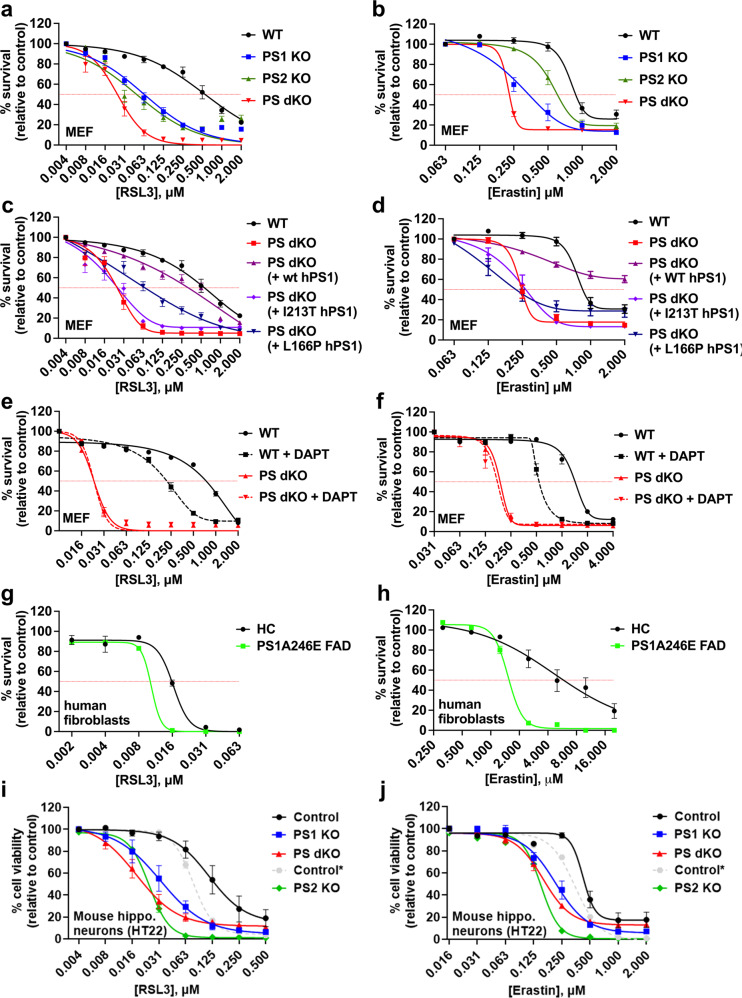
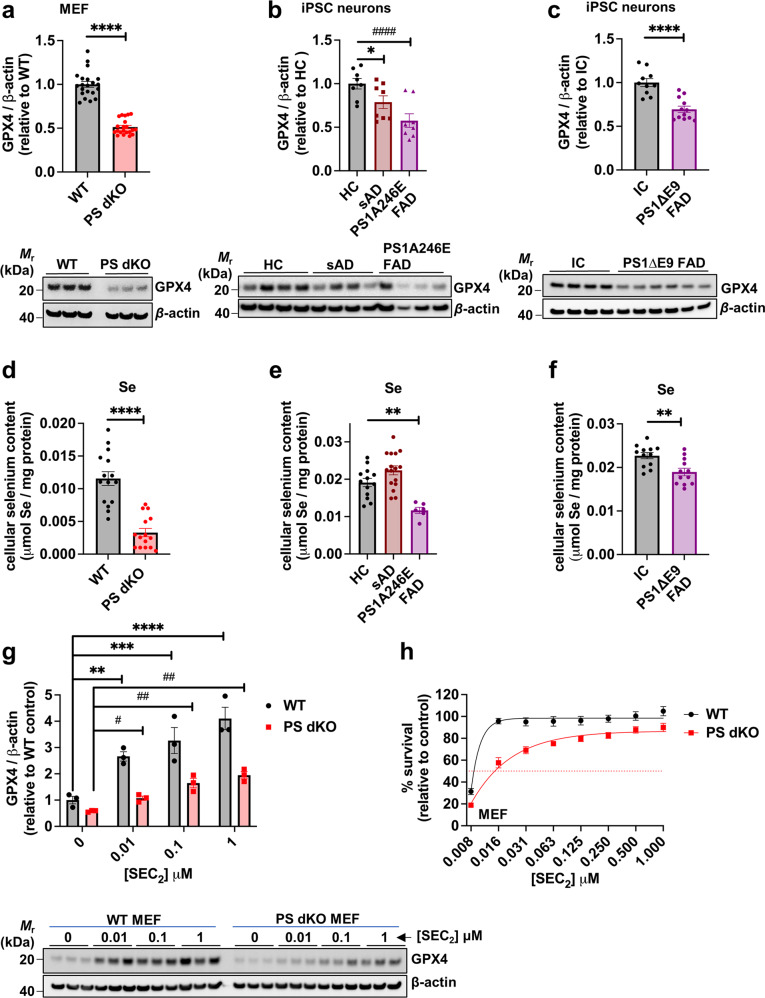
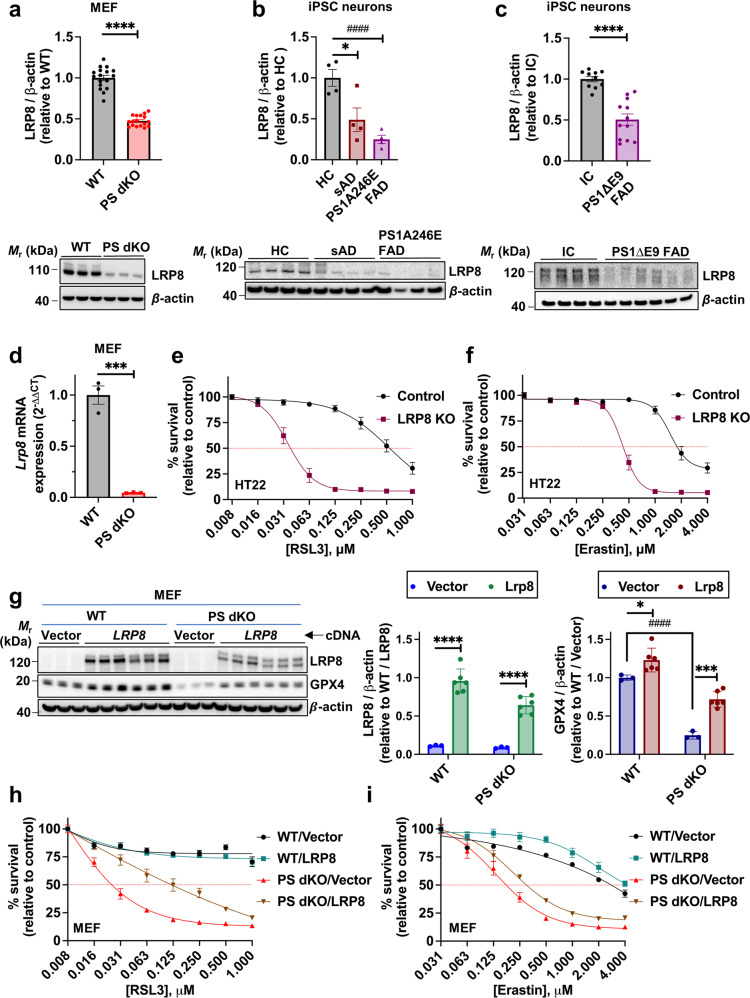
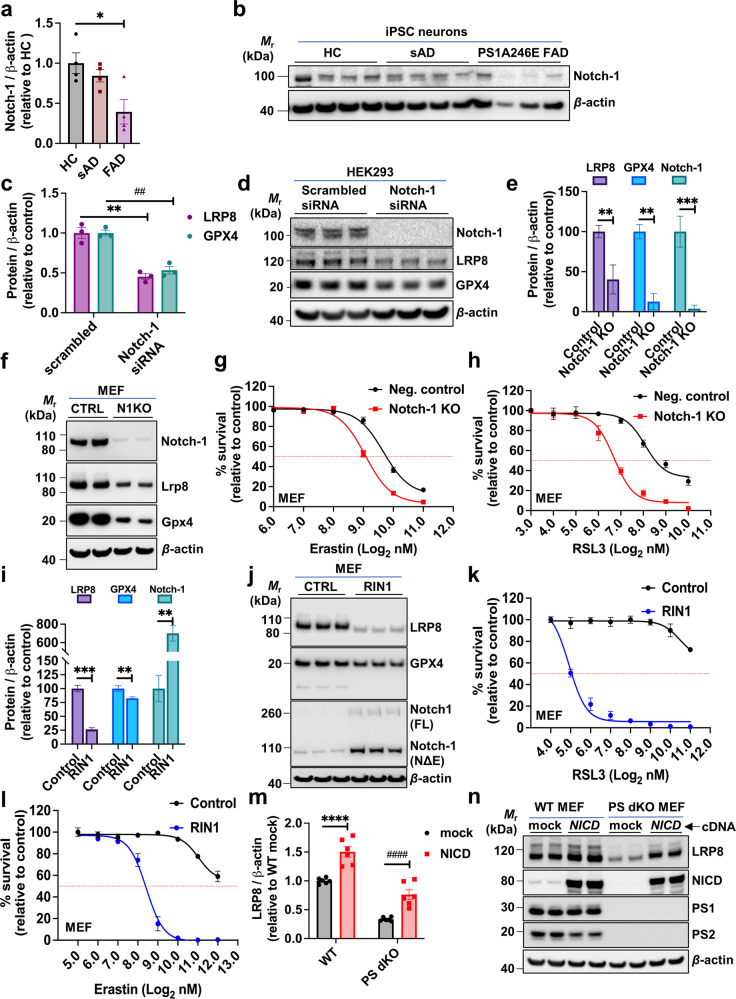
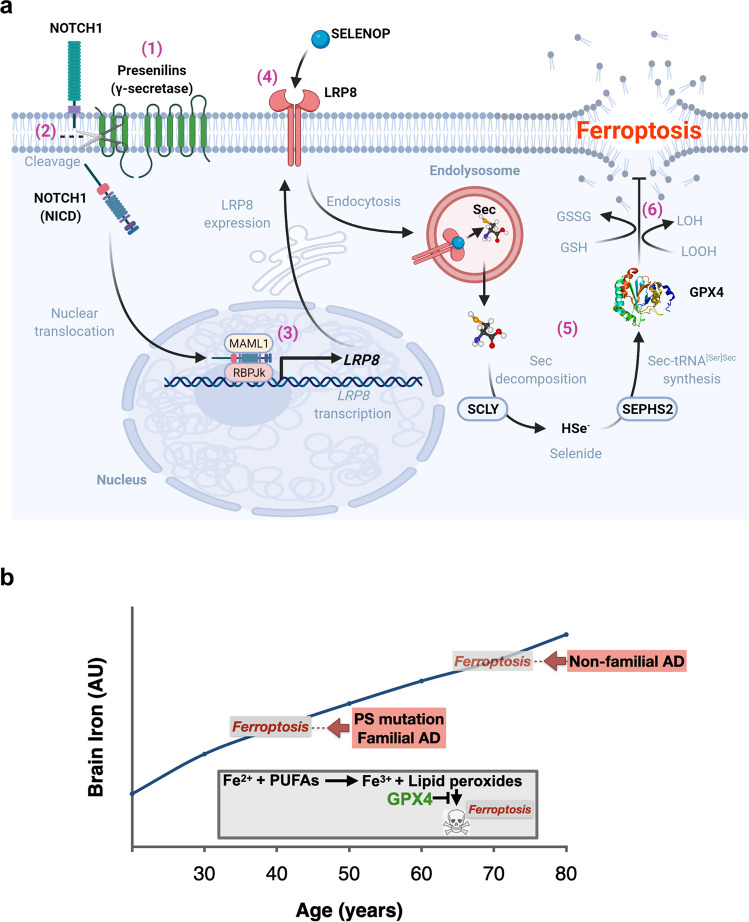
Mutations in presenilin 1 and 2 ( PS1 and PS2 ) cause autosomal dominant familial Alzheimer’s disease (FAD). Ferroptosis has been implicated as a mechanism of neurodegeneration in AD since neocortical iron burden predicts Alzheimer’s disease (AD) progression. We found that loss of the presenilins dramatically sensitizes multiple cell types to ferroptosis, but not apoptosis. FAD causal mutations of presenilins similarly sensitizes cells to ferroptosis. The presenilins promote the expression of GPX4, the selenoprotein checkpoint enzyme that blocks ferroptosis by quenching the membrane propagation of lethal hydroperoxyl radicals. Presenilin γ-secretase activity cleaves Notch-1 to signal LRP8 expression, which then controls GPX4 expression by regulating the supply of selenium into the cell since LRP8 is the uptake receptor for selenoprotein P. Selenium uptake is thus disrupted by presenilin FAD mutations, suppressing GPX4 expression. Therefore, presenilin mutations may promote neurodegeneration by derepressing ferroptosis, which has implications for disease-modifying therapeutics.
Overview
The claims and statistics of this paper haven’t been checked yet.
Run the check — free, no account needed. It reads the open-access text and checks the sources it cites.
Integrity signals
Registry
Cites
Statistics
Figures
Verification
Claims the paper makes
The claims and statistics of this paper haven’t been checked yet.
Run the check — free, no account needed. It reads the open-access text and checks the sources it cites.
Claims other papers make about this one
Each is checked against this paper’s own text: does it say what the citing paper says it does?
The source backs part of the claim, not all of it — or backs it for a different population, condition or comparison.
In the citing paper
“LRP8 has been recently shown to affect ferroptosis by regulating the level of selenoprotein GPX4 in cancer cells (54–56).”
From Secreted Apoe rewires melanoma cell state vulnerability to ferroptosis (2024) · cites this paper as [55]
Experimental — accuracy not yet measured
Self-check
Percentages, sums and reported differences re-computed from the paper’s own numbers.
The self-check needs the paper’s full text.
Citations
Cites
Ferroptosis: An Iron-Dependent Form of Nonapoptotic Cell Death
Dixon, S. J., Lemberg, K. M., Lamprecht, M. R., Skouta, R., Zaitsev, E. M., Gleason, C. E., Patel, D. N., Bauer, A. J., Cantley, A. M., Yang, W. S., et al. (2012) · Cell · doi:10.1016/j.cell.2012.03.042 · Cited by 18,691
Regulation of Ferroptotic Cancer Cell Death by GPX4
Yang, W. S., SriRamaratnam, R., Welsch, M. E., Shimada, K., Skouta, R., Viswanathan, V. S., Cheah, J. H., Clemons, P. A., Shamji, A. F., Clish, C. B., et al. (2014) · Cell · doi:10.1016/j.cell.2013.12.010 · Cited by 7,713
Ferroptosis: A Regulated Cell Death Nexus Linking Metabolism, Redox Biology, and Disease
Stockwell, B. R., Friedmann Angeli, J. P., Bayir, H., Bush, A. I., Conrad, M., Dixon, S. J., Fulda, S., Gascón, S., Hatzios, S. K., Kagan, V. E., et al. (2017) · Cell · doi:10.1016/j.cell.2017.09.021 · Cited by 7,695
Self-citationThe amyloid hypothesis of Alzheimer's disease at 25 years
Selkoe, D. J., & Hardy, J. (2016) · EMBO Molecular Medicine · doi:10.15252/emmm.201606210 · Cited by 6,164
Inactivation of the ferroptosis regulator Gpx4 triggers acute renal failure in mice
Friedmann Angeli, J. P., Schneider, M., Proneth, B., Tyurina, Y. Y., Tyurin, V. A., Hammond, V. J., Herbach, N., Aichler, M., Walch, A., Eggenhofer, E., et al. (2014) · Nature Cell Biology · doi:10.1038/ncb3064 · Cited by 3,732
A presenilin-1-dependent γ-secretase-like protease mediates release of Notch intracellular domain
De Strooper, B., Annaert, W., Cupers, P., Saftig, P., Craessaerts, K., Mumm, J. S., Schroeter, E. H., Schrijvers, V., Wolfe, M. S., Ray, W. J., et al. (1999) · Nature · doi:10.1038/19083 · Cited by 2,100
Dependency of a therapy-resistant state of cancer cells on a lipid peroxidase pathway
Viswanathan, V. S., Ryan, M. J., Dhruv, H. D., Gill, S., Eichhoff, O. M., Seashore-Ludlow, B., Kaffenberger, S. D., Eaton, J. K., Shimada, K., Aguirre, A. J., et al. (2017) · Nature · doi:10.1038/nature23007 · Cited by 2,011
The role of iron in brain ageing and neurodegenerative disorders
Ward, R. J., Zucca, F. A., Duyn, J. H., Crichton, R. R., & Zecca, L. (2014) · The Lancet Neurology · doi:10.1016/s1474-4422(14)70117-6 · Cited by 1,819
Selenium Utilization by GPX4 Is Required to Prevent Hydroperoxide-Induced Ferroptosis
Ingold, I., Berndt, C., Schmitt, S., Doll, S. G., Poschmann, G., Buday, K., Roveri, A., Peng, X., Freitas, F. P., Seibt, T., et al. (2017) · Cell · doi:10.1016/j.cell.2017.11.048 · Cited by 1,712
Ferroptosis: Mechanisms and links with diseases
Yan, H.-F., Zou, T., Tuo, Q.-Z., Xu, S., Li, H., Belaidi, A. A., & Lei, P. (2021) · Signal Transduction and Targeted Therapy · doi:10.1038/s41392-020-00428-9 · Cited by 1,471
Self-citation
Cited by
Sorted by citations
The Cell Biology of Ferroptosis
Dixon, S. J., & Olzmann, J. A. (2024) · Nature Reviews Molecular Cell Biology · doi:10.1038/s41580-024-00703-5 · Cited by 1,596
Iron Homeostasis and Ferroptosis in Human Diseases: Mechanisms and Therapeutic Prospects
Ru, Q., Li, Y., Chen, L., Wu, Y., Min, J., & Wang, F. (2024) · Signal Transduction and Targeted Therapy · doi:10.1038/s41392-024-01969-z · Cited by 724
Zhou, N., Yuan, X., Du, Q., Zhang, Z., Shi, X., Bao, J., Ning, Y., & Peng, L. (2022) · Nucleic Acids Research · doi:10.1093/nar/gkac935 · Cited by 514
GPX4, ferroptosis, and diseases
Zhang, W., Liu, Y., Yan, L., Zhu, C., & Zou, Z. (2024) · Biomedicine & Pharmacotherapy · doi:10.1016/j.biopha.2024.116512 · Cited by 474
Ferroptosis in health and disease
Berndt, C., Alborzinia, H., Skafar, V., Ayton, S., Barayeu, U., Bartelt, A., Bayır, H., Bebber, C. M., Birsoy, K., Böttcher, J. P., et al. (2024) · Redox Biology · doi:10.1016/j.redox.2024.103211 · Cited by 372
Self-citation
Metadata
- Authors
- Greenough, M. A., Lane, D. J. R., Balez, R., Anastacio, H. T. D., Zeng, Z., Ganio, K., McDevitt, C. A., Acevedo, K., Belaidi, A. A., Koistinaho, J., Ooi, L., Ayton, S., & Bush, A. I.
- Affiliations
- The University of Melbourne (AU)
- University of Wollongong (AU)
- Shenzhen KangNing Hospital (CN)
- Corresponding author
- Ayton, Scott
- Bush, Ashley I.
- ORCID
- Venue
- Cell Death & Differentiation
- Published
- 2022-04-21
- Volume
- 29
- Issue
- 11
- Pages
- 2123-2136
- ISSN
- 1350-9047 (ISSN-L)
- 1476-5403
- PMC
- PMC9613996
- OpenAlex
- W4224302612
- Cited by
- 102
- References
- 96
- Citations by year
- 2026: 20 · 2025: 26 · 2024: 28 · 2023: 26 · 2022: 2
- FWCI
- 12.85
- Type
- journal article
- Language
- en
- Open access
- hybrid
- doi.org
- Locations
- Cell Death and Differentiation (publishedVersion, cc-by)
- PubMed Central (publishedVersion, cc-by)
- PubMed (publishedVersion)
- Research Online (University of Wollongong) (submittedVersion)
- Adelaide Research & Scholarship (AR&S) (University of Adelaide) (submittedVersion, cc-by)
- Figshare (submittedVersion, cc-by)
- Työväentutkimus Vuosikirja (submittedVersion)
- Minerva Access (University of Melbourne) (submittedVersion, cc-by)
- Funders
- Itä-Suomen Yliopisto
- University College London
- KU Leuven
- National Health and Medical Research Council
- Topics
- Life Sciences › Neuroscience › Cellular and Molecular Neuroscience › Alzheimer's disease research and treatments
- Life Sciences › Biochemistry, Genetics and Molecular Biology › Cancer Research › Ferroptosis and cancer prognosis
- Life Sciences › Neuroscience › Neurology › Neurological diseases and metabolism
- Keywords
- ferroptosis, familial Alzheimer's disease, presenilin 1, presenilin 2, GPX4, Notch1, LRP8, selenoprotein P, selenium uptake, gamma-secretase, neurodegeneration, iron accumulation, apoptosis
- MeSH terms
- Ferroptosis, Alzheimer Disease, Humans, Mutation, Selenium, Presenilins, Presenilin-1, Amyloid Precursor Protein Secretases
About these checks
Registry, retraction, Cites and statistics results are computed, not judged, with one exception: a printed reference that no index lists is read once by a model before it counts as a citation error. Claims are extracted by a model and kept only when their quote appears verbatim in the text; each cited source is then checked, with a model’s help, for whether it says what the claim relies on. Those verdicts can be wrong — read the claim’s quote and the cited source before relying on one.
Statistics and arithmetic are recomputed, not judged.
Confidence bands are shown only for fields calibrated on our annotated test set. None is calibrated yet, so no band is shown.
What counts as a claim ›How we measure confidence ›How we check this ›
Are you an author, or do you see a problem with this page? Request a review
