

The DOI matches its Crossref record; 96 of the 96 references it cites were found in a registry or an index.
Selective ferroptosis vulnerability due to familial Alzheimer’s disease presenilin mutations
Open accessAbstract
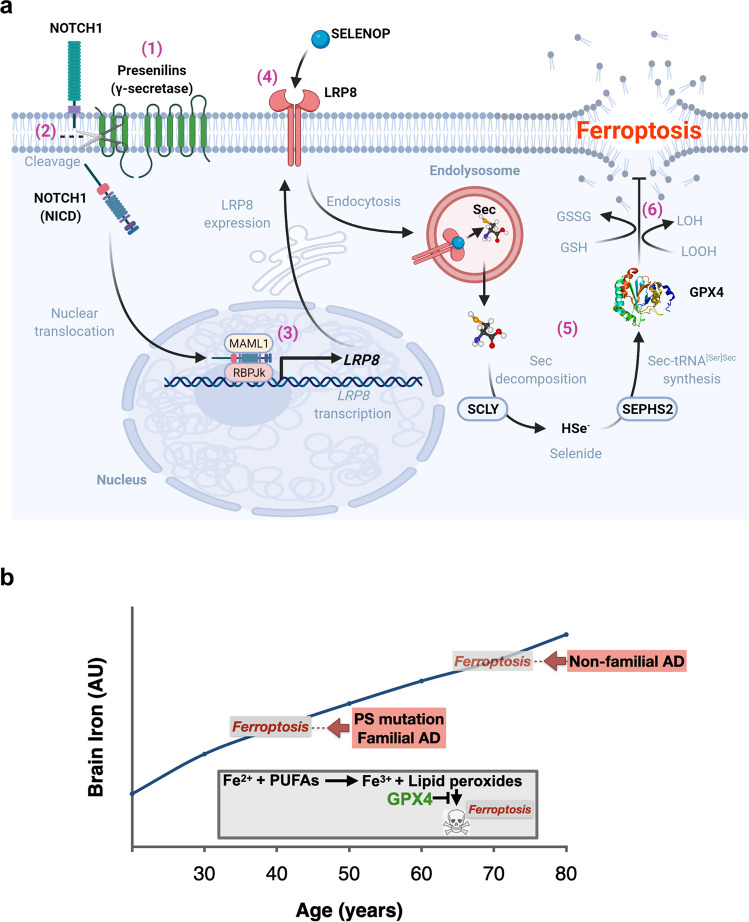
Mutations in presenilin 1 and 2 ( PS1 and PS2 ) cause autosomal dominant familial Alzheimer’s disease (FAD). Ferroptosis has been implicated as a mechanism of neurodegeneration in AD since neocortical iron burden predicts Alzheimer’s disease (AD) progression. We found that loss of the presenilins dramatically sensitizes multiple cell types to ferroptosis, but not apoptosis. FAD causal mutations of presenilins similarly sensitizes cells to ferroptosis. The presenilins promote the expression of GPX4, the selenoprotein checkpoint enzyme that blocks ferroptosis by quenching the membrane propagation of lethal hydroperoxyl radicals. Presenilin γ-secretase activity cleaves Notch-1 to signal LRP8 expression, which then controls GPX4 expression by regulating the supply of selenium into the cell since LRP8 is the uptake receptor for selenoprotein P. Selenium uptake is thus disrupted by presenilin FAD mutations, suppressing GPX4 expression. Therefore, presenilin mutations may promote neurodegeneration by derepressing ferroptosis, which has implications for disease-modifying therapeutics.
Overview
The claims and statistics of this paper haven’t been checked yet.
Run the check — free, no account needed. It reads the open-access text and checks the sources it cites.
Integrity signals
Registry
Cites
Statistics
Figures
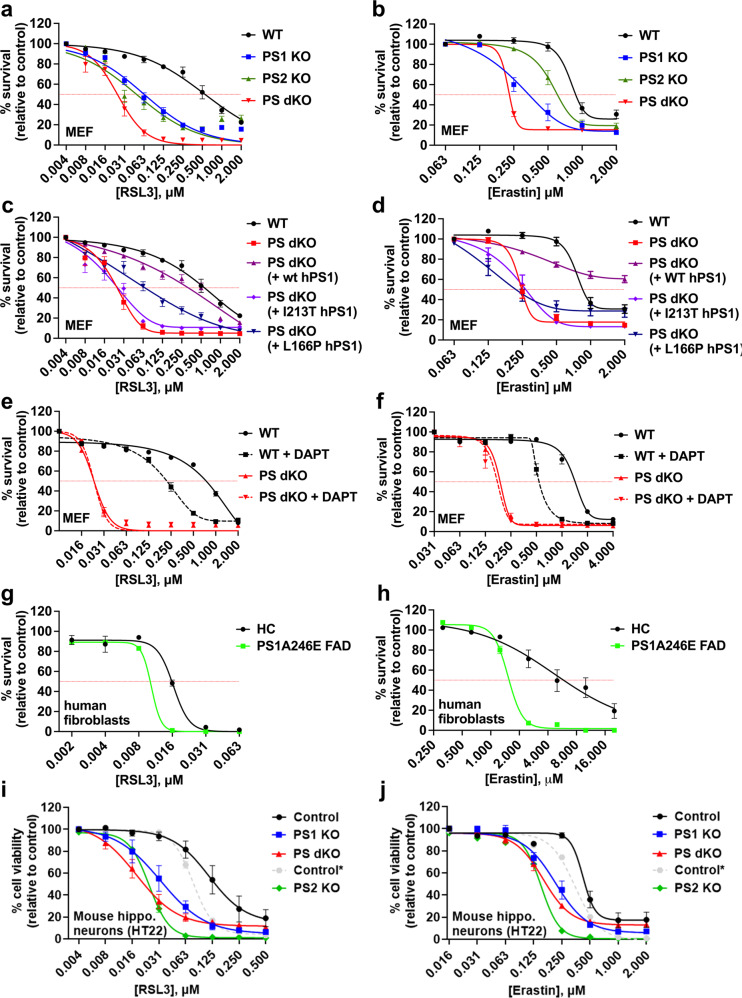
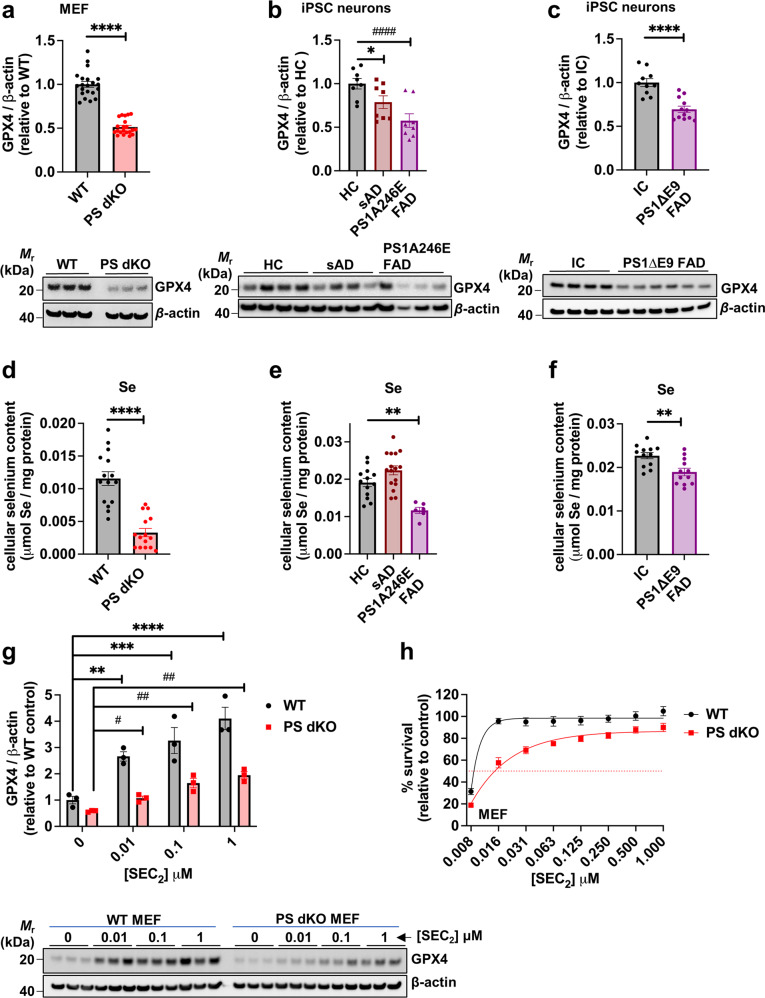
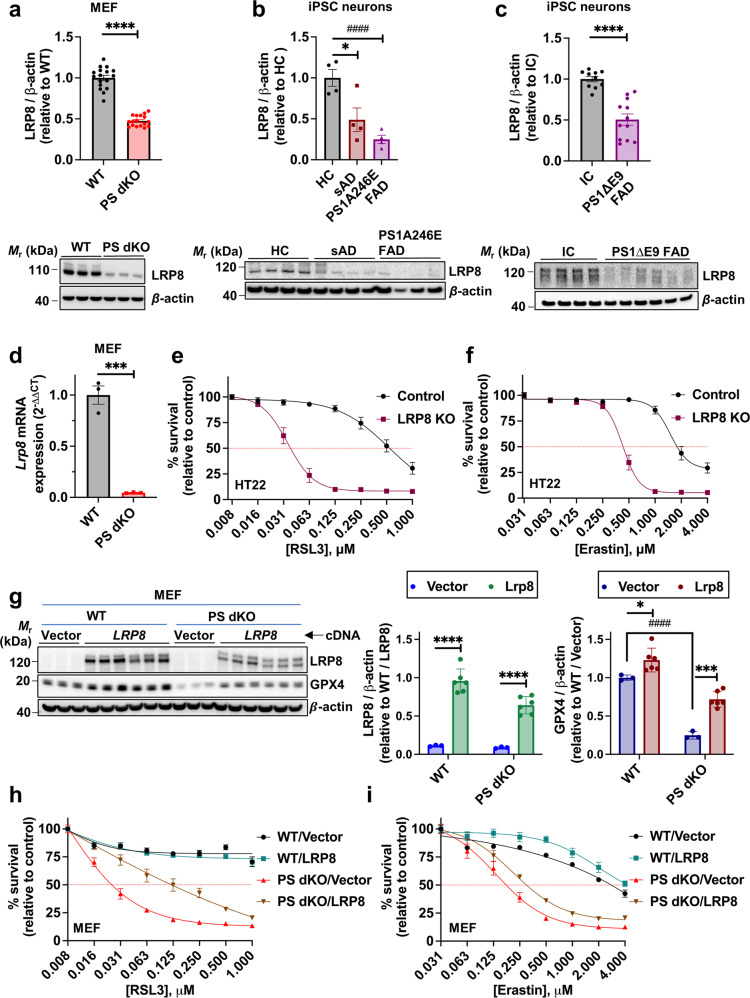
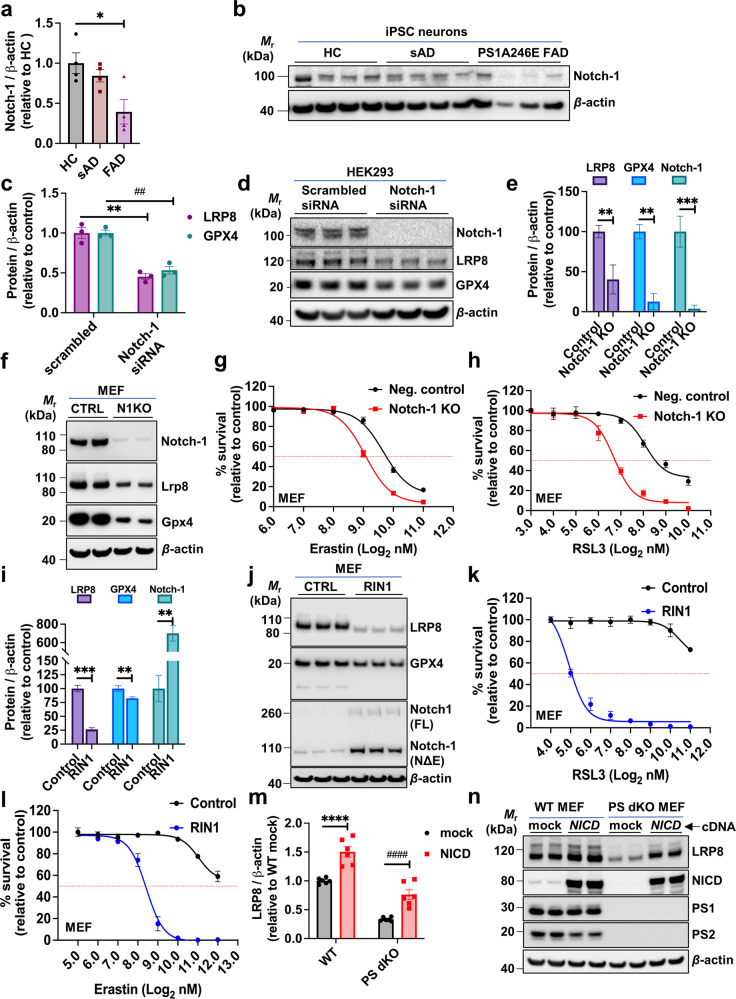
Verification
Claims the paper makes
The claims and statistics of this paper haven’t been checked yet.
Run the check — free, no account needed. It reads the open-access text and checks the sources it cites.
Claims other papers make about this one
Each is checked against this paper’s own text: does it say what the citing paper says it does?
The source backs part of the claim, not all of it — or backs it for a different population, condition or comparison.
In the citing paper
“LRP8 has been recently shown to affect ferroptosis by regulating the level of selenoprotein GPX4 in cancer cells (54–56).”
From Secreted Apoe rewires melanoma cell state vulnerability to ferroptosis (2024) · cites this paper as [55]
Experimental — accuracy not yet measured
Self-check
Percentages, sums and reported differences re-computed from the paper’s own numbers.
The self-check needs the paper’s full text.
Citations
Cites
Ferroptosis: An Iron-Dependent Form of Nonapoptotic Cell Death
Dixon, S. J., Lemberg, K. M., Lamprecht, M. R., Skouta, R., Zaitsev, E. M., Gleason, C. E., Patel, D. N., Bauer, A. J., Cantley, A. M., Yang, W. S., et al. (2012) · Cell · doi:10.1016/j.cell.2012.03.042 · Cited by 18,691
Regulation of Ferroptotic Cancer Cell Death by GPX4
Yang, W. S., SriRamaratnam, R., Welsch, M. E., Shimada, K., Skouta, R., Viswanathan, V. S., Cheah, J. H., Clemons, P. A., Shamji, A. F., Clish, C. B., et al. (2014) · Cell · doi:10.1016/j.cell.2013.12.010 · Cited by 7,713
Ferroptosis: A Regulated Cell Death Nexus Linking Metabolism, Redox Biology, and Disease
Stockwell, B. R., Friedmann Angeli, J. P., Bayir, H., Bush, A. I., Conrad, M., Dixon, S. J., Fulda, S., Gascón, S., Hatzios, S. K., Kagan, V. E., et al. (2017) · Cell · doi:10.1016/j.cell.2017.09.021 · Cited by 7,695
Self-citationThe amyloid hypothesis of Alzheimer's disease at 25 years
Selkoe, D. J., & Hardy, J. (2016) · EMBO Molecular Medicine · doi:10.15252/emmm.201606210 · Cited by 6,164
Inactivation of the ferroptosis regulator Gpx4 triggers acute renal failure in mice
Friedmann Angeli, J. P., Schneider, M., Proneth, B., Tyurina, Y. Y., Tyurin, V. A., Hammond, V. J., Herbach, N., Aichler, M., Walch, A., Eggenhofer, E., et al. (2014) · Nature Cell Biology · doi:10.1038/ncb3064 · Cited by 3,732
A presenilin-1-dependent γ-secretase-like protease mediates release of Notch intracellular domain
De Strooper, B., Annaert, W., Cupers, P., Saftig, P., Craessaerts, K., Mumm, J. S., Schroeter, E. H., Schrijvers, V., Wolfe, M. S., Ray, W. J., et al. (1999) · Nature · doi:10.1038/19083 · Cited by 2,100
Dependency of a therapy-resistant state of cancer cells on a lipid peroxidase pathway
Viswanathan, V. S., Ryan, M. J., Dhruv, H. D., Gill, S., Eichhoff, O. M., Seashore-Ludlow, B., Kaffenberger, S. D., Eaton, J. K., Shimada, K., Aguirre, A. J., et al. (2017) · Nature · doi:10.1038/nature23007 · Cited by 2,011
The role of iron in brain ageing and neurodegenerative disorders
Ward, R. J., Zucca, F. A., Duyn, J. H., Crichton, R. R., & Zecca, L. (2014) · The Lancet Neurology · doi:10.1016/s1474-4422(14)70117-6 · Cited by 1,819
Selenium Utilization by GPX4 Is Required to Prevent Hydroperoxide-Induced Ferroptosis
Ingold, I., Berndt, C., Schmitt, S., Doll, S. G., Poschmann, G., Buday, K., Roveri, A., Peng, X., Freitas, F. P., Seibt, T., et al. (2017) · Cell · doi:10.1016/j.cell.2017.11.048 · Cited by 1,712
Ferroptosis: Mechanisms and links with diseases
Yan, H.-F., Zou, T., Tuo, Q.-Z., Xu, S., Li, H., Belaidi, A. A., & Lei, P. (2021) · Signal Transduction and Targeted Therapy · doi:10.1038/s41392-020-00428-9 · Cited by 1,471
Self-citation
Cited by
Sorted by citations
The Cell Biology of Ferroptosis
Dixon, S. J., & Olzmann, J. A. (2024) · Nature Reviews Molecular Cell Biology · doi:10.1038/s41580-024-00703-5 · Cited by 1,596
Iron Homeostasis and Ferroptosis in Human Diseases: Mechanisms and Therapeutic Prospects
Ru, Q., Li, Y., Chen, L., Wu, Y., Min, J., & Wang, F. (2024) · Signal Transduction and Targeted Therapy · doi:10.1038/s41392-024-01969-z · Cited by 724
Zhou, N., Yuan, X., Du, Q., Zhang, Z., Shi, X., Bao, J., Ning, Y., & Peng, L. (2022) · Nucleic Acids Research · doi:10.1093/nar/gkac935 · Cited by 514
GPX4, ferroptosis, and diseases
Zhang, W., Liu, Y., Yan, L., Zhu, C., & Zou, Z. (2024) · Biomedicine & Pharmacotherapy · doi:10.1016/j.biopha.2024.116512 · Cited by 474
Ferroptosis in health and disease
Berndt, C., Alborzinia, H., Skafar, V., Ayton, S., Barayeu, U., Bartelt, A., Bayır, H., Bebber, C. M., Birsoy, K., Böttcher, J. P., et al. (2024) · Redox Biology · doi:10.1016/j.redox.2024.103211 · Cited by 372
Self-citationFerroptosis: when metabolism meets cell death
Zheng, J., & Conrad, M. (2024) · Physiological Reviews · doi:10.1152/physrev.00031.2024 · Cited by 286
An integrated view of lipid metabolism in ferroptosis revisited via lipidomic analysis
Kim, J. W., Lee, J.-Y., Oh, M., & Lee, E. (2023) · Experimental & Molecular Medicine · doi:10.1038/s12276-023-01077-y · Cited by 251
The mechanism of ferroptosis and its related diseases
Feng, S., Tang, D., Wang, Y., Li, X., Bao, H., Tang, C., Dong, X., Li, X., Yang, Q., Yan, Y., et al. (2023) · Molecular Biomedicine · doi:10.1186/s43556-023-00142-2 · Cited by 241
Ferroptosis in Parkinson's disease: Molecular mechanisms and therapeutic potential
Ding, X.-S., Gao, L., Han, Z., Eleuteri, S., Shi, W., Shen, Y., Song, Z.-Y., Su, M., Yang, Q., Qu, Y., et al. (2023) · Ageing Research Reviews · doi:10.1016/j.arr.2023.102077 · Cited by 211
Exploiting ferroptosis vulnerabilities in cancer
Nakamura, T., & Conrad, M. (2024) · Nature Cell Biology · doi:10.1038/s41556-024-01425-8 · Cited by 172
Wang, Y., Wu, S., Li, Q., Sun, H., & Wang, H. (2023) · Advanced Science · doi:10.1002/advs.202300325 · Cited by 171
Therapeutic inhibition of ferroptosis in neurodegenerative disease
Ryan, S. K., Ugalde, C. L., Rolland, A., Skidmore, J., Devos, D., & Hammond, T. R. (2023) · Trends in Pharmacological Sciences · doi:10.1016/j.tips.2023.07.007 · Cited by 127
Research on ferroptosis as a therapeutic target for the treatment of neurodegenerative diseases
Wang, Y., Lv, M.-N., & Zhao, W. (2023) · Ageing Research Reviews · doi:10.1016/j.arr.2023.102035 · Cited by 122
Baruah, P., Moorthy, H., Ramesh, M., Padhi, D., & Govindaraju, T. (2023) · Chemical Science · doi:10.1039/d3sc02350h · Cited by 110
Apolipoprotein E in Alzheimer’s disease: molecular insights and therapeutic opportunities
Belaidi, A. A., Bush, A. I., & Ayton, S. (2025) · Molecular Neurodegeneration · doi:10.1186/s13024-025-00843-y · Cited by 91
Self-citationLRP8‐mediated selenocysteine uptake is a targetable vulnerability in MYCN‐amplified neuroblastoma
Alborzinia, H., Chen, Z., Yildiz, U., Freitas, F. P., Vogel, F. C. E., Varga, J. P., Batani, J., Bartenhagen, C., Schmitz, W., Büchel, G., et al. (2023) · EMBO Molecular Medicine · doi:10.15252/emmm.202318014 · Cited by 85
Ferroptosis: mechanisms and therapeutic targets
Zhou, Q., Meng, Y., Le, J., Sun, Y., Dian, Y., Yao, L., Xiong, Y., Zeng, F., Chen, X., & Deng, G. (2024) · MedComm · doi:10.1002/mco2.70010 · Cited by 89
The link between amyloid β and ferroptosis pathway in Alzheimer’s disease progression
Majerníková, N., Marmolejo-Garza, A., Salinas, C. S., Luu, M. D. A., Zhang, Y., Trombetta-Lima, M., Tomin, T., Birner-Gruenberger, R., Lehtonen, Š., Koistinaho, J., et al. (2024) · Cell Death & Disease · doi:10.1038/s41419-024-07152-0 · Cited by 73
Self-citationNeuroferroptosis in health and diseases
Lei, P., Walker, T. L., & Ayton, S. (2025) · Nature reviews. Neuroscience · doi:10.1038/s41583-025-00930-5 · Cited by 77
Self-citationSelenoproteins and tRNA-Sec: regulators of cancer redox homeostasis
DeAngelo, S. L., Győrffy, B., Koutmos, M., & Shah, Y. M. (2023) · Trends in cancer · doi:10.1016/j.trecan.2023.08.003 · Cited by 50
A Concise Review on Oxidative Stress-Mediated Ferroptosis and Cuproptosis in Alzheimer’s Disease
Huang, X. (2023) · Cells · doi:10.3390/cells12101369 · Cited by 47
Shen, Y., Zhang, G., Wei, C., Zhao, P., Wang, Y., Li, M., & Sun, L. (2024) · Neural Regeneration Research · doi:10.4103/nrr.nrr-d-23-01343 · Cited by 44
Sun, Y., Yan, C., He, L., Xiang, S., Wang, P., Li, Z., Chen, Y., Zhao, J., Yuan, Y., Wang, W., et al. (2023) · Ageing Research Reviews · doi:10.1016/j.arr.2023.101899 · Cited by 40
Ferroptosis: Emerging Role in Diseases and Potential Implication of Bioactive Compounds
Patanè, G. T., Putaggio, S., Tellone, E., Barreca, D., Ficarra, S., Maffei, C., Calderaro, A., & Laganà, G. (2023) · International Journal of Molecular Sciences · doi:10.3390/ijms242417279 · Cited by 40
Striking a NRF2: The Rusty and Rancid Vulnerabilities Toward Ferroptosis in Alzheimer's Disease
Lane, D. J. R., Alves, F. M., Ayton, S., & Bush, A. I. (2023) · Antioxidants and Redox Signaling · doi:10.1089/ars.2023.0318 · Cited by 36
Self-citationNeuroinflammation in Age-Related Neurodegenerative Diseases: Role of Mitochondrial Oxidative Stress
Abadin, X., de Dios, C., Zubillaga, M., Ivars, E., Puigròs, M., Marí, M., Morales, A., Vizuete, M., Vitórica, J., Trullás, R., et al. (2024) · Antioxidants · doi:10.3390/antiox13121440 · Cited by 41
Fluorescent probes for lighting up ferroptotic cell death: A review
Yang, X., Zhang, S., Lai, M., Ji, X., Ye, Y., Tang, J., Liu, X., & Zhao, M. (2023) · Talanta · doi:10.1016/j.talanta.2023.124628 · Cited by 31
Yang, J., Shi, X., Wang, Y., Ma, M., Liu, H., Wang, J., & Xu, Z. (2023) · Journal of Alzheimer s Disease · doi:10.3233/jad-230593 · Cited by 33
Natural Flavonoids and Ferroptosis: Potential Therapeutic Opportunities for Human Diseases
Zhou, Z., Li, J., & Zhang, X. (2023) · Journal of Agricultural and Food Chemistry · doi:10.1021/acs.jafc.2c08128 · Cited by 27
Aging, NRF2, and TAU: A Perfect Match for Neurodegeneration?
Brackhan, M., Arribas-Blázquez, M., & Lastres‐Becker, I. (2023) · Antioxidants · doi:10.3390/antiox12081564 · Cited by 28
Secreted Apoe rewires melanoma cell state vulnerability to ferroptosis
More, S., Bonnereau, J., Wouters, D., Spotbeen, X., Karras, P., Rizzollo, F., Killian, T., Venken, T., Naulaerts, S., Vervoort, E., et al. (2024) · Science Advances · doi:10.1126/sciadv.adp6164 · Cited by 25
Song, C., Chu, Z., Dai, J., Xie, D., Qin, T., Xie, L., Zhai, Z., Huang, S., Xu, Y. X., & Sun, T. (2024) · Journal of Ethnopharmacology · doi:10.1016/j.jep.2024.117937 · Cited by 26
León-Oliva, D. D., Boaru, D. L., Minaya‐Bravo, A., Castro-Martinez, P. D., Fraile‐Μartinez, O., Montero, C. G., Cobo-Prieto, D., Barrena-Blázquez, S., López-González, L., Albillos, A., et al. (2024) · Heliyon · doi:10.1016/j.heliyon.2024.e39684 · Cited by 24
Dual role of Heme oxygenase-1 in disease progression and treatment: A literature review
Ma, Y., Zhang, D., & Li, Z. (2025) · International Journal of Biological Macromolecules · doi:10.1016/j.ijbiomac.2025.146272 · Cited by 26
Ferroptosis and cognitive impairment: Unraveling the link and potential therapeutic targets
Naderi, S., Khodagholi, F., Janahmadi, M., Motamedi, F., Torabi, A., Batool, Z., Heydarabadi, M. F., & Pourbadie, H. G. (2024) · Neuropharmacology · doi:10.1016/j.neuropharm.2024.110210 · Cited by 23
Roles of Ubiquitin Ligases and Deubiquitylases in Alzheimer’s Disease
Jia, F., & Fu, L. (2025) · Molecular Neurobiology · doi:10.1007/s12035-025-04739-2 · Cited by 21
Aberrant Mitochondrial Metabolism in Alzheimer's Disease Links Energy Stress with Ferroptosis
Alves, F. M., Lane, D. J. R., Wahida, A., Jakaria, M., Kalinowski, P., Southon, A. G., Belaidi, A. A., Samperi‐Esteve, T., Nguyen, T. P. M., Peng, L., et al. (2025) · Advanced Science · doi:10.1002/advs.202504175 · Cited by 24
Self-citationFerroptosis in Alzheimer’s Disease: The Regulatory Role of Glial Cells
Xu, J., Shen, R., Qian, M., Zhou, Z., Xie, B., Jiang, Y. Q., Yu, Y., & Dong, W. (2025) · Journal of Integrative Neuroscience · doi:10.31083/jin25845 · Cited by 20
Pomilio, A. B., Vitale, A. A., & Lazarowski, A. (2022) · Current Medicinal Chemistry · doi:10.2174/0929867329666221003101548 · Cited by 18
Feng, S., Huang, X., Tang, D., Liu, X., Ouyang, L., Yang, D., Wang, K., Liao, B., & Qi, S. (2024) · MedComm · doi:10.1002/mco2.479 · Cited by 18
Iron on trial: recasting the role of iron in neurodegeneration
Ayton, S., Moreau, C., Devos, D., & Bush, A. I. (2025) · Brain · doi:10.1093/brain/awaf398 · Cited by 18
Self-citationResearch progress of ferroptosis in Alzheimer disease: A review
Han, Q., Sun, L., & Xiang, K. (2023) · Medicine · doi:10.1097/md.0000000000035142 · Cited by 16
Lamperis, S. M., McMahon, K. M., Calvert, A. E., Rink, J. S., Vasan, K., Pandkar, M. R., Crentsil, E. U., Chalmers, Z. R., McDonald, N. R., Kosmala, C. J., et al. (2025) · Proceedings of the National Academy of Sciences · doi:10.1073/pnas.2502876122 · Cited by 15
Cell density impacts the susceptibility to ferroptosis by modulating IRP1 ‐mediated iron homeostasis
Yan, H.-F., Tuo, Q., & Lei, P. (2024) · Journal of Neurochemistry · doi:10.1111/jnc.16085 · Cited by 14
Ferroptosis: A new strategy for targeting Alzheimer’s disease
Qiang, R. R., Xiang, Y., Zhang, L., Bai, X. Y., Zhang, D., Li, Y. J., Yang, Y. L., & Liu, X. L. (2024) · Neurochemistry International · doi:10.1016/j.neuint.2024.105773 · Cited by 15
Ramesh, M., & Govindaraju, T. (2025) · NAR Molecular Medicine · doi:10.1093/narmme/ugaf022 · Cited by 14
Symphony of regulated cell death: Unveiling therapeutic horizons in sarcopenia
Peng, J., Zou, M., Zhang, Q., Liu, D., Chen, S., Fang, R., Gao, Y., Yan, X., & Hao, L. (2025) · Metabolism · doi:10.1016/j.metabol.2025.156359 · Cited by 18
Ferroptosis in Alzheimer’s disease: molecular mechanisms and advances in therapeutic strategies
Zhou, Z., Zhang, Y., Liu, S., Tang, H., Yang, L., Lu, Y., Liao, J., Zhang, S., Chen, Z., & Yang, L. (2026) · Frontiers in Neuroscience · doi:10.3389/fnins.2025.1673315 · Cited by 17
Fawzy, M. N., & Fathy, M. K. (2026) · Journal of Molecular Neuroscience · doi:10.1007/s12031-026-02490-4 · Cited by 13
Programmed Cell Death Pathways in Cholangiocarcinoma: Opportunities for Targeted Therapy
Scimeca, M., Rovella, V., Palumbo, V., Scioli, M. P., Bonfiglio, R., Melino, G., Piacentini, M., Frati, L., Agostini, M., Candi, E., et al. (2023) · Cancers · doi:10.3390/cancers15143638 · Cited by 14
Targeting Metals in Alzheimer’s Disease: An Update
Du, B., Chen, K., Wang, W., & Lei, P. (2024) · Journal of Alzheimer s Disease · doi:10.3233/jad-240140 · Cited by 13
Exploring the association between aging, ferroptosis, and common age-related diseases
Mavaddatiyan, L., Naeini, S. H., Khodabandeh, S., Hosseini, F., Skelton, R. J. P., Azizi, V., & Talkhabi, M. (2025) · Archives of Gerontology and Geriatrics · doi:10.1016/j.archger.2025.105877 · Cited by 14
Zhang, J., Jia, X., Cao, Q., Chen, Y.-T., Tong, J., Lu, G., Li, D., Han, T., Zhuang, C., & Wang, P. (2023) · ACS Chemical Neuroscience · doi:10.1021/acschemneuro.3c00406 · Cited by 11
TXNIP promotes ferroptosis through NCOA4 mediated ferritinophagy
Nagakannan, P., Islam, M. R., Sultana, S., Karimi‐Abdolrezaee, S., & Eftekharpour, E. (2025) · Biochimica et Biophysica Acta (BBA) - Molecular Cell Research · doi:10.1016/j.bbamcr.2025.120054 · Cited by 10
Alzheimer’s disease induced neurons bearing PSEN1 mutations exhibit reduced excitability
Maksour, S., Finol‐Urdaneta, R. K., Hulme, A. E., Cabral-da-Silva, M. C., Anastacio, H. T. D., Balez, R., Berg, T., Turner, C., Muñoz, S. S., Engel, M., et al. (2024) · Frontiers in Cellular Neuroscience · doi:10.3389/fncel.2024.1406970 · Cited by 11
Self-citationLi, R., Hu, Z., Qiao, Q., Zhou, D., & Sun, M. (2024) · Toxicology and Applied Pharmacology · doi:10.1016/j.taap.2024.116825 · Cited by 9
Ferroptosis and Alzheimer’s disease: a new insight into neurodegeneration
Quan, Y., Liu, H., Zhang, M., Li, M., He, B., Wang, K., Huang, X., Zhou, S., Han, Z., & Fan, H. (2026) · Frontiers in Immunology · doi:10.3389/fimmu.2026.1701767 · Cited by 11
Origins of nervous tissue susceptibility to ferroptosis
Snyder, J., & Wu, Z. (2023) · Cell Insight · doi:10.1016/j.cellin.2023.100091 · Cited by 10
The metabolic code of ferroptosis: nutritional regulators of cell death
Tschuck, J., Skafar, V., Angeli, J. P. F., & Hadian, K. (2025) · Trends in Biochemical Sciences · doi:10.1016/j.tibs.2025.04.007 · Cited by 11
Regulation of apoptosis, ferroptosis, and pyroptosis mediated by acetylation
Lu, W., Deng, Y., Liu, M., Hu, Y., Yang, K., Wang, B., Li, Y., wang, G., Ma, L., LIU, J., et al. (2026) · Cell Death Discovery · doi:10.1038/s41420-025-02859-1 · Cited by 9
Li, N., Duan, Y.-H., Chen, L., & Zhang, K. (2023) · Journal of Trace Elements in Medicine and Biology · doi:10.1016/j.jtemb.2023.127252 · Cited by 7
Engineering acyclovir-induced RNA nanodevices for reversible and tunable control of aptamer function
Hagen, T., Litke, J. L., Nasir, N., Hou, Q., & Jaffrey, S. R. (2024) · Cell chemical biology · doi:10.1016/j.chembiol.2024.07.017 · Cited by 6
Oxidized phospholipids in ferroptosis, immunity and inflammation
O’Donnell, V. B., & Bochkov, V. N. (2025) · Redox Biochemistry and Chemistry · doi:10.1016/j.rbc.2025.100061 · Cited by 7
A perspective on autophagy and transcription factor EB in Alcohol-Associated Alzheimer’s disease
Zhang, C., Chen, H., Rodriguez, Y., Ma, X., Swerdlow, R. H., Zhang, J., & Ding, W. (2023) · Biochemical Pharmacology · doi:10.1016/j.bcp.2023.115576 · Cited by 8
Zhang, Y., Zhang, D., & Xiao, H. (2026) · Journal of Alzheimer s Disease · doi:10.1177/13872877261430002 · Cited by 5
Redox Regulation and Oxidative Stress in Health and Disease: Mechanisms and Therapeutic Targeting
Azadi, M. H., Niknejad, A., & Amini, E. (2026) · MedComm – Future Medicine · doi:10.1002/mef2.70056 · Cited by 5
Anastacio, H. T. D., Matosin, N., & Ooi, L. (2024) · Life · doi:10.3390/life14050625 · Cited by 6
Self-citationTan, Y., Dong, X., Zhuang, D., Cao, B., Jiang, H., He, Q., & Zhao, M. (2023) · Molecular and Cellular Biochemistry · doi:10.1007/s11010-023-04694-3 · Cited by 5
Ning, Y., Yang, A., Zhou, S., Wang, Y., Lin, Z., Xu, X., & Wang, Y. (2025) · Acta Biomaterialia · doi:10.1016/j.actbio.2025.10.005 · Cited by 4
Yu, Z., Luo, J., An, W., Wei, H., Song, A., Mao, Y., Li, M., He, L., Xiao, F., Gao, Q., et al. (2025) · Cellular Signalling · doi:10.1016/j.cellsig.2025.111772 · Cited by 4
miR-21-5p ameliorates Busulfan-induced testicular dysfunction and maintains spermatogenesis
Zhang, M.-F., Wan, S., Chen, W., Yang, D., Cong-liang, W. A. N. G., Li, B., Aierken, A., Du, X., Li, Y., Wu, W., et al. (2024) · Journal of Integrative Agriculture · doi:10.1016/j.jia.2024.02.004 · Cited by 3
Xu, B., Sun, G., & Zhang, Y. (2024) · Journal of Molecular Structure · doi:10.1016/j.molstruc.2024.138698 · Cited by 3
Bee Pollen Potential to Modulate Ferroptosis: Phytochemical Insights for Age-Related Diseases
Kacemi, R., & Campos, M. G. (2025) · Antioxidants · doi:10.3390/antiox14030265 · Cited by 3
Li, M., Wu, X., Jiang, L., Liu, M., Yanju, G., Li, X., Fan, T., Fan, Y., Wang, J., Wang, S., et al. (2025) · Animal Models and Experimental Medicine · doi:10.1002/ame2.12527 · Cited by 2
ACSL4 in Alzheimer's disease: Pathogenetic mechanisms and potential therapeutic targets
Guo, Y. X., Jiang, Q., Gu, Z., Cao, H., Zuo, C., Huang, Y., Song, Y., Chen, X., & Wang, F. (2025) · Genes & Diseases · doi:10.1016/j.gendis.2025.101858 · Cited by 4
Ryan, K. C., Laboy, J. T., Ashraf, R., Ashkavand, Z., Jayasinghe, I., & Norman, K. R. (2025) · Redox Biology · doi:10.1016/j.redox.2025.103910 · Cited by 2
Redundant or resilient? A systems view of ferroptosis surveillance mechanisms
Liang, D., & Jiang, X. (2026) · Cell chemical biology · doi:10.1016/j.chembiol.2025.11.013 · Cited by 2
Constructing a prognostic risk model for Alzheimer’s disease based on ferroptosis
Wang, X., Zhai, R.-Q., Li, Z., Li, H.-Q., Lei, Y.-T., Zhao, F.-F., Hao, X.-X., Wang, S., & Wu, Y. (2023) · Frontiers in Aging Neuroscience · doi:10.3389/fnagi.2023.1168840 · Cited by 1
Wang, D., Jing, L., Zhao, Z., Huang, S., Xie, L., Hu, S., Liang, H., Chen, Y., & Zhao, E. (2024) · European journal of medical research · doi:10.1186/s40001-024-02061-6 · Cited by 1
Proteomic Investigation of Neurotrophic trans-Banglene Reveals Potential Link to Iron Homeostasis
Gunawardana, P. B. W., Gohil, K., Moon, K., Foster, L. J., & Williams, F. (2025) · Molecular Neurobiology · doi:10.1007/s12035-025-04772-1 · Cited by 2
Lu, Y., Fang, X., Dun, X., Wang, X., Jiang, L., Wang, H., & Chen, Z. (2025) · Food Bioscience · doi:10.1016/j.fbio.2025.107450 · Cited by 1
Lyu, Q., Liu, C., Li, S., Shan, D., Han, H., Wang, L., & Xu, H. (2025) · Journal of Nanobiotechnology · doi:10.1186/s12951-025-03797-x · Cited by 1
Yamashita, N., Nozuki, H., Yamashita, T., Tsubaki, K., Fukushima, R., Yamagata, R., & Hwang, G. (2026) · The Journal of Toxicological Sciences · doi:10.2131/jts.51.101 · Cited by 1
Yang, Y., Yang, F., Yao, M., Li, L., & Li, H. (2026) · Journal of Alzheimer s Disease · doi:10.1177/13872877261427028 · Cited by 1
Proteomic Investigation of Neurotrophic trans -Banglene Reveals Potential Link to Iron HomeostasisPreprint
Gunawardana, P. B. W., Gohil, K., Moon, K., Foster, L. J., & Williams, F. (2024) · bioRxiv (Cold Spring Harbor Laboratory) · doi:10.1101/2024.09.04.611284 · Cited by 1
The SNCA A53T mutation sensitizes human neurons and microglia to ferroptosisPreprint
Mahoney‐Sanchez, L., Clarke, H., Penverne, A., Evans, J. R., D’Sa, K., Strohbuecker, S., Lopez-Garcia, P., Cosker, K., Šoltić, D., O’Callaghan, B., et al. (2025) · bioRxiv (Cold Spring Harbor Laboratory) · doi:10.1101/2025.10.13.682089 · Cited by 1
Ivanov, M. V., Kopeykina, A. S., Kazakova, E. M., Tarasova, I. A., Sun, Z., Postoenko, V. I., Yang, J.-H., & Gorshkov, M. V. (2024) · bioRxiv (Cold Spring Harbor Laboratory) · doi:10.1101/2024.08.07.606974
リポタンパク質受容体ApoER2によるがん細胞のフェロトーシス制御
Dong-Ho, K. I. M., SUKEDA, H., & SAEKI, S. (2023) · KAGAKU TO SEIBUTSU · doi:10.1271/kagakutoseibutsu.61.574
Iron Dyshomeostasis in Schizophrenia and Potential Treatments to Mitigate Its Effects
Okafor, S. (2024) · Royal Society of Chemistry eBooks · doi:10.1039/9781837672059-00080
Ivanov, M. V., Kopeykina, A. S., Kazakova, E. M., Tarasova, I. A., Sun, Z., Postoenko, V. I., Yang, J.-H., & Gorshkov, M. V. (2025) · Journal of Proteome Research · doi:10.1021/acs.jproteome.4c00677 · Cited by 1
The protective role of vitamins against neurotoxicity associated with ferroptosis
Jakaria, M., & Cannon, J. (2025) · Advances in neurotoxicology · doi:10.1016/bs.ant.2025.04.004
Chen, Y., Wei, X., Yi, X., & Jiang, D. (2026) · Acta Pharmaceutica Sinica B · doi:10.1016/j.apsb.2026.01.020
Natural Products for Alzheimer’s Disease: A New Twist Impacting Ferroptosis
易亚乔, Jia, P., Xie, P., Peng, X., Zhu, X., Yin, S., Yan, C., & Yu, G. (2026) · The American Journal of Chinese Medicine · doi:10.1142/s0192415x26500266
Majerníková, N., Corci, B., Zhang, Y., Chen, T., van Koeveringe, M., Mensinga, D., Mulder, P. P. M. F. A., Verpoorte, E. M. J., Mattarei, A., Pendin, D., et al. (2026) · Lab on a Chip · doi:10.1039/d5lc00834d
Ma, J., Li, Y., Zheng, R., & Jian, C. (2026) · Open Journal of Internal Medicine · doi:10.4236/ojim.2026.162024
Deng, L., Li, H., Yang, S., Chen, F., Qiao, J., 包慧中, Wang, X., Fang, S., Xu, B., & Tang, Z. (2026) · Journal of Nanobiotechnology · doi:10.1186/s12951-026-04654-1
Lu, P., Zhang, L., Fan, J.-J., An, Y., Chen, L., Dong, X., Ma, J., & Sun, Y. (2026) · PeerJ · doi:10.7717/peerj.21480
Miao, H., Jiang, X., & Liu, X. (2026) · Scientific Reports · doi:10.1038/s41598-026-64030-9
Mondal, A., Acharya, R., & Jain, S. (2026) · ACS Pharmacology & Translational Science · doi:10.1021/acsptsci.6c00163
Milardi, D., Han, J., Lee, H. J., Ding, F., Miller, Y., Faller, P., Bush, A. I., Crouch, P. J., Finkelstein, D. I., Double, K. L., et al. (2026) · Chemical Reviews · doi:10.1021/acs.chemrev.5c00420
Self-citation
Metadata
- Authors
- Greenough, M. A., Lane, D. J. R., Balez, R., Anastacio, H. T. D., Zeng, Z., Ganio, K., McDevitt, C. A., Acevedo, K., Belaidi, A. A., Koistinaho, J., Ooi, L., Ayton, S., & Bush, A. I.
- Affiliations
- The University of Melbourne (AU)
- University of Wollongong (AU)
- Shenzhen KangNing Hospital (CN)
- Corresponding author
- Ayton, Scott
- Bush, Ashley I.
- ORCID
- Venue
- Cell Death & Differentiation
- Published
- 2022-04-21
- Volume
- 29
- Issue
- 11
- Pages
- 2123-2136
- ISSN
- 1350-9047 (ISSN-L)
- 1476-5403
- PMC
- PMC9613996
- OpenAlex
- W4224302612
- Cited by
- 102
- References
- 96
- Citations by year
- 2026: 20 · 2025: 26 · 2024: 28 · 2023: 26 · 2022: 2
- FWCI
- 12.85
- Type
- journal article
- Language
- en
- Open access
- hybrid
- doi.org
- Locations
- Cell Death and Differentiation (publishedVersion, cc-by)
- PubMed Central (publishedVersion, cc-by)
- PubMed (publishedVersion)
- Research Online (University of Wollongong) (submittedVersion)
- Adelaide Research & Scholarship (AR&S) (University of Adelaide) (submittedVersion, cc-by)
- Figshare (submittedVersion, cc-by)
- Työväentutkimus Vuosikirja (submittedVersion)
- Minerva Access (University of Melbourne) (submittedVersion, cc-by)
- Funders
- Itä-Suomen Yliopisto
- University College London
- KU Leuven
- National Health and Medical Research Council
- Topics
- Life Sciences › Neuroscience › Cellular and Molecular Neuroscience › Alzheimer's disease research and treatments
- Life Sciences › Biochemistry, Genetics and Molecular Biology › Cancer Research › Ferroptosis and cancer prognosis
- Life Sciences › Neuroscience › Neurology › Neurological diseases and metabolism
- Keywords
- ferroptosis, familial Alzheimer's disease, presenilin 1, presenilin 2, GPX4, Notch1, LRP8, selenoprotein P, selenium uptake, gamma-secretase, neurodegeneration, iron accumulation, apoptosis
- MeSH terms
- Ferroptosis, Alzheimer Disease, Humans, Mutation, Selenium, Presenilins, Presenilin-1, Amyloid Precursor Protein Secretases
About these checks
Registry, retraction, Cites and statistics results are computed, not judged, with one exception: a printed reference that no index lists is read once by a model before it counts as a citation error. Claims are extracted by a model and kept only when their quote appears verbatim in the text; each cited source is then checked, with a model’s help, for whether it says what the claim relies on. Those verdicts can be wrong — read the claim’s quote and the cited source before relying on one.
Statistics and arithmetic are recomputed, not judged.
Confidence bands are shown only for fields calibrated on our annotated test set. None is calibrated yet, so no band is shown.
What counts as a claim ›How we measure confidence ›How we check this ›
Are you an author, or do you see a problem with this page? Request a review
