

Glucagon-like peptide-1 receptor regulates endoplasmic reticulum stress-induced apoptosis and the associated inflammatory response in chondrocytes and the progression of osteoarthritis in rat
Open accessThe DOI matches its Crossref record; 66 of the 66 references it cites were found in a registry or an index.
Abstract
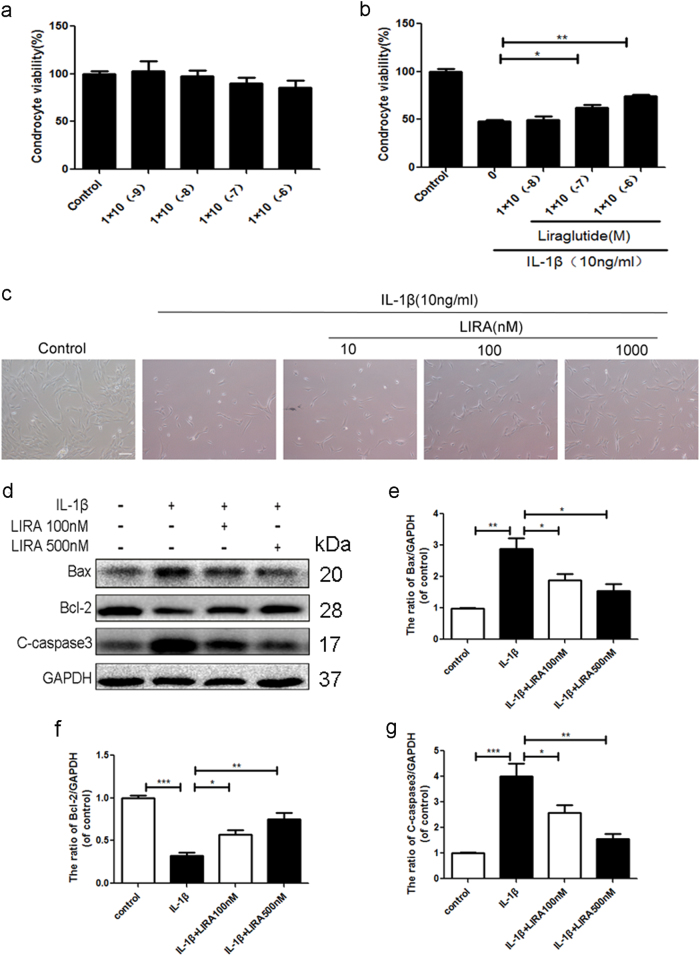
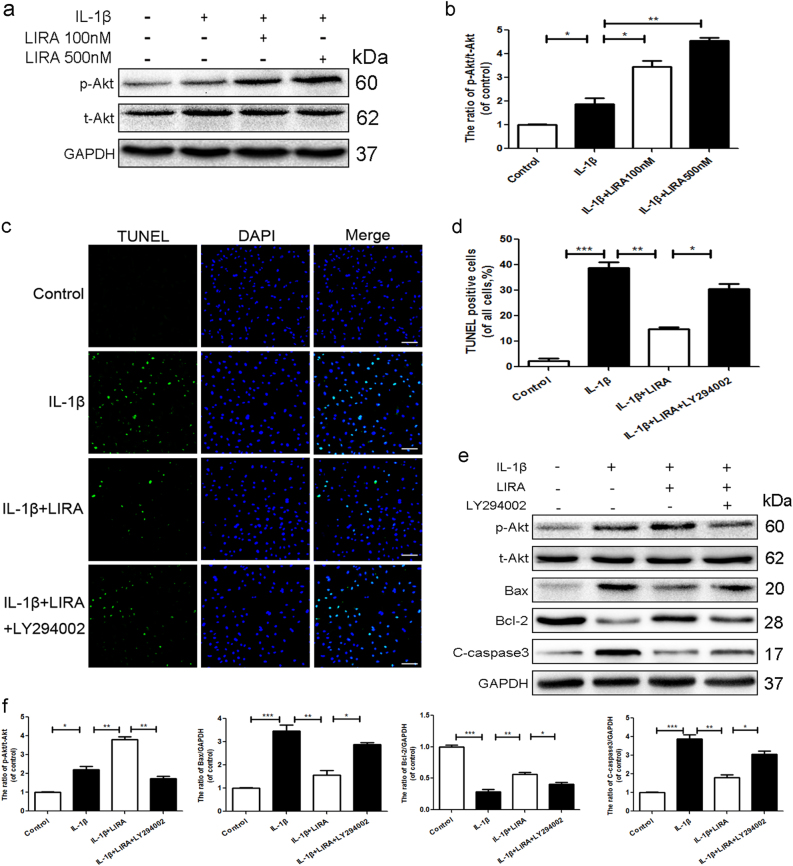
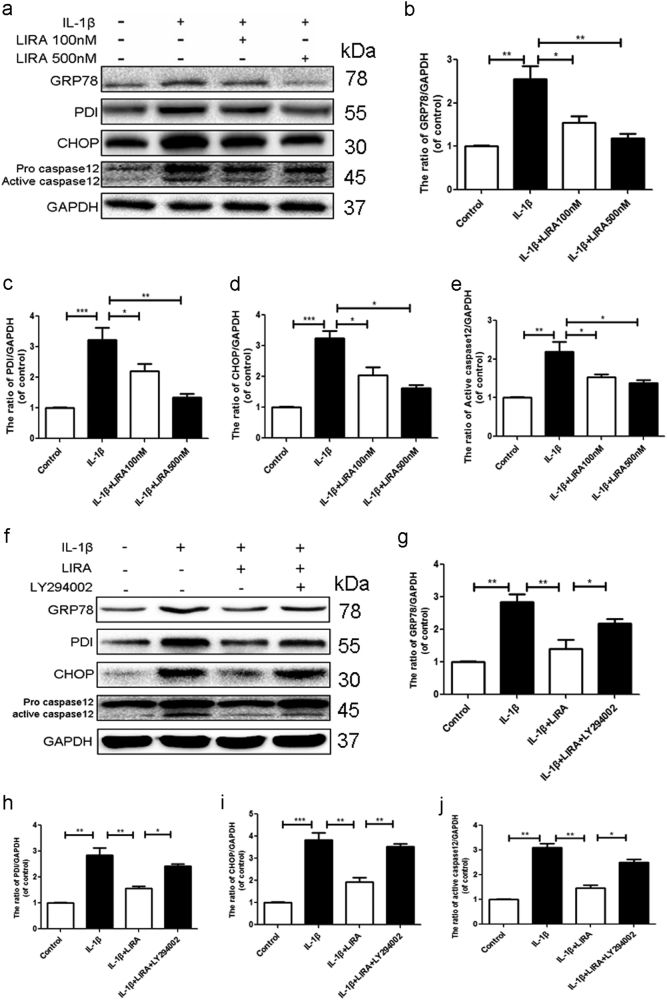
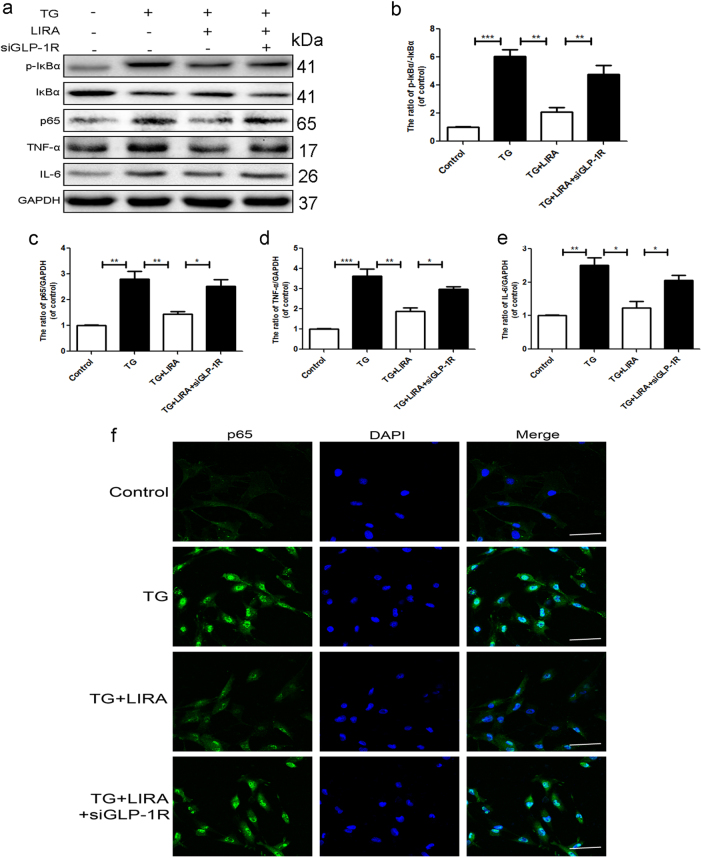
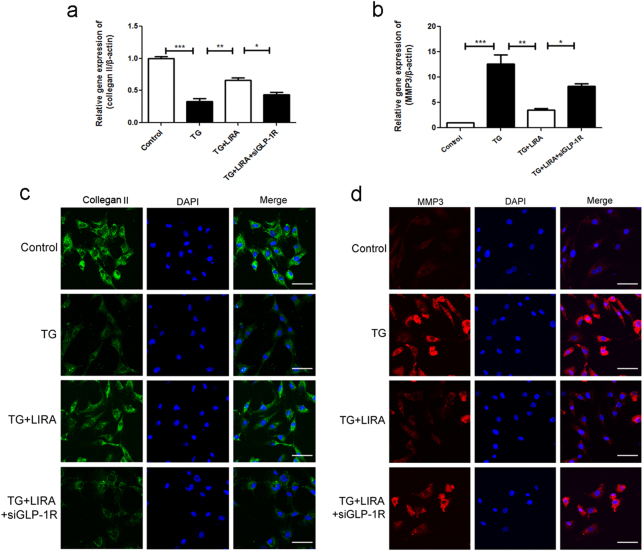
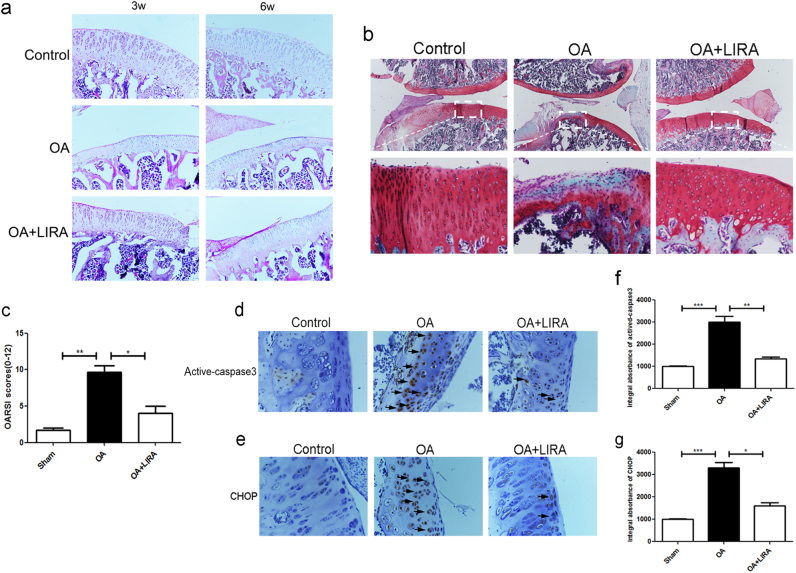
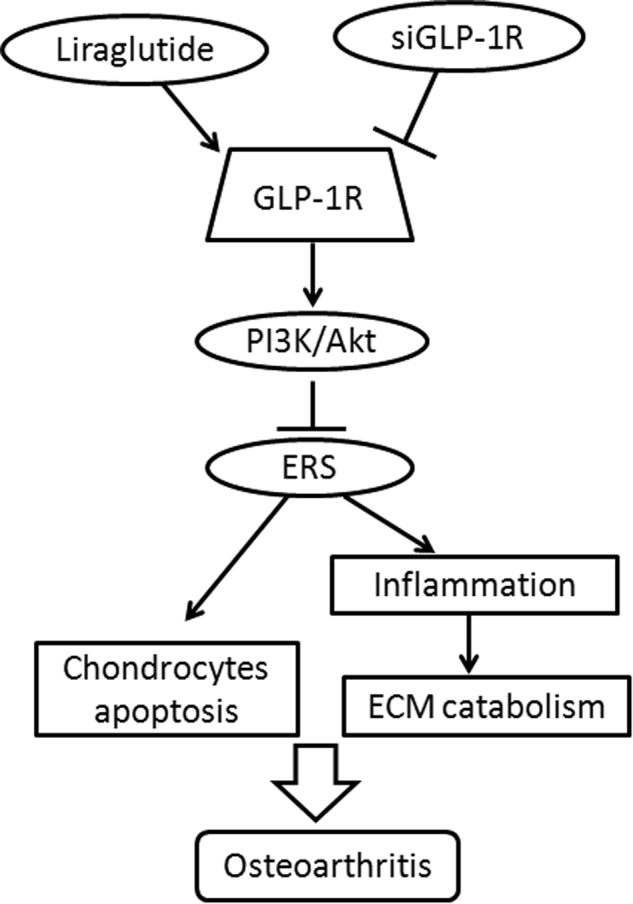
Treatments for osteoarthritis (OA) are designed to restore chondrocyte function and inhibit cell apoptosis. Previous studies have shown that activation of the glucagon-like peptide-1 receptor (GLP-1R) leads to anti-inflammatory and anti-apoptotic effects. However, the role of GLP-1R in the pathological process of OA is unclear. In present work, we aimed to demonstrate the potential effect of GLP-1R on chondrocytes and elucidate its underlying mechanisms. We found that activation of GLP-1R with liraglutide could protect chondrocytes against endoplasmic reticulum stress and apoptosis induced by interleukin (IL)-1β or triglycerides (TGs). These effects were partially attenuated by GLP-1R small interfering RNA treatment. Moreover, inhibiting PI3K/Akt signaling abolished the protective effects of GLP-1R by increase the apoptosis activity and ER stress. Activating GLP-1R suppressed the nuclear factor kappa-B pathway, decreased the release of inflammatory mediators (IL-6, tumor necrosis factor α), and reduced matrix catabolism in TG-treated chondrocytes; these effects were abolished by GLP-1R knockdown. In the end, liraglutide attenuated rat cartilage degeneration in an OA model of knee joints in vivo. Our results indicate that GLP-1R is a therapeutic target for the treatment of OA, and that liraglutide could be a therapeutic candidate for this clinical application.
Overview
The claims and statistics of this paper haven’t been checked yet.
Free: it reads the open-access text and checks the first 5 claims that cite a source we can check. Create a free account to check every claim.
Integrity signals
Registry
Cites
Statistics
Figures
Verification
Claims the paper makes
The claims and statistics of this paper haven’t been checked yet.
Free: it reads the open-access text and checks the first 5 claims that cite a source we can check. Create a free account to check every claim.
Claims other papers make about this one
Each is checked against this paper’s own text: does it say what the citing paper says it does?
The source backs part of the claim, not all of it — or backs it for a different population, condition or comparison.
In the citing paper
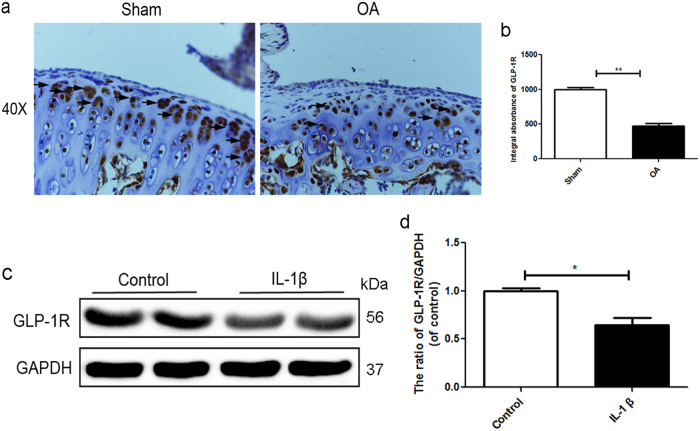
“GLP-1R expression was detected via immunohistochemistry in articular chondrocytes from both normal and osteoarthritic individuals.273”
From Glucagon-like peptide-1 receptor: mechanisms and advances in therapy (2024) · cites this paper as [273]
Experimental — accuracy not yet measuredThe source backs part of the claim, not all of it — or backs it for a different population, condition or comparison.
In the citing paper
“This change suggests that liraglutide not only inhibits inflammation and cartilage degradation but may also promote the synthesis and accumulation of cartilage matrix, thereby helping to protect and repair joint cartilage.273”
From Glucagon-like peptide-1 receptor: mechanisms and advances in therapy (2024) · cites this paper as [273]
Experimental — accuracy not yet measuredThe source backs part of the claim, not all of it — or backs it for a different population, condition or comparison.
In the citing paper
“Furthermore, a study using the anterior cruciate ligament transection (ACLT) rat model further confirmed that subcutaneous injection of liraglutide at 50 μg/kg/day, whether for 3 weeks or 6 weeks, could reduce OARSI scores, highlighting the potential of liraglutide in treating joint degeneration.273”
From Glucagon-like peptide-1 receptor: mechanisms and advances in therapy (2024) · cites this paper as [273]
Experimental — accuracy not yet measuredThe cited source says what the claim attributes to it.
In the citing paper
“Moreover, GLP-1RAs could decelerate the progression of OA and mitigate pathological damage in a rat OA model.273”
From Glucagon-like peptide-1 receptor: mechanisms and advances in therapy (2024) · cites this paper as [273]
Self-check
Percentages, sums and reported differences re-computed from the paper’s own numbers.
The self-check needs the paper’s full text.
Citations
Cites
A new mathematical model for relative quantification in real-time RT-PCR
Pfaffl, M. W. (2001) · Nucleic Acids Research · doi:10.1093/nar/29.9.e45 · Cited by 34,610
Control of inositol 1,4,5-trisphosphate-induced Ca2+ release by cytosolic Ca2+
Bootman, M. D., Missiaen, L., Parys, J. B., De Smedt, H., & Casteels, R. (1995) · Biochemical Journal · doi:10.1042/bj3060445 · Cited by 5,120
Mutation of the mouse klotho gene leads to a syndrome resembling ageing
Kuro-o, M., Matsumura, Y., Aizawa, H., Kawaguchi, H., Suga, T., Utsugi, T., Ohyama, Y., Kurabayashi, M., Kaname, T., Kume, E., et al. (1997) · Nature · doi:10.1038/36285 · Cited by 3,837
Cross, M., Smith, E., Hoy, D., Nolte, S., Ackerman, I., Fransen, M., Bridgett, L., Williams, S., Guillemin, F., Hill, C. L., et al. (2014) · Annals of the Rheumatic Diseases · doi:10.1136/annrheumdis-2013-204763 · Cited by 3,496
Caspase-12 mediates endoplasmic-reticulum-specific apoptosis and cytotoxicity by amyloid-β
Nakagawa, T., Zhu, H., Morishima, N., Li, E., Xu, J., Yankner, B. A., & Yuan, J. (2000) · Nature · doi:10.1038/47513 · Cited by 3,256
Osteoarthritis: A disease of the joint as an organ
Loeser, R. F., Goldring, S. R., Scanzello, C. R., & Goldring, M. B. (2012) · Arthritis & Rheumatism · doi:10.1002/art.34453 · Cited by 3,076
Endoplasmic reticulum stress and the inflammatory basis of metabolic disease
Hotamisligil, G. S. (2010) · Cell · doi:10.1016/j.cell.2010.02.034 · Cited by 2,802
Role of proinflammatory cytokines in the pathophysiology of osteoarthritis
Kapoor, M., Martel-Pelletier, J., Lajeunesse, D., Pelletier, J.-P., & Fahmi, H. (2011) · Nature Reviews Rheumatology · doi:10.1038/nrrheum.2010.196 · Cited by 2,778
Regulation of Cell Death Protease Caspase-9 by Phosphorylation
Cardone, M. H., Roy, N., Stennicke, H. R., Salvesen, G. S., Franke, T. F., Stanbridge, E., Frisch, S., & Reed, J. C. (1998) · Science · doi:10.1126/science.282.5392.1318 · Cited by 2,481
From endoplasmic-reticulum stress to the inflammatory response
Zhang, K., & Kaufman, R. J. (2008) · Nature · doi:10.1038/nature07203 · Cited by 2,010
Caspase-3 Is Required for DNA Fragmentation and Morphological Changes Associated with Apoptosis
Jänicke, R. U., Sprengart, M. L., Wati, M. R., & Porter, A. G. (1998) · Journal of Biological Chemistry · doi:10.1074/jbc.273.16.9357 · Cited by 1,953
Ageing and the pathogenesis of osteoarthritis
Loeser, R. F., Collins, J. A., & Diekman, B. O. (2016) · Nature Reviews Rheumatology · doi:10.1038/nrrheum.2016.65 · Cited by 1,290
Xu, G., Stoffers, D. A., Habener, J. F., & Bonner-Weir, S. (1999) · Diabetes · doi:10.2337/diabetes.48.12.2270 · Cited by 1,209
Ban, K., Noyan-Ashraf, M. H., Hoefer, J., Bolz, S.-S., Drucker, D. J., & Husain, M. (2008) · Circulation · doi:10.1161/circulationaha.107.739938 · Cited by 1,057
Silverwood, V., Blagojevic-Bucknall, M., Jinks, C., Jordan, J. L., Protheroe, J., & Jordan, K. P. (2015) · Osteoarthritis and Cartilage · doi:10.1016/j.joca.2014.11.019 · Cited by 947
Hu, P., Han, Z., Couvillon, A. D., Kaufman, R. J., & Exton, J. H. (2006) · Molecular and Cellular Biology · doi:10.1128/mcb.26.8.3071-3084.2006 · Cited by 754
Cellular response to endoplasmic reticulum stress: a matter of life or death
Boyce, M., & Yuan, J. (2006) · Cell Death & Differentiation · doi:10.1038/sj.cdd.4401817 · Cited by 680
Emerging regulators of the inflammatory process in osteoarthritis
Liu-Bryan, R., & Terkeltaub, R. (2015) · Nature Reviews Rheumatology · doi:10.1038/nrrheum.2014.162 · Cited by 652
Identification of a central role for complement in osteoarthritis
Wang, Q., Rozelle, A. L., Lepus, C. M., Scanzello, C. R., Song, J. J., Larsen, D. M., Crish, J. F., Bebek, G., Ritter, S. Y., Lindstrom, T. M., et al. (2011) · Nature Medicine · doi:10.1038/nm.2543 · Cited by 575
Physiology of Proglucagon Peptides: Role of Glucagon and GLP-1 in Health and Disease
Sandoval, D. A., & D'Alessio, D. A. (2015) · Physiological Reviews · doi:10.1152/physrev.00013.2014 · Cited by 498
535 East 70th Street, C. R. B., Goldring, M., Otero, M., Plumb, D., Dragomir, C., Favero, M., EI Hachem, K., Hashimoto, K., Roach, H., Olivotto, E., et al. (2011) · European Cells and Materials · doi:10.22203/ecm.v021a16 · Cited by 489
Yusta, B., Baggio, L. L., Estall, J. L., Koehler, J. A., Holland, D. P., Li, H., Pipeleers, D., Ling, Z., & Drucker, D. J. (2006) · Cell Metabolism · doi:10.1016/j.cmet.2006.10.001 · Cited by 446
Li, Y., Schwabe, R. F., DeVries-Seimon, T., Yao, P. M., Gerbod-Giannone, M.-C., Tall, A. R., Davis, R. J., Flavell, R., Brenner, D. A., & Tabas, I. (2005) · Journal of Biological Chemistry · doi:10.1074/jbc.m501759200 · Cited by 421
ER stress-induced inflammation: does it aid or impede disease progression?
Garg, A. D., Kaczmarek, A., Krysko, O., Vandenabeele, P., Krysko, D. V., & Agostinis, P. (2012) · Trends in Molecular Medicine · doi:10.1016/j.molmed.2012.06.010 · Cited by 420
Cellular senescence in osteoarthritis pathology
McCulloch, K., Litherland, G. J., & Rai, T. S. (2017) · Aging Cell · doi:10.1111/acel.12562 · Cited by 367
Systemic inhibition of IL-6/Stat3 signalling protects against experimental osteoarthritis
Latourte, A., Cherifi, C., Maillet, J., Ea, H.-K., Bouaziz, W., Funck-Brentano, T., Cohen-Solal, M., Hay, E., & Richette, P. (2017) · Annals of the Rheumatic Diseases · doi:10.1136/annrheumdis-2016-209757 · Cited by 360
Apoptosis signaling pathways in osteoarthritis and possible protective role of melatonin
Hosseinzadeh, A., Kamrava, S. K., Joghataei, M. T., Darabi, R., Shakeri‐Zadeh, A., Shahriari, M., Reiter, R. J., Ghaznavi, H., & Mehrzadi, S. (2016) · Journal of Pineal Research · doi:10.1111/jpi.12362 · Cited by 344
Syndecan-4 regulates ADAMTS-5 activation and cartilage breakdown in osteoarthritis
Echtermeyer, F., Bertrand, J., Dreier, R., Meinecke, I., Neugebauer, K., Fuerst, M., Lee, Y. J., Song, Y. W., Herzog, C., Theilmeier, G., et al. (2009) · Nature Medicine · doi:10.1038/nm.1998 · Cited by 318
Csaki, C., Mobasheri, A., & Shakibaei, M. (2009) · Arthritis Research & Therapy · doi:10.1186/ar2850 · Cited by 318
Alvarez, E., Martínez, M. D., Roncero, I., Chowen, J. A., García‐Cuartero, B., Gispert, J. D., Sanz, C., Vázquez, P., Maldonado, A., De Cáceres, J., et al. (2005) · Journal of Neurochemistry · doi:10.1111/j.1471-4159.2004.02914.x · Cited by 305
Apoptosis in normal and osteoarthritic human articular cartilage
Héraud, F., Héraud, A., & Harmand, M.-F. (2000) · Annals of the Rheumatic Diseases · doi:10.1136/ard.59.12.959 · Cited by 277
Shiraki, A., Oyama, J.-I., Komoda, H., Asaka, M., Komatsu, A., Sakuma, M., Kodama, K., Sakamoto, Y., Kotooka, N., Hirase, T., et al. (2012) · Atherosclerosis · doi:10.1016/j.atherosclerosis.2011.12.039 · Cited by 263
Cell Death and Apoptosis in Ostearthritic Cartilage
Kim, H., & Blanco, F. (2007) · Current Drug Targets · doi:10.2174/138945007779940025 · Cited by 201
Zhang, Y., Zhou, H., Wu, W., Shi, C., Hu, S., Yin, T., Ma, Q., Han, T., Zhang, Y., Tian, F., et al. (2016) · Free Radical Biology and Medicine · doi:10.1016/j.freeradbiomed.2016.03.035 · Cited by 189
Lianxu, C., Hongti, J., & Changlong, Y. (2006) · Osteoarthritis and Cartilage · doi:10.1016/j.joca.2005.10.009 · Cited by 181
Busija, L., Bridgett, L., Williams, S. R. M., Osborne, R. H., Buchbinder, R., March, L., & Fransen, M. (2010) · Best Practice & Research Clinical Rheumatology · doi:10.1016/j.berh.2010.11.001 · Cited by 170
Osteoarthritis cartilage histopathology: grading and staging
Moskowitz, R. W. (2006) · Osteoarthritis and Cartilage · doi:10.1016/j.joca.2005.08.015 · Cited by 159
Santangelo, K. S., Nuovo, G. J., & Bertone, A. L. (2012) · Osteoarthritis and Cartilage · doi:10.1016/j.joca.2012.08.011 · Cited by 155
Osteoarthritis: Pathobiology—targets and ways for therapeutic intervention☆
Aigner, T. G., Sachse, A., Gebhard, P. M., & Roach, H. I. (2006) · Advanced Drug Delivery Reviews · doi:10.1016/j.addr.2006.01.020 · Cited by 147
Mapping the crossroads of immune activation and cellular stress response pathways
Cláudio, N., Dalet, A., Gatti, E., & Pierre, P. (2013) · The EMBO Journal · doi:10.1038/emboj.2013.80 · Cited by 144
Uehara, Y., Hirose, J., Yamabe, S., Okamoto, N., Okada, T., Oyadomari, S., & Mizuta, H. (2014) · Osteoarthritis and Cartilage · doi:10.1016/j.joca.2014.04.025 · Cited by 130
Mazzetti, I., Grigolo, B., Pulsatelli, L., Dolzani, P., Silvestri, T., Roseti, L., Melicòni, R., & Facchini, A. (2001) · Clinical Science · doi:10.1042/cs1010593 · Cited by 122
Jiang, Y., Chang, G., Wang, Y., Zhang, D., Cao, L., & Liu, J. (2016) · Cellular Physiology and Biochemistry · doi:10.1159/000445634 · Cited by 117
Dai, Y., Dai, D., Wang, X., Ding, Z., & Mehta, J. L. (2014) · Cardiovascular Drugs and Therapy · doi:10.1007/s10557-014-6539-4 · Cited by 116
Self-citationGuo, C., Huang, T., Chen, A., Chen, X., Wang, L., Shen, F., & Gu, X. (2016) · Brazilian Journal of Medical and Biological Research · doi:10.1590/1414-431x20165826 · Cited by 112
ATF6 upregulates XBP1S and inhibits ER stress-mediated apoptosis in osteoarthritis cartilage
Guo, F., Xiong, Z., Lu, X., Ye, M., Han, X., & Jiang, R. (2013) · Cellular Signalling · doi:10.1016/j.cellsig.2013.11.018 · Cited by 107
Kamada, H., Nito, C., Endo, H., & Chan, P. H. (2006) · Journal of Cerebral Blood Flow & Metabolism · doi:10.1038/sj.jcbfm.9600367 · Cited by 100
Yang, X., Guan, Y. A., Tian, S., Wang, Y., Sun, K., & Chen, Q. (2016) · International Journal of Molecular Sciences · doi:10.3390/ijms17040436 · Cited by 93
Schisano, B., Harte, A. L., Lois, K. B., Saravanan, P., Al‐Daghri, N. M., Al-Attas, O. S., Knudsen, L. B., McTernan, P. G., Ceriello, A., & Tripathi, G. (2011) · Regulatory Peptides · doi:10.1016/j.regpep.2011.11.008 · Cited by 90
Pterostilbene inhibits inflammation and ROS production in chondrocytes by activating Nrf2 pathway
Xue, E., Lin, J., Zhang, Y., Sheng, S., Liu, H., Zhou, Y., & Xu, H. (2017) · Oncotarget · doi:10.18632/oncotarget.16716 · Cited by 88
Zheng, X., Xu, F., Liang, H., Cao, H., Cai, M., Xu, W., & Weng, J. (2017) · Hepatology · doi:10.1002/hep.29238 · Cited by 85
Li, H., Zhao, X.-Z., Zhang, X., Li, G., Jia, Z., Sun, P., Wang, J.-Q., Fan, Z., & Lv, G. (2015) · Molecular Neurobiology · doi:10.1007/s12035-015-9327-7 · Cited by 84
Self-citationZHAO, X., LIU, G., SHEN, H., GAO, B., LI, X., FU, J., ZHOU, J., & JI, Q. (2015) · International Journal of Molecular Medicine · doi:10.3892/ijmm.2014.2052 · Cited by 83
Baggio, L. (2000) · Endocrinology · doi:10.1210/en.141.10.3703 · Cited by 79
Li, H., Zhang, X., Wu, T., Cheng, W., Liu, X., Jiang, T.-T., Wen, J., Li, J., Ma, Q., & Hua, Z. (2013) · Journal of Biological Chemistry · doi:10.1074/jbc.m112.407296 · Cited by 78
Self-citationPelletier, J., Kapoor, M., Fahmi, H., Lajeunesse, D., Blesius, A., Maillet, J., & Martel‐Pelletier, J. (2012) · Annals of the Rheumatic Diseases · doi:10.1136/annrheumdis-2012-201710 · Cited by 77
Exendin-4, a glucagon-like peptide 1 receptor agonist, protects cholangiocytes from apoptosis
Marzioni, M., Alpini, G., Saccomanno, S., Candelaresi, C., Venter, J., Rychlicki, C., Fava, G., Francis, H., Trozzi, L., & Benedetti, A. (2009) · Gut · doi:10.1136/gut.2008.150870 · Cited by 73
Geniposide promotes beta-cell regeneration and survival through regulating β-catenin/TCF7L2 pathway
Yao, D. D., Yang, L., Wang, Y., Liu, C., Wei, Y., Jia, X., Yin, W., & Shu, L. (2015) · Cell Death and Disease · doi:10.1038/cddis.2015.107 · Cited by 71
C/EBP homologous protein drives pro-catabolic responses in chondrocytes
Husa, M., Petursson, F., Lotz, M., Terkeltaub, R., & Liu-Bryan, R. (2013) · Arthritis Research & Therapy · doi:10.1186/ar4415 · Cited by 70
GOU, S., ZHU, T., WANG, W., XIAO, M., WANG, X.-C., & CHEN, Z.-H. (2014) · International Immunopharmacology · doi:10.1016/j.intimp.2014.07.010 · Cited by 66
Self-citationZhou, Y., Zhang, H., Zheng, B., Ye, L., Zhu, S., Johnson, N. R., Wang, Z., Wei, X., Chen, D., Cao, G., et al. (2015) · International Journal of Biological Sciences · doi:10.7150/ijbs.13229 · Cited by 63
Self-citationChu, X., You, H., Yuan, X., Zhao, W., Li, W., & Guo, X. (2013) · International Journal of Molecular Medicine · doi:10.3892/ijmm.2013.1318 · Cited by 58
Jiang, L., Lee, S., Wang, Y., Xu, Q., Meng, D., & Zhang, J. (2016) · Osteoarthritis and Cartilage · doi:10.1016/j.joca.2015.12.021 · Cited by 52
1,25-dihydroxyvitamin D3 Activates MMP13 Gene Expression in Chondrocytes through p38 MARK Pathway
Chen, D., Li, Y., Dai, X., Zhou, X., Tian, W., Zhou, Y., Zou, X., & Zhang, C. (2013) · International Journal of Biological Sciences · doi:10.7150/ijbs.6726 · Cited by 23
Li, H., Lei, M., Yu, C., Lv, Y., Song, Y., & Yang, L. (2015) · International Orthopaedics · doi:10.1007/s00264-015-2974-5 · Cited by 17
Osteoarthitis of Leptin-Deficient ob/ob Mice in Response to Biomechanical Loading in Micro-CT
Heep, H., Hilken, G., Hofmeister, S., & Wedemeyer, C. (2009) · International Journal of Biological Sciences · doi:10.7150/ijbs.5.265 · Cited by 12
Cited by
Glucagon-like peptide-1 receptor: mechanisms and advances in therapy
Zheng, Z., Zong, Y., Ma, Y., Tian, Y., Pang, Y., Zhang, C., & Gao, J. (2024) · Signal Transduction and Targeted Therapy · doi:10.1038/s41392-024-01931-z · Cited by 1,036
The PI3K/AKT/mTOR signaling pathway in osteoarthritis: a narrative review
Sun, K., Luo, J., Guo, J., Yao, X., Jing, X., & Guo, F. (2020) · Osteoarthritis and Cartilage · doi:10.1016/j.joca.2020.02.027 · Cited by 660
Meurot, C., Martin, C., Sudre, L., Breton, J., Bougault, C., Rattenbach, R., Bismuth, K., Jacques, C., & Berenbaum, F. (2022) · Scientific Reports · doi:10.1038/s41598-022-05323-7 · Cited by 160
Osteoarthritis treatment via the GLP-1–mediated gut-joint axis targets intestinal FXR signaling
Yang, Y., Hao, C., Jiao, T., Yang, Z., Li, H., Zhang, Y., Zhang, W., Doherty, M., Sun, C., Yang, T., et al. (2025) · Science · doi:10.1126/science.adt0548 · Cited by 160
Feng, K., Ge, Y., Chen, Z., Li, X., Liu, Z., Li, X., Li, H., Tang, T., Yang, F., & Wang, X. (2019) · Oxidative Medicine and Cellular Longevity · doi:10.1155/2019/8574386 · Cited by 144
Self-citation
Metadata
- Authors
- Chen, J., Xie, J.-J., Shi, K.-S., Gu, Y.-T., Wu, C.-C., Xuan, J., Ren, Y., Chen, L., Wu, Y.-S., Zhang, X.-L., Xiao, J., Wang, D.-Z., & Wang, X.-Y.
- Affiliations
- Wenzhou Medical University (CN)
- Venue
- Cell Death & Disease
- Published
- 2018-02-12
- Volume
- 9
- Issue
- 2
- Pages
- 212-212
- ISSN
- 2041-4889 (ISSN-L)
- PMC
- PMC5833344
- OpenAlex
- W2789512886
- Cited by
- 130
- References
- 66
- Citations by year
- 2026: 22 · 2025: 37 · 2024: 11 · 2023: 9 · 2022: 21 · 2021: 5 · 2020: 13 · 2019: 9 · 2018: 3
- FWCI
- 6.35
- Type
- journal article
- Language
- en
- Open access
- gold
- doi.org
- Licence
- cc-by
- creativecommons.org/licenses/by/4.0 (tdm)
- creativecommons.org/licenses/by/4.0 (vor)
- Locations
- Cell Death and Disease (publishedVersion, cc-by)
- Europe PMC (PubMed Central) (publishedVersion, cc-by)
- PubMed Central (publishedVersion, cc-by)
- PubMed (publishedVersion)
- DOAJ (DOAJ: Directory of Open Access Journals) (submittedVersion)
- Topics
- Health Sciences › Medicine › Rheumatology › Osteoarthritis Treatment and Mechanisms
- Life Sciences › Biochemistry, Genetics and Molecular Biology › Cell Biology › Proteoglycans and glycosaminoglycans research
- Life Sciences › Biochemistry, Genetics and Molecular Biology › Cell Biology › Endoplasmic Reticulum Stress and Disease
- Keywords
- GLP-1 receptor, osteoarthritis, chondrocytes, endoplasmic reticulum stress, apoptosis, liraglutide, PI3K/Akt signaling, NF-κB signaling, IL-1β, triglycerides, cartilage degeneration, matrix catabolism, inflammation
- MeSH terms
- Glucagon-Like Peptide-1 Receptor, Animals, Inflammation, Osteoarthritis, Cytokines, Rats, Sprague-Dawley, Apoptosis, Chondrocytes, Rats, Endoplasmic Reticulum Stress
About these checks
Registry, retraction, Cites and statistics results are computed, not judged, with one exception: a printed reference that no index lists is read once by a model before it counts as a citation error. Claims are extracted by a model and kept only when their quote appears verbatim in the text; each cited source is then checked, with a model’s help, for whether it says what the claim relies on. Those verdicts can be wrong — read the claim’s quote and the cited source before relying on one.
Statistics and arithmetic are recomputed, not judged.
Confidence bands are shown only for fields calibrated on our annotated test set. None is calibrated yet, so no band is shown.
What counts as a claim ›How we measure confidence ›How we check this ›
Are you an author, or do you see a problem with this page? Request a review
Data sources
Bibliographic data: Semantic Scholar, OpenAlex, Crossref.
Contains information from the Semantic Scholar Academic Graph Datasets, made available under the ODC Attribution License (ODC-BY 1.0).
Semantic Scholar’s data is described in: Kinney, R., et al. (2023). The Semantic Scholar Open Data Platform. arXiv:2301.10140.
