

Estradiol signaling mediates gender difference in visceral adiposity via autophagy
Open accessThe DOI matches its Crossref record; 84 of the 84 references it cites were found in a registry or an index.
Abstract
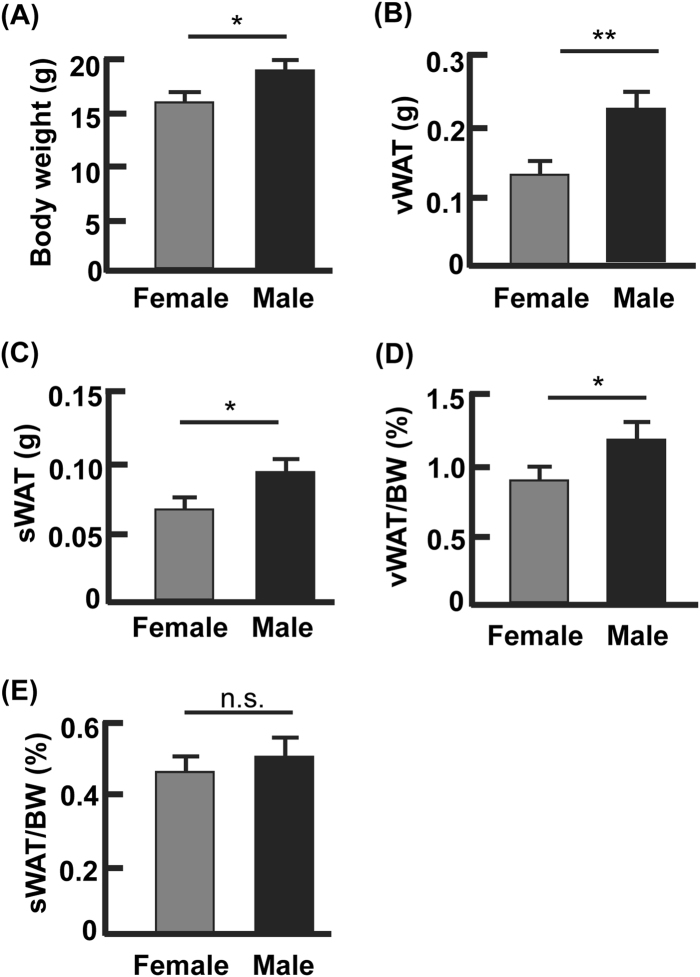
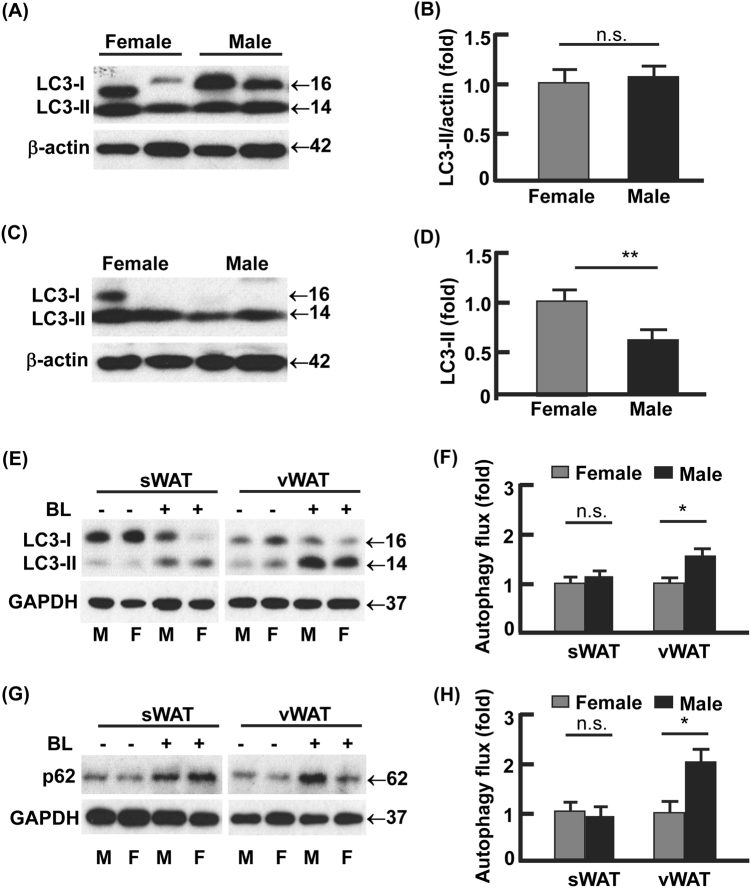
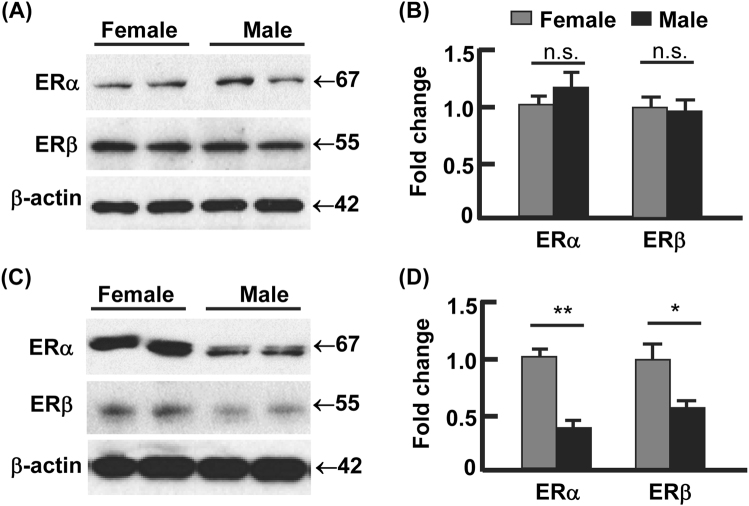
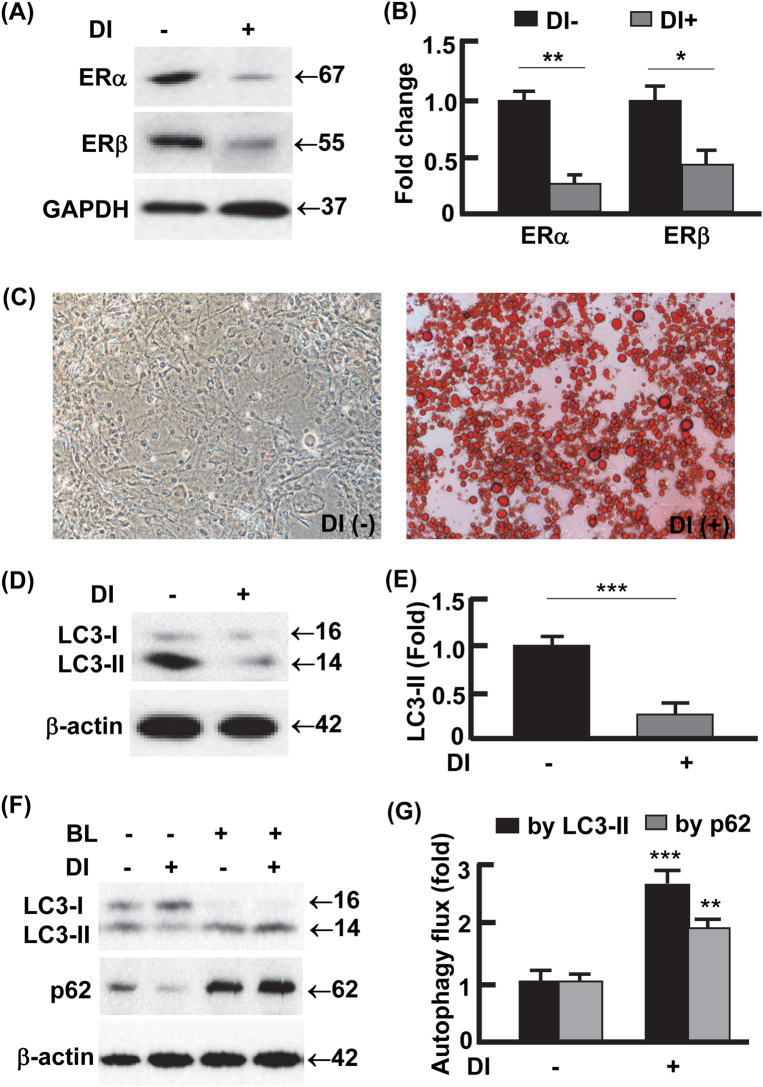
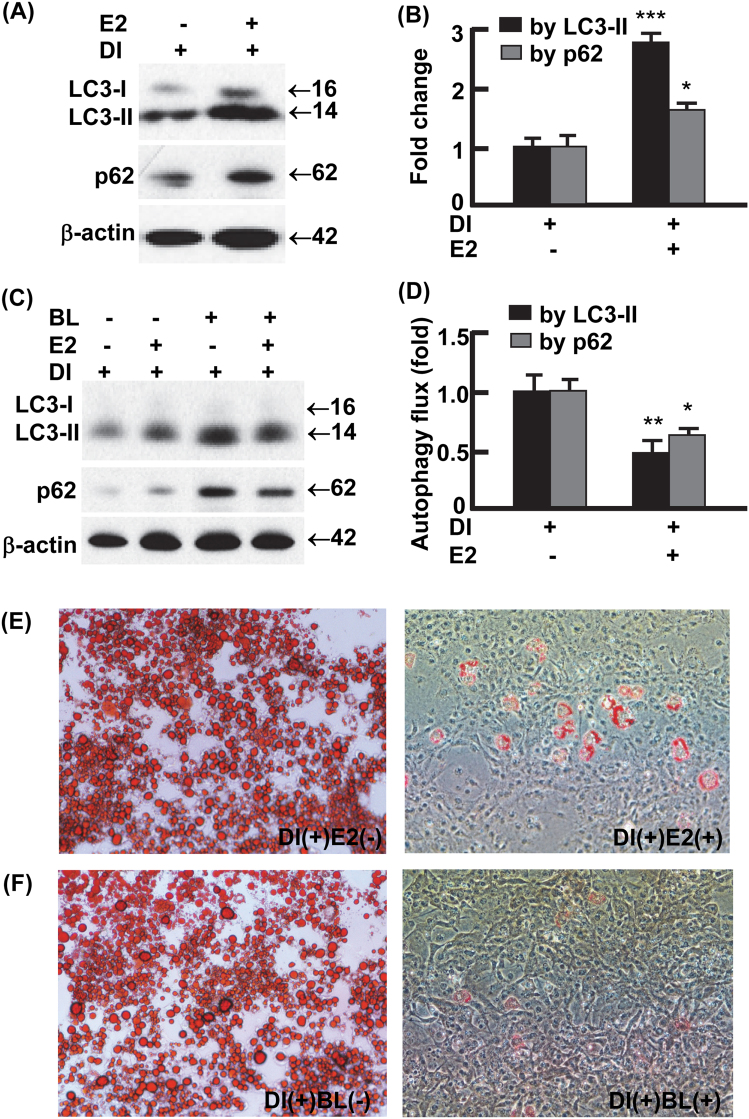
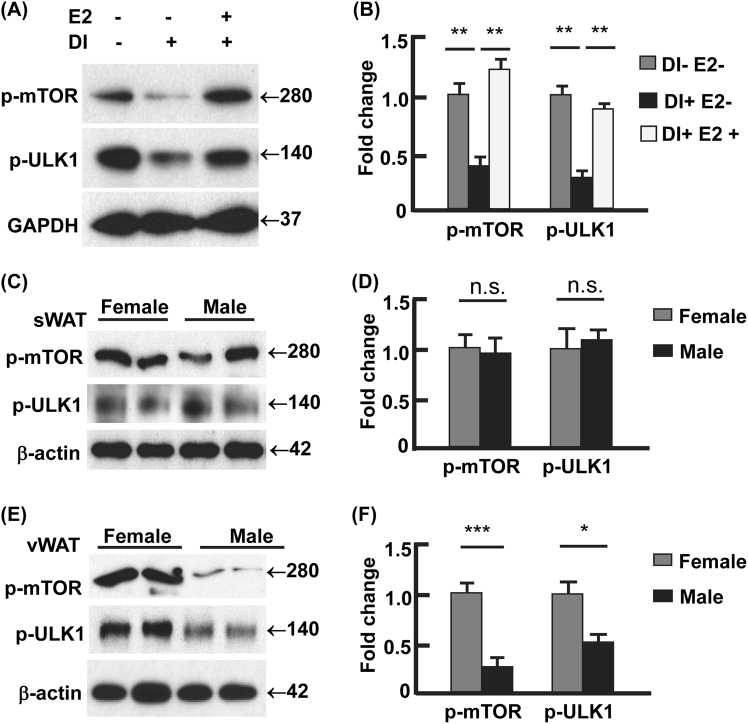
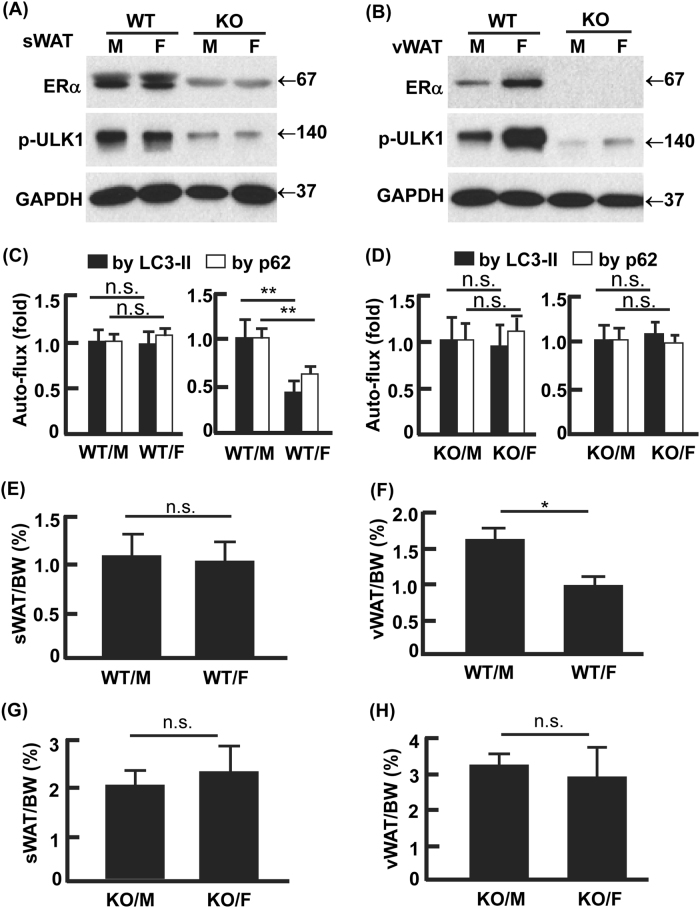
Excessive adiposity (particularly visceral fat mass) increases the risks of developing metabolic syndrome. Women have lower deposit of visceral fat than men, and this pattern becomes diminished postmenopausally, but the underlying mechanism remains largely unknown. Here, we show that the gender difference in visceral fat distribution is controlled by an estradiol–autophagy axis. In C57BL/6J and wild-type control mice, a higher visceral fat mass was detected in the males than in the females, which was associated with lower expression of estrogen receptor α (ERα) and more active autophagy in males vs. females. However, deletion of ERα normalized autophagy activity and abolished the gender difference in visceral adiposity. In line with the adiposity-reducing effect of the ERα–autophagy axis, we found that downregulation of ERα and increased autophagy activity were required for adipogenesis, while induction of estradiol signaling dampened autophagy and drastically prevented adipogenesis. Mechanistically, the estradiol-ERα signaling activated mTOR, which phosphorylated and inhibited ULK1, thereby suppressing autophagy and adipogenesis. Together, our study suggests that the lower visceral adiposity in the females (vs. the males) arises from a more active estradiol-ERα signaling, which tunes down autophagy and adipogenesis.
Overview
The claims and statistics of this paper haven’t been checked yet.
Free: it reads the open-access text and checks the first 5 claims that cite a source we can check. Create a free account to check every claim.
Integrity signals
Registry
Cites
Statistics
Figures
Verification
Claims the paper makes
The claims and statistics of this paper haven’t been checked yet.
Free: it reads the open-access text and checks the first 5 claims that cite a source we can check. Create a free account to check every claim.
Claims other papers make about this one
Each is checked against this paper’s own text: does it say what the citing paper says it does?
The source backs part of the claim, not all of it — or backs it for a different population, condition or comparison.
In the citing paper
“Other studies support that E2’s protective effects on WAT expansion may be depot-specific, as the expression of estrogen receptor ERα, which has been shown to be necessary for E2 to maintain its protective effect of inflammation in both males and females, may be higher in subcutaneous fat (181, 221).”
From Metabolic impact of endogenously produced estrogens by adipose tissue in females and males across the lifespan (2025) · cites this paper as [181]
Experimental — accuracy not yet measuredThe cited source says what the claim attributes to it.
In the citing paper
“E2/ER signaling plays a significant role in mediating sex differences of VAT accumulation, where males express less ERα in VAT than females (181).”
From Metabolic impact of endogenously produced estrogens by adipose tissue in females and males across the lifespan (2025) · cites this paper as [181]
Self-check
Percentages, sums and reported differences re-computed from the paper’s own numbers.
The self-check needs the paper’s full text.
Citations
Cites
Repertoires of Autophagy in the Pathogenesis of Ocular Diseases
Li, Y.-J., Jiang, Q., Cao, G.-F., Yao, J., & Yan, B. (2015) · Cellular Physiology and Biochemistry · doi:10.1159/000373980 · Cited by 16,304
The metabolic phenotype in obesity: Fat mass, body fat distribution, and adipose tissue function
Goossens, G. H. (2017) · Obesity Facts · doi:10.1159/000471488 · Cited by 8,481
AMPK and mTOR regulate autophagy through direct phosphorylation of Ulk1
Kim, J., Kundu, M., Viollet, B., & Guan, K.-L. (2011) · Nature Cell Biology · doi:10.1038/ncb2152 · Cited by 7,227
Adipose Tissue as an Endocrine Organ
Kershaw, E. E., & Flier, J. S. (2004) · The Journal of Clinical Endocrinology & Metabolism · doi:10.1210/jc.2004-0395 · Cited by 5,522
Methods in Mammalian Autophagy Research
Mizushima, N., Yoshimori, T., & Levine, B. (2010) · Cell · doi:10.1016/j.cell.2010.01.028 · Cited by 4,497
What we talk about when we talk about fat
Rosen, E. D., & Spiegelman, B. M. (2014) · Cell · doi:10.1016/j.cell.2013.12.012 · Cited by 2,373
Dynamics of fat cell turnover in humans
Spalding, K. L., Arner, E., Westermark, P. O., Bernard, S., Buchholz, B. A., Bergmann, O., Blomqvist, L., Hoffstedt, J., Näslund, E., Britton, T., et al. (2008) · Nature · doi:10.1038/nature06902 · Cited by 2,357
Komatsu, M., Kurokawa, H., Waguri, S., Taguchi, K., Kobayashi, A., Ichimura, Y., Sou, Y.-S., Ueno, I., Sakamoto, A., Tong, K. I., et al. (2010) · Nature Cell Biology · doi:10.1038/ncb2021 · Cited by 2,288
Cepharanthine potently enhances the sensitivity of anticancer agents in K562 cells
Ikeda, R., Che, X., Yamaguchi, T., Ushiyama, M., Zheng, C., Okumura, H., Takeda, Y., Shibayama, Y., Nakamura, K. T., Jeung, H., et al. (2005) · Cancer Science · doi:10.1111/j.1349-7006.2005.00057.x · Cited by 2,274
General and abdominal adiposity and risk of death in Europe
Pischon, T., Boeing, H., Hoffmann, K., Bergmann, M., Schulze, M. B., Overvad, K., van der Schouw, Y. T., Spencer, E., Moons, K. G. M., Tjønneland, A., et al. (2008) · New England Journal of Medicine · doi:10.1056/nejmoa0801891 · Cited by 2,155
Cited by
Frank, A. P., de Souza Santos, R., Palmer, B. F., & Clegg, D. J. (2019) · Journal of Lipid Research · doi:10.1194/jlr.r086975 · Cited by 304
“estrogens drive fat accumulation in the gluteofemoral SCAT depot rather than to the abdominal VAT depot (40-42), implicating estrogens as determinants of body fat distribution (37, 43, 44).”
BackgroundThe FoxO–Autophagy Axis in Health and Disease
Cheng, Z. (2019) · Trends in Endocrinology & Metabolism · doi:10.1016/j.tem.2019.07.009 · Cited by 255
Self-citationMetabolic and Epigenetic Regulation by Estrogen in Adipocytes
Bjune, J.-I., Panahandeh, P., Jersin, R. Å., Mellgren, G., & Dankel, S. N. (2022) · Frontiers in Endocrinology · doi:10.3389/fendo.2022.828780 · Cited by 122
Sex and Gender Aspects for Patient Stratification in Allergy Prevention and Treatment
Martinis, M. D., Sirufo, M. M., Suppa, M., Silvestre, D. D., & Ginaldi, L. (2020) · International Journal of Molecular Sciences · doi:10.3390/ijms21041535 · Cited by 113
“The gender difference in visceral fat distribution is controlled by an estradiol-autophagy axis [54].”
BackgroundSex Differences in Autophagy Contribute to Female Vulnerability in Alzheimer's Disease
Congdon, E. E. (2018) · Frontiers in Neuroscience · doi:10.3389/fnins.2018.00372 · Cited by 81
FoxO transcription factors in mitochondrial homeostasis
Cheng, Z. (2022) · Biochemical Journal · doi:10.1042/bcj20210777 · Cited by 90
Self-citationHormonal regulation of metabolism—recent lessons learned from insulin and estrogen
Tao, Z., & Cheng, Z. (2023) · Clinical Science · doi:10.1042/cs20210519 · Cited by 75
Self-citationThe Impact of Estrogen Deficiency on Liver Metabolism: Implications for Hormone Replacement Therapy
Dong, J., Dennis, K. M. J. H., Venkatakrishnan, R., Hodson, L., & Tomlinson, J. (2025) · Endocrine Reviews · doi:10.1210/endrev/bnaf018 · Cited by 72
Garratt, M., Leander, D., Pifer, K., Bower, B., Herrera, J. J., Day, S. M., Fiehn, O., Brooks, S. V., & Miller, R. A. (2019) · Aging Cell · doi:10.1111/acel.12920 · Cited by 49
Role of FOXO3a Transcription Factor in the Regulation of Liver Oxidative Injury
Jin, H. W., Zhang, L., He, J., Wu, M., Li, J., & Guo, J. (2022) · Antioxidants · doi:10.3390/antiox11122478 · Cited by 52
Food-seeking behavior is triggered by skin ultraviolet exposure in males
Parikh, S., Parikh, R., Michael, K., Bikovski, L., Barnabas, G. D., Mardamshina, M., Hemi, R., Manich, P., Goldstein, N., Malcov, H., et al. (2022) · Nature Metabolism · doi:10.1038/s42255-022-00587-9 · Cited by 45
Transcriptional and post-transcriptional control of autophagy and adipogenesis by YBX1
Wu, R., Feng, S., Li, F., Shu, G., Wang, L., Gao, P., Zhu, X., Zhu, C., Wang, S., & Jiang, Q. (2023) · Cell Death and Disease · doi:10.1038/s41419-023-05564-y · Cited by 44
“Previous studies showed that both of ULK1 and ULK2 played a role in regulating adipogenesis [8, 17, 19].”
ResultRole of estrogen and its receptors mediated-autophagy in cell fate and human diseases
Wei, Y. Q., & Huang, J. (2019) · The Journal of Steroid Biochemistry and Molecular Biology · doi:10.1016/j.jsbmb.2019.105380 · Cited by 42
Skubic, C., Drakulić, Ž., & Rozman, D. (2018) · Expert Opinion on Drug Metabolism & Toxicology · doi:10.1080/17425255.2018.1492552 · Cited by 41
“Subcutaneous fat is free from these effects and appears to be wholly innocuous [53].”
BackgroundAhmed, F., Hetty, S., Laterveer, R., Surucu, E. B., Mathioudaki, A., Hornbrinck, E., Patsoukaki, V., Olausson, J., Sundbom, M., Svensson, M. K., et al. (2025) · The Journal of Clinical Endocrinology & Metabolism · doi:10.1210/clinem/dgaf038 · Cited by 40
“Sex differences in body fat distribution have been associated with differences in estrogen levels (5).”
Shen, F., Guo, C., Zhang, D., Liu, Y., & Zhang, P. (2023) · Nutrition Metabolism and Cardiovascular Diseases · doi:10.1016/j.numecd.2023.04.009 · Cited by 40
Seong, J.-M., Lee, J. H., Gi, M. Y., Son, Y. H., Moon, A. E., Park, C.-E., Sung, H. H., & Yoon, H. J. (2021) · International Urology and Nephrology · doi:10.1007/s11255-020-02735-0 · Cited by 34
“showed that estradiol (E2) or estrogen receptor alpha (ER-α) and beta (ER-β) signaling mediates gender difference in visceral adiposity [34].”
BackgroundKuang, M., Qiu, J., Li, D., Hu, C., Zhang, S., Sheng, G., & Zou, Y. (2023) · Frontiers in Endocrinology · doi:10.3389/fendo.2023.1281524 · Cited by 33
“…age, and it is even still a low-risk stage around the age of 32 years; this may be related to the protective effect of estrogen in females of childbearing age, which encourages the deposition of adipose tissue more in the hips and thighs of females rather than in their visceral organs (44, 45).”
BackgroundSirt1 coordinates with ERα to regulate autophagy and adiposity
Tao, Z., Shi, L., Parke, J., Zheng, L., Gu, W. J., Dong, X. C., Liu, D., Wang, Z., Olumi, A. F., & Cheng, Z. (2021) · Cell Death Discovery · doi:10.1038/s41420-021-00438-8 · Cited by 33
Self-citationLee, A. A., & Den Hartigh, L. J. (2025) · Frontiers in Endocrinology · doi:10.3389/fendo.2025.1682231 · Cited by 32
He, Q., Liu, S., Feng, Z., Li, T., Chu, J., Hu, W., Chen, X., Han, Q., Sun, N., Sun, H., et al. (2022) · Nutrition Metabolism and Cardiovascular Diseases · doi:10.1016/j.numecd.2022.05.020 · Cited by 29
Wang, Y., Liu, H., Zhou, B., Yue, W., Wang, M., & Hu, K. (2025) · BMC Endocrine Disorders · doi:10.1186/s12902-025-01850-2 · Cited by 29
“Animal studies have found that a decrease in estradiol may lead to an increase in visceral rather than overall fat mass [40].”
FoxO1 regulates adipose transdifferentiation and iron influx by mediating Tgfβ1 signaling pathway
Shi, L., Tao, Z., Zheng, L., Yang, J., Hu, X., Scott, K. A., de Kloet, A. D., Krause, E. G., Collins, J. F., & Cheng, Z. (2023) · Redox Biology · doi:10.1016/j.redox.2023.102727 · Cited by 27
Self-citationBerry, A., Marconi, M., Musillo, C., Chiarotti, F., Bellisario, V., Matarrese, P., Gambardella, L., Vona, R., Lombardi, M., Foglieni, C., et al. (2019) · Experimental Gerontology · doi:10.1016/j.exger.2019.110755 · Cited by 27
“Within the brain, sex steroids are able to affect the process of autophagy through insulin and neurotrophic signalling, or through steroid receptors on mitochondria (Congdon and Sigurdsson, 2018; Tao et al., 2018).”
BackgroundOrganic UV filters mixture exposure and childhood adiposity: A prospective follow-up study in China
Wang, P., Huang, Y., Zhao, Y., Zhou, Y., Wang, H., Zhang, L., Shi, H., Leung, K. S., & Zhang, Y. (2021) · Environment International · doi:10.1016/j.envint.2021.106912 · Cited by 22
Peng, W., Han, M., & Xu, G. (2023) · Preventive Medicine Reports · doi:10.1016/j.pmedr.2023.102306 · Cited by 21
“It is reported that estradiol plays a vital role in adipose tissue deposition and function (Tao et al., 2018).”
BackgroundMechanisms of autophagic responses to altered nutritional status
Tao, Z., Aslam, H., Parke, J., Sanchez, M., & Cheng, Z. (2022) · The Journal of Nutritional Biochemistry · doi:10.1016/j.jnutbio.2022.108955 · Cited by 19
Self-citationZhou, H., Lin, X., Feng, S., Zhu, S., Zhou, H., Chen, H., Youwu, H., Wang, Z., Wang, R., Shao, X., et al. (2024) · American Journal of Physiology-Cell Physiology · doi:10.1152/ajpcell.00034.2024 · Cited by 18
Self-citationBertocchi, I., Oberto, A., Longo, A., Palanza, P., & Eva, C. E. (2020) · Hormones and Behavior · doi:10.1016/j.yhbeh.2020.104824 · Cited by 16
Hallmarks of Cancer Cachexia: Sexual Dimorphism in Related Pathways
Satari, S., Mota, I. N. R., Silva, A. C. L., Brito, H. O., Oliveira, P. A., da Costa, R. M. G., & Medeiros, R. (2025) · International Journal of Molecular Sciences · doi:10.3390/ijms26093952 · Cited by 15
Sex Differences in the Impact of Obesity on Immunity
Vijayakumar, S., Pantha, S., Magar, S. B., & Dhakal, S. (2026) · Immunological Reviews · doi:10.1111/imr.70101 · Cited by 14
“For example, in the C57BL/6 mouse model, males have significantly higher VAT but lower expression of ERα and ERβ in VAT compared to females [212].”
InfluentialZhou, H., Feng, S., Cai, J., Shao, X., Zhu, S., Zhou, H., Cao, Y., Wang, R., Lin, X., & Wang, J. (2025) · Clinical and Translational Medicine · doi:10.1002/ctm2.70206 · Cited by 13
Lee, Y., Kang, Y.-R., Chang, Y., Kim, J., & Sung, M. (2025) · Obesity Reviews · doi:10.1111/obr.70026 · Cited by 14
“A previous study showed that the lower expression of ERα in male VAT upregulates autophagy activity, thereby accelerating VAT lipogenesis [47].”
InfluentialZhang, Q., Chen, L., An, Q., Pi, P., Dong, Y.-F., Zhao, Y., Wang, N., Fang, X. L., Pu, R., Song, Q., et al. (2023) · Frontiers in Endocrinology · doi:10.3389/fendo.2023.1187781 · Cited by 13
“Estrogens regulate energy balance in adipose tissue, acting on both lipogenesis and lipolysis processes to affect the expansion and remodeling of adipose tissue (50).”
BackgroundZhao, Y., Klionsky, D. J., Wang, X., Huang, Q., Deng, Z., & Xiang, J. (2024) · International Journal of Molecular Sciences · doi:10.3390/ijms252312576 · Cited by 12
Assessing the Activity of Transcription Factor FoxO1
Shi, L., Tao, Z., & Cheng, Z. (2022) · Methods in molecular biology · doi:10.1007/978-1-0716-2815-7_8 · Cited by 12
Self-citationPhosphorylation site S122 in estrogen receptor α has a tissue‐dependent role in female mice
Ohlsson, C., Gustafsson, K. L., Farman, H. H., Henning, P., Lionikaite, V., Movérare‐Skrtic, S., Sjögren, K., Törnqvist, A. E., Andersson, A., Islander, U., et al. (2020) · The FASEB Journal · doi:10.1096/fj.201901376rr · Cited by 11
Suba, Z. (2020) · IntechOpen eBooks · doi:10.5772/intechopen.85995 · Cited by 10
Steroid Signaling in Autophagy
Bradic, I., & Rewitz, K. (2025) · Journal of Molecular Biology · doi:10.1016/j.jmb.2025.169134 · Cited by 8
Saito, Y., Kobayashi, M., Tamaki, S., Nakamura, K., Hirate, D., Takahashi, K., Takekuma, Y., Sakakibara‐Konishi, J., Shimizu, Y., Kinoshita, I., et al. (2023) · Scientific Reports · doi:10.1038/s41598-023-44477-w · Cited by 8
“One possible hypothesis is sex differences in autophagy 19,20 .”
BackgroundDastghaib, S., Siri, M., Rahmani-Kukia, N., Heydari, S. T., Pasalar, M., Zamani, M., Mokaram, P., & Lankarani, K. B. (2025) · PubMed Central · doi:10.22099/mbrc.2024.50105.1978 · Cited by 8
Optimization of adipogenic differentiation conditions for canine adipose-derived stem cells
Kim, J., Park, E., Kim, S. M., & Lee, H. (2021) · Journal of Veterinary Science · doi:10.4142/jvs.2021.22.e53 · Cited by 8
“Moreover, in vitro studies have reported the estrogen-mediated upregulation in PPARγ, LPL, ERα, and ERβ mRNA expression in adipocytes [15,36].”
BackgroundMASLD, diabetes and PMOS across the female life stages
Stener‐Victorin, E., Carlsson, S., Hagström, H., & Taebnia, N. (2026) · Diabetologia · doi:10.1007/s00125-026-06761-y · Cited by 7
“This is further exacerbated by the redistribution of adipose tissue from subcutaneous depots to visceral depots [135], increasing portal NEFA flux to the liver [134].”
Yu, T., Zhang, D., Yang, Y., Jiang, Y., Wang, J., Li, J., Zhang, Y., Xie, R., & Hong, X. (2025) · Scientific Reports · doi:10.1038/s41598-025-08797-3 · Cited by 7
Ahmed, F., Pereira, M. J., & Aguer, C. (2021) · Environments · doi:10.3390/environments8040035 · Cited by 7
“For instance, in one study, it was shown that estradiol signaling mediates sex differences in visceral adipose tissue, as males have lower levels of ER-α than females, which corresponds to higher visceral adiposity in males [47].”
BackgroundMcCormick, J. J., Goulet, N., King, K. E., Fujii, N., Amano, T., & Kenny, G. P. (2024) · American Journal of Physiology-Regulatory, Integrative and Comparative Physiology · doi:10.1152/ajpregu.00178.2024 · Cited by 6
Lombardo, M., Krakauer, J. C., Krakauer, N. Y., Caprio, M., Armani, A., & Feraco, A. (2025) · Nutrients · doi:10.3390/nu17101705 · Cited by 6
Kuang, M., Yang, R., Xie, Q., Peng, N., Lu, S., Xie, G., Zhang, S., & Zou, Y. (2023) · Frontiers in Nutrition · doi:10.3389/fnut.2023.1103665 · Cited by 6
Importance of DJ-1 in autophagy regulation and disease
Liu, S., Xu, S., Liu, S., & Chen, H. (2023) · Archives of Biochemistry and Biophysics · doi:10.1016/j.abb.2023.109672 · Cited by 6
Zhang, D., Shi, W., Liu, J., Yao, Y., & Zhang, J. (2025) · Lipids in Health and Disease · doi:10.1186/s12944-025-02654-y · Cited by 4
“These differences may be partly attributed to the protective effects of estrogen on vascular function and atherosclerotic progression in female [22].”
Cottrill, A. R., Samadi, Y., & Marra, K. G. (2021) · Elsevier eBooks · doi:10.1016/b978-0-12-819376-1.00014-7 · Cited by 4
Rivero, G., Cienfuegos, J. A., Rodríguez, A., Catalán, V., Ramírez, B., Neira, G., Gómez‐Ambrosi, J., Frühbeck, G., & Becerril, S. (2025) · Diabetes Research and Clinical Practice · doi:10.1016/j.diabres.2025.112958 · Cited by 3
Farapti, F., Fadilla, C., Notobroto, H. B., & Aziz, S. A. A. (2025) · The Indonesian Journal of Public Health · doi:10.20473/ijph.v20i2.2025.231-247 · Cited by 3
Zhao, Y., Liu, R., Ng, J. P., Yu, S., Ahn, I. S., Diamante, G., Zhang, G., Thorson, A. S., Schaefers, K. P., Stafford, J. M., et al. (2026) · Biology of Sex Differences · doi:10.1186/s13293-026-00859-z · Cited by 2
“…receptors (ERs) signaling has been shown to regulate adipogenesis partially through autophagy in visceral adipocytes in a female-biased manner [14], how E2 influences broader aspects of adipose remodeling, including transcriptional regulation in diverse cell types and cell–cell interactions,…”
Effects of physiologic inputs on autophagy
Eisenberg, T., Abdellatif, M., Ljubojević-Holzer, S., & Sedej, S. (2021) · Elsevier eBooks · doi:10.1016/b978-0-12-822003-0.00001-2 · Cited by 2
Estrogen signaling interacts with Sirt1 in adipocyte autophagy
Tao, Z. (2019) · VTechWorks (Virginia Tech) · Cited by 2
Self-citationMossavarali, S., Mohseni, S., Fahimfar, N., Sajadi, N. A., Sani, M. P., Sharifi, F., Mohajeri-Tehrani, M., Larijani, B. A., Khalagi, K., & Nabipour, I. (2026) · PLoS ONE · doi:10.1371/journal.pone.0343425 · Cited by 1
“These pathways are themselves implicated in cognitive aging and may modulate susceptibility to metabolic risk factors [38].”
17α-Estradiol: A mildly feminizing estrogen with sex-specific metabolic and lifespan benefits
Santín-Márquez, R., Fornalik, M., Janovic, S. R., Isola, J. V. V., Biswas, S., Sathiaseelan, R., Cox, J. E. J., Ocañas, S. R., & Stout, M. B. (2026) · Ageing Research Reviews · doi:10.1016/j.arr.2026.103182 · Cited by 1
Luo, W.-M., xie, M., wang, B., Zhang, W., Zheng, J., Fang, Z., & Zhang, Q. (2023) · Research Square · doi:10.21203/rs.3.rs-3099032/v1 · Cited by 1
Regulación de la autofagia ante estímulos metabólicos en astrocitos
Rodríguez, A. O. (2019) · Biblos-e Archivo (Universidad Autónoma de Madrid)
Regulation of Type 2 Innate Lymphoid Cells in the adipose tissue
Malpica, G. A. B. (2019) · Portuguese National Funding Agency for Science, Research and Technology (RCAAP Project by FCT)
Xu, Q., Yang, Y., Gupta, S., Chen, B.-J., Li, G., Chamberlain, M., & Cai, J. J. (2025) · bioRxiv (Cold Spring Harbor Laboratory) · doi:10.1101/2025.01.03.631121
“Studies characterizing sexual dimorphism in body fat distribution have unsurprisingly pointed to sex hormones, particularly estrogens [8-10].”
Arceni, B. S. (2022) · LA Referencia (Red Federada de Repositorios Institucionales de Publicaciones Científicas)
Lee, Y.-S., Park, A. S. I., & Youn, B.-Y. (2026) · Preventive Medicine Reports · doi:10.1016/j.pmedr.2026.103550
“Visceral adiposity is strongly associated with insulin resistance and cardiometabolic risk (Tao et al., 2018; L ¨ onnqvist et al., 1997), whereas individuals with NWO may have lower visceral fat accumulation than those with generalized obesity despite elevated total body fat (Porter et al., 2009;…”
Deng, M., Zhang, Z., & Chen, N. (2026) · Archives of Gynecology and Obstetrics · doi:10.1007/s00404-026-08518-9
“At a cellular level, diminished estradiol availability may be linked to visceral fat accumulation by impairing mitochondrial efficiency, suppressing AMPK-driven lipid oxidation, and weakening ERα-dependent control of adipocyte growth [33, 34].”
Rivero, G., Rodríguez, A., Catalán, V., Ramírez, B., Carbone, F., Montecucco, F., Gómez‐Ambrosi, J., Frühbeck, G., & Becerril, S. (2026) · Current Obesity Reports · doi:10.1007/s13679-026-00740-5
Dahiya, V., Balyan, M., Sharma, H., Pathak, D., Tripathi, A., Hassan, I., Tyagi, R. K., Mylavarapu, S. V. S., Sharma, R. D., & Bagchi, G. (2026) · The Journal of Steroid Biochemistry and Molecular Biology · doi:10.1016/j.jsbmb.2026.107093
Thi, T. X. N., Thanh, T. P., Thien, M. N., Thi, T. T. M., Kim, L. X., Kim, Y. P. T., Thi, L. A. D., Hoang, N. Y. N., & Thanh, L. T. T. (2026) · Aging Medicine and Healthcare · doi:10.4103/amah.amh-2025-02-015
Leptin modulates NK cell function and MAPK signaling in obesity
de Andrade, A. G., de Lima, A. R. V., de Queiroz, A. C., Alexandre‐Moreira, M. S., Silva, L. H. A. C., & Keesen, T. S. L. (2026) · Immunology Letters · doi:10.1016/j.imlet.2026.107225
SEC16B modulates high fat diet induced obesity in female but not male mice
Johnson, K. (2023) · Illinois Digital Environment for Access to Learning and Scholarship (University of Illinois at Urbana-Champaign)
Kuang, M., Qiu, J., Li, D., Hu, C., Zhang, S., Sheng, G., & Zou, Y. (2023) · doi:10.3389/fendo.2023.1281524.s001
Kuang, M., Yang, R., Xie, Q., Peng, N., Lu, S., Xie, G., Zhang, S., & Zou, Y. (2023) · doi:10.3389/fnut.2023.1103665.s003
Metadata
- Authors
- Tao, Z., Zheng, L. D., Smith, C., Luo, J., Robinson, A., Almeida, F. A., Wang, Z., Olumi, A. F., Liu, D., & Cheng, Z.
- Affiliations
- Virginia Tech (US)
- University of Nebraska Medical Center (US)
- Harvard University (US)
- Corresponding author
- Liu, Dongmin
- Cheng, Zhiyong
- ORCID
- Venue
- Cell Death & Disease
- Published
- 2018-02-22
- Volume
- 9
- Issue
- 3
- Pages
- 309-309
- ISSN
- 2041-4889 (ISSN-L)
- PMC
- PMC5833393
- OpenAlex
- W2793686614
- Cited by
- 63
- References
- 84
- Citations by year
- 2026: 10 · 2025: 13 · 2024: 3 · 2023: 11 · 2022: 7 · 2021: 7 · 2020: 3 · 2019: 6 · 2018: 3
- FWCI
- 3.71
- Type
- journal article
- Language
- en
- Open access
- gold
- doi.org
- Licence
- cc-by
- creativecommons.org/licenses/by/4.0 (tdm)
- creativecommons.org/licenses/by/4.0 (vor)
- Locations
- Cell Death and Disease (publishedVersion, cc-by)
- PubMed Central (publishedVersion, cc-by)
- PubMed (publishedVersion)
- Digital Access to Scholarship at Harvard (DASH) (Harvard University) (submittedVersion, cc-by)
- DOAJ (DOAJ: Directory of Open Access Journals) (submittedVersion)
- VTechWorks (Virginia Tech) (submittedVersion, cc-by)
- Funders
- U.S. Department of Agriculture (1007334)
- National Institutes of Health (1007334)
- National Institute of Food and Agriculture (1007334)
- Federal Aviation Administration
- National Institute of Diabetes and Digestive and Kidney Diseases (R18DK091811)
- National Center for Complementary and Integrative Health (R01AT007077)
- Topics
- Life Sciences › Biochemistry, Genetics and Molecular Biology › Cell Biology › Autophagy in Disease and Therapy
- Health Sciences › Medicine › Physiology (medical) › Adipose Tissue and Metabolism
- Life Sciences › Biochemistry, Genetics and Molecular Biology › Endocrinology › Estrogen and related hormone effects
- Keywords
- estradiol signaling, estrogen receptor alpha, visceral fat, sex differences, autophagy, adipogenesis, mTOR, ULK1, metabolic syndrome
- MeSH terms
- Animals, Autophagy, Estradiol, Estrogens, Female, Male, Mice, Inbred C57BL, Sex Factors, Signal Transduction, Estrogen Receptor alpha, Intra-Abdominal Fat, Adiposity, Adipogenesis, Mice
About these checks
Registry, retraction, Cites and statistics results are computed, not judged, with one exception: a printed reference that no index lists is read once by a model before it counts as a citation error. Claims are extracted by a model and kept only when their quote appears verbatim in the text; each cited source is then checked, with a model’s help, for whether it says what the claim relies on. Those verdicts can be wrong — read the claim’s quote and the cited source before relying on one.
Statistics and arithmetic are recomputed, not judged.
Confidence bands are shown only for fields calibrated on our annotated test set. None is calibrated yet, so no band is shown.
What counts as a claim ›How we measure confidence ›How we check this ›
Are you an author, or do you see a problem with this page? Request a review
Data sources
Bibliographic data: Semantic Scholar, OpenAlex, Crossref.
Contains information from the Semantic Scholar Academic Graph Datasets, made available under the ODC Attribution License (ODC-BY 1.0).
Semantic Scholar’s data is described in: Kinney, R., et al. (2023). The Semantic Scholar Open Data Platform. arXiv:2301.10140.
