

Propofol directly induces caspase-1-dependent macrophage pyroptosis through the NLRP3-ASC inflammasome
Open accessThe DOI matches its Crossref record; 42 of the 42 references it cites were found in a registry or an index.
Abstract
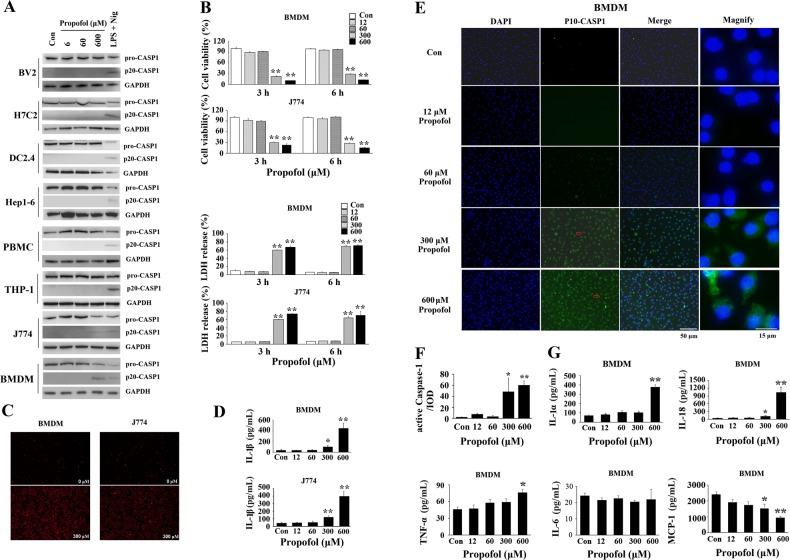
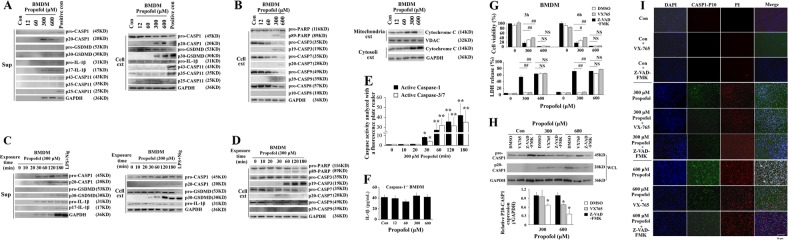
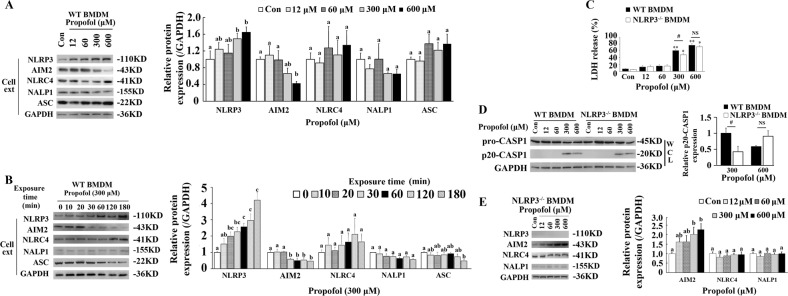
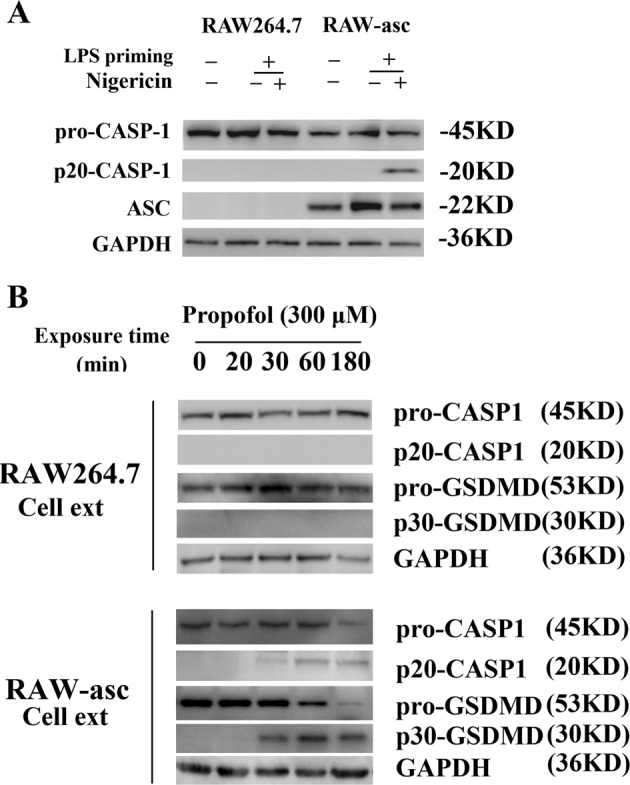
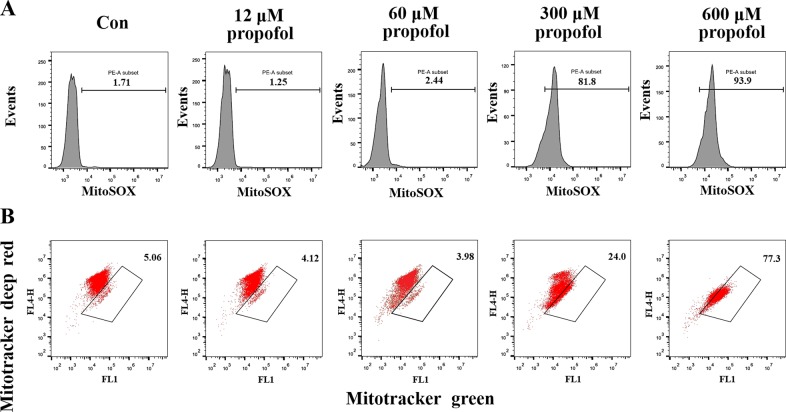
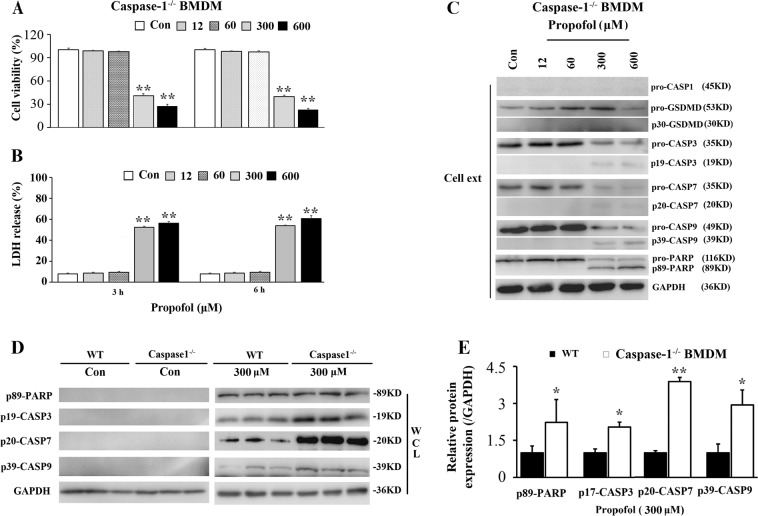
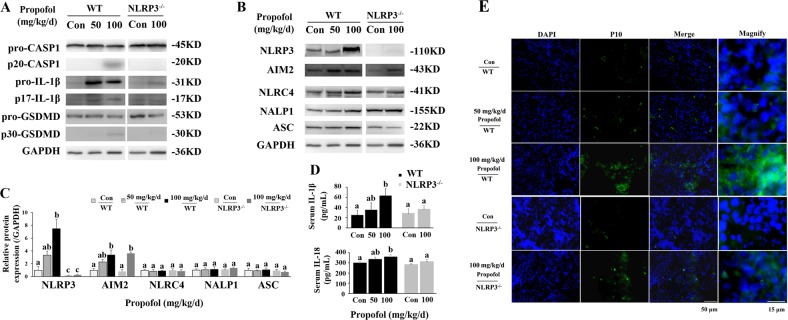
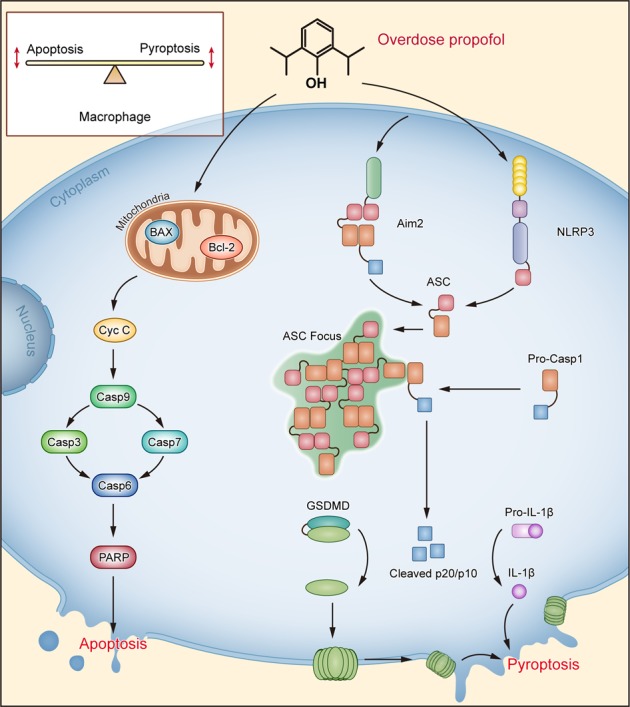
Propofol infusion syndrome (PRIS) is an uncommon life-threatening complication observed most often in patients receiving high-dose propofol. High-dose propofol treatment with a prolonged duration can damage the immune system. However, the associated molecular mechanisms remain unclear. An increasing number of clinical and experimental observations have demonstrated that tissue-resident macrophages play a critical role in immune regulation during anaesthesia and procedural sedation. Since the inflammatory response is essential for mediating propofol-induced cell death and proinflammatory reactions, we hypothesised that propofol overdose induces macrophage pyroptosis through inflammasomes. Using primary cultured bone marrow-derived macrophages, murine macrophage cell lines (RAW264.7, RAW-asc and J774) and a mouse model, we investigated the role of NLRP3 inflammasome activation and secondary pyroptosis in propofol-induced cell death. We found that high-dose propofol strongly cleaved caspase-1 but not caspase-11 and biosynthesis of downstream interleukin (IL)-1β and IL-18. Inhibition of caspase-1 activity blocks IL-1β production. Moreover, NLRP3 deletion moderately suppressed cleaved caspase-1 as well as the proportion of pyroptosis, while levels of AIM2 were increased, triggering a compensatory pathway to pyroptosis in NLRP3-/- macrophages. Here, we show that propofol-induced mitochondrial reactive oxygen species (ROS) can trigger NLRP3 inflammasome activation. Furthermore, apoptosis-associated speck-like protein (ASC) was found to mediate NLRP3 and AIM2 signalling and contribute to propofol-induced macrophage pyroptosis. In addition, our work shows that propofol-induced apoptotic initiator caspase (caspase-9) subsequently cleaved effector caspases (caspase-3 and 7), indicating that both apoptotic and pyroptotic cellular death pathways are activated after propofol exposure. Our studies suggest, for the first time, that propofol-induced pyroptosis might be restricted to macrophage through an NLRP3/ASC/caspase-1 pathway, which provides potential targets for limiting adverse reactions during propofol application. These findings demonstrate that propofol overdose can trigger cell death through caspase-1 activation and offer new insights into the use of anaesthetic drugs.
Overview
The claims and statistics of this paper haven’t been checked yet.
Free: it reads the open-access text and checks the first 5 claims that cite a source we can check. Create a free account to check every claim.
Integrity signals
Registry
Cites
Statistics
Figures
Verification
Claims the paper makes
The claims and statistics of this paper haven’t been checked yet.
Free: it reads the open-access text and checks the first 5 claims that cite a source we can check. Create a free account to check every claim.
Claims other papers make about this one
Each is checked against this paper’s own text: does it say what the citing paper says it does?
The source backs part of the claim, not all of it — or backs it for a different population, condition or comparison.
In the citing paper
“The nucleotide-binding domain and leucine-rich repeat protein-3 (NLRP3) inflammasome is one of the largest typical inflammasomes discovered thus far. It is composed of pro-Casp-1 protein, NLRP3, and apoptosis-associated speck-like protein (ASC). 152”
From Major depressive disorder: hypothesis, mechanism, prevention and treatment (2024) · cites this paper as [152]
Experimental — accuracy not yet measuredThe source backs part of the claim, not all of it — or backs it for a different population, condition or comparison.
In the citing paper
“The classical pathway of cellular pyroptosis is the caspase-1 pathway, which recruits and activates cysteinyl asparagin-1 through NLRP3 inflammasome sensing the danger, which cleaves and activates inflammatory factors such as IL-18, IL-1β and cleaves the N-terminal sequences of the GSDMD so that it binds to the membrane and forms a membrane pore, leading to cellular pyroptosis [51].”
From Picroside II suppresses chondrocyte pyroptosis through MAPK/NF-κB/NLRP3 signaling pathway alleviates osteoarthritis (2024) · cites this paper as [51]
Experimental — accuracy not yet measured
Self-check
Percentages, sums and reported differences re-computed from the paper’s own numbers.
The self-check needs the paper’s full text.
Citations
Cites
A role for mitochondria in nlrp3 inflammasome activation
Zhou, R., Yazdi, A. S., Menu, P., & Tschopp, J. (2011) · Nature · doi:10.1038/nature09663 · Cited by 5,602
Macrophages in Tissue Repair, Regeneration, and Fibrosis
Wynn, T. A., & Vannella, K. M. (2016) · Immunity · doi:10.1016/j.immuni.2016.02.015 · Cited by 4,481
Nakahira, K., Haspel, J. A., Rathinam, V. A. K., Lee, S.-J., Dolinay, T., Lam, H. C., Englert, J. A., Rabinovitch, M., Cernadas, M., Kim, H. P., et al. (2011) · Nature Immunology · doi:10.1038/ni.1980 · Cited by 3,049
Gasdermin D is an executor of pyroptosis and required for interleukin-1β secretion
He, W.-T., Wan, H., Hu, L., Chen, P., Wang, X., Huang, Z., Yang, Z.-H., Zhong, C.-Q., & Han, J. (2015) · Cell Research · doi:10.1038/cr.2015.139 · Cited by 2,517
Oxidized mitochondrial DNA activates the NLRP3 inflammasome during apoptosis
Shimada, K., Crother, T. R., Karlin, J., Dagvadorj, J., Chiba, N., Chen, S., Ramanujan, V. K., Wolf, A. J., Vergnes, L., Ojcius, D. M., et al. (2012) · Immunity · doi:10.1016/j.immuni.2012.01.009 · Cited by 2,282
AIM2 activates the inflammasome and cell death in response to cytoplasmic DNA
Fernandes-Alnemri, T., Yu, J.-W., Datta, P., Wu, J., & Alnemri, E. S. (2009) · Nature · doi:10.1038/nature07710 · Cited by 1,831
Satoh, T., Takeuchi, O., Vandenbon, A., Yasuda, K., Tanaka, Y., Kumagai, Y., Miyake, T., Matsushita, K., Okazaki, T., Saitoh, T., et al. (2010) · Nature Immunology · doi:10.1038/ni.1920 · Cited by 1,156
Wree, A., Eguchi, A., McGeough, M. D., Pena, C. A., Johnson, C. D., Canbay, A., Hoffman, H. M., & Feldstein, A. E. (2014) · Hepatology · doi:10.1002/hep.26592 · Cited by 945
Mitochondrial Cardiolipin Is Required for Nlrp3 Inflammasome Activation
Iyer, S. S., He, Q., Janczy, J. R., Elliott, E. I., Zhong, Z., Olivier, A. K., Sadler, J. J., Knepper-Adrian, V., Han, R., Qiao, L., et al. (2013) · Immunity · doi:10.1016/j.immuni.2013.08.001 · Cited by 931
Initiation and perpetuation of NLRP 3 inflammasome activation and assembly
Elliott, E. I., & Sutterwala, F. S. (2015) · Immunological Reviews · doi:10.1111/imr.12286 · Cited by 821
The pathophysiology of propofol infusion syndrome: a simple name for a complex syndrome
Vasile, B., Rasulo, F., Candiani, A., & Latronico, N. (2003) · Intensive Care Medicine · doi:10.1007/s00134-003-1905-x · Cited by 568
Disposition of Propofol Administered as Constant Rate Intravenous Infusions in Humans
Gepts, E., Camu, F., Cockshott, I. D., & Douglas, E. J. (1987) · Anesthesia & Analgesia · doi:10.1213/00000539-198712000-00010 · Cited by 456
Ex vivo programmed macrophages ameliorate experimental chronic inflammatory renal disease
Wang, Y., Wang, Y. P., Zheng, G., Lee, V. W. S., Ouyang, L., Chang, D. H. H., Mahajan, D., Coombs, J., Wang, Y. M., Alexander, S. I., et al. (2007) · Kidney International · doi:10.1038/sj.ki.5002275 · Cited by 369
Grace, P. M., Strand, K. A., Galer, E. L., Urban, D. J., Wang, X., Baratta, M. V., Fabisiak, T. J., Anderson, N. D., Cheng, K., Greene, L. I., et al. (2016) · Proceedings of the National Academy of Sciences · doi:10.1073/pnas.1602070113 · Cited by 367
Anesthetics, immune cells, and immune responses
Kurosawa, S., & Kato, M. (2008) · Journal of Anesthesia · doi:10.1007/s00540-008-0626-2 · Cited by 366
T cells dampen innate immune responses through inhibition of NLRP1 and NLRP3 inflammasomes
Guarda, G., Dostert, C., Staehli, F., Cabalzar, K., Castillo, R., Tardivel, A., Schneider, P., & Tschopp, J. (2009) · Nature · doi:10.1038/nature08100 · Cited by 251
Vince, J. E., De Nardo, D., Gao, W., Vince, A. J., Hall, C., McArthur, K., Simpson, D., Vijayaraj, S., Lindqvist, L. M., Bouillet, P., et al. (2018) · Cell Reports · doi:10.1016/j.celrep.2018.10.103 · Cited by 235
Self-citationKrajčová, A., Waldauf, P., Anděl, M., & Duška, F. (2015) · Critical Care · doi:10.1186/s13054-015-1112-5 · Cited by 221
Wang, Z., Meng, S., Cao, L., Chen, Y., Zuo, Z., & Peng, S. (2018) · Journal of Neuroinflammation · doi:10.1186/s12974-018-1137-1 · Cited by 208
Liu, Y.-G., Chen, J.-K., Zhang, Z.-T., Ma, X.-J., Chen, Y.-C., Du, X.-M., Liu, H., Zong, Y., & Lu, G.-C. (2017) · Cell Death & Disease · doi:10.1038/cddis.2016.460 · Cited by 188
Self-citationLeslie, K., Sessler, D. I., Schroeder, M., & Walters, K. (1995) · Anesthesia & Analgesia · doi:10.1097/00000539-199512000-00025 · Cited by 174
Kotani, N., Hashimoto, H., Sessler, D. I., Yasuda, T., Ebina, T., Muraoka, M., & MATSUKI, A. (1999) · Anesthesia & Analgesia · doi:10.1097/00000539-199911000-00032 · Cited by 171
Schilling, T., Kozian, A., Kretzschmar, M., Huth, C., Welte, T., Bühling, F., Hedenstierna, G., & Hachenberg, T. (2007) · British Journal of Anaesthesia · doi:10.1093/bja/aem184 · Cited by 167
Anti‐Inflammatory and Antioxidative Effects of Propofol on Lipopolysaccharide‐Activated Macrophages
CHEN, R., CHEN, T., CHEN, T., LIN, L., CHANG, C., CHANG, H., & WU, C. (2005) · Annals of the New York Academy of Sciences · doi:10.1196/annals.1338.030 · Cited by 147
Possible Pathogenic Mechanism of Propofol Infusion Syndrome Involves Coenzyme Q
Vanlander, A. V., Okun, J. G., Jaeger, A. D., Smet, J., Latter, E. D., Paepe, B. D., Dacremont, G., Wuyts, B., Vanheel, B., Paepe, P. D., et al. (2014) · Anesthesiology · doi:10.1097/aln.0000000000000484 · Cited by 109
Chen, R., Wu, C., Chang, H.-C., Wu, G., Lin, Y., Sheu, J., & Chen, T.-L. (2003) · Anesthesiology · doi:10.1097/00000542-200305000-00021 · Cited by 105
Propofol Inhibits NLRP3 Inflammasome and Attenuates Blast-Induced Traumatic Brain Injury in Rats
Ma, J., Xiao, W., Wang, J., Wu, J., Ren, J., Hou, J., Gu, J., Fan, K., & Yu, B. (2016) · Inflammation · doi:10.1007/s10753-016-0446-8 · Cited by 90
Anaesthetic Impairment of Immune Function Is Mediated via GABAA Receptors
Wheeler, D. W., Thompson, A. J., Corletto, F., Reckless, J., Loke, J. C. T., Lapaque, N., Grant, A. J., Mastroeni, P., Grainger, D. J., Padgett, C. L., et al. (2011) · PLoS ONE · doi:10.1371/journal.pone.0017152 · Cited by 79
Satoh, T., Kambe, N., & Matsue, H. (2013) · Cell Death & Disease · doi:10.1038/cddis.2013.169 · Cited by 73
Twaroski, D. M., Yan, Y., Žaja, I., Clark, E., Bosnjak, Z. J., & Bai, X. (2015) · Anesthesiology · doi:10.1097/aln.0000000000000857 · Cited by 66
Ye, Z., Li, Q., Guo, Q., Xiong, Y., Guo, D., Hong, Y., & Shu, Y. (2017) · Neuropharmacology · doi:10.1016/j.neuropharm.2017.09.035 · Cited by 60
Sanders, M. G., Parsons, M. J., Howard, A. G. A., Liu, J., Fassio, S. R., Martinez, J. A., & Bouchier-Hayes, L. (2015) · Cell Death & Disease · doi:10.1038/cddis.2015.186 · Cited by 46
Milanović, D., Pešić, V., Lončarević‐Vasiljković, N., Pavković, Ž., Popić, J., Kanazir, S., Jevtović‐Todorović, V., & Ruždijić, S. (2016) · Neurotoxicity Research · doi:10.1007/s12640-016-9629-1 · Cited by 45
Death related to a recreational abuse of propofol at therapeutic dose range
Roussin, A., Mirepoix, M., Lassabe, G., Dumestre-Toulet, V., Gardette, V., Montastruc, J., & Lapeyre‐Mestre, M. (2006) · British Journal of Anaesthesia · doi:10.1093/bja/ael168 · Cited by 44
Propofol Related Infusion Syndrome: Ultrastructural Evidence for a Mitochondrial Disorder
Vollmer, J.-P., Haen, S., Wolburg, H., Lehmann, R., Steiner, J., Reddersen, S., Fend, F., & Fallier‐Becker, P. (2017) · Critical Care Medicine · doi:10.1097/ccm.0000000000002802 · Cited by 42
Hsing, C.-H., Chen, Y.-H., Chen, C.-L., Huang, W.-C., Lin, M.-C., Tseng, P.-C., Wang, C.-Y., Tsai, C.-C., Choi, P.-C., & Lin, C.-F. (2012) · Anesthesiology · doi:10.1097/aln.0b013e31824af68a · Cited by 38
Hsu, S., Jan, C., & Liang, W. (2017) · Environmental Toxicology · doi:10.1002/tox.22458 · Cited by 24
Liang, W.-Z., Jan, C., & Lu, C. (2012) · Toxicology in Vitro · doi:10.1016/j.tiv.2012.04.024 · Cited by 20
III. Perioperative immunity: is there an anaesthetic hangover?
Sanders, R. D. (2014) · British Journal of Anaesthesia · doi:10.1093/bja/aet431 · Cited by 6
Vandenbrande, J. (2015) · Critical Care · doi:10.1186/cc14560 · Cited by 5
Dexmedetomidine alleviates LPS-induced pyroptosis in astrocytes in vitro
Sun, Y., Zhao, H., Wang, D., & Ma, D. (2018) · British Journal of Anaesthesia · doi:10.1016/j.bja.2017.11.026 · Cited by 5
Kotani, N., Hashimoto, H., Sessler, D. I., Yasuda, T., Ebina, T., Muraoka, M., & MATSUKI, A. (1999) · Anesthesia & Analgesia · doi:10.1213/00000539-199911000-00032
Cited by
Major depressive disorder: hypothesis, mechanism, prevention and treatment
Cui, L., Li, S., Wang, S., Wu, X., Liu, Y., Yu, W., Wang, Y., Tang, Y., Xia, M., & Li, B. (2024) · Signal Transduction and Targeted Therapy · doi:10.1038/s41392-024-01738-y · Cited by 1,244
“152 The sensitization of the NLRP3 in fl ammasome and the suppression of BDNF synthesis result in MDD. 153 In our research, SD is found to reduce BDNF levels and induce depressive-like behaviors in the sorted astrocytes from GFAP-GFP transgenic mice by activating the NLRP3 in fl ammasome.”
BackgroundLi, S., Sun, Y., Song, M., Song, Y., Fang, Y., Zhang, Q., Li, X., Song, N., Ding, J., Lu, M., et al. (2021) · JCI Insight · doi:10.1172/jci.insight.146852 · Cited by 321
“The NLRP3 inflammasome is one of the largest and most representative inflammasomes to date, contains NLRP3, apoptosis-associated speck-like protein (ASC), and pro–Casp-1 protein (20).”
BackgroundZhang, Y., Yin, K., Wang, D., Wang, Y., Lu, H., Zhao, H., & Xing, M. (2022) · Science of The Total Environment · doi:10.1016/j.scitotenv.2022.156727 · Cited by 307
He, J., Liu, D., Zhao, L., Zhou, D., Rong, J., Zhang, L., & Xia, Z. (2022) · Experimental and Therapeutic Medicine · doi:10.3892/etm.2022.11357 · Cited by 265
Self-citationMechanisms of PANoptosis and relevant small-molecule compounds for fighting diseases
Wang, L., Zhu, Y., Zhang, L., Guo, L., Wang, X., Pan, Z., Jiang, X., Wu, F., & He, G. (2023) · Cell Death & Disease · doi:10.1038/s41419-023-06370-2 · Cited by 183
“In addition, after NLRP3 and caspase-8 are activated, pyroptosome ASC can be recruited and promote self-activation of in fl ammatory caspase-1 [22, 23], facilitating pyroptosis and interleukin-1 β (IL-1 β ) secretion and promoting the ampli fi cation of in fl ammation.”
Background
Metadata
- Authors
- Sun, L., Ma, W., Gao, W., Xing, Y., Chen, L., Xia, Z., Zhang, Z., & Dai, Z.
- Affiliations
- Jinan University (CN)
- University of Hong Kong (HK)
- Corresponding author
- Dai, Zhongliang
- Venue
- Cell Death & Disease
- Published
- 2019-07-17
- Volume
- 10
- Issue
- 8
- Pages
- 542-542
- ISSN
- 2041-4889 (ISSN-L)
- PMC
- PMC6637184
- OpenAlex
- W2961112538
- Cited by
- 296
- References
- 41
- Citations by year
- 2026: 40 · 2025: 54 · 2024: 64 · 2023: 55 · 2022: 42 · 2021: 26 · 2020: 13 · 2019: 2
- FWCI
- 6.86
- Type
- journal article
- Language
- en
- Open access
- gold
- doi.org
- Licence
- cc-by
- creativecommons.org/licenses/by/4.0 (tdm)
- creativecommons.org/licenses/by/4.0 (vor)
- Locations
- Cell Death and Disease (publishedVersion, cc-by)
- Europe PMC (PubMed Central) (publishedVersion, cc-by)
- PubMed Central (publishedVersion, cc-by)
- PubMed (publishedVersion)
- DOAJ (DOAJ: Directory of Open Access Journals) (submittedVersion)
- Funders
- Shenzhen Science and Technology Innovation Commission (JCYJ20170307100314152, SZXJ2017029, JCYJ20170307095506831)
- China Postdoctoral Science Foundation (2017M620402, 2018T110928)
- National Natural Science Foundation of China (81703263, 81600320)
- Topics
- Life Sciences › Biochemistry, Genetics and Molecular Biology › Molecular Biology › Inflammasome and immune disorders
- Life Sciences › Neuroscience › Developmental Neuroscience › Anesthesia and Neurotoxicity Research
- Health Sciences › Medicine › Anesthesiology and Pain Medicine › Anesthesia and Sedative Agents
- Keywords
- macrophage pyroptosis, NLRP3 inflammasome, caspase-1, ASC, AIM2, IL-1β, IL-18, mitochondrial reactive oxygen species, caspase-9, caspase-3, caspase-7, bone marrow-derived macrophages
- MeSH terms
- RAW 264.7 Cells, Pyroptosis, NLR Family, Pyrin Domain-Containing 3 Protein, THP-1 Cells, Animals, Cell Survival, Humans, Macrophages, Male, Mice, Inbred C57BL, Transfection, Signal Transduction, Propofol, Caspase 1, Mice, CARD Signaling Adaptor Proteins, Gene Knockout Techniques, Inflammasomes
About these checks
Registry, retraction, Cites and statistics results are computed, not judged, with one exception: a printed reference that no index lists is read once by a model before it counts as a citation error. Claims are extracted by a model and kept only when their quote appears verbatim in the text; each cited source is then checked, with a model’s help, for whether it says what the claim relies on. Those verdicts can be wrong — read the claim’s quote and the cited source before relying on one.
Statistics and arithmetic are recomputed, not judged.
Confidence bands are shown only for fields calibrated on our annotated test set. None is calibrated yet, so no band is shown.
What counts as a claim ›How we measure confidence ›How we check this ›
Are you an author, or do you see a problem with this page? Request a review
Data sources
Bibliographic data: Semantic Scholar, OpenAlex, Crossref.
Contains information from the Semantic Scholar Academic Graph Datasets, made available under the ODC Attribution License (ODC-BY 1.0).
Semantic Scholar’s data is described in: Kinney, R., et al. (2023). The Semantic Scholar Open Data Platform. arXiv:2301.10140.
