

LPS-induced macrophage HMGB1-loaded extracellular vesicles trigger hepatocyte pyroptosis by activating the NLRP3 inflammasome
Open accessThe DOI matches its Crossref record; 28 of the 28 references it cites were found in a registry or an index.
Abstract
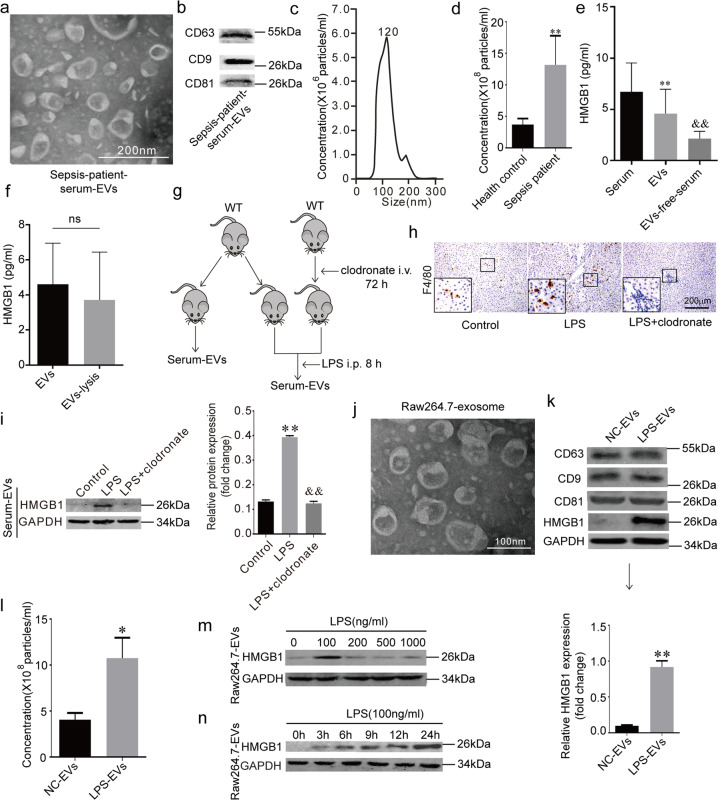
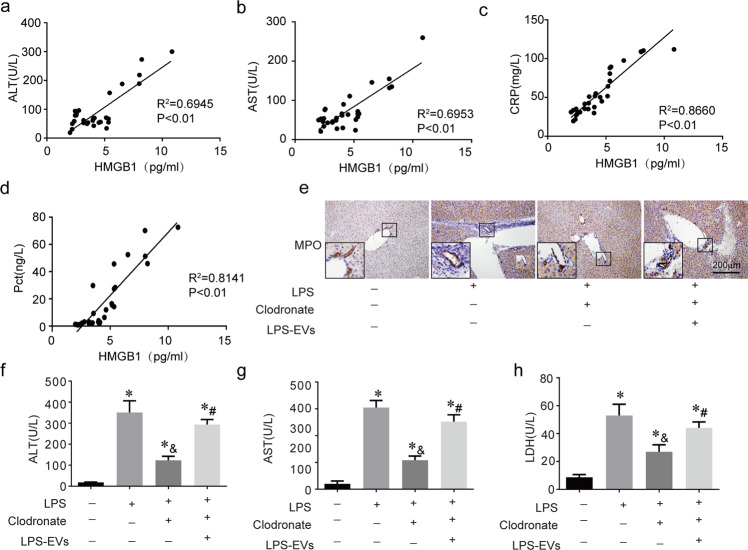
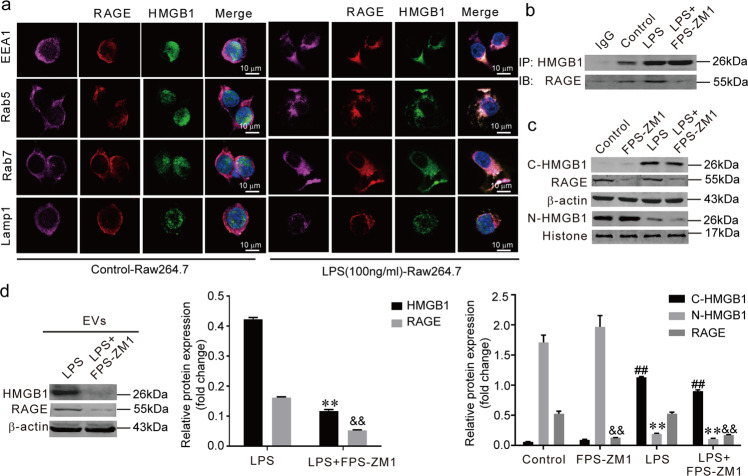
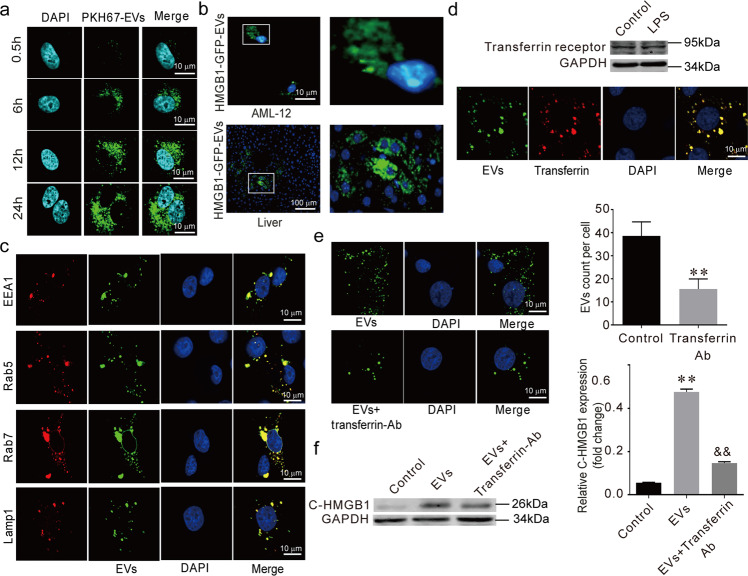
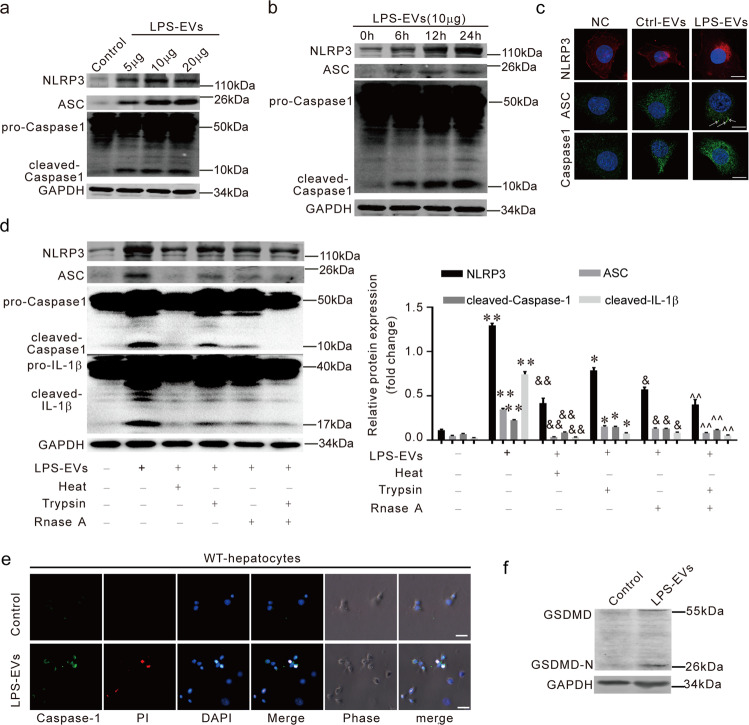
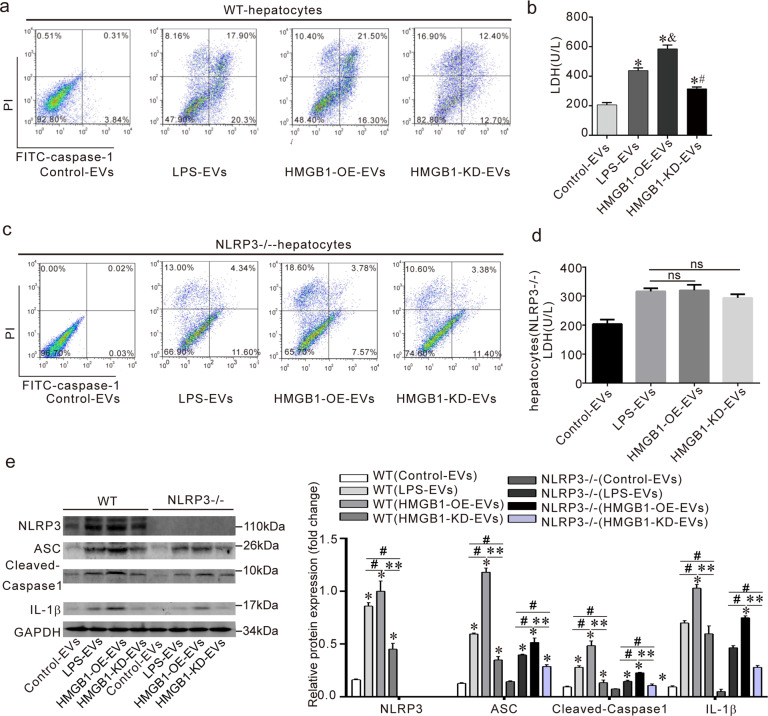
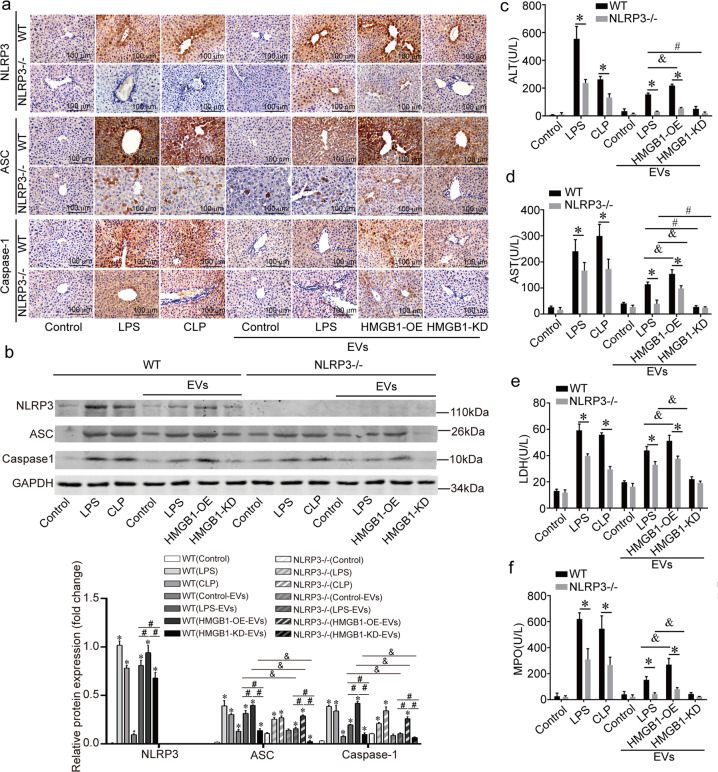
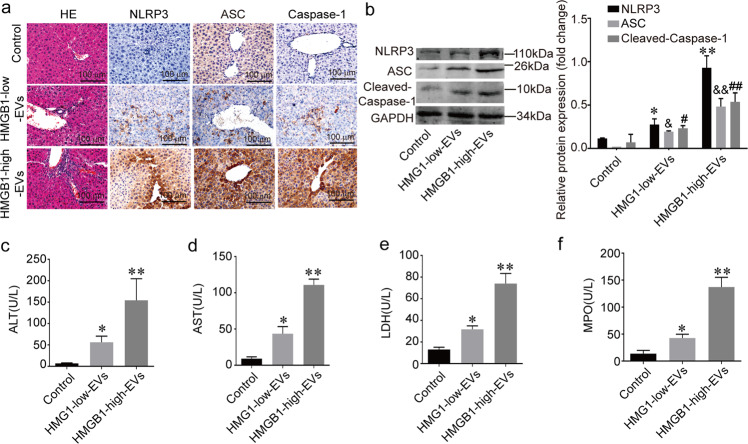
Extracellular vesicles (EVs) have emerged as important vectors of intercellular dialogue. High mobility group box protein 1 (HMGB1) is a typical damage-associated molecular pattern (DAMP) molecule, which is cytotoxic and leads to cell death and tissue injury. Whether EVs are involved in the release of HMGB1 in lipopolysaccharide (LPS)-induced acute liver injuries need more investigation. EVs were identified by transmission electron microscopy, nanoparticle tracking analysis (NTA), and western blotting. The co-localization of HMGB1, RAGE (receptor for advanced glycation end-products), EEA1, Rab5, Rab7, Lamp1 and transferrin were detected by confocal microscopy. The interaction of HMGB1 and RAGE were investigated by co-immunoprecipitation. EVs were labeled with the PKH67 and used for uptake experiments. The pyroptotic cell death was determined by FLICA 660-YVAD-FMK. The expression of NLRP3 (NOD-like receptor family pyrin domain containing 3) inflammasomes were analyzed by western-blot or immunohistochemistry. Serum HMGB1, ALT (alanine aminotransferase), AST (aspartate aminotransferase), LDH (lactate dehydrogenase) and MPO (myeloperoxidase) were measured using a commercial kit. The extracellular vesicle HMGB1 was detected in the serums of sepsis patients. Macrophages were found to contribute to HMGB1 release through the EVs. HMGB1-RAGE interactions participated in the loading of HMGB1 into the EVs. These EVs shuttled HMGB1 to target cells by transferrin-mediated endocytosis leading to hepatocyte pyroptosis by the activation of NLRP3 inflammasomes. Moreover, a positive correlation was verified between the sepsis serum EVs-HMGB1 level and clinical liver damage. This finding provides insights for the development of novel diagnostic and therapeutic strategies for acute liver injuries.
Overview
The claims and statistics of this paper haven’t been checked yet.
Free: it reads the open-access text and checks the first 5 claims that cite a source we can check. Create a free account to check every claim.
Integrity signals
Registry
Cites
Statistics
Figures
Verification
Claims the paper makes
The claims and statistics of this paper haven’t been checked yet.
Free: it reads the open-access text and checks the first 5 claims that cite a source we can check. Create a free account to check every claim.
Claims other papers make about this one
Each is checked against this paper’s own text: does it say what the citing paper says it does?
The check wasn’t confident either way, so it gives no verdict — never disputed.
In the citing paper
“In the context of OA pathogenesis, it is observed that Damage-associated molecular patterns (DAMPs) accumulate within the articular space [20].”
From Picroside II suppresses chondrocyte pyroptosis through MAPK/NF-κB/NLRP3 signaling pathway alleviates osteoarthritis (2024) · cites this paper as [20]
Experimental — accuracy not yet measured
Self-check
Percentages, sums and reported differences re-computed from the paper’s own numbers.
The self-check needs the paper’s full text.
Citations
Cites
Shedding light on the cell biology of extracellular vesicles
van Niel, G., D'Angelo, G., & Raposo, G. (2018) · Nature Reviews Molecular Cell Biology · doi:10.1038/nrm.2017.125 · Cited by 8,369 · cited 2×
“INTRODUCTION Extracellular vesicles (EVs) have emerged as important vectors of intercellular communication [1, 2].”
BackgroundCleavage of GSDMD by inflammatory caspases determines pyroptotic cell death
Shi, J., Zhao, Y., Wang, K., Shi, X., Wang, Y., Huang, H., Zhuang, Y., Cai, T., Wang, F., & Shao, F. (2015) · Nature · doi:10.1038/nature15514 · Cited by 6,659 · cited 1×
“Gasdermin D (GSDMD) is a substrate for both caspase-1 and caspase-11/4/5 [16].”
BackgroundBiogenesis, Secretion, and Intercellular Interactions of Exosomes and Other Extracellular Vesicles
Colombo, M., Raposo, G., & Théry, C. (2014) · Annual Review of Cell and Developmental Biology · doi:10.1146/annurev-cellbio-101512-122326 · Cited by 6,186 · cited 2×
“INTRODUCTION Extracellular vesicles (EVs) have emerged as important vectors of intercellular communication [1, 2].”
BackgroundSystemically Injected Exosomes Targeted to EGFR Deliver Antitumor MicroRNA to Breast Cancer Cells
Ohno, S.-I., Takanashi, M., Sudo, K., Ueda, S., Ishikawa, A., Matsuyama, N., Fujita, K., Mizutani, T., Ohgi, T., Ochiya, T., et al. (2013) · Molecular Therapy · doi:10.1038/mt.2012.180 · Cited by 1,666 · cited 1×
“For instance, exosomes engineered to express the EGFR ligand on their surfaces preferentially bind to EGFR-expressing breast cancer cells and successfully deliver microRNA to recipient cells [19].”
BackgroundThe ESCRT machinery in endosomal sorting of ubiquitylated membrane proteins
Raiborg, C., & Stenmark, H. (2009) · Nature · doi:10.1038/nature07961 · Cited by 1,359 · cited 1×
“Studies have revealed that the ESCRT machinery is essential for controlling specific protein sorting into intraluminal vesicles (ILVs) within the first step of ubiquitination [17, 18].”
BackgroundMethodological Guidelines to Study Extracellular Vesicles
Coumans, F. A. W., Brisson, A. R., Buzas, E. I., Dignat-George, F., Drees, E. E. E., El-Andaloussi, S., Emanueli, C., Gasecka, A., Hendrix, A., Hill, A. F., et al. (2017) · Circulation Research · doi:10.1161/circresaha.117.309417 · Cited by 1,017
Kang, R., Chen, R., Zhang, Q., Hou, W., Wu, S., Cao, L., Huang, J., Yu, Y., Fan, X.-G., Yan, Z., et al. (2014) · Molecular Aspects of Medicine · doi:10.1016/j.mam.2014.05.001 · Cited by 956 · cited 2×
“Previous studies have highlighted the function of HMGB1 through the binding of receptors to activate pro-inflammatory signaling [6].”
BackgroundWree, A., Eguchi, A., McGeough, M. D., Pena, C. A., Johnson, C. D., Canbay, A., Hoffman, H. M., & Feldstein, A. E. (2014) · Hepatology · doi:10.1002/hep.26592 · Cited by 945
The Endotoxin Delivery Protein HMGB1 Mediates Caspase-11-Dependent Lethality in Sepsis
Deng, M., Tang, Y., Li, W., Wang, X., Zhang, R., Zhang, X., Zhao, X., Liu, J., Tang, C., Liu, Z., et al. (2018) · Immunity · doi:10.1016/j.immuni.2018.08.016 · Cited by 591 · cited 1×
“Mechanistically, hepatocyte-released HMGB1 bound LPS and targeted its internalization into the lysosomes of macrophages and endothelial cells via the receptor for advanced glycation end-products (RAGE) [21].”
BackgroundSelf-citationMechanisms of inflammasome activation: recent advances and novel insights
Vanaja, S. K., Rathinam, V. A. K., & Fitzgerald, K. A. (2015) · Trends in Cell Biology · doi:10.1016/j.tcb.2014.12.009 · Cited by 499 · cited 1×
“NLRP3 activation causes the activation of caspase-1, which cleaves pro-IL1β and pro-IL-18 to their mature forms and induces cell pyroptosis [12].”
Background
Research works printed but not linked: 1
- Deng M Tang Y Li W Wang X Zhang R Zhang X The endotoxin delivery protein HMGB1 mediates caspase-11-dependent lethality in sepsis Immunity. 2018 49 740 53 10.1016/j.immuni.2018.08.016 30314759 PMC6300139 · DOI · Paper page
Cited by
Items 101–125 of 125
Adnan, M., Khan, K. U., Raza, S., Rehman, S. R., & Ahmed, M. (2025) · Journal of Gastroenterology and Hepatology · doi:10.1111/jgh.16979
“These HMGB1 activated extracellular vesicles subsequently trigger NLRP3 activation [5].”
Zhang, D., Tang, J., Liu, L., Zhao, C., Feng, S., Wang, X., Ding, H., & Li, Y. (2025) · International Journal of Molecular Sciences · doi:10.3390/ijms26199392
“However, the damaged cells in the disease state release EVs that have harmful effects on normal recipient cells, such as EVs from liver injury increasing recipient cell mortality [36].”
Self-citationShao, B., Xu, Y., Jia, M., Li, C.-X., & Gong, Z.-C. (2023) · Figshare · doi:10.6084/m9.figshare.22623533
Self-citationZhu, H., Liu, Q., Meng, Q., Zhang, L., Ju, S., Lang, J., Zhu, D., Chen, Y., Aishan, N., Ouyang, X., et al. (2024) · Figshare · doi:10.6084/m9.figshare.26943948
Kaya, Ζ., Belder, N., Sever, M., Dönmez‐Demir, B., Erdener, Ş. E., Bozbeyoglu, N., Bagci, C., Eren‐Koçak, E., Yemişçi, M., Karataş, H., et al. (2023) · Figshare · doi:10.6084/m9.figshare.24792331
Kaya, Ζ., Belder, N., Sever, M., Dönmez‐Demir, B., Erdener, Ş. E., Bozbeyoglu, N., Bagci, C., Eren‐Koçak, E., Yemişçi, M., Karataş, H., et al. (2024) · Figshare · doi:10.6084/m9.figshare.24792405
Zhu, H., Liu, Q., Meng, Q., Zhang, L., Ju, S., Lang, J., Zhu, D., Chen, Y., Aishan, N., Ouyang, X., et al. (2024) · Figshare · doi:10.6084/m9.figshare.26943951
Zhu, H., Liu, Q., Meng, Q., Zhang, L., Ju, S., Lang, J., Zhu, D., Chen, Y., Aishan, N., Ouyang, X., et al. (2024) · Figshare · doi:10.6084/m9.figshare.26943954
Zhou, Q.-N., Lei, R.-E., Liang, Y.-X., Li, S.-Q., Guo, X.-W., & Hu, B.-L. (2023) · Figshare · doi:10.6084/m9.figshare.23250678
Zhu, H., Liu, Q., Meng, Q., Zhang, L., Ju, S., Lang, J., Zhu, D., Chen, Y., Aishan, N., Ouyang, X., et al. (2024) · Figshare · doi:10.6084/m9.figshare.26943957
Zhu, H., Liu, Q., Meng, Q., Zhang, L., Ju, S., Lang, J., Zhu, D., Chen, Y., Aishan, N., Ouyang, X., et al. (2024) · Figshare · doi:10.6084/m9.figshare.26943960
Matni, M. Y. A., Belvitch, P. G., Dudek, S. M., & Letsiou, E. (2026) · Comprehensive physiology · doi:10.1002/cph4.70179
Flis, W., Wartęga, M., Góra, T., & Socha, M. W. (2026) · International Journal of Molecular Sciences · doi:10.3390/ijms27146344
“Following its release into the extracellular space, HMGB1 acts as a DAMP that promotes NLRP3 activation and subsequent IL-1 β production, thereby amplifying local inflammatory signaling [128,129].”
You, Y., Yin, Z., Sun, C., Zhang, J., Li, X., Min, H., Chen, J., & Li, C. R. (2026) · Chemico-Biological Interactions · doi:10.1016/j.cbi.2026.112293
Self-citationJammoul, D., Ajibuwa, F., Jammoul, M., Schlosser‐Hupf, S., Müller, M., & El‐Najjar, N. (2026) · Frontiers in Pharmacology · doi:10.3389/fphar.2026.1784272
“Notably, among the four lncRNAs, only UCA1 has been linked to oxaliplatin sensitivity in both hepatocellular carcinoma (Wang et al., 2021) and CRC (Sun et al., 2019).”
Melatonin Attenuates Burn-Wound Progression by Inhibiting Inflammation Via Mitophagy-Related Pathway
Weixue, J. I. N., Ren, D., Ho, C., Yu, M., & Guo, S. (2026) · Journal of Burn Care & Research · doi:10.1093/jbcr/irag132
Duan, X., Ma, P., Ao, X., Li, X., Huang, J., & Song, L. (2026) · Frontiers in Immunology · doi:10.3389/fimmu.2026.1933734
Self-citationXin-Ru, L. Y. U., Xu, S., Su, N., Lin, M., Zhao, Z.-Y., Xu, Z.-H., Li, X., Lu, Z.-H., Wei, T.-T., Zhang, S., et al. (2026) · Antioxidants · doi:10.3390/antiox15091079
“Macrophages can also contribute to hepatocyte death through extracellular traps [10] and secretory vesicles [11].”
Self-citationSeol, A., Jeong, J. S., Kim, J. E., Song, H. J., Lim, S. J., Wang, S. H., Ryu, Y. E., Kim, Y. R., Yun, W., An, B., et al. (2026) · Experimental Eye Research · doi:10.1016/j.exer.2026.111231
Zheng, Z., Liu, Q., Chen, X., Huang, M., Ye, Q., & Chen, M. (2026) · Peptides · doi:10.1016/j.peptides.2026.171520
Xie, Z., Yang, Z., Zheng, L., Wu, P., Chen, S., Ye, X., & Gao, Y. (2026) · Food Science & Nutrition · doi:10.1002/fsn3.72300
“These DAMPs, encompassing extracellular HMGB1, engage pattern recognition receptors to initiate nuclear factor-κB signaling and upregulate transcription of NLRP3 and proinflammatory cytokines, thereby establishing the priming signal for NLRP3 inflammasome activation (Wang et al. 2021).”
Fulminant Necrotizing Pancreatitis, A Sustained Avalanche
Kiss, S. F. (2025) · American Journal of Biomedical Science & Research · doi:10.34297/ajbsr.2025.26.003409
Cao, Y., Gao, Q., Wang, W., Fan, Z., Wang, J., & Wu, W. (2026) · Biology · doi:10.3390/biology15211930
Self-citationHe, J., Cai, J., Shi, X., Chen, J., Liu, D., Zhang, N., & Jin, Y. (2026) · Biology · doi:10.3390/biology15211959
Yuan, Y., Zhang, Z., Zhang, X., 葛逸玲, Ji, J., Guo, R., Zhang, R., Huoyan, 粱. L., & Sun, T. (2026) · Extracellular Vesicles and Circulating Nucleic Acids · doi:10.20517/evcna.168
Metadata
- Authors
- Wang, G., Jin, S., Huang, W., Li, Y., Wang, J., Ling, X., Huang, Y., Hu, Y., Li, C., Meng, Y., & Li, X.
- Affiliations
- Nanfang Hospital (CN)
- Corresponding author
- Meng, Ying
- Li, Xu
- Venue
- Cell Death Discovery
- Published
- 2021-11-06
- Volume
- 7
- Issue
- 1
- Pages
- 337-337
- ISSN
- 2058-7716 (ISSN-L)
- PMC
- PMC8572226
- OpenAlex
- W3211703389
- Cited by
- 114
- References
- 28
- Citations by year
- 2026: 23 · 2025: 32 · 2024: 22 · 2023: 27 · 2022: 10
- FWCI
- 4.94
- Type
- journal article
- Language
- en
- Open access
- gold
- doi.org
- Licence
- cc-by
- creativecommons.org/licenses/by/4.0 (tdm)
- creativecommons.org/licenses/by/4.0 (vor)
- Locations
- Cell Death Discovery (publishedVersion, cc-by)
- PubMed Central (publishedVersion, cc-by)
- PubMed (publishedVersion)
- DOAJ (DOAJ: Directory of Open Access Journals) (submittedVersion, cc-by-sa)
- Funders
- National Natural Science Foundation of China (No. 81670556, No. 81900581)
- China Postdoctoral Science Foundation (No. F119NF0124)
- Topics
- Life Sciences › Biochemistry, Genetics and Molecular Biology › Molecular Biology › Extracellular vesicles in disease
- Life Sciences › Biochemistry, Genetics and Molecular Biology › Molecular Biology › Inflammasome and immune disorders
- Life Sciences › Biochemistry, Genetics and Molecular Biology › Clinical Biochemistry › Advanced Glycation End Products research
- Keywords
- extracellular vesicles, HMGB1, NLRP3 inflammasome, pyroptosis, hepatocytes, macrophages, lipopolysaccharide, acute liver injury, sepsis, RAGE, damage-associated molecular patterns, liver injury biomarkers
About these checks
Registry, retraction, Cites and statistics results are computed, not judged, with one exception: a printed reference that no index lists is read once by a model before it counts as a citation error. Claims are extracted by a model and kept only when their quote appears verbatim in the text; each cited source is then checked, with a model’s help, for whether it says what the claim relies on. Those verdicts can be wrong — read the claim’s quote and the cited source before relying on one.
Statistics and arithmetic are recomputed, not judged.
Confidence bands are shown only for fields calibrated on our annotated test set. None is calibrated yet, so no band is shown.
What counts as a claim ›How we measure confidence ›How we check this ›
Are you an author, or do you see a problem with this page? Request a review
Data sources
Bibliographic data: Semantic Scholar, OpenAlex, Crossref.
Contains information from the Semantic Scholar Academic Graph Datasets, made available under the ODC Attribution License (ODC-BY 1.0).
Semantic Scholar’s data is described in: Kinney, R., et al. (2023). The Semantic Scholar Open Data Platform. arXiv:2301.10140.
