

A novel CD4+ CTL subtype characterized by chemotaxis and inflammation is involved in the pathogenesis of Graves’ orbitopathy
Open accessThe DOI matches its Crossref record; 87 of the 87 references it cites were found in a registry or an index.
Abstract
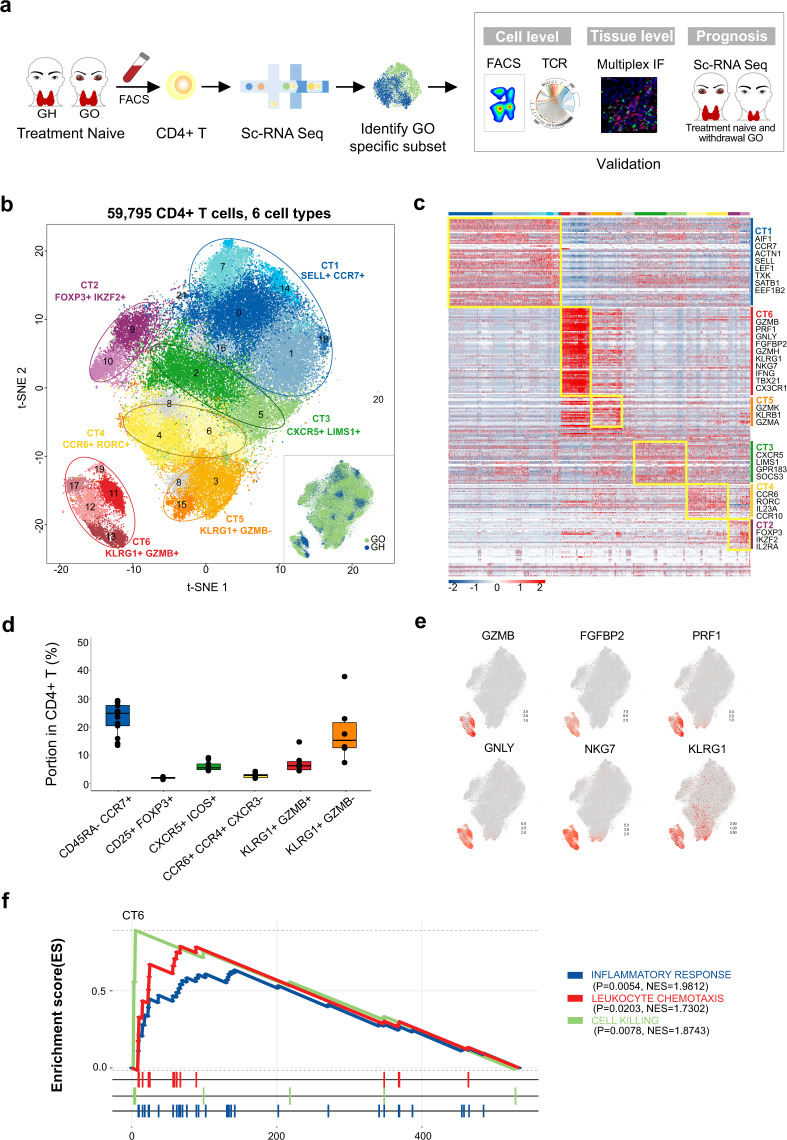
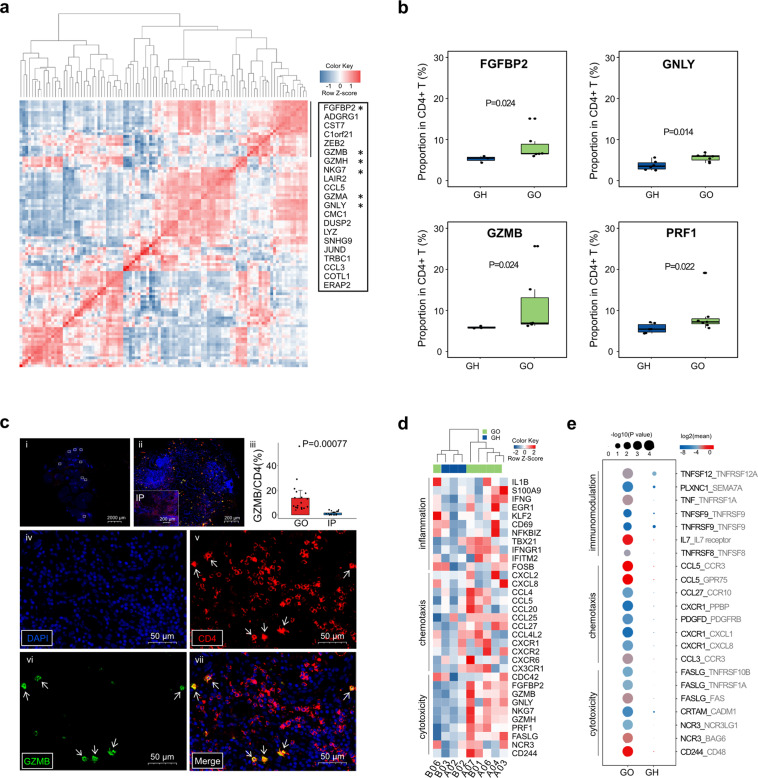
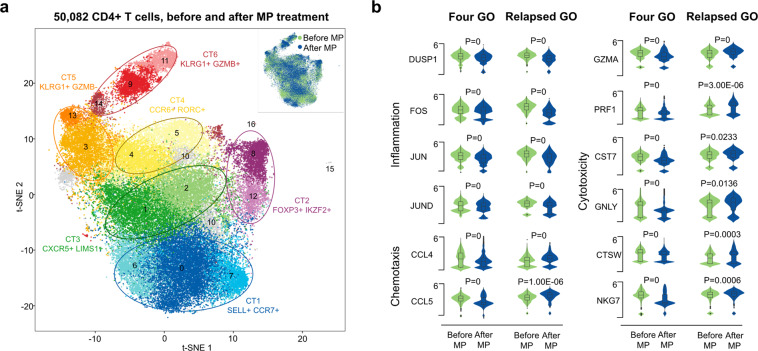
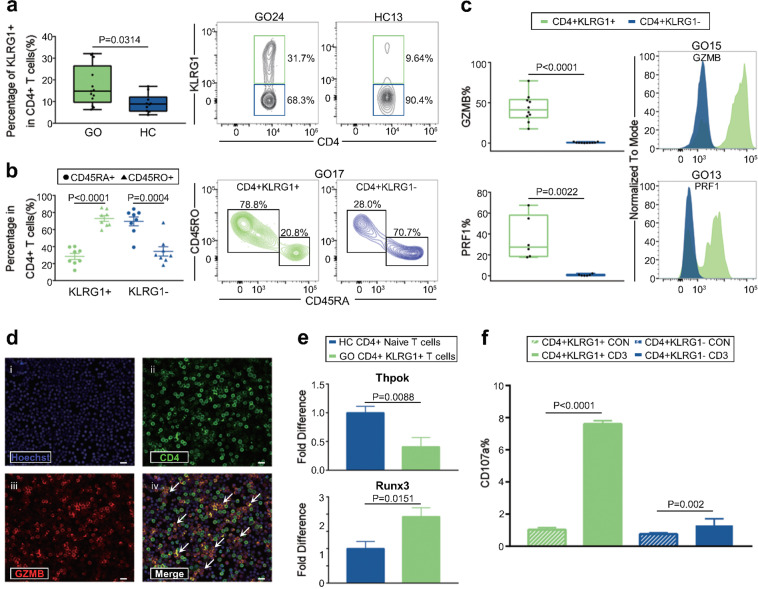
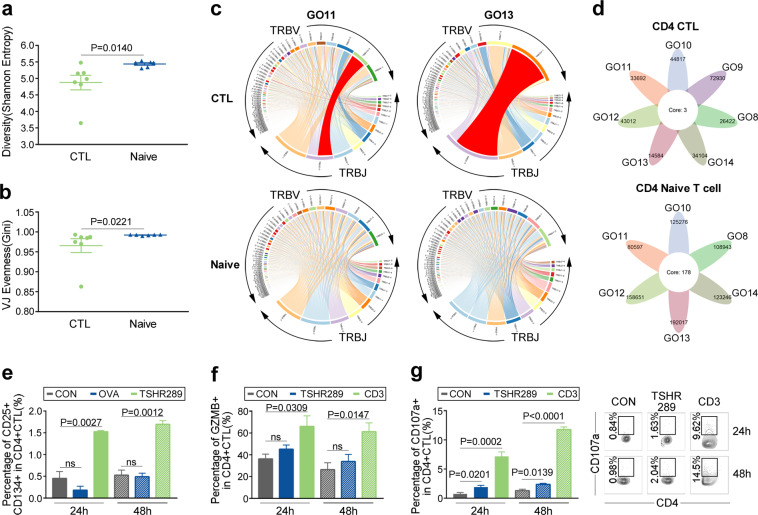
Graves’ orbitopathy (GO), the most severe manifestation of Graves’ hyperthyroidism (GH), is an autoimmune-mediated inflammatory disorder, and treatments often exhibit a low efficacy. CD4+ T cells have been reported to play vital roles in GO progression. To explore the pathogenic CD4+ T cell types that drive GO progression, we applied single-cell RNA sequencing (scRNA-Seq), T cell receptor sequencing (TCR-Seq), flow cytometry, immunofluorescence and mixed lymphocyte reaction (MLR) assays to evaluate CD4+ T cells from GO and GH patients. scRNA-Seq revealed the novel GO-specific cell type CD4+ cytotoxic T lymphocytes (CTLs), which are characterized by chemotactic and inflammatory features. The clonal expansion of this CD4+ CTL population, as demonstrated by TCR-Seq, along with their strong cytotoxic response to autoantigens, localization in orbital sites, and potential relationship with disease relapse provide strong evidence for the pathogenic roles of GZMB and IFN-γ-secreting CD4+ CTLs in GO. Therefore, cytotoxic pathways may become potential therapeutic targets for GO.
Overview
The claims and statistics of this paper haven’t been checked yet.
Free: it reads the open-access text and checks the first 5 claims that cite a source we can check. Create a free account to check every claim.
Integrity signals
Registry
Cites
Statistics
Figures
Verification
Claims the paper makes
The claims and statistics of this paper haven’t been checked yet.
Free: it reads the open-access text and checks the first 5 claims that cite a source we can check. Create a free account to check every claim.
Claims other papers make about this one
Each is checked against this paper’s own text: does it say what the citing paper says it does?
The cited source says what the claim attributes to it.
In the citing paper
“In addition to the applications above (Table 3), we anticipated that single-cell multi-omics and paired bioinformatics tools would provide a fundamental framework for the research on a variety of complex diseases or biological processes, including autoimmune diseases [236], aging [237], spermatogenesis [238], and others [239, 240].”
From Single-cell sequencing to multi-omics: technologies and applications (2024) · cites this paper as [236]
Self-check
Percentages, sums and reported differences re-computed from the paper’s own numbers.
The self-check needs the paper’s full text.
Citations
Cites
1 retracted
Ye, X., Bo, X., Hu, X., Cui, H., Lu, B., Shao, J., & Wang, J. (2016) · Clinical Endocrinology · doi:10.1111/cen.13170 · Cited by 96
RetractedSubramanian, A., Tamayo, P., Mootha, V. K., Mukherjee, S., Ebert, B. L., Gillette, M. A., Paulovich, A., Pomeroy, S. L., Golub, T. R., Lander, E. S., et al. (2005) · Proceedings of the National Academy of Sciences · doi:10.1073/pnas.0506580102 · Cited by 53,625
Massively parallel digital transcriptional profiling of single cells
Zheng, G. X. Y., Terry, J. M., Belgrader, P., Ryvkin, P., Bent, Z. W., Wilson, R., Ziraldo, S. B., Wheeler, T. D., McDermott, G. P., Zhu, J., et al. (2017) · Nature Communications · doi:10.1038/ncomms14049 · Cited by 7,353
Single-cell reconstruction of the early maternal–fetal interface in humans
Vento-Tormo, R., Efremova, M., Botting, R. A., Turco, M. Y., Vento-Tormo, M., Meyer, K. B., Park, J.-E., Stephenson, E., Polański, K., Goncalves, A., et al. (2018) · Nature · doi:10.1038/s41586-018-0698-6 · Cited by 2,358
Global characterization of T cells in non-small-cell lung cancer by single-cell sequencing
Guo, X., Zhang, Y., Zheng, L., Zheng, C., Song, J., Zhang, Q., Kang, B., Liu, Z., Jin, L., Xing, R., et al. (2018) · Nature Medicine · doi:10.1038/s41591-018-0045-3 · Cited by 1,651
CD4+ T cell help in cancer immunology and immunotherapy
Borst, J., Ahrends, T., Bąbała, N., Melief, C. J. M., & Kastenmüller, W. (2018) · Nature Reviews Immunology · doi:10.1038/s41577-018-0044-0 · Cited by 1,585
A step-by-step workflow for low-level analysis of single-cell RNA-seq data with Bioconductor
Lun, A. T. L., McCarthy, D. J., & Marioni, J. C. (2016) · F1000Research · doi:10.12688/f1000research.9501.2 · Cited by 1,574
Bahn, R. S. (2010) · New England Journal of Medicine · doi:10.1056/nejmra0905750 · Cited by 1,552
Imai, T., Hieshima, K., Haskell, C., Baba, M., Nagira, M., Nishimura, M., Kakizaki, M., Takagi, S., Nomiyama, H., Schall, T. J., et al. (1997) · Cell · doi:10.1016/s0092-8674(00)80438-9 · Cited by 1,445
Accelerating Medicines Partnership Rheumatoid Arthritis and Systemic Lupus Erythematosus (AMP RA/SLE) Consortium, Zhang, F., Wei, K., Slowikowski, K., Fonseka, C. Y., Rao, D. A., Kelly, S., Goodman, S. M., Tabechian, D., Hughes, L. B., et al. (2019) · Nature Immunology · doi:10.1038/s41590-019-0378-1 · Cited by 1,367
Perforin and granzymes: function, dysfunction and human pathology
Voskoboinik, I., Whisstock, J. C., & Trapani, J. A. (2015) · Nature Reviews Immunology · doi:10.1038/nri3839 · Cited by 1,327
The mTOR Kinase Differentially Regulates Effector and Regulatory T Cell Lineage Commitment
Delgoffe, G. M., Kole, T. P., Zheng, Y., Zarek, P. E., Matthews, K. L., Xiao, B., Worley, P. F., Kozma, S. C., & Powell, J. D. (2009) · Immunity · doi:10.1016/j.immuni.2009.04.014 · Cited by 1,284
Smith, T. J., & Hegedüs, L. (2016) · New England Journal of Medicine · doi:10.1056/nejmra1510030 · Cited by 1,257
Kathleen Cuningham Foundation Consortium for Research into Familial Breast Cancer (kConFab), Savas, P., Virassamy, B., Ye, C., Salim, A., Mintoff, C. P., Caramia, F., Salgado, R., Byrne, D. J., Teo, Z. L., et al. (2018) · Nature Medicine · doi:10.1038/s41591-018-0078-7 · Cited by 992
Massively parallel digital transcriptional profiling of single cellsPreprint
Zheng, G. X. Y., Terry, J. M., Belgrader, P., et al. (2016) · bioRxiv (Cold Spring Harbor Laboratory) · doi:10.1101/065912 · Cited by 897
Multiplexed quantification of proteins and transcripts in single cells
Peterson, V. M., Zhang, K. X., Kumar, N., Wong, J., Li, L., Wilson, D. C., Moore, R., McClanahan, T. K., Sadekova, S., & Klappenbach, J. A. (2017) · Nature Biotechnology · doi:10.1038/nbt.3973 · Cited by 832
Teprotumumab for Thyroid-Associated Ophthalmopathy
Smith, T. J., Kahaly, G. J., Ezra, D. G., Fleming, J. C., Dailey, R. A., Tang, R. A., Harris, G. J., Antonelli, A., Salvi, M., Goldberg, R. A., et al. (2017) · New England Journal of Medicine · doi:10.1056/nejmoa1614949 · Cited by 756
Teprotumumab for the Treatment of Active Thyroid Eye Disease
Douglas, R. S., Kahaly, G. J., Patel, A., Sile, S., Thompson, E. H. Z., Perdok, R., Fleming, J. C., Fowler, B. T., Marcocci, C., Marinò, M., et al. (2020) · New England Journal of Medicine · doi:10.1056/nejmoa1910434 · Cited by 752
Selenium and the Course of Mild Graves' Orbitopathy
Marcocci, C., Kahaly, G. J., Krassas, G. E., Bartalena, L., Prummel, M., Stahl, M., Altea, M. A., Nardi, M., Pitz, S., Boboridis, K., et al. (2011) · New England Journal of Medicine · doi:10.1056/nejmoa1012985 · Cited by 619
CD4 CTL, a cytotoxic subset of CD4(+) T cells, their differentiation and function
Takeuchi, A., & Saito, T. (2017) · Frontiers in Immunology · doi:10.3389/fimmu.2017.00194 · Cited by 431
Clonal expansion of CD4+ cytotoxic T lymphocytes in patients with IgG4-related disease
Mattoo, H., Mahajan, V. S., Maehara, T., Deshpande, V., Della-Torre, E., Wallace, Z. S., Kulikova, M., Drijvers, J. M., Daccache, J., Carruthers, M. N., et al. (2016) · Journal of Allergy and Clinical Immunology · doi:10.1016/j.jaci.2015.12.1330 · Cited by 406
Autoreactive T cells in type 1 diabetes
Pugliese, A. (2017) · Journal of Clinical Investigation · doi:10.1172/jci94549 · Cited by 358
Single-cell transcriptomics reveals expansion of cytotoxic CD4 T cells in supercentenarians
Hashimoto, K., Kouno, T., Ikawa, T., Hayatsu, N., Miyajima, Y., Yabukami, H., Terooatea, T., Sasaki, T., Suzuki, T., Valentine, M., et al. (2019) · Proceedings of the National Academy of Sciences · doi:10.1073/pnas.1907883116 · Cited by 343
Nishimura, M., Umehara, H., Nakayama, T., Yoneda, O., Hieshima, K., Kakizaki, M., Dohmae, N., Yoshie, O., & Imai, T. (2002) · The Journal of Immunology · doi:10.4049/jimmunol.168.12.6173 · Cited by 326
New insights into the pathogenesis and nonsurgical management of Graves orbitopathy
Taylor, P. N., Zhang, L., Lee, R. W. J., Muller, I., Ezra, D. G., Dayan, C. M., Kahaly, G. J., & Ludgate, M. (2020) · Nature Reviews Endocrinology · doi:10.1038/s41574-019-0305-4 · Cited by 315
Weiskopf, D., Bangs, D. J., Sidney, J., Kolla, R. V., De Silva, A. D., de Silva, A. M., Crotty, S., Peters, B., & Sette, A. (2015) · Proceedings of the National Academy of Sciences · doi:10.1073/pnas.1505956112 · Cited by 303
Functional classification of memory CD8+ T cells by CX3CR1 expression
Böttcher, J. P., Beyer, M., Meissner, F., Abdullah, Z., Sander, J., Höchst, B., Eickhoff, S., Rieckmann, J. C., Russo, C., Bauer, T., et al. (2015) · Nature Communications · doi:10.1038/ncomms9306 · Cited by 302
Perez-Moreiras, J. V., Gomez-Reino, J. J., Maneiro, J. R., Perez-Pampin, E., Romo Lopez, A., Rodríguez Alvarez, F. M., Castillo Laguarta, J. M., del Estad Cabello, A., Gessa Sorroche, M., España Gregori, E., et al. (2018) · American Journal of Ophthalmology · doi:10.1016/j.ajo.2018.07.038 · Cited by 300
Precursors of human CD4 + cytotoxic T lymphocytes identified by single-cell transcriptome analysis
Patil, V. S., Madrigal, A., Schmiedel, B. J., Clarke, J., O’Rourke, P., de Silva, A. D., Harris, E., Peters, B., Seumois, G., Weiskopf, D., et al. (2018) · Science Immunology · doi:10.1126/sciimmunol.aan8664 · Cited by 262
Role of Chemokines in Endocrine Autoimmune Diseases
Rotondi, M., Chiovato, L., Romagnani, S., Serio, M., & Romagnani, P. (2007) · Endocrine Reviews · doi:10.1210/er.2006-0044 · Cited by 257
Pathogenesis of thyroid eye disease: review and update on molecular mechanisms
Khong, J. J., McNab, A. A., Ebeling, P. R., Craig, J. E., & Selva, D. (2016) · British Journal of Ophthalmology · doi:10.1136/bjophthalmol-2015-307399 · Cited by 250
Breaking Tolerance to Thyroid Antigens: Changing Concepts in Thyroid Autoimmunity
McLachlan, S. M., & Rapoport, B. (2014) · Endocrine Reviews · doi:10.1210/er.2013-1055 · Cited by 249
The cytotoxic T cell proteome and its shaping by the kinase mTOR
Hukelmann, J. L., Anderson, K. E., Sinclair, L. V., Grzes, K. M., Murillo, A. B., Hawkins, P. T., Stephens, L. R., Lamond, A. I., & Cantrell, D. A. (2016) · Nature Immunology · doi:10.1038/ni.3314 · Cited by 249
The thyrotropin receptor autoantigen in Graves disease is the culprit as well as the victim
Chen, C.-R., Pichurin, P., Nagayama, Y., Latrofa, F., Rapoport, B., & McLachlan, S. M. (2003) · Journal of Clinical Investigation · doi:10.1172/jci17069 · Cited by 246
Allez, M., Tieng, V., Nakazawa, A., Treton, X., Pacault, V., Dulphy, N., Caillat–Zucman, S., Paul, P., Gornet, J., Douay, C., et al. (2007) · Gastroenterology · doi:10.1053/j.gastro.2007.03.025 · Cited by 231
Kahaly, G. J., Riedl, M., König, J., Pitz, S., Ponto, K., Diana, T., Kampmann, E., Kolbe, E., Eckstein, A., Moeller, L. C., et al. (2018) · The Lancet Diabetes & Endocrinology · doi:10.1016/s2213-8587(18)30020-2 · Cited by 226
The thyrotropin receptor autoantigen in Graves disease is the culprit as well as the victim
Chen, C., Pichurin, P. N., Nagayama, Y., et al. (2003) · Journal of Clinical Investigation · doi:10.1172/jci200317069 · Cited by 206
Cytotoxic CD4+ T lymphocytes may induce endothelial cell apoptosis in systemic sclerosis
Maehara, T., Kaneko, N., Perugino, C. A., Mattoo, H., Kers, Allard-Chamard, H., Mahajan, V. S., Liu, H., Murphy, S. J. H., Ghebremichael, M., et al. (2020) · Journal of Clinical Investigation · doi:10.1172/jci131700 · Cited by 192
Bratke, K., Kuepper, M., Bade, B., Virchow, J. C., & Luttmann, W. (2005) · European Journal of Immunology · doi:10.1002/eji.200526122 · Cited by 182
Lesional CD4+ IFN-γ+ cytotoxic T lymphocytes in IgG4-related dacryoadenitis and sialoadenitis
Maehara, T., Mattoo, H., Ohta, M., Mahajan, V. S., Moriyama, M., Yamauchi, M., Drijvers, J., Nakamura, S., Stone, J. H., & Pillai, S. S. (2017) · Annals of the Rheumatic Diseases · doi:10.1136/annrheumdis-2016-209139 · Cited by 181
Fonseka, C. Y., Rao, D. A., Teslovich, N. C., Korsunsky, I., Hannes, S. K., Slowikowski, K., Gurish, M. F., Donlin, L. T., Lederer, J. A., Weinblatt, M. E., et al. (2018) · Science Translational Medicine · doi:10.1126/scitranslmed.aaq0305 · Cited by 177
Johnson, D. B., McDonnell, W. J., Gonzalez-Ericsson, P. I., Al-Rohil, R. N., Mobley, B. C., Salem, J.-E., Wang, D. Y., Sanchez, V., Wang, Y., Chastain, C. A., et al. (2019) · Nature Medicine · doi:10.1038/s41591-019-0523-2 · Cited by 176
Self-citationde Carli, M. (1993) · Journal of Clinical Endocrinology & Metabolism · doi:10.1210/jc.77.5.1120 · Cited by 171
Memory CD4+ T cells are generated in the human fetal intestine
Li, N., van Unen, V., Abdelaal, T., Guo, N., Kasatskaya, S. A., Ladell, K., McLaren, J. E., Egorov, E. S., Izraelson, M., Chuva de Sousa Lopes, S. M., et al. (2019) · Nature Immunology · doi:10.1038/s41590-018-0294-9 · Cited by 168
Chen, B., Tsui, S., & Smith, T. J. (2005) · The Journal of Immunology · doi:10.4049/jimmunol.175.2.1310 · Cited by 162
Signal Integration by Akt Regulates CD8 T Cell Effector and Memory Differentiation
Kim, E. H., Sullivan, J. A., Plisch, E. H., Tejera, M. M., Jatzek, A., Choi, K. Y., & Suresh, M. (2012) · The Journal of Immunology · doi:10.4049/jimmunol.1103568 · Cited by 156
Remodeling of secretory lysosomes during education tunes functional potential in NK cells
Goodridge, J. P., Jacobs, B., Sætersmoen, M., Clement, D., Hammer, Q., Clancy, T., Skarpen, E., Brech, A., Landskron, J., Grimm, C. M., et al. (2019) · Nature Communications · doi:10.1038/s41467-019-08384-x · Cited by 156
Zhang, F., Wei, K. S., Slowikowski, K., et al. (2018) · bioRxiv (Cold Spring Harbor Laboratory) · doi:10.1101/351130 · Cited by 149
Granzymes Regulate Proinflammatory Cytokine Responses
Wensink, A. C., Hack, C. E., & Bovenschen, N. (2015) · The Journal of Immunology · doi:10.4049/jimmunol.1401214 · Cited by 145
Moshkelgosha, S., So, P., Deasy, N., Díaz‐Cano, S. J., & Banga, J. P. (2013) · Endocrinology · doi:10.1210/en.2013-1576 · Cited by 135
Mionnet, C., Buatois, V., Kanda, A., Milcent, V., Fleury, S., Lair, D., Langelot, M., Lacoeuille, Y., Hessel, E. M., Coffman, R. L., et al. (2010) · Nature Medicine · doi:10.1038/nm.2253 · Cited by 134
Clonally expanded cytotoxic CD4 + T cells and the pathogenesis of IgG4-related disease
Mattoo, H., Stone, J. H., & Pillai, S. S. (2017) · Autoimmunity · doi:10.1080/08916934.2017.1280029 · Cited by 123
Rajendram, R., Taylor, P. N., Wilson, V. J., Harris, N., Morris, O. C., Tomlinson, M., Yarrow, S., Garrott, H., Herbert, H. M., Dick, A. D., et al. (2018) · The Lancet Diabetes & Endocrinology · doi:10.1016/s2213-8587(18)30021-4 · Cited by 122
TSH-receptor-expressing fibrocytes and thyroid-associated ophthalmopathy
Smith, T. J. (2015) · Nature Reviews Endocrinology · doi:10.1038/nrendo.2014.226 · Cited by 112
Wilson, J. A. C., Prow, N. A., Schroder, W. A., Ellis, J. J., Cumming, H. E., Gearing, L. J., Poo, Y. S., Taylor, A., Hertzog, P. J., Di Giallonardo, F., et al. (2017) · PLOS Pathogens · doi:10.1371/journal.ppat.1006155 · Cited by 112
Fang, S., Huang, Y., Wang, S., Zhang, Y., Luo, X., Liu, L., Zhong, S., Liu, X., Li, D., Liang, R., et al. (2016) · The Journal of Clinical Endocrinology & Metabolism · doi:10.1210/jc.2016-1882 · Cited by 111
Antonelli, A., Ferrari, S. M., Fallahi, P., Frascerra, S., Santini, E., Franceschini, S. S., & Ferrannini, E. (2009) · The Journal of Clinical Endocrinology & Metabolism · doi:10.1210/jc.2008-2450 · Cited by 103
Broadley, I., Pera, A., Morrow, G., Davies, K. A., & Kern, F. (2017) · Frontiers in Immunology · doi:10.3389/fimmu.2017.00195 · Cited by 103
Truong, K.-L., Schlickeiser, S., Vogt, K., Boës, D., Stanko, K., Appelt, C., Streitz, M., Grütz, G., Stobutzki, N., Meisel, C., et al. (2019) · Nature Communications · doi:10.1038/s41467-019-10018-1 · Cited by 103
Han, R., & Smith, T. J. (2005) · Endocrinology · doi:10.1210/en.2005-1018 · Cited by 102
Regulation of Orbital Fibrosis and Adipogenesis by Pathogenic Th17 Cells in Graves Orbitopathy
Fang, S., Huang, Y., Zhong, S., Li, Y., Zhang, Y., Li, Y., Sun, J. P., Liu, X., Wang, Y., Zhang, S., et al. (2017) · The Journal of Clinical Endocrinology & Metabolism · doi:10.1210/jc.2017-01349 · Cited by 96
Self-citationBengsch, B., Ohtani, T., Herati, R. S., Bovenschen, N., Chang, K., & Wherry, E. J. (2017) · Journal of Immunological Methods · doi:10.1016/j.jim.2017.03.009 · Cited by 86
Analysis of orbital T cells in thyroid-associated ophthalmopathy
Förster, G. J., Otto, E., Hansen, C., Ochs, K., & Kahaly, G. J. (1998) · Clinical & Experimental Immunology · doi:10.1046/j.1365-2249.1998.00613.x · Cited by 84
Fang, S., Huang, Y., Wang, N., Zhang, S., Zhong, S., Li, Y., Sun, J. P., Liu, X., Wang, Y., Gu, P., et al. (2018) · The Journal of Clinical Endocrinology & Metabolism · doi:10.1210/jc.2018-01626 · Cited by 82
Self-citationLinch, S. N., Kasiewicz, M. J., McNamara, M. J., Hilgart-Martiszus, I. F., Farhad, M., & Redmond, W. L. (2016) · Proceedings of the National Academy of Sciences · doi:10.1073/pnas.1510518113 · Cited by 79
YANG, D., Hiromatsu, Y., Hoshino, T., Inoue, Y., Itoh, K., & Nonaka, K. (1999) · Thyroid · doi:10.1089/thy.1999.9.305 · Cited by 75
Watson, A. M., Lam, L. K. M., Klimstra, W. B., & Ryman, K. D. (2016) · PLOS Pathogens · doi:10.1371/journal.ppat.1005786 · Cited by 72
Otto, E. A. (1996) · Journal of Clinical Endocrinology & Metabolism · doi:10.1210/jc.81.8.3045 · Cited by 71
Primary EBV Infection Induces an Acute Wave of Activated Antigen-Specific Cytotoxic CD4+ T Cells
Meckiff, B. J., Ladell, K., McLaren, J. E., Ryan, G. B., Leese, A. M., James, E. A., Price, D. A., & Long, H. M. (2019) · The Journal of Immunology · doi:10.4049/jimmunol.1900377 · Cited by 71
Gallon, L. G., Traitanon, O., Yu, Y., Shi, B., Leventhal, J. R., Miller, J., Mas, V. R., Xu, L., & Mathew, J. M. (2015) · Transplantation · doi:10.1097/tp.0000000000000717 · Cited by 66
Self-citationBerchner‐Pfannschmidt, U., Moshkelgosha, S., Díaz‐Cano, S. J., Edelmann, B., Görtz, G.-E., Horstmann, M., Noble, A., Hansen, W., Eckstein, A. K., & Banga, J. P. (2016) · Endocrinology · doi:10.1210/en.2015-1829 · Cited by 65
Pawłowski, P., Reszeć, J., Eckstein, A. K., Johnson, K. T. M., Grzybowski, A. E., Chyczewski, L., & Myśliwiec, J. (2014) · Mediators of Inflammation · doi:10.1155/2014/412158 · Cited by 64
KLRG1+ natural killer cells exert a novel antifibrotic function in chronic hepatitis B
Wijaya, R. S., Read, S. A., Schibeci, S., Eslam, M., Azardaryany, M. K., El-Khobar, K., van der Poorten, D., Lin, R., Yuen, L., Lam, V., et al. (2019) · Journal of Hepatology · doi:10.1016/j.jhep.2019.03.012 · Cited by 62
Magen, A., Nie, J., Ciucci, T., Tamoutounour, S., Zhao, Y., Mehta, M., Tran, B., McGavern, D. B., Hannenhalli, S., & Bosselut, R. (2019) · Cell Reports · doi:10.1016/j.celrep.2019.10.131 · Cited by 62
Smoking activates cytotoxic CD8+ T cells and causes survivin release in rheumatoid arthritis
Wasén, C., Turkkila, M., Bossios, A., Erlandsson, M. C., Andersson, K., Ekerljung, L., Malmhäll, C., Brisslert, M., Silfverswärd, S. T., Lundbäck, B., et al. (2017) · Journal of Autoimmunity · doi:10.1016/j.jaut.2016.12.009 · Cited by 43
Tian, Y., Seumois, G., de‐Oliveira‐Pinto, L. M., Mateus, J., de la Mata, S. H., Kim, C., Hinz, D., Goonawardhana, N. D. S., Silva, A. D. D., Premawansa, S., et al. (2019) · Cell Reports · doi:10.1016/j.celrep.2019.11.098 · Cited by 43
Role of Cytokines in the Pathogenesis of Thyroid-Associated Ophthalmopathy
Hiromatsu, Y., Kaku, H., Miyake, I., Murayama, S., & Soejima, E. (2002) · Thyroid · doi:10.1089/105072502753600160 · Cited by 39
Costes, L. M. M., Lindenbergh-Kortleve, D. J., van Berkel, L. A., Veenbergen, S., Raatgeep, H. C., Simons-Oosterhuis, Y., van Haaften, D. H., Karrich, J. J., Escher, J. C., Groeneweg, M., et al. (2018) · Mucosal Immunology · doi:10.1038/s41385-018-0118-0 · Cited by 36
Cytotoxic KLRG1 expressing lymphocytes invade portal tracts in primary biliary cholangitis
Li, Y., Li, B., You, Z., Zhang, J., Wei, Y., Li, Y., Chen, Y., Huang, B., Wang, Q., Miao, Q., et al. (2019) · Journal of Autoimmunity · doi:10.1016/j.jaut.2019.06.004 · Cited by 35
Bae, J. E., Samur, M., Richardson, P. G. G., Munshi, N. C., & Anderson, K. C. (2019) · Leukemia · doi:10.1038/s41375-019-0414-z · Cited by 33
Single-cell transcriptomics reveals expansion of cytotoxic CD4 T-cells in supercentenariansPreprint
Hashimoto, K., Kouno, T., Ikawa, T., et al. (2019) · bioRxiv (Cold Spring Harbor Laboratory) · doi:10.1101/643528 · Cited by 33
Khan, A. A., Srivastava, R., Vahed, H., Roy, S., Walia, S. S., Kim, G. J., Fouladi, M. A., Yamada, T., Ly, V. T., Lam, C., et al. (2018) · Journal of Virology · doi:10.1128/jvi.00535-18 · Cited by 31
Glimpse of natural selection of long-lived T-cell clones in healthy life
Zhang, B., Jia, Q., Bock, C. B., Chen, G., Yu, H., Ni, Q., Wan, Y., Li, Q., & Zhuang, Y. (2016) · Proceedings of the National Academy of Sciences · doi:10.1073/pnas.1601634113 · Cited by 26
Silva, A. D. D., Sette, A., Silva, D., et al. (2020) · Carolina Digital Repository (University of North Carolina at Chapel Hill) · doi:10.17615/ypb2-rw92 · Cited by 21
An Immunotherapeutic CD137 Agonist Releases Eomesodermin from ThPOK Repression in CD4 T Cells
Mittal, P., Abblett, R. L., Ryan, J. M., Hagymasi, A. T., Agyekum-Yamoah, A., Svedova, J., Reiner, S. L., Rose, M. S., Hanley, M. P., Vella, A. T., et al. (2018) · The Journal of Immunology · doi:10.4049/jimmunol.1701039 · Cited by 19
Temporal Regulation of Rapamycin on Memory CTL Programming by IL-12
Li, X., Garcia, K., Sun, Z., & Xiao, Z. (2011) · PLoS ONE · doi:10.1371/journal.pone.0025177 · Cited by 17
Wnt signaling inhibits CTL memory programming
Xiao, Z., Sun, Z., Smyth, K., & Li, L. (2013) · Molecular Immunology · doi:10.1016/j.molimm.2013.06.008 · Cited by 9
Cited by
Single-cell sequencing to multi-omics: technologies and applications
Wu, X., Yang, X., Dai, Y., Zhao, Z., Zhu, J., Guo, H., & Yang, R. (2024) · Biomarker Research · doi:10.1186/s40364-024-00643-4 · Cited by 222
“…(Table 3), we anticipated that single-cell multi-omics and paired bioinformatics tools would provide a fundamental framework for the research on a variety of complex diseases or biological processes, including autoimmune diseases [236], aging [237], spermatogenesis [238], and others [239, 240].”
BackgroundSelf-citationPreglej, T., & Ellmeier, W. (2022) · Immunology Letters · doi:10.1016/j.imlet.2022.05.001 · Cited by 93
Single-cell RNA sequencing depicts the local cell landscape in thyroid-associated ophthalmopathy
Li, Z., Wang, M., Tan, J. P., Zhu, L., Zeng, P., Chen, X., Xie, L., Duan, R., Chen, B., Tao, T., et al. (2022) · Cell Reports Medicine · doi:10.1016/j.xcrm.2022.100699 · Cited by 78
Senescent T cells: Beneficial and detrimental roles
Laphanuwat, P., Gomes, D. C. O., & Akbar, A. N. (2023) · Immunological Reviews · doi:10.1111/imr.13206 · Cited by 67
Age-associated CD4 + T cells with B cell–promoting functions are regulated by ZEB2 in autoimmunity
Goto, M., Takahashi, H., Yoshida, R., Itamiya, T., Nakano, M., Nagafuchi, Y., Harada, H., Shimizu, T., Maeda, M. H., Kubota, A., et al. (2024) · Science Immunology · doi:10.1126/sciimmunol.adk1643 · Cited by 64
Metadata
- Authors
- Wang, Y., Chen, Z., Wang, T., Guo, H., Liu, Y., Dang, N., Hu, S., Wu, L., Zhang, C., Ye, K., & Shi, B.
- Affiliations
- First Affiliated Hospital of Xi'an Jiaotong University (CN)
- Corresponding author
- Ye, Kai
- Shi, Bingyin
- ORCID
- Venue
- Cellular & Molecular Immunology
- Published
- 2021-01-29
- Volume
- 18
- Issue
- 3
- Pages
- 735-745
- ISSN
- 1672-7681 (ISSN-L)
- 2042-0226
- PMC
- PMC8027210
- OpenAlex
- W3122872001
- Cited by
- 82
- References
- 85
- Citations by year
- 2026: 6 · 2025: 13 · 2024: 31 · 2023: 21 · 2022: 8 · 2021: 3
- FWCI
- 10.49
- Type
- journal article
- Language
- en
- Open access
- hybrid
- doi.org
- Licence
- cc-by
- creativecommons.org/licenses/by/4.0 (tdm)
- creativecommons.org/licenses/by/4.0 (vor)
- Locations
- Cellular and Molecular Immunology (publishedVersion, cc-by)
- PubMed Central (publishedVersion, cc-by)
- PubMed (publishedVersion)
- The Mouseion at the JAXlibrary (Jackson Laboratory) (submittedVersion, cc-by)
- Funders
- National Natural Science Foundation of China (2018YFC1311500, 2018YFC0910400, 2017YFC0907500, 31671372, 81500690, 81970679)
- China Postdoctoral Science Foundation (224646)
- Natural Science Foundation of Shaanxi Province (2018JM70990)
- Fundamental Research Funds for the Central Universities (1191329875)
- Topics
- Health Sciences › Medicine › Ophthalmology › Ophthalmology and Eye Disorders
- Health Sciences › Medicine › Clinical Neurology › Myasthenia Gravis and Thymoma
- Life Sciences › Immunology and Microbiology › Immunology › T-cell and B-cell Immunology
- Keywords
- Graves' ophthalmopathy, Graves' hyperthyroidism, cytotoxic CD4+ T cells, T cell chemotaxis, autoimmunity, granzyme B, interferon-gamma, T cell clonal expansion, recurrence, orbital inflammation, therapeutic target
- MeSH terms
- RNA-Seq, Chemotaxis, Humans, Inflammation, Receptors, Antigen, T-Cell, T-Lymphocytes, Cytotoxic, CD4-Positive T-Lymphocytes, Graves Ophthalmopathy, Single-Cell Analysis
About these checks
Registry, retraction, Cites and statistics results are computed, not judged, with one exception: a printed reference that no index lists is read once by a model before it counts as a citation error. Claims are extracted by a model and kept only when their quote appears verbatim in the text; each cited source is then checked, with a model’s help, for whether it says what the claim relies on. Those verdicts can be wrong — read the claim’s quote and the cited source before relying on one.
Statistics and arithmetic are recomputed, not judged.
Confidence bands are shown only for fields calibrated on our annotated test set. None is calibrated yet, so no band is shown.
What counts as a claim ›How we measure confidence ›How we check this ›
Are you an author, or do you see a problem with this page? Request a review
Data sources
Bibliographic data: Semantic Scholar, OpenAlex, Crossref.
Contains information from the Semantic Scholar Academic Graph Datasets, made available under the ODC Attribution License (ODC-BY 1.0).
Semantic Scholar’s data is described in: Kinney, R., et al. (2023). The Semantic Scholar Open Data Platform. arXiv:2301.10140.
