

The DOI matches its Crossref record; 226 of the 226 references it cites were found in a registry or an index.
Immunopathogenic mechanisms and immunoregulatory therapies in MASLD
Open accessAbstract
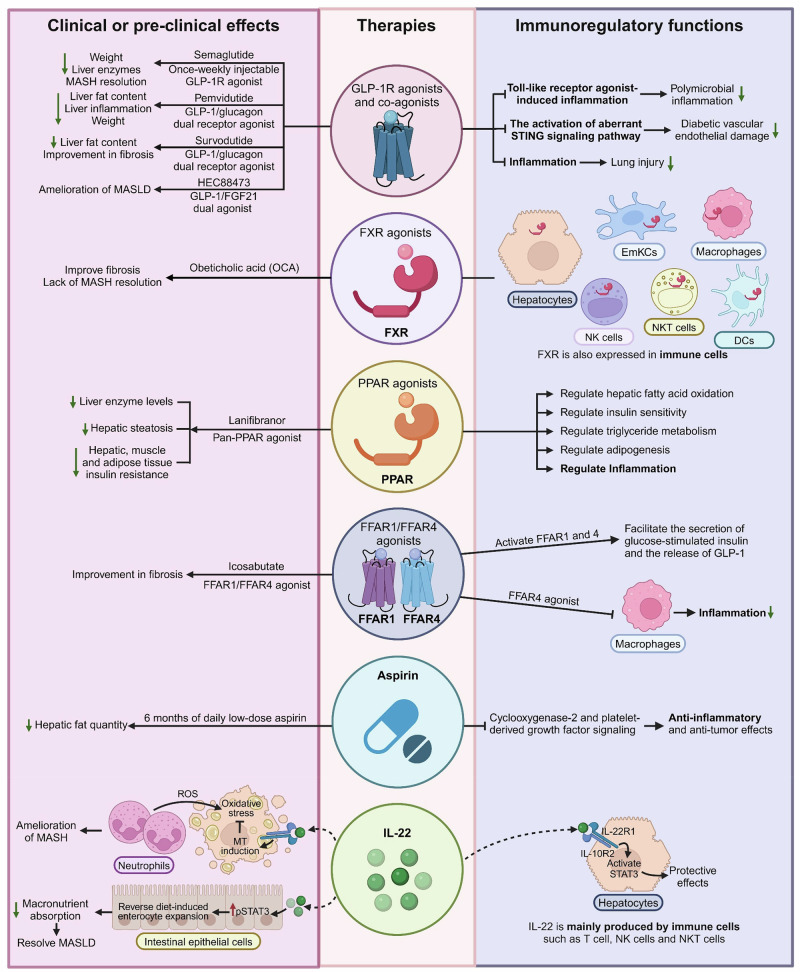
Metabolic dysfunction-associated steatotic liver disease (MASLD), previously known as nonalcoholic fatty liver disease (NAFLD), is the most prevalent chronic liver disease worldwide, with an estimated global prevalence of approximately 30%; however, effective pharmacotherapies are still limited due to its complex pathogenesis and etiology. Therefore, a more thorough understanding of disease pathogenesis is urgently needed. An increasing number of studies suggest that MASLD and its progressive form, metabolic dysfunction-associated steatohepatitis (MASH), are driven by chronic overnutrition, multiple genetic susceptibility factors, and pathogenic consequences, including hepatocyte damage and liver inflammation. Hepatic inflammation is the key event fueling the conversion from simple steatosis to steatohepatitis and fibrosis. Current therapies for MASH, including the recently approved thyroid hormone receptor-beta agonist resmetirom or the available incretin mimetics, mainly target metabolic injury to the liver but not inflammation directly. In this review, we provide an in-depth discussion of current data related to the immunological mechanisms of MASLD and summarize the effects of current and experimental therapies on immunoregulation in MASLD.
Overview
The claims and statistics of this paper haven’t been checked yet.
Run the check — free, no account needed. It reads the open-access text and checks the sources it cites.
Integrity signals
Registry
Cites
Statistics
Figures
Verification
Claims the paper makes
The claims and statistics of this paper haven’t been checked yet.
Run the check — free, no account needed. It reads the open-access text and checks the sources it cites.
Claims other papers make about this one
Each is checked against this paper’s own text: does it say what the citing paper says it does?
The source backs part of the claim, not all of it — or backs it for a different population, condition or comparison.
In the citing paper
“In addition to competing for survival signals like CSF-1 (9, 33, 34), infiltrating monocytes actively replace embryonic KCs (EmKCs) during injury (35–37).”
From Macrophage duality in liver diseases: heterogeneity, plasticity, and the quest for precision therapeutics (2026) · cites this paper as [37]
Experimental — accuracy not yet measured
Self-check
Percentages, sums and reported differences re-computed from the paper’s own numbers.
The self-check needs the paper’s full text.
Citations
Cites
Items 201–226 of 226
Pan, C., Liu, J., Gao, Y., Yang, M., Hu, H., Liu, C., Qian, M., Yuan, H.-Y., Yang, S., Zheng, M.-H., et al. (2023) · Cell Metabolism · doi:10.1016/j.cmet.2023.10.018 · Cited by 27 · cited 2×
“Notably, CHRNA4 inhibition by lobeline prevents acetylcholine binding, thereby reducing immune cell recruitment and mitigating MASH progression [143].”
Two years on, a perspective on MAFLD
Eslam, M., & George, J. (2023) · eGastroenterology · doi:10.1136/egastro-2023-100019 · Cited by 26 · cited 2×
“Therefore, an international panel of experts has detailed the rationale for an update of the nomenclature, and metabolic dysfunction-associated fatty liver disease (MAFLD) has been proposed as a more appropriate term to describe this liver disease [4 – 6].”
Sangineto, M., Ciarnelli, M., Colangelo, T., Moola, A., Bukke, V. N., Duda, L., Villani, R., Romano, A. D., Giandomenico, S., Kanwal, H., et al. (2024) · Cell Reports Medicine · doi:10.1016/j.xcrm.2024.101564 · Cited by 26 · cited 1×
“A recent study revealed a distinct bioenergetic phenotype in the circulating monocytes of mouse MASH models and patients with MASH, characterized by the upregulation of the mitochondrial and glycolytic energy pathways [103].”
Zhong, H., Zhuang, Y.-P., Xie, X., Song, J., Wang, S., Wu, L., Zhan, Y., Wu, Q., & He, X. (2024) · Gut Microbes · doi:10.1080/19490976.2024.2372881 · Cited by 25
Dong, L., Lou, W., Xu, C., & Wang, J. (2025) · Journal of Nanobiotechnology · doi:10.1186/s12951-025-03228-x · Cited by 25 · cited 1×
“…addition, naringenin cationic lipid-modi fi ed nanoparticles (NP-NAR) have been reported to alleviate MASLD progression by promoting fatty acid oxidation and modulating the gut microbiota, leading to the amelioration of lipid dysbiosis, oxidative stress, insulin resistance, and in fl ammation [168].”
Song, Y., Li, N., Jiang, S., Wang, K., Lv, G., Fan, Z., Du, X., Gao, W., Lei, L., Wang, Z., et al. (2025) · Nature Communications · doi:10.1038/s41467-025-57574-3 · Cited by 25
Li, P., Chen, X., Dong, M., Luo, J. F., Lu, S., Chen, M., Zhang, Y., Zhou, H., & Jiang, H. (2021) · Free Radical Biology and Medicine · doi:10.1016/j.freeradbiomed.2021.06.027 · Cited by 24
Zhang, W., Lu, J., Feng, L., Xue, H., Shen, S., Lai, S., Li, P., Li, P., Kuang, J., Yang, Z., et al. (2024) · Nature Communications · doi:10.1038/s41467-024-45520-8 · Cited by 22 · cited 1×
“For example, miR-28-5p secreted by hepatocytes stimulates the expression of in fl ammatory factors in macrophages to aggravate MASH [121].”
The Nr4a family regulates intrahepatic Treg proliferation and liver fibrosis in MASLD models
Aki, D., Hayakawa, T., Srirat, T., Shichino, S., Ito, M., Saitoh, S.-I., Mise-Omata, S., & Yoshimura, A. (2024) · Journal of Clinical Investigation · doi:10.1172/jci175305 · Cited by 22 · cited 1×
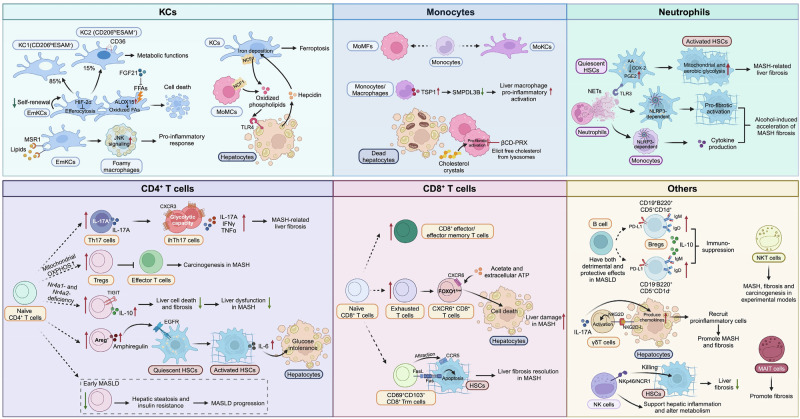
“Another study demonstrated that a massive accumulation of Tregs in the livers of MASH mice ameliorated liver cell death and fi brosis, thus mitigating liver dysfunction in MASH [77].”
MicroRNAs in metabolic dysfunction‐associated diseases: Pathogenesis and therapeutic opportunities
Ma, N., Tan, J., Chen, Y., Liu, Y., Li, M., & He, Y. (2024) · The FASEB Journal · doi:10.1096/fj.202401464r · Cited by 21 · cited 1×
“Moreover, the functions of noncoding RNAs (ncRNAs), particularly microRNAs (miRNAs), have been widely studied in MASLD [113, 114].”
Self-citationNew therapeutic target for alcohol-associated hepatitis (AH): AH-associated IL-8+ neutrophils
Guan, Y., Feng, D., Maccioni, L., Wang, Y., & Gao, B. (2024) · eGastroenterology · doi:10.1136/egastro-2024-100166 · Cited by 21 · cited 1×
“However, neutrophils are the most abundant leukocyte type in the human circulation [219], and neutrophil in fi ltration is commonly observed in human MASH, as well as in alcohol-related SLD [220, 221].”
Loona, D. P. S., Das, B., Kaur, R., Kumar, R., & Yadav, A. K. (2022) · Current Medicinal Chemistry · doi:10.2174/0929867329666220927113614 · Cited by 20
Xie, Y., Huang, Y., Li, Z.-Y., Jiang, W., Shi, N.-X., Lu, Y., Cao, G., Yin, Z., & Lin, X.-J. (2024) · Molecular Cancer · doi:10.1186/s12943-024-02001-2 · Cited by 18 · cited 1×
“IL-21R signaling has been shown to promote MASH-HCC via the induction of immunosuppressive IgA + B cells [23].”
Essential roles of B cell subsets in the progression of MASLD and HCC
Petriv, N., Suo, H., Hochnadel, I., Timrott, K., Bondarenko, N., Neubert, L., Reinhard, E., Jedicke, N., Kaufhold, P., Guzmán, C. A., et al. (2024) · JHEP Reports · doi:10.1016/j.jhepr.2024.101189 · Cited by 17 · cited 1×
“B cells [85].”
Meng, Z., Zhou, L., Hong, S., Qiu, X., Chen, Z., Liu, T., Inoki, K., & Lin, J. D. (2023) · Hepatology · doi:10.1097/hep.0000000000000537 · Cited by 16
Liu, Z., Wang, H., Liang, Y., Liu, M., Huang, Q., Wang, M., Zhou, J., Bu, Q., Zhou, H., & Lü, L. (2024) · Advanced Science · doi:10.1002/advs.202410880 · Cited by 16 · cited 1×
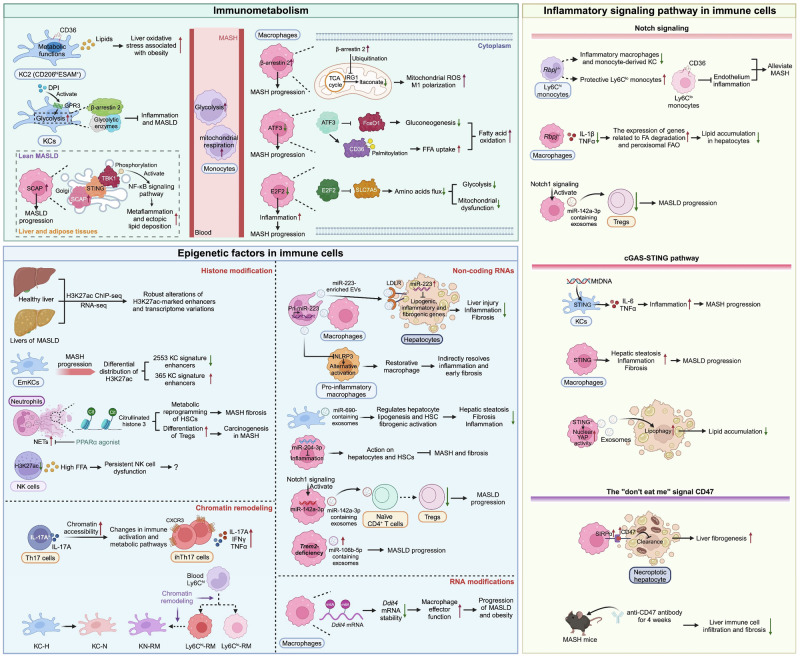
“A mechanistic study further revealed that E2f2 deletion in macrophages fueled proin fl ammatory responses in a Leu-mTORC1-dependent manner by enhancing glycolysis and impairing mitochondrial function by increasing SLC7A5 expression [105].”
Shi, X., Zheng, Q., Wang, X., Guo, W., Lin, Z., Gao, Y., Shore, E. A., Martin, R. C. G., Lv, G., & Li, Y. (2024) · Science Advances · doi:10.1126/sciadv.ado9311 · Cited by 15 · cited 2×
“For example, fi broblast growth factor 21 (FGF21) exhibits important anti-in fl ammatory activity, and its de fi ciency can induce excessive KC death and accelerate the MASH-HCC transition [22].”
Pan, B., Zhang, Z., Ye, D., Zhang, X., Yao, Y., Luo, Y., Hong, H., Cai, X., Chen, Y., & Tang, N. (2024) · JHEP Reports · doi:10.1016/j.jhepr.2024.101228 · Cited by 14 · cited 1×
“In addition, NETs are able to promote the differentiation of regulatory T cells (Tregs), which contribute to carcinogenesis in MASLD [76], whereas activating PPAR α can reduce NET formation in a high-fat diet (HFD) context [111].”
Self-citationKrag, A. A., & Rinella, M. E. (2024) · Nature Medicine · doi:10.1038/s41591-024-02849-3 · Cited by 12 · cited 1×
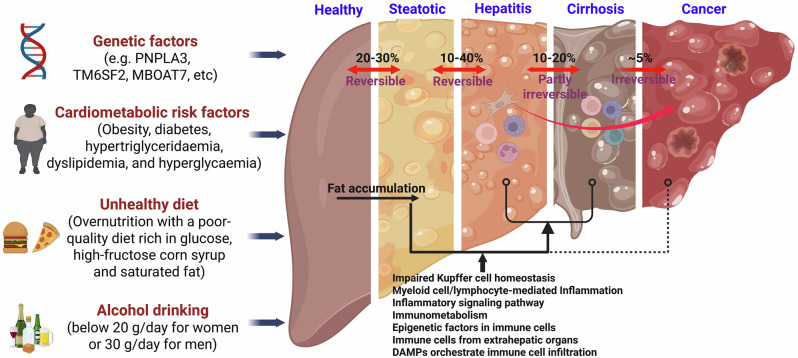
“Of particular importance is the new category of individuals with MetALD, whose diagnosis of hepatic steatosis requires the presence of cardiometabolic risk factors (CMRFs) and daily alcohol intake between 20 – 50 g/day for women and between 30 – 60 g/day for men [11, 12].”
Zhu, Y., Shang, L., Tang, Y., Li, Q., Ding, L., Wang, Y., Zhang, T., Xie, B., Ma, J., Li, X., et al. (2024) · Advanced Science · doi:10.1002/advs.202404224 · Cited by 11 · cited 1×
“Genome-wide pro fi ling of the acetylation of histone H3 lysine 27 (H3K27ac), a marker of active enhancers and promoters, revealed that H3K27ac density is signi fi cantly altered in the livers of MASLD rats, along with abundant alterations in the regulatory transcriptome [109].”
Molecular imaging of macrophage composition and dynamics in MASLD
Yang, B. Q., Chan, M. M., Heo, G. S., Lou, L., Luehmann, H. P., Park, C., Li, A., Lahad, D., Sultan, D. H., Voller, P., et al. (2024) · JHEP Reports · doi:10.1016/j.jhepr.2024.101220 · Cited by 11 · cited 1×
“To visualize these cells and processes, positron emission tomography (PET) imaging of recruited macrophages by targeting CCR2 and CD163 has translational potential for the diagnosis and monitoring of MASH [58].”
Inflammation in Steatotic Liver Diseases: Pathogenesis and Therapeutic Targets
Qian, S., Wang, X., Chen, Y., Zai, Q., & He, Y. (2024) · Seminars in Liver Disease · doi:10.1055/a-2338-9261 · Cited by 6
Self-citationResmetirom: Breakthrough therapeutic approach for metabolic dysfunction-associated steatohepatitis
Saeed, A., Rai, K. D., & Saeed, M. (2024) · Liver Research · doi:10.1016/j.livres.2024.07.002 · Cited by 5 · cited 1×
“Although the fi rst pharmacotherapeutic for MASLD and MASH, resmetirom, has been approved for clinical use [224], we expect more targeted treatments owing to the modest ef fi cacy of resmethrin [2].”
Macrophage Notch1 signaling modulates regulatory T cells via the TGFB axis in early MASLD
Zhang, M., Li, K., Huang, X., Xu, D., Zong, R., Hu, Q., Dong, X., Zhang, Q., Jiang, C., Ge, Y., et al. (2024) · JHEP Reports · doi:10.1016/j.jhepr.2024.101242 · Cited by 5 · cited 3×
“Nevertheless, the number of Tregs was found to be decreased in early MASLD, contributing to high-fat diet-induced hepatic steatosis [78].”
InfluentialRay, P. P. (2024) · Liver Research · doi:10.1016/j.livres.2024.05.002 · Cited by 3 · cited 1×
“…opportunity to advance our understanding and management of MASLD, such as tabular medical data analysis, multiomics data analysis, the generation of synthetic patient data, enhancing the medical imaging fi eld for MASLD, and advancing personalized medicine approaches for MASLD [216, 217].”
Role of Neutrophils in the Development of Steatotic Liver Disease
Choi, Y., Kim, Y. S., & Hwang, S. (2024) · Seminars in Liver Disease · doi:10.1055/s-0044-1789207 · Cited by 2 · cited 1×
“The role of neutrophils has garnered attention for their involvement in sterile in fl ammation, which plays a pivotal role in the pathogenesis of steatotic liver disease [66].”
Cited by
Sorted by citations
Metabolic dysfunction and alcohol-associated liver disease (MetALD)
Gao, B., Arab, J. P., Liangpunsakul, S., Ding, W., Szabó, G., Mehal, W. Z., Wang, H., He, Y., Stärkel, P., Llorente, C., et al. (2025) · eGastroenterology · doi:10.1136/egastro-2025-100319 · Cited by 43
Self-citationZheng, H., Wu, K., Zheng, H., Chen, G., Lan, Y., Chen, S., Casu, G., Sechi, L. A., Wu, S., Vidili, G., et al. (2025) · JHEP Reports · doi:10.1016/j.jhepr.2025.101602 · Cited by 18
“…Neutrophil extracellular trap formation, M1 macrophages polarization, and T-cell imbalance contribute to hepatic inflammation and fibrosis, 38 while the same mechanisms also drive vascular inflammation, foam cell formation, and plaque instability, linking systemic immune activation to…”
Self-citationThe many pathways driving liver inflammation in MASH
Tilg, H., Adolph, T. E., Romeo, S., & Loomba, R. S. (2026) · Cell Metabolism · doi:10.1016/j.cmet.2026.02.018 · Cited by 17
Youhanna, S., Taebnia, N., Liang, Y., Cheng, N., Wang, Y., Michel, M., & Lauschke, V. M. (2025) · Advanced Biology · doi:10.1002/adbi.202500337 · Cited by 9
Eid, R. A., Hamed, A. M., Elgendy, S. O., Orayj, K. M., Ibrahim, A. S., Hamied, A. M. A., Wahsh, E. A., Youssif, M., Rabea, H., Madney, Y. M., et al. (2025) · Metabolites · doi:10.3390/metabo16010025 · Cited by 9
Metadata
- Authors
- He, Y., Chen, Y., Qian, S., van Der Merwe, S., Dhar, D., Brenner, D. A., & Tacke, F.
- Affiliations
- Chinese Academy of Sciences (CN)
- Sanford Burnham Prebys Medical Discovery Institute (US)
- Charité – Universitätsmedizin Berlin (DE)
- Corresponding author
- He, Yong
- Tacke, Frank
- Venue
- Cellular & Molecular Immunology
- Published
- 2025-06-10
- Volume
- 22
- Issue
- 10
- Pages
- 1159-1177
- ISSN
- 1672-7681 (ISSN-L)
- 2042-0226
- PMC
- PMC12480724
- OpenAlex
- W4411162672
- Semantic Scholar
- 7f2f36cf67705164236941f4c20e7acd81779cf2
- Cited by
- 81
- References
- 226
- Citations by year
- 2026: 63 · 2025: 18
- FWCI
- 12.44
- Type
- journal article
- Language
- en
- Open access
- hybrid
- doi.org
- Locations
- Cellular and Molecular Immunology (publishedVersion, cc-by)
- Europe PMC (PubMed Central) (publishedVersion, cc-by)
- PubMed (publishedVersion)
- PubMed Central (publishedVersion, cc-by)
- Lirias (KU Leuven) (submittedVersion, cc-by)
- Funders
- U.S. Department of Health and Human Services (R01DK133930, RO1DK137061)
- Deutsche Forschungsgemeinschaft (SFB 1382, DFGTa434/8‐1, Ta434/8‐1, 403224013)
- National Natural Science Foundation of China (82270601, 403224013)
- National Institutes of Health
- National Key Research and Development Program of China (2024ZD0530604, 2023YFA1800804)
- National Institute of Diabetes and Digestive and Kidney Diseases (R01DK137061, R01DK133930)
- Topics
- Health Sciences › Medicine › Hepatology › Liver Disease Diagnosis and Treatment
- Health Sciences › Medicine › Hepatology › Liver physiology and pathology
- Health Sciences › Medicine › Hepatology › Liver Diseases and Immunity
- Keywords
- non-alcoholic fatty liver disease, nonalcoholic steatohepatitis, immunopathogenesis, liver inflammation, immunomodulatory therapy, resmetirom, incretin mimetics, liver fibrosis, genetic susceptibility, overnutrition
- MeSH terms
- Animals, Humans, Liver, Immunomodulation, Non-alcoholic Fatty Liver Disease
About these checks
Registry, retraction, Cites and statistics results are computed, not judged, with one exception: a printed reference that no index lists is read once by a model before it counts as a citation error. Claims are extracted by a model and kept only when their quote appears verbatim in the text; each cited source is then checked, with a model’s help, for whether it says what the claim relies on. Those verdicts can be wrong — read the claim’s quote and the cited source before relying on one.
Statistics and arithmetic are recomputed, not judged.
Confidence bands are shown only for fields calibrated on our annotated test set. None is calibrated yet, so no band is shown.
What counts as a claim ›How we measure confidence ›How we check this ›
Are you an author, or do you see a problem with this page? Request a review
