

The DOI matches its Crossref record; 64 of the 65 references it cites were found in a registry or an index; 3 of the 85 sources its claims cite were checked for support.
The gut microbiome in atherosclerotic cardiovascular disease
Open accessAbstract
The gut microbiota has been linked to cardiovascular diseases. However, the composition and functional capacity of the gut microbiome in relation to cardiovascular diseases have not been systematically examined. Here, we perform a metagenome-wide association study on stools from 218 individuals with atherosclerotic cardiovascular disease (ACVD) and 187 healthy controls. The ACVD gut microbiome deviates from the healthy status by increased abundance of Enterobacteriaceae and Streptococcus spp. and, functionally, in the potential for metabolism or transport of several molecules important for cardiovascular health. Although drug treatment represents a confounding factor, ACVD status, and not current drug use, is the major distinguishing feature in this cohort. We identify common themes by comparison with gut microbiome data associated with other cardiometabolic diseases (obesity and type 2 diabetes), with liver cirrhosis, and rheumatoid arthritis. Our data represent a comprehensive resource for further investigations on the role of the gut microbiome in promoting or preventing ACVD as well as other related diseases.
Overview
AI snapshot
Written from the paper’s full text.
TL;DR
In a metagenome-wide association study of 405 Chinese fecal samples, atherosclerotic cardiovascular disease (ACVD) was associated with altered gut microbiome composition and function, including increased Enterobacteriaceae and Streptococcus and reduced butyrate-producing bacteria. A microbiome-based classifier distinguished ACVD from controls with an AUC of 0.86, and cross-disease comparisons linked cardiometabolic diseases and cirrhosis to a less fermentative, more inflammatory gut environment.
Key findings
- ACVD samples differed from controls in multivariate analyses (PERMANOVA P < 10⁻⁶ with or without medication adjustment), with increased Enterobacteriaceae, Streptococcus spp., Ruminococcus gnavus, and Eggerthella lenta, and depletion of butyrate producers such as Roseburia intestinalis and Faecalibacterium cf. prausnitzii.
- Of 2,982 metagenomic linkage groups (MLGs) with >100 genes, 536 differed significantly between ACVD and controls (Wilcoxon rank-sum, BH q < 0.05), with 320 more abundant in ACVD; these represented on average 56.5% of relative abundance across all MLGs.
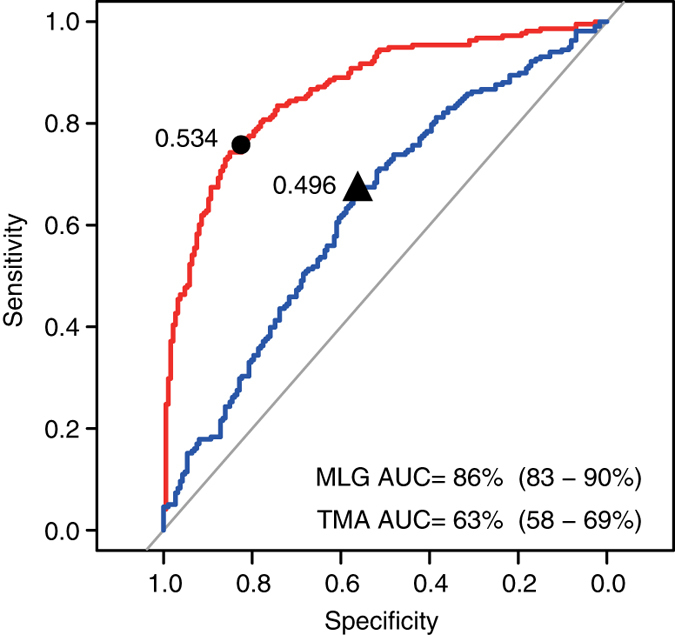
- A random forest classifier using 47 MLGs achieved an AUC of 0.86 for ACVD, whereas TMA lyases alone gave an AUC of 0.63; ACVD-enriched bacteria encoded choline-TMA lyase (CutC) and/or the promiscuous TMA lyase YeaW/X.
- Functionally, ACVD microbiomes showed higher potential for simple sugar and amino acid transport, O-antigen LPS synthesis, glycerolipid metabolism, fatty acid degradation, and TMA production, but lower potential for most vitamin biosynthesis, tetrahydrofolate synthesis, glycan degradation, and butyrate/propionate synthesis.
Methods
- Metagenomic shotgun sequencing was performed on 405 fecal samples from 218 ACVD patients (≥50% stenosis in one or more vessels) and 187 healthy controls; after filtering, 2.2 Tb of high-quality reads (average 55.2 million reads/sample) were mapped to a 9.9-million-gene reference catalog, with average mapping of 80.0 ± 3.5%.
- Genes were clustered into 2,982 MLGs (>100 genes) based on co-abundance; differential abundance used Wilcoxon rank-sum tests with BH q < 0.05, and analyses included PCA, dbRDA, PERMANOVA, random forest cross-validation, group LASSO, MaAsLin, KEGG reporter scores, and PanPhlAn.
- Cross-disease comparisons mapped published Chinese metagenomic data to the same catalog and pipeline: liver cirrhosis (120 cases/111 controls), obesity (72/79), type 2 diabetes (171/174), and rheumatoid arthritis (95/74), totaling 1,250 samples across diseases.
Limitations
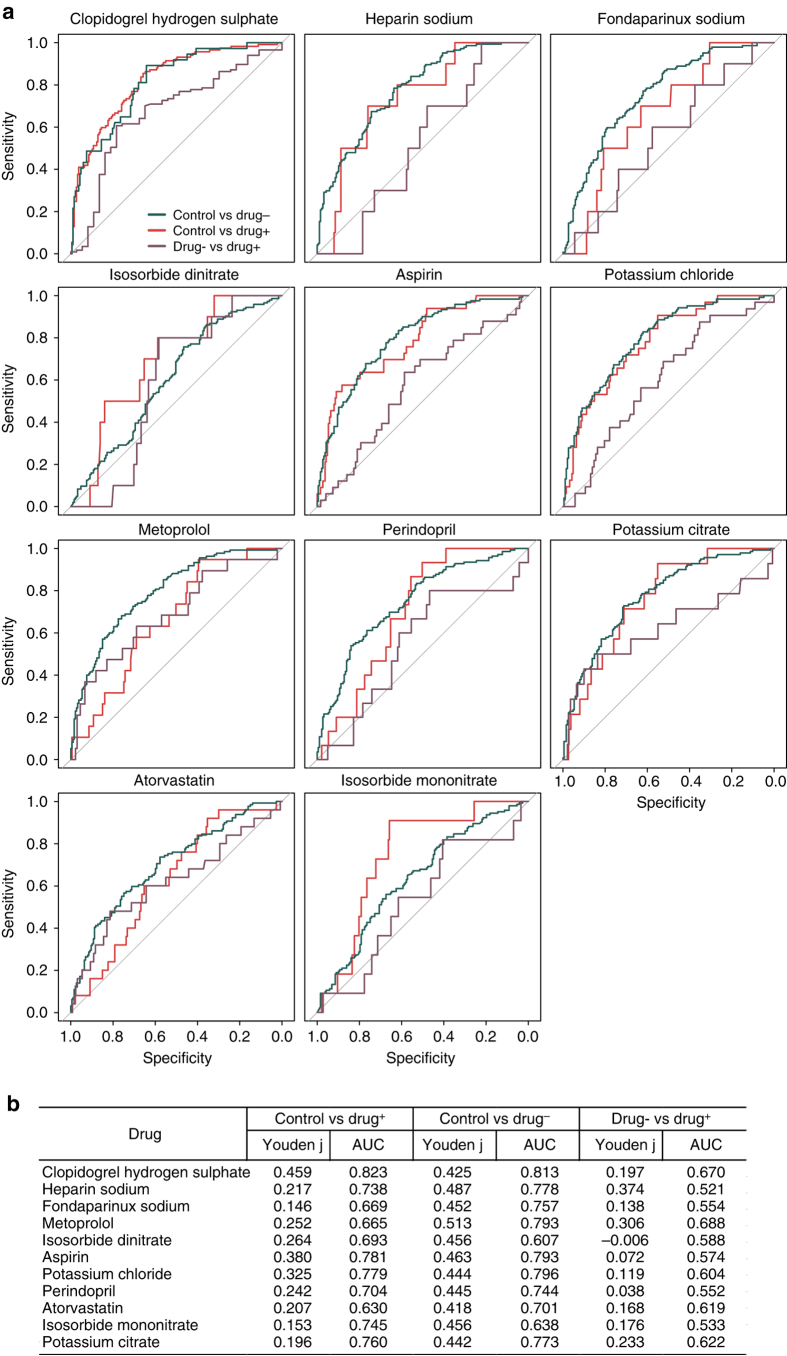
- The paper states that drug treatment may affect gut microbiota composition and constitutes a confounding factor, although ACVD status, not current drug use, was the major distinguishing feature; effects of different drugs remain to be explored in intervention trials in larger cohorts.
- The paper states that validation of the identified markers would require independent and much larger cohorts.
- Evident from the text: this is a cross-sectional case–control study, so it cannot establish causality; additionally, only Chinese cohorts were used because of substantial population differences in the gut microbiome, limiting generalizability.
Model-written summary. Check it against the paper before relying on it.
Integrity signals
Registry
Cites
Statistics
Figures
Verification
Claims the paper makes
59 Not checked yet · 18 Own result · 9 Own interpretation · 4 Own method · 2 No basis given · 1 Partly supported · accuracy not yet measured
The cited sources support only part of this claim — read each source’s verdict below.
In the paper
“Previous studies have shown that the gut microbiota metabolizes choline, phosphatidylcholine, and l-carnitine to produce trimethylamine (TMA), which is oxidized in the liver into the proatherogenic metabolite, trimethylamine-N-oxide (TMAO)11–13.”
§ The gut microbiome in atherosclerotic cardiovascular disease > Introduction
What the sources say
- Partly supportedcites [11] Wang, Z. et al. Gut flora metabolism of phosphatidylcholine promotes cardiovascular disease. Nature 472, 57–63 (2011). sourceExperimental — accuracy not yet measured
The Results section describes gut-microbiota-dependent conversion of phosphatidylcholine and choline to TMA, followed by oxidation to TMAO; the Discussion identifies hepatic FMO enzymes and calls TMAO pro-atherogenic. Our copy does not establish l-carnitine as a precursor (searched for “l-carnitine” and “carnitine”), so that part of the claim is not supported by this source. (LLM, conf=0.90)
- Partly supportedcites [12] Tang, W. H. et al. Intestinal microbial metabolism of phosphatidylcholine and cardiovascular risk. N. Engl. J. Med. 368, 1575–1584 (2013). sourceExperimental — accuracy not yet measured
The Discussion states that intestinal microbiota convert the choline moiety of dietary phosphatidylcholine to TMA, which hepatic enzymes convert to TMAO; it also calls TMAO proatherogenic. Our copy does not support the claim’s inclusion of l-carnitine as a precursor. (LLM, conf=0.90)
- Supportedcites [13] Koeth, R. A. et al. Intestinal microbiota metabolism of L-carnitine, a nutrient in red meat, promotes atherosclerosis. Nat. Med. 19, 576–585 (2013). source
The Introduction states that gut microbiota convert choline, the head group of phosphatidylcholine, to TMA, which hepatic enzymes oxidize to proatherogenic TMAO. The Abstract and Discussion also report microbiota-dependent TMA/TMAO production from l-carnitine. (LLM, conf=0.93)
plaindirect- Asserted: passes — The authors put it forward as true.
- Checkable: passes — It can be checked against evidence.
- Load-bearing: passes — The paper’s conclusions depend on it.
- Based: passes — The paper gives a reason why it holds.
- Partly supported
In the paper
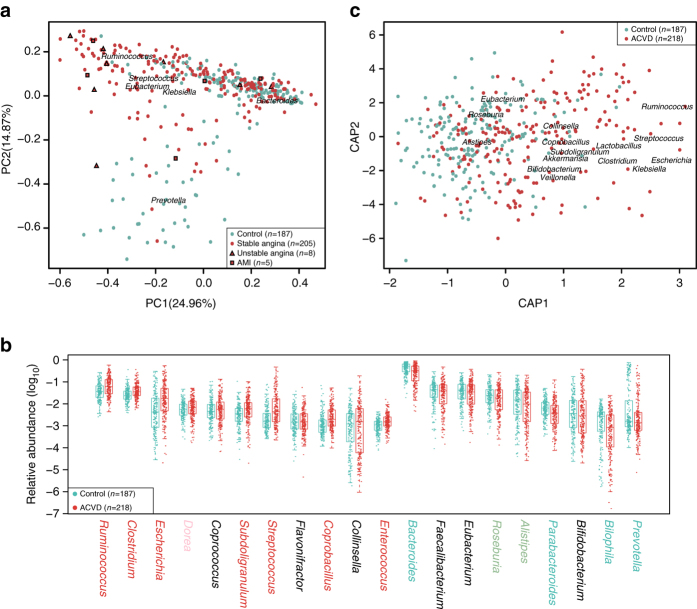
“The ACVD and control samples also showed separation in PCA (principal component analysis) and dbRDA (distance-based redundancy analysis) plots (Fig. 1)”
§ The gut microbiome in atherosclerotic cardiovascular disease > Results > Composition of the ACVD gut microbiome
What the sources say
- Not checked yetcites Fig. 1
plaincorrelationaln = 218- Asserted: passes — The authors put it forward as true.
- Checkable: passes — It can be checked against evidence.
- Load-bearing: passes — The paper’s conclusions depend on it.
- Based: passes — The paper gives a reason why it holds.
A result the paper reports from its own data — it cites no other source for it, so there is none to check. The quote shows it is in the paper.
In the paper
“and, functionally, in the potential for metabolism or transport of several molecules important for cardiovascular health.”
§ The gut microbiome in atherosclerotic cardiovascular disease > Abstract
plaincorrelationaln = 218- Asserted: passes — The authors put it forward as true.
- Checkable: passes — It can be checked against evidence.
- Load-bearing: passes — The paper’s conclusions depend on it.
- Based: passes — The paper gives a reason why it holds.
- The authors state this as an assumption: Stool samples are representative of the gut microbiome.
- Rests on an assumption: The functional potential inferred from metagenomic gene content reflects actual metabolic activity of the gut microbiome.
A result the paper reports from its own data — it cites no other source for it, so there is none to check. The quote shows it is in the paper.
In the paper
“The ACVD gut microbiome deviates from the healthy status by increased abundance of Enterobacteriaceae and Streptococcus spp.”
§ The gut microbiome in atherosclerotic cardiovascular disease > Abstract
plaincorrelationaln = 218- Asserted: passes — The authors put it forward as true.
- Checkable: passes — It can be checked against evidence.
- Load-bearing: passes — The paper’s conclusions depend on it.
- Based: passes — The paper gives a reason why it holds.
- The authors state this as an assumption: Stool samples are representative of the gut microbiome.
In the paper
“The ACVD and control samples were significantly different in multivariate analyses. ACVD status showed a P-value <10−6 in permutational multivariate analysis of variance (PERMANOVA), with or without adjustment for medication (Supplementary Table 1).”
§ The gut microbiome in atherosclerotic cardiovascular disease > Results > Composition of the ACVD gut microbiome
What the sources say
- Not checked yetcites Supplementary Table 1
plaincorrelationaln = 218- Asserted: passes — The authors put it forward as true.
- Checkable: passes — It can be checked against evidence.
- Load-bearing: passes — The paper’s conclusions depend on it.
- Based: passes — The paper gives a reason why it holds.
- The authors state this as an assumption: Stool samples are representative of the gut microbiome.
None of the sources cited for this claim have been checked yet.
In the paper
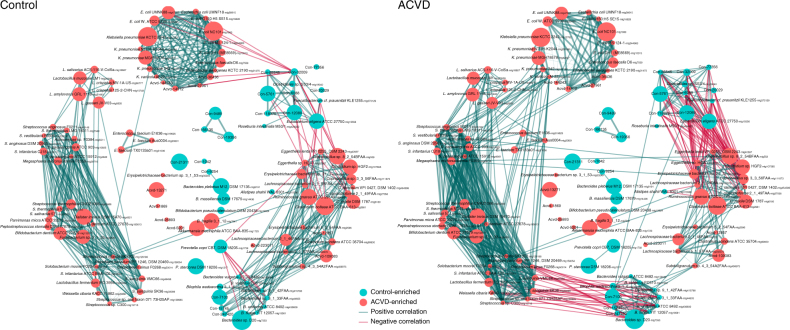
“The abundance of Ruminococcus gnavus, a bacterium previously associated with inflammatory bowel diseases and low gut microbial richness8, 20–22 was higher in ACVD samples than in control samples (q-value <0.05, Fig. 2, Supplementary Data 3).”
§ The gut microbiome in atherosclerotic cardiovascular disease > Results > Microbial strains associated with ACVD
What the sources say
- Not checked yetcites Fig. 2
- Not checked yetcites Supplementary Data 3
plaincorrelational- Asserted: passes — The authors put it forward as true.
- Checkable: passes — It can be checked against evidence.
- Load-bearing: passes — The paper’s conclusions depend on it.
- Based: passes — The paper gives a reason why it holds.
In the paper
“When two drugs were analyzed together instead of single drug analysis, random-forest classifiers again reached a higher AUC for distinguishing between ACVD patients with no drug treatment and healthy controls, than between ACVD with and without the drugs (Supplementary Data 4).”
§ The gut microbiome in atherosclerotic cardiovascular disease > Results > Influence of drugs on the gut microbiota
What the sources say
- Not checked yetcites Supplementary Data 4
plaincorrelational- Asserted: passes — The authors put it forward as true.
- Checkable: passes — It can be checked against evidence.
- Load-bearing: passes — The paper’s conclusions depend on it.
- Based: passes — The paper gives a reason why it holds.
None of the sources cited for this claim have been checked yet.
In the paper
“Consistent with the genera results (Fig. 1), common members of the gut microbiome such as Bacteroides spp., Prevotella copri, and Alistipes shahii were also relatively depleted in ACVD (q-value <0.05, Fig. 2, Supplementary Data 3).”
§ The gut microbiome in atherosclerotic cardiovascular disease > Results > Microbial strains associated with ACVD
What the sources say
- Not checked yetcites Fig. 2
- Not checked yetcites Supplementary Data 3
plaincorrelational- Asserted: passes — The authors put it forward as true.
- Checkable: passes — It can be checked against evidence.
- Load-bearing: passes — The paper’s conclusions depend on it.
- Based: passes — The paper gives a reason why it holds.
In the paper
“Among the 47 MLGs selected by the ACVD classifier, the MLGs most important for the classifier belonged to Streptococcus vestibularis, E. lenta, A. parvulum, R. gnavus, L. salivarius, E. coli, Lachnospiraceae, and Clostridium nexile (Supplementary Data 3).”
§ The gut microbiome in atherosclerotic cardiovascular disease > Results > Links between the gut microbiome and clinical features of ACVD
What the sources say
- Not checked yetcites Supplementary Data 3
plaincorrelationaln = 405- Asserted: passes — The authors put it forward as true.
- Checkable: passes — It can be checked against evidence.
- Load-bearing: unclear — It is unclear whether the paper’s conclusions depend on it.
- Based: passes — The paper gives a reason why it holds.
None of the sources cited for this claim have been checked yet.
In the paper
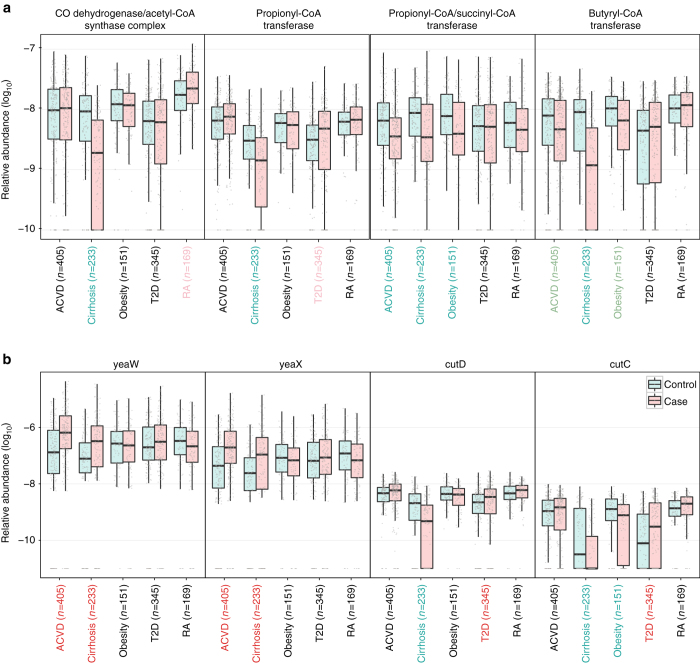
“According to further analysis using the reference-genome based method PanPhlAn26, ACVD-enriched bacteria encoding choline-TMA lyase (CutC) included an unclassified Erysipelotrichaceae bacterium, C. nexile, and S. anginosus (Fig. 2, Supplementary Fig. 2a).”
§ The gut microbiome in atherosclerotic cardiovascular disease > Results > Links between the gut microbiome and clinical features of ACVD
What the sources say
- Not checked yetcites Fig. 2
- Not checked yetcites Supplementary Fig. 2a
plaincorrelational- Asserted: passes — The authors put it forward as true.
- Checkable: passes — It can be checked against evidence.
- Load-bearing: unclear — It is unclear whether the paper’s conclusions depend on it.
- Based: passes — The paper gives a reason why it holds.
- It may state two separate claims as one. 28
- Probably not a substantial claim. 13
In the paper
“which was corroborated by abundance differences between the two groups in major genera of the gut microbiome, such as a relative reduction in Bacteroides and Prevotella, and enrichment in Streptococcus and Escherichia in ACVD (Fig. 1b).”
§ The gut microbiome in atherosclerotic cardiovascular disease > Results > Composition of the ACVD gut microbiome
What the sources say
- Not checked yetcites Fig. 1b
plaincorrelationaln = 218- Asserted: passes — The authors put it forward as true.
- Checkable: passes — It can be checked against evidence.
- Load-bearing: passes — The paper’s conclusions depend on it.
- Based: passes — The paper gives a reason why it holds.
It may state two separate claims as one.
In the paper
“For combinations such as either acarbose or atorvastatin, the AUC was lower between ACVD patients treated with the drugs and healthy controls than between ACVD patients without the drugs and healthy controls (Supplementary Data 4), i.e., the medication weakened the disease signal, meaning an even more significant difference would be expected if the cohort was free of medication.”
§ The gut microbiome in atherosclerotic cardiovascular disease > Results > Influence of drugs on the gut microbiota
What the sources say
- Not checked yetcites Supplementary Data 4
plaindirect- Asserted: passes — The authors put it forward as true.
- Checkable: passes — It can be checked against evidence.
- Load-bearing: passes — The paper’s conclusions depend on it.
- Based: passes — The paper gives a reason why it holds.
It may state two separate claims as one.
In the paper
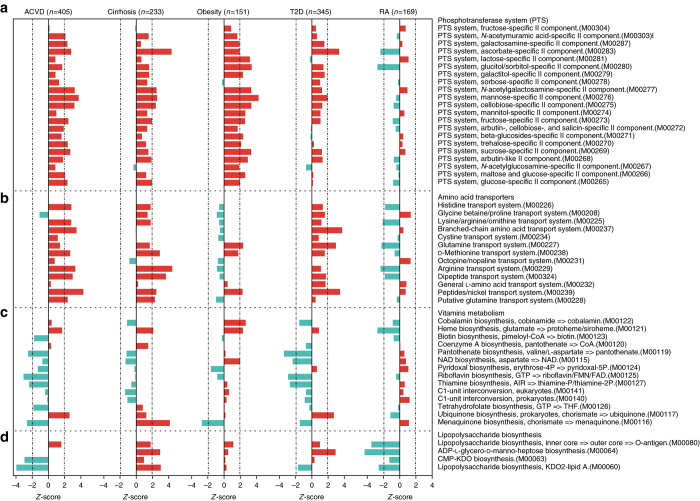
“Consistent with the enrichment of Enterobacteriaceae in ACVD (Figs. 1 and 2), the module comprising genes required for the synthesis of the O-antigen of lipopolysaccharides (LPS) was enriched in ACVD samples, whereas the lipid A synthesis module was relatively depleted, most likely due to a lower level of the otherwise abundant Gram-negative genus Bacteroides (Figs. 1 and 6).”
§ The gut microbiome in atherosclerotic cardiovascular disease > Results > Functional alterations in the ACVD gut microbiome
What the sources say
- Not checked yetcites Figs. 1 and 6
plaincorrelational- Asserted: passes — The authors put it forward as true.
- Checkable: passes — It can be checked against evidence.
- Load-bearing: unclear — It is unclear whether the paper’s conclusions depend on it.
- Based: passes — The paper gives a reason why it holds.
It may state two separate claims as one.
- Rests on an assumption: The functional potential inferred from metagenomic gene content reflects actual metabolic activity of the gut microbiome.
In the paper
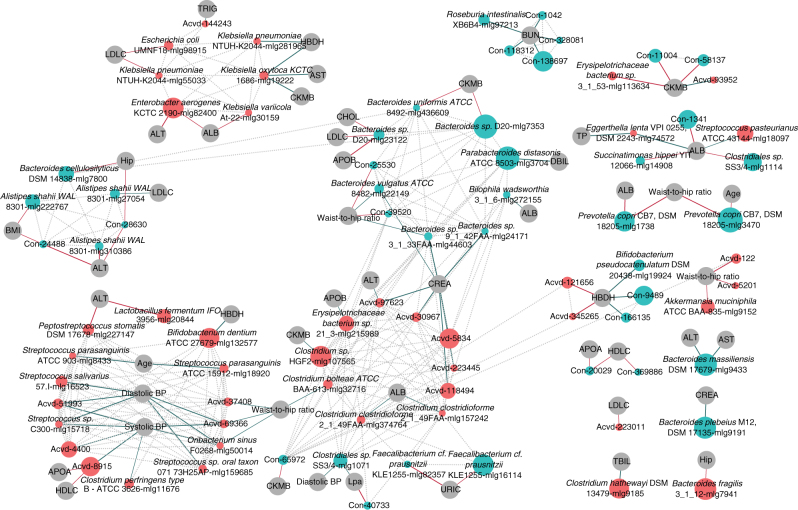
“K. oxytoca that showed increased abundance in ACVD patients, correlated positively with serum levels of aspartate transaminase (AST, a marker for acute myocardial infarction as well as other conditions), α-hydroxybutyrate dehydrogenase (HBDH), and creatine kinase (CKMB).”
§ The gut microbiome in atherosclerotic cardiovascular disease > Results > Links between the gut microbiome and clinical features of ACVD
What the sources say
- Not checked yetcites Fig. 4
plaincorrelational- Asserted: passes — The authors put it forward as true.
- Checkable: passes — It can be checked against evidence.
- Load-bearing: unclear — It is unclear whether the paper’s conclusions depend on it.
- Based: passes — The paper gives a reason why it holds.
It may state two separate claims as one.
None of the sources cited for this claim have been checked yet.
In the paper
“The relative abundances of three MLGs positively correlated with metoprolol use and two MLGs positively correlated with atorvastatin, but none of the MLGs fulfilled the criteria for species annotation (Supplementary Fig. 3, Supplementary Data 3).”
§ The gut microbiome in atherosclerotic cardiovascular disease > Results > Influence of drugs on the gut microbiota
What the sources say
- Not checked yetcites Supplementary Fig. 3
- Not checked yetcites Supplementary Data 3
plaincorrelational- Asserted: passes — The authors put it forward as true.
- Checkable: passes — It can be checked against evidence.
- Load-bearing: passes — The paper’s conclusions depend on it.
- Based: passes — The paper gives a reason why it holds.
It may state two separate claims as one.
None of the sources cited for this claim have been checked yet.
In the paper
“A total of 536 of the MLGs differed significantly in abundance between ACVD and control samples (Wilcoxon-rank sum test, Benjamin–Hochberg q-value <0.05), with 320 of these being more abundant in ACVD samples (Fig. 2, Supplementary Data 3).”
§ The gut microbiome in atherosclerotic cardiovascular disease > Results > Microbial strains associated with ACVD
What the sources say
- Not checked yetcites Fig. 2
- Not checked yetcites Supplementary Data 3
plaincorrelationaln = 405- Asserted: passes — The authors put it forward as true.
- Checkable: passes — It can be checked against evidence.
- Load-bearing: passes — The paper’s conclusions depend on it.
- Based: passes — The paper gives a reason why it holds.
It may state two separate claims as one.
- The authors state this as an assumption: Stool samples are representative of the gut microbiome.
In the paper
“we observed no significant difference between the ACVD and control samples in either gene richness or diversity (Supplementary Fig. 1).”
§ The gut microbiome in atherosclerotic cardiovascular disease > Results > Composition of the ACVD gut microbiome
What the sources say
- Not checked yetcites Supplementary Fig. 1
plainn = 218- Asserted: passes — The authors put it forward as true.
- Checkable: passes — It can be checked against evidence.
- Load-bearing: unclear — It is unclear whether the paper’s conclusions depend on it.
- Based: passes — The paper gives a reason why it holds.
It may state two separate claims as one.
None of the sources cited for this claim have been checked yet.
In the paper
“we observed a reduced potential for the synthesis of tetrahydrofolate and altered potential for homocysteine metabolism in the gut microbiome of ACVD patients compared with controls (Fig. 6, Supplementary Fig. 4a and b).”
§ The gut microbiome in atherosclerotic cardiovascular disease > Results > Functional alterations in the ACVD gut microbiome
What the sources say
- Not checked yetcites Fig. 6
- Not checked yetcites Supplementary Fig. 4a and b
plaincorrelational- Asserted: passes — The authors put it forward as true.
- Checkable: passes — It can be checked against evidence.
- Load-bearing: passes — The paper’s conclusions depend on it.
- Based: passes — The paper gives a reason why it holds.
It may state two separate claims as one.
- Rests on an assumption: The functional potential inferred from metagenomic gene content reflects actual metabolic activity of the gut microbiome.
None of the sources cited for this claim have been checked yet.
In the paper
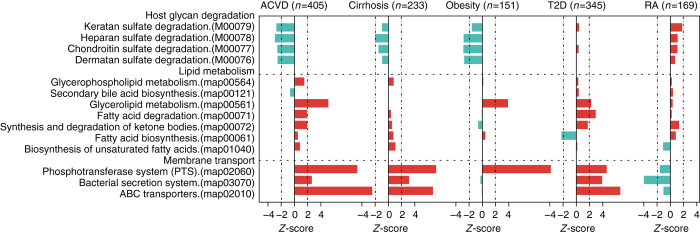
“The samples from ACVD patients displayed higher potential for transport of simple sugars (phosphotransferase systems (PTS)) and amino acids, whereas the potential for biosynthesis of most vitamins was lower (Figs. 6 and 7, Supplementary Data 6 and 7).”
§ The gut microbiome in atherosclerotic cardiovascular disease > Results > Functional alterations in the ACVD gut microbiome
What the sources say
- Not checked yetcites Figs. 6 and 7
- Not checked yetcites Supplementary Data 6 and 7
plaincorrelational- Asserted: passes — The authors put it forward as true.
- Checkable: passes — It can be checked against evidence.
- Load-bearing: passes — The paper’s conclusions depend on it.
- Based: passes — The paper gives a reason why it holds.
It may state two separate claims as one.
- Rests on an assumption: The functional potential inferred from metagenomic gene content reflects actual metabolic activity of the gut microbiome.
A result the paper reports from its own data — it cites no other source for it, so there is none to check. The quote shows it is in the paper.
In the paper
“Besides the common denominators identified to characterize the gut microbiome in patients with CMDs and cirrhosis, the gut microbiome of each disease also exhibited unique features in functional capacity, and in species and gene compositions.”
§ The gut microbiome in atherosclerotic cardiovascular disease > Discussion
plaincorrelational- Asserted: passes — The authors put it forward as true.
- Checkable: passes — It can be checked against evidence.
- Load-bearing: passes — The paper’s conclusions depend on it.
- Based: passes — The paper gives a reason why it holds.
It may state two separate claims as one.
A result the paper reports from its own data — it cites no other source for it, so there is none to check. The quote shows it is in the paper.
In the paper
“Among the top 50 determining species, the ACVD-enriched MLGs such as S. anginosis, S. vestibularis, and L. salivarius were identified to be most important for the model, while ACVD-depleted MLGs such as F. cf. prausnitzii, Bacteroides cellulosilyticus, R.intestinalis, and MLGs not significantly different in the ACVD cohort were also selected as important features (Supplementary Fig. 9a).”
§ The gut microbiome in atherosclerotic cardiovascular disease > Results > Microbiome-based identification of CMDs and cirrhosis
plaincorrelational- Asserted: passes — The authors put it forward as true.
- Checkable: passes — It can be checked against evidence.
- Load-bearing: passes — The paper’s conclusions depend on it.
- Based: passes — The paper gives a reason why it holds.
It may state two separate claims as one.
In the paper
“In addition to bacteria and archaea, a number of bacteriophages were more abundant or less abundant in the gut microbiome of individuals with ACVD compared to healthy controls (Supplementary Fig. 6), and several of these were also highly enriched in cirrhosis patients.”
§ The gut microbiome in atherosclerotic cardiovascular disease > Results > Functional alterations in the ACVD gut microbiome
What the sources say
- Not checked yetcites Supplementary Fig. 6
plaincorrelational- Asserted: passes — The authors put it forward as true.
- Checkable: passes — It can be checked against evidence.
- Load-bearing: unclear — It is unclear whether the paper’s conclusions depend on it.
- Based: passes — The paper gives a reason why it holds.
It may state two separate claims as one.
In the paper
“The ACVD-based classifier (Fig. 3) contained features such as Streptococcus spp. that were also abundant in the cirrhosis patients, however, a number of Eggerthella MLGs were not enriched in the individuals with cirrhosis (Supplementary Fig. 5).”
§ The gut microbiome in atherosclerotic cardiovascular disease > Results > Functional alterations in the ACVD gut microbiome
What the sources say
- Not checked yetcites Supplementary Fig. 5
plain- Asserted: passes — The authors put it forward as true.
- Checkable: passes — It can be checked against evidence.
- Load-bearing: unclear — It is unclear whether the paper’s conclusions depend on it.
- Based: passes — The paper gives a reason why it holds.
It may state two separate claims as one.
None of the sources cited for this claim have been checked yet.
In the paper
“The potential for the metabolism of glycerolipids and degradation of fatty acids was elevated in ACVD (Fig. 7), whereas the potential for synthesis of the anti-inflammatory short-chain fatty acid (SCFA) butyrate was lower (Fig. 8a).”
§ The gut microbiome in atherosclerotic cardiovascular disease > Results > Functional alterations in the ACVD gut microbiome
What the sources say
- Not checked yetcites Fig. 7
- Not checked yetcites Fig. 8a
plaincorrelational- Asserted: passes — The authors put it forward as true.
- Checkable: passes — It can be checked against evidence.
- Load-bearing: passes — The paper’s conclusions depend on it.
- Based: passes — The paper gives a reason why it holds.
It may state two separate claims as one.
- Rests on an assumption: The functional potential inferred from metagenomic gene content reflects actual metabolic activity of the gut microbiome.
A result the paper reports from its own data — it cites no other source for it, so there is none to check. The quote shows it is in the paper.
In the paper
“By contrast, in patients with RA, we did not observe the striking enrichment of many modules of the PTS, instead only a few modules were enriched in controls compared to cases.”
§ The gut microbiome in atherosclerotic cardiovascular disease > Results > Functional alterations in the ACVD gut microbiome
plainn = 95- Asserted: passes — The authors put it forward as true.
- Checkable: passes — It can be checked against evidence.
- Load-bearing: unclear — It is unclear whether the paper’s conclusions depend on it.
- Based: passes — The paper gives a reason why it holds.
It may state two separate claims as one.
- Rests on an assumption: The functional potential inferred from metagenomic gene content reflects actual metabolic activity of the gut microbiome.
A result the paper reports from its own data — it cites no other source for it, so there is none to check. The quote shows it is in the paper.
In the paper
“We observed that the gut microbiome collectively is less fermentative and more inflammatory in patients with CMDs and liver cirrhosis, in contrast to that of patients with the autoimmune disease RA, suggesting that the restoration of a few members of the healthy gut microbiome might alleviate or at least reduce the risk for multiple CMDs and possibly liver cirrhosis.”
§ The gut microbiome in atherosclerotic cardiovascular disease > Discussion
plaincorrelational- Asserted: passes — The authors put it forward as true.
- Checkable: passes — It can be checked against evidence.
- Load-bearing: passes — The paper’s conclusions depend on it.
- Based: passes — The paper gives a reason why it holds.
It may state two separate claims as one.
In the paper
“Moreover, the majority of E. coli MLGs enriched in individuals with ACVD did not show significant differences between cases and controls within the other diseases (Supplementary Fig. 5), indicating that both common and unique features of the gut microbiome could be identified in ACVD.”
§ The gut microbiome in atherosclerotic cardiovascular disease > Results > Functional alterations in the ACVD gut microbiome
What the sources say
- Not checked yetcites Supplementary Fig. 5
hedged- Asserted: passes — The authors put it forward as true.
- Checkable: passes — It can be checked against evidence.
- Load-bearing: passes — The paper’s conclusions depend on it.
- Based: passes — The paper gives a reason why it holds.
It may state two separate claims as one.
A result the paper reports from its own data — it cites no other source for it, so there is none to check. The quote shows it is in the paper.
In the paper
“A model could also be constructed based on KEGG Orthology (KO) modules using cross-validated group LASSO (Supplementary Fig. 9b).”
§ The gut microbiome in atherosclerotic cardiovascular disease > Results > Microbiome-based identification of CMDs and cirrhosis
hedged- Asserted: passes — The authors put it forward as true.
- Checkable: passes — It can be checked against evidence.
- Load-bearing: fails — The paper’s conclusions may not depend on it.
- Based: passes — The paper gives a reason why it holds.
Probably not a substantial claim. The paper’s conclusions may not depend on it.
None of the sources cited for this claim have been checked yet.
In the paper
“Further, in RA patients modules involved in glutamine and arginine transport and modules involved in LPS biosynthesis were enriched in controls compared to cases, in contrast, modules for host glycan degradation were enriched in RA patients (Figs. 6 and 7, Supplementary Data 6).”
§ The gut microbiome in atherosclerotic cardiovascular disease > Results > Functional alterations in the ACVD gut microbiome
What the sources say
- Not checked yetcites Figs. 6 and 7
- Not checked yetcites Supplementary Data 6
plaincorrelationaln = 95- Asserted: passes — The authors put it forward as true.
- Checkable: passes — It can be checked against evidence.
- Load-bearing: unclear — It is unclear whether the paper’s conclusions depend on it.
- Based: passes — The paper gives a reason why it holds.
It may state two separate claims as one.
- Rests on an assumption: The functional potential inferred from metagenomic gene content reflects actual metabolic activity of the gut microbiome.
None of the sources cited for this claim have been checked yet.
In the paper
“Bacterial DNA has also been detected in atherosclerotic plaques15–17.”
§ The gut microbiome in atherosclerotic cardiovascular disease > Introduction
What the sources say
- Not checked yetcites [15] Ott, S. J. et al. Detection of diverse bacterial signatures in atherosclerotic lesions of patients with coronary heart disease. Circulation 113, 929–937 (2006). source
- Not checked yetcites [16] Koren, O. et al. Human oral, gut, and plaque microbiota in patients with atherosclerosis. Proc. Natl Acad. Sci. USA 108, 4592–4598 (2011). source
- Not checked yetcites [17] Lanter, B. B., Sauer, K. & Davies, D. G. Bacteria present in carotid arterial plaques are found as biofilm deposits which may contribute to enhanced risk of plaque rupture. MBio 5, e01206–e01214 (2014). source
plain- Asserted: passes — The authors put it forward as true.
- Checkable: passes — It can be checked against evidence.
- Load-bearing: fails — The paper’s conclusions may not depend on it.
- Based: passes — The paper gives a reason why it holds.
Probably not a substantial claim. The paper’s conclusions may not depend on it.
A conclusion the paper draws from its own results — it cites no other source for it, so there is none to check. The quote shows it is in the paper.
In the paper
“Although drug treatment represents a confounding factor, ACVD status, and not current drug use, is the major distinguishing feature in this cohort.”
- Also stated in: § Influence of drugs on the gut microbiota · hedged
“Thus, these results suggest that ACVD status, and not current drug use, is the major distinguishing feature in this cohort.”
§ The gut microbiome in atherosclerotic cardiovascular disease > Abstract
plaincorrelational- Asserted: passes — The authors put it forward as true.
- Checkable: passes — It can be checked against evidence.
- Load-bearing: passes — The paper’s conclusions depend on it.
- Based: passes — The paper gives a reason why it holds.
It may state two separate claims as one.
- Also stated in: § Influence of drugs on the gut microbiota · hedged
In the paper
“Folate is known to play a role in cardiovascular disease due to its function in homocysteine metabolism40”
§ The gut microbiome in atherosclerotic cardiovascular disease > Results > Functional alterations in the ACVD gut microbiome
What the sources say
- Not checked yetcites [40] Loria, C. M., Ingram, D. D., Feldman, J. J., Wright, J. D. & Madans, J. H. Serum folate and cardiovascular disease mortality among US men and women. Arch. Intern. Med. 160, 3258–3262 (2000). source
boosteddirect- Asserted: passes — The authors put it forward as true.
- Checkable: passes — It can be checked against evidence.
- Load-bearing: fails — The paper’s conclusions may not depend on it.
- Based: passes — The paper gives a reason why it holds.
Probably not a substantial claim. The paper’s conclusions may not depend on it.
In the paper
“Concomitantly, we noted that the MLG-based classifier had an AUC that was larger than the AUC of 0.63 using TMA lyases only (CutC/D and YeaW/X, Fig. 3), indicating that factors in addition to TMAO are implicated in ACVD.”
§ The gut microbiome in atherosclerotic cardiovascular disease > Results > Links between the gut microbiome and clinical features of ACVD
What the sources say
- Not checked yetcites Fig. 3
hedgedcorrelationaln = 405- Asserted: passes — The authors put it forward as true.
- Checkable: passes — It can be checked against evidence.
- Load-bearing: passes — The paper’s conclusions depend on it.
- Based: passes — The paper gives a reason why it holds.
It may state two separate claims as one.
None of the sources cited for this claim have been checked yet.
In the paper
“Studies comparing individuals with T2D treated or not with metformin identified a higher level of E. coli and a lower level of Intestinibacter in the metformin-treated individuals, while confirming reduced levels of butyrate-producing bacteria such as Roseburia spp., F. prausnitzii, and unnamed Clostridiales in the untreated individuals compared to healthy controls5, 6, 34, 35.”
§ The gut microbiome in atherosclerotic cardiovascular disease > Results > Influence of drugs on the gut microbiota
What the sources say
- Not checked yetcites [5] Karlsson, F. H. et al. Gut metagenome in European women with normal, impaired and diabetic glucose control. Nature 498, 99–103 (2013). source
- Not checked yetcites [6] Forslund, K. et al. Disentangling type 2 diabetes and metformin treatment signatures in the human gut microbiota. Nature 528, 262–266 (2015). source
- Not checked yetcites [34] Zhernakova, A. et al. Population-based metagenomics analysis reveals markers for gut microbiome composition and diversity. Science 352, 565–569 (2016). source
- Not checked yetcites [35] Wu, H. et al. Metformin alters the gut microbiome of individuals with treatment-naive type 2 diabetes, contributing to the therapeutic effects of the drug. Nat. Med. 23, 850–858 (2017). source
plaincorrelational- Asserted: passes — The authors put it forward as true.
- Checkable: passes — It can be checked against evidence.
- Load-bearing: unclear — It is unclear whether the paper’s conclusions depend on it.
- Based: passes — The paper gives a reason why it holds.
It may state two separate claims as one.
A conclusion the paper draws from its own results — it cites no other source for it, so there is none to check. The quote shows it is in the paper.
In the paper
“These results demonstrated profound imbalances in the composition and inter-species relationship in the gut microbiome of ACVD patients as compared to healthy controls.”
§ The gut microbiome in atherosclerotic cardiovascular disease > Results > Microbial strains associated with ACVD
boostedcorrelational- Asserted: passes — The authors put it forward as true.
- Checkable: passes — It can be checked against evidence.
- Load-bearing: passes — The paper’s conclusions depend on it.
- Based: passes — The paper gives a reason why it holds.
It may state two separate claims as one.
A conclusion the paper draws from its own results — it cites no other source for it, so there is none to check. The quote shows it is in the paper.
In the paper
“Still, drug treatment may to varying extent affect the composition of the gut microbiota and thus constitute a confounding factor.”
§ The gut microbiome in atherosclerotic cardiovascular disease > Results > Influence of drugs on the gut microbiota
hedgedconditional- Asserted: passes — The authors put it forward as true.
- Checkable: passes — It can be checked against evidence.
- Load-bearing: fails — The paper’s conclusions may not depend on it.
- Based: fails — The paper may give no reason why it holds.
Probably not a substantial claim. The paper’s conclusions may not depend on it. The paper may give no reason why it holds.
What the paper did — it cites no source for this, so there is none to check. The quote shows it is in the paper.
In the paper
“Fivefold cross-validation was performed on a random forest model (R 3.3.0, randomForest 4.6-12 package) using the MLG abundance profile of the samples.”
§ The gut microbiome in atherosclerotic cardiovascular disease > Methods > Feature selection using RFCV or group LASSO
plain- Asserted: passes — The authors put it forward as true.
- Checkable: passes — It can be checked against evidence.
- Load-bearing: passes — The paper’s conclusions depend on it.
- Based: passes — The paper gives a reason why it holds.
Probably not a substantial claim.
None of the sources cited for this claim have been checked yet.
In the paper
“The 2982 MLG that contained over 100 genes were tested for enrichment or depletion in individuals with ACVD (218 ACVD cases and 187 controls) according to the non-parametric method, Wilcoxon rank-sum test, and controlled for multiple testing (q-value <0.05)55, 60.”
§ The gut microbiome in atherosclerotic cardiovascular disease > Methods > Metagenome-wide association study
What the sources say
- Not checked yetcites [55] Benjamini, Y. & Hochberg, Y. Controlling the false discovery rate: a practical and powerful approach to multiple testing. J. R. Stat. Soc. Series B 57, 289–300 (1995). source
- Not checked yetcites [60] Storey, J. D. A direct approach to false discovery rates. J. R. Stat. Soc. Series B Stat. Methodol. 64, 479–498 (2002). source
plainn = 218- Asserted: passes — The authors put it forward as true.
- Checkable: passes — It can be checked against evidence.
- Load-bearing: passes — The paper’s conclusions depend on it.
- Based: passes — The paper gives a reason why it holds.
Probably not a substantial claim.
A conclusion the paper draws from its own results — it cites no other source for it, so there is none to check. The quote shows it is in the paper.
In the paper
“We observed that the gut microbiome collectively is less fermentative and more inflammatory in patients with CMDs and liver cirrhosis, in contrast to that of patients with the autoimmune disease RA, suggesting that the restoration of a few members of the healthy gut microbiome might alleviate or at least reduce the risk for multiple CMDs and possibly liver cirrhosis.”
§ The gut microbiome in atherosclerotic cardiovascular disease > Discussion
hedgedconditional- Asserted: passes — The authors put it forward as true.
- Checkable: passes — It can be checked against evidence.
- Load-bearing: passes — The paper’s conclusions depend on it.
- Based: passes — The paper gives a reason why it holds.
It may state two separate claims as one.
What the paper did — it cites no source for this, so there is none to check. The quote shows it is in the paper.
In the paper
“CMD/cirrhosis-specific MLGs were also selected by a random forest model, with downsampling to account for the unequal sample size across diseases.”
§ The gut microbiome in atherosclerotic cardiovascular disease > Methods > Feature selection using RFCV or group LASSO
plain- Asserted: passes — The authors put it forward as true.
- Checkable: passes — It can be checked against evidence.
- Load-bearing: fails — The paper’s conclusions may not depend on it.
- Based: passes — The paper gives a reason why it holds.
Probably not a substantial claim. The paper’s conclusions may not depend on it.
In the paper
“Although the gut microbiome of liver cirrhosis, colorectal cancer, RA, and ACVD patients have all showed an increase in the abundance of oral bacteria3, the set of oral bacterial species were, however, observed to differ, and only RA and ACVD have been epidemiologically associated with periodontitis.”
§ The gut microbiome in atherosclerotic cardiovascular disease > Discussion
What the sources say
- Not checked yetcites [3] Wang, J. & Jia, H. Metagenome-wide association studies: fine-mining the microbiome. Nat. Rev. Microbiol. 14, 508–522 (2016). source
plaincorrelational- Asserted: passes — The authors put it forward as true.
- Checkable: passes — It can be checked against evidence.
- Load-bearing: unclear — It is unclear whether the paper’s conclusions depend on it.
- Based: passes — The paper gives a reason why it holds.
It may state two separate claims as one.
In the paper
“All 1250 samples were analyzed in the same manner, eliminating technical biases in MWAS between studies3.”
§ The gut microbiome in atherosclerotic cardiovascular disease > Discussion
What the sources say
- Not checked yetcites [3] Wang, J. & Jia, H. Metagenome-wide association studies: fine-mining the microbiome. Nat. Rev. Microbiol. 14, 508–522 (2016). source
plaindirectn = 1,250- Asserted: passes — The authors put it forward as true.
- Checkable: passes — It can be checked against evidence.
- Load-bearing: passes — The paper’s conclusions depend on it.
- Based: passes — The paper gives a reason why it holds.
It may state two separate claims as one.
What the paper did — it cites no source for this, so there is none to check. The quote shows it is in the paper.
In the paper
“The study was approved by the Medical Ethical Review Committee of the Guangdong General Hospital and the Institutional Review Board at BGI-Shenzhen. Informed consent was obtained from all participants.”
§ The gut microbiome in atherosclerotic cardiovascular disease > Methods > Cohorts and clinical biomarkers for ACVD
plain- Asserted: passes — The authors put it forward as true.
- Checkable: passes — It can be checked against evidence.
- Load-bearing: fails — The paper’s conclusions may not depend on it.
- Based: passes — The paper gives a reason why it holds.
Probably not a substantial claim. The paper’s conclusions may not depend on it. It may state two separate claims as one.
In the paper
“The top-ranked module for the CMDs and liver cirrhosis was the ACVD-microbiome depleted DegS-DegU two component system, which can trigger biofilm formation in response to impeded flagellar rotation49.”
§ The gut microbiome in atherosclerotic cardiovascular disease > Results > Microbiome-based identification of CMDs and cirrhosis
What the sources say
- Not checked yetcites [49] Cairns, L. S., Marlow, V. L., Bissett, E., Ostrowski, A. & Stanley-Wall, N. R. A mechanical signal transmitted by the flagellum controls signalling in Bacillus subtilis. Mol. Microbiol. 90, 6–21 (2013). source
plaindirect- Asserted: passes — The authors put it forward as true.
- Checkable: passes — It can be checked against evidence.
- Load-bearing: fails — The paper’s conclusions may not depend on it.
- Based: passes — The paper gives a reason why it holds.
Probably not a substantial claim. The paper’s conclusions may not depend on it.
In the paper
“PERMANOVA39 was performed on the MLG abundance profile of all samples to assess impact from each of the factors listed (Supplementary Table 2).”
§ The gut microbiome in atherosclerotic cardiovascular disease > Methods > Assessing potential influences of medication
What the sources say
- Not checked yetcites [39] McArdle, B. H. & Anderson, M. J. Fitting multivariate models to community data: a comment on distance-based redundancy analysis. Ecology 82, 290–297 (2001). source
plaincorrelational- Asserted: passes — The authors put it forward as true.
- Checkable: passes — It can be checked against evidence.
- Load-bearing: fails — The paper’s conclusions may not depend on it.
- Based: passes — The paper gives a reason why it holds.
Probably not a substantial claim. The paper’s conclusions may not depend on it.
What the paper did — it cites no source for this, so there is none to check. The quote shows it is in the paper.
In the paper
“Potential influences of medication on the ACVD-associated gut microbiome were analyzed by three complementing methods.”
§ The gut microbiome in atherosclerotic cardiovascular disease > Methods > Assessing potential influences of medication
plain- Asserted: passes — The authors put it forward as true.
- Checkable: passes — It can be checked against evidence.
- Load-bearing: fails — The paper’s conclusions may not depend on it.
- Based: passes — The paper gives a reason why it holds.
Probably not a substantial claim. The paper’s conclusions may not depend on it.
A conclusion the paper draws from its own results — it cites no other source for it, so there is none to check. The quote shows it is in the paper.
In the paper
“Alternatively, the altered microbiome of CMD patients might be a read-out of the systemic inflammatory component of CMDs and cirrhosis, hence illustrating an ongoing interaction between the gut microbiome composition and the inflammatory status of these diseases that is detectable as a CMD/cirrhosis-specific gut microbiome signature.”
§ The gut microbiome in atherosclerotic cardiovascular disease > Discussion
hedgedcorrelational- Asserted: passes — The authors put it forward as true.
- Checkable: passes — It can be checked against evidence.
- Load-bearing: fails — The paper’s conclusions may not depend on it.
- Based: passes — The paper gives a reason why it holds.
Probably not a substantial claim. The paper’s conclusions may not depend on it. It may state two separate claims as one.
A conclusion the paper draws from its own results — it cites no other source for it, so there is none to check. The quote shows it is in the paper.
In the paper
“If so, then the restoration toward a healthy microbiome might involve concomitant anti-inflammatory treatments.”
§ The gut microbiome in atherosclerotic cardiovascular disease > Discussion
hedgedconditional- Asserted: passes — The authors put it forward as true.
- Checkable: fails — It may be too vague to check against evidence.
- Load-bearing: fails — The paper’s conclusions may not depend on it.
- Based: passes — The paper gives a reason why it holds.
Probably not a substantial claim. It may be too vague to check against evidence. The paper’s conclusions may not depend on it. It may state two separate claims as one.
The authors state this as an assumption.
Stool samples are representative of the gut microbiome.
“we sequenced stool samples, representative of the gut microbiome, from 218 individuals with atherosclerotic cardiovascular disease (ACVD) and 187 healthy controls”
The paper relies on this without support.
The functional potential inferred from metagenomic gene content reflects actual metabolic activity of the gut microbiome.
“functionally, in the potential for metabolism or transport of several molecules important for cardiovascular health”
The paper relies on this without support.
Only RA and ACVD have been epidemiologically associated with periodontitis.
“Although the gut microbiome of liver cirrhosis, colorectal cancer, RA, and ACVD patients have all showed an increase in the abundance of oral bacteria3, the set of oral bacterial species were, however, observed to differ, and only RA and ACVD have been epidemiologically associated with periodontitis.”
The paper relies on this without support.
Taurine is important for cardiometabolic health.
“The ACVD-microbiome depleted taurine transport system was also important for this classifier (Supplementary Figs. 2c and 9b, Supplementary Data 6), consistent with the importance of taurine for cardiometabolic health.”
Claims other papers make about this one
Each is checked against this paper’s own text: does it say what the citing paper says it does?
In the citing paper
“The metagenome-wide association study showed that gut microbial enzymes producing TMA were enriched in patients with CAD compared with healthy controls.5”
From Bacteroides vulgatus and Bacteroides dorei Reduce Gut Microbial Lipopolysaccharide Production and Inhibit Atherosclerosis (2018) · cites this paper as [5]
Citations
Cites
Controlling the False Discovery Rate: A Practical and Powerful Approach to Multiple Testing
Benjamini, Y., & Hochberg, Y. (1995) · Journal of the Royal Statistical Society Series B: Statistical Methodology · doi:10.1111/j.2517-6161.1995.tb02031.x · Cited by 109,482
Human gut microbiome viewed across age and geography
Yatsunenko, T., Rey, F. E., Manary, M. J., Trehan, I., Dominguez-Bello, M. G., Contreras, M., Magris, M., Hidalgo, G., Baldassano, R. N., Anokhin, A. P., et al. (2012) · Nature · doi:10.1038/nature11053 · Cited by 7,815
Changes of Intestinal Functions in Liver Cirrhosis
Fukui, H., & Wiest, R. (2016) · Inflammatory Intestinal Diseases · doi:10.1159/000444436 · Cited by 6,820
A metagenome-wide association study of gut microbiota in type 2 diabetes
Qin, J., Li, Y., Cai, Z., Li, S., Zhu, J., Zhang, F., Liang, S., Zhang, W., Guan, Y., Shen, D., et al. (2012) · Nature · doi:10.1038/nature11450 · Cited by 6,762
Self-citationA Direct Approach to False Discovery Rates
Storey, J. D. (2002) · Journal of the Royal Statistical Society Series B: Statistical Methodology · doi:10.1111/1467-9868.00346 · Cited by 5,603
Gut flora metabolism of phosphatidylcholine promotes cardiovascular disease
Wang, Z., Klipfell, E., Bennett, B. J., Koeth, R., Levison, B. S., DuGar, B., Feldstein, A. E., Britt, E. B., Fu, X., Chung, Y.-M., et al. (2011) · Nature · doi:10.1038/nature09922 · Cited by 5,597
KEGG for integration and interpretation of large-scale molecular data sets
Kanehisa, M., Goto, S., Sato, Y., Furumichi, M., & Tanabe, M. (2012) · Nucleic Acids Research · doi:10.1093/nar/gkr988 · Cited by 4,848
Richness of human gut microbiome correlates with metabolic markers
Le Chatelier, E., Nielsen, T., Qin, J., Prifti, E., Hildebrand, F., Falony, G., Almeida, M., Arumugam, M., Batto, J.-M., Kennedy, S., et al. (2013) · Nature · doi:10.1038/nature12506 · Cited by 4,662
Self-citationIntestinal microbiota metabolism of l-carnitine, a nutrient in red meat, promotes atherosclerosis
Koeth, R. A., Wang, Z., Levison, B. S., Buffa, J. A., Org, E., Sheehy, B. T., Britt, E. B., Fu, X., Wu, Y., Li, L., et al. (2013) · Nature Medicine · doi:10.1038/nm.3145 · Cited by 4,386
Self-citationFITTING MULTIVARIATE MODELS TO COMMUNITY DATA: A COMMENT ON DISTANCE-BASED REDUNDANCY ANALYSIS
McArdle, B. H., & Anderson, M. J. (2001) · Ecology · doi:10.1890/0012-9658(2001)082[0290:fmmtcd]2.0.co;2 · Cited by 4,001
Cited by
Sorted by citations
Gut microbiota in human metabolic health and disease
Fan, Y., & Pedersen, O. (2021) · Nature Reviews Microbiology · doi:10.1038/s41579-020-0433-9 · Cited by 4,724
Parker, B. J., Wearsch, P. A., Veloo, A. C. M., & Rodriguez‐Palacios, A. (2020) · Frontiers in Immunology · doi:10.3389/fimmu.2020.00906 · Cited by 1,771
Blanco-Míguez, A., Beghini, F., Cumbo, F., McIver, L. J., Thompson, K. N., Zolfo, M., Manghi, P., Dubois, L., Huang, K. D., Thomas, A. M., et al. (2023) · Nature Biotechnology · doi:10.1038/s41587-023-01688-w · Cited by 1,442
Human gut microbiota/microbiome in health and diseases: a review
Gomaa, E. Z. (2020) · Antonie van Leeuwenhoek · doi:10.1007/s10482-020-01474-7 · Cited by 1,294
Short-Chain Fatty-Acid-Producing Bacteria: Key Components of the Human Gut Microbiota
Fusco, W. G., Bernabeu, M., Cintoni, M., Porcari, S., Rinninella, E., Kaitsas, F., Lener, E., Mele, M. C., Gasbarrini, A., Collado, M. C., et al. (2023) · Nutrients · doi:10.3390/nu15092211 · Cited by 1,397
Age and Age-Related Diseases: Role of Inflammation Triggers and Cytokines
Rea, I. M., Gibson, D. S., McGilligan, V., McNerlan, S. E., Alexander, H. D., & Ross, O. A. (2018) · Frontiers in Immunology · doi:10.3389/fimmu.2018.00586 · Cited by 1,267
Atherosclerosis: Recent developments
Björkegren, J., & Lusis, A. J. (2022) · Cell · doi:10.1016/j.cell.2022.04.004 · Cited by 1,344
Gut microbiota and human NAFLD: disentangling microbial signatures from metabolic disorders
Aron‐Wisnewsky, J., Vigliotti, C., Witjes, J. J., Le, P. T., Holleboom, A. G., Verheij, J., Nieuwdorp, M., & Clément, K. (2020) · Nature Reviews Gastroenterology & Hepatology · doi:10.1038/s41575-020-0269-9 · Cited by 1,132
Gut Microbiota and Immune System Interactions
Yoo, J. Y., Groer, M. E., Dutra, S. V. O., Sarkar, A., & McSkimming, D. I. (2020) · Microorganisms · doi:10.3390/microorganisms8101587 · Cited by 1,110
Thomas, A. M., Manghi, P., Asnicar, F., Pasolli, E., Armanini, F., Zolfo, M., Beghini, F., Manara, S., Karcher, N., Pozzi, C., et al. (2019) · Nature Medicine · doi:10.1038/s41591-019-0405-7 · Cited by 1,030
Antibiotic Pollution in the Environment: From Microbial Ecology to Public Policy
Kraemer, S. A., Ramachandran, A., & Perron, G. G. (2019) · Microorganisms · doi:10.3390/microorganisms7060180 · Cited by 1,063
Asnicar, F., Berry, S. E., Valdes, A. M., Nguyen, L. H., Piccinno, G., Drew, D. A., Leeming, E., Gibson, R., Le Roy, C., Khatib, H. A., et al. (2021) · Nature Medicine · doi:10.1038/s41591-020-01183-8 · Cited by 995
Exercise benefits in cardiovascular disease: beyond attenuation of traditional risk factors
Fiuza-Luces, C., Santos-Lozano, A., Joyner, M., Carrera-Bastos, P., Picazo, O., Zugaza, J. L., Izquierdo, M., Ruilope, L. M., & Lucia, A. (2018) · Nature Reviews Cardiology · doi:10.1038/s41569-018-0065-1 · Cited by 803
Human gut microbiota in health and disease: Unveiling the relationship
Afzaal, M., Saeed, F., Shah, Y. A., Hussain, M., Rabail, R., Socol, C. T., Hassoun, A., Pateiro, M., Lorenzo, J. M., Rusu, A. V., et al. (2022) · Frontiers in Microbiology · doi:10.3389/fmicb.2022.999001 · Cited by 762
Factors affecting the composition of the gut microbiota, and its modulation
Hasan, N., & Yang, H. (2019) · PeerJ · doi:10.7717/peerj.7502 · Cited by 807
Self-citationNew insights from uncultivated genomes of the global human gut microbiome
Nayfach, S., Shi, Z. J., Seshadri, R., Pollard, K. S., & Kyrpides, N. C. (2019) · Nature · doi:10.1038/s41586-019-1058-x · Cited by 737
Mukherjee, A., Lordan, C., Ross, R. P., & Cotter, P. D. (2020) · Gut Microbes · doi:10.1080/19490976.2020.1802866 · Cited by 726
Role and Mechanism of Gut Microbiota in Human Disease
Chen, Y., Zhou, J., & Wang, L. (2021) · Frontiers in Cellular and Infection Microbiology · doi:10.3389/fcimb.2021.625913 · Cited by 695
Yoshida, N., Emoto, T., Yamashita, T., Watanabe, H., Hayashi, T., Tabata, T., Hoshi, N., Hatano, N., Ozawa, G., Sasaki, N., et al. (2018) · Circulation · doi:10.1161/circulationaha.118.033714 · Cited by 619
Neutrophils as regulators of cardiovascular inflammation
Silvestre-Roig, C., Braster, Q., Ortega‐Gómez, A., & Soehnlein, O. (2020) · Nature Reviews Cardiology · doi:10.1038/s41569-019-0326-7 · Cited by 627
Impact of Diet-Modulated Butyrate Production on Intestinal Barrier Function and Inflammation
Bach Knudsen, K. E., Lærke, H. N., Hedemann, M. S., Nielsen, T. S., Ingerslev, A. K., Gundelund Nielsen, D. S., Theil, P. K., Purup, S., Hald, S., Schioldan, A. G., et al. (2018) · Nutrients · doi:10.3390/nu10101499 · Cited by 572
A Novel Sparse Compositional Technique Reveals Microbial Perturbations
Martino, C., Morton, J. T., Marotz, C. A., Thompson, L., Tripathi, A., Knight, R. D., & Zengler, K. (2019) · mSystems · doi:10.1128/msystems.00016-19 · Cited by 564
Aberrant gut microbiota alters host metabolome and impacts renal failure in humans and rodents
Wang, X., Yang, S., Li, S., Zhao, L., Hao, Y., Qin, J., Zhang, L., Zhang, C., Bian, W., Zuo, L., et al. (2020) · Gut · doi:10.1136/gutjnl-2019-319766 · Cited by 553
Self-citationGut microbiota-derived short-chain fatty acids and their role in human health and disease
Mukhopadhya, I., & Louis, P. (2025) · Nature Reviews Microbiology · doi:10.1038/s41579-025-01183-w · Cited by 628
Song, Z., Cai, Y., Lao, X., Wang, X., Lin, X., Cui, Y., Kalavagunta, P. K., Liao, J., Jin, L., Shang, J., et al. (2019) · Microbiome · doi:10.1186/s40168-019-0628-3 · Cited by 505
Self-citationIntestinal Microbiota in Cardiovascular Health and Disease
Tang, W. H. W., Bäckhed, F., Landmesser, U., & Hazen, S. L. (2019) · Journal of the American College of Cardiology · doi:10.1016/j.jacc.2019.03.024 · Cited by 524
Developmental trajectory of the healthy human gut microbiota during the first 5 years of life
Roswall, J., Olsson, L. M., Kovatcheva‐Datchary, P., Nilsson, S., Tremaroli, V., Simon, M., Kiilerich, P., Akrami, R., Kramer, M. M., Uhlén, M., et al. (2021) · Cell Host & Microbe · doi:10.1016/j.chom.2021.02.021 · Cited by 487
Self-citationAron-Wisnewsky, J., Warmbrunn, M. V., Nieuwdorp, M., & Clément, K. (2021) · Gastroenterology · doi:10.1053/j.gastro.2020.10.057 · Cited by 452
The progress of gut microbiome research related to brain disorders
Zhu, S., Jiang, Y., Xu, K., Cui, M., Ye, W., Zhao, G., Jin, L., & Chen, X. (2020) · Journal of Neuroinflammation · doi:10.1186/s12974-020-1705-z · Cited by 419
Self-citationRole of the gut microbiota in type 2 diabetes and related diseases
Yang, G., Wei, J., Liu, P., Zhang, Q., Tian, Y., Hou, G., Meng, L., Xin, Y., & Jiang, X. (2021) · Metabolism · doi:10.1016/j.metabol.2021.154712 · Cited by 418
The Super-Donor Phenomenon in Fecal Microbiota Transplantation
Wilson, B. C., Vatanen, T., Cutfield, W. S., & O'Sullivan, J. M. (2019) · Frontiers in Cellular and Infection Microbiology · doi:10.3389/fcimb.2019.00002 · Cited by 442
Trøseid, M., Andersen, G. Ø., Broch, K., & Hov, J. R. (2020) · EBioMedicine · doi:10.1016/j.ebiom.2020.102649 · Cited by 416
Metagenome-wide association of gut microbiome features for schizophrenia
Zhu, F., Ju, Y., Wang, W., Wang, Q., Guo, R., Ma, Q., Sun, Q., Fan, Y., Xie, Y., Yang, Z., et al. (2020) · Nature Communications · doi:10.1038/s41467-020-15457-9 · Cited by 409
Self-citationGut Microbiota in Hypertension and Atherosclerosis: A Review
Verhaar, B. J. H., Prodan, A., Nieuwdorp, M., & Muller, M. (2020) · Nutrients · doi:10.3390/nu12102982 · Cited by 425
A Proinflammatory Gut Microbiota Increases Systemic Inflammation and Accelerates Atherosclerosis
Brandsma, E. T., Kloosterhuis, N., Koster, M. H., Dekker, D., Gijbels, M. J., van der Velden, S., Ríos-Morales, M., van Faassen, M. H. J. R., Loreti, M. G., de Bruin, A., et al. (2019) · Circulation Research · doi:10.1161/circresaha.118.313234 · Cited by 376
Alterations in the gut microbiome and metabolism with coronary artery disease severity
Liu, H., Chen, X., Hu, X., Niu, H., Tian, R., Wang, H., Pang, H., Jiang, L., Qiu, B., Chen, X., et al. (2019) · Microbiome · doi:10.1186/s40168-019-0683-9 · Cited by 378
Liu, X., Tong, X., Zou, Y., Lin, X., Zhao, H., Tian, L., Jie, Z., Wang, Q., Zhang, Z., Lu, H., et al. (2022) · Nature Genetics · doi:10.1038/s41588-021-00968-y · Cited by 383
Self-citationHaghikia, A., Zimmermann, F., Schumann, P., Jasina, A., Roessler, J., Schmidt, D., Heinze, P., Kaisler, J., Nageswaran, V., Aigner, A., et al. (2021) · European Heart Journal · doi:10.1093/eurheartj/ehab644 · Cited by 376
Gut–organ axis: a microbial outreach and networking
Ahlawat, S., Asha, A., & Sharma, K. K. (2020) · Letters in Applied Microbiology · doi:10.1111/lam.13333 · Cited by 372
Kwaifa, I. K., Bahari, H., Yong, Y. K., & Noor, S. M. (2020) · Biomolecules · doi:10.3390/biom10020291 · Cited by 345
Ling, Z., Liu, X., Cheng, Y., Yan, X., & Wu, S. (2020) · Critical Reviews in Food Science and Nutrition · doi:10.1080/10408398.2020.1867054 · Cited by 378
Self-citationChallenges and Prospects of Sodium‐Ion and Potassium‐Ion Batteries for Mass Production
Sada, K., Darga, J., & Manthiram, A. (2023) · Advanced Energy Materials · doi:10.1002/aenm.202302321 · Cited by 312
de Groot, P. F., Scheithauer, T. P. M., Bakker, G. J., Prodan, A., Levin, E., Khan, M. T., Herrema, H., Ackermans, M. T., Serlie, M. J. M., de Brauw, M., et al. (2019) · Gut · doi:10.1136/gutjnl-2019-318320 · Cited by 317
Genetic contributions to NAFLD: leveraging shared genetics to uncover systems biology
Eslam, M., & George, J. (2019) · Nature Reviews Gastroenterology & Hepatology · doi:10.1038/s41575-019-0212-0 · Cited by 315
Cholesterol Metabolism by Uncultured Human Gut Bacteria Influences Host Cholesterol Level
Kenny, D. J., Plichta, D. R., Shungin, D., Koppel, N., Hall, A. B., Fu, B., Vasan, R. S., Shaw, S. Y., Vlamakis, H. C., Balskus, E. P., et al. (2020) · Cell Host & Microbe · doi:10.1016/j.chom.2020.05.013 · Cited by 319
Wang, Z., Chen, W.-H., Li, S.-X., He, Z.-M., Zhu, W.-L., Ji, Y.-B., Wang, Z., Zhu, X.-M., Yuan, K., Bao, Y.-P., et al. (2021) · Molecular Psychiatry · doi:10.1038/s41380-021-01113-1 · Cited by 307
Self-citationSystems biology in cardiovascular disease: a multiomics approach
Joshi, A., Rienks, M., Theofilatos, K., & Mayr, M. (2020) · Nature Reviews Cardiology · doi:10.1038/s41569-020-00477-1 · Cited by 309
Microbiome and metabolome features of the cardiometabolic disease spectrum
Fromentin, S., Forslund, S. K., Chechi, K., Aron‐Wisnewsky, J., Chakaroun, R., Nielsen, T., Tremaroli, V., Ji, B., Prifti, E., Myridakis, A., et al. (2022) · Nature Medicine · doi:10.1038/s41591-022-01688-4 · Cited by 281
Role of Gut Microbiota, Probiotics and Prebiotics in the Cardiovascular Diseases
Oniszczuk, A., Oniszczuk, T., Gancarz, M., & Szymańska, J. (2021) · Molecules · doi:10.3390/molecules26041172 · Cited by 303
Dietary Fiber, Gut Microbiota, and Metabolic Regulation—Current Status in Human Randomized Trials
Myhrstad, M. C. W., Tunsjø, H. S., Charnock, C., & Telle‐Hansen, V. H. (2020) · Nutrients · doi:10.3390/nu12030859 · Cited by 297
Tisza, M. J., & Buck, C. B. (2021) · Proceedings of the National Academy of Sciences · doi:10.1073/pnas.2023202118 · Cited by 260
van den Munckhof, I., Kurilshikov, A., ter Horst, R., Riksen, N. P., Joosten, L. A. B., Zhernakova, A., Fu, J., Keating, S. T., Netea, M. G., Graaf, J. D., et al. (2018) · Obesity Reviews · doi:10.1111/obr.12750 · Cited by 281
Relationship between gut microbiota and circulating metabolites in population-based cohorts
Vojinović, D., Radjabzadeh, D., Kurilshikov, A., Amin, N., Wijmenga, C., Franke, L., Ikram, M. A., Uitterlinden, A. G., Zhernakova, A., Fu, J., et al. (2019) · Nature Communications · doi:10.1038/s41467-019-13721-1 · Cited by 272
Revisit gut microbiota and its impact on human health and disease
Ding, R., Goh, W.-R., Wu, R., Yue, X., Luo, X. G., Khine, W. W. T., Wu, J., & Lee, Y. K. (2019) · Journal of Food and Drug Analysis · doi:10.1016/j.jfda.2018.12.012 · Cited by 287
Interplay between food and gut microbiota in health and disease
Danneskiold‐Samsøe, N. B., Barros, H. D. D. F. Q., dos Santos, R., Bicas, J. L., Cazarin, C. B. B., Madsen, L., Kristiansen, K., Pastore, G. M., Brix, S., & Maróstica, M. R. (2018) · Food Research International · doi:10.1016/j.foodres.2018.07.043 · Cited by 278
Self-citationWirbel, J., Zych, K., Essex, M., Karcher, N., Kartal, E., Salazar, G., Bork, P., Sunagawa, S., & Zeller, G. (2021) · Genome Biology · doi:10.1186/s13059-021-02306-1 · Cited by 269
Microbial impact on cholesterol and bile acid metabolism: current status and future prospects
Kriaa, A., Bourgin, M., Potiron, A., Mkaouar, H., Jablaoui, A., Gérard, P., Maguin, E., & Rhimi, M. (2019) · Journal of Lipid Research · doi:10.1194/jlr.r088989 · Cited by 264
Current Understanding of Gut Microbiota in Mood Disorders: An Update of Human Studies
Huang, T., Lai, J., Du, Y., Xu, Y., Ruan, L., & Hu, S. (2019) · Frontiers in Genetics · doi:10.3389/fgene.2019.00098 · Cited by 276
The Gut Microbiota (Microbiome) in Cardiovascular Disease and Its Therapeutic Regulation
Rahman, M. M., Islam, F., Harun-Or-Rashid, M., Mamun, A. A., Rahaman, M. S., Islam, M. M., Meem, A. F. K., Sutradhar, P. R., Mitra, S., Mimi, A. A., et al. (2022) · Frontiers in Cellular and Infection Microbiology · doi:10.3389/fcimb.2022.903570 · Cited by 272
Li, C., Stražar, M., Mohamed, A. M., Ávila-Pacheco, J., Walker, R. L., Lebar, T., Zhao, S., Lockart, J., Dame, A., Thurimella, K., et al. (2024) · Cell · doi:10.1016/j.cell.2024.03.014 · Cited by 269
A core microbiome signature as an indicator of health
Wu, G., Xu, T., Zhao, N., Lam, Y. Y., Ding, X., Wei, D., Fan, J., Shi, Y., Li, X., Li, M., et al. (2024) · Cell · doi:10.1016/j.cell.2024.09.019 · Cited by 250
Self-citationZhang, X., Zhong, H., Li, Y., Shi, Z., Ren, H., Zhang, Z., Zhou, X., Tang, S., Han, X., Lin, Y., et al. (2021) · Nature Aging · doi:10.1038/s43587-020-00014-2 · Cited by 250
Self-citationLiu, R. T., Rowan-Nash, A. D., Sheehan, A. E., Walsh, R. F. L., Sanzari, C. M., Korry, B. J., & Belenky, P. A. (2020) · Brain Behavior and Immunity · doi:10.1016/j.bbi.2020.03.026 · Cited by 258
Metagenomic analysis revealed the potential role of gut microbiome in gout
Chu, Y., Sun, S., Huang, Y., Gao, Q., Xie, X., Wang, P., Li, J., Liang, L., He, X., Jiang, Y., et al. (2021) · npj Biofilms and Microbiomes · doi:10.1038/s41522-021-00235-2 · Cited by 241
Self-citationZuo, K., Li, J., Li, K., Hu, C., Gao, Y., Chen, M., Hu, R., Liu, Y., Chi, H., Wang, H., et al. (2019) · GigaScience · doi:10.1093/gigascience/giz058 · Cited by 237
Self-citationZhao, L., Lou, H., Peng, Y., Chen, S., Zhang, Y., & Li, X. (2019) · Endocrine · doi:10.1007/s12020-019-02103-8 · Cited by 238
Self-citationThe role of intestinal microbiota in cardiovascular disease
Jin, M., Qian, Z., Yin, J., Xu, W., & Zhou, X. (2019) · Journal of Cellular and Molecular Medicine · doi:10.1111/jcmm.14195 · Cited by 246
Mao, G., Li, S., Orfila, C., Shen, X., Zhou, S., Linhardt, R. J., Ye, X., & Chen, S. (2019) · Food & Function · doi:10.1039/c9fo01534e · Cited by 232
Self-citationHuang, Z., Zeng, S., Xiong, J., Hou, D., Zhou, R., Xing, C., Wei, D., Deng, X., Yu, L., Wang, H., et al. (2020) · Microbiome · doi:10.1186/s40168-020-00802-3 · Cited by 226
Liu, Y., & Dai, M. (2020) · Mediators of Inflammation · doi:10.1155/2020/4634172 · Cited by 235
HIV and antiretroviral therapy-related fat alterations
Koethe, J. R., Lagathu, C., Lake, J. E., Domingo, P., Calmy, A., Falutz, J., Brown, T. T., & Capeau, J. (2020) · Nature Reviews Disease Primers · doi:10.1038/s41572-020-0181-1 · Cited by 234
Duttaroy, A. K. (2021) · Nutrients · doi:10.3390/nu13010144 · Cited by 239
The Role of Gut Microbiota in Atherosclerosis and Hypertension
Ma, J., & Li, H. (2018) · Frontiers in Pharmacology · doi:10.3389/fphar.2018.01082 · Cited by 234
Zhang, C., Chen, J., Xuan, W., Huang, S., You, B., Li, W., Sun, L., Jin, H., Wang, X., Dong, S., et al. (2020) · Nature Communications · doi:10.1038/s41467-019-13653-w · Cited by 226
Self-citationIntestinal microbiome and fitness in kidney disease
Meijers, B. K. I., Evenepoel, P., & Anders, H. (2019) · Nature Reviews Nephrology · doi:10.1038/s41581-019-0172-1 · Cited by 228
Qiao, S., Liu, C., Sun, L., Wang, T., Dai, H., Wang, K., Li, B., Li, H., Wang, W., Liu, S., et al. (2022) · Nature Metabolism · doi:10.1038/s42255-022-00649-y · Cited by 231
Dysbiosis signatures of gut microbiota in coronary artery disease
Zhu, Q. R., Gao, R., Zhang, Y., Pan, D., Zhu, Y., Zhang, X., Yang, R., Jiang, R., Xu, Y., & Qin, H. (2018) · Physiological Genomics · doi:10.1152/physiolgenomics.00070.2018 · Cited by 220
Self-citationThe Role of Gut Microbiota on Cholesterol Metabolism in Atherosclerosis
Vourakis, M., Mayer, G., & Rousseau, G. (2021) · International Journal of Molecular Sciences · doi:10.3390/ijms22158074 · Cited by 233
Metabolomic and microbiome profiling reveals personalized risk factors for coronary artery disease
Talmor‐Barkan, Y., Bar, N., Shaul, A. A., Shahaf, N., Godneva, A., Bussi, Y., Lotan‐Pompan, M., Weinberger, A., Shechter, A., Chezar‐Azerrad, C., et al. (2022) · Nature Medicine · doi:10.1038/s41591-022-01686-6 · Cited by 231
The promise of the gut microbiome as part of individualized treatment strategies
Schupack, D. A., Mars, R. A. T., Voelker, D. H., Abeykoon, J. P., & Kashyap, P. C. (2022) · Nature Reviews Gastroenterology & Hepatology · doi:10.1038/s41575-021-00499-1 · Cited by 217
The intestinal microbiota regulates host cholesterol homeostasis
Roy, T. L., Lécuyer, E., Chassaing, B., Rhimi, M., Lhomme, M., Boudebbouze, S., Ichou, F., Barceló, J. H., Huby, T., Guérin, M., et al. (2019) · BMC Biology · doi:10.1186/s12915-019-0715-8 · Cited by 223
Sánchez-Rodríguez, E., Egea-Zorrilla, A., Plaza‐Díaz, J., Aragón‐Vela, J., Muñoz‐Quezada, S., Tercedor‐Sánchez, L., & Abadía‐Molina, F. (2020) · Nutrients · doi:10.3390/nu12030605 · Cited by 228
Codiversification of gut microbiota with humans
Suzuki, T. A., Fitzstevens, J. L., Schmidt, V. T., Enav, H., Huus, K. E., Mbong Ngwese, M., Grießhammer, A., Pfleiderer, A., Adegbite, B. R., Zinsou, J. F., et al. (2022) · Science · doi:10.1126/science.abm7759 · Cited by 210
Nesci, A., Carnuccio, C., Ruggieri, V., D’Alessandro, A., Giorgio, A. D., Santoro, L., Gasbarrini, A., Santoliquido, A., & Ponziani, F. R. (2023) · International Journal of Molecular Sciences · doi:10.3390/ijms24109087 · Cited by 235
Zhong, H., Ren, H., Lu, Y., Fang, C., Hou, G., Yang, Z., Chen, B., Yang, F., Zhao, Y., Shi, Z., et al. (2019) · EBioMedicine · doi:10.1016/j.ebiom.2019.08.048 · Cited by 212
Self-citationRole of gut microbiota in cardiovascular diseases
Novaković, M., Rout, A., Kingsley, T. C., Kirchoff, R. W., Singh, A., Verma, V. K., Kant, R., & Chaudhary, R. (2020) · World Journal of Cardiology · doi:10.4330/wjc.v12.i4.110 · Cited by 213
Maifeld, A., Bartolomaeus, H., Löber, U., Avery, E. G., Steckhan, N., Markó, L., Wilck, N., Hamad, I., Šušnjar, U., Mähler, A., et al. (2021) · Nature Communications · doi:10.1038/s41467-021-22097-0 · Cited by 202
Wu, M., Yang, S., Wang, S., Cao, Y., Zhao, R., Li, X., Xing, Y., & Liu, L. (2020) · Frontiers in Pharmacology · doi:10.3389/fphar.2020.00223 · Cited by 202
Self-citationWhen Rhythms Meet the Blues: Circadian Interactions with the Microbiota-Gut-Brain Axis
Teichman, E. M., O’Riordan, K. J., Gahan, C. G. M., Dinan, T. G., & Cryan, J. F. (2020) · Cell Metabolism · doi:10.1016/j.cmet.2020.02.008 · Cited by 199
Crosstalk between the microbiome and epigenome: messages from bugs
Qin, Y., & Wade, P. A. (2017) · The Journal of Biochemistry · doi:10.1093/jb/mvx080 · Cited by 200
Gut microbiota in atherosclerosis: focus on trimethylamine N‐oxide
Zhu, Y., Li, Q., & Jiang, H. (2020) · Apmis · doi:10.1111/apm.13038 · Cited by 210
Macrofungi: A review of cultivation strategies, bioactivity, and application of mushrooms
Lu, H., Lou, H., Hu, J., Liu, Z., & Chen, Q. (2020) · Comprehensive Reviews in Food Science and Food Safety · doi:10.1111/1541-4337.12602 · Cited by 210
Self-citationOkoye, C. O., Nyaruaba, R., Ita, R. E., Okon, S. U., Addey, C. I., Ebido, C. C., Opabunmi, A. O., Okeke, E. S., & Chukwudozie, K. I. (2022) · Environmental Toxicology and Pharmacology · doi:10.1016/j.etap.2022.103995 · Cited by 194
The gut microbiota and its interactions with cardiovascular disease
Xu, H., Wang, X., Feng, W., Liu, Q., Zhou, S., Liu, Q., & Cai, L. (2020) · Microbial Biotechnology · doi:10.1111/1751-7915.13524 · Cited by 196
Li, H., Liu, F., Lu, J., Shi, J., Guan, J., Yan, F., Li, B., & Huo, G. (2020) · Frontiers in Microbiology · doi:10.3389/fmicb.2020.00512 · Cited by 188
Cai, Y., Huang, F., Lao, X., Lu, Y., Gao, X. J., Alolga, R. N., Yin, K., Zhou, X., Wang, Y., Liu, B., et al. (2022) · npj Biofilms and Microbiomes · doi:10.1038/s41522-022-00273-4 · Cited by 184
Self-citationThe human gut microbiome and aging
Bradley, E. S., & Haran, J. P. (2024) · Gut Microbes · doi:10.1080/19490976.2024.2359677 · Cited by 197
Impact of food additives on the composition and function of gut microbiota: A review
Cao, Y. C., Liu, H., Qin, N., Ren, X., Zhu, B., & Xia, X. (2020) · Trends in Food Science & Technology · doi:10.1016/j.tifs.2020.03.006 · Cited by 186
Intestinal barrier dysfunction as a therapeutic target for cardiovascular disease
Lewis, C., & Taylor, W. R. (2020) · American Journal of Physiology-Heart and Circulatory Physiology · doi:10.1152/ajpheart.00612.2020 · Cited by 186
Diet, nutrients and the microbiome
Dahl, W. J., Rivero‐Mendoza, D., & Lambert, J. M. (2020) · Progress in molecular biology and translational science · doi:10.1016/bs.pmbts.2020.04.006 · Cited by 175
Metadata
- Authors
- Jie, Z., Xia, H., Zhong, S.-L., Feng, Q., Li, S., Liang, S., Zhong, H., Liu, Z., Gao, Y., Zhao, H., Zhang, D., Su, Z., Fang, Z., Lan, Z., Li, J., Xiao, L., Li, J., Li, R., Li, X., Li, F., Ren, H., Huang, Y., Peng, Y., Li, G., Wen, B., Dong, B., Chen, J.-Y., Geng, Q.-S., Zhang, Z.-W., Yang, H., Wang, J., Wang, J., Zhang, X., Madsen, L., Brix, S., Ning, G., Xu, X., Liu, X., Hou, Y., Jia, H., He, K., & Kristiansen, K.
- Affiliations
- BGI Group (China) (CN)
- Chinese PLA General Hospital (CN)
- Chinese Academy of Medical Sciences & Peking Union Medical College (CN)
- Technical University of Denmark (DK)
- Shanghai Jiao Tong University (CN)
- Corresponding author
- Jia, Huijue
- He, Kunlun
- Kristiansen, Karsten
- ORCID
- Jie, Zhuye
- Feng, Qiang
- Li, Shenghui
- Liang, Suisha
- Zhong, Huanzi
- Liu, Zhipeng
- Zhao, Hui
- Zhang, Dongya
- Su, Zheng
- Fang, Zhiwei
- Li, Junhua
- Xiao, Liang
- Li, Jun
- Li, Ruijun
- Li, Xiaoping
- Ren, Huahui
- Huang, Yan
- Peng, Yangqing
- Li, Guanglei
- Wen, Bo
- Dong, Bo
- Yang, Huanming
- Wang, Jian
- Wang, Jun
- Zhang, Xuan
- Madsen, Lise
- Brix, Susanne
- Ning, Guang
- Xu, Xun
- Liu, Xin
- Hou, Yong
- Jia, Huijue
- He, Kunlun
- Kristiansen, Karsten
- Venue
- Nature Communications
- Published
- 2017-10-10
- Volume
- 8
- Issue
- 1
- Pages
- 845-845
- ISSN
- 2041-1723 (ISSN-L)
- PMC
- PMC5635030
- OpenAlex
- W2761865284
- Semantic Scholar
- bbbdec858cf2aa4e8dc28515da9ceed20fc5f668
- Cited by
- 1,638
- References
- 65
- Citations by year
- 2026: 134 · 2025: 197 · 2024: 252 · 2023: 202 · 2022: 232 · 2021: 235 · 2020: 193 · 2019: 125 · 2018: 57 · 2017: 4
- FWCI
- 42.76
- Type
- journal article
- Language
- en
- Open access
- gold
- doi.org
- Locations
- Nature Communications (publishedVersion, cc-by)
- Europe PMC (PubMed Central) (publishedVersion, cc-by)
- PubMed Central (publishedVersion, cc-by)
- PubMed (publishedVersion)
- Research at the University of Copenhagen (University of Copenhagen) (publishedVersion, cc-by)
- Digital Commons@Becker (Washington University School of Medicine) (submittedVersion)
- RePEc: Research Papers in Economics (submittedVersion)
- DOAJ (DOAJ: Directory of Open Access Journals) (submittedVersion, cc-by-sa)
- DOAJ (DOAJ: Directory of Open Access Journals) (submittedVersion)
- Technical University of Denmark, DTU Orbit (Technical University of Denmark, DTU) (submittedVersion, cc-by)
- Funders
- National Natural Science Foundation of China (81373486, 81673514)
- Government of Jiangxi Province
- Fundo para o Desenvolvimento das Ciências e da Tecnologia
- National Key Research and Development Program of China
- Topics
- Life Sciences › Biochemistry, Genetics and Molecular Biology › Molecular Biology › Gut microbiota and health
- Health Sciences › Dentistry › Periodontics › Oral microbiology and periodontitis research
- Health Sciences › Medicine › Public Health, Environmental and Occupational Health › Nutritional Studies and Diet
- Keywords
- gut microbiota, atherosclerotic cardiovascular disease, Enterobacteriaceae, Streptococcus, metagenome-wide association study, stool microbiome, cardiovascular health, cardiometabolic disease, obesity, type 2 diabetes, liver cirrhosis, rheumatoid arthritis, microbial metabolism
- MeSH terms
- Gastrointestinal Microbiome, Fermentation, Humans, Inflammation, Liver Cirrhosis, Case-Control Studies, Atherosclerosis, Metagenome, Genome-Wide Association Study, Metagenomics
About these checks
Registry, retraction, Cites and statistics results are computed, not judged, with one exception: a printed reference that no index lists is read once by a model before it counts as a citation error. Claims are extracted by a model and kept only when their quote appears verbatim in the text; each cited source is then checked, with a model’s help, for whether it says what the claim relies on. Those verdicts can be wrong — read the claim’s quote and the cited source before relying on one.
A language model drew the claims from the paper on 2026-10-10, under version 3 of the claim definition (model deepseek-v4.1-flash, prompt extract-v3).
A second model labelled each claim on 2026-10-10 (model jev-1.13-20260917, definition revision gold-guideline-v0.2).
Cited sources are checked with a language model’s help (gpt-6-sol).
Statistics and arithmetic are recomputed, not judged.
Confidence bands are shown only for fields calibrated on our annotated test set. None is calibrated yet, so no band is shown.
What counts as a claim ›How we measure confidence ›How we check this ›
Are you an author, or do you see a problem with this page? Request a review
