

The DOI matches its Crossref record; 74 of the 75 references it cites were found in a registry or an index.
Homo-PROTACs: bivalent small-molecule dimerizers of the VHL E3 ubiquitin ligase to induce self-degradation
Open accessAbstract
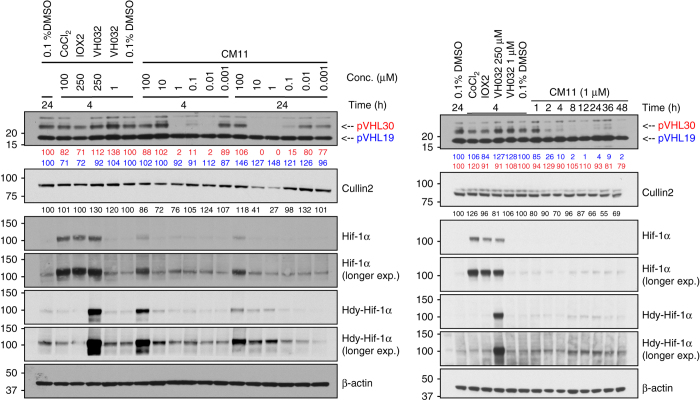
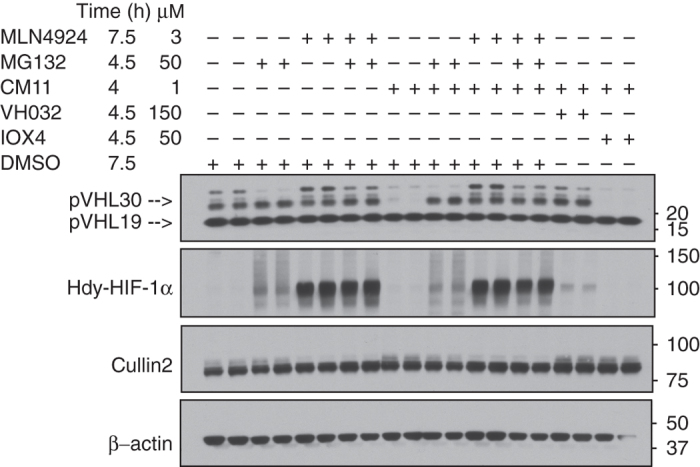
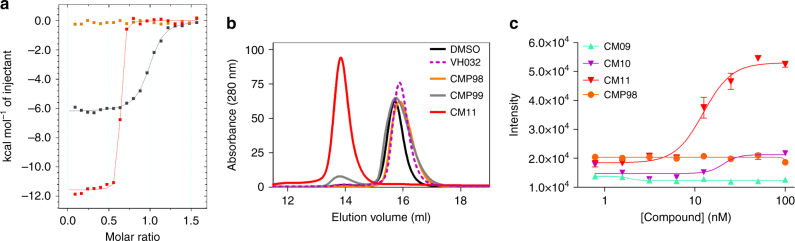
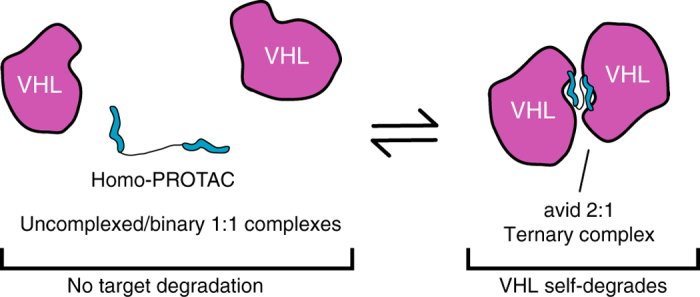
E3 ubiquitin ligases are key enzymes within the ubiquitin proteasome system which catalyze the ubiquitination of proteins, targeting them for proteasomal degradation. E3 ligases are gaining importance as targets to small molecules, both for direct inhibition and to be hijacked to induce the degradation of non-native neo-substrates using bivalent compounds known as PROTACs (for ‘proteolysis-targeting chimeras’). We describe Homo-PROTACs as an approach to dimerize an E3 ligase to trigger its suicide-type chemical knockdown inside cells. We provide proof-of-concept of Homo-PROTACs using diverse molecules composed of two instances of a ligand for the von Hippel-Lindau (VHL) E3 ligase. The most active compound, CM11, dimerizes VHL with high avidity in vitro and induces potent, rapid and proteasome-dependent self-degradation of VHL in different cell lines, in a highly isoform-selective fashion and without triggering a hypoxic response. This approach offers a novel chemical probe for selective VHL knockdown, and demonstrates the potential for a new modality of chemical intervention on E3 ligases.
Overview
The claims and statistics of this paper haven’t been checked yet.
Run the check — free, no account needed. It reads the open-access text and checks the sources it cites.
Integrity signals
Registry
Cites
Statistics
Figures
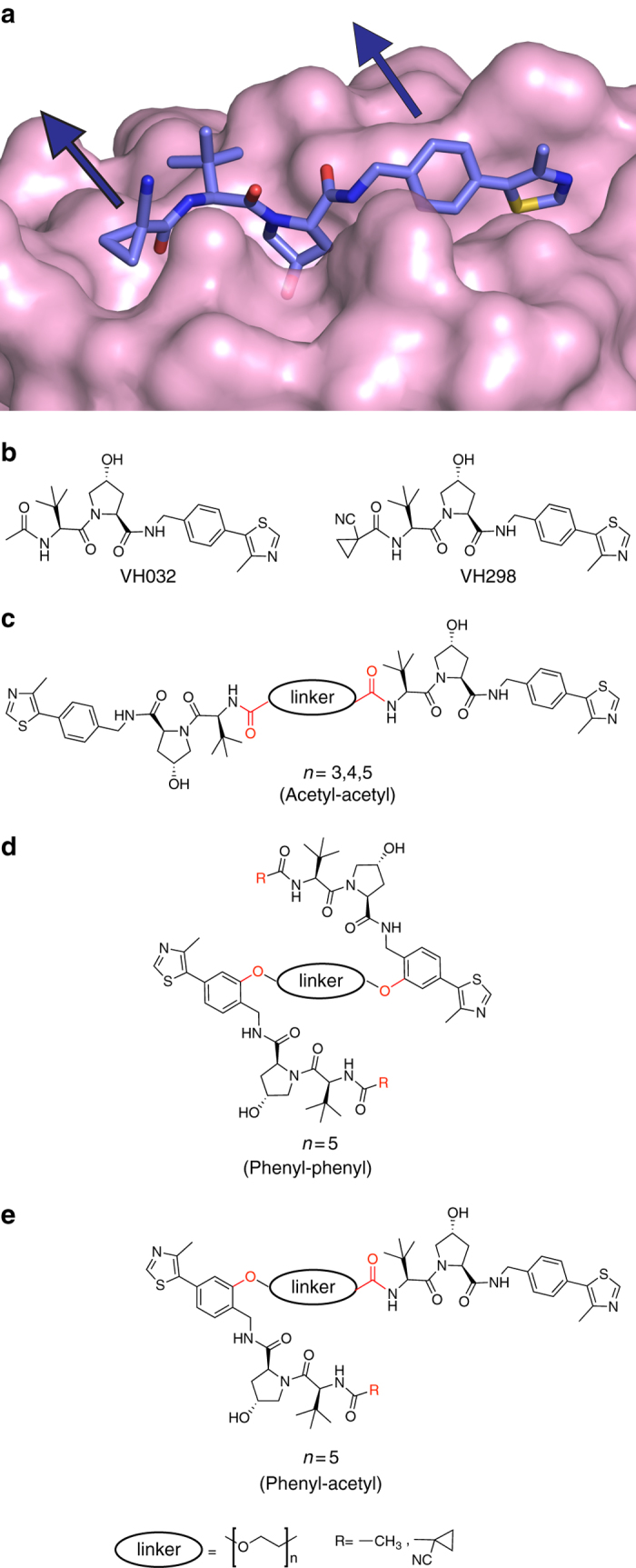
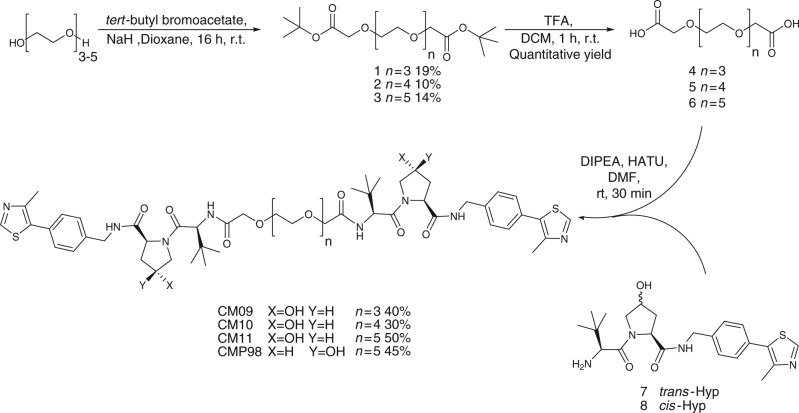
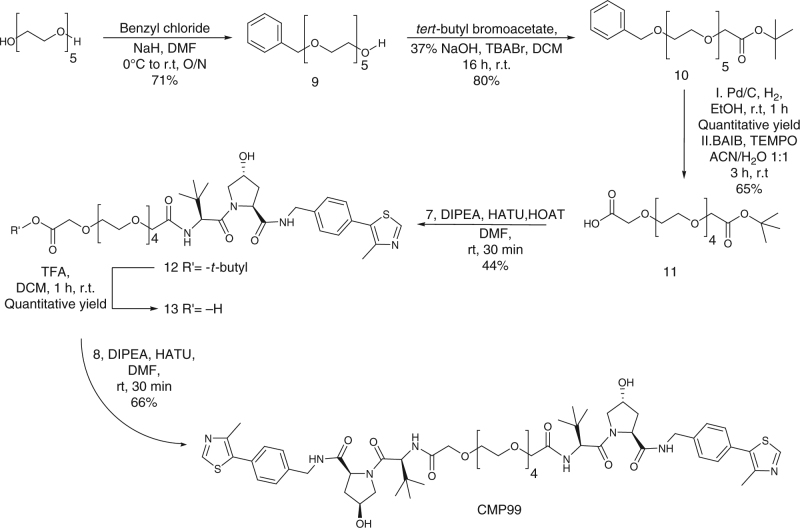
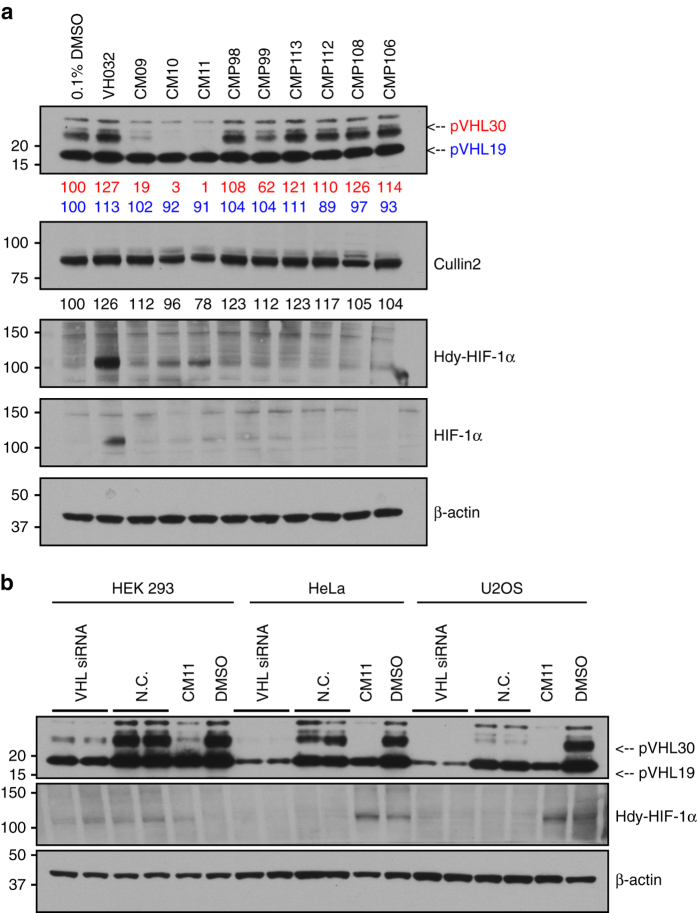
Verification
Claims the paper makes
The claims and statistics of this paper haven’t been checked yet.
Run the check — free, no account needed. It reads the open-access text and checks the sources it cites.
Claims other papers make about this one
Each is checked against this paper’s own text: does it say what the citing paper says it does?
In the citing paper
“The most active compound, CM11, specifically depleted the long isoform of VHL, VHL30, within 4 h at 10 nM concentration, providing an intriguing tool for research on isoform specific functions of VHL.”
From Advances in targeted degradation of endogenous proteins (2019) · cites this paper as [95]
Self-check
Percentages, sums and reported differences re-computed from the paper’s own numbers.
The self-check needs the paper’s full text.
Citations
Cites
The tumour suppressor protein VHL targets hypoxia-inducible factors for oxygen-dependent proteolysis
Maxwell, P. H., Wiesener, M. S., Chang, G.-W., Clifford, S. C., Vaux, E. C., Cockman, M. E., Wykoff, C. C., Pugh, C. W., Maher, E. R., & Ratcliffe, P. J. (1999) · Nature · doi:10.1038/20459 · Cited by 5,180
In Vivo Activation of the p53 Pathway by Small-Molecule Antagonists of MDM2
Vassilev, L. T., Vu, B. T., Graves, B., Carvajal, D., Podlaski, F., Filipovic, Z., Kong, N., Kammlott, U., Lukacs, C., Klein, C., et al. (2004) · Science · doi:10.1126/science.1092472 · Cited by 4,661
Komander, D., & Rape, M. (2012) · Annual Review of Biochemistry · doi:10.1146/annurev-biochem-060310-170328 · Cited by 3,679
Mechanisms Underlying Ubiquitination
Pickart, C. M. (2001) · Annual Review of Biochemistry · doi:10.1146/annurev.biochem.70.1.503 · Cited by 3,184
Identification of a Primary Target of Thalidomide Teratogenicity
Ito, T., Ando, H., Suzuki, T., Ogura, T., Hotta, K., Imamura, Y., Yamaguchi, Y., & Handa, H. (2010) · Science · doi:10.1126/science.1177319 · Cited by 2,136
An inhibitor of NEDD8-activating enzyme as a new approach to treat cancer
Soucy, T. A., Smith, P. G., Milhollen, M. A., Berger, A. J., Gavin, J. M., Adhikari, S., Brownell, J. E., Burke, K. E., Cardin, D. P., Critchley, S., et al. (2009) · Nature · doi:10.1038/nature07884 · Cited by 1,990
Lenalidomide Causes Selective Degradation of IKZF1 and IKZF3 in Multiple Myeloma Cells
Krönke, J., Udeshi, N. D., Narla, A., Grauman, P., Hurst, S. N., McConkey, M., Svinkina, T., Heckl, D., Comer, E., Li, X., et al. (2014) · Science · doi:10.1126/science.1244851 · Cited by 1,879
Phthalimide conjugation as a strategy for in vivo target protein degradation
Winter, G. E., Buckley, D. L., Paulk, J., Roberts, J. M., Souza, A., Dhe-Paganon, S., & Bradner, J. E. (2015) · Science · doi:10.1126/science.aab1433 · Cited by 1,760
Mechanism of auxin perception by the TIR1 ubiquitin ligase
Tan, X., Calderon-Villalobos, L. I. A., Sharon, M., Zheng, C., Robinson, C. V., Estelle, M., & Zheng, N. (2007) · Nature · doi:10.1038/nature05731 · Cited by 1,688
The Myeloma Drug Lenalidomide Promotes the Cereblon-Dependent Destruction of Ikaros Proteins
Lu, G., Middleton, R. E., Sun, H., Naniong, M., Ott, C. J., Mitsiades, C. S., Wong, K.-K., Bradner, J. E., & Kaelin, W. G. (2014) · Science · doi:10.1126/science.1244917 · Cited by 1,583
Research works printed but not linked: 1
- Uehara, T. et al. Selective degradation of splicing factor CAPERα by anticancer sulfonamides. Nat. Chem. Biol. 13, 675–680 (2017). · DOI · Paper page
Cited by
Sorted by citations
Items 201–260 of 260
Lin, C., Hsu, J., Hsu, Y., Fan, K.-C., Wu, S., Lin, M., Guh, J., & Yu, C. (2025) · Journal of Enzyme Inhibition and Medicinal Chemistry · doi:10.1080/14756366.2025.2468355 · Cited by 3
Huang, M., Wei, F., Cao, J., & Jiang, H. (2025) · Bioorganic Chemistry · doi:10.1016/j.bioorg.2025.108985 · Cited by 4
Facile Synthesis of Homodimeric Protein Ligands
Gui, W., & Kodadek, T. J. (2023) · ChemBioChem · doi:10.1002/cbic.202300392 · Cited by 3
Proteolysis-Targeting Chimeras: A Kaleidoscope of Targeted Protein Degradation
Mou, Y., Wen, S., Gao, X., & Jiang, Z. (2021) · Future Medicinal Chemistry · doi:10.4155/fmc-2021-0199 · Cited by 3
Trivalent PROTACs Enhance Protein Degradation Through Cooperativity and AvidityPreprint
Imaide, S., Riching, K. M., Vetma, V., Whitworth, C., Hughes, S. J., Trainor, N. B., Mahan, S. D., Murphy, N., Chan, K.-H., Testa, A., et al. (2020) · ChemRxiv · doi:10.26434/chemrxiv.13218695.v1 · Cited by 3
Self-citationTargeted Protein Degradation and Delivery Strategies in the Context of Neurological Disorders
Lu, H., Yang, Z., Kayumov, M., Wang, Y., Tang, F., Wang, X., Xia, T., Lei, T., Tong, F., & Gao, H. (2026) · ACS Nano · doi:10.1021/acsnano.6c04420 · Cited by 3
The importance of controls in targeted protein degradation: Determining mechanism
Hill-Payne, B., Dilones, S., & Burslem, G. M. (2022) · Methods in enzymology on CD-ROM/Methods in enzymology · doi:10.1016/bs.mie.2022.10.006 · Cited by 3
Emerging pharmacology of targeted protein degraders
Barghout, S. H., & Eldeeb, M. A. (2025) · Journal of Pharmacology and Experimental Therapeutics · doi:10.1016/j.jpet.2025.103694 · Cited by 2
Diehl, C. J., Salerno, A., & Ciulli, A. (2024) · Angewandte Chemie · doi:10.1002/ange.202319456 · Cited by 1
Self-citationExploring the Role of PROTACs for the Treatment of Breast Cancer
Pannu, A. S., Goyal, R. K., & Goswami, S. (2024) · Springer eBooks · doi:10.1007/978-981-97-5077-1_12 · Cited by 1
PHD3-VHL axis controls HIV-2 infection through oxygen-dependent hydroxylation and degradation of Vpx
Miyakawa, K., Tanaka, K., Ino, Y., Kimura, Y., Kameya, T., Mizukoshi, F., Nishi, M., Yokoyama, M., Nakabayashi, J., Nomaguchi, M., et al. (2025) · PLoS Pathogens · doi:10.1371/journal.ppat.1013241 · Cited by 1
Degraders of cell cycle- and antiapoptosis-related proteins
Zhang, Y., Dong, R., & Zhang, B. (2025) · Elsevier eBooks · doi:10.1016/b978-0-443-21816-3.00002-6 · Cited by 1
Context matters in PROTAC design: navigating the trade-off between degradation and developability
Zhang, B., Zhang, Y., Zhang, B., Hu, J., Ke, C., Wu, T., Wei, M., Xia, J., Wang, M., Zhao, Q., et al. (2026) · Journal of Enzyme Inhibition and Medicinal Chemistry · doi:10.1080/14756366.2026.2707656 · Cited by 1
Targeted Protein Degradation Chemical Probes
Galdeano, C., & Barril, X. (2020) · Royal Society of Chemistry eBooks · doi:10.1039/9781839160745-00150 · Cited by 1
Structural and Biophysical Principles of Degrader Ternary Complexes
Zollman, D., & Ciulli, A. (2020) · Royal Society of Chemistry eBooks · doi:10.1039/9781839160691-00014 · Cited by 3
Self-citationTrivalent PROTACs Enhance Protein Degradation Through Cooperativity and AvidityPreprint
Imaide, S., Riching, K. M., Vetma, V., Whitworth, C., Hughes, S. J., Trainor, N. B., Mahan, S. D., Murphy, N., Chan, K.-H., Testa, A., et al. (2020) · ChemRxiv · doi:10.26434/chemrxiv.13218695 · Cited by 1
Self-citationBacPROTAC-induced degradation of ClpC1 as a new strategy against drug-resistant mycobacteriaPreprint
Junk, L., Schmiedel, V. M., Guha, S., Greb, P., Fischel, K., Rumpel, K., Kaur, P., Krishnamurthy, R. V., Narayanan, S., Kofink, C. C., et al. (2022) · ChemRxiv · doi:10.26434/chemrxiv-2022-8hnrh · Cited by 1
Crowe, C., Salerno, A., Sathe, G. J., Marsh, G. P., Maple, H. J., & Ciulli, A. (2025) · bioRxiv (Cold Spring Harbor Laboratory) · doi:10.1101/2025.11.18.689129 · Cited by 1
Self-citationDi-Ras2 Promotes Renal Cell Carcinoma Formation by Activating the MAPK Pathway in the Absence of VHLPreprint
Rao, H., Li, X., Liu, M., Liu, J., Li, X., Xu, J., Li, L., & Gao, W. (2019) · bioRxiv (Cold Spring Harbor Laboratory) · doi:10.1101/683821
Механізми адаптації клітин до гіпоксії, або як «перекрити кисень» злоякісній пухлині
Комісаренко, С. В., & Романюк, С. И. (2019) · Visnik Nacional noi academii nauk Ukrai ni · doi:10.15407/visn2019.12.003
An Efficient Approach Toward Drugging Undruggable Targets
Gamo, K., Kitamoto, N., Kanemaki, M. T., & Tominari, Y. (2020) · Royal Society of Chemistry eBooks · doi:10.1039/9781839160691-00167
VHL ligand binding increases intracellular level of VHLPreprint
Frost, J., Rocha, S., & Ciulli, A. (2021) · bioRxiv (Cold Spring Harbor Laboratory) · doi:10.1101/2021.04.12.439487
Self-citationApplications of Targeted Protein Degradation in Drug Discovery
Jin, J.-Q. (2021) · Annals of Chemical Science Research · doi:10.31031/acsr.2021.02.000541
Spatial dimension and demographic dynamics of Kenyas urban subsystem.
Obudho, R. A. (1976)
Lowe, J. A., III (2021) · Faculty Opinions – Post-Publication Peer Review of the Biomedical Literature · doi:10.3410/f.739908982.793584562
Targeted Protein Degradation in Antiviral Drug Discovery
de Wispelaere, M., & Yang, P. L. (2022) · Wiley eBooks · doi:10.1002/9781119774198.ch14
Kodadek, T. J. (2023) · Angewandte Chemie · doi:10.1002/ange.202316726
New modalities: Drugging the undruggable GPCR targets
Zawadzki, P., Graczyk, P. P., & Staroń, J. (2025) · Elsevier eBooks · doi:10.1016/b978-0-443-29808-0.00030-3
PROTACS- targeted protein degradation as a path to precision cancer therapeutics
Gatley, H. R., Fisher, P. B., & Das, S. K. (2025) · Advances in cancer research · doi:10.1016/bs.acr.2025.08.001
Valdambrini, E., Kodadek, T. J., Peel, M. R., & Barany, F. (2026) · Future Medicinal Chemistry · doi:10.1080/17568919.2026.2628524
Direct-to-Biology Enables Rapid Identification of Potent FBXO22 DegradersPreprint
Brown, C., Patel, S., Habaz, L., Szewczyk, M. M., Istayeva, A., Loppnau, P., Green, S., Brown, J. S., Arrowsmith, C. H., Barsyte-Lovejoy, D., et al. (2026) · bioRxiv (Cold Spring Harbor Laboratory) · doi:10.64898/2026.03.01.708846
Le protéasome et le fer : rôles et/ou régulations dans le nucléole d’Arabidopsis thaliana
Montacié, C. (2019) · theses.fr (ABES) · doi:10.70675/19513209z9ae3z4903z9d88z0d9e3ee4a286
Yang, Y., & Lin, Y. W. (2026) · Breast Cancer Research · doi:10.1186/s13058-026-02320-w
BindingDB Entry 50015880: Estimating the cooperativity of PROTAC-induced ternary complexes using
BindingDB (2023) · Discovery Research Portal (University of Dundee) · doi:10.7270/q2cf9v3m
BindingDB (2020) · Discovery Research Portal (University of Dundee) · doi:10.7270/q2639scc
Linker attachment points: “finishing touch” in PROTAC design
jiang, Q., Shi, H.-S., Zhao, C.-S., Wang, Z.-Y., Yu, M.-M., Zhang, X.-Y., & Liu, C.-J. (2026) · RSC Medicinal Chemistry · doi:10.1039/d6md00346j
A Dimeric Protein-RNA Glue Promotes Multivalent eIF4A-RNA Assembly
Liu, J., Moore, M. K., Lou, K., Wassarman, D. R., Arab, A., Ojeda, S., Karakyriakou, B., Koglin, A.-S., Ott, C. J., Gilbert, L. A., et al. (2026) · ACS Central Science · doi:10.1021/acscentsci.6c00662
Targeted protein degradation: mechanistic diversity, therapeutic expansion, and clinical translation
Wang, C., Guo, Z., Liu, Y., Gao, Q., Wang, Q., Liu, Y., & Liu, Y. (2026) · International Journal of Pharmaceutics · doi:10.1016/j.ijpharm.2026.127323
Development of Oligo-PROTACs That Target C/EBPα
Cai, J., Qi, X., Smiley, A. T., & Brownfield, D. (2026) · ACS Chemical Biology · doi:10.1021/acschembio.6c00462
Fitness criteria for PROTACs as chemical probes: principles and applications
Sturbaut, M., & Ciulli, A. (2026) · Essays in Biochemistry · doi:10.1042/ebc20260006 · Cited by 1
Self-citationFeng, X., Li, N., Chen, X., Cao, X., Dai, J., Xiong, S., & Yuan, Z. (2026) · Biochemical Pharmacology · doi:10.1016/j.bcp.2026.118532
Rana, N., & Patel, A. S. (2026) · Expert Opinion on Drug Metabolism & Toxicology · doi:10.1080/17425255.2026.2752978
BindingDB Entry 50010808: Medicinal Chemistry of Inhibiting RING-Type E3 Ubiquitin Ligases.
BindingDB (2021) · UC San Diego · doi:10.7270/q2qn6bbk
BindingDB (2020) · UC San Diego · doi:10.7270/q2hx1gb7
BindingDB Entry 50018749: PROTAC: A promising technology for cancer treatment.
BindingDB (2024) · UC San Diego · doi:10.7270/q2q244hq
BindingDB (2022) · UC San Diego · doi:10.7270/q2q243z4
BindingDB (2024) · UC San Diego · doi:10.7270/q2x352pq
BindingDB Entry 50007847: Development of selective small molecule MDM2 degraders based on nutlin.
BindingDB (2021) · UC San Diego · doi:10.7270/q22j6g6h
BindingDB (2024) · UC San Diego · doi:10.7270/q2vh5t9d
Metadata
- Authors
- Maniaci, C., Hughes, S. J., Testa, A., Chen, W., Lamont, D. J., Rocha, S., Alessi, D. R., Romeo, R., & Ciulli, A.
- Affiliations
- University of Dundee (GB)
- University of Messina (IT)
- Corresponding author
- Ciulli, Alessio
- ORCID
- Venue
- Nature Communications
- Published
- 2017-10-10
- Volume
- 8
- Issue
- 1
- Pages
- 830-830
- ISSN
- 2041-1723 (ISSN-L)
- PMC
- PMC5635026
- OpenAlex
- W2761240402
- Cited by
- 245
- References
- 75
- Citations by year
- 2026: 16 · 2025: 20 · 2024: 21 · 2023: 36 · 2022: 37 · 2021: 27 · 2020: 37 · 2019: 37 · 2018: 12 · 2017: 1
- FWCI
- 9.94
- Type
- journal article
- Language
- en
- Open access
- gold
- doi.org
- Locations
- Nature Communications (publishedVersion, cc-by)
- Europe PMC (PubMed Central) (publishedVersion, cc-by)
- PubMed Central (publishedVersion, cc-by)
- PubMed (publishedVersion)
- RePEc: Research Papers in Economics (submittedVersion)
- Discovery Research Portal (University of Dundee) (submittedVersion, cc-by)
- DOAJ (DOAJ: Directory of Open Access Journals) (submittedVersion)
- DOAJ (DOAJ: Directory of Open Access Journals) (submittedVersion, cc-by-sa)
- Newcastle University ePrints (Newcastle Univesity) (cc-by)
- Funders
- Wellcome Trust (100476, 100476/Z/12/Z)
- Cancer Research UK (C99667/A12918, 12918)
- Ministero dell’Istruzione, dell’Università e della Ricerca
- Medical Research Council (MC_UU_12016, MC_UU_12016/2)
- FP7 Ideas: European Research Council (311460)
- Topics
- Life Sciences › Biochemistry, Genetics and Molecular Biology › Molecular Biology › Protein Degradation and Inhibitors
- Life Sciences › Biochemistry, Genetics and Molecular Biology › Molecular Biology › Ubiquitin and proteasome pathways
- Physical Sciences › Chemistry › Organic Chemistry › Chemical Synthesis and Analysis
- Keywords
- PROTACs, VHL E3 ubiquitin ligase, ligand-induced dimerization, proteasomal degradation, isoform selectivity, ubiquitin-proteasome system, chemical probes
- MeSH terms
- Humans, Ligands, Dimerization, Ubiquitin, Ubiquitin-Protein Ligases, Proteasome Endopeptidase Complex, Von Hippel-Lindau Tumor Suppressor Protein, Small Molecule Libraries, Proteolysis
About these checks
Registry, retraction, Cites and statistics results are computed, not judged, with one exception: a printed reference that no index lists is read once by a model before it counts as a citation error. Claims are extracted by a model and kept only when their quote appears verbatim in the text; each cited source is then checked, with a model’s help, for whether it says what the claim relies on. Those verdicts can be wrong — read the claim’s quote and the cited source before relying on one.
Statistics and arithmetic are recomputed, not judged.
Confidence bands are shown only for fields calibrated on our annotated test set. None is calibrated yet, so no band is shown.
What counts as a claim ›How we measure confidence ›How we check this ›
Are you an author, or do you see a problem with this page? Request a review
