

The DOI matches its Crossref record; 74 of the 75 references it cites were found in a registry or an index.
Homo-PROTACs: bivalent small-molecule dimerizers of the VHL E3 ubiquitin ligase to induce self-degradation
Open accessAbstract
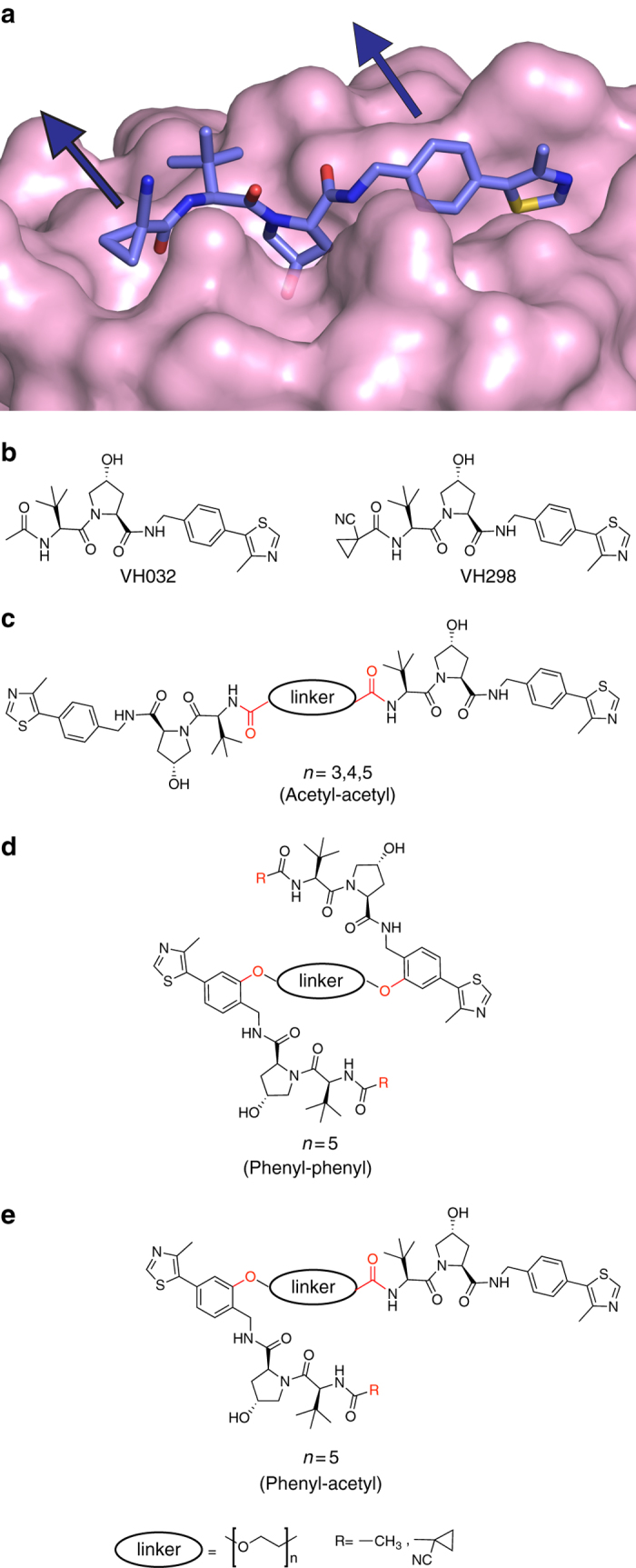
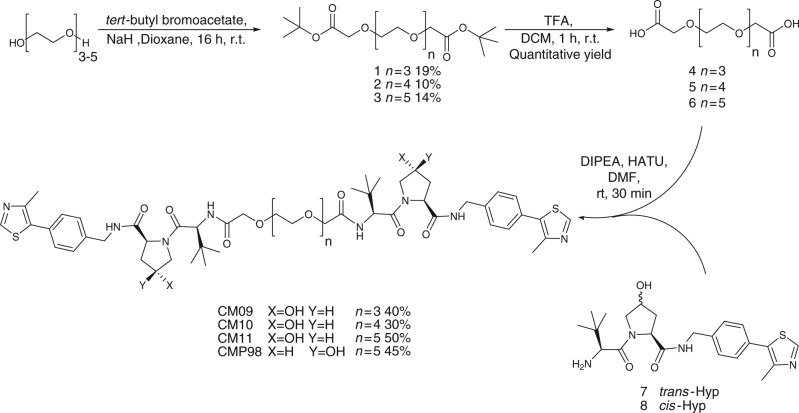
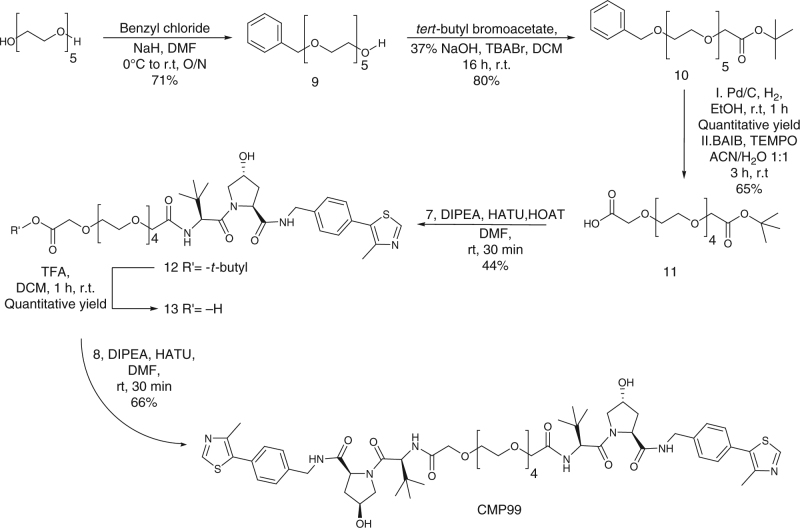
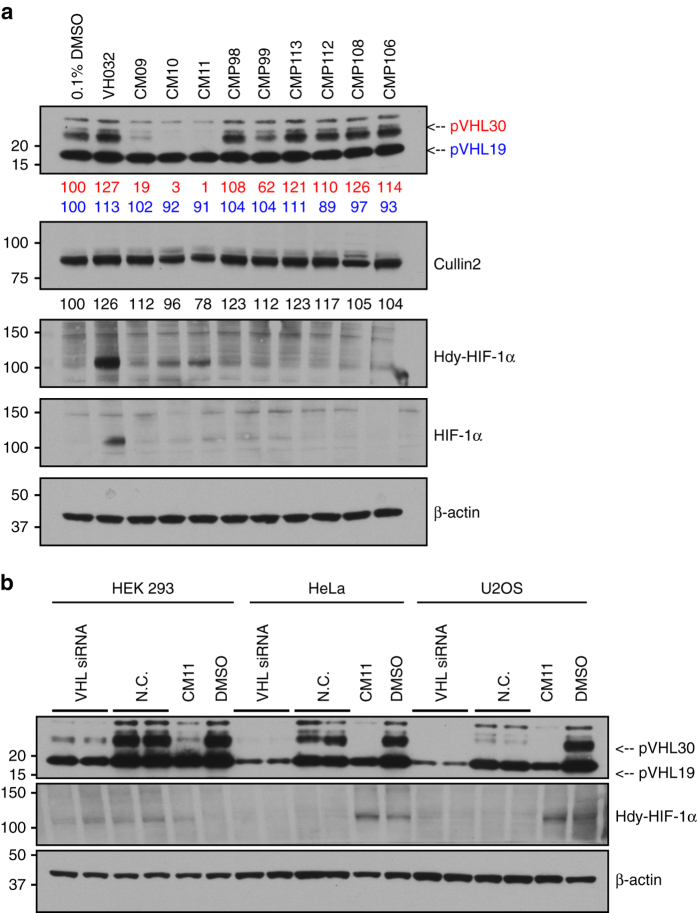
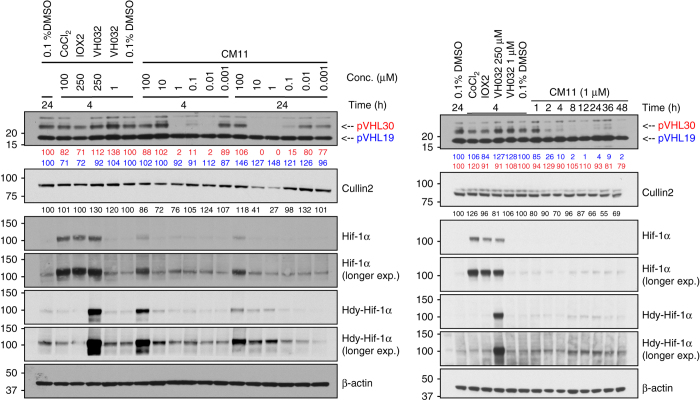
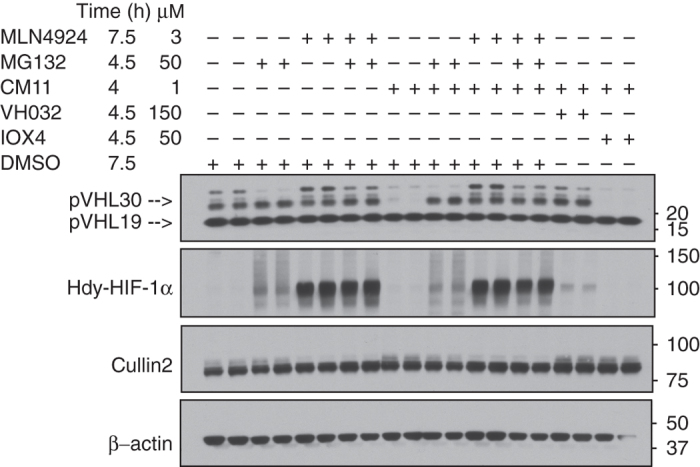
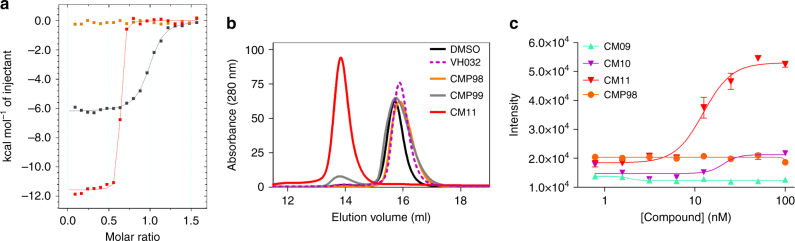
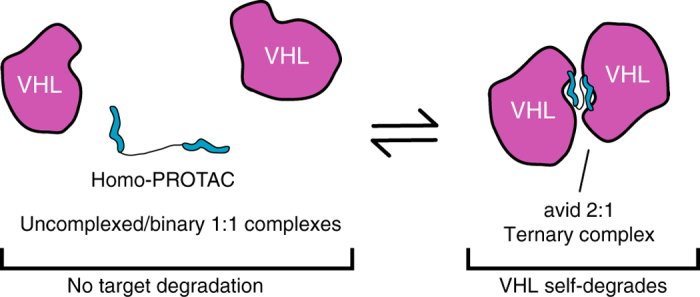
E3 ubiquitin ligases are key enzymes within the ubiquitin proteasome system which catalyze the ubiquitination of proteins, targeting them for proteasomal degradation. E3 ligases are gaining importance as targets to small molecules, both for direct inhibition and to be hijacked to induce the degradation of non-native neo-substrates using bivalent compounds known as PROTACs (for ‘proteolysis-targeting chimeras’). We describe Homo-PROTACs as an approach to dimerize an E3 ligase to trigger its suicide-type chemical knockdown inside cells. We provide proof-of-concept of Homo-PROTACs using diverse molecules composed of two instances of a ligand for the von Hippel-Lindau (VHL) E3 ligase. The most active compound, CM11, dimerizes VHL with high avidity in vitro and induces potent, rapid and proteasome-dependent self-degradation of VHL in different cell lines, in a highly isoform-selective fashion and without triggering a hypoxic response. This approach offers a novel chemical probe for selective VHL knockdown, and demonstrates the potential for a new modality of chemical intervention on E3 ligases.
Overview
The claims and statistics of this paper haven’t been checked yet.
Run the check — free, no account needed. It reads the open-access text and checks the sources it cites.
Integrity signals
Registry
Cites
Statistics
Figures
Verification
Claims the paper makes
The claims and statistics of this paper haven’t been checked yet.
Run the check — free, no account needed. It reads the open-access text and checks the sources it cites.
Claims other papers make about this one
Each is checked against this paper’s own text: does it say what the citing paper says it does?
In the citing paper
“The most active compound, CM11, specifically depleted the long isoform of VHL, VHL30, within 4 h at 10 nM concentration, providing an intriguing tool for research on isoform specific functions of VHL.”
From Advances in targeted degradation of endogenous proteins (2019) · cites this paper as [95]
Self-check
Percentages, sums and reported differences re-computed from the paper’s own numbers.
The self-check needs the paper’s full text.
Citations
Cites
The tumour suppressor protein VHL targets hypoxia-inducible factors for oxygen-dependent proteolysis
Maxwell, P. H., Wiesener, M. S., Chang, G.-W., Clifford, S. C., Vaux, E. C., Cockman, M. E., Wykoff, C. C., Pugh, C. W., Maher, E. R., & Ratcliffe, P. J. (1999) · Nature · doi:10.1038/20459 · Cited by 5,180
In Vivo Activation of the p53 Pathway by Small-Molecule Antagonists of MDM2
Vassilev, L. T., Vu, B. T., Graves, B., Carvajal, D., Podlaski, F., Filipovic, Z., Kong, N., Kammlott, U., Lukacs, C., Klein, C., et al. (2004) · Science · doi:10.1126/science.1092472 · Cited by 4,661
Komander, D., & Rape, M. (2012) · Annual Review of Biochemistry · doi:10.1146/annurev-biochem-060310-170328 · Cited by 3,679
Mechanisms Underlying Ubiquitination
Pickart, C. M. (2001) · Annual Review of Biochemistry · doi:10.1146/annurev.biochem.70.1.503 · Cited by 3,184
Identification of a Primary Target of Thalidomide Teratogenicity
Ito, T., Ando, H., Suzuki, T., Ogura, T., Hotta, K., Imamura, Y., Yamaguchi, Y., & Handa, H. (2010) · Science · doi:10.1126/science.1177319 · Cited by 2,136
An inhibitor of NEDD8-activating enzyme as a new approach to treat cancer
Soucy, T. A., Smith, P. G., Milhollen, M. A., Berger, A. J., Gavin, J. M., Adhikari, S., Brownell, J. E., Burke, K. E., Cardin, D. P., Critchley, S., et al. (2009) · Nature · doi:10.1038/nature07884 · Cited by 1,990
Lenalidomide Causes Selective Degradation of IKZF1 and IKZF3 in Multiple Myeloma Cells
Krönke, J., Udeshi, N. D., Narla, A., Grauman, P., Hurst, S. N., McConkey, M., Svinkina, T., Heckl, D., Comer, E., Li, X., et al. (2014) · Science · doi:10.1126/science.1244851 · Cited by 1,879
Phthalimide conjugation as a strategy for in vivo target protein degradation
Winter, G. E., Buckley, D. L., Paulk, J., Roberts, J. M., Souza, A., Dhe-Paganon, S., & Bradner, J. E. (2015) · Science · doi:10.1126/science.aab1433 · Cited by 1,760
Mechanism of auxin perception by the TIR1 ubiquitin ligase
Tan, X., Calderon-Villalobos, L. I. A., Sharon, M., Zheng, C., Robinson, C. V., Estelle, M., & Zheng, N. (2007) · Nature · doi:10.1038/nature05731 · Cited by 1,688
The Myeloma Drug Lenalidomide Promotes the Cereblon-Dependent Destruction of Ikaros Proteins
Lu, G., Middleton, R. E., Sun, H., Naniong, M., Ott, C. J., Mitsiades, C. S., Wong, K.-K., Bradner, J. E., & Kaelin, W. G. (2014) · Science · doi:10.1126/science.1244917 · Cited by 1,583
Ubiquitin ligases: structure, function, and regulation
Zheng, N., & Shabek, N. (2017) · Annual Review of Biochemistry · doi:10.1146/annurev-biochem-060815-014922 · Cited by 1,499
Induced protein degradation: an emerging drug discovery paradigm
Lai, A. C., & Crews, C. M. (2017) · Nature Reviews Drug Discovery · doi:10.1038/nrd.2016.211 · Cited by 1,486
Catalytic in vivo protein knockdown by small-molecule PROTACs
Bondeson, D. P., Mares, A., Smith, I. E. D., Ko, E., Campos, S., Miah, A. H., Mulholland, K. E., Routly, N., Buckley, D. L., Gustafson, J. L., et al. (2015) · Nature Chemical Biology · doi:10.1038/nchembio.1858 · Cited by 1,356
Structural basis of PROTAC cooperative recognition for selective protein degradation
Gadd, M. S., Testa, A., Lucas, X., Chan, K.-H., Chen, W., Lamont, D. J., Zengerle, M., & Ciulli, A. (2017) · Nature Chemical Biology · doi:10.1038/nchembio.2329 · Cited by 1,242
Self-citationStructure of the DDB1–CRBN E3 ubiquitin ligase in complex with thalidomide
Fischer, E. S., Böhm, K., Lydeard, J. R., Yang, H., Stadler, M. B., Cavadini, S., Nagel, J., Serluca, F., Acker, V., Lingaraju, G. M., et al. (2014) · Nature · doi:10.1038/nature13527 · Cited by 1,141
Hijacking the E3 Ubiquitin Ligase Cereblon to Efficiently Target BRD4
Lu, J., Qian, Y., Altieri, M., Dong, H., Wang, J., Raina, K., Hines, J., Winkler, J. D., Crew, A. P., Coleman, K., et al. (2015) · Chemistry & Biology · doi:10.1016/j.chembiol.2015.05.009 · Cited by 1,140
Small-Molecule Inhibitors of Protein-Protein Interactions: Progressing toward the Reality
Arkin, M. R., Tang, Y., & Wells, J. A. (2014) · Chemistry & Biology · doi:10.1016/j.chembiol.2014.09.001 · Cited by 1,065
Selective Small Molecule Induced Degradation of the BET Bromodomain Protein BRD4
Zengerle, M., Chan, K.-H., & Ciulli, A. (2015) · ACS Chemical Biology · doi:10.1021/acschembio.5b00216 · Cited by 1,056
Self-citationStructure of the VHL-ElonginC-ElonginB Complex: Implications for VHL Tumor Suppressor Function
Stebbins, C. E., Kaelin, W. G., & Pavletich, N. P. (1999) · Science · doi:10.1126/science.284.5413.455 · Cited by 852
PROTAC-induced BET protein degradation as a therapy for castration-resistant prostate cancer
Raina, K., Lu, J., Qian, Y., Altieri, M., Gordon, D., Rossi, A. M. K., Wang, J., Chen, X., Dong, H., Siu, K., et al. (2016) · Proceedings of the National Academy of Sciences · doi:10.1073/pnas.1521738113 · Cited by 852
Controlling Signal Transduction with Synthetic Ligands
Spencer, D. M., Wandless, T. J., Schreiber, S. L., & Crabtree, G. R. (1993) · Science · doi:10.1126/science.7694365 · Cited by 845
The promise and peril of chemical probes
Arrowsmith, C. H., Audia, J. E., Austin, C., Baell, J., Bennett, J., Blagg, J., Bountra, C., Brennan, P. E., Brown, P. J., Bunnage, M. E., et al. (2015) · Nature Chemical Biology · doi:10.1038/nchembio.1867 · Cited by 839
VHL, the story of a tumour suppressor gene
Gossage, L., Eisen, T. G., & Maher, E. R. (2014) · Nature reviews. Cancer · doi:10.1038/nrc3844 · Cited by 800
Rbx1, a Component of the VHL Tumor Suppressor Complex and SCF Ubiquitin Ligase
Kamura, T., Koepp, D. M., Conrad, M. N., Skowyra, D., Moreland, R. J., Iliopoulos, O., Lane, W. S., Kaelin, W. G., Elledge, S. J., Conaway, R. C., et al. (1999) · Science · doi:10.1126/science.284.5414.657 · Cited by 786
Anticancer sulfonamides target splicing by inducing RBM39 degradation via recruitment to DCAF15
Han, T., Goralski, M., Gaskill, N., Capota, E., Kim, J., Ting, T. C., Xie, Y., Williams, N. S., & Nijhawan, D. (2017) · Science · doi:10.1126/science.aal3755 · Cited by 762
The von Hippel–Lindau tumour suppressor protein: O2 sensing and cancer
Kaelin, W. G. (2008) · Nature reviews. Cancer · doi:10.1038/nrc2502 · Cited by 754
A novel cereblon modulator recruits GSPT1 to the CRL4CRBN ubiquitin ligase
Matyskiela, M. E., Lu, G., Ito, T., Pagarigan, B., Lu, C.-C., Miller, K., Fang, W., Wang, N.-Y., Nguyen, D., Houston, J., et al. (2016) · Nature · doi:10.1038/nature18611 · Cited by 701
Small‐Molecule PROTACS: New Approaches to Protein Degradation
Toure, M., & Crews, C. M. (2016) · Angewandte Chemie International Edition · doi:10.1002/anie.201507978 · Cited by 674
Drug discovery in the ubiquitin–proteasome system
Nalepa, G., Rolfe, M., & Harper, J. W. (2006) · Nature Reviews Drug Discovery · doi:10.1038/nrd2056 · Cited by 635
Structural basis of lenalidomide-induced CK1α degradation by the CRL4CRBN ubiquitin ligase
Petzold, G., Fischer, E. S., & Thomä, N. H. (2016) · Nature · doi:10.1038/nature16979 · Cited by 620
Modular PROTAC design for the degradation of oncogenic BCR-ABL
Lai, A. C., Toure, M., Hellerschmied, D., Salami, J., Jaime‐Figueroa, S., Ko, E., Hines, J., & Crews, C. M. (2016) · Angewandte Chemie International Edition · doi:10.1002/anie.201507634 · Cited by 618
Buckley, D. L., Van Molle, I., Gareiss, P. C., Tae, H. S., Michel, J., Noblin, D. J., Jorgensen, W. L., Ciulli, A., & Crews, C. M. (2012) · Journal of the American Chemical Society · doi:10.1021/ja209924v · Cited by 569
Self-citationMorreale, F. E., & Walden, H. (2016) · Cell · doi:10.1016/j.cell.2016.03.003 · Cited by 495
HaloPROTACS: Use of Small Molecule PROTACs to Induce Degradation of HaloTag Fusion Proteins
Buckley, D. L., Raina, K., Darricarrere, N., Hines, J., Gustafson, J. L., Smith, I. E., Miah, A. H., Harling, J. D., & Crews, C. M. (2015) · ACS Chemical Biology · doi:10.1021/acschembio.5b00442 · Cited by 488
A Comprehensive Mathematical Model for Three-Body Binding Equilibria
Douglass, E. F., Miller, C. J., Sparer, G., Shapiro, H., & Spiegel, D. A. (2013) · Journal of the American Chemical Society · doi:10.1021/ja311795d · Cited by 472
(2002) · PubMed · Cited by 457
Drugging the undruggables: exploring the ubiquitin system for drug development
Huang, X., & Dixit, V. M. (2016) · Cell Research · doi:10.1038/cr.2016.31 · Cited by 427
Galdeano, C., Gadd, M. S., Soares, P., Scaffidi, S., Molle, I. V., Birced, I., Hewitt, S. H., Dias, D. M. G., & Ciulli, A. (2014) · Journal of Medicinal Chemistry · doi:10.1021/jm5011258 · Cited by 424
Self-citationProtein Degradation by In-Cell Self-Assembly of Proteolysis Targeting Chimeras
Lebraud, H., Wright, D. J., Johnson, C. N., & Heightman, T. D. (2016) · ACS Central Science · doi:10.1021/acscentsci.6b00280 · Cited by 413
Itoh, Y., Ishikawa, M., Naito, M., & Hashimoto, Y. (2010) · Journal of the American Chemical Society · doi:10.1021/ja100691p · Cited by 404
Biochemical mechanisms of drug action: what does it take for success?
Swinney, D. C. (2004) · Nature Reviews Drug Discovery · doi:10.1038/nrd1500 · Cited by 400
Selective degradation of splicing factor CAPERα by anticancer sulfonamides
Uehara, T., Minoshima, Y., Sagane, K., Sugi, N. H., Mitsuhashi, K. O., Yamamoto, N., Kamiyama, H., Takahashi, K., Kotake, Y., Uesugi, M., et al. (2017) · Nature Chemical Biology · doi:10.1038/nchembio.2363 · Cited by 396
Discovery of RG7112: a small-molecule MDM2 inhibitor in clinical development
Vu, B., Wovkulich, P., Pizzolato, G., Lovey, A., Ding, Q., Jiang, N., Liu, J.-J., Zhao, C., Glenn, K., Wen, Y., et al. (2013) · ACS Medicinal Chemistry Letters · doi:10.1021/ml4000657 · Cited by 395
Discovery of Potent Antagonists of the Antiapoptotic Protein XIAP for the Treatment of Cancer
Oost, T. K., Sun, C. C., Armstrong, R. C., Al-Assaad, A.-S., Betz, S. F., Deckwerth, T. L., Ding, H., Elmore, S. W., Meadows, R. P., Olejniczak, E. T., et al. (2004) · Journal of Medicinal Chemistry · doi:10.1021/jm040037k · Cited by 367
SCF ubiquitin ligase-targeted therapies
Skaar, J. R., Pagan, J. K., & Pagano, M. (2014) · Nature Reviews Drug Discovery · doi:10.1038/nrd4432 · Cited by 344
Regulation of microtubule stability by the von Hippel-Lindau tumour suppressor protein pVHL
Hergovich, A., Lisztwan, J. H., Barry, R. E., Ballschmieter, P., & Krek, W. (2002) · Nature Cell Biology · doi:10.1038/ncb899 · Cited by 334
Davies, T. G., Wixted, W. E., Coyle, J. E., Griffiths-Jones, C., Hearn, K., McMenamin, R., Norton, D., Rich, S. J., Richardson, C., Saxty, G., et al. (2016) · Journal of Medicinal Chemistry · doi:10.1021/acs.jmedchem.6b00228 · Cited by 322
Petroski, M. D., & Deshaies, R. J. (2005) · Cell · doi:10.1016/j.cell.2005.09.033 · Cited by 309
Targeting proteins for degradation.
Schrader, E. K., Harstad, K. G., & Matouschek, A. (2009) · Nature Chemical Biology · doi:10.1038/nchembio.250 · Cited by 287
Frost, J., Galdeano, C., Soares, P., Gadd, M. S., Grzes, K. M., Ellis, L. C. J., Epemolu, O., Shimamura, S., Bantscheff, M., Grandi, P., et al. (2016) · Nature Communications · doi:10.1038/ncomms13312 · Cited by 246
Self-citationOhoka, N., Okuhira, K., Ito, M., Nagai, K., Shibata, N., Hattori, T., Ujikawa, O., Shimokawa, K., Sano, O., Koyama, R., et al. (2017) · Journal of Biological Chemistry · doi:10.1074/jbc.m116.768853 · Cited by 240
Formation of the VHL–Elongin BC Tumor Suppressor Complex Is Mediated by the Chaperonin TRiC
Feldman, D. E., Thulasiraman, V., Ferreyra, R. G., & Frydman, J. (1999) · Molecular Cell · doi:10.1016/s1097-2765(00)80233-6 · Cited by 238
Bulatov, E., & Ciulli, A. (2015) · Biochemical Journal · doi:10.1042/bj20141450 · Cited by 237
Self-citationSchoenfeld, A. R., Davidowitz, E. J., & Burk, R. D. (1998) · Proceedings of the National Academy of Sciences · doi:10.1073/pnas.95.15.8817 · Cited by 236
Sun, H., Nikolovska‐Coleska, Z., Lü, J., Meagher, J. L., Yang, C., Qiu, S., Tomita, Y. A., Ueda, Y., Jiang, S., Krajewski, K., et al. (2007) · Journal of the American Chemical Society · doi:10.1021/ja074725f · Cited by 211
Molle, I. V., Thomann, A., Buckley, D. L., So, E. C., Lang, S., Crews, C. M., & Ciulli, A. (2012) · Chemistry & Biology · doi:10.1016/j.chembiol.2012.08.015 · Cited by 203
Self-citationDesign and Applications of Bifunctional Small Molecules: Why Two Heads Are Better Than One
Corson, T. W., Aberle, N. S., & Crews, C. M. (2008) · ACS Chemical Biology · doi:10.1021/cb8001792 · Cited by 171
Design and characterization of bivalent BET inhibitors
Tanaka, M., Roberts, J. M., Seo, H., Souza, A., Paulk, J., Scott, T. G., DeAngelo, S. L., Dhe‐Paganon, S., & Bradner, J. E. (2016) · Nature Chemical Biology · doi:10.1038/nchembio.2209 · Cited by 160
Elongin BC complex prevents degradation of von Hippel-Lindau tumor suppressor gene products
Schoenfeld, A. R., Davidowitz, E. J., & Burk, R. D. (2000) · Proceedings of the National Academy of Sciences · doi:10.1073/pnas.97.15.8507 · Cited by 135
Jiang, Z., Lu, M., & You, Q. (2016) · Journal of Medicinal Chemistry · doi:10.1021/acs.jmedchem.6b00586 · Cited by 128
The multifaceted von Hippel–Lindau tumour suppressor protein
Robinson, C. M., & Ohh, M. (2014) · FEBS Letters · doi:10.1016/j.febslet.2014.02.026 · Cited by 101
Target Engagement in Lead Generation
Durham, T. B., & Blanco, M.-J. (2015) · Bioorganic & Medicinal Chemistry Letters · doi:10.1016/j.bmcl.2014.12.076 · Cited by 99
Two sides to every story: the HIF-dependent and HIF-independent functions of pVHL
Li, M., & Kim, W. Y. (2010) · Journal of Cellular and Molecular Medicine · doi:10.1111/j.1582-4934.2010.01238.x · Cited by 98
Lucas, X., & Ciulli, A. (2017) · Current Opinion in Structural Biology · doi:10.1016/j.sbi.2016.12.015 · Cited by 92
Self-citationChessari, G., Buck, I. M., Day, J. E. H., Day, P. J., Iqbal, A., Johnson, C. N., Lewis, E. J., Martins, V., Miller, D., Reader, M., et al. (2015) · Journal of Medicinal Chemistry · doi:10.1021/acs.jmedchem.5b00706 · Cited by 90
The von Hippel–Lindau tumour suppressor: a multi-faceted inhibitor of tumourigenesis
Barry, R. E., & Krek, W. (2004) · Trends in Molecular Medicine · doi:10.1016/j.molmed.2004.07.008 · Cited by 77
Interaction of Hydroxylated Collagen IV with the von Hippel-Lindau Tumor Suppressor
Grosfeld, A., Stolze, I. P., Cockman, M. E., Pugh, C. W., Edelmann, M. J., Kessler, B. M., Bullock, A. N., Ratcliffe, P. J., & Masson, N. (2007) · Journal of Biological Chemistry · doi:10.1074/jbc.m611648200 · Cited by 75
Multitasking by pVHL in tumour suppression
Frew, I. J., & Krek, W. (2007) · Current Opinion in Cell Biology · doi:10.1016/j.ceb.2007.10.001 · Cited by 68
Evidence for a Stereoelectronic Effect in Human Oxygen Sensing
Loenarz, C., Mecinović, J., Chowdhury, R., McNeill, L. A., Flashman, E., & Schofield, C. J. (2009) · Angewandte Chemie International Edition · doi:10.1002/anie.200805427 · Cited by 68
Wittmann, V., Takayama, S., Gong, K., Weitz‐Schmidt, G., & Wong, C. (1998) · The Journal of Organic Chemistry · doi:10.1021/jo980350s · Cited by 47
Exact Analysis of Ligand-Induced Dimerization of Monomeric Receptors
Mack, E. T., Perez‐Castillejos, R., Suo, Z., & Whitesides, G. M. (2008) · Analytical Chemistry · doi:10.1021/ac800578w · Cited by 44
Bangiyeva, V., Rosenbloom, A., Alexander, A. E., Isanova, B., Popko, T., & Schoenfeld, A. R. (2009) · BMC Cancer · doi:10.1186/1471-2407-9-229 · Cited by 29
Isoform-specific interactions of the von Hippel-Lindau tumor suppressor protein
Minervini, G., Mazzotta, G. M., Masiero, A., Sartori, E., Corrà, S., Potenza, E., Costa, R., & Tosatto, S. C. E. (2015) · Scientific Reports · doi:10.1038/srep12605 · Cited by 28
Drugging the Undruggable: Targeting Challenging E3 Ligases for Personalized Medicine
Galdeano, C. (2017) · Future Medicinal Chemistry · doi:10.4155/fmc-2017-0009 · Cited by 27
Research works printed but not linked: 1
- Uehara, T. et al. Selective degradation of splicing factor CAPERα by anticancer sulfonamides. Nat. Chem. Biol. 13, 675–680 (2017). · DOI · Paper page
Cited by
Sorted by citations
PROteolysis TArgeting Chimeras (PROTACs) — Past, present and future
Pettersson, M., & Crews, C. M. (2019) · Drug Discovery Today Technologies · doi:10.1016/j.ddtec.2019.01.002 · Cited by 830
PROTACs: great opportunities for academia and industry
Sun, X., Gao, H., Yang, Y., He, M., Wu, Y., Song, Y.-G., Tong, Y., & Rao, Y. (2019) · Signal Transduction and Targeted Therapy · doi:10.1038/s41392-019-0101-6 · Cited by 663
Targeted protein degradation: elements of PROTAC design
Paiva, S.-L., & Crews, C. M. (2019) · Current Opinion in Chemical Biology · doi:10.1016/j.cbpa.2019.02.022 · Cited by 598
BAF complex vulnerabilities in cancer demonstrated via structure-based PROTAC design
Farnaby, W., Koegl, M., Roy, M. J., Whitworth, C., Diers, E., Trainor, N., Zollman, D., Steurer, S., Karolyi-Oezguer, J., Riedmueller, C., et al. (2019) · Nature Chemical Biology · doi:10.1038/s41589-019-0294-6 · Cited by 562
Self-citationDifferential PROTAC substrate specificity dictated by orientation of recruited E3 ligase
Smith, B. E., Wang, S. L., Jaime-Figueroa, S., Harbin, A., Wang, J., Hamman, B. D., & Crews, C. M. (2019) · Nature Communications · doi:10.1038/s41467-018-08027-7 · Cited by 517
Metadata
- Authors
- Maniaci, C., Hughes, S. J., Testa, A., Chen, W., Lamont, D. J., Rocha, S., Alessi, D. R., Romeo, R., & Ciulli, A.
- Affiliations
- University of Dundee (GB)
- University of Messina (IT)
- Corresponding author
- Ciulli, Alessio
- ORCID
- Venue
- Nature Communications
- Published
- 2017-10-10
- Volume
- 8
- Issue
- 1
- Pages
- 830-830
- ISSN
- 2041-1723 (ISSN-L)
- PMC
- PMC5635026
- OpenAlex
- W2761240402
- Cited by
- 245
- References
- 75
- Citations by year
- 2026: 16 · 2025: 20 · 2024: 21 · 2023: 36 · 2022: 37 · 2021: 27 · 2020: 37 · 2019: 37 · 2018: 12 · 2017: 1
- FWCI
- 9.94
- Type
- journal article
- Language
- en
- Open access
- gold
- doi.org
- Locations
- Nature Communications (publishedVersion, cc-by)
- Europe PMC (PubMed Central) (publishedVersion, cc-by)
- PubMed Central (publishedVersion, cc-by)
- PubMed (publishedVersion)
- RePEc: Research Papers in Economics (submittedVersion)
- Discovery Research Portal (University of Dundee) (submittedVersion, cc-by)
- DOAJ (DOAJ: Directory of Open Access Journals) (submittedVersion)
- DOAJ (DOAJ: Directory of Open Access Journals) (submittedVersion, cc-by-sa)
- Newcastle University ePrints (Newcastle Univesity) (cc-by)
- Funders
- Wellcome Trust (100476, 100476/Z/12/Z)
- Cancer Research UK (C99667/A12918, 12918)
- Ministero dell’Istruzione, dell’Università e della Ricerca
- Medical Research Council (MC_UU_12016, MC_UU_12016/2)
- FP7 Ideas: European Research Council (311460)
- Topics
- Life Sciences › Biochemistry, Genetics and Molecular Biology › Molecular Biology › Protein Degradation and Inhibitors
- Life Sciences › Biochemistry, Genetics and Molecular Biology › Molecular Biology › Ubiquitin and proteasome pathways
- Physical Sciences › Chemistry › Organic Chemistry › Chemical Synthesis and Analysis
- Keywords
- PROTACs, VHL E3 ubiquitin ligase, ligand-induced dimerization, proteasomal degradation, isoform selectivity, ubiquitin-proteasome system, chemical probes
- MeSH terms
- Humans, Ligands, Dimerization, Ubiquitin, Ubiquitin-Protein Ligases, Proteasome Endopeptidase Complex, Von Hippel-Lindau Tumor Suppressor Protein, Small Molecule Libraries, Proteolysis
About these checks
Registry, retraction, Cites and statistics results are computed, not judged, with one exception: a printed reference that no index lists is read once by a model before it counts as a citation error. Claims are extracted by a model and kept only when their quote appears verbatim in the text; each cited source is then checked, with a model’s help, for whether it says what the claim relies on. Those verdicts can be wrong — read the claim’s quote and the cited source before relying on one.
Statistics and arithmetic are recomputed, not judged.
Confidence bands are shown only for fields calibrated on our annotated test set. None is calibrated yet, so no band is shown.
What counts as a claim ›How we measure confidence ›How we check this ›
Are you an author, or do you see a problem with this page? Request a review
