

The DOI matches its Crossref record; 74 of the 75 references it cites were found in a registry or an index.
Homo-PROTACs: bivalent small-molecule dimerizers of the VHL E3 ubiquitin ligase to induce self-degradation
Open accessAbstract
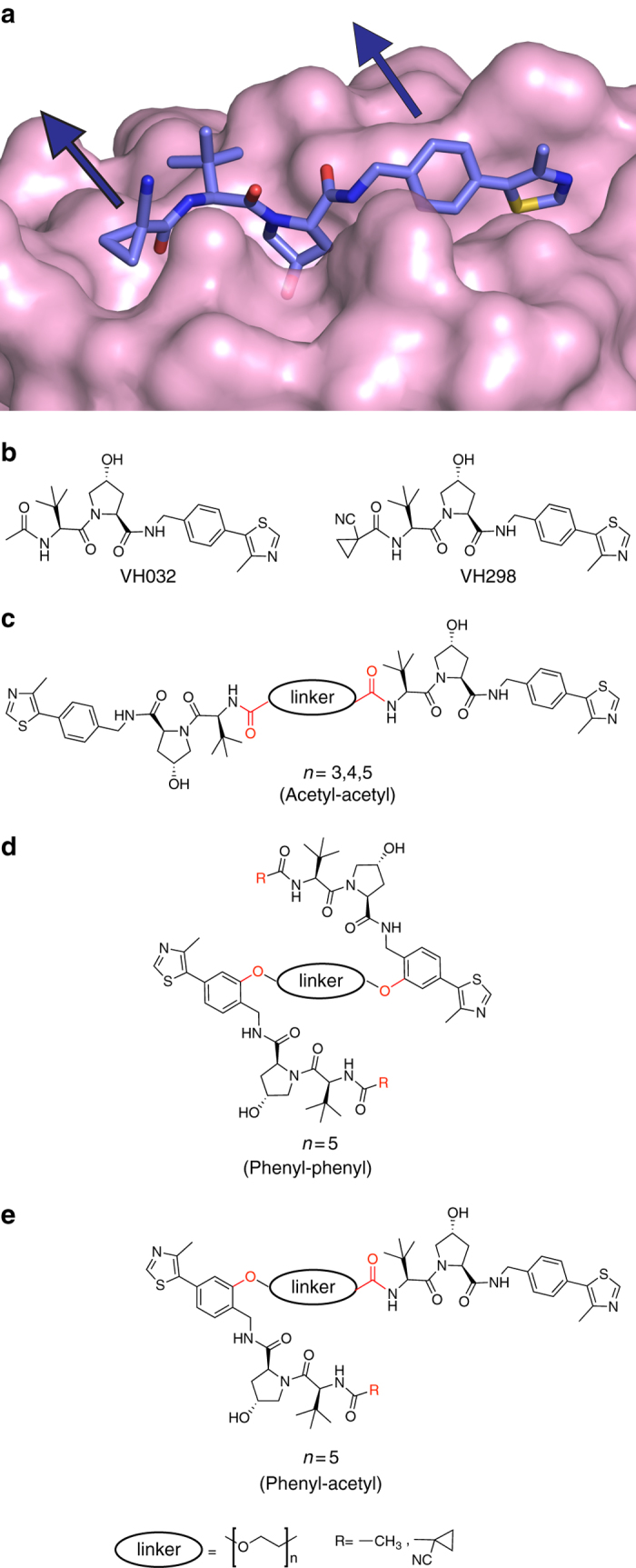
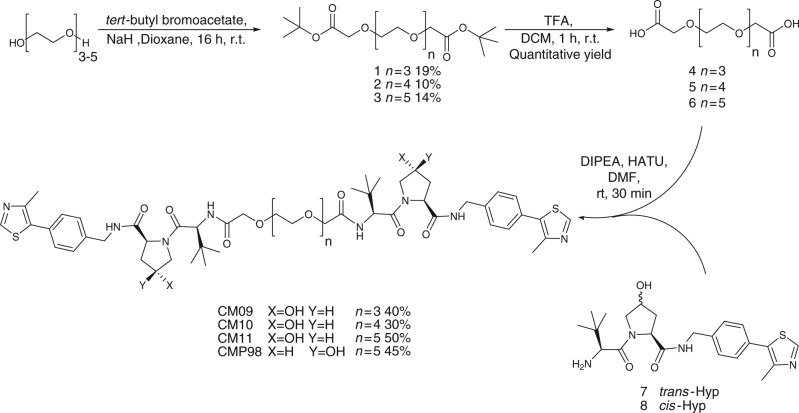
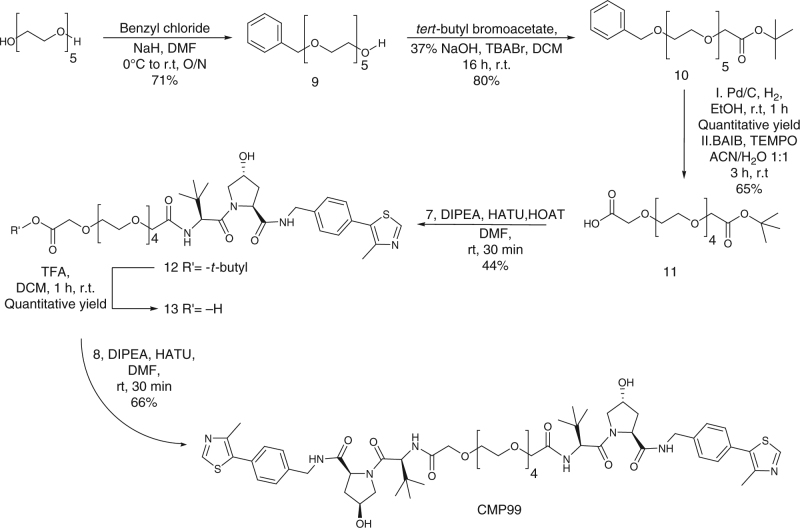
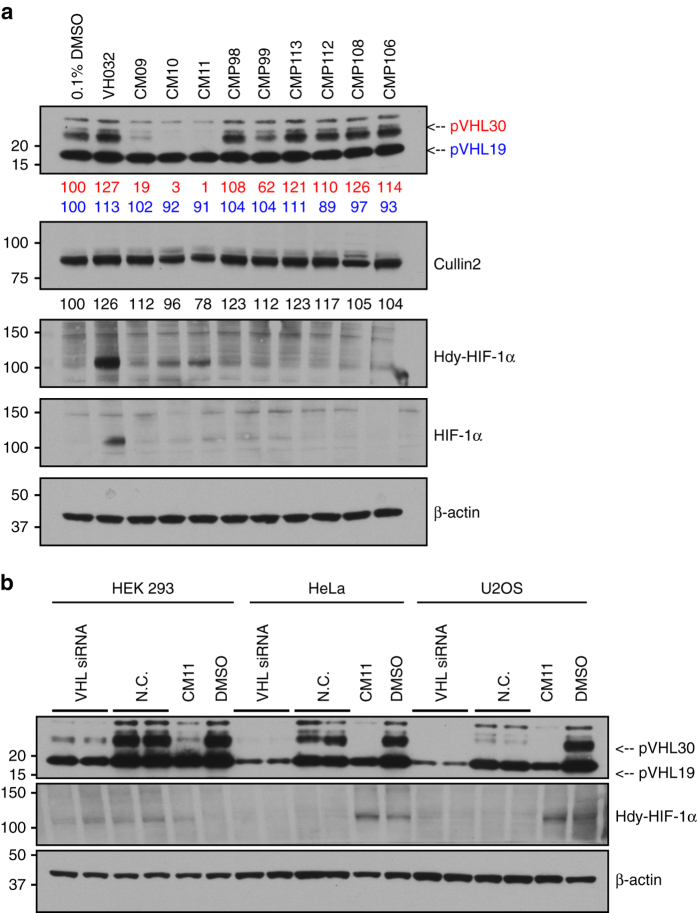
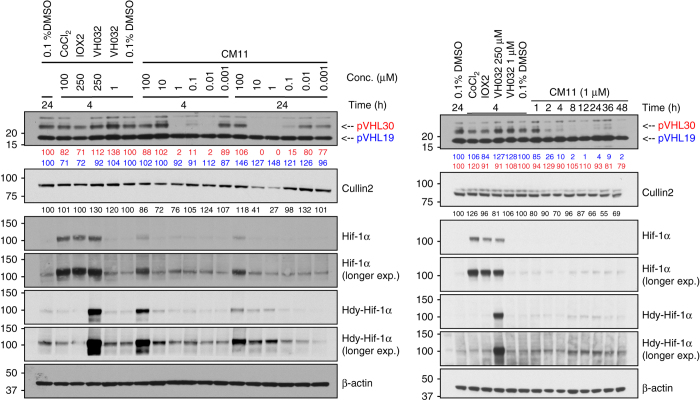
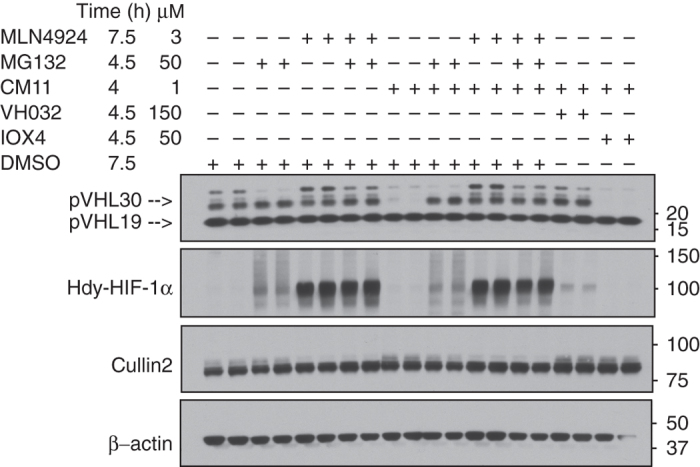
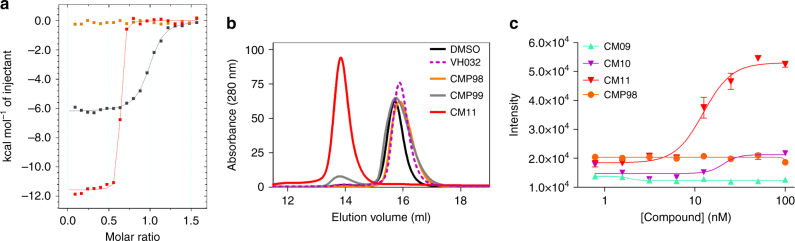
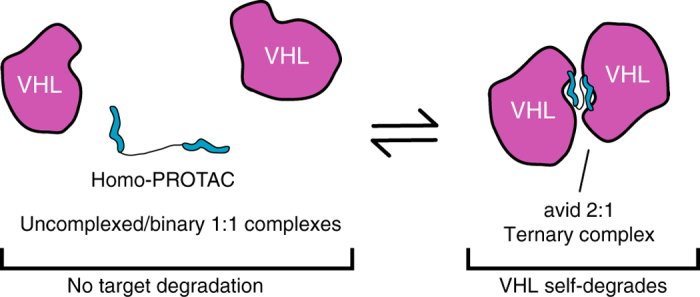
E3 ubiquitin ligases are key enzymes within the ubiquitin proteasome system which catalyze the ubiquitination of proteins, targeting them for proteasomal degradation. E3 ligases are gaining importance as targets to small molecules, both for direct inhibition and to be hijacked to induce the degradation of non-native neo-substrates using bivalent compounds known as PROTACs (for ‘proteolysis-targeting chimeras’). We describe Homo-PROTACs as an approach to dimerize an E3 ligase to trigger its suicide-type chemical knockdown inside cells. We provide proof-of-concept of Homo-PROTACs using diverse molecules composed of two instances of a ligand for the von Hippel-Lindau (VHL) E3 ligase. The most active compound, CM11, dimerizes VHL with high avidity in vitro and induces potent, rapid and proteasome-dependent self-degradation of VHL in different cell lines, in a highly isoform-selective fashion and without triggering a hypoxic response. This approach offers a novel chemical probe for selective VHL knockdown, and demonstrates the potential for a new modality of chemical intervention on E3 ligases.
Overview
The claims and statistics of this paper haven’t been checked yet.
Run the check — free, no account needed. It reads the open-access text and checks the sources it cites.
Integrity signals
Registry
Cites
Statistics
Figures
Verification
Claims the paper makes
The claims and statistics of this paper haven’t been checked yet.
Run the check — free, no account needed. It reads the open-access text and checks the sources it cites.
Claims other papers make about this one
Each is checked against this paper’s own text: does it say what the citing paper says it does?
In the citing paper
“The most active compound, CM11, specifically depleted the long isoform of VHL, VHL30, within 4 h at 10 nM concentration, providing an intriguing tool for research on isoform specific functions of VHL.”
From Advances in targeted degradation of endogenous proteins (2019) · cites this paper as [95]
Self-check
Percentages, sums and reported differences re-computed from the paper’s own numbers.
The self-check needs the paper’s full text.
Citations
Cites
The tumour suppressor protein VHL targets hypoxia-inducible factors for oxygen-dependent proteolysis
Maxwell, P. H., Wiesener, M. S., Chang, G.-W., Clifford, S. C., Vaux, E. C., Cockman, M. E., Wykoff, C. C., Pugh, C. W., Maher, E. R., & Ratcliffe, P. J. (1999) · Nature · doi:10.1038/20459 · Cited by 5,180
In Vivo Activation of the p53 Pathway by Small-Molecule Antagonists of MDM2
Vassilev, L. T., Vu, B. T., Graves, B., Carvajal, D., Podlaski, F., Filipovic, Z., Kong, N., Kammlott, U., Lukacs, C., Klein, C., et al. (2004) · Science · doi:10.1126/science.1092472 · Cited by 4,661
Komander, D., & Rape, M. (2012) · Annual Review of Biochemistry · doi:10.1146/annurev-biochem-060310-170328 · Cited by 3,679
Mechanisms Underlying Ubiquitination
Pickart, C. M. (2001) · Annual Review of Biochemistry · doi:10.1146/annurev.biochem.70.1.503 · Cited by 3,184
Identification of a Primary Target of Thalidomide Teratogenicity
Ito, T., Ando, H., Suzuki, T., Ogura, T., Hotta, K., Imamura, Y., Yamaguchi, Y., & Handa, H. (2010) · Science · doi:10.1126/science.1177319 · Cited by 2,136
An inhibitor of NEDD8-activating enzyme as a new approach to treat cancer
Soucy, T. A., Smith, P. G., Milhollen, M. A., Berger, A. J., Gavin, J. M., Adhikari, S., Brownell, J. E., Burke, K. E., Cardin, D. P., Critchley, S., et al. (2009) · Nature · doi:10.1038/nature07884 · Cited by 1,990
Lenalidomide Causes Selective Degradation of IKZF1 and IKZF3 in Multiple Myeloma Cells
Krönke, J., Udeshi, N. D., Narla, A., Grauman, P., Hurst, S. N., McConkey, M., Svinkina, T., Heckl, D., Comer, E., Li, X., et al. (2014) · Science · doi:10.1126/science.1244851 · Cited by 1,879
Phthalimide conjugation as a strategy for in vivo target protein degradation
Winter, G. E., Buckley, D. L., Paulk, J., Roberts, J. M., Souza, A., Dhe-Paganon, S., & Bradner, J. E. (2015) · Science · doi:10.1126/science.aab1433 · Cited by 1,760
Mechanism of auxin perception by the TIR1 ubiquitin ligase
Tan, X., Calderon-Villalobos, L. I. A., Sharon, M., Zheng, C., Robinson, C. V., Estelle, M., & Zheng, N. (2007) · Nature · doi:10.1038/nature05731 · Cited by 1,688
The Myeloma Drug Lenalidomide Promotes the Cereblon-Dependent Destruction of Ikaros Proteins
Lu, G., Middleton, R. E., Sun, H., Naniong, M., Ott, C. J., Mitsiades, C. S., Wong, K.-K., Bradner, J. E., & Kaelin, W. G. (2014) · Science · doi:10.1126/science.1244917 · Cited by 1,583
Research works printed but not linked: 1
- Uehara, T. et al. Selective degradation of splicing factor CAPERα by anticancer sulfonamides. Nat. Chem. Biol. 13, 675–680 (2017). · DOI · Paper page
Cited by
Sorted by citations
PROteolysis TArgeting Chimeras (PROTACs) — Past, present and future
Pettersson, M., & Crews, C. M. (2019) · Drug Discovery Today Technologies · doi:10.1016/j.ddtec.2019.01.002 · Cited by 830
PROTACs: great opportunities for academia and industry
Sun, X., Gao, H., Yang, Y., He, M., Wu, Y., Song, Y.-G., Tong, Y., & Rao, Y. (2019) · Signal Transduction and Targeted Therapy · doi:10.1038/s41392-019-0101-6 · Cited by 663
Targeted protein degradation: elements of PROTAC design
Paiva, S.-L., & Crews, C. M. (2019) · Current Opinion in Chemical Biology · doi:10.1016/j.cbpa.2019.02.022 · Cited by 598
BAF complex vulnerabilities in cancer demonstrated via structure-based PROTAC design
Farnaby, W., Koegl, M., Roy, M. J., Whitworth, C., Diers, E., Trainor, N., Zollman, D., Steurer, S., Karolyi-Oezguer, J., Riedmueller, C., et al. (2019) · Nature Chemical Biology · doi:10.1038/s41589-019-0294-6 · Cited by 562
Self-citationDifferential PROTAC substrate specificity dictated by orientation of recruited E3 ligase
Smith, B. E., Wang, S. L., Jaime-Figueroa, S., Harbin, A., Wang, J., Hamman, B. D., & Crews, C. M. (2019) · Nature Communications · doi:10.1038/s41467-018-08027-7 · Cited by 517
E3 Ligase Ligands for PROTACs: How They Were Found and How to Discover New Ones
Ishida, T., & Ciulli, A. (2020) · SLAS DISCOVERY · doi:10.1177/2472555220965528 · Cited by 404
Self-citationCurrent strategies for the design of PROTAC linkers: a critical review
Troup, R. I., Fallan, C., & Baud, M. G. J. (2020) · Exploration of Targeted Anti-tumor Therapy · doi:10.37349/etat.2020.00018 · Cited by 424
“[133], utilised the co-crystal structure (PDB 5LLI) of VHL in complex with VH298 (87) for the development of “Homo-PROTACs” for the self-induced degradation of VHL.”
MethodSPR-measured dissociation kinetics of PROTAC ternary complexes influence target degradation rate
Roy, M. J., Winkler, S., Hughes, S. J., Whitworth, C., Galant, M., Farnaby, W., Rumpel, K., & Ciulli, A. (2019) · ACS Chemical Biology · doi:10.1021/acschembio.9b00092 · Cited by 386
Self-citationAn, S., & Fu, L. (2018) · EBioMedicine · doi:10.1016/j.ebiom.2018.09.005 · Cited by 363
Targeting Transcription Factors for Cancer Treatment
Lambert, M., Jambon, S., Depauw, S., & David‐Cordonnier, M. (2018) · Molecules · doi:10.3390/molecules23061479 · Cited by 359
An overview of PROTACs: a promising drug discovery paradigm
Zi, L., Hu, M., Yu, Y., Du, C., Zhou, H., Liu, C., Chen, Y., Fan, L., Ma, H., Gong, Y., et al. (2022) · Molecular Biomedicine · doi:10.1186/s43556-022-00112-0 · Cited by 380
Hines, J., Lartigue, S., Dong, H., Qian, Y., & Crews, C. M. (2019) · Cancer Research · doi:10.1158/0008-5472.can-18-2918 · Cited by 348
Zoppi, V., Hughes, S. J., Maniaci, C., Testa, A., Gmaschitz, T., Wieshofer, C., Koegl, M., Riching, K. M., Daniels, D. L., Spallarossa, A., et al. (2019) · Journal of Medicinal Chemistry · doi:10.1021/acs.jmedchem.8b01413 · Cited by 336
Self-citationTargeted protein degradation: advances in drug discovery and clinical practice
Zhong, G., Chang, X., Xie, W., & Zhou, X. (2024) · Signal Transduction and Targeted Therapy · doi:10.1038/s41392-024-02004-x · Cited by 326
Degradation of proteins by PROTACs and other strategies
Wang, Y., Jiang, X., Feng, F., Liu, W., & Sun, H. (2020) · Acta Pharmaceutica Sinica B · doi:10.1016/j.apsb.2019.08.001 · Cited by 335
Chemistries of bifunctional PROTAC degraders
Cao, C., He, M., Wang, L., He, Y., & Rao, Y. (2022) · Chemical Society Reviews · doi:10.1039/d2cs00220e · Cited by 313
Major advances in targeted protein degradation: PROTACs, LYTACs, and MADTACs
Alabi, S. B., & Crews, C. M. (2021) · Journal of Biological Chemistry · doi:10.1016/j.jbc.2021.100647 · Cited by 279
PROTACs: great opportunities for academia and industry (an update from 2020 to 2021)
He, M., Cao, C., Ni, Z., Liu, Y., Song, P., Hao, S., He, Y., Sun, X., & Rao, Y. (2022) · Signal Transduction and Targeted Therapy · doi:10.1038/s41392-022-00999-9 · Cited by 283
Diehl, C. J., & Ciulli, A. (2022) · Chemical Society Reviews · doi:10.1039/d2cs00387b · Cited by 269
Self-citationHypoxia-induced signaling in the cardiovascular system: pathogenesis and therapeutic targets
Zhao, Y., Xiong, W., Li, C., Zhao, R., Lu, H., Song, S., Zhou, Y., Hu, Y., Shi, B., & Ge, J. (2023) · Signal Transduction and Targeted Therapy · doi:10.1038/s41392-023-01652-9 · Cited by 275
PROteolysis TArgeting Chimeras (PROTACs) as emerging anticancer therapeutics
Khan, S., He, Y., Zhang, X., Yuan, Y., Pu, S., Kong, Q., Zheng, G., & Zhou, D. (2020) · Oncogene · doi:10.1038/s41388-020-1336-y · Cited by 252
Hughes, S. J., & Ciulli, A. (2017) · Essays in Biochemistry · doi:10.1042/ebc20170041 · Cited by 240
Self-citationTrivalent PROTACs enhance protein degradation via combined avidity and cooperativity
Imaide, S., Riching, K. M., Makukhin, N., Vetma, V., Whitworth, C., Hughes, S. J., Trainor, N., Mahan, S. D., Murphy, N., Cowan, A. D., et al. (2021) · Nature Chemical Biology · doi:10.1038/s41589-021-00878-4 · Cited by 251
Self-citationE3 Ligase Ligands in Successful PROTACs: An Overview of Syntheses and Linker Attachment Points
Bricelj, A., Steinebach, C., Kuchta, R. D., Gütschow, M., & Sosič, I. (2021) · Frontiers in Chemistry · doi:10.3389/fchem.2021.707317 · Cited by 232
Proteolysis‐targeting chimeras in drug development: A safety perspective
Moreau, K., Coen, M., Zhang, A. X., Pachl, F., Castaldi, M. P., Dahl, G., Boyd, H., Scott, C., & Newham, P. (2020) · British Journal of Pharmacology · doi:10.1111/bph.15014 · Cited by 229
In Silico Modeling of PROTAC-Mediated Ternary Complexes: Validation and Application
Drummond, M. L., & Williams, C. I. (2019) · Journal of Chemical Information and Modeling · doi:10.1021/acs.jcim.8b00872 · Cited by 199
RNA‐PROTACs: Degraders of RNA‐Binding Proteins
Ghidini, A., Cléry, A., Halloy, F., Allain, F. H. T., & Hall, J. (2021) · Angewandte Chemie International Edition · doi:10.1002/anie.202012330 · Cited by 197
Harnessing the Power of Proteolysis for Targeted Protein Inactivation
Verma, R., Mohl, D., & Deshaies, R. J. (2020) · Molecular Cell · doi:10.1016/j.molcel.2020.01.010 · Cited by 185
Degradation of Polycomb Repressive Complex 2 with an EED-Targeted Bivalent Chemical Degrader
Potjewyd, F., Turner, A. W., Beri, J., Rectenwald, J. M., Norris-Drouin, J. L., Cholensky, S. H., Margolis, D. M., Pearce, K. H., Herring, L. E., & James, L. I. (2019) · Cell chemical biology · doi:10.1016/j.chembiol.2019.11.006 · Cited by 181
E3 ligase ligand chemistries: from building blocks to protein degraders
Sosič, I., Bricelj, A., & Steinebach, C. (2022) · Chemical Society Reviews · doi:10.1039/d2cs00148a · Cited by 176
PROTACs– a game-changing technology
Konstantinidou, M., Li, J., Zhang, B., Wang, Z., Shaabani, S., ter Brake, F., Essa, K., & Dömling, A. S. S. (2019) · Expert Opinion on Drug Discovery · doi:10.1080/17460441.2019.1659242 · Cited by 171
Developing degraders: principles and perspectives on design and chemical space
Maple, H. J., Clayden, N., Baron, A., Stacey, C., & Felix, R. L. (2019) · MedChemComm · doi:10.1039/c9md00272c · Cited by 163
Homo-PROTACs for the Chemical Knockdown of Cereblon
Steinebach, C., Lindner, S., Udeshi, N. D., Mani, D. R., Kehm, H., Köpff, S., Carr, S. A., Gütschow, M., & Krönke, J. (2018) · ACS Chemical Biology · doi:10.1021/acschembio.8b00693 · Cited by 160
Goracci, L., Desantis, J., Valeri, A., Castellani, B., Eleuteri, M., & Cruciani, G. (2020) · Journal of Medicinal Chemistry · doi:10.1021/acs.jmedchem.0c00793 · Cited by 161
Cereblon versus VHL: Hijacking E3 ligases against each other using PROTACs
Girardini, M., Maniaci, C., Hughes, S. J., Testa, A., & Ciulli, A. (2019) · Bioorganic & Medicinal Chemistry · doi:10.1016/j.bmc.2019.02.048 · Cited by 163
Self-citationUnderstanding and Improving the Membrane Permeability of VH032-Based PROTACs
Klein, V. G., Townsend, C. E., Testa, A., Zengerle, M., Maniaci, C., Hughes, S. J., Chan, K.-H., Ciulli, A., & Lokey, R. S. (2020) · ACS Medicinal Chemistry Letters · doi:10.1021/acsmedchemlett.0c00265 · Cited by 154
Self-citationTovell, H., Testa, A., Maniaci, C., Zhou, H., Prescott, A. R., Macartney, T., Ciulli, A., & Alessi, D. R. (2019) · ACS Chemical Biology · doi:10.1021/acschembio.8b01016 · Cited by 146
Self-citationTesta, A., Lucas, X., Castro, G. V., Chan, K.-H., Wright, J. E., Runcie, A. C., Gadd, M. S., Harrison, W. T. A., Ko, E. J., Fletcher, D., et al. (2018) · Journal of the American Chemical Society · doi:10.1021/jacs.8b05807 · Cited by 143
Self-citationSteinebach, C., Ng, Y. L. D., Sosič, I., Lee, C.-S., Chen, S., Lindner, S., Vu, L. P., Bricelj, A., Haschemi, R., Monschke, M., et al. (2020) · Chemical Science · doi:10.1039/d0sc00167h · Cited by 148
Targeted protein degradation and the enzymology of degraders
Fisher, S. L., & Phillips, A. J. (2018) · Current Opinion in Chemical Biology · doi:10.1016/j.cbpa.2018.05.004 · Cited by 126
Proteolysis targeting chimeras (PROTACs) are emerging therapeutics for hematologic malignancies
He, Y., Khan, S., Huo, Z., Lv, D., Zhang, X., Liu, X., Yuan, Y., Hromas, R., Xu, M., Zheng, G., et al. (2020) · Journal of Hematology & Oncology · doi:10.1186/s13045-020-00924-z · Cited by 126
Bivalent Ligands for Protein Degradation in Drug Discovery
Scheepstra, M., Hekking, K. F. W., Hijfte, L. V., & Folmer, R. H. A. (2019) · Computational and Structural Biotechnology Journal · doi:10.1016/j.csbj.2019.01.006 · Cited by 125
Strategies for designing proteolysis targeting chimaeras (PROTACs)
He, S., Dong, G., Cheng, J., Wu, Y., & Sheng, C. (2022) · Medicinal Research Reviews · doi:10.1002/med.21877 · Cited by 120
Redox signaling at the crossroads of human health and disease
Zuo, J., Zhang, Z., Luo, M., Zhou, L., Nice, E. C., Zhang, W., Wang, C., & Huang, C. (2022) · MedComm · doi:10.1002/mco2.127 · Cited by 123
Development of Small Molecule Chimeras That Recruit AhR E3 Ligase to Target Proteins
Ohoka, N., Tsuji, G., Shoda, T., Fujisato, T., Kurihara, M., Demizu, Y., & Naito, M. (2019) · ACS Chemical Biology · doi:10.1021/acschembio.9b00704 · Cited by 119
PROTACs: Emerging Targeted Protein Degradation Approaches for Advanced Druggable Strategies
Sincere, N. I., Anand, K., Ashique, S., Yang, J., & You, C. (2023) · Molecules · doi:10.3390/molecules28104014 · Cited by 112
Mechanistic and Structural Features of PROTAC Ternary Complexes
Casement, R., Bond, A. G., Craigon, C., & Ciulli, A. (2021) · Methods in molecular biology · doi:10.1007/978-1-0716-1665-9_5 · Cited by 104
Self-citationPROTAC-mediated crosstalk between E3 ligases
Steinebach, C., Kehm, H., Lindner, S., Vu, L. P., Köpff, S., Mármol, Á. L., Weiler, C., Wagner, K. G., Reichenzeller, M., Krönke, J., et al. (2019) · Chemical Communications · doi:10.1039/c8cc09541h · Cited by 101
Tu, Y., Sun, Y., Qiao, S., Luo, Y., Liu, P., Jiang, Z., Hu, Y., Wang, Z., Huang, P., & Wen, S. (2021) · Journal of Medicinal Chemistry · doi:10.1021/acs.jmedchem.1c00460 · Cited by 103
Bifunctional chemical probes inducing protein–protein interactions
Maniaci, C., & Ciulli, A. (2019) · Current Opinion in Chemical Biology · doi:10.1016/j.cbpa.2019.07.003 · Cited by 100
Self-citationDesign and Characterization of SGK3-PROTAC1, an Isoform Specific SGK3 Kinase PROTAC Degrader
Tovell, H., Testa, A., Zhou, H., Shpiro, N., Crafter, C., Ciulli, A., & Alessi, D. R. (2019) · ACS Chemical Biology · doi:10.1021/acschembio.9b00505 · Cited by 95
Self-citationExploring the target scope of KEAP1 E3 ligase-based PROTACs
Du, G., Jiang, J., Henning, N. J., Safaee, N., Koide, E., Nowak, R. P., Donovan, K. A., Yoon, H., You, I., Yue, H., et al. (2022) · Cell chemical biology · doi:10.1016/j.chembiol.2022.08.003 · Cited by 97
Advances in targeted degradation of endogenous proteins
Röth, S., Fulcher, L. J., & Sapkota, G. P. (2019) · Cellular and Molecular Life Sciences · doi:10.1007/s00018-019-03112-6 · Cited by 92
Homo-PROTAC mediated suicide of MDM2 to treat non-small cell lung cancer
He, S., Ma, J., Fang, Y., Liu, Y., Wu, S., Dong, G., Wang, W., & Sheng, C. (2021) · Acta Pharmaceutica Sinica B · doi:10.1016/j.apsb.2020.11.022 · Cited by 91
Strategies for the discovery of oral PROTAC degraders aimed at cancer therapy
Han, X., & Sun, Y. (2022) · Cell Reports Physical Science · doi:10.1016/j.xcrp.2022.101062 · Cited by 89
Foley, C. A., Potjewyd, F., Lamb, K. N., James, L. I., & Frye, S. V. (2020) · ACS Chemical Biology · doi:10.1021/acschembio.9b00972 · Cited by 89
Cimas, F. J., Niza, E., Juan, A., Noblejas‐López, M. D. M., Bravo, I., Lara‐Sánchez, A., Alonso‐Moreno, C., & Ocaña, A. (2020) · Pharmaceutics · doi:10.3390/pharmaceutics12100986 · Cited by 90
PROTAC: A promising technology for cancer treatment
Zhou, X., Dong, R., Zhang, J., Zheng, X. X., & Sun, L. (2020) · European Journal of Medicinal Chemistry · doi:10.1016/j.ejmech.2020.112539 · Cited by 85
Targeting the Ubiquitin-Proteasome System for Cancer Therapeutics by Small-Molecule Inhibitors
LaPlante, G., & Zhang, W. (2021) · Cancers · doi:10.3390/cancers13123079 · Cited by 88
Progress and Challenges in Targeted Protein Degradation for Neurodegenerative Disease Therapy
Fang, Y., Wang, J., Zhao, M., Zheng, Q., Ren, C., Wang, Y., & Zhang, J. (2022) · Journal of Medicinal Chemistry · doi:10.1021/acs.jmedchem.2c00844 · Cited by 100
Clp-targeting BacPROTACs impair mycobacterial proteostasis and survival
Hoi, D. M., Junker, S., Junk, L., Schwechel, K., Fischel, K., Podlesainski, D., Hawkins, P. M. E., van Geelen, L., Kaschani, F., Leodolter, J., et al. (2023) · Cell · doi:10.1016/j.cell.2023.04.009 · Cited by 78
Development of selective small molecule MDM2 degraders based on nutlin
Wang, B., Wu, S., Liu, J., Yang, K., Xie, H., & Tang, W. (2019) · European Journal of Medicinal Chemistry · doi:10.1016/j.ejmech.2019.05.046 · Cited by 77
Hi-JAK-ing the ubiquitin system: The design and physicochemical optimisation of JAK PROTACs
Shah, R. R., Redmond, J. M., Mihut, A., Menon, M. R., Evans, J. P., Murphy, J. A., Bartholomew, M. A., & Coe, D. M. (2020) · Bioorganic & Medicinal Chemistry · doi:10.1016/j.bmc.2020.115326 · Cited by 75
Assays and Technologies for Developing Proteolysis Targeting Chimera Degraders
Liu, X., Zhang, X., Lv, D., Yuan, Y., Zheng, G., & Zhou, D. (2020) · Future Medicinal Chemistry · doi:10.4155/fmc-2020-0073 · Cited by 75
Novel approaches for the rational design of PROTAC linkers
Zagidullin, A. A., Milyukov, V. A., Rizvanov, A. A., & Bulatov, E. (2020) · Exploration of Targeted Anti-tumor Therapy · doi:10.37349/etat.2020.00023 · Cited by 75
The emerging role for Cullin 4 family of E3 ligases in tumorigenesis
Cheng, J., Guo, J., North, B. J., Tao, K., Zhou, P., & Wei, W. (2018) · Biochimica et Biophysica Acta (BBA) - Reviews on Cancer · doi:10.1016/j.bbcan.2018.11.007 · Cited by 69
PROTACs: A novel strategy for cancer drug discovery and development
Han, X., & Sun, Y. (2023) · MedComm · doi:10.1002/mco2.290 · Cited by 69
Targeted Protein Degradation: Advances, Challenges, and Prospects for Computational Methods
Mostofian, B., Martin, H., Razavi, A. M., Patel, S., Allen, B. K., Sherman, W., & Izaguirre, J. A. (2023) · Journal of Chemical Information and Modeling · doi:10.1021/acs.jcim.3c00603 · Cited by 70
Targeting androgen receptor degradation with PROTACs from bench to bedside
Jia, X., & Han, X. (2022) · Biomedicine & Pharmacotherapy · doi:10.1016/j.biopha.2022.114112 · Cited by 68
Exploring the chemical space of orally bioavailable PROTACs
Apprato, G., Poongavanam, V., Jiménez, D. G., Atilaw, Y., Erdélyi, M., Ermondi, G., Caron, G., & Kihlberg, J. O. (2024) · Drug Discovery Today · doi:10.1016/j.drudis.2024.103917 · Cited by 68
Transforming targeted cancer therapy with PROTACs: A forward-looking perspective
Farnaby, W., Koegl, M., McConnell, D. B., & Ciulli, A. (2021) · Current Opinion in Pharmacology · doi:10.1016/j.coph.2021.02.009 · Cited by 66
Self-citationTargeted protein degradation in cancers: Orthodox PROTACs and beyond
Li, J., Chen, X., Lü, A., & Liang, C. (2023) · The Innovation · doi:10.1016/j.xinn.2023.100413 · Cited by 68
Emerging drug development technologies targeting ubiquitination for cancer therapeutics
Veggiani, G., Gerpe, M. C. R., Sidhu, S. S., & Zhang, W. (2019) · Pharmacology & Therapeutics · doi:10.1016/j.pharmthera.2019.03.003 · Cited by 67
Small molecule PROTACs: an emerging technology for targeted therapy in drug discovery
Pei, H., Peng, Y., Zhao, Q., & Chen, Y. (2019) · RSC Advances · doi:10.1039/c9ra03423d · Cited by 70
A beginner’s guide to current synthetic linker strategies towards VHL-recruiting PROTACs
Zografou-Barredo, N. A., Hallatt, A. J., Goujon-Ricci, J., & Cano, C. (2023) · Bioorganic & Medicinal Chemistry · doi:10.1016/j.bmc.2023.117334 · Cited by 62
Li, Z., You, Q., & Zhang, X. (2019) · Journal of Medicinal Chemistry · doi:10.1021/acs.jmedchem.8b01596 · Cited by 64
Proteolysis targeting chimeras (PROTACs) for epigenetics research
Vogelmann, A., Robaa, D., Sippl, W., & Jung, M. (2020) · Current Opinion in Chemical Biology · doi:10.1016/j.cbpa.2020.01.010 · Cited by 59
Targeting epigenetic modulators using PROTAC degraders: Current status and future perspective
Webb, T., Craigon, C., & Ciulli, A. (2022) · Bioorganic & Medicinal Chemistry Letters · doi:10.1016/j.bmcl.2022.128653 · Cited by 58
Self-citationTargeted protein degradation in drug development: Recent advances and future challenges
Song, J. H., Hu, M., Zhou, J., Xie, S., Li, T., & Li, Y. (2023) · European Journal of Medicinal Chemistry · doi:10.1016/j.ejmech.2023.115839 · Cited by 56
Jang, S., Redon, C. E., & Aladjem, M. I. (2018) · Frontiers in Molecular Biosciences · doi:10.3389/fmolb.2018.00019 · Cited by 57
Bashore, F. M., Foley, C. A., Ong, H. W., Rectenwald, J. M., Hanley, R. P., Norris-Drouin, J. L., Cholensky, S. H., Mills, C. A., Pearce, K. H., Herring, L. E., et al. (2023) · ACS Chemical Biology · doi:10.1021/acschembio.2c00804 · Cited by 58
Ubiquitin Ligases in Cancer Immunotherapy – Balancing Antitumor and Autoimmunity
Fujita, Y., Tinoco, R., Li, Y., Senft, D., & Ronai, Z. A. (2019) · Trends in Molecular Medicine · doi:10.1016/j.molmed.2019.02.002 · Cited by 55
Small molecule PROTACs in targeted therapy: An emerging strategy to induce protein degradation
Xi, M., Chen, Y., Yang, H., Xu, H., Du, K., Wu, C., Xu, Y., Deng, L., Luo, X., Yu, L., et al. (2019) · European Journal of Medicinal Chemistry · doi:10.1016/j.ejmech.2019.04.036 · Cited by 57
Recent Advances in PROTAC-Based Antiviral Strategies
Ahmad, H., Zia, B., Husain, H., & Husain, A. (2023) · Vaccines · doi:10.3390/vaccines11020270 · Cited by 57
Zhong, Y., Chi, F., Wu, H., Liu, Y., Xie, Z., Huang, W., Shi, W., & Qian, H. (2022) · European Journal of Medicinal Chemistry · doi:10.1016/j.ejmech.2022.114142 · Cited by 52
The mechanism of action and clinical value of PROTACs: A graphical review
Graham, H. (2022) · Cellular Signalling · doi:10.1016/j.cellsig.2022.110446 · Cited by 56
Park, D. J., Izaguirre, J. A., Coffey, R., & Xu, H. (2022) · ACS Bio & Med Chem Au · doi:10.1021/acsbiomedchemau.2c00037 · Cited by 54
Applications of Bacterial Degrons and Degraders — Toward Targeted Protein Degradation in Bacteria
Izert, M. A., Klimecka, M. M., & Górna, M. W. (2021) · Frontiers in Molecular Biosciences · doi:10.3389/fmolb.2021.669762 · Cited by 50
Homo-BacPROTAC-induced degradation of ClpC1 as a strategy against drug-resistant mycobacteria
Junk, L., Schmiedel, V. M., Guha, S., Fischel, K., Greb, P., Vill, K., Krisilia, V., van Geelen, L., Rumpel, K., Kaur, P., et al. (2024) · Nature Communications · doi:10.1038/s41467-024-46218-7 · Cited by 51
Maksoud, S. (2021) · Molecular Neurobiology · doi:10.1007/s12035-021-02339-4 · Cited by 48
Bhole, R. P., Kute, P. R., Chikhale, R. V., Bonde, C. G., Pant, A., & Gurav, S. S. (2023) · Bioorganic Chemistry · doi:10.1016/j.bioorg.2023.106720 · Cited by 49
Ward, J. A., Perez‐Lopez, C., & Mayor‐Ruiz, C. (2023) · ChemBioChem · doi:10.1002/cbic.202300163 · Cited by 48
Hati, S., Zallocchi, M., Hazlitt, R. A., Li, Y., Vijayakumar, S., Min, J., Ranković, Z., Lovas, S., & Zuo, J. (2021) · European Journal of Medicinal Chemistry · doi:10.1016/j.ejmech.2021.113849 · Cited by 46
Proximity-inducing modalities: the past, present, and future
Singh, S., Tian, W., Severance, Z. C., Chaudhary, S. K., Anokhina, V. S., Mondal, B., Pergu, R., Singh, P. R., Dhawa, U., Singha, S., et al. (2023) · Chemical Society Reviews · doi:10.1039/d2cs00943a · Cited by 47
Targeted protein degradation mechanisms
Zhang, Y., Loh, C., Chen, J., & Mainolfi, N. (2019) · Drug Discovery Today Technologies · doi:10.1016/j.ddtec.2019.01.001 · Cited by 44
Homobivalent, Trivalent, and Covalent PROTACs: Emerging Strategies for Protein Degradation
Yan, J., Li, T., Miao, Z., Wang, P., Sheng, C., & Zhuang, C. (2022) · Journal of Medicinal Chemistry · doi:10.1021/acs.jmedchem.2c00728 · Cited by 46
Lucas, X., Molle, I. V., & Ciulli, A. (2018) · Journal of Medicinal Chemistry · doi:10.1021/acs.jmedchem.8b00842 · Cited by 46
Self-citationPost-Translational Modifications of BRD4: Therapeutic Targets for Tumor
Liu, N., Ling, R., Tang, X., Yu, Y., Zhou, Y., & Chen, D. (2022) · Frontiers in Oncology · doi:10.3389/fonc.2022.847701 · Cited by 44
Structural insights into substrate recognition by the SOCS2 E3 ubiquitin ligase
Kung, W.-W., Ramachandran, S., Makukhin, N., Bruno, E., & Ciulli, A. (2019) · Nature Communications · doi:10.1038/s41467-019-10190-4 · Cited by 42
Self-citationRecent advances in targeted protein degraders as potential therapeutic agents
Yang, N., Kong, B., Zhu, Z., Huang, F., Zhang, L., Lu, T., Chen, Y., Zhang, Y., & Jiang, Y. (2023) · Molecular Diversity · doi:10.1007/s11030-023-10606-w · Cited by 44
Metadata
- Authors
- Maniaci, C., Hughes, S. J., Testa, A., Chen, W., Lamont, D. J., Rocha, S., Alessi, D. R., Romeo, R., & Ciulli, A.
- Affiliations
- University of Dundee (GB)
- University of Messina (IT)
- Corresponding author
- Ciulli, Alessio
- ORCID
- Venue
- Nature Communications
- Published
- 2017-10-10
- Volume
- 8
- Issue
- 1
- Pages
- 830-830
- ISSN
- 2041-1723 (ISSN-L)
- PMC
- PMC5635026
- OpenAlex
- W2761240402
- Cited by
- 245
- References
- 75
- Citations by year
- 2026: 16 · 2025: 20 · 2024: 21 · 2023: 36 · 2022: 37 · 2021: 27 · 2020: 37 · 2019: 37 · 2018: 12 · 2017: 1
- FWCI
- 9.94
- Type
- journal article
- Language
- en
- Open access
- gold
- doi.org
- Locations
- Nature Communications (publishedVersion, cc-by)
- Europe PMC (PubMed Central) (publishedVersion, cc-by)
- PubMed Central (publishedVersion, cc-by)
- PubMed (publishedVersion)
- RePEc: Research Papers in Economics (submittedVersion)
- Discovery Research Portal (University of Dundee) (submittedVersion, cc-by)
- DOAJ (DOAJ: Directory of Open Access Journals) (submittedVersion)
- DOAJ (DOAJ: Directory of Open Access Journals) (submittedVersion, cc-by-sa)
- Newcastle University ePrints (Newcastle Univesity) (cc-by)
- Funders
- Wellcome Trust (100476, 100476/Z/12/Z)
- Cancer Research UK (C99667/A12918, 12918)
- Ministero dell’Istruzione, dell’Università e della Ricerca
- Medical Research Council (MC_UU_12016, MC_UU_12016/2)
- FP7 Ideas: European Research Council (311460)
- Topics
- Life Sciences › Biochemistry, Genetics and Molecular Biology › Molecular Biology › Protein Degradation and Inhibitors
- Life Sciences › Biochemistry, Genetics and Molecular Biology › Molecular Biology › Ubiquitin and proteasome pathways
- Physical Sciences › Chemistry › Organic Chemistry › Chemical Synthesis and Analysis
- Keywords
- PROTACs, VHL E3 ubiquitin ligase, ligand-induced dimerization, proteasomal degradation, isoform selectivity, ubiquitin-proteasome system, chemical probes
- MeSH terms
- Humans, Ligands, Dimerization, Ubiquitin, Ubiquitin-Protein Ligases, Proteasome Endopeptidase Complex, Von Hippel-Lindau Tumor Suppressor Protein, Small Molecule Libraries, Proteolysis
About these checks
Registry, retraction, Cites and statistics results are computed, not judged, with one exception: a printed reference that no index lists is read once by a model before it counts as a citation error. Claims are extracted by a model and kept only when their quote appears verbatim in the text; each cited source is then checked, with a model’s help, for whether it says what the claim relies on. Those verdicts can be wrong — read the claim’s quote and the cited source before relying on one.
Statistics and arithmetic are recomputed, not judged.
Confidence bands are shown only for fields calibrated on our annotated test set. None is calibrated yet, so no band is shown.
What counts as a claim ›How we measure confidence ›How we check this ›
Are you an author, or do you see a problem with this page? Request a review
