

The DOI matches its Crossref record; 74 of the 75 references it cites were found in a registry or an index.
Homo-PROTACs: bivalent small-molecule dimerizers of the VHL E3 ubiquitin ligase to induce self-degradation
Open accessAbstract
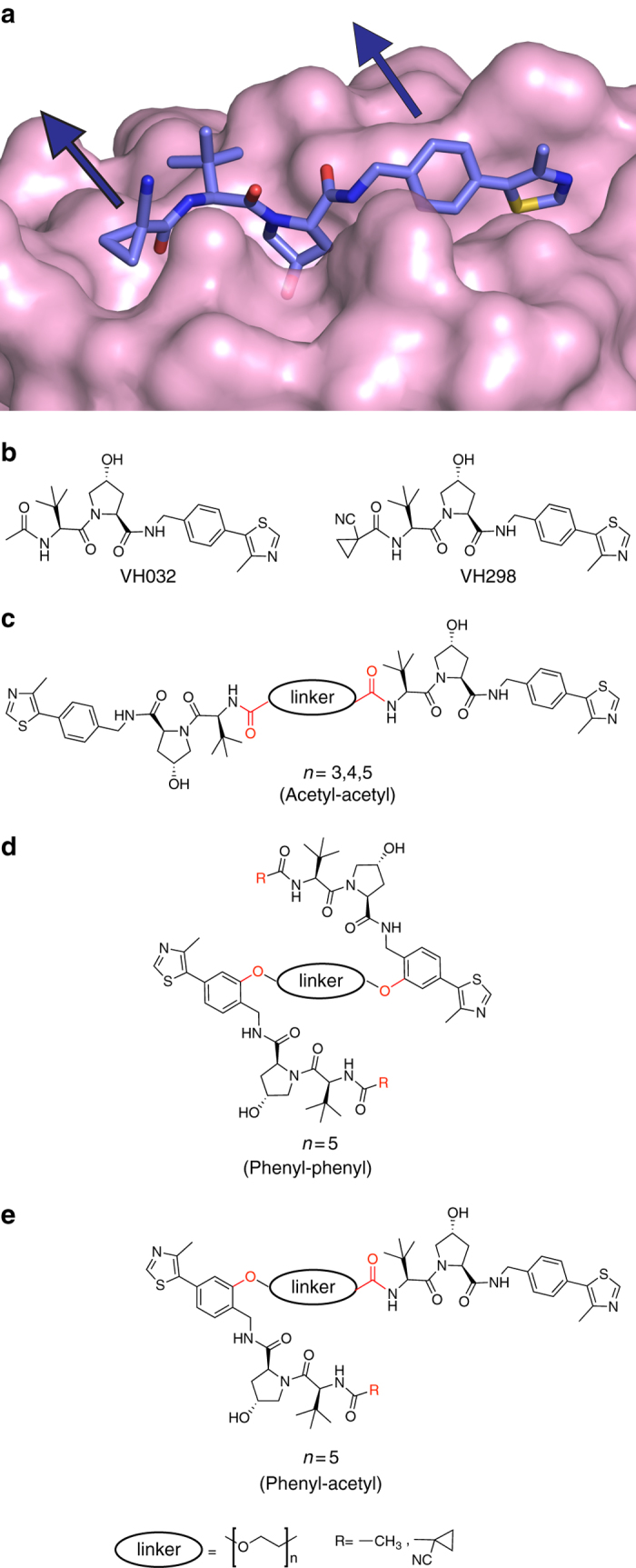
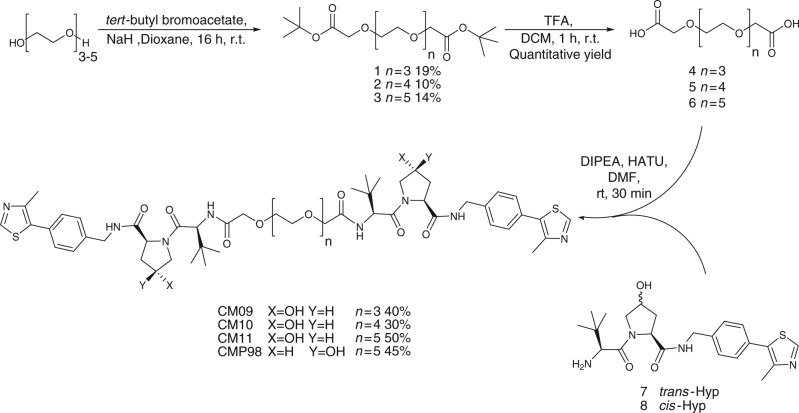
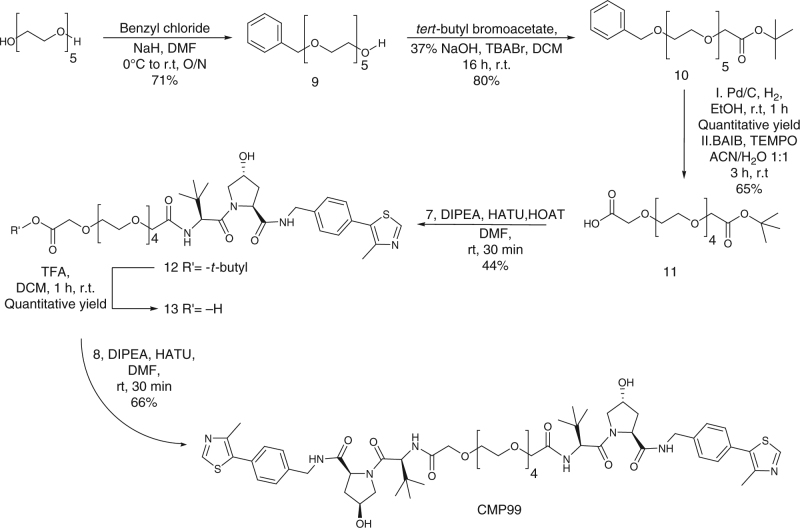
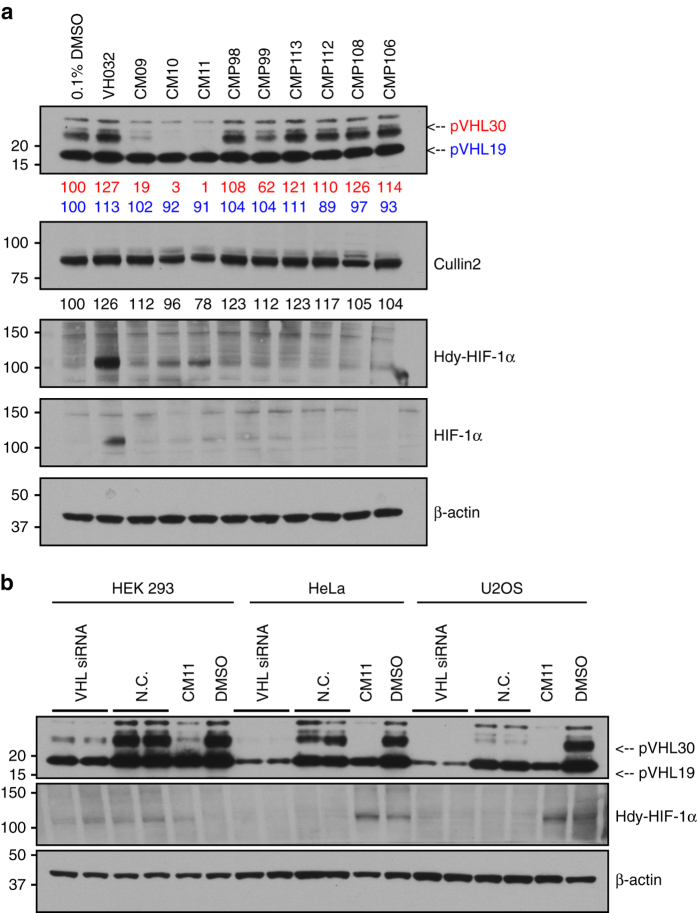
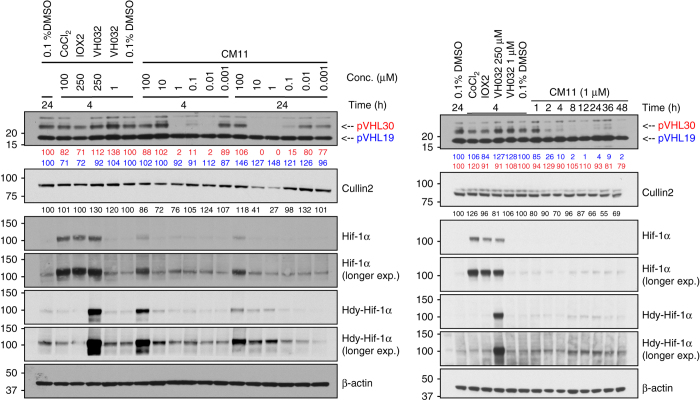
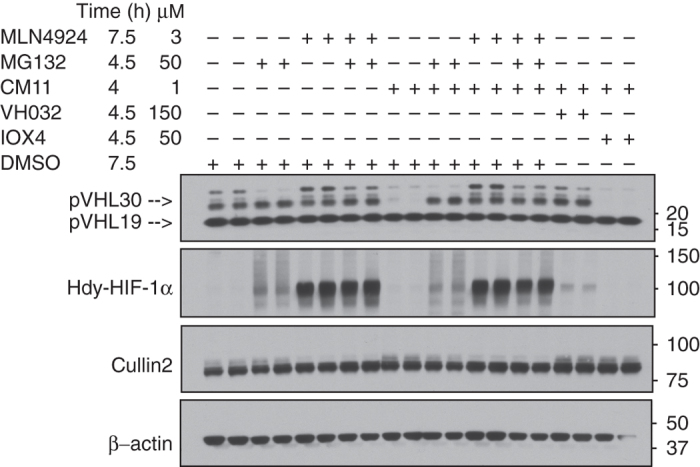
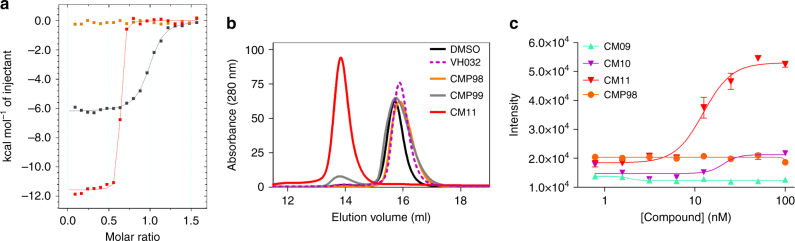
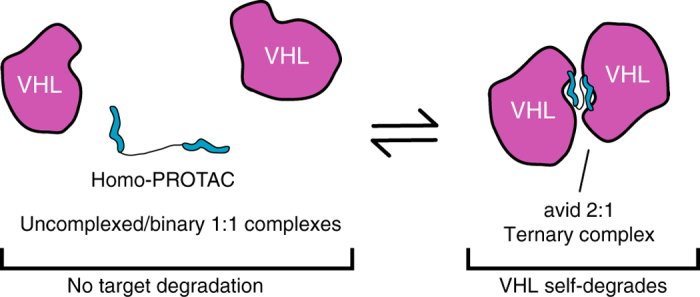
E3 ubiquitin ligases are key enzymes within the ubiquitin proteasome system which catalyze the ubiquitination of proteins, targeting them for proteasomal degradation. E3 ligases are gaining importance as targets to small molecules, both for direct inhibition and to be hijacked to induce the degradation of non-native neo-substrates using bivalent compounds known as PROTACs (for ‘proteolysis-targeting chimeras’). We describe Homo-PROTACs as an approach to dimerize an E3 ligase to trigger its suicide-type chemical knockdown inside cells. We provide proof-of-concept of Homo-PROTACs using diverse molecules composed of two instances of a ligand for the von Hippel-Lindau (VHL) E3 ligase. The most active compound, CM11, dimerizes VHL with high avidity in vitro and induces potent, rapid and proteasome-dependent self-degradation of VHL in different cell lines, in a highly isoform-selective fashion and without triggering a hypoxic response. This approach offers a novel chemical probe for selective VHL knockdown, and demonstrates the potential for a new modality of chemical intervention on E3 ligases.
Overview
The claims and statistics of this paper haven’t been checked yet.
Run the check — free, no account needed. It reads the open-access text and checks the sources it cites.
Integrity signals
Registry
Cites
Statistics
Figures
Verification
Claims the paper makes
The claims and statistics of this paper haven’t been checked yet.
Run the check — free, no account needed. It reads the open-access text and checks the sources it cites.
Claims other papers make about this one
Each is checked against this paper’s own text: does it say what the citing paper says it does?
In the citing paper
“The most active compound, CM11, specifically depleted the long isoform of VHL, VHL30, within 4 h at 10 nM concentration, providing an intriguing tool for research on isoform specific functions of VHL.”
From Advances in targeted degradation of endogenous proteins (2019) · cites this paper as [95]
Self-check
Percentages, sums and reported differences re-computed from the paper’s own numbers.
The self-check needs the paper’s full text.
Citations
Cites
The tumour suppressor protein VHL targets hypoxia-inducible factors for oxygen-dependent proteolysis
Maxwell, P. H., Wiesener, M. S., Chang, G.-W., Clifford, S. C., Vaux, E. C., Cockman, M. E., Wykoff, C. C., Pugh, C. W., Maher, E. R., & Ratcliffe, P. J. (1999) · Nature · doi:10.1038/20459 · Cited by 5,180
In Vivo Activation of the p53 Pathway by Small-Molecule Antagonists of MDM2
Vassilev, L. T., Vu, B. T., Graves, B., Carvajal, D., Podlaski, F., Filipovic, Z., Kong, N., Kammlott, U., Lukacs, C., Klein, C., et al. (2004) · Science · doi:10.1126/science.1092472 · Cited by 4,661
Komander, D., & Rape, M. (2012) · Annual Review of Biochemistry · doi:10.1146/annurev-biochem-060310-170328 · Cited by 3,679
Mechanisms Underlying Ubiquitination
Pickart, C. M. (2001) · Annual Review of Biochemistry · doi:10.1146/annurev.biochem.70.1.503 · Cited by 3,184
Identification of a Primary Target of Thalidomide Teratogenicity
Ito, T., Ando, H., Suzuki, T., Ogura, T., Hotta, K., Imamura, Y., Yamaguchi, Y., & Handa, H. (2010) · Science · doi:10.1126/science.1177319 · Cited by 2,136
An inhibitor of NEDD8-activating enzyme as a new approach to treat cancer
Soucy, T. A., Smith, P. G., Milhollen, M. A., Berger, A. J., Gavin, J. M., Adhikari, S., Brownell, J. E., Burke, K. E., Cardin, D. P., Critchley, S., et al. (2009) · Nature · doi:10.1038/nature07884 · Cited by 1,990
Lenalidomide Causes Selective Degradation of IKZF1 and IKZF3 in Multiple Myeloma Cells
Krönke, J., Udeshi, N. D., Narla, A., Grauman, P., Hurst, S. N., McConkey, M., Svinkina, T., Heckl, D., Comer, E., Li, X., et al. (2014) · Science · doi:10.1126/science.1244851 · Cited by 1,879
Phthalimide conjugation as a strategy for in vivo target protein degradation
Winter, G. E., Buckley, D. L., Paulk, J., Roberts, J. M., Souza, A., Dhe-Paganon, S., & Bradner, J. E. (2015) · Science · doi:10.1126/science.aab1433 · Cited by 1,760
Mechanism of auxin perception by the TIR1 ubiquitin ligase
Tan, X., Calderon-Villalobos, L. I. A., Sharon, M., Zheng, C., Robinson, C. V., Estelle, M., & Zheng, N. (2007) · Nature · doi:10.1038/nature05731 · Cited by 1,688
The Myeloma Drug Lenalidomide Promotes the Cereblon-Dependent Destruction of Ikaros Proteins
Lu, G., Middleton, R. E., Sun, H., Naniong, M., Ott, C. J., Mitsiades, C. S., Wong, K.-K., Bradner, J. E., & Kaelin, W. G. (2014) · Science · doi:10.1126/science.1244917 · Cited by 1,583
Research works printed but not linked: 1
- Uehara, T. et al. Selective degradation of splicing factor CAPERα by anticancer sulfonamides. Nat. Chem. Biol. 13, 675–680 (2017). · DOI · Paper page
Cited by
Sorted by citations
Items 101–200 of 260
TET3-overexpressing macrophages promote endometriosis
Lv, H., Liu, B., Dai, Y., Li, F., Bellone, S., Zhou, Y., Mamillapalli, R., Zhao, D., Venkatachalapathy, M., Hu, Y., et al. (2024) · Journal of Clinical Investigation · doi:10.1172/jci181839 · Cited by 40
Maneiro, M., Vita, E. D., Conole, D., Kounde, C. S., Zhang, Q., & Tate, E. W. (2021) · Progress in medicinal chemistry · doi:10.1016/bs.pmch.2021.01.002 · Cited by 38
Proteolysis‐Targeting Chimera (PROTAC): Current Applications and Future Directions
Fan, G., Chen, S., Zhang, Q., Yu, N., Shen, Z., Liu, Z., Guo, W., Tang, Z., Yang, J., & Liu, M. (2025) · MedComm · doi:10.1002/mco2.70401 · Cited by 48
Targeted protein degradation at the host–pathogen interface
Grohmann, C., Marapana, D. S., & Ebert, G. (2021) · Molecular Microbiology · doi:10.1111/mmi.14849 · Cited by 38
PROTAC: targeted drug strategy. Principles and limitations
Koroleva, O. A., Dutikova, Y. V., Trubnikov, A. V., Zenov, F. A., Manasova, E. V., Shtil, A. A., & Kurkin, A. V. (2022) · Russian Chemical Bulletin · doi:10.1007/s11172-022-3659-z · Cited by 38
Hu, Y., Zhao, Y., Li, P., Lu, H., Li, H., & Ge, J. (2023) · 中国科学通报:英文版 · doi:10.1016/j.scib.2023.07.032 · Cited by 37
Disordered region of cereblon is required for efficient degradation by proteolysis-targeting chimera
Kim, K., Lee, D.-H., Park, S., Jo, S.-H., Ku, B., Park, S. G., Park, B. C., Jeon, Y. U., Ahn, S., Kang, C. H., et al. (2019) · Scientific Reports · doi:10.1038/s41598-019-56177-5 · Cited by 37
Frost, J., Rocha, S., & Ciulli, A. (2021) · Journal of Biological Chemistry · doi:10.1016/j.jbc.2021.100910 · Cited by 35
Self-citationWang, F., Zhan, Y., Li, M., Wang, L., Zheng, A., Liu, C.-B., Wang, H., & Wang, T. (2022) · ACS Pharmacology & Translational Science · doi:10.1021/acsptsci.2c00165 · Cited by 36
PROTACs: Promising approach for anticancer therapy
Kaur, S. D., Bedi, N., Kumar, D., & Kapoor, D. N. (2023) · Cancer Letters · doi:10.1016/j.canlet.2023.216065 · Cited by 35
Targeting Smurf1 to block PDK1–Akt signaling in KRAS-mutated colorectal cancer
Peng, Z., Wei, F., Wu, B., He, M. S., Li, S., Wei, J., Hao, Y., Jin, L., Liu, M., Zhang, X., et al. (2024) · Nature Chemical Biology · doi:10.1038/s41589-024-01683-5 · Cited by 34
Ubiquitination and Ubiquitin-Like Modifications in Multiple Myeloma: Biology and Therapy
Wirth, M., Schick, M., Keller, U. B., & Krönke, J. (2020) · Cancers · doi:10.3390/cancers12123764 · Cited by 35
Refinement of Computational Access to Molecular Physicochemical Properties: From Ro5 to bRo5
Sebastiano, M. R., Jiménez, D. G., Vallaro, M., Caron, G., & Ermondi, G. (2022) · Journal of Medicinal Chemistry · doi:10.1021/acs.jmedchem.2c00774 · Cited by 34
Hughes, G. R., Dudey, A. P., Hemmings, A. M., & Chantry, A. (2021) · Drug Discovery Today · doi:10.1016/j.drudis.2021.04.010 · Cited by 34
Methods to accelerate PROTAC drug discovery
Osman, J., Thompson, P. E., Jörg, M., & Scanlon, M. J. (2025) · Biochemical Journal · doi:10.1042/bcj20243018 · Cited by 34
Regulation of E3 ubiquitin ligases by homotypic and heterotypic assembly
Balaji, V., & Hoppe, T. (2020) · F1000Research · doi:10.12688/f1000research.21253.1 · Cited by 32
Targeted Protein Degradation: Clinical Advances in the Field of Oncology
Salama, A. K. A. A., Trkulja, M. V., Casanova, E., & Uras, I. Z. (2022) · International Journal of Molecular Sciences · doi:10.3390/ijms232315440 · Cited by 36
Small Molecule Modulators of RING-Type E3 Ligases: MDM and Cullin Families as Targets
Bulatov, E., Zagidullin, A. A., Valiullina, A., Sayarova, R., & Rizvanov, A. A. (2018) · Frontiers in Pharmacology · doi:10.3389/fphar.2018.00450 · Cited by 34
Small-molecule PROTACs: Novel Agents for Cancer Therapy
Wan, Y., Yan, C., Gao, H. J., & Liu, T. (2020) · Future Medicinal Chemistry · doi:10.4155/fmc-2019-0340 · Cited by 32
Progress of small molecules for targeted protein degradation: PROTACs and other technologies
Zhao, H., Xin, M., & Zhang, S. (2023) · Drug Development Research · doi:10.1002/ddr.22026 · Cited by 31
Current strategies for improving limitations of proteolysis targeting chimeras
Pu, C., Wang, S., Liu, L., Feng, Z., Zhang, H., Gong, Q., Sun, Y., Guo, Y., & Li, R. (2022) · Chinese Chemical Letters · doi:10.1016/j.cclet.2022.107927 · Cited by 32
Salerno, A., Wieske, L. H. E., Diehl, C. J., & Ciulli, A. (2025) · Journal of the American Chemical Society · doi:10.1021/jacs.4c18354 · Cited by 33
Self-citationSpy vs. spy: selecting the best reporter for 19 F NMR competition experiments
Castro, G. V., & Ciulli, A. (2019) · Chemical Communications · doi:10.1039/c8cc09790a · Cited by 29
Self-citationShan, Y., Si, R., Wang, J., Zhang, Q., Li, J., Ma, Y., & Zhang, J. (2020) · European Journal of Medicinal Chemistry · doi:10.1016/j.ejmech.2020.112654 · Cited by 29
Small-Molecule PROTACs for Cancer Immunotherapy
Liu, Z., Zhang, Y., Xiang, Y., & Kang, X. (2022) · Molecules · doi:10.3390/molecules27175439 · Cited by 30
Principles of paralog-specific targeted protein degradation engaging the C-degron E3 KLHDC2
Scott, D. C., Dharuman, S., Griffith, E. C., Chai, S. C., Ronnebaum, J., King, M. T., Tangallapally, R. P., Lee, C., Gee, C. T., Yang, L., et al. (2024) · Nature Communications · doi:10.1038/s41467-024-52966-3 · Cited by 29
The application of ubiquitin ligases in the PROTAC drug design
Chen, Y., & Jin, J. (2020) · Acta Biochimica et Biophysica Sinica · doi:10.1093/abbs/gmaa053 · Cited by 29
Emerging modes-of-action in drug discovery
Valeur, E., Narjes, F., Ottmann, C., & Plowright, A. T. (2019) · MedChemComm · doi:10.1039/c9md00263d · Cited by 29
E3 Ubiquitin Ligases: Key Regulators of TGFβ Signaling in Cancer Progression
Sinha, A., Iyengar, P. V., & ten Dijke, P. (2021) · International Journal of Molecular Sciences · doi:10.3390/ijms22020476 · Cited by 30
Selective degradation-inducing probes for studying cereblon (CRBN) biology
Powell, C. E., Du, G., Bushman, J. W., He, Z., Zhang, T., Fischer, E. S., & Gray, N. S. (2021) · RSC Medicinal Chemistry · doi:10.1039/d0md00382d · Cited by 29
More than Toxins—Current Prospects in Designing the Next Generation of Antibody Drug Conjugates
Schwach, J., Abdellatif, M., & Stengl, A. (2022) · Frontiers in Bioscience-Landmark · doi:10.31083/j.fbl2708240 · Cited by 27
Reversible Assembly of Proteolysis Targeting Chimeras
Gui, W., Giardina, S. F., Balzarini, M., Barany, F., & Kodadek, T. J. (2023) · ACS Chemical Biology · doi:10.1021/acschembio.3c00199 · Cited by 27
Discovery of a Natural Ent-Kaurene Diterpenoid Oridonin as an E3 Ligase Recruiter for PROTACs
Huang, J., Fu, X., Qiu, F., Liang, Z., Cao, C., Wang, Z., Chen, H., Yue, S., Xie, D., Liang, Y., et al. (2024) · Journal of the American Chemical Society · doi:10.1021/jacs.4c14650 · Cited by 27
Medicinal Chemistry of Inhibiting RING-Type E3 Ubiquitin Ligases
Blaquière, N., Villemure, E., & Staben, S. T. (2020) · Journal of Medicinal Chemistry · doi:10.1021/acs.jmedchem.9b01451 · Cited by 26
Roles of Cullin-RING Ubiquitin Ligases in Cardiovascular Diseases
Diaz, S., Wang, K., Sjögren, B., & Liu, X. (2022) · Biomolecules · doi:10.3390/biom12030416 · Cited by 27
Estimating the cooperativity of PROTAC-induced ternary complexes using 19 F NMR displacement assay
Castro, G. V., & Ciulli, A. (2021) · RSC Medicinal Chemistry · doi:10.1039/d1md00215e · Cited by 25
Self-citationDesign, Synthesis and In Vitro Investigation of Cabozantinib-Based PROTACs to Target c-Met Kinase
Sachkova, A. A., Andreeva, D. V., Tikhomirov, A. S., Scherbakov, A. M., Salnikova, D. I., Sorokin, D. V., Bogdanov, F. B., Rysina, Y. D., Shchekotikhin, A. E., Shchegravina, E. S., et al. (2022) · Pharmaceutics · doi:10.3390/pharmaceutics14122829 · Cited by 24
Innovative, combinatorial and high-throughput approaches to degrader synthesis
Stevens, R., Thompson, J. D. F., Fournier, J. C. L., Burley, G. A., Battersby, D. J., & Miah, A. H. (2024) · Chemical Society Reviews · doi:10.1039/d3cs01127e · Cited by 23
Advancing Design Strategy of PROTACs for Cancer Therapy
Luo, H., Tian, Y., Abdullah, R., Zhang, B., Ma, Y., & Zhang, G. (2025) · MedComm · doi:10.1002/mco2.70258 · Cited by 24
Thioamide substitution to probe the hydroxyproline recognition of VHL ligands
Soares, P., Lucas, X., & Ciulli, A. (2018) · Bioorganic & Medicinal Chemistry · doi:10.1016/j.bmc.2018.03.034 · Cited by 21
Self-citationChen, Y., Xia, Z., Suwal, U., Rappu, P., Heino, J., Wever, O. D., & Geest, B. G. D. (2024) · Chemical Science · doi:10.1039/d4sc03555k · Cited by 21
Wolska, A., & Smolewski, P. (2022) · Cancers · doi:10.3390/cancers14153778 · Cited by 21
Recent advances in epigenetic proteolysis targeting chimeras (Epi-PROTACs)
Tomaselli, D., Mautone, N., Mai, A., & Rotili, D. (2020) · European Journal of Medicinal Chemistry · doi:10.1016/j.ejmech.2020.112750 · Cited by 21
Lin, W., Li, Y., Yang, L., & Chen, T. (2020) · ACS Omega · doi:10.1021/acsomega.0c05221 · Cited by 20
RNA‐PROTACs: Degraders of RNA‐Binding Proteins
Ghidini, A., Cléry, A., Halloy, F., Allain, F. H. ‐., & Hall, J. (2020) · Angewandte Chemie · doi:10.1002/ange.202012330 · Cited by 21
Exploring PROTAC Cooperativity with Coarse-Grained Alchemical Methods
Mai, H., Zimmer, M. H., & Miller, T. F. (2023) · The Journal of Physical Chemistry B · doi:10.1021/acs.jpcb.2c05795 · Cited by 22
Jiang, Y., Ni, S., Xiao, B., & Jia, L. (2023) · Acta Pharmaceutica Sinica B · doi:10.1016/j.apsb.2023.07.019 · Cited by 22
Vu, L. P., Diehl, C. J., Casement, R., Bond, A. G., Steinebach, C., Strašek, N., Bricelj, A., Perdih, A., Schnakenburg, G., Sosič, I., et al. (2023) · Journal of Medicinal Chemistry · doi:10.1021/acs.jmedchem.3c00434 · Cited by 21
Self-citationApplication of PROTACs in target identification and validation
Liu, Y., Liang, J. Y., Zhu, R., Yang, Y., Wang, Y., Wei, W., Li, H., & Chen, L. (2024) · Acta Materia Medica · doi:10.15212/amm-2024-0010 · Cited by 21
den Besten, W., Verma, K., Yamazoe, S., Blaquière, N., Phung, W., Izrael-Tomasevic, A., Mulvihill, M. M., Helgason, E., Prakash, S., Goncharov, T., et al. (2021) · Journal of the American Chemical Society · doi:10.1021/jacs.1c05269 · Cited by 20
Deng, Y., Yu, C., Chen, L., Zhang, X., Lei, Q., Liu, Q., Cai, G., & Liu, F. (2022) · Frontiers in Pharmacology · doi:10.3389/fphar.2022.858901 · Cited by 19
Diehl, C. J., Salerno, A., & Ciulli, A. (2024) · Angewandte Chemie International Edition · doi:10.1002/anie.202319456 · Cited by 18
Self-citationAllostery in Disease: Anticancer Drugs, Pockets, and the Tumor Heterogeneity Challenge
Nussinov, R., Yavuz, B. R., & Jang, H. (2025) · Journal of Molecular Biology · doi:10.1016/j.jmb.2025.169050 · Cited by 19
Biology of Pellino1: a potential therapeutic target for inflammation in diseases and cancers
Yan, L., Cui, Y., & Feng, J. (2023) · Frontiers in Immunology · doi:10.3389/fimmu.2023.1292022 · Cited by 18
Loss of the Tumor Suppressor HACE1 Contributes to Cancer Progression
Li, J.-C., Chang, X., Chen, Y., Li, X., Zhang, X., Yang, S., Hu, C.-J., & Zhang, H. (2019) · Current Drug Targets · doi:10.2174/1389450120666190227184654 · Cited by 18
Proteolysis-targeting chimeras in biotherapeutics: Current trends and future applications
Li, Q., Zhou, L., Qin, S., Huang, Z., Li, B., Li, B., Yang, M., Nice, E. C., Zhu, H., & Huang, C. (2023) · European Journal of Medicinal Chemistry · doi:10.1016/j.ejmech.2023.115447 · Cited by 17
Design and pharmaceutical applications of proteolysis-targeting chimeric molecules
Liang, Y., Nandakumar, K. S., & Cheng, K. (2020) · Biochemical Pharmacology · doi:10.1016/j.bcp.2020.114211 · Cited by 16
Chemical Inactivation of the E3 Ubiquitin Ligase Cereblon by Pomalidomide-based Homo-PROTACs
Lindner, S., Steinebach, C., Kehm, H., Mangold, M., Gütschow, M., & Krönke, J. (2019) · Journal of Visualized Experiments · doi:10.3791/59472 · Cited by 18
Rao, H., Li, X., Liu, M., Liu, J., Li, X., Xu, J., Li, L., & Gao, W. (2020) · Oncogene · doi:10.1038/s41388-020-1247-y · Cited by 15
Proteolysis-targeting Chimeras for Targeting Protein for Degradation
Qi, J., & Zhang, G. (2019) · Future Medicinal Chemistry · doi:10.4155/fmc-2018-0557 · Cited by 15
Chen, L., Deng, Z., Xiong, Y., Liu, J., Huang, D., Wang, J., Chen, Y., Inuzuka, H., Xie, L., Chen, X., et al. (2025) · Journal of the American Chemical Society · doi:10.1021/jacs.5c06306 · Cited by 17
Crystallization of VHL-based PROTAC-induced ternary complexes
Wijaya, A. J., Farnaby, W., & Ciulli, A. (2023) · Methods in enzymology on CD-ROM/Methods in enzymology · doi:10.1016/bs.mie.2022.10.005 · Cited by 13
Self-citationSciaccotta, R., Gangemi, S., Penna, G., Giordano, L., Pioggia, G., & Allegra, A. (2024) · Antioxidants · doi:10.3390/antiox13040475 · Cited by 15
Applications and Limitations of Oxime‐Linked “Split PROTACs”
Gui, W., & Kodadek, T. J. (2022) · ChemBioChem · doi:10.1002/cbic.202200275 · Cited by 14
PROTACs: The Future of Leukemia Therapeutics
Anwar, Z., Ali, M. S., Galvano, A., Perez, A., Mantia, M. L., Bukhari, I., & Świątczak, B. (2022) · Frontiers in Cell and Developmental Biology · doi:10.3389/fcell.2022.851087 · Cited by 13
Danazumi, A. U., Ishmam, I. T., Idris, S., Izert, M. A., Balogun, E. O., & Górna, M. W. (2023) · European Journal of Pharmaceutical Sciences · doi:10.1016/j.ejps.2023.106451 · Cited by 14
Recent Advances in the Design and Development of Anticancer Molecules based on PROTAC Technology
Mukhamejanova, Z., Tong, Y., Xiang, Q., Xu, F., & Pang, J. (2020) · Current Medicinal Chemistry · doi:10.2174/0929867327666200312112412 · Cited by 13
Advancing target validation with PROTAC technology
Spitz, M. L., Kashkush, A., & Benhamou, R. I. (2025) · Expert Opinion on Drug Discovery · doi:10.1080/17460441.2025.2490248 · Cited by 12
Expression and purification of functional recombinant CUL2•RBX1 from E. coli
Diaz, S., Li, L., Wang, K., & Liu, X. (2021) · Scientific Reports · doi:10.1038/s41598-021-90770-x · Cited by 14
Intelligent host engineering for metabolic flux optimisation in biotechnology
Munro, L. J., & Kell, D. B. (2021) · Biochemical Journal · doi:10.1042/bcj20210535 · Cited by 12
Liu, L., Shi, L., Wang, Z., Zeng, J., Wang, Y., Xiao, H., & Zhu, Y. (2022) · Frontiers in Endocrinology · doi:10.3389/fendo.2022.839857 · Cited by 13
Development of FBXO22 Degraders and the Recruitment Ligand 2-Pyridinecarboxyaldehyde (2-PCA)
Qiu, T., Zhuang, Z., Byun, W. S., Kozicka, Z., Baek, K., Zhong, J., Thornhill, A. M., Ryan, J. K., Donovan, K. A., Fischer, E. S., et al. (2025) · Journal of the American Chemical Society · doi:10.1021/jacs.5c14141 · Cited by 13
Rossino, G., Rui, M., Linciano, P., Rossi, D., Boiocchi, M., Peviani, M., Poggio, E., Curti, D., Schepmann, D., Wünsch, B., et al. (2021) · Journal of Medicinal Chemistry · doi:10.1021/acs.jmedchem.1c00886 · Cited by 12
Heterobifunctional Ligase Recruiters Enable pan-Degradation of Inhibitor of Apoptosis Proteins
Ng, Y. L. D., Bricelj, A., Jansen, J. A., Murgai, A., Peter, K., Donovan, K. A., Gütschow, M., Krönke, J., Steinebach, C., & Sosič, I. (2023) · Journal of Medicinal Chemistry · doi:10.1021/acs.jmedchem.2c01817 · Cited by 10
Wang, Y., Deng, S., & Xu, J. (2020) · Cancer Biology and Medicine · doi:10.20892/j.issn.2095-3941.2020.0066 · Cited by 10
Pichlak, M., Sobierajski, T., Błażewska, K. M., & Gendaszewska‐Darmach, E. (2023) · Journal of Enzyme Inhibition and Medicinal Chemistry · doi:10.1080/14756366.2023.2254012 · Cited by 10
Wang, Z., Yue, S., Chen, X., Li, J., Zhu, P., Chen, H., Qiu, F., Xie, D., Liang, Y., Li, D., et al. (2024) · Journal of Medicinal Chemistry · doi:10.1021/acs.jmedchem.4c01228 · Cited by 11
Native mass spectrometry interrogation of complexes formed during targeted protein degradation
Ahmed, I. M. M., & Beveridge, R. (2023) · Rapid Communications in Mass Spectrometry · doi:10.1002/rcm.9604 · Cited by 9
Reboud‐Ravaux, M. (2021) · Biologie Aujourd hui · doi:10.1051/jbio/2021007 · Cited by 10
PROTAC: A Novel Drug Delivery Technology for Targeting Proteins in Cancer Cells
Bala, R., Sindhu, R. K., Madaan, R., & Yadav, S. K. (2022) · Current Drug Discovery Technologies · doi:10.2174/1570163820666221031124612 · Cited by 8
Ciulli, A., & Hsia, O. (2022) · Wiley eBooks · doi:10.1002/9781119774198.ch9 · Cited by 8
Self-citationA degron-mimicking molecular glue drives CRBN homo-dimerization and degradation
Langousis, G., Gaínza, P., Hunkeler, M., Kapsitidou, D., Donckèle, E. J., Annunziato, S., Wiedmer, L., Jones, K. F. M., DeMarco, B., Quan, C., et al. (2025) · Nature Communications · doi:10.1038/s41467-025-65094-3 · Cited by 10
Preti, D., Albanese, V., & Marconi, P. (2024) · Nature Chemical Biology · doi:10.1038/s41589-024-01624-2 · Cited by 7
N-Heterocycle based Degraders (PROTACs) Manifesting Anticancer Efficacy: Recent Advances
Banerjee, S., Sharma, S., Thakur, A., Sachdeva, R., Sharma, R., Nepali, K., & Liou, J. (2023) · Current Drug Targets · doi:10.2174/0113894501273969231102095615 · Cited by 7
Chemical knockdown of Keap1 and homoPROTAC-ing allergic rhinitis
Yan, J., Wang, T., Yu, R., Xu, L., Shao, H., Li, T., Wang, Z., Cha, X., Miao, Z., Xing, C., et al. (2025) · Acta Pharmaceutica Sinica B · doi:10.1016/j.apsb.2025.05.025 · Cited by 7
Methods to Study the Molecular Mechanism and Drive the Design of Protein Degraders
Crowe, C., & Ciulli, A. (2026) · Chemical Reviews · doi:10.1021/acs.chemrev.5c00800 · Cited by 6
Self-citationLinkerology in PROTACs: learnings for proximity-inducing therapeutics
Prieto‐Díaz, R., Urbina, A., Rodriguez-Rios, M., & Ciulli, A. (2026) · Trends in Biochemical Sciences · doi:10.1016/j.tibs.2026.07.004 · Cited by 7
Self-citationIdentification of non-conventional small molecule degraders and stabilizers of squalene synthase
Hoock, J., Rossetti, C., Bilgin, M., Depta, L., Enemark‐Rasmussen, K., Christianson, J. C., & Laraia, L. (2023) · Chemical Science · doi:10.1039/d3sc04064j · Cited by 6
PROTAC-mediated Target Degradation: A Paradigm Changer in Drug Discovery?
Cromm, P. M., Crews, C. M., & Weinmann, H. (2020) · Royal Society of Chemistry eBooks · doi:10.1039/9781839160691-00001 · Cited by 6
Targeting Cancer Cells via N-degron-based PROTACs
Eldeeb, M. A., Zorca, C. E., & Fahlman, R. P. (2020) · Endocrinology · doi:10.1210/endocr/bqaa185 · Cited by 6
Sarnow, A., Nassar, H., Alfayomy, A. M., Robaa, D., & Sippl, W. (2025) · Computers in Biology and Medicine · doi:10.1016/j.compbiomed.2025.110570 · Cited by 4
Awadasseid, A., Wang, R., Sun, S., Zhang, F., Wu, Y., & Zhang, W. (2024) · Biomedicine & Pharmacotherapy · doi:10.1016/j.biopha.2024.116257 · Cited by 5
Kodadek, T. J. (2023) · Angewandte Chemie International Edition · doi:10.1002/anie.202316726 · Cited by 5
Branching beyond bifunctional linkers: synthesis of macrocyclic and trivalent PROTACs
Cao, Y., Harris, A. L., & Ciulli, A. (2025) · Nature Protocols · doi:10.1038/s41596-025-01283-0 · Cited by 6
Self-citationA pharmacological modality to sequester homomeric proteins
Livnah, E., Suss, O., Rogel, A., Gilat, A., Abdan, Y., Villegas, J. A., Gabizon, R., Nadir, A., Shamir, Y., Steinman, N. Y., et al. (2026) · Nature Chemical Biology · doi:10.1038/s41589-026-02141-0 · Cited by 4
PROTACs in targeted protein degradation: Advances in development and AI-enhanced drug discovery
Du, M., Liu, T., Wang, W., Fan, S., Tian, M., Du, Q., Wang, Z., Li, X., Liu, X., Xia, Q., et al. (2026) · European Journal of Medicinal Chemistry Reports · doi:10.1016/j.ejmcr.2026.100332 · Cited by 4
2‐Pyridone Formation: An Efficient Method for the Solid‐Phase Synthesis of Homodimers
Abboud, S. A., & Kodadek, T. J. (2023) · Chemistry - A European Journal · doi:10.1002/chem.202302937 · Cited by 4
Computational Modeling of PROTAC Ternary Complexes and Linker Design
Miller, S. A., Andrianov, G. V., Mischley, V., Wharton, K. A., Chen, J. J., & Karanicolas, J. (2022) · Wiley eBooks · doi:10.1002/9783527836208.ch5 · Cited by 4
Homo-BacPROTAC-induced degradation of ClpC1 as a strategy against drug-resistant mycobacteriaPreprint
Junk, L., Schmiedel, V. M., Guha, S., Fischel, K., Greb, P., Schwechel, K., Krisilia, V., van Geelen, L., Rumpel, K., Kaur, P., et al. (2023) · ChemRxiv · doi:10.26434/chemrxiv-2022-8hnrh-v2 · Cited by 4
On-demand modular assembly for expedited PROTAC development
Mukherjee, A., Kadam, V. D., Miao, Q., Zhang, W., MacKenzie, K. R., Tan, Z., & Teng, M. (2024) · Expert Opinion on Drug Discovery · doi:10.1080/17460441.2024.2364637 · Cited by 4
Metadata
- Authors
- Maniaci, C., Hughes, S. J., Testa, A., Chen, W., Lamont, D. J., Rocha, S., Alessi, D. R., Romeo, R., & Ciulli, A.
- Affiliations
- University of Dundee (GB)
- University of Messina (IT)
- Corresponding author
- Ciulli, Alessio
- ORCID
- Venue
- Nature Communications
- Published
- 2017-10-10
- Volume
- 8
- Issue
- 1
- Pages
- 830-830
- ISSN
- 2041-1723 (ISSN-L)
- PMC
- PMC5635026
- OpenAlex
- W2761240402
- Cited by
- 245
- References
- 75
- Citations by year
- 2026: 16 · 2025: 20 · 2024: 21 · 2023: 36 · 2022: 37 · 2021: 27 · 2020: 37 · 2019: 37 · 2018: 12 · 2017: 1
- FWCI
- 9.94
- Type
- journal article
- Language
- en
- Open access
- gold
- doi.org
- Locations
- Nature Communications (publishedVersion, cc-by)
- Europe PMC (PubMed Central) (publishedVersion, cc-by)
- PubMed Central (publishedVersion, cc-by)
- PubMed (publishedVersion)
- RePEc: Research Papers in Economics (submittedVersion)
- Discovery Research Portal (University of Dundee) (submittedVersion, cc-by)
- DOAJ (DOAJ: Directory of Open Access Journals) (submittedVersion)
- DOAJ (DOAJ: Directory of Open Access Journals) (submittedVersion, cc-by-sa)
- Newcastle University ePrints (Newcastle Univesity) (cc-by)
- Funders
- Wellcome Trust (100476, 100476/Z/12/Z)
- Cancer Research UK (C99667/A12918, 12918)
- Ministero dell’Istruzione, dell’Università e della Ricerca
- Medical Research Council (MC_UU_12016, MC_UU_12016/2)
- FP7 Ideas: European Research Council (311460)
- Topics
- Life Sciences › Biochemistry, Genetics and Molecular Biology › Molecular Biology › Protein Degradation and Inhibitors
- Life Sciences › Biochemistry, Genetics and Molecular Biology › Molecular Biology › Ubiquitin and proteasome pathways
- Physical Sciences › Chemistry › Organic Chemistry › Chemical Synthesis and Analysis
- Keywords
- PROTACs, VHL E3 ubiquitin ligase, ligand-induced dimerization, proteasomal degradation, isoform selectivity, ubiquitin-proteasome system, chemical probes
- MeSH terms
- Humans, Ligands, Dimerization, Ubiquitin, Ubiquitin-Protein Ligases, Proteasome Endopeptidase Complex, Von Hippel-Lindau Tumor Suppressor Protein, Small Molecule Libraries, Proteolysis
About these checks
Registry, retraction, Cites and statistics results are computed, not judged, with one exception: a printed reference that no index lists is read once by a model before it counts as a citation error. Claims are extracted by a model and kept only when their quote appears verbatim in the text; each cited source is then checked, with a model’s help, for whether it says what the claim relies on. Those verdicts can be wrong — read the claim’s quote and the cited source before relying on one.
Statistics and arithmetic are recomputed, not judged.
Confidence bands are shown only for fields calibrated on our annotated test set. None is calibrated yet, so no band is shown.
What counts as a claim ›How we measure confidence ›How we check this ›
Are you an author, or do you see a problem with this page? Request a review
