

The DOI matches its Crossref record; 71 of the 71 references it cites were found in a registry or an index.
Epigenetic targeting of bromodomain protein BRD4 counteracts cancer cachexia and prolongs survival
Open accessAbstract
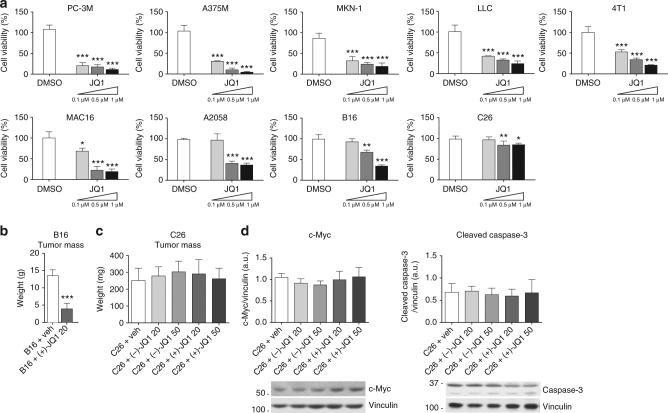
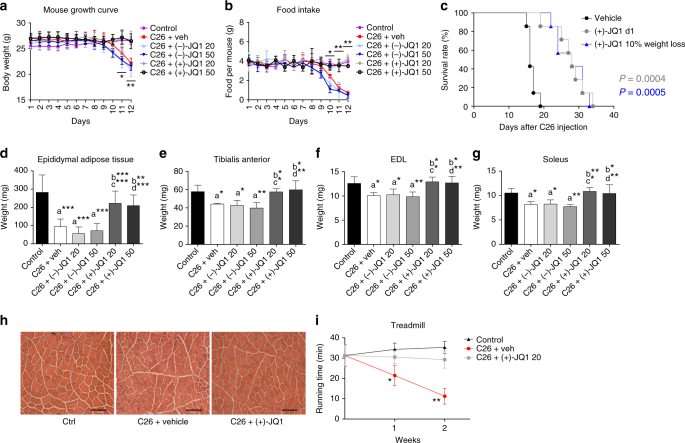
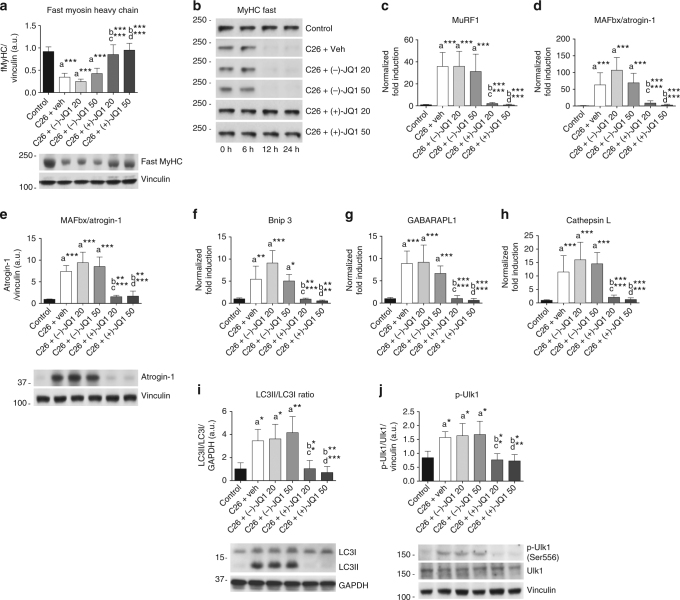
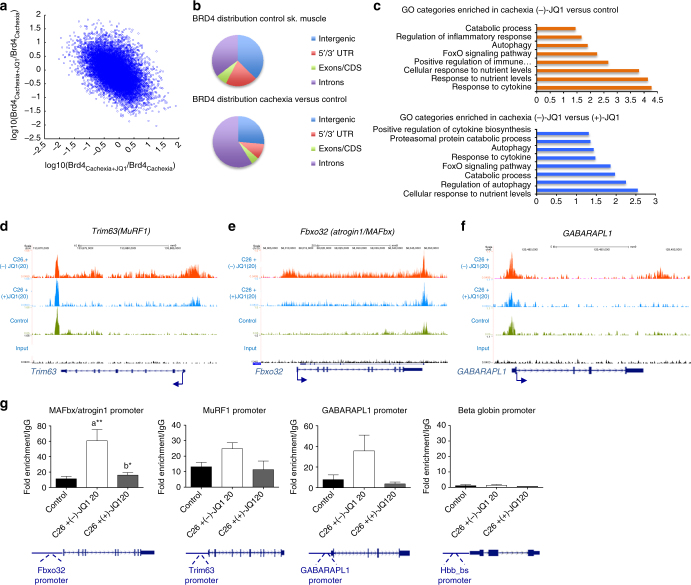
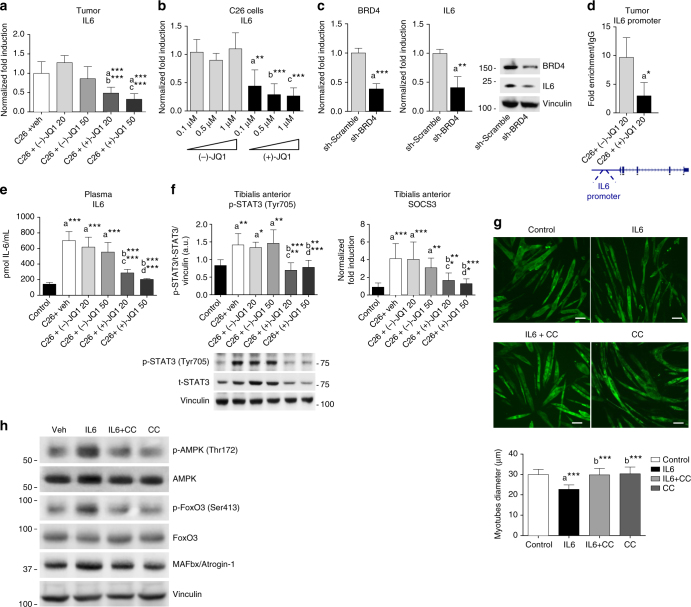
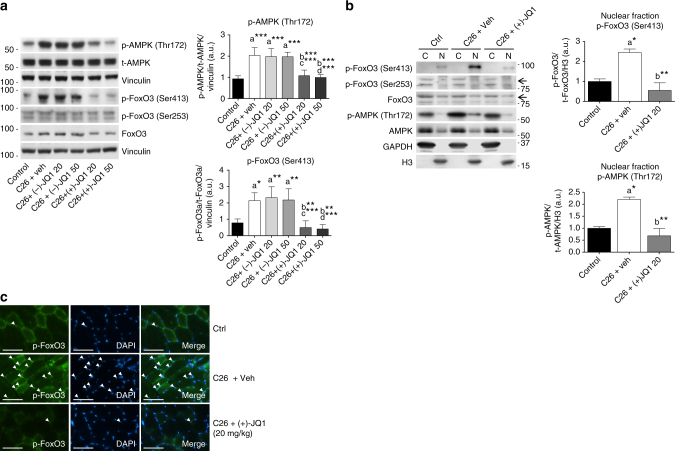
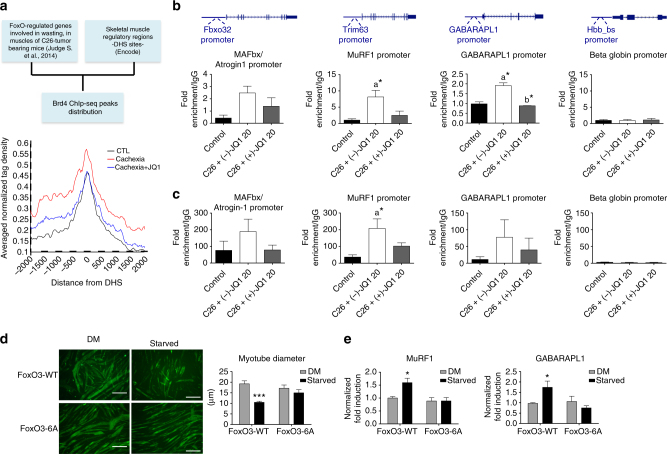
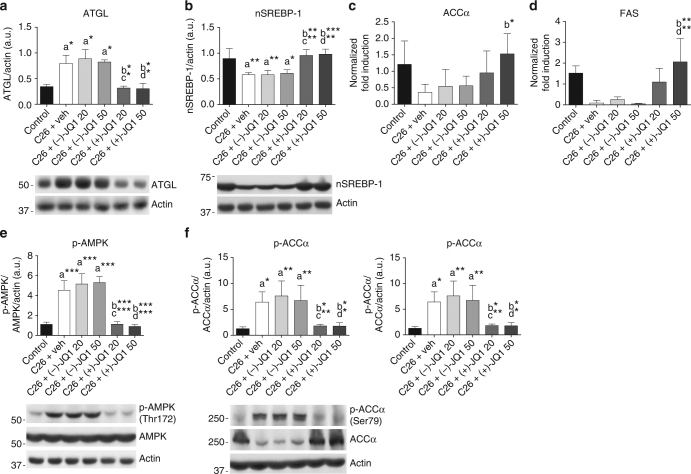
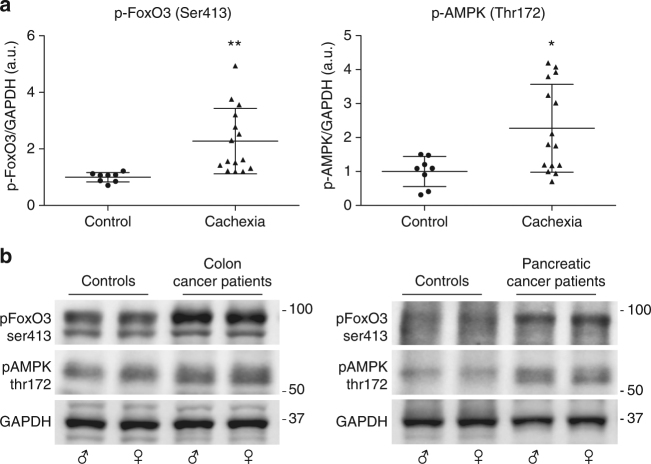
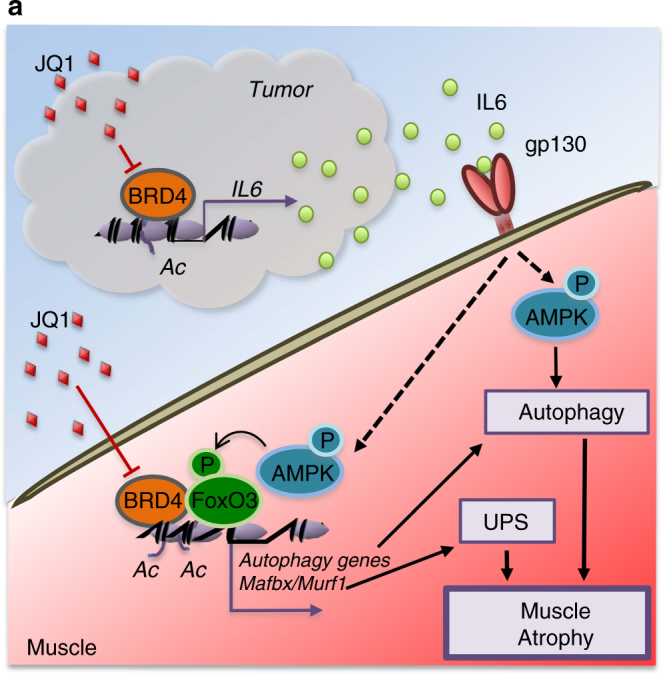
Cancer cachexia is a devastating metabolic syndrome characterized by systemic inflammation and massive muscle and adipose tissue wasting. Although it is responsible for approximately one-third of cancer deaths, no effective therapies are available and the underlying mechanisms have not been fully elucidated. We previously identified the bromodomain and extra-terminal domain (BET) protein BRD4 as an epigenetic regulator of muscle mass. Here we show that the pan-BET inhibitor (+)-JQ1 protects tumor-bearing mice from body weight loss and muscle and adipose tissue wasting. Remarkably, in C26-tumor-bearing mice (+)-JQ1 administration dramatically prolongs survival, without directly affecting tumor growth. By ChIP-seq and ChIP analyses, we unveil that BET proteins directly promote the muscle atrophy program during cachexia. In addition, BET proteins are required to coordinate an IL6-dependent AMPK nuclear signaling pathway converging on FoxO3 transcription factor. Overall, these findings indicate that BET proteins may represent a promising therapeutic target in the management of cancer cachexia.
Overview
The claims and statistics of this paper haven’t been checked yet.
Run the check — free, no account needed. It reads the open-access text and checks the sources it cites.
Integrity signals
Registry
Cites
Statistics
Figures
Verification
Claims the paper makes
The claims and statistics of this paper haven’t been checked yet.
Run the check — free, no account needed. It reads the open-access text and checks the sources it cites.
Claims other papers make about this one
Each is checked against this paper’s own text: does it say what the citing paper says it does?
In the citing paper
“The bromodomain and extra terminal domain (BET) protein BRD4 has been recently shown to be an epigenetic regulator of muscle mass80.”
From Mechanisms of muscle atrophy and hypertrophy: implications in health and disease (2021) · cites this paper as [80]
In the citing paper
“Mechanistically, BET proteins promote an IL6-AMPK-FoxO3 response to enhance protein breakdown.”
From Mechanisms of muscle atrophy and hypertrophy: implications in health and disease (2021) · cites this paper as [80]
In the citing paper
“In fact, the overactivation of AMPK has been linked to cachexia80.”
From Mechanisms of muscle atrophy and hypertrophy: implications in health and disease (2021) · cites this paper as [80]
Self-check
Percentages, sums and reported differences re-computed from the paper’s own numbers.
The self-check needs the paper’s full text.
Citations
Cites
PROTEIN MEASUREMENT WITH THE FOLIN PHENOL REAGENT
Lowry, O. H., Rosebrough, N., Farr, A. L., & Randall, R. (1951) · Journal of Biological Chemistry · doi:10.1016/s0021-9258(19)52451-6 · Cited by 316,394
Model-based Analysis of ChIP-Seq (MACS)
Zhang, Y., Liu, T., Meyer, C. A., Eeckhoute, J., Johnson, D. S., Bernstein, B. E., Nusbaum, C., Myers, R. M., Brown, M., Li, W., et al. (2008) · Genome Biology · doi:10.1186/gb-2008-9-9-r137 · Cited by 18,386
Definition and classification of cancer cachexia: an international consensus
Fearon, K., Strasser, F., Anker, S. D., Bosaeus, I. G., Bruera, E. D., Fainsinger, R. L., Jatoi, A., Loprinzi, C. L., Macdonald, N., Mantovani, G., et al. (2011) · The Lancet Oncology · doi:10.1016/s1470-2045(10)70218-7 · Cited by 6,020
BET Bromodomain Inhibition as a Therapeutic Strategy to Target c-Myc
Delmore, J. E., Issa, G. C., Lemieux, M. E., Rahl, P. B., Shi, J., Jacobs, H. M., Kastritis, E., Gilpatrick, T., Paranal, R. M., Qi, J., et al. (2011) · Cell · doi:10.1016/j.cell.2011.08.017 · Cited by 2,888
RNAi screen identifies Brd4 as a therapeutic target in acute myeloid leukaemia
Zuber, J., Shi, J., Wang, E., Rappaport, A. R., Herrmann, H., Sison, E. A., Magoon, D., Qi, J., Blatt, K., Wunderlich, M., et al. (2011) · Nature · doi:10.1038/nature10334 · Cited by 1,870
Cancer cachexia: understanding the molecular basis
Argilés, J. M. A., Busquets, S., Stemmler, B., & López-Soriano, F. J. (2014) · Nature reviews. Cancer · doi:10.1038/nrc3829 · Cited by 1,567
Suppression of inflammation by a synthetic histone mimic
Nicodeme, E., Jeffrey, K. L., Schaefer, U., Beinke, S., Dewell, S., Chung, C.-W., Chandwani, R., Marazzi, I., Wilson, P., Coste, H., et al. (2010) · Nature · doi:10.1038/nature09589 · Cited by 1,563
Multiple types of skeletal muscle atrophy involve a common program of changes in gene expression
Lecker, S. H., Jagoe, R. T., Gilbert, A., Gomes, M., Baracos, V., Bailey, J., Price, S. R., Mitch, W. E., & Goldberg, A. L. (2004) · The FASEB Journal · doi:10.1096/fj.03-0610com · Cited by 1,539 · cited 2×
“In cachexia-induced muscle atrophy, two main catabolic pathways are activated: the ubiquitin-proteasome degradation system, through transcriptional upregulation of MAFbx/Atrogin-1 and MuRF1 ubiquitin-ligases, and autophagy 13 – 15 .”
Targeting bromodomains: epigenetic readers of lysine acetylation
Filippakopoulos, P., & Knapp, S. (2014) · Nature Reviews Drug Discovery · doi:10.1038/nrd4286 · Cited by 1,298
Self-citationCancer Cachexia: Mediators, Signaling, and Metabolic Pathways
Fearon, K. C. H., Glass, D. J., & Guttridge, D. C. (2012) · Cell Metabolism · doi:10.1016/j.cmet.2012.06.011 · Cited by 1,244
Tisdale, M. J. (2009) · Physiological Reviews · doi:10.1152/physrev.00016.2008 · Cited by 1,216
FOXOs: signalling integrators for homeostasis maintenance
Eijkelenboom, A., & Burgering, B. M. T. (2013) · Nature Reviews Molecular Cell Biology · doi:10.1038/nrm3507 · Cited by 1,110
Reversal of Cancer Cachexia and Muscle Wasting by ActRIIB Antagonism Leads to Prolonged Survival
Zhou, X., Wang, J. L., Lu, J., Song, Y., Kwak, K. S., Jiao, Q., Rosenfeld, R., Chen, Q., Boone, T. C., Simonet, W. S., et al. (2010) · Cell · doi:10.1016/j.cell.2010.07.011 · Cited by 960
Therapeutic targeting of BET bromodomain proteins in castration-resistant prostate cancer
Asangani, I. A., Dommeti, V. L., Wang, X., Malik, R., Cieslik, M. P., Yang, R., Escara-Wilke, J. F., Wilder-Romans, K., Dhanireddy, S., Engelke, C. G., et al. (2014) · Nature · doi:10.1038/nature13229 · Cited by 941
Greer, E. L., Oskoui, P. R., Banko, M. R., Maniar, J. M., Gygi, M. P., Gygi, S. P., & Brunet, A. (2007) · Journal of Biological Chemistry · doi:10.1074/jbc.m705325200 · Cited by 852
Xiong, G., Deng, L., Zhu, J., Rychahou, P. G., & Xu, R. (2014) · BMC Cancer · doi:10.1186/1471-2407-14-1 · Cited by 759
Milan, G., Romanello, V., Pescatore, F., Armani, A., Paik, J.-H., Frasson, L., Seydel, A., Zhao, J., Abraham, R., Goldberg, A. L., et al. (2015) · Nature Communications · doi:10.1038/ncomms7670 · Cited by 709
Self-citationResponse and resistance to BET bromodomain inhibitors in triple-negative breast cancer
Shu, S., Lin, C. Y., He, H. H., Witwicki, R. M., Tabassum, D. P., Roberts, J. M., Janiszewska, M., Jin Huh, S., Liang, Y., Ryan, J., et al. (2016) · Nature · doi:10.1038/nature16508 · Cited by 632
Adipose Triglyceride Lipase Contributes to Cancer-Associated Cachexia
Das, S. K., Eder, S., Schauer, S., Diwoky, C., Temmel, H., Guertl, B., Gorkiewicz, G., Tamilarasan, K. P., Kumari, P., Trauner, M., et al. (2011) · Science · doi:10.1126/science.1198973 · Cited by 594
BET inhibitor resistance emerges from leukaemia stem cells
Fong, C. Y., Gilan, O., Lam, E. Y. N., Rubin, A. F., Ftouni, S., Tyler, D., Stanley, K., Sinha, D., Yeh, P., Morison, J., et al. (2015) · Nature · doi:10.1038/nature14888 · Cited by 545
Transcriptional plasticity promotes primary and acquired resistance to BET inhibition
Rathert, P., Roth, M., Neumann, T., Muerdter, F., Roe, J., Muhar, M., Deswal, S., Cerny‐Reiterer, S., Peter, B., Jude, J., et al. (2015) · Nature · doi:10.1038/nature14898 · Cited by 514
Shi, J., Wang, Y., Zeng, L., Wu, Y., Deng, J., Zhang, Q., Lin, Y., Li, J., Kang, T., Tao, M., et al. (2014) · Cancer Cell · doi:10.1016/j.ccr.2014.01.028 · Cited by 483
Bonetto, A., Aydogdu, T., Jin, X., Zhang, Z., Zhan, R., Puzis, L., Koniaris, L. G., & Zimmers, T. A. (2012) · American Journal of Physiology-Endocrinology and Metabolism · doi:10.1152/ajpendo.00039.2012 · Cited by 463
Cancer cachexia: Developing multimodal therapy for a multidimensional problem
Fearon, K. C. H. (2008) · European Journal of Cancer · doi:10.1016/j.ejca.2008.02.033 · Cited by 444
Small-Molecule Inhibition of BRDT for Male Contraception
Matzuk, M. M., McKeown, M. R., Filippakopoulos, P., Li, Q., Ma, L., Agno, J. E., Lemieux, M. E., Picaud, S., Yu, R. N., Qi, J., et al. (2012) · Cell · doi:10.1016/j.cell.2012.06.045 · Cited by 430
Self-citationBelkina, A. C., Nikolajczyk, B. S., & Denis, G. V. (2013) · The Journal of Immunology · doi:10.4049/jimmunol.1202838 · Cited by 426
Signaling Kinase AMPK Activates Stress-Promoted Transcription via Histone H2B Phosphorylation
Bungard, D., Fuerth, B. J., Zeng, P.-Y., Faubert, B., Maas, N. L., Viollet, B., Carling, D., Thompson, C. B., Jones, R. G., & Berger, S. L. (2010) · Science · doi:10.1126/science.1191241 · Cited by 381
Roe, J., Mercan, F., Rivera, K. D., Pappin, D., & Vakoc, C. R. (2015) · Molecular Cell · doi:10.1016/j.molcel.2015.04.011 · Cited by 343
A simple protocol for the subcellular fractionation of skeletal muscle cells and tissue
Dimauro, I., Pearson, T., Caporossi, D., & Jackson, M. J. (2012) · BMC Research Notes · doi:10.1186/1756-0500-5-513 · Cited by 329
BRD4 assists elongation of both coding and enhancer RNAs by interacting with acetylated histones
Kanno, T., Kanno, Y., LeRoy, G., Campos, E. I., Sun, H., Brooks, S. R., Vahedi, G., Heightman, T. D., Garcia, B. A., Reinberg, D., et al. (2014) · Nature Structural & Molecular Biology · doi:10.1038/nsmb.2912 · Cited by 328
PTH/PTHrP Receptor Mediates Cachexia in Models of Kidney Failure and Cancer
Kır, S., Komaba, H., Garcia, A. P., Economopoulos, K. P., Liu, W., Lanske, B., Hodin, R. A., & Spiegelman, B. M. (2015) · Cell Metabolism · doi:10.1016/j.cmet.2015.11.003 · Cited by 312
Mechanism of Increased Lipolysis in Cancer Cachexia
Agustsson, T., Rydén, M., Hoffstedt, J., van Harmelen, V., Dicker, A., Laurencikiene, J., Isaksson, B., Permert, J., & Arner, P. (2007) · Cancer Research · doi:10.1158/0008-5472.can-06-4585 · Cited by 309
AMPK activity is diminished in tissues of IL-6 knockout mice: the effect of exercise.
Kelly, M., Keller, C., Avilucea, P. R., Keller, P., Luo, Z., Xiang, X., Giralt, M., Hidalgo, J., Saha, A. K., Pedersen, B. K., et al. (2004) · Biochemical and Biophysical Research Communications · doi:10.1016/j.bbrc.2004.05.188 · Cited by 289
Autophagic Degradation Contributes to Muscle Wasting in Cancer Cachexia
Penna, F., Costamagna, D., Pin, F., Camperi, A., Fanzani, A., Chiarpotto, E., Cavallini, G., Bonelli, G., Baccino, F. M., & Costelli, P. (2013) · American Journal Of Pathology · doi:10.1016/j.ajpath.2012.12.023 · Cited by 279
Self-citationWhite, J. P., Baynes, J. W., Welle, S. L., Kostek, M. C., Matesic, L. E., Sato, S., & Carson, J. A. (2011) · PLoS ONE · doi:10.1371/journal.pone.0024650 · Cited by 260
PFI-1, a Highly Selective Protein Interaction Inhibitor, Targeting BET Bromodomains
Picaud, S., Costa, D. D., Thanasopoulou, A., Filippakopoulos, P., Fish, P. V., Philpott, M., Fedorov, O., Brennan, P. E., Bunnage, M. E., Owen, D. R., et al. (2013) · Cancer Research · doi:10.1158/0008-5472.can-12-3292 · Cited by 257
Self-citationReed, S. A., Sandesara, P. B., Judge, S. M., & Judge, A. R. (2011) · The FASEB Journal · doi:10.1096/fj.11-189977 · Cited by 231
Cancer-induced muscle wasting: latest findings in prevention and treatment
Aversa, Z., Costelli, P., & Muscaritoli, M. (2017) · Therapeutic Advances in Medical Oncology · doi:10.1177/1758834017698643 · Cited by 224
Self-citationInterleukin-6 as a Key Regulator of Muscle Mass during Cachexia
Carson, J., & Baltgalvis, K. A. (2010) · Exercise and sport sciences reviews · doi:10.1097/jes.0b013e3181f44f11 · Cited by 217
Role of interleukin-6 in cachexia
Narsale, A. A., & Carson, J. A. (2014) · Current Opinion in Supportive and Palliative Care · doi:10.1097/spc.0000000000000091 · Cited by 205
Resistance to BET Bromodomain Inhibitors Is Mediated by Kinome Reprogramming in Ovarian Cancer
Kurimchak, A., Shelton, C., Duncan, K., Johnson, K. J., Brown, J., O’Brien, S. W., Gabbasov, R. T., Fink, L. S., Li, Y., Lounsbury, N., et al. (2016) · Cell Reports · doi:10.1016/j.celrep.2016.06.091 · Cited by 204
AMP-activated protein kinase phosphorylates transcription factors of the CREB family
Thomson, D. M., Herway, S. T., Fillmore, N., Kim, H., Brown, J. D., Barrow, J. R., & Winder, W. W. (2007) · Journal of Applied Physiology · doi:10.1152/japplphysiol.00900.2007 · Cited by 187
Muscle mTORC1 suppression by IL-6 during cancer cachexia: a role for AMPK
White, J. P., Puppa, M., Gao, S., Sato, S., Welle, S. L., & Carson, J. A. (2013) · American Journal of Physiology-Endocrinology and Metabolism · doi:10.1152/ajpendo.00410.2012 · Cited by 187
Brd2 disruption in mice causes severe obesity without Type 2 diabetes
Wang, F., Liu, H., Blanton, W. P., Belkina, A., Lebrasseur, N. K., & Denis, G. V. (2010) · Biochemical Journal · doi:10.1042/bj20090928 · Cited by 185
Bing, C., Russell, S. T., Becket, E., Pope, M., Tisdale, M. J., Trayhurn, P., & Jenkins, J. R. (2006) · British Journal of Cancer · doi:10.1038/sj.bjc.6603360 · Cited by 179
Autophagy is induced in the skeletal muscle of cachectic cancer patients
Aversa, Z., Pin, F., Lucia, S., Penna, F., Verzaro, R., Fazi, M., Colasante, G., Tirone, A., Fanelli, F. R., Ramaccini, C., et al. (2016) · Scientific Reports · doi:10.1038/srep30340 · Cited by 165
Self-citationExercise Increases Nuclear AMPK α2 in Human Skeletal Muscle
McGee, S. L., Howlett, K. F., Starkie, R. L., Cameron-Smith, D., Kemp, B. E., & Hargreaves, M. (2003) · Diabetes · doi:10.2337/diabetes.52.4.926 · Cited by 160
Molecular mechanism of sarcopenia and cachexia: recent research advances
Sakuma, K., Aoi, W., & Yamaguchi, A. (2017) · Pflügers Archiv - European Journal of Physiology · doi:10.1007/s00424-016-1933-3 · Cited by 160
Targeting of Fn14 Prevents Cancer-Induced Cachexia and Prolongs Survival
Johnston, A. J., Murphy, K. T., Jenkinson, L., Laine, D., Emmrich, K., Faou, P., Weston, R. T., Jayatilleke, K. M., Schloegel, J., Talbo, G. H., et al. (2015) · Cell · doi:10.1016/j.cell.2015.08.031 · Cited by 152
Cheung, K. L., Zhang, F., Jaganathan, A., Sharma, R., Zhang, Q., Konuma, T., Shen, T., Lee, J., Ren, C., Chen, C., et al. (2017) · Molecular Cell · doi:10.1016/j.molcel.2016.12.022 · Cited by 143
Identification of a Nuclear Export Signal in the Catalytic Subunit of AMP-activated Protein Kinase
Kazgan, N., Williams, T., Forsberg, L. J., & Brenman, J. E. (2010) · Molecular Biology of the Cell · doi:10.1091/mbc.e10-04-0347 · Cited by 123
Sanchez, A. M. J., Candau, R. B., Csibi, A., Pagano, A. F., Raibon, A., & Bernardi, H. (2012) · American Journal of Physiology-Cell Physiology · doi:10.1152/ajpcell.00125.2012 · Cited by 122
Zhang, Y., Qiu, J., Wang, X., Zhang, Y., & Xia, M. (2011) · Arteriosclerosis Thrombosis and Vascular Biology · doi:10.1161/atvbaha.111.237453 · Cited by 121
Judge, S. M., Wu, C.-L., Beharry, A. W., Roberts, B. M., Ferreira, L. F., Kandarian, S. C., & Judge, A. R. (2014) · BMC Cancer · doi:10.1186/1471-2407-14-997 · Cited by 111
Muscle atrophy in experimental cancer cachexia: Is the IGF‐1 signaling pathway involved?
Penna, F., Bonetto, A., Muscaritoli, M., Costamagna, D., Minero, V. G., Bonelli, G., Fanelli, F. R., Baccino, F. M., & Costelli, P. (2009) · International Journal of Cancer · doi:10.1002/ijc.25146 · Cited by 109
Self-citationProserpio, V., Fittipaldi, R., Ryall, J. G., Sartorelli, V., & Caretti, G. (2013) · Genes & Development · doi:10.1101/gad.217240.113 · Cited by 99
Self-citationHelen, S., Horne, G. A., Bastow, S., & Chevassut, T. J. T. (2013) · Cancer Medicine · doi:10.1002/cam4.146 · Cited by 91
Tsoli, M., Schweiger, M., Vanniasinghe, A. S., Painter, A., Zechner, R., Clarke, S. J., & Robertson, G. R. (2014) · PLoS ONE · doi:10.1371/journal.pone.0092966 · Cited by 89
FOXO3 Selectively Amplifies Enhancer Activity to Establish Target Gene Regulation
Eijkelenboom, A., Mokrý, M., Smits, L. M. M., Nieuwenhuis, E. E. S., & Burgering, B. M. T. (2013) · Cell Reports · doi:10.1016/j.celrep.2013.11.031 · Cited by 68
Effect of the specific proteasome inhibitor bortezomib on cancer‐related muscle wasting
Penna, F., Bonetto, A., Aversa, Z., Minero, V. G., Fanelli, F. R., Costelli, P., & Muscaritoli, M. (2015) · Journal of Cachexia Sarcopenia and Muscle · doi:10.1002/jcsm.12050 · Cited by 62
Self-citationRole of the ubiquitin-proteasome pathway in muscle atrophy in cachexia
Attaix, D., Combaret, L., Béchet, D., & Taillandier, D. (2008) · Current Opinion in Supportive and Palliative Care · doi:10.1097/spc.0b013e3283196ac2 · Cited by 56
Springer, J., Tschirner, A., Hartmann, K., Palus, S., Wirth, E. K., Busquets, S., Möller, N., von Haehling, S., Argilés, J. M. A., Köhrle, J., et al. (2012) · International Journal of Cancer · doi:10.1002/ijc.27494 · Cited by 56
Practical multimodal care for cancer cachexia
Maddocks, M. M., Hopkinson, J. B., Conibear, J., Reeves, A., Shaw, C., & Fearon, K. (2016) · Current Opinion in Supportive and Palliative Care · doi:10.1097/spc.0000000000000241 · Cited by 55
Segatto, M., Manduca, A., Lecis, C., Rosso, P., Jozwiak, A., Swiezewska, E., Moreno, S., Trezza, V., & Pallottini, V. (2014) · Neuropsychopharmacology · doi:10.1038/npp.2013.284 · Cited by 51
Self-citationSettleman, J. (2016) · Nature · doi:10.1038/nature16863 · Cited by 43
C26 Cancer-Induced Muscle Wasting Is IKKβ-Dependent and NF-kappaB-Independent
Cornwell, E. W., Mirbod, A., Wu, C., Kandarian, S. C., & Jackman, R. W. (2014) · PLoS ONE · doi:10.1371/journal.pone.0087776 · Cited by 42
Mapping genome-wide transcription factor binding sites in frozen tissues
Savic, D., Gertz, J., Jain, P., Cooper, G. M., & Myers, R. M. (2013) · Epigenetics & Chromatin · doi:10.1186/1756-8935-6-30 · Cited by 31
Brd4‐Brd2 isoform switching coordinates pluripotent exit and Smad2‐dependent lineage specification
Fernández-Alonso, R., Davidson, L., Hukelmann, J. L., Zengerle, M., Prescott, A. R., Lamond, A. I., Ciulli, A., Sapkota, G. P., & Findlay, G. M. (2017) · EMBO Reports · doi:10.15252/embr.201643534 · Cited by 28
Au, E., Desai, A., Koniaris, L., & Zimmers, T. (2017) · Frontiers in Physiology · doi:10.3389/fphys.2016.00682 · Cited by 27
Dessı̀, S., Batetta, B., Spano, O., Bagby, G. J., Tessitore, L., Costelli, P., Baccino, F., Pani, P., & Argilés, J. M. A. (1995) · British Journal of Cancer · doi:10.1038/bjc.1995.477 · Cited by 17
Self-citationFujimoto-Ouchi, K., Onuma, E., Shirane, M., Mori, K., & Tanaka, Y. (2006) · Cancer Chemotherapy and Pharmacology · doi:10.1007/s00280-006-0338-y · Cited by 16
Cited by
Sorted by citations
Mechanisms of muscle atrophy and hypertrophy: implications in health and disease
Sartori, R., Romanello, V., & Sandri, M. (2021) · Nature Communications · doi:10.1038/s41467-020-20123-1 · Cited by 940
Self-citationThe BET family in immunity and disease
Wang, N., Wu, R., Tang, D., & Kang, R. (2021) · Signal Transduction and Targeted Therapy · doi:10.1038/s41392-020-00384-4 · Cited by 295
Signaling Pathways That Control Muscle Mass
Vainshtein, A., & Sandri, M. (2020) · International Journal of Molecular Sciences · doi:10.3390/ijms21134759 · Cited by 222
Self-citationSukocheva, O. A., Maksoud, R., Beeraka, N. M., Madhunapantula, S. V., Sinelnikov, M. Y., Nikolenko, V. N., Неганова, М. Е., Klochkov, S. G., Kamal, M. A., Staines, D., et al. (2021) · Journal of Advanced Research · doi:10.1016/j.jare.2021.11.013 · Cited by 182
Body composition and sarcopenia: The next-generation of personalized oncology and pharmacology?
Hilmi, M., Jouinot, A., Burns, R. G., Pigneur, F., Mounier, R., Gondin, J., Neuzillet, C., & Goldwasser, F. (2018) · Pharmacology & Therapeutics · doi:10.1016/j.pharmthera.2018.12.003 · Cited by 145
Metadata
- Authors
- Segatto, M., Fittipaldi, R., Pin, F., Sartori, R., Dae Ko, K., Zare, H., Fenizia, C., Zanchettin, G., Pierobon, E. S., Hatakeyama, S., Sperti, C., Merigliano, S., Sandri, M., Filippakopoulos, P., Costelli, P., Sartorelli, V., & Caretti, G.
- Affiliations
- University of Milan (IT)
- University of Turin (IT)
- University of Padua (IT)
- National Institutes of Health (US)
- Novartis (Switzerland) (CH)
- University of Oxford (GB)
- Corresponding author
- Caretti, Giuseppina
- ORCID
- Venue
- Nature Communications
- Published
- 2017-11-22
- Volume
- 8
- Issue
- 1
- Pages
- 1707-1707
- ISSN
- 2041-1723 (ISSN-L)
- PMC
- PMC5700099
- OpenAlex
- W2768531312
- Cited by
- 101
- References
- 71
- Citations by year
- 2026: 5 · 2025: 8 · 2024: 5 · 2023: 16 · 2022: 9 · 2021: 15 · 2020: 18 · 2019: 14 · 2018: 11
- FWCI
- 4.80
- Type
- journal article
- Language
- en
- Open access
- gold
- doi.org
- Locations
- Nature Communications (publishedVersion, cc-by)
- Europe PMC (PubMed Central) (publishedVersion, cc-by)
- PubMed Central (publishedVersion, cc-by)
- PubMed (publishedVersion)
- Archivio Istituzionale della Ricerca (Universita Degli Studi Di Milano) (submittedVersion, cc-by)
- IRIS Research product catalog (Sapienza University of Rome) (submittedVersion, cc-by-nc-nd)
- Institutional Research Information System University of Turin (University of Turin) (submittedVersion, cc-by)
- Padua Research Archive (University of Padova) (submittedVersion, cc-by)
- RePEc: Research Papers in Economics (submittedVersion)
- DOAJ (DOAJ: Directory of Open Access Journals) (submittedVersion)
- DOAJ (DOAJ: Directory of Open Access Journals) (submittedVersion, cc-by-sa)
- Archivio Istituzionale della Ricerca - Università degli Studi del Molise (submittedVersion)
- Funders
- Wellcome Trust (106169/Z/14/Z, 095751/Z/11/Z)
- Associazione Italiana per la Ricerca sul Cancro
- Fondazione Italiana per la Ricerca sul Cancro
- National Institutes of Health
- Medical Research Council (MR/N010051/1)
- National Institute of Arthritis and Musculoskeletal and Skin Diseases
- Topics
- Life Sciences › Biochemistry, Genetics and Molecular Biology › Molecular Biology › Muscle Physiology and Disorders
- Health Sciences › Medicine › Physiology (medical) › Nutrition and Health in Aging
- Life Sciences › Biochemistry, Genetics and Molecular Biology › Molecular Biology › Protein Degradation and Inhibitors
- Keywords
- cancer cachexia, BRD4, BET proteins, JQ1, BET inhibitors, muscle atrophy, adipose tissue wasting, interleukin-6, AMPK signaling, FOXO3, epigenetic regulation, survival
- MeSH terms
- Forkhead Box Protein O3, Bromodomain Containing Proteins, Animals, Azepines, Cachexia, Gene Expression Regulation, Humans, Male, Muscular Atrophy, Neoplasms, Experimental, Nuclear Proteins, Transcription Factors, Triazoles, Interleukin-6, Muscle, Skeletal, Cell Cycle Proteins, Epigenesis, Genetic, Cell Line, Tumor, Mice, Metabolic Networks and Pathways, AMP-Activated Protein Kinases
About these checks
Registry, retraction, Cites and statistics results are computed, not judged, with one exception: a printed reference that no index lists is read once by a model before it counts as a citation error. Claims are extracted by a model and kept only when their quote appears verbatim in the text; each cited source is then checked, with a model’s help, for whether it says what the claim relies on. Those verdicts can be wrong — read the claim’s quote and the cited source before relying on one.
Statistics and arithmetic are recomputed, not judged.
Confidence bands are shown only for fields calibrated on our annotated test set. None is calibrated yet, so no band is shown.
What counts as a claim ›How we measure confidence ›How we check this ›
Are you an author, or do you see a problem with this page? Request a review
