

The anthelmintic praziquantel is a human serotoninergic G-protein-coupled receptor ligand
Open accessThe DOI matches its Crossref record; 35 of the 35 references it cites were found in a registry or an index.
Abstract
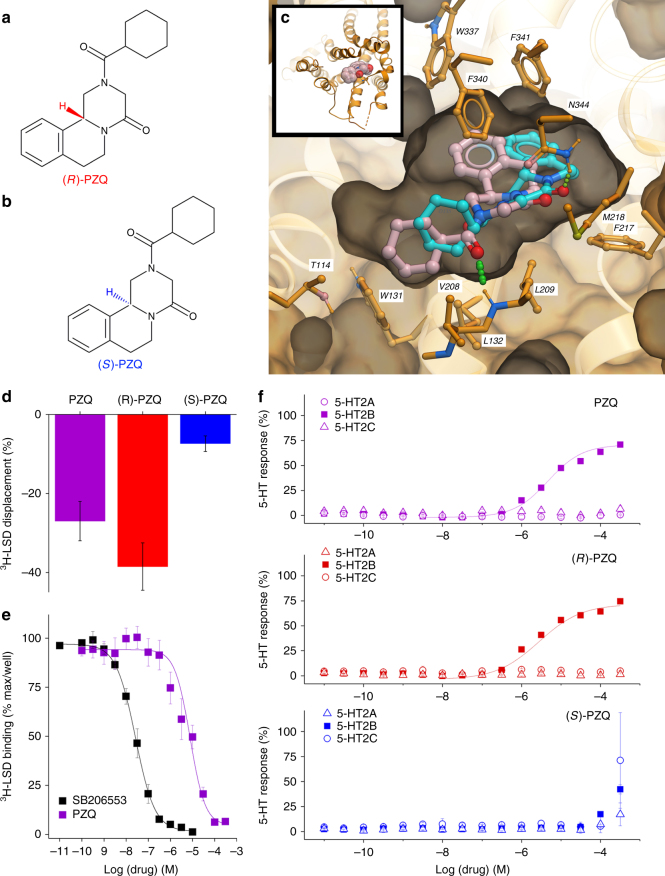
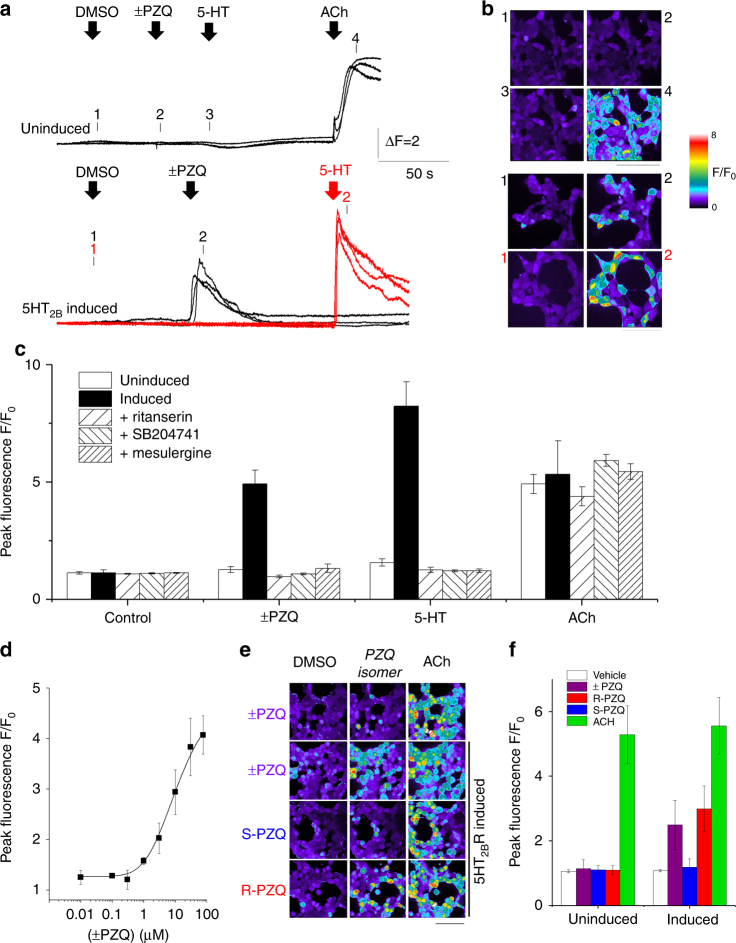
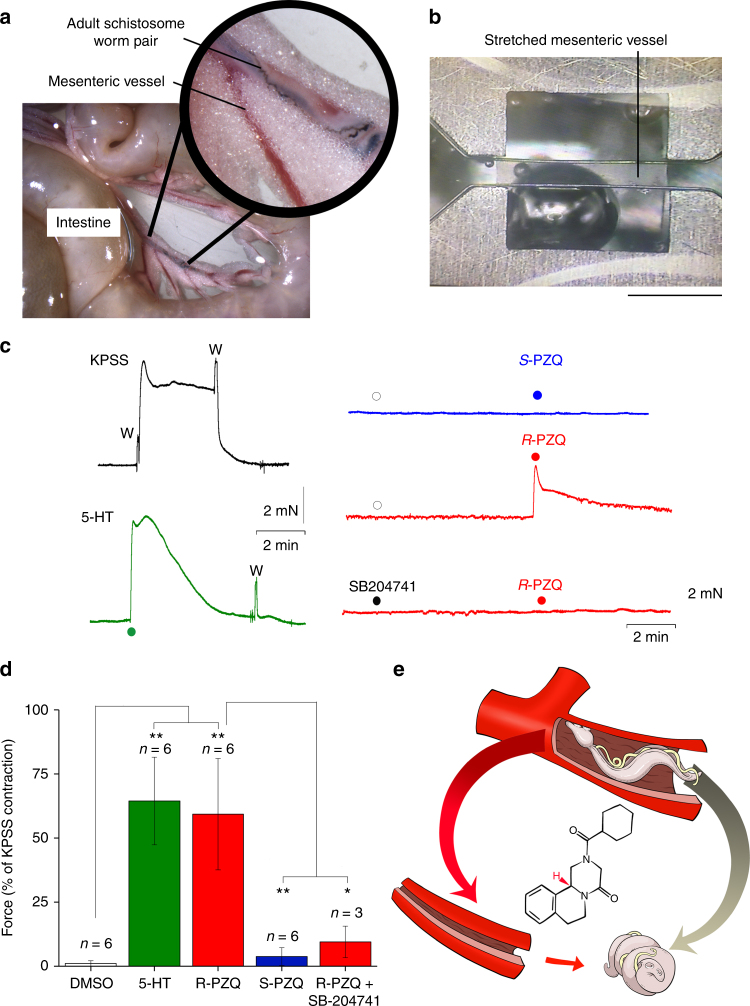
Schistosomiasis is a debilitating tropical disease caused by infection with parasitic blood flukes. Approximately 260 million people are infected worldwide, underscoring the clinical and socioeconomic impact of this chronic infection. Schistosomiasis is treated with the drug praziquantel (PZQ), which has proved the therapeutic mainstay for over three decades of clinical use. However, the molecular target(s) of PZQ remain undefined. Here we identify a molecular target for the antischistosomal eutomer — (R) -PZQ — which functions as a partial agonist of the human serotoninergic 5HT 2B receptor. (R) -PZQ modulation of serotoninergic signaling occurs over a concentration range sufficient to regulate vascular tone of the mesenteric blood vessels where the adult parasites reside within their host. These data establish (R) -PZQ as a G-protein-coupled receptor ligand and suggest that the efficacy of this clinically important anthelmintic is supported by a broad, cross species polypharmacology with PZQ modulating signaling events in both host and parasite.
Overview
The claims and statistics of this paper haven’t been checked yet.
Free: it reads the open-access text and checks the first 5 claims that cite a source we can check. Create a free account to check every claim.
Integrity signals
Registry
Cites
Statistics
Figures
Verification
Claims the paper makes
The claims and statistics of this paper haven’t been checked yet.
Free: it reads the open-access text and checks the first 5 claims that cite a source we can check. Create a free account to check every claim.
Claims other papers make about this one
Each is checked against this paper’s own text: does it say what the citing paper says it does?
The cited source says what the claim attributes to it.
In the citing paper
“GPCRs also represent important off-targets for kinase inhibitors62,63, ion channel modulators64, anti-infectives65 and other classes of drug-like molecules53,54.”
From Unexplored therapeutic opportunities in the human genome (2018) · cites this paper as [65]
Self-check
Percentages, sums and reported differences re-computed from the paper’s own numbers.
The self-check needs the paper’s full text.
Citations
Cites
Gaulton, A., Hersey, A., Nowotka, M., Bento, A. P., Chambers, J., Mendez, D., Mutowo, P., Atkinson, F., Bellis, L. J., Cibrián-Uhalte, E., et al. (2017) · Nucleic Acids Research · doi:10.1093/nar/gkw1074 · Cited by 2,330 · cited 2×
“Infected mice were provided by the Biomedical Research Institute (33) from which adult worms were collected by portal perfusion 6–8-week-post infection.”
MethodHelminth infections: the great neglected tropical diseases
Hotez, P. J., Brindley, P. J., Bethony, J. M., King, C. H., Pearce, E. J., & Jacobson, J. (2008) · Journal of Clinical Investigation · doi:10.1172/jci34261 · Cited by 1,568
Ross, A. G. P., Bartley, P. B., Sleigh, A. C., Olds, G. R., Li, Y., Williams, G. M., & McManus, D. P. (2002) · New England Journal of Medicine · doi:10.1056/nejmra012396 · Cited by 870
Salvinorin A: A potent naturally occurring nonnitrogenous κ opioid selective agonist
Roth, B. L., Baner, K., Westkaemper, R., Siebert, D., Rice, K. C., Steinberg, S., Ernsberger, P., & Rothman, R. B. (2002) · Proceedings of the National Academy of Sciences · doi:10.1073/pnas.182234399 · Cited by 784
Self-citationCrystal Structure of an LSD-Bound Human Serotonin Receptor
Wacker, D., Wang, S., McCorvy, J. D., Betz, R. M., Venkatakrishnan, A. J., Levit, A., Lansu, K., Schools, Z. L., Che, T., Nichols, D. E., et al. (2017) · Cell · doi:10.1016/j.cell.2016.12.033 · Cited by 457
Self-citationMelman, S. D., Steinauer, M. L., Cunningham, C., Kubatko, L. S., Mwangi, I. N., Wynn, N. B., Mutuku, M. W., Karanja, D. M. S., Colley, D. G., Black, C. L., et al. (2009) · PLoS Neglected Tropical Diseases · doi:10.1371/journal.pntd.0000504 · Cited by 445
Self-citationSerotonin and Blood Pressure Regulation
Watts, S. W., Morrison, S. F., Davis, R. P., & Barman, S. M. (2012) · Pharmacological Reviews · doi:10.1124/pr.111.004697 · Cited by 396
Schistosomiasis in Africa: An Emerging Tragedy in Our New Global Health Decade
Hotez, P. J., & Fenwick, A. (2009) · PLoS Neglected Tropical Diseases · doi:10.1371/journal.pntd.0000485 · Cited by 241
Stimulating healthy tissue regeneration by targeting the 5-HT2B receptor in chronic liver disease
Ebrahimkhani, M. R., Oakley, F., Murphy, L. B., Mann, J., Moles, A., Perugorria, M. J., Ellis, E., Lakey, A. F., Burt, A. D., Douglass, A., et al. (2011) · Nature Medicine · doi:10.1038/nm.2490 · Cited by 221
Praziquantel: its use in control of schistosomiasis in sub-Saharan Africa and current research needs
DOENHOFF, M. J., HAGAN, P., CIOLI, D., SOUTHGATE, V., PICA-MATTOCCIA, L., BOTROS, S., COLES, G., TCHUEM TCHUENTÉ, L. A., MBAYE, A., & ENGELS, D. (2009) · Parasitology · doi:10.1017/s0031182009000493 · Cited by 207
Cited by
Unexplored therapeutic opportunities in the human genome
Oprea, T. I., Bologa, C. G., Brunak, S., Campbell, A., Gan, G. N., Gaulton, A., Gomez, S. M., Guha, R., Hersey, A., Holmes, J., et al. (2018) · Nature Reviews Drug Discovery · doi:10.1038/nrd.2018.14 · Cited by 378
Self-citationLiquid‐Assisted Grinding Mechanochemistry in the Synthesis of Pharmaceuticals
Ying, P., Yu, J., & Su, W. (2021) · Advanced Synthesis & Catalysis · doi:10.1002/adsc.202001245 · Cited by 368
Erratum: Unexplored therapeutic opportunities in the human genome
Oprea, T. I., Bologa, C. G., Brunak, S., Campbell, A., Gan, G. N., Gaulton, A., Gomez, S. M., Guha, R., Hersey, A., Holmes, J., et al. (2018) · Nature Reviews Drug Discovery · doi:10.1038/nrd.2018.52 · Cited by 311
Self-citationThe anthelmintic drug praziquantel activates a schistosome transient receptor potential channel
Park, S.-K., Gunaratne, G. S., Chulkov, E. G., Moehring, F., McCusker, P., Dosa, P. I., Chan, J. D., Stucky, C. L., & Marchant, J. S. (2019) · Journal of Biological Chemistry · doi:10.1074/jbc.ac119.011093 · Cited by 116
Self-citationLiu, J., Kong, D., Qiu, J., Xie, Y., Lu, Z., Zhou, C., Liu, X., Zhang, R., & Wang, Y. (2019) · British Journal of Pharmacology · doi:10.1111/bph.14831 · Cited by 86
“Approximately 40% of the research and development costs can be saved, and the development cycle can be shortened to 3 to 12 years (Chong & Sullivan, 2007; Sharlow, 2016).”
BackgroundAn up-to-date overview of computational polypharmacology in modern drug discovery
Chaudhari, R., Fong, L. W., Tan, Z., Huang, B., & Zhang, S. (2020) · Expert Opinion on Drug Discovery · doi:10.1080/17460441.2020.1767063 · Cited by 83
“Therefore, by considering the multifactorial nature of drugs, polypharmacology studies certainly open novel avenues to rationally design the next generation of therapeutic agents, with higher potency but less resistance and toxicity[3, 18, 19, 20, 21, 22].”
BackgroundDrug Repurposing for Schistosomiasis: Combinations of Drugs or Biomolecules
Gouveia, M. J., Brindley, P. J., Gärtner, F., da Costa, J. M. C., & Vale, N. (2018) · Pharmaceuticals · doi:10.3390/ph11010015 · Cited by 92
The Journey to Discovering a Flatworm Target of Praziquantel: A Long TRP
Park, S.-K., & Marchant, J. S. (2019) · Trends in Parasitology · doi:10.1016/j.pt.2019.11.002 · Cited by 80
“The importance of these recent findings was to define specific ‘host’ targets that stereoselectively engage either (R)-PZQ (5-HT2BR [41]) or (S)-PZQ (TRPM8, [48]), a rare example of enantiomers in a racemic mixture targeting unique classes of effector (GPCR vs TRP channel).”
BackgroundInfluentialSelf-citationYang, G., Ko, C.-N., Zhong, H., Leung, C., & Ma, D. (2019) · Cancers · doi:10.3390/cancers11010092 · Cited by 77
Escher, B. I., Abagyan, R., Embry, M., Klüver, N., Redman, A. D., Zarfl, C., & Parkerton, T. F. (2019) · Environmental Toxicology and Chemistry · doi:10.1002/etc.4602 · Cited by 69
Self-citationThe Mechanism of Action of Praziquantel: Can New Drugs Exploit Similar Mechanisms?
Thomas, C. M., & Timson, D. J. (2018) · Current Medicinal Chemistry · doi:10.2174/0929867325666180926145537 · Cited by 60
Nogueira, R. A., Lira, M. G. S., Licá, I. C. L., Gomes, G. C. C., dos Santos, V. A. F., Filho, A. C. C. M., Rodrigues, J. G. M., Miranda, G. S., Carvalho, R. C., & do Nascimento, F. R. F. (2022) · Molecular and Biochemical Parasitology · doi:10.1016/j.molbiopara.2022.111531 · Cited by 59
Caldwell, N., Afshar, R., Baragaña, B., Bustinduy, A. L., Caffrey, C. R., Collins, J. J., Fusco, D., Garba, A., Gardner, M., Gomes, M., et al. (2023) · ACS Infectious Diseases · doi:10.1021/acsinfecdis.3c00081 · Cited by 58
Summers, S., Bhattacharyya, T., Allan, F., Stothard, J. R., Edielu, A., Webster, B. L., Miles, M. A., & Bustinduy, A. L. (2022) · Frontiers in Tropical Diseases · doi:10.3389/fitd.2022.933097 · Cited by 50
Chemotherapy for Fighting Schistosomiasis: Past, Present and Future
Mäder, P., Rennar, G. A., Ventura, A. M. P., Grevelding, C. G., & Schlitzer, M. (2018) · ChemMedChem · doi:10.1002/cmdc.201800572 · Cited by 48
Whatley, K. C. L., Padalino, G., Whiteland, H., Geyer, K. K., Hulme, B. J., Chalmers, I. W., Forde-Thomas, J., Ferla, S., Brancale, A., & Hoffmann, K. F. (2019) · PLoS neglected tropical diseases · doi:10.1371/journal.pntd.0007693 · Cited by 46
“However, as PZQ has been the primary anti-schistosomal used across the globe for the past three decades [5] and its currently unknown mechanism of action (possibly modulating serotonin signalling; [6, 7]) is variably effective against intra-human schistosome lifecycle stages [8], the search for PZQ replacement or comb…”
BackgroundPadalino, G., Ferla, S., Brancale, A., Chalmers, I. W., & Hoffmann, K. F. (2018) · International Journal for Parasitology Drugs and Drug Resistance · doi:10.1016/j.ijpddr.2018.10.005 · Cited by 44
“…its inability to kill immature parasites (Wu et al., 2011) and its unclear mechanism of action (possibly as a G-protein coupled receptor antagonist (Chan et al., 2017)) raises concerns over its sustainability in helping to meet the World Health Organisation's objective of regional…”
The Mechanism of Action of Praziquantel: Six Hypotheses
Thomas, C. M., & Timson, D. J. (2018) · Current Topics in Medicinal Chemistry · doi:10.2174/1568026618666181029143214 · Cited by 40
“The constriction of these muscles may assist in the displacement of the worms from the blood vessels to the liver [41].”
BackgroundDrug Discovery and Development for Schistosomiasis
Caffrey, C. R., El‐Sakkary, N., Mäder, P., Krieg, R., Becker, K., Schlitzer, M., Drewry, D. H., Vennerstrom, J. L., & Grevelding, C. G. (2019) · Methods and principles in medicinal chemistry · doi:10.1002/9783527808656.ch8 · Cited by 38
High-content approaches to anthelmintic drug screening
Zamanian, M., & Chan, J. D. (2021) · Trends in Parasitology · doi:10.1016/j.pt.2021.05.004 · Cited by 36
Self-citationBiological and proteomic studies of Schistosoma mansoni with decreased sensitivity to praziquantel
Abou-El-Naga, I. F., Amer, E. I., Boulos, L. M., El-Faham, M. H., Seada, N. M. A., & Younis, S. S. (2019) · Comparative Immunology Microbiology and Infectious Diseases · doi:10.1016/j.cimid.2019.101341 · Cited by 34
Unique pharmacological properties of serotoninergic G-protein coupled receptors from cestodes
Camicia, F., Celentano, A. M., Johns, M. E., Chan, J. D., Maldonado, L. L., Vaca, H. R., Siervi, N. D., Kamentezky, L., Gamo, A. M., Ortega‐Gutiérrez, S., et al. (2018) · PLoS neglected tropical diseases · doi:10.1371/journal.pntd.0006267 · Cited by 32
Self-citationSingle-cell deconstruction of stem-cell-driven schistosome development
Sarfati, D. N., Li, P., Tarashansky, A. J., & Wang, B. (2021) · Trends in Parasitology · doi:10.1016/j.pt.2021.03.005 · Cited by 32
Crusco, A., Whiteland, H., Baptista, R., Forde-Thomas, J., Beckmann, M., Mur, L. A. J., Nash, R. J., Westwell, A. D., & Hoffmann, K. F. (2019) · ACS Infectious Diseases · doi:10.1021/acsinfecdis.9b00034 · Cited by 31
Geyer, K. K., Munshi, S. E., Whiteland, H., Fernández‐Fuentes, N., Phillips, D. W., & Hoffmann, K. F. (2018) · PLoS Pathogens · doi:10.1371/journal.ppat.1007107 · Cited by 27
“Use of a single anti-parasitic drug with a currently unknown mechanism of action (perhaps acting as a G-protein coupled receptor agonist [3]) and limited efficacy against juvenile schistosomes [4], however, raises serious concerns in meeting the ambitious targets set by the World Health Organisation for achieving schi…”
BackgroundProgress interrogating TRPMPZQ as the target of praziquantel
Marchant, J. S. (2024) · PLoS neglected tropical diseases · doi:10.1371/journal.pntd.0011929 · Cited by 26
“…2B receptor, where a ( R )-PZQ binding pose has been defined and validated, the lower sensitivity of 5-HT 2B toward PZQ (EC 50 in low micromolar range [59,60]) can be explained by the loss of specific binding interactions that been shown to anchor PZQ within the schistosome TRPM PZQ binding pocket.”
BackgroundSelf-citationSchistosome TRP channels: An appraisal
Bais, S., & Greenberg, R. M. (2020) · International Journal for Parasitology Drugs and Drug Resistance · doi:10.1016/j.ijpddr.2020.02.002 · Cited by 25
TRP channels as potential targets for antischistosomals
Bais, S., & Greenberg, R. M. (2018) · International Journal for Parasitology Drugs and Drug Resistance · doi:10.1016/j.ijpddr.2018.08.003 · Cited by 26
Two approaches for the synthesis of levo-praziquantel
Shou, H., He, Z., Peng, G., Su, W., & Yu, J. (2021) · Organic & Biomolecular Chemistry · doi:10.1039/d1ob00453k · Cited by 23
Vale, N., Gouveia, M. J., & Gärtner, F. (2020) · Biomolecules · doi:10.3390/biom10030350 · Cited by 22
“PZQ might be a G-protein-coupled receptor ligand, with PZQ acting as an agonist at the human 5-HT2B receptor [76].”
BackgroundNanomedicine Approaches Against Parasitic Worm Infections
Li, P., Coronado, P. E. R., Longstaff, X. R., Tarashansky, A. J., & Wang, B. (2018) · Advanced Healthcare Materials · doi:10.1002/adhm.201701494 · Cited by 23
Transcriptomic analysis of reduced sensitivity to praziquantel in Schistosoma mansoni
Sanchez, M. C., Cupit, P. M., Bu, L., & Cunningham, C. (2019) · Molecular and Biochemical Parasitology · doi:10.1016/j.molbiopara.2018.12.005 · Cited by 23
Self-citationActivation of host transient receptor potential (TRP) channels by praziquantel stereoisomers
Gunaratne, G. S., Yahya, N. A., Dosa, P. I., & Marchant, J. S. (2018) · PLoS neglected tropical diseases · doi:10.1371/journal.pntd.0006420 · Cited by 21
Self-citationThe anthelmintic drug praziquantel promotes human Tr1 differentiation
Eyoh, E., McCallum, P., Killick, J., Amanfo, S., Mutapi, F., & Astier, A. (2019) · Immunology and Cell Biology · doi:10.1111/imcb.12229 · Cited by 21
“This study reports for the first time evidence for an immunoregulatory role of PZQ.”
BackgroundInfluentialAbou-El-Naga, I. F. (2020) · Parasitology · doi:10.1017/s0031182020000347 · Cited by 20
“PZQ is a GPCR ligand and the efficacy of the drug is based on beneficial engagement with GPCR (Chan et al., 2017).”
BackgroundInfluentialA rotifer-derived paralytic compound prevents transmission of schistosomiasis to a mammalian host
Gao, J., Yang, N., Lewis, F. A., Yau, P. M., Collins, J. J., Sweedler, J. V., & Newmark, P. A. (2019) · PLoS Biology · doi:10.1371/journal.pbio.3000485 · Cited by 19
“Interestingly, praziquantel partially activates the human serotonin receptor, HT2BR, suggesting that it may also target schistosome serotonergic GPCRs [30].”
BackgroundCoalescing beneficial host and deleterious antiparasitic actions as an antischistosomal strategy
Chan, J. D., Day, T. A., & Marchant, J. S. (2018) · eLife · doi:10.7554/elife.35755 · Cited by 19
Self-citationMarchant, J. S., Harding, W. W., & Chan, J. D. (2018) · International Journal for Parasitology Drugs and Drug Resistance · doi:10.1016/j.ijpddr.2018.09.001 · Cited by 18
“Additionally, while the parasite target(s) of PZQ remains undefined, our recent work has shown that the active R-PZQ enantiomer acts as a GPCR ligand, engaging human serotonergic GPCRs that regulate mesenteric vessel tone (Chan et al., 2017).”
BackgroundSelf-citationMcCusker, P., Rohr, C. M., & Chan, J. D. (2021) · PLoS neglected tropical diseases · doi:10.1371/journal.pntd.0009200 · Cited by 18
“These gene expression data build upon prior transcriptomic studies [18,19,30,42] and highlight changes in schistosome biology that occur within hours to days after drug treatment, complementing our growing knowledge of PZQ’s acute action on parasite targets, such as ion channels that drive Ca influx and muscle contrac…”
BackgroundSelf-citationBuddenborg, S. K., Kamel, B., Hanelt, B., Bu, L., Zhang, S., Mkoji, G. M., & Loker, E. S. (2019) · PLoS neglected tropical diseases · doi:10.1371/journal.pntd.0007013 · Cited by 18
“Praziquantel has been identified as a GPCR ligand acting to modulate serotoninergic signaling [76,77].”
BackgroundPraziquantel: An Enigmatic, Yet Effective, Drug
Timson, D. J. (2020) · Methods in molecular biology · doi:10.1007/978-1-0716-0635-3_1 · Cited by 16
Shi, J., Liu, Y.-J., Liu, Z., Chen, R.-Y., Wang, R., Yu, J., Li, C.-Y., Yang, G., & Chen, J. (2024) · Bioorganic Chemistry · doi:10.1016/j.bioorg.2024.107945 · Cited by 15
Harder, A. (2020) · Parasitology Research · doi:10.1007/s00436-020-06763-8 · Cited by 14
“In rats treated with a dose of 300 mg/kg PZQ, drug concentrations of 2 μM were found in the peripheral venous blood, while 7 μM were measured in the portal blood (Andrews 1985; Chan et al. 2017).”
BackgroundMethodCa2+ Signaling and Regeneration
Marchant, J. S. (2019) · Cold Spring Harbor Perspectives in Biology · doi:10.1101/cshperspect.a035485 · Cited by 16
Self-citationLiu, R., Ye, F., Zhong, Q., Wang, S., Chai, T., Dong, H., & Ming, Z. (2019) · Acta Tropica · doi:10.1016/j.actatropica.2019.105186 · Cited by 14
Ju, S., Qian, M., Xu, G., Yang, L., & Wu, J. (2019) · Advanced Synthesis & Catalysis · doi:10.1002/adsc.201900178 · Cited by 10
da Silva, V. B. R., Boucherle, B., Methni, J. E., Hoffmann, B., da Silva, A. L., Fortuné, A., de Lima, M. D. C. A., & Thomas, A. M. (2019) · SAR and QSAR in environmental research · doi:10.1080/1062936x.2019.1607898 · Cited by 10
Camicia, F., Vaca, H. R., Park, S.-K., Bivona, A. E., Naidich, A., Preza, M., Koziol, U., Celentano, A. M., Marchant, J. S., & Rosenzvit, M. C. (2021) · PLoS ONE · doi:10.1371/journal.pone.0259104 · Cited by 9
“The ability of anthelmintics to bind to GPCRs is supported by the finding that the antischistosomal drug praziquantel functions as a partial agonist of a human serotonergic GPCR [12].”
BackgroundSelf-citationMontazeri, M., Fakhar, M., & Keighobadi, M. (2022) · Recent Advances in Anti-Infective Drug Discovery · doi:10.2174/1574891x16666220304232301 · Cited by 9
Kaur, R., Arora, N., Nair, M. G., & Prasad, A. (2022) · Biochemical Society Transactions · doi:10.1042/bst20210405 · Cited by 8
Praziquantel promotes protection against Schistosoma japonicum infection in mice
Shao, B., Gui, X., Lu, Z., Lv, R., Li, H., Ke, L., Hong, Y., Fu, Z., Jin, Y., Lin, J., et al. (2023) · Acta Tropica · doi:10.1016/j.actatropica.2023.106874 · Cited by 8
Anti-schistosomal action of the calcium channel agonist FPL-64176
McCusker, P., & Chan, J. D. (2019) · International Journal for Parasitology Drugs and Drug Resistance · doi:10.1016/j.ijpddr.2019.08.006 · Cited by 8
“Conceivably, PZQ could target a Cav channel directly (Kohn et al., 2001), or engage Cav channels indirectly via actions on other targets such as GPCRs or TRP channels (Babes et al., 2017; Chan et al., 2017; Gunaratne et al., 2018; Park et al., 2019).”
BackgroundSelf-citationSong, Y., Xu, Y., Yang, L.-J., Wang, L., Jing, S., Yang, G.-J., Chan, D. S., Wong, C., Wang, W., Wong, V. K. W., et al. (2024) · Chemical Engineering Journal · doi:10.1016/j.cej.2024.153685 · Cited by 7
Kong, D., Guo, H., Lu, Z., & Cui, J. (2020) · Frontiers in Veterinary Science · doi:10.3389/fvets.2019.00517 · Cited by 7
“Meanwhile, the eutomer of PZQ has been shown to be a partial agonist of the human 5HT2B receptor (43).”
BackgroundCaMKII regulates neuromuscular activity and survival of the human blood fluke Schistosoma mansoni
Hirst, N. L., Lawton, S. P., & Walker, A. J. (2022) · Scientific Reports · doi:10.1038/s41598-022-23962-8 · Cited by 7
Molecular and cellular basis of praziquantel action in the cardiovascular system
Yahya, N. A., Lanham, J. K., Sprague, D. J., Palygin, O., McCorvy, J. D., & Marchant, J. S. (2023) · American Journal of Physiology-Cell Physiology · doi:10.1152/ajpcell.00520.2022 · Cited by 7
Self-citationNagi, K.-I., Roy, B., & Yadav, A. K. (2022) · Journal of Parasitic Diseases · doi:10.1007/s12639-022-01559-2 · Cited by 4
Praziquantel Interaction with Mammalian Targets in the Spotlight
Day, T. A., & Kimber, M. J. (2018) · Trends in Parasitology · doi:10.1016/j.pt.2018.01.006 · Cited by 3
Receptors for growth and development of Schistosoma mansoni
Abou-El-Naga, I. F. (2025) · Journal of Helminthology · doi:10.1017/s0022149x24001020 · Cited by 3
Liu, F., McNally, J., Fleming, D. S., Ingham, A. B., Hunt, P. W., & Li, R. W. (2025) · Veterinary Research · doi:10.1186/s13567-025-01565-1 · Cited by 2
“A recent study demonstrated that the anthelmintic praziquantel, which was one of the dewormers used to remove existing parasites in this study, is a serotoninergic G protein-coupled receptor ligand in humans [53].”
Data for A novel rotifer derived alkaloid paralyzes schistosome larvae and prevents infectionPreprint
Yang, N., Gao, J., Lewis, F. A., Yau, P. M., Collins, J. J., Sweedler, J. V., & Newmark, P. A. (2019) · bioRxiv (Cold Spring Harbor Laboratory) · doi:10.13012/b2idb-1599850_v1 · Cited by 1
Rôles biologiques de l'histone désacétylase 8 chez le parasite Schistosoma mansoni
Pagliazzo, L. (2018) · theses.fr (ABES) · doi:10.70675/154910c1z3cd1z4a69zbe1ez9b02c0ad2998
Singh, K. N., Kaur, B., Kaur, M., Singh, P., Sharma, E., Batra, A., & Kaur, A. (2023) · Synlett · doi:10.1055/s-0042-1751537
The Molecular Drug Target of Praziquantel
Park, S.-K., Sprague, D. J., & Marchant, J. S. (2025) · Springer eBooks · doi:10.1007/978-3-031-97397-0_5
Self-citationFrancisco, K. R., Lucero, B., Yohannan, D. J., Varricchio, C., Lam, A., Sebastiani, J., Liu, L. J., Sun, Y. U., Jacinto, J., Renzulli, M., et al. (2025) · bioRxiv (Cold Spring Harbor Laboratory) · doi:10.1101/2025.10.07.681061
Polypharmacology of anthelmintics at host and parasite ion channels
Chan, J. D., Ericksen, S. S., & Zamanian, M. (2026) · PLoS Pathogens · doi:10.1371/journal.ppat.1013977
Self-citationIdentification de biomarqueurs de l'hépatopathie bilharzienne par imagerie de résonnance magnétique
Masi, B. (2018) · theses.fr (ABES) · doi:10.70675/d70404ddz1739z435ez8fcbz0c11247e97da
Use of a cytochrome P450 humanized mouse model to refine schistosomiasis drug discovery
Davey, S. D., Forde-Thomas, J., Hulme, B. J., Lees, K., Costain, A. H., Evans, M., Rinaldi, G., Frame, L., Stojanovski, L., Simeons, F. R. C., et al. (2026) · Proceedings of the National Academy of Sciences · doi:10.1073/pnas.2600197123
Plant-Derived Terpenes as Emerging Therapeutics Against Schistosomiasis
Faustino, C. M. C., Pinheiro, L. M. V., & Duarte, N. (2026) · International Journal of Molecular Sciences · doi:10.3390/ijms27114799
Discovery of GPCR Antagonists with Potent In Vitro and In Vivo Macrofilaricidal Activity
Rosa, B. A., Han, Z., Arun, A., Tricoche, N., Peguero, R., Banas, V. S., Shadrick, M., Fath, M., Suksomboon, P., Bharti, S., et al. (2026) · Journal of Medicinal Chemistry · doi:10.1021/acs.jmedchem.6c01435
Metadata
- Authors
- Chan, J. D., Cupit, P. M., Gunaratne, G. S., McCorvy, J. D., Yang, Y., Stoltz, K., Webb, T. R., Dosa, P. I., Roth, B. L., Abagyan, R., Cunningham, C., & Marchant, J. S.
- Affiliations
- University of Minnesota (US)
- University of California San Diego (US)
- University of North Carolina at Chapel Hill (US)
- SRI International (US)
- University of New Mexico (US)
- Corresponding author
- Marchant, Jonathan S.
- ORCID
- Venue
- Nature Communications
- Published
- 2017-12-05
- Volume
- 8
- Issue
- 1
- Pages
- 1910-1910
- ISSN
- 2041-1723 (ISSN-L)
- PMC
- PMC5716991
- OpenAlex
- W2770931274
- Cited by
- 69
- References
- 35
- Citations by year
- 2026: 3 · 2025: 5 · 2024: 3 · 2023: 4 · 2022: 6 · 2021: 6 · 2020: 7 · 2019: 19 · 2018: 16
- FWCI
- 9.95
- Type
- journal article
- Language
- en
- Open access
- gold
- doi.org
- Licence
- cc-by
- creativecommons.org/licenses/by/4.0 (tdm)
- creativecommons.org/licenses/by/4.0 (vor)
- Locations
- Nature Communications (publishedVersion, cc-by)
- Europe PMC (PubMed Central) (publishedVersion, cc-by)
- PubMed Central (publishedVersion, cc-by)
- PubMed (publishedVersion)
- Carolina Digital Repository (University of North Carolina at Chapel Hill) (submittedVersion)
- RePEc: Research Papers in Economics (submittedVersion)
- DOAJ (DOAJ: Directory of Open Access Journals) (submittedVersion, cc-by-sa)
- DOAJ (DOAJ: Directory of Open Access Journals) (submittedVersion)
- eScholarship (California Digital Library) (submittedVersion)
- eScholarship (California Digital Library) (submittedVersion, cc-by)
- UNC Libraries
- Funders
- National Science Foundation (1615538)
- National Institutes of Health (HHSN272201000005I, R21AI25821, HHSN-271-2013-00017-C, GM 088790)
- National Institute of Mental Health (HHSN-271-2013-00017-C, R01MH061887, RO1MH61887)
- National Institute of General Medical Sciences (P30GM110907, R01GM088790)
- National Institute of Allergy and Infectious Diseases (F32AI124598, R21AI130642, R01AI087807, R21AI125821, HHSN272201000005I)
- Topics
- Life Sciences › Immunology and Microbiology › Parasitology › Parasites and Host Interactions
- Life Sciences › Biochemistry, Genetics and Molecular Biology › Molecular Biology › Receptor Mechanisms and Signaling
- Life Sciences › Immunology and Microbiology › Parasitology › Helminth infection and control
- Keywords
- praziquantel, schistosomiasis, serotonin receptors, G protein-coupled receptors, anthelmintic mechanism of action, partial agonists, mesenteric vessels, vascular tone, host-parasite signaling, polypharmacology
- MeSH terms
- Animals, Anthelmintics, Cell Line, Computer Simulation, Female, Humans, Mesenteric Arteries, Mesenteric Veins, Myography, Praziquantel, Schistosoma mansoni, Schistosomiasis mansoni, Vasoconstriction, Receptor, Serotonin, 5-HT2B, Mice, Drug Partial Agonism, Serotonin 5-HT2 Receptor Agonists
About these checks
Registry, retraction, Cites and statistics results are computed, not judged, with one exception: a printed reference that no index lists is read once by a model before it counts as a citation error. Claims are extracted by a model and kept only when their quote appears verbatim in the text; each cited source is then checked, with a model’s help, for whether it says what the claim relies on. Those verdicts can be wrong — read the claim’s quote and the cited source before relying on one.
Statistics and arithmetic are recomputed, not judged.
Confidence bands are shown only for fields calibrated on our annotated test set. None is calibrated yet, so no band is shown.
What counts as a claim ›How we measure confidence ›How we check this ›
Are you an author, or do you see a problem with this page? Request a review
Data sources
Bibliographic data: Semantic Scholar, OpenAlex, Crossref.
Contains information from the Semantic Scholar Academic Graph Datasets, made available under the ODC Attribution License (ODC-BY 1.0).
Semantic Scholar’s data is described in: Kinney, R., et al. (2023). The Semantic Scholar Open Data Platform. arXiv:2301.10140.
