

The DOI matches its Crossref record; 46 of the 46 references it cites were found in a registry or an index.
TNFα blockade overcomes resistance to anti-PD-1 in experimental melanoma
Open accessAbstract
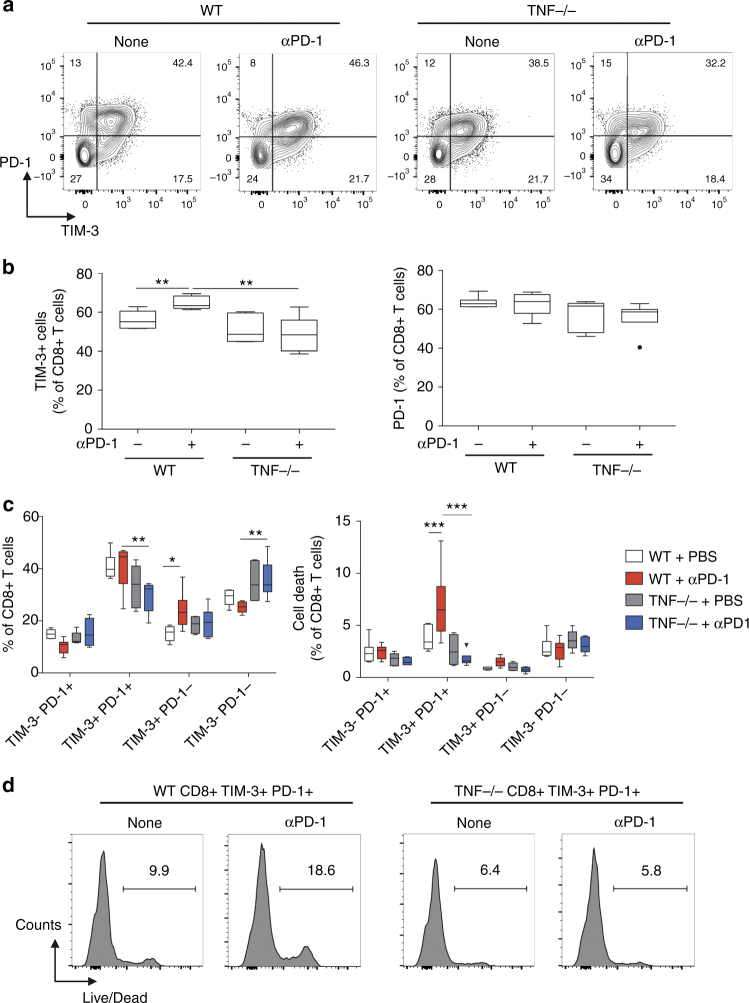
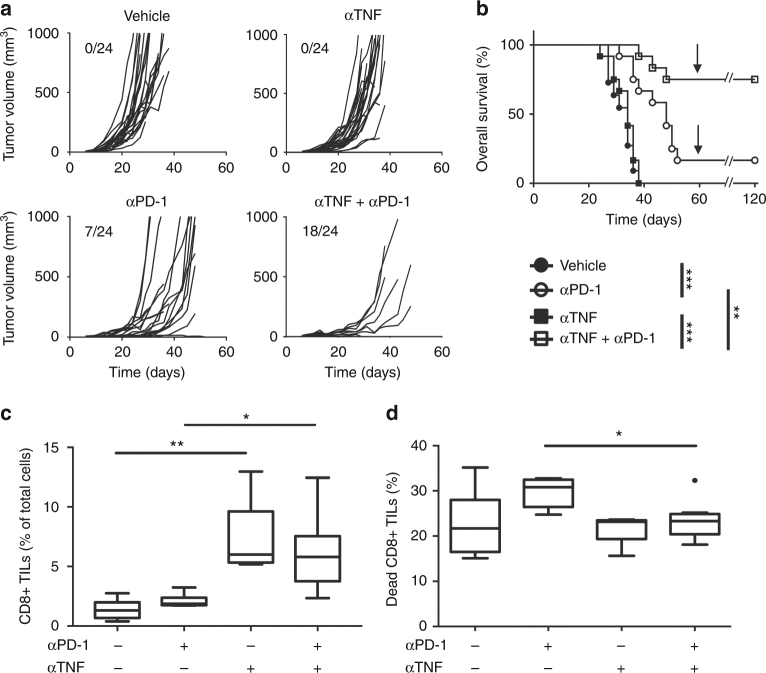
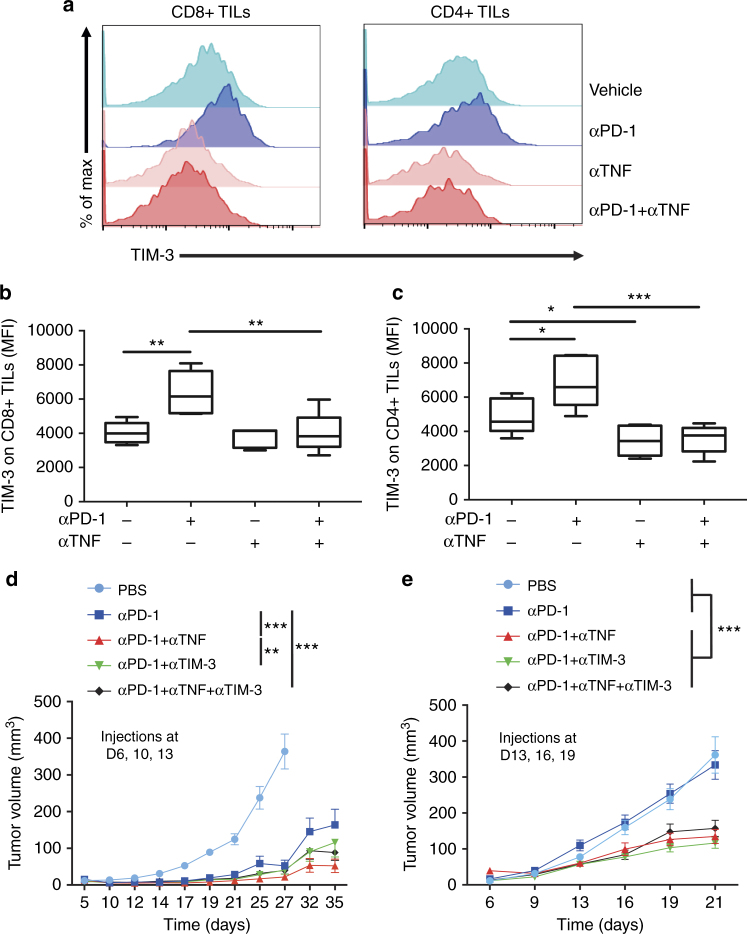
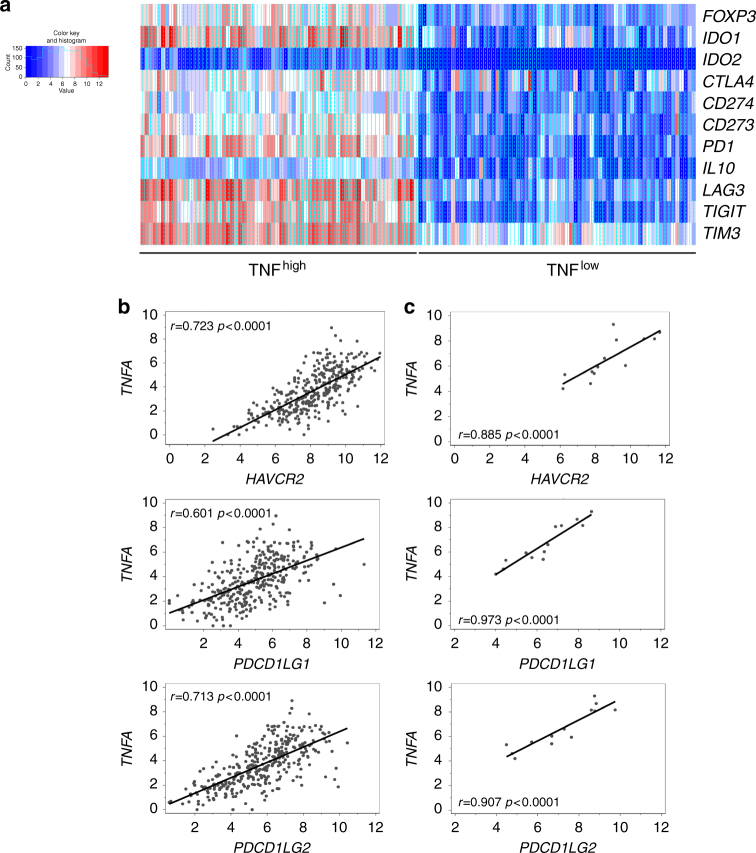
Antibodies against programmed cell death-1 (PD-1) have considerably changed the treatment for melanoma. However, many patients do not display therapeutic response or eventually relapse. Moreover, patients treated with anti-PD-1 develop immune-related adverse events that can be cured with anti-tumor necrosis factor α (TNF) antibodies. Whether anti-TNF antibodies affect the anti-cancer immune response remains unknown. Our recent work has highlighted that TNFR1-dependent TNF signalling impairs the accumulation of CD8+ tumor-infiltrating T lymphocytes (CD8+ TILs) in mouse melanoma. Herein, our results indicate that TNF or TNFR1 blockade synergizes with anti-PD-1 on anti-cancer immune responses towards solid cancers. Mechanistically, TNF blockade prevents anti-PD-1-induced TIL cell death as well as PD-L1 and TIM-3 expression. TNF expression positively correlates with expression of PD-L1 and TIM-3 in human melanoma specimens. This study provides a strong rationale to develop a combination therapy based on the use of anti-PD-1 and anti-TNF in cancer patients.
Overview
The claims and statistics of this paper haven’t been checked yet.
Run the check — free, no account needed. It reads the open-access text and checks the sources it cites.
Integrity signals
Registry
Cites
Statistics
Figures
Verification
Claims the paper makes
The claims and statistics of this paper haven’t been checked yet.
Run the check — free, no account needed. It reads the open-access text and checks the sources it cites.
Claims other papers make about this one
Each is checked against this paper’s own text: does it say what the citing paper says it does?
In the citing paper
“Contrarily, other published reports showed evidence in mouse models that anti-TNF-a enhances the antitumor activity of combined anti-PD-1 and anti-CTLA-4 immunotherapy, 61 reinforces both CD8 T-cell-dependent immunity and anti-PD-1 therapy, by preventing anti-PD-1-induced cell death of tumor infiltrating lymphocytes as well as PD-L1 and T-cell immunoglobulin and mucin-domain containing-3 (Tim-3)”
From Autoimmune diseases and immune-checkpoint inhibitors for cancer therapy: Review of the literature and personalized risk-based prevention strategy (2020) · cites this paper as [62]
Self-check
Percentages, sums and reported differences re-computed from the paper’s own numbers.
The self-check needs the paper’s full text.
Citations
Cites
PD-1 and PD-L1 Immune Checkpoint Blockade to Treat Breast Cancer
Hartkopf, A. D., Taran, F., Wallwiener, M., Walter, C. B., Krämer, B., Grischke, E., & Brucker, S. Y. (2016) · Breast Care · doi:10.1159/000453569 · Cited by 30,989
Adverse Renal Effects of Immune Checkpoint Inhibitors: A Narrative Review
Wanchoo, R., Karam, S., Uppal, N. N., Barta, V. S., Deray, G., Devoe, C., Launay‐Vacher, V., Jhaveri, K. D., & on behalf of Cancer and Kidney International Network Workgroup on Immune Checkpoint Inhibitors (2017) · American Journal of Nephrology · doi:10.1159/000455014 · Cited by 15,320
Nivolumab versus docetaxel in advanced nonsquamous non-small-cell lung cancer
Borghaei, H., Paz-Ares, L., Horn, L., Spigel, D. R., Steins, M., Ready, N. E., Chow, L. Q., Vokes, E. E., Felip, E., Holgado, E., et al. (2015) · New England Journal of Medicine · doi:10.1056/nejmoa1507643 · Cited by 9,335 · cited 1×
“Thus, synergism of TNF/TNFR1 de fi ciency and anti-PD-1 is likely not restricted to melanoma but applies to other cancers, such as lung carcinoma, which can bene fi t from anti-PD-1 according to phase 2 and phase 3 clinical trials 25,26 .”
Combined Nivolumab and Ipilimumab or Monotherapy in Untreated Melanoma
Larkin, J., Chiarion-Sileni, V., Gonzalez, R., Grob, J. J., Cowey, C. L., Lao, C. D., Schadendorf, D., Dummer, R., Smylie, M., Rutkowski, P., et al. (2015) · New England Journal of Medicine · doi:10.1056/nejmoa1504030 · Cited by 8,157
PD-1 blockade induces responses by inhibiting adaptive immune resistance
Tumeh, P. C., Harview, C. L., Yearley, J. H., Shintaku, I. P., Taylor, E. J. M., Robert, L., Chmielowski, B., Spasic, M., Henry, G., Ciobanu, V., et al. (2014) · Nature · doi:10.1038/nature13954 · Cited by 6,609 · cited 2×
“We show here that TNF blockade leads to an increased content of CD8+ TILs, which is predictive of the response to anti-PD-1 in melanoma patients 33 .”
Pembrolizumab versus Ipilimumab in Advanced Melanoma
Robert, C., Schachter, J., Long, G. V., Arance, A., Grob, J. J., Mortier, L., Daud, A., Carlino, M. S., McNeil, C., Lotem, M., et al. (2015) · New England Journal of Medicine · doi:10.1056/nejmoa1503093 · Cited by 5,887
Primary, Adaptive, and Acquired Resistance to Cancer Immunotherapy
Sharma, P., Hu-Lieskovan, S., Wargo, J. A., & Ribas, A. (2017) · Cell · doi:10.1016/j.cell.2017.01.017 · Cited by 5,588
Nivolumab in Previously Untreated Melanoma without BRAF Mutation
Robert, C., Long, G. V., Brady, B., Dutriaux, C., Maio, M., Mortier, L., Hassel, J. C., Rutkowski, P., McNeil, C., Kalinka-Warzocha, E., et al. (2015) · New England Journal of Medicine · doi:10.1056/nejmoa1412082 · Cited by 5,519 · cited 2×
“In addition, responders develop severe immune-related adverse events (irAEs) with a frequency close to 12% 19,20 .”
An endotoxin-induced serum factor that causes necrosis of tumors
Carswell, E. A., Old, L. J., Kassel, R. L., Green, S., Fiore, N., & Williamson, B. (1975) · Proceedings of the National Academy of Sciences · doi:10.1073/pnas.72.9.3666 · Cited by 4,532 · cited 2×
“Whereas TNF was fi rst identi fi ed as a cytotoxic soluble factor 4 , mounting evidence indicates that TNF facilitates the accumulation and/or biological activity of regulatory T lymphocytes (Tregs) 12 , regulatory B lymphocytes (Bregs) 8 as well as myeloid-derived suppressor cells (MDSC) 9 , which…”
Genomic classification of cutaneous melanoma
Akbani, R., Akdemir, K. C., Aksoy, B. A., Albert, M., Ally, A., Amin, S. B., Arachchi, H., Arora, A., Auman, J. T., Ayala, B., et al. (2015) · Cell · doi:10.1016/j.cell.2015.05.044 · Cited by 3,151
Cited by
Sorted by citations
Items 201–300 of 384
TNFR2 expression predicts the responses to immune checkpoint inhibitor treatments
Liao, P., Jiang, M., Islam, M. S., Wang, Y., & Chen, X. (2023) · Frontiers in Immunology · doi:10.3389/fimmu.2023.1097090 · Cited by 16
“Nevertheless, it was also reported that blockage of TNF overcome the resistance to anti-PD-1 treatment in experimental melanoma (44), and the treatment with TNF inhibitors enhanced the anti-tumor effect of combined CTLA-4 and PD-1 immunotherapy B C D”
BackgroundCho, N. W., Guldberg, S. M., Nabet, B. Y., Zeng, J., Kim, E. J., Hiam-Galvez, K. J., Yee, J. L., DeBarge, R., Tenvooren, I., Ashitey, N. A., et al. (2024) · Cancer Immunology Research · doi:10.1158/2326-6066.cir-24-0416 · Cited by 16
Ozawa, N., Yokobori, T., Osone, K., Katayama, C., Suga, K., Komine, C., Shibasaki, Y., Shiraishi, T., Okada, T., Kato, R., et al. (2021) · Scientific Reports · doi:10.1038/s41598-021-92530-3 · Cited by 14
Friedrich, J., Heim, L., Trufa, D. I., Sı̂rbu, H., Rieker, R. J., Chiriac, M. T., & Finotto, S. (2018) · Oncotarget · doi:10.18632/oncotarget.26441 · Cited by 15
“Previous studies in melanoma patients used TNFα antibodies to overcome the resistance to anti-PD-1 therapy [35].”
BackgroundLow-dose total body irradiation facilitates antitumoral Th1 immune responses
Sonanini, D., Griessinger, C. M., Schörg, B. F., Knopf, P., Dittmann, K., Röcken, M., Pichler, B. J., & Kneilling, M. (2021) · Theranostics · doi:10.7150/thno.61459 · Cited by 17
“It has been shown by other groups that TNF and IL-12 foster PD-1 and/or PD-L1 expression [53-55].”
BackgroundBaram, T., Oren, N., Erlichman, N., Meshel, T., & Ben‐Baruch, A. (2022) · Cancers · doi:10.3390/cancers14143513 · Cited by 15
McKenzie, J., Sneath, E., Trinh, A., Nolan, M. T., & Spain, L. A. (2024) · Immuno-Oncology Technology · doi:10.1016/j.iotech.2024.100704 · Cited by 16
Tan, S., Chang, Q., Zeng, H., Wei, Q., Huang, Q. M., Pu, X., Li, W., Li, Y., & Tian, P. (2024) · Cardiovascular Toxicology · doi:10.1007/s12012-024-09918-6 · Cited by 16
TNF-α inhibitor reduces drug-resistance to anti-PD-1: A mathematical model
Lai, X., Hao, W., & Friedman, A. (2020) · PLoS ONE · doi:10.1371/journal.pone.0231499 · Cited by 15
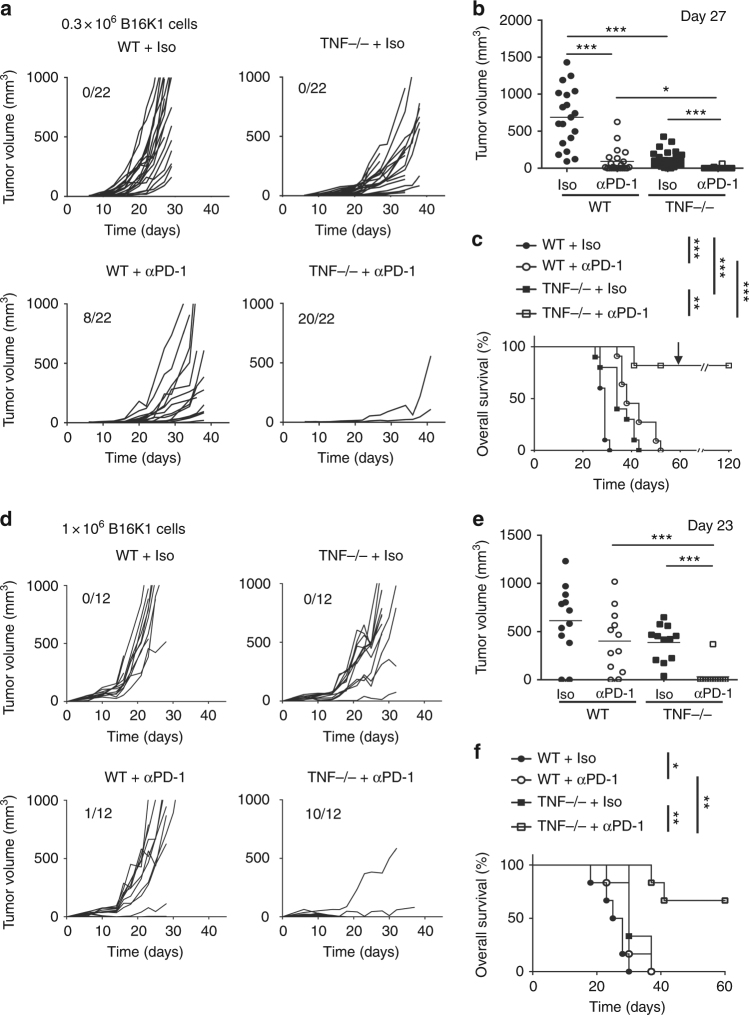
“days 6,10,13 in (see Fig 6(d) of [32]) and at days 13, 16, 19 in (see Fig 6(e) of [32]); the tumor volume increase was in the range of 100-350 mm(3).”
BackgroundResultInfluentialMechanism underlying the immune checkpoint inhibitor-induced hyper-progressive state of cancer
Ding, P., Wen, L., Tong, F., Zhang, R., Huang, Y., & Dong, X. (2022) · Cancer Drug Resistance · doi:10.20517/cdr.2021.104 · Cited by 15
How I treat cancer: treatment of rheumatological side effects of immunotherapy
Benesova, K., Lorenz, H., Leipe, J., & Jordan, K. (2019) · ESMO Open · doi:10.1136/esmoopen-2019-000529 · Cited by 15
Systemic treatment of immune checkpoint inhibitor‐induced psoriasis: Inference‐based guidance
Papp, K. A., Puig, L., Beecker, J. R., Chandran, V., Claveau, J., Cortés, J., Dutz, J. P., Hornick, N. I., Juergens, R. A., Melosky, B. L., et al. (2025) · Journal of the European Academy of Dermatology and Venereology · doi:10.1111/jdv.20809 · Cited by 15
Next-generation T cell immunotherapy: overcoming exhaustion, senescence, and suppression
Li, G., Li, D., & Zhu, X. (2025) · Frontiers in Immunology · doi:10.3389/fimmu.2025.1662145 · Cited by 17
“Combining immune checkpoint inhibitors with anti-in fl ammatory drugs or other targeted therapies, such as chemotherapy or radiotherapy, can enhance the ef fi cacy of immunotherapy (86, 87).”
Marcucci, F., & Rumio, C. (2020) · Cellular and Molecular Life Sciences · doi:10.1007/s00018-020-03606-8 · Cited by 14
Zou, Y., & Yaguchi, T. (2023) · Experimental Dermatology · doi:10.1111/exd.14750 · Cited by 14
Li, Y., Wang, P., Zhang, Z., & Liu, Q. (2023) · Food Science and Human Wellness · doi:10.1016/j.fshw.2023.02.040 · Cited by 14
Dougan, M. L. (2023) · Immunological Reviews · doi:10.1111/imr.13239 · Cited by 15
Matteucci, L., Bittoni, A., Gallo, G., Ridolfi, L., & Passardi, A. (2023) · Cancers · doi:10.3390/cancers15215189 · Cited by 15
“TNF-α is another key regulator of inflammatory response, and preclinical studies suggest that it may act as a negative biomarker for ICI treatment through upregulation of PD-L1 on tumor cells and T cells [176] as confirmed by a small study on melanoma patients treated with nivolumab [177].”
BackgroundGuo, W., Peng, D., Liao, Y., Lou, L., Guo, M., Li, C., Yu, W., Tian, X., Wang, G., Lv, P., et al. (2024) · Cancer Science · doi:10.1111/cas.16128 · Cited by 14
Immunotherapy induced enterocolitis and gastritis – What to do and when?
Cheung, V., & Brain, O. (2020) · Best Practice & Research Clinical Gastroenterology · doi:10.1016/j.bpg.2020.101703 · Cited by 14
Downregulating testosterone levels enhance immunotherapy efficiency
Wang, L., Jiang, G., Jing, N., Liu, X., Zhuang, H., Zeng, W., Liang, W. P., & Liu, Z. (2021) · OncoImmunology · doi:10.1080/2162402x.2021.1981570 · Cited by 14
Ma, X., Ding, Y., Qian, J., Wan, M., Li, N., Mao, C., Xiao, C., Jiang, H., Zheng, Y., Wu, L., et al. (2022) · Current Oncology · doi:10.3390/curroncol29110702 · Cited by 14
“Some preclinical findings suggested that the molecular cascades of cachexia pathogenesis widely impaired immune antitumor responses [48,49].”
BackgroundImmunotherapy-associated cardiovascular toxicities: insights from preclinical and clinical studies
Kong, Y., Wang, X., & Qie, R. (2024) · Frontiers in Oncology · doi:10.3389/fonc.2024.1347140 · Cited by 14
Grice, S., Olsson-Brown, A. C., Naisbitt, D. J., & Hammond, S. (2024) · Chemical Research in Toxicology · doi:10.1021/acs.chemrestox.4c00067 · Cited by 14
Matull, J., Livingstone, E., Wetter, A., Zimmer, L., Zaremba, A., Lahner, H., Schadendorf, D., & Ugurel, S. (2020) · Frontiers in Oncology · doi:10.3389/fonc.2020.592609 · Cited by 14
“Rather, preclinical studies have shown that TNF blockade can increase the therapeutic response to anti-PD-1 (16).”
BackgroundTNF blockade enhances the efficacy of myxoma virus-based oncolytic virotherapy
Valenzuela-Cardenas, M., Gowan, C. C., Dryja, P., Bartee, M. Y., & Bartee, E. (2022) · Journal for ImmunoTherapy of Cancer · doi:10.1136/jitc-2022-004770 · Cited by 13
Inflammasomes in breast cancer: the ignition spark of progression and resistance?
Elgohary, S., & Tayebi, H. M. E. (2023) · Expert Reviews in Molecular Medicine · doi:10.1017/erm.2023.14 · Cited by 12
Chen, P., Li, Z., & Cai, S. (2023) · Frontiers in Immunology · doi:10.3389/fimmu.2023.1188523 · Cited by 12
Landscape of targeted therapies for lung squamous cell carcinoma
Chen, Q., Zheng, X.-S., Cheng, W., & Li, J. (2024) · Frontiers in Oncology · doi:10.3389/fonc.2024.1467898 · Cited by 15
Lou, Y., Wang, J., Peng, P., Wang, S., Liu, P., & Xu, L. X. (2021) · International Journal of Molecular Sciences · doi:10.3390/ijms22189951 · Cited by 12
“TNF-α blockade leads to the loss of Foxp3 expression in Tregs [33], prevents Tim-3 expression on TILs and enhances the therapeutic effect of antiPD-1 treatment [34].”
BackgroundHuang, H., Yu, H., Li, X., Li, Y., Zhu, G., Su, L., Li, M., Chen, C., Gao, M., Wu, D., et al. (2022) · Frontiers in Immunology · doi:10.3389/fimmu.2022.993890 · Cited by 12
“A study indicated that resistance to anti-PD-1 in experimental melanoma can be eliminated by blocking the TNFa–TNFR1 axis (27).”
BackgroundCalabrese, L. H., & Xavier Mariette, A. (2020) · Annals of the Rheumatic Diseases · doi:10.1136/annrheumdis-2019-216510 · Cited by 12
Wilski, N. A., Stotesbury, C., Casale, C. D., Montoya, B., Wong, E. B., Sigal, L. J., & Snyder, C. M. (2020) · The Journal of Immunology · doi:10.4049/jimmunol.1901136 · Cited by 12
“MCMV synergized with a PD-L1 blockade to clear B16-F0 tumors (8), which are normally resistant to blockade of the PD-1 pathway (76).”
BackgroundRodriguez, Y. I., Campos, L. E., Castro, M. G., Bannoud, N., Blidner, A. G., Filippa, V., Croci, D. O., Rabinovich, G. A., & Alvarez, S. E. (2020) · Cells · doi:10.3390/cells9112469 · Cited by 12
“In contrast to wild type (WT) mice, TNFR1-deficient mice treated with anti-PD-1 blocking antibodies completely rejected growth of melanoma cells [16].”
BackgroundTison, A., Escoda, T., Kostine, M., Cornec, D., & Chiche, L. (2025) · Joint Bone Spine · doi:10.1016/j.jbspin.2025.105938 · Cited by 11
Piras, L., Zuccanti, M., Russo, P., Riccio, F., Agresti, A., Lustri, C., Dardani, D., Ferrera, A., Fiorentini, V., Tocci, G., et al. (2024) · International Journal of Molecular Sciences · doi:10.3390/ijms25052502 · Cited by 11
Treatment options for immune‐related adverse events associated with immune checkpoint inhibitors
Chen, Y. H., Kovács, T., Ferdinandy, P., & Varga, Z. V. (2024) · British Journal of Pharmacology · doi:10.1111/bph.16405 · Cited by 12
“There is currently a Phase 1b clinical trial (NCT03293784) with the aim of evaluating the safety and efficacy of combining ICIs with anti-TNF α in metastatic melanoma patients (Bertrand et al., 2017).”
Zou, R., Wang, Y., Ye, F., Zhang, X., Wang, M., & Cui, S. (2021) · Clinical & Translational Oncology · doi:10.1007/s12094-021-02637-2 · Cited by 11
“1 3 For example, the coadministration of PD-1/PD-L1 blockade with tumor necrosis factor inhibitors [143, 144], metformin [29], anti-VEGF drugs [145], or other immune checkpoint inhibitors (such as CXCR4 [146]) has been demonstrated to enhance anti-tumor efficacy and reduce toxicity.”
BackgroundCytokines and Chemokines in Cancer Cachexia and Its Long-Term Impact on COVID-19
Singh, S. K., & Singh, R. (2022) · Cells · doi:10.3390/cells11030579 · Cited by 11
Oliver, J., Onieva, J. L., Garrido-Barros, M., Berciano‐Guerrero, M., Sánchez‐Muñoz, A., Lozano, M. J., Farngren, A., Álvarez, M., Martínez-Gálvez, B., Pérez-Ruiz, E., et al. (2022) · Biomedicines · doi:10.3390/biomedicines10102419 · Cited by 11
Burdett, N., Hsu, K., Xiong, L., Rico, G. T., Beckmann, K., Karapetis, C. S., & Brown, M. P. (2019) · Asia-Pacific Journal of Clinical Oncology · doi:10.1111/ajco.13177 · Cited by 11
TNFα Blockade in Checkpoint Inhibition: The Good, the Bad, or the Ugly?
Weber, J. S., & Postow, M. A. (2020) · Clinical Cancer Research · doi:10.1158/1078-0432.ccr-20-0387 · Cited by 11
“Are there data in the literature to confirm or refute the authors’ hypothesis? Animal experiments suggest that prophylactic TNFa blockade not only reduces toxicity but either preserved or even improved the therapeutic effect of PD-1 blockade (2) or combination PD-1/CTLA-4 blockade (3, 4) in different murine tumor mode…”
Differential immunomodulatory effect of PARP inhibition in BRCA1 deficient and competent tumor cells
Alvarado-Cruz, I., Mahmoud, M. M., Khan, M., Zhao, S., Oeck, S., Meas, R., Clairmont, K., Quintana, V., Zhu, Y., Porciuncula, A., et al. (2020) · Biochemical Pharmacology · doi:10.1016/j.bcp.2020.114359 · Cited by 10
Accelerating the Evolution of Immune-Related Enterocolitis Management
Faleck, D. M., Dougan, M. L., Tello, M. A., Grossman, J. E., Moss, A. C., & Postow, M. A. (2023) · Journal of Clinical Oncology · doi:10.1200/jco.22.02914 · Cited by 12
Pacholczak‐Madej, R., Kosałka-Węgiel, J., Kuszmiersz, P., Mituś, J. W., Püsküllüoğlu, M., Grela-Wojewoda, A., Korkosz, M., & Bazan‐Socha, S. (2023) · International Journal of Environmental Research and Public Health · doi:10.3390/ijerph20064926 · Cited by 10
“Interestingly, in preclinical models of mouse melanoma, anti-TNFα antibodies increased CD8 tumor-infiltrating lymphocytes, which might suggest a favorable prognosis [83].”
BackgroundTanimura, K., Takeda, T., Yoshimura, A., Honda, R., Goda, S., Shiotsu, S., Fukui, M., Chihara, Y., Uryu, K., Takei, S., et al. (2023) · Cancers · doi:10.3390/cancers15174358 · Cited by 10
“IL-1β and tumor necrosis factor (TNF)-β reportedly contribute to forming the cold tumor immune microenvironment by suppressing TILs [33,34].”
BackgroundJin, J., Visina, J., Burns, T. F., Diergaarde, B. B., & Stabile, L. P. (2023) · Scientific Reports · doi:10.1038/s41598-023-43866-5 · Cited by 10
Immunomodulation: A new approach to cancer cachexia, potentially suitable for aging
Penna, F., Rubini, G., & Costelli, P. (2024) · Molecular Aspects of Medicine · doi:10.1016/j.mam.2024.101318 · Cited by 10
“As an example, TNF α , well known for its ability to stimulate both protein and lipid catabolism in the tissues of cancer hosts, also results in reduced T cell response against the tumor, decreasing both the number and function of infiltrated cytotoxic T lymphocytes (Bertrand et al., 2017).”
Cancer Cachexia and Antitumor Immunity: Common Mediators and Potential Targets for New Therapies
Rounis, K., Makrakis, D., Gioulbasanis, I., Ekman, S., Petris, L. D., Mavroudis, D., & Agelaki, S. (2022) · Life · doi:10.3390/life12060880 · Cited by 11
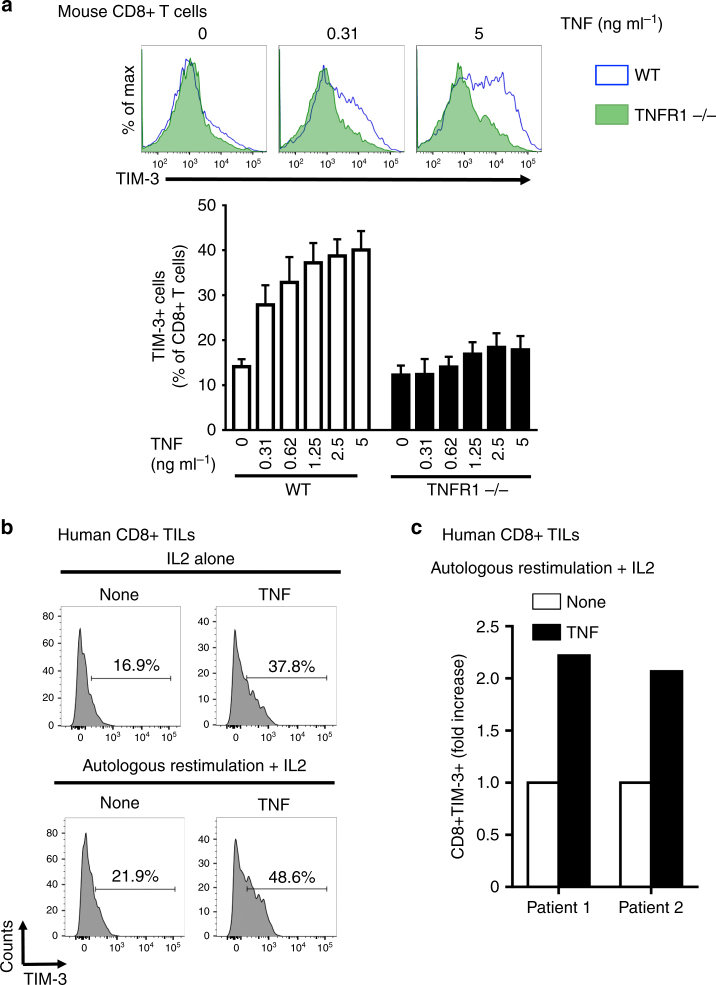
“In addition to its catabolic functions, TNF-α -induced activation of TNFR1 has been demonstrated to impair the accumulation of intra-tumoral CD8+ T cells and to up-regulate the co-inhibitory immune checkpoint T-cell immunoglobulin and mucin-domain containing-3 (TIM-3) [19].”
BackgroundInfluentialUseful message in choosing optimal biological agents for patients with autoimmune arthritis
Lai, J.-H., Ling, X. C., & Ho, L. (2019) · Biochemical Pharmacology · doi:10.1016/j.bcp.2019.03.007 · Cited by 11
Wang, Y., Li, Z., Zhang, Z., & Chen, X. (2021) · Animal Models and Experimental Medicine · doi:10.1002/ame2.12154 · Cited by 9
“Studies involving mice were approved by the Experimental Animal Management and Welfare Committee at the Institute of Materia Medica, Peking Union Medical College [27-31].”
MethodEditorial: TNFR Superfamily Oligomerization and Signaling
Micheau, O., Rizzi, M., & Smulski, C. R. (2021) · Frontiers in Cell and Developmental Biology · doi:10.3389/fcell.2021.682472 · Cited by 10
“Understanding the complex function and signaling interplay can be exploited to design effective treatments, as recently shown in experimental melanoma (Bertrand et al., 2017; Montfort et al., 2019).”
BackgroundGu, S. L., Nath, S. S., & Markova, A. (2023) · Pharmaceuticals · doi:10.3390/ph16111610 · Cited by 9
“Other studies found no decrease in survival, with preclinical models also demonstrating an improvement in anti-tumor ICI efficacy with concurrent use of anti-TNFa agents [158–161].”
ResultA Multimodal Drug–Diet–Immunotherapy Combination Restrains Melanoma Progression and Metastasis
Oatman, N., Gawali, M. V., Congrove, S., Cáceres, R., Sukumaran, A., Gupta, N., Murugesan, N., Arora, P., Subramanian, S., Choi, K., et al. (2024) · Cancer Research · doi:10.1158/0008-5472.can-23-1635 · Cited by 10
Development of a peptide-based tumor-activated checkpoint inhibitor for cancer immunotherapy
Zhao, Z., Fetse, J., Mamani, U., Guo, Y., Li, Y., Patel, P., Liu, Y., Lin, C., Li, Y., Mustafa, B., et al. (2024) · Acta Biomaterialia · doi:10.1016/j.actbio.2024.12.051 · Cited by 9
ZEB1 transcription factor induces tumor cell PD-L1 expression in melanoma
Wirbel, C., Durand, S., Boivin, F., Plaschka, M., Benboubker, V., Grimont, M., Barbollat‐Boutrand, L., Tondeur, G., Balme, B., Harou, O., et al. (2025) · Cancer Immunology Immunotherapy · doi:10.1007/s00262-025-03978-5 · Cited by 10
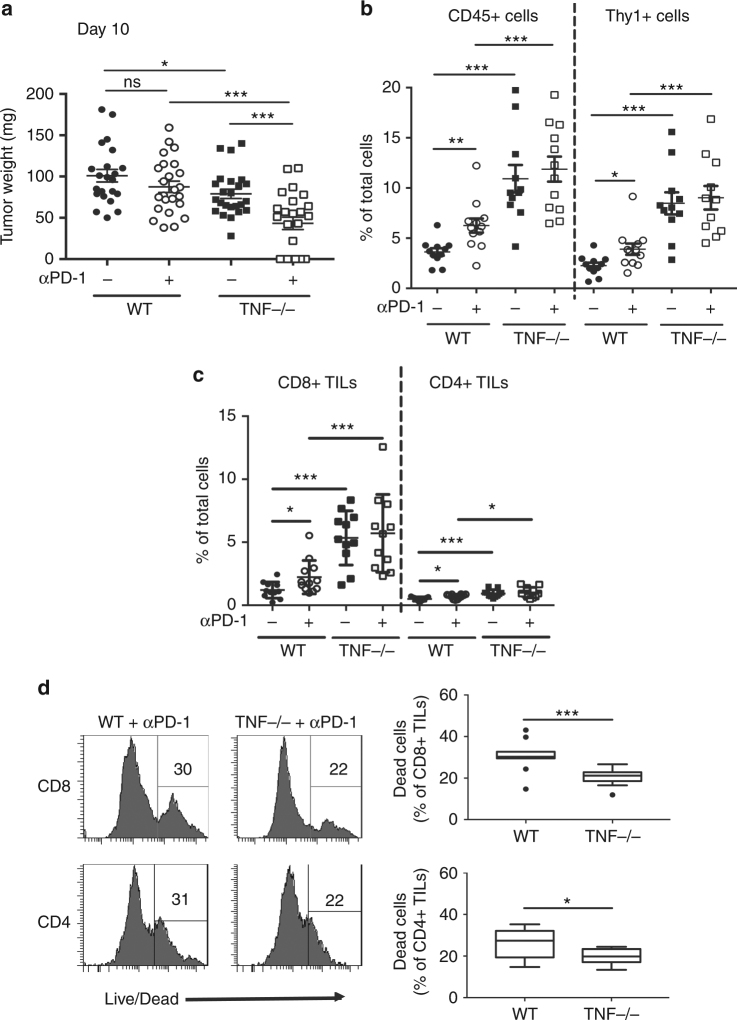
“Consistently, TNF blockade increases the CD8 + TLs tumor infiltration and decreases PD-L1 expression in melanoma mouse models [30].”
Membrane-derived biomimetic nanovesicles in anti-tumor immunotherapy: Advances and outlook
Zhang, X., Jing, H., Wang, Y., Mu, S., Wang, X., Zheng, H., Chen, Y., Wang, K., Sun, J., Bi, J., et al. (2026) · Acta Pharmaceutica Sinica B · doi:10.1016/j.apsb.2026.01.019 · Cited by 11
Co Treatment With Biologic Agents and Immunotherapy in the Setting of irAEs of Difficult Management
Robles, V., Martínez‐Valle, F., & Borruel, N. (2022) · Frontiers in Medicine · doi:10.3389/fmed.2022.906098 · Cited by 9
“TNFα produced in the setting of anti-PD-1 blockage leads to an impairment in the CD8+ tumor infiltrating T lymphocyte responses (27).”
BackgroundGlasson, Y., Chépeaux, L.-A., Dumé, A., Jay, P., Pirot, N., Bonnefoy, N., & Michaud, H. (2023) · Frontiers in Immunology · doi:10.3389/fimmu.2022.1011617 · Cited by 9
Wetzel, A., Bonnefoy, F., Chagué, C., Vetter, M., Couturier, M., Baffert, B., Adotévi, O., Saas, P., & Perruche, S. (2022) · Frontiers in Immunology · doi:10.3389/fimmu.2021.812171 · Cited by 11
Yang, Y., Kang, W., Yuan, Y., Duan, C., Chen, W., & Yu, C. (2022) · Journal of Oncology · doi:10.1155/2022/2214686 · Cited by 9
Combining TNF blockade with immune checkpoint inhibitors in patients with cancer
Montfort, A., Virazels, M., Colacios, C., Meyer, N., & Ségui, B. (2021) · Nature Reviews Rheumatology · doi:10.1038/s41584-021-00653-8 · Cited by 9
Advanced biomaterials and delivery modalities to alleviate cancer therapy-induced inflammation
Huang, H., Ke, Q., Li, T., Yang, Z., Shen, J., Li, Z., Zeng, Q., Wei, X., Yang, H., Wang, D., et al. (2025) · Biomaterials · doi:10.1016/j.biomaterials.2025.123419 · Cited by 8
Vredevoogd, D. W., Apriamashvili, G., & Peeper, D. S. (2021) · Immuno-Oncology Technology · doi:10.1016/j.iotech.2021.100043 · Cited by 7
Wang, M., Yu, X., & Gao, Q. (2024) · Current Medical Science · doi:10.1007/s11596-024-2859-1 · Cited by 8
“As the expression of TNF is positively correlated with the expression of PD-L1 and TIM-3, the results of this study provide strong support for the development of combination therapy using PD-1 and TNF inhibitors in caner patients [148] .”
Strouse, J., Chan, K. K., Baccile, R., He, G., Louden, D. N., Giurcanu, M. C., Singh, A., Rieth, J. M., Abdel‐Wahab, N., Katsumoto, T. R., et al. (2024) · Frontiers in Immunology · doi:10.3389/fimmu.2024.1499478 · Cited by 9
Du, B., Du, Q., Bai, Y., Yu, L., Wang, Y., Huang, J., Zheng, M., Shen, G., Zhou, J., & Yao, H. (2020) · Journal of Materials Chemistry B · doi:10.1039/d0tb01061h · Cited by 8
Cancer Immunotherapy: Diverse Approaches and Obstacles
Sanatkar, S. A., Heidari, A., & Rezaei, N. (2022) · Current Pharmaceutical Design · doi:10.2174/1381612828666220728160519 · Cited by 9
Kang, X., Han, Y., Wu, M., Li, Y., Qian, P., Xu, C., Zou, Z., Dong, J., & Wei, J. (2024) · Molecular Therapy · doi:10.1016/j.ymthe.2024.12.011 · Cited by 7
Virazels, M., Lusque, A., Brayer, S., Genais, M., Dufau, C., Milhès, J., Filleron, T., Pagès, C., Sibaud, V., Mortier, L., et al. (2025) · International Journal of Cancer · doi:10.1002/ijc.35416 · Cited by 7
“14 Moreover, TNF blockade can improve the efficacy of anti-PD-1 plus anti-CTLA-4 while reducing colon and liver toxicity in mice.”
Mizuno, S., Bustos, M. A., Hayashi, Y., Abe, K., Furuhashi, S., Naeini, Y. B., Xu, X., Bilchik, A. J., & Hoon, D. S. �. (2024) · Clinical and Translational Medicine · doi:10.1002/ctm2.70067 · Cited by 7
“23,24 In conclusion, ANH from MLiM showed an upregulation in CXCR4 and COL1A1/2 , while melanoma cells of MLiM showed a significant upregulation in TNF.”
BackgroundKasajima, M., Igawa, S., Manaka, H., Yamada, K., Akazawa, Y., Manabe, H., Yagami, Y., Yamamoto, H., Ito, H., Kaizuka, N., et al. (2022) · Oncology · doi:10.1159/000526964 · Cited by 6
Szóstak, N., Budnik, M., Tomela, K., Handschuh, L., Samelak-Czajka, A., Pietrzak, B., SCHMIDT, M. T., Kaczmarek, M., Galus, Ł., Mackiewicz, J., et al. (2025) · Cancer Immunology Immunotherapy · doi:10.1007/s00262-024-03918-9 · Cited by 6
“PD-L1 PD-L1 negatively regulates host antifungal immunity against C. albicans infection by inhibiting neutrophil release from the bone marrow [49].”
Youssef, N., Habeeb, M., Chen, H., Alhamal, Z., Mamlouk, O., Lin, H. Y., Page, V. D., Tchakarov, A. S., Basu, S., Diab, A. K., et al. (2025) · Kidney International Reports · doi:10.1016/j.ekir.2025.10.018 · Cited by 6
“28 Similarly, development of TNF knockout mice proved that lack of TNF was protective against skin tumors.”
Kang, L., Cao, J., Guo, W., Cui, X., Wei, Y., Zhang, J., Liu, F., Duan, C., Lin, Q., Lv, P., et al. (2024) · Laboratory Investigation · doi:10.1016/j.labinv.2024.102164 · Cited by 6
Kobeissi, I., Eljilany, I., Achkar, T., LaFramboise, W. A., Santana‐Santos, L., & Tarhini, A. A. (2023) · International Journal of Molecular Sciences · doi:10.3390/ijms24098167 · Cited by 6
“Finally, the signature regulated pathways were involved in TNF signaling, which constitutes a potent immune escape mechanism in the context of a T-cell-inflamed tumor microenvironment, conferring resistance to anti-PD-1 [46].”
BackgroundBorgerding, J. N., Shang, J., Britton, G. J., Salmon, H., Bigenwald, C., Maier, B., Rose, S. R., Mogno, I., Kamphorst, A. O., Mérad, M., et al. (2020) · bioRxiv (Cold Spring Harbor Laboratory) · doi:10.1101/2020.08.07.242040 · Cited by 6
Valenzuela-Cardenas, M., Fisher, C., Bartee, M. Y., & Bartee, E. (2024) · Molecular Therapy Oncology · doi:10.1016/j.omton.2024.200866 · Cited by 5
“5 52 TNF blockade therefore has the potential to both reduce toxicities and improve overall therapeutic ef fi cacy of a variety of immunotherapies.”
Mathew, A. P., Uthaman, S., Antony, I., Kothadiya, S., Liu, L., Narasimhan, B., & Bardhan, R. (2025) · ACS Applied Materials & Interfaces · doi:10.1021/acsami.5c10509 · Cited by 5
Grecea-Balaj, A. M., Şoriţău, O., Brie, I. C., Perde‐Schrepler, M., Virág, P., Todor, N., Ciuleanu, T., & Cismaru, C. A. (2025) · Immuno · doi:10.3390/immuno5030029 · Cited by 5
“While the patients with NSCLC showed progressive increases in TNF-α levels throughout treatment, the patients with melanoma demonstrated an initial spike followed by decline, potentially reflecting distinct immune activation patterns as already stated [52–57].”
Immunological interventions in bacterial infections: From mechanisms to clinical applications
Sarkar, S., Chowdhury, S., Kar, K., Chakraborty, P., & Das, A. (2025) · Clinical Immunology Communications · doi:10.1016/j.clicom.2025.11.003 · Cited by 5
Kachi, S., Sumitomo, S., Oka, H., Hata, A., & Ohmura, K. (2024) · Frontiers in Immunology · doi:10.3389/fimmu.2024.1400097 · Cited by 5
“…by fi ndings in mouse models that TNF a and other pro-in fl ammatory cytokines may contribute to tumor microenvironments by promoting tumor-associated macrophages, indicating TNF blockade can reprogram these macrophages towards an antitumor phenotype, potentially enhancing ICI ef fi cacy (15 – 17).”
BackgroundÖhnstedt, E., Doñas, C., Parv, K., Pang, Y., Tomenius, H. L., López, M. C., Gannavarapu, V. R., Choi, J., Ovezik, M., Frank, P., et al. (2024) · American Journal of Physiology-Gastrointestinal and Liver Physiology · doi:10.1152/ajpgi.00022.2024 · Cited by 5
“Experimental, short-term mouse studies suggest that anti-TNF-a helps against anti-PD-1 resistance in melanoma and reduces ICI-induced toxicities if given prophylactically; however, this has not yet been reported in clinical prospective studies (33, 56).”
Peng, Y., Qi, Q., Zhu, M., Zhang, Y., Bao, Y., & Liu, Y. (2023) · International Immunopharmacology · doi:10.1016/j.intimp.2023.110888 · Cited by 5
Dovrolis, N., Katifelis, H., GRAMMATIKAKI, S., Zakopoulou, R., Bamias, A., Karamouzis, M. V., Souliotis, K. N., & Gazouli, M. (2023) · Cancers · doi:10.3390/cancers15235637 · Cited by 5
Dufau, C., Genais, M., Mucher, E., Jung, B., Garcia, V., Montfort, A., Tosolini, M., Clarke, C. J., Medin, J. A., Levade, T., et al. (2024) · Frontiers in Immunology · doi:10.3389/fimmu.2024.1421432 · Cited by 7
Melanoma Cell State-Specific Responses to TNFα
Lim, S. Y., Alavi, S., Ming, Z., Shklovskaya, E., Fung, C., Stewart, A., & Rizos, H. (2021) · Biomedicines · doi:10.3390/biomedicines9060605 · Cited by 6
“The loss of these wild-type antigens decreases melanoma immunogenicity and favors immune escape [8,9].”
BackgroundAoyama, S., Nakagawa, R., Nemoto, S., Perez-Villarroel, P., Mulé, J. J., & Mailloux, A. W. (2021) · Journal for ImmunoTherapy of Cancer · doi:10.1136/jitc-2020-002269 · Cited by 5
Romano, S., D’Arrigo, P., Tufano, M., Staibano, S., Rea, A., Merolla, F., Ilardi, G., Petrella, A., & Romano, M. F. (2018) · Melanoma Research · doi:10.1097/cmr.0000000000000553 · Cited by 5
Systems Analysis of Immune Changes after B-cell Depletion in Autoimmune Multiple SclerosisPreprint
Wei, J., Moon, J., Yasumizu, Y., Zhang, L., Radassi, K., Buitrago-Pocasangre, N., Deerhake, M. E., Strauli, N., Chan, A., Herman, A. E., et al. (2024) · bioRxiv (Cold Spring Harbor Laboratory) · doi:10.1101/2024.02.07.576204 · Cited by 5
“…in the tumor microenvironment, constant exposure to TNF a leads to immunosuppressive responses involving Tregs, B regulatory cells and myeloid-derived suppressor cells 54 , and blocking TNF leads to improved response to immune checkpoint blockade in an orthotopic melanoma mouse model 55 .”
BackgroundImmunocytokines in cancer immunotherapy: opportunities and challenges
Wang, S., Yao, L., Cai, J., Gao, H., & Zhou, F. (2026) · Frontiers in Oncology · doi:10.3389/fonc.2025.1716612 · Cited by 4
Igase, M., Hagimori, K., Inanaga, S., Mizoguchi, H., ITAMOTO, K., Sakurai, M., Motegi, T., Yamamoto, H., Kato, M., Shiga, T., et al. (2026) · Journal for ImmunoTherapy of Cancer · doi:10.1136/jitc-2025-013623 · Cited by 4
Park, J. H., Lee, D. U., Jeong, J., Jung, K. H., & Hong, S. (2026) · Acta Pharmaceutica Sinica B · doi:10.1016/j.apsb.2026.03.017 · Cited by 4
Pesch, G., Piseddu, I., Gaertig, J., Kramer, N., Kramer, R., Schulz, T. U., Zwiebel, M., Ledderose, S., Retzlaff, J., Eckstein, M., et al. (2025) · Cancer Immunology Research · doi:10.1158/2326-6066.cir-24-0387 · Cited by 5
Spadotto, V., Ripamonti, C., Ghiroldi, A., Galbiati, E., Pozzi, P., Noberini, R., Bonaldi, T., Steinkühler, C., & Fossati, G. (2025) · Frontiers in Immunology · doi:10.3389/fimmu.2025.1546939 · Cited by 4
“…of the TNF-a signaling pathway in TME, induced by a PD-1 antibody, reduces the tumor in fi ltrating CD8 T cells and the immune response, while blockers of TNF-a or TNFR1 (TNF-a receptor) revert this situation, decreasing CD8 T cells exhaustion and death and synergizing with anti-PD-1 (72, 73).”
The Tumor Immune Environment: Advances in the Cancer Immunotherapy Era
Ben‐Baruch, A. (2025) · Methods in molecular biology · doi:10.1007/978-1-0716-4542-0_2 · Cited by 4
Lira, M. C., Rosa, F., Bernacchia, J. L., Palma, A. G., Paladino, N., Costas, M. A., & Rubio, M. F. (2025) · Biochimica et Biophysica Acta (BBA) - Molecular Basis of Disease · doi:10.1016/j.bbadis.2025.167931 · Cited by 4
Liu, Y., Yu, Y., Hu, C., Jiang, M., Zhao, C., Li, X., Cheng, L., & Zhou, C. (2025) · Cancer Drug Resistance · doi:10.20517/cdr.2024.206 · Cited by 4
Tingry, T., Massy, E., Piperno, M., Auroux, M., Kostine, M., Maillet, D., Amini‐Adlé, M., Fabien, N., Estublier, C., Gonçalves, D., et al. (2021) · Bulletin du Cancer · doi:10.1016/j.bulcan.2021.01.016 · Cited by 4
Facts and Hopes on Neutralization of Protumor Inflammatory Mediators in Cancer Immunotherapy
Olivera, I., Luri‐Rey, C., Teijeira, Á., Eguren‐Santamaría, I., Gomis, G., Palencia, B., Berraondo, P., & Melero, I. (2023) · Clinical Cancer Research · doi:10.1158/1078-0432.ccr-22-3653 · Cited by 4
Metadata
- Authors
- Bertrand, F., Montfort, A., Marcheteau, E., Imbert, C., Gilhodes, J., Filleron, T., Rochaix, P., Andrieu-Abadie, N., Levade, T., Meyer, N., Colacios, C., & Ségui, B.
- Affiliations
- Inserm (FR)
- Université Toulouse III - Paul Sabatier (FR)
- Corresponding author
- Ségui, Bruno
- ORCID
- Venue
- Nature Communications
- Published
- 2017-12-22
- Volume
- 8
- Issue
- 1
- Pages
- 2256-2256
- ISSN
- 2041-1723 (ISSN-L)
- PMC
- PMC5741628
- OpenAlex
- W2779658193
- Cited by
- 384
- References
- 46
- Citations by year
- 2026: 32 · 2025: 36 · 2024: 44 · 2023: 44 · 2022: 49 · 2021: 50 · 2020: 82 · 2019: 29 · 2018: 17
- FWCI
- 15.43
- Type
- journal article
- Language
- en
- Open access
- gold
- doi.org
- Locations
- Nature Communications (publishedVersion, cc-by)
- Europe PMC (PubMed Central) (publishedVersion, cc-by)
- PubMed Central (publishedVersion, cc-by)
- PubMed (publishedVersion)
- HAL (submittedVersion, cc-by)
- RePEc: Research Papers in Economics (submittedVersion)
- DOAJ (DOAJ: Directory of Open Access Journals) (submittedVersion)
- DOAJ (DOAJ: Directory of Open Access Journals) (submittedVersion, cc-by-sa)
- Funders
- Institut National de la Santé et de la Recherche Médicale (INSERM U1048, U1043, U1048)
- Institut National Du Cancer
- Fondation Toulouse Cancer Santé
- Inserm Transfert
- Topics
- Health Sciences › Medicine › Oncology › Cancer Immunotherapy and Biomarkers
- Life Sciences › Immunology and Microbiology › Immunology › T-cell and B-cell Immunology
- Life Sciences › Immunology and Microbiology › Immunology › Immunotherapy and Immune Responses
- Keywords
- anti-PD-1 therapy, melanoma, immune checkpoint inhibitor resistance, TNFR1 signaling, tumor-infiltrating lymphocytes, CD8+ T cells, PD-L1, TIM-3, combination immunotherapy, immune-related adverse events, cancer immunotherapy
- MeSH terms
- Hepatitis A Virus Cellular Receptor 2, Antineoplastic Agents, Immunological, Ipilimumab, Nivolumab, Animals, Antibodies, Monoclonal, Drug Synergism, Female, Humans, Melanoma, Melanoma, Experimental, Skin Neoplasms, Tumor Necrosis Factor-alpha, Mammary Neoplasms, Animal, Lymphocytes, Tumor-Infiltrating, CD8-Positive T-Lymphocytes, Drug Resistance, Neoplasm, Cell Line, Tumor, Receptors, Tumor Necrosis Factor, Type I, Mice, B7-H1 Antigen, Programmed Cell Death 1 Receptor
About these checks
Registry, retraction, Cites and statistics results are computed, not judged, with one exception: a printed reference that no index lists is read once by a model before it counts as a citation error. Claims are extracted by a model and kept only when their quote appears verbatim in the text; each cited source is then checked, with a model’s help, for whether it says what the claim relies on. Those verdicts can be wrong — read the claim’s quote and the cited source before relying on one.
Statistics and arithmetic are recomputed, not judged.
Confidence bands are shown only for fields calibrated on our annotated test set. None is calibrated yet, so no band is shown.
What counts as a claim ›How we measure confidence ›How we check this ›
Are you an author, or do you see a problem with this page? Request a review
