

The DOI matches its Crossref record; 46 of the 46 references it cites were found in a registry or an index.
TNFα blockade overcomes resistance to anti-PD-1 in experimental melanoma
Open accessAbstract
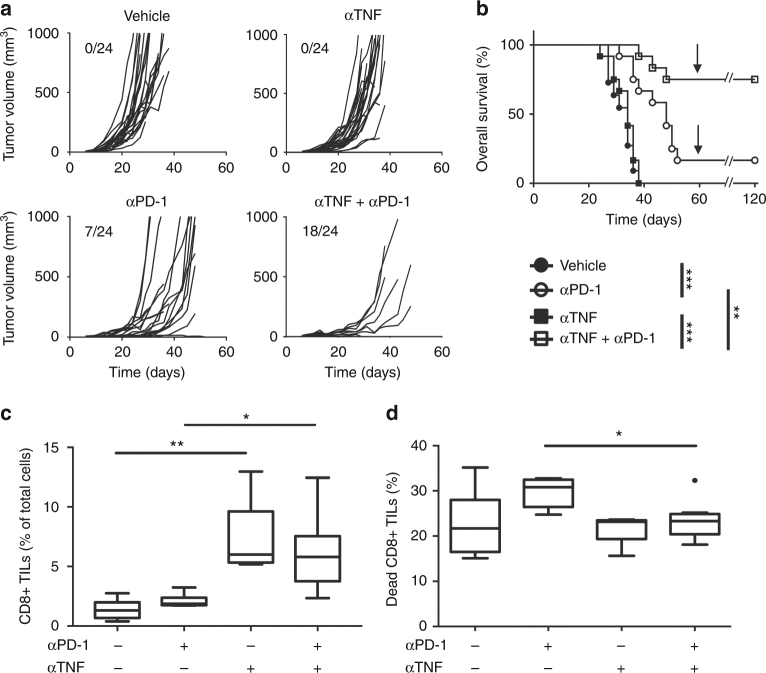
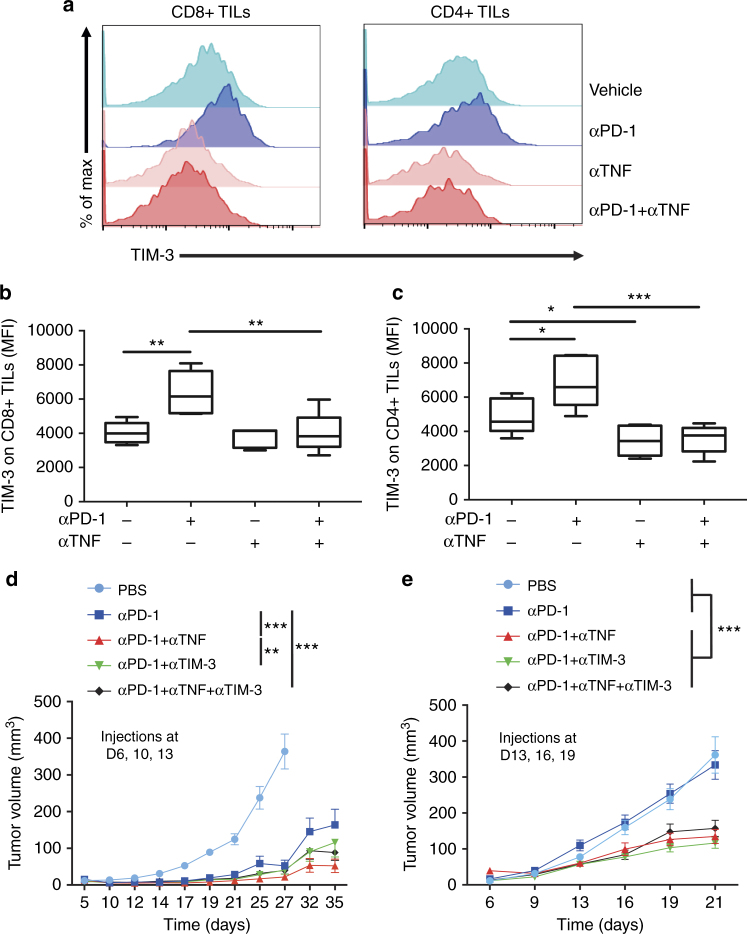
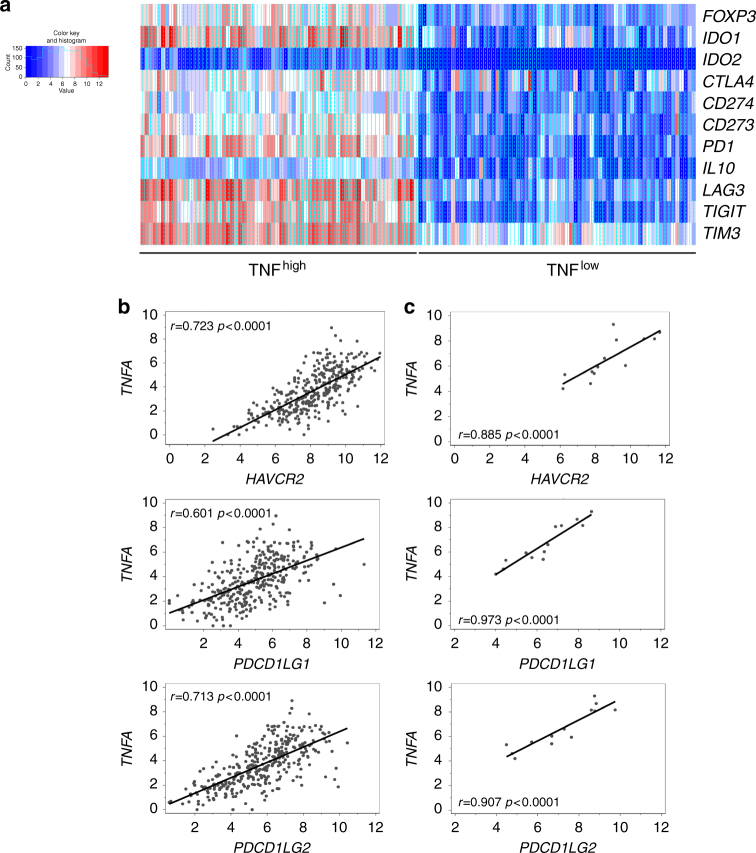
Antibodies against programmed cell death-1 (PD-1) have considerably changed the treatment for melanoma. However, many patients do not display therapeutic response or eventually relapse. Moreover, patients treated with anti-PD-1 develop immune-related adverse events that can be cured with anti-tumor necrosis factor α (TNF) antibodies. Whether anti-TNF antibodies affect the anti-cancer immune response remains unknown. Our recent work has highlighted that TNFR1-dependent TNF signalling impairs the accumulation of CD8+ tumor-infiltrating T lymphocytes (CD8+ TILs) in mouse melanoma. Herein, our results indicate that TNF or TNFR1 blockade synergizes with anti-PD-1 on anti-cancer immune responses towards solid cancers. Mechanistically, TNF blockade prevents anti-PD-1-induced TIL cell death as well as PD-L1 and TIM-3 expression. TNF expression positively correlates with expression of PD-L1 and TIM-3 in human melanoma specimens. This study provides a strong rationale to develop a combination therapy based on the use of anti-PD-1 and anti-TNF in cancer patients.
Overview
The claims and statistics of this paper haven’t been checked yet.
Run the check — free, no account needed. It reads the open-access text and checks the sources it cites.
Integrity signals
Registry
Cites
Statistics
Figures
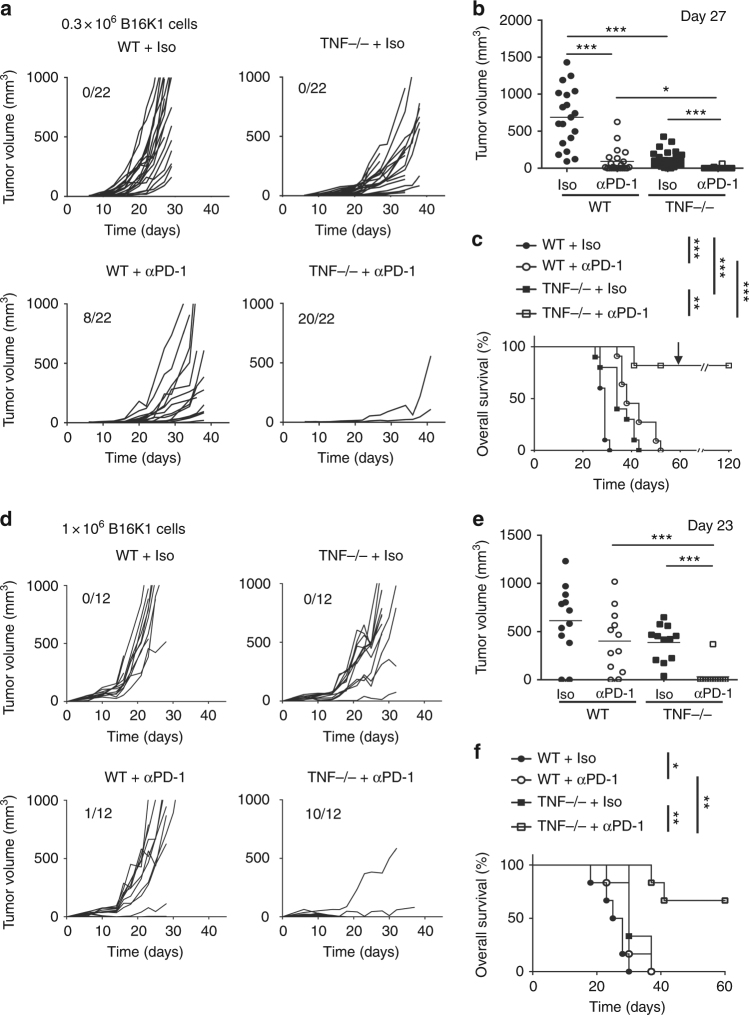
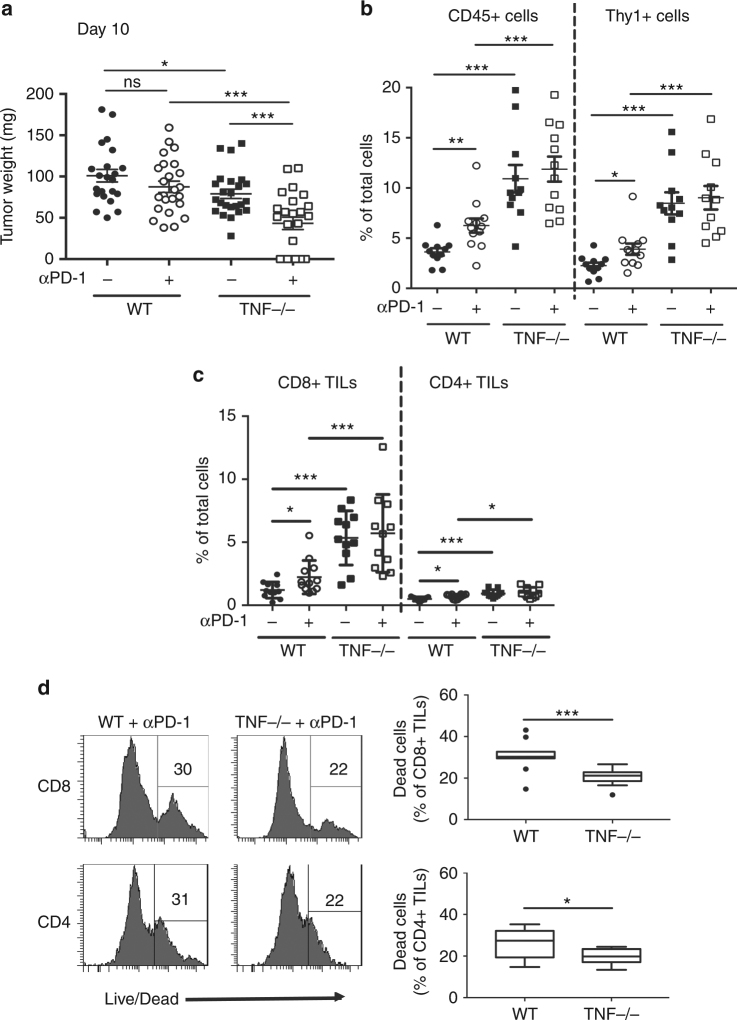
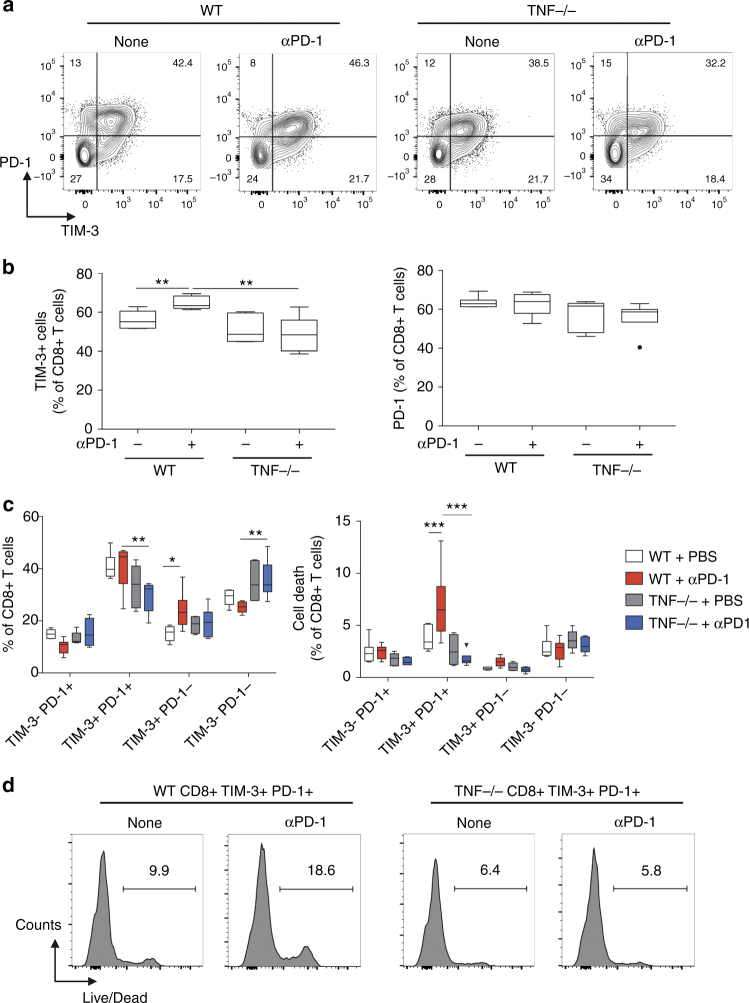
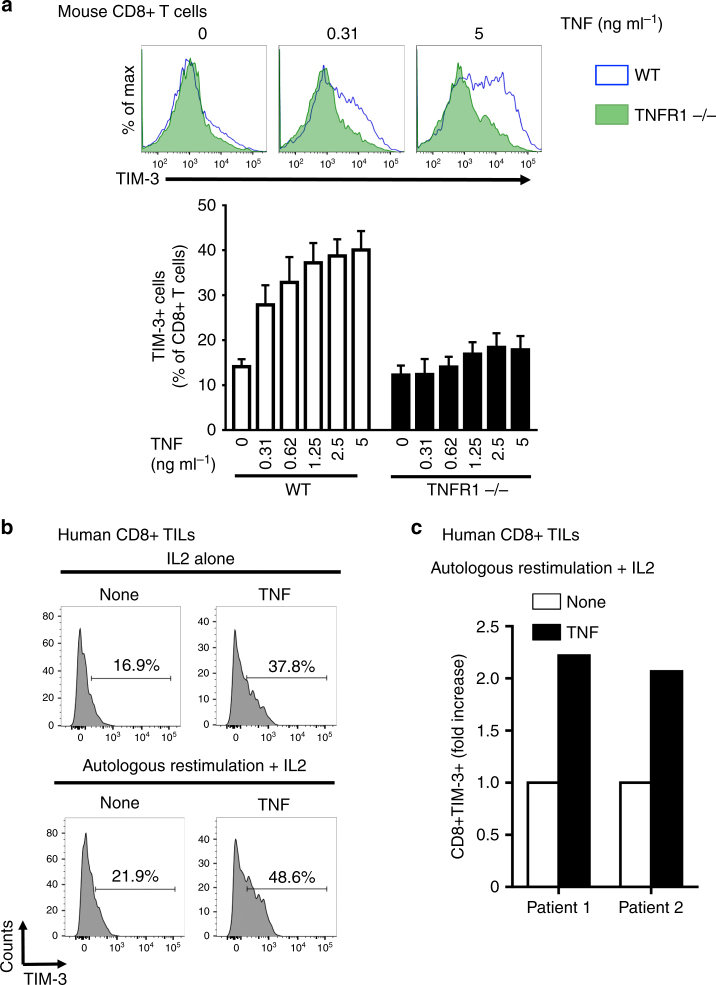
Verification
Claims the paper makes
The claims and statistics of this paper haven’t been checked yet.
Run the check — free, no account needed. It reads the open-access text and checks the sources it cites.
Claims other papers make about this one
Each is checked against this paper’s own text: does it say what the citing paper says it does?
In the citing paper
“Contrarily, other published reports showed evidence in mouse models that anti-TNF-a enhances the antitumor activity of combined anti-PD-1 and anti-CTLA-4 immunotherapy, 61 reinforces both CD8 T-cell-dependent immunity and anti-PD-1 therapy, by preventing anti-PD-1-induced cell death of tumor infiltrating lymphocytes as well as PD-L1 and T-cell immunoglobulin and mucin-domain containing-3 (Tim-3)”
From Autoimmune diseases and immune-checkpoint inhibitors for cancer therapy: Review of the literature and personalized risk-based prevention strategy (2020) · cites this paper as [62]
Self-check
Percentages, sums and reported differences re-computed from the paper’s own numbers.
The self-check needs the paper’s full text.
Citations
Cites
PD-1 and PD-L1 Immune Checkpoint Blockade to Treat Breast Cancer
Hartkopf, A. D., Taran, F., Wallwiener, M., Walter, C. B., Krämer, B., Grischke, E., & Brucker, S. Y. (2016) · Breast Care · doi:10.1159/000453569 · Cited by 30,989
Adverse Renal Effects of Immune Checkpoint Inhibitors: A Narrative Review
Wanchoo, R., Karam, S., Uppal, N. N., Barta, V. S., Deray, G., Devoe, C., Launay‐Vacher, V., Jhaveri, K. D., & on behalf of Cancer and Kidney International Network Workgroup on Immune Checkpoint Inhibitors (2017) · American Journal of Nephrology · doi:10.1159/000455014 · Cited by 15,320
Nivolumab versus docetaxel in advanced nonsquamous non-small-cell lung cancer
Borghaei, H., Paz-Ares, L., Horn, L., Spigel, D. R., Steins, M., Ready, N. E., Chow, L. Q., Vokes, E. E., Felip, E., Holgado, E., et al. (2015) · New England Journal of Medicine · doi:10.1056/nejmoa1507643 · Cited by 9,335 · cited 1×
“Thus, synergism of TNF/TNFR1 de fi ciency and anti-PD-1 is likely not restricted to melanoma but applies to other cancers, such as lung carcinoma, which can bene fi t from anti-PD-1 according to phase 2 and phase 3 clinical trials 25,26 .”
Combined Nivolumab and Ipilimumab or Monotherapy in Untreated Melanoma
Larkin, J., Chiarion-Sileni, V., Gonzalez, R., Grob, J. J., Cowey, C. L., Lao, C. D., Schadendorf, D., Dummer, R., Smylie, M., Rutkowski, P., et al. (2015) · New England Journal of Medicine · doi:10.1056/nejmoa1504030 · Cited by 8,157
PD-1 blockade induces responses by inhibiting adaptive immune resistance
Tumeh, P. C., Harview, C. L., Yearley, J. H., Shintaku, I. P., Taylor, E. J. M., Robert, L., Chmielowski, B., Spasic, M., Henry, G., Ciobanu, V., et al. (2014) · Nature · doi:10.1038/nature13954 · Cited by 6,609 · cited 2×
“We show here that TNF blockade leads to an increased content of CD8+ TILs, which is predictive of the response to anti-PD-1 in melanoma patients 33 .”
Pembrolizumab versus Ipilimumab in Advanced Melanoma
Robert, C., Schachter, J., Long, G. V., Arance, A., Grob, J. J., Mortier, L., Daud, A., Carlino, M. S., McNeil, C., Lotem, M., et al. (2015) · New England Journal of Medicine · doi:10.1056/nejmoa1503093 · Cited by 5,887
Primary, Adaptive, and Acquired Resistance to Cancer Immunotherapy
Sharma, P., Hu-Lieskovan, S., Wargo, J. A., & Ribas, A. (2017) · Cell · doi:10.1016/j.cell.2017.01.017 · Cited by 5,588
Nivolumab in Previously Untreated Melanoma without BRAF Mutation
Robert, C., Long, G. V., Brady, B., Dutriaux, C., Maio, M., Mortier, L., Hassel, J. C., Rutkowski, P., McNeil, C., Kalinka-Warzocha, E., et al. (2015) · New England Journal of Medicine · doi:10.1056/nejmoa1412082 · Cited by 5,519 · cited 2×
“In addition, responders develop severe immune-related adverse events (irAEs) with a frequency close to 12% 19,20 .”
An endotoxin-induced serum factor that causes necrosis of tumors
Carswell, E. A., Old, L. J., Kassel, R. L., Green, S., Fiore, N., & Williamson, B. (1975) · Proceedings of the National Academy of Sciences · doi:10.1073/pnas.72.9.3666 · Cited by 4,532 · cited 2×
“Whereas TNF was fi rst identi fi ed as a cytotoxic soluble factor 4 , mounting evidence indicates that TNF facilitates the accumulation and/or biological activity of regulatory T lymphocytes (Tregs) 12 , regulatory B lymphocytes (Bregs) 8 as well as myeloid-derived suppressor cells (MDSC) 9 , which…”
Genomic classification of cutaneous melanoma
Akbani, R., Akdemir, K. C., Aksoy, B. A., Albert, M., Ally, A., Amin, S. B., Arachchi, H., Arora, A., Auman, J. T., Ayala, B., et al. (2015) · Cell · doi:10.1016/j.cell.2015.05.044 · Cited by 3,151
Cited by
Sorted by citations
Items 301–384 of 384
2019 Expert opinion on biological treatment use in inflammatory bowel disease management
Törüner, M., Akpınar, H., Akyüz, F., Dağlı, Ü., Hamzaoğlu, H. Ö., Tezel, A., Ünsal, B., Yıldırım, S., & Çelık, A. F. (2019) · The Turkish Journal of Gastroenterology · doi:10.5152/tjg.2019.061119 · Cited by 4
Ascierto, P. A., Butterfield, L. H., Campbell, K., Daniele, B., Dougan, M. L., Emens, L. A., Formenti, S. C., Jankú, F., Khleif, S. N., Kirchhoff, T., et al. (2021) · Journal of Translational Medicine · doi:10.1186/s12967-020-02627-y · Cited by 4
Immune Checkpoint Inhibitor Colitis: Resident Memory Unleashed
Dougan, M. L. (2021) · Gastroenterology · doi:10.1053/j.gastro.2021.07.007 · Cited by 4
Mao, R., Liu, S., Dolan, J. C., Schmidt, B. L., & Tao, F. (2024) · Current Neuropharmacology · doi:10.2174/1570159x23666241209160039 · Cited by 3
“Additionally, a TNFα blockade has been proven as a combined treatment for overcoming PD-1 antibody resistance [16].”
Gao, J., Miao, J., Zhinan, C., & Zhu, P. (2026) · Frontiers in Immunology · doi:10.3389/fimmu.2025.1611692 · Cited by 4
Shekari, N., Shanehbandi, D., Baghbani, E., Safaei, S., Masoumi, J., Baradaran, B., & Jalali, S. A. (2024) · Naunyn-Schmiedeberg s Archives of Pharmacology · doi:10.1007/s00210-024-03491-z · Cited by 3
Damato, A., Marco, L. D., Serra, S., Larocca, M., Arias, A. G., Rondini, E., & Pinto, C. (2021) · Frontiers in Oncology · doi:10.3389/fonc.2021.670415 · Cited by 3
“Apart from this, infliximab therapy influences the gut microbiota dysbiosis by modifying microbiota composition and function, especially in Chron’s disease, highlighting a reduction in pathogenic bacteria such as Fusobacterium, Enterobacter, and Escherichia–Shigella, and an increase in short-chain fatty acid-producing…”
BackgroundImmune-related adverse events: what we’ve learned and where we’re heading
Badran, Y. R., Leet, D., & Dougan, M. L. (2020) · Expert Review of Anticancer Therapy · doi:10.1080/14737140.2020.1803742 · Cited by 3
Vanni, A., Matani, F., Bonaudo, C., Mazzoni, A., Capone, M., Lamacchia, G., Salvati, L., Bartoli, L., Francalanci, S., Petti, M., et al. (2025) · European Journal of Immunology · doi:10.1002/eji.202451681 · Cited by 2
Fisher, B. A., Rowe, A. L., Hodson, C., Wilkhu, M., Williams, E. L., Turner, E., Allard, A., Blake, T., Bombardieri, M., Cope, A. P., et al. (2026) · BMJ Open · doi:10.1136/bmjopen-2026-116847 · Cited by 2
Enhancing the Treating Efficacy of Immunotherapy through the Restructure of Tumor Microenvironment
Gong, B., Jia, W., Zhou, Y., Xu, Y., Ya, W., & Gao, H. (2023) · Advanced NanoBiomed Research · doi:10.1002/anbr.202300061 · Cited by 2
Yang, J., Wu, Q., Yang, Z., Sun, R., Zhang, K., Guo, X. N., Xu, R., & Guo, Y. (2024) · Current Problems in Cardiology · doi:10.1016/j.cpcardiol.2024.102782 · Cited by 3
Bolovan, M., Panait, M. E., Busca, A., Stanciu, A. E., Chiriac, D., Mihalcea, C. E., Hotnog, C. M., Géorgescu, M., Voinea, S. C., Prunoiu, V. M., et al. (2025) · Biomedicines · doi:10.3390/biomedicines13061378 · Cited by 4
Zirnbauer, R., Hametner, S., Bergler-Klein, J. K., Kuehrer, I., Kulu, A., Ammon, D., Kabiljo, J., Stift, A., Schmid, R. W., Müllauer, L., et al. (2025) · MedComm · doi:10.1002/mco2.70275 · Cited by 2
Zhao, A., Li, F., Cheng, W., Zhou, Z., Luo, X., Wu, H., Ning, C., Liu, W., Li, D., Lin, D., et al. (2022) · Carcinogenesis · doi:10.1093/carcin/bgac024 · Cited by 2
Cancer Immunology and the Evolution of Immunotherapy
Nurieva, R., Divenko, M., & Kim, S. (2021) · Springer eBooks · doi:10.1007/978-3-030-56824-5_1 · Cited by 2
Joshkon, A., Traboulsi, W., Terme, M., Bachelier, R., Fayyad‐Kazan, H., Dignat‐George, F., Foucault‐Bertaud, A., Leroyer, A. S., Bardin, N., & Blot‐Chabaud, M. (2024) · Molecular Cancer Therapeutics · doi:10.1158/1535-7163.mct-24-0008 · Cited by 1
Grecea-Balaj, A. M., Şoriţău, O., Brie, I. C., Perde‐Schrepler, M., Virág, P., Fischer‐Fodor, E., Todor, N., Cenariu, M., Nedelea, I., & Ciuleanu, T. (2025) · Current Issues in Molecular Biology · doi:10.3390/cimb47090746 · Cited by 1
Zhou, C., Sun, Y., Liu, T., van Dijk, D. P. J., Xi, W., Jiang, J., Guo, L., Qi, F., Zhang, X., Jia, M., et al. (2025) · Frontiers in Immunology · doi:10.3389/fimmu.2025.1685592 · Cited by 2
“Furthermore, TNF-a can compromise the functions of tumor-in fi ltrating CD8 + lymphocytes and induce PD-L1 expression on melanoma cells, promoting cancer immune escape (38).”
Füchsl, F., Schwanzer, A., Faber, M., Rieger, L., Zuleger, G., der Maur, P. A., Cruz, E., Braun, S., Öllinger, R., Busch, D. H., et al. (2025) · Journal for ImmunoTherapy of Cancer · doi:10.1136/jitc-2025-012800 · Cited by 1
“59 Since TNF transcription is strongly controlled by NF κ B signaling rather than MAPK signaling, 60 the complete abrogation of TNF expression on MEKi was unexpected.”
Impact of cancer immunotherapies on oocyte health and ovarian function
Lewis, Y., Cao, Y., Higgins, J., Alesi, L. R., Winship, A., & Hutt, K. J. (2026) · Current topics in developmental biology/Current Topics in Developmental Biology · doi:10.1016/bs.ctdb.2026.04.006 · Cited by 1
Mahdavi, A. S., Bagheri, N., Marincola, F. M., Khosravian, P., & Ghatrehsamani, M. (2026) · Journal of Translational Medicine · doi:10.1186/s12967-026-07905-9 · Cited by 1
“On the other hand, TNF-α can induce extra-cellular apoptosis in cancer cells by activating Caspase-8 and FADD complex, and also activate immune cells by increasing cytokine secretion [59].”
Peng, S., 叶舟舟, Hu, T., Li, X., Yan, C., Jiang, C., Jiang, H., Zhang, G., & Chen, N. (2026) · Frontiers in Immunology · doi:10.3389/fimmu.2026.1838182 · Cited by 1
“This transition represents a strategic shift from rapid biomass production to immune landscape remodeling (41, 42).”
Thymulin restrains age-associated myeloid inflammation and enhances cancer immunotherapy
Kanemaru, H., Luong, S., Yamamoto, Y., Mizukami, Y., & Ito, F. (2026) · Nature Communications · doi:10.1038/s41467-026-75383-0 · Cited by 1
“For PD-L1 blockade, anti-PD-L1 Ab (clone 10F.9G2, BioXcell) was given i.p. on day 7, 10, 13, 16, 19, 22 after the tumor cell inoculation at a dose of 200 μ g/mouse 54,55 .”
TNFR1 expression on cancer cells mediates immune escape and an immunosuppressive microenvironment
Bolaños, E., Cañas‐Zabala, L., Olivera, I., Ruiz-Guillamon, D., Vercher, E., Gomis, G., de Andrea, C. E., Alexandru, R., Azpilikueta, A., Soria, N., et al. (2026) · The Journal of Experimental Medicine · doi:10.1084/jem.20252080 · Cited by 1
“…mice treated with checkpoint-inhibitor immunotherapy that TNFα neutralization led to substantially enhanced efficacy of anti–PD-1 plus anti– CTLA-4 immunotherapy, while also mitigating immune-mediated side effects (Perez-Ruiz et al., 2019) made under PD-1 single blockade (Bertrand et al., 2017).”
Badran, Y. R., Zou, F., Durbin, S., Dutra, B. E., Leet, D., Abu‐Sbeih, H., Thomas, A. S., Postow, M. A., Horick, N., Lai, P.-Y., et al. (2022) · Gastroenterology · doi:10.1016/s0016-5085(22)60201-4 · Cited by 1
Bibliometric analysis of global research trends in pancreatic cancer immunotherapy
Fu, T., Chen, Y., Wang, H., He, L., Zhang, J., Zhou, Y., Duan, X., & Zhang, X. (2025) · Human Vaccines & Immunotherapeutics · doi:10.1080/21645515.2025.2538330 · Cited by 1
“61,62 Microsatellite instability (MSI), caused by defects in mismatch repair (MMR) genes, is a hallmark of genomic instability.”
Management von entzündlich rheumatischen Erkrankungen während und nach Malignomen
Schmalzing, M. (2022) · Zeitschrift für Rheumatologie · doi:10.1007/s00393-022-01237-x · Cited by 1
Strecker, M. (2022) · Publication Server of Goethe University Frankfurt am Main (Goethe University Frankfurt) · doi:10.21248/gups.68021
Igase, M., Hagimori, K., Inanaga, S., Mizoguchi, H., ITAMOTO, K., Sakurai, M., Motegi, T., Yamamoto, H., Kato, M., Shiga, T., et al. (2025) · bioRxiv (Cold Spring Harbor Laboratory) · doi:10.1101/2025.08.26.671889 · Cited by 1
“Systemic inflammation occurs in human cancer patients through the release of tumor-437 derived inflammatory cytokines, such as IL-6 and TNF-α, which suppress antitumor immunity and reduce the efficacy of PD-1 blockade [42,43].”
Pereira, T. M., Virazels, M., Jung, B., Filleron, T., Badier, L., Leclercq, É., Brayer, S., Genais, M., Leroy, L., Lusque, A., et al. (2026) · medRxiv · doi:10.64898/2026.02.11.26346073 · Cited by 1
Urbonas, V., & Smailytė, G. (2018) · Melanoma Research · doi:10.1097/cmr.0000000000000470
Les anticorps anti-TNFα dans l’immunothérapie du mélanome
Montfort, A., Colacios, C., Levade, T., Andrieu‐Abadie, N., Meyer, N., & Ségui, B. (2018) · médecine/sciences · doi:10.1051/medsci/2018202
Alvarado-Cruz, I., Mahmoud, M. M., Khan, M., Zhao, S., Oeck, S., Meas, R., Clairmont, K., Quintana, V., Zhu, Y., Porciuncula, A., et al. (2020) · bioRxiv (Cold Spring Harbor Laboratory) · doi:10.1101/2020.03.08.982785
Nebenwirkungen immunonkologischer Therapien
Benesova, K., & Leipe, J. (2020) · Aktuelle Rheumatologie · doi:10.1055/a-1209-0659
Rheumatologische medikamentöse Therapie bei Malignomanamnese
Schmalzing, M. (2020) · Aktuelle Rheumatologie · doi:10.1055/a-1247-4252
“[51] Bertrand F, Montfort A, Marcheteau E et al.”
BackgroundMiyawaki, T., Naito, T., Yabe, M., Kodama, H., Nishioka, N., Miyawaki, E., Mamesaya, N., Kobayashi, H., Omori, S., Wakuda, K., et al. (2021) · Research Square · doi:10.21203/rs.3.rs-524527/v1
Las formas precarias de tenencia y de trabajo de la tierra en la agricultura
Molina, O., & Aurelio, F. (1983) · Repositorio Institucional (Universidad de Cuenca)
CD137 (4-1BB) Signaling Drives a TcR-Independent Exhaustion Program in CD8 T CellsPreprint
Pichler, A., Carrié, N., Voisin, A., Ghazali, S., Lucca, L. E., Tosolini, M., Cuisinier, M., Souto, L. D., Ekren, R., Blanquart, E., et al. (2022) · SSRN Electronic Journal · doi:10.2139/ssrn.4163142
Advanced HCC precision modeling reveals divergent responses to combinatorial immunotherapyPreprint
Liu, J., Cheng, L., El‐Mekkoussi, H., Lee, M., Jaffe, D. R., Gavin-Darby, K., Morgan, A. R., Manduchi, E., Schug, J., & Kaestner, K. H. (2022) · Research Square · doi:10.21203/rs.3.rs-1919053/v1
Elgohary, S., Eissa, R. A., & Tayebi, H. M. E. (2022) · Research Square · doi:10.21203/rs.3.rs-2172339/v1
Rhumatismes inflammatoires liés aux immunothérapies et prise en charge des métastases osseuses
Chevet, B. (2023) · Revue du Rhumatisme · doi:10.1016/s1169-8330(23)00150-3
Immunotherapy and Cancer Stem Cells
Suryaprakash, R. T. C., Safi, M. A. A., Alonazi, N. A., Alsieedi, A. A., & Kujan, O. (2023) · BENTHAM SCIENCE PUBLISHERS eBooks · doi:10.2174/9789815124606123010007
Колтакова, А. Д., & Lila, A. M. (2023) · Modern Rheumatology Journal · doi:10.14412/1996-7012-2023-5-112-117
Lee, J., Hallis, S. P., & Kwak, M. (2024) · Archives of Pharmacal Research · doi:10.1007/s12272-024-01497-y
“In a mouse melanoma model, an anti-TNF-α drug, in combination with anti-PD-1 therapy, showed tumor regression by suppressing the anti-PD-1-induced expression of TIM-2, a secondary immune checkpoint molecule mediating ICI resistance (Bertrand et al. 2017).”
Immuncheckpointinhibitoren bei Autoimmunerkrankungen
Günther, C., & Steininger, J. (2024) · Im Focus Onkologie · doi:10.1007/s15015-024-3900-8
Immune system in resistance prediction
Bahhar, İ., & Karakaş, N. (2024) · Elsevier eBooks · doi:10.1016/b978-0-443-21790-6.00016-x
A promising advance using oncolytic adenovirus to locally block tumorigenic TNF signaling
Zhang, Y., & Wang, P. (2025) · Molecular Therapy · doi:10.1016/j.ymthe.2025.01.015
Immuncheckpointinhibitoren bei Autoimmunerkrankungen
Günther, C., & Steininger, J. (2025) · hautnah dermatologie · doi:10.1007/s15012-025-8696-5
“…Mausmodell konnte beispielsweise gezeigt werden, dass eine Blockierung von Tumornekrosefaktor-alpha (TNF-α) die antitumorale Wirkung von ICI (möglicherweise) verstär-ken kann, indem diese Blockierung zu einer Erhöhung von CD8-positiven tu-morinfiltrierenden Lymphozyten (TIL) führt [20].”
The Immunoradiotherapy in Nasopharyngeal Carcinoma
Miao, J., Xiang, C., & Liu, C. (2025) · Springer eBooks · doi:10.1007/978-981-96-3659-4_6
Inflammatory Arthritis Post Immune Checkpoint Inhibitor Therapy
Bowman, S., Amaria, R. N., & Lu, H. (2025) · Springer eBooks · doi:10.1007/978-3-031-83533-9_52
Lee, P.-Y., Chiu, C. C., Kuo, P., Huang, C., Tsai, S., Kuo, C., & Chen, W.-Y. (2025) · Annals of General Psychiatry · doi:10.1186/s12991-025-00591-9
“For example, anti-TNF antibodies have been shown to enhance the efficacy of anti-PD-1 treatment in mouse models of melanoma [65].”
Application and Advances of Adoptive Cell Therapy for Melanoma
Wei, C., Xie, L., Wei, C., & Gu, J. (2025) · Clinical Cancer Bulletin · doi:10.1007/s44272-025-00045-z
“A2A receptor knockout boosts IFN-γ and TNF production [78]; TGF-β receptor II deletion reduces Treg induction and exhaustion, improving efficacy [79]; and armored CAR-T cells secreting IL-12 or IL-18 recruit M1-like macrophages and suppress Tregs, overcoming immunosuppression through multiple…”
Overcoming barriers in primary bone cancer: Nanomaterial-enabled immunotherapy
Liu, Z., Fan, L., Wang, Y., Zhuo, X., & Yu, D. (2025) · Materials Today Bio · doi:10.1016/j.mtbio.2025.102530
“These changes hinder their infiltration and function and help tumor cells achieve immune escape [51].”
Der Einfluss einer Mangelernährung auf die Wirkung von Immun-Checkpoint-Inhibitoren
Greil, C. (2025) · Aktuelle Ernährungsmedizin · doi:10.1055/a-2630-3903
Cui, A., Fan, W., Huang, T., Li, X., Xiong, W., Wang, Y., & Chen, Y. (2025) · Immunobiology · doi:10.1016/j.imbio.2025.153129
Sarkar, S., Ghosh, U., Pratihar, S., & Sinha, S. (2026) · bioRxiv (Cold Spring Harbor Laboratory) · doi:10.64898/2026.01.02.697345
Manifestations rhumatologiques des traitements du cancer et leur prise en charge
Tison, A., Bitoun, S., Escoda, T., & Chiche, L. (2026) · Revue du Rhumatisme · doi:10.1016/j.rhum.2025.12.021
Cui, B., Liu, Q., Ye, J., Hao, Y., Zhao, C., Shi, W., Wang, B., Zhang, W., Jiao, X., & Zhang, T. (2026) · Research Square · doi:10.21203/rs.3.rs-8795648/v1
Naoum, C., Winkler, J. K., Majenka, P., Loquai, C., Brekner, A., Fuchß, M., Kähler, K. C., Petersen, M., Gutzmer, R., von Wasielewski, I., et al. (2026) · Cancers · doi:10.3390/cancers18050734
“Similar results were reported when PD-1 blockade was combined with anti-TNF, showing superior tumor regression and survival compared with PD-1 inhibition alone [24].”
Der Einfluss einer Mangelernährung auf die Wirkung von Immun-Checkpoint-Inhibitoren
Greil, C. (2026) · TumorDiagnostik & Therapie · doi:10.1055/a-2770-7381
“Die Autorinnen/Autoren geben an, dass kein Interessenkonflikt besteht.”
Autophagy inhibition enhances PD-1 blockade efficacy in mismatch repair–proficient colorectal cancer
Peng, W., Yang, Z.-R., Wang, Z., Zhao, Y., & Tan, S.-S. (2026) · Cancer Genetics · doi:10.1016/j.cancergen.2026.03.005
Rôle de l'E3 ubiquitine ligase ASB2α dans le contrôle de la réponse immunitaire anti-tumorale
Spinner, C. A. (2018) · theses.fr (ABES) · doi:10.70675/20536a75za7d8z4249zbc3fz16ff73ed2d76
Rôle de la Neuropiline-1 dans les fonctions effectrices des lymphocytes T CD8 antitumoraux
Leclerc, M. (2018) · theses.fr (ABES) · doi:10.70675/13aee211zad7bz4b07z9a5fz29b15750d99c
Weulersse, M. (2019) · theses.fr (ABES) · doi:10.70675/2a56dbcazd721z44daz9b18z27d6c10e6137
Role of co-activating receptors CD226 and CD137 in T cell exhaustion
Pichler, A. (2020) · theses.fr (ABES) · doi:10.70675/ec9fb2bazf7a9z4305z9a58zb5cbc6e74e63
Progress in Designing Cytokine Antagonist Antibodies for Cancer Therapy
McEacheron, H., Nisita, G., Liu, P., & Spangler, J. B. (2026) · BioDrugs · doi:10.1007/s40259-026-00777-x
“Pre-clinical studies have shown that blockade of TNFα helps overcome resistance to ICI therapy while also mitigating immune-related adverse effects in mouse models of melanoma [212, 213] as well as colon cancer [214].”
Wang, Q., & Zhu, J. (2026) · Frontiers in Oncology · doi:10.3389/fonc.2026.1820654
“Inducing ferroptosis, pyroptosis, or necroptosis can potentiate the ef fi cacy of ICIs by increasing tumor antigen presentation and promoting a pro-in fl ammatory milieu conducive to immune cell in fi ltration and activation (226, 227).”
Antibody targeting of the TNF–TNFR2 axis to overcome tumor immune resistance
Kang, X., Tong, X., & Wang, S. (2026) · Frontiers in Immunology · doi:10.3389/fimmu.2026.1809305
Mouse models of immune-related adverse events: progress, challenges, and opportunities
Παπαδόπουλος, Θ., Pinto, A., Abraham, M. J., Naranjo, C. L., Molina, M. F., Hudson, M., Miller, W. H., & Rincon, S. V. D. (2026) · Trends in cancer · doi:10.1016/j.trecan.2026.04.010
Zhan, L.-Y., Zhe-ling, C., & Yang, L. (2026) · Clinical Drug Investigation · doi:10.1007/s40261-025-01520-0
CHEN, W., Cheng, X., Zhao, X., Chen, Z., Lai, Y., Hao, W., He, Z., Lin, W., Wu, Y., Guo, Y., et al. (2026) · Journal of Medicinal Chemistry · doi:10.1021/acs.jmedchem.6c00487
Massy, E., Seiller, J., Piperno, M., Bonnelye, E., Maillet, D., Dalle, S., Fontaine-Delaruelle, C., Souquet, P.-J., Péron, J., & Confavreux, C. B. (2026) · Cancers · doi:10.3390/cancers18142213
Inflammaging in melanoma: Precision control for optimizing immune checkpoint inhibition.
Kanemaru, H., Luong, S., Mizukami, Y., Fukushima, S., & Ito, F. (2026) · Journal of dermatological science (Amsterdam) · doi:10.1016/j.jdermsci.2026.07.006
Chen, S., Yan, L., Zeng, J., Chen, Y., Zhao, X., Meng, W., Zhuang, J., Chen, F., Guo, Y., El‐Aty, A. M. A., et al. (2026) · Food Frontiers · doi:10.1002/fft2.70319
Peng, B., Li, Y., Li, S., Pan, J., 钱伟民, & Li, Q. (2026) · Frontiers in Immunology · doi:10.3389/fimmu.2026.1861545
Wang, X., Xiong, D., Duan, B., Ding, G., Huang, Y., & Wang, Q. (2026) · iScience · doi:10.1016/j.isci.2026.117697
“178,185,186 Supported by this rationale, the phase Ib TICIMEL study showed that infliximab or certolizumab could be combined with nivolumab-ipilimumab with measurable clinical and immunological activity.”
TNFα-driven epigenetic upregulation of TIGIT creates a targetable vulnerability in tumors
Huang, X., Xiong, C., Yu, M., Wang, J., Liang, P., Li, G., & Wang, X. (2026) · Oncogene · doi:10.1038/s41388-026-04008-z
Metadata
- Authors
- Bertrand, F., Montfort, A., Marcheteau, E., Imbert, C., Gilhodes, J., Filleron, T., Rochaix, P., Andrieu-Abadie, N., Levade, T., Meyer, N., Colacios, C., & Ségui, B.
- Affiliations
- Inserm (FR)
- Université Toulouse III - Paul Sabatier (FR)
- Corresponding author
- Ségui, Bruno
- ORCID
- Venue
- Nature Communications
- Published
- 2017-12-22
- Volume
- 8
- Issue
- 1
- Pages
- 2256-2256
- ISSN
- 2041-1723 (ISSN-L)
- PMC
- PMC5741628
- OpenAlex
- W2779658193
- Cited by
- 384
- References
- 46
- Citations by year
- 2026: 32 · 2025: 36 · 2024: 44 · 2023: 44 · 2022: 49 · 2021: 50 · 2020: 82 · 2019: 29 · 2018: 17
- FWCI
- 15.43
- Type
- journal article
- Language
- en
- Open access
- gold
- doi.org
- Locations
- Nature Communications (publishedVersion, cc-by)
- Europe PMC (PubMed Central) (publishedVersion, cc-by)
- PubMed Central (publishedVersion, cc-by)
- PubMed (publishedVersion)
- HAL (submittedVersion, cc-by)
- RePEc: Research Papers in Economics (submittedVersion)
- DOAJ (DOAJ: Directory of Open Access Journals) (submittedVersion)
- DOAJ (DOAJ: Directory of Open Access Journals) (submittedVersion, cc-by-sa)
- Funders
- Institut National de la Santé et de la Recherche Médicale (INSERM U1048, U1043, U1048)
- Institut National Du Cancer
- Fondation Toulouse Cancer Santé
- Inserm Transfert
- Topics
- Health Sciences › Medicine › Oncology › Cancer Immunotherapy and Biomarkers
- Life Sciences › Immunology and Microbiology › Immunology › T-cell and B-cell Immunology
- Life Sciences › Immunology and Microbiology › Immunology › Immunotherapy and Immune Responses
- Keywords
- anti-PD-1 therapy, melanoma, immune checkpoint inhibitor resistance, TNFR1 signaling, tumor-infiltrating lymphocytes, CD8+ T cells, PD-L1, TIM-3, combination immunotherapy, immune-related adverse events, cancer immunotherapy
- MeSH terms
- Hepatitis A Virus Cellular Receptor 2, Antineoplastic Agents, Immunological, Ipilimumab, Nivolumab, Animals, Antibodies, Monoclonal, Drug Synergism, Female, Humans, Melanoma, Melanoma, Experimental, Skin Neoplasms, Tumor Necrosis Factor-alpha, Mammary Neoplasms, Animal, Lymphocytes, Tumor-Infiltrating, CD8-Positive T-Lymphocytes, Drug Resistance, Neoplasm, Cell Line, Tumor, Receptors, Tumor Necrosis Factor, Type I, Mice, B7-H1 Antigen, Programmed Cell Death 1 Receptor
About these checks
Registry, retraction, Cites and statistics results are computed, not judged, with one exception: a printed reference that no index lists is read once by a model before it counts as a citation error. Claims are extracted by a model and kept only when their quote appears verbatim in the text; each cited source is then checked, with a model’s help, for whether it says what the claim relies on. Those verdicts can be wrong — read the claim’s quote and the cited source before relying on one.
Statistics and arithmetic are recomputed, not judged.
Confidence bands are shown only for fields calibrated on our annotated test set. None is calibrated yet, so no band is shown.
What counts as a claim ›How we measure confidence ›How we check this ›
Are you an author, or do you see a problem with this page? Request a review
